
How PSEi member stocks performed — January 16, 2024
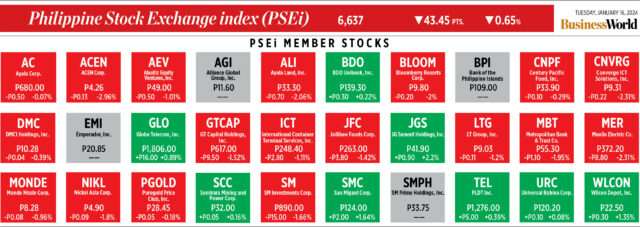
Here’s a quick glance at how PSEi stocks fared on Tuesday, January 16, 2024.
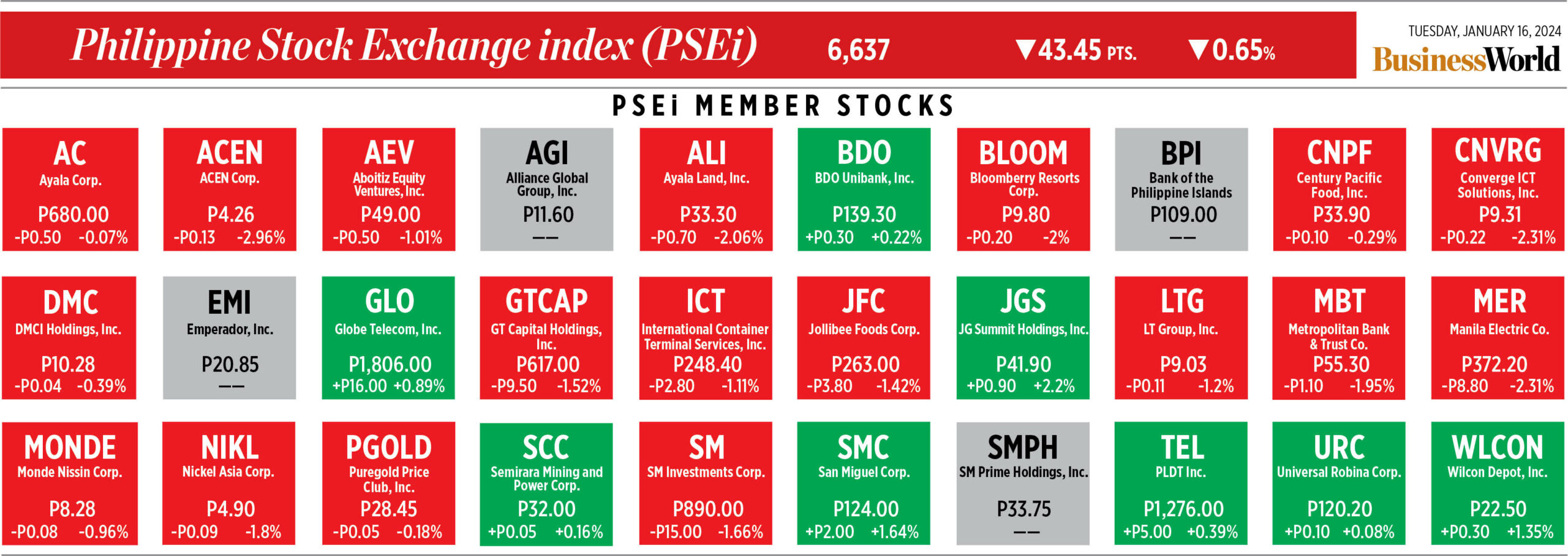

Here’s a quick glance at how PSEi stocks fared on Tuesday, January 16, 2024.

By Revin Mikhael D. Ochave, Reporter
THE Philippine Stock Exchange Index (PSEi) fell on Tuesday as investors booked profits amid tensions in the Red Sea, breaking its three-day rally.
The 30-member stock Index dropped by 0.65% or 43.45 points to close at 6,637. The broader all-share index fell by 0.49% or 17.54 points to 3,506.23.
“The market declined as the main index approached a major technical resistance,” AB Capital Securities, Inc. Vice-President Jovis L. Vistan said in a Viber message. “The PSEi was hovering near a major downtrend line and a potential double as its current levels.”
“This prompted traders to take some profits following the recent run-up of the market,” he added.
The local bourse declined as investors monitored tensions in the Red Sea, Mikhail Philippe Q. Plopenio, research and engagement officer at Philstocks Financial, Inc. said in a Viber message.
“Tensions in the Red Sea is also being monitored by many because this poses an upside risk to oil prices,” he said. “This comes amid reports that oil tankers are avoiding the area amid the turmoil between United States forces and the Houthis.”
Investors were also waiting for a positive catalyst to emerge first before pushing through with a sustainable rally, Mr. Plopenio said.
Last week, US and British warplanes, ships and submarines launched air strikes across Yemen in retaliation against Houthi attacks in the Red Sea, which is one of the world’s busiest shipping lanes.
The Islamist militants said its attacks in the Red Sea aim to show its alliance with Palestinians amid the Israel-Hamas war.
All sectoral indexes fell on Tuesday. Mining and oil declined by 1.45% or 140.10 points to 9,497.39; industrials by 0.93% or 86.62 points to 9,139.20; holding firms by 0.64% or 41.43 points to 6,366.19; and property by 0.63% or 18.36 points to 2,882.57.
The service index also fell by 0.5% or 8.31 points to 1,636.40, while financials dropped by 0.22% or 4.18 points to 1,838.97.
“Among the index members, JG Summit Holdings, Inc. was at the top, climbing 2.2% to P41.90. ACEN Corp. lost the most, dropping 2.96% to P4.26,” Mr. Plopenio said.
Value turnover improved to P5.98 billion with 501.41 million issues changing hands from P5.82 billion and 460.92 million issues on Monday.
Decliners outnumbered advancers 114 to 67, while 58 stocks were unchanged.
Net foreign buying reached P461.86 million, a turnaround from the P244.01 million net foreign outflows a day earlier.

By Keisha B. Ta-asan, Reporter
THE PESO weakened against the dollar on Tuesday as market players flocked to the safe-haven currency amid heightened tensions in the Red Sea and hawkish signals from the European Central Bank (ECB).
The local currency closed at P55.83, six centavos weaker than a day earlier, data from the Bankers Association of the Philippines website showed.
The peso opened Tuesday’s session at P55.85 a dollar, appreciated to as much as P55.795 and weakened to as much as P55.99 against the greenback. Dollars traded rose to $1.62 billion from $1.31 billion on Monday.
The peso weakened after strengthening for three straight trading days as tensions increased in the Middle East, Michael L. Ricafort, chief economist at Rizal Commercial Banking Corp., said in a Viber message.
Attacks on ships in the Red Sea weighed on risk sentiment, as Houthi militants hit a US-owned container vessel with a missile in the Gulf of Aden, although the ship did not suffer significant damage. Iran also launched attacks against targets in Syria and Northern Iraq.
The peso also declined after hawkish comments from ECB officials, Mr. Ricafort said.
ECB Governing Council member Joachim Nagel has said it is too soon for market players to discuss policy rate cuts as inflation remained elevated.
Robert Holzmann, another policy maker from the ECB, said no one should count on the ECB cutting rates at all this year given the conflict in the Red Sea, which could push up shipping costs through the Suez Canal.
The peso also weakened after government announcements that the strong El Niño episode could last until February, Mr. Ricafort said.
In an advisory, the state weather agency said El Niño could persist through next month, advising government agencies and Filipinos to take precautionary measures to mitigate its impact.
The Department of Agriculture has begun cluster meetings nationwide to discuss strategies on how to ease the impact of El Niño on rice output.
“The peso weakened amid potentially hawkish remarks on US policy from Fed official [Christopher J.] Waller tonight,” a trader said in an e-mail.
Markets are pricing in a 25-basis-point (bp) cut in March from the US Federal Reserve, which could be the first rate cut from the US Fed since it started hiking rates in March 2022.
The Fed raised borrowing costs by 525 bps from March 2022 to July 2023, bringing the target Fed fund rate to 5.25-5.5%.
The trader expects the peso to continue weakening against the dollar on Wednesday as the market stays cautious before the release of China’s economic output report.
Mr. Ricafort expects the peso to move between P55.75 and P55.95 a dollar, while the trader sees it ranging from P55.75 to P56. — with Reuters
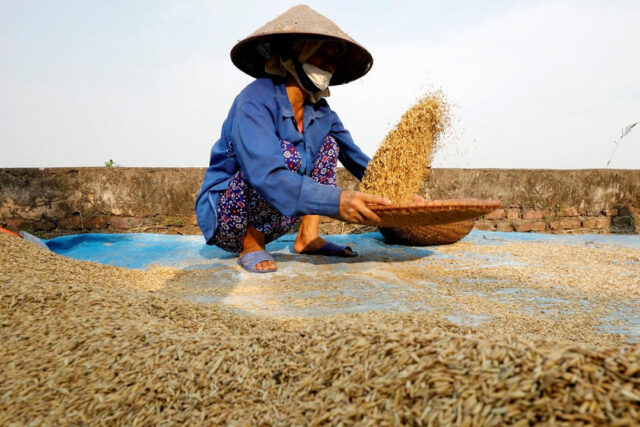
PRESIDENT Ferdinand R. Marcos, Jr. is expected to sign a five-year rice supply agreement with Vietnam when he visits that country later this month, Agriculture Secretary Francisco Tiu Laurel, Jr. said.
The proposed deal ensures a reliable supply of rice from Vietnam even when supply is constrained, Mr. Laurel said at a Palace briefing.
“It basically guarantees us that they will be continuously supplying us rice, even in a calamity situation,” he said.
Mr. Marcos in September said Vietnamese Prime Minister Pham Minh Chinh had proposed the five-year rice supply deal on the sidelines of the 43rd Association of Southeast Asian Nations Summit in Indonesia in September.
“There was an agreement to draft a memorandum of agreement (MoA) or memorandum of understanding and we were given instructions (by the President) when we were in the ASEAN meeting in Japan to draft, finalize the MoA with Vietnam,” Mr. Laurel said, “so that during his trip at the end of January, the state visit to Vietnam, it will be signed.”
The Philippines imported 3.5 million tons of rice last year.
Mr. Laurel described the supply of rice in December as “healthy,” due to the expected arrival of imports to bridge the period of scarcity between domestic harvests.
But rice prices have been increasing all over the region mainly due to El Niño, he noted.
“We have to really manage the situation and we are looking at it on a day-to-day basis.”
Mr. Laurel added that tensions between the Philippines and China over territorial disputes have had no impact on agricultural trade between the two countries.
“As of now, there is no impact.”
Mr. Laurel added that the Philippines has been “shipping durian to China and it looks promising.”
The durian export deal was signed during a state visit to China in January.
The Philippine pineapple industry is also heavily reliant on China, with Chinese imports of Philippine pineapple up 22% year on year in the first seven months of 2023.
Mr. Laurel said the Philippines is seeking to address food security by mitigating post-harvest losses.
Mr. Laurel said the government will need P93 billion to build post-harvest facilities over the next three years, to keep P10.7 billion worth of rice and corn a year from going to waste.
“No major post-harvest facility was funded by the government in the last 40 years,” he said, adding that any such projects were “actually irrelevant or useless.”
“That’s why we need really to fund these projects, but we cannot build small, we have to build bigger,” adding that “mini” projects of limited scale have been ruled out.
He said the Department of Agriculture has a P1-billion budget this year to build cold storage for vegetable produce, but the funds “can only cover part of Luzon.
“If we try to solve the problem as soon as possible, assuming 2025… I need an additional P5 billion to address the vegetable cold storage issue of the entire country,” he said. “How to get the money? I’m still new at the government, so I’m still trying to figure that out.” — Kyle Aristophere T. Atienza

THE Bases Conversion and Development Authority (BCDA) said it will be expanding the facilities of Clark International Airport to accommodate more logistics companies.
“Clark … is the only economic zone that has its own international airport, and we continue to look into programs (to leverage that asset),” BCDA President and Chief Executive Officer Joshua M. Bingcang said at a briefing on Tuesday.
“We need to build an apron and taxiway for the logistics companies to access the runway. This needs to be done immediately. This year we have to start the construction because we were only given two years by the logistics companies,” he said.
The expansion of the air side facilities is expected to cost P2.5 billion, which he said the BCDA has yet to source, adding that the project will be proposed to the Maharlika Investment Corp.
Mr. Bingcang said that the master plan for the overall expansion at the airport will cover 70 hectares, housing at least eight logistics companies.
“On our part, we want to make sure that we provide a conducive environment for them when they come in. That’s why we will continue to expand the assets of Clark, especially on the air side,” he said.
BCDA is expecting over $1 billion in investment from three global logistics companies, which will occupy at least 20 hectares. The three companies are hoping to start operations in two years.
“Right now, we are at the tail end of finalizing agreements with at least three big global logistics companies that will make Clark their Asian hub, so that’s how important Clark will be,” Mr. Bingcang said.
He said that the BCDA has signed non-disclosure agreements as well as term sheets with the three logistics firms.
“The three companies are expected to bring in at least an additional P1 billion in revenue annually only from the lease and landing and take-off fees,” he added.
“For the longest time, we have been (beaten) by Vietnam and Thailand for these kinds of investments. So these three being here serves as a seal of approval of foreign investment choosing Clark and basically, the Philippines,” he said.
“It is just so they chose Clark to be their Asian hub going to Japan, Singapore, South Korea and even China and Hong Kong,” he added.
Mr. Bingcang said that the BCDA is ironing out the necessary Customs arrangements for their operations here.
“What we are doing now is I have a team who is working with Customs to make sure that they support this also because this involves the movement of goods,” he said.
“We have to make sure that the regulatory environment is supportive and conducive to this kind of business … Once we get that, we will announce everything. Our target is to announce it by March,” he added.
The three logistics companies are expected to bring in 3,000-4,000 jobs. Currently, Clark houses FedEx Express Philippines, a subsidiary of one of the world’s largest express transportation companies, FedEx Corp. — Justine Irish D. Tabile
By Justine Irish D. Tabile, Reporter
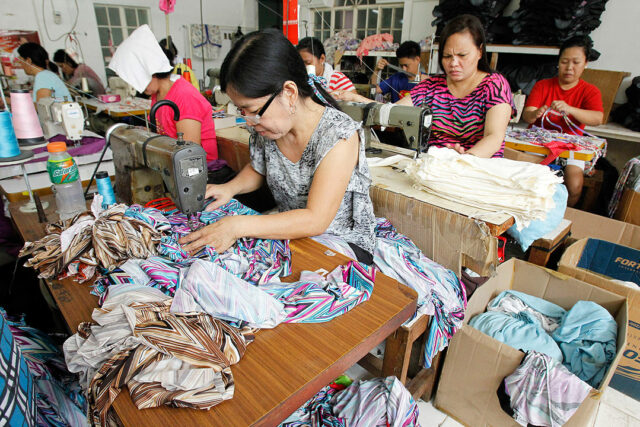
THE Confederation of Wearable Exporters of the Philippines (CONWEP) said that the key to a rebound in Philippine wearables exports, which have declined 20%, is improving access to markets like the US.
“Key to the industry’s survival is market access to the US. Philippine (wearables exports) to the US without preferential tariff treatment remain uncompetitive at a duty of 17%- 32%,” CONWEP Executive Director Maritess Jocson-Agoncillo said in an e-mail.
“Orders were simply not coming in in the second or third quarter of 2023. The stores were cutting down on inventory. Even at the height of the Christmas season, a major brand pulled out and moved production to Vietnam,” she said.
Ms. Jocson-Agoncillo has said the Philippine apparel industry typically banks on spring and summer orders which start shipping between September and November.
However, exports declined sharply last year as consumer confidence in key markets took a hit as prices rose, and wars pressured supply chains for many goods.
CONWEP reported that wearables exports fell 20.1% in the 11 months to November to $1.22 billion.
“The wearables sector continues to swim through a critical distressed phase, considering the double-digit drop in our 2023 export performance,” she said.
In November, wearables exports declined 18% year on year to $99.94 million.
If the downtrend is confirmed over the full year, it would break the two-year run of export growth. Shipments grew 29% and 8% in 2021 and 2022, respectively.
Apparel, CONWEP’s top export item, declined 17% to $635.8 million in the first 11 months, while leather goods and handbag exports dropped 23.6% to $501.21 million.
Textiles exports fell 13.5% in the first 11 months to $231.16 million.
“Footwear (exports were valued at) $78.4 million in the 11 months to November,” Ms. Jocson-Agoncillo said.
“The industry’s competitive advantage was significantly eroded by the consecutive increases in mandated minimum wages after COVID and the cost of utilities such as power,” she added.
“During the second to third quarter of 2023, we experienced major downsizing of firms and a few closures,” she added.
Due to the closures, Ms. Jocson-Agoncillo said CONWEP’s current workforce estimate is a maximum of 200,000 from about 280,000 in 2019.
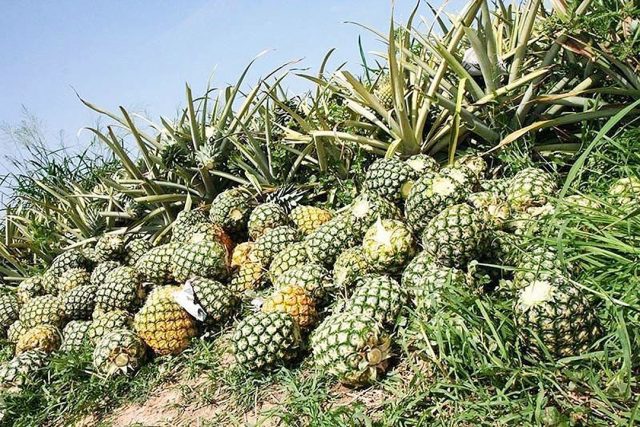
PHILIPPINE pineapple exports may have increased year on year by 5.04% to 611,873 metric tons (MT) in 2023 due to increasing demand, according to preliminary data from the Food and Agriculture Organization (FAO).
In its market review, the FAO said that long shelf life, a strong price-to-quality ratio, and the year-round production cycle were behind the attractiveness of pineapple exports.
It added that the average export unit value of Philippine pineapple is $585 per MT, based on preliminary data for the first seven months of 2023.
The Philippines is the second-largest exporter of pineapple after Costa Rica.
China was the market for 46% of Philippine pineapple exports.
“Imports of pineapple from the Philippines to China benefited from higher Chinese demand for premium-quality pineapple,” the FAO said.
It added that imports by China may have increased by 7% last year to about 250,000 MT.
“Amid changing consumer preferences, import growth in recent years has been driven by growing demand for more premium pineapple, with the MD2 variety from the Philippines particularly sought after,” the FAO said.
MD2 is the most commonly planted pineapple variety in the Philippines.
Other export markets, like Japan and South Korea, also expanded between 5-7% in 2023. Japan accounted for about 30% of the Philippine pineapple exports, and South Korea 13%.
The FAO said global pineapple exports likely grew 4% in 2023, to 3.2 million MT. This was due to higher output from Costa Rica, which has a market share of 65%.
“Weather conditions in key Costa Rican growing areas were favorable for the cultivation of pineapple… resulting in higher yields and thus higher supplies for export,” it added. — Adrian H. Halili

FISH volumes landed at regional fish ports rose 10.6% year on year in December to 47,952.79 metric tons (MT), the Philippine Fisheries Development Authority (PFDA) said.
In a statement, the PFDA said the General Santos Fish Port Complex landed 25,005.44 MT of fish during the period, up 2.58% from a year earlier.
It added that the Bulan Fish Port Complex in Sorsogon recorded a 2.59% jump in landed fish at 1,174.00 MT.
The Davao Fish Port Complex landed 1,215.12 MT, up sharply from 310.72 MT a year earlier.
The PFDA said that the Iloilo and Lucena fish ports landed 1,724.49 MT and 1,521.27 MT, respectively, with volumes recovering from the previous month’s decline.
Due to the closed fishing season in Visayan and Northern Palawan waters, the Navotas Fish Port reported a decline in landed fish in December at 16,506.60 MT.
The Zamboanga Fish Port Complex landed 772.975 MT of fish for the month, due to the closed sardine fishing season in the Zamboanga Peninsula, the PFDA reported.
Closed fishing seasons also affected the fish port in Sual, Pangasinan, which landed 32.9 MT of fish for the month.
The closed fishing season occurs annually as a means of replenishing the population of fish, according to the Bureau of Fisheries and Aquatic Resources (BFAR).
BFAR announced early last year that sardine fishing was banned between Nov. 15 and Feb. 15. This coincided with the closed fishing in the Visayan Sea for small pelagic fish, including sardines.
Sardine fishing was also banned in northern Palawan between Nov. 1 and Jan. 31, while a closed season for herring and mackerel in the Visayan Sea was declared between Nov. 15 and Feb. 15. — Adrian H. Halili

CALAMITY FUNDS worth P19.74 billion were released from the National Disaster Risk Reduction and Management Fund in 2023, according to the Department of Budget and Management (DBM).
Some 82.6% of the P23.205-billion disaster fund had been released as of Dec. 31.
The fund is tapped to provide relief and rehabilitation assistance to communities or areas affected by human-induced and natural calamities and other capital expenditure for disaster operations.
National Government agencies received P18.05 billion of the fund releases, with the Department of Public Works and Highways getting P11.08 billion.
This was followed by the Departments of Social Welfare and Development (P5.05 billion), the Agriculture (P1 billion), Transportation (P342.47 million), National Defense (P207.64 million), and Science and Technology (P35.18 million).
Some P688.89 million was released to government-owned and -controlled corporations at the end of November.
As of the end of the year, P3.47 billion remained undistributed from the disaster fund.
Under the 2024 National Expenditure Plan, calamity funding has been set at P31 billion for this year. — Luisa Maria Jacinta C. Jocson

By Adrian H. Halili, Reporter
THE Department of Agriculture (DA) needs to address logistics and utility issues if its plan to set up a network of cold storage facilities is to succeed, according to analysts.
Monetary Board member V. Bruce J. Tolentino said there may be “infrastructure issues such as transport and electric power issues that need to be resolved first.”
“There may also be policy issues such as LGU (local government unit) permits, etc. that are constraining the speedy transport of goods,” Mr. Tolentino said in a Viber message.
At a Palace briefing on Tuesday, Agriculture Secretary Francisco Tiu Laurel, Jr., said the DA has allocated about P1 billion for the construction of four cold storage facilities this year.
The DA is planning to put up sites in Taguig, Quezon, Mindoro, and La Union or Baguio.
He added that an additional P5 billion is needed to build more facilities elsewhere in the country.
On Monday, the DA said the network will stockpile high-value crops and vegetables and smooth out periods of shortage or oversupply.
Former Agriculture Secretary William D. Dar said the vegetable industry has not been receiving significant funding in recent years.
“Financial resources will be needed to up the game in terms of boosting productivity (and) sustaining fresh supplies, (enabling) affordable prices year-round,” Mr. Dar said in a text message.
The first facility to be constructed will rise on a 1.3-hectare site at the Food Terminal, Inc. complex In Taguig City at a cost of about P500 million.
The DA said cold storage will reduce post-harvest losses and allow commodities to be stored during periods of oversupply, allowing farmers to generate revenue from their harvests regardless of supply conditions.
Mr. Dar said the facilities will also maintain the quality of produce, raising the likelihood of farmers getting good prices.
“Spoilage will be minimized, and prices can be stabilized. Hoarding as well can be (reduced) if not eradicated,” he added.
Mr. Tolentino said that there is a need to undertake a thorough assessment of the economic and financial feasibility of constructing more cold storage facilities.
“This assessment must include in-depth consultation with private sector players to find out why these private players have not invested in cold storage facilities themselves,” he added.
Mr. Laurel concurred that the government has failed to invest in major post-harvest facilities in decades.
“No major post-harvest facility has been funded by the government in the last 40 years. Puro mga tingi-tingi (the facilities have been retail in scale) which are irrelevant or useless… we cannot build small; we need to build big,” he said.
Raul Q. Montemayor, Federation of Free Farmers national manager, said that keeping products within cold storage facilities will mean expenses for farmers, who, “must be linked to as many markets as possible, electronically if possible, so that they can dispose of their products at the soonest possible time.”
Mr. Montemayor added that product standards need to be developed and applied to assure quality produce for consumers.
“Logistical support for transport will be essential so that products are delivered promptly to buyers,” he said.

Games Wednesday
PhilSports Arena
4 p.m. — Phoenix vs Meralco
8 p.m. — Magnolia vs TNT
*Phoenix, Magnolia with twice-to-beat advantage
THE FIRST part of the mission — getting win-once advantage in the playoffs — is done with.
Now it’s time for top seed Magnolia and No. 4 Phoenix to reap the fruits of their hard work throughout the PBA Commissioner’s Cup eliminations.
The Hotshots go for the quick semifinal clincher against No. 8 TNT while the Fuel Masters seek the same against No. 5 Meralco as the playoffs fire off today at the PhilSports Arena.
Magnolia and Phoenix know exactly what it entails to finish off their respective opponents with twice-to-win disadvantage and arrange a semifinal duel.
“We’re going to have to work our butts off,” said Fuel Masters coach Jamike Jarin on the eve of their 4 p.m. showdown with the back-against-the-wall Bolts.
“We have to double our efforts. If they’re going to come in at 100 percent, we should come in at 120,” he added.
That’s exactly what’s on the mind of Meralco counterpart Luigi Trillo.
“The key is for us to play ‘playoff basketball.’ We have to throw everything at them, including the kitchen sink,” he said.
Magnolia mentor Chito Victolero, whose charges have held pole position all along, stressed the playoffs are a whole new ballgame.
TNT vows to compete like it always does all-tournament long, even with a depleted crew. RR Pogoy’s return from heart ailment in their quarters-clinching 116-96 win over Phoenix last Sunday added firepower to Jojo Lastimosa’s team in time for the playoffs run.
“One thing we’ve been consistent with this season is we’re been competing. We were not out of the games; it just so happened we didn’t have the exact lineup we wanted. And now Roger’s there. I’m hoping we have enough guys to play down the stretch,” said Mr. Lastimosa. — Olmin Leyba

ALEX Eala slipped a bit in the Women’s Tennis Association (WTA) rankings after an early exit in the 2024 Australian Open in Melbourne last week.
From a new career-high of No. 185 to start the year, Ms. Eala slid to No. 187 as per the latest list of the women’s pro circuit in the middle of the Australian Open main draw.
For the second straight stint in the Australian Open women’s level, Ms. Eala exited in the first round of the qualifying draw with a 6-2, 7-5 defeat against Sweden’s Rebecca Peterson.
The 18-year-old Filipina ace, who won the 2020 Australian Open girls’ doubles title with Indonesian pal Priska Madelyn Nugroho, also absorbed an opening-round defeat against Japan’s Misaki Doi, 6-4, 6-7, 3-6 in her women’s debut last year. Ms. Eala was also dealt a first-round loss in the Canberra Workday International against Switzerland’s Celine Naef, 6-4, 7-5, that served as her warm-up for the Australian Open.
But all’s not lost for the Rafael Nadal Academy’s proud graduate, who scored a Final Four finish in the doubles division of the same event with Brazilian partner Laura Pigossi. Ms. Eala, a former world junior No. 2, is out to ride on the wealthy experience from these big tournaments to start her season after a productive campaign last year.
Her target is to barge into the Top 100 of the women’s pro circuit after capturing two pro titles last year, including two bronze medals in the Asian Games to end the Philippines’ 17-year tennis medal drought. — John Bryan Ulanday
