Home Blog Page 3725

Aboitiz InfraCapital eyes expansion of The Pods at LIMA

ABOITIZ InfraCapital Economic Estates recently launched The Pods at LIMA, 600-bed dormitory for employees of locator companies operating within LIMA Estate.

Several companies operating within the estate have already leased beds at the dormitory, allowing the employees to live near their workplace.

Epson Precision Philippines, Inc. has leased 414 beds, while Furukawa Automotive Systems LIMA Philippines has leased 198 beds.

The company in a statement said it is already planning for the second phase of The Pods, which will have 2,500 beds for locator employees.

“The Pods is more than just bricks and mortar; it embodies our commitment to empower our people by enhancing their living experience and freeing up their precious time and resources. It champions sustainability by signifi-cantly reducing daily commute traffic, extends support to our locators by addressing housing concerns for their employees, and, at its core, aspires to cultivate a thriving community where employees can connect, grow, and thrive,” Rafael Fernandez de Mesa, president of LIMA Land, Inc. and head of Aboitiz InfraCapital Economic Estates.

Amenities include a canteen, mess hall, laundry facilities, and commercial areas. The dormitory also has Wi-Fi access, as well as 24/7 security and property management.

LIMA Estate is an 826-hectare Philippine Economic Zone Authority-registered economic zone in Batangas province with over 170 locators. The estate also has 167 retail stores and restaurants, a hotel, a transportation hub, schools, hospitals, churches, and other institutions.

Relevant leadership

FREEPIK

(This was the speech delivered by the author as the Guest of Honor during the 76th Management Association of the Philippines or MAP Inaugural Meeting 2024.)

I thank MAP for inviting me to share my thoughts on this topic of relevant leadership. Allow me to share some ideas, as well as some stories on how we at Ayala apply this interpretation of relevant leadership.

Right off the bat, let me state that relevant leaders are those that are capable of deeply understanding what the pain points of a community are, while also appreciating their dreams and aspirations. Relevant leaders are also those who can steer their organizations to address these in a collaborative, and a financially, environmentally, and socially sustainable manner.

This realization started forming when I came home from my studies in the United States. However, upon returning home, I found that many frameworks were not fully applicable to a country that was undergoing a massive transformation of its economy and society.

This was in the late ’80s to early ’90s — and the country was grappling with various socioeconomic challenges. However, the idea of the private sector playing a more active role in development started taking root. This would eventually become a pillar of the country’s development through liberalization and public-private partnerships (PPP).

From then, I started a practice that would eventually be the template to how I structured my professional and personal engagements. I had devoted around 20% of my time to civic and philanthropic causes to better understand the country’s other problems, as well as to build a network of like-minded peers committed to finding lasting solutions. Fortunately, Philippine business does not run short of committed individuals and institutions, which of course include MAP.

This belief in business as a platform for good crystallized in my mind and eventually became a guiding philosophy to how Fernando and I led Ayala when we took the reins of the company. These ideas were not fully alien to the organization, as aligning our business objectives to opportunities that address customer pain points and aspirations have long been part of Ayala’s 190-year history.

Thus, in the ’90s, we started to deliberately invest in industries that would help usher and empower the Filipino towards greater progress. We believe that this was a meaningful and sustainable business model — one that expands the economy and elevates quality of life, while building a significant groundswell of trust with our host communities and partners.

For instance, Ayala Land expanded its portfolio from just catering to higher income populations to a broad set of offerings across all market segments. Starting as a brand that likewise catered to the premium market, Globe widened its reach, steadily transitioned towards digital and data, and is now reaping the rewards of this shift. BPI, for its part, began a gradual digital transformation and financial inclusion campaign. On this point of financial inclusion, between BPI BanKo and GCash, Ayala is among the country’s largest microlending institutions, having disbursed over P150 billion worth of loans to small businesses and individuals since 2016. ACEN, meanwhile, started from zero in 2012 and began investing in thermal assets, given the energy needs of the country at the time. It has since pivoted towards more sustainable energy sources, and is now one of the fastest growing renewables companies in the region, remaining on track to reach 20 GW of renewable capacity by 2030.

From then, until now, and towards the future, we see tremendous potential in the country. For 40 years since coming back, we have seen a growing Philippines, but a Philippines that needs to remain competitive with its neighbors.

I believe that if we all want to see a globally competitive Philippines in the next 40 years — this progressive future that we are talking about — I think that all institutions should work hand in hand to build a strong platform for exponential growth and equitable progress. It is important to ensure that the economy grows in an exponential and equitable manner, while our population also grows. To illustrate the scale of the challenge, the government aims to nearly triple income per capita to $11,000 by 2040, compared to just around $3,950 today. Even then, this is still a far cry from Singapore’s 2022 per capita income of $82,807, or Indonesia’s $4,580.

Allow me to share some sectors where we have seen persistent gaps to close, but at the same time excellent opportunities to create value.

Firstly, healthcare. The pandemic exposed the most vulnerable areas in our system, while also elevating having a proactive and holistic approach to wellness. There is still a “beds and heads” challenge in that we require not only more hospital capacity, but perhaps most importantly, a significantly higher number of healthcare practitioners and allied personnel. The full implementation of Universal Healthcare will also be critical.

Secondly, infrastructure. It is notable that we continue to invest over 5% of GDP in infrastructure, which will be bolstered by the recently passed PPP Act. Nevertheless, the gap has become quite large that faster and larger investments are required. We hope that our strengthened PPP framework will continue to provide a viable and fair way to encourage the private sector to help close these gaps.

This will be crucial if we intend to transform the Philippines into a truly attractive place for capital. As of 2022, the Philippines attracted the least amount of FDI (foreign direct investments) among ASEAN’s six largest economies, at $9.2B. Singapore was the highest FDI recipient at $141B, followed by Indonesia at $22B, then by Vietnam at $18B.

On education, we have seen a creeping learning challenge affecting young Filipinos. The World Bank and other reputable institutions have reported that the Philippines performs below our potential in literacy, mathematics, and science. This is likewise a critical sector that would need support to ensure that we have the talent base to take the country several levels higher. We note the tremendous contributions of various groups, such as Philippine Business for Education, along this front. We are likewise dedicating capital to this sector, together with the Yuchengco Group, through iPeople.

Lastly, agriculture. We note that this sector remains extremely challenged due to persistent structural issues. We are hopeful that the private sector can perhaps more meaningfully participate in this space. A strong agriculture sector can generate excellent economic returns and equity for our farmers and guarantee proper nutrition and food security.

These bring us to today. There are present realities that we must face as a country, and no single institution can tackle these alone. From mitigating the impact of climate change; reducing or even eliminating social and economic inequities; to elevating the Filipino’s living standards to a level that we all deserve, there is an implicit call for all of us to address these, collaboratively and in a value-generating manner. I am encouraged that this thinking is gaining tremendous momentum here and overseas.

Globally, there is the Council for Inclusive Capitalism. It started with tremendous support from the Vatican and has since expanded to count the largest global companies and faith groups as members. Another coalition is the World Business Council for Sustainable Development (WBCSD). WBCSD’s goal is ambitious, comprehensive, and specific: to ensure that 9 billion people will be able to live well, within planetary boundaries, by 2050. Lastly, within WBCSD is an entity called the Business Commission to Tackle Inequality (BCTI). This global alliance of businesses aims to address the S of ESG. We hope that more Filipino companies can be part of these coalitions.

On this point, I recall that, in 2020 the MAP spearheaded the launch of the Covenant for Shared Prosperity, supported by almost all Philippine business groups. I hope that MAP will revisit this covenant and see how we may use it as a platform for meaningful impact.

I believe that this is at the heart of relevant leadership — to help alleviate pains and enable aspirations to be achieved. This also makes tremendous business sense — enterprises cannot succeed, let alone exist, when the environment is severely degraded, and social tensions remain high. In fact, we believe that there are significant business opportunities and operational efficiencies to be unlocked when an organization aligns itself to relevant leadership.

We need not look far to see the power of relevant leadership. Recall that during the pandemic, there was no playbook on how to deal with a deadly virus that resulted in an economic shutdown and social isolation.

In fact, the pandemic challenged our long-held notions of how businesses should operate. We have all been taught about the primacy of fierce competition for success. However, the pandemic revealed that it was cooperation that creates the most value.

Dr. Ciel Habito has extensively written about this, using the term, “coopetition,” to achieve higher value creation and impact.

To illustrate, the Philippines can and should be exceptionally proud of how different institutions — government, civil society, the business community, and the Church — came together to tackle this massive challenge head-on. Task Force T3 and Project Ugnayan were massive successes and effective templates for others to adopt during emergencies. Relevant leadership grounded on cooperation is strong and alive in our country.

As a closing note, this year, Ayala will be celebrating its 190th anniversary. Entering this milestone year, we embarked on an initiative to refresh and further deepen our understanding of our stakeholders, as well as revisit our purpose and values as an organization.

We have rediscovered that our purpose at Ayala Corp. is to build businesses that enable people to thrive — a purpose that is quite aligned to relevant leadership. This is the common thread that ties together our heritage, all our subsidiaries, and employees over many years.

Most significantly, this will be the anchor from which our future initiatives will be founded on.

Moving forward, Ayala intends to intensify investments in several meaningful areas. On Sustainability, we remain on track to achieve Net Zero Greenhouse Gas Emissions across all scopes and across the group by 2050. We are taking this journey step by step. Our largest subsidiaries have completed their respective baseline studies and their roadmaps towards 2050 and will be embarking on projects to reduce and better manage emissions.

Aligned with our commitments to the BCTI, we are developing a view on social impact and equity action, focusing on diversity, equity, and inclusion; and investing heavily in community and leadership development. All these will lead up to what will be a comprehensive sustainability strategy, which we are excited to share soon.

Our newest investments — healthcare and electric mobility — will continue to receive significant support from the Ayala Group. We remain highly excited about the ability of these sectors to generate sustainable value, contribute meaningfully to enhancing the health and well-being of our population, and upgrade our transportation infrastructure.

We are grateful for the trust that we have received from our stakeholders and host communities, our investors and shareholders, and our friends and partners across Philippine business, especially from MAP.

There is still a lot more to be done, and I look forward to reconnecting with all of you to see how we can resolve these persistent challenges.

I hope that we can work together towards building a more equitable and progressive Philippines, where all Filipinos are healthy, educated, and are included; can enjoy the benefits of a modern economy and an enhanced standard of living; and ultimately, be their best selves and thrive.


Jaime Augusto Zobel De Ayala is the chair of Ayala Corp.
map@map.org.ph
jaza@ayala.com

BDO board OK’s merger with SM Keppel Land

BW FILE PHOTO

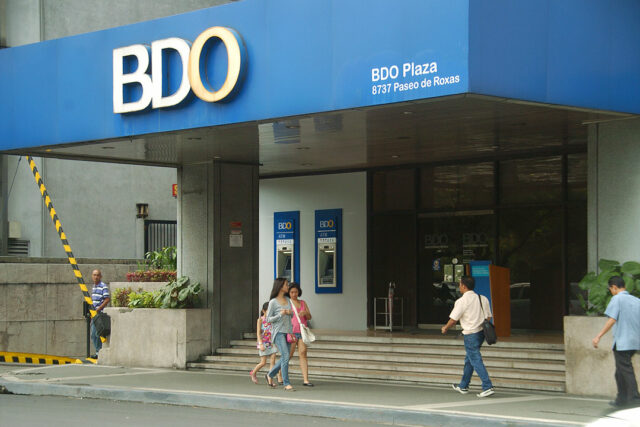
BDO Unibank, Inc.’s board has approved its merger with SM Keppel Land, Inc. (SMKL) as part of its restructuring plans, the banking company said on Monday.

In a regulatory filing, BDO said that it will be the surviving entity following the merger. The transaction is still subject to stockholders’ and regulatory approvals.

The merger will be presented for shareholder approval during the annual shareholders’ meeting on April 19.

“As a result of the merger, the assets, rights, and liabilities of SMKL will accrue to and be owned by BDO as surviving entity. In exchange, common shares of BDO will be issued to the shareholders of SMKL,” the disclosure said.

“In accordance with applicable Bangko Sentral ng Pilipinas rules and regulations, the respective boards of directors of the BDO and SMKL deemed it necessary and advisable to merge the constituent corporations into one, with BDO as the surviving entity,” it added.

According to BDO, the merger will be subject to the approval of the Bangko Sentral ng Pilipinas and the Securities and Exchange Commission.

“BDO will likewise secure a confirmation of non-coverage from compulsory notification from the Philippine Competition Commission since the merger is an internal restructuring. The timetable for implementation of the merger will depend on the timeline of the regulatory approvals,” it said.

The merger comes after BDO’s complete takeover of Keppel Philippines Properties, Inc. and Opon-KE Properties, Inc.’s combined 50% stake in SM Keppel in December of last year.

SMKL is a company engaged in developing, operating, and managing the Podium Complex in Mandaluyong City.

Shares of BDO rose by ten centavos or 0.07% to P144.90 apiece on Monday. — Revin Mikhael D. Ochave

Mattel is bringing Bob the Builder to the big screen

BOB THE BUILDER —MATTEL.COM

LOS ANGELES — Renowned toy company, Mattel, is embarking on its latest toy-inspired film project, Bob the Builder, the brand’s first animated theatrical movie.

The movie stars In the Heights actor Anthony Ramos as the voice of Roberto, “Bob,” who travels to Puerto Rico for a major construction job. There, he tackles various issues around the island and learns the true meaning of building as he experiences Caribbean-Latin culture.

Mattel has tapped Colombian-American writer Felipe Vargas to develop the story in collaboration with Alex Bulkley and Corey Campodonico of the animation studio ShadowMachine.

Bob the Builder is the latest in a number of film and television projects Mattel announced following the success of the Warner Bros. Barbie movie, which had box office sales that earned over $1.4 billion.

Other upcoming projects include the Netflix animated series Masters of the Universe: Revolution, centered on Mattel’s He-Man franchise, and a live-action Polly Pocket film, directed by Girls creator Lena Dunham and based on the tiny 1980s dolls by Mattel.

Mattel Films is also developing projects based on other popular toy lines, including American Girl, Hot Wheels, Magic Ball, Barney and more.

The Bob the Builder movie is based on the early 2000s British animated children’s series of the same name created by PAW Patrol writer Keith Chapman for Hit Entertainment and Hot Animation. The television show, centered on the namesake contractor and his friends, ran for 12 seasons.

Mattel purchased Hit, which owned the rights to Bob the Builder, Thomas & Friends and other preschool properties, in 2011 for $680 million.

Robbie Brenner, president of Mattel Films, said in a statement she hoped the project would introduce the character to new audiences. — Reuters

The baffling People’s Initiative

PEXELS-KRISIA-902288

ACCORDING to Pulse Asia, controlling inflation is the only issue considered as urgent by 72% of Filipino adults. Inflation is the average price increase over time of a basket of selected goods like rice and services like electricity.

The price of rice has gone up so high that many families can no longer afford it. According to Social Weather Stations, at least 10.4% of Filipino families or 2.7 million families, experienced involuntary hunger at least once in the past three months. Involuntary hunger is being hungry and not having anything to eat.

One would expect the people to run to President Bongbong Marcos to ask him to control inflation. People go to him to solve their problems. They know too well that as president, he is very powerful. Hundreds of jeepney drivers tried to march to the presidential palace last month to demand the rollback of the jeepney modernization program. The President responded by extending the deadline to April 30. In September last year, he gave away confiscated smuggled rice to poor families.

There may not be any more smuggled rice in the warehouses to give away. But the poor people can badger the President to buy local and imported rice and give it away or sell it at P20 a kilo. After all, that is what he promised during his campaign for the presidency. And 31,629,783 Filipinos believed him and elected him president. Vice-President Sara Duterte spent P125 million of her confidential and intelligence funds in only 11 days. President Marcos has confidential and intelligence funds amounting to P4.5 billion with which to buy rice and other basic food items to give away or sell to poor families at farmgate prices.

Yet some people find amending the 1987 Constitution more urgent. That baffles me immensely. A previous Pulse Asia survey showed 74% of Filipinos had little, or almost no knowledge of the Constitution. The People’s Initiative for Reform Modernization and Action (PIRMA) launched a People’s Initiative on Jan. 9. Noel Onate, national lead convenor of PIRMA, explained, “Our country is like a company with two boards of directors. Because of this, there is always deadlock, delay in decision-making and this is not good for the development of our economy.” He added that their advocacy is to form a unicameral legislative body. PIRMA was responsible for the TV advertisement that claimed that many Filipinos were “neglected” and “left behind” by the 1987 Constitution, and that the promised reforms on agriculture, education, and the economy all failed.

A People’s Initiative is the power of the people to propose amendments to the Constitution. This power is provided by the 1987 Constitution. The initiative must have at least 3% of the total number of registered voters in every legislative district as signatories. There are 253 districts, from Batanes to Tawi-Tawi. The total number of signatories must be at least 12% of the total number of voters registered with the Commission on Elections (Comelec). That means the initiative must be signed by at least 7,889,400 registered voters. That is 12% of the 65,745,500 voters registered with the Comelec spread all over the country.

The Philippine Statistics Authority (PSA) breaks down the Philippine population into these socio-economic classes: 1% AB, 9% C, 60% D, and 30% E. Therefore, 90% of the potential signatories to the initiative belong to the D and E socio-economic classes. The PSA generally describes the AB socio-economic class as the most affluent group whose homes and lifestyles reflect a disregard for economizing. The C class is the middle class whose homes and lifestyles indicate comfortable living. The D class is the lower class who basically have a hand-to-mouth existence. The E class is the extremely lower class who have great difficulty meeting their survival needs.

It would take time and effort to explain to those in the D and E classes what the initiative is all about and why it is necessary for them to endorse it by affixing their signatures. A previous People’s Initiative attempt was nullified by the Supreme Court in 2006. The Court said it was not clear that signatories knew what they were agreeing to.

The Comelec is tasked under the law to verify the more than 7.8 million signatures. After the signatures have been verified as authentic, then the members of both houses of Congress will convene as one assembly to deliberate on the proposed amendments. Whatever amendment they approve must be ratified by the majority (32.9 million) of registered voters in a plebiscite.

Each step of the process — signature gathering in every one of the 253 legislative districts, the verification of signatures, deliberations of proposed amendments, and the campaign for the ratification of the amendments — will take lots of time. There is no assurance that the amendments will be ratified by at least 32.9 million Filipinos. The prodigious and expensive initiative of the people could all be for naught.

Bishop Broderick Pabillo, former auxiliary bishop of Manila, said, “This is not an initiative from the people, but from politicians.” He advised the people not to sign the petition. The advisory comes too late. Mr. Onate of PIRMA said their initiative has been receiving support from the public, especially from the D and E socio-economic sectors. Former Ako Bicol Party-list representative Alfredo Garbin said in a newscast over the weekend that the signature campaign is nearing meeting the required number of signatures.

The Senate has issued a manifesto rejecting the people’s initiative, calling it a brazen attempt to violate the Constitution. It said, “We respect and recognize the people as our sovereign, with the right to call for constitutional amendments. We must, however, guard against any sinister and underhanded attempt to change the Constitution by exploiting our democratic process under the guise of a people’s initiative.”

Mr. Garbin asserts that its legal for constitutional amendments to be directly proposed by the Filipino people. But that is not the issue. Retired Senior Associate Justice of the Supreme Court Antonio Carpio sees the proposal as a revision of the Constitution, which would require a constituent assembly or a constitutional convention, not an amendment. He explained that the Philippines has a bicameral legislature under the 1987 Constitution. As the initiative is for both houses of Congress to convene as a constituent assembly and vote jointly, the initiative in effect reduces Congress to a unicameral body. As mentioned above, PIRMA’s advocacy is to form a unicameral legislative body.

In 2006, the Supreme Court ruled that while the enabling law for a people’s initiative was sufficient to amend the Constitution it was not enough to change the system of government, which entails a revision of the Charter. Groups allied with then President Gloria Macapagal Arroyo pushed the initiative to create a single parliamentary chamber. Senator Koko Pimentel said the current people’s initiative might be challenged by the Senate before the Supreme Court.
Albay Rep. Joey Salceda said the people’s initiative has gathered the required number of signatures needed to file their petition, including the 3% requirement for every legislative district. “We should allow the People’s Initiative to reach its local conclusion. We are in no position to stop it,” said he. In a Teleradyo Serbisyo interview, newly elected Deputy Speaker David Suarez said the suggested changes in the people’s initiative aim to meet the changing needs of the nation.

That members of the House of Representatives are keenly following the progress of a people’s initiative and zealously defending it mystifies me extremely. Members of Congress themselves have proposed amendments to the Constitution, like the removal of certain restrictions that deter foreign investments. But as Dr. Bernardo Villegas, who was the chairman of the committee on the national economy of the Constitutional Convention of 1986 that drafted the Philippine Constitution of 1987, pointed out in his column, the most onerous restrictions against foreign investments have already been removed through the amendment of the Public Service Act.

What that says is that if the proposed amendment is in the best interests of the country, members of both houses of Congress will vote in favor of it, regardless of whether they are voting separately or jointly. Why the current people’s initiative proposes that both houses of Congress convene as one assembly and vote jointly puzzles me greatly.

Senator Imee Romualdez Marcos emphatically said Speaker Martin Romualdez’ office is “definitely” behind the people’s initiative. She went so far as to say that the office offered millions worth of social aid in exchange for their constituents’ signatures. Expectedly, the Speaker denied the allegation.

But Senator Joel Villanueva on Friday claimed he has proof that the leadership of the House of Representatives was behind the “alleged” people’s initiative. He even disclosed that some people had told him that 80% to 85% of the signatories were unaware of the purpose of the documents they were signing. They were deceived into signing the sheets under the false pretense of receiving rewards.

If what Senators Marcos and Villanueva said is true, there must be a “sinister and underhanded attempt to change the Constitution,” as the Senate manifesto insinuated. We will know what the scheme is tomorrow. Senator Villanueva said Wednesday is Revelation Day.


Oscar P. Lagman, Jr. has been a keen observer of Philippine politics since the 1950s.

UnionBank books lower net profit

UNION BANK of the Philippines, Inc. (UnionBank) saw its net income fell by 27.78% last year due to one-time costs related to its acquisition of Citigroup, Inc.’s consumer business in the country.

The Aboitiz-led bank’s net profit stood at P9.205 billion in 2023, lower than the P12.745 seen in 2022, it said in a disclosure to the local bourse on Monday.

Its financial statement was unavailable as of press time.

“Topline revenues posted robust growth driven by a strong consumer business, higher margins, and customer transaction fees. The bank’s bottom line, however, was affected by integration costs related to the Citi consumer business acquisi-tion,” UnionBank said.

“The acquired Citi consumer business has consistently surpassed expectations, while UnionDigital attained profitability throughout its first full year of operations… This is evidenced by a growing individual depositor base, an uptick in new-to-bank credit cards, record-breaking downloads of our mobile app, and net promoter scores that surpass industry standards. Our commitment extends to completing the seamless integration of these new businesses this year. Im-mediately after, you will see a stronger and more profitable UnionBank,” UnionBank President & Chief Executive Officer Edwin R. Bautista said.

The bank’s revenues grew by 36% to P71 billion last year.

Meanwhile, operating expenses rose by 43.19% to P44.89 billion from P31.35 billion due to costs related to its digital arm UnionDigital and its acquisition of Citi’s consumer business in the Philippines.

“These new businesses were only included as part of the banking group in the second half of 2022. At the same time, the bank incurred one-time costs due to the integration of the acquired Citi consumer business,” UnionBank said.

UnionBank’s acquisition of Citi’s Philippine consumer banking business was completed in August 2022.

The transaction, valued at P55 billion, covers Citi’s credit card, unsecured lending, deposit and investment businesses, as well as Citicorp Financial Services and Insurance Brokerage Philippines, Inc., which provides insurance and investment products and services to its retail clients.

Meanwhile, UnionDigital was granted a digital banking license by the Bangko Sentral ng Pilipinas in July 2021. It began operating in July 2022.

UnionBank announced separately on Monday that it is looking to raise P10 billion through a stock rights offering.

The net proceeds will be used to infuse capital into UnionDigital, for retail loans and general corporate purposes.

UnionBank’s net interest income grew by 33.61% year on year to P51.98 billion last year from P38.9 billion in 2022. Interest expense more than doubled to P26.586 billion from P11.623 billion, while interest income rose by 55.49% to P78.562 billion from P50.525 billion.

Its net interest margin stood at 5.5% last year, up from 4.8% in 2022.

“The higher margin is attributable to the remarkable growth in consumer lending. The bank’s consumer loans now account for 58% of total loan portfolio, which is diversified across credit cards, mortgage loans, personal/salary loans, and vehicle loans,” UnionBank said.

Meanwhile, non-interest income grew by 41.38% to P18.802 billion from P13.299 billion.

Fee-based income went up by 54% year on year to P10 billion.

“The growth in fees was a result of the growing customer transactions such as bills payments, funds transfers, interchange, and other card-related fees,” the bank said.

UnionBank’s net loans and other receivables grew by 9.78% to P526.532 billion in 2023 from P479.627 billion in 2022.

On the funding side, deposits inched up to P712.58 billion from P711.304 billion.

Total assets grew by 4.79% to P1.145 trillion from P1.093 trillion.

Total capital likewise went up by 18.47% year on year to P175.587 billion.

“We have surpassed our customer growth targets. Our customer base is now close to 14 million. The strategic shift towards a more predictable, recurring income model has proven successful, reflected in our above-industry net interest margins and fees as a proportion of our balance sheet size. Our overall profitability, however, was affected by front-loaded costs incurred in the integration of new businesses… These investments are necessary to ensure the sustainability of our consumer business growth moving forward,” UnionBank Chief Financial Officer Manuel R. Lozano said.

The bank’s shares rose by 80 centavos or 1.85% to close at P44 apiece on Monday. — AMCS

COL Financial sets 7,100 level as base projection for PSEi in 2024

ONLINE stock brokerage firm COL Financial Group, Inc. has set the 7,100 level as its base projection for the country’s main index in 2024, driven by strong economic growth projections.

COL Financial also expects the stock market to reach levels between 8,200 and 9,400, COL Financial Chief Equity Strategist April Lynn Lee-Tan said during a media briefing on Monday.

However, the Philippine Stock Exchange index (PSEi) could drop to 5,800 and go as low as 4,300 if the market is affected by risks, she noted.

“At a base case scenario, the target is 7,100. Where does that come from? Because we’re forecasting a 10% earnings per share (EPS) growth for this year. So most likely it is 7,100,” Ms. Tan said.

“There is a very positive narrative for Philippine stocks that would seem to imply that a bull market is underway this year,” she added.

According to Ms. Tan, the PSEi could reach as high as the 9,400 level if it reverts back to the ten-year historical price-to-earnings (P/E) ratio of 16.2x. Alternatively, it could go as low as the 4,300 level if it posts a 9x P/E and a 10% annual drop in EPS.

She said some of the drivers for the PSEi’s growth in 2024 include slower inflation and interest rates, increased government spending, affordable and under-owned stocks, and the resilience of the country’s economy.

“Philippine stocks could finally enter a bull market this year as the outlook for economic growth looks bright, and as stocks are cheap and under owned,” Ms. Tan said.

Despite the positive outlook, Ms. Tan said the risks faced by the local bourse include higher inflation and interest rates, an escalation of geopolitical tension, negative surprises to the government budget, and the potential impact of a possible recession in the US economy on Philippine securities.

Ms. Tan said that investors are advised to focus on more “defensive stocks,” which are more resilient to economic downturns and those that provide income through cash dividends.

“It would also be wise for investors to keep some cash so they can capitalize on opportunities to buy stocks at even cheaper prices in case they are sold down indiscriminately because of contagion,” she said.

COL Financial Group Chief Technical Analyst Juanis G. Barredo said the PSEi is now working on its third downtrend line, with resistance at 6,700.

“Both the US and the Philippines have stretch marks and could do with some corrections; PSEi support at 6,400-6,300 then 6,100-6,000. Corrections should be taken as better entry windows for positions with potential upsides later at 7,100 to 7,500,” Mr. Barredo said.

“The risk points include slow or delayed rate cuts, US elections, and geopolitical threats affecting supply issues to countries. But keep your eye on the recovery ball and only use corrections as partial profit taking points and/or buy-back windows,” he added.

On Monday, the PSEi dropped by 55.41 points or 0.82% to close at 6,630.68 while the broader all shares index fell by 20.90 points or 0.59% to end at 3,487.71. — Revin Mikhael D. Ochave

Warning to exiled Putin critics as rockers face deportation

Bi-2

MEMBERS of a self-exiled Russian rock group known for opposing Moscow’s war in Ukraine face possible deportation home after being arrested in Thailand for breaking immigration rules.

Russian Foreign Ministry spokeswoman Maria Zakharova on Saturday accused them of sponsoring terrorism by publicly supporting Ukraine, raising concerns they may face criminal charges in Russia. The Russian consul in Phuket said that they’ll be sent to Bangkok for deportation based on their citizenship.

With four members of the Bi-2 band holding Israeli passports — including one who is also an Australian citizen — the issue has become a diplomatic headache for Thai authorities and will likely alarm Kremlin opponents who fled abroad. Russian artists critical of the government have encountered increasing difficulties in performing overseas, with opponents of President Vladimir Putin alleging a campaign to intimidate and silence them.

Since his invasion of Ukraine, Mr. Putin has waged an unprecedented crackdown on dissent, jailing or driving his critics into exile. An estimated 1 million Russians left the country in 2022 and 2023, including some prominent anti-war cultural figures, in the largest brain drain since the collapse of the Soviet Union.

Five of the seven Bi-2 members who were detained on Jan. 24 on the Thai resort island of Phuket for holding two concerts without a work visa are Russian citizens. Their manager said Sunday they’re already on their way to the Thai capital by bus. The musicians fear they’ve been targeted for their anti-war stance, according to their defense team.

PERFORMERS COMPLAIN
Maxim Galkin, a comedian now based in Israel, said he was barred from entering the Indonesian island of Bali for a planned show on Saturday despite having received a work visa two days before. Mr. Galkin, whose shows in Thailand were recently canceled by owners of the venues, said on Instagram that passport officers in Bali showed him a letter from the Russian government requesting Indonesia keep him out of the country.

Mr. Galkin was fined 100,000 dirhams ($27,225) by the United Arab Emirates over a performance in Dubai in which he proclaimed support for Ukraine, according to the Mash Telegram channel. Russian rap musician Alisher Morgenshtern has said on social media that the Arab country has imposed an entry ban on him.

Moscow has declared the lead singer of Bi-2, Mr. Galkin, and Morgenshtern as “foreign agents.”

The Thai foreign ministry didn’t respond to an e-mailed request for comment. When asked about the case, Israeli Foreign Ministry spokesman Lior Haiat said Israel “is trying to help” its citizens under arrest in Phuket. Australia’s Department of Foreign Affairs and Trade said it’s providing consular assistance to an Australian citizen detained in Thailand.

The challenges faced by Bi-2 are the result of concerted action by Russia and send a worrying signal, according to Dmitry Gudkov, a Kremlin opponent and former lawmaker who has taken refuge in Cyprus.

“The authorities want to frighten everyone living abroad to show that they can go after anyone, anywhere,” he said. — Bloomberg

Philippine peso 49.7% undervalued against us dollar (if based on big mac prices)

The Economist’s Big Mac Index is based on the theory of purchasing power parity (PPP), which states that in the long run, the exchange rates of any two economies should move towards the rate that would equalize the prices of an identical basket of goods. Using this approach for a Big Mac, one can estimate how much one currency is under- or overvalued relative to another. As of January 2024, a Big Mac costs $5.69 in the US compared to P161 in the Philippines, implying an exchange rate of P28.30 versus the dollar. Compared to the actual exchange rate of P56.30, this means that the peso is 49.7% undervalued.

Ovialand, Japanese firm Takara Leben team up for real estate expansion

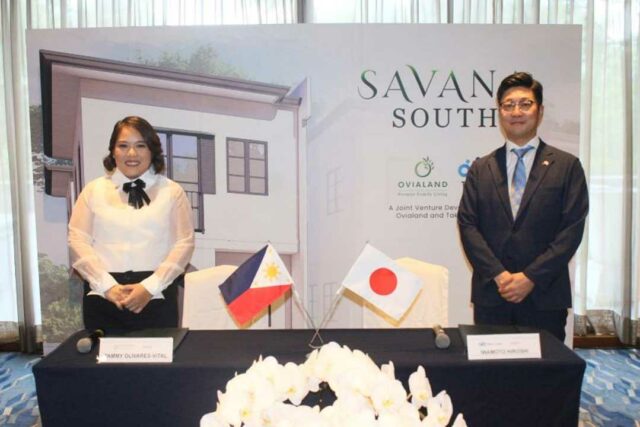
REAL ESTATE developer Ovialand, Inc. has teamed up with Japanese real estate firm Takara Leben to expand its portfolio and offer more premium affordable homes to Filipino families, its president announced on Monday.

The first project under the partnership will be the 6.5-hectare Savana South development in Laguna, Pammy Olivares-Vital, Ovialand president and chief executive officer, said during a briefing.

The project will have 657 homes that are expected to generate P1.97 billion worth of sales over four years.

Ovialand and Takara Leben will establish a joint venture company to serve as project developer.

In a separate interview, Ms. Vital said that Ovialand and Takara Leben are aiming to develop at least five projects within three years.

“Our joint venture with Takara Leben marks our commitment to continue expanding beyond the core markets we serve and build on the successes we have achieved throughout the years,” Ms. Vital said.

“Takara Leben is an experienced developer with a proven track record across various segments of the real estate industry, and we are pleased to be their partner in the Philippines as they continue expanding their presence in Southeast Asia,” she added.

Under a memorandum of understanding, Ovialand and Takara Leben will open projects across locations determined in accordance with the property developer’s plan to have a nationwide presence by 2030.

Takara Leben Director Hiroshi Iwamoto said the partnership with Ovialand is part of the company’s growth strategy in Southeast Asia.

“Our growth strategy in Southeast Asia involves partnering with housing developers that have differentiated themselves from competitors and are yet to fully realize their potential. Ovialand fulfills this criteria through their rapid turnover of high-quality and affordable homes to clients and their ambitious goals of expanding nationwide,” he said.

Ovialand has developments in Southern Luzon and Bulacan. Some of its developments include Savana, Santevi, and Sannera in Laguna; Caliya in Quezon; and Terrazza de Sto. Tomas in Batangas; as well as Seriya in Bulacan.

Established in August 1989, Takara Leben is a Japanese company involved in the development and sale of condominiums, leasing of real estate, and distribution of real estate. — Revin Mikhael D. Ochave

Westwoods Storeys secures preliminary EDGE certification

PUEBLO DE ORO Development Corp. (PDO) has secured a preliminary EDGE (Excellence in Design for Greater Efficiencies) certification for its Westwoods Storeys project in Cagayan de Oro City.

The property development arm of the ICCP Group is developing the Westwoods Storeys, a low-density, medium-rise condominium development, in barangay Carmen.

The forest-inspired development is offering 989 units in seven buildings, composed of studio and two-bedroom units.

“According to the Philippine Green Building Initiative (PGBI), which awarded the preliminary certification, the resource-efficient design of Westwoods Storeys will result in reductions of 28% in energy, 27% in water, and 32% in materials’ embodied energy compared to a local base case,” the company said.

PGBI’s assessment was based on Birch Tower, the first of seven buildings planned for Westwoods Storeys.

The building’s passive design such as reduced window-to-wall ratio and reflective walls, “result in saving 1,050 kilowatt-hours of energy per year.”

“Water-efficient fixtures and rainwater harvesting contribute to saving an estimated 9,405.70 cubic meters of water per year… Additionally, the construction materials used in the project contribute to saving 697.28 metric tons of carbon dioxide (tCO₂e) per year or equivalent to 136 homes’ electricity for a year,” PDO said.

EDGE is a green building standard and certification developed by International Finance Corp., which is a member of the World Bank Group. The certification helps property developers to build and brand “green” developments in a fast, easy, and affordable manner.

PDO was previously awarded preliminary EDGE certification by PGBI for the Pueblo De Oro Residences Malvar in its Townscapes Malvar township in Batangas.

Coal power and higher life expectancy

AMONG the common arguments against the retention of existing coal power plants in the Philippines and other countries is that coal is polluting and causes more sickness, lowering lifespans.

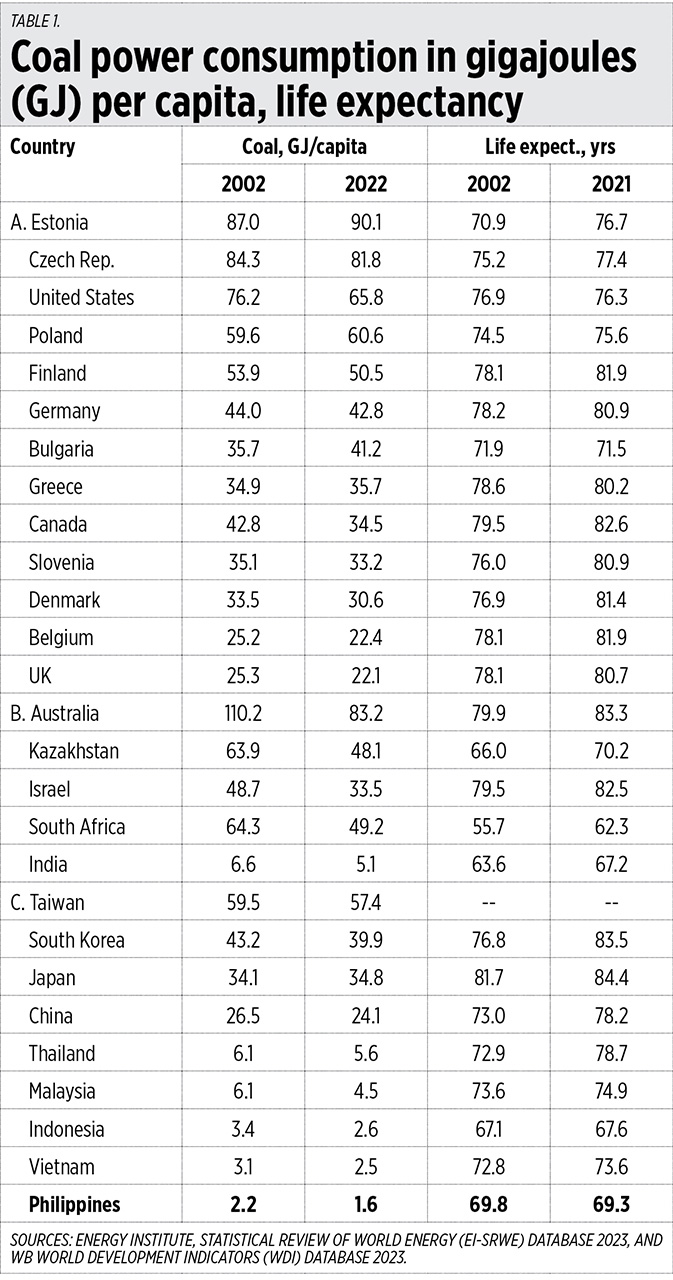
I intend to verify and quantify how honest or dishonest this statement is. For international data, I got the total coal consumption (in exajoules, EJ) by country, then divided it with their population in a given year, then I computed the coal consumption in gigajoules (GJ) per capita. I divided the countries into three. In Group A are the countries in Europe and North America, in Group B are selected Asia-Pacific countries plus South Africa, and in Group C are East Asian countries. The results:

1. Many countries in Group A had huge coal consumption until 2022. “Greenie” Germany had 43 GJ/capita, the US had 66, and Estonia had 90. In Group C, Indonesia had only 2.6 GJ/capita, Vietnam had 2.5, and Philippines had only 1.6. Yet the Philippines and other Asians are being bullied constantly to retire their coal plants soon — and prepare for blackouts and underdevelopment.

2. Despite repeated mantras of “decarbonization” and “exit from coal,” coal per capita consumption has generally been flat over the past two decades in many countries including greenie Europe and North America.

3. Countries with high coal consumption per capita also have long life expectancies of up to 82 years (Canada, Finland, Belgium). So there is no truth that as countries consume more coal power, their sickness incidence is high and life expectancy is low. It is a dishonest narrative (see Table 1).

The Philippines should expand our coal capacity, which is very small on a per capita level compared to greenie countries in the West. But there is endless bullying to decommission many of our coal plants, and opposing the expansion of existing ones, like the proposed coal expansion in Toledo, Cebu, partly on health grounds.

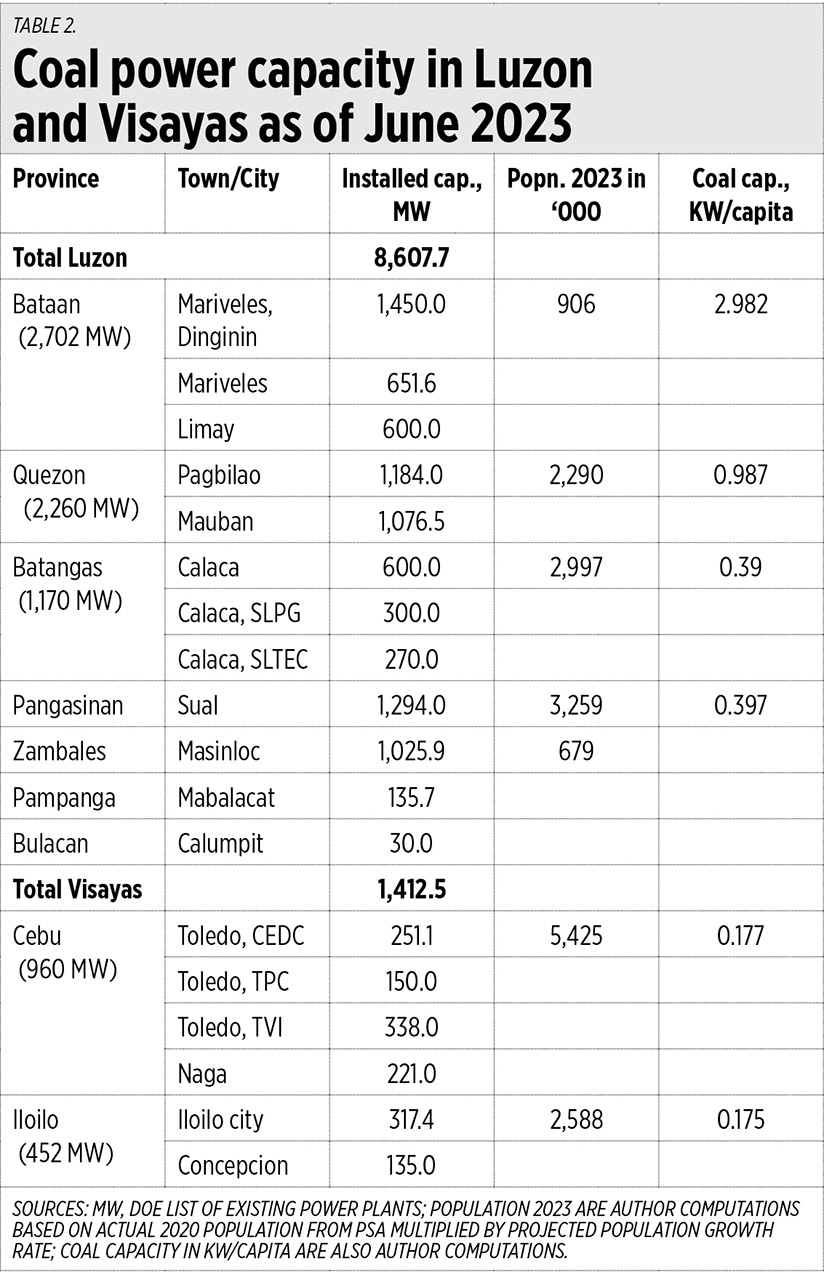
I computed the coal capacity per capita in some provinces in the Philippines. These are Bataan, Quezon, Batangas, and Pangasinan (see Table 2).

Bataan’s coal capacity per capita is 17 times larger than Cebu’s, Quezon’s is six times larger than Cebu’s. Are the people in Bataan and Quezon more sickly, dying faster, than the people in Cebu, or in provinces with no coal plants like the Cordillera and Cagayan regions, the Bicol region, the Negros provinces? Far out.

The Department of Energy (DoE) and other government agencies, national and local, should ignore the infantile concerns of the anti-coal groups based on dishonest health claims. The DoE should also consider allowing coal plants in greenfield investment while nuclear power development is still being discussed. Help enable the economy to have cheap and stable electricity, and help sustain fast growth.

UPSE RPA-PDEAA LECTURE
The University of the Philippines School of Economics (UPSE) Program in Development Economics Alumni Association (PDEAA) will hold the second annual Ruperto P. Alonzo (RPA) lecture on the topic, “The nuclear option and economic growth” on Feb. 8, Thursday, 3 p.m., at the UPSE in Diliman, Quezon City. It will be open to the public and media.

The main speaker will be DoE Undersecretary Sharon Garin, and the panel discussants will be Irma Exconde (PDE batch 37); Dr. Carlos Arcilla of the Philippine Nuclear Research Institute (PNRI); a physicist, Paolo Pagaduan, of the Asian Peoples’ Movement on Debt and Development; and representatives from Aboitiz Power (AP) and MGen/Meralco. The moderator will be Jay Layug, an UPSE alumnus.

Sponsors of the event are AP, Meralco, and Robinsons Retail Holdings, Inc.

It will be good to hear from the only energy companies in the Philippines which have explicitly declared their intention to develop nuclear energy in their future power portfolio. Robinsons, in the meantime, is one of the biggest power consumers in the country because of their many business units.


BIENVENIDO S. OPLAS, JR.is the president of Bienvenido S. Oplas, Jr. Research Consultancy Services, and Minimal Government Thinkers. He is an international fellow of the Tholos Foundation.

minimalgovernment@gmail.com

ADVERTISEMENT
ADVERTISEMENT