Home Blog Page 3707

PHL-Vietnam rice deal seen as hedge vs. weak domestic production

By Adrian H. Halili, Reporter

THE government’s five-year rice deal with Vietnam is expected to serve as insurance in the event production continues to fail to keep up with demand growth, analysts said.

Rizal Commercial Banking Corp. Chief Economist Michael L. Ricafort said that the import deal may be a hedge in case domestic rice production remains inadequate to meet the country’s needs.

“Demand for rice is relatively inelastic as a basic necessity for many Filipinos, though any easing of local rice prices or at least tempered rice price increases will still support demand,” Mr. Ricafort said in a Viber message.

In 2023, palay or unmilled rice production rose 1.5% to 20.06 million metric tons (MT). This translates to about 13.2 million MT of milled rice. The Department of Agriculture (DA) also has a 20 million MT palay target for 2024.

“The rice import deal will help address the gap between rice production and consumption,” he added.

The Philippine’s rice consumption was estimated at 13.5 million MT in 2023, according to the DA.

“Having an agreement with Vietnam will help assuage importers of their continued access to Vietnam rice despite the current tightness in global supplies,” according to Raul Q. Montemayor, national manager of the Federation of Free Farmers, in a Viber message.
The Philippines imported 3.6 million MT of rice in 2023, with Vietnam supplying 2.98 million MT, according to Bureau of Plant Industry.

On Tuesday, the Philippines and Vietnam signed a five-year supply agreement. The signatories were Agriculture Secretary Francisco Tiu Laurel, Jr. and Vietnamese Agriculture Minister Le Minh Hoan.

Vietnam agreed to supply 1.5 million to 2 million MT of white rice to Philippine through its private sector at “competitive and affordable prices.” About 40% of Vietnam’s rice exports are to the Philippines.

“Vietnam has been the largest supplier of rice to the Philippines. An agreement to assure the Philippines of regular access to rice over a five-year horizon reduces uncertainty and speculative activity in the rice market,” Monetary Board (MB) member Bruce J. Tolentino said in a Viber message.

Mr. Montemayor added that “the impact of this agreement on local prices will depend on how much will be the landed cost of Vietnam rice, and what measures the government will take so that any reduction in import prices is reflected in retail prices and not merely pocketed by importers and traders.”

The government recently extended lowered tariffs on rice via Executive Order No. 50. Rates for rice imports were kept at 35% regardless of the minimum access volume and country of origin.

On the other hand, Ateneo de Manila economics professor Leonardo A. Lanzona said that the Philippines may be forced to pay more for rice when the Vietnam price spikes.

“Costs are likely to be the same as not having the agreement. But if prices become higher in Vietnam, then we will forced to pay the Vietnam price because of this commitment,” Mr. Lanzona said via messenger chat.

Imported rice prices in Philippine markets range from P50-P55 per kilogram for well-milled rice. Premium rice sells for P54-P62, and special rice P57-P65, according to DA price monitors as of Feb. 1.

For 2024, the US Department of Agriculture has projected that Philippines will remain the world’s top importer of rice, with shipments hitting 3.8 million MT.

Closed fishing season ends in Northern Palawan

THE Bureau of Fisheries and Aquatic Resources (BFAR) said on Thursday fishing for round scad or galunggong can resume in Northern Palawan by the end of the closed fishing season.

“Commercial fishers may resume their operations within the conservation area to the northeast of Palawan, following the three-month ban on catching galunggong,” BFAR said in a statement.

BFAR has said it is anticipating increased supply of round scad with the resumption of fishing in Palawan, a major fishery servicing demand in Luzon.

Closed fishing season ran between Nov. 1 and Jan. 31. Sardine fishing was also banned in Northern Palawan during the period.

The closed fishing season is a conservation measure aimed at protecting fish during spawning, allowing fish stocks to regenerate.

Closed fishing seasons were also imposed in the waters off Ilocos, Negros Occidental, Capiz, and Cebu during the fourth quarter.

The fisheries sector reported a 5.2% decline in production in the fourth quarter. For 2023, fisheries production fell 6.5%, according to the Philippine Statistics Authority on Tuesday.
Galunggong production rose 0.2% in the fourth quarter. — Adrian H. Halili

ADB Asia-Pacific climate financing hits $9.8B in 2023

THE Asian Development Bank (ADB) said it committed close to $10 billion in climate finance to developing member countries in the Asia and the Pacific last year, up 46% from a year earlier.

“Climate change threatens the future of all development. 2023 was the hottest year on record and saw a swath of extreme, deadly climate impacts in our region,” ADB President Masatsugu Asakawa said in a statement.

“As the climate bank for Asia and the Pacific, ADB is deeply committed to helping our developing members de-fossilize their economies, progress along their climate transition pathways, and achieve their net-zero goals. We must act together, with urgency and at scale,” he added.

The bank’s commitment to climate finance to the region included $5.5 billion for mitigation and $4.3 billion for adaptation financing.

“The bank’s climate adaptation finance commitments in 2023 mean that ADB has provided more than $10.4 billion in cumulative adaptation financing from 2019 to 2023 — surpassing its target of $9 billion in 2019–2024 a year early,” the bank said.

The ADB said that adaptation financing will be crucial for the region as it is more likely to experience extreme weather events such as droughts, heavy rains, and intense heat.

“Asia and the Pacific originates more than half of global carbon dioxide emissions while also being acutely vulnerable to the impacts of climate change,” it said.

“The region needs to invest an estimated $3.1 trillion per year in energy and transport assets alone to meet net zero by 2050 — around 50% more than current levels,” it added.

The ADB has said it is targeting to deliver $100 billion in climate financing to its developing member countries by 2030.

Part of its commitments last year include the $1-billion loan for the Davao Public Transport Modernization Project.

The project aims to modernize the public transportation system of Davao City through the procurement of about 1,100 electric buses. The fleet is expected to cut 60% of annual greenhouse gas emissions from public transport in the city.

In December, the ADB announced it will allocate $10 billion in climate finance for the Philippines between 2024 and 2029.

In 2022, the ADB was the Philippines’ top provider of active official development assistance, accounting for 33.47% of the total or $10.85 billion. — Luisa Maria Jacinta C. Jocson

IPOPHL says sellers of counterfeit goods undermine investment-attraction efforts

THE Intellectual Property Office of the Philippines (IPOPHL) said sellers of counterfeit goods are undermining efforts to attract investment to the Philippines.

In a statement, issued on Thursday after a shopping center in San Juan City was listed as a “notorious” market for counterfeits by the Office of the US Trade Representative (USTR), IPOPHL said counterfeiting is a “crime that harms the reputation of legitimate businesses, dampens investor trust and evades taxes.”

“IPOPHL urges all sellers to uphold legitimate trade and support the sale of locally made products to create a safe intellectual property (IP)-driven economy where businesses can flourish,” it added.

Greenhills Shopping Center was on USTR list of Notorious Markets for Counterfeiting and Piracy in 2023.

The list also includes China’s Silk Market, India’s Heera Panna indoor market, and Thailand’s MBK Center.

Meanwhile, IPOPHL said it is working with the National Committee on Intellectual Property Rights (NCIPR) to eliminate stores selling counterfeit and other IP-infringing goods in Greenhills through the Overhaul Greenhills project.

“We will continue to work with rights holders, the San Juan local government and the Greenhills management on seizures, issuance of warning letters and updates on the development of the shopping center into a high-end mall,” the IPOPHL said.

“As the lone Philippine market in the watch list, Greenhills remains a priority in IPOPHL and NCIPR’s mission to clear the markets of counterfeit and other intellectual property (IP) infringing goods,” it added. — Justine Irish D. Tabile

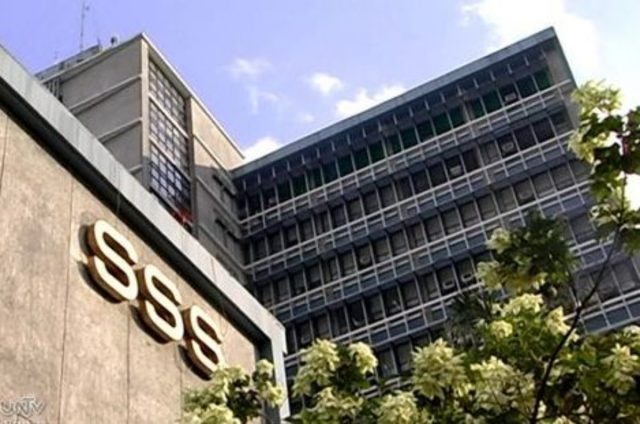
SSS provident fund contributions nearing P80B

CONTRIBUTIONS generated by the Social Security System’s (SSS) Workers’ Investment and Savings Program (WISP) amounted to P79.51 billion at the end of December, the Department of Finance (DoF) said.

The contributions were sourced from 6.02 million members, the DoF added.

WISP is targeted at private-sector employees, self-employed individuals, overseas workers, and voluntary members who are actively contributing to the regular SSS program. They must also have a monthly salary credit exceeding P20,000.

“Established in January 2021 as part of Republic Act No. 11199, WISP is a mandatory provident fund scheme that serves as savings builder for private-sector workers and other individuals who are paying members of the SSS,” the DoF said.

“This safe, convenient, and tax-free individual retirement savings plan allows members to invest and earn returns from their contributions,” it added.

WISP members contribute alongside their regular SSS payments. They are also entitled to disability and death benefits and a retirement fund, apart from their benefits under the regular SSS program.

Contributions to WISP Plus, a voluntary retirement savings program launched in December 2022, hit P391.63 million from around 30,536 members.

WISP Plus is offered only to SSS members and serves as an “additional layer of support apart from regular retirement benefits.”

As of November, the WISP and WISP Plus investment portfolios were valued at P76.34 billion and P1.41 billion, respectively. Annualized returns on investment for WISP and WISP Plus were reported at 5.33% and 6.87%, respectively. — Luisa Maria Jacinta C. Jocson

Tourist arrivals projected at 8.21 million in 2024 by BMI

FITCH SOLUTIONS unit BMI Research said Philippine tourist arrivals are expected to return to pre-pandemic levels this year after a strong 2023 performance.

In a commentary, BMI said that it projects tourist arrivals at 8.21 million this year, outperforming 2023 and 2019, the last full year before the pandemic.

“The country’s continued recovery from the negative impact of the coronavirus pandemic will be driven by increasing arrivals from key source markets in Asia, Europe and North America, primarily the US,” it added.

The research firm said growth will primarily be driven by visitors from South Korea, China, the US, Japan, and Australia.

“We forecast arrivals to continue to increase over the remainder of our 2024-2028 forecast, reaching a projected 9.5 million arrivals in 2028,” it added.

BMI said that despite the projected average annual growth rate of 15.8% from 2024 to 2028 in tourist arrivals, the country faces short term risks, particularly inflation.

“We note that there are short term risks to our outlook for the Philippines arrivals stemming from heightened consumer inflation in the Philippine’s key source markets,” it said.

“We expect inflationary pressures to ease over 2024, but consumers will remain price sensitive in the short term, and this is likely to be reflected in increased travel to domestic and short-haul destinations, trading down from long-haul international destinations, which have a higher price point,” it added.

However, BMI said that it remains bullish as the country remains a relatively affordable destination and is likely to benefit from strong regional arrivals.

The Department of Tourism reported tourist arrivals for 2023 of 5 million, which represents 61.1% of pre-pandemic levels of 8.19 million.

BMI said that this was slightly higher than its expectations for 2023, which was 4.9 million arrivals. — Justine Irish D. Tabile

Red Sea ship attacks seen adding to cost of transporting oil, other goods

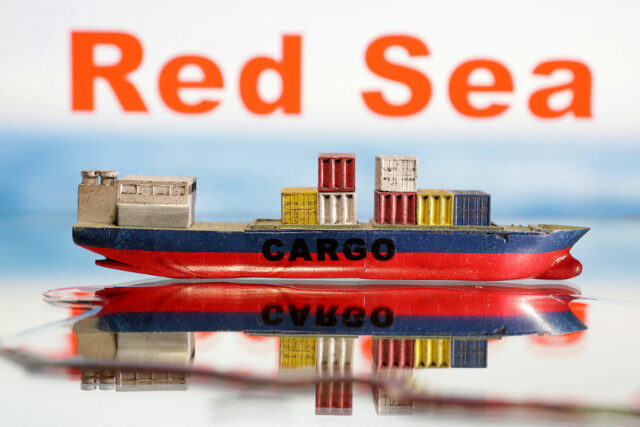
A CARGO SHIP boat model is seen in front of “Red Sea” words in this illustration taken on Jan. 9, 2024. — REUTERS/DADO RUVIC/ILLUSTRATION/FILE PHOTO

THE attacks on Red Sea shipping will be felt by consumers mainly in the form of higher shipping costs if the disruptions continue, the Department of Energy (DoE) said.

“Kung magpapatuloy ang issue ng Red Sea, talagang mataas ang trade costs. At the same time, may premium sa product lalo na sa insurance because of the risk in passing the Red Sea,” (If the Red Sea issues continue, trade costs will rise, mainly in the form of higher insurance premiums for ships transiting the Red Sea,) Rodela I. Romero, assistant director of the DoE Oil Industry Management Bureau, said by phone.

Ms. Rodela said tankers forced to take alternate routes will take more time to reach their destinations.

The Red Sea runs along the western shore of Saudi Arabia, one of the world’s largest oil producers. In terms of the tanker trade, the Red Sea route mainly affects shipping headed for the Suez Canal on the way to Europe. Oil coursed through the Persian Gulf to Asia avoids the Red Sea entirely.

Cargo ships and tankers crossing the Red Sea have experience attacks from Houthi rebels in Yemen. About 12% of global trade or 30% of overall global container traffic goes through its northern end — the Suez Canal.

“Though perceived risks from the Red Sea crisis are on the rise, there have been no major drops in supply so far, with container ship transits down much more than oil tankers. Oil in-transit volumes have yet to show any structural shift related to rerouting ships away from the Red Sea,” the DoE said.

Ms. Rodela said that a drop in the US oil stockpile is also influencing prices.
The Philippines imported in the first half of 2023 3,476 million liters (ML) of crude oil, up 23.7%.

“It is important for the Philippines to understand that oil remains the largest energy source in the country — even more than coal,” Albert Dalusung II, energy transition advisor of the Institute for Climate and Sustainable Cities, said in an e-mail.

“This is because of our dependence on oil for transport, an energy use that is even bigger in energy terms than the entire electricity sector,” he added.

Bienvenido S. Oplas, Jr., president of Minimal Government Thinkers, said that the Philippines should not focus on oil price fluctuations but on “raising and sustaining production of goods and services” — focus on growth.

“A rise of $5-10/barrel over 2021 level like 2023 levels won’t matter much if there is more manufacturing, transportation, agriculture, other sectoral growth,” he said in a Viber message.

On Monday, fuel retailers announced a per liter increase in the price of gasoline, diesel, and kerosene by P2.80, P1.30, and P0.45, respectively.

“The market’s primary concern at the moment is that, should the ongoing conflict in the Middle East escalates, supply flows and production could be disrupted,” Jetti Petroleum, Inc. President Leo P. Bellas said.

“The tension in the Red Sea has already affected trade flows as oil and gas tankers have diverted to a longer but safer route around Africa.”

Ms. Rodela said that the DoE’s primary mandate is to ensure the continuous supply of petroleum products in the Philippines.

“We are ensuring that the petroleum products that we buy are compliant with standards on quantity and quality — correct size, good quality,” she said. — Sheldeen Joy Talavera

Philippines to buy submarines in bid to defend claims in South China Sea

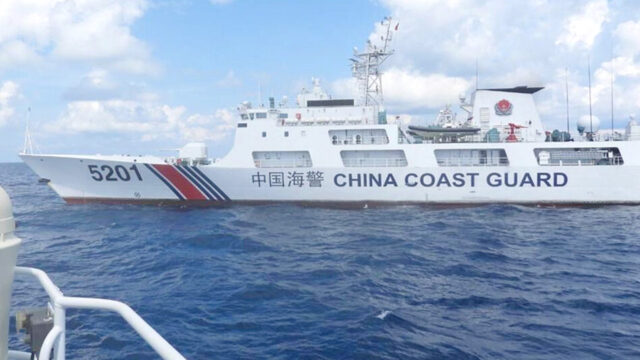
PHILIPPINE COAST GUARD FILE PHOTO

PHILIPPINE President Ferdinand R. Marcos, Jr. has approved the third phase of the military’s modernization, which includes the purchase of the country’s first submarine to defend its maritime sovereignty in the South China Sea.

The third phase of modernization reflected a shift in strategy away from internal to external defense, Philippine Navy spokesman for the West Philippine Sea Roy Trinidad said on Thursday. “We may not be a large navy… but we would have a navy that will take care of our territorial rights and sovereignty.”

The third phase of the modernization plan, which was revised to make it more attuned to the country’s needs, is estimated to cost 2 trillion pesos ($35.62 billion) and will be implemented over several years, Mr. Trinidad said.

The announcement comes at a time of growing tensions with China over sea disputes in the South China Sea. Manila refers to that part of the South China Sea within its exclusive economic zone as the West Philippine Sea.

Mr. Trinidad could not immediately say how many submarines the Philippines intends to buy, but he said “definitely more than one.”

France, Spain, Korea and Italy have shown interest in supplying the Philippines with submarines, he added.

Southeast Asian neighbors like Indonesia and Vietnam already have submarine programs.
While the first and second phases of the military’s modernization plan were “land-centric,” the third phase will seek, among others, to boost military capabilities in the South China Sea, Mr. Trinidad said.

Defense Secretary Gilberto C. Teodoro, Jr. last month said acquisitions under the third phase would focus on an array of capabilities ranging from domain awareness, intelligence and deterrence capabilities in maritime and aerial space.

Beijing and Manila have traded sharp accusations in recent months over a succession of run-ins in the South China Sea, where each has overlapping sovereignty claims, including charges that China in December rammed a ship carrying the Philippine Armed Forces chief of staff.

China claims most of the South China Sea, parts of which are also claimed by the Philippines, Brunei, Malaysia, Taiwan, Vietnam and Indonesia. An international tribunal in 2016 voided China’s claim, which Beijing has rejected.

Also on Thursday, political analysts said China is benefitting from the worsening rift between Mr. Marcos his predecessor Rodrigo R. Duterte, who has proposed to separate Mindanao island from the Philippines.

“Duterte’s rambles are mostly far from plausible,” Joshua Bernard B. Espeña, who teaches international relations at the Polytechnic University of the Philippines, said in a Facebook Messenger chat on Thursday. “But his persona and rhetoric represent danger against a united Filipino resolve needed against China’s classical divide-and-conquer playbook to secure the first island chain.”

“China needs this domestic political rift more than ever since the Philippines now integrates the Taiwan Strait and West Philippine Sea frontiers as a singular theater of operations for strategic calculus,” he added.

‘NOISES OF TREASON’
Mr. Duterte said there’s now a “regrouping of the political arena” that would lead to the campaign for an independent Mindanao, which he said can stand on its own considering its natural resources.

“It is not a rebellion, not a bloody one,” he said. “We will follow the process provided by the United Nations to gather signatures, verify these under oath and with the presence of other (witnesses), signify that the people want to separate.”

While not plausible, a separate Mindanao could create serious security compromises for Manila, Mr. Espeña said, adding that it would force the Philippine military to revert to internal security operations and weaken external defense efforts.

“Such is politically consequential and logistically unsustainable. The Philippines cannot fight two enemies from two frontiers,” he said. “Moreover, radical extremism inspired by the Islamic State is just around the corner to exploit any political vulnerabilities.”

A Mindanao that is separate from the Philippines would become “a buffer zone for China in its ambitious conquest of the West Philippine Sea,” said Chester B. Cabalza, founder of Manila-based International Development and Security Cooperation, referring to parts of South China Sea within the country’s exclusive economic zone.

“Magnifying the bigger picture of the current geopolitical puzzle in the country, a divided country works for China amid the impending family feud of the Dutertes and Marcoses,” he said via Messenger chat.

President Ferdinand R. Marcos, Jr., 66, has veered away from his predecessor’s pivot to China, boosting the country’s presence in the South China Sea and pursuing security ties with countries critical of Beijing, including the US.

Mr. Marcos in February last year gave the US access to four more military sites on top of the five existing ones under their 2014 Enhanced Defense Cooperation Agreement (EDCA).

Mr. Espeña said the US is likely concerned about Mr. Duterte’s push for an independent Mindanao since Washington and Manila face common security challenges.

“Since Washington maintains a military presence on a rotational basis in the Philippine archipelago via EDCA, any sign of instability in the Philippines will also concern them,” he said.

He called on the Marcos government to “correct noises of treason” by empowering members of the National Security Council to enforce the law.

“The incumbent government must also continually support the upcoming Bangsamoro Parliamentary elections in 2025,” he said. “This support weakens any calls for division by framing secessionism as an unfruitful move for all parties concerned.” — Kyle Aristophere T. Atienza with Reuters

Marcos told to prioritize key issues over ‘Cha-cha’

By Kyle Aristophere T. Atienza, Reporter

THE PHILIPPINES’ largest business group has called on the government of President Ferdinand R. Marcos, Jr. to work on lowering energy and logistical costs as well as deal with geopolitical risks instead of creating political instability by pushing changes to the 1987 Constitution.

The Philippine Chamber of Commerce and Industry (PCCI) also cited the slow progress in the country’s anti-corruption fight and the political squabble between the President and his predecessor Rodrigo R. Duterte, which it said is undermining the country’s image on the global stage.

Rising energy and shipping costs and worsening geopolitical conflicts are hurting Philippine businesses and making the country unattractive to foreign investors, PCCI Chairman George T. Barcelon said by telephone.

“All these costs, we can see a steady increase in the trend,” the businessman said. “These issues should be addressed first before Charter change (‘Cha-cha’).”

The outlook for Philippine energy is bleak as the Malampaya gas field gets depleted by 2027. Malampaya, whose supply is expected to dwindle this year, is the Philippines’ only indigenous source of natural gas.

Output loss is expected to result in 12- to 15-hour rotational brownouts across the main island of Luzon.

Meanwhile, tensions in the Red Sea, a major global shipping route, have remained elevated as Iran-backed Houthi rebels continue to attack cargo ships and tankers amid the conflict between Israel and Gaza, affecting the movement of goods globally and driving shipping rates up.

Philippine Economic Zone Authority Director-General Tereso O. Panga earlier said rerouting ships around the Red Sea could make shipping costs 15% more expensive due to additional fuel per trip between Asia and Northern Europe.

He also said rising fuel prices spurred by wars including Russia’s invasion of Ukraine, and El Niño that is is expected to last until the second quarter is affecting Philippine farm output.

Philippine inflation averaged 6% in 2023, the second straight year that it breached the central bank’s 2-4% target.

Senators and congressmen continue to trade accusations amid the push to amend the Constitution, and the President and his wife have been dragged into the mess.

The Senate has rejected a so-called people’s initiative for Charter change, which Mr. Duterte and his allies have linked to Mr. Marcos and his cousin Speaker Martin G. Romualdez.

The Commission on Elections on Monday suspended proceedings on the initiative, which senators led by presidential sister Maria Imelda “Imee” Marcos are investigating.

“What is the extent of this ‘Cha-cha?’” Mr. Barcelon asked. “We don’t see any new specific issues that this Charter change seeks to address,” he added, noting the business community is wary about where it is headed.

He said the country in recent years has relaxed restrictions in many sectors without constitutional amendments.

‘NOT HELPING’
He cited changes to the Public Service Act in 2022 to allow full foreign ownership in key domestic sectors including airports, railways, subways, tollways, telecommunications and domestic shipping, as well as amendments to the Retail Trade Liberalization Act that lowered the minimum paid-up capital requirements for foreigners.

Mr. Marcos on Tuesday night said his government is after economic provisions of the Charter. “We have been in continuous discussion with both Houses in recent days. In fact, I met with our legal luminaries and tried to find a way because I’m really after the economic provisions,” he told reporters while on a state visit to Vietnam.

The “Cha-cha” push is also a source of tension between Mr. Marcos and Mr. Duterte, who on Sunday accused him of being a drug addict.

National Economic Development Authority Secretary Arsenio M. Balisacan on Wednesday said political instability is bad for the local investment climate.

Mr. Marcos and his predecessor’s daughter Sara Duterte-Carpio ran in tandem in the 2022 elections under a platform of unity.

“There has to be a cease-fire,” Mr. Barcelon said. “We have a former and a present leader talking about those topics, and we think it projects the wrong image for our country. It’s not helping any, especially at a time when we face headwinds.”

He also lamented the slow progress in the fight against corruption.

Philippines ranking in Transparency International’s 2023 Corruption Perceptions Index inched up one spot to 115th out of 180 countries, while its score remained at a record low.

“We have not improved a lot,” the PCCI chief said. “It shows that corruption is still an issue. When you talk about the issue of ease of doing business, that can be translated into both the bureaucracy and, on the flip side, corruption.”

“That has also always been on the mind of various business groups.”

Mr. Barcelon said Vietnam has attracted foreign direct investments (FDI) despite foreign ownership restrictions in some of its key sectors.

Vietnam had FDIs worth $112 billion from 2010 to 2019, compared with $57 billion for the Philippines. Its merchandise exports in 2019 hit $300 million, compared with $70 million for the Philippines.

“We have all the conditions to attract FDIs,” the businessman said. “But somehow, it’s a matter of perception. And this political squabble is affecting our image. It’s causing uncertainties.”

“There are other aspects that we know very well have been there. Our logistics costs are one of the highest. Our energy costs are also among the highest. In the immediate term, these issues must be addressed,” he added.

PHL House think tank proposes 3 tiers for sugar tax

PHILSTAR FILE PHOTO

A TAX on sweetened drinks has failed to stop Filipinos from consuming unhealthy beverages, forcing many of them to shift to cheaper alternatives instead, according to a House of Representatives think tank.

“While it has raised billions [of pesos] in revenues for the government, its capacity to curb sugar-sweetened beverage consumption is expected to vary wildly from product to product,” the Congressional Policy and Budget Research Department (CPBRD) said in a report posted on its website.

The government raised an average of P38 billion from 2018 to 2022 from the sugar tax. But it only managed to narrow the gap between the per liter prices of the most expensive sugar-sweetened beverages and more affordable variants.

“This, in turn, afforded consumers ample opportunities for substitution, the CPBRD said.
The government charges P6 per liter of sweetened beverages sweetened with caloric or noncaloric sweeteners and P12 per liter for beverages sweetened with high-fructose corn syrup amid a rising incidence of obesity.

The tax increased the price of imported soda by 20%, causing a 10% decrease in demand in 2018, the think tank said.

“This observation, in turn, suggests that Filipinos are, given prevailing prices and economic conditions, relatively insensitive to price increases in Coca-Cola,” according to the report.

It also noted that the sugar tax had failed to distinguish the risks of sugar content for each drink. “As a result, the tax fails to provide consumers with critical information needed to make truly informed decisions.”

The tax for sweet drinks should have a “three-tier system” based on sugar content to push manufacturers to resort to drinks with low-sugar content, the House think tank said.

“This tax structure can be strongly argued to have the capacity to nudge consumers towards low-sugar products and encourage manufacturers to keep the sugar content of their products as low as possible as it imposes appreciable costs on high-sugar, sugar-sweetened beverages,” it added.

While a specific tax per gram of sugar content would generate the most economically optimal outcomes, it is likely difficult, if not impossible, to administer, according to the report. “The next best alternative would be a tiered sugar content tax regime wherein tax rates are defined by sugar content cutoffs.”

It cited the United Kingdom soft drink industry levy, in which a one-liter bottle of Coca-Cola is taxed under the second tier given that it has over 7.5 grams of sugar per 100mL.
The think tank also noted that Filipino companies shifted from high-fructose corn syrup as sweeteners because of the higher tax.

“The paper therefore argues that a sugar content tax regime is more effective in giving consumers price signals that clearly distinguish between high-sugar, high-risk sugar-sweetened beverages and low-sugar, low-risk sugar-sweetened beverages,” it said.

Moving toward a sugar content-based taxation approach supported by legislation on consumer education could optimize health outcomes while minimizing unintended health consequences, it added. — Beatriz Marie D. Cruz

Pangilinan sees chance to attract supporters amid UniTeam discord

Francis “Kiko” N. Pangilinan — PHILSTAR

ONE of the main figures of the opposition in the Philippines has called for openness among their ranks to any dialogue with those supporting the personality-driven alliance of President Ferdinand R. Marcos, Jr. and Vice President Sara Duterte-Carpio as it may tend to a shift in political tides.

Speaking on Thursday, former senator Francisco “Kiko” N. Pangilinan of the Liberal Party said insulting words aimed at people who backed the so-called UniTeam alliance in 2022 polls does “not help advance the cause we fought for then and continue to fight for now.”

In particular, Mr. Pangilinan was referring to social media posts and memes with the phrase, “tama nga kami” (we are correct) and followed by the phrase “tanga kami” (we are stupid).

There have been calls for opposition forces to recalibrate their strategies to expand their bases in the face of the word war between the President and his predecessor, Rodrigo R. Duterte, which is believed to widen the gap between Mr. Marcos and Ms. Duterte-Carpio, who both ran under a platform of unity in the 2022 elections.

“We need to persuade and convince. We do not need to ridicule and insult,” Mr. Pangilinan said. “We need to communicate and listen, not insult and start a fight.”

In a rally in Davao City last Sunday, Mr. Duterte called his successor a “drug addict” and his son, Davao Mayor Sebastian Z. Duterte, publicly asked Mr. Marcos to resign. The following day, Mr. Marcos remarked that his predecessor’s tone could be a result of fentanyl — a drug Mr. Duterte previously said he had taken as a pain reliever.

While the President has since said he would maintain Ms. Duterte-Carpio in his Cabinet and, in turn, the Vice President thanked Mr. Marcos for his trust in her, their coalition is seen by opposition forces as an opportunity to provide political alternatives to the public.

“A divided UniTeam means a division in their numbers which is ultimately a good opening for the opposition — old or new,” WR Numero Research chief executive officer and President Cleve V. Arguelles said in a Facebook Messenger chat.

Mr. Arguelles stressed that getting elected to power “is a math game as much as it’s a battle of ideas and platforms.”

“If we look at past polling data and election results, the Marcos and Duterte factions when divided can mobilize less numbers than what they currently enjoy. Like around 30% each,” he said. “That leaves the rest of the country, at around 40%, to be convinced that a country led by the opposition leaders is a country better governed.” — Kyle Aristophere T. Atienza

SC denies seaman’s benefits

BW FILE PHOTO

THE SUPREME COURT (SC) has affirmed a Court of Appeals (CA) ruling dismissing the claim of a seafarer’s widow to Social Security System (SSS) death benefits, failing to prove an employer-employee relationship with a shipping firm when her husband died.

In an eight-page resolution, the SC said the widow of the seaman in this case failed to provide evidence that her husband’s accident in 1994 that resulted in a contusion in his left lumbar was the cause of his death six years later.

Also, the High Court affirmed the CA ruling that upheld the SSS finding that the widow had failed to prove her husband’s employer-employee relationship with Philimare Shipping, Inc. at the time of his death.

It cited that the Employees’ Compensation Commission (ECC) had also denied the death benefits claim, since her husband stopped working as a seaman until the time of his death.

The commission had ruled that there was no proof that the seaman was suffering from a lung ailment at the time he was onboard a vessel. The High Court noted that the widow failed to include certified true copies of the ECC’s decision in her claim.

“Clearly, petitioner failed to substantiate her claim that her husband’s accident in March 1994, which led to a contusion on his left lumbar, ultimately led to his death in December 2000 due to tuberculosis,” the SC ruling stated. — John Victor D. Ordoñez

ADVERTISEMENT
ADVERTISEMENT