
How PSEi member stocks performed — February 28, 2024

Here’s a quick glance at how PSEi stocks fared on Wednesday, February 28, 2024.


Here’s a quick glance at how PSEi stocks fared on Wednesday, February 28, 2024.

The Philippines placed 41st out of 44 emerging markets with a score of 41.1 out of 100 in the latest edition of the biennial Global Retail Development Index (GRDI) by global management consulting firm Kearney. The index evaluates the attractiveness of countries to retailers based on multiple factors such as economic health, government policy, and consumer behavior.


THREE business groups said on Wednesday that they have asked the government to delay the increase in contributions to the Philippine Health Insurance Corp. (PhilHealth), which is scheduled to take effect this year.
In a letter addressed to President Ferdinand R. Marcos, Jr., the Philippine Chamber of Commerce and Industry, the Employers Confederation of the Philippines, and the Philippine Exporters Confederation, Inc. pressed for the suspension of the 5% premium increase.
“With utmost respect, we unanimously support Health Secretary Teodoro J. Herbosa’s call… to suspend the premium increase in 2024,” the business groups said.
Mr. Herbosa also chairs PhilHealth.
“(Mr. Herbosa) has stated that the proposed action would not significantly impact PhilHealth’s financial standing, considering that the agency has sufficient funds to continue providing benefits and services to its members,” they added.
They said that this was further affirmed by PhilHealth President and Chief Executive Officer Emmanuel R. Ledesma, who said the health insurer’s funds will not be depleted if the contribution hike is suspended.
Under Republic Act No. 1123 or the Universal Health Care law, PhilHealth premium contributions should have increased by half a percentage point yearly starting 2021 until it reaches the 5% target by 2024. The hikes were suspended due to the pandemic.
However, the business groups argued that the Universal Health Care law still faces various challenges in offering comprehensive healthcare coverage to all.
Citing a study by the Philippine Institute for Development Studies, they noted ongoing issues related to access and affordability, with individuals, despite being PhilHealth members, still shouldering a significant portion of hospital expenses.
They noted the outsized impact on vulnerable groups like the elderly, women, and those in rural and impoverished areas, “who disproportionately shoulder the burden due to limitations in national health insurance coverage.”
“In light of these circumstances, we humbly propose that PhilHealth momentarily redirect its focus on service enhancement, delaying the hike until 2025,” they said.
“This temporary reprieve would provide much-needed relief to the majority of vulnerable micro and small establishments, as well as Filipino workers who find it challenging to comply with the proposed premium hike, especially with the rising prices of commodities,” they added. — Justine Irish D. Tabile

THE government weather service, known as PAGASA (Philippine Atmospheric, Geophysical and Astronomical Services Administration), said the probability of the La Niña rains starting as early as June is now estimated at 55%, bringing a measure of relief from the current dry conditions.
Ana Liza S. Solis, officer-in-charge at PAGASA’s Climatology and Agrometeorology Division, told a House committee that the weather service now sees a more-than-even probability that the rains will come at their accustomed time of year, suggesting a possible end to the prevailing dry conditions brought on by El Niño.
PAGASA has said before that the El Niño transition to the wetter La Niña will come sometime in the second half.
“There are increasing odds of a La Niña possibility developing in June, July, and August to around 55%,” Ms. Solis told the House of Representatives Agriculture and Food Committee.
Nevertheless, PAGASA sees the effects of El Niño possibly lingering in parts of the country for a few more months.
“The peak (El Niño) impact is March, April, May, and June,” Ms. Solis said.
The areas at risk of lingering dry conditions are mostly in Luzon — Metro Manila, Laguna, Pangasinan, Rizal, and Tarlac, she said.
She added that parts of Luzon could still be in drought as late as August despite any rains, which may be at levels PAGASA considers below normal, Ms. Solis said. — Kenneth Christiane L. Basilio

THE Philippine Reclamation Authority (PRA) said three reclamation projects have a good chance of resuming this year when the suspension on reclamation projects is lifted, including fisheries-related projects in Bacoor and Navotas and a logistics project that forms a part of the Bulacan airport development.
“The Bacoor project is only 90 hectares, but it will have a big impact since it addresses food security… I think (it may resume) within this quarter or next quarter,” PRA Assistant General Manager for Reclamation and Regulation Joseph John M. Literal said in a briefing.
Mr. Literal is referring to the Bacoor Inner Island Project. The second is the 15.62-hectare reclamation works at the Navotas Fish Port Complex, while the third is the 650-hectare air support facility for Bulacan Airport.
The PRA said it’s currently expecting the review of the Bacoor project, a joint venture with Frabelle Fishing Corp., to be completed by the Department of Environment and Natural Resources within the quarter.
Asked about the status of the Navotas project, he said the review of the engineering design and pre-construction documents is expected next.
For the Bulacan airport project, he said the site is now being prepared as a logistics hub for the airport rather than the mixed-use development originally planned.
Mr. Literal also added that the 148-hectare Manila Solar City project has a Notice to Proceed, also making it well-placed to receive approval to resume.
He said Manila Solar City’s pre-construction documents are currently under review by the PRA, while the proponent is working on meeting the requirements of the Environmental Compliance Certificate.
At the briefing, the PRA reported a 2023 unaudited asset value of P150 billion, buoyed by improved appraisals. — Aubrey Rose A. Inosante

THE PHILIPPINES has signed on to the World Trade Organization (WTO) Fisheries Subsidies Agreement (FSA) aimed at curbing harmful subsidies and safeguarding depleting fish stocks.
In a statement on Wednesday, the Department of Trade and Industry said that the FSA is expected to benefit small-scale and artisanal fishermen fishing in municipal waters, who are allowed a measure of relief in the form of subsidies during emergencies.
“The agreement allows members to grant subsidies for disaster relief under certain conditions to support fisherfolk impacted by natural disasters,” said Trade Secretary Alfredo E. Pascual.
“This is vital to the Philippines, being a climate-vulnerable country, especially since small-scale and artisanal fisherfolks are heavily impacted by strong typhoons and the increasing sea temperatures exacerbated by climate change,” he added.
Under the agreement, the Philippines can also avail of technical assistance to help in implementing the FSA.
One of the obligations for countries signing the agreement is to provide an up-to-date electronic link that describes the country’s fisheries regimes with references to laws, regulations, and administrative procedures.
The Philippines deposited its instrument of acceptance of the FSA on Tuesday at the WTO’s 13th Ministerial Conference in Abu Dhabi, in the United Arab Emirates.
Agriculture Secretary Francisco P. Tiu Laurel, Jr., who presented the instrument of acceptance along with Mr. Pascual, said signing up for the FSA represents a commitment to address concerns about unregulated and sustainable fishing.
“As the first WTO Fisheries Subsidies Agreement enters into force, this will usher in a new era of cooperation and collaboration among nations,” Mr. Tiu Laurel said.
“We fervently hope the rest of the WTO membership will be inspired to complete their own domestic ratification processes for the Agreement to enter into force in the soonest time possible,” he added.
First adopted at the 12th WTO Ministerial Conference in June 2022, the agreement will come into force once two-thirds, or 110 members, of the WTO membership have ratified it. The Philippines was the 70th member to accede to the FSA. — Justine Irish D. Tabile
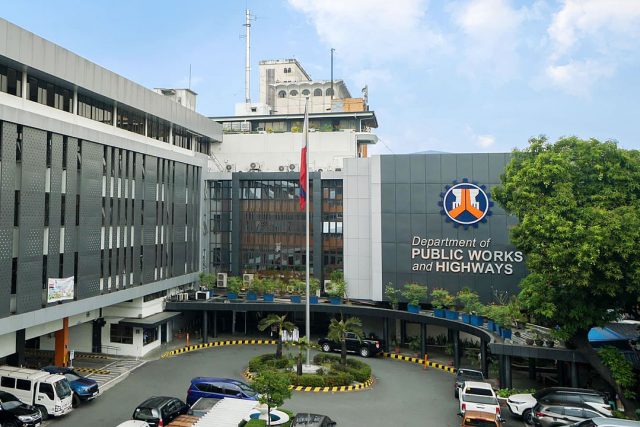
THE DEPARTMENT of Public Works and Highways (DPWH) said on Wednesday that procurement law amendments must include measures against bids that are so low that they result in subpar infrastructure.
“We feel that abnormally low bids and unbalanced bids need to be addressed since there have been instances that we thought these would be advantageous to the government and translate to savings and cost-effectiveness, it turned out to be to the contrary,” Public Works Secretary Manuel M. Bonoan told the Senate finance committee, which was looking into proposals to amend procurement law.
Citing the Asian Development Bank and World Bank’s procurement guidelines, Mr. Bonoan said he was especially wary of bids that are significantly lower than the approved budget for the contract.
The Senate is discussing amendments that address delays in government projects, resulting in underspending and the negative impact on the economy.
Senate Bill No. 2466, written by Senator and finance committee head Juan Edgardo M. Angara, aims to establish a single electronic procurement portal to streamline the process. It also aims to analyze current procurement modes and manage their risks and shortcomings.
Mr. Bonoan also cited the issue of unbalanced bidding or frontloading, wherein bidders deliberately quote high unit prices for major items with the objective of reaping large early payments for the project.
“Using the frontloading scheme, the incentives for the contractor to complete the works are significantly reduced since the payments that it will receive in the later phases of the contract may be smaller than the actual cost,” he said in a letter addressed to Mr. Angara dated Feb. 27 and obtained by BusinessWorld on Wednesday.
Dennis S. Santiago, executive director of the Department of Budget and Management’s Procurement Service, said at the same hearing that improving government procurement is expected to boost worker production and economic growth.
He has proposed allowing the direct purchase of items from suppliers with acceptable track records and the direct purchase of goods used in research and development.
Mr. Angara has cited the need to fix problems with the lowest-bidder-wins system, which risks the delivery of subpar goods and services.
“The foregoing measures will have a huge impact on the procurement and implementation of government projects… by eliminating loopholes in the law that can be exploited by dishonest and shady contractors to the (detriment) of the government,” Mr. Bonoan said. — John Victor D. Ordoñez

Generally, retirement benefits received by an employee pursuant to Republic Act (RA) No. 7641 and RA No. 4917 are tax-exempt, subject to certain conditions.
RA No. 7641, commonly known as the Retirement Law, grants an employee retirement benefits upon reaching the age of 60 years but not beyond 65 years, which is the compulsory retirement age, provided such employee has served at least five years and the retirement benefits are availed of only once.
On the other hand, RA No. 4917, which is reflected in Section 32(B)(6) of the National Internal Revenue Code (NIRC), allows employers to establish private retirement plans. It provides that the retirement benefits received by employees in accordance with a reasonable private benefit plan maintained by the employer is exempt from all taxes (among others), provided that the retiring employee or official has been in the service of the same employer for at least 10 years, is not less than 50 years of age at the time of retirement and the benefits granted are availed of only once.
On Jan. 22, the Bureau of Internal Revenue (BIR) issued Revenue Memorandum Circular (RMC) No. 13-2024, clarifying the tax treatment of retirement benefit expenses for financial reporting and tax purposes to bridge the gap between the two.
Financial accounting for post-employment benefits adheres to Philippine Financial Reporting Standards and Philippine Accounting Standards. The standards classify retirement plans into two types: (1) a defined contribution plan where the employer pays a fixed contribution to a fund; and (2) a defined benefit plan which requires a valuation prepared by an actuary using a projected unit credit method.
On the other hand, the tax rules qualify the tax treatment between employers with and those without a Tax Qualified Plan (TQP).
A TQP is a private retirement plan registered with the BIR and declared as reasonable within the contemplation of the NIRC. Establishing a TQP is required under RA No. 4917.
An employer with a TQP may deduct as retirement benefit expense its contributions based on the guidelines below:
a. Contributions to the retirement fund during the taxable year to cover the pension liability accrued during that year (“Normal Cost”); and
b. Contributions to the retirement fund during the taxable year in excess of the Normal Cost but only if such amount:
i. Has not theretofore been allowed as a deduction; and
ii. Is apportioned in equal parts over a period of 10 consecutive years beginning with the year in which the transfer or payment is made.
Stated otherwise, retirement benefit contributions attributable to the current year are deductible in full, while contributions relating to previous years are to be amortized over the next 10 years.
The RMC also provided crucial information in applying for a Certificate of Qualification as a reasonable Employee’s Retirement Benefit Plan (Certificate of Qualification) in order to have an approved TQP. It formally laid down documentary requirements that had been consistently required even prior to the issuance of the RMC, with the application being filed with the BIR’s Legal and Legislative Division. Further, an application for a Certificate of Qualification must be filed within 30 days from the date of effectivity of the retirement benefit plan. Otherwise, a penalty will be imposed.
Pending the BIR’s approval of the TQP, any retirement benefits received under the plan are exempt from income tax. Consistent with the intention of RA 4917, the investment income received by the retirement plan is also exempt from income tax, while deductions from the contributions may also be claimed. However, the RMC provided a caveat that if the application for a Certificate of Qualification is denied, then the employer will be held liable for deficiency taxes. Thus, employers must ensure compliance with the requirements.
The RMC also emphasized the “same employer” rule in tacking on the 10-year service requirement for a multi-employer retirement plan. The rule requires that the employee work for the employer for at least 10 continuous years in order to qualify for the income tax exemption.
Auspiciously, it grants an exception in computing the 10-year period, that is if the employees are transferred due to a valid merger and no separation pay was received from the previous employer, which is also a participating company.
However, in my opinion, in the spirit of justice and fairness, it would have been better if the exemption applied more broadly to cases of transferred employees and not solely in case of mergers. Considering that laws involving retirement are social legislation, their interpretation should be liberally in favor of the employees. Specifically, could the tax exemption include situations where employees are transferred beyond their control, regardless of whether the move was due to a merger or otherwise?
For instance, in case of multinational employers, employees are sometimes assigned a tour of duty as part of their training to help them develop a well-rounded appreciation of the entire business. It seems fair to consider the total years of service across the various entities within the same group which, presumably are all participating companies in the same multi-employer TQP, when computing total years of service for the “same employer.”
In contrast to employers with a TQP, employers without one tend to have an uncomplicated discussion. Simply, the rules under Retirement Law apply. Accordingly, only the actual amount of retirement benefits paid to employees can be claimed as deduction from the gross income. Thus, when the retiring employee receives a half-month salary for every year of service, his employer can claim the same amount in full in the taxable year such an employee retires.
As a final note, while retirement for employees may come with a lot of uncertainty, perhaps the issuance of this RMC brings some clarity.
The views or opinions expressed in this article are solely those of the author and do not necessarily represent those of Isla Lipana & Co. The content is for general information purposes only, and should not be used as a substitute for specific advice.
Mary Keit Anne Santos is a senior associate at the Tax Services department of Isla Lipana & Co., the Philippine member firm of the PwC network.

PRESIDENT Ferdinand R. Marcos, Jr. on Wednesday said the presence of Chinese warships in the South China Sea and increased cyberattacks are worrisome, but these would not deter his resolve to defend Philippine sea claims and protect Filipino fishermen.
“Before, only the Coast Guard of China was moving in our areas,” he told reporters before flying to Australia for a state visit. “Now, it’s the Navy too.”
The Philippine Coast Guard spotted Chinese Navy vessels during a patrol mission by a fishery bureau vessel near Scarborough Shoal last week, just as Manila raised alarm over increased cyber-attacks and electronic interference targeting its communication equipment.
Mr. Marcos, who has pursued closer security ties with the US and other western allies, said his government would continue to defend Filipino fishermen’s access to Scarborough Shoal, which Manila calls Bajo de Masinloc.
“The basic principle there is that the fishers must be allowed to fish in their traditional fishing grounds, which belong to the maritime territory of the Philippines,” he added.
Meanwhile, the US Indo-Pacific strategy is unlikely to change if Donald Trump wins the presidential race, Philippine Ambassador to the US Jose Manuel G. Romualdez said.
In a speech, the Philippine envoy said he was in touch with one of Mr. Trump’s close advisers, who told him about the continuation of the US stance in the region.
The Philippines would not let up in asserting its sea claims, Mr. Romualdez said in a speech, as tensions in the South China Sea continue to simmer, with China vehemently opposed to what it considers incursions by Philippine vessels into what it considers its waters.
The “aggression” we are now facing is very real, Mr. Romualdez said, adding that the Philippines hopes China would see the value of continuing economic activity between them while trying to peacefully resolve their issues.
In an interview with Reuters last week, Mr. Romualdez, a cousin of President Marcos, said the Philippines was closely watching the US presidential race but would view any change in leadership as an opportunity to renew the strengthening alliance between the two countries.
Their security engagements have stepped up considerably under US President Joseph R. Biden and Mr. Marcos, with both leaders keen to counter what they see as China’s aggressive actions in the South China Sea and near Taiwan.
Mr. Biden is likely to face Mr. Trump, the Republican frontrunner to become the party’s presidential candidate, in a rematch in November’s presidential election.
Under Mr. Marcos, the Philippines has nearly doubled the number of its bases accessible to US forces. Mr. Marcos last year succeeded in pushing Washington to clarify the extent of a 1951 Mutual Defense Treaty that binds them to defend each other in case of an attack.
Mr. Romualdez on Wednesday said it was possible there could be one major “accident” in the South China Sea that could lead to that treaty being invoked, but hoped that would never happen.
A United Nations court based in the Hague in 2016 voided China’s claim to more than 80% of the South China Sea and upheld the traditional fishing rights of small-scale Filipino and Chinese fishermen at Scarborough Shoal.
The shoal is 240 kilometers west of the main Philippine island of Luzon and is nearly 900 kilometers from Hainan, the nearest major Chinese landmass.
The Philippine Navy on Tuesday said it had monitored increased cyberattacks and electronic interference targeting their communication capabilities.
These usually happened during resupply missions, said Roy Vincent Trinidad, the Navy’s spokesman for South China Sea issues. But the Navy could not determine the source of the interference.
It made the report after Philippine Coast Guard (PCG) spokesman Jay Tristan Tarriela accused China at the weekend of preventing Philippine vessels from broadcasting their positions at sea by jamming the signal of their tracking system.
“We assume that they do the jamming every time they release their statements that they repelled our vessels.”
The PCG last week belied the Chinese coast guard’s claim it had driven away a Philippine fishery vessel from waters near Scarborough Shoal, which China has occupied since 2012.
Also on Wednesday, Mandaluyong City Rep. Neptali Medina Gonzales II, who heads a House of Representatives special committee on the West Philippine Sea, said the government would continue filing diplomatic protests against China to assert its claim in the South China Sea.
“We have to show to the world that we are not relinquishing our claim,” he said in a statement. “We cannot be silent on the issue as the countries who are supportive of our cause will also lose interest if we ourselves cannot show any interest,” he added in mixed English and Filipino. — Kyle Aristophere T. Atienza and Kenneth Christiane L. Basilio with Reuters
By Kyle Aristophere T. Atienza and Beatriz Marie D. Cruz, Reporters
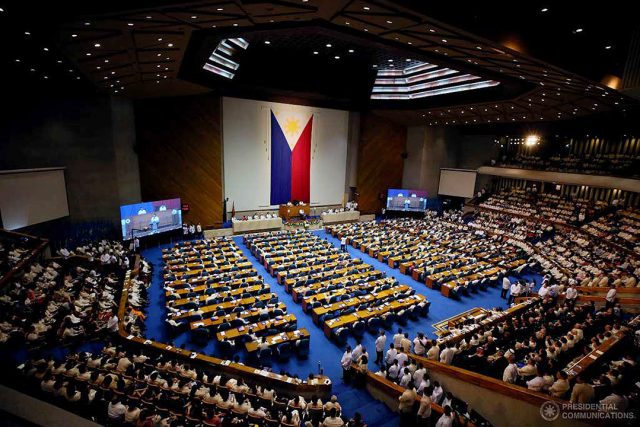
PHILIPPINE President Ferdinand R. Marcos, Jr. on Wednesday said his government might hold a plebiscite on proposed changes to the 1987 Constitution alongside the 2025 midterm elections, a move that analysts said would make Charter change (“Cha-cha”) a key election issue.
Holding the plebiscite alongside the midterm elections is cost-efficient, he told reporters before flying to Australia on Wednesday for a state visit.
“We are studying that possibility because if we hold the election and the plebiscite separately, that would be like two polls, which would be expensive,” the President said. “Perhaps, we could do them together.”
The House of Representatives on Monday began deliberations on a resolution that seeks to lift foreign ownership limits on public utilities, education and advertising sectors in the Charter.
The Commission on Elections on Monday said it could hold the plebiscite together with the May 2025 elections, noting that there would be no additional expenses “except that we will request additional allowances for teachers.”
“We have also designed a sample ballot with a plebiscite question. Our machines can handle a yes or no question on the ballot as well,” Comelec Chairman George Erwin M. Garcia said.
“There’s some legal consequences because a plebiscite is slightly different from an election,” Mr. Marcos said. “If we are able to incorporate the two exercises together, as a practical matter, I think that would help.”
If the plebiscite is held simultaneously with the 2025 elections, “then the ‘Cha-cha’ discussions would inevitably be part of the midterm election issues,” said Jan Robert R. Go, a political science professor from the University of the Philippines (UP).
“It could even eclipse other more important issues like inflation, livelihood and national security,” he said in a Facebook Messenger chat. “Of course, we expect politicians to say that ‘Cha-cha’ will solve larger issues.”
Jean Encinas-Franco, who also teaches political science at the UP, worries that it could divert public attention from other national concerns.
“While it is more economical as they say, the potential impact is that it will indeed be the major electoral issue and may sideline other important and more urgent issues,” she said via Messenger chat.
Anthony Borja, a political science professor at De La Salle University in Manila, said Charter change might become more of a concern for senatorial candidates than congressmen.
“It will become a core issue if and only if it is effectively projected as something that would drastically affect the everyday lives of ordinary citizens,” he said via Messenger chat. “Its prominence as an issue depends on other pertinent concerns like foreign security and economic policy sans ‘Cha-cha’.”
The ruling coalition supportive of the President and Speaker would probably field senatorial candidates who will support their Charter change agenda, Arjan P. Aguirre, who teaches political science at Ateneo de Manila University, said via Messenger chat. “It is logical to think that the Duterte faction will support candidates who will be rejecting this move.”
Meanwhile, Neri J. Colmenares, a former congressman, said lifting foreign ownership limits in the 1987 Constitution presents security risks because foreigners could take control of the Philippines’ power transmission.
“If China, for example, controls our big generation and distribution utilities, a little commotion in the South China Sea and they could black out Luzon” the lawyer told the House committee of the whole. “Public service to the Filipino people becomes service to foreign stockholders.”
The National Grid Corp. of the Philippines (NGCP) is 60% owned by Filipino companies Monte Oro Grid Resources Corp. and Calaca High Power Corp., while the remaining 40% shares are held by the State Grid Corp. of China (SGCC).
Senators last year considered banning foreigners from having shares in NGCP, citing security risks amid worsening tensions with China.
Mr. Colmenares said the government should instead develop local industries and businesses.
“Foreign investment is of course an important component of any economic development but that is the secondary engine of growth,” he said. “The focus of the government [should not be] opening or liberalizing the economy but rather… on national industrialization.”

A PHILIPPINE congressman on Wednesday said the Singapore Embassy in Manila should explain a deal between the Singaporean government and production company AEG Presents for exclusive concerts of pop superstar Taylor Swift.
“Some US$3 million (P168.8 million) in grants were allegedly given by the Singapore government to AEG to host the concert in Singapore,” Albay Rep. Jose Ma. Clemente S. Salceda said in a statement. “The catch was that they do not host it elsewhere in the region.”
Mr. Salceda cited remarks by Thai Prime Minister Srettha Thavisin, who said the grant was offered on the condition that there will be no other stops in the Southeast Asian leg of Ms. Swift’s concert tour.
“I give it to them that the policy worked,” the Philippine lawmaker said. “Regional demand for Singaporean hotels and airlines was up 30% over the period. I estimate that the exclusivity term caused an increase in industry revenues by $60 million. So, the grant produced 30 times more in economic activity.”
“But it was at the expense of neighboring countries, which could not attract their own foreign concert goers, and whose fans had to go to Singapore.”
Mr. Salceda asked the Department of Foreign Affairs (DFA) to send a note verbale to the Singapore Embassy requesting an explanation of the grant given by the Singapore Tourism Board and Ministry of Culture, Community and Youth to AEG Presents.
DFA spokesperson Ma. Teresita C. Daza did not immediately reply to a Whatsapp message seeking comment.
Ms. Swift is set to play six sold-out shows in Singapore next month as part of her Eras Tour.
Last week, Mr. Thavisin said Singapore had paid $2.77 million on the condition that it would be Ms. Swift’s only Southeast Asian show.
Mr. Salceda, who heads the House ways and means committee, said the deal “runs contrary to the principle of consensus-based relations and solidarity on which the Association of Southeast Asian Nations (ASEAN) was founded.”
He cited the need for ASEAN countries to discuss “the evolving nature of trade in services… perhaps as enhancements to the ASEAN Trade in Services Agreement.”
A 2023 study by software company QuestionPro showed that Ms. Swift’s fans spend about $1,300 per show for tickets, hotel accommodations, food, outfits and merchandise.
Her last concert in the Philippines was in 2014 for her Red Tour. — Beatriz Marie D. Cruz
