Home Blog Page 356

Style (02/02/26)

LEGO.COM

New Lego Botanicals bloom for Valentine’s

WITH the campaign “This Valentine’s, Keep It Fresh,” Lego is turning Valentine’s gifting into something hands-on and memorable. This month Lego introduces 2026 novelties that expand the collection beyond traditional bouquets: Lego Botanicals Daisies, Peace Lily, Tulip Bouquet, and the statement-making Flower Wall. Alongside these new sets, favorites like the Bouquet of Roses and Bouquet of Pink Roses offer a fresh take on traditional Valentine’s florals, while lighter arrangements such as the Bouquet of Pretty Pink Flowers, Flower Bouquet, and Wildflower Bouquet lend a softer, more contemporary feel. For those looking for a graphic, design-led twist, the collection also features Lego Art Love which doubles as a home accent. The Lego Group brings these blooms to life at the SM Mall of Asia Main Mall Atrium from Feb. 9 to 16. There will be immersive displays, hands-on builds, and Instagram-worthy setups. A weekend in-store caravan runs from Feb. 8 to March 1 at selected stores across Metro Manila. Shoppers can enjoy up to 25% off selected products. For more information, visit www.lego.com or follow official Lego stores online such as bankeebricks.ph, Lazada, and Shopee.


Anko marks Love Month with gift ideas, workshops

THIS LOVE MONTH, Australian home and lifestyle brand Anko is positioning itself as the one-stop shop for gifts to celebrate Valentine’s Day. Anko Club members can also join exclusive in-store workshops where they can create personalized keepsakes and handmade cards. Among the suggestions are items to celebrate the occasion at home (from glasses to tablecloths, to vases for flowers), to gifts (think trinket bowls and boxes for rings, keys, and everyday accessories). There are mugs for coffee lovers, pans and trays for loved ones who cook, and much more including things to treat yourself with. Meanwhile, keep the kids busy with the Anko Club’s Valentine’s Card Making Workshop, offered every weekend this February (2-5 p.m.), at Anko’s Glorietta, TriNoma, Ayala Malls Manila Bay, and Ayala Malls Feliz branches. Anko Club members can also join an exclusive Galentine’s Workshop at Anko TriNoma on Feb. 14 at 4 p.m., featuring a Make Your Own Galentine’s Card activity in collaboration with the Weekend Watercolor Circle, plus a special Arrange Your Own Bouquet session. Anko Club members who shop at Anko Trinoma that day between 2-5 p.m. and spend a minimum of P500 can enjoy free candle calligraphy to personalize their favorite Anko candles. To join these workshops, download the Anko app and sign up for the Anko Club at anko.com/anko-club.
Debt yields go down on weak GDP data

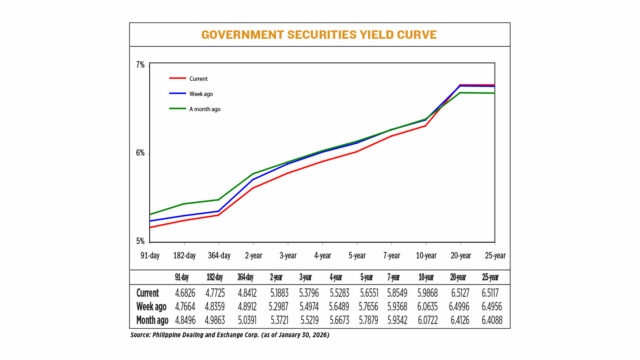
YIELDS on government securities (GS) traded in the secondary market declined last week as below-target Philippine gross domestic product (GDP) growth last year raises the odds of further easing by the Bangko Sentral ng Pilipinas (BSP).

GS yields, which move opposite to prices, went down by 7.14 basis points (bps) on average week on week, based on PHP Bloomberg Valuation Service Reference Rates data as of Jan. 30 published on the Philippine Dealing System’s website.

At the short end of the curve, yields on the 91-, 182-, and 364-day Treasury bills (T-bills) dropped by 8.38 bps, 6.34 bps and 5 bps week on week to 4.6826%, 4.7725% and 4.8412%, respectively.

Similarly, at the belly, rates fell across all tenors. Yields on the two-, three-, four-, five-, and seven-year Treasury bonds (T-bonds) went down by 11.04 bps (to 5.1883%), 11.78 bps (5.3796%), 12.06 bps (5.5283%), 11.05 bps (5.6551%), and 8.19 bps (5.8549%), respectively.

At the long end, yields ended mixed. The rates of the 20- and 25-year debt papers went up by 1.31 bps (to 6.5127%) and 1.61 bps (6.5117%), respectively, while the 10-year bond went down by 7.67 bps to fetch 5.9868%.

GS volume traded on Friday reached P118.3 billion, higher than the P102.98 billion recorded a week earlier.

Yields declined almost across the board as weaker-than-expected Philippine GDP growth bolstered expectations of a BSP rate cut this month, a bond trader said in an e-mail.

“Local bond movements were mainly driven by the weaker GDP print, which signaled a sharper loss of growth momentum than expected. Markets took this as increasing the likelihood that the BSP may need to provide policy support sooner, leading to a rally in bonds, with yields declining and the front end outperforming,” Lodevico M. Ulpo, Jr., vice-president and head of Fixed Income Strategies at ATRAM Trust Corp., said in an e-mail.

“The weak growth data has shifted market focus toward downside economic risks, reinforcing expectations that domestic monetary policy could become more supportive. This creates a continued downward bias in local rates, especially for shorter tenors that are more sensitive to policy expectations.”

Philippine GDP expanded by 3% year on year in the fourth quarter, slowing from 5.3% in the same quarter in 2024 and the revised 3.9% print in the third quarter of 2025.

In 2025, the economy grew by 4.4%, much weaker than the 5.7% print in 2024. This was the weakest pace in five years or when GDP contracted by 9.5% in 2020. Excluding the pandemic, it was the slowest growth since the 3.9% expansion in 2011.

This was also below the government’s 5.5%-6.5% target and was weaker than market expectations, as a BusinessWorld poll yielded a median estimate of 4.2% for the October-to-December period and 4.8% for 2025.

Analysts said the disappointing GDP outturn gives the BSP room to lower rates further to help prop up domestic demand to spur economic recovery.

BSP Governor Eli M. Remolona, Jr. said before the GDP data release that the Monetary Board would consider the economy’s performance when they meet to review their policy settings on Feb. 19, but a weak growth print wouldn’t automatically mean further easing.

The central bank has cut benchmark borrowing costs by a cumulative 200 bps since it began its easing cycle in August 2024, with the policy rate now at 4.5%.

Mr. Ulpo added that the US Federal Reserve’s decision to pause its own easing cycle last week and “still firm tone” partially offset the yield rally, particularly at the long end.

“However, the Fed’s cautious stance suggests that global easing may be gradual, which could temper the pace of yield declines locally. Longer-dated bonds may remain more influenced by global rate movements than domestic factors,” he said.

Last week, the Fed held rates steady after lowering its benchmark rate to 3.5%-3.75% last year, Reuters reported. Interest rate futures markets stuck with anticipating two rate cuts in 2026, with the likely next reduction in June, after the new chair takes over.

For this week, the market’s focus will be on the release of January Philippine inflation data on Thursday (Feb. 5), as this could affect the BSP’s policy decision this month, the bond trader said.

“Philippine inflation remains key, as it determines how much room the BSP has to ease. A stable inflation backdrop would reinforce the growth-driven case for lower yields,” Mr. Ulpo added.

He said GS yields could also be affected by this week’s T-bond offering. On Tuesday, the Treasury will auction off P30 billion in reissued seven-year bonds with a remaining life of four years and 11 months.

“Attention will be on the five-year bond auction, which will test demand in the belly of the curve and could influence near-term yield movements depending on the strength of participation.” — Abigail Marie P. Yraola

Rice retail price down, meat up in mid-January

PHILIPPINE STAR/WALTER BOLLOZOS

THE retail price of rice declined year on year in mid-January, while meat and galunggong (round scad) prices increased, according to the Philippine Statistics Authority (PSA).

During the Jan. 15-17 period, which the PSA calls the second phase of January, the national average retail price of regular milled rice declined 9.56% year on year to P43.52 per kilo.

The second-phase price was higher than the P43.13-per-kilo average during the first phase of January (Jan. 1-5) and the P42.10 average a month earlier.

The highest average retail price of regular-milled rice in the second phase was recorded in the Bangsamoro Autonomous Region in Muslim Mindanao at P50.06 per kilo, down 0.72% from a year earlier.

The lowest retail price of regular milled rice was reported in the Cagayan Valley at P36.70 per kilo, down 13.5% from a year earlier.

Meanwhile, the retail price of bone-in fresh pork averaged P314.04 per kilo in the second phase of January, up 1.5% from a year earlier. The national average declined from the P315.44 per kilo recorded in the first phase of January and P314.72 a month earlier.

The retail price of dressed chicken averaged P213.35 per kilo in the second phase of January, up 1% from a year earlier. The average retail price for the period was lower than the P213.72 per kilo recorded during the first phase of January, but higher than the P212.40 a month earlier.

Galunggong prices rose 11.32% year on year to P251.35 per kilo in the second phase of January. The average price of the staple fish declined from P252.75 in the first phase of January and increased from P249.11 a month earlier. — Vonn Andrei E. Vilamiel

New Geely PHEV to be unveiled in Q1

Geely Motor Philippines said it will continue to espouse a diversified electrification strategy across its global lineup — PHOTO FROM GEELY MOTOR PHILIPPINES

GEELY IS slated to introduce here a plug-in hybrid electric vehicle (PHEV) – known internally as EX5 EM-I –within the first quarter of the year as the company continues to grow its electrified lineup.

The EX5 EM-I has recently been spotted in camouflage at local ports and customs areas, signaling that units have already entered the country ahead of its official reveal. The EX5 EM-I is positioned as balancing electric driving capability with extended range flexibility. In global markets, the model is reported to feature a combination of electric-only driving for daily commutes and a hybrid system suited for longer trips, addressing common concerns around charging access and range limitations.

“This positioning places the EX5 EM-I in direct consideration alongside other PHEVs currently competing in the compact-to-midsize, electrified segment, where buyers are increasingly looking for alternatives that offer both fuel efficiency and adaptability to unpredictable driving conditions,” said Geely Motor Philippines in a release, and maintained that, compared to pure electric vehicles, PHEVs like the EX5 EM-I are often favored in dense urban environments such as Metro Manila, where traffic, flooding, detours, and varied daily routes make charging-dependent mobility less predictable.

Geely is taking a “diversified electrification strategy” across its global lineup, combining battery-electric, plug-in hybrid, and internal combustion powertrains to meet different market needs. According to the company, this multi-path approach allows it to introduce products that align more closely with real-world usage rather than relying on a single electrification solution.

The Philippine introduction of the EX5 EM-I is expected to be part of Geely’s broader product roadmap following its transition to direct local operations. The company has indicated that additional new models across various segments and powertrain types are in the pipeline as it continues to strengthen its presence in the country.

Manila office tenants favor flexible, cost-efficient spaces — Colliers

PHILSTAR FILE PHOTO

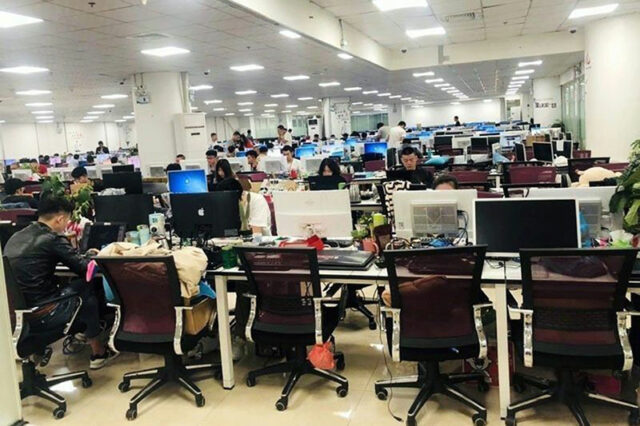
METRO MANILA’S office developers are being urged to focus on flexible and cost-efficient office spaces as more multinational firms shift to hybrid work, according to property consultancy Colliers Philippines.

“Occupiers are increasingly focused on capital preservation, balance sheet flexibility, and reduced execution and delivery risk. As a result, operating expenditure (opex)-led workspace solutions where costs are spread predictably over time are gaining traction,” Melissa Mabanta, assistant manager for office service — landlord representation at Colliers, said in a report.

She noted that multinational companies are moving toward Grades A and B+ offices that prioritize flexibility, faster move-ins, and cost predictability, as firms’ planning cycles have shortened to between six and 18 months.

Colliers added that the rise of hybrid work has pushed occupiers to favor ready-to-occupy and built-to-suit offices.

“As the Philippine office market matures, value is increasingly defined not just by location or rental rates, but by speed to market, operational readiness, and risk mitigation,” Ms. Mabanta said.

Previously, office occupiers invested in longer lease terms and fit-outs, information technology infrastructure, and project management. In central business districts, fit-out costs typically range from P45,000 to P70,000 per square meter (sq.m.), Colliers said.

It also noted that challenges in traditional office leasing, such as design, permitting, procurement, and construction delays, have become a “major friction point” for occupiers.

“While Metro Manila vacancy rates remain elevated compared to pre-pandemic levels, leasing inquiries are increasingly driven by quality, readiness, and flexibility rather than sheer size,” Colliers said.

In the first nine months of 2025, Metro Manila’s office vacancy stood at 19.8%, Colliers said in its Third-Quarter Property Market Report.

Office vacancy in the region is projected to rise slightly to 19.9% in 2026, before declining steadily to 19.2% in 2028, the consultancy added.

In Metro Manila, traditional occupiers transacted an average of 830 sq.m. of space, while third-party operators and government tenants occupy about 1,500 sq.m., equivalent to roughly a whole floor. Shared services sector tenants occupy larger spaces of around 3,000 sq.m., or about two or more floors. — Beatriz Marie D. Cruz

Hypertension: Why prevention and early treatment save lives

STOCK PHOTO | Image from Freepik

Hypertension may be silent, but its consequences are not. Early detection and timely treatment can prevent heart attacks, strokes, and kidney failure.

As the country observes Philippine Heart Month, it bears repeating that high blood pressure or hypertension is the single most important risk factor for heart disease and stroke, two of the leading causes of death among Filipinos. Often called the “silent killer,” hypertension typically has no symptoms, yet its consequences can be devastating. Left undetected and uncontrolled, it can lead to heart failure, kidney disease or kidney failure, vision loss, and erectile dysfunction, among other complications.

Hypertension develops due to a mix of non-modifiable and modifiable risk factors. These include family history and advancing age, as well as physical inactivity, an unhealthy diet, overweight or obesity, smoking, and chronic kidney disease. Because many of these risks are preventable or manageable, hypertension is not just a medical condition, it is a public health issue that demands early action.

The scale of the problem is sobering. The most recent Philippine Heart Association survey, PRESYON-4, found that nearly four in 10 Filipinos (37%) have hypertension. Alarmingly, only about half (52%) were aware they had the condition. Among those diagnosed, 22% were smokers, 37% were overweight, and 5% had diabetes. Even more concerning, six out of 10 hypertensive respondents who were already taking maintenance medications still had uncontrolled blood pressure, placing them at continued risk for heart attack and stroke.

Hypertension is diagnosed by measuring blood pressure on two or more separate occasions in a clinic or hospital setting. Normal blood pressure is below 120/80 mm Hg. The 2020 Philippine Clinical Practice Guidelines of the Philippine Society of Hypertension define hypertension as a blood pressure reading of 140/90 mm Hg or higher, while readings between 120-139/80-99 were previously classified as “prehypertension” or borderline hypertension.

Globally, however, there has been a shift toward earlier intervention. In August 2025, the American Heart Association and the American College of Cardiology released updated guidelines emphasizing prevention and earlier treatment to reduce long-term cardiovascular risk. Under these guidelines, blood pressure of 120-129/less than 80 is considered “elevated,” while readings of 130-139/80-89 are already classified as stage 1 hypertension. A blood pressure of 140/90 or higher is stage 2 hypertension, and readings of 180/120 or greater constitute a hypertensive crisis requiring urgent medical care.

This shift underscores a critical message: waiting for blood pressure to reach very high levels before acting is no longer acceptable. Early lifestyle changes, and medication when appropriate, can prevent irreversible damage to the heart, brain, and kidneys.

At the core of hypertension prevention and control is a heart-healthy lifestyle. Regular physical activity, a diet rich in fruits, vegetables, and whole grains, and limiting sodium and unhealthy fats are foundational steps. Maintaining a healthy weight is particularly important; for individuals who are overweight or obese, even a 5% reduction in body weight can significantly lower blood pressure. Avoiding smoking, limiting alcohol intake, getting seven to nine hours of quality sleep, and managing stress also play an important role.

For many patients, dietary changes are especially powerful. The Philippine Society of Hypertension recommends the Dietary Approaches to Stop Hypertension (DASH) meal plan for individuals without kidney insufficiency. The DASH diet emphasizes fruits, vegetables, low-fat dairy, fish, whole grains, fiber, potassium, and other essential minerals, while limiting red and processed meat, sugar-sweetened foods and beverages, saturated fat, cholesterol, and sodium.

Lifestyle measures are the first-line treatment for hypertension and work hand in hand with medications. Most people with hypertension will require maintenance medicines for life to keep their blood pressure under control and prevent complications. It is essential that patients take their medications exactly as prescribed and never stop treatment without consulting their doctor, even when they feel well.

Home blood pressure monitoring is another important tool. The American Heart Association recommends that all individuals diagnosed with hypertension use an automatic, cuff-style, upper-arm blood pressure monitor at home. Accurate home readings help doctors determine whether treatments are working and guide medication adjustments. Patients should ensure the correct cuff size, avoid smoking, caffeine, or exercise 30 minutes before measurement, rest quietly for at least five minutes, and take readings at the same time each day. Recording and sharing these readings during medical appointments strengthens shared decision-making between patients and healthcare providers.

Hypertension remains a major public health challenge in the Philippines but it is also one of the most preventable. The research-based pharmaceutical industry recognizes its central role in cardiovascular disease and is committed to expanding access to diagnostics, effective treatments, and patient education. Through the Pharmaceutical and Healthcare Association of the Philippines, member companies are supporting awareness campaigns, strengthening hypertension management, and working with stakeholders to reduce the country’s cardiovascular disease burden.

Preventing and treating hypertension early saves lives. It is an investment in healthier families, a more productive workforce, and a stronger healthcare system, one blood pressure reading at a time.


Teodoro B. Padilla is the executive director of Pharmaceutical and Healthcare Association of the Philippines, which represents the biopharmaceutical medicines and vaccines industry in the country. Its members are at the forefront of developing, investing and delivering innovative medicines, vaccines, and diagnostics for Filipinos to live healthier and more productive lives.

Rates of BSP bills decline

BW FILE PHOTO

YIELDS on the Bangko Sentral ng Pilipinas’ (BSP) one-month securities went down on Friday as the offer remained oversubscribed, with a slightly lower volume placed on the auction block.

The 28-day BSP bills attracted P123.48 billion in bids, exceeding the P80 billion auctioned off but below the P164.166 billion in tenders for a P90-billion offer the prior week. This was equivalent to a bid-to-cover ratio of 1.5435 times, lower than the 1.8241 ratio logged in the previous auction.

The central bank accepted all the submitted bids.

Accepted rates ranged from 4.65% to 4.714%, lower than the 4.724% to 4.78% seen a week earlier. With this, the average rate of the one-month securities fell by 5.15 basis points to 4.6981% from 4.7496%.

The BSP has not auctioned off the 56-day bills since Nov. 3.

The central bank uses the BSP securities and its term deposit facility to mop up excess liquidity in the financial system and to better guide short-term market yields towards its policy rate.

Data from the central bank showed that around 50% of its market operations are done through its short-term securities.

As of mid-November 2025, the BSP’s monetary operations have siphoned off P1.5 trillion in liquidity from the financial system.

Of the total, 42.4% was absorbed through BSP securities, 34.6% from overnight reverse repurchase agreements, 17.6% through the overnight deposit facility, and 5.4% via term deposits.

The BSP bills also contribute to improved price discovery for debt instruments while supporting monetary policy transmission.

In August last year, BSP Governor Eli M. Remolona, Jr. said they are gradually shifting away from the issuance of short-term papers to manage liquidity as they want to boost activity in the money market.

The central bank started auctioning off short-term securities weekly in 2020, initially offering only a 28-day tenor and adding the 56-day bill in 2023. — K.K. Chan

China cuts proposed tariffs in EU dairy probe

FREEPIk

PARIS — China has reduced proposed tariffs on certain dairy products from the European Union (EU) as it concludes an anti-subsidy investigation widely seen as retaliation for EU levies on Chinese electric cars, two European industry associations said.

In final tariffs communicated to the European side, China is proposing additional duties of up to 11.7%, compared with a maximum rate of 42.7% in provisional duties announced in December, the European Dairy Association (EDA) and Eucolait told Reuters. Many of the companies would be subject to a 9.5% rate, they said.

The European Commission and the Chinese Ministry of Commerce could not be immediately reached outside working hours.

The dairy probe covers products including cream and cheese and follows scrutiny of brandy and pork.

Reduced rates would make it difficult for EU products to compete in China, Alexander Anton, the EDA’s secretary general said.

“It’s a success but you’re still out of the game,” he said.

China imported $589 million of EU dairy products covered by the current investigation in 2024.

Higher tariffs on EU imports could favor other foreign suppliers like New Zealand. It could also bring relief for Chinese producers grappling with a glut of milk and falling prices against a backdrop of sluggish demand. — Reuters

Catherine O’Hara, star of Schitt’s Creek and Home Alone, 71

CATHERINE O’HARA in a scene from Schitt’s Creek.

LOS ANGELES — Catherine O’Hara, the shape‑shifting Canadian comic actor whose characters ranged from the deliriously theatrical Moira Rose in Schitt’s Creek to the frantic mother in Home Alone, has died at 71 — prompting an outpouring of tributes led by her co-star Macaulay Culkin and Canadian Prime Minister Mark Carney.

A representative from the office of her manager Marc Gurvitz confirmed the death of Ms. O’Hara, who earned the 2020 Emmy for best comedy actress, helping to propel Schitt’s Creek to TV awards season dominance at the 2021 Golden Globes.

The BBC, citing a statement from Creative Artists Agency, reported she died on Friday at her home in Los Angeles following a brief illness.

Ms. O’Hara portrayed Kate McCallister, the mother of Macaulay Culkin’s character in the movie Home Alone, and Delia Deetz in the film Beetlejuice. Mr. Culkin paid homage to Ms. O’Hara on the social media platform Instagram.

“Mama. I thought we had time. I wanted more. I wanted to sit in a chair next to you. I heard you. But I had so much more to say. I love you. I’ll see you later,” Mr. Culkin wrote alongside images of the two of them.

PRIME MINISTERS PAST AND PRESENT MOURN HER LOSS
Mr. Carney wrote on X: “I join Canadians and fans across the world in mourning the loss of Catherine O’Hara.”

His predecessor, former Prime Minister Justin Trudeau, called her “a beloved Canadian icon with a rare gift for comedy and heart” on X and added: “She made people laugh across generations.” His post included a photo of the two of them.

Ms. O’Hara was born on March 4, 1954, and grew up in Toronto as the sixth of seven children. She began her acting career in 1974 as a cast member of the improvisational theater troupe called The Second City in Toronto.

Two years later the troupe created the sketch comedy television show SCTV, which often featured Ms. O’Hara’s performances.

She offered her voice for numerous animated projects, including Sally in The Nightmare Before Christmas, Pinktail in The Wild Robot, Brook Ripple in Elemental, and multiple voices in Frankenweenie, including Mrs. Frankenstein.

More recently, Ms. O’Hara joined the cast of Seth Rogen’s 2025 Hollywood satire series The Studio as Patty Leigh, the fired head of a Hollywood film studio. She also delved into some dramatic roles, including the 1997 film Hope.

Ms. O’Hara is survived by her husband Bo Welch, whom she met in 1987 on the set of Beetlejuice, and their two sons. — Reuters

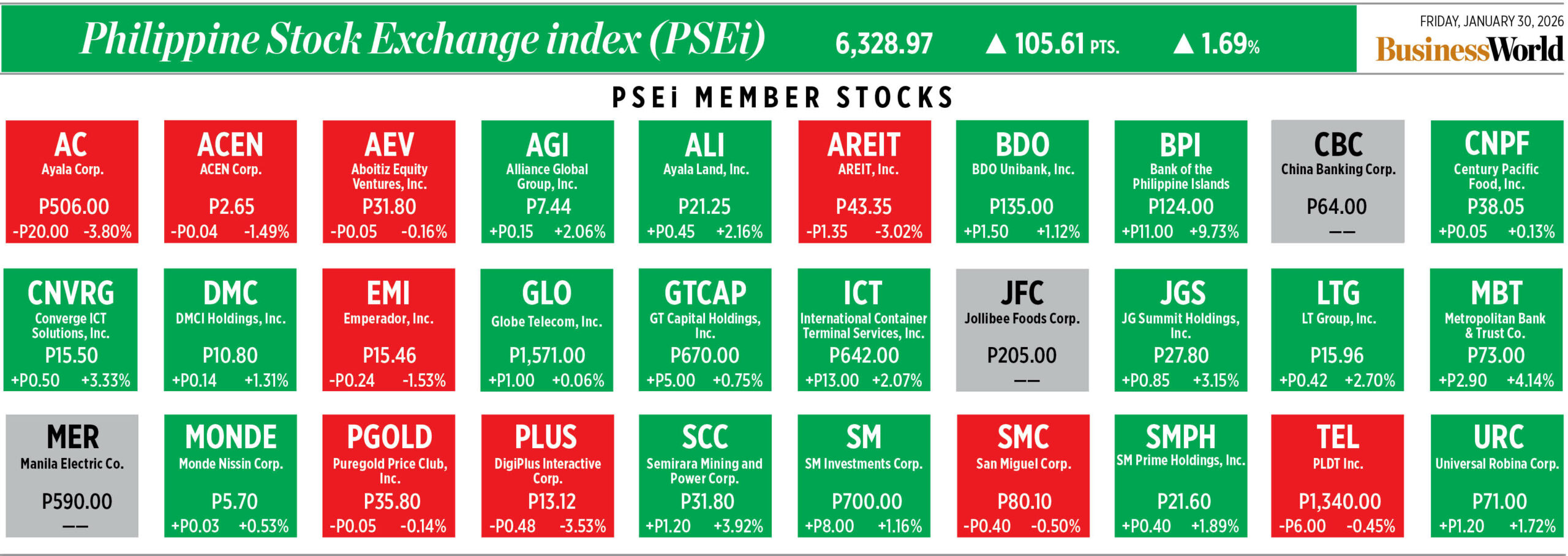
How PSEi member stocks performed — January 30, 2026

Here’s a quick glance at how PSEi stocks fared on Friday, January 30, 2026.


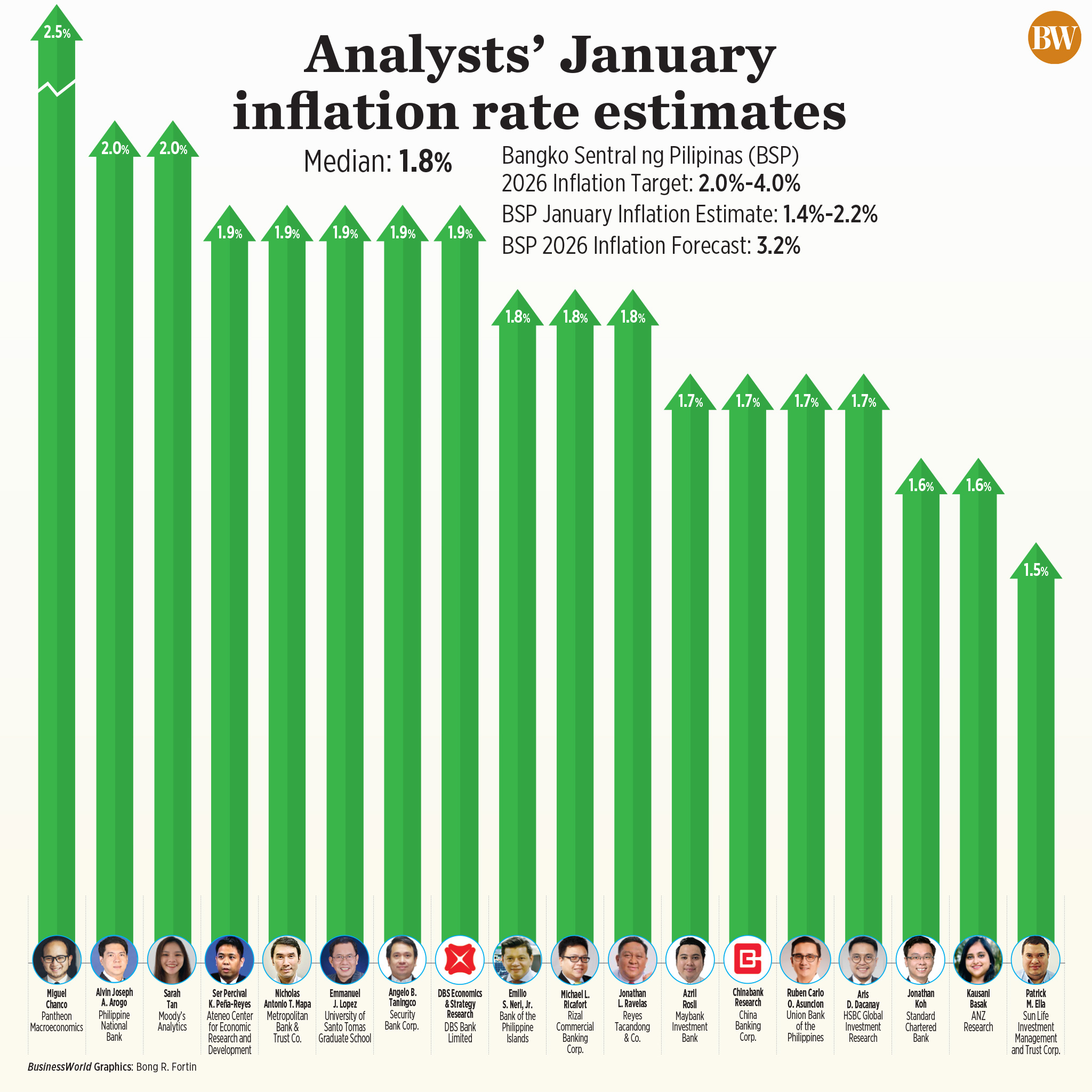
Analysts’ January inflation rate estimates

PHILIPPINE INFLATION likely held steady in January as lower electricity charges and easing vegetable prices helped offset pressures from higher food and fuel costs and a weaker peso, economists said ahead of official data. Read the full story.

Shares to move sideways before PMI, inflation data

REUTERS

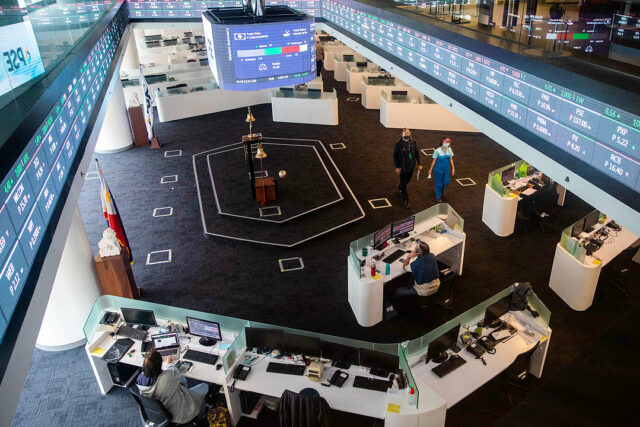
PHILIPPINE STOCKS may move sideways this week as investors await the release of key domestic economic data that could affect the Bangko Sentral ng Pilipinas’ (BSP) rate decision this month.

On Friday, the bellwether Philippine Stock Exchange index (PSEi) jumped by 1.69% or 105.61 points to end at 6,328.97, while the broader all shares index went up by 0.99% or 35.20 points to close at 3,583.23.

Week on week, however, the PSEi declined by 4.29 points from its Jan. 23 finish of 6,333.26.

“The local bourse remained defensive [last] week as a hawkish US Fed pause and lackluster 3% fourth-quarter gross domestic product (GDP) print weighed on sentiment. However, late-session bargain hunting on Friday, pared losses, leaving the PSEi modestly lower,” 2TradeAsia.com said in a market note.

“Pessimism took over last week on the back of the Philippines’ disappointing Q4 2025 economic performance. This caused the local bourse to decline for a second straight week. On a positive note, losses were trimmed on the final day, keeping the market above crucial lines,” Japhet Louis O. Tantiangco, research manager at Philstocks Financial, Inc., said in a Viber message.

Philippine GDP growth slowed to 3% in the fourth quarter of 2025 from 5.3% in the same period a year prior and 3.9% in the third quarter. This brought the full-year average to 4.4%, well below the government’s 5.5%-6.5% goal.

For this week, the market may continue to price in growth expectations, especially with new economic reports set to come out, Mr. Tantiangco said.

“The underperformance of the local economy last quarter and the pessimistic views on how it would perform this year may still weigh on the market. Investors are expected to watch out for the S&P Global Philippines Manufacturing PMI (purchasing managers’ index) as this would give fresh clues on the state of the economy. Investors are also expected to watch out for the upcoming February inflation data,” he said. “Hopes that the BSP would cut policy rates in their February meeting may give the market support.”

PMI data will be released on Monday (Feb. 2), while the January inflation report is scheduled for Thursday (Feb. 5).

Analysts said that the weak GDP data give the BSP room to lower rates further to support domestic demand. The Monetary Board will hold its first policy meeting for this year on Feb. 19.

“At its current position, the local market is deemed attractive. As of Friday’s closing, the market’s price-to-earnings ratio stands at 10.5 times, below its historical average of 14.4 times,” Mr. Tantiangco added. “Chart-wise, despite the two-week decline, the local market is still considered to be on an uptrend from mid-November 2025 to date.”

For this week, he put the PSEi’s major support at 6,150 and major resistance at 6,400.

For its part, 2TradeAsia.com placed the PSEi’s immediate support at 6,300, secondary support at 6,100, and resistance at 6,450. — Alexandria Grace C. Magno

ADVERTISEMENT
ADVERTISEMENT