Home Blog Page 347

Ideal Vision Center celebrates 40 years of vision and gratitude

Ideal Vision Center, a respected name in the optical industry, recently marked its 40th anniversary with a thanksgiving celebration, honoring four decades of quality eye care and meaningful relationships with clients, partners, ambassadors, doctors and team members.

The event highlighted the company’s journey since its founding and its growing commitment to caring for essential senses, beginning with vision and extending to hearing, through service excellence, innovation and trusted professional care. Guests gathered to share memories, express appreciation and celebrate the people who helped shape Ideal Vision Center into a leading name in eye and hearing care, and now with 200 branches worldwide.

As part of the anniversary celebration, Ideal Vision Center is offering a 40% discount for customers turning 40 this year. For more information, visit facebook.com/IdealVisionCenter.


Spotlight is BusinessWorld’s sponsored section that allows advertisers to amplify their brand and connect with BusinessWorld’s audience by publishing their stories on the BusinessWorld Web site. For more information, send an email to online@bworldonline.com.

Join us on Viber at https://bit.ly/3hv6bLA to get more updates and subscribe to BusinessWorld’s titles and get exclusive content through www.bworld-x.com.

BINI Jhoanna plays a cameo role in Puregold’s heartwarming tribute to sari-sari store owners

Puregold carries on with its heartfelt tribute to Filipino sari-sari store owners or micro-entrepreneurs with its Sari-Sari Stories video series.

Puregold carries on with its heartfelt tribute to Filipino sari-sari store owners or micro-entrepreneurs with its Sari-Sari Stories video series, the newest installment of which features a special cameo from BINI’s Jhoanna. The Witness is a short film that tells a tender, coming-of-age love story, one that unfolds across the years, shaped by change, constancy, and the quiet presence of a sari-sari store owner who sees it all.

Jhoanna’s cameo adds an extra layer of warmth and relatability to the narrative, underscoring the film’s message of appreciation for small business owners across the country. Affirming the role sari-sari stores play in Filipinos’ everyday lives, Jhoanna shared, “Importante na hindi mawala ang sari-sari store. Bukod sa pagiging very Pinoy, ito pa rin ang pinaka-accessible sa maraming komunidad. Iba pa rin yung may mapupuntahan kang malapit sa’yo.”

The Witness is a short film that tells a tender, coming-of-age love story.

The latest Sari-Sari Story follows the budding romance between two childhood sweethearts, their youthful ardor eventually evolving — through the years — into real enduring love. The video depicts the highs and lows of their relationship, all from the perspective of a humble sari-sari store owner who witnessed them all.

Puregold Senior Marketing Manager Ivy Hayagan-Piedad echoed Jhoanna’s sentiments, saying, “Puregold has always been a proud ally of micro-entrepreneurs across the country. Through Sari-Sari Stories, we continue to uphold the role sari-sari store owners play in our everyday lives. In their communities, they bring people together by providing convenience and access to daily essentials.”

The Witness unfolds across the years, shaped by change, constancy, and the quiet presence of a sari-sari store owner who sees it all.

The Witness rides on the momentum of earlier Sari-Sari Stories installments such as Ways, featuring SB19’s Stell, and The Sign, which included a cameo by Skusta Clee. The series has collectively sparked conversations online and resonated with netizens, Aling Puring members, and Puregold followers, reinforcing the remarkable part sari-sari stores play in everyday Filipino life.

As the series continues, audiences are spurred to watch for the next story, reflecting how sari-sari stores have — over time — integrated themselves into people’s lives and into the communities they serve.

The latest Sari-Sari Story follows the budding romance between two childhood sweethearts.

Facebook Video Link: https://www.facebook.com/reel/1254850073159331

YouTube Video Link:


Spotlight is BusinessWorld’s sponsored section that allows advertisers to amplify their brand and connect with BusinessWorld’s audience by publishing their stories on the BusinessWorld Web site. For more information, send an email to online@bworldonline.com.

Join us on Viber at https://bit.ly/3hv6bLA to get more updates and subscribe to BusinessWorld’s titles and get exclusive content through www.bworld-x.com.

Nearly 900 Nazi-linked accounts discovered at Credit Suisse, US lawmaker says

REUTERS

A NEW PROBE of Swiss bank Credit Suisse discovered 890 previously undisclosed accounts with potential Nazi links, a US senator said on Tuesday, amid efforts to shine a light on what he said was the bank’s hidden role in World War Two crimes.

Holders of the wartime accounts included the German Foreign Office, the SS paramilitary organization and a German arms-manufacturing company, US Republican Senator Chuck Grassley told reporters in a briefing.

He gave no details on how much money might have been held in the accounts and their current status.

The organizations were part of the Nazi apparatus under German leader Adolf Hitler that enabled the Holocaust, which killed about 6 million Jewish people.

The Senate Judiciary Committee, which Mr. Grassley chairs, heard on Tuesday more details on the investigation by US lawyer Neil Barofsky. Swiss bank UBS, which acquired Credit Suisse in an emergency takeover in 2023, hired him to handle the probe.

Mr. Barofsky led an earlier investigation when Credit Suisse was independent and said the bank sought to obstruct the effort and fired him.

Mr. Barofsky told the hearing on Tuesday that Credit Suisse was willing during the Nazi era to expropriate money from accounts held by Jewish people and transfer it to Nazi clients.

He said his review produced evidence that Credit Suisse’s banking relationships with the SS were more extensive than previously known, and the SS economic arm maintained an account at the bank, according to the testimony.

New details have also emerged on the bank’s connection to a scheme to help Nazis flee to Argentina, Mr. Barofsky said.

Both UBS and Credit Suisse apologized and reached a global settlement in 1999 that finalized all Nazi-era claims, including any future claims, and intended to end the controversy, UBS said, characterizing the investigation as a voluntary initiative.

UBS said it accepts and deeply regrets that the World War Two era was a dark period in the history of Swiss banking.

When taking over Credit Suisse, UBS fully committed to getting the investigation back on track and has since taken extensive steps to facilitate Mr. Barofsky’s review, UBS Americas President Robert Karofsky told the hearing.

“Now, with three years of experience, our priority is to complete this review so that the world can benefit from the findings in the coming final report.”

The investigation is set to conclude by early summer, according to Senate Judiciary Committee aides, and a final report is expected at the end of the year. — Reuters

Pakistan plans Benghazi consulate, lending legitimacy to Libya’s eastern authorities

STOCK PHOTO | Image by Uzairmaqbool from Pixabay

KARACHI/BENGHAZI — Pakistan is in talks to open a consulate in the eastern Libyan city of Benghazi, three sources with knowledge of the matter said, as the leader of the Libyan National Army met Pakistan’s prime minister in Islamabad.

Islamabad would join a small group of countries with a diplomatic presence in Benghazi, in a move that could boost eastern authorities in their rivalry with Libya’s west.

Libya descended into turmoil after a 2011 NATO-backed uprising toppled Muammar Gaddafi and has been divided into eastern and western authorities since a 2014 civil war. The UN-recognized government in Tripoli controls the west, while LNA leader Field Marshal Khalifa Haftar’s forces based in Benghazi hold the east and south, including major oilfields.

Mr. Haftar discussed the consulate with officials during an ongoing visit to Pakistan, the sources said.

He met Pakistan’s army chief Field Marshal Asim Munir in Rawalpindi on Monday to discuss “professional cooperation”, the Pakistani military said.

LNA LEADER, PM, DISCUSS COOPERATION
On Tuesday, Mr. Haftar and his son Saddam met Pakistani Prime Minister Shehbaz Sharif to discuss “ways to enhance bilateral cooperation across various fields, in addition to addressing regional and international issues of mutual interest,” the LNA’s media office said in a statement.

The department previously said Mr. Haftar met senior Pakistani army officials “within the framework of strengthening bilateral relations”. It did not give further details and Reuters could not immediately reach eastern Libyan authorities for comment.

Pakistan’s prime minister’s office and foreign ministry did not respond to requests for comment.

Pakistan’s air force said in a statement that Saddam Khalifa Haftar met Air Chief Zaheer Ahmed Baber Sidhu to discuss expanding defense cooperation, including joint training, with Islamabad reaffirming its support for the “capability development” of the Libyan air force.

Pakistan’s army chief visited Benghazi in December, where he signed a multibillion-dollar defense deal with the LNA, previously reported by Reuters.

All three sources, who declined to be identified because they were not authorized to speak to the media, said the decision to open a consulate in Benghazi was linked to the $4 billion defense deal, one of Pakistan’s largest-ever arms sales.

Libya has been under a UN arms embargo since 2011, although UN experts have said it is ineffective. Pakistani officials involved in the December deal said it did not violate UN restrictions.

Mr. Haftar has historically been an ally of the UAE, which supported him with air power and viewed him as a bulwark against Islamists, while Pakistan – the only nuclear-armed Muslim-majority nation – signed a wide-ranging mutual defense pact with Saudi Arabia late last year. — Reuters

Paris cybercrime unit searches X office; Musk summoned

REUTERS

PARIS — French police raided the offices of Elon Musk’s social media network X on Tuesday and prosecutors ordered the tech billionaire to face questions in a widening investigation, amid growing scrutiny of the platform by authorities across Europe.

The raid by the Paris prosecutor’s cybercrime unit and Mr. Musk’s summoning – which could further increase tensions between Europe and the US over Big Tech and free speech – are linked to a year-long investigation into suspected abuse of algorithms and fraudulent data extraction by X or its executives.

Britain’s privacy watchdog, meanwhile, also kicked off a formal investigation into Mr. Musk’s artificial-intelligence chatbot Grok over the processing of personal data and its potential to produce harmful sexualized images and video content.

“The Paris Public Prosecutor’s Office is plainly attempting to exert pressure on X’s senior management in the United States by targeting our French entity and employees, who are not the focus of this investigation,” X said in a statement.

“The Prosecutor’s Office has ignored the established procedural mechanisms to obtain evidence in compliance with international treaties and X’s rights to defend itself.”

Referring to the raids, Mr. Musk said in a post on X, “This is a political attack.”

INVESTIGATION INCLUDES SEXUALLY EXPLICIT DEEPFAKES
In a statement, the Paris prosecutor’s office said it had broadened the scope of its investigation following complaints over the functioning of Grok.

The French probe will now also investigate alleged complicity in the “detention and diffusion” of images of a child‑pornographic nature and the violation of a person’s image rights with sexually explicit deepfakes, among other potential crimes.

Mr. Musk and former CEO Linda Yaccarino were summoned to a hearing on April 20. Other X staff were also summoned as witnesses.

In July, Mr. Musk denied the initial accusations and said French prosecutors were launching a “politically-motivated criminal investigation”.

“At this stage, the conduct of this investigation is part of a constructive approach, with the aim of ultimately ensuring that the X platform complies with French laws, insofar as it operates on national territory,” the prosecutor’s office said.

Such summons are mandatory, though they are harder to enforce on people who do not live in France.

After such a hearing, authorities can decide to either shelve or continue the probe, and potentially place suspects in custody.

WIDENING PROBES INTO X
Britain’s Information Commissioner’s Office, meanwhile, said it was investigating the xAI chatbot, following reports that Grok had been used to generate non‑consensual sexual imagery of individuals, including children.

Britain’s media regulator Ofcom said separately it was setting out the next steps in its investigation into X launched last month, though it provided few details.

Ofcom is seeking to assess if the company has done enough to mitigate the risk of sexual deepfakes spreading on its social media platform. But it has said it was not investigating xAI, which operates the Grok chatbot, as it falls beyond the scope of current law.

The European Union launched an investigation last week into X too, seeking to assess whether it disseminated illegal content, following a public outcry over the spreading of manipulated sexualized images by Grok.

The chatbot continues to generate sexualized images of people even when users explicitly warn that the subjects do not consent, Reuters has found.

xAI put some restrictions on Grok’s image-generation function in response to the backlash last month.

PROSECUTOR’S OFFICE QUITTING X
The Paris prosecutor’s cybercrime unit is conducting the investigation in France, together with the French police’s own cybercrime unit and Europol. The unit previously arrested Telegram founder Pavel Durov in 2024 over charges including complicity in organized crime carried out on the messaging app, charges his lawyer has described as “absurd”.

The prosecutor’s office said it launched the investigation after being contacted by a lawmaker alleging that biased algorithms in X were likely to have distorted the operation of an automated data processing system.

“Glad to see that my complaint from January 2025 is yielding results!” that lawmaker, Eric Bothorel, said on X. “In Europe, and particularly in France, the Rule of Law means that no one is above the law.”

The prosecutor’s office also said it was leaving the X social media platform and would communicate on LinkedIn and Instagram from now on. LinkedIn belongs to Microsoft and Instagram to Meta. — Reuters

Fourteen migrants dead off Greece after boat collision with coast guard

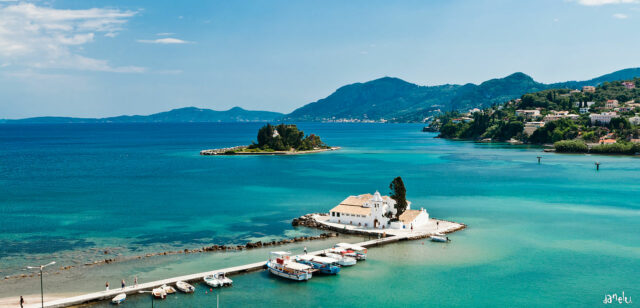
Vlacherna Monastery in Corfu, Greece. Danel Solabarrieta/CC BY-SA 2.0/Wikimedia Commons

ATHENS — Fourteen migrants died in the Aegean Sea off Greece on Tuesday after their boat collided with a coast guard vessel off the island of Chios, the coast guard said.

A coastguard official said they spotted a dingy transporting migrants towards Chios, which lies a few miles off the coast of Turkey, and ordered them to turn back.

“The smugglers maneuvered toward the coast guard vessel causing a collision ,” the official told Reuters.

Reuters was unable to independently verify how exactly the collision occurred. The nationality of the migrants was not clear.

Two coast guard officers were injured and transferred to hospital and 24 migrants have been rescued, a second official told Reuters. Witnesses reported that about 30-35 people were on board, a government official said.

The coast guard said that a search and rescue was underway with coast guard vessels, private boats, and divers assisting the operation.

Greece, in the southeast corner of the European Union, has long been a favored gateway to Europe for migrants and refugees from the Middle East, Africa, and Asia.

In 2015-2016, Greece was at the frontline of Europe’s migration crisis and nearly one million people landed on its islands, including Chios, from Turkey.

In recent years, arrivals have dropped and Greece has toughened its stance on migrants. Since 2019, the center-right government has reinforced border controls with fences and sea patrols.

Greece has come under scrutiny for its treatment of migrants and refugees approaching by sea, including one shipwreck in 2023 in which hundreds of migrants died after what witnesses said was the coastguard’s attempt to tow their trawler.

The EU border agency said last year that it was reviewing 12 cases of potential human rights violations by Greece, including some allegations migrants seeking asylum were pushed back from Greece’s frontiers.

Greece denies that it violates human rights or that it forcefully returns asylum seekers from its shores. — Reuters

Debt hits record P17.71 trillion in 2025

BW FILE PHOTO

By Aubrey Rose A. Inosante, Reporter

THE PHILIPPINES’ outstanding debt climbed to a record P17.708 trillion at the end of 2025, exceeding the government’s projection amid increased issuances and a weaker peso.

The National Government’s (NG) end-2025 outstanding debt rose by 10.32% from the P16.05 trillion recorded in the previous year, according to data released by the Bureau of the Treasury (BTr) on Tuesday.

This was also 2% higher than the P17.36-trillion projected year-end level.

Month on month, the debt stock inched up by 0.34% from P17.65 trillion at end-November.

“The increase is due to the government’s strategic net issuance of debt instruments to fund development programs, as well as the valuation effects of peso depreciation against the US dollar and third currencies,” the BTr said in a statement.

The peso ended 2025 at P58.79 against the US dollar, weakening by 94.3 centavos or 1.63% from its P57.847 finish in 2024. It also fell against the euro, closing at P69.0547 from P59.9179 the prior year. Against the yen, it dropped to P0.3753 from P0.3688.

This brought the outstanding debt as a share of gross domestic product (GDP) to 63.2% as of end-2025, up from 60.7% a year earlier, the Treasury said.

This is the highest annual debt-to-GDP ratio in 20 years or since the 65.7% in 2005 and is above the 60% threshold considered by multilateral lenders to be manageable for developing economies.

This is also higher than the government’s end-2025 projection of a 61.3% ratio under its updated medium-term fiscal framework.

Philippine GDP growth slowed to 4.4% in 2025 from 5.7% in 2024 and missing the government’s 5.5%-6.5% target. This was the economy’s worst performance in five years or since the 9.5% contraction in 2020 due to the coronavirus pandemic. Outside of the pandemic, this was the weakest annual expansion since the 3.9% in 2011.

Despite the higher end-2025 debt level, the BTr said the country’s debt profile “remained resilient” as 68.4% of borrowings were from domestic sources.

“By prioritizing peso-denominated financing, which is predominantly held domestically, the government reduces exposure to exchange rate volatility. It also keeps interest payments within the domestic economy and provides Filipinos with a stable and secure investment option,” it said.

NG debt is the total amount owed by the Philippine government to creditors such as international financial institutions, development partner-countries, banks, global bondholders and other investors.

Broken down, domestic debt grew by 10.85% to P12.116 trillion as of December 2025 from P10.93 trillion at end-2024. This was 0.66% above the P12.04-trillion year-end projection.

The Treasury attributed the year-on-year increase to the net issuance of government securities via its regular auctions and an offering of five-year retail Treasury bonds in August, through which it raised P507.16 billion.

Month on month, domestic borrowings slipped by 0.1% from P12.117 at end-November.

Meanwhile, external liabilities rose by 9.19% to P5.59 trillion at end-2025 from P5.12 trillion in 2024. This was also higher than the P5.32-trillion estimate and also went up by 1.1% from P5.53 trillion at end-November.

“This is driven by the issuance of new global bonds, net availment of official development assistance from international development partners, as well as the upward revaluation of foreign currency-denominated debt brought about by unfavorable exchange rate movements,” the BTr said.

Outstanding foreign debt was composed of P2.82 trillion in global bond issuances and P2.77 trillion in loans.

External debt securities were made up of P2.39 trillion in US dollar bonds, P262.41 billion in euro bonds, P58.79 billion in Islamic certificates, P56.85 billion in Japanese yen bonds, and P54.77 billion in peso global bonds.

The government raised $4.5 billion from the international market last year as it issued US dollar-denominated global bonds, raising $2 billion in May and $2.5 billion in August.

“For the full year, the NG raised P1.18 trillion in net domestic financing, demonstrating sustained investor confidence in government securities amid evolving market conditions,” the BTr said.

“External financing remained prudent and largely concessional. This results in a net external financing level of P317.02 billion from global bond issuances and program and project loans to support infrastructure, social reform, and agriculture and industry sectors,” it added.

Meanwhile, NG-guaranteed liabilities slipped by 0.6% to P344.57 billion at end-December from P346.66 billion in the previous year due to net repayments of both domestic and external guarantees.

“Guaranteed debt remained manageable at only around 1.2% of GDP, indicating minimal contingent debt risks,” the BTr said.

Month on month, guaranteed debt dipped by 3.22% from P356.04 billion at end-November.

Rizal Commercial Banking Corp. Chief Economist Michael L. Ricafort said the higher debt stock at end‑2025 reflected an increase in borrowings to finance a bigger budget gap. The government’s budget deficit widened to P1.26 trillion in the first 11 months of 2025 from the P1.18-billion gap in the same period in 2024.

“For the coming months, the outstanding National Government debt could go to new record highs amid new National Government borrowings in recent months and also the need to hedge both local and foreign borrowings of the National Government in view of the Trump factor and other geopolitical risk factors,” he said.

Jonathan L. Ravelas, a senior adviser at Reyes Tacandong & Co., said the record-high debt shows that the government’s fiscal space is tightening.

“We need faster revenue growth, stronger spending discipline, and reforms that boost productivity,” he said in a Viber message.

Mr. Ravelas added that a weaker peso, which drives up the value of the government’s obligations, will remain a challenge in the months ahead.

Based on the 2026 Budget of Expenditures and Sources of Financing, the outstanding debt is projected to balloon to a record P19.06 trillion by the end of 2026, or P13.28 trillion in domestic obligations and P5.78 trillion in external liabilities. The Marcos administration plans to borrow P2.68 trillion this year, or P2.05 trillion from the domestic market and P627.1 billion from external sources.

The government expects the debt-to-GDP ratio to settle at 61.8% this year, 61.3% in 2027, 60.3% in 2028, 59.5% in 2029, and 58% by end-2030.


PHL at risk of  ‘dirty money’ list return amid corruption mess

REUTERS

By Katherine K. Chan, Reporter

DUMAGUETE CITY — The Philippines is working to tighten its safeguards to ensure it stays off a global financial crime watchdog’s list of jurisdictions with high “dirty money” risks as a corruption scandal has highlighted potential gaps in the monitoring of illicit flows.

Asked if the recent graft controversy puts the Philippines in danger of returning to the Financial Action Task Force’s (FATF) “gray list” of countries under increased monitoring for money laundering risks, Bangko Sentral ng Pilipinas (BSP) Governor Eli M. Remolona, Jr. said: “To be honest, we have a risk.”

May risk na babalik tayo sa gray list (There’s a risk that we will return to the gray list), although we’re doing what we can to prevent that,” he told reporters during a media information session here on Monday.

The BSP chief, who also chairs the Anti-Money Laundering Council (AMLC), said they will work to address issues before the FATF’s next review in 2027.

This, as the AMLC’s latest National Risk Assessment released in December also showed that the country remains under heightened threat of money laundering.

The Philippines exited the FATF’s gray list in February 2025. It was put under increased monitoring in 2021 as the watchdog noted deficiencies in anti-money laundering/counter terrorism financing activities in key areas and sectors, namely, designated nonfinancial businesses and professions, casino junkets, beneficial ownership information, money laundering and terrorism financing prosecution, and cross-border declaration measures.

The AMLC has secured several freeze orders for the assets of individuals said to be linked to wide-scale multibillion-peso corruption in anomalous government flood control and infrastructure projects.

GlobalSource Partners Principal Advisor and former BSP Deputy Governor Diwa C. Guinigundo said the Philippines risks re-entering the FATF’s gray list if the watchdog determines lackluster or failed enforcement of anti-money laundering efforts in the country.

“For FATF, the issue is not the scandal itself but whether the Philippines can credibly detect, investigate, and prosecute the laundering of illicit proceeds linked to it,” Mr. Guinigundo said in a Viber message.

“A decisive, coordinated response by the AMLC, DoJ (Department of Justice), and Ombudsman would support the case that post-gray list reforms are working. However, slow investigations, weak case buildup, or perceptions of impunity — especially in large infrastructure projects — would materially elevate gray-listing risk.”

The government needs to show credible results from its ongoing graft probe, he said.

“By 2027, (FATF) assessors will judge several years of enforcement performance, meaning credible results must be evident by 2025-2026,” he said. “Announcements or legislative fine-tuning without convictions, asset recovery, and inter-agency coordination will carry little weight.”

The Philippines is in a better position now with its existing laws, more developed institutions, and enhanced private sector compliance, Mr. Guinigundo said, but the government still needs to prove that it can properly resolve high-value cases, especially those involving politics and infrastructure-related matters.

John Paolo R. Rivera, a senior research fellow at the Philippine Institute for Development Studies, said the government has enough time to address potential areas of concern, but “only if it delivers credible, measurable enforcement outcomes, not just new rules.”

“Preventing a return to the gray list will require stronger prosecution of major laundering and corruption-linked cases, tighter monitoring of politically exposed persons, improved inter-agency coordination, and further reforms such as easing bank secrecy for lawful investigations, enhancing beneficial ownership transparency, and strengthening supervisory powers of regulators,” he said via Viber.

BANK SECRECY
Amid the heightened need for transparency, the BSP said it is pushing to widen the scope of proposed amendments to the country’s decades-old bank deposit secrecy laws to allow authorities look into the accounts of individuals being investigated by other financial regulators.

“The idea is that everybody wants that full transparency,” BSP General Counsel Roberto L. Figueroa told reporters during the same event here. “Everybody wants the BSP to be able to look into the bank deposit accounts of persons that we suspect are engaging in unlawful activities.”

House Bill No. 6707, which was approved on third and final reading in December, only seeks to allow the BSP to investigate accounts owned by bank officers and employees linked to financial crimes.

Mr. Figueroa said that in the Senate version of the amendments, they also want to allow access to accounts of individuals or entities being investigated by the AMLC, the Bureau of Internal Revenue, the Securities and Exchange Commission, the Insurance Commission and the Philippine Deposit Insurance Corp.

“So, it’s much broader now. It’s not limited to the directors, officers (and) stockholders of banks. This inquiry of bank deposit accounts can cover any person so long as the investigation or the examination being done by these regulators I’ve mentioned are conducting this in the course of their own implementation of their mandates,” he said.

The consolidated version of proposed Senate bills (SB) on bank secrecy amendments was filed on Jan. 28 as SB No. 1728 or the Banking Reform for Integrity, Good Governance, Honesty, Transparency Act. It is currently up for second reading.

However, Mr. Figueroa said they also want to propose changes to this bill, specifically on the provisions covering the clearing house of orders to investigate deposits and the crafting of implementing rules.

Bank secrecy law amendments are part of President Ferdinand R. Marcos, Jr.’s priority legislative agenda for the 20th Congress.

DoF eyes P101 billion from sale of gov’t assets

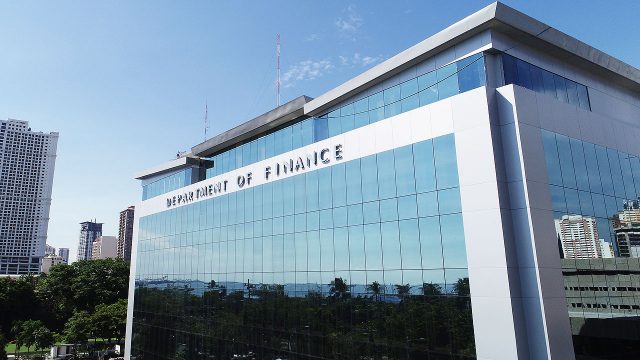
DOF.GOV.PH

THE GOVERNMENT is targeting to sell three big-ticket real estate assets this year, which, along with the proceeds from the privatization of Caliraya‑Botocan‑Kalayaan (CBK) last year, could yield a combined P101 billion in revenues, the Department of Finance (DoF) said.

The Food Terminal, Inc. (FTI), the Mile Long Complex, and the Atrium condominium in Makati City are slated for disposal this year, the Privatization and Management Office (PMO) said in a Viber message on Feb. 2.

The PMO serves as the marketing arm of the government concerning transferred assets.

However, the Privatization Council has not approved minimum prices for these properties, it said.

“Together with the privatization of CBK, the privatization of these three assets and certain shares of stock, the NG (National Government) is targeting privatization nontax revenue of P101 billion,” the PMO said.

This goal is much higher than the P5-billion privatization target for 2025. The PMO has not released data on its full-year 2025 revenues.

According to a document seen by BusinessWorld last year, the FTI property in Taguig City has an estimated value of P40.4 billion.

Meanwhile, the Mile Long Complex in Makati City is worth about P12.26 billion. This is occupied by various tenants with buildings and has other land improvements classified as residential and commercial lots.

Also in Makati, the Atrium property, consisting of 24 condominium units and 21 parking slots, has been valued at about P449 million.

Last year, the government privatized the 733.95-megawatt CBK hydroelectric power complex in Laguna, awarding it to the Thunder Consortium, which offered P36.27 billion. The consortium was made up of Aboitiz Renewables, Inc., Sumitomo Corp., and Electric Power Development Co.

Analysts said the government’s P101-billion privatization target for this year is ambitious due to execution.

The Marcos administration’s nontax revenue target from asset sales this year is “more of an aspirational ceiling than a realistic baseline,” Leonardo A. Lanzona, an economics professor at Ateneo de Manila University, said.

“The government has the right assets and the right intent, but Philippine privatization has a deeply entrenched pattern of ambitious targets followed by dramatic downgrades,” he said in a Messenger chat on Tuesday.

Last year’s P5-billion privatization target was cut from the original P101 billion as the government said it saw “slight delays” in selling properties.

“A more credible near-term expectation might be something in the P30 [billion] to P50-billion range — achievable if one or two of the mega-deals actually close on time — with the full P101 billion being more of a 2026-2027 cumulative story rather than a single-year outcome,” Mr. Lanzona said.

Conflicting policy priorities within the Executive branch have often stalled deals and the lack of a clear directive has put assets in limbo, he added, citing the case of the FTI property. The Agriculture department has said it wants to revive the FTI’s operations, even as the DoF has long pushed for its privatization.

“The optimist in me would say that the target is ambitious but not impossible, though execution risk is high given the Philippines’ track record of delays from valuation disputes, legal challenges, and slow transaction processes,” John Paolo R. Rivera, a senior research fellow at the Philippine Institute for Development Studies, likewise said in a Viber message.

“Achieving it will depend on market timing, investor appetite for large real estate assets, and the government’s ability to run transparent, competitive bidding without governance concerns,” he said. “Key derailment risks include weak market conditions, regulatory or court bottlenecks, and credibility issues that could discourage bidders or depress prices.” — Aubrey Rose A. Inosante

PHL, Japan finalize amended double taxation deal

A person holds Japan’s national flag at the Imperial Palace in Tokyo, Japan, Jan. 2, 2020. — REUTERS

THE PHILIPPINES and Japan have finalized an amended double taxation convention (DTC) aimed at keeping bilateral economic ties aligned with the evolving global business climate, the Department of Finance (DoF) said.

The DTC was finalized after one round of formal negotiations held from Jan. 27 to Jan. 30, the DoF said in a statement on Tuesday.

The convention covers income taxation for citizens and residents of both countries. It sets how each country will levy taxes and grant credits for taxes paid, ensuring compliance with their respective tax laws.

“The negotiated treaty is expected to produce a balanced framework that supports cross-border economic activity and safeguards the integrity of both nations’ tax systems,” the department said. “Both sides are committed to aligning the convention with current international standards, while ensuring fairness and preventing tax evasion.”

The finalized DTC will undergo approval under each country’s legal processes and take effect 30 days after the exchange of diplomatic notes confirming approval.

“As one of the Philippines’ most vital and enduring economic partners, the negotiation with Japan underscores our countries’ mutual commitment to strengthening partnership by providing a clear, modern, and equitable tax treaty framework,” Finance Secretary Frederick D. Go said.

The Philippines signed a double taxation agreement with Japan that took effect in 1981 and an amending protocol in 2009.

The country has some 44 double taxation agreements with various countries, including Japan, the United States, the United Kingdom, Spain, South Korea, Germany, China, Canada, and Australia.

The DoF said the renegotiation comes as the Philippines marks its 70th anniversary of diplomatic relations with Japan this year.

Embassy of Japan in the Philippines Minister for Economic Affairs Yokota Naobumi said he expects that the amendment can result in more Japanese investments in the Philippines.

“I sincerely hope that the amendment to the tax treaty will be concluded at an early stage and that this year will truly become one of significant progress in our bilateral relationship,” he said.

Finance Undersecretary and Head of its Revenue Operations Group (ROG) Rolando Ligon, Jr. said a careful and forward-looking review of the current agreement is needed amid the evolving tax landscape, especially amid increased digitalization and capital mobility.

“Through these renegotiations, we seek to align our convention with contemporary international standards, promote certainty and fairness for taxpayers, and reinforce our shared commitment to combating tax evasion and avoidance,” he said.

On Manila’s side, the negotiation team included Finance ROG assistant secretaries Dakila Eiteen M. Napao and Euvimil Nina R. Asuncion, BIR Deputy Commissioner for Legal Larry M. Barcelo, and International Tax Affairs Division Chief Robbie M. Bañaga.

Meanwhile, the Japanese delegation was made up of Mr. Yokota, Embassy of Japan Second Secretary Narita Akihiro, Ministry of Japan Tax Bureau Director for Tax Treaties and International Affairs Hisanaga Takuma, Deputy Director Nishijima Hiromitsu, Deputy Director Tanaka Kyohei, and Section Chief Kawashima Ayaka. — Aubrey Rose A. Inosante

Asian Terminals scheduled to exit PSE on April 3

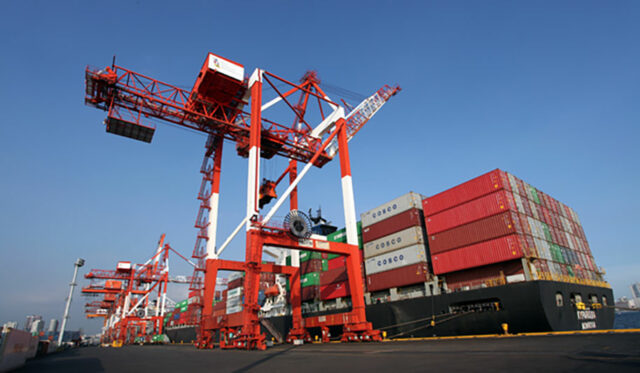
ASIANTERMINALS.COM.PH

By Ashley Erika O. Jose, Reporter

ASIAN TERMINALS, INC. (ATI) is scheduled to exit the Philippine Stock Exchange (PSE) on April 3, following board and shareholder approvals, pending completion of regulatory requirements.

According to the company’s petition for voluntary delisting filed Tuesday, the listed port operator and Maharlika Investment Corp. (MIC) are set to acquire up to 191.44 million shares at P36 apiece to obtain full ownership of ATI’s outstanding capital stock.

MIC and ATI launched a tender offer from Feb. 2 to March 3 to acquire shares from ATI’s public float shareholders, it said, adding that the P36 offer represents a 49% premium over the one-year volume-weighted average price of P24.15 per share.

In December last year, MIC said it planned to buy a minority stake in the Tanco-led ATI as part of its strategy to position itself in one of the country’s key trade gateways.

MIC intends to conduct a tender offer for ATI’s shares, running in parallel with ATI’s voluntary delisting from the PSE.

In a separate media release on Tuesday, MIC said its President and Chief Executive Officer Rafael Jose D. Consing, Jr. was elected by ATI shareholders as an additional member of ATI’s Board of Directors.

His assumption to the board will proceed upon completion of key transaction and regulatory steps associated with ATI’s planned delisting, MIC said.

“Ports are the economic arteries of our nation. They are the pulse of our trade, moving the goods and ideas that fuel our growth and connecting the lives of every Filipino to the rest of the world,” Mr. Consing said.

ATI will also expand its share buyback program to acquire the remaining public float and employee-held shares through the same tender offer. Its board previously approved an increase in the share buyback program to P5 billion.

The company’s board has also approved amending its articles of incorporation to increase the number of directors to nine from the current eight.

ATI said it had secured shareholder approval to delist, noting that 90.34% of the company’s total outstanding and listed shares voted in favor of the voluntary delisting.

“This reinforces ATI’s pivotal role in enabling faster and smarter trade, leveraging its four decades of operational depth and financial strength with MIC’s mandate to catalyze inclusive and sustainable economic growth through high-impact investments in strategic sectors for national progress,” ATI said.

Under PSE rules, a voluntary delisting must secure approval from at least two-thirds of the company’s board of directors, including the majority — but not less than two — of its independent directors. It must also be approved by stockholders representing at least two-thirds of the company’s total outstanding and listed shares, with votes against the delisting not exceeding 10% of total shares, ATI said.

“This move aligns with a broader global trend where public companies increasingly opt for privatization to escape short-term market pressures and focus on long-term strategic objectives without the scrutiny and quarterly performance demands inherent in public markets,” Globalinks Securities and Stocks, Inc. Head of Sales Trading Toby Allan C. Arce said in a Viber message.

He added that ATI’s delisting could prompt a reassessment of the value proposition of public listings among shipping and logistics firms.

Companies may increasingly weigh the cost of regulatory compliance, disclosure requirements, and market volatility against the benefits of public capital access, he said.

“The trend toward privatization has accelerated significantly over the past 15 years, reaching new highs in 2024, suggesting that ATI’s decision is part of a larger structural shift rather than an isolated event,” he said.

ATI’s delisting may also discourage companies from pursuing an initial public offering (IPO), Mr. Arce noted.

“ATI’s delisting may indeed serve as a cautionary signal, particularly if they observe that established public companies are choosing to exit rather than remain listed,” he said, adding that the move could dampen IPO activity in the sector.

For 2026, the PSE has set a modest target of about four IPOs, citing a cautious equity fundraising pipeline after listings fell short of expectations last year. The local bourse aims to raise around P170 billion to P175 billion in capital this year, higher than the P144.14 billion raised in 2025.

Last year, only two companies went public from an initial target of six, with Cebu-based fuel distributor Top Line Business Development Corp. debuting in April, and West Zone water concessionaire Maynilad Water Services, Inc. completing its offering in November.

ATI manages and operates several terminals in the country, including Manila South Harbor, the Port of Batangas, Batangas Container Terminal, and off-dock yards in Sta. Mesa, Manila, and Calamba, Laguna.

On Tuesday, ATI shares closed unchanged at P35.10 apiece.

Ayala Land, Leonio Land start construction of Porac CBD

AYALALAND.INC

LISTED property developer Ayala Land, Inc. (ALI) is building its next central business district (CBD) in Porac, Pampanga.

ALI and Leonio Land Holdings, Inc. recently broke ground for the 120-hectare Alviera Central Business District, which will rise within the 1,800-hectare master-planned Alviera estate, it said in a statement on Tuesday.

The development will host commercial, office, lifestyle, institutional, and hospitality facilities. It will also include wellness, sports, and recreational spaces.

“Prior to this, we also broke ground for Alviera’s first retail development, Alviera Commons, which will house a diverse mix of essential retail and dining options,” said Mayi Platero-Rodriguez, senior project development head for South and Central Luzon at Ayala Land Estates.

The development will also feature an open food park and a play area, while providing a backdrop of the Alviera mountain range.

The Alviera CBD will cater to office and information technology-business process management tenants, as well as healthcare, education, and leisure facilities.

In the second quarter, Miriam College Alviera is set to welcome its first batch of elementary and high school students, while the La Salle Botanical Gardens will begin the first phase of its development, ALI said.

The Alviera estate is only 20 minutes away from Clark International Airport and is connected to major roads, including the North Luzon Expressway and Subic-Clark-Tarlac Expressway.

It also features existing attractions such as SandBox, City Kart, a driving range, and open grounds that draw visitor traffic to the estate.

These developments are expected to position the Central Luzon region as an urban lifestyle hub in the countryside, it added.

In 2024, Central Luzon posted a gross regional domestic product growth of 6.5%, the third-fastest among all regions and faster than the national growth rate of 5.7%.

ALI has over 50 estates nationwide, including Bonifacio Global City in Taguig, Cebu Business Park, Makati Central Business District, and upcoming developments in its Nuvali, Laguna and Davao estates.

At the local bourse on Tuesday, ALI shares rose 3.81%, or 80 centavos, to close at P21.80 apiece. — Beatriz Marie D. Cruz

ADVERTISEMENT
ADVERTISEMENT