Home Blog Page 330

Megaworld to develop 18-ha beachside village in Nasugbu

MEGAWORLDGLOBAL-ESTATESOUTH.COM

LISTED property developer Megaworld Corp. is developing a beachside residential village along the coast of Nasugbu, Batangas, which is expected to generate P7 billion in sales by 2032.

The 18-hectare (ha) project, called Villa Scala, will rise within the 116-hectare Nascala Coast and will feature 217 prime residential lots, the company said in a disclosure to the stock exchange on Thursday.

Villa Scala will be developed by Megaworld subsidiary Global-Estate Resorts, Inc. (GERI), which specializes in master-planned tourism and leisure townships.

Lot sizes will range from 407 square meters (sq.m.) to 1,081 sq.m. The village is scheduled for completion by 2032.

Inspired by Italy’s Amalfi Coast, the development will offer views of Nasugbu Bay, the West Philippine Sea, and nearby mountain ranges.

Future residents will also have access to nearby leisure facilities for activities such as yachting and sailing, Megaworld said.

The village will feature its own Villa Scala Clubhouse, designed with Positano-style, cliffside Mediterranean architecture that reflects Southern Italian coastal living.

The clubhouse will have floor-to-ceiling glass walls that allow natural light to enter, while its infinity pool will offer seaside views. Other amenities include function rooms, a fitness center, and an open courtyard.

About 40% of the village will be allocated to open spaces, with 15-meter-wide roads and an underground cabling system for electrical and telecommunications utilities.

The village will be complemented by commercial hubs, leisure destinations, expansive commercial lots, mixed-use centers, and town centers within Nascala Coast.

Nasugbu, located about 112 kilometers south of Metro Manila, is home to several luxury resorts and private beaches.

“With this village, we envision to continue developing Nascala Coast into a thriving coastal address where generations of families can flourish,” Megaworld Global-Estate, Inc. First Vice-President Rachelle P. Hernandez said.

Villa Scala is about a 2.5-hour drive from Metro Manila and an hour from Tagaytay City.

It is accessible from Bonifacio Global City and the Makati central business district via major roads such as the South Luzon Expressway (SLEX), Manila-Cavite Expressway (CAVITEX), the Ternate-Nasugbu Highway, and the upcoming Cavite-Batangas Expressway (CBEX).

Megaworld is ramping up its provincial expansion this year with a P65-billion capital expenditure budget, 30% higher than the P50 billion allocated last year.

The company reported a 14% increase in earnings in the first nine months of 2025.

Megaworld shares rose by 0.45% or one centavo to close at P2.24 apiece on Thursday. — Beatriz Marie D. Cruz

EastWest Bank expects sustained asset growth

EASTWESTBANKER.COM

EAST WEST BANKING Corp. (EastWest Bank) expects sustained asset growth this year, still driven by its consumer business.

“We’ve looked at it, maybe [assets could grow by] low to mid-teens. Again, keep it steady. We’ve been doing that for the last three years, so no change in strategy. It’s really how you sustain that growth over time that really matters,” EastWest Bank Chief Executive Officer Jerry G. Ngo told reporters late on Wednesday.

He said their consumer business will be the main asset growth driver as it still accounts for a majority of its loan portfolio.

“Most of our assets are consumer lending. So, that’s what we’re looking at. Maybe, again, for the past three years, it’s been low to mid-teens. And that is sustainable over a period of time.”

The bank is looking to further expand its auto and home loan portfolios, Mr. Ngo said, adding that about 25% of EastWest Bank’s loan book is made up of auto loans, while credit cards comprise a bigger portion. Salary loans also take up about a quarter of its portfolio.

Their loan-to-deposit ratio is at the 70%-80% range, he added.

Steady expansion in assets, loans, and deposits, which are all growing at about the same pace, keeps the bank liquid, giving them the flexibility to be opportunistic in tapping the bond market, Mr. Ngo said.

“We’re actively looking. We’re actively waiting for the right time. But there’s no impetus. Our liquidity is strong and sufficient. But the pricing is good right now, so we’re also waiting for the right time.”

He added that the Bangko Sentral ng Pilipinas’ ongoing easing cycle and potential cuts to banks’ reserve requirement ratios could also boost their liquidity further.

While EastWest Bank could consider issuing bonds if there is enough investor demand, corporate activity in the capital markets has been increasing, he said. “We’re waiting for a clear market.”

In 2023, the bank approved a P30-billion bond program, with issuances expected over a five-year period. No drawdown has been made so far.

EastWest Bank last tapped the domestic market in February 2020, raising P3.7 billion from an issuance of three-year fixed-rate bonds.

Meanwhile, the bank will also continue to invest in improving its artificial intelligence capabilities, Mr. Ngo added, which they expect to help in managing their operating costs over time.

“We’re studying that specifically. But I think the most important improvements are how do we leverage on those capabilities to make our relationship managers more effective? How do we augment capabilities? How do you make advice better?” he said.

“That’s something that we want to focus on going forward, is to see how we could take that across relationship managers. It will still be people to people, but people augmented with artificial intelligence.”

EastWest Bank’s attributable net income rose by 6.25% year on year to P2.48 billion in the third quarter of 2025, driven by its consumer book. This brought its nine-month profit to P6.62 billion, up by 13.81% from the same period in 2024.

Its shares went down by 10 centavos or 0.8% to end at P12.46 apiece on Thursday. — Aaron Michael C. Sy

Harry Potter villain emerges as unlikely Lunar New Year symbol

TOM FELTON in Harry Potter and the Chamber of Secrets (2002).

HONG KONG — Draco Malfoy, the villainous student who was Harry Potter’s rival in the fantasy book series, has become an unlikely Chinese Lunar New Year mascot, with his face plastered across red festive decor and merchandise from posters to phone covers.

Malfoy, played by actor Tom Felton in the films of J.K. Rowling’s books, has surged in popularity due to the Chinese translation of his surname — Ma-er-fu. Meaning horse and fortune, it bodes well for China’s lunar year of the Horse.

Social media has been flooded with images of people sticking red Malfoy posters on their doors. Fans can buy four of them for 11 yuan ($1.60) on e-commerce platform Taobao.

“Year of the Horse’s blessing, so stick on a Malfoy,” said one user on China’s Rednote.

Other posts on the social media platform appeared to show a massive image of Malfoy in his uniform hanging across several floors of a shopping mall in central Henan province.

The Harry Potter franchise is incredibly popular in China, where foreign films make up a relatively small percentage of the box office due to strict quotas and a shift to local content.

Warner Bros. has agreed to develop a Harry Potter Studio Tour in Shanghai with Chinese group Jinjiang International, Jinjiang said last year.

A Universal Studios theme park in Beijing features The Wizarding World of Harry Potter, a section dedicated to Harry Potter-themed rides and attractions.

The eight Harry Potter films were re-released in Chinese cinemas in 2024. — Reuters

SM Prime unit completes 8.3-ha Provence village in Batangas

TAGAYTAYHIGHLANDS.COM

SY-LED SM Prime Holdings, Inc., through its leisure residential arm Highlands Prime, Inc., has finished its 8.3-hectare (ha) French-themed residential development, Provence, in Talisay, Batangas.

The development features 119 residential lots sized between 240 square meters (sq.m.) and 451 sq.m., with about 14 lots per hectare. It is located within Tagaytay Midlands along Lakeside Fairways Drive in Talisay.

Provence takes inspiration from French countryside living, rising on an elevated site with views of Taal Lake. Amenities include an infinity pool, multipurpose pavilion, tree-lined roads, and independent infrastructure to ensure stable water and power supply.

“To capture the tranquil beauty of the French countryside, generous open spaces and landscaping are woven throughout this 8.3-hectare development, a vision that clearly resonated with discerning buyers as reflected in the substantial number of lots already sold,” Highland Prime Senior Vice-President Mary Eleanor Mendoza said.

She added that the property’s cool climate, nature-oriented spaces, and leisure amenities complement the exclusivity associated with Tagaytay Highlands.

“Provence also offers a refined residential setting that complements Tagaytay Highlands’ signature brand of luxury mountain living,” Ms. Mendoza said.

The development is accessible from Metro Manila via the South Luzon Expressway (SLEX), Cavite-Laguna Expressway (CALAX), and Manila-Cavite Expressway (CAVITEX).

The project reflects SM Prime’s ongoing expansion into the premium, lot-only residential segment as an alternative to its urban high-rise projects, amid an oversupply of mid-income condominiums in Metro Manila.

In the first nine months of 2025, SM Prime’s net income rose 10% to P37.2 billion, with the residential segment contributing P32.6 billion in profit.

On Thursday, SM Prime shares gained 0.24% or five centavos to close at P21.30 apiece. — Beatriz Marie D. Cruz

Impeachment complaints: Not exactly bad timing

STOCK PHOTO | Image by Fabrikasimf from Freepik

At first glance, the impeachment complaints filed against President Ferdinand Marcos, Jr. and Vice-President Sara Duterte appear ill-timed. With 2025 growth sharply undershooting expectations and 2026 prospects softening, politically explosive moves risk amplifying uncertainty. That concern is understandable but ultimately misplaced.

What defines the growth moment is not just the magnitude of the slowdown in 2025, but the nature of the forces driving it. In fact, the slowdown and its causes reinforce each other. Ignoring one in favor of the other misses the point.

The growth deceleration is stark: the weakest since the pandemic, occurring precisely when faster growth is needed to absorb labor slack. Unemployment and underemployment are rising, job quality has deteriorated, and pandemic scarring has yet to be fully reversed. This alone would be troubling. But the anatomy of the slowdown makes it more so.

Household consumption, the backbone of the economy, has weakened. Although inflation eased in 2025, this largely reflects disinflation from elevated levels. Absolute prices of food, transport, and utilities remain high, continuing to erode real incomes. Combined with a soft labor market, this has inevitably dampened private consumption, which accounts for over 70% of GDP.

More alarming is the collapse in investment momentum. Gross domestic capital formation declined outright, a rare and serious signal of weakening confidence. Foreign direct investment fell sharply by 40% year on year in October 2025, underscoring investor unease. This matters not simply because investment comprises more than one-fifth of GDP, but because it anchors productivity growth, labor absorption, and future capacity. Weak investment today locks in weaker growth tomorrow.

External trade has offered some relief, but its contribution is neither strong nor secure. Export growth has benefited from higher global demand for electronics, machinery, transport equipment, and selected agro-based products. Yet part of this rebound reflects front-loading ahead of anticipated US tariff increases, as well as temporary tariff exemptions and trade facilitation measures. Imports moderated, but this is not an unambiguous positive. Philippine exports are structurally import-dependent; slower import growth now may constrain export performance ahead. Net exports, moreover, remain a drag on real output.

At the center of these dynamics lies a deeper issue: confidence — not in policy intent, but in policy execution.

The Philippines is not short of growth strategies or reform blueprints. What is binding is the failure to implement them cleanly, predictably, and at scale. The investigation into flood control anomalies and the creation of an independent infrastructure commission have coincided with a freeze in public works execution. Public consumption provided only marginal support, driven mainly by government employment and operating expenditures, not by productivity-enhancing investment.

This context frames two familiar but incomplete interpretations of the country’s growth problem.

One emphasizes structural weaknesses: deindustrialization, weak tradables, persistent external imbalances, high real interest rates, and a fragile, services-heavy growth model. Policy incoherence and limited state capacity, in this view, explain why growth has been neither durable nor inclusive.

This diagnosis is largely correct but insufficient. By treating policy failure as technocratic error, it abstracts from politics. In reality, these failures are not neutral. Deindustrialization reflects regulatory capture, selective protection of entrenched interests, chronic budget misallocation, and uneven enforcement of competition policy. Agricultural stagnation stems from rent-seeking in import controls, politicized price interventions, and corruption in subsidy and incentive systems. These distortions persist because they are politically rewarded.

Policy errors matter but so does explaining why reform remains elusive here while it has succeeded elsewhere.

The other critique argues that focusing on corruption is analytically convenient, allowing reformists to avoid harder questions about power, oligarchy, and foreign dominance.

We reject the notion that corruption is secondary. In the Philippine context, corruption and weak governance are the binding constraints that prevent even democratic-developmental reforms from being seriously considered, much less implemented. Industrial policy has failed not because it is absent, but because subsidies are captured, protection becomes permanent, and project selection is politicized. East Asian comparators were not governance-pure, but they possessed enforcement capacity. In Korea and Taiwan, senior politicians and industrialists went to jail. That distinction is decisive.

Democratic institutions, as currently structured, often transmit clientelism rather than discipline. Governance alone does not guarantee development, but bad governance can decisively block it.

This brings us to the question of whether the current slowdown reflects a temporary confidence shock or the onset of structurally lower growth. The answer is both. Confidence has been damaged by persistent governance failures, as reflected in business surveys and investor behavior. At the same time, chronic underinvestment in infrastructure, education, health, and state capacity leaves the economy structurally ill-prepared for accelerated, inclusive growth.

It is against this backdrop that the impeachment complaints should be assessed.

The House Committee on Justice found the impeachment complaints against the President sufficient in form but lacking in substance. While some dismiss the process as a numbers game, the allegations — corruption and graft, abuse of authority, constitutional violations, and betrayal of public trust — were serious. Had they proceeded, a Senate trial could have provided a formal venue for accountability and clarification. That said, prolonged proceedings against a sitting president carry risks: legislative paralysis, political grandstanding, and further erosion of confidence. Speed and procedural discipline would have been essential.

The impeachment complaints against the Vice-President are more expansive. They allege misuse of confidential funds, failure to submit to budget oversight, corruption, threats against public officials, unexplained wealth, and other high crimes. As Senator JV Ejercito noted, dual impeachment proceedings at the top of government can signal instability. Political uncertainty can weigh on markets, foreign investment, and the currency. Even without removal, impeachment may be perceived as regime risk.

Yet it is analytically wrong to assume that impeachment necessarily worsens uncertainty. When handled transparently and decisively, it can demonstrate that accountability mechanisms are real, that due process applies even at the highest levels. Markets are often less forgiving when institutions appear unwilling or unable to enforce rules consistently.

In that sense, the timing is not exactly bad. What would be worse for growth, confidence, and democratic legitimacy is the perception that accountability exists only on paper, and that governance failures are tolerated when they reach the top.

If accountability mechanisms weaken or stall, whether through premature dismissal, procedural delay, or political accommodation, the risk is not simply reputational. The economic consequences would be tangible and compounding.

For instance, when credible allegations at the highest levels are neither decisively prosecuted nor convincingly dismissed, risk premiums rise not abruptly, but persistently. Capital does not flee in panic; it reallocates quietly. The result is not crisis, but stagnation: fewer long-term projects, shorter planning horizons, and a bias toward low-commitment, low-productivity activities.

Public investment efficiency also deteriorates. If the current investigations do not yield accountability at high levels or culminate in clear institutional correction, bureaucratic paralysis becomes rational behavior. Delays, under-execution, and cost overruns become entrenched, further weakening growth.

Fiscal space erodes without drama. Weak growth and inefficient spending reduce revenue buoyancy while raising social demands, leaving less room to respond when the next external shock arrives.

Labor market damage hardens. Weak investment constrains job creation and locks the economy into low-productivity services, making recovery increasingly difficult.

Even democratic credibility carries economic consequences. When enforcement appears selective, trust erodes. Households become cautious, firms defer risk, and savings rise defensively — outcomes that matter in an economy where domestic demand is the primary growth engine.

Seen in this light, impeachment is not the shock. Ambiguity is.

This by no means suggests impeachment is costless. Poorly handled, it can deepen polarization, distract Congress and the Palace, and unsettle markets. But the greater risk lies in signaling that the political system is incapable of confronting credible allegations at the top — either by clearing them decisively or by enforcing accountability.

The choice, then, is not between stability and accountability. It is between managed accountability and unmanaged decline.

Handled swiftly, transparently, and within constitutional bounds, impeachment can function as a credibility reset, demonstrating that governance risks are not merely discussed, but addressed. In an economy already constrained by weak execution and fragile confidence, that signal may matter more than short-term political calm.

In that sense, the timing is not merely acceptable. It may be decisive.


Diwa C. Guinigundo is the former deputy governor for the Monetary and Economics Sector, the Bangko Sentral ng Pilipinas (BSP). He served the BSP for 41 years. In 2001-2003, he was alternate executive director at the International Monetary Fund in Washington, DC. He is the senior pastor of the Fullness of Christ International Ministries in Mandaluyong.


Peso jumps to 7-week high on rate cut bets

BW FILE PHOTO

THE PESO soared to a seven-week high against the dollar on Thursday as faster-than-expected January inflation strengthened expectations of a final rate cut by the Bangko Sentral ng Pilipinas (BSP) this month.

The local unit jumped by 28 centavos to close at P58.69 versus the greenback from its P58.97 finish on Wednesday, data from the Bankers Association of the Philippines showed. This was the peso’s strongest finish since ending at P58.555 on Dec. 18, 2025.

The local currency opened Thursday’s trading session slightly stronger at P58.95 against the dollar, which was already its worst showing of the day. Meanwhile, its intraday best was its closing level of P58.69.

Dollars traded rose to $1.436 billion from $1.209 billion on Wednesday.

“The dollar-peso traded lower and closed at its intraday low after the BSP signaled that they were nearing the end of their nearing cycle. Feb. 19 might be the last cut before they hold for a while. The latest inflation figure was supportive of BSP’s signal that they should end their easing cycle,” a trader said by phone.

January headline inflation picked up to 2% from 1.8% in December, but slowed from the 2.9% in the same month last year, the government reported on Thursday. This was the fastest in 11 months or since the 2.1% in February 2025, which was also the last time the monthly print was within the central bank’s 2%-4% annual target.

It was also higher than the 1.8% median forecast from a BusinessWorld poll of 18 economists, but was within the BSP’s 1.4%-2.2% estimate for the month.

“The inflation outlook continues to be benign while inflation expectations remain well anchored,” the central bank said in a statement.

It said that while the economic outlook has weakened further as governance concerns and global trade uncertainties continue to weigh on business sentiment, they expect a gradual recovery in domestic demand amid the lagged impact of their previous rate cuts and as the government ramps up its spending.

“On balance, the Monetary Board sees the monetary policy easing cycle as nearing its end. Any further easing is likely to be limited and guided by incoming data,” the BSP added.

BSP Governor Eli M. Remolona, Jr. said on Sunday that a cut is possible at their Feb. 19 meeting if they see the need to support domestic demand.

This, as Philippine gross domestic product growth slowed to a five-year low of 4.4% last year, missing the government’s 5.5%-6.5% target, largely due to the economic fallout from a corruption scandal that affected both public and private spending.

The Monetary Board has reduced benchmark rates by 200 basis points since August 2024, bringing the policy rate to 4.5%.

S&P Global Ratings’ positive outlook for the country also supported sentiment, Rizal Commercial Banking Corp. Chief Economist Michael L. Ricafort said in a Viber message. S&P said in a Feb. 3 report that the Philippines remains on track for a possible credit rating upgrade as improving fiscal and external balances outweigh risks from the government’s flood control controversy.

For Friday, the trader sees the peso moving between P58.50 and P58.90 per dollar, while Mr. Ricafort expects it to range from P58.60 to P58.80. — Aaron Michael C. Sy

Stuff to Do (02/06/26)


Drop by the Art Fair

THE 13th edition Art Fair Philippines is now being held at the Circuit Corporate Center One at Circuit Makati, from Feb. 6 to 8. The fair will be spread throughout six floors of the office building. There will be hourly P2P buses from the One Ayala transport hub on EDSA corner Ayala Ave., to cater to fairgoers coming from the central business district. The bus will stop right in front of Circuit Corporate Center One. This year’s fair will have exhibitors from the Philippines, France, Hong Kong, Indonesia, Japan, Korea, Malaysia, Singapore, Taiwan, Vietnam, and Spain. The ArtFairPH/Projects section will focus on modern masters and contemporary visionaries namely Imelda Cajipe Endaya, Ambie Abaño, Max Balatbat, Ged Unson Merino, Jon and Tessy Pettyjohn, Filipino diaspora artists from Berlin-based Sa Tahanan Co. collective, Spanish artist Ampparito, and four late Filipino masters: Brenda Fajardo, Constancio Bernardo, Solomon Saprid, and Romeo Tabuena. This year’s ArtFairPH/Talks, handled by the Ateneo Art Gallery and the Museum Foundation of the Philippines, will present daily discussions that dive into the evolving art landscape, including project artists’ work at the fair and experts’ views on art collecting and the art market. Speakers and specific topics for the 2026 sessions will be announced on the fair’s website. The ArtFairPH/Digital section will feature painter and graphic artist TRNZ’s animated short film The Keeper, created in collaboration with Fleet Studios. There will also be an immersive installation by TLYR Collective. Complementing the fair is the 10 Days of Art initiative, a series of events, public installations, and museum openings held around Makati City from Jan. 30 to Feb. 8. A regular day pass to the fair is P750. Tickets for students, senior citizens, and PWDs with valid IDs are P500. Makati students and teachers with valid IDs can get tickets for a discounted price of P300. Tickets can be purchased in advance at www.artfairphilippines.com. They will also be available at the reception area for the duration of the event. For more information, visit the Art Fair Philippines website and follow Art Fair Philippines on Instagram (@artfairph) and Facebook (www.facebook.com/artfairph).


Hop on Pasinaya’s Paseo Museo tour

THOSE who want to immerse themselves in the artistic landscape of Manila and Pasay can join the Cultural Center of the Philippines’ (CCP) Pasinaya 2026 hop-on, hop-off tour Paseo Museo. Slated for Feb. 7 and 8, visitors who register for CCP Pasinaya can take the free shuttle provided by the Museum Foundation of the Philippines at the terminal along Vicente Sotto St. and explore 19 museums and galleries across the two cities. It follows a pay-what-you-can scheme. The participating venues are: Adamson University, the Asian Institute of Maritime History, Bahay Tsinoy, Baluarte de San Diego, Calle Wright, Casa Manila, Centro de Turismo, Museo de Intramuros, GSIS Museo ng Sining, the Manila Clock Tower Museum, Museo Pambata, Museum of Contemporary Art and Design, the National Museum’s Anthropology, Fine Arts, and Natural History complexes, the NCCA Gallery, PWU-SFAD’s Jose Conrado Benitez Gallery, and UP Manila’s Museum of a History of Ideas. Tours start at 9 a.m., with the last trip at 4 p.m. This is part of the CCP Pasinaya 2026: Open House Festival, the country’s largest annual multi-arts event. With over 150 shows, workshops, and activities in music, theater, dance, visual arts, film, and literature, there’s something for everyone across the CCP Complex and partner museums and galleries. The festival works on a pay-what-you-can system.


Visit the Luneta Art Fair

THE Luneta Art Fair, a large-scale showcase of traditional and non-traditional artworks from up-and-coming artists, collectives, creative spaces, art schools, and galleries from Metro Manila and beyond, is taking place on Feb. 7 and 8 at Rizal Park. The event is free to the public. For this year’s edition, there is a spotlight on seven artists: Gelo Andres, Ululay, Kulas Jalea, Patrick Kent Oaferina, Jirah Millano-Perea, Joveneil De Guzman, and Pipesman. Over at Papakape Luneta, there will also be an indie film showcase held in the afternoon of both days, featuring films from CIIT students and Awkward Penguin filmmakers James Robin Mayo and Thop Nazareno.


See PETA’s Kislap and Algo

AFTER their debut at PETA’s Control + Shift: Changing Narratives in 2024 and 2025, the bold experimental works Kislap at Fuego and Children of the Algo are now back on the stage until Feb. 7 at the PETA Theater Center in Quezon City. Moving from the experimental fringes to the spotlight, these two productions headline the Philippine Educational Theater Association’s (PETA) Main Theater Season as a twin bill performance. Dominique La Victoria’s Kislap at Fuego, directed by Maribel Legarda and J-mee Katanyag, with a Filipino translation by Gentle Mapagu, revolves around an unexpected fairytale between a kapre and a country girl, set amidst the Philippine Revolution against Spain. Mixkaela Villalon’s Children of the Algo, directed by Johnnie Moran, delves into the lives of Gen Z content creators, hiding their deeper realities while navigating the digital age with wit and vulnerability. For more information, including performance dates, ticketing, and educational engagements, visit PETA’s social media channels.


Join in some praise and music

ARANETA CITY’S Gateway Mall will be hosting a Praise & Worship Pop-up on Feb. 7 at the Activity Area, Upper Ground Floor, Gateway 1. Kate Torres will lead the pop-up worship session.


Cheer on elite jiu-jitsu fighters

ARANETA CITY will be hosting the ASEAN International Jiu Jitsu Open at the Quantum Skyview, Upper Ground B, Gateway Mall 2 on Feb. 7 and 8. The event will unite elite fighters from across the region for an action-packed showcase of technique and strength.


View a Lion Dance Competition

CELEBRATE culture, skill, and spectacle this Lunar New Year at GH Mall’s South Wing Atrium where, on Feb. 8, 10 a.m., the 2nd Lion Dance Invitational Competition returns, now recognized as a Gold Winner in the IBA Stevies 2025. Held in partnership with Pawchester and the Huang Lion & Dragon Dance Group, GH Mall transforms into the ultimate arena for the nation’s most elite lion dance troupes. The competition will feature two divisions, each competing for a P50,000 grand prize: the Junior Division, which is a showcase of young talents and rising stars, and the Pro Division, featuring high-intensity performances by seasoned masters. GH Mall is located at the Greenhills Shopping Center, San Juan.


Go for a run and dance with Ateneo alumni

THE 2025 Ateneo Grand Alumni Homecoming, the Ateneo de Manila University High School Batch 2000 will hold OBF: ONE BEAT FEST, a Sundown Fun Run and Music Festival, on Feb. 8, 3 p.m., at the Ateneo de Manila University Campus. Participants of the run are requested to sign up at https://myruntime.com/register/one-beat-fest-fun-run. The Ateneo High School Batch 2000 will co-host the event together with Ateneo Batch 2001, which will serve as hosts of the Grand Alumni Homecoming 2026. The fun run will support the Ateneo Alumni Association Order of the Blue Eagles Scholars, retired Ateneo teachers, and the Ateneo Track and Field Team.


Get nostalgic with Bagets the Musical

BAGETS THE MUSICAL, a stage adaptation of the 1984 coming-of-age film Bagets, follows a group of high school friends navigating adolescence, family, friendship, and young love. This production by Newport World Resorts, The Philippine Star, and VIVA Communications, is directed by Maribel Legarda, with a book by J-mee Katanyag and music by Vince Lim. The five leads are played by Sam Shoaf, Milo Cruz, Noel Comia, Jr., Ethan David, and Andres Muhlach. They alternate with Jeff Moses, Migo Valid, Tomas Rodriguez, KD Estrada, and Mico Hendrix Chua. Also in the cast are Neomi Gonzales, Natasha Cabrera, Mayen Cadd, Ring Antonio, and Carla Guevara Laforteza. Bagets the Musical runs until March at the Newport Performing Arts Theater, Pasay City. Tickets, ranging in price from P1,000 to P4,000, are now available at the Newport World Resorts Box Office and via TicketWorld.


Travel the world with the Brickman Wonders

GMG PRODUCTIONS has announced that the Manila leg of the global tour of the exhibition Brickman Wonders of the World will be extended until March 8 at The Space at Solaire. It features over 45 iconic landmarks from across the globe, all brought to life in LEGO brick form. Visitors can walk through recreations of famous sites such as the Taj Mahal, the Leaning Tower of Pisa, the Arc de Triomphe, and many more. Tickets are available exclusively on TicketWorld.


Do not sing along with Les Miz

THAT is the plea of GMG Productions which has brought Les Misérables: World Tour Spectacular, a reimagined staged concert production of the iconic musical, to the Philippines. “Let the cast tell the story,” it exhorts. That cast includes Filipinos: Lea Salonga and Red Concepcion as the Thénardiers, Rachelle Ann Go as Fantine, and Emily Bautista as Éponine. The expanded concert-like format features a new design and production enhanced with new set and lighting designs, bringing Cameron Mackintosh’s critically acclaimed production to life on a scale never seen before in Manila, with a company and crew of over 110, including an international all-star cast and a large ensemble of musicians. Les Misérables runs at the Theater at Solaire, Solaire Resort & Casino, Entertainment City, Aseana Ave., Parañaque until March 1, with no extensions possible. As of now, all 48 shows are sold out. But keep checking as you never know.

Asiabest Group invests P100M to launch modular construction unit

STOCK PHOTO | Image from Freepik

ASIABEST GROUP International, Inc. said its board of directors has approved a P100-million investment to establish its wholly owned subsidiary ABG Modular, which will focus on modular construction and sustainable building solutions for the property development sector.

“The Board approved the incorporation of a wholly owned subsidiary, ABG Modular, and the investment thereto,” Asiabest Group said in a regulatory filing on Thursday.

ABG Modular will target sectors such as housing, commercial projects, infrastructure, schools, and community facilities, the company said, adding that it will be a vertically integrated supply, logistics, and manufacturing company.

The subsidiary will have an authorized capital stock of P100 million and an initial subscribed capital of P10 million, fully owned by Asiabest Group as the parent company.

Asiabest Group said ABG Modular is set to form a joint venture with Concrete Stone Corp. (CSC), which is expected to provide precast components, scale up operations, and support projects.

At present, the company is deferring acquisition of CSC shares, citing that the timing conflicts with the incorporation of ABG Modular as it focuses on building operating momentum for the new subsidiary.

“In the meantime, further acquisition of CSC shares is deferred as to timing under a phased approach, as the Corporation prioritizes ABG Modular to pursue near-term opportunities and build operating momentum,” Asiabest Group said.

The company referred to its September 2025 announcement to acquire 10 million primary common shares of CSC at P15 each. — Ashley Erika O. Jose

Beyond access: Why digitization alone will not empower Filipino households

BW FILE PHOTO

For more than a decade, financial inclusion has been framed as a problem of access. Open an account. Digitize payments. Bring people into the system. By those standards, the Philippines appears to be a success story. Mobile wallets are widespread. Digital banks are growing. Government cash transfers and remittances increasingly move through electronic channels. Yet beneath this progress lies a stubborn and unsettling truth. Access has expanded, but empowerment has not.

This contradiction lies at the heart of the Atlantic Council’s recent report, “A Three-Billion-Person Challenge: Decision Time for Financial-Sector Leaders.” The report argues that roughly three billion economically active adults already have financial accounts but do not meaningfully use them for formal savings, credit, or insurance. The gap is no longer about connectivity alone. It is about trust, affordability, relevance, and governance. Viewed through a Philippine lens, the report reads less like a distant global diagnosis and more like a precise description of our own financial reality.

THE 3B-PERSON CHALLENGE, PHL EDITION
The Philippines mirrors the report’s central paradox almost perfectly. Access is no longer the problem. Usage is.

The country has high financial account penetration, driven largely by mobile wallets, digital banks, and the digitization of government cash-transfer programs. Filipinos are among the heaviest users of digital payments in Southeast Asia. Paying bills, transferring money, and receiving remittances through apps has become routine.

Yet beyond payments, participation thins out quickly. Formal savings remain shallow. Formal credit is limited. Insurance penetration is weak, especially outside salaried urban workers. In short, Filipinos can pay digitally, but they cannot easily build financial resilience.

This places the Philippines squarely inside the “three billion” group described in the report. These are not the excluded or the disconnected. They are economically active households who have entered the system but do not fully trust or benefit from it.

Who are the “three billion” in the Philippine context?

In Philippine terms, the three billion are not abstract. They are micro-entrepreneurs running sari-sari (sundry) stores, online reselling operations, transport services, and home-based businesses. They are gig and platform workers whose incomes fluctuate week to week. They are women household managers juggling care work, microbusinesses, and informal savings. They are families of overseas Filipino workers receiving remittances but lacking tools to convert inflows into long-term security.

They have a mobile phone. They have a wallet or bank account. They have some cash flow.

But they still rely on informal lending, paluwagan*-style savings, and emergency borrowing at punitive rates. Their financial behavior is not backward. It is cautious. It reflects lived experience with systems that feel fragile, opaque, and unforgiving.

WHY PINOYS DON’T FULLY USE FINANCIAL SERVICES
The Atlantic Council report identifies several structural barriers to usage. In the Philippine context, these barriers are not theoretical. They are encountered daily.

First, connectivity is uneven, not absent. Mobile penetration is high, but network reliability and data costs still disrupt usage, particularly in provincial and island communities. Dropped connections during transactions are not minor inconveniences. They undermine confidence. When money disappears mid-transaction, trust erodes faster than any awareness campaign can repair.

Second, affordability is the real deal breaker. Filipinos are extremely price-sensitive. Hidden fees, unclear charges, and transaction costs that feel negligible to banks loom large for daily wage earners and micro-entrepreneurs. Women are especially affected, consistent with the report’s finding that affordability is a gendered issue. In the Philippine context, fee opacity does not remain a technical concern. It quickly becomes reputational damage that spreads through word of mouth and social networks.

Third, trust is fragile and easily lost. This is where the Philippine lens becomes sharper than the global average. Filipinos already live with scam-heavy SMS environments, phishing through messaging apps, deepfake-enhanced fraud, and persistent anxiety over data privacy. Every scam story reinforces a simple belief: “Mas ligtas pa ang cash. (Cash is safer.)” Trust, as the report notes, is now infrastructure. In the Philippines, it is also reputation currency. Once spent, it is costly to rebuild.

Fourth, products do not match Filipino lives. Most financial products still assume predictable incomes, monthly repayment cycles, and formal employment. Filipino financial life is irregular, seasonal, family-centered, and shock-prone. When digital credit is available, it often delivers short-term relief at the cost of long-term stress, leading to over-borrowing and eventual disengagement. This cycle breeds not inclusion, but distrust of the system itself.

One reason this tension persists is that digital credit has become the most visible and, for many Filipino households, the most accessible entry point into formal finance. Mobile-first lenders have stepped into a space long underserved by traditional banks, extending small-ticket, short-term loans to borrowers without formal credit histories, collateral, or predictable incomes. By using alternative data and simplified onboarding, these lenders reach micro-entrepreneurs, gig workers, and women household managers who are often excluded by conventional underwriting models. In doing so, digital lenders offer a regulated alternative to informal lenders and emergency borrowing that typically comes with far harsher terms and no consumer protection at all.

Where digital lender’s potential becomes most relevant to the Atlantic Council’s argument is in its capacity to move borrowers beyond survival finance. Digital lending, when designed responsibly, can serve as a steppingstone toward financial agency rather than a revolving source of short-term relief. This means using credit not only to bridge cash-flow gaps but also to build data trails, improve creditworthiness over time, and introduce borrowers to more appropriate financial products as their needs evolve.  In a trust-fragile environment like the Philippines, lenders that invest in transparency, borrower understanding, and humane engagement do more than extend loans. They help normalize formal finance as something that works with, rather than against, the realities of Filipino household life.

WHY THIS MATTERS FOR PHL GROWTH
The report’s macroeconomic logic lands hard in the Philippines. Micro, small, and medium enterprises account for more than 99% of businesses, yet face chronic financing gaps. Women-led enterprises remain underfinanced despite evidence of strong repayment behavior. Remittances remain largely consumption-heavy instead of investment-oriented.

The Philippines is not underbanked. It is under-empowered.

Unlocking appropriate savings, credit, and insurance for this segment is not merely social policy. It is economic strategy. Financial inclusion that fails to build resilience weakens productivity, limits enterprise growth, and amplifies vulnerability during shocks.

WHAT PHL HAS AND WHAT IS MISSING
The report places strong emphasis on digital public infrastructure, particularly the combination of digital identification, instant interoperable payments, and consent-based data sharing. The Philippines has made progress. A national digital ID system is emerging. E-wallet penetration is high. Fintech innovation is active. The central bank has generally taken a progressive posture toward digital finance.

What remains missing is equally important. True interoperability across platforms is incomplete. Clear, enforceable consent-based data-sharing frameworks are still evolving. Governance across finance, data privacy, artificial intelligence, and digital identity remains fragmented.

The report is clear on this point. Digital public infrastructure only works when all three pillars move together. Partial digitization creates risk, not trust. When systems advance unevenly, consumers bear the cost of complexity and exposure.

BEYOND ACCESS, TOWARD FINANCIAL AGENCY
The Atlantic Council report is right to frame this as a decision moment. But the decision is not simply about deploying the right technologies. It is about redefining what inclusion means.

For Filipino households, inclusion should mean the ability to withstand shocks without falling into debt traps, to grow small enterprises with confidence, and to trust that institutions will act predictably and fairly. Digitization can support these goals, but it cannot substitute for trust, transparency, and sound governance.

Beyond access lies agency. And agency, not connectivity, is the true measure of financial inclusion.

*Paluwagan is an informal community-based savings group.


Dr. Ron F. Jabal, APR, is the CEO of PAGEONE Group (www.pageonegroup.ph) and founder of Advocacy Partners Asia (www.advocacy.ph).

ron.jabal@pageone.ph

rfjabal@gmail.com

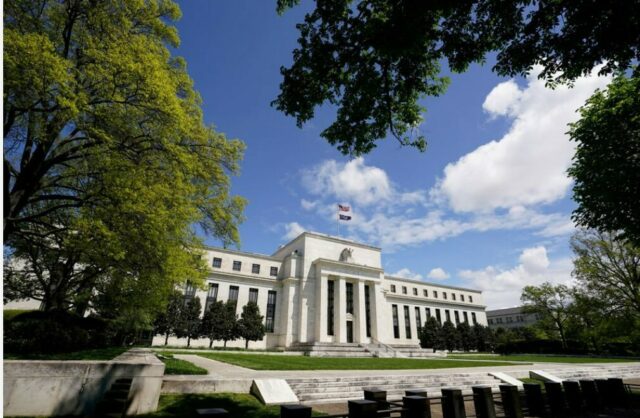
Federal Reserve’s Cook says it’s time to ‘wait and see’ on rates

REUTERS/KEVIN LAMARQUE/FILE PHOTO

US FEDERAL RESERVE Governor Lisa Cook on Wednesday signaled that she will not support another interest rate cut until she sees more proof that price pressures are receding, saying she is more concerned about stalled progress on inflation than a weakening labor market.

“At this time, I see risks as tilted toward higher inflation,” Ms. Cook told the Economic Club of Miami, a week after she joined the majority of her fellow US central bankers in a 10-2 vote to leave the policy rate steady, after cutting interest rates at its prior three meetings.

“We put a lot of easing into the pipeline at the end of last year and I think that given where the labor market is, where inflation is, this is the right time to sit back and wait to see what happens,” she said. Monetary policy is currently “ever so mildly restrictive,” she said.

The Fed’s target for short-term borrowing costs is currently 3.5%-3.75%, and after last week’s decision, Fed Chair Jerome H. Powell said the central bank is “well-positioned” to assess when or whether another rate cut will be needed.

Financial markets are currently pricing two more interest rate cuts, both after Mr. Powell’s leadership term ends in May.

President Donald J. Trump, who has pressured the Fed to slash interest rates sooner and faster than it has, last week nominated former Fed Governor Kevin Warsh to succeed Mr. Powell in part because Mr. Warsh supports the rate cuts that Mr. Trump wants.

Mr. Trump last year tried to oust Ms. Cook over alleged misstatements on her mortgage applications, an effort that she has sued to stop in a case currently before the Supreme Court.

Ms. Cook said she had received an “outpouring” of support from friends, colleagues and former colleagues in recent weeks, and said she would not comment on the case, which is widely viewed as a referendum on the president’s power to exert control over the Fed.

“I can say that it is an honor to serve on the Board of Governors of the Federal Reserve System,” she said. “I will continue to carry out my sworn duties in that role on behalf of the American people.”

Ms. Cook has voted with Mr. Powell and the majority of Fed policymakers on every interest rate decision she has taken part in since she started the job in 2022, supporting rate hikes when the Fed was fighting rising inflation, and more recently rate cuts when the labor market appeared to be weakening.

The job market has now stabilized, she said, using the same term that Mr. Powell used last week. Unemployment, at 4.4% in December, is well below the 50-year average of 6.2% that preceded the 2020 COVID-19 pandemic, she noted.

But in remarks that sounded more hawkish than Mr. Powell, she said progress on inflation, which the Fed targets at 2%, has stalled. Estimates put inflation at about 3% at the end of last year, after stripping out volatile food and energy prices.

“Such a plateau is frustrating after seeing significant disinflation in the preceding few years,” she said.

And while she is optimistic that the effect of tariffs on goods prices will recede and allow inflation to come back down again this year, there is “much uncertainty” over that path, including future tariff policy and whether inflation expectations may become entrenched.

“After nearly five years of above-target inflation, it is essential that we maintain our credibility by returning to a disinflationary path and achieving our target in the relatively near future,” Cook said. “Until I see stronger evidence that inflation is moving sustainably back down to target, that is where my focus will be, in the absence of unexpected changes in the labor market.” — Reuters

PHL topped ASEAN in GenAI vulnerability — ILO

FREEPIK

THE PHILIPPINES faces the highest level of jobs at risk due to Generative Artificial Intelligence (GenAI) in the Association of Southeast Asian Nations (ASEAN), according to a research brief issued by the International Labour Organization (ILO).

The report, Generative AI and Jobs in the Philippines: Labour Market Exposure and Policy Implications, found that 27.2% of the Philippine workforce — equivalent to approximately 12.7 million workers — is potentially vulnerable to disruption by GenAI technology.

Corresponding rates for Indonesia, Thailand, and Vietnam were between 21% and 22%.

While the headline numbers suggest a massive shift in the labor landscape, the ILO said that exposure does not necessarily equate to a looming unemployment crisis. The authors of the brief clarified that “exposure does not equate necessarily to full job replacement but rather the automation of tasks within occupations.”

The study found that only 3.6% of jobs fell into the highest GenAI exposure category with an elevated risk of job displacement. Instead of outright job replacement, the brief argued that the most significant impact on the Philippine labor market is likely to be the “transformation of jobs, potential gains in productivity and enhanced employment quality.”

The study underscores how AI affects different demographics, noting that “GenAI vulnerability is not gender neutral.”

Women face double the rate of GenAI exposure compared to men, reaching 40.3%, which reflects their greater concentration in high-exposure occupations such as clerical support and services and sales.

The ILO said women with advanced educations face a “particularly high potential of GenAI disruption.”

While the exposure rate for those aged 15-24 is slightly lower than that of adults, the report warned that young people are more likely to fill occupations at greater risk of displacement, with the potential impact being “greater for young women than for young men.”

Geographically, the impact is concentrated in urban centers where the Information Technology–Business Process Management (IT-BPM) industry is concentrated. In the National Capital Region, around two in five jobs are exposed to GenAI, a trend mirrored in Central Luzon and Calabarzon, where exposure exceeds 30%.

To navigate the looming transformations, the ILO recommended that “tripartite efforts prioritize measures that ensure the benefits of GenAI are inclusive” and prepare the workforce for evolving occupational profiles. This includes supporting enterprises — especially MSMEs — in adopting AI, strengthening digital infrastructure, and fostering collaboration with industry.

The ILO also noted in its brief the need for education and training programs to include AI and digital skills, with complementary labor market measures and income support for those affected by workforce changes.

“Moreover, given the uneven distribution of GenAl risks across the economy, differentiated regional and sectoral strategies are needed to avoid deepening prevailing inequalities,” the ILO added. — Erika Mae P. Sinaking

Apple TV sets October launch for Mattel’s Matchbox car movie

Matchbox (2026)
Matchbox (2026)

LOS ANGELES — Apple TV will debut Matchbox The Movie in October, betting that Mattel’s classic car toys — tiny enough to slip into matchboxes — can spark a fresh franchise in a thriller about a framed soldier racing to clear his name.

Apple TV said at a press day event on Tuesday that it will begin streaming the film globally on Oct. 9, based on the famous miniature car brand launched in the early 1950s.

John Cena, Jessica Biel, Sam Richardson, Teyonah Parris, and Arturo Castro star in the film and discussed the legacy of the palm-sized cars and why it remains timely for the 2026 action-adventure flick.

Ms. Parris said they relished tapping into childhood memories of the palm‑sized die-cast collectors’ items while Mr. Richardson, an avid Matchbox collector, joked he wished he could have kept the life-size cars used on set.

The film follows Sean, played by Mr. Cena, a former soldier who is kidnapped and framed after completing a mission and reuniting with his friends. The group must clear their names and navigate the bonds of their friendship.

The movie, directed by stuntman Sam Hargrave, is a collaboration between Mattel and Skydance Media.

PUSH FOR MATTEL-BRAND ENTERTAINMENT
Mattel is pushing deeper into brand‑driven entertainment.

Its other upcoming toy-inspired films include the animated Bob the Builder movie and a live-action Masters of the Universe: Chronicles film, based on the He-Man action figure and arriving in theaters on June 5.

Apple TV’s 2026 release aims to build on its post-Barbie momentum as Hollywood hunts for familiar IP with global pull. Barbie dolls and accessories are Mattel’s biggest brand. The toy company’s portfolio also includes Hot Wheels, Fisher-Price, American Girl, Masters of the Universe, Polly Pocket, and UNO.

In 2025, Mattel combined its film and television units to form Mattel Studios in a move to produce entertainment driven by its brands and potentially repeat the commercial success of the 2023 Barbie movie.

Apple TV’s press day also included first-look previews of various shows, including the Emmy-nominated TV series Shrinking, and the upcoming shows Lucky, Imperfect Women, and The Dink. Reuters

ADVERTISEMENT
ADVERTISEMENT