The esports industry should be embarrassed right now
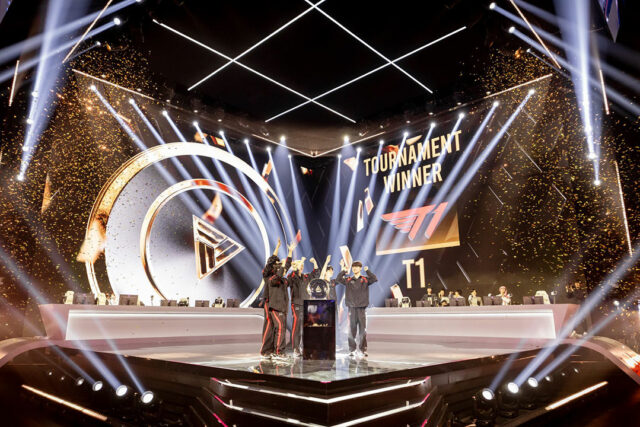
THE FIRST-EVER Esports World Cup was launched in Saudi Arabia last weekend with a record-breaking $60-million prize pool.
That’s just a few million short of the all-time high $64 million being offered this month at Wimbledon, and a reminder of the growing cultural and commercial footprint of competitive video gaming worldwide.
However, unlike at Wimbledon, the esports event’s prize money is not awarded equally to male and female players. Of its 22 matches, there’s only one — Mobile Legends: Bang Bang or ML:BB — reserved for women. Later this month, the 12 teams in that contest will compete for a $500,000 pot. Meanwhile, the 23 teams in the World Cup’s co-ed ML:BB tournament — all made up of men — are currently competing for a $3 million pot.
Pay gaps like that aren’t unique to the Esports World Cup. Of the $181 million in prize money distributed at competitions in 2023, just $2.4 million was won at women’s tournaments.
That’s an embarrassing state of affairs for any industry in 2024. Professional esports needs to address the underlying causes or risk marginalizing itself.
Fans of other sports are often surprised to learn how culturally and commercially influential esports already are. According to Newzoo, a video game research and data company, there were at least 3.3 billion video game players worldwide in 2023, of whom 45% were women, and the games market generated $184 billion.
Those are impressive numbers for a sport strongly associated with young men. As anyone who has ever logged into an online, multi-user game can attest, the gaming environment can be hostile and unwelcoming, especially to women. A 2022 Bryter survey of 1,500 female gamers in the UK, US and China found that 72% of those surveyed experienced toxicity online; 40% reported verbal abuse online; 35% claimed to have been sent inappropriate content online; and 28% reported having been the target of sexual harassment.
The hostile gaming environment isn’t just the work of misogynistic gamers, either. Developers and the tournaments that license their games also deserve blame. For example, the game industry has a long-standing reputation for highly sexualized depictions of female game characters. Actual women notice: 69% of gamers surveyed by Bryter agreed that female characters in games are often over-sexualized.
The impact of the hostile gaming environment is trackable. According to Bryter’s results, almost half of the women who play multi-player games don’t reveal their gender, and one in three avoid speaking up during gameplay for fear of negative reactions from male players.
Indeed, it’s not uncommon for female players to be asked to leave games after male players realize they’re playing with or against women. Perhaps unsurprisingly, women are likelier to game solo and offline than men.
By avoiding gameplay with men or being excluded from it, women gamers lose valuable developmental opportunities that could train them up to compete for the biggest prize pools. Judging by the lineups for the Esports World Cup and other top-end tournaments, most professional esports teams are all-male. Not much indicates that they aren’t happy to stay that way. As a result, even women who have developed pro-level skills lack opportunities to compete at the top of esports.
The pay gap is an inevitable result. Esports Earnings, an independent aggregator, maintains a list of the top 1,000 esports athletes by career earnings. The top earning woman, Sasha “Scarlett” Hostyn of Canada, now appears at #526. In 2021, she was also the top-ranked woman — at #367. Ironically, Hostyn and other women lost ground precisely as female athletes in other sports, from basketball to volleyball, were emerging as commercial and cultural forces. That’s a disparity that should embarrass the esports industry.
It certainly knows it has a problem. That’s why well-meaning attempts, such as all-female teams, leagues, and competitions have been developed, but these solutions have failed to make much of a dent, mainly because, by segregating women they inadvertently (or perhaps, purposefully) contribute to the false perception that female gamers are inherently less skillful. That perception, in turn, enables tournaments — like the World Cup — to marginalize women, and pay them less.
If the esports industry is serious about fixing this imbalance, it should start with equal pay at tournaments that feature male and female gamers. Just as important are initiatives that create equal opportunities for female gamers to join and compete against top male gamers. For example, earlier this year, Indonesia’s ML:BB developmental league announced that it would feature men’s and women’s teams that compete against each other. It’s a major step that will enable female gamers to improve their skills and — hopefully — work their way up to top-level, top-paying competitions that currently exclude them. It’s an experiment worth emulating.
Meanwhile, future editions of the Esports World Cup could accelerate this process by requiring all-male teams to include one or two female members. It’s a market-based incentive that will encourage top teams to seek out and cultivate female gamers and open up the sport to new audiences.
Over the last two years, women’s sports and athletes have made tremendous commercial and cultural advances. Esports doesn’t have to be a laggard. But if it continues down the current path, it’s game over.
BLOOMBERG OPINION