TOKYO — Japan’s economy limped back to meager growth in the fourth quarter, significantly missing market expectations in a key test for Prime Minister Sanae Takaichi’s government as cost-of-living pressures drag on confidence and domestic demand.
Fresh off a sweeping election victory, Ms. Takaichi’s administration is preparing to ramp up investment through targeted public spending in sectors seen as vital to economic security.
Monday’s data bring sharp focus to the challenge at hand for policymakers at a time when the Bank of Japan has reiterated its pledge to keep raising interest rates and normalize monetary settings from years of ultra-low borrowing costs.
“It shows that the economy’s recovery momentum is not very strong,” Meiji Yasuda Research Institute economist Kazutaka Maeda said. “Consumption, capital expenditure and exports – areas we hoped would drive the economy – just haven’t been as strong as we expected.”
Gross domestic product in the world’s fourth-largest economy increased an annualized 0.2% in the October-December quarter, government data showed, well short of a median market estimate of a 1.6% gain in a Reuters poll. It barely scraped back to growth from a larger revised 2.6% contraction in the previous quarter.
The reading translates into a quarterly rise of 0.1%, also weaker than the median estimate of a 0.4% uptick.
Economists project Japan will continue to expand at a gradual pace in coming months, though the fourth quarter’s weak outcome suggests the economy might struggle to fire on all cylinders.
“Whether the economy can achieve sustainable growth really depends on whether real wages can firmly return to positive growth,” Shinichiro Kobayashi, principal economist at Mitsubishi UFJ Research and Consulting, said. “In that sense, the key will be the outcome of this year’s wage negotiations in the coming months.”
A survey this month by the Japan Center for Economic Research showed 38 economists forecast an average annualized growth of 1.04% in the first quarter and 1.12% in the second quarter this year.
Mr. Kobayashi said the GDP report is unlikely to affect the Bank of Japan’s monetary policy decisions. “Rather than this rate hike causing the economy to stall, the BOJ’s focus is likely to be on how to contain inflation,” he said.
Private consumption, which accounts for more than half of economic output, rose 0.1% in October-December, matching market estimates.
It cooled from the 0.4% rise in the previous quarter, indicating that persistently high food costs remain a drag on household spending.
Capital spending, a key driver of private demand-led growth, also rose at a slow pace of 0.2% in the fourth quarter, versus a rise of 0.8% in the Reuters poll.
Net external demand, or exports minus imports, contributed nothing to growth, versus a 0.3 point drag in the July-September period.
Exports posted a milder drop after the United States formalized a baseline 15% tariff on nearly all Japanese imports, down from 27.5% on autos and initially threatened 25% on most other goods.
“The impact of tariffs appears to have peaked in July-September, but judging from the latest results, there is at least some possibility that firms will continue to take a somewhat cautious stance going forward,” Meiji Yasuda’s Maeda said. — Reuters
UNAHCO’s Management Committee takes the stage with the Agora trophy, celebrating the company’s recognition as 2025 Marketing Company of the Year.
Univet Nutrition and Animal Healthcare Company, Inc. (UNAHCO) secures the Marketing Company of the Year at the 44th Agora Awards, placing the agribusiness firm at the top of one of the country’s longest-running marketing recognition programs.
Organizers presented the award at the Grand Ballroom of Winford Resort Manila on Feb. 11, citing the company’s integration of marketing work with field operations during years of strain for the agriculture sector.
Ricardo C. Alba, UNAHCO president and chief operating officer, says the recognition affirms the company’s direction in aligning marketing with service to farmers and industry partners.
“UNAHCO’s Agora recognition is a validation of how we’ve evolved marketing into a national service platform — one that helps protect farmer livelihoods and sustain food supply,” Mr. Alba told BusinessWorld.
UNAHCO President and Chief Operating Officer Ricardo Alba delivers his acceptance speech after receiving the 2025 Agora Marketing Company of the Year award.
From 2021 to 2023, the agriculture sector faces overlapping pressures from African Swine Fever, avian influenza, severe weather events and global raw material inflation linked to the war in Ukraine. During this period, UNAHCO said it kept production and distribution running through cross-brand coordination and regional manufacturing.
“In an industry shaped by volatility, marketing becomes a stability mechanism when it’s tied to execution,” he shared. “It reinforces the idea that good marketing can do more than sell — it can help feed a nation, by keeping farmers productive, confident, and supported through shocks.”
“Our mission has always been grounded in being kaagapay to Filipino farmers, and the award reflects that our marketing isn’t just about messaging; it’s about solving real farmer problems through education, on-ground support, and science-backed solutions, especially during periods of crisis,” Mr. Alba added.
From animal health to integrated agribusiness
UNAHCO traces its beginnings to 1966, when it was established as Univet to support food production by strengthening animal health among Filipino farmers. The company later expanded into animal feeds through brands such as Sarimanok and Thunderbird, serving livestock and poultry raisers across the country.
In 2008, the company unified its operations under the Univet Nutrition and Animal Healthcare Company name.
UNAHCO leaders and officers of the Philippine Marketing Association pose together during the event, reflecting strong industry partnership and shared commitment to marketing excellence.
Today, UNAHCO operates 14 business units that cover segments of the agri-food chain, from feed milling to veterinary health and crop protection. Each brand targets specific farming sectors.
Pigrolac, for instance, focuses on swine nutrition and serves mostly backyard hog raisers through life-stage feeding systems and on-farm technical services. Sarimanok supports poultry farming, while Thunderbird caters to gamefowl nutrition.
Univet supplies over-the-counter veterinary medicines to commercial and backyard raisers, while Doggiessentials targets the companion animal market. UNAHCO’s Animal Health Division carries veterinary products such as Vetracin, Jectran and Bexan.
Recently, the company also ventures into crop protection products, including herbicides, molluscicides, fungicides and insecticides, aimed at helping crop farmers protect and optimize yield.
UNAHCO states that all its facilities hold International Organization for Standardization and Halal certifications. It also reports that its plants comply with Hazard Analysis and Critical Control Points standards.
Currently, the company operates four company-owned plants and works with 16 tolling partners. Its distribution network includes more than 23,000 dealers and about 14,000 active outlets nationwide.
UNAHCO employs 442 workers and ranked 119 in the 2024 Top 1,000 Corporations in the Philippines. It also ranked as the country’s second feed miller, producing close to 2 million bags of feeds per month.
The company also serves as the animal nutrition and health care subsidiary of United Laboratories, Inc. (UNILAB), described as the leading pharmaceutical company in the Philippines and in Southeast Asia.
Programs scaled nationwide
UNAHCO President and Chief Operating Officer Ricardo Alba, together with UNILAB Senior Vice-President and Group Chief Financial Officer for Pharma and Nutrition Mike Vaca, receive the Agora trophy on behalf of UNAHCO.
Much of UNAHCO’s work centers on backyard farmers, who account for about 70% of the country’s livestock producers. The company said it directly serves backyard hog farmers through feeds, veterinary services and technical programs, supported by field technicians.
In 2023, as the livestock and poultry sector recovers from disease outbreaks and typhoons, UNAHCO increases its education and outreach activities. Its program “Usapang Baboy” holds seminars nationwide, bridging technical knowledge and mentorship for backyard hograisers.
During Agrilink 2023, UNAHCO engaged more than 17,000 visitors and 2,000 trade partners, which further expanded its network within the agriculture industry.
UNAHCO strengthens vaccination and biosecurity efforts through its “Singko Kasado” program. For poultry producers, the “Bird Flu-Free Nation” program provides education and biosecurity kits to farms in high-risk areas.
In March 2023, UNAHCO launches the country’s first mobile laboratory for small farms to deliver diagnostic services to people that often lack access to laboratory testing. The service allows farmers to obtain on-site or near-site testing, helping them identify animal health issues earlier.
UNAHCO’s Sarimanok brand has partnered with GMA Network for the television series Agripreneur. The 12-episode program features poultry and duck farmers and presents their farm practices and livelihood stories to a national audience.
Other initiatives included the Kaagapay Campaign during the pandemic, which provided practical supplies to dealers and farm partners, and Thunderbird community programs such as “Passion of the Filipino Nation” and “Tagumpay.”
Mr. Alba shared, “Our campaigns and programs are designed to translate into action — training, diagnostics, farm support — so stakeholders experience value, not just hear claims.”
Winners at the 44th Agora Awards come together on stage for a commemorative photo, celebrating excellence, innovation, and leadership in Philippine marketing.
He added the company’s corporate social responsibility efforts focus on credibility and long-term relationships.
“Our approach works because impact isn’t a sideline. Scholarships, calamity response, and farmer support programs build credibility — so marketing becomes more trusted, more effective, and more enduring,” Mr. Alba explained.
Beyond company-led programs, UNAHCO works with local government units on training and recovery planning. Mr. Alba described these partnerships as shared problem-solving, where the company and farming communities address production risks together rather than through one-way campaigns.
UNAHCO also collaborates with global nutrition and animal health firms such as Provimi, Trouw Nutrition, Alltech, DSM, and Novus. The company adapts research-based systems from these partners to local farm conditions.
“We continue to translate global innovation into practical outcomes through partnerships and systems like Precision Animal Nutrition,” he shared.
Recognition tied to execution
The Agora trophy is showcased during the event, symbolizing the highest standard of excellence in Philippine marketing.
UNAHCO said the Agora Award affirms a strategy that links marketing with on-the-ground operations. The company believes that their programs translate into farmer engagement and technical support rather than campaigns focused solely on brand visibility.
“The award strengthens our confidence in a direction we’re already committed to: science, execution, and purpose,” Mr. Alba said. “The Agora win is proof that marketing can be an organizational muscle — integrated into operations, crisis response, and growth — not just communications.”
Following the recognition, UNAHCO says it plans to scale farmer-focused platforms and expand the use of nutrition technologies. The company also states that it will keep marketing aligned with operations and crisis.
“We will keep scaling programs that protect farmer profitability and productivity, because livelihood security ultimately supports national food stability,” Mr. Alba shared.
The Agora Awards are regarded as the country’s top recognition program for marketing, honoring work that demonstrates strategy and measurable impact on Filipino brands and businesses. Organized by the Philippine Marketing Association, the awards highlight campaigns and organizations that deliver results and respond to market needs.
Spotlight is BusinessWorld’s sponsored section that allows advertisers to amplify their brand and connect with BusinessWorld’s audience by publishing their stories on the BusinessWorld Web site. For more information, send an email to online@bworldonline.com.
Join us on Viber at https://bit.ly/3hv6bLA to get more updates and subscribe to BusinessWorld’s titles and get exclusive content through www.bworld-x.com.
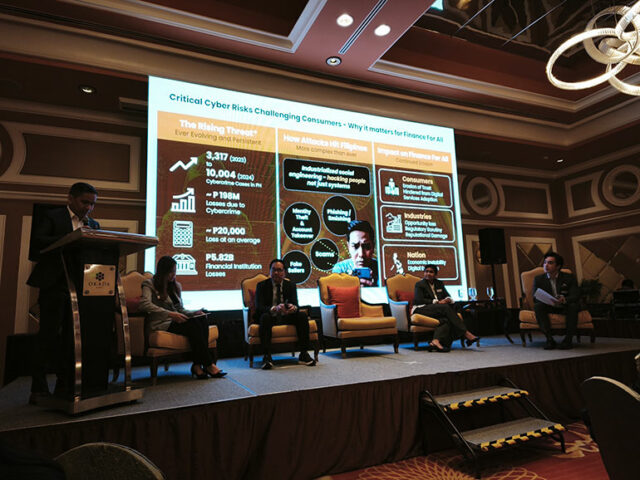
Panel Discussion 2 (from left): Head of Strategy and Cyber Resilience Joel Geronimo, Bangko Sentral ng Pilipinas Deputy Director and Head of Cybersecurity Supervision and Oversight Group Maricris A. Salud, Asian Hospital and Medical Center Chief Information Technology Officer Frank Vibar, PWC Philippines Risk Services Senior Manager Portia Edillor, and TV5 Anchor Jester delos Santos (moderator) — Photos by Richard James Mendoza and Jayson John Marinas
Stronger education, collaboration, practices sought for ‘cyber-literate nation’ in BusinessWorld Insights forum
By Mhicole A. Moral, Special Features and Content Writer
Cyber threats now rank among the most costly and persistent risks facing governments and businesses, with global losses projected to reach $20 trillion a year by 2030, according to the World Economic Forum. The scale of the threat has widened the discussion beyond technology, which place human behavior and education at the depths of cybersecurity planning.
This reality framed discussions at the third leg of BusinessWorld Insights Cybersecurity Series, with the theme “Building a Cyber-Literate Nation,” held Jan. 29, at the Golden Ballroom of Okada Manila.
In his opening remarks, BusinessWorld Executive Vice-President Lucien C. Dy Tioco said the gains of digital participation remain limited without stronger public understanding of online risk.
“For the country to draw real value from digital growth, people and institutions must do more than connect. They must know how to navigate the digital space with care and judgment,” said Mr. Dy Tioco.
Mr. Dy Tioco added cybersecurity should be treated as a public effort that involves everyone. Preparation, he said, should move beyond technical use and focus on confidence and informed participation in digital spaces.
Universal Entertainment Corporation (UEC) and Okada Manila (TRLEI) Group Chief Information Security Officer Dr. Mark Ryan Talabis
With Okada Manila as the official venue partner of the forum, Group Chief Information Security Officer of Universal Entertainment Corporation (UEC) and Okada Manila (TRLEI) Dr. Mark Ryan Talabis highlighted the significance of cybersecurity discussions in his special message.
“We are thrilled to host this gathering of industry leaders, as we explore some of the most pressing topics in the field of cybersecurity,” he shared. “Cybersecurity is a key pillar of our ‘Okada Green Hearts’ initiative. Our dedication to safety and security not only support our operations, but also aligns with our mission to create a sustainable and resilient environment for our guests, our team members, and our community.”
Cybercrime Investigation and Coordinating Center Acting Executive Director Renato “Aboy” Paraiso
Undersecretary Renato “Aboy” Paraiso, acting executive director of the Cybercrime Investigation and Coordinating Center (CICC), said attackers now need only one weak point to succeed, while defenders must protect every access point across expanding digital networks.
“Even with the most advanced firewalls in the world, it cannot stop a plague that comes from a lack of awareness. Today, the stakes are all over just technical. They are existential,” he shared. “For us at the CICC, the loss of trust in our digital ecosystem far exceeds any financial figure. That is why our focus has shifted.”
Mr. Paraiso defined cyber literacy as the ability to navigate and assess digital systems, identify cybersecurity risks, detect misinformation and practice responsible online communication.
“Digital resilience is not a product that you can buy. It is a combination of technology, economic policy, and most importantly, human factor. So, beyond skills, it is the power of cyber-literacy,” Mr. Paraiso explained.
He added that the country needs to anchor its cybersecurity approach on education. A study published in the International Journal of Innovative Science and Research Technology found that students demonstrate stronger critical thinking when cybersecurity is included in school curricula.
“An educated nation is a resilient nation, where our populace knows how to spot red flags and adopt protective habits that simply shapes back into our favor,” Mr. Paraiso added.
In workplaces, he said a single cybersecurity seminar no longer matches the pace of attacks. Organizations are encouraged to require onboarding programs that include phishing simulations and threat response tracking, so workers learn through repeated practice.
Mr. Paraiso also called for a change in workplace culture that discourages silence after an incident.
“Reporting is an act of courage,” he said. “When you dial CICC’s Hotline 1326, you are not only helping yourselves; you are also helping the whole country.”
Moving past basic digital awareness
Panel Discussion 1 (from left): Angel Redoble of Philippine Institute of Cyber Security Professionals, Sam Jacoba of ASEAN Japan Cybersecurity Community Alliance, Lito Villanueva of RCBC, Derick Ohmar Adil of Globe Telecom, and BusinessWorld Reporter Beatriz Marie D. Cruz (moderator)
Philippine Institute of Cyber Security Professionals Chairman and Founding President Angel Redoble, Globe Telecom Senior Director and Head of AI and Privacy Governance Derick Ohmar Adil, ASEAN Japan Cybersecurity Community Alliance Strategic Communications Lead Sam Jacoba, and RCBC Executive Vice-President and Chief Innovations and Inclusion Officer Lito Villanueva composed the panel for the first discussion themed “Beyond Awareness: Developing Literacy in a Digital Philippines.”
Moderated by BusinessWorld Reporter Beatriz Marie D. Cruz, the panel discussion framed cyber literacy as a shared responsibility that spans individuals, businesses, and institutions.
Experts noted that while digital transformation has connected Filipinos and simplified daily life, it has also increased vulnerability.
“Digital transformation has made life faster, easier, and more connected. But here is the truth we must face: a digital Philippines without cyber-literacy is a vulnerable Philippines. While technology empowers honest people, it also empowers criminals,” said Mr. Redoble.
Modern cyberattacks, according to Mr. Redoble, often begin with simple deceptions: a message, link, call, or request that appears legitimate.
“Many cyber incidents do not begin with complex hacking anymore, where hackers will really try to intrude bypass and break your countermeasures. Today, they begin with a simple deception, a message, a link, a call, or a request that looks legitimate. That is why building a cyber-literate nation is not just a technology objective. It is a public safety priority, a national security requirement, and an economic resilience strategy,” he explained.
Filipinos also remain unprepared to respond to threats effectively, due to lack of digital literacy.
“I’d say Filipinos are [cyber] aware, but not yet prepared,” Mr. Adil said. “Awareness tells us that cars exist. Literacy teaches us how to cross safely. In the digital world, awareness is knowing the risks. Literacy is knowing how to act.”
Mr. Villanueva added that practical knowledge of Filipinos in cyber risks remains limited.
“The mass market does not fully comprehend digital threats,” he said.
He pointed out that existing reporting mechanisms are fragmented, with most victims contacting only banks or service providers, leaving official channels such as the government’s 1326 hotline underused.
“When you do not have digital literacy, the biggest risk is not broken systems but human shortcuts,” Mr. Adil said. “People prioritize familiarity, convenience, and speed over caution. Even in large organizations, one rush click or one wrongly shared credential can undo months of security work.”
Mr. Jacoba highlighted human behavior as the most significant vulnerability in cybersecurity.
“The best hackers in the world do not hack systems. They hack people,” he said. “The basic cybersecurity discipline that you can share or maybe develop in your organization is zero trust. This is the world we live in right now. Do not trust anything that you see on your phone or in your laptop.”
Panelists called for stronger collaboration between government and private sectors to raise cyber literacy and protect users.
“In 2023, the Fintech Alliance collaborated with government agencies and media groups for a campaign called ‘Wag Magpaloko Maging Scam Alerto.’ It showed that even private-led initiatives need government participation to be effective,” Mr. Villanueva said.
Mr. Adil also stressed that strong alignment between government and industry is vital to build a cyber-literate country.
“The government has authority. The private sector sees real threats daily. If they speak together, people will listen,” he said.
Call for stronger cyber protection
Panel Discussion 2 (from left): Maricris A. Salud of Bangko Sentral ng Pilipinas, Frank Vibar of Asian Hospital and Medical Center, Joel Geronimo of GCash, Portia Edillor of PWC Philippines, and TV5 Anchor Jester delos Santos (moderator)
The second panel, themed “Critical Cyber Risks Challenging Consumers,” featured Bangko Sentral ng Pilipinas Deputy Director and Head of Cybersecurity Supervision and Oversight Group Maricris A. Salud, Asian Hospital and Medical Center Chief Information Technology Officer Frank Vibar, GCash Head of Strategy and Cyber Resilience Joel Geronimo, and PWC Philippines Risk Services Senior Manager Portia Edillor.
Ms. Salud said social engineering remains the top threat, accounting for 76% of reported cyber-related fraud losses.
“The weakest link is no longer just technology. It is the human element. So, it’s really the people that they’re attacking,” she said.
She described phishing, smishing, and AI-generated scams as increasingly convincing, exploiting trust to target Filipino consumers. Organized threat actors accounted for roughly 30% of fraud losses, while compromised card data represented 8%.
Mr. Geronimo noted that phishing, identity theft, account takeovers, and scams related to fake jobs, investments, and romance are major concerns. He added that these attacks threaten consumer trust and the reputation of financial institutions while slowing the government’s efforts to expand financial inclusion.
In 2024, the Philippines recorded 10,000 cybersecurity complaints, marking a 300% increase from the previous year. Losses totaled P198 million, or roughly P20,000 per victim.
Mr. Vibar emphasized that cybersecurity risks extend beyond monetary losses. Online abuse affects roughly two million children in the country, raising broader societal concerns.
“Cybersecurity threats used to affect only a few targeted individuals or institutions, but nowadays they are impacting everyone. Cyber risk in the Philippines is no longer just an IT problem; it now has broader societal implications,” he explained. “The reason we are holding these sessions and events is to address these issues as soon as possible. If we do not, Filipinos risk being left behind in the digital space, which cannot happen given how rapidly the world is moving online.”
Panelists also stressed the importance of transparency and consumer education. Ms. Edillor said prompt disclosure of system glitches or breaches can reduce panic and minimize the impact on consumers.
“We have to accept that cyber criminals will stay here, and they will always be here,” she added. “We need to promote more on consumers skepticism and zero trust.”
Ms. Edillor also called for improved public campaigns that use visual and behavioral messaging.
“Cyber criminals trigger the five senses. We need to trigger the five senses as well,” she explained. “We have to change the language of the campaign because most of the time we see ‘do not click.’ Our brains do not process ‘do not click’ effectively, so the message is often ignored. By changing the language, Filipinos — or people in general — can understand what they need to do. This helps reprogram beliefs. Once beliefs are reprogrammed, behavior changes.”
In terms of reporting and preventing incidents, Ms. Salud outlined BSP standards under the Anti-Financial Account Scamming Act. Banks have the authority to recover funds quickly and must follow BSP Circular 1019 for operational reporting, requiring incidents to be reported within two hours with follow-ups within 24 hours.
Meanwhile, Mr. Geronimo described multi-layered processes for assessing incidents, ranging from phishing attempts to identity theft and account compromises.
“We have a partnership with different government agencies and law enforcement agencies like the [Philippine National Police Anti-Cybercrime Group, CICC,] as well as BSP and [the National Telecommunications Commission]. Every time there is an incident or confirmed fraud or scam report, we also coordinate those matters. We are working right now with different [bank and non-bank] organizations to develop a more secure ecosystem,” he said.
Protecting people, not just systems
Department of Information and Communications Technology Undersecretary for Policy, Legal, and Communications Atty. Sarah Maria Q. Sison
Digital technology has opened doors to learning, public services, and new sources of livelihood, but it has also brought new dangers, particularly for women and children.
In her closing keynote, Department of Information and Communications Technology Undersecretary for Policy, Legal, and Communications Atty. Sarah Maria Q. Sison highlighted the growing vulnerabilities faced by these groups online.
“Digital information has opened doors to learning, livelihood, and public services, but it has also exposed new vulnerabilities, especially for women and children who face some of the greatest risks online,” she said.
According to Atty. Sison, about 67% of Filipinos aged 10 and above access the Internet, with over 90 million active on social media platforms. Women account for roughly 60% of this online population. Despite this widespread access, millions of Filipinos remain unconnected, and many lack the skills or safeguards needed to use the Internet safely.
“Access is not automatically mean security and connectivity does not guarantee confidence,” she emphasized.
While men and women may use digital devices at similar rates, equal usage does not translate to equal opportunity or safety. Women are underrepresented in science, technology, engineering, and mathematics roles, as well as in information and communications technology positions. Cultural expectations, unpaid care responsibilities, and limited Internet access in rural areas continue to restrict women’s participation in digital sectors.
Atty. Sison also shared insights from the Commission on Human Rights, noting that the Philippines remains a major source of online sexual abuse against children. In fact, the Philippine Internet Crimes Against Children Center receives millions of reports annually, many involving victims under the age of 13 exploited through live stream abuse.
Although the Philippines has enacted several laws to address online abuse, including the Safe Spaces Act (Republic Act 11313), the Anti-Child Pornography Act (Republic Act 9775), the Anti-Online Sexual Abuse or Exploitation of Children Act (Republic Act 11930), and the Cybercrime Prevention Act (Republic Act 10175), Atty. Sison said laws alone are not enough.
“Whether you like it or not, we have the laws; but how are they implemented, we have to actually update them,” she said.
She urged the government to issue clear policies on digital protection, called on the private sector to build security and education into platforms, and asked media organizations and civil society groups to translate digital risks into practical guidance for the public.
Cyber literacy, Atty. Sison explained, must extend beyond basic awareness. It should include understanding individual rights and responsibilities, practicing digital hygiene, recognizing abuse, and knowing where to seek assistance.
“The measure of our digital progress is not the speed of networks or the size of our digital economy. It is measured in whether a child can learn online without fear, whether a woman can work and speak freely without harassment, and whether every Filipino can navigate the digital world with confidence, dignity and trust. This is really the true meaning of a cyber-literate nation. Not just aware, but empowered. Not just connected, but protected. And moreover, not just digital, but human,” she concluded.
This BusinessWorld Insights forum was presented by BusinessWorld Publishing Corp., in partnership with the Cybersecurity Council of the Philippines and GCash; and is sponsored by Converge ICT Solutions, Inc. and RCBC; with the support of Asian Consulting Group, American Chamber of Commerce of the Philippines, Bank Marketing Association of the Philippines, British Chamber of Commerce of the Philippines, Financial Executive Institute of the Philippines, French Chamber of Commerce and Industry Philippines, European Chamber of Commerce of the Philippines, Management Association of the Philippines, People Management Association of the Philippines, Philippine Chamber of Commerce and Industry, Philippine Franchise Association, Philippine Retailers Association, Information Security Officers Group (ISOG), official venue partner Okada Manila, and official media partner The Philippine STAR.
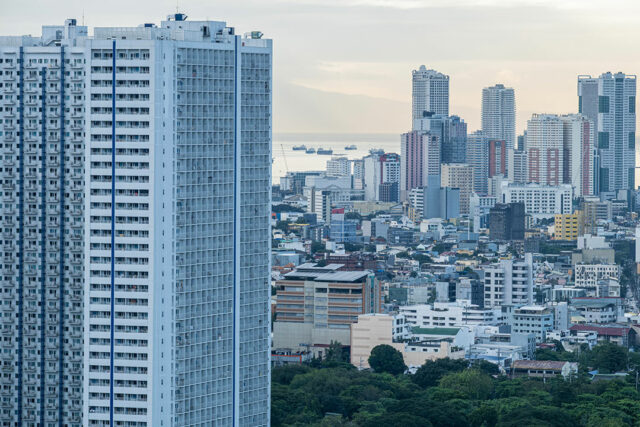
A photo shows the central business district in Makati City. — PHILIPPINE STAR/RYAN BALDEMOR
By Katherine K. Chan, Reporter
SLUGGISH economic growth and a still benign inflation outlook provide the Bangko Sentral ng Pilipinas (BSP) with ample room to deliver a sixth straight interest rate cut at its first policy meeting this year, analysts said.
Based on a BusinessWorld poll conducted last week, all 16 analysts surveyed expect the Monetary Board to reduce the target reverse repurchase rate anew by 25 basis points (bps) on Thursday, Feb. 19.
If realized, the key policy rate would fall to 4.25% from the current 4.5%, the lowest in over three years or since the 3.75% in August 2022.
It would also match the benchmark rate set in September 2022.
Since the Monetary Board began its easing cycle in August 2024, it has so far lowered borrowing costs by a total of 200 bps.
The BSP started 2025 with a pause at its February meeting before delivering five consecutive 25-bp cuts, with the last two prompted by weak sentiment amid a growth slump.
Analysts said the disappointing fourth-quarter gross domestic product (GDP) print may outweigh other deciding factors in the central bank’s monetary policy review, as another round of easing is expected to help boost the economy.
“The Bangko Sentral ng Pilipinas will likely cut its policy rate by 25 basis points to 4.25% on Thursday to lend support to the economy, following a worse-than-expected fourth-quarter GDP outcome,” Moody’s Analytics Assistant Director and Economist Sarah Tan said in an e-mail.
In the final quarter of 2025, the Philippine economy grew by 3%, its worst performance in 16 years (excluding pandemic period), as the flood control corruption mess continued to slow down investments and spending.
This was even weaker than the revised 3.9% expansion seen in the third quarter, or when the flood control issue began to take a toll on the economy.
The graft scandal emerged following extensive flooding across the country that uncovered numerous faulty, substandard and even nonexistent flood control projects.
Investigations later revealed that Public Works officials, lawmakers and private contractors received kickbacks from the government’s infrastructure program.
This brought 2025 GDP growth to a post-pandemic low of 4.4%, falling below the government’s 5.5%-6.5% target for the year and the BSP’s 4.6% forecast.
“While the economic slowdown is largely the result of massive spending cuts by the National Government, the risk of a slow recovery in investor sentiment may compel the BSP to bring the policy settings below the estimated 4% to 5% neutral nominal rate more so that both headline inflation and the exchange rate are at levels the BSP are comfortable with,” Bank of the Philippine Islands (BPI) Lead Economist Emilio S. Neri, Jr. said in a Viber message.
In a note, Chinabank Research said further easing could fast-track economic recovery, especially as the BSP’s recent surveys indicated a dim outlook among consumers and businesses for the year ahead.
“Another policy rate cut, which would further bring down lending rates, could provide additional incentive for consumers and firms to borrow in the near-term for big-ticket purchases and business expansion,” it said. “This could then strengthen the momentum of the country’s economic rebound.”
Based on the BSP’s latest Business Expectations Survey, businesses’ confidence index (CI) for the first quarter of the year fell to 23.7% from 49.5% in the previous quarter. For the next 12 months, it slipped to 40.4% from 48.1%.
Consumers were also less optimistic as their CI for the first quarter was at 3.6% from 6.9% in the previous quarter, while it went down to 11.8% from 14.1% for the coming year.
TAME INFLATION OUTLOOK Meanwhile, analysts said the inflation outlook remains subdued even as the consumer price index (CPI) has accelerated since December, which could justify further easing.
“The inflation outlook also remains benign, allowing BSP to focus on supporting economic activity when prospects of reversing the sharp fiscal contraction and weak confidence still look uncertain at this point,” Euben Paracuelles, chief ASEAN economist at Nomura Global Markets Research, said in an e-mail.
In January, headline inflation picked up to 2% from 1.8% in December but eased from the 2.9% print last year. It marked the first time in about a year that the CPI is back within the central bank’s 2%-4% target.
“January CPI rose to 2% but remains at the lower end of the BSP’s 2-4% target range, keeping price expectations broadly anchored even as core inflation picked up, complicating — but not derailing — the case for further easing,” Union Bank of the Philippines Chief Economist Ruben Carlo O. Asuncion said in an e-mail.
BSP Deputy Governor Zeno Ronald R. Abenoja earlier said inflation will likely hover around the midpoint of the goal within the first half of the year.
He sees inflation exceeding 3% by the second half before cooling down and stabilizing below that mark.
By end-2026, headline inflation is expected to average 3.2% before slowing to 3% next year, according to the BSP.
Meanwhile, MUFG Global Markets Research noted that the widely expected quarter-point cut on Thursday risks diminishing the peso’s carry appeal.
“While rate cuts may help support growth, it also reduces the Philippine peso’s carry appeal, leaving the currency potentially vulnerable if the dollar strength re-emerges,” it said in a report.
The peso opened the year weaker, trading around the P58- to P59-a-dollar level in January and even hitting a record low of P59.46 on Jan. 15. However, the local unit has been gaining strength amid an underperforming US dollar in the past weeks.
“Expectations of further Fed easing this year — especially with the appointment of the relatively dovish Kevin Warsh as next Fed Chair — could help limit the peso’s weakness even with a narrower 50-bp differential,” Chinabank Research said.
At its first policy meeting for 2026, the Federal Reserve held its rates steady at the 3.5%-3.75% range. The Fed has so far lowered its benchmark interest rate by 175 bps since September 2024.
LOOMING PAUSE Meanwhile, BPI’s Mr. Neri said the anticipated 25-bp reduction on Thursday is a close call as he sees the BSP considering a “strategic pause.”
Still, he sees room for a second cut this year either in April or June, before the Monetary Board stands pat throughout the remainder of the year.
“We expect the BSP to pause once it is clear that headline inflation is headed above the 3% level around (the third quarter),” Mr. Neri said. “We don’t see them cutting anymore after their June 18 meeting.”
Patrick M. Ella, an economist at Sun Life Investment Management and Trust Corp., said he sees potentially one more cut in the first half depending on the first-quarter GDP growth numbers.
“The (first-quarter) GDP report for 2026 that will be published in May will be a much anticipated report and should give an indication if further cuts are needed and how consumption has performed since (the fourth quarter), as well as government spending and investments from the private sector,” he said in an e-mail. “The worry is the deceleration in consumption if this will recover back to trend.”
For this year, the BSP forecasts Philippine GDP to expand by 5.4%, within the government’s 5%-6% target.
Meanwhile, Pantheon Macroeconomics Chief Emerging Asia Economist Miguel Chanco said the BSP may cap its easing cycle after it trims the key policy rate to 4.25% this week as inflation will keep rising.
“For now, our view is that 4.25% will be the terminal rate, as monetary easing — in real terms — will continue regardless of further actual rate hikes, with inflation set to rise progressively throughout this year (rising inflation amid a stable benchmark rate means the latter falling in real terms),” he said in an e-mail.
After Feb. 19, the Monetary Board is set to hold five more rate-setting meetings this year on April 23, June 18, Aug. 27, Oct. 22 and Dec. 17.
A worker unloads sacks of rice from a truck in Manila, Jan. 23, 2026. — PHILIPPINE STAR/RYAN BALDEMOR
By Vonn Andrei E. Villamiel
THE DEPARTMENT of Agriculture (DA) said it expects rice import volumes to reach 150,000 metric tons (MT) per month in March and April, following consultations with rice traders and importers.
Agriculture Secretary Francisco P. Tiu Laurel, Jr. said the projected shipments are lower than the usual monthly average of about 400,000 MT, after importers agreed to scale back inbound shipments for the domestic harvest season.
“It’s not an order. It’s a voluntary measure among the industry and the DA. We are working together for the welfare of rice farmers,” Mr. Laurel said at the P20 rice program launch in San Juan City on Friday.
If realized, the combined 300,000-MT import volume for March and April would translate into a 65.5% decrease from 869,321 MT recorded in the same period last year.
Data from the Bureau of Plant Industry showed that from Jan. 1 to Feb. 5, rice arrivals reached 409,377 MT against an expected volume of 613,700 MT for the first two months of the year.
Rice imports in January alone totaled 375,983 MT, up 34.31% from 279,940 MT in the same month in 2025.
The DA earlier said import volumes this year will likely come in at between 3.6 million MT and 3.8 million MT, levels which the agency said are sufficient to meet demand without depressing farmgate prices for local farmers.
The department also recently announced that it is considering a proposal to link eligibility to import rice to the volume of rice purchased from domestic farmers to protect the local industry.
Mr. Laurel said the proposal would require traders to buy palay (unmilled rice) or rice to receive import allocations.
He said the department is targeting initial implementation of the system in the second half of the year, possibly by July.
Former Agriculture Secretary William D. Dar said the proposed policy is expected to manage rice imports while helping local producers.
“It will be a good incentive for traders to buy local palay before they are given allocation to import rice,” he told BusinessWorld via Viber. “I suggest that for every 4 metric tons of palay bought, a ton of rice can be imported, hence a ratio of 4:1 in favor of local palay purchase.”
Raul Q. Montemayor, national manager of the Federation of Free Farmers, earlier told BusinessWorld that the proposed local purchase requirement “will not be a problem” as some rice importers and traders are also engaged in milling operations.
“For importers who have no local buying operations, they could easily tie up with local millers or traders or put up their own shell companies,” he said via Viber.
Mr. Montemayor said the proposed scheme would also benefit from additional requirements, such as proof of palay purchase at the floor price or higher.
THE government is planning to offer the contract governing the right to mine on Semirara Island after turning down the request of the Consunji-led mining firm for renewal.
Energy Secretary Sharon S. Garin said that Semirara Mining and Power Corp. (SMPC) cannot further renew its 50-year coal operating contract after seeking a legal opinion from the Department of Justice (DoJ).
“We’ll follow the [DoJ] opinion [that] there cannot be a renewal. There will be a bidding, which everybody can join, including the current [operator],” she told reporters on Friday.
Ms. Garin said that the Department of Energy (DoE) and DoJ have already discussed the matter with the SMPC.
The Energy chief said that the department would have to start the bidding process this year to find “the most qualified” bidder.
“We need to have it ready because you don’t want the current operator to start not doing anything or move out. So, we really need to prepare a few years before the expiration so if there’s a change or no change, at least we know early on,” she said.
Ms. Garin said that SMPC can still to join the bidding, noting its edge as the existing operator of the contract.
“The advantage is they (SMPC) already know what to do. They have the equipment, hundreds of equipment, and they have experience in Semirara,” she said.
The coal operating contract, which was originally set for 35 years, was issued in 1977, granting SMPC the exclusive right to explore, develop, and mine coal on Semirara Island until July 2012.
In 2008, the DoE extended the term by 15 years, giving the company until 2027 to mine.
SMPC had sought an extension of 13 years, according to Ms. Garin.
Under the existing contract, the company enjoys incentives, including exemption from all taxes except income tax, as well relief from tariff duties and compensating tax on importation of machinery and equipment required for the coal operations.
SMPC, in return, is required to pay 30% of net proceeds to the DoE as part of royalties.
SMPC, the power generation and coal-mining unit of the Consunji group, is the Philippines’ largest coal producer, accounting for 97% of domestic production.
For the first nine months of 2025, the company’s total coal shipments reached a record high of 12.9 million metric tons, driven by stronger exports and high deliveries to own power plants.
However, coal revenues fell by 18.7% year on year to P24.73 billion amid lower average selling prices.
Sought for comment, China Bank Capital Corp. Managing Director Juan Paolo E. Colet said that granting SMPC a reasonable extension to operate the coal mine would be “the better solution” given its experience.
“The company knows the asset very well and how to operate it efficiently, and they have invested billions of pesos to ensure its productivity,” Mr. Colet told BusinessWorld.
He said that continuity will prevent any risk of operational delay or disruption.
“Perhaps the government can just negotiate better terms with Semirara so that the parties achieve a win-win outcome,” Mr. Colet said.
A vendor sorts her products at a public market in Quezon City, Metro Manila, Oct. 4, 2024. — REUTERS/ELOISA LOPEZ
THE BANGKO Sentral ng Pilipinas (BSP) should improve its monitoring and management of inflation expectations and enhance its monetary policy framework to effectively deal with the impact of supply shocks on prices and the broader economy, the Organisation for Economic Co‑operation and Development (OECD) said.
In its Economic Survey of the Philippines released last week, the OECD said the BSP could allow inflation to exceed its target temporarily if expectations remain well anchored to veer away from tightening its monetary policy amid a supply-driven economic slowdown.
“BSP could communicate that, while firmly remaining committed to price stability in the medium term, it will allow inflation to temporarily overshoot the target range following extreme weather events if expectations remain well anchored,” the OECD’s report read.
“In doing so, BSP could increase the focus of its communication on core inflation, in addition to headline inflation,” it added.
Headline inflation quickened to a near one-year high of 2% in January, marking the first time in almost a year that the inflation print settled within the central bank’s 2%-4% target.
This was faster than the 1.8% clip seen in December but was slower than the 2.9% in the same month last year.
The BSP projects inflation to end the year at an average of 3.2%, before slowly easing to 3% in 2027.
The OECD noted that policy tightening amid elevated inflation due to supply shocks risks weakening domestic demand.
The central bank has been on an easing path since August 2024, having delivered a total of 200 basis points (bps) in cuts which brought the key policy rate down to 4.5%.
In 2025, it trimmed the benchmark rate by 25 bps five consecutive times, with the last two meant to spur demand amid a sluggish economy due to the flood control corruption scandal.
BSP Governor Eli M. Remolona, Jr. has repeatedly said that reducing borrowing costs amid a growth slump can only boost domestic demand, noting that monetary policy easing cannot be the economy’s defense against a supply-driven slowdown.
“Given that supply conditions are outside the central banks’ control and that tightening monetary conditions to bring demand in line with temporarily lower supply can reduce output more than necessary, efficient management of inflation expectations is crucial to deal with supply shocks,” the OECD said.
The OECD likewise lauded the BSP’s inflation-targeting monetary policy framework, but noted that it must be well-equipped to address supply shocks in instances where non-monetary measures may be inefficient.
“In these instances, the central bank needs to decide whether to allow the price spike to run its course or tighten its policy stance,” the OECD said. “Monetary policy cannot effectively counteract supply shocks, but repeated supply shocks nonetheless require central bank attention.”
It added that the central bank must enhance its business expectations survey (BES), consumer expectations survey (CES) and BSP survey of external forecasters (BSEF) to better capture inflation expectations that would guide its monetary policy path.
BSP Deputy Governor Zeno Ronald R. Abenoja has said that they plan to roll out the monthly version of the BES by late first quarter or early second quarter, while the monthly CES will likely be launched in the second semester.
Released quarterly, the CES analyzes consumers’ economic outlook to determine the country’s future economic conditions, while the BES gauges business sentiment and prospects.
The CES usually surveys about 5,000 households in the Philippines through random sampling, while the BES draws a random sample from a list of the top 7,000 corporations ranked based on total assets in 2017 from the Bureau van Dijk database.
Meanwhile, the BSEF is a monthly survey featuring inflation forecasts for the current and following quarters, the current year, as well as the next year and two.
“The BSEF is available at a monthly frequency but mainly reflects the views of financial market participants and academic experts rather than the expectations of businesses and workers that are central to the price and wage-setting process,” the OECD said.
It also said all three surveys should provide an outlook for the next five years apart from the year-ahead forecast, which would “allow to distinguish the anchoring of inflation expectations more clearly from short-term inflation expectations.” — K.K.Chan
By Jomarc Angelo M. Corpuz, Special Features and Content Writer
Across all industries, a big portion of work relies on inputting sources, processing data, and creating outputs on computers. After all, accounting of invoices can be done on laptops, social media is a great place for marketing, and even orders can be made online.
This, in part, highlights the impact that digitalization has had on society, and also the necessity for a reliable and affordable personal computer or laptop for every business aiming to scale and be successful.
This sentiment is echoed in the Department of Trade and Industry’s MSME Development Plan 2023-2028, which aims to integrate digital tools, artificial intelligence (AI), and financial technology to boost competitiveness in e-commerce and supply chain efficiency.
Realizing this vision of digital empowerment depends on giving Filipino entrepreneurs reliable, secure, and AI-ready devices that can keep pace with today’s MSMEs.
“We’ve observed a massive shift in how Filipino MSMEs operate. Business owners work from anywhere — from stores, warehouses, cafés, airports, or while meeting clients on the go. Work is no longer a place you go; it’s something you do, often while juggling your fieldwork and remote coordination,” Francis Avila, business development manager and commercial business head of ASUS Business Philippines, told BusinessWorld in an email.
He noted that this hybrid reality demands business laptops to be the backbone of productivity, not only for communication, but for security, data management, and intelligent decision-making as well.
“It’s what keeps the businesses and customers connected, your data secured, and your decisions sharpened through AI-driven insights,” Mr. Avila said.
In today’s day and age, digitalization is a fundamental requirement for the daily operations and continuity of Filipino MSMEs. Mr. Avila revealed that MSMEs see the trend as a means of staying operational, with the business’ device as its most critical asset, whether they are managing inventory or securing digital payments.
“A slow, overheating laptop or device can literally delay operations or transactions, and a loss for business,” he shared.
Mr. Avila then noted how this pain point is factored in the latest devices of ASUS.
“For example, we developed the ASUS ExpertCool thermal solution, which uses advanced cooling technology to keep the system performing at its peak. This ensures that even under the heaviest workloads, your laptop can stay cool and responsive,” he explained.
Mr. Avila also talked about ASUS’s initiative to put their products through the most rigorous military-grade testing and integrated advanced AI features to ensure it’s more than just a laptop. For businesses, he said, reliability isn’t a luxury and is actually a requirement.
As MSMEs grow and take on larger markets, the role of business laptops is meant to expand as well, becoming the central hub for communication, collaboration, and client delivery.
“When your business starts to expand, business laptops become the primary workspace for communication, collaboration, data access, and client delivery. And now, business laptops keep on upgrading and become more reliable to MSMEs,” he said.
“That’s why we also integrate tools in ASUS ExpertBook business laptops like ASUS ExpertMeet, our AI-enhanced meeting assistant that improves remote collaboration with automatic notes, transcripts, and intelligent meeting summaries, helping businesses work smarter and faster in hybrid setups,” he said.
However, Mr. Avila warned that reliability should come with support when picking the proper device. He stated that reliable technology, paired with reliable support, allows MSMEs to scale with confidence, empower hybrid teams, and keep their business running worry-free.
ASUS Business, the executive shared, provides such after-sales support, which include next-business-day local on-site service, remote support and diagnostics, and customizable warranty on business laptops and desktops of up to five years, depending on business requirements.
“This minimizes downtime and ensures that any issue, hardware or software, is resolved quickly, so operations stay uninterrupted,” Mr. Avila said.
For many small businesses, cost is the biggest barrier to acquiring reliable, business-grade laptops. In this regard, Mr. Avila shared that government programs, private-sector initiatives, and flexible financing options play a critical role in helping MSMEs access better technology.
ASUS, for its part, has made its business laptops affordable whether MSMEs purchase them on select tech stories or e-commerce size, and they can avail them with 0% interest installment on major credit cards.
“This makes business-grade devices more accessible to sari-sari stores, startups, creative agencies, and growing e-commerce brands,” Mr. Avila added.
Shifting to new standards
Looking ahead, Mr. Avila suggested that the use of AI, cloud platforms, and automation signals that business laptops will play an even greater role in strengthening operational resilience and enabling MSMEs to meet the rising demands of a digital-first economy.
“In 2026, as digital platforms evolve, business laptops are no longer just an ‘expense.’ It is the engine of your business’ operational resilience. As AI, cloud platforms, and automation become the new standards in everyday operations, more MSMEs will depend even more on devices that can keep up with increasing workloads. The new standards are not just being connected to the internet; it’s about Edge AI — the ability of your laptop to think,” he said.
According to Mr. Avila, this shift means three key things for MSMEs. First, AI-powered operations will require faster and more secure devices. Also, mobility will become non-negotiable consideration for any entrepreneur, and so laptops are expected to support remote and hybrid work without interruption. Lastly, security and uptime will have a direct impact on revenue, as even a single data breach can jeopardize a growing business.
As technology keeps advancing, businesses equipped with laptops that match the demands of the digital economy will be the ones more capable of operating smarter and growing faster into more competitive enterprises.
By Jomarc Angelo M. Corpuz, Special Features and Content Writer
With more than 70% of the country’s economy generated in household consumption, many consider the Philippines a consumer-driven economy. This fact is magnified by the nearly 1,000 malls present in the country, which only goes to show the Filipinos’ reverence for shopping and dining out as something they do to relax and can’t live without. For decades, malls in the Philippines have been a signifier of progress in the area it is built, while providing a social hub and refuge from the country’s scorching heat.
These traditional malls that were once defined primarily by department stores, fashion boutiques, and food courts, however, are slowly being phased out by developers in favor of multi-functional commercial hubs.
“A traditional mall is primarily retail- or shopping-driven, anchored by supermarkets or department stores, with fashion concepts and some food-and-beverage (F&B) establishments and specialty stores. It is also usually an enclosed box-type format,” Rockwell Land Corp. Vice-President for Retail Development Christine T. Coqueiro told BusinessWorld in an email. “While a multi-functional commercial hub highlights the idea of blending work and play. These are developments that weave together shopping, dining, living and working. Its goal is to give customers a unique experience.”
Even though the pandemic accelerated this development, experts have predicted this phenomenon to happen. While data for Philippine malls are scarce in this area, retailers in the United States are expected to close up to 80,000 stores by 2028, according to financial services firm UBS Global. Perhaps more concerning, data from Capital One Shopping Research predicts that up to 87% large shopping malls will close over the next decade.
Several factors can be attributed to this trend, the most significant of which is the rise of online shopping. For some, online shopping is much more convenient than going to a traditional mall, especially if one is looking for a particularly elusive item. Rather than walking around a mall for hours searching, it’s typically straightforward to find similar products through online stores without the hassle of spending money on gas or stuck navigating large crowds.
Online shopping is slowly integrating the traditional mall’s social features as well. It is true that friends and families could still meet, visit the food court, and see a movie together in traditional malls. But, due to the younger generations’ preference to connect through social media and online games, malls are somehow set aside as a primary place to socialize. Today, social media platforms have become central to digital socializing, and social selling has emerged as a popular online shopping experience.
Another factor for this shift is the increasing cost of operating brick-and-mortar stores compared to e-commerce sites. Conducting business in a brick-and-mortar store comes with significantly higher expenses, including rent, utilities, staffing, and day-to-day maintenance. Thus, the rising costs of operating physical retail spaces are prompting many brands to abandon malls and shift toward e-commerce platforms instead.
This has pushed malls to redefine themselves into commercial spaces or mixed-used developments that meet diverse needs of the market.
“We have already started to veer away from the very traditional box-typed mall formats already,” Ms. Coqueiro explained. “With stiff competition, there’s a need to get creative and set ourselves apart from the rest. While it was the pandemic that accelerated e-commerce, its end is what drove more experience-driven shopping concepts — thus giving rise to more multi-functional commercial hubs. A great example of this would be The Proscenium which is home to an office building, a performing arts theater, residential units, a fashion school and restaurants and bars. The area feels alive and vibrant from the wee hours of the morning until late in the evening.”
Due to these factors, mall owners are pursuing strategies to evolve along with the retail environment, according to a study conducted by the International Economic Development Council (IEDC). Traditional malls still have strong fundamentals that make them appealing to developers, such as their locations in mature markets, minimal direct competition, and access to robust regional transportation networks, including state and local highways.
Ms. Coqueiro also added that the focus, format and key performance indicators of the two concepts are completely different, as they have varied purposes. Malls are primarily focused on revenue and traffic, while commercial hubs are more experience-driven.
“[Mixed-use developments] are great for retail/F&B establishments because with office employees and residents as the immediate catchment, there is a captive market. And it is a market that usually has a strong affinity for the retail and the area as a whole since there is that feeling of ownership and belonging. Having the three elements present — live, work, and play — contributes to the profitability of this format,” she expounded.
This distinction in focus and purpose highlights the growing emphasis on experience-driven environments, setting the stage for a deeper look at how these spaces prioritize lifestyle over mere transactions.
“It’s all about the unique lifestyle experience that these spaces bring to the customers, rather than the more transactional environment that a traditional mall format offers,” Ms. Coqueiro said.
In addition, IEDC’s analysis of nearly 400 malls that have closed since 1980 has found that none have ever reopened in their original form. Instead, developers have been forced to rethink and repurpose these massive properties. Nearly a third were renovated and comprehensively re-tenanted, though with mixed results. Around 18% were demolished and replaced with new retail formats, most commonly big-box power centers. Another 11% were integrated with other uses to improve occupancy levels, essentially making them mixed-use developments.
“One of the biggest challenges is to make sure that you know exactly what your immediate market wants so that all elements that you put in the commercial hub will thrive and feed off each other, creating that energetic and engaged environment,” Ms. Coqueiro commented.
As developers continue to reimagine these spaces rather than abandon them altogether, the question now shifts from whether traditional malls will survive to how they will adapt within an increasingly experience-driven retail landscape.
“I don’t think traditional malls will completely disappear, especially in the Philippines where we have a strong mall culture. However, the malls will definitely evolve to incorporate spaces or pockets that encourage the same social environment that commercial hubs offer,” Ms. Coqueiro concluded.
METRO MANILA is set to add 2,890 hotel keys in 2026, with most of the new rooms concentrated in Makati and the Bay Area, according to Colliers Philippines.
In its Second-Half (H2 2025) Metro Manila Hotel Report, Colliers projected that over two-thirds of the new supply this year will come from hotels in the Makati central business district and the Bay Area.
“The Philippines recorded dismal aggregate international arrivals in 2025. The country has yet to recover pre-covid visitors. Despite this, domestic travelers continue to drive take-up for hotels and MICE (meetings, incentives, conferences, and events) facilities across the country,” Joey Roi H. Bondoc, director and head of research at Colliers Philippines, said in the report.
From 2026 to 2029, Colliers projects 1,800 rooms to be delivered annually. About 52% of the new supply in Metro Manila during this period will come from foreign hospitality brands such as Mandarin, Dusit, Canopy, and Moxy.
Colliers expects hotel occupancy this year to reach around 60%, amid the addition of new rooms and limited international arrivals.
The consultancy noted that the Philippines’ tourist arrivals remain “disappointingly low,” as neighboring countries such as Vietnam and Malaysia have exceeded their pre-pandemic visitor levels.
Tourist arrivals in the Philippines reached 6.48 million in 2025, according to the Bureau of Immigration, below the pre-pandemic level of 8.26 million in 2019.
The country has faced challenges in attracting international visitors compared with regional peers, amid congested airports, limited inter-island connectivity, and underdeveloped transport infrastructure.
Domestic travelers continue to influence hotel occupancy and daily rates, particularly in Metro Manila, Cebu, Cagayan de Oro, Davao, and Clark, Pampanga.
The hosting of the ASEAN Summit this year is expected to support the country as a MICE destination, Colliers added.
In-person events such as pharmaceutical product launches, property exhibits, bridal fairs, technology trade shows, and travel and tourism expos can further support MICE and accommodation demand, the report said.
“In our view, the government should focus on expanding and diversifying the Philippines’ leisure demand base, with some countries from Europe and the Middle East being the ‘low-hanging fruits,’” Colliers said.
Hotel operators are advised to target long-haul and high-spending tourists, noting that new international flights have been introduced from countries such as Russia, Palau, Canada, and India.
Developers are encouraged to consider an “asset-light strategy” for hotel expansion, Colliers said.
“This model allows foreign brands to enter into management or franchise contracts with local developers, reducing capital expenditure while providing stable, predictable returns for property owners, creating a mutually beneficial arrangement for both parties,” it said.
Hotel joint ventures that have adopted the “asset-light” model include partnerships between The Ascott Limited and DoubleDragon Corp., and between Ayala Land Hospitality with Marriott International, Inc. and Hilton Worldwide Holdings, Inc.
Developers should also take advantage of new policies that could support tourism growth, including the issuance of digital nomad visas, the Cruise Visa Waiver Program, and visa-free entry for Indian and Chinese tourists, Colliers said. — Beatriz Marie D. Cruz
THE PARTNERSHIP between Lopez Group’s First Gen Corp. and Razon-led Prime Infrastructure Capital, Inc. (Prime Infra) is seen to be emerging as a strong alliance in the energy sector, according to analysts.
This follows First Gen’s planned acquisition of Prime Infra’s 2,000-megawatt (MW) hydropower portfolio, building on the latter’s earlier investment in the former’s gas-fired facilities.
“First Gen has long positioned itself as a renewable energy champion while Prime Infra has shown a stronger appetite for gas and infrastructure-scale buildouts,” Peter Louise D. Garnace, an equity research analyst at Unicapital Securities, Inc., told BusinessWorld.
“This structural alignment signals the rise of a new power bloc poised to reshape the energy sector’s competitive landscape,” he added.
First Gen is set to acquire 40% equity interest in Prime Infra’s pumped storage hydropower portfolio for P75 billion, the company announced last week.
The transaction, which is subject to regulatory approval, covers Prime Infra’s 600-MW Wawa pumped storage hydropower project in Rizal province and 1,400-MW Ahunan project in Laguna.
Both projects, which were certified as energy projects of national significance, are targeted for operations by 2030.
“We are pleased to be working hand in hand with First Gen, a trusted partner with a strong track record in power generation, to help execute these critical energy projects safely, efficiently and on schedule,” Prime Infra President and Chief Executive Officer Guillaume Lucci said.
Mr. Garnace said that First Gen’s acquisition of Prime Infra’s hydropower assets is a “strategic move” to accelerate the former’s shift toward renewable energy and accelerate its current portfolio.
“It’s a transformative deal for First Gen due to the scale of its bet on hydro,” said Juan Paolo E. Colet, managing director at China Bank Capital Corp.
Mr. Colet said that First Gen is poised to become one of the largest players in the sector once the projects are completed as its attributable hydro capacity would reach nearly 1,100 MW.
At present, First Gen owns and operates the 132-MW Pantabangan Masiway and 165-MW Casecnan hydroelectric power plants.
First Gen President and Chief Operating Officer Francis Giles B. Puno said that the Wawa and Pakil plants will complement the company’s portfolio, as pumped storage hydropower facilities provide grid stability and reliability.
“Over the long run, the hydro portfolio should help lift First Gen’s earnings given the favorable economics of the pumped storage hydro projects,” Mr. Colet said, noting that this could also lead to better trading multiples for the company’s consistently undervalued stock.
First Gen is an independent power producer with a total installed capacity of over 3,700 MW across natural gas, geothermal, hydropower, wind, and solar technologies.
Last year, Prime Infra acquired a 60% equity stake in First Gen’s gas assets for P50 billion.
The deal covers the 1,000-MW Santa Rita power plant, the 500-MW San Lorenzo plant, the 450-MW San Gabriel plant, the 97-MW Avion plant, and the proposed 1,200-MW Santa Maria plant.
THE Securities and Exchange Commission (SEC) has issued updated procedural rules governing all administrative and adjudicative proceedings before its departments and offices.
SEC Memorandum Circular (MC) No. 8, Series of 2026, replaces the 2016 Rules of Procedure by incorporating updates from laws such as the Revised Corporation Code and the Securities Regulation Code to streamline administrative and adjudicative processes.
The 2026 rules cover both administrative cases, such as violations with penalties, and adjudicative cases, including rights disputes.
They apply to proceedings before operating departments — including the Company Registration and Monitoring Department for corporate name changes and dissolutions, and the Enforcement and Investor Protection Department for market manipulation and insider trading — as well as extension offices and special hearing panels (SHPs), except where special laws provide otherwise.
According to the circular, unless expressly authorized by the relevant departments, all subsequent pleadings and submissions must be filed electronically through official SEC e-mail or other Commission-recognized channels.
Electronically filed documents must include digital signatures compliant with the Rules on Electronic Evidence and be submitted in Portable Document Format (PDF).
“The date of electronic transmission shall be deemed as the date of filing and transmission,” the memorandum noted.
Under the new rules, only petitions, answers, and directed pleadings are allowed. Items such as motions to dismiss (except on jurisdiction or prescription grounds), extensions, postponements, replies, and rejoinders are prohibited and will be expunged if filed.
The memorandum also allows SEC departments, regional offices, or special panels to issue cease-and-desist orders (CDOs) on their own or following complaints, without prior hearings, when conditions under laws such as the Securities Regulation Code, Revised Corporation Code, or Financial Consumer Protection Act are met.
“The CDO shall be immediately executory upon its issuance and shall remain effective until the same is lifted, through an order, by the Operating Department, Extension Office or SHP that issued the same,” the MC read.
Affected parties may file a Motion to Lift with the relevant Operating Department, Extension Office, or SHP after receipt or website posting. Decisions on such motions may be appealed to the Commission en banc.
“No motion for reconsideration of the resolution on the verified Motion to Lift shall be allowed. The Resolution denying the Motion to Lift may be appealed to the Commission En Banc within fifteen (15) days from receipt thereof.” — Alexandria Grace C. Magno