Home Blog Page 2855

Holcim building solutions take center stage in new ad featuring Chito Miranda

Chito Miranda joined forces with Holcim for their latest rock-inspired ad. Holcim features multiple cement variants like the environmentally friendly Excel ECOPlanet which is formulated for homes and low-rise buildings.

Building solutions provider Holcim Philippines is highlighting its strength in providing a reliable supply of innovative and sustainable construction materials in its latest commercial featuring rock star Chito Miranda.

In the ad, Mr. Miranda, frontman of the rock band Parokya ni Edgar, plays a sales officer confidently guaranteeing potential customers that Holcim has the right solution for constructing homes, buildings, and roads. The commercial features punk rock music with crunchy guitar riffs and powerful vocals to further reinforce Holcim Philippines’ bold message.

Holcim offers specialized building solutions like Optimo and WallRight as well their new skim coat and tile adhesive product lines TectorPlast and TectorCeram.

Beyond showcasing Holcim’s range of high-performance building solutions for major construction projects, the commercial highlights how the company’s offerings are in line with its promise of reliable supply and sustainable products.

The commercial features a diverse array of Holcim’s innovative building solutions. Leading the pack is Excel ECOPlanet, an environmentally friendly cement specifically formulated for homes and low-rise buildings, followed by Solido, which is ideal for infrastructure and road projects. The lineup also features specialized building solutions like Optimo, the sustainable cement for high-rise building projects, and WallRight, a high-quality masonry cement. Lastly, Holcim introduces its new skim coat and tile adhesive product lines, TectorPlast and TectorCeram.

Watch Holcim Philippines’ latest ad here: https://web.facebook.com/share/v/grNq4fTh2gqVKtAu/.


Spotlight is BusinessWorld’s sponsored section that allows advertisers to amplify their brand and connect with BusinessWorld’s audience by publishing their stories on the BusinessWorld Web site. For more information, send an email to online@bworldonline.com.

Join us on Viber at https://bit.ly/3hv6bLA to get more updates and subscribe to BusinessWorld’s titles and get exclusive content through www.bworld-x.com.

BSP sees July inflation at 4%-4.8%

Different varieties of rice are displayed at a public market in Sampaloc, Manila, July 14, 2024. — PHILIPPINE STAR/EDD GUMBAN

By Luisa Maria Jacinta C. Jocson, Reporter

HEADLINE INFLATION may have accelerated in July, possibly ending seven straight months of within-target inflation, the Bangko Sentral ng Pilipinas (BSP) said on Wednesday.

The central bank’s month-ahead forecast showed that inflation likely settled within the 4%-to-4.8% range in July.

This would be faster than the 3.7% print in June. Inflation stood at 4.7% in July 2023.

Inflation has been within the 2-4% target from December 2023 to June 2024.

The central bank previously said that inflation could temporarily overshoot the target band in July before returning to target by August.

The Philippine Statistics Authority is scheduled to release July inflation data on Aug. 6.

“Higher electricity rates along with the increased prices for agricultural commodities like vegetables, meat, and fruits along with higher domestic oil prices are the primary sources of upward price pressures for the month,” the BSP said.

In July, households served by Manila Electric Co. saw an upward adjustment of P2.1496 per kilowatt-hour (kWh) in the electricity rate for the month. This brought the overall rate for a typical household to P11.6012 from the previous month’s P9.4516 per kWh.   

Pump price adjustments stood at a net increase of P1.30 a liter for gasoline for the month of July. Meanwhile, diesel and kerosene had a net decrease of P0.90 and P1.70, respectively, per liter.

“These factors are expected to be offset in part by lower rice and fruit prices along with the peso appreciation,” the BSP said.

The average price of a kilogram of well-milled rice ranged from P45-P55 as of end July from P48-P55 at end-June. Regular milled rice was priced at P45-P50 from P45-P52.

Rice inflation eased to 22.5% in June from 23% a month ago, marking the third straight month of slower rice inflation.

The peso appreciated to P58.365 per dollar on July 31, strengthening by 24.5 centavos from its P58.61 finish on June 28.

WITHIN TARGET?
Meanwhile, analysts expect inflation to accelerate month on month but still see it settling within the 2-4% target range.

“Headline inflation may fall within target again in July, reaching 3.8%, with price pressures fading at a more favorable pace to start the second half of the year,” Metropolitan Bank & Trust Co. (Metrobank) Chief Economist Nicholas Antonio T. Mapa said in the bank’s latest Wealth Insights report.

Rizal Commercial Banking Corp. Chief Economist Michael L. Ricafort expects inflation to quicken to 4%, but still within the central bank’s target band.

Mr. Ricafort noted the inflationary impact from Typhoon Carina and the southwest monsoon.

“Realistically, there may be some temporary pickup in prices in hard-hit areas until logistics normalize, also in view on some damage on agriculture… that could lead to some transitory pickup in food prices,” he said.

The latest data from the Agriculture department showed that agricultural damage due to the typhoon and southwest monsoon hit P1.21 billion as of July 31.

Rice was the most affected crop, accounting for more than half (52.47%) of the damage or P635.17 million.

For the coming months, inflation is seen to ease further, with Mr. Mapa expecting the headline print possibly slowing to as low as around 2% by September.

“This significant decrease is primarily due to the government’s tariff reduction lowering rice prices, which heavily impacts the consumer price index (CPI) basket,” he said.

In June, President Ferdinand R. Marcos, Jr. signed an executive order which slashed tariffs on rice imports to 15% until 2028 to tame rice prices.

“The combination of lower rice prices and favorable base effects could push inflation towards the lower end of the central bank’s target range. This trend suggests a potential shift towards a more stable price environment, which may influence future economic policies,” Mr. Mapa added.

The central bank is also expected to start cutting rates soon amid easing inflation, analysts said.

“The BSP is anticipated to begin a cycle of interest rate cuts. This monetary policy shift could stimulate economic growth by encouraging new investments across various sectors,” Mr. Mapa said.

Mr. Ricafort said that the Monetary Board will likely cut by 25 basis points (bps) at its Aug. 15 meeting, especially if inflation remains within target.

The Monetary Board has raised borrowing costs by a cumulative 450 bps from May 2022 to October 2023, bringing the key rate to an over 17-year high of 6.5%.

BSP Governor Eli M. Remolona, Jr. has said they are on track to cut by August, for a total of up to 50 bps for the entire 2024.

Gov’t looking to raise $500 million from Samurai bonds

JAPANESE Yen and US dollar banknotes are seen in this illustration taken March 10, 2023. — REUTERS

By Beatriz Marie D. Cruz, Reporter

THE PHILIPPINE government is eyeing to raise about $500 million (P29.22 billion) from an offering of Japanese yen-dominated bonds within the year, Finance Secretary Ralph G. Recto said on Tuesday.

Mr. Recto said the government is also targeting to issue euro bonds in the second half, alongside its planned offerings of yen- and dollar-denominated papers.

“I think we will begin issuing the $3 billion that we need to borrow this year soon,” he told reporters on the sidelines of an event late on Tuesday. “The process has started, I’ll put it that way, because I signed (the authority) already.”

The bonds will likely be issued in tranches within the year, with the Samurai bonds possibly issued last, Mr. Recto said.

The government planned to borrow $5 billion this year, of which $2 billion was raised from the issuance of global bonds last May. The remaining $3 billion has yet to be raised.

The Philippines last issued Samurai bonds in April 2022, raising ¥70.1 billion.

“Based on our advisors, I think it is the optimum time to get lower rates. The idea is to do it to get the cheapest borrowing cost,” Mr. Recto said in mixed English and Filipino.

Union Bank of the Philippines, Inc. Chief Economist Ruben Carlo O. Asuncion said the government will likely start borrowing once the Philippine and US central banks begin cutting rates.

“Government will wait until cuts start coming in (both from the Bangko Sentral ng Pilipinas and US Federal Reserve). With lower interest rates, this means cheaper debt, so you’re looking at cost efficiency for government-issued debts,” he said in a Viber message.

The Fed is expected to keep interest rates steady this week, but easing may start as early as September as inflation neared the 2% target.

On the other hand, the BSP earlier signaled a potential 25-basis-point cut as early as August.

“The best time to borrow is when you need it. The dollar is strong versus the peso, but the yen is weaker against the peso these days, so it’s probably gonna be more or less a wash,” House Ways and Means Committee Chairman and Albay Rep. Jose Ma. Clemente S. Salceda said in a Viber message.

The government’s plan to issue Samurai bonds reflects how strapped for resources it has become, said Ateneo de Manila University economics professor Leonardo A. Lanzona.

He also noted that these borrowings could fan inflation.

“The problem with lower interest rates which they expect to do once the Fed reduces their policy rates is the possible splurge of government money into the system. As such, inflation may increase, which could force the BSP to raise its interest rates again,” Mr. Lanzona said in a Facebook Messenger chat.

On Tuesday, Mr. Recto also told reporters that it will wait for the BSP and the Fed’s monetary policy decisions before its planned external borrowings for next year.

The National Government (NG) set its borrowing program at P2.55 trillion for 2025, of which P507.41 billion will come from gross external borrowings.

In the coming months, the government must be “more introspective and be aware of the inflationary consequences of their actions” and be more cautious of their spending, Mr. Lanzona said.

As of end-June, the NG’s outstanding debt rose to a fresh high of P15.48 trillion, with 31.71% of the total or P4.91 trillion coming from foreign sources.

Pascual resigns as Trade chief

Trade Secretary Alfredo E. Pascual — PHILIPPINE STAR/KJ ROSALES

TRADE Secretary Alfredo E. Pascual has resigned from his post to return to the private sector, according to the Presidential Communications Office (PCO).

In a statement, the PCO said President Ferdinand R. Marcos, Jr. accepted Mr. Pascual’s resignation during a meeting at the Palace.

“His focus on micro, small, and medium enterprises was absolutely correct, and we are beginning to see the fruits of that policy,” Mr. Marcos was quoted as saying.

“We are sorry to lose him, but we respect his decision that this is the time for him to return to the private sector.”

Mr. Pascual’s resignation will take effect on Aug. 2.

In a separate statement, Mr. Pascual said that his role at the helm of the Department of Trade and Industry has been “one of the most challenging yet fulfilling experiences of (his) career.”

“After much reflection, I have decided it is time for me to return to the private sector. There, my roles will allow me to continue contributing my expertise and experience while being able to spend quality time with my family,” he said.

The PCO said the search for Mr. Pascual’s successor will commence “immediately” “to ensure a seamless transition and continuity” in the department.

Mr. Pascual, 76, was appointed as Trade secretary in June 2022, joining the President in his foreign trips in a bid to attract foreign investments.

He served as president of the Management Association of the Philippines and was the president of the University of the Philippines from 2011–2017.

He also held different positions in the Institute of Corporate Directors and Asian Development Bank and was a finance professor at the Asian Institute of Management.

Mr. Pascual was also previously an independent director of listed companies such as SM Investments Corp., Megawide Construction Corp., and Concepcion Industrial Corp. — Kyle Aristophere T. Atienza

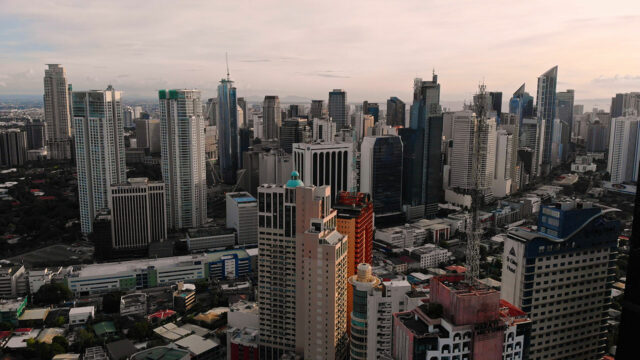
BPO, traditional firms likely to lift office market after POGO exit

STOCK PHOTO | Image Dmitry Berdnyk from Unsplash

By Aubrey Rose A. Inosante, Reporter

INFORMATION TECHNOLOGY and business process management companies as well as traditional offices are expected to pick up the slack as Philippine offshore gaming operators (POGOs) are set to vacate offices around the country, real estate consultants said.

Colliers Philippines on Wednesday said the POGOs’ office footprint in Metro Manila has already gone down to 489,000 square meters (sq.m.) in the first half, compared with the 1.3 million sq.m. office spaces occupied by POGOs in 2019.

“It is still the traditional office occupiers and the BPO (business process outsourcing) occupiers that are still propping up the office market,” Colliers Associate Director for Office Services Kevin R. Jara said during a briefing on Wednesday.

Of the 387,000 sq.m. transactions recorded in the first half of the year, traditional offices accounted for 56%, while BPO firms accounted for 26% and POGOs made up 16%.

Among the top five developers, which control 33% of Metro Manila office stock, their POGO exposure is limited to less than 5% of their portfolio.

Mr. Jara said the Bay Area will likely see a rise in vacancy rates after POGOs are shuttered.

Last week, President Ferdinand R. Marcos, Jr. ordered a total ban on all POGOs due to its ties to illicit activities such as financial scams, money laundering, prostitution and human trafficking.

“Bay Area vacancy may increase to a maximum of 51% if the POGOs exit this market this year and in other areas such as in Makati, we see that vacancy rates may rise to 43% if that industry indeed exits the markets this year,” he said.

Mr. Jara said other areas in Metro Manila are unlikely to be affected by the POGO exit. For instance, POGOs were not allowed to operate in  Fort Bonifacio.

“Overall, we see that the full ban may increase Metro overall vacancy rates to 22% by yearend,” he said. This is higher than Colliers’ original forecast of 19.1% before the POGO ban was announced.

Based on Colliers’ conservative estimates and partial reduction of POGO footprint in Manila, the market may still end up at a positive net take-up of 163,000 sq.m.

“In the worst-case scenario, it would be a negative 154,000 square meters of net take-up for 2024. However, we see vacancy rates start to taper already by 2025 and in 2026,” he said.

Colliers said it projected an office demand of 480,000 sq.m. for the next two years based on the assumption that there will be no replacement for POGOs.

“For landlords, especially for those with POGO tenants, you may consider some strategic moves to re-market the spaces to new tenants. So those include proactively refurbishing the spaces suitable for traditional and BPO occupiers,” he said, noting that POGO office layouts are different from BPOs.

Meanwhile, JLL Philippines Head of Research and Strategic Consulting Jan-Loven C. de los Reyes said the firm expects the office sector to move forward or focus more on BPOs since the industry has steady demand for office space.

JLL reported leasing volumes rose 16.9% to 383,319 sq.m. for the first half of 2024. BPOs accounted for 39.9% of these transactions, followed by traditional offices at 34.9% and 25.2% for POGOs, which are now known as internet gaming licensees.

Mr. Reyes said the corporate and traditional occupiers’ transactions were supported by substantial take-up from government agencies.

He said the effect of the POGO ban on the office vacancy levels “is not going to be sizeable” given that the volume of POGO spaces is not as significant as before because of the pandemic.

“But maybe at the city level, you’d see higher vacancies, particularly for Parañaque and Pasay areas because that’s where the POGOs are concentrated,” Mr. Reyes said.

The strong leasing volumes pulled down vacancy levels just right below the 20% threshold at 19.5% for the second quarter of 2024, due to the additional 460,000 sq.m. of office space that will enter the market.

For Leechiu Property Consultants, Inc. Founder and Chief Executive Officer David Leechiu, the BPO sector and traditional offices will be the ones picking up the slack left behind by the POGO sector.

“I’m hoping that the BPO sector will start going back to the office full-time, which they can still do now,” Mr. Leechiu said, noting the “resistance” that persists.

He said that government agencies that would like to upgrade their space should seek out cheap office space in Ortigas Center, Bay Area and Alabang.

“I think office rents have fallen 50% in the last two years. With this new exodus of space, you will probably see rents come down by another 40 [or] 50%,” Mr. Leechiu said.


BMI says Philippine consumer spending to accelerate this year

Some people are seen at the tiangge at Greenhills Shopping Center in San Juan City, April 26, 2024. — PHILIPPINE STAR/MIGUEL DE GUZMAN

HOUSEHOLD CONSUMPTION is seen to accelerate this year amid easing inflation, Fitch Solutions’ unit BMI said.

“We hold a positive outlook for consumer spending in the Philippines in 2024 and 2025,” it said in its latest commentary.

“While household spending already recovered to the pre-COVID levels in 2022, the rate of increase slowed in 2023. For 2024, we expect an acceleration, driven mostly by easing inflationary pressures, a stable labor market and lower interest rates.”

BMI expects household spending to expand by 6.2% this year. Household consumption, which accounts for more than three-fourths of economic output, rose by 4.6% in the first quarter.

“Over 2025, household spending will hold steady, growing 5.9% year on year in real terms.”

BMI said that the downtrend in inflation and strong labor market will support private consumption.

“Easing inflation and a tight labor market will support spending, as real wage growth returns to positive territory, which will support purchasing power over the year.”

BMI expects inflation to settle at 3.2% this year, slightly below the central bank’s 3.3% full-year forecast.

For the first six months of the year, headline inflation averaged 3.5%.

However, BMI noted risks to this outlook, such as “prolonged inflation, lower remittances, and a weakening of the domestic economy.”

“Consumers still need to become used to higher than usual inflation in the short term. If nominal income growth does not keep pace with inflation, the purchasing power of consumers will deteriorate, which would be a drag to their spending.”

“Prolonged inflation, particularly in relation to food, will mean that consumers will have to increasingly allocate more of their disposable income towards meeting basic necessities.”

Geopolitical tensions, such as the Israel-Hamas conflict, may also impact inflation and interest rates, it added.

It also cited risks to remittance growth due to potential financial stress in global markets, such as the United States.

“Another risk is the strengthening of the peso, which could reduce the amount sent back by overseas workers in local currency terms,” BMI added.

Meanwhile, high levels of household debt may also dampen household spending, BMI said, as it affects disposable income of consumers.

“This is particularly true as debt servicing costs rise in response to increases in interest rates,” it said.

The COVID-19 pandemic changed household consumption patterns in the Philippines, BMI said.

“Due to mass unemployment, especially in the services sector, the country experienced a recession. Many households were forced to apply for credit and government aid in order to pay for essential items.” Luisa Maria Jacinta C. Jocson

Forest Lake imparts important life reminders with humorous ‘Itim na Pusa’ video

Forest Lake recently captured online attention with a humor-laced digital ad featuring a black cat.

Memorial park developer Forest Lake recently captured online attention with a humor-laced digital ad featuring a black cat. The video shows two guys encountering the cat while crossing a street and calling it bad luck, alluding to a superstitious belief long held by old folks. However, a surprising twist in the encounter imparts an important reminder: life is unpredictable, and it’s crucial to be prepared for the unexpected.

The video is part of Forest Lake’s ongoing campaign to reshape public perception about death and memorial care by utilizing humor in addressing a common stigma, one episode at a time.

Forest Lake National Sales and Marketing Head Carlos Miguel Locsin upholds this, saying, “The use of levity in our latest video is primed to help ease people’s reluctance to prepare for the end of life. We hope that this fresh perspective will spur families to ensure peace of mind for themselves and their loved ones by investing in Forest Lake Memorial Parks’ memorial products.”

The video shows two guys encountering the cat while crossing a street and calling it bad luck.

Forest Lake’s video series, which was launched in January this year, continues to break down the taboos surrounding life and death. For instance, the first video, released on Jan. 1, humorously ‘debunked’ the belief that jumping at midnight can make one grow taller.

“At Forest Lake, we consistently deliver innovative messaging for a timeless topic,” says Forest Lake Digital Marketing Manager Christian P. Arines. “Our digital videos aim to create unpredictable moments with unforgettable lessons. We see these as a modern means of shaping Filipinos’ outlook on the deathcare industry.”

Forest Lake offers accessible and affordable memorial parks managed by professional teams that provide value, innovation, and personalized service. To ensure a holistic approach to total memorial care, the company has a comprehensive range of services available across its 37 parks nationwide — from various lot sizes to interment, mortuary, and chapel services.

Check out the viral video on Forest Lake’s official Facebook, YouTube, and TikTok pages.


Spotlight is BusinessWorld’s sponsored section that allows advertisers to amplify their brand and connect with BusinessWorld’s audience by publishing their stories on the BusinessWorld Web site. For more information, send an email to online@bworldonline.com.

Join us on Viber at https://bit.ly/3hv6bLA to get more updates and subscribe to BusinessWorld’s titles and get exclusive content through www.bworld-x.com.

PHL not ready to continue stock mart trading during typhoons — analysts

Residents wade through floods in Quezon City, July 24, 2024. — THE PHILIPPINE STAR/MIGUEL DE GUZMAN

By Revin Mikhael D. Ochave, Reporter

THE Philippines is not ready to implement continuous stock market trading during typhoons as technical adjustments are required, analysts said.

AP Securities, Inc. Research Head Alfred Benjamin R. Garcia told BusinessWorld in a Viber message that many things should be improved before stock market trading could continue amid inclement weather.

“Number one would be the connection speeds, and then there’s the tendency for power outages to happen during typhoons. So even if you trade from home, these two factors would present a challenge,” Mr. Garcia said.

The Philippine Stock Exchange (PSE) suspended market trading on Wednesday last week due to heavy rains brought by Typhoon Carina (international name: Gaemi) and the southwest monsoon.

In Asia, stock markets in Shanghai and Shenzhen continue trading during inclement weather.

Hong Kong also suspends trading at the stock exchange when strong typhoon signals are hoisted in the city. Starting Sept. 23, the Hong Kong stock exchange will now continue trading amid typhoons in a bid to boost competitiveness.

“I guess it’s a bit unnecessary. Hong Kong and Shanghai implement that because they are international financial gateways. At the current level of foreign participation in our market, I don’t think the risk-reward trade-off is worth it,” Mr. Garcia said after being asked on the move of other markets.

Rizal Commercial Banking Corp. Chief Economist Michael L. Ricafort said that other processes should be automated to ensure uninterrupted trading during bad weather.

“Settlement and other transaction-related processes need to become more automated using electronic channels to minimize disruptions during inclement weather and to continue facilitating trading transactions,” Mr. Ricafort said.

“Doing so will also enable people from areas around the country and from other parts of the world that are not affected by inclement weather to continue trading,” he added.

Philstocks Financial, Inc. Research and Engagement Officer Mikhail Philippe Q. Plopenio said in a Viber message that it would be difficult for the PSE to continue trading during strong storms.

“The PSE may have difficulties in continuing trading amid typhoons as it has several dependencies on different bodies and the government. The PSE may adopt a business continuity plan to focus on security and technology advancements which may enable remote operations,” he said.

“However, compared to Hong Kong, which is one of the top financial hubs in Asia, the PSE is one of the emerging markets in the region. Therefore, other areas could be focused on by the bourse such as enticing more companies to list and attract more foreign funds,” he added.

Mr. Garcia also noted that implementing stock market trading during bad weather would expose traders and personnel to “unnecessary risks.”

“Having traders and backroom personnel report to the office during extreme weather exposes them to unnecessary risk. This is especially evident (last week) where we saw major thoroughfares flooded, and our train network is insufficient to service all areas,” he said.

BusinessWorld sought the PSE’s comment on the matter but has yet to respond.

SM Prime says collaboration needed to boost disaster resiliency

SM PRIME Executive Committee Chairman Hans T. Sy said the government and private sector need to work together in boosting the country’s disaster resiliency and climate adaptation efforts.

“Resilience is not just a word, it is a way of life. It is a commitment to ensure that we act on our responsibility to care for others and that no one is left behind,” Mr. Sy said in a statement.

According to Mr. Sy, climate adaptation and resilience are vital to thriving amid damage and losses caused by climate change, adding that disaster risk reduction is one of the SM Prime’s core business strategies.

With this, he said that SM has allocated a “significant portion” of its capital expenditure to incorporate resiliency and sustainability in its infrastructure designs.

Mr. Sy, an engineer, said he remains passionate about constructing well-designed structures that are efficient, strong, and resilient.

Meanwhile, SM Prime said its mall unit SM Supermalls, is implementing initiatives to mitigate flood risks in their communities.

Liza B. Silerio, SM Supermalls head for corporate compliance and sustainability, said there are over 25 rainwater catchment basins across the company’s malls.

The rainwater reservoirs have a total capacity of 85,272 cubic meters, collecting floodwaters and protecting nearby communities.

“We’ve seen firsthand how our catchment basins have spared communities around our malls from severe flooding during typhoons like Carina. This validates our commitment to investing in sustainable and resilient infrastructure,” she said.

Ms. Silerio said SM malls under construction have facilities and structures that consider natural hazards to protect nearby communities.

On Wednesday, SM Prime shares retreated by 1.54% or 45 centavos to P28.80 per share. — Revin Mikhael D. Ochave

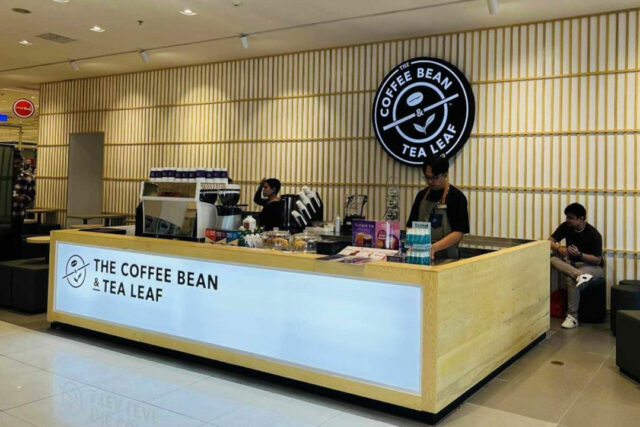
Coming soon: More Coffee Bean cafés in SM Stores

SM INVESTMENTS Corp. (SMIC) is looking to open 53 more Coffee Bean & Tea Leaf (CBTL) branches in SM Stores by 2026.

In a statement, SMIC said there are currently 25 CBTL cafés located within 25 SM Stores around the country. It plans to roll out 53 more CBTL branches within SM Stores, bringing the total to 78 cafés by 2026.

The first CBTL branch for SM Store was opened at SM North EDSA in Quezon City in December 2022.

“Our decision to introduce coffee shops within SM Stores is driven by our customers’ desire for enhanced shopping experiences. We aim to provide a welcoming environment where customers can relax and enjoy themselves,” SM Store Executive Vice-President Dhinno Francis S. Tiu said.

“CBTL has committed to opening cafés in SM Stores based on their global reputation for exceptional customer service. We choose partners who align with our commitment to enhancing customer experience,” he added.

Mr. Tiu said the move to integrate cafés into retail spaces is a well-established practice among international brands, offering a communal experience.

“Enhancing customer experience is pivotal in retaining and attracting customers. The cafés will serve as spots for customers to recharge during shopping or as meeting places for friends and family,” Mr. Tiu said.

SM Store said that CBTL will also offer discounts to SMAC holders. — Revin Mikhael D. Ochave

Carnival Cruise to expand fleet, targets to hire Filipino seafarers

REUTERS

FLORIDA-BASED Carnival Cruise Lines is adding seven ships to its fleet in the next decade and will hire thousands of staff including Filipino seafarers, its top official said on Wednesday.

The company will add two ships to its Australian fleet in January 2025, President Christine Duffy told reporters in Manila.

Two new Excel class ships are scheduled for delivery in 2027 and 2028, she added. Each ship can accommodate about 6,600 guests.

The cruise operator also expects to take delivery of their largest-ever ships in 2029, 2031, and 2033. Each ship can house about 8,000 guests.

The company has signed a training partnership with STI College and the Philippine Marine Merchant Academy, which seeks to help Filipino seamen move beyond traditional entry-level jobs, Ms. Duffy said.

It would help Filipino seafarers to build careers, excel and advance through Carnival’s ranks, including posts for captain and chief engineers, she said.

Carnival Cruise will grant scholarships to 20 STI students.

“The benefit for us and STI is we are helping them create the curriculum and the training,” Ms. Duff said. “We know that when that crew member, if they’re selected to come and work, they’ve already been through the training that we need.”

“This is a very nontraditional program for us because traditionally, Carnival Cruise Line was solely focused on Italian and European [crews],” Bettina A. Deynes, Global Chief Human Resource officer of Carnival Corp. and PLC, told reporters.

“The bulk of our deck and engine officers today are from Italy or Croatia and for other cruise lines, a lot of northern Europeans from Scandinavian countries,” she said. “We really recognize the Philippines to be a source of talent in the maritime space.”

The partnership is expected to increase Filipino visibility in Carnival’s crew, which employs 12,000 Filipinos. A thousand of them are deck and engine crews.

Ms. Deynes added that they are promoting about 20,000 crew members this year and expect to fill up those vacancies through hiring.

Carnival Cruise Line, under the Carnival Corp. and PLC with eight other cruise lines, employs a total of 50,000 Filipino staff across all nine brands.

Carnival Cruise Line, Princess Cruises, Holland America Line, Seabourn, Cunard, AIDA Cruises, Costa, P&O Cruises (UK), and P&O Cruises (Australia), are the nine brands under Carnival Corp.

Carnival also shifted to a digital mode of application for interested crew members. — Chloe Mari A. Hufana

Court halts bidding for Meralco’s 1,000-MW power supply contracts

MERALCO.COM.PH

By Chloe Mari A. Hufana, Reporter

A TAGUIG CIty regional trial court on Wednesday stopped Manila Electric Co. (Meralco) from proceeding with its bidding process for 600-megawatts (MW) and 400-MW power supply.

“There exists an extreme urgent necessity for the writ as to warrant the issuance of a temporary restraining order (TRO) to prevent further damages to the plaintiffs’ interests, the government and the environment,” Executive Judge Byron G. San Pedro said in a five-page order.

Meralco was also ordered to post a P5-million TRO bond.

The power distributor earlier invited bids for a contract capacity of 600 MW, which is set to take effect in September 2025. The bid deadline was set for Aug. 2. It also invited bids for an additional contract capacity of 400 MW, effective September 2025.

Jose Ronald V. Valles, Meralco senior vice-president and head of Regulatory Management, said they had yet to receive a copy of the order.

“We would like to stress, however that all competitive selection processes for our supply requirements are done in accordance with existing rules of the Department of Energy and Energy Regulatory Commission,” he told reporters in a Viber group chat.

“It is our mandate to ensure that we conduct these in a timely manner, as delays will expose our consumers to unnecessary burden in the billions of pesos in the form of higher power rates,” he added.

Members of the Malampaya consortium, Enrique K. Razon-owned Prime Energy Resources Development B.V., UC38 LLC, Prime Oil and Gas, Inc., and PNOC Exploration Corp. had sought the restraining order, saying the bid terms violate the preference given to indigenous natural gas under the law.

The plaintiffs also said the contracts threaten the Philippines’ energy security and sovereignty.

“Imported fuel products are notoriously unstable and extremely subject to external shocks in the market,” they said. “These price instabilities will hence be built into the fabric of our energy situation, resulting in less energy security and less energy sovereignty.”

They said the contracts threaten state revenues because under Service Contract 38, the government is entitled to 60% of the Malampaya project’s net proceeds.

“Allowing the current bidding processes to proceed, resulting in the award of in favor of coal as a fuel source, will subject the country to a 15-year reliance on coal, which would significantly contribute to further environmental degradation and exacerbate the adverse impacts of coal usage on air quality and climate change,” they added.

Meralco’s controlling stakeholder, Beacon Electric Asset Holdings, Inc., is partly owned by PLDT, Inc.

Hastings Holdings, Inc., a unit of PLDT Beneficial Trust Fund subsidiary MediaQuest Holdings, Inc., has an interest in BusinessWorld through the Philippine Star Group, which it controls.