Home Blog Page 2740

SBMA studying over P40 billion worth of projects

SBMA

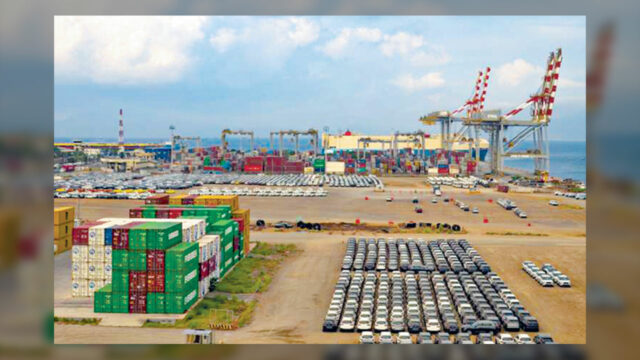
THE Subic Bay Metropolitan Authority (SBMA) said it has five projects in its pipeline valued at P41.43 billion, involving port upgrades and other works within the Subic Bay Freeport Zone.

At the Subic-Clark Business Conference on Friday, SBMA Chairman and Administrator Eduardo L. Aliño said he hopes to enhance Subic Bay’s main asset, its port.

“We understand that there is a need to continue to expand and develop,” Mr. Aliño said, adding that the authority anticipates continued demand growth.

One of the projects is the multi-purpose port terminal at Lower MAU, which covers a 570-meter wharf with a depth of 12.9 meters. It has a projected cost of P13 billion.

“This project will increase the port capacity by an additional 2.5 million metric tons of cargo,” the SBMA said.

MAU is the former camp for Marine Amphibious Units when Subic was under US military control.

Ronnie R. Yambao, senior SBMA deputy administrator for operation, said another project is the Subic Bay Cruise Ship Facility, which is expected to cost P10.16 billion.

“It will be a dual-berth facility, which is the first phase of the project. And then, the second phase, which covers the reclamation area, will accommodate commercial facilities to accommodate the guests,” Mr. Yambao said.

He said that the project aims to create a home port for cruise ships, as envisioned by the government’s National Cruise Tourism Program.

“Subic Bay as a home port is a game-changer project initiated by our chairman because we wanted to contribute to the National Government’s program to increase tourist arrivals. And one way to do that is by inviting cruise ships,” he added.

A third project is a multi-purpose port terminal at Redondo Peninsula, which includes a 600-meter wharf with a depth of 14 meters. It has a projected cost of P11 billion.

The project will increase the port’s capacity by 3 million metric tons of cargo.

Asked about the timeline, Mr. Yambao said that the SBMA is targeting to start the feasibility studies in time to offer the projects for public bidding before 2028.

Except for planned improvements to the Subic Bay International Airport, the projects could be financed through public-private partnerships or overseas development assistance. — Justine Irish D. Tabile

15 more Luzon Corridor projects pitched

A view of the container yard at the Port of Batangas — Photo from the PPA 2023 Annual Report

FIFTEEN more projects were presented to the steering committee for the Luzon Economic Corridor last week, according to the Office of the Special Assistant to the President for Investment and Economic Affairs (OSAPIEA).

“In the second steering committee meeting, we presented more projects, again, but from different agencies,” Secretary Frederick D. Go, the SAP who heads OSAPIEA, said on the sidelines of the Franchise Asia Philippines 2024 conference.

During the first steering committee meeting, the Philippines presented projects from the Bases Conversion and Development Authority, National Economic and Development Authority, and the Department of Transportation.

“In the second steering committee meeting, we added projects from Subic Bay Metropolitan Authority (SBMA), the Department of Energy (DoE), and the Department of Public Works and Highways (DPWH),” Mr. Go said.

With the additional 15 projects, the Philippines has so far presented 43 Luzon Corridor works to the steering committee.

“But the idea now is they have seen all of it, and they are going to narrow it down. I really think at the end of the day, the ideal number should only be around five or six,” he said.

“Because you know what happens in life when you have too many choices … (compared) to when you have narrow choices, then you can really focus and really move faster,” he added.

He said infrastructure projects are likely to top the priority list, with energy projects next in line.

“But we don’t know … It’s their choice. Let’s leave it to them to choose,” he said.

The steering committee for the Luzon Economic Corridor is set to hold its third meeting in November.

The Luzon Economic Corridor is the first project of the US-initiated Partnership for Global Infrastructure and Investment in the Indo-Pacific.

First announced after the Trilateral Economic Ministers Meeting between the Philippines, the US, and Japan in April, the initiative aims to enhance the connectivity of the island’s major economic engines like Subic Bay, Clark, Metro Manila, and Batangas. — Justine Irish D. Tabile

Pharma to benefit from ‘nearshoring’ as Asia-Pacific turns protectionist, BMI says

ASIA-PACIFIC economies are expected to become less enthusiastic about globalization as growth weakens, with “nearshoring” picking up momentum to the possible benefit of industries like pharmaceuticals, Fitch Solutions unit BMI said.

“A more challenging economic outlook in the Asia-Pacific (APAC) region will limit scope for politicians to embrace globalization,” it said in a commentary.

“Southeast Asia is positioned to leverage nearshoring for economic growth, with the pharmaceutical sector poised to benefit significantly from these trends,” it added.

BMI expects growth in the region to settle at 4.7% this year and ease to 4.4% next year amid the slowdown in China.

“The economic slowdown will trigger a shift in attitudes toward globalization. Rising income inequality, exacerbated by depressed wage growth, will lead to the elevation of populist politicians, prompting an embrace of protectionist policy measures,” it said.

These dampened growth prospects will also remain “prominent” until 2025.

“In turn, weaker growth will likely also entrench voters’ concerns about their own prospects and erode appetite for major trade deals and other policies that would support globalization,” BMI said.

“The trend away from globalization will lead markets to prioritize policies to boost domestic economies, and developing the domestic pharmaceutical sector will be a prime target for several policymakers.”

Southeast Asia (SEA) is also “positioned to leverage nearshoring for economic growth,” BMI said, noting that the pharmaceutical sector is expected to “benefit significantly” from this.

“Nearshoring, the practice of relocating business operations to nearby countries, is expected to fundamentally redefine supply chain dynamics,” it said.

BMI said that geopolitical tensions may push US multinational drug manufacturers to move their operations elsewhere.

“As a result, SEA is well-placed to capitalize on this shift. SEA’s favorable conditions, including a growing labor force, improving infrastructure and supportive governmental policies, make it an attractive destination for pharmaceutical companies looking to diversify their supply chains and reduce dependency on any single market.”

BMI said that pharmaceutical sales in the region are projected to jump to $38.2 billion in 2028 from $29.2 billion in 2023.

“The implementation of nearshoring, backed by targeted foreign direct investment, could significantly enhance these growth forecasts, catalyzing the region’s integration into global value chains,” it added.

However, BMI noted that the region has yet to “fully harness” nearshoring initiatives.

“Despite several competitive advantages for markets across SEA, such as the favorable labor costs in comparison to Mainland China as well as its geographical proximity to the rest of APAC, the uptake of nearshoring initiatives has been slow.”

BMI expects Indonesia and Vietnam to maximize the nearshoring trend, resulting in “strengthened pharmaceutical trade and reduced external market dependency.”

It also noted opportunity areas for the Philippines. Last year, the government secured the agreement for the establishment of the first US Food and Drug Administration-approved manufacturing facility in the country, which is expected to “bolster the country’s global pharmaceutical industry presence.”

The Philippine Pharmaceutical Manufacturers Association has said that it plans to ramp up domestic manufacturers’ share of government procurement to 50% by 2030.

“These strategic initiatives undertaken by larger economies in SEA will pave the way for a significant transformation of the regional pharmaceutical landscape,” BMI said. 

“Collectively, these efforts will position SEA as a hub for pharmaceutical manufacturing and research, attracting further investment and establishing more reliable and secure supply chains.” — Luisa Maria Jacinta C. Jocson

BCDA income declines 54% to P3.3 billion

THE Bases Conversion and Development Authority (BCDA) said it posted a 53.65% decline in total comprehensive income to P3.3 billion in 2023 after hefty payouts to agencies it supports.

In its annual report, the BCDA reported that the BCDA contributed P4.35 billion to the Armed Forces of the Philippines (AFP) Modernization Program and other beneficiary agencies and for the replication of Army Support Command facilities in Tarlac.

The company also paid P602 million in financial assistance and to acquire right of way for roads in New Clark City.

Revenue rose 13.7% to P7.4 billion in 2023.

“The increase was driven by several factors: the sale of gross floor area in the amount of P285 million, dividends received from Fort Bonifacio Development Corp. (FBDC) of P675 million, and interest income of P768 million due to improved interest rates,” the BCDA said.

The government-owned corporation also reported increased toll revenue from the Subic-Clark-Tarlac Expressway of P1.95 billion and in revenue from the operation of Clark International Airport of P270 million.

Meanwhile, BCDA’s gross disposition proceeds rose 4.7% to P141.01 billion at the end of last year, after having reported P134.66 billion in revenue between May 1993, when it started booking results, and December 2022.

“The main drivers for the improvement were the receipt of disposition proceeds from the joint venture with SM Prime Holdings, Inc. for the Bonifacio South Pointe property (P3 billion), proceeds from the minimum annual secured revenue share in the Joint US Military Advisory Group (P873 million), and dividends from the FBDC,” it said.

“Other contributors were proceeds from existing leases and joint venture agreements, which amounted to P1.8 billion,” it added.

The biggest beneficiary of BCDA’s disposition proceeds was the AFP, which received P59.71 billion, or 42%, of the total disposition proceeds generated since 1993.

Meanwhile, the other proceeds went to the BCDA (33%, or P46.48 billion), other beneficiary agencies (7%, or P9.26 billion), and local government units (0.4%, or P560 million). — Justine Irish D. Tabile

Coco farmers call for bigger role in replanting program

PHILSTAR FILE PHOTO

THE Philippine Coconut Authority (PCA) needs to rope in more coconut farmers’ groups and cooperatives in carrying out its tree replanting effort, an industry group said.

“They want the participation of the farmers… they have not been using established farmers’ organizations. I think they are dealing with localized groups as they see fit,” Confederation of Coconut Farmers’ Organizations of the Philippines, Executive Director Charles R. Avila told BusinessWorld.

Last year, President Ferdinand R. Marcos, Jr. ordered the PCA to draft a plan to rehabilitate the coconut industry, including the planting of 100 million coconut trees by 2028.

“(Farmers’ groups) have been waiting for more than a year now since it was first announced that they would be willing to work with the farmers’ organizations. Specifically at the national level,” Mr. Avila added.

The rehabilitation plan aims to address the advanced age of the nut-bearing trees. The PCA is seeking to replant about 8.5 million trees this year.

He said that a majority of the Philippines’ fruit-bearing coconuts are now senile and have become candidates for monetization into coco lumber.

“If they can, for example, plant or replant this year, more than 5 to 8 million, that would be quite an achievement. But how far is that from the 100 million coconut trees that we need?,” he said.

Last week, the President allocated an additional P1 billion to the PCA for the coconut replanting operation in 2025, while an additional P2.5 billion set aside for fertilization.

“It would be a big help if properly used… that is not a small amount. But at the same time, the objective need for replanting cannot be denied,” Mr. Avila added.

Under the Philippine Coconut Industry Development Plan 2024-2034 the replanting project is expected to increase coconut production by 4.7 billion nuts, valued at P33.1 billion, by 2034.

By 2025, the PCA aims to replant 15.3 million, followed by 25.4 million annually between 2026 and 2028.

Mr. Avila also said that the government should allocate more funding towards creating integrated coconut processing plants.

“In that way of thinking, we can have a national structure for industrialization, which we don’t have,” he added.

As of the second quarter, the volume of coconut production rose 1.5% year on year to 3.41 million metric tons, according to the Philippine Statistics Authority. — Adrian H. Halili

PHL could carve out niche in cybersecurity  — OSAPIEA

STOCK PHOTO | Image from Freepik

THE GOVERNMENT is pursuing upskilling and reskilling efforts in order to position the country as a cybersecurity hub, Secretary Frederick D. Go said.

Mr. Go, who heads the Office of the Special Assistant to the President for Investment and Economic Affairs (OSAPIEA), said: “We are looking at how we can create a niche for ourselves in the global market for cybersecurity.”

“As you all know, we are already a leader in the business process outsourcing (BPO) industry; we have the second largest industry in the world,” he told reporters on the sidelines of Franchise Asia Philippines 2024 on Monday.

“So, we are looking forward to what the next opportunity may be; we think it is in cybersecurity,” he added.

In particular, he said that the government is looking to train up the workforce in artificial intelligence and cybersecurity.

“I think for us it’s an opportunity and a threat at the same time. But obviously the government has to address, I think more importantly, the opportunity side, the training, reskilling, and upskilling of our people,” he added.

He said that the government is also in discussions with education and the private sector in terms of preparing the workforce.

“There’s a lot of discussion in the education sector about how to prepare our workforce for that opportunity,” he said.

“There’s also a lot of discussion with the private sector, about how the employers, like the BPOs, can assist the government in determining the needs and wants of the employers so that we can train our workforce to fit the requirements of the job providers,” he added.

In 2023, the information technology and business process management industry tallied 1.7 million direct jobs and $35.5 billion in export revenue, with a projected headcount of 1.84 million and $40 billion in revenue in 2024.

FRANCHISING
Meanwhile, Mr. Go identified the franchising industry as a key driver of the development for micro-, small- and medium-sized enterprises.

“These enterprises provide crucial support to the economy and contribute significantly to our economy,” he said.

He said the government seeks to continue creating favorable conditions for franchisees to thrive.

In particular, he said that the foreign trade desks of the Department of Trade and Industry (DTI) are helping promote the Philippine brand overseas.

“In all the important economies of the world, in our embassies, there is a foreign trade desk under the DTI, and one of their primary roles is really to promote Philippine products and services to the host country,” he said.

“So that could be through selling Filipino products as well as trying to promote the franchising of Filipino brands in their host country,” he added.

In terms of funding, he said that franchisees could also tap the DTI for assistance.

Acting Trade Secretary Cristina Aldeguer-Roque has said that the DTI will now offer franchise funding for selected brands.

“I’m working closely now with the Philippine Franchise Association for the top 20 franchises that will be given, those that are trending, and those that can really move quickly,” Ms. Aldeguer-Roque said. — Justine Irish D. Tabile

NCR retail price growth picks up in July

PHILIPPINE STAR/RUSSELL A. PALMA

RETAIL PRICE growth of general goods in Metro Manila inched up in July, the Philippine Statistics Authority (PSA) reported on Monday.

Citing preliminary data, the PSA said the general retail price index (GRPI) in the National Capital Region (NCR) grew 1.9% in July, accelerating from 1.8% in June, though weaker than the year-earlier reading of 3.9%.

In the year to date, GRPI growth averaged 2.1%.

“The primary contributor to the uptrend in the annual rate of GRPI in NCR was the higher annual increase observed in the index of mineral fuels, lubricants and related materials,” the PSA said.

“The slight pickup is consistent with overall inflation that picked up to 4.4% in July 2024, the fastest in nine months, largely after the effects of Typhoon Carina that caused disruptions in hard-hit areas, especially in Metro Manila,” Michael L. Ricafort, chief economist at Rizal Commercial Banking Corp., said in an e-mail.

Price growth accelerated in mineral fuels, lubricants and related materials (7.4% from 5.7%), crude materials, inedible expect fuels (1.1% from 0.8%), chemicals, including animal and vegetable oils and fats (2.2% from 2%), and manufactured goods classified chiefly by materials (1.2% from 1.1%).

On the other hand, commodity groups where price growth eased were beverages and tobacco (2.4% from 2.6%), and machinery and transport equipment (0.3% from 0.4%).

Growth of food and miscellaneous manufactured articles held steady at 2.4% and 1.5%, respectively. — Karis Kasarinlan Paolo D. Mendoza

Consumer inflation expectations focused on food, transportation prices, BSP finds

BW FILE PHOTO

FOOD and transport prices will be driving consumer inflation expectations, according to a Bangko Sentral ng Pilipinas (BSP) discussion paper.

“Empirical findings suggest that consumers’ inflation expectations are shaped by price changes in salient commodity groups such as food, beverages, and transport,” according to the paper, ‘Dissecting Consumer Attention: Insights on Consumers’ Inflation Expectations in the Philippines.’

It said that inflation expectations of households are crucial in understanding inflation dynamics. These also have implications on economic behavior and spending patterns.

“Salience of price changes over the past year appears to align closely with the size of actual expenditure shares, although housing, while a large expenditure, does not receive proportionate public attention,” it said.

“Among food items, consumers appear to pay closer attention to rice, sugar, fish, vegetables, and fruit,” it added.

The Philippines has been facing elevated inflation since 2022 amid supply chain disruptions and other external headwinds.

Since 2022, annual inflation has breached the BSP’s 2-4% target range. The central bank expects inflation to settle at 3.4% this year.

The discussion paper also found that low-income consumers are more focused on food and rice prices as against higher-income classes.

Meanwhile, consumer expectations were also found to be bad predictors of actual conditions.

“Compared to professional forecasters and firms, households’ mean inflation expectations register higher forecast errors. Consumers also offer more dispersed assessments of its future direction,” it said.

“While households tend to forecast with lower mean accuracy, higher moments of the distribution of their expectations can shed light on the anchoring of inflation and signal shifting expectations among segments of the population,” it added.

According to the latest consumer expectations survey of the BSP, more consumers are pessimistic amid expectations of rapid increase in the prices of goods and higher household expenses, lower incomes, and fewer available jobs.

“While households’ mean inflation expectations lagged rising inflation, the underlying distribution showed wider variability and negative skewness, suggesting a possible weakening of the inflation anchor and upward drift in expectations,” the BSP paper said.

“Households’ mean inflation point forecasts were also found to persist despite substantially increasing news coverage on the elevated inflation. However, disagreement appears to generally track inflation mentions in the news,” it added. — Luisa Maria Jacinta C. Jocson

Revisiting the tax compliance requirements of online sellers

The Bureau of Internal Revenue (BIR) has increasingly underscored the importance of ensuring that all persons conducting business, particularly through digital platforms, are properly registered and tax compliant.

With the highly anticipated “9.9” sale approaching, online sellers are preparing for a surge in activity, offering various discounts and promotions to attract customers. However, amidst the excitement and potential for increased sales, it is crucial for online sellers to ensure that their business operations are in compliance with regulatory requirements, particularly concerning their tax obligations.

As a helpful reminder, here’s a review of key BIR issuances and the timeline concerning tax compliance of online sellers. Understanding these requirements will help ensure that their businesses remain compliant and avoid any potential issues.

REVENUE MEMORANDUM CIRCULAR (RMC) NO. 55-2013
In 2013, the BIR reminded parties engaged in online business transactions, such as online shopping or retailing, intermediary services, advertisements, and auctions, that they are subject to the same tax obligations as any other business establishment. Online entities must register with the BIR, issue registered invoices or receipts (simplified now to “invoices” under the Ease of Paying Taxes Act), maintain books of account, withhold taxes as required, file returns, and pay the correct taxes on time.

RMC NO. 60-2020
As the pandemic accelerated the shift of business owners to online selling, in June 2020, the BIR issued a circular clarifying that tax obligations apply not only to sellers but also to other parties of online business transactions, such as payment gateways, delivery services, internet service providers, and other facilitators. It allowed online business owners to register and/or update their registration with the BIR by July 31, 2020, without facing any penalties for late registration, thus providing a window of opportunity for compliance amid a rapidly changing business landscape.

REVENUE REGULATION (RR) NO. 16-2023 CLARIFIED BY RMC NO. 8-2024
In late 2023, BIR issued a regulation that imposes a 1% withholding tax on the gross remittance of electronic marketplace operators (e-market operators) and digital financial services providers (DFSPs) to online sellers. RR No. 16-2023, which was clarified under RMC No. 8-2024, highlighted also that while e-market operators and DFSPs are the responsible parties to withhold, online sellers are not without any obligation at all.

At the onset, online sellers must ensure that their business is registered with the BIR. One of the requirements to use the e-marketplace facility is to submit a copy of the BIR-issued Certificate of Registration (CoR) to the e-market operators. Also, in case online sellers are exempt from tax or subject to a lower tax rate, they are obliged to submit a duly issued certification to the e-marketplace operator as proof of exemption or entitlement to a lower rate.  

RR NO. 15-2024
In August, the BIR issued more regulations that prescribes the policies and guidelines on the tax obligation of all persons engaged in business, including those with physical stores (called brick-and-mortar stores) and those solely operating online stores, to register their business pursuant to Section 236(A) of the Tax Code, as amended.

Particularly, the regulations provide the following guidelines:

a. Persons engaged in the sale and/or lease of goods and services through physical stores must register at the BIR district office having jurisdiction over the place of business address, including that of its branch and/or facility;

b. Persons operating online stores for their physical store must register its store name as an additional “business name;” and

c. Persons engaged in the sale and/or lease of goods and services through a website, webpage, page, platform, or application who do not have a physical store must register at the BIR district office having jurisdiction over the place of residence for individuals or the principal place of business for juridical entities.

Registration must be done, either electronically or manually, on or before the commencement of business, before payment of any tax due, or upon filing of a return, statement, or declaration as required under the Tax Code, as amended.

It is important to note that all persons, natural or juridical, engaged in trade or business in the Philippines are required to register with the BIR, specifically those selling and/or leasing goods and services through brick-and-mortar stores, e-commerce, or online businesses, including those selling virtual items in online games, operating and selling through digital platforms, creating and streaming digital content from which income is generated, the e-retailing of goods and services, the sale of services over the internet, and other forms of business conducted online.

After registration, online businesses must post their BIR-issued CoR or Electronic CoR at the place where business is conducted for those with physical stores and at the place of residence for those solely operating online stores, in a way that is clearly and easily visible to the public. Additionally, persons operating businesses through online stores must display conspicuously the electronic copy of the BIR-issued CoR on their website, webpage, account, page, platform, or application. It must be, at all times, easily accessible and visible to buyers or customers visiting the seller or lessor’s webpage, account, page, platform, or application.

To avoid penalties during BIR’s tax compliance verification drive (commonly known as tax mapping), online sellers must comply with this posting requirement. While it may appear simple, it has become one of the most frequently overlooked compliance obligations.

Any person violating the registration requirements is administratively and criminally liable for penalties and fines. The business operations of the violator may be suspended through the issuance of a Closure/Take Down Order by the BIR. The regulations also noted that any person who willfully aids or abets the commission of the violation or who causes the commission of any such violation will be liable in the same manner as the principal violator. This may include lessors, sub-lessors or commercial establishments/buildings/space, and operators of digital platforms, including e-marketplace platforms, who fail to ensure that their respective lessees and online sellers are duly registered with the BIR and are compliant with the tax rules. The list of violations and the corresponding penalties are summarized in the regulations.

TAKEAWAYS
The BIR’s issuances over the years, as highlighted above, show a continuous and progressive refinement of registration requirements for online sellers, reflecting the government’s recognition of the increasing significance of digital commerce in our economy. As technology continues to advance, it is essential for government policies to evolve accordingly, ensuring that compliance requirements and regulations effectively meet the demands of the ever-changing digital landscape and safeguard the interests of all stakeholders — sellers, buyers, and the government.

Further, given the significant role that online sellers play in driving the economy, it is essential for them to fulfill their tax obligations. Just like traditional businesses, online sellers benefit from public infrastructure, services, and a stable economic environment. Thus, they must contribute their fair share of taxes to support these systems. This responsibility is vital for ensuring fairness and sustaining the programs that enable both online and offline businesses to thrive.

Let’s Talk Tax is a weekly newspaper column of P&A Grant Thornton that aims to keep the public informed of various developments in taxation. This article is not intended to be a substitute for competent professional advice.


Tonee Rose M. Palomeno is a manager of the Tax Advisory & Compliance division of P&A Grant Thornton, the Philippine member firm of Grant Thornton International Ltd.

pagrantthornton@ph.gt.com

PHL’s Frayna, Canino earn rating points before Olympiad campaign

RUELLE CANINO

THE PHILIPPINES’ Janelle Mae Frayna and Ruelle Canino continued to earn both rating points and confidence they would need before wading into competition in the FIDE World Chess Olympiad slated Sept. 10 to 22 in Budapest, Hungary.

Ms. Frayna, the country’s only Woman Grandmaster (GM), finished just 34th out of 150 participants but her unbeaten output of 6.5 points out of the possible 10 and the rating points she gained from it spoke highly of how prepared she is for the Budapest tilt.

The enlisted Army woman never relinquished a single loss with three wins, including a gigantic shocker over Hungarian Grandmaster Gabor Papp — rated 2550 — and seven draws propelled her rating to 2268 from 2162 before he plunged into the European tour.

More impressive was the 16-year-old Ms. Canino, who ended up with six points in the Barcelona meet and earned a colossal 160.8 rating points to zoom to 2164.8 from 1908 that impressed Ms. Frayna, who has been tutoring the former as of late.

“With this current form and performance, soon enough, she can reach 2300 before the year ends, or who knows, maybe even after the Olympiad,” said Ms. Frayna of the Woman FIDE Master from Cagayan de Oro. Mmsse. Frayna and Canino, whose trip was supported by the Philippine Sports Commission and the National Chess Federation of the Philippines (NCFP) will spearhead the country’s women’s team participating in the Olympiad set in the Hungarian capital. Jan Jodilyn Fronda, who was also in Europe but had to go home to fix visa issues, Bernadette Galas and Shania Mae Mendoza are the other members of the squad with GM Jayson Gonzales as coach.

GMs Inno Sadorra and John Paul Gomez and IMs Daniel Quizon, Jem Garcia and Paolo Bersamina comprise the men’s side mentored by GM Eugene Torre with NCFP board member Roel Canobas is head of the delegation. — Joey Villar

NLEX Road Warriors facing scrambling Barangay Ginebra following duel of Blackwater and Phoenix

NLEX ROAD WARRIORS — PBA.PH

Games Tuesday
(Smart-Araneta Coliseum)
5 p.m. — Blackwater vs Phoenix
7:30 p.m. — NLEX vs Ginebra

THREE struggling teams grasp for air while one wants no let-up among the league-leaders as the PBA Governors’ Cup reaches the crucial halfway mark of the elimination round Tuesday at the Smart-Araneta Coliseum.

Running second with an impressive 3-1 slate, NLEX takes on the formidable but suddenly scrambling Barangay Ginebra (1-2) in the main game at 7:30 p.m. following the duel between Blackwater (1-3) and Phoenix (0-3) at 5 p.m. of an all-Group B pairing.

NLEX, under the watch of returning mentor Jong Uichico, gained a quick redemption last Saturday in Cagayan De Oro with a 112-108 overtime win over San Miguel — on the heels of its lone loss against unbeaten and Group B leader Rain or Shine (4-0).

With an intact roster led by top gun Robert Bolick and reinforced by import Myke Henry, the Road Warriors should be the favorites to get the better of the Gin Kings still learning the ropes after a bevy of offseason moves.

Ginebra’s transition phase, with No. 3 rookie RJ Abarrientos along with new guys Isaac Go and Stephen Holt following a trade that sent veterans Christian Standhardinger and Stanley Pringle to Terrafirma, has been evident so far with a rare, slow start.

The wards of coach Tim Cone, even with the presence of resident import and Gilas Pilipinas naturalized Justin Brownlee, fell prey to Rain or Shine, 73-64, and previously winless Blackwater, 95-88, so far. Ginebra’s lone win came against San Miguel, 108-102 for a bumpy campaign so far.

Still, the Gin Kings have the experience and capability to show up any day against any squad and there’s no better timing to do that against the in-form NLEX to stabilize their track.

The spotlight, however, is not only on the NLEX-Ginebra tiff with Blackwater looking to ride on the crest of its massive upset axe on Ginebra despite parading a new import in George King in lieu of Ricky Ledo.

With timely help from second overall pick Sedrick Barefield highlighted by his four-point dagger, Mr. King lived up to his billing by pouring in 33 points and 19 rebounds in a 95-88 win for Blackwater, which lost two straight with Mr. Ledo before fielding an All-Filipino unit against San Miguel.

“It’s so far so good. That’s how optimistic we are. I’m very confident we can sustain this. I think the guys are learning how to play with each other even more,” said tactician Jeff Cariaso as the Bossing want no less than a quick follow-up against the winless but hungry Fuel Masters.

“The tenacity and the mindset we had against Ginebra is something we can build on. That’s the first step but with six games remaining, our backs are still against the wall. We gotta make things happen and get ready for Phoenix.”

A semifinalist in the last Philippine Cup, Phoenix for its part is on a free fall after bowing to San Miguel, 111-107, NLEX, 100-95, and the undefeated Rain or Shine, 116-96. The Fuel Masters will parade new import Brandone Francis, a replacement to overheight Le’Bryan Nash who took the place of original reinforcement Jayveous Mckinnis. — John Bryan Ulanday

PVL junks PLDT protest; Farm Fresh named to PVL Invitational Conference

PLDT HIGH SPEED HITTERS — PVL

“CONTINUE to fight.”

The PLDT High Speed Hitters made this solemn vow after their protest concerning the no-fault on the net touch challenged that happened late in their semifinal loss to Akari at the Mall of Asia Arena Thursday was junked by the Premier Volleyball League (PVL) late Sunday night.

“The High Speed Hitters are in the business of inspiring the next generation of athletes who will one day play in the big leagues,” said the team through its social media handles.

“So the kids watching all this unfold, whatever adversity that comes along the way, please continue to fight. Because we will,” it added.

PVL President Ricky Palou bared the news but did not elaborate.

“Commissioner turned down the protest of PLDT. The Finals will push through,” said Mr. Palou referring to league commissioner Sherwin Malonzo.

Mr. Malonzo had actually explained even before PLDT lodged its protest that the league abided by the FIVB Rule 11.3.2, which allows players to touch the net as long as it doesn’t interfere with the play.

In the same social media post, PLDT stressed it remained astonished as to why the issue had happened.

“We are yet to know what this horrible experience is trying to teach us but one thing PLDT is proud of as a team is how we are one in fighting for the integrity not just of our team but the entire of Philippine volleyball,” it said.

The High Speed Hitters also thanked their supporters who sympathized with them.

“And we cannot thank enough the fans who fought for us and with us. Your love for our favorite sport is undeniable,” it added.

Meanwhile, the PVL announced Farm Fresh would fill in for PLDT in the PVL Invitationals set to unfurl right after the one-game PVL Reinforced Conference finals between Creamline and Akari Wednesday at the Smart Araneta Coliseum.

PLDT clarified its withdrawal was done as early as last week and wasn’t related to the controversial protest.

Also participating in the conference are Creamline, Akari and Cignal plus two foreign teams including defending champion Kurashiki Ablaze of Japan. — Joey Villar