Home Blog Page 272

Eleven held in France over killing of far-right activist

Members of Parliament during a discussion before the final vote on the Social Security Financing Bill (PLFSS) for 2026 at the National Assembly in Paris, France, December 16, 2025. — REUTERS

PARIS — Eleven people, including two aides to a French far-left lawmaker, were arrested in France overnight and early on Wednesday on suspicion of involvement in the killing of a far-right activist last weekend in Lyon, according to the Lyon prosecutor’s office, which has opened a murder investigation.

Among those arrested were at least one aide and two other people connected to Raphael Arnault, a lawmaker from far-left party France Unbowed (LFI), who said on Tuesday that the aide, Jacques-Elie Favrot, had “stopped all parliamentary work”.

“It is now up to the investigation to determine responsibility,” Mr. Arnault said on X.

Another of Mr. Arnault’s assistants and one of his former interns were also among the detained, French media outlets reported. The prosecutor did not immediately confirm the report and Mr. Arnault did not respond to emailed requests for comment.

Far-right activist Quentin Deranque, 23, died on Saturday after being beaten by hard-left activists outside a conference center in Lyon where Rima Hassan, a member of the European Parliament, was speaking.

Mr. Favrot’s lawyer Bertrand Sayn said his client has acknowledged committing violence and being present at the site, but said he was not “the author of the blows that caused the death of Mr. Deranque.”

Videos of the confrontation were widely shared on social media. Ms. Hassan and other members of the LFI have condemned the killing.

Seven of the suspects detained were investigated for possible murder while the other four were investigated for helping others escape police searches, the prosecutor’s office said.

The suspects detained on Tuesday evening will remain in police custody for at least 48 hours.

Both the hard left and hard right have been capitalizing on frustration with the minority centrist government ahead of local elections next month and a presidential vote next year, set to take place in a highly polarized environment.

Jordan Bardella, party president of the far-right National Rally, has called for Mr. Arnault’s resignation.

“The left and the far-left have crossed an unacceptable red line in our democracy: respect for the opinions and physical integrity of their opponents,” he told reporters on Wednesday.

The death of Mr. Deranque has echoed in neighboring countries such as Italy, where Prime Minister Giorgia Meloni said it was “a wound for the whole of Europe”, where “a climate of ideological hatred” is spreading.

The LFI’s national coordinator Manuel Bompard said his party was in no way responsible for Mr. Deranque’s death, and that it now felt threatened itself.

Shortly after the announcement of the arrests on Wednesday morning, the Paris headquarters of LFI received a bomb threat and had to be evacuated after police secured the scene and found no explosives. — Reuters

Canada revises express entry immigration rules, adds military roles

A Canadian flag flies in front of the Peace Tower on Parliament Hill in Ottawa, Ontario, Canada, March 22, 2017. — REUTERS

TORONTO — Canada introduced new immigration priority categories on Wednesday to bring in skilled workers in fields ranging from research and health care to aviation, and to include certain military recruits.

The new categories align with Prime Minister Mark Carney’s goals of broadly reducing the number of new permanent residents in Canada while recruiting skilled workers and scholars and boosting defense capabilities to lessen dependence on the United States.

The government said the shift was aimed at restoring immigration to sustainable levels while finding workers for key industries. Canada’s government in recent years has sought to reduce the number of immigrants to ease strains on housing and social services.

Immigration Minister Lena Metlege Diab said the 2026 changes to the Express Entry system will help to attract talent that can “contribute from day one” as Canada faces labor shortages in critical sectors.

The new categories include researchers, senior managers, transport‑sector workers such as pilots and aircraft mechanics, and foreign medical doctors with Canadian experience. They will also include highly skilled foreign military applicants recruited by the Canadian Armed Forces, including military doctors, nurses, and pilots.

“Canada’s future depends on a workforce ready for a changing economy,” Ms. Diab said in a statement.

Mr. Carney, seeking to reduce reliance on the United States, announced a new defense strategy on Tuesday that aims over the next decade to lift government investment in defense-related research and development by 85%, boost defense industry revenues by more than 240%, increase defense exports by 50% and create up to 125,000 quality new jobs.

Like other NATO members, Canada has pledged to raise defense spending to 5% of gross domestic product by 2035.

Invitation rounds in existing Express Entry categories — including French-language candidates, health-care workers and skilled trades — will continue alongside the new targeted streams. — Reuters

Metrobank posts record P49.7-B profit in 2025

PHILSTAR FILE PHOTO

METROPOLITAN BANK & Trust Co. (Metrobank) booked a record P49.7-billion net income in 2025, backed by steady loan growth and strong trading gains.

Before provisions, its operating profit grew by 17.1% to P78.4 billion, it said in a disclosure to the stock exchange on Thursday.

“This full-year performance reflects the trust of our clients, the dedication of our people, and our commitment to disciplined growth. We continue to strengthen our balance sheet while expanding support to businesses and consumers who drive the Philippine economy. Our focus remains clear, and that is, to grow alongside our stakeholders and contribute to the country’s sustained progress,” Metrobank President Fabian S. Dee said.

The bank’s net interest income climbed by 9.2% year on year to P124.6 billion. This was supported by an 8.8% increase in its gross loans as its corporate and commercial loan book rose by 7.4%, while its consumer portfolio grew by 13.9%.

Its non-interest earnings went up by 11.6% to P33.5 billion, backed by a 47.2% increase in its trading and foreign exchange gains and a 6% growth in fee and trust income. — BVR

Gov’t raises P107 billion from FXTNs

BW FILE PHOTO

By Aaron Michael C. Sy, Reporter

THE GOVERNMENT on Wednesday raised an initial P107.072 billion from its second offering of new fixed-rate Treasury notes (FXTNs) that target institutional investors. 

The amount raised for the 10-year papers was more than three times the initial P30-billion target as tenders reached P328.467 billion.

The new Treasury bonds (T-bonds) fetched a coupon rate of 5.925%, producing an average rate of 5.893%, results of the rate-setting auction posted on the Treasury’s website showed.

Accepted bid yields ranged from 5.75% to 5.928%.

The coupon rate was 5 basis points (bps) above the 5.875% seen for the same bond series but 0.9 bp lower than the 5.934% seen for the 10-year notes based on PHP Bloomberg Valuation Service Reference Rates data as of Feb. 18 published on the Philippine Dealing System’s website before the auction. 

The public offer period as well as the exchange offer for the holders of bonds maturing over the next year will end on Feb. 20. The notes are scheduled to be issued on Feb. 23.

In April last year, the government raised P300 billion via new 10-year benchmark notes, well above the P30-billion program. It had initially raised P135 billion from the rate-setting auction.

National Treasurer Sharon P. Almanza told reporters after the auction that they are aiming to raise at least P200 billion from the issuance but noted the total will also depend on the demand from the exchange program. 

The FXTN offering includes an exchange program for holders of securities maturing on April 8, Sept. 7, Sept. 20, Oct. 20, and Jan. 4, 2027.

Ms. Almanza said the coupon rate fetched by the notes was a “fair rate” despite investors asking for a higher yield ahead of the central bank’s policy meeting on Thursday.

“The demand for the 5.95% was higher, the concentration of bids was there…. And the main thing is the expectation that rates will still go down,” she said.

“If we awarded at 5.95%, we don’t need an offer period, since that was P200 billion already.”

All 16 analysts in a BusinessWorld poll conducted last week expect the Monetary Board to deliver a sixth straight 25-bp cut at its first meeting for the year on Thursday. If realized, this will bring the policy rate to 4.25%.

The Bangko Sentral ng Pilipinas has lowered benchmark borrowing costs by a cumulative 200 bps since its easing cycle began in August 2024.

Ms. Almanza said that the strong liquidity in the country’s financial system also drove demand for the offering following the maturity of a Treasury bond on Feb. 16.

Rizal Commercial Banking Corp. Chief Economist Michael L. Ricafort also said in a Viber message that the P232.8 billion in liquidity injected into the financial system due to the maturity of seven-year bonds on Feb. 13 added to the demand for fresh notes.

The offering of fresh fixed-rate Treasury notes is part of the Bureau of the Treasury’s (BTr) consolidation of issuances, Ms. Almanza said.

“We don’t want to introduce new ISIN (International Securities Identification Number) [bonds] so that the yield curve is not fragmented. There are already too much active ISIN series [bonds], so we’re retiring [them] and then we’re only introducing one or two [FXTN],” she said.

For this year, she said they will only issue FXTN once.

The awarded coupon rate was at the lower end of market expectations, a trader likewise said in a text message.

“Average yield and coupon are lower due to the continuous downward trend of yields this past week or so. Demand was incredibly high, leading to higher likelihood that the BTr will surpass the P200-billion target.”

DOLLAR BONDS
Meanwhile, Ms. Almanza said the government could tap the offshore debt market in the second half of the year to raise the remaining $2.5 billion from the government’s external borrowing plan.

“We have a remaining $2.5 billion. So, we’re monitoring US dollars because that’s the cheapest. But timing wise, we did just issue (global bonds in January).”

In January, the government raised P2.75 billion from a triple-tranche dollar-denominated bond offering of 5.5-, 10-, and 25-year notes.

Asked if the government could issue offshore bonds in the second half, Ms. Almanza said: “Most probably. We’re also monitoring yen and euro.”

The BTr is also working with the Privatization and Management Office to identify assets the government could finance that will fall into the Sukuk category for an Islamic issuance this year.

The BTr first issued Sukuk bonds in December 2023, raising $1 billion from the sale of 5.5-year Sukuk bonds.

Sukuk or Islamic bonds are certificates that represent a proportional undivided ownership right in tangible assets, or a pool of tangible assets. These assets could be in a specific project or investment activity that is Shari’ah-compliant.

The markup takes the place of interest, which is illegal in Islamic law. Murabaha is not an interest-bearing loan but is an acceptable form of credit sale under Islamic law. A Sukuk al-Murabaha certificate cannot be traded on the secondary market.

Unlike usual bonds, Sukuk bond issuances must adhere to Islamic principles and must be structured to prohibit elements such interest, uncertainty and investments in businesses that deal with prohibited goods or services.

The government aims to raise P308 billion from the domestic market this month or P108 billion via Treasury bills and up to P200 billion through T-bonds.

The government borrows from local and foreign sources to help fund its budget deficit, which is capped at P1.647 trillion or 5.3% of gross domestic product this year.

DoE to launch auction for coal areas on Feb. 27

A truck unloads tons of coal inside a warehouse in Tondo, Manila, Jan. 11, 2016. — REUTERS

By Sheldeen Joy Talavera, Reporter

THE DEPARTMENT of Energy (DoE) is set to open a bid round on Feb. 27 for coal areas with verified reserves, including the area operated by the country’s largest coal miner.

In a statement on Wednesday, the DoE said it will hold a bidding process dedicated to offering pre-determined areas for coal development and production, as part of efforts to support broader energy security.

Under the bid round, three coal areas will be offered covering 18 coal blocks. These include 10 blocks in Semirara Island in Caluya, Antique; five blocks across the municipalities of Benito Soliven, Naguilian, Cauayan in Isabela; and three blocks spanning the municipalities of Amulung and Iguig in Cagayan province.

The auction will include the blocks covered under the coal operating contract that is currently held by Consunji-led Semirara Mining and Power Corp., the largest coal producer in the Philippines.

The government plans to open bidding for the contract, which ends next year, following the legal opinion that says it cannot be renewed.

From the day of the launch, interested parties will have 60 calendar days to submit their application documents. Opening of applications will be held on the same day as the deadline.

A pre-submission conference will be held 20 days after the launch to accommodate bidders’ inquiries and clarify requirements.

The bid round for pre-determined areas is a competitive process where identified resource areas are offered for development and production under a transparent evaluation and award mechanism.

The DoE said the auction aims to ensure “the orderly and responsible development and production of indigenous coal resources, while maintaining strict safeguards for public safety, environmental protection, and host-community welfare.”

The awarding of the contracts will be governed by the recently issued rules, which introduced a new type of contract that will accelerate the development of confirmed coal deposits.

Energy Secretary Sharon S. Garin said the government aims to “uphold the rule of law while safeguarding our indigenous energy resources.”

“Any future contract or continuation of operations must strictly comply with constitutional limits and demonstrably protect both the national interest and our host communities,” she said.

Asked for comment, Michael T. Toledo, chairman and president of Chamber of Mines of the Philippines, said that structured bid rounds show policy consistency, which helps build investor confidence, especially for long-term projects.

“Investors value stable rules, transparency, and responsible standards. Strengthening these benefits not only coal but the wider mining and natural resource sectors,” Mr. Toledo told BusinessWorld.

While coal dominates the Philippines’ power generation, it imports more than 90% of its requirements.

In 2024, the country imported 39.87 million metric tons of coal, up 12.2% from the previous year, data from the DoE as of April 2025 showed.

The country, however, is trying to move away from fossil fuels by aiming to increase the utilization of renewable energy to reduce exposure to volatile global prices and reduce carbon emissions.

“While the energy transition is underway, indigenous resources such as coal still play a role in ensuring reliable power supply and reducing dependence on imports,” Mr. Toledo said.

“Strategic development must therefore be guided by strong governance, environmental standards, and clear long-term policy direction,” he added.

Analysts say decline in share of remittances to GDP is ‘not worrisome’

Overseas Filipino workers (OFWs) arrive at the Ninoy Aquino International Airport (NAIA) Terminal 1, June 16, 2025. — PHILIPPINE STAR/RYAN BALDEMOR

By Katherine K. Chan, Reporter

THE DECREASING SHARE of overseas Filipino workers’ (OFWs) remittances in the country’s gross domestic product (GDP) signals that the Philippine economy is growing but becoming less reliant on remittances, analysts said.

Security Bank Chief Economist Angelo B. Taningco said the lower remittance-to-GDP ratio is “not worrisome” as it indicates the economy’s sustained expansion. 

“The declining remittance share in GDP suggests that Philippine GDP growth has been outpacing OFW remittance growth,” Mr. Taningco told BusinessWorld in an e-mail.

“This is not worrisome, in my view, because it shows the domestic economy is now being able to absorb more of the country’s labor supply given its sustained expansion, which creates more local job opportunities,” he added.

Bangko Sentral ng Pilipinas (BSP) data showed that cash remittances soared to an all-time high of $35.634 billion in 2025, breaking the previous record of $34.493 billion in 2024.

However, this only accounted for 7.3% of the country’s GDP, the lowest share in 25 years or since the 7.2% in 2000.

Ruben Carlo O. Asuncion, chief economist at the Union Bank of the Philippines (UnionBank), noted that the downward trend of remittance-to-GDP ratio in the last two decades points to a “more diversified and maturing growth base.”

“(H)istorically, the remittance‑to‑GDP share has trended down from mid‑2000s highs to (around) 8.7% in 2024, even as inflows repeatedly hit new records, reflecting a more diversified and maturing growth base,” he told BusinessWorld via Viber.

John Paolo R. Rivera, a senior research fellow at the Philippine Institute for Development Studies, attributed the trend to the country’s diversifying growth drivers such as domestic services, investments and trade.

Asked if the remittance-to-GDP ratio slump should raise concerns, Mr. Rivera said: “(It’s) not necessarily a negative signal as it largely reflects that the domestic economy is expanding and diversifying faster than remittance inflows, rather than a weakening of overseas Filipino support.”

“What it does indicate is a gradual structural shift where growth is becoming less remittance-dependent and more driven by domestic services, investment, and trade,” he added in a Viber message.

The Philippine economy posted a 4.4% growth in 2025, the weakest print recorded since the pandemic hit in 2020.

RISKS ARISE
UnionBank’s Mr. Asuncion noted that the economy is now largely dependent on domestic demand, “reducing structural dependence on overseas income.”

In 2025, household consumption, which eased to 4.6% year on year from 4.9%, accounted for over 70% of the country’s total output.

However, such a shift exposes the Philippine economy to local and global risks, said Mr. Asuncion.

“Remittances become a less powerful stabilizer for consumption and the external accounts even as the Philippines continues to run sizable trade deficits, such as the December 2025 gap of about $3.52 billion despite record year‑end inflows,” he said.

Risks likewise emerge from potential gaps in local growth engines as remittances continue to grow modestly, he added, especially as the United States’ new levy on remittances could derail inflows.

The US recently imposed a 1% tax on remittances made via cash payments, money orders and cashier’s checks, a regulation seen to potentially push US-based senders away from traditional formal channels.   

Still, analysts expect remittances to stabilize the economy this year, even as its share in the overall GDP declines.

“This trend is likely to persist if GDP growth accelerates modestly and the economy continues to broaden its base, although remittances will remain a key stabilizer, especially during periods of global or domestic uncertainty,” Mr. Rivera said. 

For his part, Mr. Taningco sees the remittance-to-GDP ratio ending 2026 around the mid to high single-digit mark.

“Overall, the declining ratio signals economic broadening, but it also means the Philippines must rely increasingly on domestic job creation, investment, and productivity to sustain growth as remittances become a smaller relative buffer,” Mr. Asuncion said.

The BSP projects cash remittances to rise by an annual 3% to $36.6 billion by yearend.

Marcos admin still hopeful it can achieve PDP targets by 2028

A vendor sells Philippine flags to motorists along Quezon Avenue in Quezon City, June 4, 2025. — PHILIPPINE STAR/MIGUEL DE GUZMAN

THE MARCOS administration is still optimistic it can meet its goals under the Philippine Development Plan (PDP) even after missing its growth and fiscal targets since 2023.

In an executive report, the Department of Economy, Planning, and Development (DEPDev) said outcomes in the first three years of the PDP 2023-2028 showed a “mixed picture,” as headline targets were largely unmet.

“External factors (geopolitical tensions, conflicts, and global trade uncertainties) and domestic challenges (severe weather disturbances and COVID-19 scarring) have limited the effectiveness of the PDP strategies in its first three years of implementation,” it said.

The DEPDev said a “crisis of public trust” emerged last year after a corruption scandal involving flood control projects. This led to a slump in business confidence and government spending that contributed to a slowdown in gross domestic product (GDP) growth in the second half of 2025.

“With less than three years left to achieve the PDP targets, the government must make 2026 a rally point for the PDP,” DEPDev said. “The government must use this time to take stock, reorganize, and recalibrate strategies, with the goal of revitalizing PDP implementation.”

The Marcos administration was not able to meet the economic growth targets laid out in the PDP for the last three years.

The economy grew by 5.5% in 2023, well below the 6-7% goal under the PDP. In 2024, GDP expanded by 5.7%, also missing the 6.5-8% goal.

Last year, Philippine GDP growth slowed to 4.4%, falling short of the 5-6% target amid the graft scandal.

The DEPDev said the Philippine economy continues to show sound macroeconomic fundamentals despite external and domestic headwinds.

“Growth is expected to rebound, job creation is steady, inflation is manageable, and our financial system remains healthy with external buffers remaining adequate,” the DEPDev said.

The government set a 5-6% GDP growth target for this year, 5.5-6.5% for 2027, and 6-7% for 2028.

According to the report, the Marcos administration also missed its targets for the National Government (NG) deficit-to-GDP ratio. In 2023, the ratio stood at 6.2% versus the target of 6.1%. The ratio fell to 5.7% in 2024, but still above the 5.1% target.

The NG deficit-to-GDP ratio averaged 5.6% in the first nine months of 2025, higher than the full-year target of 4.1%.

On the other hand, the Marcos administration achieved its NG debt-to-GDP ratio in 2023 (60.1% versus the target of 60-62%) and in 2024 (60.7% versus the target of 57-61%).

However, the NG debt-to-GDP ratio climbed to a two-decade high of 63.2% in 2025, exceeding the 56-59% target.

DEPDev said the NG debt remains manageable, “given that the portfolio is predominantly long-term and domestic, accounting for 82.5% and 68.4% of the total, respectively, as of end-2025.”

The government missed the headline inflation target of 2.5-4.5% in 2023 when inflation quickened to 6%. However, inflation eased sharply to 3.2% in 2024, within the 2-4% target, and to 1.7% in 2025.

At the same time, the DEPDev noted that the government exceeded its targets in employment. The jobless rate stood at 4.6% in 2023, below the 5.3-6.4% target, and 4.3% in 2024, a tad below the 4.4-4.7% goal.

In 2025, the unemployment rate averaged 4.7% in 2025, slightly below the 4.8-5.1% target.

“The PDP headline indicators for which targets were achieved relate to tangible aspects of citizens’ lived experiences, or areas that are most felt by the public: employment, quality of employment, and poverty reduction,” it said.

‘QUICK WIN MEASURES’
In the same report, the DEPDev said the government will aim to “deliver tangible results and implement reforms that strengthen economic performance and restore public trust” amid the scandal.

“Public expectations are rightfully high, and confidence can be shaken when questions arise about spending integrity and delivery. The practical response from the government is clear, decisive, coordinated, and measurable action — tighter controls, clearer accountability, and systems that make public spending easier to track, audit, and evaluate,” it said.

The government can address a widening “trust deficit” with “institutional responses that enforce transparency and accountability, and improvements in economic performance.”

“In the immediate term, it is imperative that the government establishes a clear and credible pathway to address the infrastructure corruption controversy and restore public confidence,” the DEPDev said.

“At the same time, we must mitigate the economic losses that result from absent or substandard flood control infrastructure.”

Measures include ramping up rehabilitation in calamity‑hit areas, upgrading the Department of Science and Technology’s forecasting capability, and expanding localized weather stations.

Other strategies include rationalizing class and work suspension policies to ensure safety while minimizing unnecessary disruptions, accelerating public works such as construction and maintenance activities during the dry season, and adopting a strategic global public relations campaign.

“DEPDev estimates that, in the third quarter of 2025, work and class suspensions may have reduced GDP by approximately 0.6 percentage points,” it said.

The department also recommended strengthening transparency and accountability by updating public dashboards showing which programs and projects are being implemented; and adopting technology-based monitoring of projects.

It also proposed a risk-based modeling system to prevent abuse in the tax audit selection process, as well as providing clear and accurate information on how tax dues are computed.

While fiscal consolidation was an early commitment of the government, DEPDev noted there were no key tax measures passed during the first three years of the Marcos administration. Instead, Congress passed measures that reduced revenues, which led to tighter fiscal space. — A.R.A.Inosante

Semirara Mining readies mine plan amid contract uncertainty

SEMIRARAMINING.COM

SEMIRARA MINING and Power Corp. (SMPC) said it is preparing a mine plan and taking measures to manage its capital as uncertainty surrounds the future of its coal operating contract (COC).

In a disclosure on Wednesday, SMPC said mining, shipments, and power generation activities remain ongoing and unaffected despite the news that its request for contract renewal has been denied.

For the first nine months of 2025, SMPC reported a 37% decline in core net income to P9.89 billion, with the coal segment accounting for 45% of profits.

“The company intends to fulfill the remainder of its current COC while preparing the appropriate mine plan and documentation should the DoE (Department of Energy) proceed with a formal bidding process, subject to the issuance of the relevant notices and guidelines,” SMPC said.

“Management continues to implement prudent capital management measures to preserve financial flexibility.”

“As of this date, there is no immediate impact on the company’s financial condition or business operations, beyond the mine plan submitted to the Department of Energy,” the company added.

Situated in the province of Antique, Semirara Island covers an area of 55 square kilometers and can produce 16 million metric tons of coal a year.

SMPC holds the COC for the area for almost 50 years, which allowed it to explore, develop, and mine coal. After an extension, the contract is set to expire on July 14, 2027.

The company had sought approval from the DoE to renew its contract for 13 more years. However, Energy Secretary Sharon S. Garin said that the contract cannot be renewed following the legal opinion from the Department of Justice, which said it should be bid out.

The company said, however, it has yet to receive any formal response from the DoE regarding its decision.

In a report, online brokerage 2TradeAsia.com said that the company’s operational risk is limited in the near time as its mine plan already assumes no extension beyond 2027, expects no changes to production or capital expenditure guidance, and existing inventories buffer the power segment.

“Overall, while the bidding creates regulatory overhang, [SMPC] remains operationally prepared and competitively positioned, with structural barriers and incumbency supporting a favorable probability-weighted outcome,” it said. — Sheldeen Joy Talavera

AboitizPower signs 30-MW power supply deal in Negros

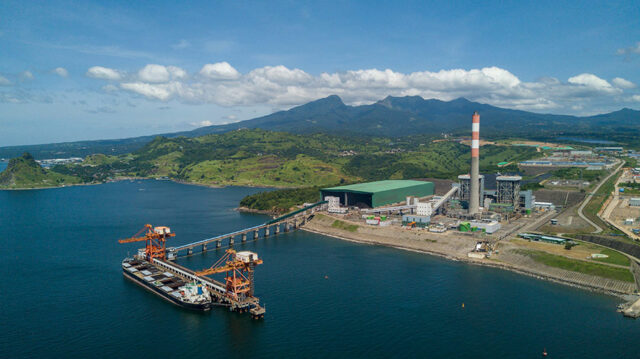
GNPower Mariveles Coal Plant Ltd. Co. (GNPower Mariveles) is the largest greenfield power project in Luzon with a 632-MW coal-fired capacity located in Mariveles, Bataan. — ABOITIZ POWER CORP.

ABOITIZ POWER CORP. (AboitizPower) has secured a deal with an electric cooperative in Negros Occidental that will allow it to provide 30 megawatts (MW) of power through its subsidiaries.

In a statement on Wednesday, AboitizPower said it has entered into a power supply agreement with Northern Negros Electric Cooperative, Inc. (NONECO) following a competitive selection process.

Under the deal, the power producer will provide a diversified mix to NONECO, consisting of a 10-MW mid-merit supply from Aboitiz Solar Power, Inc., and a 20-MW baseload requirement from GNPower Mariveles Energy Center.

“By supplying dependable baseload power and solar energy, we are providing a balanced solution that addresses the dual need for sustainability and reliability,” AboitizPower Wholesale Vice-President for Commercial Planning and Portfolio Management Gerard B. Roxas said.

NONECO serves the municipalities of Victorias (now a city), Manapla, and Cadiz City, as well as the cities of Sagay, Escalante, and San Carlos, and the towns of Toboso, E.B. Magalona, and Calatrava.

“The steady supply at competitive rates ensures continuous support for local growth and enhanced quality of life as our region evolves, fostering a prosperous future for the businesses and communities we serve,” NONECO Board President Nicolas U. Camara said.

AboitizPower is the holding company of the Aboitiz Group’s investments in the country’s power sector.

The company is the leading power producer with a market share of 23.86% in the national grid as of July 2025, according to the Energy Regulatory Commission. — Sheldeen Joy Talavera

Yields on term deposits drop before BSP review

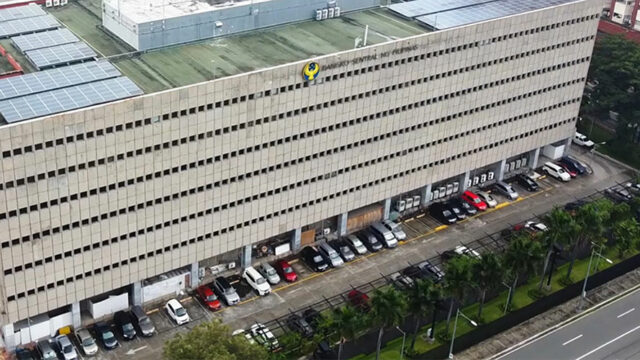
BSP.GOV.PH

THE BANGKO SENTRAL ng Pilipinas’ (BSP) one-week term deposits fetched lower yields on Wednesday as the offer attracted strong demand on expectations of another rate cut this week.

Total bids for the seven-day term deposit facility (TDF) stood at P124.877 billion, exceeding the P90 billion auctioned off by the BSP but below the P132.961 billion in tenders for the P110 billion offered a week ago.

This translated to a bid-to-cover ratio of 1.3875 times, higher than the 1.2087 ratio recorded last week.

As a result, the BSP made a full P90-billion award of its TDF offering.

Accepted rates were from 4.45% to 4.495%, a tad narrower than the 4.45% to 4.505% band seen during the previous auction. This caused the weighted average accepted yield of the one-week deposits to go down by 1.29 basis points (bps) week on week to 4.4794% from 4.4923%.

“The BSP TDF average auction yield continued to slightly ease a day before the widely expected 25-bp rate cut at the next BSP rate-setting meeting on Feb. 19,” Rizal Commercial Banking Corp. Chief Economist Michael L. Ricafort said in a Viber message.

He said the peso’s recent rebound against the US dollar could help bring down import costs, which could keep inflation in check to support further monetary easing by the central bank.

All 16 analysts in a BusinessWorld poll said they expect the Monetary Board to deliver a sixth straight 25-bp reduction at its first meeting for the year on Thursday to bring the policy rate to 4.25% amid weak economic growth and still benign inflation.

The BSP has lowered benchmark borrowing costs by a total of 200 bps since it kicked off its current easing round in August 2024.

BSP Governor Eli M. Remolona, Jr. earlier said another cut is possible at this week’s review but also reiterated that their rate cut cycle is nearing its end as they expect the economy to rebound this year and with inflation back within its annual goal after months of below-target prints.

Philippine gross domestic product growth slowed to a five-year low of 4.4% last year, missing the government’s 5.5%-6.5% target due to the economic fallout from a corruption scandal that stalled both public and private spending.

Headline inflation accelerated to 2% in January from 1.8% in December but slowed from the 2.9% in the same month last year. This was the fastest in 11 months or since 2.1% in February 2025, which was also the last time the consumer price index was within the BSP’s 2%-4% annual target.

Mr. Ricafort added that demand stayed strong as a P232.8-billion seven-year bond maturity on Feb. 14 freed up liquidity that players would likely reinvest in instruments for returns.

The central bank uses the TDF and BSP bills to mop up excess liquidity in the financial system and better guide market rates towards the policy rate.

It last auctioned off both the seven-day and 14-day deposits on Oct. 29. It has not offered 28-day term deposits for over five years to give way to its weekly offerings of securities with the same tenor.

BSP Deputy Governor Zeno Ronald R. Abenoja earlier said that the central bank has reduced its issuance of short-term papers to enhance monetary policy transmission and encourage banks to better manage their liquidity.

Based on the BSP’s latest monetary policy report, its market operations have absorbed P1.5 trillion in liquidity from the market as of mid-November 2025, with 5.4% of this being siphoned off via the term deposit facility. — Katherine K. Chan

Eye on the ball

AI GENERATED IMAGE PROVIDED BY THE AUTHOR

Good.

Well, for now.

Despite simmering tensions in the West Philippine Sea that have been matched since the start of the year by a social media word war soon after new Chinese ambassador, Jing Quan, took over the embassy in Manila in December, there have at least been a few signs that a potential rapprochement is in the works.

On top of the resumption in Cebu near the end of January of an undersecretary-level Philippines-China talks — described only as “candid and in-depth” (diplomatic lingo for “blunt”) — after a year-long pause were a number of subtle public signals. Recent signals include:

• Mr. Jing has been meeting with Philippine Cabinet secretaries overseeing areas of bilateral ties that can move ahead despite maritime tensions, e.g., with Interior and Local Government Secretary Juanito Victor “Jonvic” C. Remulla and Information and Communications Technology Secretary Henry R. Aguda, as well as with local government officials like mayors Ma. Josefina “Joy” Belmonte-Alimurung of Quezon City, Francisco “Isko Moreno” M. Domagoso of Manila, and Sebastian “Baste” Z. Duterte of Davao City.

• First Lady Liza A. Marcos — clearly as a proxy for President Ferdinand “Bongbong” R. Marcos, Jr. — has graced at least three high-profile events involving China’s embassy, led by Mr. Jing;

• Mr. Marcos himself has met Mr. Jing on a few public occasions, the most recent being at the ceremony marking the second phase of the Chinatown Revitalization project, but has otherwise issued conciliatory remarks, e.g., publicly thanking Mr. Jing for looming direct flights between Cebu and Fujian that begin next month (adding to direct flights between Manila and Beijing, Shanghai, and Guangzhou as well as between Cebu and Quanzhou, also in Fujian province);

•Chinese Foreign Minister Wang Yi himself — “wolf warrior” personified in the Chinese Communist Party’s politburo (who I was privileged to interview in Beijing way back in 1999 when he was just an assistant foreign minister) — sent a rare message of condolence to his Philippine counterpart, Foreign Affairs Secretary Ma. Theresa P. Lazaro, on Jan. 31 for lives lost in the sinking of passenger ferry MV Trisha Kerstin 3 off Basilan on Jan. 26;

• The Philippines in mid-January adopted a 14-day visa-free program for Chinese citizens;

Both sides have refrained from taking any negative official action against each other’s senior officials, e.g., declaring Mr. Jing persona non grata or sanctioning Philippine senators deemed having offended Chinese embassy officials;

• Both have publicly agreed on the need for dialogue to defuse the situation;

• And said they are committed (the Philippines, as 2026 chair of the Association of Southeast Asian Nations, or ASEAN) to finalizing a long-delayed code of conduct for the South China Sea within the year (though there is wide divergence on issues such as whether it should be binding, if it will dilute/erode the effects of the 2016 arbitral award at The Hague, etc.).

Significantly, the Philippine Coast Guard has lately been relatively silent on any incident of harassment in the West Philippine Sea (even as the Chinese Coast Guard and maritime militia ships were observed practicing what seemed to be blocking maneuvers in the waters of Chinese-occupied Paracel Islands closest to Vietnam, which also claims those features1).

GOOD COP-BAD COP
Clearly, efforts are under way to soothe long-strained ties.

In his Feb. 14 speech at the embassy’s Chinese New Year reception, Mr. Jing — who, like his predecessor Huang Xilian, has been meeting with Chinese-Filipino businessmen as well — said that Philippine-China relations should “stabilize as soon as possible and continue moving forward,” and that the current troubled “situation must change, and it must change quickly2.

Specifically, he is keen on pushing bilateral relations in areas outside the security and maritime spheres in order to set in motion “positive momentum to drown out the noise…” Citing the crucial role of more people-to-people engagement, he noted that “[a]s people visit each other more, misunderstandings and biases naturally fade away.”

He has noticeably refrained from issuing aggressive/antagonistic remarks against Filipino critics of Beijing’s ways, especially in the West Philippine Sea (preferring, rather, to say: “Let’s sit and talk.”)

The hatchet man’s job, it seems, belongs to Chinese Embassy Spokesperson Ji Lingpeng, who has unfailingly matched each and every criticism — even from senators — with an almost point-for-point counterargument.

The emerging SOP of this duo at the embassy resembles a good cop-bad cop, push-and-pull, carrot-and-stick routine.

TALL ORDER
Still, methinks that changing the ordinary Filipino’s mind as regards China is going to be a tall order, what with more Pinoys — nearly eight out of 10 of late — found distrusting our northern neighbor3 and continued reports on snooping by suspected agents of the Middle Kingdom4 (as well as the retaliatory arrest of Filipinos in China for alleged espionage — what ever happened to those unfortunates, I wonder?)

The US snoops on us too, pro-Beijing (both those genuinely convinced and those paid) Pinoys argue. Right, but then US ships are not harassing our boats within our own exclusive economic zone (EEZ), nor are they the ones preventing our impoverished subsistence fishermen from accessing their traditional fishing grounds.

So, it will take much more than overtures so far being made by both sides to improve bilateral relations palpably.

For good measure, maritime law expert Jay L. Batongbacal, who heads the University of the Philippines Institute of Maritime Affairs and the Law of the Sea, said that Beijing can demonstrate sincerity in talks for a mutually acceptable solution by withdrawing Chinese ships from the West Philippine Sea5 (even, I would think, without outrightly conceding its claim for now) that sometimes venture as close as 20-50 nautical miles (NM) off Luzon’s western coast, though still carefully outside Philippine territorial waters within 12 NM from the shoreline.

Or, at the very least, do not harass our fishermen nor block our efforts to tap oil and gas at Reed Bank (since the much-vaunted new find at the Malampaya field, which now covers 20-25% of Philippine energy needs but is expected to run dry some time in 2027-2029, is estimated to extend our supply from that source by just a few years6).

CLEARER HIERARCHY OF INTERESTS NEEDED…
Which brings us to the question of how exactly we are to consolidate efforts and resources now that we are working to improve relations without compromising national interest.

A patriotic diplomat bared some thoughts on a West Philippine Sea (WPS) agenda in our foreign-national security policy group chat. Some of his points were:

• There has to be a national consensus on goals and direction, and these should be translated into a national strategy that transcends political administrations. This thrust includes strengthening relevant institutions, starting with the Foreign Affairs (DFA) and Defense departments, which “must be insulated from politics.”

• Such consensus should extend to the hierarchy of national interests and priorities (e.g., “Good bilateral relations is good, but at what cost?” Is protecting our sovereign rights in our EEZ of higher or lesser value?)

• This national strategy, in turn, should be translated “into a coherent, comprehensive, principled and purposeful foreign policy.” “To protest is important, but to protest without direction and no framework as to where do we want this to go, is a waste of national protest,” the diplomat said. “We don’t protest for the sake of protesting. It must be part of a larger framework.”

I disagreed with some points, including the diplomat’s view that “there is a need to rethink the policy that the SCS (South China Sea) is not the sum total of our relations with China” since it “sends a wrong message” when “China has always been all out on the SCS.” For me, there is no contradiction between acting resolutely (though in varied ways) in defending our rights in the WPS (which is just part of the SCS) and in pushing other avenues for bilateral cooperation.

But I agree wholeheartedly with our joint defense and coast guard patrols and training “with like-minded countries.” China has proven itself the bully in the WPS, and true to form of any bully, its ships keep a cautious distance whenever ours maneuver with those of allies in those waters. Perhaps, the frequency of such maneuvers can be a bargaining chip in talks with Beijing, but giving in to exclusively bilateral talks in handling our WPS spat plays into the designs of a bully.

We also need to move faster on acquisitions for a credible defense posture. This is why the reported defunding of defense (both military and coast guard) modernization efforts, and fund realignment to dubious uses, in the past two to three years was tantamount to treason in my book. Because, then, Beijing doesn’t need to do anything to keep us weak and defenseless if we shoot ourselves in the foot that way.

There is also the need to rally more Filipinos on the WPS issue. The government needs to find ways to make this an election issue for 2028 by explaining how it impacts households, e.g., in terms of fish and other marine food for the table, and sufficient, affordable electricity now that Malampaya is nearly depleted.

… AND ONE VOICE
One good outcome from this spat is that we are honing our skills in dealing with a superpower. I wish we were on the same level as the likes of Indonesia and Vietnam in this arena, but we are clearly still learning how to balance our foreign policy the way these ASEAN powers do — and the world’s two superpowers respect them for that ability.

But besides all the points we mentioned above is the need to speak with one voice even amid a diversity of views.

Let’s get one issue out of the way at this point: yes, uniformed government personnel are just as entitled as civilians to their respective opinions. But members of the armed services — whether the military, the police, or the coast guard — have less leeway in expressing these views in public, since their roles affect national security. And, like it or not, that uniform — as well as the official position one holds (whether in uniform or in civilian attire), especially if as a spokesman — represent the authority of the government wherever one goes. And even from a practical standpoint, it is unwise for these uniformed personnel to engage in ad hominem stunts of any kind, e.g., presenting caricatures of personalities in public lectures, since that cheapens and lessens the credibility of their arguments. This holds true for active-duty personnel, especially if they are spokespersons.

Then there is a need for more cohesion on the foreign policy front.

To be sure, turfs, rivalry and infighting hound most bureaucracies worldwide, but it is best to minimize them — and, in fact, work on cohesion — especially when faced with a major external threat that is adept at capitalizing on the slightest sign of disunity.

We have witnessed signs of such a turf war at home — from criticism by some officials in some group chats that our decision to notify China of our supply missions to BRP Sierra Madre was tantamount to seeking Beijing’s permission (and, in fact, Chinese officials frame that arrangement that way to their publics), to the warning by former Supreme Court associate justice Antonio T. Carpio that “closed-door diplomacy” espoused by the DFA on WPS matters could erode wide international support gained through the military’s and coast guard’s transparency initiative in immediately baring Chinese aggression in the Philippine EEZ7.

I just hope that the “casual commentators, non-practitioners, and self-styled experts” that the DFA spokesman for maritime affairs cited in his Feb. 13 press conference did not refer to experts in think tanks and the academe. In powers like the United States and China, and even among neighbors like Indonesia, Singapore, Thailand, and Vietnam, think tanks and the academe are considered part of the foreign policy community whose views are carefully considered.

One example: the Armed Forces of the Philippines (AFP) has established a structure for regularly tapping policy inputs from the private sector in the form of the AFP Multi-Sector Governance Council, composed of members of the academe, think tanks, civil society, and business who provide recommendations on governance, transparency, policy implementation and other concerns8.

I know that the DFA does seek private sector inputs from time to time, but perhaps pressing issues such as improving bilateral ties with China warrant a more formal consultative mechanism.

1 https://tinyurl.com/23d7lk8r

2 https://tinyurl.com/2bu8x9kl

3  https://tinyurl.com/24z6z2qp

4 https://tinyurl.com/289mp9ce

5 https://tinyurl.com/236nqagf

6 https://tinyurl.com/27xsz554

  https://tinyurl.com/22w8wpvy

  https://tinyurl.com/2djkkzw9

7 https://tinyurl.com/2yphkpgr

8 https://tinyurl.com/29cv2h8k

https://tinyurl.com/2am7ameel


Wilfredo G. Reyes was editor-in-chief of BusinessWorld from 2020 through 2023.

Food tripping in Iloilo

BATCHOY from Netong

By Brontë H. Lacsamana, Reporter

WHILE ILONGGOS are not the loudest cheerleaders when it comes to their cuisine (unlike, say, folks from Pampanga), once you get them started about what food to eat or places to go to, you quickly realize there’s endless love and plentiful recommendations to tick off from your checklist. It’s a culinary gem in the Western Visayas region, which most Filipinos don’t know was actually a rich source of food in our history.

Because it continues to preserve and support its culinary heritage, composed of indigenous recipes and emboldened by various native ingredients, Iloilo City was the first in the Philippines to be recognized by UNESCO (United Nations Educational, Scientific and Cultural Organization) as a Creative City of Gastronomy.

In January, a press trip around Iloilo was organized by its MICE (Meetings, Incentives, Conferences and Exhibitions) Center, coinciding with the Dinagyang Festival.

“Iloilo is where the past meets the present. That’s what the UNESCO designation celebrates. It celebrates our culinary traditions, our heritage. It’s part of our history,” said Leny Ledesma, Iloilo City executive assistant for special projects, during the media tour.

Unlike the Michelin star, which celebrates a particular chef or kitchen, the Creative City of Gastronomy title celebrates culinary heritage.

SEAFOOD, CHICKEN, PANCIT MOLO
The first stop was Tatoy’s Manokan and Seafoods, known for its inasal chicken and seafood dishes, ranging from sinigang na tanigue (mackerel fish soup) to grilled squid to baked oysters.

For Manileños, diwal (angel clams) would be a novelty, with its elongated shape reminiscent of angel wings. Tatoy’s paella Valenciana is also delicious, while their kilawin offers a refreshing punch to the spread — everything proof of how Iloilo does justice to its abundance of seafood.

Kap Ising’s Pancit Molo is the next must-visit for Ilonggos returning home and visitors to the region.

Eliezer Villanueva, better known as Kap Ising, served us himself. Originally located in the Molo district, the branch we visited was in Ayala Malls Atria, one of eight branches now, though all offer the same menu. We were given bowls of their mouth-watering pancit molo (wonton soup), dinuguan at puto (pork blood stew and rice cake), and empanadas (stuffed pastry).

Mr. Villanueva’s iteration of the restaurant came about in 2006, when he took over from his mother’s restaurant, Nida’s Original Pancit Molo, which dates to the 1980s. The dish itself comes from the Chinese community in Iloilo, largely based in the Molo district, which was absorbed into Ilonggo cuisine.

His mother used to cook, while he sold the dish at city hall and at banks.

“I’ve been a barangay captain for 30 years, kaya tawag sa’kin Kap Ising (so they call me Kap Ising),” he said.

When asked about the integrity of the recipes over time, he pointed out the use of ingredients as a major factor. The dumplings in the pancit molo are filled with ground pork, shrimp, and chicken — none of which are frozen, he specified, because the taste would be different — while the empanadas make use of potatoes and ground tenderloin.

Hindi ako bumibili ng imported. Kailangan bagong katay (I don’t buy imported [ingredients]. It has to be freshly butchered).”

Though our group easily finished our bowls, Kap Ising encouraged refills, which we noticed was normal for diners at other tables, too. The homey feel was there all throughout the meal.

COFFEE AND ICE CREAM
The next stop was Madge Café — again, a branch at Atria — which somehow manages to capture the charm of the original location. First set up as a stall in La Paz Market in 1940, its coffee is still prepared in the old way, manually strained using kettles and collador (cloth socks) as a filter. Mugs engraved with names of regular customers adorn the walls, an homage to how the original market stall was supported by locals.

It was established by Vicente de la Cruz, who named the café after his wife, Magdalena. Now, various second- and third-generation family members operate the different branches. A few days after having a warm and comforting cup of joe at the Atria branch, we trooped over to the original La Paz Public Market outlet for more, this one run by grandson Peter “Nonoy” de la Cruz.

“Madge is a legacy passed down in our family,” he told BusinessWorld. “The coffee really comes from Iloilo. It’s homegrown. We do the roasting with no preservatives added. Many people don’t know this, but we’re really producers of coffee.”

Another showcase of Iloilo’s homegrown ingredients is the Happy Endings Creamery and Food Lab, which is best known for its iconic spot in front of Molo Mansion. There, we fell in love with its local flavors — batwan (green sour fruit) cheesecake and baye-baye (roasted glutinous rice and coconut).

Served alongside the usual ice cream flavors like chocolate, salted caramel, and pistachio, the Iloilo ingredients highlighted give a sweet, unique spin on the flavors found in the region.

FROM PLAZAS TO THE SEASIDE
A memorable stop was Agatona 1927 Museum Café, which is housed in the Jalandoni-Montinola ancestral home overlooking Jaro Plaza. Its heirloom recipes are sumptuous, harkening to the originals yet more refined: pinitaw na manok (chicken adobo flakes), their take on dinuguan, and even biscocho (toasted bread) for snacks.

Their tsokolate-eh (hot chocolate), served with ibos (the Ilonggo version of suman or rice cake), is also a favorite, best enjoyed looking out the window at the landmarks of central Jaro, from the plaza to the cathedral.

Ms. Ledesma, representing Iloilo’s MICE Center, told BusinessWorld that the proposal they submitted to UNESCO for the City of Gastronomy designation awarded in 2023, was one “based on abundance.”

“We’re surrounded by rivers, seas, farms, and mountains in the provinces, so there’s ample food,” she explained. “It’s historical. Miguel Lopez de Legazpi, when he was in Cebu, needed to feed his crew. He searched and landed on this island, in Panay. When he landed, the first thing he said was, ‘pan ay!,’ in Spanish, ‘ay pan!’ which literally means ‘there’s bread!’ There’s food. He had found rice and vegetables.”

The exact place he landed at was Oton, 11 kilometers west of Iloilo City. Next to it is Arevalo, the city’s westernmost district, which is home to many seaside restaurants that Ilonggos frequent for fresh seafood meals with family.

We visited one such restaurant, Breakthrough, overlooking a tranquil beach and the sea that reaches out towards Guimaras (which is famed for its mangoes). It’s no wonder that the ripe mango and green mango shakes here were divine.

Not to be missed, however, is the food itself, ranging from local lechon manok to shellfish such as crayfish and scallops, as well as the iconic diwal. The grilled fish items on the menu are best paired with vegetable dishes like chopsuey.

“The abundance was clear during the pandemic. We weren’t scared because we had backyard farms. Out of 180 barangays [in Iloilo City], 80 barangays had farms to feed their constituents there, boasting the lowest or even zero malnutrition of children,” said Ms. Ledesma. “Our story isn’t just about establishments. It starts from produce, from farmers and markets.”

The UNESCO designation also helped foster pride among Ilonggos, encouraging them to share their heirloom recipes with more people. “Unless you know the specific families and get to eat in their houses, you wouldn’t get to taste all this food. Now, people are sharing it and spreading it. If we lose these traditional recipes, we lose our cultural identity,” she said.

SIOPAO, BATCHOY, FUSION
And in the middle of watching the Dinagyang festivities, Roberto’s Queen Siopao kept us full and energized. It’s an Ilonggo favorite, the siopao made of Chinese sausage, adobo flakes, and bits of boiled egg.

One of our final stops was Netong’s in La Paz, where we tried their batchoy (a noodle soup with pork offal, pork cracklings, and a variety of other parts of pork). It’s way better than the instant noodle counterpart, which was the basis of comparison for most of the media in the tour group. The savory goodness of the broth, only possible by mixing the ingredients of batchoy and eating it immediately while still hot, is to die for.

An unexpected discovery, which we found on our last night in the city, was Forum Rooftop Dining and Lounge, located in The Grid Building in the Mandurriao district. Newly opened, it offers elevated fusion cuisine including salads, pastas, and luxuriously prepared comfort food like lechon, pork knuckles, and pulled duck. It also has cocktails perfect for a classy night out observing the Iloilo skyline.

Amid the sleek yet comfortable interiors of dark stone walls, marble-topped tables, and chinaware custom-made by Lanelle Abueva, BusinessWorld spoke with Forum chef Miner Del Mundo.

“I’ve been in Iloilo for 20 years. I fell in love with the place, and it has become my second home,” he said. Hailing from Silang, Cavite, his history as a chef spans work abroad as well as for world-class hotels. Ms. Ledesma playfully calls him “ilonggated.”

When asked to describe what made Iloilo his second home, he joked, “Wala kasi traffic dito (There is no traffic here),” then added, “Restaurants here used to serve softdrinks in bottles with colorful straws. There were only two Italian restaurants back then. The dining scene has improved since, but I was challenged.”

In addition to Forum, Mr. Del Mundo also runs popular restaurants in the city like Azul and Amarillo. In a nutshell, he described Iloilo as “very pure, with a lot of raw materials and ingredients.”

Over the course of a few days, whether it’s Dinagyang season or not, any visitor would find that to be true — UNESCO designation or not.

ADVERTISEMENT
ADVERTISEMENT