Home Blog Page 272

SM Offices investing P1B in Cebu expansion

NU Cebu — SM INVESTMENTS CORPORATION

SM OFFICES, the commercial property arm of SM Prime Holdings, Inc., plans to add more than 60,000 square meters (sq.m.) of new leasable space worth about P1 billion at SM City Cebu Towers by the fourth quarter of 2026.

“Cebu is a major economic hub because of its strong infrastructure, exceptional talent pool, and complete business ecosystem,” Vice-President and Head of SM Offices Alexis L. Ortiga said in a statement on Thursday.

“SM City Cebu Towers is meant to support this growth by providing well-managed high-quality and well-connected office spaces that meet the evolving needs of businesses expanding in the region,” he added.

According to Leechiu Property Consultants, Cebu recorded office space take-up of 150,000 sq.m., or 55% of provincial demand, in 2025, representing a 33% increase from the previous year.

SM City Cebu Towers is located on A. Soriano Avenue in the North Reclamation Area. The development attracts traditional corporations and business process outsourcing (BPO) firms seeking in-city alternatives to higher costs and traffic congestion in Metro Manila.

The project forms part of the redeveloped SM City Cebu North Wing complex, which integrates retail spaces and a National University (NU) campus.

The site provides access to the South Road Properties, Mactan-Cebu International Airport, the port area, and government centers. Its proximity to NU allows office tenants to build recruitment and training linkages with students, potentially reducing hiring costs and lead times.

NU Cebu opened on June 14 last year as the university’s seventh provincial campus, staffed entirely by local hires to support education and employment in the region.

“Over the medium term, we believe that Cebu remains a very strong growth market for us, but any expansion will be measured in time to demand so that we sustain the growth and protect our long-term value,” Mr. Ortiga said.

SM Prime develops mixed-use projects nationwide, integrating offices, residences, retail, education, meetings, incentives, conferences and exhibitions (MICE), and leisure components to support tenant efficiency and employee retention through shared amenities.

At the local bourse on Thursday, shares in SM Prime fell by 1.41% to close at P21 apiece. — Alexandria Grace C. Magno

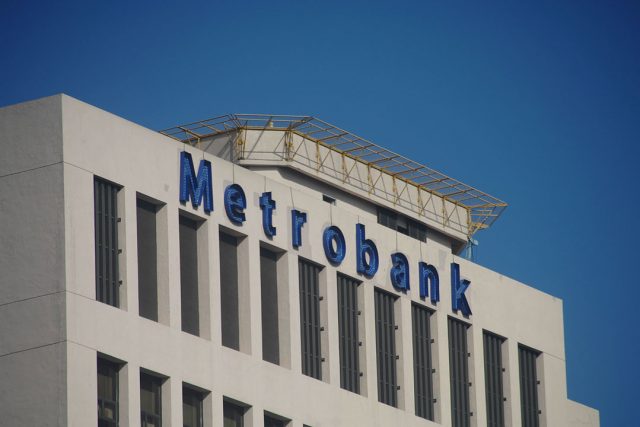
Metrobank’s 2025 net income hits record high

BW FILE PHOTO

METROPOLITAN BANK & Trust Co. (Metrobank) in 2025 posted an all-time high net income for the fourth consecutive year, backed by steady loan growth and strong trading gains.

The bank booked a P49.7-billion net profit in 2025, it said in a disclosure to the stock exchange on Thursday, marking the fourth year in a row that it saw record earnings.

Its performance was supported by “modest asset expansion, resilient margins, healthy trading income and contained cost growth,” it said.

Before provisions, its operating profit grew by 17.1% year on year to P78.4 billion.

“This full-year performance reflects the trust of our clients, the dedication of our people, and our commitment to disciplined growth. We continue to strengthen our balance sheet while expanding support to businesses and consumers who drive the Philippine economy. Our focus remains clear, and that is, to grow alongside our stakeholders and contribute to the country’s sustained progress,” Metrobank President Fabian S. Dee said.

The bank’s net interest income climbed by 9.2% to P124.6 billion last year.

This was backed by an 8.8% growth in its gross loans to P2.04 trillion. Metrobank said its corporate and commercial loan book expanded by 7.4%, in line with economic growth trends. Meanwhile, its consumer portfolio grew by 13.9%.

Asset quality was “intact” as its nonperforming loan (NPL) ratio was at 1.7% and its NPL cover or buffers against potential credit risks stood at 140.8%.

On the other hand, its non-interest income increased by 11.6% year on year to P33.5 billion in 2025.

This was mainly driven by a 47.2% jump in its trading and foreign exchange income to P8.2 billion amid “strong customer flows and favorable trading opportunities,” it said.

Fee and trust income also rose by 6% to P19.2 billion.

Meanwhile, Metrobank’s operating costs went up by 3.3% to P79.7 billion.

As a result, cost-to-income ratio improved to 50.7% in 2025 from 53.8% in the year prior.

Total deposits went up to P2.7 trillion at end-2025, with 59.2% of the total being low-cost current and savings accounts.

Its loan-to-deposit ratio was at 74.9%, which it said shows that it is capable of meeting its customers’ funding needs.

Metrobank’s consolidated assets stood at P3.88 trillion at end-2025, expanding by 10.2% year on year.

Its total equity increased by 9.4% to P421.7 billion.

Capital adequacy ratio was at 16.8% and common equity Tier 1 ratio stood at 16.1%, well above the central bank’s required minimum levels. Its liquidity coverage ratio was at 181.7%.

“The bank believes that its robust capital position and balance sheet strength will provide ample support as it navigates through uncertain times,” it said.

Metrobank shares closed at P73.30 apiece on Thursday, down by 85 centavos or 1.15% from the previous session. — A.M.C. Sy

Winter in Seoul

GYEONGBOKGUNG PALACE

Text and photos by Brontë H. Lacsamana, Reporter

ON A TRIP this writer’s family took to Seoul early in February, the Korean capital was beset by a period of intense cold thanks to the arctic air from Siberia sweeping into the peninsula.

The moment we stepped out of our hotel in Dongdaemun district’s Janghanpyeong — a quaint area characterized by used car dealerships and mechanic shops, like Banawe in Quezon City — we were greeted by the biting cold. Everyone we saw was in puffer jackets, be it at the nearby convenience stores where we tapped up our T-money cards, the buses and subways which we took to go everywhere, or the touristy places themselves where we shopped, ate, and took pictures.

Apparently, there was heavy snow before our arrival, with the last week of January considered the coldest days of winter. By the time we were exploring Seoul, only the aftermath was left, patches of ice morphed into dirty sludge marking the edges of sidewalks.

SHOPPING FRENZY
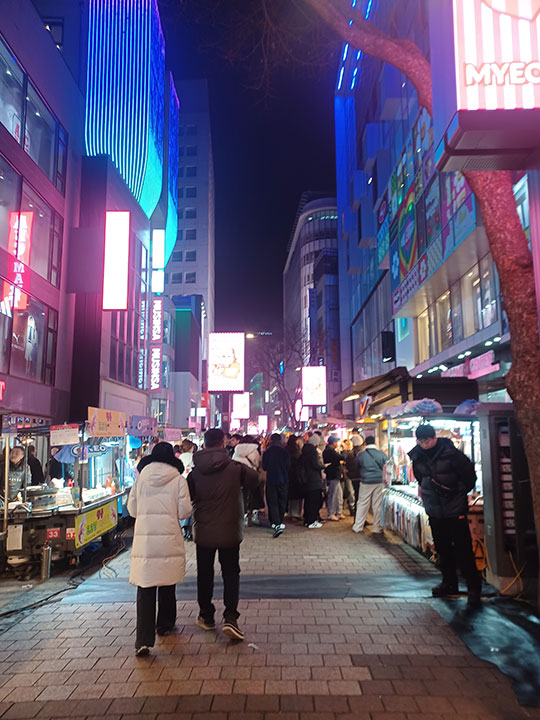
The shopping district of Myeongdong was alive as ever despite the cold snap. Located in the center of Seoul, it is the busiest place in the city. It is home to street food, nightlife, and fashion brands, both Korean and international. The likes of Adidas, Nike, H&M, Converse, and North Face (which was probably making a killing with its puffer jackets) are there. Nearby, the flagship branches of key department stores like Lotte and Shinsegae serve as large landmarks for those walking the streets.

One store seemed to rule the entire area, though. The grip of Olive Young, Korea’s leading health and beauty store, on the shoppers of Myeongdong is evident in the sheer number of branches found there — eight. Yes, you will come across eight Olive Young stores if you decide to walk between Myeongdong Station and Euljiro il-ga Station. K-beauty has found a huge market globally, after all, and that is where most people seem to go for skincare and makeup.

Shopping amid the crowds and city lights of Myeongdong was made fun by the street food stalls lining the heart of the bustling shopping district. They offered an array of tasty dishes, like tteokbokki (spicy rice cakes), meat skewers, grilled seafood, and even fruit skewers coated in a sugary shell.

Dialing in on the typically touristy parts of our itinerary, we trudged to a different area for another bout of shopping a few days later. Namdaemun Market, the largest traditional market in Korea, opened in 1964, and it is where goods are sold at affordable prices, much like a cleaner and safer Divisoria. There are thousands of stalls where one can buy clothes, snacks, and little knick-knacks — a perfect place to get pasalubong to bring home.

During our visit on Feb. 8, the bitter cold seemed to be at its height as we wandered from one stall to another, seeking refuge in the enclosed ones with heaters. At one point, a kindly shopkeeper ushered us into their store for some tea. (Of course, we were obligated to purchase packs of kimchi-flavored seaweed out of gratitude — it turns out winter winds are an ally for market vendors to lure tourists in to take a look at their goods.)

As someone who is easily shopped out, what made the area fun was, again, the food. Alleys and storefronts in the market offer fare like kalguksu (knife-cut noodles), mandu (dumplings), and kimbap (rice rolls). A memorable sweet snack, simple as it was, was hotteok (pancake), which can be enjoyed as is, filled with vegetables, noodles, or red beans, or even coated with cheese powder. Whichever way you order it, it provides instant relief from all the walking.

HISTORY AND CULTURE
We were a group of mainly older people, so we tried to keep the long walks in the cold to a minimum, which meant fewer outdoor visits and more toasty indoor sights, like museums.

Seoul has five major palaces from the Joseon Dynasty, the biggest being Gyeongbokgung Palace, and that’s where we went. To get there, we alighted from the bus at Gwanghwamun Square and opted to walk through the public square fronting the palace in order to see the tremendous view of the structure with the Bugaksan Mountain in the background.

At the center of the plaza stand statues of King Sejong (the inventor of hangeul, the Korean alphabet) and Admiral Yi Sun-shin (who prevailed against the Japanese navy). Aside from plaques detailing their roles in history, an elevator in the square leads to an underground museum that elaborates on their lives, for those seeking more knowledge on these major figures — or for those seeking a heated enclosed space to take shelter from the bitter cold.

Built in 1395, Gyeongbokgung Palace is a marvel to look at from up close and from the inside, the roof forming gentle curved lines and the walls and ceilings of natural wood painted with colorful patterns.

But its charm quickly faded in the freezing air. During warmer seasons, it must be a pleasant walk around the grounds and a fun chance to take pictures in hanbok (Korean traditional wear), but for our visit, it was a quick stop before we left. A lot of tourists were still there despite the weather, as well as some locals, a few of whom were filming a TikTok dance video by the main gate.

A highlight within the complex is the National Folk Museum of Korea, which is accessible both by exiting the palace grounds and from a nearby bus stop. A free attraction we just had to have a glimpse of was the Street of Memories, an outdoor recreation of a 1980s Seoul neighborhood, complete with diners, barber shops, grocers, and houses. K-drama enthusiasts would know this as the best way to relive the series Reply 1988, which follows a group of childhood friends and their coming-of-age in the 1980s.

A few steps from that open-air exhibit is the museum itself, a large structure that houses exhibits on domestic and agricultural artifacts and cultural beliefs. A memorable part was being serenaded in the lobby by a madugum (a Mongolian string instrument) player while a pair of dancers performed a tango in the hall.

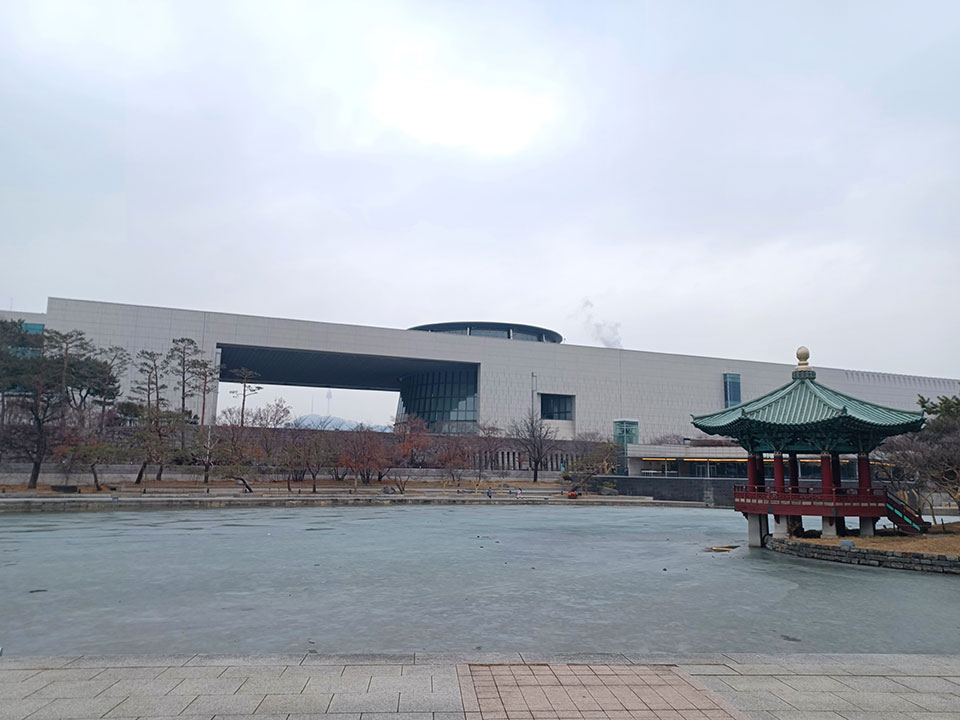
We went to another museum a few days later: the National Museum of Korea, which is accessible from the Ichon subway station. Its grounds are spacious and elegantly designed, with a gazebo overlooking a pond, which was still frozen over.

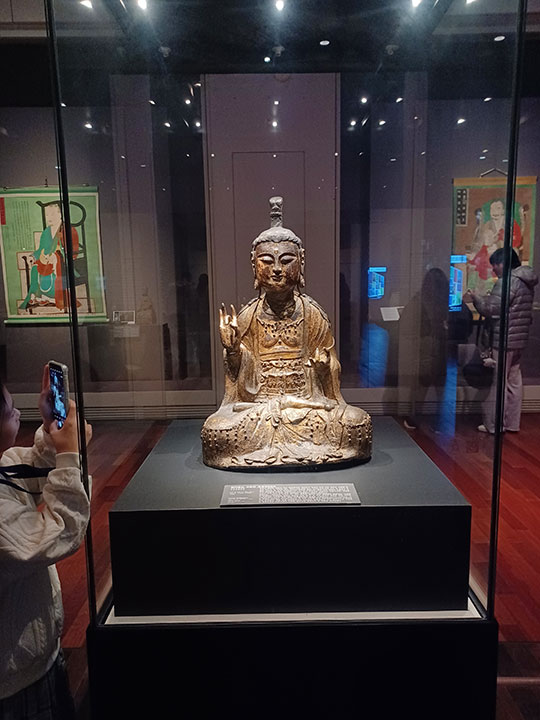
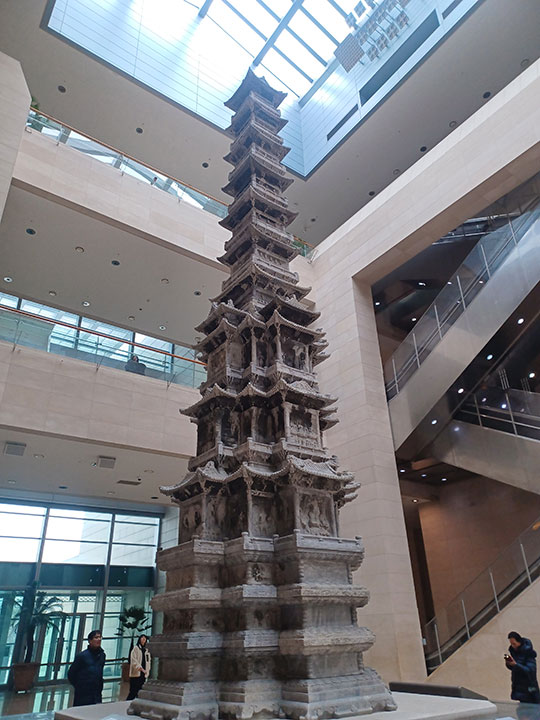
The walk up to the museum showcased its modern architecture, with a city view of the rest of Seoul (including its highest point, N Seoul Tower) in the background. Inside, it is divided into Prehistory, Ancient History, Medieval, and Early Modern History, with another building focusing on the 1900s onwards still under development. From ornate maps, paintings, and Buddha statues to massive thrones and wooden pagodas, there’s a lot to see here, and gives one a chance to appreciate just how well Koreans preserve pieces of their history.

DIFFERENT PERSPECTIVES
Speaking of N Seoul Tower, we visited it as well to check out what Seoul’s highest point has to offer. Located in Namsan Mountain Park, physically active tourists can hike up the peak through different routes, though most tourists took the cable car for a short and leisurely climb (as we did). The tower does not just have a view deck, but a few floors of cafés, restaurants, and convenience stores. Going up to the observatory on the highest level, which offers 360-degree views of the city, costs more.

The view deck itself already provided stunning city views, though, so we settled for that and took as many pictures as we could in the cold before retreating into one of the heated cafes. For couples who want to do something cheesy, there’s an open-air section that displays “love locks,” a trend popularized in Paris, which allows couples to attach symbols of their love to the fences. Otherwise, the top of N Seoul Tower is a spacious, relaxing place to lounge and see the city from a different perspective.

While our preference when it comes to traveling is exploring a place on foot to see what the local neighborhoods are like, the biting cold, exacerbated by strong winds, kept us from doing so. The only time we sort of wandered the streets leisurely (without rushing through a touristy place to take quick pictures and get indoors) was on our last day, when we browsed through the motorcycle shops along Toegyero starting from Chungmuro Station.

One of our group was looking for bike accessories, and our research brought us to this stretch that was once renowned as a motorcycle street, filled with dealers, used bikes, and specialty stores. Now, likely due to the pandemic and the rise of online shopping, it seems to have quieted down and become gentrified, and is now home to a variety of other establishments.

For a newbie to winter, the unforgettable part was how mild the cold was on this particular day. The walk turned magical when a gentle snowfall began, with snowflakes appearing like droplets from the sky and specks of white dotting the hats and coats of people passing by.

Shortly after we arrived at a hidden gem — the reason we go on these spontaneous walks in the first place! — a quaint café and vintage shop called Street275. Its exterior is fronted by 1990s American diner aesthetics and a stylish black Vespa (which we later learned belonged to the owner, whose English name is Jacob). Inside is a cozy café set-up, with comfortable chairs and a counter manned by Jacob himself. The menu has coffee, alcohol, and desserts, which we enjoyed after the pleasant walk, while next door is the adjoining shop filled with vintage clothes, bags, accessories, and shoes. Aside from being able to haggle for good prices, the owner and waiters were lovely to chat with.

Overall, we don’t recommend visiting Seoul in the harsh winter cold (avoid late January to early February!), especially if you aim to explore and walk around. It has none of the winter wonderland snowscapes but all of the biting winds, which will simply wear you down and prevent you from wandering, even if you are snug and warm under layers of clothing. Taking pictures? Forget it, you’ll want your hands safe in your gloves and pockets rather than going numb from handling your phone or camera in the open air. Joint pains will likely emerge. Approaching mid-February, though, the temperature eased from the usual -7°C to a more bearable 4°C or 5°C, and, most importantly, the arctic wind receded, replaced by gentle, drizzle-like snow that would last only minutes.

What we learned is that you have to discover where to take refuge — like the beef bone broth restaurant next to our hotel in Janghanpyeong, the handmade dumpling soup restaurant towards the back of the Samsung headquarters in the city center, or the spicy kimbap store just steps away from Sindang Station. Travel is all about finding the little gems here and there, and if you sometimes stray from the usual touristy path, Seoul happens to be full of them.


Seen at the DTI fair: Chocolate. Shell jewelry. Venus flytraps?!?!

Everjade Ceramic Arts — JOSEPH L. GARCIA

THERE are over 300 stalls at this edition of the DTI (Department of Trade and Industry) Bagong Pilipinas National Trade Fair, with the vendors coming from all over the Philippines, occupying Megatrade Halls 1 through 3 at SM Megamall. The fair is still ongoing, running from Feb. 18 to 22.

BusinessWorld took a leisurely stroll around the fair, before the barrage of VIPs and shoppers (it is open and free to the public). We were surprised to find heads of some of the country’s artisanal fairs also walking around, perhaps to scout new talent.

To the right of the stage is a whole section devoted to piña (barongs and Filipiniana dresses and such), but coming from different regions, so one can make comparisons between the work of each. There are wooden goods inlaid with shell from Lanao del Sur.

There’s a little bit of chaos when it comes to the grouping this year (we were expecting them to be arranged by region) but there is some order in some sections when it comes to similar product types. For example, there’s a whole alley devoted to footwear from Liliw. (We liked the espadrilles from Aishe fashion, which have been seen on some beauty queens, embroidered with images of ambulant vendors. Fancy wearing taho or balut vendors on your tootsies?) Their Laguna neighbors occupy stalls in the same section, but then, so do similar crafts from other towns and cities. Just behind them though are shoes from the country’s shoe capital Marikina (there are several stalls of loafers).

There are several booths featuring coconut-based products, spilling over from the Philippine Sustainability Pavilion. That pavilion features furniture, textiles, and other products made with coconut-based materials, natural fibers, and native grasses.

Nearby are coconut and chocolate products (not just from storied Davao anymore, but from as far as Benguet). Strangely enough, the section for potted plants can also be found here, featuring succulents and such, but also one stall with carnivorous plants (such as Pitcher Plants and Venus Flytraps).

Product prices can range from P50 for a small pouch to the high thousands for jewelry from Meycauayan, Bulacan. Last year, the 10 DTI fairs held brought in P665.13 million in cash sales, orders, and “ongoing negotiations,” according to a press release. The DTI plans to hold 13 trade shows for this year — thus ensuring that there will always be a chance to score a find, made by fellow Filipinos. — JL Garcia

4 energy players keen on Agus-Pulangi hydro rehabilitation

PSALM.GOV.PH

By Sheldeen Joy Talavera, Reporter

FOUR ENERGY players have expressed interest in rehabilitating the Agus-Pulangi hydroelectric power complex in Mindanao, according to state-run Power Sector Assets and Liabilities Management Corp. (PSALM).

“There were three proposals, and I was made aware there is a fourth pending PPP (Public-Private Partnership) Center evaluation,” PSALM President and Chief Executive Officer Dennis Edward A. Dela Serna told BusinessWorld on Wednesday.

He said the company is currently evaluating the unsolicited proposals endorsed by the PPP Center.

While Mr. Dela Serna did not name the companies, he previously said some are established energy players.

Following the successful turnover of the Caliraya-Botocan-Kalayaan (CBK) hydroelectric power plants in Laguna earlier this month, the government is now setting its sights on the rehabilitation of the Agus-Pulangi complex.

The facility consists of seven run-of-river hydro plants with a combined installed capacity of about 1,000 megawatts (MW), though only up to 700 MW are operational due to aging equipment.

To push through with the rehabilitation, the state-run firm is considering a concession-type agreement, with a timeframe aligned with the PPP Code.

The concession is targeted to be implemented in 2027, after which the government may opt to privatize the asset outright. The project could generate as much as P90 billion in revenue once completed, Mr. Dela Serna said.

The government recently turned over the CBK hydroelectric power plant complex to a consortium led by the Aboitiz group after offering a P36.27-billion bid.

Created under Republic Act No. 9136, or the Electric Power Industry Reform Act of 2001, PSALM is mandated to privatize government-owned power assets and manage the proceeds to settle the financial obligations of the National Power Corp.

The state-run company earlier reported that it had wiped out P13.4 billion in financial obligations last year, bringing its remaining debt to P260.6 billion.

PSALM has crafted a 10-year plan to liquidate remaining liabilities through several measures.

EastWest Bank profit climbs 21% to P9.2B

EASTWESTBANKER.COM

EAST WEST BANKING Corp.’s (EastWest Bank) net income jumped by 21% to P9.2 billion last year on strong growth in its revenues and fee-based income.

Its full-year financial performance translated to a return on equity of 11.9%, it said in a disclosure to the stock exchange on Thursday.

The bank’s financial statement was unavailable as of press time.

“Our 2025 performance demonstrates the bank’s ability to grow efficiently amidst a competitive environment and evolving market conditions,” EastWest Bank President Jackie S. Fernandez said. “We strengthened revenue generation across businesses, supported by resilient asset growth and improved fee momentum.”

The bank’s revenues rose by 20% year on year to P51 billion in 2025, it said.

Its net interest income grew to P40.6 billion, backed by a 13% expansion in interest-earning assets.

Meanwhile, non-interest revenues were mainly supported by a 21% increase in its fee income to P7.1 billion.

EastWest Bank’s operating expenses went up by 8% to P25.4 billion last year, which it said was due mainly to volume-related costs and “sustained investments in people and technology — investments that are now translating into productivity gains.”

“The bank also continued to advance digital and service initiatives that strengthen customer experience and operational scalability, anchored on the EasyWay ecosystem and core modernization priorities,” it said.

Its pre-provision operating profit rose by 33% to P25.5 billion.

Cost-to-income ratio improved to 49.7% last year from 55.2% in 2024.

EastWest Bank set aside provisions amounting to P14.2 billion last year. Its nonperforming loan coverage ratio was at 86%.

“Our prudent provisioning strategy ensures the bank remains well-positioned against macroeconomic uncertainties. Even with these added buffers, we delivered solid profitability and improved returns,” EastWest Bank Chief Executive Officer Jerry G. Ngo said.

Total deposits increased by 13% to P437.8 billion in 2025, 82% of which were low-cost current account, savings account or CASA deposits, which grew by 14% year on year.

“Priority Banking momentum also strengthened, with assets under management increasing 40% to surpass P100 billion,” the bank said.

EastWest Bank’s assets stood at P577.1 billion at end-2025, expanding by 10% year on year.

Its capital adequacy ratio was at 13.5% and common equity Tier 1 ratio was at 12.6%, both well above regulatory thresholds.

“The bank noted its core businesses remain resilient, supported by steady loan demand and improving asset quality trends,” it said.

“We enter 2026 with strong momentum. Our continued investments in digital transformation, customer experience, and risk management will reinforce EastWest’s competitiveness and position us for sustained growth this year,” Mr. Ngo added.

EastWest Bank’s shares climbed by 18 centavos or 1.44% to finish at P12.72 each on Thursday. — Aaron Michael C. Sy

The limits and responsibilities of flexible inflation targeting

PHILIPPINE STAR/MIGUEL DE GUZMAN

Last Monday, this paper bannered the now-familiar refrain: sluggish growth and benign inflation give the Bangko Sentral ng Pilipinas (BSP) ample room to cut rates again.

All 16 analysts surveyed expect another 25-basis-point reduction, bringing the policy rate to 4.25%, the lowest in more than three years. The argument appears neat and compelling. Growth has disappointed. GDP averaged only 3.9% and 3% in the third and fourth quarters. Full-year 2025 came in at a modest 4.4%, well below the downgraded 5.5% to 6.5% target and slightly under the BSP’s own 4.6% projection.

Inflation, meanwhile, has remained within the 2% to 4% target band.

So why not cut again?

Because monetary policy is not a reflex. It is a judgment call. And judgment requires asking a harder question:

Has further easing become less effective — and potentially more risky?

THE GROWTH PROBLEM IS NOT PURELY MONETARY
Since the BSP began its easing cycle, policy rates have been reduced by 200 basis points. That is not trivial. It is a substantial accommodation.

Yet growth continued to decelerate.

Private household consumption, nearly 73% of GDP, slowed from 4.9% to 4.6%, even as inflation fell sharply from 3.2% to 1.7%. This should have unleashed purchasing power. Instead, spending remained cautious.

Why?

Because inflation moderating does not mean prices returned to old levels. The absolute price base remains elevated. Households are not reacting to inflation rates; they are reacting to price levels. Food, transport, utilities — these remain expensive relative to income growth.

This is not a monetary malfunction. It is structural.

Logistics inefficiencies. Trade frictions. Supply chain rigidities. Agricultural vulnerabilities. These are beyond the reach of interest rate policy.

Even remittances, over $32 billion in the first 11 months of 2025, did not spark a spending surge. That suggests precautionary behavior and diminished confidence.

Gross capital formation sends an even stronger signal. Investment growth plunged from 7.7% to 2.1%. That is not a rate problem alone. That is a confidence problem.

Liquidity cannot substitute for trust. Interest rate cuts cannot compensate for governance uncertainty. Monetary policy cannot build roads, reform procurement, or restore institutional credibility.

At some point, additional easing yields diminishing returns.

We may already be there.

LIQUIDITY IS ABUNDANT BUT TRANSMISSION IS WEAK
The banking system is unmistakably flush with liquidity. Reserve requirement reductions and policy rate cuts have expanded monetary space. The loans-to-deposit ratio (LDR) improved from 75.2% to 78.2%.

But this improvement is modest relative to the scale of easing.

More troubling is that real lending rates actually rose.

High-end lending rates increased from 9.9% to 10.66%. On the other hand, low-end rates climbed from 4.63% to 5.62%. Meanwhile, average bank lending rates rose from 5.09% in 2024 to 6.22% in the first 11 months of 2025.

In other words, policy easing did not translate into cheaper effective borrowing costs.

Why?

Because banks remain cautious.

Based on BSP senior loan officers survey for the 4th quarter 2025, credit standards, while officially “unchanged” for many, show net tightening under diffusion analysis. Collateral requirements could have remained strict. Loan sizes more conservative. Tenors could be shorter.

This pro-cyclical tightening during down periods weakens monetary transmission.

If liquidity does not translate into credit expansion, the marginal impact of further rate cuts could actually shrink.

And when effectiveness shrinks, risks loom larger.

THE INFLATION RISKS ARE NOT HYPOTHETICAL, THEY ARE BUILDING
The dominant narrative says inflation is benign.

But this may be backward-looking comfort.

The risks ahead are mounting — and they are largely supply-side and cost-push in nature, precisely the type that can quickly unanchor expectations if credibility falters.

For instance, utilities and administered prices are bound to increase. Tollway charges may increase anytime. Power distributors have signaled rate adjustments. Water concessionaires may implement FX-linked and periodic adjustments. These are not marginal items. They feed into transport, logistics, food distribution, and household utility costs. Their second-round effects are powerful.

For another, rice policy is being reversed. Any tightening of rice import policies or tariff reversion risks immediate price pressure. Rice carries heavy weight in the consumer basket. Even modest increases have outsized inflation expectation effects.

The exchange rate is also vulnerable. The recent stabilization of the peso was not purely structural. It was partly driven by expectations that the easing cycle is nearing its end. If the BSP continues cutting while the US Federal Reserve remains cautious, the interest differential narrows. Capital flows respond quickly to that differential. A weaker peso feeds directly into higher fuel prices, imported food inflation, higher cost of imported capital goods and production inputs.

Imported inflation is not theoretical. It is immediate.

And once the exchange rate narrative shifts from “stable” to “weakening,” expectations could adjust rapidly.

We also have to reckon with positive base effects. The whole year 2025 is characterized by extremely low inflation. The base effects would be positive in 2026. Moreover, December 2025 inflation was elevated. That could help push the forecast for early 2026. Combined with cost pressures, the probability of breaching the upper end of the 2% to 4% target band increases.

The BSP’s December forecast of 3.2% inflation for 2026 may now prove optimistic.

Finally, inflation expectations are poised to be unhinged. Flexible inflation targeting works because expectations remain anchored. But expectations are forward-looking. If households see rising tolls, higher electricity bills, water rate adjustments, rice price pressures, and a weakening peso, they do not parse output gaps or core inflation models.

Households adjust expectations upward. Once expectations drift, restoring credibility requires sharper tightening later. Prevention is cheaper than correction.

THE COST OF MISCALIBRATION
Flexible inflation targeting (FIT) involves calibrated response.

The BSP has done commendable work since 2002 anchoring price stability while acknowledging growth and financial stability concerns.

But flexibility does not mean asymmetry.

If policy leans too heavily toward growth support when transmission is impaired and inflation risks are rising, credibility can erode gradually, then suddenly.

A central bank’s greatest asset is not liquidity. It is credibility. And credibility is cumulative, but fragile.

The output gap may still be negative. But if additional easing does little to close it while materially raising inflation and currency risks, the trade-off becomes unfavorable.

MONETARY POLICY CANNOT CARRY THE ECONOMY ALONE
There is a deeper institutional question here.

If structural and governance bottlenecks are restraining investment and productivity, should monetary policy continue compensating even if there is nominal scope?

Doing so risks asset mispricing, peso instability, imported inflation, and future abrupt tightening cycles. We have to recall that monetary policy can buy time. But it cannot manufacture confidence.

If fiscal reforms, supply-side improvements, and institutional clarity lag, monetary accommodation becomes a blunt instrument applied to a structural wound.

Eventually, the wound demands surgery, not anesthesia.

THE STRATEGIC PAUSE IS NOT WEAKNESS, IT IS STRENGTH
A pause at this stage would not signal policy exhaustion.

It would signal recognition of diminishing marginal returns, awareness of rising inflation asymmetry, commitment to credibility preservation, and respect for exchange rate stability.

The BSP can always ease again if data deteriorate meaningfully.

But reversing an inflation resurgence or stabilizing a disorderly peso is far more costly. Sometimes the most forceful move a central bank can make is restraint. Flexible inflation targeting demands agility, not momentum for its own sake.

The BSP has shown flexibility before: easing when necessary, tightening when required, stabilizing when markets trembled.

The moment now calls not for reflex, but for resolve.

Growth is important. But price stability and the credibility that underpins it is indispensable.

And once credibility slips, no number of basis points can easily restore it.


Diwa C. Guinigundo is the former deputy governor for the Monetary and Economics Sector, the Bangko Sentral ng Pilipinas (BSP). He served the BSP for 41 years. In 2001-2003, he was alternate executive director at the International Monetary Fund in Washington, DC. He is the senior pastor of the Fullness of Christ International Ministries in Mandaluyong.

OceanaGold Philippines profit more than doubles on higher gold prices

OCEANAGOLD.COM

OCEANAGOLD (Philippines), Inc. reported a more than twofold increase in net income to $76.5 million for 2025 from $30.3 million a year earlier, driven by higher revenues and strong gold prices.

In a statement on Thursday, the listed miner said revenues rose 27.97% to $438.8 million from $342.9 million previously, supported by record average realized gold prices of $3,494 per ounce.

Gold production fell 6.49% to 90,700 ounces from 97,000 ounces a year earlier, while copper output increased 8.13% to 13,300 metric tons (MT) from 12,300 MT.

Costs were slightly higher during the period. Mining cost rose 6.99% to $43.33 per MT mined in 2025 from $40.50 a year earlier, while processing cost edged up to $8.79 per MT milled from $8.77.

General and administrative expenses also increased 4.68%, to $13.20 per MT milled in 2025 from $12.61 a year earlier.

OceanaGold Philippines expects production at its Didipio mine in Nueva Vizcaya this year to reach 85,000 to 105,000 ounces of gold and 13,000 to 15,000 MT of copper.

All-in sustaining costs are projected at $975 to $1,100 per ounce.

The company said capital expenditures for 2026 are set at $65 million, covering sustaining capital, underground development, growth projects, and exploration.

Meanwhile, OceanaGold Philippines said mineral reserves at its Didipio mine declined to 1.13 million ounces of gold and 0.13 million MT of copper due to mine depletion.

The company said it remains focused on improving underground productivity and advancing exploration to support future output.

“Looking ahead to 2026, our focus remains on maximizing underground productivity, advancing underground and near-mine exploration, and driving initiatives that enhance efficiencies,” Brian Martin, chair of the board of OceanaGold Philippines, said.

On Thursday, shares of OceanaGold Philippines rose P1.45, or 3.96%, to close at P38.05 apiece. — Vonn Andrei E. Villamiel

Stuff to Do (02/20/26)


Check out the DTI trade fair

THE Department of Trade and Industry (DTI) is holding the DTI – Bagong Pilipinas National Trade Fair until Feb. 22, at Megatrade Halls 1-3 on the 5th level of SM Megamall, Mandaluyong City. The showcase gathers some of the country’s top micro, small, and medium enterprises focusing on Filipino products in one marketplace. Admission is free and open to the public.


Watch The Dawn and Ballet Manila collaboration

BALLET MANILA collaborates with Filipino band The Dawn on a show to be staged at Aliw Theater in Pasay City on Feb. 20 and 21, both at 8 p.m. This production links Ballet Manila founder Lisa Macuja Elizalde and The Dawn’s parallel 40-year journeys through a fusion of ballet and rock music. The performance will showcase some of The Dawn’s most popular and iconic songs reimagined through dance. The collaboration is part of the Ballet & Ballads series and produced by Manila Broadcasting Company. For the schedule of this season’s performances and celebration events, visit Ballet Manila’s website www.balletmanila.com.ph or Ticketworld page www.ticketworld.com.ph.


Watch films from Spain

THE Quezon City Film Commission (QCFC) partners with the Embassy of Spain by hosting the Goya Awards: International Film Screening Series from Feb. 20 to 22, featuring the works of Pedro Almodóvar, David Baute, Paula Ortiz, Jon Garaño and Aitor Arregi. The films are La habitación de al lado, Mariposas negras, La virgen roja, and Marco, all recipients of the most prestigious award in Spanish cinema. All screenings will be at Cinema 18 of Gateway Mall 2 in Quezon City.


Do some good through Hospicio de San Jose’s fundraiser

“RAISING HeArts” will be mounted in the newly finished Art Room of the Hospicio de San Jose on Feb. 20. This fundraising initiative to support the art development of the Angels of Rendu Art Club, the art club of talented children from Hospicio de San Jose. These art pieces were lovingly created by the children in 2024 and 2025 under the auspices of The Rotary Club of Manila. The club is now made up of 15 young artists, including children from the other institutions managed by the Daughters of Charity such as Asilo de San Vicente and Rosalie Rendu Development Center. It has also featured collaborative art pieces with the known artists including Solenn Heussaff, Spenzer Ozo, Melissa Yeung-Yap, Kate Bautista, and Phillip Ong. Proceeds from past exhibits funded the renovation of the dormitories for the persons with special needs and the flood control system of the institution. This art exhibit aims to support the Art Classes of the Angels of Rendu Art Club, making the program a sustainable one. The exhibit will be held at the Hospicio de San Jose, Isla de Convalecencia, Brgy. 663-A, Zone 71, District V, Ermita, Manila on Feb. 20, 10 a.m. to 1 p.m.


Listen to Side A with an orchestra

FOR two nights, OPM legends Side A are reuniting for a special concert at the Metropolitan Theater, Manila. On Feb. 21 and 22, they will perform their own songs that have been given arrangements for a 30-piece orchestra, conducted by Ria Villena-Osorio. Members from Side A’s lineup spanning decades — Ernie, Leevon, Yubs, Ned, Naldy, Pido, Rodel, and Joey B — will be sharing the stage for this rare event. Tickets are available via www.minsan.studio or ticketmelon.com.


Dance to techno in Intramuros

TECHNO returns to Intramuros as UKNWN celebrates its 10th year on Feb. 21 at Puerta Real Gardens with a guest DJ from Spain.


See UP’s homegrown talents at the Tanghal Tertulia

IN HONOR of National Artists Benedicto Cabrera, Resil Mojares, and Agnes Locsin, homegrown talents of the University of the Philippines (UP) will mount a performance on Feb. 21 at the Executive House Amphitheater in UP Diliman. Tanghal Tertulia is UP’s cultural program that celebrates the university’s homegrown National Artists. The UP Dance Company, the UP Rondalla, and the UP Filipiniana Dance Group will join forces to traverse the country’s rich and diverse dance and soundscapes. There will be performances by UP Tugtugang Musika Asyatika and the UP Diliman chapter of Paggawisan Tako Am-in featuring Althea Linelle Domngal. Other performers include soprano Pauline Therese Arejola, indigenous people’s rights advocate Bayang Barrios, and the KUL-Kulintangan ensemble. The event is free and open to the public on a first-come, first-served basis. Interested attendees may RSVP here: https://tinyurl.com/5xp2n3ra.


See new talents at Farmers Plaza

MANY displays and showcases can be found at Farmers Plaza, Araneta City, Quezon City, this weekend. Until Feb. 21, an attraction titled “Gallop into Prosperity,” put together by creatives to celebrate Chinese New Year, features Chinese zodiac horoscope details and traditional decorations that represent good luck for the year. The next day, Feb. 22, the mall will mount the MKF Dynamic Music Mall Show. It will showcase the vocal talents of over 20 children, who will perform a selection of love songs as a belated Valentine’s celebration. Both events take place at the Farmers Plaza activity area.


Catch the BAFTAs

AWARDS SEASON is in full swing, and Pinoy cinephiles will be able to catch the glitz and glamor of the annual British Academy Film Awards (BAFTAs). The awards show will be streaming exclusively on Lionsgate Play, live from London’s Royal Festival Hall on Feb. 22, Sunday at 7 p.m. GMT. Filipino audiences can tune in on Feb. 23, Monday, as the BAFTAs will be livestreamed in real time in the Philippines exclusively on Lionsgate Play. The stream kicks off at 1:45 a.m. (PH time) with the Red Carpet Coverage while the main awards show broadcast starts at 3 a.m. (PH time). The full program will also be available later for streaming on demand, so viewers can revisit the highlights anytime they want.


Watch The Sandbox Collective’s Spring Awakening

ONGOING until March 22 at the Proscenium Blackbox Theater in Rockwell, Makati City, is The Sandbox Collective’s season opener, the Tony Award-winning rock musical Spring Awakening. With book and lyrics by Steven Sater and music by Duncan Sheik, the production is based on the Frank Wedekind play of the same name. Set in 19th century Germany, it tells the stories of teenagers exploring their burgeoning sexualities and rapidly-changing bodies. This version is directed by Andrei Nikolai Pamintuan, with musical direction by Ejay Yatco. It also marks The Sandbox Collective’s first production under the leadership of its new artistic director, Sab Jose. Menchu Lauchengco-Yulo and Ana Abad Santos share the role of Adult Woman while Audie Gemora plays the Adult Man. Alongside them are Nacho Tambunting and Alex Diaz who share the role of Melchior Gabor; Nic Chien and Omar Uddin who alternate as Moritz Stiefel; and Sheena Belarmino who plays Wendla Bergmann. Spring Awakening is the inaugural show of The Black Box at The Proscenium Theater. Tickets are available via Ticket2Me (tinyurl.com/SandboxSpring2026).


Get nostalgic with Bagets the Musical

BAGETS THE MUSICAL, a stage adaptation of the 1984 coming-of-age film Bagets, follows a group of high school friends navigating adolescence, family, friendship, and young love. This production by Newport World Resorts, The Philippine Star, and VIVA Communications, is directed by Maribel Legarda, with a book by J-mee Katanyag and music by Vince Lim. The five leads are played by Sam Shoaf, Milo Cruz, Noel Comia, Jr., Ethan David, and Andres Muhlach. They alternate with Jeff Moses, Migo Valid, Tomas Rodriguez, KD Estrada, and Mico Hendrix Chua. Also in the cast are Neomi Gonzales, Natasha Cabrera, Mayen Cadd, Ring Antonio, and Carla Guevara Laforteza. Bagets the Musical runs until March at the Newport Performing Arts Theater, Pasay City. Tickets, ranging in price from P1,000 to P4,000, are now available at the Newport World Resorts Box Office and via TicketWorld.


Travel the world with the Brickman Wonders

GMG PRODUCTIONS announced that the Manila leg of the global tour of the exhibition Brickman Wonders of the World has been extended until March 8 at The Space at Solaire. It features over 45 iconic landmarks from across the globe, all brought to life in LEGO brick form. Visitors can walk through recreations of famous sites such as the Taj Mahal, the Leaning Tower of Pisa, the Arc de Triomphe, and many more. Tickets are available exclusively on TicketWorld.


Do not sing along with Les Miz

THAT is the plea of GMG Productions which has brought Les Misérables: World Tour Spectacular, a reimagined staged concert production of the iconic musical, to the Philippines. “Let the cast tell the story,” it exhorts. That cast includes Filipinos: Lea Salonga and Red Concepcion as the Thénardiers, Rachelle Ann Go as Fantine, and Emily Bautista as Éponine. The expanded concert-like format features a new design and production enhanced with new set and lighting designs, bringing Cameron Mackintosh’s critically acclaimed production to life on a scale never seen before in Manila, with a company and crew of over 110, including an international all-star cast and a large ensemble of musicians. Les Misérables runs at the Theater at Solaire, Solaire Resort & Casino, Entertainment City, Aseana Ave., Parañaque until March 1, with no extensions possible. As of now, all 48 shows are sold out. But keep checking as you never know.

Peso snaps five-day climb on hawkish Fed hints, BSP cut

BW FILE PHOTO

THE PESO retreated against the dollar on Thursday, ending a five-day rally, following hawkish hints from the US Federal Reserve and as the Philippine central bank delivered a sixth straight rate cut.

The local unit dropped by 13.5 centavos to close at P57.996 versus the greenback from its P57.861 finish on Wednesday, data from the Bankers Association of the Philippines showed.

The peso opened Thursday’s trading session slightly weaker at P57.88 against the dollar, which was already its intraday best. Its worst showing was at P58 against the greenback.

Dollars traded rose to $1.61 billion from $1.461 billion on Wednesday.

The local currency declined on “renewed dollar demand following the release of Federal Open Market Committee minutes, which showed that interest rate hikes are still on the table,” the first trader said in a phone interview.

Federal Reserve policymakers were in near-unanimous agreement to keep interest rates on hold at their meeting last month, but remained split over their next steps, with “several” open to rate hikes if inflation remains elevated, others inclined to support further cuts if inflation recedes as they expect, and the full table grappling with the emerging implications of artificial intelligence for the economy, Reuters reported.

The split evident in the readout from Fed Chair Jerome H. Powell’s third-to-last meeting as head of the US central bank underscores the challenge ahead for former Fed Governor Kevin Warsh, President Donald J. Trump’s pick to take over from Mr. Powell in May, in convincing the policymaking group to support the rate cuts Mr. Warsh and Mr. Trump say are needed.

The Federal Open Market Committee’s decision last month to hold its benchmark interest rate in the 3.5%-3.75% range was shared by “almost all” of its policymakers, according to the Jan. 27-28 meeting minutes released on Wednesday.

The peso also weakened as the Bangko Sentral ng Pilipinas’ (BSP) latest cut narrowed its rate differential with the Fed, the second trader said in an e-mail.

The Monetary Board on Thursday lowered the target reverse repurchase rate by 25 basis points (bps) to 4.25%, as expected by all 16 analysts in a BusinessWorld poll.

This brought cumulative cuts since August 2024 to 225 bps.

With this, the difference between the BSP’s key rate and the Fed is now at just 50 bps.

For Friday, the second trader said the peso could recover ahead of a potentially softer US gross domestic product report overnight.

The first trader sees the peso moving between P57.90 and P58.20 per dollar as players digest the BSP’s latest policy signals, while the second trader expects it to range from P57.85 to P58.10. — A.M.C. Sy with Reuters

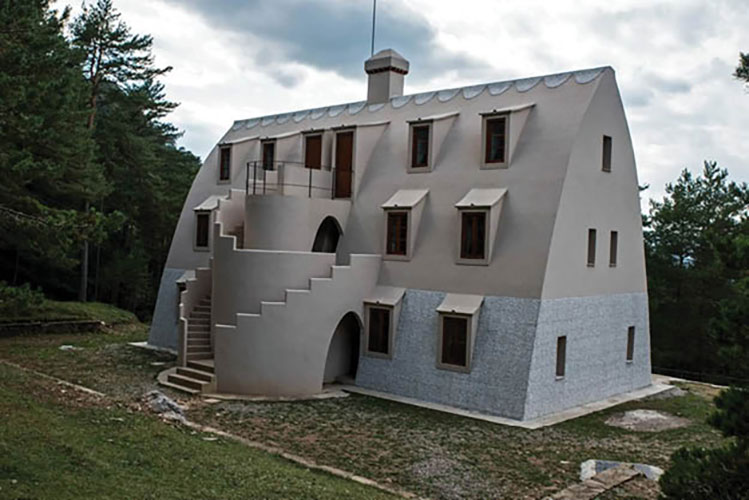
Spain confirms Gaudí designed remote forest building

XALET DEL CATLLARÀS — TURISTREN.CAT

LA POBLA DE LILLET — Spanish authorities said on Wednesday that renowned modernist architect Antoni Gaudí designed a building in a remote forest area of Catalonia, ending speculation over who was behind the project built in the early 20th century.

Gaudí (1852-1926) had long been linked to the Xalet del Catllaras — a three-story mountain shelter built for workers at a cement factory 125 kilometers north of Barcelona — because the factory was owned by wealthy industrialist Eusebi Guell, for whom Gaudí built several projects.

But there had been no thorough technical and historical analysis to confirm Gaudí’s role until authorities commissioned an expert report from a Gaudí scholar in 2023.

“What’s most important is that it shows the new architectural approach that Gaudí had,” said Galdric Santana, the report’s author who also chairs commemorative events planned throughout 2026 to mark a century since Gaudí’s death.

Mr. Santana determined that Gaudí designed the house, built between 1901 and 1908 in the town of La Pobla de Lillet, at the midpoint of his career, because it contains structural elements used only by Gaudí at that time. They include specific types of arches, vaults, and rooms separated by walls positioned at 45-degree angles.

These techniques would not be followed by his disciples until 10 or 15 years later, Mr. Santana added.

The scholar said he found geometric, structural, and compositional evidence proving Gaudí’s authorship after analyzing floor plans for other Gaudí buildings, using 3D techniques and examining old documents and photographs.

Before conducting the report, Mr. Santana said it was feasible to consider Gaudí might not be the designer given the building’s remoteness and the fact that he had several prominent projects underway during those years, including Barcelona’s Park Guell and Casa Batllo.

But he believes Gaudí did not supervise its construction because the completed building was modified from the original plan.

That would explain why Gaudí never publicly acknowledged designing the Xalet, he added. At the time, it was common for architects to withhold their signature from a building if the finished work deviated from the original blueprint.

Around 10 other works remain unconfirmed as Gaudí designs, Mr. Santana said. — Reuters

Expanding the education voucher system

PHILSTAR FILE PHOTO

By Jam Magdaleno and Cesar Ilao III

LAST MONTH’s release of the final report of the Second Congressional Commission on Education (EDCOM II) stands as a culmination of years of policy debates needed to rescue the country’s education system from creeping irrelevance. Thankfully, the report signals serious openness to expanding the education voucher system, which currently covers only senior high school students. The report’s timing is especially significant, as the expansion of the education voucher system has now been included in the Legislative-Executive Development Advisory Council’s (LEDAC) priority legislative agenda.

A simple word count into the 634-page report, “Turning Point: A Decade of Necessary Reform (2026–2035),” reveals something telling: the word “voucher” appears 54 times.

The urgency of expanding the voucher system under the Government Assistance to Students and Teachers in Private Education (GASTPE) program has become undeniable. Our public schools remain congested. Classroom construction is slow, and reports of overpriced or substandard facilities periodically surface. For the 2025-2026 school year, the Department of Education (DepEd) faces a staggering shortage of 165,000 classrooms and more than 56,000 teachers to serve a projected 27.6 million enrollees.

At the core of this crisis lies a fundamental logic of information asymmetry, which economists refer to as the “knowledge problem.” Simply put, central planners (government bureaucracies) do not possess the ability to harness the dispersed and rapidly changing (tacit) knowledge embedded in millions of individual decisions made daily, in this case, by parents, students, and schools.

Whenever proposals for large-scale public classroom construction are floated, the “knowledge problem” stands as a warning: When the state attempts to forecast demand, allocate supply, and micromanage outcomes from the center, the informational burden quickly becomes overwhelming, and, in practice, paralyzing. DepEd, the country’s largest government agency with approximately one million employees, must correctly predict enrollment shifts across thousands of municipalities, determine where classrooms are needed most, bid out contracts, supervise construction, and monitor compliance.

This explains why shortages persist in some areas while facilities remain underutilized in others. Procurement controversies, from overpriced, substandard school buildings to chronic construction delays, are a result of decision-making detached from the information that matters most: local demand, school-level conditions, and family priorities.

This doesn’t mean government intervention should be abandoned. It means that some forms of intervention are structurally better suited to overcoming informational limits than others.

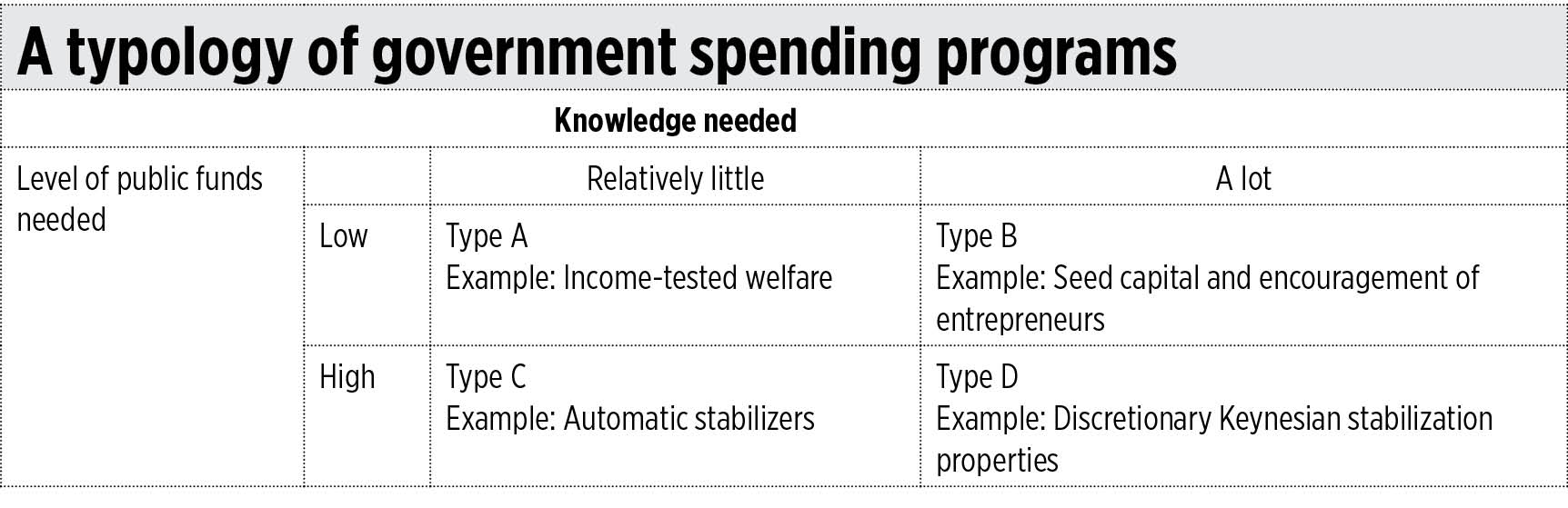
To explain our point better, we refer to a useful framework by Swedish economist Andreas Bergh. He classifies government programs along two dimensions: fiscal size and knowledge intensity (see the table). Programs that are large and knowledge-intensive are the riskiest. Programs that are large but knowledge-light — because they rely on decentralized decision-making — are likelier to succeed and be sustainable.

To ground this in our context, we will use two examples: the voucher system and the free tuition law.

Using Bergh’s typology above, we can surmise that education vouchers fall under Type C intervention: they are fiscally significant, yet they minimize the knowledge burden on the state.

This stands in stark contrast to Type A programs (low-cost, low-knowledge income transfers) and Type B programs (modest-cost but high-knowledge industrial “winner-picking”). On the other hand, the free tuition law falls under the high-risk Type D programs (expensive, knowledge-intensive macroeconomic fine-tuning).

Under the voucher system (Type C), the government finances the student, but families and schools — those closest to the relevant information — handle the complex decisions of enrollment and quality assessment.

Consider a student whose parents know that the nearby public school has 50 students per class, while a private school a few kilometers away maintains 25 and offers remedial reading support. They also know the true travel time, safety of the route, and whether the schedule fits their work hours. Localized realities like class size, support programs, commute constraints are information parents possess immediately but which no central planner can efficiently process at scale.

By contrast, the large-scale, centralized expansion of public school infrastructure is notoriously knowledge-intensive. Planners must predict precisely where to build, how much capacity to create, and how resources should be distributed across thousands of heterogeneous communities. This assumes demand forecasts will be accurate, and adjustments can be made in real time.

The same informational limits appear in higher education policy. Findings from the Philippine Institute for Development Studies (PIDS) shows that the Universal Access to Quality Tertiary Education Act (the free tuition law) disproportionately benefits students from better-off households. These students are more likely to have the resources to complete senior high school and, crucially, the academic preparation to pass competitive admission standards in state universities.

A universal subsidy doesn’t distinguish between the haves and the have-nots. In economic terms, this leads to resource misallocation arising from informational constraints. In plain language, it means public funds end up providing a “free ride” to individuals who could have afforded tuition anyway.

Vouchers operate on a different logic. Because the state is not locked into a single delivery mechanism, assistance can be directed toward students in overcrowded schools or poorer municipalities. This places school choice in the hands of families who best understand their circumstances.

A MARRIAGE OF EFFICIENCY AND EQUITY
The decentralized nature of educational vouchers also speaks to a longstanding tension in economics: the tradeoff between efficiency and equity. Rather than forcing policymakers to choose between fiscal prudence and social justice, a well-designed voucher system marries both goals.

By granting the decision to students and their parents to choose their schools, the voucher system achieves efficiency. From a fiscal perspective, supporting students in existing private schools is frequently cheaper than expanding public provision. Building classrooms and hiring permanent staff create long-term financial obligations. Vouchers allow the government to tap into existing capacity without locking itself into rigid commitments. This comes at an opportune time when many private schools are suffering from low-employment due to the mass exodus of students to public schools.

Studies cited in legislation proposing voucher expansion estimate that accommodating excess learners through public school expansion would cost P3.7 trillion over 30 years, while expanding vouchers would cost P2.6 trillion — saving P1.1 trillion. That fiscal gap is not trivial. It represents resources that could be redirected toward teacher training, curriculum improvement, or early-grade literacy interventions.

Equity gains are equally important. Rather than providing a blanket subsidy to all students regardless of income status, vouchers increase the likelihood that students from poor households and overcrowded public schools can access better learning environments.

In a 2025 PIDS paper, “Strengthening and Expanding Government Assistance for Private Education,” the authors cite evidence showing that students in private schools tend to perform better than their public-school counterparts, even after controlling for socioeconomic background.

On average, private institutions operate with smaller class sizes, stronger school-level management, and greater instructional flexibility — conditions that are consistently associated with improved learning outcomes. Over time, these gains accumulate. Students who master foundational skills early are less likely to drop out and more likely to succeed in higher education and work.

TIMING MATTERS
If vouchers improve access, efficiency, and learning at the senior high school level, restricting them to just the final two years makes little policy sense.

The logic of decentralized choice (what we identified earlier as a Type C intervention) does not magically apply only when a student turns 16. If anything, it is most compelling in the early years, when foundational skills are formed and when families make the most consequential educational decisions.

By Grade 11, the die is often cast. EDCOM II’s stark finding that only about four out of every 1,000 senior high school students pass expected learning standards underscores how deep the gap runs. Deficits in literacy and numeracy do not pop up overnight; they emerge in the primary grades and metastasize over time.

Trying to fix a decade of accumulated disadvantage with a two-year voucher is like applying a band-aid to a fracture. Expanding vouchers to the elementary and junior high levels allows the system to adapt sooner. It enables targeted access before congestion intensifies and, crucially, before inequality compounds.

There is also a glaring asymmetry here that we rarely acknowledge: Wealthier families exercise school choice from Grade 1. They do not wait for the government’s permission to seek better learning environments for their children. Poorer families, by contrast, are effectively locked into under-resourced public schools until the final stretch of basic education. Delaying vouchers is tantamount to widening this “choice gap.” Thus, to expand the voucher system is merely to follow the logic with which it was pursued in the first place: to allow decentralized actors — parents and schools — to process information early, not after the damage has already been done.

Education vouchers are not a silver bullet. In public policy, nothing really is. What we aim to demonstrate here is that, in light of the knowledge problem, an expanded voucher system can work. There are additional arguments in its favor: it is less prone to politicized decision-making and encourages public–private complementarity. At present, the education crisis demands a 634-page set of corrective measures, and its repeated calls for voucher expansion warrants a swift legislative approval.


Jam Magdaleno is head of Information and Communications at the Foundation for Economic Freedom (FEF) and an Asia Freedom fellow at the London School of Economics and Political Science (LSE) and King’s College London. Cesar Ilao III is a researcher and communications specialist for FEF. He is a lecturer at the University of the Philippines and was formerly a researcher at Monash University, Australia.

ADVERTISEMENT
ADVERTISEMENT