Home Blog Page 264

PHL might miss digital payments targets, says BSP

STOCK PHOTO | Image by Pikisuperstar from Freepik

THE PHILIPPINES might fail to reach its payments digitalization targets by 2028 as the Bangko Sentral ng Pilipinas (BSP) noted that progress has been slow amid worries over emerging cyber risks.

BSP Governor Eli M. Remolona, Jr. said digitalization efforts are ongoing, but it might take beyond 2028 before the country can meet its targets under the Philippine Development Plan.

“Well, digitalization continues. It’s a good thing,” he told Money Talks with Cathy Yang on One News on Friday.

“At the same time, it brings with it some risks. We worry a lot about cyber risks. So, even as we encourage digitalization, we’re also trying to get the banks to also make sure that they defend themselves against cyber risks.”

Asked if the country remains on track with its target, Mr. Remolona said: “To be honest… it (digitalization) has been slow. We’re on track, but maybe it will take a couple more years than we thought to get where we want to go.”

The BSP wants digital payments to make up 60%-70% of the total volume of retail payments by 2028 in line with the Philippine Development Plan.

In 2024, online payments accounted for a 57.4% share in terms of volume and 59% in value terms in the country’s total monthly retail transactions, according to the BSP’s 2024 Status of Digital Payments in the Philippines report. These are up from 52.8% and 55.3%, respectively, in 2023. 

Earlier this month, BSP Deputy Governor Lyn I. Javier said social engineering, such as phishing scams, account takeover and identity theft, emerged as the top cyberthreat of the local banking system in the first half of 2025. This made up 76% of the total amount lost to financial fraud during the period.

This was followed by hacking, which accounted for 13% of the total losses, and card-not-present fraud with 8%.

The BSP deputy governor noted that the financial system’s digital shift is being challenged by more frequent, targeted and more scalable cyberthreats, and that interconnectedness has allowed more cybercriminals to penetrate the system through its vulnerabilities.

Among the BSP’s priority legislative agenda for the 20th Congress is the Digital Payments Bill, which seeks to advance the use of digital payments in financial transactions between the National Government and the public.

This, as BSP Deputy Governor Mamerto E. Tangonan has noted that digital collections comprise only 25% of the government’s total collections.

The 20th Congress has been working on measures aimed at modernizing the government’s payment systems.

In early February, Senator Emmanuel Joel J. Villanueva filed Senate Bill No. 1821, a measure seeking to require all government agencies and relevant entities to adopt digital payment methods for the disbursement of government funds and collection of taxes, fees, tolls, imposts and other revenues.

It is currently pending for hearing in the Senate Banks, Financial Institutions and Currencies Committee.

Enhancing the digital payments system, particularly by making cross-border payments safer and more seamless within the Southeast Asian region, is also one of the BSP’s key initiatives as part of the Philippines’ chairship in the Association of Southeast Asian Nations (ASEAN) this year.

Since last year, the central bank has formalized the ASEAN Regional Payment Connectivity program, established 26 cross-border payment linkages as of August 2025, and has been developing a multilateral remittances service for overseas workers, migrants and small businesses under Project Nexus. — Katherine K. Chan

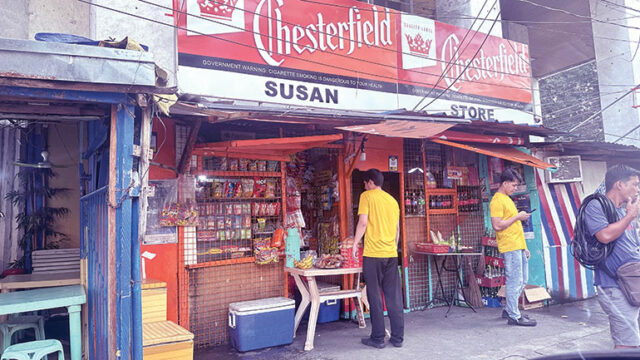
Pinoy traditions drive sari-sari store sales surge during Chinese New Year — Packworks

During Chinese New Year celebrations, Filipinos have turned cultural traditions and ‘suwerte’ (luck) into a shopping list, fueling a sales surge in sari-sari stores nationwide as families prepare to welcome prosperity for the year ahead.

Filipino tech startup Packworks, through its business intelligence tool Sari IQ, analyzed over a million monthly transactions across its network of 300,000 stores over a three-year period. The study compared sales trends for holiday-related items two weeks before and after Chinese New Year from 2023 to 2025. The data reveals that items linked to abundance and luck, such as hopia, Chinese wine, and Asian noodles, posted sales increases, reflecting how Filipino beliefs influence consumption during the occasion.

Hopia, a round pastry of Chinese origin symbolizing togetherness and good fortune, steadily grew sales from 2023 to 2025. Its median gross merchandise value (GMV) rose 20% in 2025, up from 14% increase in 2023. The Visayas regions led the sales growth. Central Visayas (Region VII) saw a massive 240% spike in sales and a 200% increase in transactions in 2025. This popularity reflects the region’s enduring Chinese cultural influence, particularly in Western and Central Visayas, hubs home to significant Chinese-Filipino communities such as Iloilo, which is home to approximately 14,000 Chinese-Filipinos.

Meanwhile, Chinese wine, often linked with holiday toasts and wishes for prosperity, saw its median GMV leap 36% in 2025, from a mere 3% in 2023. Growth was seen across most regions, with Central Luzon (Region III) maintaining a consistent 100% sales increase each year, along with Eastern Visayas, showing steadily rising growth from 72% in 2023, and highest surge of 107% in 2024 and 115% in 2025. This trend highlights the intersection of Chinese influence and the local tradition of ‘tagay’ (communal drinking).

Asian noodles, a staple symbolizing long life, saw a 10% sales increase in 2025, rebounding from a 3% decline the previous year. SOCCSKSARGEN (Region XII) recorded the highest sales in 2025 with 25% increase, likely driven by a 36% rise in stores selling the product, the highest among all regions. Western Visayas had the largest jump in transactions at 25%, reflecting the region’s Chinese culinary influences and its growing community of Chinese-Filipinos. Meanwhile, Central Luzon and Eastern Visayas continued to sustain sales growth over the three-year period, with Central Luzon recording 27% in 2023, 15% in 2024, and 17% in 2025; and Eastern Visayas showing steady although gradually decreasing growth at 28%, 18%, and 9%. These trends reflect steady top-up purchases of affordable and culturally symbolic items in sari-sari stores in these regions.

Packworks Chief Data Officer Andoy Montiel said these patterns reflect how Filipinos weave tradition into purchasing decisions.

“Our historical data underscores how deeply traditional beliefs and cultural influences are embedded in the Filipino psyche, proving that commerce is inseparable from culture. The sales trends show that for the average Filipino, Chinese New Year isn’t just a holiday, but a window for ‘investing’ in prosperity. These cultural nuances are mirrored in the sari-sari store ecosystem, proving that in our local market, heritage often leads the hand that shops,” Mr. Montiel said.

The Filipinos’ “prosperity basket” also extends to kitchen essentials used for holiday feasts. Soy sauce, a staple introduced in Chinese cuisine, saw sales rise 9% in 2025, while seasoning granules and MSG grew by 7%. Cooking oil also saw around a 13% increase in both sales and transactions. Furthermore, sweet products like chocolates and sugar, symbolizing a “sweet” year ahead, experienced notable growth. Chocolates saw a 36% boost in sales in 2025, while sugar maintained a strong presence following a massive 47% spike in 2024.

“Our latest insights prove that to stay relevant, brands and FMCGs must move beyond passive stocking and traditional distribution toward a hyper-localized, insight-led strategy. By aligning product availability with these deeply ingrained cultural cues, brands can capture the latent demand that often goes unseen in modern trade, effectively turning cultural nuances into a competitive advantage at the grassroots level,” Packworks Co-Founder and Chief Platform Officer Hubert Yap said.

Packworks expects a 10% GMV growth and a 4% increase in transactions for this year’s Chinese New Year celebrations, as more Filipinos are buying the same product per transaction, particularly during the festive occasion.


SparkUp is BusinessWorld’s multimedia brand created to inform, inspire, and empower the Philippine startups; micro, small and medium enterprises (MSMEs); and future business leaders. This section will be published every other Monday. For pitches and releases about startups, e-mail to bmbeltran@bworldonline.com (cc: abconoza@bworldonline.com). Materials sent become BW property.

BCRemit expands global footprint, announces road map for cross-border payment services for SMEs

BCRemit CEO and Founder Oliver Calma

Filipino-led digital remittance company BCRemit has expanded its services to 23 countries and announced plans to scale its operations to provide tailored cross-border payment solutions beyond the overseas Filipino workers (OFWs).

The company plans to launch a suite of cross-border payment services tailored for small and medium-sized enterprises (SMEs), business process outsourcings (BPOs), and freelancers, marking a significant expansion beyond its core Filipino roots. This evolution targets a broader global audience, aiming to provide services for other major migrant markets, including those from India, Mexico, and China.

“Our mission has always been to show that Filipino-led innovation can offer transformative solutions to the world. By expanding our services beyond our core community, we aim to serve as a global financial partner built on Filipino values ready to serve the world’s most dynamic economies,” said Oliver Calma, founder and CEO of BCRemit.

BCRemit will start 2026 with the launch of a new QR-payment collection feature in partnership with Coins.ph. This feature will streamline outbound remittances from the Philippines, further strengthening BCRemit’s established integrations with major e-wallet platforms. This innovation is set to complement the surging remittance economy, which reached $2.91 billion in November 2025 alone.

Looking ahead, BCRemit also envisions evolving as an all-in-one financial platform, diversifying its product offerings to introduce loans, e-wallets, stablecoin, and investments.

Currently, BCRemit has processed over 1 million transactions since its launch, amounting to over $600 million in transaction value, underscoring the platform’s robust capability to seamlessly facilitate high-volume cross-border settlements.

BCRemit is leveraging its strategic partnership with Circle Internet Financial to harness technology in overcoming the challenges of traditional remittances. By utilizing blockchain technology and USDC stablecoins, the platform has successfully reduced transaction costs to approximately 1%, a stark contrast to the global average remittance cost of 6.4%. This infrastructure allows for near-instant settlements, bypassing the three- to five-day delays typical of traditional banking channels and ensuring that funds reach their destination at their highest possible value.

“We saw firsthand the impact of financial delays on our own family growing up, and that drives our commitment to innovation today,” said Gio Calma, co-founder and director of BCRemit. “We understand that for our customers, remittances aren’t just transactions, they’re a lifeline. As we expand, we remain focused on creating a trusted financial gateway that serves every Filipino from around the world.”

Operating under the regulatory oversight of the Bangko Sentral ng Pilipinas (BSP), the UK’s Financial Conduct Authority (FCA) and His Majesty’s Revenue and Customs (HMRC), Banco de España, and Bank of Canada, BCRemit remains committed to maintaining the highest standards of compliance to serving over 10.8 million overseas Filipinos across the world with seamless, secure financial services made by Filipinos, for Filipinos.


SparkUp is BusinessWorld’s multimedia brand created to inform, inspire, and empower the Philippine startups; micro, small and medium enterprises (MSMEs); and future business leaders. This section will be published every other Monday. For pitches and releases about startups, e-mail to bmbeltran@bworldonline.com (cc: abconoza@bworldonline.com). Materials sent become BW property.

Not your neighborhood alahera

MAYET DELA ROSA

A TINY bottle blonde with a big personality rules over a relatively unknown jewelry empire. In the city of Manila alone, she has three branches: one in Ongpin and two in Recto. In Quezon City, she has two branches: in Eastwood and Robinsons Magnolia. She has a branch in Taguig, where we met her at her Venice Grand Canal Mall branch. She spreads her jeweled hands wide (as much as her 15-carat diamond ring allows her; we saw it in the flesh, and it was as large as an eyeball) she told us she also has branches in Laguna, Antipolo, Batangas, and Pampanga, and even has an online selling arm.

Her name is Mayet dela Rosa, and during a press conference at the Venice Grand Mall branch announcing her Chinese New Year special gold bars, she was flanked by radio DJs and two Cavite beauty queens. She said, “Sa Mayet dela Rosa, walang imposible (nothing is impossible).”

At first, she meant this to say that she can customize anything. She told a story about how at breakfast, a customer went to her store and asked if she could put diamonds anywhere. She said yes, and the man spat out his dentures and told her to put five stones on them. “Ngipin ’yon eh. Natatamaan iyong bato. Siguro mga 10 times siyang pabalik-balik (Those were teeth [so] the stones were always hit. I think he came back about 10 times for repairs).

Kung gusto niyong ipagaya iyong mukha niyo, kayang-kaya po (if you want me to make your face into jewelry, we can do it),” she said during the press conference on Feb. 18.

Yet for all that, when she said nothing was impossible, perhaps she was talking about her own life as well.

FROM CHEMISTRY TO JEWELRY
About 30 years in the industry, she spent 10 of those years starting out as a saleslady. Her sibling put her through school, where she studied to be a chemist. Seeing the low pay, her sibling, who owned a jewelry store, told her to come to work at the store instead. “Ang pagtitinda, gift ’yan (the ability to sell is a gift). Meron pala akong talento (it turns out I had the talent).”

Asked how she came to love jewelry, she told BusinessWorld, “’Pag may alahas ka, parang ang ganda-ganda mo. ’Pag meron kang kulang, mag-alahas ka. Gusto ko rin ’yung ganon (When you’re wearing jewelry, it’s like you’re so beautiful. When you lack something, just wear jewels. I wanted that too).

Gusto ko kasi ’yung ginagawa ko (I like what I’m doing),” she said in a speech. “Isa lang talaga ang magmo-motivate sa akin. Gusto ko talagang yumaman (Just one thing motivates me. I really want to get rich).”

Since then, she has opened several branches literally with her own name — Mayet Dela Rosa Fine Jewelry — and even serves as a jewelry wholesaler.

Surely she’s collected celebrity clients through the years, but she declined to name them. “’Di pwede. Ako ’yung supplier nila, and ’di ko sila pwedeng i-reveal, kasi kawawa naman sila. Pinoprotektahan ko rin sila (I can’t. I’m their supplier, and I can’t reveal who they are, because I have pity on them. I protect them too).”

She said that she opened her mall branches outside her busy (and frankly, dusty) Manila locations for her clients’ safety, and to offer a more premium experience. “Ayaw nila ng traffic, may security, ganon. (They don’t like the traffic, they have security, things like that.)

Ang nagpupunta sa Manila ay mga wholesalers. ’Yung mga nagtitinda din, o nagre-retail ng gold (the ones who go to the Manila branch are wholesalers. Those who also sell, or those who sell retail). Sa Manila po kasi, para po siyang Divisoria ng alahas,” she said, comparing it to the Manila drop-off point for reasonably priced goods. “Naghahampasan sila ng alahas. Meron pong mga tao na ayaw nila ng ganon (they’re hitting each other with jewelry. Some people don’t like that).”

This year marks 20 years of Mayet Dela Rosa Fine Jewelry and 25 years of the Dela Rosa Jewelry Corp., but Ms. Dela Rosa is not resting on her laurels.

Soon she will launch Maison Mayet Diamonds at Parkway Corporate Center in Filinvest, Alabang. The 24-hour facility will function as a dedicated hub for authorized online sellers. “With its goal of solidifying the brand’s digital ecosystem, it will also offer inventory access, professional live-selling spaces, and shipping support,” says a press release.

She will also be opening the brand to franchising. According to the press release, Mayet Dela Rosa Fine Jewelry will be part of the International Franchise Asia Expo 2026, happening on April 24-26, 2026, at the SMX Convention Center Manila.

THE 2026 COLLECTION
The event at the Venice Grand Mall served as the launch of the 2026 Jewelry Collection, anchored by a natural diamond line. The collection reinterprets the traditional engagement ring through what was described as “a full-circle diamond concept,” their version of the eternity ring.

“Craftsmanship is very important to us,” Ms. Dela Rosa was quoted as saying in the release. “We focus not only on sparkle but also on structure. Our settings are designed to be durable and secure, so the diamonds can be worn every day with confidence, while still maximizing brilliance. For us, a beautiful piece should not be delicate in use. It should last, shine consistently, and stay part of someone’s life for many years.”

Also launched was the Original Monaco Collection, focusing on gold chains which are robust but lightweight, with precision locking systems, and everyday wearability.

Then there are the Legacy Gold Bars.

“I think the appeal of our Legacy Gold Bars comes from peace of mind,” Ms. Dela Rosa said in a press statement. “During uncertain times, whether it’s inflation, currency changes, or even global conflicts, people naturally turn to gold because it feels stable and tangible.”

“Gold is universally recognized, so it can be sold almost anywhere in the world. Some people appreciate that they’re not just buying something beautiful, but something they can rely on if they ever need it.”

THE SECURITY OF PRAYERS
Considering her business, one would think security would be top of mind, but she says she doesn’t go out with security, or even a bulletproof vest. “Wala akong bodyguard. Prayers lang (I don’t have a bodyguard. Just prayers).” The prayers she says have the same theme: “’Yung mga taong nagpaplano ng masama, makapag-isip ng tama (those who have evil plans, may they think straight).”

Prompted to remember her favorite piece of jewelry, she says a diamond ring. Not the big eyeball-sized one on her finger, but a tiny one she keeps that she bought for herself when she started working. As for the most memorable piece she’s sold, she said it came from a single transaction. “Nakabenta ako ng cash ng bongga (somebody paid for it with a fabulous amount of cash).”

The customer was a guy in shorts who asked around for this and that for three days. Her staff told her he might be a lookout for a robber, but she insisted on serving him anyway. He came back after three days, still in shorts, but in a great car, and paid millions, in cash.

Still she says, and how she lasted so long in the industry: “Huwag kang basta-basta magtiwala. Alahas ito (Don’t just trust anyone. This is jewelry). Halmbawa, tiwalang-tiwala na ako sa iyo — magduda ka pa rin (for example, even if I trust you already, you would still have doubts).”

Dapat pagdating sa alahas, laging may second thoughts (when it comes to jewelry, always have second thoughts),” she said. “Hindi ka pwedeng tumigil. Lagi pa ring magaaral tungkol sa alahas, para mas mag-grow ka (You can never stop. Always study about jewelry, so you’ll grow).” — Joseph L. Garcia


ALI says leasing to propel growth this year

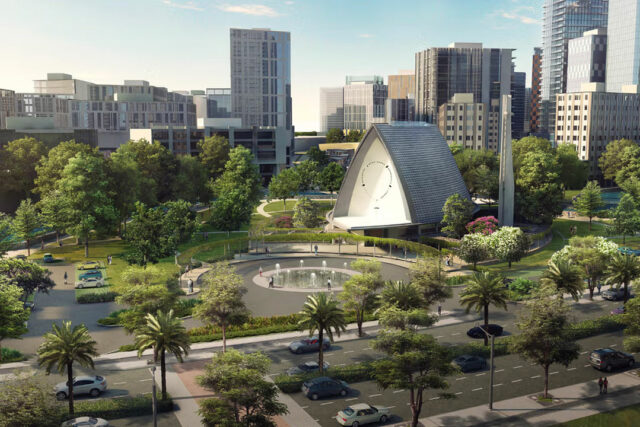
Evo City is Ayala Land’s 207-hectare mixed-use estate in Kawit, Cavite. — AYALALAND.COM

AYALA LAND, INC. (ALI) said leasing will be the main driver of its earnings growth this year, as the company aims to deliver over 250,000 square meters (sq.m.) of new gross leasable area (GLA).

“We will start with sweating existing assets,” ALI President and Chief Executive Officer Anna Ma. Margarita B. Dy said during a media briefing on Friday last week.

“Many of our renovated malls and hotels are now operational, and the focus shifts to consumer delight and operational excellence.”

Ms. Dy added that renovated malls are expected to deliver a 15% to 20% earnings boost from higher rents.

These include the completion of five hospitality assets, including Seda Abreeza, Centrio, BGC T1, Holiday Inn Makati, and Lagen.

The company said its flagship malls’ reinvention will wrap up by the end of June 2026 — mid-year — with the reopening of Glorietta and Greenbelt. This follows the December 2025 completion of Ayala Center Cebu and TriNoma.

“Alongside extracting value from recently completed assets, we will continue expanding the leasing platform. Leasing will account for a larger share of capital deployment as we scale malls, offices, and hospitality within our estates,” she said.

For 2026, ALI plans P70 billion to P80 billion in capital expenditures (capex), with about 38% directed to leasing projects.

“About 38% of [the capex] is going to be for our leasing projects. So, the balance is really for residential and whatever land acquisition that we still need to be paying for,” Ms. Dy said.

In 2025, the company spent P92.9 billion in capex, with 38% directed to property development, 29% to completing and expanding the leasing portfolio, 18% to estate build-out, and 15% to ongoing land acquisition commitments.

Ayala Land posted consolidated net income of P39.1 billion for full-year 2025, up 38.7% from P28.2 billion in 2024, driven by its leasing and hospitality segment and gains from portfolio management.

Leasing and hospitality revenues increased 7% to P48.7 billion in 2025 from the P45.6 billion in 2024, with growth across all segments.

Shopping center revenues grew 5% to P24.2 billion from the P23 billion in 2024, due to higher occupancy and merchant sales. Office leasing revenues reached P12.2 billion, while hospitality revenues rose 9.3% to P10.6 billion from P9.7 billion, boosted by the New World Makati Hotel acquisition.

“So, for 2026, we expect steady property development revenues and retaining our number one position, a double-digit growth in leasing revenues with the biggest ever delivery of leasing gross leasable area,” Ms. Dy said.

The company said it will add over 200,000 sq.m. of new GLA this year, and more than 70,000 sq.m. of office space in Evo City, Arca South, and Gatewalk.

“In 2026, we will open over 200,000 sq.m. of new retail GLA, the largest single-year addition in our history. We started with the opening of Arca South Mall last weekend and saw over 200,000 visitors in just the first weekend,” Ms. Dy said.

The first phase of Ayala Malls Arca South, in Taguig, combines indoor retail spaces with outdoor areas, green spaces, and basement parking accessible through nearby transport links.

“It’s really a soft opening. We’ll do a grand launch in April,” Mariana Zobel de Ayala, Ayala Malls president and ALI head of the leasing and hospitality group, told BusinessWorld. “We were very pleasantly surprised by the interest. It’s almost 90% leased out for the first phase.”

Ms. Zobel de Ayala said the second phase of Ayala Malls Arca South is expected to open by October this year.

“We’re also really excited because Makro, a grocery store from Thailand, will be opening,” she added.

In September last year, Ayala Corp. signed a deal with Thai retailer CP Axtra to relaunch Makro grocery stores in the Philippines through its subsidiary ACX Holdings.

Makro, a Dutch international brand, first entered the Philippine market in 1996 through a joint venture among SHV Holdings N.V., Ayala Corp., and Sy-led SM Investments Corp. Ayala later sold its 28% stake to the SM Group, which rebranded Makro outlets in 2009, and SHV divested its Asian Makro operations, now operated by Thailand’s Charoen Pokphand Group through CP Axtra. — Alexandria Grace C. Magno

Empowering women through their sanitary pads

ECOPAD GAIA — INSTAGRAM.COM/ECOPADGAIA/

A woman who just wanted to get rid of her period rash is now embarking on an advocacy to help prevent period poverty.

We met up with Adeline Bondoc, the founder of EcoPad Gaia during the Department of Trade and Industry Fair this past weekend at the Megatrade Hall in SM Megamall. Ms. Bondoc makes washable sanitary pads (made of deadstock fabrics with prints that she liked) that attach to underwear with snaps.

She gave us advice on how to use them: one, change your pads three to four times a day, and, two, attach them to undies that fit snug, in order to help the absorption (through an absorbent fabric layer in between the pads). “Not ’yung old underwear, na bacon na siya (that has wrinkled).” Three, after washing (without using a fabric conditioner, because it leaves a slick film that hinders the absorbency), make sure to dry them thoroughly to avoid mildew and possible hygiene issues.

Her pads are washable, reusable, and biodegradable. According to her research, sanitary pads can take hundreds of years to break down into microplastics, while cloth pads take just about 20 years. Her pads are designed to last two to three years with 75 washes each, but with enough pieces on rotation, they can last maybe five, up to 10 years.

She partners with schools, nongovernment organizations, and corporations to supply these pads, noting that they’re also distributed in health kits during disaster relief operations. About the contents of care packages given to disaster-stricken evacuees, pointed out that they’ve included more than just food in recent years. “Kahit naman na-disaster ’yung babae na ’yan, magme-mens pa rin ’yan (even in a disaster, a woman will still get her period).”

The pads start at P115 for a tiny liner, though the prices get higher as the pads get bigger (her biggest is for overnight use). She sells them at a lower price for her partnerships, from P58 to P60. She compares these with standard sanitary pads which may cost up to P9 for single-use, calculating that a woman spends almost P6,000 every three years on sanitary pads. Moreover, they contribute to waste. According to her research, a woman can use up to 11,000 pads on average, from when they start their periods up to when they reach menopause. “Saan napupunta ’yon (where does that go)? Hindi naman tatawid ng Saturn (it’s not like we can dump them on Saturn),” she said.

Before sanitary products became mainstream in the mid-20th century, women had to make do with scrap cloth. “Hindi appealing,” she said. Now, “Meron ka nang print na gusto, naka-snap button, may leakproof pa. Dati ’di ba walang leakproof? Hindi ka makalabas ng bahay. (You have prints you like, they have snap buttons, and there are leakproof options. Back in the day, there were no leakproof options. You could not leave the house.)”

What started out as a way to have more comfortable periods has become a full-blown crusade for her.

She was a casino worker before the pandemic, and noted that she would get rashes during her periods — it turned out the commercial sanitary pads were irritating her. She bought cloth pads and no longer got rashes, and found out her daughter had the same problem. So she started making the pads in earnest (studying how through YouTube tutorials) when she lost her job during the pandemic.

Doon ko na-realize na hindi lang pala ako ’yung babaeng nagkaka-rashes (That’s when I realized I wasn’t the only woman who got rashes from commercial pads),” she said. She noted: “May stigma surrounding the period. Pwede namin siraan ang mga boyfriend at asawa namin, but we don’t talk abour our periods (we can talk trash about our husbands and boyfriends, but we don’t talk about our periods). Ganon ang mga girls (that’s how girls are).”

She talked about how she watched videos and read papers about period poverty. From what she read from the UN, she found out about girls and women who could not buy sanitary products for their periods. That leads to missed classes, then ending schooling, then teen pregnancy, and entering the cycle of poverty.

Hindi lang pala rashes ’yung naso-solve (It wasn’t just rashes that these products could solve),” she said.

Since then, she’s begun to teach classes at group homes and schools, so girls can make their own cloth pads — and may also begin to have their own livelihood. “Kaya niyo talagang gumawa (you can really do something),” she tells the girls she teaches.

She also talks about some special cases that her products have helped: a cancer patient started using her products to help with her continuous bleeding that lasted for months, and due to her use of commercial napkins, developed a rash. “Imbis na cancer pa niya yung iniintindi niya, iniintindi niya pa ’yung rashes niya. Months! Eh kami nga one week lang nagrereklamo na kami (Instead of focusing on the cancer, she had to think about the rashes. For months! We would complain about dealing with this for one week,)” she said. “Ang laki pala ng tulong (It was such a big help).”

Since her business allows her to reach many kinds of women with varying problems, she’s learned more about being a woman during her journey. “Ang woman pala talaga, siya ’yung may nurturing heart. Siya talaga ang may attention to detail. Some men, hindi nila nare-recognize ’yung mga maliliit na bagay. (It turns out that a woman, really, is the one with a nurturing heart. She is the one with attention to detail. Some men, they do not recognize the small stuff.)

Kapag in-empower ko pala ’yung babae, manganganak siya ng empowered children,” she said. “May hope.” (It turns out that when you empower a woman, she has empowered children. There is hope.)

Visit Adeline Bondoc’s page at Instagram @ecopadgaia or call her at 0921-211-6969. She also has an online store in Shopee. — Joseph L. Garcia

Mapúa SoMDA, Sony PHL hold film workshop

Mapúa University School of Multimedia and Digital Arts (SoMDA) recently teamed up with Sony Philippines Film School Caravan to host “Framing the Future: The Essential Gears and the Stories You’ll Tell,” a film workshop that aims to bridge high-end technology and the art of the narrative, specifically designed for students and aspiring visual storytellers.

“Framing the Future” featured highly acclaimed Filipino cinematographer Tey Clamor, LPS, who is known for her work on films such as Isa Pa With Feelings, Balota, Metamorphosis, and Babae at Baril. Ms. Clamor also shared her professional insights and technical expertise during the event.

The session provided attendees with deep dives into cinematic storytelling and industry trends, practical knowledge on the tools required for modern filmmaking, and a unique opportunity for students to test the latest Sony cameras and equipment firsthand.

Mapúa Multimedia Arts Program Chair Aleia Garcia acknowledged the Sony Philippines team led by Demand Creation Executive Allison Datu, Senior Marketing Executive for Digital Imaging JD Domingo, Marketing Executive for Digital Imaging Ralph Salazar, and Marketing Communications Manager Pearl Lumanao, as well as Aputure Philippines Marketing Associate Razel Olifernes for partnering with the school to organize the workshop.

Ms. Garcia also thanked SoMDA Dean David Corpuz, Creative Cluster Head Jonah Lim, Digital Film Program Chair Karen Rey, Broadcast Media Program Chair Norman Manalaysay, The New Builder Adviser Seymour Sanchez, Hiraya Student Council led by adviser Ian Boots Bautista, and faculty and students who took their time to attend the event.

A heartfelt acknowledgement was also given to SoMDA Technical Assistant Ruby Sagun, who recently passed away, for her tireless support throughout the planning process.

Beyond technical training, the workshop focused on encouraging attendees to embrace the beauty of storytelling through moving images. By sharpening their craft and discovering new tools, students are empowered to tell stories that will set them apart in a competitive industry.

“To everyone here, please know that this is more than just an event. This is to encourage ourselves to embrace the beauty of storytelling whether through film, photography, or writing. This is our shared purpose,” Ms. Garcia concluded.

As part of the initiative, the Sony Philippines Film School Caravan 2026 also visited the Mowelfund Film Institute with Ms. Clamor and Commercial Director and Sony Product Expert Nigel Laxamana for Cinematic Live Production with the Sony Cinema Line on Feb. 5, and CIIT College of Arts and Technology with award-winning filmmaker Lee Briones-Meily on Feb. 6.


SparkUp is BusinessWorld’s multimedia brand created to inform, inspire, and empower the Philippine startups; micro, small and medium enterprises (MSMEs); and future business leaders. This section will be published every other Monday. For pitches and releases about startups, e-mail to bmbeltran@bworldonline.com (cc: abconoza@bworldonline.com). Materials sent become BW property.

Meralco chairman signals steady 2025 performance ahead of results

PHILSTAR FILE PHOTO

MANILA ELECTRIC CO. (Meralco) Chairman and Chief Executive Officer Manuel V. Pangilinan described the company’s 2025 performance as “good,” citing growth in its distribution operations and renewable energy initiatives as key contributors.

“All we can say is good,” he told reporters last week when asked about the company’s 2025 financial performance.

Meralco has set a full-year profit guidance of P50 billion, after surpassing its 2024 target of P45.1 billion.

For the first nine months of 2025, the power distributor reported a core net income of P40.02 billion, a 14% increase compared to the previous year, driven by revenue growth and stronger results from its distribution utility segment.

Consolidated revenues rose 4.6% to P371.77 billion for the January-to-September period from P355.42 billion a year earlier, mainly due to electricity sales.

Asked if Meralco was able to hit its target, Mr. Pangilinan said: “Well, we aim accurately, don’t we?”

Meralco is scheduled to announce its full-year 2025 financial and operating results on Feb. 25, Wednesday.

Mr. Pangilinan said he wishes the company “to grow in profitability” and “to become the best power company in the Philippines.”

Aside from distribution, the company is also focusing on its power generation business for growth.

To raise additional capital, Meralco is evaluating a potential public offering for MGEN Renewable Energy, Inc. (MGEN Renewables), the renewable energy unit of Meralco PowerGen Corp. (MGEN).

This involves injecting assets into MGEN’s already-listed affiliate, SP New Energy Corp. (SPNEC), in exchange for shares.

“Perhaps in 2027, we will re-IPO (initial public offering) to raise a bit of money for SPNEC and MGreen because it will be a much bigger company by then,” Mr. Pangilinan said.

Last month, SPNEC filed an application with the Securities and Exchange Commission (SEC) to change its corporate name to MGEN Renewable Energy Holdings, Inc., which analysts believe is part of the planned backdoor infusion of the renewable energy business.

Meralco is also aligning the planned listing with the expected completion of the MTerra Solar project, which is set to become the world’s largest integrated solar and storage facility.

Spanning Nueva Ecija and Bulacan, MTerra Solar is developing a 3,500-megawatt-peak solar power plant and a 4,500-megawatt-hour energy storage system.

Meralco’s controlling stakeholder, Beacon Electric Asset Holdings, Inc., is partly owned by PLDT, Inc. Hastings Holdings, Inc., a unit of PLDT Beneficial Trust Fund subsidiary MediaQuest Holdings, Inc., has an interest in BusinessWorld through the Philippine Star Group, which it controls. — Sheldeen Joy Talavera

Praying across Negros Occidental

A RETREAT will be held at Our Lady’s Hill Carmelite Center of Spirituality in Bago City.

ON ITS 11th annual Lenten journey, the nonprofit Catholic pilgrimage apostolate Green Faith Travels will be bringing pilgrims to the province of Negros Occidental to pray in 16 churches and visit museums, historical landmarks, and heritage sites, from March 12 to 16.

The Lenten pilgrimage, called “A Carmelite Journey: Lenten Pilgrimage to Bacolod, Negros Occidental,” and with Fr. Reynante Miguel Azul Lavado of the Order of Discalced Carmelites as pilgrimage chaplain, will be highlighted by a one-day retreat at the Our Lady’s Hill Carmelite Center of Spirituality in Bago City.

The pilgrimage will cover the dioceses of San Carlos (Northern Negros Occidental), Kabankalan (southern Negros Occidental), and Bacolod (Central Negros Occidental).

In the Diocese of Bacolod, pilgrims will visit the San Diego de Alcala Pro-Cathedral in Silay City. In Talisay City, stops will be made at the San Nicholas de Tolentino Parish-Recolotes and Diocesan Shrine of San Vicente Ferrer, and St. James the Greater Church and Our Lady of Medjugorje (the first replica church in Asia and the third in the world of the original church in Bosnia and Herzegovina).

In Bacolod City, there will be several stops: at Carmel of St. Joseph and St. Thérèse of the Child Jesus (Carmelite monastery); Queen of Peace Parish-Redemptorist; San Sebastian Cathedral; the Sacred Heart Shrine and Seminary; San Antonio Abad Parish; Our Lady of Peace and Good Voyage Parish and the grotto of St. Padre Pio; and St. Ezekiel Moreno Monastery and Reliquarium.

Pilgrims will also pray at the Talan-awon ni Maria of the Marian Missionaries of the Holy Cross in Murcia; St. John the Baptist Parish in Bago City; and Santa Maria Magdalena Parish in Hinigaran.

At the Diocese of San Carlos, pilgrims will stop at the San Carlos Borromeo Cathedral, and in the Diocese of Kabankalan, at St. Francis Xavier Cathedral.

The pilgrimage fee is P35,000 per person, which covers two-way airfare with 20-kilogram baggage allowance, accommodations and transportation for five days and four nights, all meals and snacks, the entrance fees to museums and heritage sites, and a pilgrim’s kit. The deadline of payment is on Feb. 28.

Over the last 11 years (excluding the pandemic years), Green Faith Travels has organized more than 30 pilgrimages in Luzon and the Visayas, with its annual Lenten, Easter, and Marian “retreats on foot.”

On its 12th year, Green Faith Travels’ pilgrimages are now Carmelite journeys of contemplative prayer as it promotes the Teresian Carmelite spirituality.

Interested parties may contact Bro. Edwin P. Galvez at 0917-830-2596, or visit Green Faith Travels’ Facebook page for details.

T-bill, bond yields may end mixed on BSP bets

BW FILE PHOTO

RATES of the Treasury bills (T-bills) and Treasury bonds (T-bonds) to be auctioned off this week could end mixed on uncertainty over the Bangko Sentral ng Pilipinas’ (BSP) future policy actions.

The Bureau of the Treasury (BTr) will auction off P27 billion in T-bills on Monday, or P9 billion each in 91-, 182-, and 364-day papers.

On Tuesday, the government is targeting to raise up to P40 billion from a dual-tenor T-bond offering, as it could borrow between P15 billion and P25 billion via reissued seven-year papers with a remaining life of two years and five months, and between P10 billion and P20 billion through reissued 25-year debt with a remaining life of 23 years and 11 months.

Yields on the T-bills and T-bonds could track the mixed week-on-week movements at the secondary market following the BSP’s “less hawkish” policy guidance, Rizal Commercial Banking Corp. Chief Economist Michael L. Ricafort said in a Viber message.

“Thus, future BSP rate cuts are possible amid relatively slower local economic recovery…,” he said.

At the secondary market on Friday, yields on the 91-, 182-, and 364-day T-bills fell by 11.79 basis points (bps), 9.17 bps, and 8.35 bps week on week to end at 4.4319%, 4.5437%, and 4.5946%, respectively, based on PHP Bloomberg Valuation Service Reference Rates data as of Feb. 20 published on the Philippine Dealing System’s website.

For its part, the seven-year bond slipped by 0.15 bp week on week to yield 5.7732%, while the rate of the three-year debt, the tenor closest to the remaining life of the papers to be offered on Tuesday, edged down by 0.23 bp to 5.3463%.

Meanwhile, the yield on the 25-year bond went down by 0.12 bp week on week to end at 6.5821%.

On Thursday, the BSP cut the target reverse repurchase rate by 25 bps to 4.25%, the lowest in over three years or since the 3.75% in August 2022. This also matched the benchmark rate set in September 2022.

Rates on the overnight deposit and lending facilities were likewise trimmed by 25 bps each to 3.75% and 4.75%, respectively.

This brought the BSP’s total reductions to 225 bps since it began its series of monetary policy easing in August 2024.

BSP Governor Eli M. Remolona, Jr. said the central bank’s policy path has become “less certain” as investor confidence has become a main concern, adding that the outlook for monetary policy easing would depend on how soon sentiment will recover.

“We see confidence will return very soon, in a few months. If we’re right, then we won’t need further cuts.”

Meanwhile, a bond trader said in an e-mail that the reissued seven-year bond on offer on Tuesday could fetch “great” demand, while the 25-year securities could be “fairly received.”

The trader said the seven-year and 25-year T-bonds could fetch rates of 5.25%-5.275% and 6.5%-6.6%, respectively.

Last week, the BTr raised P37.8 billion via the T-bills it auctioned off, higher than the P27-billion plan as the offer was over five times oversubscribed, with total tenders reaching P142.15 billion.

Broken down, the government awarded P12.6 billion in 91-day T-bills, above the P9-billion plan, as demand for the tenor reached P49.75 billion. The three-month paper fetched an average rate of 4.35%, down by 14.2 bps from the yield seen the previous week. Bids accepted had yields ranging from 4.332% to 4.363%.

The Treasury also borrowed P12.6 billion via the 182-day debt versus the P9-billion program as tenders hit P55.65 billion. The average rate of the six-month T-bill was at 4.433%, dropping by 14.5 bps week on week. Tenders awarded carried rates from 4.41% to 4.453%.

Lastly, the BTr raised P12.6 billion from the 364-day securities, more than the P9-billion plan as bids totaled P36.75 billion. The one-year paper’s average yield was at 4.512%, falling by 10.3 bps. Accepted bids had rates from 4.496% to 4.56%.

Meanwhile, the reissued seven-year bonds to be offered on Tuesday were last offered on Jan. 27, where the government raised P30 billion as planned during the auction proper at an average rate of 5.324%, above the 3.75% coupon rate. It borrowed an additional P15 billion via the same papers through a tap facility offer.

The reissued 25-year notes were last sold on Oct. 21, 2025, where the government raised P15 billion as planned at an average rate of 6.51%, below the issue’s 6.375% coupon rate.

The Treasury aims to raise P308 billion from the domestic market this month, or P108 billion via T-bills and up to P200 billion through T-bonds.

The government borrows from local and foreign sources to help fund its budget deficit, which is capped at P1.647 trillion or 5.3% of gross domestic product this year. — Aaron Michael C. Sy

Threads that bind: On Japan and the Philippines’ enduring friendship

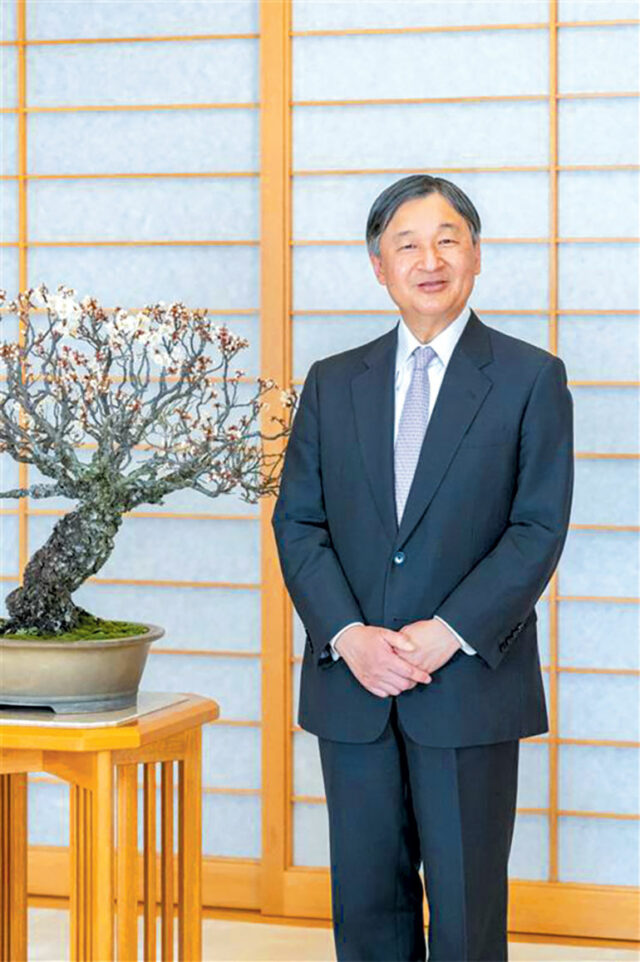
His Majesty the Emperor — © Imperial Household Agency of Japan

By Kazuya Endo,

Japanese Ambassador to the Philippines


Today, Japan commemorates the 66th birthday of His Imperial Majesty Naruhito. On this auspicious occasion, I am pleased to share this celebration with our Filipino friends and the Japanese community in the Philippines.

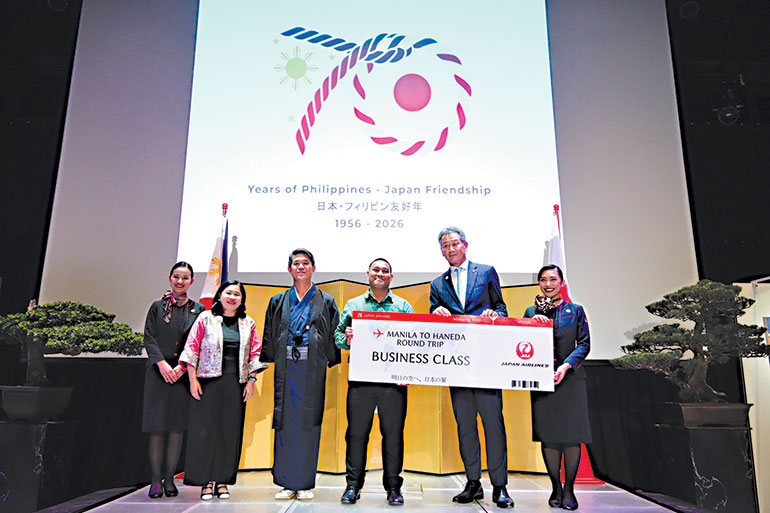
This year also marks a momentous milestone: the 70th Anniversary of Philippines-Japan Friendship, celebrated under the theme “Weaving the Future Together: Peace, Prosperity, Possibilities.” The symbolic anniversary logo, designed by Mr. Edmon Fuerte, a young artist from Baguio, beautifully combines Japan’s shimenawa rope with the Filipino abaca fiber. It reflects how our two nations have steadily woven beautiful threads of trust, partnership, and shared hope over seven decades.

The 70th Philippines-Japan Friendship Logo designed by Edmon Fuerte, inspired by Japan’s shimenawa rope and the Philippines’ abaca fiber.

Looking back to seven decades of trust

Since Japan made its solemn pledge to peace and embarked on its postwar path as a peaceful nation, many predecessors on both sides made numerous contributions for these long-term efforts. A hopeful thread in our shared history can be found in President Elpidio Quirino’s pardon of Japanese prisoners in 1953. In 1956, the Japan-Philippines Reparations Agreement was signed — marking a foundational moment in our bilateral relationship.

The Imperial Family’s visits have helped in deepening our bonds. The then His Imperial Highness Crown Prince Akihito and Princess Michiko paid their maiden visit to the Philippines in 1962, even meeting General Emilio Aguinaldo. 54 years later, in 2016, His Majesty the Emperor Akihito and Her Majesty the Empress Michiko returned to the Philippines for their historic visit for the 60th Anniversary of our friendship — reaffirming the strong foundation of our heightened ties.

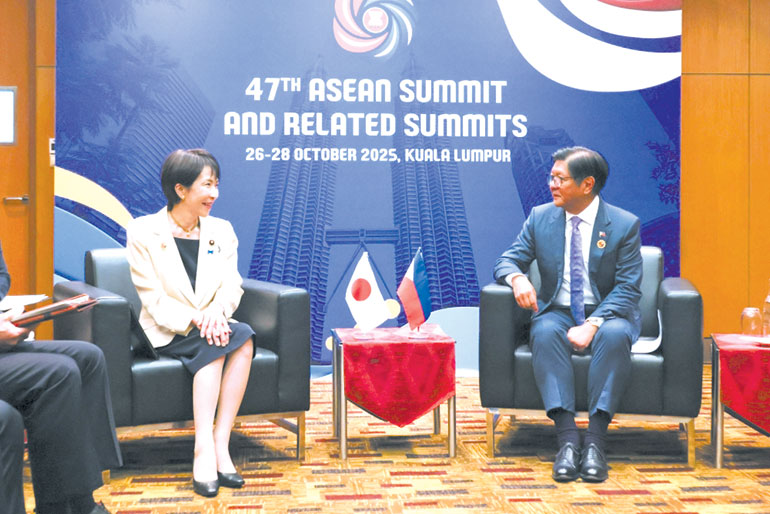
In the last seven decades, there have been countless exchanges at various levels, each of which helped lead to our shared mutual understanding. Fast forward to the present, Prime Minister Takaichi Sanae’s first face-to-face meeting with a foreign leader after her inauguration was with President Ferdinand R. Marcos, Jr. in October 2025. In January 2026, Foreign Minister Motegi Toshimitsu visited the Philippines as part of his first bilateral overseas tour. These developments underscore the high priority that Japan places on the Philippines as a close neighbor and trusted strategic partner who shares fundamental values and principles.

Fortifying ties as partners in progress

Visit of President Ferdinand R. Marcos, Jr. in the Metro Manila Subway Project with DoTR Secretary Vince B. Dizon

Our economic partnership is another important thread in this tapestry of friendship. Since the 1960s, Japan has supported the Philippines through Official Development Assistance (ODA), contributing to progress in vital areas such as disaster risk reduction and infrastructure development. This commitment continues today through landmark projects including the Metro Manila Subway Project (MMSP), the North-South Commuter Railway (NSCR), the Davao City Bypass, and the Pasig-Marikina River Channel Improvement Project.

On the Bangsamoro Autonomous Region in Muslim Mindanao’s (BARMM) path toward peace, development, and self-reliance, Japan has stood steadily alongside the region. Japan remains committed to advancing peace through dialogue and translating peace into tangible dividends through development.

Japan-Philippines business collaborations continue to flourish. In 2025, Japan was the second largest trading partner and the largest investor for the Philippines. Around 1,600 Japanese companies are operating their businesses in the country.

Advancing peace and security through cooperation

Prime Minister Takaichi Sanae with President Ferdinand R. Marcos, Jr. during the Japan-Philippines Summit Meeting in Malaysia — © Cabinet Public Affairs Office

Our security cooperation has likewise evolved in ways that contribute to peace and stability, in line with the vision of a Free and Open Indo-Pacific (FOIP). The Japan-Philippines Reciprocal Access Agreement (RAA), which entered into force in 2025, has facilitated joint humanitarian assistance and disaster relief exercises, demonstrating how interoperability can translate into tangible support for disaster response and resilience-building.

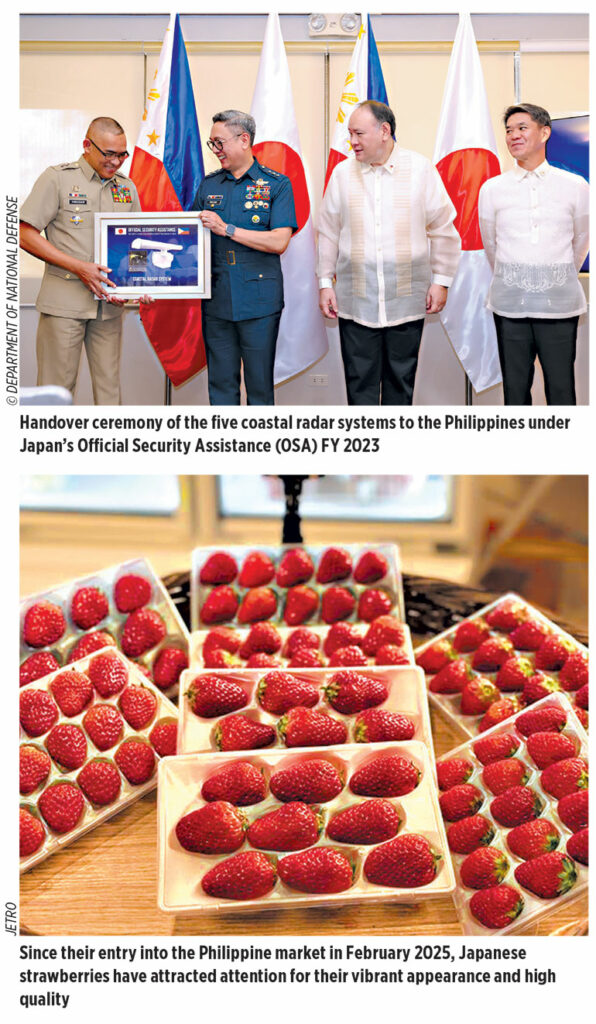
The Official Security Assistance (OSA) program is another important pillar of our cooperation, aimed at enhancing resilience by strengthening the Philippines’ defense capabilities through the provision of essential equipment and capacity-building. Notably, the Philippines is Japan’s only partner to have received OSA for three consecutive years. Just this Feb. 11, I attended a handover ceremony for five coastal surveillance radar systems, as part of the first OSA project, with Department of National Defense Secretary Gilberto Teodoro, Jr.

Japan and the Philippines work closely in multilateral fora to promote peace and prosperity in the region and beyond. We take pride in our long-standing partnership in advancing nuclear disarmament and non-proliferation, guided by our shared aspiration for “a world free of nuclear weapons.” We are also working hand in hand to address global challenges such as climate change through initiatives like the Asia Zero Emission Community (AZEC), and to advance development cooperation through frameworks such as the Conference on cooperation among East Asian countries for Palestinian Development (CEAPAD). As the Philippines assumes its important and responsible role as ASEAN Chair this year, Japan will spare no effort in extending its cooperation.

Binding our ties through cultural exchange

Beyond policies and programs, the most enduring strands of our friendship are woven by people — through educational exchanges, cultural interaction, academic cooperation, and everyday friendships. In 2025, 73 Filipino scholars were supported under the MEXT Scholarship Program, and Japan welcomed its first participant from the Philippines in the Young Leaders Program in the field of Healthcare Administration. That same year, 67 young Filipinos embarked on enriching experiences under the Japan Exchange and Teaching (JET) Programme.

The Osaka Expo 2025 also offered meaningful platforms for people-to-people exchange. Building on this proud legacy, the Philippine Pavilion at the 2025 Expo was awarded the prestigious Silver Award for outstanding design. We once again extend our heartfelt appreciation to the creative Filipino minds behind the pavilion for their contribution to the success of this global event.

Travel, too, has served as a reliable bridge between our cultures. I am delighted to note that Japan welcomed more than 880,000 Filipino visitors in 2025 alone — an encouraging testament to the growing closeness between our peoples.

Weaving the future together

All these illustrate how the Japan-Philippines relationship has been shaped over time by many threads of cooperation and friendship. The work of weaving, however, does not end here. As we look ahead this 2026, I hope we can reflect on our future together and identify “new threads” to our growing partnership.

One such thread, in my view, lies in economic cooperation. For decades, Japan has been the leading development partner of the Philippines across a wide range of fields. As our economic ties continue to deepen, we hope to expand our cooperation into new frontiers, including digital and green transformation, space, and broader economic security.

From postwar reconciliation to a comprehensive partnership for peace and prosperity, the Philippines–Japan relationship is a tapestry woven from diplomacy, development, security, and, above all, human connection. As we embark on a year of commemorative events for our 70th anniversary, we warmly invite our Filipino friends and partners to join us in the celebrations, as we continue weaving our future together — toward peace, prosperity, and possibilities for generations to come.

Inspiring beautiful harmony in Philippine real estate

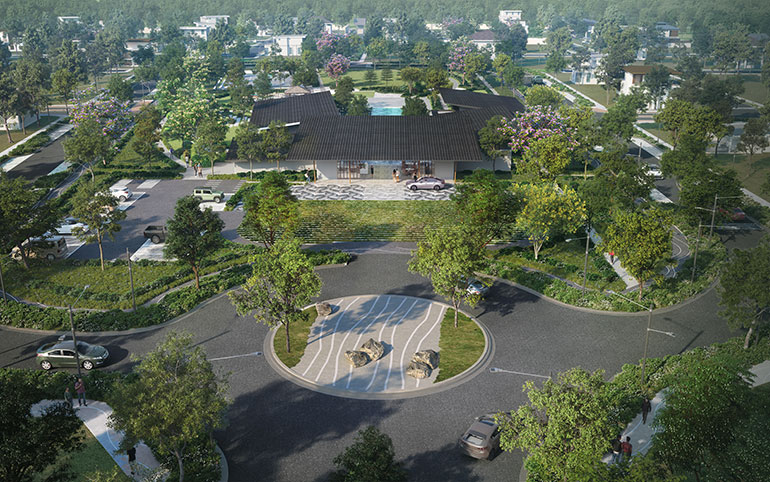
Strategically located in Mandaluyong, The Observatory reflects the disciplined planning and design synergy of its Filipino-Japanese influence. (Artist’s perspective)

Reiwa (令和), Japan’s imperial era that began on May 1, 2019, translates to “beautiful harmony.” It describes a world where “culture is born and nurtured as people’s hearts are beautifully drawn together. It began on the day on which Emperor Akihito’s eldest son, Naruhito, ascended the Chrysanthemum Throne and took the role of the 126th Emperor of Japan.

In the Philippine real estate landscape, this harmony has manifested in Federal Land NRE Global, Inc. (FNG). Federal Land, Inc., with over five decades of experience in the Philippine real estate market, has significantly contributed to reshaping cityscapes through its pioneering residential, commercial, and integrated community projects.

Meanwhile, Nomura Real Estate Development Co., Ltd. (NRE), one of the biggest real estate developers in Japan, brings Japanese innovation to the table with its residential, commercial, and industrial developments. Committed to sustainability and quality, NRE’s influence ensures that every project under FNG is designed with a long-term vision, blending aesthetics with functionality to meet the growing needs of urban living.

What began as a landmark collaboration for The Seasons Residences—bringing together the expertise of Federal Land, NRE, and Isetan Mitsukoshi Holdings Ltd.—has evolved into a definitive partnership. The premier four-tower residential development at Grand Central Park in Bonifacio Global City (BGC) set a new global standard in the Philippine real estate industry. FNG now stands as a testament to what happens when Japanese precision and Filipino heart converge to build beyond borders.

HARMONIOUS DEVELOPMENTS

Yume at Riverpark: A horizontal neighborhood in Cavite guided by Japanese design principles and built for modern Filipino families (Artist’s perspective)

FNG incorporates Japanese design principles into its projects, emphasizing the seamless integration of nature and prioritization of client needs. Underpinning these principles is Kaizen, or the Japanese philosophy of continuous, incremental improvement.

Based on the concepts of “localization,” “organization,” and “systematization, FNG takes a holistic approach to its business activities, targeting all phases from planning and design to construction, sales, and completion.

For instance, Riverpark North in General Trias, Cavite, is envisioned as the “Next Gen City of the South,” boasting a 600-hectare self-sufficient community integrating residential, commercial, and recreational spaces that aim to enhance every aspect of its residents’ quality of life.

Yume at Riverpark’s homes will feature Japanese contemporary designs. (Artist’s perspective)

Yume at Riverpark, the township’s debut horizontal enclave and a strategic mixed-use district, provides a versatile canvas for personal and commercial growth for locators like the UNIQLO logistics center or the up-and-coming SM City General Trias. Featuring wide roads, generous open spaces, landscaped areas, and walkable streets, Yume at Riverpark serves as a social and wellness hub, with thoughtfully integrated amenities like a swimming pool, fitness areas, and a Japanese garden, alongside its central clubhouse, which was developed in collaboration with design firm UDS Japan and Filipino architect Ed Calma.

Within Metro Manila, FNG exemplifies its design philosophy in The Observatory in Mandaluyong City, a 4.5-hectare mixed-use township designed for young professionals who thrive in the bustling pace of the city. Its first residential tower, named “Sora” after the Japanese for “sky,” is inspired by Tokyo’s Shibuya district and demonstrates how FNG’s concept of functional premium living complements life in the center of urban culture.

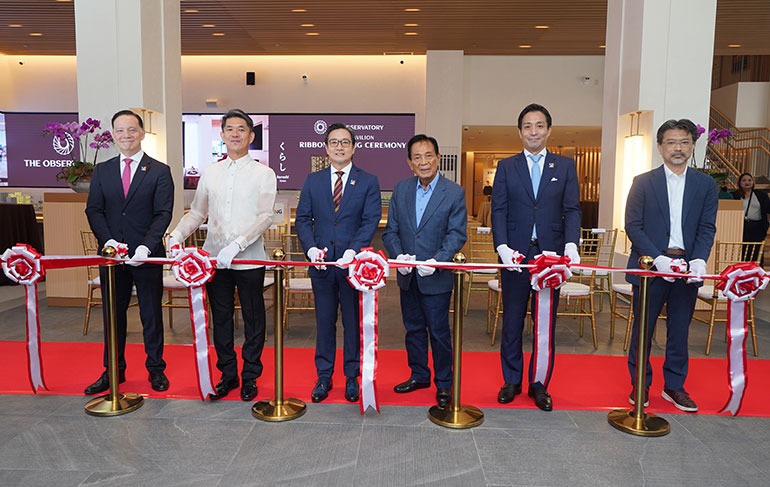
(L-R) Thomas Mirasol, Federal Land NRE Global, Inc. (FNG) President; His Excellency Endo Kazuya, Ambassador of Japan to the Philippines; Alfred Ty, Federal Land and FNG Chairman; Hon. Benjamin Abalos, Sr., former Mayor of Mandaluyong; Yusuke Hirano, Vice-Chairman of FNG; and Tomohiro Fukuda, Nikken Sekkei General Manager, led the ribbon-cutting ceremony of The Observatory Sales Pavilion in 2025.

The Sora tower offers residents an unparalleled view of the BGC skyline across Pasig River, and offers a retail podium with a wide range of shopping and dining experiences. It features amenities to support active and dynamic lifestyles, such as co-working spaces, an entertainment room, a fitness gym, and a yoga studio.

The collaboration between Federal Land and NRE is built on a shared goal: to make life better for customers through developments that are meaningful for generations.

Through designs like The Observatory, FNG champions Japanese principles like clarity and simple living, embodying minimalistic design choices that reflect a more purposeful life. This simplicity is maintained through a delicate balance between nature and the built environment. Whether it is the integration of green pockets in high-rise developments or the transition from vibrant commercial zones to the quietude of a Zen garden, FNG ensures that the pace of modern life is always countered by moments of stillness.

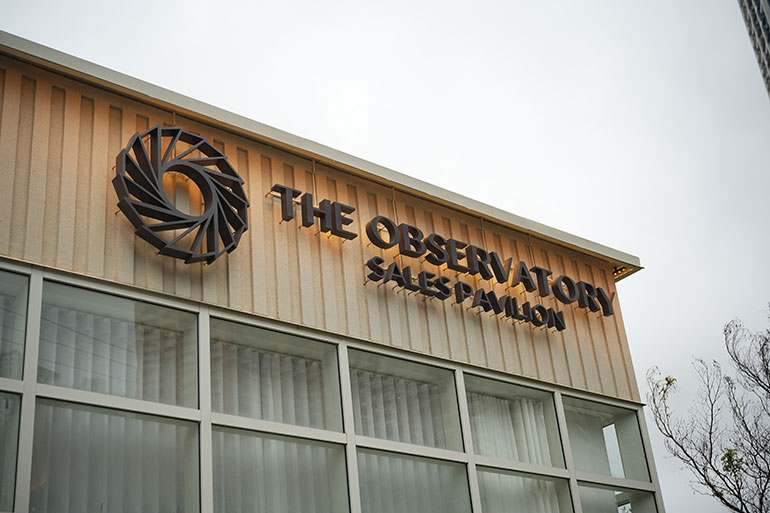
The Observatory Sales Pavilion offers an immersive preview of the collaborative vision shaping this flagship mixed-use development.

With this foundation, FNG has grown a portfolio of projects that showcase Japanese innovation while responding to the aspirations of Filipino homeowners.

As Japan and the Philippines honors the Emperor’s birthday and celebrates their longstanding relations, FNG envisions itself as a vital part of this continuing story. By merging Japanese design philosophy and the soul of Filipino living, FNG is nurturing the “Beautiful Harmony” of the Reiwa Era into spaces where culture is born and communities thrive.

For more information, visit about FNG and its developments, visit https://fng.ph/.


Spotlight is BusinessWorld’s sponsored section that allows advertisers to amplify their brand and connect with BusinessWorld’s audience by publishing their stories on the BusinessWorld Web site. For more information, send an email to online@bworldonline.com.

Join us on Viber at https://bit.ly/3hv6bLA to get more updates and subscribe to BusinessWorld’s titles and get exclusive content through www.bworld-x.com.

ADVERTISEMENT
ADVERTISEMENT