Home Blog Page 261

NGCP aims to finish P18.5-B transmission projects this year

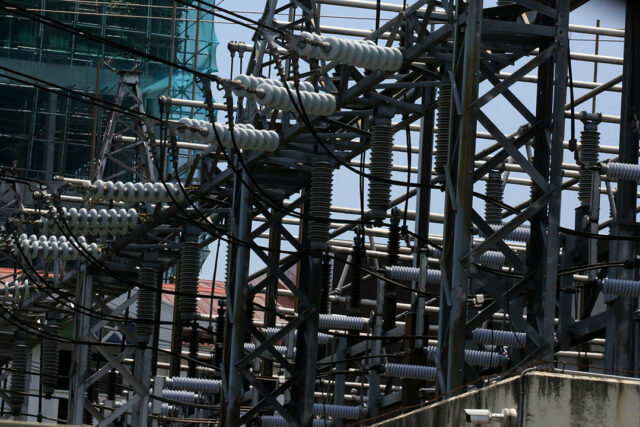
A power substation is seen in Malate, Manila, April 18, 2024. — PHILIPPINE STAR/EDD GUMBAN

THE NATIONAL GRID Corp. of the Philippines (NGCP), the country’s sole grid operator, is aiming to finish P18.5 billion worth of transmission projects this year to improve delivery of electricity amid increasing demand.

In a statement on Thursday, NGCP said it is set to energize seven transmission projects following the completion of several critical project components including facility upgrades, expansion, and improvements for grid stability and reliability.

Among the projects set to come online is the P8.1-billion Tuy 500/230-kilovolt (kV) Substation Stage 1 in Batangas, which will accommodate the connection of a coal-fired power plant. It will also allow dispatch of bulk generation capacity additions in Batangas.

The NGCP is also planning to complete the P4.2-billion Nabas-Caticlan-Boracay 138-kV transmission line in Aklan, which will provide reliable power to customers in the Boracay and Caticlan areas.

The company’s P2.4-billion Tuguegarao-Lal-lo (Magapit) 230-kV transmission in Cagayan is also on track for completion to address the imminent overloading of the existing line due to the forecasted load growth in the northern part of Cagayan province.

NGCP also seeks to activate the P1.9-billion Amlan-Dumaguete 138-kV transmission line in Negros Oriental this year to cater to growing demand and provide operational flexibility and reliability to customers in Southern Negros.

To address overloading during an outage, the grid operator is set to complete the P1.02-billion Stage 2 of the Visayas Substation Reliability project.

The company is also expected to energize the P757.98-million Tacurong-Kalamansig 69-kV transmission line in Sultan Kudarat. It is also completing a P123.84-million project to relocate steel poles along the Hermosa-Duhat 230-kV transmission line in Bataan.

“These will address economic drivers such as load growth, system reliability and security. power quality and technology, entry of new generating plants (both renewable and nonrenewable), as well as to complement major projects such as power grid backbones and island interconnections,” NGCP said.

Last year, NGCP completed the upgrade of 14 substations to enhance grid reliability and stability. It also conducted voltage improvement initiatives in its Tigaon, Malvar, Baybay Load-end Station, Sta. Barbara, and Zamboanga substations.

The grid operator said it is on track to finish the pipeline of projects this year despite persistent challenges in right-of-way and permitting.

“We continue to seek the support of government agencies and LGUs (local government units) by ensuring the expedited release of permits related to our projects. Their assistance is vital to ensuring unhampered project implementation,” NGCP Assistant Vice-President Cynthia P. Alabanza said at a briefing on Thursday.

NGCP has appealed for support from the Department of Energy, other government agencies, and LGUs for the swift approval and release of permits for the implementation of critical transmission projects.

Under a congressionally granted 50-year franchise, NGCP has the right to operate and maintain the transmission system and related facilities, and to exercise the right of eminent domain as needed to construct, expand, maintain, and operate the transmission system.

The Energy Regulatory Commission (ERC) recently issued its decision on NGCP’s rate reset for the fifth regulatory period spanning 2023 to 2027, setting an annual revenue requirement of P374.98 billion.

The figure, however, was lower than the P442.6 billion sought by NGCP.

Asked for comment, Ms. Alabanza said the company is studying ERC’s decision to assess the items approved by the commission.

HIGHER BILLS
Meanwhile, power consumers will be charged higher transmission rates in their February electricity bills, reflecting the increase in the transmission wheeling rates and the cost of ancillary services.

The overall rate will increase by 13.55% to P1.5279 per kilowatt-hour (kWh) in the February bills from P1.3455 per kWh in the prior month, according to Julius Ryan D. Datingaling, NGCP head of business and regulatory development.

NGCP’s transmission wheeling rate, meanwhile, went up by 14.25% to P0.6921 per kWh. The transmission wheeling rate is the cost of delivering electricity from power generators to the distribution system.

Mr. Datingaling attributed the increase to lower energy consumption and the collection of under-recoveries of NGCP.

Ancillary services, or power reserves deployed by grid operators to support transmission of power and maintain reliable operations, rose by 12.81% month on month to P0.6736 per kWh. — Sheldeen Joy Talavera

Pacific Online exits HHRPI, E-Lotto deals as policy tightens

ORIGINAL PHOTOS FROM FREEPIK

PACIFIC ONLINE Systems Corp. (LOTO) said it is exiting its investment in HHR Philippines, Inc. (HHRPI) following the government’s adoption of a stricter policy against online betting platforms.

Pacific Online, a listed gaming unit of Belle Corp., provides and manages online lottery systems, terminals, and software for the Philippine lottery industry.

“Because of the firm policy adopted by the national government against the licensing of online betting platforms, please be advised that the Company and HHRPI have mutually agreed to revisit their investment arrangement and unwind the same, with a private third party investor agreeing to assume the rights and obligations of the Company from its HHRPI investment,” Pacific Online said in a disclosure on Thursday.

During a Senate hearing on online gambling on Wednesday, Philippine Amusement and Gaming Corp. (PAGCOR) Assistant Vice-President for Offshore Gaming Licensing Department Jessa Mariz R. Fernandez said the agency would further evaluate and implement tougher regulations, including ad bans and stronger player identification checks.

She said PAGCOR continues to review and update its regulatory frameworks to keep pace with rapid technological changes, including emerging game formats and scams.

Pacific Online said it expects to cease being a shareholder of record after securing the necessary regulatory clearances.

“As HHRPI is still in early operation stage, the unwinding of LOTO’s investment in the company is not expected to have any significant impact on LOTO’s financials,” it said.

HHRPI is a PAGCOR-licensed software and professional service provider of electronic gaming platforms for land-based and online gaming operators. It also holds a PAGCOR online gaming license under the “Buenas” brand.

On Jan. 29 last year, Pacific Online signed an investment agreement to acquire a 37.5% stake in HHRPI for P150 million as part of efforts to expand its presence in online gaming. Under the deal, the company subscribed to 81,000 HHRPI common shares, to be paid in three tranches.

Pacific Online previously said that the investment would allow it to expand its presence in the online gaming business through a PAGCOR-licensed company.

It said the capital to be infused into HHRPI would be used to fund the latter’s expansion activities.

E-LOTTO PROJECT
In a separate disclosure on Thursday, Pacific Online said it had decided to withdraw from the Philippine Charity Sweepstakes Office’s (PCSO) electronic lotto (E-Lotto) project following years of delays linked to the government’s broader crackdown on online gambling.

“In a meeting held today, the company’s board of directors, recognizing that the National Government’s policy will no longer be retracted, ordered as follows: that the Corporation’s involvement in E-Lotto be already unwound, and that the company refocus its efforts and resources on other available and more feasible opportunities,” it said.

The company first disclosed on June 19, 2024, that it had received a notice of award from PCSO for a contract covering a web-based application for the E-Lotto initiative. However, the project stalled amid controversies surrounding other online gaming activities, including e-Sabong and Philippine offshore gaming operations (POGOs).

The government later adopted a strict policy against the licensing of online betting platforms, placing PCSO’s E-Lotto project in what the company described as “a prolonged suspended animation.”

In a statement to BusinessWorld in August last year, PAGCOR Chairman and Chief Executive Officer Alejandro H. Tengco said there were no immediate plans to lift the moratorium on new online gaming licenses, noting that regulators would first assess whether doing so would be appropriate.

Pacific Online shares rose by 2.38% to P1.72 apiece on Thursday. — Alexandria Grace C. Magno

Raslag, Verdant take over 16-MW wind farm in Mindoro

STOCK PHOTO | Image by Pvproductions from Freepik

PAMPANGA-BASED solar developer Raslag Corp. and its partner Singapore-based Verdant Philippines Alpha Pte. Ltd. have taken over a 16-megawatt (MW) wind farm in Puerto Galera, Oriental Mindoro, a move expected to diversify their renewable energy portfolio.

In a regulatory filing on Thursday, Raslag said it had closed the joint acquisition of PHESI Holdings Corp., the controlling owner of Philippine Hybrid Energy Systems, Inc. (PHESI).

“The acquisition was undertaken as part of [Raslag’s] strategy to expand its renewable energy portfolio and expand its presence into the wind energy sector,” the company said.

Under the joint venture, Raslag will hold 60% of PHESI, while Verdant will hold 40%.

PHESI operates the 16-MW wind farm, integrated with a 6-megawatt-hour battery energy storage system designed to address the challenge of intermittency by storing excess energy to deliver a reliable, continuous power supply to the Mindoro island grid.

The company is also preparing for a 10-MW expansion of the wind farm.

The transaction was completed after conditions were met, including regulatory approvals from the Philippine Competition Commission, Department of Energy, and the Department of Environment and Natural Resources. The parties also executed definitive agreements, including the deed of absolute sale of shares.

Raslag develops, owns, and operates utility-scale solar plants and plans to expand its total renewable energy capacity to at least 1,000 MW by 2035.

At the local bourse on Thursday, Raslag shares closed unchanged at P0.84 apiece. — Sheldeen Joy Talavera

PT&T names Jeffrey Julian as acting president

Jeffrey E. Julian — PTT.COM.PH

PT&T CORP. said its board of directors has approved the appointment of Jeffrey E. Julian as acting president.

In a regulatory filing on Thursday, PT&T said Angel S. Mercado, the company’s acting president, chief revenue officer, and senior vice-president, will step down effective Feb. 15, citing personal reasons.

With this, the company named Mr. Julian, its current vice-president and chief technical officer, as acting president while the board finalizes the selection of a new president and chief executive officer.

Mr. Julian will concurrently retain his roles as vice-president and chief technical officer, PT&T said, adding that he will serve as acting president until the company’s annual stockholders’ meeting on June 26 or until a new president is appointed by the board.

He has served as PT&T’s vice-president since June 2019 and leads the company’s technical operations, focusing on innovation and end-to-end project delivery.

Mr. Julian also led the company’s modernization project, including a backbone upgrade that strengthened PT&T’s network capabilities. The upgrade included a total cable length of 156 kilometers, translating to more than 8,000 fiber kilometers of capacity.

Incorporated in 1962, PT&T serves corporate, small and medium businesses, and residential customers.

The company is preparing to return to trading on the Philippine Stock Exchange after a voluntary suspension in December 2004 due to financial and reporting challenges. — Ashley Erika O. Jose

PHL property sector may face uneven recovery this year, says Cushman & Wakefield

PHILIPPINE STAR/MIGUEL DE GUZMAN

THE PHILIPPINE property sector is likely to experience an uneven recovery across its segments this year, as economic uncertainty and geopolitical tensions continue to dampen investor sentiment, according to property consultancy firm Cushman & Wakefield (C&W).

However, the firm expects short-term appetite for prime assets with strong demand, it said in its latest Philippine Office and Investment MarketBeat Report.

“Over the next 12 to 18 months, expect renewed appetite for acquisitions — particularly in logistics and industrial assets, which remain strong demand drivers, as well as prime office and residential properties,” said Claro dG. Cordero, Jr., C&W director and head of research, consulting, and advisory services.

The uneven recovery across property segments is also being influenced by recent policy rate adjustments, which are affecting financing costs and investor sentiment.

The benchmark interest rate currently stands at 4.5%, the lowest in over three years. The Monetary Board has delivered 200 basis points (bps) in cuts since beginning its easing cycle in August 2024, including five straight 25-bp reductions last year.

“Sustained monetary easing by the Bangko Sentral ng Pilipinas (BSP) and supportive reforms can drive renewed capital inflows and enhance risk-adjusted returns across investment-grade real estate,” Mr. Cordero said.

BSP Governor Eli M. Remolona, Jr. earlier said a cut is possible at this month’s meeting if there is a need to support domestic demand, particularly after economic growth slumped to a five-year low in 2025.

However, he noted on Wednesday that inflation returning within the target range last month and expectations of economic recovery amid renewed confidence may have narrowed the room for further easing. The Monetary Board’s next policy meeting is scheduled for Feb. 19.

This year, office developments in prime central business districts (CBDs) are expected to stabilize, with quicker rental rate rebounds projected in the second half, while non-CBD areas may lag due to sluggish demand, slow space absorption, and gradual vacancy improvements.

“Overall, market demand is being supported by a mix of expanding IT-BPM (information technology and business process management) operations and renewed leasing activity from traditional occupiers, which are helping to underpin the recovery momentum across the office sector,” the firm said.

Global Capability Centers (GCCs) in the Philippines are also poised for sustained growth, driving demand for high-quality office spaces in CBDs tailored to their operational needs.

The report noted that landlords are increasing redevelopment and retrofits of aging buildings with green upgrades.

“While this may temporarily remove older stock from the market, the trend is expected to strengthen long-term competitiveness and enable aging buildings to better compete with newer office developments,” Mr. Cordero said, adding that these upgrades should match tenant expectations, enhance building value, and help properties stand out in competitive urban hubs.

Metro Manila office vacancy rates improved slightly in the fourth quarter of 2025, driven by CBD demand exceeding new supply despite rental and availability pressures.

CBD-led demand outpaced new supply in key districts, alongside shifts in occupier preferences toward modern, sustainable workspaces.

“The Philippine office market continued to gain traction in 2025, with expansion in the IT-BPM industry and new entrants supporting demand. While the overall vacancy rate remains elevated, outperforming sub-markets such as Bonifacio Global City (BGC) and Makati reflect stronger occupier interest, indicating a growing preference for high-quality, centrally located spaces,” Tenant Advisory Group Director Zory Mangelen said.

Vacancy rates in core CBDs such as Makati, BGC, and Ortigas Center improved to 10.4% from 10.9%, supported by steady IT-BPM and multinational leasing.

However, this was not enough to prevent rents from falling from P1,114 to P1,093 per square meter (sq.m.) per month, as some high-vacancy buildings reduced rates in the fourth quarter to attract tenants.

“CBD rental rates contracted by 1.89% quarter on quarter, with average rents declining by 1.9% to P1,093 per sq.m. per month, as some landlords implemented rate reductions to improve occupancy,” the firm said.

“Decentralized markets remain subdued, with rents flat at P815 per sq.m. per month and vacancies still elevated at 25.7%,” it added.

According to the report, limited space in core CBDs means landlords in other submarkets should review project timelines and increase supply delivery to meet ongoing demand in stronger segments.

“Early indicators of renewed activity in the prime office segment suggest that developers and landlords need to anticipate evolving occupier requirements by prioritizing modern designs, sustainability certifications, and flexible configurations,” Mr. Cordero said.

Prime and Grade A properties in Makati, BGC, and Ortigas held steady, but rental softening continued. Prime and Grade A office vacancies across Metro Manila narrowed by 40 bps quarter on quarter, from 18.3% to 17.9% in Q4 2025.

Estimated average office yields for Prime and Grade A developments dipped slightly to 6.92% — a one-bp decline both quarter on quarter and year on year — indicating cautious investor sentiment. — Alexandria Grace C. Magno

Global Dominion Financing says SEC action on debt collection arose from isolated case

BW FILE PHOTO

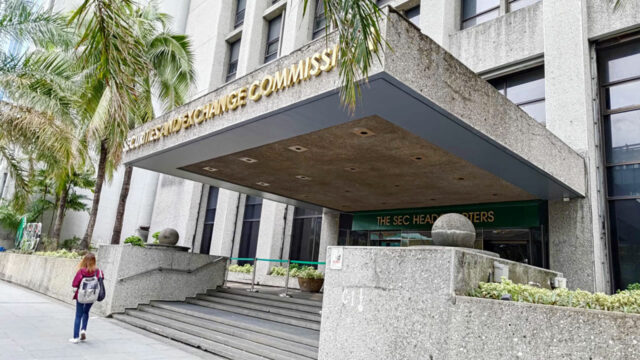
GLOBAL DOMINION Financing, Inc. (GDFI) said the recent Securities and Exchange Commission (SEC)-reported incident involving debt collection practices was isolated and that it has taken steps to strengthen compliance and oversight in its collection operations.

“While the matter arose from an isolated case, we take it seriously and have taken steps to reinforce our compliance and oversight processes, particularly in relation to collection practices,” the company told BusinessWorld in an e-mail seeking comment.

“We acknowledge the administrative fine imposed by the SEC and respect the Honorable Commission’s decision,” it added.

Global Dominion Financing is a SEC-regulated financial institution providing loans for Filipino customers’ needs, including cars, business capital, tuition, home improvements, emergencies, and medical expenses, with flexible payment options.

The company said it is fully committed to regulatory compliance and maintaining professional standards in all borrower interactions.

“GDFI maintains compliance and consumer protection frameworks aligned with applicable laws and regulations, and we continue to strengthen internal controls and monitoring systems to ensure consistent and responsible implementation across our operations and partner engagements,” it noted.

In a statement on Tuesday, the SEC imposed a P50,000 administrative fine on Global Dominion Financing for what it described as debt collection practices that violated applicable rules.

The SEC Financing and Lending Companies Department (FLCD) found that Global Dominion violated Section 1 (A), (B), and (H) of SEC Memorandum Circular (MC) No. 18, Series of 2019, and Section 4.4 (A), (B), (H), and (I) of the implementing rules and regulations of Republic Act No. 11765, or the Financial Products and Services Consumer Protection Act (FCPA). 

The order arose from a borrower’s complaint about third-party agents of the financing firm, who reportedly used road intercepts, repeated text messages demanding immediate partial payments, and threats over late payments.

Aside from the fine, the Commission ordered Global Dominion to adhere to debt collection standards under the law, while noting that repeat violations could result in higher fines or suspension/revocation of its operating authority.

MC 18 and the FCPA prohibit debt collection practices that use or threaten violence or criminal means to affect a person, reputation, or property; the use of insulting or profane language against borrowers; and contacting individuals in a borrower’s contact list, except for guarantors or co-makers. — Alexandria Grace C. Magno

Berlin Film Festival favors new talent and political heft over Hollywood glitz

REUTERS

BERLIN — The Berlin Film Festival, traditionally a more political showcase than its peers in Venice and Cannes, has a lineup this year that will take audiences further than usual from mainstream Hollywood fare, industry watchers say.

Of the 22 films in competition, only about a third feature names familiar to general audiences. These include Channing Tatum in the crime drama Josephine, the second feature from rising director Beth de Araujo, and Juliette Binoche in Queen at Sea, a family drama about dementia.

“It looks like a really hardcore art house lineup with a lot of politically important films, but not a lot of sort of big Hollywood stars,” Scott Roxborough, European bureau chief for The Hollywood Reporter, said.

Many titles, particularly in competition, are aimed at cinephiles rather than at wider audiences, he added.

STILL A SCATTERING OF STARS
The festival has some big names.

Popstar Charli xcx’s Sundance mockumentary The Moment has divided critics but will appeal to fans of “Brat summer,” an unapologetic lifestyle inspired by her 2024 album Brat.

Baywatch star Pamela Anderson, meanwhile, will promote Karim Ainouz’s film Rosebush Pruning, together with a new generation of actors including Riley Keough, Elle Fanning, and Callum Turner.

For the festival’s organizers, the wealth of lesser-known voices and emerging talent is central to the Berlinale’s identity.

Its adventurous choices this year include Soumsoum, the Night of the Stars, a film set in Chad about a mystical teenager, Mexican film-maker Fernando Eimbcke’s Flies and Leyla Bouzid’s In a Whisper, starring Palestinian actor Hiam Abbass.

OPENING FILM SENDS A MESSAGE
The serious, political tone is established at the outset with this year’s opening film: a romance set in Kabul in 2021 during the pullout of US troops entitled No Good Men.

“It feels correct,” thirty-something director Shahrbanoo Sadat said of her film being selected to launch the festival on Feb. 12.

She says it provides a chance to address the situation of women in Afghanistan right now, even if just briefly.

“I really would love people to forget everything that they know from Afghanistan and to just sit down, just watch,” she told Reuters.

FILM INDUSTRY’S 1ST MAJOR GATHERING OF THE YEAR
In Berlin, February tends to be a grey and unglamorous month, but the timing is an advantage. Its citizens are in the mood for cinema, and last year the general public bought a record 336,000 tickets, the festival said.

This year, €6 ($7) tickets for 18-to-25 year-olds could attract even more filmgoers.

The festival also has inclusivity initiatives to bring in participants from countries that typically are underrepresented in cinema, in an effort to showcase a plurality of voices, cultures and social realities.

From the film industry, around 12,000 participants from more than 140 countries annually attend the film festival and the accompanying European Film Market, where distribution deals are signed. The timing early in the year makes the event a valued gauge.

“This is where everyone sort of takes the measure of the independent film industry to see who has money, who’s willing to spend money, what films are selling,” said Mr. Roxborough.

The Berlinale’s accessibility to the general public allows buyers to test reactions to films directly, said Tanja Meissner, head of the European Film Market.

“Cinematic storytelling is an extremely important factor of European identity, and this kind of soft power of cinema shouldn’t be underestimated, especially at the moment,” she said. Reuters

MacroAsia launches Cavite farm project, starts Poro Point desalination operations

MACROASIACORP.COM

MACROASIA CORP. said its unit MacroAsia New Ventures, Inc. (MNVI) has launched an agricultural production project in Maragondon, Cavite, to support its inflight kitchens and food commissary operations.

In a disclosure on Thursday, MacroAsia said the project will be implemented after formalizing a service agreement with CoGrow Agricultural Services (CoGrow PH).

The initiative will supply a portion of the leafy vegetable requirements of its three kitchens, which support the company’s airline catering and commissary operations, it said.

MacroAsia expects the project to reduce procurement costs, mitigate exposure to price volatility, and lower logistics-related expenses while improving reliability, quality control, and supply predictability.

Land preparation is scheduled for February, planting will follow in April, and the initial harvest is expected by the end of May.

The company said the project will utilize a designated portion of MacroAsia’s property in Cavite, where the Maragondon Water Treatment Plant is also located, enabling productive use of land assets. The farm is projected to produce about 100,000 kilograms of leafy vegetables per year, with output prioritized for internal consumption.

CoGrow PH is a social enterprise that focuses on transforming land for sustainable farm uses. It offers farm consultancy, development, and management services.

MacroAsia’s core businesses include aircraft maintenance, airline catering, ground handling, property development, and water utilities.

In a separate disclosure, MacroAsia said its subsidiary Poro Point Summa Water, Inc. has started the first phase of operations at the Poro Point desalination treatment plant in the Poro Point Freeport Zone in San Fernando, La Union.

The commissioning follows the completion of the facility’s construction and is part of the company’s initiatives to provide essential water infrastructure while supporting special economic zones and industrial developments.

The Poro Point Freeport Zone, administered by the Bases Conversion and Development Authority, previously had no dedicated water utility or pipeline network. With the desalination plant now operational, locators within the zone will have access to potable water, and the facility is expected to improve supply for adjacent areas as well.

The plant is designed with modular features, allowing for future capacity expansion to meet medium- to long-term demand in the economic zone and nearby developments.

Initial water production has been completed, and commercial supply has started with Poro Point Agro-Industrial Development Company, Inc. as the first offtaker.

Poro Point Summa Water is a wholly owned subsidiary of Summa Water Resources, Inc., which is majority-owned by Allied Water Services, Inc., a unit of MacroAsia.

At the local bourse on Thursday, MacroAsia shares closed unchanged at P4.64 apiece. — Ashley Erika O. Jose

Men I Trust brings dreamy electronic pop to Manila

THE BAND MEN I TRUST performing at the Filinvest Tent on Feb. 1, 2026. — BRONTË H. LACSAMANA

By Brontë H. Lacsamana, Reporter

Concert Review
Equus Tour 2026
Feb. 1
The Filinvest Tent

FANS of dream pop flocked to Alabang for a good reason at the start of love month: Men I Trust. While the Canadian indie band had already been here in 2023 for the Wanderland Music and Arts Festival, it marked their first time to headline a show in the Philippines.

Here for Equus Tour 2026, which highlights tracks from their latest back-to-back albums Equus Asinus and Equus Caballus, the band attracted an artsy niche of Gen Zs and younger millennials. For many, Men I Trust’s music made up bedroom pop playlists when everyone was stuck at home during the pandemic, and then chill soundtrip mixes with friends when people started going out again.

Before Filipinos got the chance to hear all of that live, up-and-coming local band fitterkarma opened the concert. Their heavy metal and rock set got the crowd pumping, most notable being their breakout hit “Pag-ibig ay Kanibalismo II,” which topped charts near the end of 2025. Once the guitar feedback subsided and the lights of The Filinvest Tent dimmed, everyone knew it was time.

EASING IN
Formed in Quebec, Canada, in 2014, lead vocalist and guitarist Emmanuelle Proulx, bassist Jessy Caron, and keyboardist Dragos Chiriac set out to make hypnotic melodies in the electronic indie and dream pop genres.

They started the concert with the cozy instrumental of “To Ease You,” the opener of the Equus Caballus album. It’s a great track that wrapped the audience in a warm embrace of lo-fi funk, filled with Ms. Proulx’s dreamy vocals and hazy keyboard notes.

Continuing the distinct atmosphere were two more songs from the same album, “Come Back Down” and “Husk.” Then “Sugar” kicked in, presenting a memorable, heartfelt melody that brought this writer back to 2021 — which, can you believe, is five years ago now?

After an emotive lineup of new songs, the laidback yet subtly soulful “Ring of Past” continued the vibe. At this point, it was noticeable that the crowd was gently pulsating with the electronic dream pop tones, in a more relaxed mood than most concerts, given the genre.

The best mood shift of the night was when the venue was bathed in blue light for “Serenade of Water.” Though it’s not one of Men I Trust’s hits, it showcases their knack for encapsulating the texture of a moment.

Halfway through the song, people cheered, acknowledging just how good the band was at delivering their signature cozy sound.

OLD AND NEW
The band’s setlist mixed their beloved older songs with tracks from the two new albums, but everyone appreciated it either way.

“I Come With Mud,” from Equus Asinus, was the next to astound audiences. The steady guitar melody cut through the slow tempo of the song, urging everyone to sway softly to the music.

Men I Trust then delighted by offering a medley of six songs, including “Oncle Jazz,” “Hard to Let Go,” “Numb,” and “Lauren.” Some attendees were dancing in this part, the smooth transitions from one song to another like a balm to the ears.

Because of how cohesive these different tracks sound when woven together, the medley was one of the night’s standouts.

After that, more hits came, from “Seven” with Mr. Caron delivering a glorious extended guitar solo, to the groovy and more upbeat “Tailwhip” where the crowd was all smiles and bobbing along.

The underrated yet fun “Say, Can You Hear” ended the set to great applause, but the fans knew this could not be the end.

ENCORE
The band returned for an encore, as expected, with the audience cheering for them to come back. To the fans’ glee, they immediately obliged.

Ms. Proulx barely addressed the audience throughout the concert, focusing on her understated vocals and refined rhythms alongside the two other members, but she gave a heartfelt message before they launched into the encore.

For them, the Manila audience was “the best crowd” they’ve had the whole tour, she said. It was the closer to the Asian leg, and she expressed how the energy was different from other countries.

Men I Trust’s discography may seem relaxed to the average music listener, but their execution of the dream pop genre is unmatched. In a live show, the minimal yet enchanting lighting contributed to the band’s aesthetic.

Each of the three members is a stellar instrumentalist, their tones clean and sounding as dreamy as promised. “Show Me How” instantly drew cheers, as it is one of their biggest hits. Filipinos did not hold back in showing appreciation for the band’s solid performance.

“Worn Down” and “Billie Toppy” were the last two songs of the night. The former had tight instrumentals and a groovy pace that kept the audience pumped. The last song ended the night on a high, with the smooth and upbeat bedroom pop sound that Men I Trust is known for.

Events management company Karpos Live is known for giving musicians from all over the world a platform to perform in the Philippines. This concert showed that there are still many artists out there that Filipinos want to experience, translated to live performance.

Men I Trust delivered, and hopefully more performers will come to play music for various similar niches.

Numbers are showing it

STOCK PHOTO | Image from Freepik

The numbers are no longer whispering. They are stating plainly what many have sensed, denied, or endured for months.

What had been anticipated finally materialized when the President, in his July 28 State of the Nation Address, publicly acknowledged the extraordinary scale of corruption and governance failure in the Philippine bureaucracy. Congressional investigations that followed, reinforced by the findings of the Independent Commission for Infrastructure, did not expose an isolated episode of misconduct. They revealed a pattern, and it is ugly: public funds treated less as a sacred trust and more as liquid opportunity, accessible to those positioned, either by election or appointment, to command it.

This moment should not be reduced to a mere scandal. It reflects policy drift — the gradual divergence between institutional intent and governing reality. The Philippines has not lacked laws, procedures, or formal oversight bodies. Procurement rules exist. Audit authorities operate. Disclosure frameworks are codified. Yet enforcement capacity has significantly weakened, political incentives have mutated, and accountability has fractured across competing coalitions. Policy remains formally intact while practice departs from purpose. Corruption is not merely unlawful extraction; it is evidence of institutional breakdown.

The practical consensus on defining corruption is unambiguous. The World Bank frames it as the abuse of public office for private gain. Transparency International describes it as the abuse of entrusted power for private gain. Both formulations capture the essence of what surfaced in the flood control controversy — where infrastructure spending designed to mitigate climate vulnerability allegedly became a channel for rent extraction, measured in billions of pesos.

Measurement of corruption is inherently indirect, yet systematic attempts exist.

Transparency International’s Corruption Perceptions Index (CPI) remains the most widely referenced cross-country gauge of public sector corruption. It aggregates multiple datasets, including those from the World Bank, World Economic Forum, and other institutional surveys, compressing them into a standardized scale. While the CPI excludes citizen victimization experience and private-sector corruption, its methodology undergoes continual review to maintain analytical robustness and validity.

Against this technical backdrop, the Philippines’ 2025 outcome was less of a shock than a confirmation. After sustained public revelations, perception aligned with quantification. The country registered 32 points, its lowest score since 2012, ranking 120th of 182 jurisdictions. This contrasts sharply with the 2014 peak of 38 points — when governance reform momentum, procurement transparency initiatives, and anti-corruption prosecutions were widely viewed as credible signals of institutional tightening.

Comparative context deepens the implications.

Governance leaders — Denmark, Finland, Singapore, New Zealand — consistently combine administrative professionalism with high transparency. At the opposite extreme lie states characterized by institutional collapse or chronic conflict. Within East and Southeast Asia, the Philippines now trails not only advanced economies but also several middle-income peers pursuing bureaucratic modernization and digital governance reforms. That relative slippage matters because investors evaluate destinations comparatively, not in isolation.

More troubling is the distance from benchmarks: regional CPI average of roughly 45 and global average of 42. These gaps signal more than episodic governance lapses. They indicate systemic perceptions of weak fiscal guardianship, incomplete sanctioning of misconduct, and fragile public trust. Public outrage surrounding alleged flood control fund diversion, cited explicitly in CPI commentary, reinforced these perceptions but did not create them.

The index’s evaluative components clarify the cumulative nature of such scoring. It assesses bribery prevalence, diversion of public funds, sanction credibility, bureaucratic burdens that foster rent-seeking, nepotistic appointments, disclosure transparency, whistleblower protection, state capture, and information accessibility. The Philippine score therefore reflects layered historical memory: procurement controversies during the pandemic, unresolved pork-barrel issues, Yolanda rehabilitation criticism, and recurring governance disputes. Perception compounds; credibility decays incrementally.

Viewed from an institutional perspective, the result constitutes more than reputational discomfort. It reflects skepticism toward democratic checks and balances — particularly when impeachment proceedings appear politicized or when judicial outcomes seem unevenly applied across political hierarchy. Such perceptions reinforce policy drift: the formal architecture of accountability persists, yet its practical application appears selective or uncertain.

This institutional dimension intersects directly with economic interpretation.

As we wrote last week, there are two dominant narratives that attempt to explain the country’s moderating growth momentum. One emphasizes structural constraints including manufacturing stagnation, limited tradable expansion, productivity gaps, and exchange-rate debates, treating policy shortcomings largely as technocratic miscalculation. The other dismisses corruption as analytically convenient, arguing that deeper issues lie in oligarchic concentration, foreign dominance, or dynastic politics.

Both narratives, in isolation, are incomplete. Governance quality is not peripheral; it shapes the feasibility of structural reform itself. Corruption and weak institutions influence industrial policy credibility, infrastructure execution, fiscal prioritization, and regulatory predictability. They determine whether democratic-development strategies gain traction or dissipate. Governance weakness is not an alternative explanation, it is often the transmission mechanism through which structural weakness persists.

Consequently, corruption perception should be understood as a macroeconomic variable with measurable channels of influence.

Investment responds immediately. Empirical research on Southeast Asian capital flows consistently links governance indicators with FDI allocation patterns. In the Philippine context, business surveys and procurement participation data have repeatedly noted reluctance among multinational firms to engage in public bidding environments perceived as opaque or administratively burdensome. Elevated compliance costs and unpredictability translate into reduced capital formation and weaker technology transfer.

Fiscal transmission follows. Public expenditure efficiency correlates strongly with governance integrity. Leakages reduce multiplier effects of infrastructure spending, limit human capital investment, and constrain innovation capacity. Historical Philippine experience, from delayed project execution to underutilized capital budgets, demonstrates how governance distortions translate into lower productivity and elevated logistics costs, factors frequently cited in assessments of competitiveness, or ease of doing business.

Financial and external channels reinforce these effects. Market confidence influences sovereign spreads, portfolio flows, and exchange-rate volatility. Governance perception is embedded in credit-rating outlooks and investor risk modeling. With the Philippines managing persistent current account pressures, shifts in sentiment can magnify currency and funding vulnerabilities.

Finally, structural transformation itself is affected. Rent-seeking environments divert talent and capital toward arbitrage rather than innovation. Export diversification weakens when infrastructure credibility falters. Tourism, manufacturing integration, and high-value services — sectors essential to escaping the lower-middle-income threshold — require institutional reliability that corruption perceptions undermine.

The implication is clear.

The CPI score is not symbolic commentary or moral signaling. It is a pricing input embedded in economic decision-making. Investors, lenders, and analysts take into account governance perception in their models shaping capital allocation, risk premia, and growth expectations.

The numbers therefore perform a function beyond description. They discipline assumptions.

They remind us that policy drift is rarely dramatic. It advances quietly through normalized inefficiency, tolerated impunity, and incremental erosion of institutional credibility. By the time the data crystallize its effects, divergence is already entrenched.

If there is urgency in this moment, it lies not in reputational repair but institutional recalibration. Anti-corruption cannot remain episodic outrage followed by procedural fatigue. It must restore alignment between authority, accountability, and public purpose.

Because in the end, corruption does more than steal resources. It distorts incentives. It reallocates opportunity. It reshapes expectations about what governance can deliver.

And when expectations decline far enough, growth itself adjusts downward — not abruptly, but persistently — until underperformance becomes mistaken for destiny.

The numbers are showing it.

The question is whether we are prepared to read them for what they truly say.


Diwa C. Guinigundo is the former deputy governor for the Monetary and Economics Sector, the Bangko Sentral ng Pilipinas (BSP). He served the BSP for 41 years. In 2001-2003, he was alternate executive director at the International Monetary Fund in Washington, DC. He is the senior pastor of the Fullness of Christ International Ministries in Mandaluyong.


AyalaLand Logistics says income down 71% in 2025 on lower lot sales

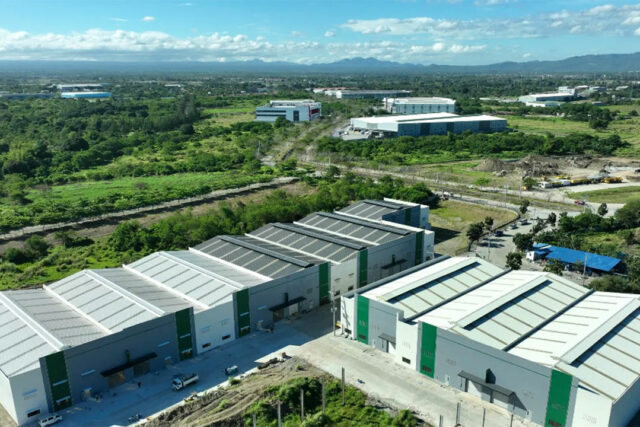
Cavite Technopark — AYALALANDLOGISTICS.COM

AYALALAND Logistics Holdings Corp. (ALLHC), the industrial real estate subsidiary of Ayala Land Inc. (ALI), reported a 71% slump in net income for 2025 to P200 million from P701 million a year earlier, due to a decline in industrial lot sales.

Consolidated revenues also fell 26.8% to P3.8 billion from P5.2 billion in 2024, the company said in a press release on Thursday. ALLHC said its annual report for the year ended Dec. 31, 2025, will be submitted on or before April 15.

“Full-year performance was shaped by lower industrial lot sales alongside the continued stabilization and ramp-up of leasing assets completed and acquired during the year,” ALLHC said.

Revenues from the sale of industrial lots fell 50% to P1.7 billion in 2025 from a year prior, citing a combination of limited available inventory and more tempered demand.

“In a more measured market environment, we prioritized stabilizing and optimizing our assets while continuing to advance our industrial developments in select locations,” ALLHC President and Chief Executive Officer Robert S. Lao said.

Revenues from ALLHC’s leasing businesses rose 8% to P2 billion, driven by stable operations and continued portfolio expansion.

“Performance across leasing segments reflected stable operations and continued portfolio expansion,” the company said.

Warehouse revenues stood at P746 million in 2025, slightly lower than the previous year amid changes in tenant mix, while the company expanded its warehouse footprint.

ALLHC closed 2025 with a total warehouse gross leasable area (GLA) of 379,000 square meters (sq.m.), 11% higher than a year earlier.

“This growth was driven by the acquisition of warehouse facilities in Urdaneta and Iloilo, as well as the completion of additional units in Mabalacat and Naic, contributing a combined 39,000 sq.m. to the portfolio,” the company said.

Revenues from cold storage facilities jumped 88% to P308 million in 2025, driven by contributions from recently acquired facilities.

The company expanded its cold storage footprint to 31,600 pallet positions by yearend, 56% higher than 20,300 pallet positions in 2024.

Commercial leasing revenues rose 2% to P935 million, supported by improved mall occupancy levels and stable office leasing.

In 2025, ALLHC added P3.2 billion worth of saleable lots with new industrial inventory in its Cavite and Batangas Technoparks. The company also completed Phase 1A of its A-FLOW data center campus in Biñan, Laguna, with an initial 6-megawatt IT capacity.

For 2026, ALLHC is working on the next phases of its Pampanga Technopark, which will be registered with the Philippine Economic Zone Authority and the Board of Investments.

In a separate disclosure, ALLHC said its board of directors elected Jose Eduardo A. Quimpo II, chief financial officer of its parent firm, as director. He replaces former ALI executive Augusto D. Bengzon, who stepped down from ALLHC’s board, effective Feb. 12.

ALLHC shares on Thursday declined 0.74%, or one centavo, to close at P1.34 apiece. — Beatriz Marie D. Cruz

Peso surges to four-month high as funds flow to Asian markets

BW FILE PHOTO

THE PESO strengthened to a fresh four-month high against the dollar on Thursday, joining a regional rally amid growing appetite for Asian assets.

The local unit surged by 17.5 centavos to close at P58.115 versus the greenback from its P58.29 finish on Wednesday, data from the Bankers Association of the Philippines showed.

This was the peso’s strongest finish in almost four months or since it closed at P58.055 on Oct. 15, 2025.

The local currency opened Thursday’s trading session stronger at P58.18 against the dollar. Its intraday low was at P58.26, while its best showing was at P58.09 against the greenback.

Dollars traded increased to $1.62 billion from $1.46 billion on Wednesday.

“The peso appreciated along with regional peers, buoyed by the rally in Asian equities amid optimism on Asia’s exceptionalism trade,” a trader said in a phone interview.

The currency rose on “bigger gains in Asian stock markets recently amid some increased fund flows to emerging markets, especially in Asia, that partly benefited Philippine financial markets,” Rizal Commercial Banking Corp. Chief Economist Michael L. Ricafort likewise said in a Viber message.

He added that the peso was stronger as the dollar stayed near multi-month lows,

For Friday, the trader sees the peso moving between P58 and P58.40 per dollar, while Mr. Ricafort expects it to range from P58 to P58.20.

Asian stocks rose to a record high on Thursday, while the dollar firmed against most currencies except the yen after a surprisingly strong US jobs report dented near-term rate cut expectations, setting the stage for inflation data on Friday, Reuters reported.

Markets in South Korea and Japan hit all-time peaks, lifted by the technology sector. That lifted MSCI’s broadest index of Asia-Pacific shares to another record. The index was 0.7% higher, taking its gains in the first six weeks of the year to about 13%.

Investor focus this week is on a batch of US economic reports with the data on Wednesday showing job growth unexpectedly accelerated in January while the unemployment rate eased a touch, signaling labor market stability that could encourage the Federal Reserve to leave rates unchanged in the near term.

The elevated yields helped support the under-pressure dollar, which rebounded a bit against most currencies. Analysts, though, point out that uncertainties on Fed independence and policy risks suggest that the dollar will need more such positive surprises in data to sustain the rebound. — A.M.C. Sy with Reuters