Home Blog Page 2369

Lenovo Philippines unveils latest AI-powered laptops

LENOVO PHILIPPINES on Wednesday launched its latest artificial intelligence (AI)-powered Yoga and IdeaPad laptops that aim to boost user productivity while catering to different lifestyles.

“Lenovo is excited to introduce our latest lineup of AI-powered devices to the Philippine market, designed to elevate productivity, creativity, and connectivity for Filipino consumers,” Lenovo Philippines General Manager Michael Ngan said in a statement.

“Our goal is to provide technology that not only enhances users’ digital experiences but also adapts seamlessly to their unique lifestyles. With these new AI-driven devices, we’re making advanced technology more accessible, helping Filipinos achieve more in their everyday lives.”

The new device lineup, now available at authorized Lenovo retailers across the Philippines, features four new AI-powered laptops with advanced processors, high-resolution displays, and longer battery life that feature Microsoft Copilot as AI assistant.

The Yoga Slim 7i Aura Edition, priced at P103,995, is a 15.3-inch laptop that has a battery life of up to 22 hours. It is powered by the Intel Core Ultra processor with a dedicated AI Neural Processing Unit.

It also has an ultra-thin design for users on the go and sports a 2.8K PureSight Pro display with 500 nits brightness.

Meanwhile, the Yoga Pro 7, priced at P100,995, is powered by an AMD Ryzen AI processor. It has a 16-hour battery life and is equipped with a 14.5-inch 2.8K OLED display with a 120Hz refresh rate and low blue light certification for eye comfort.

The IdeaPad 5x 2-in-1 is a 14-inch device with a Qualcomm Snapdragon X Plus CPU, having a battery life of up to 21 hours. Its 100% DCI-P3 color gamut offers a brightness of 400 nits.

Lenovo said the laptop is built with “military-grade” durability standards and can be used in four modes to fit one’s lifestyle: laptop mode, tablet mode, viewing mode, and tent mode. It costs P67,995.

Lastly, the IdeaPad Slim 5x features Qualcomm’s advanced Snapdragon X Plus platform, with up to 100% DCI-P3 color accuracy and Wi-Fi 7 connectivity. It has an expected battery life of 25 hours. The price for the device is set at P71,995.

The four new devices feature Lenovo’s user assistance features, namely Smart Mode (adapts to user activities), Smart Share (image sharing across devices), and Smart Care (24/7 customer support).

The AI-powered laptops also have Knowledge Assistant, which allows users to better manage AI-generated content, and PC Assistant for device configuration and optimization.

“This new generation of Lenovo products is not just about hardware — it’s about enhancing the way we work, recreate, and connect with each other,” Charlotte O. Koa, consumer business lead at Lenovo Philippines, said during the launch event on Wednesday.

“These devices, powered by advanced AI capabilities, are designed to anticipate user needs, make their tasks easier, and deliver a more personalized experience,” she added. — Beatriz Marie D. Cruz

SMIC president optimistic amid easing inflation

SMSUPERMALLS.COM

SY-LED conglomerate SM Investments Corp. (SMIC) anticipates better financial performance as easing inflation could boost consumer spending, its president said.

“With inflation easing, we remain positive. An improving macroeconomic environment should help both our businesses and consumers moving forward,” SMIC President and Chief Executive Officer Frederic C. DyBuncio said in a statement to the stock exchange on Wednesday.

The country’s inflation rate rose to 2.3% in October from 1.9% in September but was lower than 4.9% a year ago.

Mr. DyBuncio said this as SMIC recorded a 9% increase in its nine-month consolidated net income to P60.9 billion from P55.9 billion last year.

The banking segment had the largest net income share at 50%, followed by property at 27%, retail at 15%, and portfolio investments at 8%.

January-to-September revenue rose by 5% to P462.5 billion from P440.4 billion a year ago.

“We continued to see good growth across our businesses in the third quarter, particularly in banking,” Mr. DyBuncio said.

For the banking business, BDO Unibank, Inc. grew its net profit by 12% to P60.6 billion on the sustained contribution of its core intermediation and fee-based service businesses. Gross customer loans surged by 13% while total deposits expanded by 10%.

China Banking Corp. recorded a 13% increase in consolidated net income to P18.4 billion, led by sustained strong growth from core businesses.

Its loan portfolio surged by 14% to P871.6 billion, driven by both business and consumer lending segments. Total deposits increased by 13% to P1.3 trillion.

The property business led by SM Prime Holdings, Inc. saw a 12% increase in net income to P33.9 billion as consolidated revenue surged by 8% to P99.8 billion.

The mall business, which accounts for 57% of consolidated revenues, reported an 8% growth to P56.5 billion. Mall rental income rose by 8% to P48.5 billion, while cinemas, event ticket sales, and other revenues rose by 4% to P8 billion.

The primary residential business saw a 9% growth in revenue to P31.2 billion, with reservation sales at P47 billion. Its other businesses, including offices, hotels, and convention centers, recorded an 11% revenue growth to P11 billion.

For the retail segment, SM Retail reported a 6.6% decline in net income to P12.8 billion, while revenue surged by 4% to P301.8 billion.

“Department store performance saw normalization of margins, which remain higher than pre-pandemic levels. Food retail performance remained positive, with revenue growth of 7%, supported by better volumes and expansion,” SMIC said.

“Specialty store performance was strong in discretionary categories such as health and beauty and fashion,” it added.

Meanwhile, SMIC said its portfolio investments sustained their positive contribution to consolidated net income.

Revenue of 2GO Group, Inc. grew by 14% due to the increase in travel and the growing tourism industry, while Atlas Consolidated Mining and Development Corp. increased revenues by 7% due to higher copper and gold prices.

On Wednesday, SMIC shares dropped by 1.85% or P17 to P900 apiece. — Revin Mikhael D. Ochave

Solaire’s Waterside sizzles with four hands

Lechon de lobster, glutinous rice, sauce trifecta

By Joseph L. Garcia, Senior Reporter

FIRE and the Philippines are in the spotlight on Nov. 24 for a four-hands dinner at Solaire Resort Entertainment City’s Waterside restaurant. The special collaborative dinner will be helmed by Solaire’s own Alfred Santiago, and Kása Palma’s Aaron Isip.

Both chefs have received training from Michelin-starred restaurants. Mr. Santiago spent time at Singapore’s Burnt Ends, rated No. 15 at Asia’s 50 Best Restaurants and No. 68 worldwide. Mr. Isip spent more time abroad, leaving the Philippines for culinary school at Le Cordon Bleu in Paris, climbing up the ladder (with a tenure at Apicius) and spending more than 10 years in some of the top kitchens in Paris. In 2015, he was awarded the Trophée Espoir of Ile de France by Gault & Millau. The bar, therefore, is set high, and the chefs hurdled it with ease during a Nov. 7 tasting.

The meal kicked off with amuse bouches of yellowtail scad, ube tapioca, and dragonfruit aguachile by Mr. Isip, and one with a meringue of tuna and crab fat by Mr. Santiago.

The next course was a raw bar filled with shellfish: we praise the scallops, with just a hint of a buttery flavor and a strong umami flavor with a sweetish sweep (this was achieved through brushing it with tamarind brown butter kosho), while the oysters with torched bone marrow and green mango relish had an oceanic flavor that merely served as a background to the mastery in its relish. Mr. Isip placed these (including a serving of razor clams on singed beans and lambanog) on a bed of kansi ice (kansi, a soured broth, frozen then crushed), which served as a palate cleanser. While one may be familiar with the possible permutations of seafood, we highly doubt most people have had it served that way.

A lot of the dishes were from Mr. Isip’s tasting menu at Kása Palma. We then got a taste of one his signatures, a tupig (rice cake) with tinapa (smoked fish) mascarpone with smoked caviar. What a treat: with the sticky and dense tupig, it was like chewing on the idea of smoke made solid.

He also brought out their signature Pulpo with Cherry Tomatoes and smoked yoghurt, and there’s a great contrast with the bouncy octopus and the sauce, which had a hidden element of spice not felt until the last swallow. Mr. Santiago’s crab pinangat with smoked gata, along with Mr. Isip’s red snapper (with the crispy skin of the fish fanning out with flair), were very indulgent. We also give this praise for Mr. Isip’s beef short ribs confit with a peanut sauce (calling to mind a kare-kare), and his lovely freak of nature, Lechon de Lobster Kurobota — suckling pig wrapped around lobster.

However, if we’re going for an otherworldly dining experience, we’d give this to the freaky-looking Mantis Shrimp by Mr. Santiago, with spiced buro (fermented rice), crab bisque, and curry leaves. The chatter died down as diners carefully picked through the crustacean, looking and feeling like alien flesh, brought down back home with a sweetish and oceanic taste hitting the tongue at the same time.

Dessert was relatively mild: Mr. Santiago presented a Bombe named after Waterside, with a white chocolate dome looking like a coconut husk, toasted rice ice cream, calamansi meringue, dark chocolate rum sauce, and a final flambé with lambanog. Mr. Isip’s dessert was a homage to corn: a corn madeleine stuffed with corn custard (then shaped like corn), sweet corn ice cream, and corn puffs.

The dishes all had the flavor of flame and smoke in them: that’s because of Mr. Isip’s own predilection for firewood cooking. “In our restaurant, we have a firewood kitchen,” he explained, saying that they’re trying to bring that taste to a bigger audience by collaborating with Solaire.

Mr. Isip praises fire, and the flavors it imparts: “It’s really the essence of cooking. This is how we differentiated ourselves from animals. We learned how to cook with fire.”

The dinner (price available upon request) will be held on Nov. 24 at 6:30 p.m. Seats at Waterside in Solaire Resort Entertainment City can be reserved by calling 8888-8888 or e-mailing restaurantevents@solaireresort.com.


Christmas comes to Solaire

SOLAIRE recently kicked off the holiday festivities with a bang as it hosted tree lighting ceremonies at Solaire Resort Entertainment City and Solaire Resort North with both boasting 20-foot Christmas trees placed around the property. Solaire Resort Entertainment City in Paranaque City’s tree lighting event featured a performance by Lea Salonga and Clay Aiken. Meanwhile, Solaire Resort North welcomed the holiday season with its first tree lighting ceremony with a performance by Ballet Philippines along with a serenade by Martin Nievera. Guests at the Solaire Resort North Tree Lighting event included (L-R) Gregory Hawkins, chief operating officer of Solaire Resort North; Donato Almeda, vice-chairman for Construction & Regulatory Affairs of Bloomberry Resort Corp.; Joy Belmonte, mayor of Quezon City; Congressman Arjo Atayde; and Assistant Vice-President Vina Oca, PAGCOR-GLD.

Yields on BSP’s term deposits inch lower after Fed rate cut

BW FILE PHOTO

YIELDS on the Bangko Sentral ng Pilipinas’ (BSP) term deposits went down on Wednesday after the US Federal Reserve delivered another rate cut last week.

The BSP’s term deposit facility (TDF) attracted bids amounting to P291.099 billion on Wednesday, higher than the P230 billion on the auction block as well as the P250.427 billion seen a week ago for a P210-billion offer.

Broken down, tenders for the seven-day papers reached P155.328 billion, higher than the P130 billion auctioned off by the central bank and P133.311 billion in bids for a P120-billion offer seen the previous week.

Banks asked for yields ranging from 5.955% to 6.1%, slightly narrower than the 5.955% to 6.13% band seen a week ago. This caused the average rate of the one-week deposits to inch down by 0.68 basis point (bp) to 6.0824% on Wednesday from 6.0892% previously.

Meanwhile, bids for the 14-day term deposits amounted to P135.771 billion, above the P100-billion offering and the P117.116 billion in tenders for the P90 billion placed on the auction block a week ago.

Accepted rates for the tenor were from 6.1167% to 6%, wider than the 6.1281% to 6% margin recorded a week ago. With this, the average rate for the two-week deposits fell by 1.14 bps to 6.1167% from the 6.1281% logged in the prior auction.

The central bank has not auctioned off 28-day term deposits for more than four years to give way to its weekly offerings of securities with the same tenor.

The term deposits and the BSP bills are used by the central bank to mop up excess liquidity in the financial system and to better guide market rates.

TDF yields went down on Wednesday after the US central bank’s policy decision last week, Rizal Commercial Banking Corp. Chief Economist Michael L. Ricafort said in a Viber message.

“Any possible protectionist Trump policies could reduce future Fed rate cuts and, in turn, could also reduce local policy rate cuts,” Mr. Ricafort added.

The Federal Reserve cut interest rates by a quarter of a percentage point last week as its policy makers began taking stock of what could become a more complex economic landscape when US President-elect Donald J. Trump takes office next year, Reuters reported.

Fed Chair Jerome H. Powell said the results of the presidential election, which paved the way for a US chief executive who has pledged widespread deportation of immigrants, broad-based tariffs, and tax cuts, would have no “near-term” impact on US monetary policy.

Mr. Powell said the Fed will continue assessing data to determine the “pace and destination” of interest rates as officials reset currently tight monetary policy to account for inflation that has slowed markedly in the past year and is nearing the US central bank’s 2% target.

But as the new administration’s proposals take shape, the Fed chief said the central bank would begin estimating the impact on its twin goals of stable inflation and maximum employment.

“It’s a process that takes some time,” said Mr. Powell, who spoke in a press conference following the Fed’s decision to reduce its benchmark overnight interest rate to the 4.5%-4.75% range. “It’s all of the policy changes that are happening. What’s the net effect? The overall effect on the economy at a given time? That’s a process… we go through all the time with every administration.”

For now, at least, both inflation and interest rates are moving lower in line with a Fed outlook that sees price pressures continuing to ease amid ongoing economic growth and a job market the central bank says has “generally eased” but remains healthy.

Mr. Powell said for now the economic outlook was solid and the Fed hoped to keep it that way.

“This further recalibration of our policy stance will help maintain the strength of the economy and the labor market, and will continue to enable further progress on inflation as we move toward a more neutral stance over time,” Mr. Powell said.

The Fed’s policy statement noted that risks to the job market and inflation were “roughly in balance,” repeating language from the statement released after its Sept. 17-18 meeting.

The new statement also slightly altered the reference to inflation, saying that price pressures had “made progress” towards the Fed’s objective, rather than the prior language that it had “made further progress.”

Mr. Powell said that the language change was not meant to signal that inflation has been sticky. The Fed, he said, has always expected progress to be bumpy, and policy makers have gained confidence that inflation is on a sustainable path to the 2% goal. — Luisa Maria Jacinta C. Jocson with Reuters

The need for property tax reform

FREEPIK

About 30 years ago, I recall an initiative by the private sector to study the potential of real property taxes and how an overhaul of the present system of valuing and taxing land nationally and locally can result in higher revenues even while lowering rates for income tax and consumption taxes like value-added tax.

I believe that today more than ever, this matter is worth exploring. As experts from the International Monetary Fund (IMF) noted in a recent blog, raising taxes can “create social unrest.” In this regard, “efficient real estate taxes have an advantage: by being locally collected and spent, they may be politically less challenging than increases in broad-base national taxes.”

More important, noted IMF experts Martin Grote, Mario Mansour, and Francois Wen, “recurrent taxes on immovable property could help local governments capture the wealth generated through construction-intensive urbanization.” This is especially helpful in lieu of taxing income and wealth, “which could be highly mobile.”

I raise this matter in light of comments that the government is likely to face difficulties in convincing Congress to pass new taxes this year and next. Until after the May 2025 elections, at least. Perhaps better timing for new taxes is the second semester next year after a new Congress opens.

As we work to achieve sustainable economic growth, maybe we can rethink the tax structure. Rather than heavily relying on income taxes, perhaps it is timely to consider a strategic shift toward property taxes, and in part, to business, and consumption taxes — especially on goods with negative externalities.

Personal income taxes, though progressive, burdens especially middle-income earners, potentially hindering their spending capacity. By shifting away from personal income taxes and toward property and business taxes, governments can generate more revenues from profitable sectors.

Corporate tax reforms can prove beneficial for revenue generation by minimizing avoidance and fighting evasion. Obviously, to encourage investments, business or corporate income should be taxed at fair and globally competitive rates. But, the government need not bend backwards too much in this regard.

As for shifting more of the tax burden to consumption, this should be skewed specifically towards excise taxes on goods associated with negative externalities, such as sugary beverages; cigarettes, tobacco, and vaping products; beer, liquor, and other alcoholic beverages; and in part, carbon-emitting fuels.

Options include higher excise taxes on jewelry; motor vehicles including motorcycles; and, maybe unhealthy or junk food. The objective is to minimize the consumption of goods that have high social and health costs. It is incidental that taxing them provides a source of revenue. The aim is to discourage harmful consumption behaviors.

By taxing goods that carry social costs, the government can create a two-fold benefit: theoretically it reduces the demand for harmful products, and, at the same time, generate revenue that can be channeled or earmarked for spending on healthcare, environmental protection, and public education.

Mexico introduced a soda tax in 2014 to combat rising diabetes rates, using excise taxes to generate revenue as well as reduce public health costs. Within the first year, sugary drink sales dropped by over 5%, and the tax now provides additional funding for healthcare and public health initiatives. The Philippines has followed suit with its own sugary drinks tax.

As for India, it implemented a carbon tax on coal production to curb emissions and fund renewable energy projects. This excise tax, levied at a specific rate per ton of coal, has raised significant funds for green energy development, highlighting how consumption taxes on polluting industries can drive sustainable development while meeting fiscal goals.

But more government revenues, if feasible, should come from property taxes. And it should be collected and managed at the local level. Property taxes capture wealth accumulated through real estate and ensure that property owners contribute fairly to local infrastructure and service costs.

Property taxes offer a largely untapped revenue stream in many developing countries, where they currently represent only a fraction of what they do in more developed economies. In wealthier countries, property taxes contribute more than 1% of GDP, with some countries reaching nearly 3%. In contrast, emerging regions like Asia and Africa generate only around 0.1% of GDP from property taxes, highlighting a missed opportunity.

By expanding property tax revenues, the Philippines can build a more stable and equitable revenue base, less susceptible to economic fluctuations than income taxes. Shifting the tax burden from personal income to property also allows the government to retain a progressive revenue source without stifling individual earning potential.

In cities like Lagos in Nigeria and Delhi in India, improved property tax collection has reportedly generated more funds for urban development, better waste management, and increased social services — enhancing the quality of life for residents while stabilizing local budgets.

In Lagos, by mapping properties via GIS technology and tightening tax compliance, the city reportedly increased its property tax collection fivefold, generating over $1 billion in a decade. This revenue supports critical urban services and infrastructure improvements, boosting public trust and improving local quality of life.

And in Bogota, Colombia, updated property valuations and tax reforms have reportedly helped municipalities fund local development projects. Linking property taxes directly to urban improvements, Bogota has seen rising public acceptance and compliance, particularly as residents observe the impact on infrastructure and local services.

In Belo Horizonte in Brazil, a clear correlation was reportedly established between property tax revenues and visible local improvements, including road maintenance and waste management. This transparency encouraged higher compliance and provided a stable revenue source for ongoing municipal projects.

To be fair and equitable, property taxes should impose minimal burdens on those without substantial assets. To protect low- and middle-income homeowners from a high tax burden, exemptions and deferred payments can be considered. This way, the government can promote affordable homeownership while ensuring that those who benefit most from urban growth also contribute proportionately.

In raising property taxes, a gradual, phased approach is recommended. Municipal governments should also establish clear policies on exemptions and implement mechanisms for regular public reporting of tax expenditures. By limiting exemptions to a narrow range of beneficiaries, local governments can prevent revenue erosion and ensure funds are available for public services.

For asset-rich but cash-poor households, such as retirees or elderly homeowners, the government can introduce deferral programs that allow taxes to be postponed until the property is sold. Exemptions or rebates can also be given to pensioners and low-income households. This approach ensures that property taxes remain fair and do not impose undue financial hardship on vulnerable groups.

Having localized, visible benefits from higher property taxes can help improve public buy-in, particularly from low- and middle-income groups, and hopefully minimize political resistance to taxation. People should be able to directly observe — see and feel — how their tax contributions translate into public benefits.

Of course, it goes without saying that business or corporate income taxes should continue to play a major role in revenue collection, as they allow governments to capture a share of corporate profits without unduly burdening individual earnings. Fair, but not necessarily low, taxation will allow corporations to contribute to the public good while maintaining the productivity that drives economic growth.

In Colombia, corporate taxes are said to fund local public services and infrastructure projects, showing a direct link between corporate taxation and social development. Such taxes can be earmarked specifically for education, healthcare, and economic development initiatives.

By connecting corporate tax revenue to visible projects, Colombia has built public trust, aligning corporate taxation with social benefits. As a result, corporate tax compliance has reportedly increased, showing how transparency in the use of taxes fosters acceptance and collaboration.

Overhauling property, corporate, and excise taxes on harmful consumption can support a robust and equitable tax base. By shifting away from personal income taxes, governments can create revenue systems that capture wealth more fairly, incentivize healthier behaviors, and fund public services effectively.


Marvin Tort is a former managing editor of BusinessWorld, and a former chairman of the Philippine Press Council

matort@yahoo.com

Samsung launches Galaxy A16 series phones in PHL

SAMSUNG ELECTRONICS on Wednesday launched in the Philippines its latest entry-level Galaxy smartphones, the Galaxy A16 5G and LTE.

“These new, affordable smartphones bring stunning improvements to the A series lineup, combining immersive visuals, sleek designs, and secure, reliable experiences; elevating everyday experiences for its users,” Samsung said in a statement.

The Galaxy A16 5G is priced at P13,990 and is now available at selected retailers nationwide. Meanwhile, the LTE model costs P9,900 and will be on sale starting Dec. 4.

The 5G variant comes in Blue Black and Gold, while the LTE model is available in Black, Grey, and an online exclusive color, Light Green.

“Galaxy A16 5G and LTE adopt Samsung’s signature Galaxy design language, featuring refined, rounded corners and a linear camera lens layout,” the brand said.

The Galaxy A16 sports a 6.7-inch FHD+ Super AMOLED display, which Samsung said is an upgrade to the 6.5-inch screen on the A15 series.

“The Super AMOLED display provides scenes with true-to-life colors and sharp clarity, making the display ideal for watching videos, gaming, or browsing content,” it said.

“The Galaxy A16 series also introduces an improved, sleeker design, with a thinner body measuring just 7.9mm — down from 8.4mm in last year’s A15 series. The streamlined bezels further emphasize the 6.7-inch FHD+ Super AMOLED display, helping users better immerse in content and gameplay while enhancing the overall screen size and visual experience,” it added. “In addition, the key island design provides a sleek look and feel, which contributes to an easy and intuitive grip on the Galaxy A16, making the device more comfortable to hold for daily use.”

The phone has a triple lens rear camera setup with a 50-megapixel (MP) main sensor, a 5-MP ultra-wide lens, and a 2-MP macro lens. It also has a 13-MP front camera.

It has an octa-core processor and a 5000mAh battery that supports 25W fast charging.

Both 5G and LTE models of the device are IP54-rated for dust and water resistance.

The A16 series smartphones will receive six generations of One UI and Android OS updates and six years of Samsung Security Maintenance Releases.

“Samsung Knox Vault is also integrated into the Galaxy A16 series, providing high-level security to protect private, personal data such as user passwords and secrets from hardware-based attacks including voltage glitches, temperature tampering, and laser interference,” the brand said. — BVR

Filinvest Q3 net income jumps to P3.91 billion

ONE FILINVEST IN ORTIGAS AVENUE — FILINVEST.COM

GOTIANUN-LED conglomerate Filinvest Development Corp. (FDC) saw its attributable net income for the third quarter climb by 96.5% to P3.91 billion, led by growth across its business segments.

The conglomerate’s revenues increased by 35.7% to P27.04 billion from P19.93 billion a year ago, its financial statement showed.

Costs and expenses climbed by 38.4% to P25.08 billion from last year’s P18.12 billion.

From January to September, the company’s attributable net income jumped by 59% to P9.45 billion from P5.93 billion previously.

“The net income in the first nine months of 2024 was at a record high for comparative periods,” FDC President and Chief Executive Officer Rhoda A. Huang said.

“The strong performance was across the Group’s business segments and we look forward to sustaining this growth trajectory for the balance of the year,” she added.

Total revenues and other income during the period rose by 34.4% to P86.84 billion from the previous year’s P64.6 billion.

For the banking business, EastWest Bank reported a 29% increase to P38.2 billion, driven by the 17% increase in consumer loans leading to higher net interest income.

“Consumer lending remained the bank’s core product, accounting for 83% of the total loan book. This helped push net interest margin to 8.1% versus the 7.7% recorded in the same period in 2023. Meanwhile, noninterest income grew by 39%, in line with banking transaction growth,” the company said.

For the power business, FDC Utilities, Inc.’s revenues improved by 66% to P18.7 billion, buoyed by higher energy sales from its fully contracted 405-megawatt plant in Misamis Oriental.

“The significant rise in power generation and sales was made possible by the Mindanao-Visayas interconnection project that boosted demand,” FDC said.

For the real estate business, Filinvest Land, Inc. (FLI), Filinvest Alabang, Inc., and Filinvest REIT Corp. contributed P21.8 billion to total revenues, higher by 27% from last year.

Filinvest Hospitality Corp., the conglomerate’s hotel business, reported a 39% increase in revenues to P2.9 billion.

On Wednesday, FDC shares were unchanged at P5.40 apiece. FLI shares were unchanged at P0.80 per share. EastWest shares climbed by 0.81% to P9.80 each. — Sheldeen Joy Talavera

New Zealand whiskey is an adventurous new frontier in spirits

By Brad Japhe

NESTLED humbly among the sprawling serrated earth of New Zealand’s Crown Range, an hour’s drive north of Queenstown, a cozy stone-walled distillery quietly pumps columns of steam toward the sky. Speckled white dots of sheep grazing on hills along the horizon are the only other obvious signs of life. It would be easy to confuse the scene with something straight out of the Scottish Highlands — especially with the smell of freshly fermented cereal grain piercing the crisp mountain air.

But then a whirring hum enters the sharp valley, intensifying for several seconds as a helicopter reveals itself over the ridge line. This is a markedly South Island sort of noise pollution, which dissipates back to quietude as it delivers its cargo of four well-heeled whiskey seekers to the rose garden of Cardrona Distillery. They’ve come like I have on this Tuesday in February, to sample the barrel-aged bounty of a modern New Zealand whiskey renaissance that promises to reverberate across the globe into the new year.

The distillery’s founder, Desiree Reid, is playing an outsize role in the effort to establish New Zealand among the ranks of Japan, Taiwan, Australia, and India with top-shelf new-world whiskey exports. She began laying down liquid at Cardrona in November 2015 — then a fairly audacious act considering the failed attempts of those that set sail before. Hers would be the first whiskey to roll off a South Island still since the Willowbank Distillery in Dunedin unceremoniously shuttered in 1997 from lack of interest, a mere 28 years after initially roaring to life.

Today she is joined by about two dozen colleagues, most of them considered micro-distilleries by international standards. The output of Cardrona — one of the bigger whiskey makers in the South Island — totals about 250,000 liters per year, compared with 21 million for Glenlivet Scotch.

And though almost all these nascent producers are specializing in single malt, there’s not yet a singular stylistic thread connecting them. “We’re too young as an industry to do that to ourselves. I think that would be damaging,” says Sarah Elsom, head distiller at Cardrona. “It’s really important that we work together to build a reputation of quality, first and foremost, so that we’re taken seriously on a global level. There are nuances to every distillery that we should explore before we put ourselves in a position where we say, ‘New Zealand whiskey has to taste a certain way.’”

A country comprising such a broad range of terrain stuffed into a relatively small landmass indeed lends itself to a vast array of whiskey profiles. Couple this diversity with the adventurous nature of the common Kiwi, and you’ve got a category that’s ripe for experimentation.

“Over the past decade, whiskeys here have been shaped by the microclimates in which they are founded and the people who have founded those distilleries,” says Ms. Reid, who deliberately set her operation in a place with profound seasonal variation. “For us, our extreme landscape forces interplay between the spirit and the oak. Sitting at 2,000 feet above sea level, our maturing stock is exposed to nearly a 100° [Fahrenheit] swing in temperature from summer to winter.”

For instance, a dram of the five-year-old Growing Wings ($134), a sturdy 63.9% alcohol by volume (ABV) cask strength offering, coats the tongue with a candied pecan richness you wouldn’t typically expect from a similarly aged whiskey matured in ex-bourbon or ex-sherry casks. There’s also a dank, umami note setting apart its aromatics, perhaps owing to the malt, which Cardrona now sources entirely from a neighboring region of the South Island. The inspiration may be Scotch, but the provenance clearly shines through.

Up on the more populous North Island, where the lion’s share of the country’s 26 producers exist in more temperate, or even subtropical, weather, Thomson Whisky takes its sense of place a step further with a Manuka Smoke single malt (NZ$135, roughly $81). The 92-proof spirit is built with barley that’s been malted using the nation’s most famous flowering plant, which provides bees with the raw material to make the world’s most expensive honey. It results in an unctuous liquid, offering cigar and cedar in the nose, while maintaining a honey and clove lightness in color and tone. An Islay-inspired peat monster this is not.

An hour south, just on the other side of Auckland, the seven-year-old Pokeno distillery has been building a following with its own experimental approach to malt-making. Its Exploration Series No. 1 Totara cask ($150) is the first whiskey to be matured in the eponymous wood indigenous to New Zealand’s lowland forests. It exudes a tropical bouquet and deploys a slightly astringent stone fruit essence across the mid-palate. The brand was the only New Zealand distillery to take home coveted Double Gold prizes (for No. 2 Winter Malt and No. 3 Triple Distilled in the series) at this year’s San Francisco World Spirits Competition.

Taking a page from Australian producers, Kiwi whiskey startups are naturally also seeking synergy with the country’s already established wine market. Scapegrace, which recently opened a NZ$25-million distillery and visitors center with help from the government in a different mountain valley near Cardrona, has earned critical acclaim for its Ephemeral (NZ$199), a five-year-old expression finished in a former pinot noir barrel from the lauded local vintage.

“Based on the location of our distillery in Central Otago, there is an abundance of wineries recognized on the global stage,” says Mark Neal, director of marketing for Scapegrace. “We have really embraced this opportunity and have started to play around with ex-pinot noir casks, understanding the influence of our new make over time.”

The Ephemeral cask-strength release unfurls fresh clusters of berry fruit atop a waxy texture, balancing out the oaky tannins of its spicy nose. Only several hundred bottles’ worth of the limited release ever made it beyond New Zealand borders.

Cardrona, on the other hand, didn’t even have enough of its own Otago Pinot Cask to officially go international — a real loss for global connoisseurs considering that this sophisticated spirit, brimming with stewed plum and milled pepper, was the result of a collaboration with Felton Road, one of the country’s top-rated wineries. (Although you can find it for over $400 on the secondary market.)

Given there’s no singular style of production or maturation or associated ingredients that can claim authority over the rest, what exactly is New Zealand whiskey?

Distilled Spirits Aotearoa, the trade association representing New Zealand’s whiskey producers, put forth a set of self-imposed labeling guidelines in early 2021 that largely mimic those in Scotland and Ireland, with one key difference: that spirit may age for a minimum of only two years as opposed to three for its old-world counterparts. Beyond that, New Zealand whiskey makers are quick to maintain their freedom to experiment. Or, perhaps more accurately, they’re reluctant to pigeonhole themselves to any singular approach.

“Native manuka wood smoke maltings and pinot noir cask maturations are obvious examples” of an attempt at crafting a local identity, says Siona Collier, managing director of Whisky Galore in Christchurch, one of the country’s largest whiskey shops. “But the New Zealand whiskey industry is very much in the embryonic stages, and with this in mind, you will understand that the parameters of style are very wide.”

New Zealand whiskeys can instead be loosely defined in a manner similar to those who craft them — and those who fly by helicopter through mountain ranges to sip them — namely, adventurous spirits.

“Innovation and creativity are at the forefront of what most of the distilleries are doing down here,” Ms. Collier says, “in true New Zealand pioneering fashion.” — Bloomberg

PBCom net income surges in Q3

BW FILE PHOTO

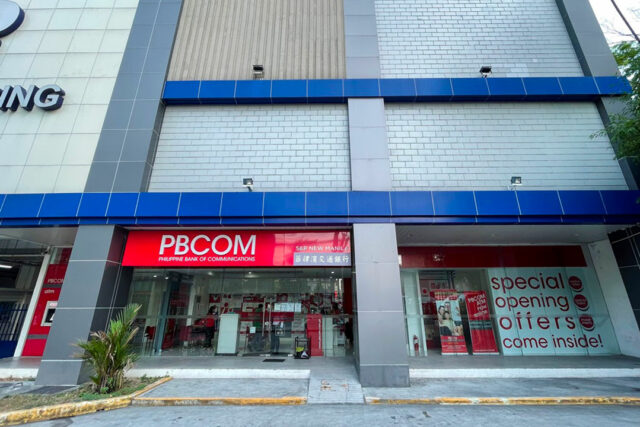
PHILIPPINE BANK of Communications (PBCom) saw its net income jump by 128.96% year on year in the third quarter on the back of higher revenues.

The bank’s net income stood at P821.2 million in the three months ended September, rising from P358.66 million in the same period last year, its financial statement disclosed to the stock exchange on Wednesday showed.

This brought its nine-month net profit to P1.85 billion, up by 36.02% from P1.36 billion a year ago.

The lender’s end-September performance translated to a return on average equity of 13.27% and a return on average asset of 1.61%, up from last year’s 11.22% and 1.36%, respectively.

PBCom’s net interest income rose by 14.53% to P1.34 billion in the third quarter from P1.17 billion in the same period last year as the bank continued to benefit from the high interest rate environment.

Interest income went up by 17.22% to P2.45 billion from P2.09 billion, driven mainly by higher interest earnings from loans and receivables, while interest expenses were at P1.11 billion in the third quarter, rising from P922.66 million a year prior.

Net interest margin stood at 3.92% at end-September, lower than 3.98% at end-2023.

The bank’s total operating income surged by 50.71% to P2.11 billion in the third quarter from P1.4 billion a year ago as it booked higher trading gains and income from service charges, fees and commissions, among others.

Meanwhile, PBCom’s operating expenses increased by 24.25% to P1.11 billion from P893.39 million amid higher volume-driven costs.

The bank’s total loans stood at P92.33 billion in the first nine months, up by 0.61% from P91.77 billion at end-2023.

“The bank’s gross NPL (nonperforming loan) ratio was at 3.38%, 61 basis points higher than the 2.77% ratio at the end of 2023,” PBCom said.

On the funding side, total deposits went up by 3.31% to P120.56 billion as of September from P116.7 billion at end-2023.

“This resulted mostly from P5-billion increase in bills payable and P3.9-billion increase in deposit liabilities, mainly from higher time deposits, partially offset by maturity of the bank’s LTNCD (long-term negotiable certificates of deposit) in the second quarter and lower savings and demand deposits,” PBCom said.

The bank’s assets grew to P158.39 billion as of September from P147.48 billion at end-2023.

Total equity likewise increased to P19.53 billion from P17.66 billion.

PBCom’s capital adequacy ratio was at 17.07% at end-September, inching down from 17.17% in the same period last year.

Its liquidity ratio was at 26.77% in the first nine months, up from 19.69% at end-2023.

PBCom shares closed unchanged at P16.30 apiece on Wednesday. — A.M.C. Sy

Filipinos among top downloaders of Chinese apps globally, study shows

PHILIPPINE STAR/MIGUEL DE GUZMAN

PHILIPPINE USERS had the second highest share of downloads of Chinese mobile applications globally this year, according to a joint study by measurement and analytics company Adjust and Sensor Tower.

The Philippines’ install share of Chinese-developed apps stood at 21%, the report titled “Chinese Export Apps” showed. The study covered app downloads from January to September 2024.

“According to the study, Southeast Asia (SEA) countries lead globally in the install share of Chinese apps, with Indonesia (22%), the Philippines (21%), Malaysia, Thailand (both 19%), Vietnam, and Singapore (both 18%) ranking among the top markets for Chinese app installs,” Adjust said in a statement.

“The rapid rise of Chinese apps worldwide underscores their influence in reshaping digital user experiences through gamification, artificial intelligence (AI), and personalization,” April Tayson, regional vice-president for INSEAU at Adjust, said. “Looking at how these apps have deeply integrated into our daily lives, Chinese apps’ momentum shows no signs of slowing down.”

By application type, the Philippines and Indonesia recorded the second highest install share of Chinese gaming apps at 19%, only behind South Korea’s 21%.

For Chinese social apps, Malaysia had the highest install share at 80%, followed by Indonesia (65%), Vietnam (64%), and the Philippines (53%).

On the other hand, the Philippines also recorded a 25% install share for Chinese utility apps, 15% for entertainment apps, and 11% for finance apps.

“Finance app installs surged in Indonesia by 125% year on year, followed by Vietnam (73%) and the Philippines (46%). Shopping apps in the Philippines saw a 198% rise, creating a key opportunity for Chinese e-commerce apps to localize and target this growing market,” the report said.

“Gaming apps also grew, most sharply in the Philippines (107%). Social apps saw steady growth in Vietnam (61%), while utility apps experienced strong growth across Vietnam (56%), the Philippines (43%), and Indonesia (30%),” it added.

Meanwhile, Chinese-developed entertainment apps in the Philippines had a 156% session growth — or how frequently users interact with an app — year on year.

“Finance sessions were up 110% in Indonesia, 87% in Vietnam, and 30% in the Philippines, mirroring their install growth. Shopping apps in the Philippines saw a 125% session increase, aligning with its 198% install rise, while Vietnam’s session decline matched its drop in installs,” it added.

Chinese apps specializing in AI and short dramas have led the Chinese tech export boom, the report said.

“By blending the viral appeal of short-form content with the serialized nature of traditional dramas, Chinese short drama apps have quickly become a global entertainment phenomenon. These apps, featuring high-drama narratives often centered on romance and fantasy, have captivated international audiences after initial success in China. Over 40 Chinese short drama apps have amassed more than 55 million global downloads and generated $170 million in in-app purchases,” it said.

“SEA markets including Indonesia, Vietnam, and the Philippines have shown strong user engagement, fueled by the region’s affinity for mobile-first entertainment platforms alongside rising smartphone penetration,” it added.

Chinese short drama apps are projected to have user bases of 200 million to 300 million globally, it said.

“To share in this growth, app developers must continue creating compelling content, leveraging viral marketing, and offering flexible, user-friendly revenue models. Investment in AI-driven personalization and forming strategic partnerships will also be key to enhancing user engagement and retention across regions,” it said.

The report attributed the global growth of the Chinese app market to developers’ focus on the international market, as seen in the success of TikTok, Shein, and Temu.

“Chinese apps topping the charts across regions reflect their adaptability and success in understanding local markets while scaling globally. By tailoring experiences to diverse audiences across Southeast Asia, North America, and EMEA, Chinese developers have turned challenges into opportunities. Their strategic expansion into innovative app verticals showcases their capacity to lead the next wave of digital transformation,” said Nan Lu, senior director of APAC marketing at Sensor Tower.

“Chinese apps are thriving in 2024, pushing boundaries and cementing their global presence, with remarkable growth in downloads, user engagement, and revenue across diverse markets… As Chinese developers expand globally, understanding regional preferences and nuances is critical. Going beyond simple localization to full culturalization — integrating local cultural elements, addressing regional needs, and resonating with local values — is essential for creating deeper connections and building stronger, more loyal user bases,” the report added. — B.M.D. Cruz

Philippine energy realism and Trump’s energy policies

I attended the afternoon session of Stratbase’s “Pilipinas Conference 2024” on Nov. 7. It was on “Energy transition and green industries.” The keynote speakers were Energy Secretary Raphael Lotilla and Environment Secretary Toni Yulo Loyzaga.

Mr. Lotilla highlighted huge targets for offshore wind, plus the slow introduction of nuclear power in our energy mix. Ms. Loyzaga started with the usual climate fears, talking about the high number of deaths and destruction of property because of too much water and flooding.

On the panel were Manny Rubio, president and CEO of Meralco Power Gen Corp. (MGen); Sandro Aboitiz, chief financial officer of Aboitiz Power Corp.; Paul Everingham, CEO of Asia Natural Gas and Energy Association; Michael Toledo, chairman of the Chamber Mines of the Philippines; and Martin Antonio “Dennis” Zamora, president and CEO of Nickel Asia Corp.

I liked the points made by these three gentlemen — Messrs. Rubio, Aboitiz, and Toledo.

Mr. Rubio emphasized the need for energy security and a balanced mix of reliable baseload with intermittent renewables. He noted that their 3,500-megawatt (MW) Terra Solar facility — the world’s largest contiguous solar plus battery storage facility — is equivalent to 850 MW of mid-merit reliable energy with battery.

I like the kind of energy realism shown by Mr. Rubio, not the usual energy alarmism or hyped-up optimism about renewables that we often hear or read. It is good that MGen has a portfolio of coal and gas plants that can deliver electricity 24/7 even if the sun is not shining at night or is behind heavy clouds, even if the wind is not blowing.

Mr. Aboitiz made similar realistic statements, saying that “the energy transition journey is not linear and is extremely complex, [it] needs alignment with the country’s needs and circumstances, [there is] no one-size-fits-all solution or silver bullet.” He is correct to remind us that we are still “a developing country that aspires for continued growth, to become an upper-middle-income economy and eradicate poverty. Striking a balance between energy security, affordability, and sustainability requires the adoption of a tailor-fit transition strategy.”

He calculates that the Luzon grid alone will need 600-700 MW of new baseload energy per year, and this does not yet consider new power intensive sectors like data centers or the electrification of transportation. Thus, the need for a balanced mix of traditional and renewable energy sources, supported by new technologies in energy storage and emissions reduction.

Meanwhile, Mr. Toledo passionately and articulately highlighted four policy challenges and measures in the mining sector. One, the need for long-term policy consistency from national to local governments. Two, the need to simplify and expedite the approval process for mineral agreements. Three, the need to minimize business continuity risks from local ordinances. And four, the need to have a stable, predictable mining fiscal regime, including a “financial stability clause.”

I agree with all of these four points. I will add that open-pit mining should be encouraged for two reasons: it makes the extraction of ores and metals easier, and the mined-out area can serve as a man-made lake and water catchment. This will help reduce flash flooding.

TRUMP’S ENERGY POLICIES
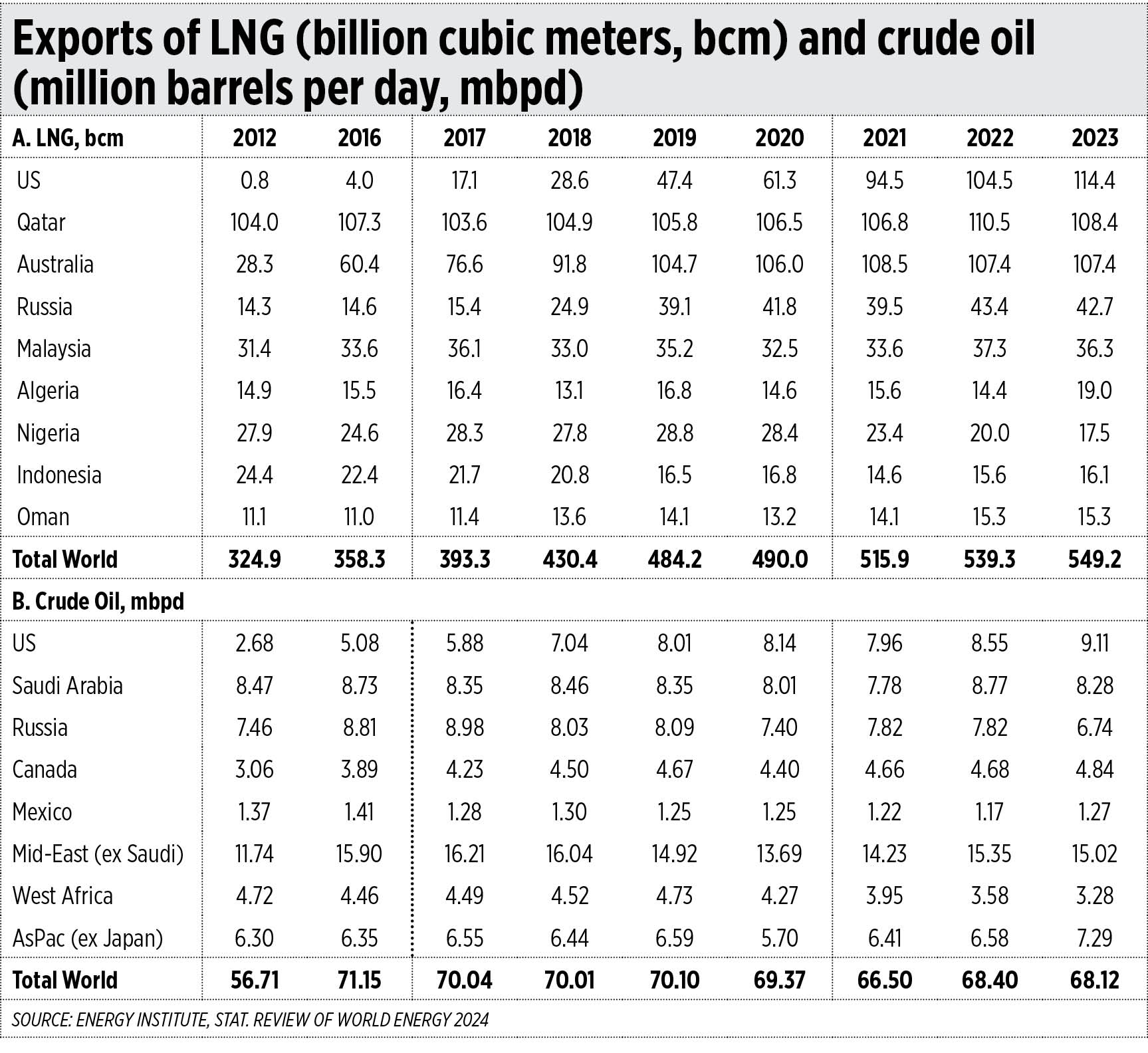
During his first term as US President in 2017-2020, Donald Trump had a “drill baby drill” policy and significantly expanded US oil-gas production and exports. Take liquefied natural gas (LNG) for instance. US exports were only 0.8 billion cubic meters (bcm) at the end of Obama’s first term in 2012, increasing slightly to 4 bcm at the end of Obama’s second term in 2016. In Trump’s first year, this quadrupled to 17 bcm, and further ballooned to 61 bcm in 2020.

Looking at crude oil, US exports were only 2.68 million barrels per day (mbpd) in 2012, rising to 5.1 mbpd in 2016, and further increasing to 5.9 mbpd in 2017 and 8.1 mbpd in 2020. The Biden administration took off from the high momentum of oil-gas exports under Trump (see the table).

In his second term, Mr. Trump will resume his “drill baby drill” policy and pursue US energy dominance — not just energy security — to be a powerhouse producer of oil, LNG, and coal, plus nuclear technology, and export more to its allies worldwide, helping strengthen their economies. Trump explicitly announced energy deregulation, not energy heavy regulation and rationing, and the streamlining of permitting processes for energy infrastructure. He also intends to repeal the Inflation Reduction Act (IRA), even partially. The IRA is expanding the mandates and favoritism for intermittent renewable power sources like wind-solar, among others.

We should have similar policies here in the Philippines, as should other developing countries. We should prioritize saving our jobs and businesses from high energy prices and big bureaucracies. Not saving the planet or saving climate bureaucracies.


Bienvenido S. Oplas, Jr. is the president of Bienvenido S. Oplas, Jr. Research Consultancy Services, and Minimal Government Thinkers. He is an international fellow of the Tholos Foundation.

minimalgovernment@gmail.com

Meralco’s Movem, Polish firm ChargeEuropa to deploy EV charging stations

MOVEM Electric, Inc., the sustainable mobility arm of Manila Electric Co. (Meralco), has partnered with Polish infrastructure provider ChargeEuropa to deploy electric vehicle (EV) charging stations.

Movem signed a memorandum of understanding with ChargeEuropa to install and operate ChargeEuropa’s EV charging stations throughout the Philippines, the company said in a statement on Wednesday.

The exclusive partnership allows ChargeEuropa to expand its presence in Asia, with the Philippines as its first point of entry in the region.

Founded in 2018, ChargeEuropa has deployed ad-display chargers —  combining EV charging and ad space through an integrated LED screen — in Poland, the Czech Republic, Romania, and other parts of Europe.

“We chose this market because we strongly believe in the potential of the Philippine EV industry and market. We see that EV charging is becoming a growing and very significant part of mobility in the country,” ChargeEuropa Chief Executive Officer (CEO) Matt Tymowski said.

Movem President and CEO Raymond B. Ravelo said that the company will be the prime mover in deploying ChargeEuropa charging stations across Metro Manila and the rest of the country.

“Our vision in Movem to drive a highly electrified, emissions-free Philippine transport sector is brought to life through partnerships with like-minded institutions such as ChargeEuropa,” Mr. Ravelo said.

“Ultimately, our thrust and goal is to bring world-class EV solutions not only to our clients but also to the wider public,” he added.

The partnership with ChargeEuropa forms part of Movem and Meralco’s support for the Electric Vehicle Industry Development Act “through the provision of end-to-end EV and charging infrastructure solutions for institutional customers and the riding public.”

EVIDA requires industrial and commercial companies to have at least a 5% share of their fleets comprise EVs.

“Meralco, through Movem, has long since looked into the EV industry and aided in the transition together with the regulators and advocates within the industry like the Electric Vehicle Association of the Philippines (EVAP),” Meralco Senior Vice-President and Chief Revenue Officer and Movem Chairman Ferdinand O. Geluz said.

Meralco established Movem last year as its new subsidiary that will focus on the development and deployment of various electric transportation solutions.

Meralco’s controlling stakeholder, Beacon Electric Asset Holdings, Inc., is partly owned by PLDT Inc.

Hastings Holdings, Inc., a unit of PLDT Beneficial Trust Fund subsidiary MediaQuest Holdings, Inc., has an interest in BusinessWorld through the Philippine Star Group, which it controls. — Sheldeen Joy Talavera