Home Blog Page 2364

A business that’s ripe with opportunity
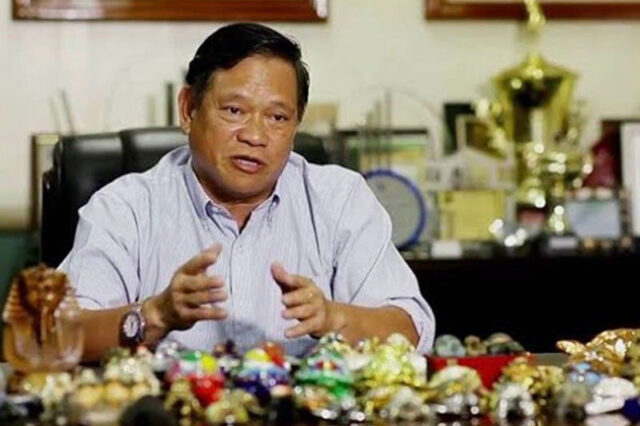
JUSTIN UY, founder of Profood International, Inc. — PHILSTAR FILE PHOTO

Over the years, I have (and continue to wear) several hats. I am a professional master of ceremonies, a motivational speaker, a podcaster, a sometime actor, an Honorary Consul, an editor of an online business publication, and as serial entrepreneur. Among those, entrepreneurship has been one of the most rewarding but also the most challenging.

My late dad — who was also a green-blooded entrepreneur — is my biggest personal hero. I learned from and was inspired by both his successes and his failures from his multiple business ventures. He was an eternal optimist when it came to doing business. One of the biggest legacies he passed on to me was developing an “entrepreneurial mindset.”

As a host and speaker, I often have a chance to speak at many business conferences and interact with prominent business owners and professionals whose insights have shaped my own journey as an entrepreneur. These entrepreneurs are my heroes as well. So just as my dad passed on his “entrepreneurial mindset” to me, I thought it was important that I pass on the stories of these heroes to the next generation of aspiring entrepreneurs. And that is why I started this column.

For my inaugural column for BusinessWorld, I wanted to put the spotlight on a Filipino entrepreneur we can all learn so much from: Cebuano businessman Justin Uy, founder of Profood International, Inc., better known as the “Mango King,” the founder of the largest dried fruits processing and exporting company in the Philippines, and owner of Jpark Island Resort and Waterpark in Mactan, Cebu.

Justin Uy may not be a household name yet, but it’s one that entrepreneurs and businessmen should know. As the man behind the Philippine — and Cebu — brand of dried mangoes, he has been on an entrepreneurial journey that is full of incredibly valuable business lessons. From humble beginnings, Mr. Uy took his Profood mango empire to the world. It all began with a situation that many Filipinos will find all too familiar, but he rose above various challenges and setbacks to build a truly remarkable company.

In my RJ Ledesma podcast, I sat down with Mr. Uy where he shared his entrepreneurial journey and the lessons he learned along the way.

IF AT FIRST YOU DON’T SUCCEED, START ANOTHER BUSINESS
Like many of our country’s small and micro entrepreneurs, Justin Uy went into business to help the family. He explains, “The financial [need] of the family forced me to be an entrepreneur. So actually, entrepreneurship really comes from many different sources, right? [Sometimes] it starts off and you’re in need because you have to support the family.”

The fourth of 11 siblings, he was introduced to entrepreneurship by helping in his father’s cigarette distribution business. Then he got into a craft business with his brother, Brad, selling chokers and bangles. The business lasted for six months.

Next, he went into poultry. He says, “I became an entrepreneur by selling the eggs to the market and also selling everything: chicken, dung, everything.” The business did not prosper.

Afterwards, he went into selling mushrooms. This business fared better, and he proudly shares that one of his brothers was able to study to become a doctor through the earnings from the mushroom business. Mr. Uy was 17 at the time.

It was with his fourth business that Justin Uy found success. When he was 19 years old, he began a business with his brother and his father making dried mangoes using his aunt’s recipe. Three years later, even this business — one that would become Profood and lead Mr. Uy to success in markets all over the world — failed.

He recalls, “It was a complete failure because [we were] jumping into a business without any knowledge of it. So, we’re just depending on the formula of an auntie doing it in the kitchen. And we did not know that when you go mass production, it’s completely different. So, the first three years, we failed at everything. In fact, we lost everything we had invested.”

IF AT FIRST YOU DON’T SUCCEED, PERSEVERE, LEARN
Taking a cold, hard look at his business, Justin Uy set out to make it work. Seeing the opportunities, he was determined to succeed.

The first thing he did was to learn about food processing by taking a food preservation course in UP Los Baños. With his knowledge, he redid his product. “That’s how it really started,” he said. From there, the business continued innovating until they were able to export. And today, Profood International, Inc. processes 16 different tropical fruits and makes over 150 SKUs which are sold in America, Europe, and Asia.

Having learned from this early experience, Mr. Uy advises entrepreneurs to “Never go into something that you don’t know.”

At the same time, he acknowledges that he got into business with little knowledge, which was a big risk. But learning to adapt and learning from failure is part of business.

He shares, “Sometimes, kailangan, lakas na ng puso lang (Sometimes, you just need strength of heart), then you enter the business… Almost zero knowledge, just get into it and learn from there. In fact, I encourage almost all young people to go into business even if you’re zero.”

SOLVING PROBLEMS
Justin Uy believes that being an entrepreneur is about solving problems — a lesson I believe every entrepreneur should take to heart.

In his early days with Profood, he explained how he was able to solve the problems of farmers and turn it into an opportunity. “The farmers have a lot of mango during the mango season,” he said. “And I will tell them, oh, can you give me your mango? I will pay you in three months’ time with interest.

“So that’s how I really was able to be successful [with the business]. Because with abundant raw material, you can create something and sell it to everybody.”

Even the name of his dried mango brand was a solution to a problem. Initially, he used it to communicate quality.

“It used to be called Philippine mango, Philippine brand dried mango,” Mr. Uy said. “In the world, there’s a lot of mangoes. There are about a thousand species. But notice, Philippine mango is one of the best in the world.”

Later on, Mr. Uy would create the Cebu brand of dried mangoes because for other Asians, “Cebu is an entertainment area, for rest and recreation. We have nice beaches, everything nice for vacationing.”

CREATE SOMETHING NEW
Today, Justin Uy has also diversified into other businesses, which includes Jpark Island Resort, a resort and waterpark in Mactan, Cebu. What initially began as an investment, led him to ownership of a Korean hotel and another avenue of successful entrepreneurship.

“We are at the point that I know tourism will be big in the Philippines and we need to expand,” Mr. Uy said. “And we need to expand to other islands. So in fact, we’re building two hotels now in Bohol.”

He encourages Filipino entrepreneurs to “create something new.” Constantly moving forward with Profood and now Jpark, his message to entrepreneurs is to bravely begin their own business ventures.

“There are still a lot of things you can do, you create,” he continued. “In this world right now we’re living in, nothing, there’s no limit at all.

“The young people have their own energy to create new products. So if you’re in culinary, create your culinary product. If you love the ocean, you create your ocean product. There are lots of things you can do out of it. There’s endless opportunity.”

(Are there other entrepreneurs you want me to interview? Please let me know, send me an e-mail at ledesma.rj@gmail.com.)


RJ Ledesma (www.rjledesma.com) is a Hall of Fame Awardee for Best Male Host at the Aliw Awards, a multi-awarded serial entrepreneur, motivational speaker and business mentor, podcaster, an Honorary Consul and editor-in-chief of The Business Manual.  Connect with Mr. Ledesma on LinkedIn, Facebook and Instagram.

Dollar recovers after 3-day dip as investors await Trump cues

A US dollar note is seen in this June 22, 2017 illustration photo. — REUTERS

THE US DOLLAR climbed from a one-week low on Wednesday, while the Japanese yen slid as safety haven demand faded and investors awaited more cues on US President-elect Donald Trump’s proposed policies.

The previous day’s boost to the dollar and other traditional safe-haven currencies like the yen proved short-lived, after Russia’s foreign minister said the country would “do everything possible” to avoid the onset of nuclear war, hours after Moscow announced it would lower its threshold for a nuclear strike.

The Russia-Ukraine “fears have died back but the market will be sensitive to any renewed news or any fresh news on that front,” said Jane Foley, head of FX strategy, at Rabobank in London.

The Japanese yen dropped to 155.67 against the greenback, retracing the previous day’s gains. The yen’s slide to a three-month low upped bets of a likely hawkish shift at the Bank of Japan (BoJ) as it nears levels that drew intervention in July.

Foley said 155 was the dollar-yen level that made markets nervous of intervention, adding that “if there is the possibility that verbal intervention is having a significant impact in stabilizing the currency pair, then that is likely to deter the ministry of finance, at least for a while, from using actual intervention.”

BoJ Governor Kazuo Ueda made only passing mention of the currency on Monday.

The dollar index, which measures the currency against six major peers, gained 0.3% to 106.42, recovering from a three-day slide.

The index hit a one-year high of 107.07 on Thursday last week, buoyed by expectations for big fiscal spending, higher tariffs and tighter immigration under the incoming US administration, measures which economists say could foster inflation and potentially slow Federal Reserve easing.

“Having priced in a lot of the Trump trade, we might be in consolidation phase until early January when Trump does takes the reins and we get a firmer idea of the detail of the policy,” Ms. Foley said. 

‘TRUMP TRADE’
Investors are still waiting for Mr. Trump to name a Treasury Secretary, one of the highest-profile cabinet posts overseeing the country’s financial and economic policy. Some of Mr. Trump’s picks have provoked controversy for their relatively meagre relevant experience.

“The ‘Trump Trade’ that boosted the greenback is facing challenges from Trump’s controversial cabinet nominations and the escalation in the Russian-Ukraine war,” DBS strategists wrote in a client note.

For the dollar over longer term though, “more weight should be put on firm economic data and the increasing likelihood that the Fed may have to slow the rate cut path even more in 2025,” they said.

Traders continue to pare back expectations for an interest rate cut at the Fed’s next meeting in December. Odds now stand at 59.1%, down from 82.5% a week ago, according to CME’s FedWatch Tool.

The sterling  got a brief boost after data showed British consumer inflation accelerated more quickly than forecast in October, supporting the view that the Bank of England will lower interest rates only gradually in the coming months. The pound was last flat at $1.26775.

BoE Governor Andrew Bailey told parliament on Tuesday that the central bank needed to take a “gradual approach” to easing.

Traders see an 84% chance that the BoE will hold rates steady at its policy meeting next month.

The euro dipped 0.3% to $1.056, having recovered from a drop to $1.0524 in the previous session.

Bitcoin crept up towards the all-time peak above $94,000 hit overnight, carried by expectations for a friendlier regulatory environment for cryptocurrencies under Mr. Trump.

A report said Mr. Trump’s social media company was in talks to buy crypto trading firm Bakkt, bolstering hopes of a cryptocurrency-friendly regime under his administration. — Reuters

Shake Shack burgers are the newest perk in Delta’s first class

SHAKESHACK.PH

THAT PRICEY first-class airline ticket will soon come with a new perk: fast food.

Delta Air Lines Inc. is partnering with restaurant chain Shake Shack Inc. to offer cheeseburgers as an in-flight meal starting next month. The option will be available initially to first-class passengers on flights over 900 miles out of Boston, with more markets to follow in 2025, according to a statement on Tuesday.

Delta isn’t new to teaming up with popular food brands. It already serves Starbucks Corp. coffee and offers meals on select flights from Union Square Hospitality Group, the organization started by Shake Shack founder Danny Meyer.

Still, serving hot food from a known restaurant chain presents challenges. After all, passengers aren’t likely to put up with soggy burgers or wilted lettuce. It’s a relatively unusual arrangement — United Airlines previously partnered with McDonald’s Corp. in the 1990s. — Bloomberg

OpenAI, Google and Anthropic are struggling to build more advanced AI

REUTERS

OPENAI was on the cusp of a milestone. The startup finished an initial round of training in September for a massive new artificial intelligence model that it hoped would significantly surpass prior versions of the technology behind ChatGPT and move closer to its goal of powerful AI that outperforms humans.

But the model, known internally as Orion, did not hit the company’s desired performance, according to two people familiar with the matter, who spoke on condition of anonymity to discuss company matters. As of late summer, for example, Orion fell short when trying to answer coding questions that it hadn’t been trained on, the people said. Overall, Orion is so far not considered to be as big a step up from OpenAI’s existing models as GPT-4 was from GPT-3.5, the system that originally powered the company’s flagship chatbot, the people said.

OpenAI isn’t alone in hitting stumbling blocks recently. After years of pushing out increasingly sophisticated AI products at a breakneck pace, three of the leading AI companies are now seeing diminishing returns from their costly efforts to build newer models. At Alphabet Inc.’s Google, an upcoming iteration of its Gemini software is not living up to internal expectations, according to three people with knowledge of the matter. Anthropic, meanwhile, has seen the timetable slip for the release of its long-awaited Claude model called 3.5 Opus.

The companies are facing several challenges. It’s become increasingly difficult to find new, untapped sources of high-quality, human-made training data that can be used to build more advanced AI systems. Orion’s unsatisfactory coding performance was due in part to the lack of sufficient coding data to train on, two people said. At the same time, even modest improvements may not be enough to justify the tremendous costs associated with building and operating new models, or to live up to the expectations that come with branding a product as a major upgrade.

There is plenty of potential to make these models better. OpenAI has been putting Orion through a months-long process often referred to as post-training, according to one of the people. That procedure, which is routine before a company releases new AI software publicly, includes incorporating human feedback to improve responses and refining the tone for how the model should interact with users, among other things. But Orion is still not at the level OpenAI would want in order to release it to users, and the company is unlikely to roll out the system until early next year, one person said. The Information previously reported some details of OpenAI’s challenges developing its new model, including with coding tasks.

These issues challenge the gospel that has taken hold in Silicon Valley in recent years, particularly since OpenAI released ChatGPT two years ago. Much of the tech industry has bet on so-called scaling laws that say more computing power, data and larger models will inevitably pave the way for greater leaps forward in the power of AI.

The recent setbacks also raise doubts about the heavy investment in AI and the feasibility of reaching an overarching goal these companies are aggressively pursuing: artificial general intelligence. The term typically refers to hypothetical AI systems that would match or exceed humans on many intellectual tasks. The chief executives of OpenAI and Anthropic have previously said AGI may be only several years away.

“The AGI bubble is bursting a little bit,” said Margaret Mitchell, chief ethics scientist at AI startup Hugging Face. It’s become clear, she said, that “different training approaches” may be needed to make AI models work really well on a variety of tasks — an idea a number of experts in artificial intelligence echoed to Bloomberg News.

In a statement, a Google DeepMind spokesperson said the company is “pleased with the progress we’re seeing on Gemini and we’ll share more when we’re ready.” OpenAI declined to comment. Anthropic declined to comment, but referred Bloomberg News to a five-hour podcast featuring Chief Executive Officer Dario Amodei.

“People call them scaling laws. That’s a misnomer,” he said on the podcast. “They’re not laws of the universe. They’re empirical regularities. I am going to bet in favor of them continuing, but I’m not certain of that.”

Amodei said there are “lots of things” that could “derail” the process of reaching more powerful AI in the next few years, including the possibility that “we could run out of data.” But Amodei said he’s optimistic AI companies will find a way to get over any hurdles.

PLATEAUING PERFORMANCE
The technology that underpins ChatGPT and a wave of rival AI chatbots was built on a trove of social media posts, online comments, books and other data freely scraped from around the web. That was enough to create products that can spit out clever essays and poems, but building AI systems that are smarter than a Nobel laureate — as some companies hope to do — may require data sources other than Wikipedia posts and YouTube captions.

OpenAI, in particular, has inked deals with publishers to fill some of the need for high-quality data, and also adapt to growing legal pressure from publishers and artists over the data used to build generative AI products. Some tech companies are also hiring people with graduate degrees that can label data related to their own subject expertise, such as math and coding. The goal is to make these systems better at responding to queries about certain topics.

These efforts are slower going and costlier than simply scraping the web. Tech companies are also turning to synthetic data, such as computer-generated images or text meant to mimic content created by real people. But here, too, there are limits.

“It is less about quantity and more about quality and diversity of data,” said Lila Tretikov, head of AI strategy at New Enterprise Associates and former deputy chief technology officer at Microsoft. “We can generate quantity synthetically, yet we struggle to get unique, high-quality datasets without human guidance, especially when it comes to language.”

Still, AI companies continue to pursue a more-is-better playbook. In their quest to build products that approach the level of human intelligence, tech firms are increasing the amount of computing power, data and time they use to train new models — and driving up costs in the process. Amodei has said companies will spend $100 million to train a bleeding-edge model this year and that amount will hit $100 billion in the coming years.

As costs rise, so do the stakes and expectations for each new model under development. Noah Giansiracusa, an associate professor of mathematics at Bentley University in Waltham, Massachusetts, said AI models will keep improving, but the rate at which that will happen is questionable.

“We got very excited for a brief period of very fast progress,” he said. “That just wasn’t sustainable.”

SILICON VALLEY’S CONUNDRUM
This conundrum has come into focus in recent months inside Silicon Valley. In March, Anthropic released a set of three new models and said the most powerful option, called Claude Opus, outperformed OpenAI’s GPT-4 and Google’s Gemini systems on key benchmarks, such as graduate-level reasoning and coding.

Over the next few months, Anthropic pushed out updates to the other two Claude models – but not Opus. “That was the one everyone was excited about,” said Simon Willison, an independent AI researcher. By October, Willison and other industry watchers noticed that wording related to 3.5 Opus, including an indication that it would arrive “later this year” and was “coming soon,” was removed from some pages on the company’s website.

Similar to its competitors, Anthropic has been facing challenges behind the scenes to develop 3.5 Opus, according to two people familiar with the matter. After training it, Anthropic found 3.5 Opus performed better on evaluations than the older version but not by as much as it should, given the size of the model and how costly it was to build and run, one of the people said.

An Anthropic spokesperson said the language about Opus was removed from the website as part of a marketing decision to only show available and benchmarked models. Asked whether Opus 3.5 would still be coming out this year, the spokesperson pointed to Amodei’s podcast remarks. In the interview, the CEO said Anthropic still plans to release the model but repeatedly declined to commit to a timetable.

Tech companies are also beginning to wrestle with whether to keep offering their older AI models, perhaps with some additional improvements, or to shoulder the costs of supporting hugely expensive new versions that may not perform much better.

Google has released updates to its flagship AI model Gemini to make it more useful, including restoring the ability to generate images of people, but introduced few major breakthroughs in the quality of the underlying model. OpenAI, meanwhile, has focused on a number of comparatively incremental updates this year, such as a new version of a voice assistant feature that lets users have more fluid spoken conversations with ChatGPT.

More recently, OpenAI rolled out a preview version of a model called o1 that spends extra time computing an answer before responding to a query, a process the company refers to as reasoning. Google is working on a similar approach, with the goal of handling more complex queries and yielding better responses over time.

Tech firms also face meaningful tradeoffs with diverting too much of their coveted computing resources to developing and running larger models that may not be significantly better.

“All of these models have gotten quite complex and we can’t ship as many things in parallel as we’d like to,” OpenAI CEO Sam Altman wrote in response to a question on a recent Ask Me Anything session on Reddit. The ChatGPT-maker faces “a lot of limitations and hard decisions,” he said, about how it decides what to do with its available computing power.

Altman said OpenAI will have some “very good releases” later this year, but that list won’t include GPT-5 — a name many in the AI industry would expect the company to use for a big release following GPT-4, which was introduced more than 18 months ago.

Like Google and Anthropic, OpenAI is now shifting attention from the size of these models to newer use cases, including a crop of AI tools called agents that can book flights or send emails on a user’s behalf. “We will have better and better models,” Altman wrote on Reddit. “But I think the thing that will feel like the next giant breakthrough will be agents.” Bloomberg

Corporate boards grapple with AI — study

STOCK PHOTO | Image Dmitry Berdnyk from Unsplash

CORPORATE BOARDS across the world are less confident in their understanding of the importance of generative artificial intelligence (AI) as well as trade and geopolitical disruptions, according to INSEAD Corporate Governance Centre.

The study, titled “Boards and Society: How Boards Are Evolving to Meet Challenges from Sustainability to Geopolitical Volatility,” showed that only 36% of directors feel prepared to tap the potential of AI, while 37% agree that their companies have sufficient strategies in place to manage geopolitical risks.

The research was conducted in partnership with leadership advisory provider Heidrick & Struggles and Boston Consulting Group, according to INSEAD Corporate Governance Centre.

The report surveyed 444 directors and executives around the world, along with a dozen roundtables that gathered over 130 directors in North America, Europe, Southeast Asia, Africa, and South America.

According to the study, half of the directors surveyed said they are not confident that their company is equipped to identify new threats and opportunities related to sustainability, generative AI, and geopolitics.

“Boards today can benefit from moving from being reactive to proactive. Beyond understanding disruptions, they can focus on looking ahead — anticipating future shocks and potential risks and finding ways to capitalize on emerging trends to leverage opportunities,” INSEAD Corporate Governance Executive Director Sonia Tatar said in an e-mailed statement.

“By translating insights that inform decision-making into strategic actions, they will be better positioned to guide companies in becoming more resilient and navigating change effectively,” she added.

The study also showed that 77% of boards think that their companies have a responsibility to address sustainability concerns, while 54% said that business objectives should remain the primary focus.

Meanwhile, the report showed that 29% of directors lack confidence in their CEO’s capacity to navigate uncertainty and boost long-term value, while 26% of CEOs are skeptical of their board’s effectiveness.

“This year’s survey reveals tensions between directors and management regarding each other’s capacity to navigate disruption. With so much at stake — and an increasing complexity to unpack — alignment between board directors and management isn’t just a best practice; it’s essential for addressing both today’s challenges and those of the future,” Heidrick & Struggles Partner Jeremy C. Hanson said.

“Importantly, alignment does not mean boards should shy away from constructive debate with management. In fact, fostering open, even difficult, conversations is crucial for boards to reach resilient, well-rounded decisions in today’s demanding environment,” he added. — Revin Mikhael D. Ochave

Managing by disruption

FREEPIK

EVEN when a succession plan is a smooth process, its actual implementation can be disruptive. Maybe the newly designated CEO is tasked to shake up the organization. Was he hired to be a disruptor aiming to rattle the status quo?

A newly installed leader can choose to make his mark by throwing out most of the policies and procedures, as well as some executives, that he sees as no longer in the game. Can a new team be far behind? (Start with a new slate.)

The exhortations to upend the status quo and let the imagination go bungee jumping are standard fare for strategy sessions when a new leader is on board. Those with the least emotional investment (and service) in the company and what it stands for get the biggest chunk of talk time to dismiss anything that seems to be deeply rooted, even the current office address.

New recruits who only just got their e-mail address and calling cards (do they still need these?) promote the dismantling of a system in which they have no stake. They stand to benefit the most when old boxes collapse as new and bigger boxes replace them. (Guess who the new tenants of the latter will be.)

The box in the phrase calling for disruption is a mindset for the way things are. So, “thinking out of the box” hints of an obligatory rampage of throwing the furniture around so no one can sit down. It’s not the time to rest your weary head.

Out-of-the-box thinking can embrace the loony and eccentric. One can imagine the consultant in a seminar, jotting down the silliest ideas in bullet points and arrows connecting phrases — eliminate in-house manufacturing and outsource everything (yes, yes, you’re on the right track); close down all the branches and go fully digital (yeah, I’m panting already); throw away the manuals and seize every opportunity for a sale, never mind the old target market (you’re on a roll); eliminate two levels of management to flatten the structure – wait a minute, let’s set that aside for now.

The appeal of novelty lies in its promise. Crazy ideas have no track record — how do we know it won’t work if we don’t try it? So what if it costs millions? Untried things are easily defended against attack – you’re not open to change. The flip side is not mentioned at all — can we afford this ridiculous strategy? (Who pays for the broken dishes?)

One lesson learned in the 2008 financial meltdown was the folly of even just a few companies thinking out of the box. They cooked up the novel financial instrument called Collateralized Debt Obligations (CDOs) to securitize loans and raise funds without having to collect from the original borrower. These newfangled instruments were unregulated and became ever more complex. Even the rating agencies gave them a pass. The underlying value of the collateral (housing loans to sub-prime borrowers) became arbitrary, and eventually found no more buyers. The holders of the worthless CDOs finally needed to be rescued by the government.

There is some wisdom in reining in unchecked disruption. One is to limit change to a small section and see how it works. There is the exhortation to “fail fast and fail cheaply.” Experiments with new approaches can be tried in one branch. The deliverables must be clear and subject to measurement. The most important metric is defining success in terms of numbers. This will automatically define failure too and limit its damage.

It’s becoming a corporate trend to recruit new CEOs from outside the organization, sometimes coming from a totally different industry. The thinking seems to be that someone with no stake in the status quo is bound to be more objective. But does he know what he’s doing?

What happened to the traditional promotion of leadership from within? Is an insider with many years of service in the company incapable of objectivity? Does the search committee just throw away all the experience and learning on the job?

When the company is in a downward spiral and losing market value, it is indeed tempting to change the leadership and put a disruptor in place.

The results are not always positive. Too many companies have faded away and closed after a disruptor threw away the mission statement — along with any rational thinking.


Tony Samson is chairman and CEO of TOUCH xda

ar.samson@yahoo.com

How PSEi member stocks performed — November 20, 2024

Here’s a quick glance at how PSEi stocks fared on Wednesday, November 20, 2024.


Real GDP per person employed in the Philippines

The country’s labor productivity — as measured by gross domestic product (GDP) per person employed — inched up 0.7% year on year to P108,725 in the July-to-September period. This was slower than the 7.9% it posted a year earlier and the 4.7% growth in the second quarter of 2024.

Real GDP per person employed in the Philippines (as of Q3 2024)

Pinay drug convict in Indonesia to come home; gov’t eyes clemency

REUTERS

By Kyle Aristophere T. Atienza, Reporter

FILIPINO DOMESTIC worker Mary Jane F. Veloso will finally return to the Philippines after a decade of incarceration in Indonesia, authorities said, a development widely welcomed in a country known for exporting its workforce.

But Ms.Veloso will remain in detention upon arriving in the Philippines until the two Southeast Asian neighbors reach a mutual agreement for clemency, Foreign Undersecretary for Migration Eduardo de Vega said at a Palace briefing on Wednesday.

Philippine President Ferdinand R. Marcos, Jr. announced earlier in the day that Manila and Jakarta had reached an agreement to bring Ms. Veloso back to the Philippines, citing over a decade of diplomatic talks between the two nations.

The Filipino overseas worker was sentenced to death in October 2010 and was granted a stay of execution in April 2015. Ms. Veloso, who was caught smuggling 2.6 kilograms of heroin hidden in the lining of a suitcase, was a victim of human trafficking, according to her lawyers.

“Arrested in 2010 on drug trafficking charges and sentenced to death, Mary Jane’s case has been a long and difficult journey,” Mr. Marcos said in a statement, maintaining that she’s a victim.

“After over a decade of diplomacy and consultations with the Indonesian government, we managed to delay her execution long enough to reach an agreement to finally bring her back to the Philippines.”

Mr. De Vega, the Department of Foreign Affairs (DFA) official, said the Indonesian government did not ask anything in return.

But Ms. Veloso “will not be immediately released” when she arrives in the Philippines.

“It means we will commit to detain her until such time that we, in a mutual agreement [with Indonesia, decide] that she could be given clemency,” he said. “But at least she would be here.”

Asked whether Ms. Veloso, the only Filipino on death row in Indonesia, is completely spared from the penalty, he said: “Nothing is 100%, but the fact that Indonesia is talking to us about transferring, is the most probable indication that they have no intent to execute her.”

“And obviously, once she’s here, she is completely safe.”

While the Philippines will have the physical custody over Ms. Veloso, the legal custody will remain with Indonesia, Philippine Department of Justice (DoJ) spokesman Jose Dominic F. Clavano IV said at the same briefing.

“The Indonesian government is aware that we do not have the death penalty here, which they respect as well, which is a consideration obviously when they also issued the policy of transferring certain detained individuals back to their own countries,” he said.

“Indonesia is not surrendering its jurisdiction over the case,” Mr. De Vega said. But technically, the Indonesian government already conceded “that there will be no execution and that is still a major concession.”

Mr. Clavano said the Philippine Justice department was still working on the detention facility for Ms. Veloso, and among its options is the Correctional Institution for Women in Mandaluyong City.

Philippine senators have welcomed the development, with Senate Migrant Workers Chairperson Rafael T. Tulfo citing Mr. Marcos’ “successful diplomatic efforts that paved the way” for the impending return of Ms. Veloso.

Senate President Francis G. Escudero in a statement expressed his gratitude to Indonesian President Prabowo Subianto and to the entire Indonesian government for its compassion.

“We call on the authorities concerned to ensure the safety of Mary Jane upon her return to the Philippines and to reach out to her family and allay whatever fears or concerns they may have about her transfer,” he said.

Much of the credit should go to the DFA, which handled her case for so long, said Hansley A. Juliano, who teaches political science at the Ateneo de Manila University.

‘POPULIST PRESIDENTS’
“At the same time, we should also take into account the misfortune of Ms. Veloso’s dealing with two populist presidents trying to project a ‘tough on crime’ image on both sides of the Philippines and Indonesia,” he added, citing former Philippine president Rodrigo R. Duterte and former Indonesian President Jokowi Widodo.

Mr. Duterte’s foreign affairs spokesman in 2016 said he had told Mr. Widodo that “he respects their judicial processes and will accept whatever the final decision they will arrive at regarding her case.”

Late former Foreign Affairs Secretary Perfecto R. Yasay made the statement after reports that Mr. Duterte had given the Indonesian government the go-signal to execute Ms. Veloso.

The drug trafficking case of Ms. Veloso has long been decided, but the Indonesian government in 2015 agreed to delay her execution amid the still-ongoing case against her recruiters at a trial court in the province of Nueva Ecija north of the capital Manila.

And it helped so much that the late President Benigno S.C. Aquino III asked Indonesia at the eleventh hour to turn Ms. Veloso into a state witness.

His foreign secretary, the late Albert F. del Rosario, had said Indonesia gave Ms. Veloso a reprieve to allow her to testify against her recruiters, in a move that the Aquino government said would target a drug trafficking syndicate that has been linked to the victim’s recruiters.

Mr. Clavano said Ms. Veloso’s return will speed up the case since “it’s very convenient for us to have a witness at disposal of the prosecution.”

“The reason why this case has taken so long is precisely because the chance or the opportunities to interview or take her testimony has been very scarce. It would entail a lot of costs, a whole team to be in Indonesia, including the judge herself,” he explained.

“So, whenever we take her testimony via deposition, the Indonesian government does require a whole team including the judge and the prosecutors to be there as well,” he added. “So, given the workload of all these government officials and the schedules of the families, it’s quite difficult to come up with a common schedule.”

“Having her here in the Philippines will be quite convenient and would definitely speed up the process of the case.”

‘TRAVERSED ADMINISTRATIONS’
The Liberal Party, Mr. Aquino’s vehicle to the 2010 presidential elections, recognized Mr. Marcos’ efforts and noted that saving Ms. Veloso “traversed administrations.”

“During the time of PNoy (Mr. Aquino), the DoJ and DFA worked for a last-minute reprieve on Mary Jane’s scheduled execution culminating in a midnight phone call of PNoy to then President Widodo of Indonesia,” it said in a statement.

“It was a race to work out an agreement with President Widodo, so close that some Philippine dailies released morning editions that reported a supposed execution that, fortunately, did not push through,” it added.

As for the time of Mr. Duterte, all the credit for saving Ms. Veloso from her execution goes to Indonesia, as the tough-talking Filipino politicians “said his government could not care less if a drug offender like Mary Jane was finally executed,” the Liberal Party said.

“This was only in line with his policy of summarily executing drug suspects in his own country,” it added. “Finally, the Philippine government has succeeded in completing its mission to permanently stay her execution.”

The Philippine economy has been reliant on remittances from overseas Filipino workers (OFWs), due in large part to a labor code that Mr. Marcos’ late father, the late President Ferdinand E. Marcos, Sr., crafted in the 1970s.

The labor policy promoted overseas contract work.

Estimates showed that the number of OFWs hit 10.2 million in 2023, including 2.3 million migrant workers. Over 50% of registered OFWs in the same year were female.

Remittances, which serve a key source of income and foreign exchange for the Philippines, accounted for 8.5% of the country’s gross domestic product in 2023.

“We must see to it that no Filipino migrant worker falls victim to yet another death sentence,” Senator Mary Grace Natividad S. Poe-Llamanzares said in a statement.

Right-of-way issues, LGU permit snags to blame for stalled flood control projects

PHILIPPINE STAR/ RYAN BALDEMOR

THE DEPARTMENT of Public Works and Highways (DPWH) on Wednesday said right-of-way issues, delays in securing local government unit (LGU) permits are to blame for stalled flood-control projects this year after senators questioned persistent flooding problem during storms.

“What they (DPWH) are doing now is taking proactive steps to expedite the remaining projects that they have through enhanced coordination with regional and district engineering offices,” Senator Mary Grace Natividad S. Poe-Llamanazares, who sponsored the DPWH’s proposed budget next year, told the plenary floor in the early hours of Wednesday.

“They have continuous monitoring and collaboration with contractors to ensure project completion within the remaining time frame.”

Under its proposed P933.14 billion budget next year, the DPWH is seeking P320 billion for its flood control projects.

“The flood control systems are now designed for a 20-50-year flood return period and its measures are designed to withstand windspeeds of up to 25 kilometers per hour,” Ms. Poe said.

The Philippines, which faces an average of 20 typhoon yearly, also remained as the most disaster-prone country for the 16th consecutive year, according to the latest World Risk Index.

Based on data from the Philippine Atmospheric, Geophysical and Astronomical Services Administration, a total 11 tropical cyclones entered the Philippine Area of Responsibility last year.

Data from the National Disaster Risk Reduction and Management Council (NDRRMC) on Tuesday morning showed agriculture damage due to Super Typhoon Man-Yi, locally known as Pepito, and two other typhoons that hit the country in a span of just two weeks had hit P8.64 million; while damage to infrastructure had risen to P469.84 million.

Public Works Secretary Manuel E. Bonoan earlier said the government had about 5,000 ongoing flood control projects this year. This is on top of the 5,521 flood control projects completed between July 2022 and May 2024, according to President Ferdinand R. Marcos, Jr.

Congress has been scrutinizing state flood-control projects after houses and people mostly in Metro Manila and nearby provinces were swept away by raging flood waters by tropical storms this year.

“The suspension and termination issues are being addressed by engaging with contractors to resolve technical and administrative challenges while blacklisting measures are in place for those failing to comply with contractual obligation,” Ms. Poe said, referring to engineers and contractors in charge of flood control projects. — John Victor D. Ordoñez

PCCI: Gov’t push to scale down celebrations sets good example for private sector

PHILIPPINE STAR/ MICHAEL VARCAS

By Kyle Aristophere T. Atienza, Reporter

A RECENT Palace call on government agencies to avoid lavish holiday celebrations following typhoon devastations in the country energizes the private sector’s commitment to social responsibility, industry leaders said.

The call may affect the hotel industry, but this could be offset by other economic activities, they said.

“When there’s a calamity, the private sector is usually generous, we usually seek donations. We don’t have a pocket as big as the government’s, but we do our share,” Philippine Chamber of Commerce and Industry (PCCI) Chairman George T. Barcelon said in a Viber call.

“So, if that’s what the government will do, it will set a good example for the private sector,” he added, referring to a recent statement by President Ferdinand R. Marcos, Jr.’s office urging state agencies to “scale down” Christmas parties and save money for relief efforts.

In the statement, which cited “solidarity” with victims of six typhoons that hit the country in a span of less than a month, Executive Secretary Lucas P. Bersamin urged agencies to donate to calamity-hit communities “whatever savings they realize from scaled-down celebrations.”

But Mr. Marcos’ office would not issue an official guidance in writing “because we believe in the kindness of our fellow government workers, whom we fully trust can unilaterally adopt austerity in their celebrations.”

The calls came in the aftermath of Super Typhoon Man-Yi (Pepito), which made a landfall on Catanduanes island in Bicol region late on Saturday and over Aurora on Sunday.

Latest data from the National Disaster Risk Reduction and Management Council (NDRRMC) showed Man-yi and two other tropical cyclones that hit the country this month had affected three million people or 820,000 families and left 9 people dead.

The cyclones left P1.5-billion damage to infrastructure and P8.6 million to agriculture.

Following the Palace’s call, companies could strike a balance by cutting down on costs of holiday celebrations for donation purposes, said PCCI President Enunina V. Mangio.

However, this would still depend on a company’s financial situation and the values it holds, she added in a Viber message.

“Holiday parties serve an important function — they are a chance for employees to unwind, celebrate collective achievements, and build morale.”

Ms. Mangio said tightening budgets for holiday celebrations to save money for recovery efforts in the aftermath of typhoons should not become a regular occurrence.

“There should be better and more efficient ways to mitigate these natural and man-made calamities to lessen their destructive impact,” she said. “Efforts should also go towards rebuilding livelihoods.”

Still, the government’s push for smaller, more budget-conscious parties strengthen the private sector’s “commitment to corporate social responsibility,” Ms. Magio said.

The state weather bureau is expecting two more cyclones to enter the country in December, when the predominantly Catholic nation sees a surge in demand related to Christmas festivities.

Employers Confederation of the Philippines’ (ECoP) Sergio Ortiz-Luis Jr. expects members of the private sector to have increased savings that could be used for relief efforts since they have been extending financial support to government entities’ annual celebrations.

“Many companies do not actually want to have lavish celebrations. But some of them are forced to have one because other companies do,” he said in a Viber call. “So, it (the call) sets the tone that money for lavish celebrations could be used [more] productively.”

Mr. Luis said the call may have an impact on the hotel industry, which sees increased reservations ahead of the Christmas festivities.

But this could be offset by the entry of foreign tourists during the holiday season, said Mr. Barcelon of PCCI.

There would be increased economic activities that will benefit other sectors should companies cut back on celebration spendings and increase bonuses for their workers, he added.

Makati Business Club Executive Director Roberto F. Batungbacal said amid the call to scale down holiday celebrations, the government should ensure that transparency is observed in the recovery program for cyclone victims.

“Scaling down holiday parties and redirecting government resources to donation efforts shows sensitivity to the country’s current challenges,” he said in a Viber message.

“It is also important for the administration to ensure transparency in the donation process and provide the public accessible information about where the funds will be given to,” he added.

Mr. Marcos on Tuesday said his government was particularly concerned about the damage to agriculture left by Man-Yi, as it hardly hit a province known for producing abaca fibers.

National Economic Development Authority Secretary Arsenio M. Balisacan last week told BusinessWorld that the government expects the agriculture sector to be among the hardest-hit sectors in the face of cyclones.

Reports from key economic think tanks have already said the Philippines may miss its 6-7% target economic expansion for 2025.

Mr. Luis, the leader of one of the Philippines’ largest employer groups, urged companies to celebrate the Christmas season with a focus on Filipinos affected by the series of storms.

“May we rechannel unnecessary expenses for relief efforts for affected Filipinos,” he said in Filipino.

Petition against new NAIA fees filed before Manila court

REUTERS

A GROUP on Wednesday filed before a Manila court a petition against the rates and charges levied by the San Miguel-led New NAIA Infra Corp. (NNIC) over airport passengers as part of its concession agreement with the government, citing the fees as “unjust and unreasonable” for consumers.

The Philippine government in March inked a P170.6-billion public-private partnership (PPP) with the NNIC to upgrade the Ninoy Aquino International Airport (NAIA), which serves as the country’s primary gateway.

The new airport operator has since introduced new fees for airport passengers since it took over in September, imposing hiked parking and privileges for very important persons, which drew flak from consumer groups.

“Concerned consumers ask the court to declare invalid certain provisions of the Concession Agreement…  which adjusted the fees, dues, charges, or assessments collectible by the NNIC for the use of properties, facilities and services of NAIA,” a press material provided by the Consumers Union-Philippines, Inc. stated. 

Rodel A. Taton filed the petition in his personal capacity and as a representative of Consumers Union-Philippines, along with four other consumer rights advocates.

The case was filed against the Department of Transportation (DoTr), Manila International Airport Authority (MIAA), the NNIC, and the Office of the Solicitor General.

NNIC did not immediately respond to an e-mail seeking comment. BusinessWorld also reached out to NNIC General Manager Angelito A. Alvarez via Viber but has not received a response.

The group flagged NAIA’s fees as they were “too high, unreasonable, detrimental to the public and against public policy.”

They said the fees could negatively affect the country’s tourism prospects, claiming the hiked fees could make “NAIA the most expensive airport.”

The group also argued certain provisions of the concession agreement and the Administrative Order (AO) issued by the Manila International Airport Authority were “void and illegal” as it contradicted the PPP Code.

The petitioners were referring to the September AO that outlined next year’s passenger service charges will increase to P350 and P950 for domestic and international travelers, respectively.

Currently, domestic travelers pay a passenger service charge of P200, while foreign travelers pay P550.

“The PPP Code never empowered Implementing Agencies, such as DOTr and MIAA, to grant their private partners an unbridled power to fix any kind or category of rate or charge,” the petitioners said in a press briefer.

“[The] DoTr’s power to impose and change airport rates is merely a delegated power, it is unlawful for it to further delegate such power through a mere Concession Agreement in favor of NNIC.” — Kenneth Christiane L. Basilio

ADVERTISEMENT
ADVERTISEMENT