JAKARTA – The Philippines has agreed to Jakarta’s proposed transfer procedures for the repatriation of a Philippine woman who was sentenced to death for drug trafficking, Indonesia’s senior minister for law and human rights affairs said on Friday.
Yusril Ihza Mahendra told Reuters that he and his Philippine counterpart would sign the agreement later on Friday, and said it was expected that the prisoner, Mary Jane Veloso, could return to her home country before Christmas.
“As instructed by President Prabowo, if possible, we could resolve this case before Christmas,” Yusril said.
Indonesia last month agreed to repatriate Veloso, a domestic helper and mother of two, who was arrested in Yogyakarta in 2010 after being found with 2.6 kg of heroin concealed in a suitcase. She received a last-minute reprieve from execution in 2015.
Yusril said the Philippines agreed on several terms proposed by Indonesia, including respecting the Indonesian court’s sentencing of Veloso and her status as prisoner in Indonesia.
Indonesia would respect any decision made by the Philippines after Veloso returned home, including if she was given clemency, he added.
She will also be banned from coming to Indonesia, he added.
Indonesia also said that the agreement was “reciprocal”.
“If one day Indonesia asks for its citizens jailed in the Philippines to be returned, they must consider it,” Yusril said.
After the signing, Indonesia and the Philippine would discuss technicalities on Veloso’s transfer and then decide the date of her return.
Veloso was spared from execution after Philippine officials asked Joko Widodo, then Indonesia’s president, to let her testify against members of a human and drug smuggling ring.
She had always maintained her innocence, saying she was an unwitting drug mule for a Philippine employment recruiter.
Indonesia has also agreed to send back to Australia the remaining five members of a drug smuggling ring called Bali Nine, although both countries are still negotiating terms of the transfer.
France has also requested Indonesia for repatriation of another death row prisoner, Serge Atlaoui, convicted of drug offences. Jakarta had yet to decide on the request. — Reuters
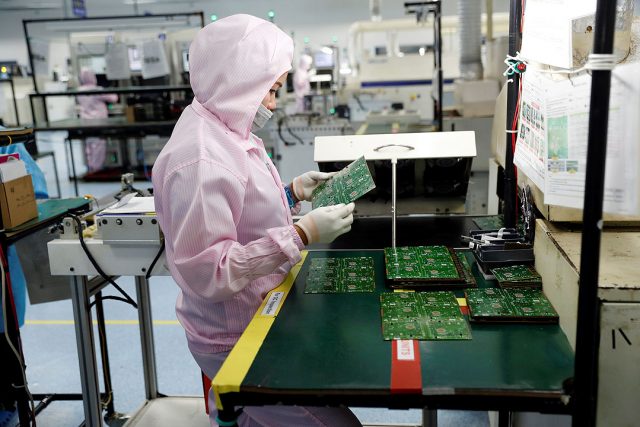
MANUFACTURING OUTPUT contracted to second straight month in October, the Philippine Statistics Authority (PSA) reported on Friday.
Preliminary results in the PSA’s latest Monthly Integrated Survey of Selected Industries (MISSI) showed that the factory output, as measured by the volume of production index (VoPI), fell by 1.8% year on year in October from the 5% decline in September. This was a reversal from the 1.4% growth a year earlier.
On a month-on-month basis, the manufacturing sector’s VoPI increased by 2.8%, a turnaround from the 2.5% contraction in September. Stripping out seasonality factors, output declined by 0.4%, slower compared with the 3.6% contraction last month.
From January to October period, VoPI growth averaged 1.7%, than the 5.4% in the same period last year.
To compare, the Philippines’ manufacturing purchasing managers’ index (PMI) of S&P Global for that month eased to 52.9 from 53.7 in September.
A PMI reading below 50 marks a contraction in the manufacturing sector, while 50 marks an expansion.
Michael L. Ricafort, chief economist at Rizal Commercial Banking Corp., said that that VoPI has a slower decline due to inclement weather, which decreased of the production dates prompted by the suspension of the working days.
“The slower decline (in VoPI) was due to the typhoons (that entered) in the Philippines. There were work disruption in heavily hit areas. They were not able to work because the production and manufacturing facilities were closed,” Mr. Ricafort said in a phone call.
The PSA attributed the slower decline in October’s factory output growth to the annual growth rate of manufacture of beverages industry division at 6.8% from an annual drop of 8%. The beverages industry division account for fifth-largest weight (6.7%) of total manufacturing, after coke and refined petroleum products (7.6%).
Also contributing to the slower annual decline of VoPI in October were the manufacture of wood, bamboo, cane, rattan articles and related products, which rose by 26.4% in October from 24.3% drop in the previous month, and transport equipment (up by 6.7% from 3.2%).
All 22 industry divisions reported capacity utilization rates of above 60% in October.
The top three industry categories for capacity utilization rates were machinery and equipment except electrical (85.9%), other non-metallic mineral products (82.6%), and textiles (82.3%).
Mr. Ricafort said there will be an uptick in in manufacturing sector in November and for the rest of the year due to Christmas season.
“There are a lot of demand in Christmas, since people have income. It is the biggest spending for many people. There get their bonus, and the overseas Filipino workers send money for Christmas spending,” Mr. Ricafort said. — Charles Worren E. Laureta
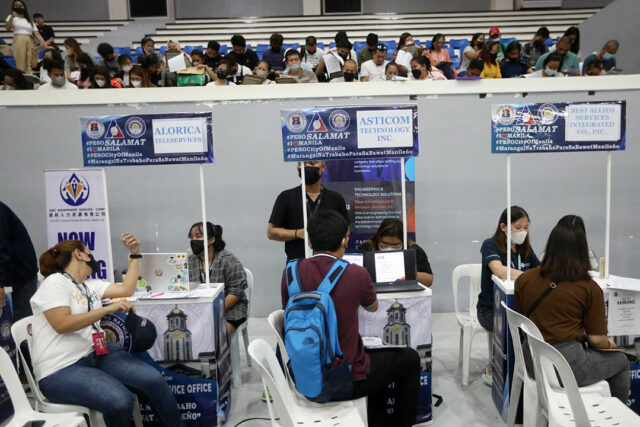
The country’s jobless rate rose to a two-month high in October, hampered by the onslaught of typhoons that month, the Philippine Statistics Authority (PSA) reported on Friday.
Preliminary data from the PSA’s Labor Force Survey (LFS) showed the jobless rate at 3.9% in October, higher than the 3.7% rate in the previous month but lower than the 4.2% a year ago.
This translated to 1.97 million jobless Filipinos in October, higher than the 1.89 million in the previous month but lower than the 2.09 million estimate for October last year.
Unemployment rate averaged 4% as of end-October, down from 4.6% in the same period last year.
Job quality also deteriorated as underemployment rate reached 12.6% in October, higher than 11.9% last month and 11.7% a year ago.
Underemployment rate averaged 12.1% in the 10 months to October, down from 12.5% seen in January to October 2023.
Meanwhile, October employment rate inched down to 96.1% in October, lower than the 96.3% seen in September but higher than the 95.8% in the same period a year ago.
This was equivalent to 48.16 million employed Filipinos, down by 1.71 million from 49.87 million in September, but up 369,000 from 47.79 million in October2023.
The services sector remained the top employer in October with an employment rate of 61%, followed by agriculture (21.2%) and industry (17.9%).
The average Filipino employee worked for 41 hours per week, higher than the 40.3 hours in September but down from the 41.2 hours averaged in October 2023.
Three consecutive typhoons have affected the labor force’s participation in October, said PSA Undersecretary and National Statistician Claire Dennis S. Mapa.
“It started during the first few days of October. Julian, and then there were Kristine and Leon. So, yes, the typhoons in a way contributed to how our countrymen participated in the labor market,” Mr. Mapa said in a news briefing in mixed English and Filipino.
Agricultural damage due to Typhoon Krathon (Julian) was estimated at P607.38 million, a Department of Agriculture (DA) bulletin released on Oct. 7 showed.
Similarly, the combined effects of Tropical Storm Trami (Kristine) and Super Typhoon Kong-rey (Leon) costed P7.83 billion in damages to agriculture, according to data from the National Disaster Risk Reduction and Management Council.
“The spate of typhoons that brought deaths and destruction of homes, livelihoods, agriculture and infrastructure started and unleashed its fury in the said period,” said Julius H. Cainglet, vice-president of the Federation of Free Workers, in a Viber message.
“Right now it’s uncontrollable super typhoons, but in a few months we should expect the other extreme — heat stress from too much heat as temperatures rise.”
Despite improved employment rates year on year, unfavorable weather conditions have led to job losses not only in the agriculture, forestry, and fishery sector but also in many service and manufacturing industries, said University of Asia and the Pacific Senior Economist Cid L. Terosa, through email.
The fishing and aquaculture sub-sector lost the most employees in October, losing 213,000 workers year on year.
It was followed by wholesale and retail trade (down 212,000); agriculture and forestry (down 183,000), and manufacturing (down 123,000).
“Contractual workers in the trade and manufacturing industries had to be laid off because of work disruptions due to unfavorable weather conditions,” said Mr. Terosa.
“Right off, typhoons have the most direct impact on agriculture. But since not all manufacturing activities are insulated from the effects of climate change, employment in this sector is sure to suffer soon as well,” said Mr. Cainglet.
Both unemployment and underemployment have worsened at a time when the economy should be ramping up for the Christmas season, said Sentro ng mga Nagkakaisa at Progresibong Manggagawa Secretary-General Josua T. Mata.
Mr. Mata said that wage and salary earners dropped from 63.9% to 63.8%, while self-employment grew from 27.4% to 27.7%
“High-value jobs in manufacturing continue to contract. Agriculture and fishing are also shedding jobs, likely due to the devastating impacts of extreme weather.”
Mr. Terosa also said many settled for jobs that would help them cope with losing regular good quality jobs, pushing up the underemployment rate.
Seasonal employment around consumption of products and services related to Christmas will contribute to a minute increase in employment, said Mr. Cainglet.
“The coming election season could provide temporary employment as well. The greater impact on employment will most likely happen by the second quarter of 2025,” Mr. Cainglet said.
Additionally, Mr. Terosa said that December labor data would probably show a modest improvement particularly in the underemployment rate.
“The flurry of business and commercial activities will most likely require additional part-time workers,” Mr. Terosa said.
Avida residents received free giveaways from NutriAsia.
Avida Land celebrated its 34th anniversary by bringing back Grand Neighbor Day to strengthen community ties and promote sustainable living. This nationwide celebration brought Avida residents together in their respective communities to forge new friendships through activities inspired by the theme, “Connect & Thrive: Building Stronger Communities Together.”
“For our 34th anniversary, we seek to make it significant by inviting our residents to participate in this milestone as we bring back Grand Neighbor Day,” said Nancy Delegencia, Customer Care and Product Delivery Group Head of Avida. “This is the time where all our residents celebrate together in different locations with the common goal of forging stronger community connections dedicated to inspiring lives and fostering a sustainable lifestyle.”
Chief among these events was The Grand Reveal of each respective community’s entry for the Avida Upcycling Competition. Each community united together to create a Christmas lantern using upcycled PET bottles and other recyclable materials. To determine the winning designs, Avida Land enlisted a panel of esteemed judges who evaluated the entries. The judging panel included notable figures such as Dr. Carlomar Aracngel Daoana, an award-winning curator, art writer and a published poet; Joshua Limon Palisoc, a talented young visual artist known for his metal sculptures and upcycling projects; Atty. Joseph Gonzales, a prominent art curator and the man behind one of the most progressive galleries in the Philippines; and Petes Gamboa from Ayala Land, Head of Innovation & Design in the Core Residential Business Group.
The first place winner of the Avida Upcycling Parol-Making Competition came from the team at Avida Verra Settings Vermosa.
The contest was joined by several Avida communities nationwide including Avida Towers Vireo and Avida Towers One Union Place in Arca South, Avida Towers Turf in BGC, Avida Towers Vita in Vertis North, Avida Towers Riala in Cebu, Avida Towers Atria in Iloilo, Hillcrest Estates NUVALI and Southfield Settings NUVALI in Laguna, and Serin East Tagaytay and Avida Verra Settings Vermosa in Cavite.
The Upcycling Parol-Making Competition’s second-place winner came from Team Avida Towers Riala.
After much deliberation, three winners were finally determined. Team Avida Verra Settings Vermosa (AVSV) was declared Grand Winner, followed by Team Avida Towers Riala in second place and Team Serin East Tagaytay in third place.
Rounding out the winning entries at third place is this pineapple-themed parol from Serin East Tagaytay.
Gerryringo L. Lariza, leader of the winning AVSV team, spoke about the inspiration behind their design. “The AVSV Lantern 2024 landscape flower design aims to create a warm, inviting atmosphere that embodies the Filipino-Verra Christmas spirit. Using vibrant plastics, PET bottles, and construction debris to create flowers, traditional decor, and symbolic lighting elements, this display brings to life the theme of unity and family,” he says. “This design will make the AVSV Lantern 2024 a memorable and heartfelt celebration for the community, truly capturing the essence of ‘Isang Pamilya Tayo Ngayong Pasko.'”
The thread of sustainable creativity ran through other activities available to residents on Grand Neighbor Day as well. Kids and adults alike engaged in arts and crafts with the “Debris to Design: Recycling to Create Home Décor.” Here, materials like tissue rolls, cans, and bottles were transformed into custom-made pieces that can happily brighten up any home.
Young residents at Avida Towers Prime Taft enjoying the activities at Grand Neighbor Day
Of course, no Pinoy celebration is complete without a fest either. As Filipinos are known to gather and connect over food, so too did Avida residents share personal favorites with each other in the “A Taste of My Hometown” activity.
“At Avida, not only do we provide inspired life spaces for our residents, but also how the relationships they nurture enhance their living experience,” said Delegencia. “We’re glad to have hosted yet another successful Grand Neighbor Day that brings our residents closer to each other through the joy of sustainable lifestyle activities.”
Avida Land Corp. is the upper mid-income residential brand of Ayala Land, the Philippines’ leading developer of sustainable estates offering a diverse mix of properties such as residential, retail, office, hotels, and leisure developments that support local economic growth and nation-building.
Spotlight is BusinessWorld’s sponsored section that allows advertisers to amplify their brand and connect with BusinessWorld’s audience by publishing their stories on the BusinessWorld Web site. For more information, send an email to online@bworldonline.com.
Join us on Viber at https://bit.ly/3hv6bLA to get more updates and subscribe to BusinessWorld’s titles and get exclusive content through www.bworld-x.com.
MANILA – A U.S. national abducted in the southern Philippines in October has reportedly been killed, Philippine police said on Thursday, citing a witness and one of the suspects.
Elliot Eastman was forcibly taken by four unidentified suspects posing as policemen from his home in the coastal town of Sibuco in Zamboanga del Norte on Oct. 17, according to an initial police investigation. Their motive was unclear.
Regional police spokesperson Lt. Col. Ramoncelio Sawan said on Thursday that a witness had told investigators that Eastman died on the night he was abducted after being shot twice while resisting his captors as they transported him on a motorboat.
According to the witness, after Eastman succumbed to his injuries, the suspects threw his body into the sea.
Sawan said a suspect in the kidnapping who was arrested recently corroborated the witness’ account, and the suspect’s sworn statement had been submitted to government prosecutors.
Despite extensive search operations, authorities have not yet found Eastman’s body, Sawan said.
According to Eastman’s YouTube Channel, he was 26 years old and had come to the Philippines about a year and a half ago where he said he had met the love of his life.
“I will be showing you my day-to-day life as the first and only foreigner to have ever lived here in Sibuco for a long period of time. I am from the USA!” he said in his channel.
The U.S. Embassy in Manila said it was aware of the reports and was coordinating with local authorities.
“The Department of State has no greater priority than the welfare and safety of U.S. citizens abroad. We stand ready to provide assistance to U.S. citizens in need and to their families,” it said in a statement. — Reuters
Australia’s agency for monitoring financial crimes said on Friday it had established an internal cryptocurrency task force to identify and take action against crypto ATM providers that do not comply with the country’s anti-money laundering laws.
The Australian Transaction Reports and Analysis Centre (AUSTRAC) said its findings showed cryptocurrency was increasingly being exploited for money laundering, scams and money mule activities.
AUSTRAC’s taskforce will ensure digital currency exchanges that provide crypto ATM services have robust practices in place to minimize the risk of their machines being used to move money associated with scams or fraud, the government agency said.
A crypto ATM allows users to buy and sell cryptocurrencies, like bitcoin and dogecoin, for cash.
Currently, Australia has 1,200 operating crypto ATMs, while about 400 digital currency exchange providers are registered with AUSTRAC.
The total value of the cryptocurrency market has almost doubled over the year so far. Bitcoin also hit a record high above $100,000 as the election of Donald Trump as U.S. president fuelled expectations his administration will usher in a friendly regulatory environment for cryptocurrencies.
AUSTRAC CEO Brendan Thomas said the agency was seeing “too many” Australians falling victim to scams carried out through cryptocurrency.
“Cryptocurrency and crypto ATMs are attractive avenues for criminals looking to launder money, as they are widely accessible and make near-instant and irreversible transfers,” he said, adding that crypto ATMS who were found flouting the anti-money laundering laws would be subject to financial penalties. — Reuters
PEOPLE react as Palestinians search for casualties at the site of an Israeli strike on a residential building in Gaza City, Oct. 25, 2023. — REUTERS
THE HAGUE – Amnesty International accused the state of Israel of committing genocide against Palestinians in the Gaza war in a report published on Thursday, an allegation Israel angrily denied.
The London-based human rights group said it reached the conclusion after months of analysing incidents and statements of Israeli officials. Amnesty said the legal threshold for the crime had been met, in its first such determination during an active armed conflict.
The 1948 Genocide Convention, enacted in the wake of the mass murder of Jews in the Nazi Holocaust, defines genocide as “acts committed with intent to destroy, in whole or in part, a national, ethnical, racial or religious group”.
Israel has repeatedly rejected any accusation of genocide, saying it has respected international law and has a right to defend itself after the cross-border Hamas attack from Gaza on Oct. 7, 2023 that precipitated the war.
“The deplorable and fanatical organisation Amnesty International has once again produced a fabricated report that is entirely false and based on lies,” Foreign Ministry spokesperson Oren Marmorstein wrote on X.
Amnesty’s own branch in Israel distanced itself from the findings of its parent group, saying it had played no part in the research and did not believe Israel was committing genocide in Gaza.
However, in a long statement, it said the killing and destruction in Gaza had reached “horrifying levels” and called for an investigation into possible crimes against humanity.
The United States disagrees with Amnesty International’s conclusion that Israel is committing genocide against Palestinians in the Gaza war, State Department deputy spokesperson Vedant Patel told reporters on Thursday, adding that Washington continues to find allegations of genocide in Gaza unfounded.
Patel said there are a number of deliberative processes about the situation on the ground in Gaza.
Israel launched its air and ground war in Gaza after Hamas-led fighters attacked Israeli communities across the border 14 months ago, killing 1,200 people and taking over 250 hostages back to Gaza, according to Israeli tallies.
“The genocidal massacre on October 7, 2023, was carried out by the Hamas terrorist organisation against Israeli citizens,” the foreign ministry spokesman said.
Gaza’s Health Ministry says that Israel’s military campaign since then has killed more than 44,500 Palestinians and injured many others.
Palestinian and U.N. officials say there are no safe areas left in Gaza, a tiny, densely populated and heavily built-up coastal territory. Most of Gaza’s 2.3 million people have been internally displaced, some as many as 10 times.
In Gaza on Thursday, some Palestinians taking part in funerals for loved ones killed by Israeli military strikes the day before were aware of the Amnesty report and said they hoped it would support efforts to bring Israeli leaders to justice.
“We don’t see anyone from the whole world standing by us or helping us in this situation,” said Abu Kamal Al-Assar, a resident and witness to an Israeli bombing of a tent encampment in al-Mawasi that killed 20 people.
“We want them to stop this crazy war that is killing all the people, without having mercy on anyone, not the elderly, or the children, men or women. It is enough. People are going through incredible suffering,” he added.
The Israeli military accuses Hamas of planting militants within populated neighbourhoods for operational cover, which Hamas denies, while accusing Israel of indiscriminate strikes.
ARREST WARRANTS
Amnesty’s report came just two weeks after the International Criminal Court issued arrest warrants for Israeli Prime Minister Benjamin Netanyahu and his former defence chief for alleged war crimes and crimes against humanity in the Gaza conflict. They have both denied the allegations.
Presenting the report to journalists in The Hague, Amnesty International Secretary General Agnes Callamard said the conclusion had not been taken “lightly, politically, or preferentially”.
She told journalists after the presentation: “There is a genocide being committed. There is no doubt, not one doubt in our mind after six months of in-depth, focused research.”
Amnesty said it concluded that Israel and the Israeli military committed at least three of the five acts banned by the 1948 Genocide Convention, namely killings, causing serious bodily or mental harm, and deliberately inflicting conditions of life calculated to bring about a protected group’s physical destruction.
These acts were done with the intent required by the convention, according to Amnesty, which said it reviewed over 100 statements from Israeli officials.
Callamard said Amnesty had not set out to prove genocide but after reviewing the evidence and statements collectively, she said the only conclusion was that “Israel is intending and has intended to commit genocide”.
She added: “The assertion that Israel’s war in Gaza aims solely to dismantle Hamas and not to physically destroy Palestinians as a national and ethnic group, that assertion simply does not stand up to scrutiny.”
Amnesty urged the ICC prosecutor to investigate alleged genocide. The office of the prosecutor said in a statement that it is continuing investigations into alleged crimes committed in the Palestinian territories and is unable to provide further comment. — Reuters
FILIPINO boxing legend Manny “Pacman” Pacquiao officially retires after 26 years. — ALVIN S. GO
Manny Pacquiao, an adored figure in the Philippines and one of the most decorated boxers in history, has been elected to the International Boxing Hall of Fame as part of the Class of 2025, it was announced on Thursday.
Pacquiao, whose fast footwork and blistering speed of punches made him one of the top offensive fighters in the sport’s history, won world championships in a record eight weight divisions from flyweight to super welterweight.
The Filipino southpaw retired from boxing in 2021 after a 72-fight career during which he had 62 wins, eight losses and two draws.
A former Filipino senator who ran for President in 2022, Pacquiao also made a name for himself outside the ring as a politician, philanthropist, lawmaker and singer.
He became the first Filipino athlete to appear on a postage stamp and was featured in Time magazine’s list of the world’s 100 most influential people in 2009.
“I am so happy that I have been selected to enter the International Boxing Hall of Fame. This certainly is a wonderful Christmas gift,” Pacquiao, 45, said in statement on the Hall of Fame’s website.
“Throughout my career, as a professional fighter and a public servant, it has been my goal to bring honor to my country, The Philippines, and my fellow Filipinos around the world.” — Reuters
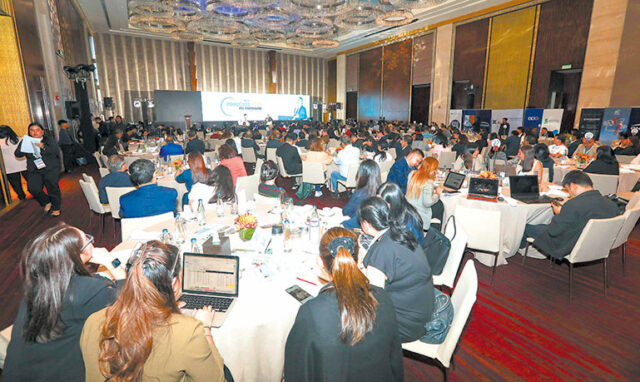
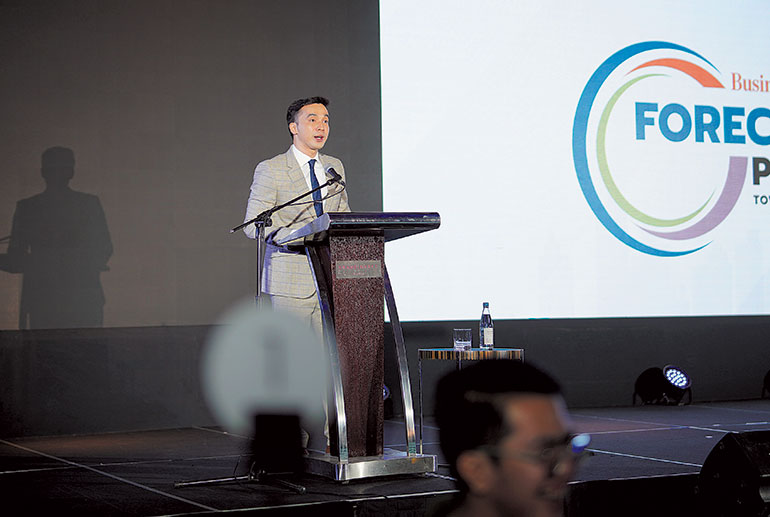
BusinessWorld Forecast 2025 forum once again gathered the Philippine business community last Nov. 26 at the Grand Hyatt Manila in Bonifacio Global City, Taguig. — Photo by Jesse Bustos/The Philippine Star
By Bjorn Biel M. Beltran, Special Features and Content Assistant Editor
When success is achieved once but is fleeting and irreplicable, it is regarded as a fluke, a statistical anomaly. But when success happens again and again, when it is consistent and intentional, that is called greatness. The key, therefore, is persistence.
Attaining such persistence was explored in this year’s BusinessWorld Forecast forum, which tackled the theme “PH Forward: Towards A Sustained Growth Path,” gathering the foremost authorities, leaders, and luminaries in the Philippine business community and beyond to discuss the coming year, the economic outlook for 2025, as well as the challenges and trends that can impact the country’s ongoing growth.
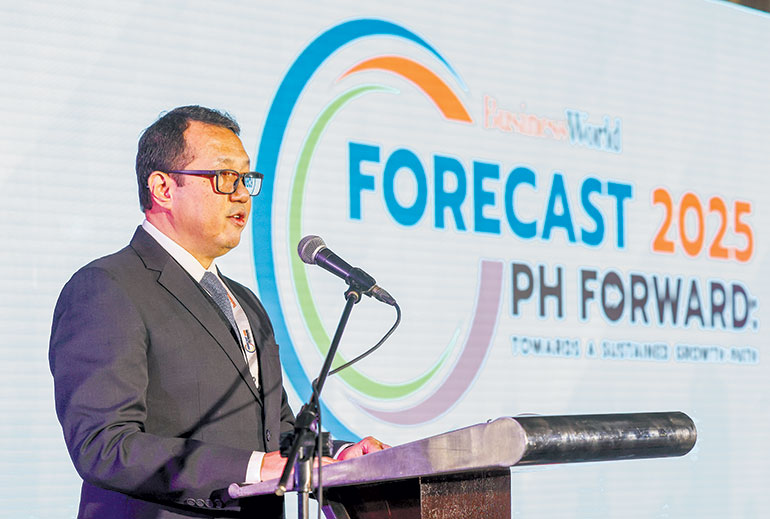
“[T]he Philippine government is confident that the country will still end the year as one of Southeast Asia’s fastest-growing economies. This means that our collective efforts and the resilience of our economy, supported by infrastructure investments, a robust services sector, and a thriving digital economy, are paying dividends,” Miguel G. Belmonte, president and CEO of BusinessWorld, said in his welcome remarks.
BusinessWorld President and CEO Miguel G. Belmonte — Photo by Jesse Bustos/The Philippine Star
“Our ability to keep moving forward, however, will continue to be tested by threats, both persistent and unforeseen. Our constants include political and geopolitical uncertainty; climate events; rising debt and fiscal deficits, to name a few. So, what will drive us towards sustained and meaningful growth? This is a question which we hope today’s forum will help us unlock some answers to.”
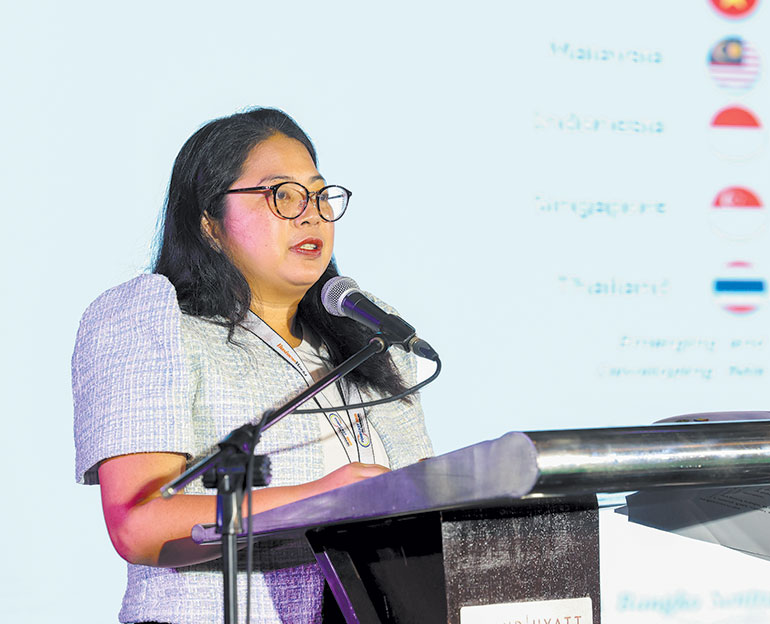
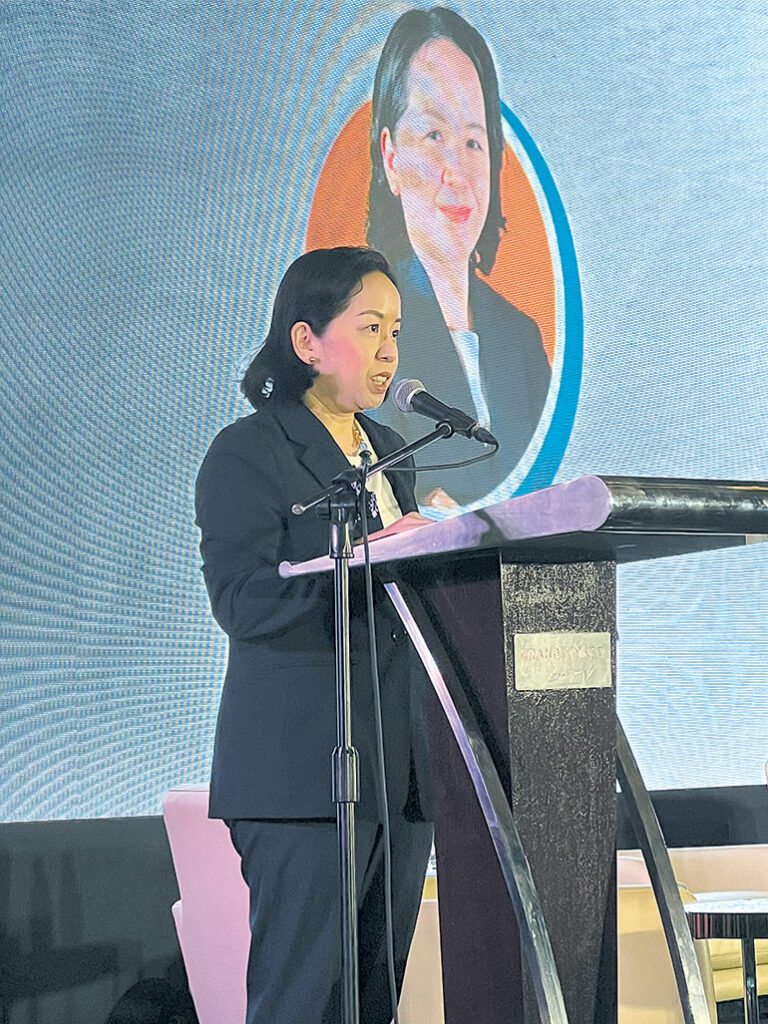
Towards this goal, Finance Undersecretary and Chief Economist Domini S. Velasquez shared the Philippine government’s vision in a keynote address on “Outlook and Agenda for the Philippine Economy in 2025,” where she discussed the country’s growth prospects and how momentum can be sustained amid global challenges and uncertainties.
“The Philippines is no longer just preparing for economic take-off. We stand ready to soar as a global economic superstar, fueled by resilience, innovation and the determination of our people. Now more than ever is the perfect time to ride its momentum, by transforming opportunities into milestones and aspirations into realities. Together, we will shape a brighter, more prosperous future for the country,” she said.
Finance Undersecretary and Chief Economist Domini S. Velasquez — Photo by Jesse Bustos/The Philippine Star
In particular, she pointed out that the country is poised to ascend to upper middle-income in 2025, through a steady reduction in deficit and debt, the financing of long-term investments, the recently-signed Corporate Recovery and Tax Incentives for Enterprises to Maximize Opportunities for Reinvigorating the Economy (CREATE MORE) Act, and the creation of better jobs in the goal of boosting incomes and reducing poverty rate to single-digit levels by 2028.
The government is also looking to initiate reforms to increase foreign direct investments, such as reducing the tax on stock transactions to help boost the Philippine capital markets.
Nothing worthwhile comes easy
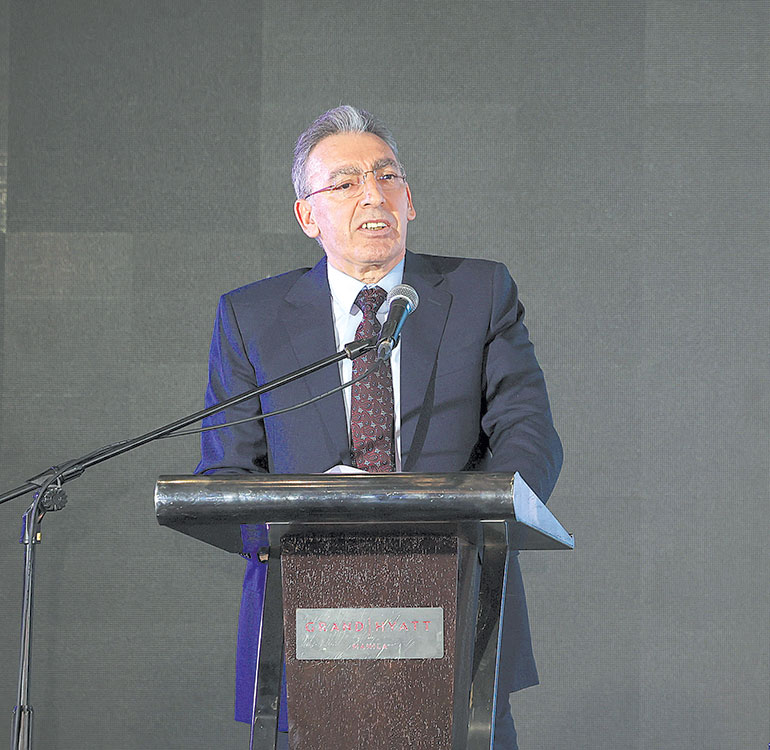
Such high aspirations come fraught with risk. Zafer Mustafaoğlu, country director for the Philippines, Malaysia, and Brunei at the World Bank, highlighted the challenges that the country might face towards its goal of being an economic giant in the coming decades.
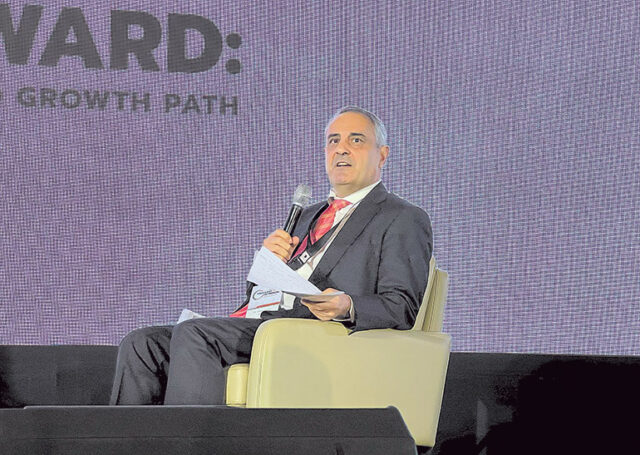
World Bank Country Director for the Philippines, Malaysia, and Brunei Zafer Mustafaoğlu — Photo by Jesse Bustos/The Philippine Star
“The path to a trillion-dollar economy is not easy. It’s a very important and ambitious target. It is not easy, but certainly it is feasible under certain conditions,” Mr. Mustafaoğlu said in his keynote on navigating the future of the Philippine economy, noting the country’s sustained growth rate of 6% could be a solid foundation for the goal.
Specifically, he highlighted the significance of improving human capital through education, nutrition and health, and the country’s physical and digital infrastructure through connectivity, energy security, and disaster resilience. “That investment in infrastructure, human capital, resilience agenda or facilitating technology adoption will require fiscal space,” he added.
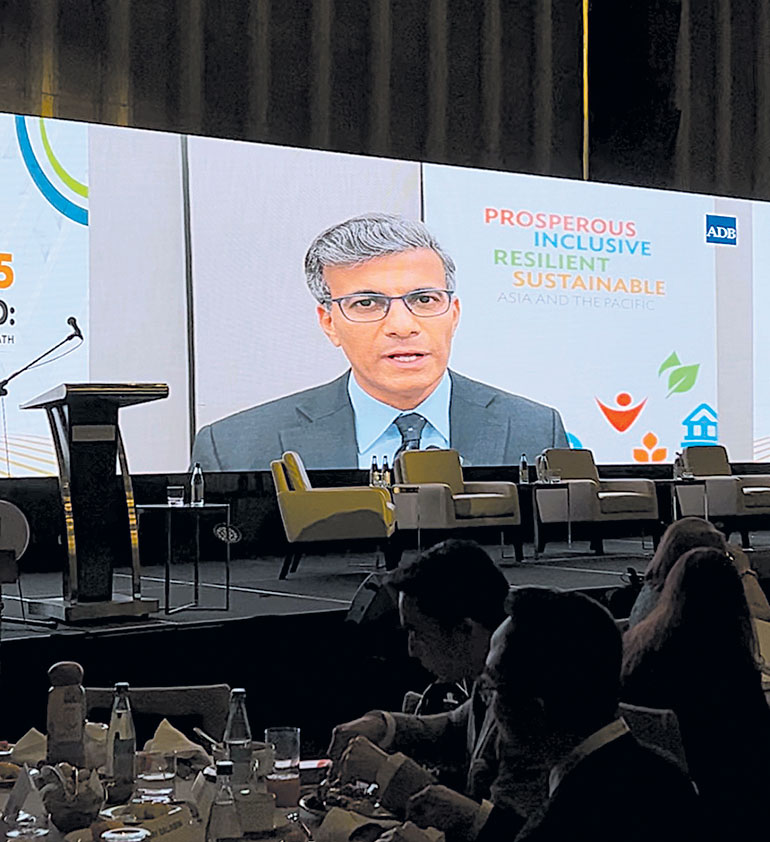
Moreover, Pavit Ramachandran, country director for the Philippines at the Asian Development Bank (ADB), talking about “Sustaining Philippines’ Growth in Stabilizing Global Economy,” said that while the country’s growth trajectory remains “very promising,” there are a number of factors that could pose a threat to sustained growth such as an unexpected slowdown in major economies, geopolitical tensions, supply chain disruptions, and climate change.
Asian Development Bank Country Director for the Philippines Pavit Ramachandran — Photo by J. Legaspi Computer Graphics
“The global environment today is presenting unprecedented challenges for highly integrated economies like the Philippines,” he said in a speech delivered via video.
“I want to highlight that the Philippines stands at a critical junction in its trajectory, an inflection point if you like. By leveraging its strengths, embracing innovation, and investing in resilience, the country can navigate through these challenges and chart a path towards sustained inclusive growth,” he said.
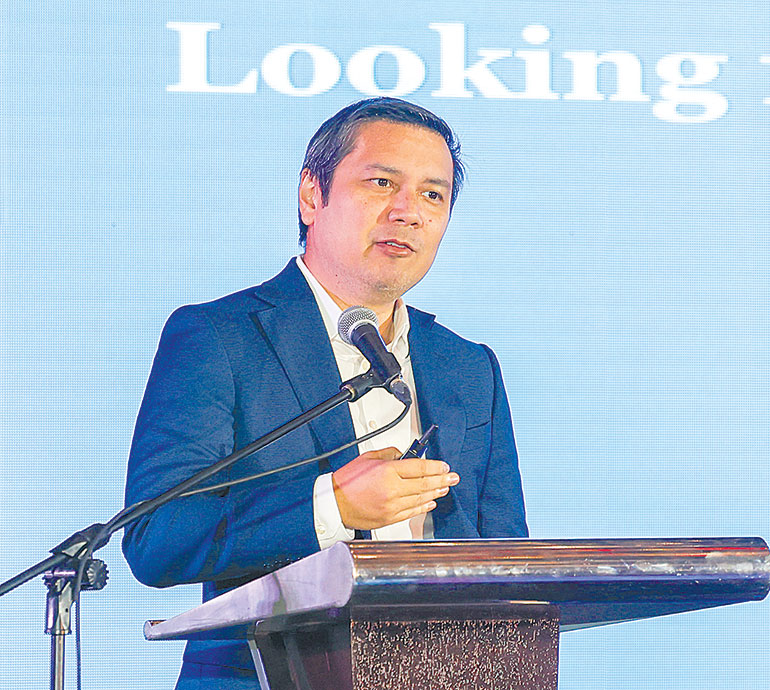
With so many different moving parts in the Philippines’ economic narrative, the country is also at risk of meandering instead of flourishing. In a presentation, McKinsey & Co. Manila Managing Partner Jon Canto stressed the need to focus on the big picture as he talked about the investment outlook for the Philippines for 2025.
“Investment is a necessary, but not a sufficient condition, for growth. Ultimately, our objective as a country is not investment, but growth. There’s a lot more factors that influence growth than investments,” he said, adding that the Philippines needs to focus on key economic enablers that would define its future.
McKinsey & Co. Manila Managing Partner Jon Canto — Photo by Jesse Bustos/The Philippine Star
“How do we choose which sectors we are going to focus on? We cannot continue to spread ourselves too thin. We need to make some bets and make them very clear. And what do we want to be known for as a country, beyond English-speaking, beyond low-cost, beyond typhoons? And let’s build a plan towards it,” he said.
Where should our focus be?
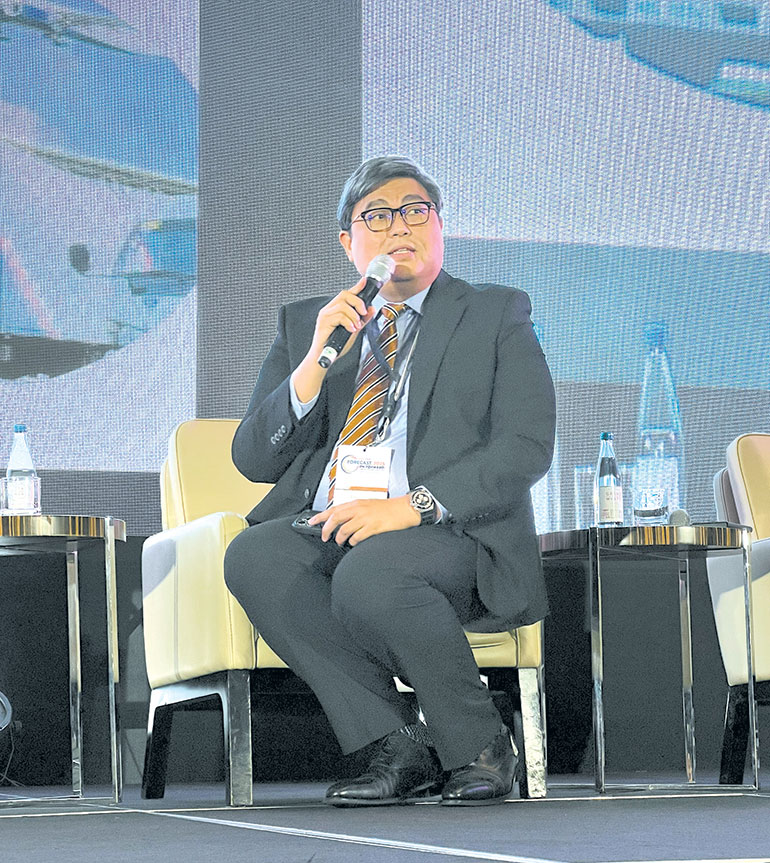
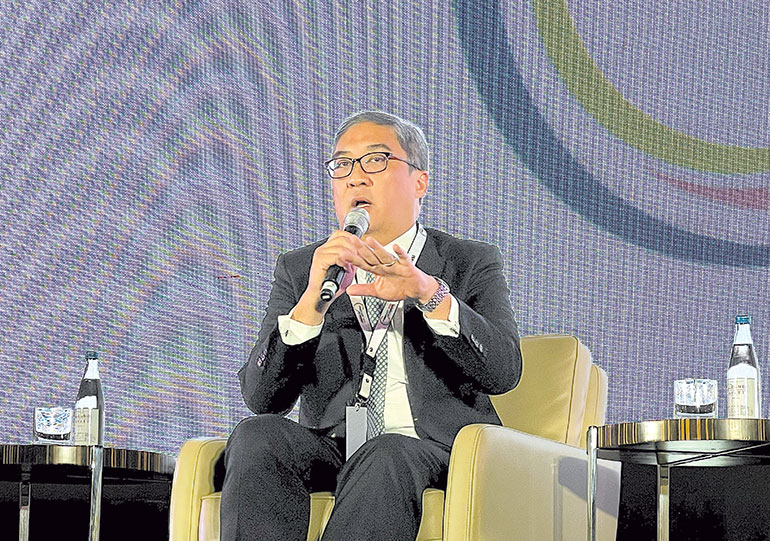
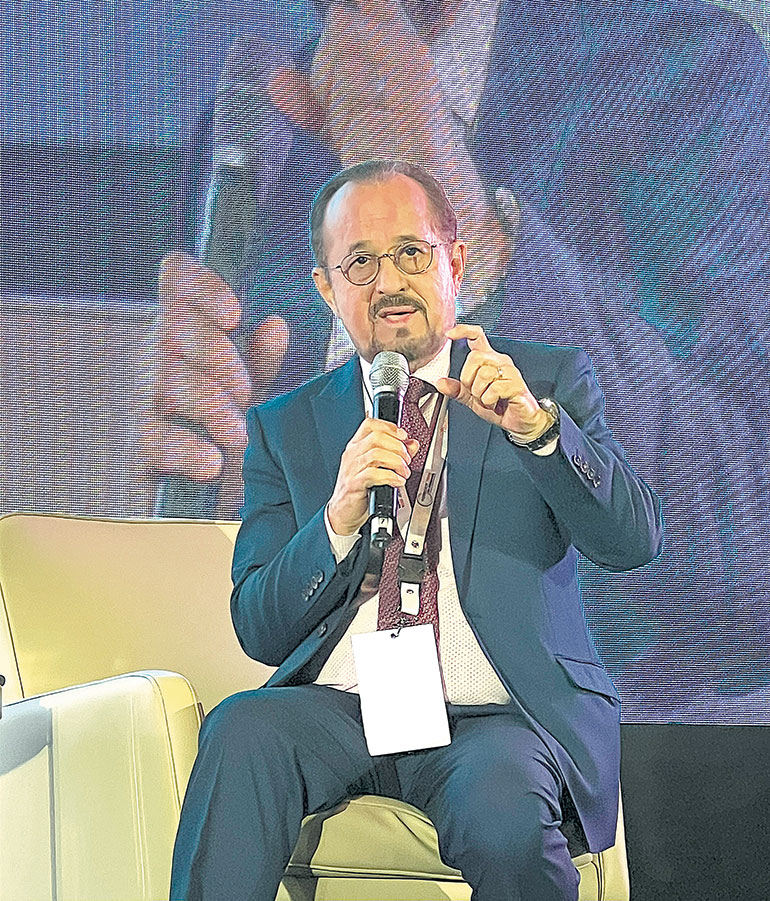
The first panel of the conference set its sights on answering that question, addressing “Gearing the Investment Space for Sustained Economic Growth” which featured George S. Uy-Tioco, Jr., chief financial officer of GT Capital Holdings, Inc.; Cosette Canilao, president and chief executive officer (CEO) of Aboitiz InfraCapital, Inc.; Maria Carmela Laarni G. Felicidario, chief operating officer at Global Dominion Financing, Inc.; Erwin G. Pato, executive vice-president for treasury, finance, and planning at SM Investments Corp.; and Alberto De Larrazabal, senior managing director, chief finance, and finance group head at Ayala Corp.
Afterwards, bringing the discussion back to key sectors of the economy, the second panel, discussed “Infrastructure, Mobility, and Real Estate: Pillars of Long-Term Economic Growth.” Jamie Alfonso Zobel De Ayala, chief executive officer of ACMobility; Jean-Baptiste Dreanic, deputy general manager of Engie Services Philippines; and Roderick M. Danao, chairman and senior partner of PwC Philippines, shared their insights.
Talking about “Philippine Tourism: Maximizing Present Gains and Building its Sustainable Future,” Tourism Secretary Ma. Esperanza Christina G. Frasco discussed onstage the government’s current plans to reinvigorate the sector.
A panel discussion on “Keeping Retail’s Pace with Consumers’ Changing Ways” gathered Vicky Abad, country director at Ipsos Philippines, Inc.; Sherisa Nuesa, chairperson at Metro Retail Stores Group, Inc.; and Jennifer Jane G. Echevarria, vice-president for enterprise data and strategic services at Globe Telecom, to illustrate the latest shifts in the consumer market.
Meanwhile, the panel on “Supercharging Philippine Businesses and Workforces in the AI Age” looked towards the country’s workplaces to gauge the impact of artificial intelligence. Peter Maquera, president and CEO of Microsoft Philippines; Pia Azarcon, managing partner for consulting at IBM Philippines; Gian Paulo Dela Rama, chief product officer of Sprout Solutions and head of Sprout AI Labs; and Dominic Ligot, founder, CEO, and CTO of Cirrolytix, shared their expertise.
Among fireside chats, Dr. Jesus Felipe, distinguished professor at the De Le Salle University Carlos L. Tiu School of Economics, shared his thoughts on “Priming Philippine Economy’s Growth Through Timely Policies;” while Anthony Oundjian, managing director and senior partner at Boston Consulting Group, presented on “Managing the Generational Divide in the Workplace.”
TV5 News Anchor Jester Delos Santos moderated Forecast 2025. — Photo by Jesse Bustos/The Philippine Star
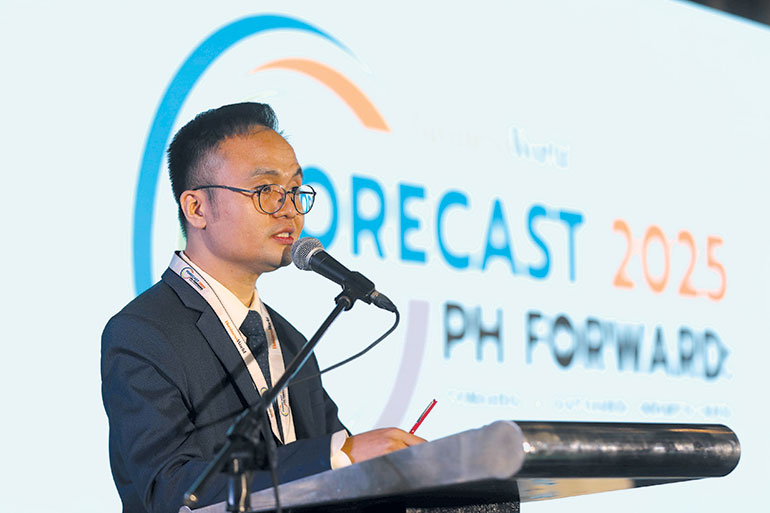
The forum was hosted by TV5 News Anchor Jester Delos Santos, while the sessions were moderated by BusinessWorld journalists — Editor-in-Chief Cathy Rose A. Garcia, Corporate News Editor Arjay L. Balinbin, Research Head Mark T. Amoguis, Reporters Luisa Maria Jacinta C. Jocson and Revin Mikhael D. Ochave, and Multimedia Producer Patricia B. Mirasol.
BusinessWorld Forecast 2025 was supported by gold sponsors Ayala Corp., Federal Land NRE Global, Megaworld Corp., SM Investments Corp., SM Supermalls, and Globaltronics, Inc.; silver sponsors BDO Unibank, Inc., Engie Services Philippines, Global Dominion Financing, Inc., Globe Telecom, Inc., and San Miguel Corp.; and bronze sponsors FWD Insurance, Manila Electric Co., Metropolitan Bank & Trust Co., National Grid Corporation of the Philippines, SGV & Co., Shang Properties, Standard Chartered Bank, Gokongwei Group, Megawide Construction Corp., PLDT, Inc., and Philippine Amusement and Gaming Corp. Partner organizations were the Asian Consulting Group; American Chamber of Commerce of the Philippines; Bank Marketing Association of the Philippines; British Chamber of Commerce of the Philippines; Management Association of the Philippines; Philippine Chamber of Commerce and Industry; Philippine Franchise Association; Philippine Retailers Association, and J. Legaspi Computer Graphics. One News and The Philippine STAR served as media partners.
Panel Discussion 1 (from left): BusinessWorld Editor-in-Chief Cathy Rose A. Garcia (moderator), George S. Uy-Tioco, Jr. of GT Capital Holdings, Inc., Cosette V. Canilao of Aboitiz InfraCapital, Inc., Maria Carmela Laarni G. Felicidario of Global Dominion Financing, Inc., Erwin G. Pato of SM Investments Corp., and Alberto M. de Larrazabal of Ayala Corp. — Photo by J. Legaspi Computer Graphics
By Bjorn Biel M. Beltran, Special Features and Content Assistant Editor
The Philippines stands at a critical juncture in its economic trajectory, poised to transition from lower-middle to upper-middle-income status in the fiscal year, according to many international financial organizations like the World Bank.
However, this optimistic outlook hinges on the nation’s continued development through structural reforms, and a strong commitment to long-term investments in human and physical capital. Courting foreign direct investments, which have dwindled in recent years, remains a key aspect in enabling this growth.
This was the theme of the first panel discussion of this year’s BusinessWorld Forecast 2025 forum, which revolves around “Gearing the Investment Space for Sustained Economic Growth.” The panel gathered industry leaders for their insights on the current investment climate in the Philippines and where investments have to be made to foster inclusive and sustainable growth.
The opportunities, of course, are abundant and evident. Erwin G. Pato, executive vice-president for treasury, finance, and planning at SM Investments Corp. (SMIC), believes the Philippines has immense untapped potential.
SM Investments Corp. Executive Vice-President for Treasury, Finance, and Planning Erwin G. Pato — Photo by J. Legaspi Computer Graphics
“The key challenge, really, is how to unlock that potential,” he said, emphasizing the need for collaboration between stakeholders, including government and private entities.
Mr. Pato called for a clear framework that investors can understand, which would foster inclusive growth and provide a road map for sustained development. In a short presentation, he likened SMIC to a proxy for the country’s economic trends and shared their strategy of leveraging diversification across key sectors such as infrastructure like logistics and renewable energy to capitalize on current growth opportunities while mitigating risks posed by external factors.
George S. Uy-Tioco, Jr., chief financial officer of GT Capital Holdings, Inc, echoed his sentiments, underscoring their confidence in the Philippines’ growth prospects, which remain strong and supported by robust domestic demand and continued public investment.
GT Capital Holdings, Inc. Chief Financial Officer George S. Uy-Tioco, Jr. — Photo by J. Legaspi Computer Graphics
“In general, we are optimistic about the economy moving forward simply because we are growing, and we expect that growth to continue,” he said.
Yet, Mr. Uy-Tioco underscored the importance of strategic planning to manage potential headwinds. “The challenge is really how do we support that growth… How do we manage the potential headwinds that we anticipate in the years to come?”
These headwinds include geopolitical tensions, inflation, and the need to remain competitive in a rapidly evolving global economy. Most recently, China’s recent ban on exporting rare earth metals to the United States, signaling a global trade war that would disrupt supply chains and impact industries reliant on these materials like technology and energy.
For now, the Philippines has the time to react to such risks to its development, but not a lot of it. For Mr. Uy-Tioco, foreign investment is a critical piece of the puzzle.
“If this government is seen as sufficiently addressing these challenges and executing their solutions and programs in a timely fashion, then it will draw attention,” he noted, adding that urgency is crucial to leverage the country’s demographic edge effectively. “We need to think about five years from now, 10 years from now, and put our plans in place.”
Unlocking the nation’s potential
Cosette V. Canilao, president and chief executive officer of Aboitiz InfraCapital, Inc., pointed to infrastructure as a key driver of economic growth but advocated for a more holistic approach.
Aboitiz InfraCapital, Inc. President and Chief Executive Officer Cosette V. Canilao — Photo by J. Legaspi Computer Graphics
“When we talk about infrastructure, we don’t really talk about only the roads, the bridges, and airports,” she said. “We also talk about financial inclusion, technology, healthcare, and agriculture.”
Speaking from the perspective of Aboitiz InfraCapital, Ms. Canilao highlighted the private sector’s own pivotal role in supporting infrastructure development, emphasizing collaboration with the government to develop human capital.
“We are addressing different areas of infrastructure, all of us, and the private sectors need to engage with the government actively,” she explained. Streamlined processes and risk mitigation, she argued, would also make the Philippines more attractive to foreign investors.
Global Dominion Financing, Inc. Chief Operating Officer Maria Carmela Laarni G. Felicidario — Photo by J. Legaspi Computer Graphics
Maria Carmela Laarni G. Felicidario, chief operating officer of Global Dominion Financing, Inc., agreed, pointing out the importance of marketing the country as an investment destination for both domestic and foreign investors. “Most of the foreign investors are just waiting for us to lower the risk of investing in us. They are waiting to lower their risk and expand their business with us,” she said.
Ms. Felicidario sees targeted efforts to reduce investment risks as key to unlocking funding for sectors critical to economic development. At the same time, making it easier for businesses, big or small, to expand will be crucial, as micro, small, and medium enterprises (MSMEs) account for nearly all (99.6%) of the business in the country.
She noted that this is based on Global Dominion’s own strategy for growth, which seeks to empower Filipino businesses, improving their access to financing, and foster transformative and impactful development.
Ayala Corp. Senior Managing Director, Chief Finance, and Finance Group Head Alberto M. de Larrazabal — Photo by J. Legaspi Computer Graphics
In a similar vein, Alberto M. de Larrazabal, senior managing director, chief finance, and finance group head at Ayala Corp., pointed out that for the private sector aligning their business with national interests is key for long-term growth.
“The most recent thing is about financial inclusivity,” he cited as an example. “That’s one major pain point we wanted to address. Think about the fact that 70% of the population is unbanked and underserved. And it was a structural problem. Traditional banks could not service this segment of the market their needs given the transaction values they represent compared to the cost it would take to service them.”
BusinessWorld Editor-in-Chief Cathy Rose A. Garcia moderated the panel discussion. — Photo by J. Legaspi Computer Graphics
This is how GCash came to be as successful as it is, as it utilized technology to serve public interest and capitalize on the opportunities that were there. And opportunities like these were everywhere.
Mr. Larrazabal then noted that the Philippines’ demographic dividend is its most powerful competitive edge. “Our people, their age, their capabilities — that is what will continue to provide us the opportunities as a country to grow to become one of the largest consumer economies in the region,” he said.
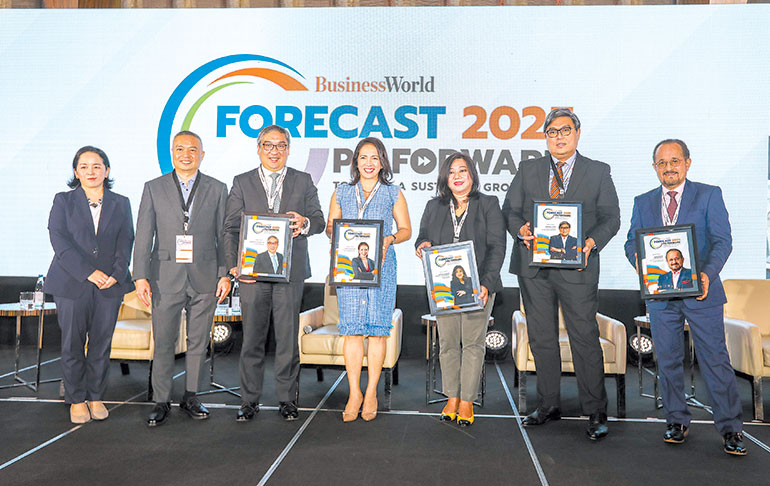
Giving of plaques of appreciation and tokens, led by BusinessWorld Executive Vice-President Lucien C. Dy Tioco (second from left) and Editor-in-Chief Cathy Rose A. Garcia (left) — Photo by Jesse Bustos/The Philippine Star
Nurturing this asset, however, requires significant investment in education and healthcare. He lamented the fact that 60% of Filipinos will never see a doctor in their lives, according to statistics from the Philippine Institute for Development Studies.
Ultimately, the consensus is clear: the Philippines has the tools, resources, and opportunities to achieve sustained economic growth. Most of all, the country has its people; and taking care of its people will be paramount if the country ever hopes to truly unlock its latent potential.
De La Salle University Carlos L. Tiu School of Economics Distinguished Professor Dr. Jesus Felipe — Photo by J. Legaspi Computer Graphics
By Angela Kiara S. Brillantes, Special Features and Content Writer
Developing the Philippines’ fundamental sectors, coupled with more predictable economic policies, are seen to push the country further towards steady and even faster growth, helping it to navigate through economic headwinds and uncertainties, adapt to shifts, and build a more robust, resilient, and sustainable economy.
Dr. Jesus Felipe, distinguished professor at the De Le Salle University (DLSU) Carlos L. Tiu School of Economics, stated that the country’s economic growth has set the Philippines for positive prospects, among them becoming one of the fastest-growing economies in the world.
“Economic growth is going to continue for a couple of years at around 6%-7% but it’s going to go down to around 3% in 2050. That is a sign that the economy is improving,” he said during the first fireside chat of the BusinessWorld Forecast 2025 forum last Nov. 26 at the Grand Hyatt Manila.
However, growth alone won’t cut it, and the big question now is how to sustain its growth momentum in the new few years. For the distinguished professor, the country needs to increase its potential, accelerate progress, and start changing the structure of the economy.
“[Growth in economies] is determined by factors such as activity or how much they grow. In the last few years, it has been 6%. We need to understand that it (the Philippines) has been one of the fastest-growing economies in the world today. The question is, can we grow faster? It is about increasing the potential; and with the economy we have today, it is extremely difficult, and the way to do it is by changing the structure of the economy that will allow us to grow significantly faster.”
Developing fundamental sectors
The first approach to sustaining growth momentum, according to Mr. Felipe, is focusing on agriculture, labor, and manufacturing — sectors that are fundamental for a nation to grow, at the same time yet hardly ever mentioned.
More often, agriculture is facing key challenges like labor migration. As the economy develops, workers in this field may be drawn to higher-paying jobs in other sectors. From this issue, Mr. Felipe then highlighted the importance of incentives, which can drive increased productivity in the sector.
“That’s a way to increase productivity in agriculture. What we need to do is create employment in all sectors. With that, there will be a way to increase productivity in agriculture,” the professor said.
Another point of focus in the fireside chat was the importance of the manufacturing sector in boosting the economy. Mr. Felipe stressed that the Philippines’ manufacturing sector needs to be further developed, alongside maximizing advantages such as a large labor force and its demographic location.
Manufacturing plays a crucial role in driving economic growth because of its ability to enhance productivity across sectors. And for that, many countries have leveraged this sector to create jobs, increase income, reduce poverty, and help them achieve their development plans.
Having a robust manufacturing sector would help the country to stay ahead and compete with the rest of the world. However, Mr. Felipe finds, the Philippine manufacturing sector needs to catch further up.
This echoes Dr. Felipe’s answers to the question, “What can significantly boost the Philippine economy?” in an article published on DLSU’s website. Manufacturing, he pointed out, is a key for economic development because it drives up high income per capita, fosters innovation, and provides opportunities that can help the country advance to industrialization.
“There are always opportunities out there in terms of niches. In the manufacturing sector, it is a big aggregate that, in reality, is thousands of products. And I’m familiar with manufacturing companies in the Philippines in most of the sectors, including chemicals. So, the challenge is how to multiply that experience in the next few years, in the next couple of decades, to be able to develop some niches where we may have opportunities,” the professor said.
Recognizing this, Mr. Felipe explained that other developed countries who have industrialized through manufacturing have risen above poverty. A prime example is South Korea during the 1960s, which was a pivotal time in their history. Their strategy focused on manufacturing as a key driver of economic growth, helping them transform to the economic powerhouse they are today.
“South Korea realized that the world is very large. It was producing manufacturing products, not just for the South Korean consumers but for the world,” he added.
Prioritizing industrialization
Dr. Felipe also emphasized that industrializing the country should be a top priority of the country’s policy agenda, since moving towards a more industrialized path has the potential to propel the country further forward.
“How do we become an industrial nation? How do we strengthen the niches that are going to help us?” he was quoted as saying in the aforementioned article. “To achieve higher wages and higher-capita income, it needs to create a wide base of domestic industrial companies that produce the myriad of basic products across the whole manufacturing spectrum that support national development. This is something that everybody needs to be aware of,”
Another approach in priming the country’s economic growth is through implementing timely policies that are vital for economic growth and prosperity, as he highlighted during the fireside discussion. If those policies are constantly changing, however, then it can create more uncertainties. Thus, Mr. Felipe stressed the importance of having a certain form of predictability among these policies.
“Predictability is a challenge. We’re talking about investments in sectors, whether it be agriculture, or manufacturing, or to attract investments. There has to be a certain form of predictability,” according to the professor.
Dr. Felipe also emphasized that this is particularly true for long-term investments that require significant capital in order to unlock the country’s economic potential and achieve sustainable growth.
Panel Discussion 2 (from left): Jamie Alfonso E. Zobel De Ayala of ACMobility Holdings, Inc., Jean-Baptiste Dreanic of ENGIE Services Philippines, and Roderick M. Danao of PwC Philippines — Photo by Russell A. Palma/Philippine Star
By Angela Kiara S. Brillantes, Special Features and Content Writer
In the Philippines’ quest for sustained economic development, infrastructure and mobility are growth engines that come hand-in-hand in improving the quality of life for Filipinos and building a sustainable future for the country. In essence, infrastructure enables mobility and facilitates connectivity, while mobility drives infrastructure demand.
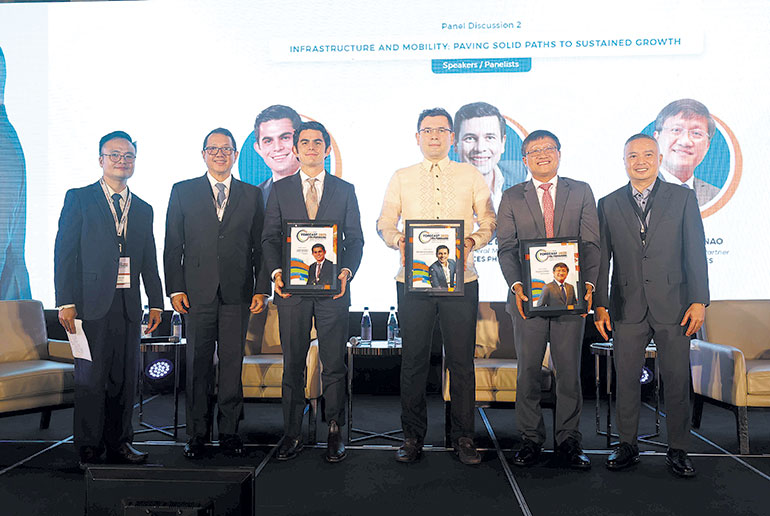
In the second panel discussion of BusinessWorld’s Forecast 2025 last Nov. 26 at the Grand Hyatt Manila, ACMobility Holdings, Inc. Chief Executive Officer Jaime Alfonso Zobel De Ayala, ENGIE Services Philippines Deputy General Manager Jean-Baptiste Dreanic, and PwC Philippines Chairman and Senior Partner Roderick M. Danao shared their outlook for the infrastructure and mobility sectors in the upcoming year, highlighting challenges and strategies that can be optimized towards long-term growth and development in the country.
Over the years, the Philippine economy have visibly seen shifts and transformations, intrinsically uplifting the economy and keeping ahead with the times. Yet, while the country poses so much potential, it still needs to speed up growth for it to achieve its goals.
For a developing country like the Philippines, a robust infrastructure network is what it needs, built up with the right kind of infrastructure that provide seamless connections across the country, thus attracting more investments and making an inclusive economy more achievable.
PwC Philippines Chairman and Senior Partner Roderick M. Danao — Photo by Russell A. Palma/Philippine Star
“If the Philippines wants to socially and economically improve, it has to industrialize; and we need infrastructure for that to happen. These are critical to the future of the economy and the future of Filipinos in the next few years,” Mr. Danao of PwC Philippines said.
Mr. Danao also emphasized that infrastructure is a key part of unlocking opportunities in the local economy, especially in terms of fostering physical connectivity, supporting power and energy demands, and enabling digital networks, services, and applications.
The latest technological advancements have further amplified the role of infrastructure in economic development. For Mr. Zobel de Ayala of ACMobility, catalyzing such transformation brings tons of benefits and solves so many problems at once.
“We started noticing that [mobility industry] was going through a massive transformation… Technology was evolving in a way that it was becoming accessible from a pricing perspective for customers. We saw these kinds of technologies contribute significantly to sustainability. Technology also provides significant health benefits when we utilize this, and we felt that this was an evolution that we wanted to contribute to,” he said.
The development of electric mobility has been a game-changer for mobility, the ACMobility CEO added, because it is more efficient, sustainable, and low-cost — all contributing to a better ecosystem for mobility.
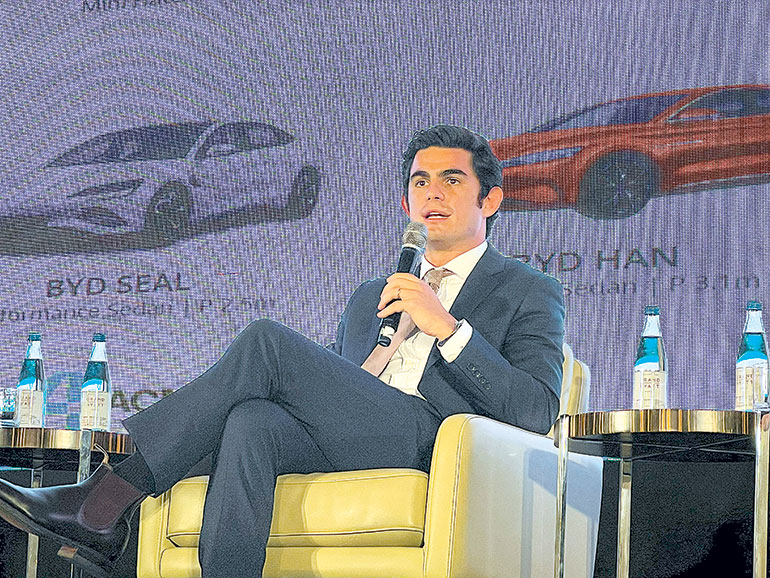
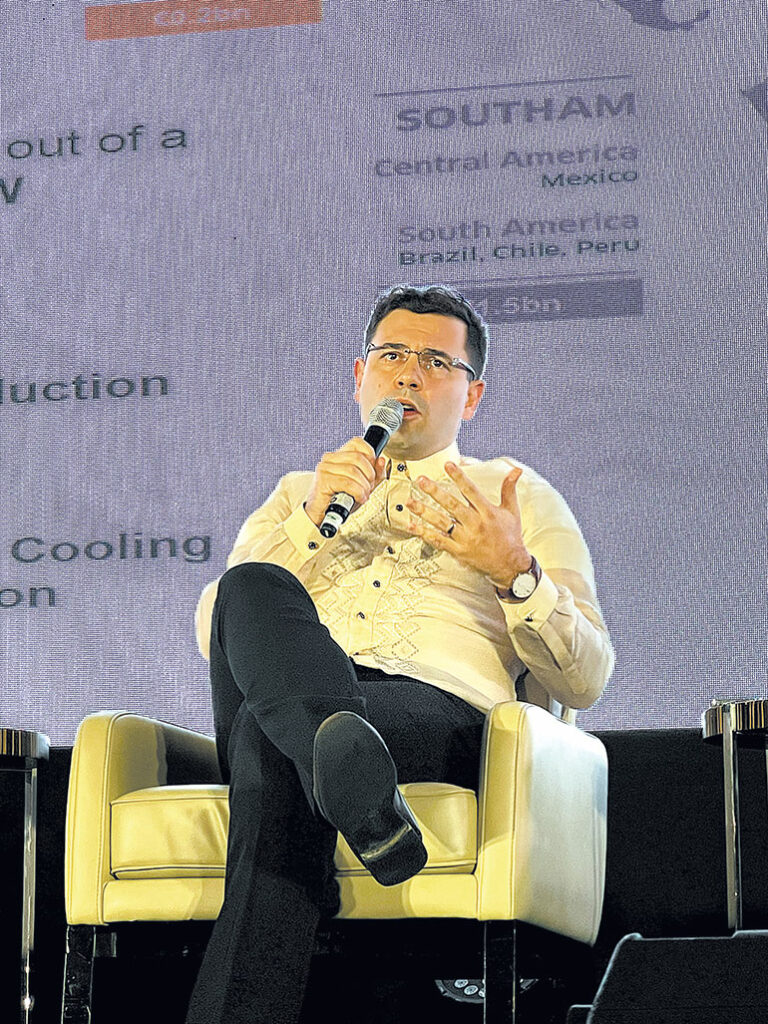
ACMobility Holdings, Inc. Chief Executive Officer Jamie Alfonso E. Zobel De Ayala — Photo by J. Legaspi Computer Graphics
“It’s a technology that’s more efficient than its traditional counterparts. It allows Filipinos to save more because your peso goes further in a more efficient vehicle,” Mr. Zobel de Ayala said. “I think that’s really an exciting part of this evolution. Innovations are supposed to get incrementally better at this game.”
“The charging infrastructure can bring the resource to you. We can create a charging product for you at home, we can bring a charging product to where you’re at work — and all that being done with a significant discount,” he added.
Closing infrastructure gaps
Yet, even with progress, persisting gaps remain a toll, stalling progress and holding back the country’s potential. One of these gaps is traffic congestion. Nonetheless, this still stands as an opportunity to develop better infrastructure, especially in urban areas in the country.
According to Mr. Danao, one way to move things forward is by shifting from car-centric urban planning to designs focused on railways and mass transit systems.
“If you want a sustainable solution to all our traffic problems, this is the way to go. Merge real estate planning together with the power of mass transport systems. It’s good for the business, good for tourism, and good for the country. We need to see the shift. When we start doing these mass transport systems, you’ll see a lot of real estate investments pouring into these mass transport systems that we’ll be building in the next five to 10 years,” he said.
Giving of plaques of appreciation and tokens, led by BusinessWorld President and CEO Miguel G. Belmonte (second from left) and Executive Vice-President Lucien C. Dy Tioco (right) — Photo by Russell A. Palma/Philippine Star
Meanwhile, for the mobility sector, streamlining policies and regulatory processes is found to be important in fostering innovation and growth. Having an efficient regulatory environment allows businesses to operate, innovate, support sustainability, and even attract more investors. Mr. Zobel de Ayala emphasized the need for this kind of environment, particularly through consistent frameworks for and standardization of electric vehicle (EV) charging stations.
“There’s going to be charging stations with a lot of different formats, and making sure there’s consistency in how we’re managing safety regulations across is quite important,” he said.
“There are mandates set by the public sector, and there are targets and goals to do that,” Mr. Zobel de Ayala added. “We [partner with] the private sector to make sure that we’re bringing in the right partners and we’re delivering a service that’s also meeting those targets. So, there’s a lot of collaboration in that space and I think that’s because there’s a lot of interest in the benefits,” he said.
Mr. Dreanic of low-carbon energy provider ENGIE Services Philippines also noted that efficient regulatory frameworks are crucial in supporting the adoption of sustainable solutions, especially with the Philippines becoming a promising market for sustainable energy solutions.
“Today, there are some ease of doing business and tax incentives in place, which is very promising. We need to continue to do those initiatives,” he said.
Powering moves through sustainability
Another key point during the discussion was how crucial sustainability in mobility and infrastructure is as it brings environmental, social, and economic benefits to communities. For instance, EVs are a perfect example of sustainability in action because they emit zero emissions and are chargeable by renewable energy.
“They offer solutions that other types of technologies don’t have. With regards in the mobility landscape, a lot of environmental benefits… can come from an integrated strategy of [ensuring] that charging stations consume renewable energy,” Mr. Zobel de Ayala said. “We want to make mobility a much more efficient ecosystem in the Philippines. We want to do it in a way that it does not affect our environment, and we also want to make sure that the positive externalities are felt in the communities.”
ENGIE Services Philippines Deputy General Manager Jean-Baptiste Dreanic — Photo by J. Legaspi Computer Graphics
ENGIE Services Philippines is focused not only on creating sustainable energy solutions but also expanding the renewable energy footprint in the country. In line with this, Mr. Dreanic mentioned the company’s renewable energy projects, including energizing two solar projects in December and up to 10 more projects planned for the next year.
Beyond solar power, nonetheless, the company has also been exploring and investing in other renewable energy technologies.
“We are exploring offshore wind in the Philippines,” Mr. Dreanic shared. “We would love to explore [hydro as well], but [there is] a market already with very good local experts that are willing to invest… But, it’s really something we like to invest in.”
BusinessWorld Corporate Editor Arjay L. Balinbin moderated the panel discussion. — Photo by Russell A. Palma/Philippine Star
ENGIE’s current projects in the Philippines include developing large-scale renewable energy projects with a total capacity of 300 megawatts-peak (MwP). The company also collaborates with local or international companies for its projects, such as Filinvest Development Corp. for its next solar venture.