BDO Unibank Inc. (BDO) was recognized as the Philippines’ Best in Cash Management Services by The Asset Triple A Treasurise Awards in Hong Kong, Asian Banking & Finance Awards and Alpha Southeast Asia Best Financial Institution Awards in Singapore.
BDO received its sixth consecutive win as the Best Cash Management Service Provider in the Philippines at The Asset Triple A Treasurise Awards 2024 in Hong Kong. This recognition underscores BDO’s unwavering commitment to delivering innovative and reliable cash management solutions tailored to the needs of its diverse clients.
BDO was also honored as the Philippines’ Domestic Cash Management Bank of the Year at the Asian Banking & Finance Awards 2024 in Singapore. This award highlights BDO’s comprehensive suite of cash management services, which have consistently met the evolving demands of businesses across the country.
Furthermore, BDO received the Best Cash Management Bank in the Philippines award for the ninth consecutive year at the Alpha Southeast Asia Best Financial Institution Awards 2024 in Singapore. This distinction signifies BDO’s sustained excellence and its pivotal role in driving financial innovation in the region.
“Engaging in regular dialogues with our clients is key to understanding their requirements. We provide solutions to support their businesses in effectively managing their cash flow, liquidity, and financial resources,” said Carlo Nazareno, Senior Vice-President and head of BDO Unibank’s Cash Management Services.
These multiple international awards reinforce BDO’s position as the premier cash management services provider in the Philippines, a testament to its strategic vision, customer-centric approach, and steadfast dedication to service excellence.
Spotlight is BusinessWorld’s sponsored section that allows advertisers to amplify their brand and connect with BusinessWorld’s audience by publishing their stories on the BusinessWorld Web site. For more information, send an email to online@bworldonline.com.
Join us on Viber at https://bit.ly/3hv6bLA to get more updates and subscribe to BusinessWorld’s titles and get exclusive content through www.bworld-x.com.
I’m a fresh college graduate. I’ve sent my resume to more than 50 employers, with some of them asking for unfamiliar requirements. For example, three employers told me I was qualified for a “technical job” subject to my passing a one-month training program costing $200. Is this a legitimate deal? — Long Mile
When in doubt, then don’t. The phrase is “extreme caution,” especially when you’re required to pay for something, no matter how little, in exchange for “employment.” As a fresh college graduate, you should be aware that scams and illegal recruitment come in many guises that target almost everyone, not only those seeking jobs overseas.
Direct your attention to major employers who may have a difficult hiring process, which is worth going through for the experience alone. If you seek a job at a large institution, prepare to be rejected, but learn from that experience, especially hiring processes like job interviews and IQ tests. Constant practice is important until you hit it big.
While some people may advise you to focus on small organizations to improve your chances, getting hired by a big company can boost your morale and can have beneficial effects in the long term.
Take it from me. The moment I graduated from college, I hand-carried my resume to more than 150 big corporations along Ayala Avenue in Makati. In one building, I delivered an average of 10 resumes, the attractiveness of which I judged from the size of their advertisements in the yellow pages.
I was not discouraged because I wanted to learn every organization’s process to help me understand things that were not taught in school.
RED FLAGS Fifty years later and counting, I discovered many immoral or illegal practices that tipped me off that I was dealing with a bad organization. Some of their practices include the following, which are still used today:
One, requiring applicants to sell insurance policies. These include health maintenance or funeral businesses. These organizations often claim to be engaged in the sale of such products and boast of being affiliated with legitimate companies.
Two, giving evasive answers to questions about how they are regulated. This happens all the time in lending companies. Try asking for a copy of their registration papers with the Securities and Exchange Commission, and you’ll be met by a cold stare if not a rebuff.
Three, no social media presence or website. If ever, their website contains very little information about their organization and their officers. It is rare to find the names of the management team on LinkedIn.
Four, a small office in a decrepit building. When you’re ready to pay for their “services” in cash, they propose to meet you in a fast-food restaurant or any public place, giving the excuse that they’re out doing fieldwork.
Five, asking for cash payment for seminars fee or medical checkups. The amount can be small enough that you aren’t unduly troubled by it. They may issue a temporary receipt with no indication of registration with the tax authorities.
Six, generic e-mail addresses like Gmail or Yahoo. Company e-mail addresses are a sign that you’re dealing with a legitimate organization. They might say that their office e-mail is undergoing a technical overhaul or has limited capacity.
Seven, poor written or verbal English. This alone is a big giveaway that you’re dealing with people with an unprofessional background.
Eight, eagerness to hire right away. This could come up even after an interview as short as 20 minutes.
Nine, reluctance to meet in person. This applies to hiring via social media, with the interviewer rejecting meeting in person, claiming they’re busy.
CRITICAL MINDSET The above list is incomplete. It’s best to have a critical mindset, which makes you resistant to manipulation. Better to be paranoid than be a victim. But act professionally even in the face of red flags.
In conclusion, be aware of the red flags, even those that are barely visible. Watch for body language, even the manner when they answer the phone. Talk to their staff and observe whether they act differently from people employed by major corporations.
That’s the main reason why you should prioritize applying for major employers, which take care to highlight their professional standards when dealing with job applicants.
Bring Rey Elbo’s special program called “Superior Subordinate Supervision” to your management team. Contact him on Facebook, LinkedIn, X, or e-mail elbonomics@gmail.com or via https://reyelbo.com.
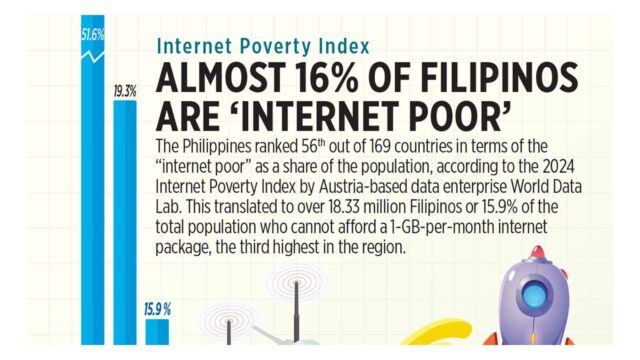
The Philippines ranked 56th out of 169 countries in terms of the “internet poor” as a share of the population, according to the 2024 Internet Poverty Index by Austria-based data enterprise World Data Lab. This translated to over 18.33 million Filipinos or 15.9% of the total population who cannot afford a 1-GB-per-month internet package, the third highest in the region.
With that many users consuming content regularly, the content creator industry in the Philippines has seen rapid growth over the years.
Mobile phone manufacturers were bound to take notice of the demands of content creators, and Realme is one of them.
The global technology company indicated during the launch of the Realme 13 Pro+ 5G that the significance and attributes of content creation have greatly influenced the design of their new phone.
Branded as “A DSLR in your pocket,” the Realme 13 Pro+ 5G boasts an improved tri-camera setup, a focus on AI enhancement, and a bigger battery capacity.
“Now it is so easy to spread any type of content that you want to put out there,” Jimmclaude Gayo, Product Marketing Lead at Realme Philippines, said in an interview during the event.
Is the Realme 13 Pro+ 5G a great tool for content creation or is it just a model refresh?
The specs
The Realme 13 Pro+ 5G shares some core features with its predecessor, the 12 Pro+ 5G. This is the reason why the new flagship phone of Realme may be considered a model refresh.
Realme 13 Pro+ 5G specs on box | bworldonline.com
Feature
Realme 12 Pro+ 5G
Realme 13 Pro+ 5G
Processor
Qualcomm Snapdragon 7s Gen 2
Qualcomm Snapdragon 7s Gen 2
RAM
8GB / 12GB
8GB / 12GB
Storage
128GB / 256GB / 512GB
256GB / 512GB
Display
6.7-inch OLED, 120Hz, 950 nits peak brightness
6.7-inch OLED, 120Hz, 2000 nits peak brightness
Battery
5000 mAh, 67W charging
5200 mAh, 80W charging
Operating System
Android 14, Realme UI 5.0
Android 14, Realme UI 5.0
Similar as they may be, there are some upgrades to the newer 13 Pro+ 5G.
The 6.7 OLED screen of the 13 Pro+ 5G can produce twice the brightness than its predecessor.
The battery of the newer phone also has a larger capacity at 5200 mAh, and allows for faster charging at 80W, something that content creators would surely appreciate.
“Kailangan power-efficient ka(para) at the end of the day, magagamitmoyung phone [You need to have power-efficient batteries that can last the whole day,]” Mr. Gayo said.
Some might see it as a deal breaker that the core technical specs of the 13 Pro+ 5G is the same as that of the 12 Pro+ 5G, but that doesn’t mean it wouldn’t perform well.
The phone’s is relatively slim and lightweight (190 grams), contributing to its portability. Although the 13 Pro+ 5G comes with a free case, some users may opt to buy third-party cases that would add a bit more weight based on their preference.
Realme 13 Pro+ 5G Specs on screen | bworldonline.com
Work, work, work
The Realme 13 Pro+ 5G performs well with productivity apps.
The combination of the Qualcomm Snapdragon 7s Gen2 and the 12gb of RAM ensures smooth multitasking for productivity apps such as Microsoft Office, Google Workspace, and management tools such as Trello.
For professionals always on-the-go, the ability to switch between apps seamlessly is a must-have. The 13 Pro+ 5G does that with ease.
The touch interface is smooth and responsive, which is always the first thing that smart phone users notice.
The OLED display with the 120Hz refresh rate and higher brightness capabilities proved quite useful for apps that demand detailed visuals such as Canva.
With the Realme UI 5.0, the 13 Pro+ 5G also comes with AI driven features such as AI Screen Recognition and AI Smart Loop. These apps are very helpful in streamlining workflows.
Standby time is also impressive with the higher battery life.
Got game
The Realme 13 Pro+ 5G may be marketed more for content creators, but it certainly does not slack with performance on gaming.
The 13 Pro+ 5G performs admirably with popular mobile games given it’s powerful hardware.
The Adreno 710 GPU in particular allows Mobile Legends to run smoothly at high settings. Game experience is fluid with minimal lag.
Mobile Legends Settings on Realme Pro 13+ 5G
Genshin Impact, known to be demanding for its graphics, plays decently at low to medium settings, providing a balance between visual quality and performance.
Genshin Impact Settings on Realme13 Pro+ 5G
No significant lag or frame drops for Call of Duty Mobile. Gameplay is smooth even at high graphics and max frame rate.
Call of Duty Mobile Settings on Realme 13 Pro+ 5G
Overall, the Realme 13 Pro+ 5G is a very capable mobile gaming phone.
Power to create
At first glance, the Realme 13 Pro+ 5G looks it has the same camera setup with its predecessor, but in truth, there are some improvements.
The tri-camera setup of the Realme 13 Pro+ 5G | bworldonline.com
The main camera of the 13 Pro+ 5G uses the Sony LYT-701 sensor. Granted, the sensor is basically a rebrand of the Sony IMX890 that came with the 12 Pro+ 5G, the LYT-701 takes of advantage of Sony’s latest sensor technology. These come with improvements in image processing and low-light performance.
Another difference between the two phones is, again, the sensor that comes with the telephoto camera.
The 13 Pro+ 5G makes use of the Sony LYT-600 sensor, while the 12 Pro+ 5g uses the Omnivision senser.
Extreme closeup photo of a toy using the Realme 13 Pro+ 5G
Both provide excellent low-light performance and color accuracy, but the advance features of the LYT-600 gives it the edge over the Omnivision sensor.
Also of note is that Sony LYT-600’s 100% focus pixels actually provide faster and more accurate autofocus.
One thing that content creators would like about the Realme 13 Pro+ 5G is it’s front camera. Unlike that of it’s predecessor, the 13 Pro+ 5G’s front camera can record video in 4k.
Being able to see the framing and lighting through your screen as content creators produce video helps a lot in overall production quality. Now, the output is in 4k.
Photo of a toy with shallow depth of field using the Realme 13 Pro+ 5G
Through end-user feedback from customers and partners, Mr. Gayo said these allowed them to address and leverage the common pain points of cameras in other smartphones, like blurred photos due to lack of OIS and evident noise due to automatic ISO adjustments.
“Anything that they experience that is a pain point for them definitely has to be considered for us to solve that with the next one there,” he said.
The Realme 13 Pro+ 5G comes with AI enhancements that significantly improve user experience and overall performance for the phone’s camera.
AI HyperRAW Algorithm: enhances image quality by improving clarity, dynamic range, and color accuracy
AI Ultra Clarity: enhances details and sharpness of photos
AI Smart Removal: allows removal of unwanted elements in a photo
AI Group Photo Enhance: adjust lighting and focus to ensure everyone in the photo looks great
AI Natural Skin Tone: skin tones are enhanced to look natural
AI Pure Bokeh: makes background blur look more natural
Realme 13 Pro+ 5G back | bworldonline.com
Conclusion
Overall, it is understandable that the Realme 13 Pro+ 5G is branded as a “DSLR in your pocket.”
The high quality of images, color accuracy, shallow depth of field, and low-light performance actually attests to its capability to cater to photography and videography enthusiasts.
However, it should be of note that the Realme 13 Pro+ 5G is more than just a phone with a great camera. Productivity and gaming performance are also excellent.
Realme has achieved a great balance between quality, performance, and price with the Realm 13 Pro+ 5G. – with contributions from Almira Louise S. Martinez
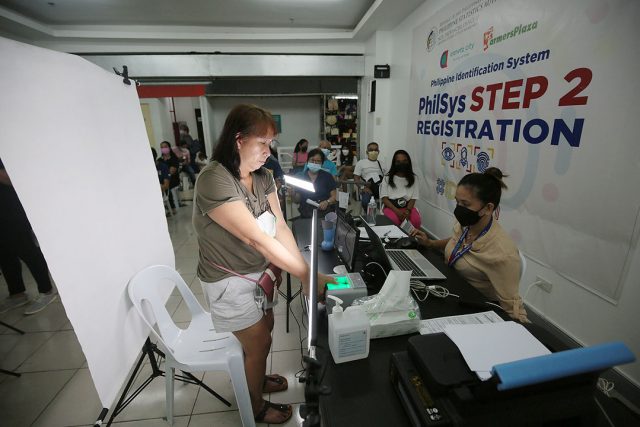
THE Bangko Sentral ng Pilipinas (BSP) said on Thursday that its terminated contract with AllCard, Inc. (ACI) to print the National ID cards has gone to arbitration.
“The ongoing issue with ACI, concerning its failure to meet contractual obligations is now under arbitration,” the central bank said in a statement.
“This independent proceeding serves as the proper venue to resolve all issues raised by ACI, and the BSP shall abide by the decision of the arbitration committee.”
The BSP is in charge of printing the Philippine Identification System cards or the National IDs, while the PSA is responsible for gathering the data to be printed on the cards.
Last month, BSP Governor Eli M. Remolona, Jr. said it terminated the contract with ACI after the latter failed to deliver on its contractual obligations.
In a separate statement, the Philippine Statistics Authority (PSA) said the BSP “fully complied with the Agency-to-Agency Procurement Guidelines (Negotiated Procurement under Section 53.5 of the Implementing Rules of Republic Act No. 9184) and its agreement with the PSA for the printing of National IDs.”
Reports had claimed that the BSP subcontracted the printing of the National IDs to ACI.
“The BSP did not subcontract its obligations to ACI. BSP and PSA personnel managed the operations, while ACI provided equipment, raw materials, and technical support under a lease and supply contract,” the central bank said.
Government auditors assigned to review the BSP’s transaction did not find evidence of subcontracting, the central bank also said.
With the arbitration ongoing, the BSP will refrain from making any further public statements on the proceedings, it said.
Currently, the PSA has a 35-million backlog for the National ID cards, National Statistician Claire Dennis S. Mapa told a Senate hearing on Wednesday. — Beatriz Marie D. Cruz
THE Contact Center Association of the Philippines (CCAP) said information technology and business process management (IT-BPM) companies must stay up to date with cybersecurity to build and maintain trust in the industry.
“CCAP encourages business process outsourcing (BPO) companies to prioritize cybersecurity as a core component of their operational strategies so they could contribute further to a more secure and resilient industry,” CCAP President Mickey Ocampo said in a statement on Thursday.
“Continuous engagement and investment in innovative security technologies are critical for maintaining global competitiveness and trust,” he added.
Citing a study by the US Agency for International Development in 2022, CCAP said that up to 75% of the BPO segment would be at risk of attacks and fraud if cybersecurity gaps are not addressed.
The industry group said that the IT-BPM sector should collectively formulate solutions to strengthen cybersecurity.
“We must earn clients’ trust and assure them that their sensitive information is always handled with utmost integrity and security,” Mr. Ocampo said.
“BPO firms must demonstrate transparency, accountability, and reliability in their cybersecurity practices,” he added.
“CCAP has always been taking the proactive approach because we understand that security breaches can significantly and abruptly disrupt services and operations, which may lead to financial losses, damaged reputations, and undermined client trust,” said Mr. Ocampo.
Frederick D. Go, the cabinet official who heads the Office of the Special Assistant to the President for Investment and Economic Affairs, has said that the government is pursuing upskilling efforts to position the country as a cybersecurity hub.
Last month, the Department of Information and Communications Technology launched the National Cyber Security Plan 2023-2028, which calls for the establishment of a network of Computer Emergency Response Teams and a National Cybersecurity Intelligence Fusion Center.
“That would oversee all sectors. There will also be an ICT Academy with a Cybersecurity Center of Excellence to bolster capabilities of cybersecurity professionals in the country,” the CCAP said. — Justine Irish D. Tabile
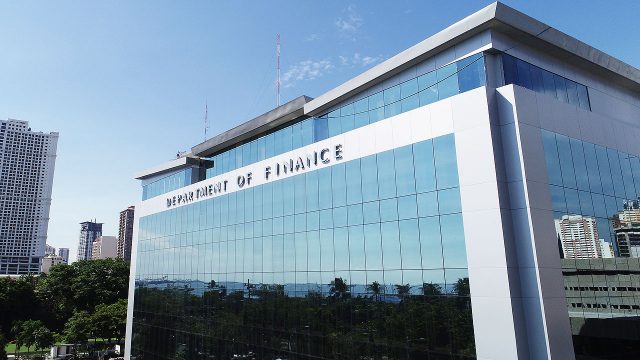
THE Department of Finance (DoF) said the ratification of a global agreement on tax cooperation a decade after it was signed by the Philippines will help fight tax evasion and improve the government’s chances of meeting its revenue targets with the possibility of possible information exchanges with foreign partners.
“This is definitely a crucial weapon in our arsenal to fight tax evasion that ultimately denies every Filipino’s right to have the quality public goods and services,” Finance Secretary Ralph G. Recto said in a statement on Thursday.
It took the Senate 10 years to ratify the Convention on Mutual Administrative Assistance in Tax Matters, an agreement that the Philippine government signed in 2014 in Paris.
Mr. Recto said the agreement gives the government “access to data exchange, assessment, and enforcement tools with over a hundred partner signatories.”
The mechanism allows the Philippines to enter into agreements on simultaneous tax examinations and exchanges of information, he added.
The Philippines also gains the ability to access tax information of other jurisdictions, decrease the risk of a downgrade of its tax transparency ratings, and save time and resources on treaty negotiations.
Mr. Recto said the Philippines also gains third-party information to support assessment and enforcement programs like the Bureau of Internal Revenue’s (BIR) Run After Tax Evaders Program.
He noted that the mechanism contains safeguards to protect the confidentiality of information exchanged between tax authorities, upholding taxpayers’ right to privacy.
“To fund our people’s growing needs, we need more tools like this to enhance our revenue-generating capacity,” Mr. Recto said.
Eleanor Lucas Roque, principal of the Tax Advisory & Compliance division of P&A Grant Thornton, said the agreement provides tax authorities with “additional sources of information to combat tax evasion.”
“With the network of jurisdictions which have adopted the convention, the world is getting smaller for tax evaders,” she said via Viber.
She said an important development before the ratification was the country’s December 2023 membership in the Organization for Economic Cooperation and Development (OECD)/G20’s Inclusive Framework on Base Erosion and Profit Shifting (BEPS), which ensures that multinational enterprises (MNEs) pay taxes fairly wherever they operate.
“Developments in the OECD rules such the BEPS point to global cooperation of tax jurisdictions in determining whether correct taxes are paid in each jurisdiction,” Ms. Roque said.
“Information sharing among the tax authorities is now the norm preventing taxpayers from disclosing inconsistent information across various jurisdictions.”
Under the BEPS, Manila commits to implement 15 action points and two pillar programs, including one that requires multinational enterprises that have at least 20 billion euros in revenue to “allocate their residual profit to market jurisdictions using a formula,” PwC Philippines Tax Manager Mac Kerwin Visda said in December.
“For the Philippines, although there may be none or very few headquarters within the threshold located here, it will be a new source of revenue for us. If we are considered a qualified market jurisdiction for these MNEs’ digital businesses, profit can be allocated to us from our subscriptions to these online goods and services,” he said.
BIR collections stood at P1.68 trillion at the end of July, falling short of its P1.83-trillion collection goal for the period by 8.2%. But this was 12.58% higher than last year’s P1.49 trillion.
The tally at the end of July accounts for 55.08% of the BIR’s P3.05-trillion collection target for 2024.
The government aims to generate P4.27 trillion in revenue, including P3.83 trillion in tax revenue, for this year.
“Since the government relies mostly on indirect taxes through the value-added tax, tax evasion measures are insignificant,” said Leonardo A. Lanzona, who teaches economics at the Ateneo de Manila.
“Nobody can avoid these taxes since these are attached to the prices of the goods sold,” he said via Messenger chat.
“Nevertheless, these tax cooperation conventions will truly be helpful when the government begins to impose wealth taxes which are badly needed during this period of fiscal consolidation.” — Kyle Aristophere T. Atienza
THE expected decline in inflation in the coming months should help boost household spending and benefit the labor sector, GlobalSource Partners said.
“The expected decline in the inflation rate may be expected to boost private consumption, thus supporting strong GDP (gross domestic product) performance. This in turn can paint a more positive employment outlook,” GlobalSource Country Analysts Diwa C. Guinigundo and Wilhelmina C. Mañalac said in a report.
Headline inflation eased to 3.3% in August from 4.4% in July as food and transport cost growth decelerated. The August reading fell within the central bank’s 2-4% target for the year.
The Philippine economy grew by a higher-than-expected 6.3% in the second quarter, as government spending and investment offset weak consumption.
Household consumption refers to purchases made by households to meet their basic needs. It weakened to 4.6% in the second quarter from 5.5% a year earlier.
Despite strong growth in the second quarter, GlobalSource analysts noted that labor indicators remained weak.
Unemployment rose to a one-year high of 4.7% in July as new graduates entered the workforce, the Philippine Statistics Authority said last week.
This translated to 2.38 million unemployed individuals, against 2.29 million last year. This was also 46.6% higher than the 1.62 million jobless a month prior.
GlobalSource noted any increase in the jobless rate still points to “economic disenfranchisement.”
“Any percentage increase in the unemployment rate means economic disenfranchisement of those who failed to land a job. The challenge of high incidence of poverty remains in the Philippines.”
The Trabaho Para sa Bayan (TPB) Plan and the passage of the Konektadong Pinoy bill are expected to “address structural issues in the country’s quality of economic growth,” the analysts said.
The TPB is a masterplan seeking to help upskill workers and link them to job opportunities. It is expected to be ready by November, the National Economic and Development Authority has said.
The Konektadong Pinoy bill aims to improve internet access in underserved areas. The bill remains in committee. — Beatriz Marie D. Cruz
THE Department of Transportation (DoTr) said the redevelopment of Kalibo International Airport is intended to attract international airlines to operate out of the facility, which is one of the gateways to the resort island of Boracay.
“As we develop Kalibo airport, we will be allowed to operate bigger aircraft. There might be international airlines who would like to operate there,” Transportation Secretary Jaime J. Bautista said.
Mr. Bautista said Kalibo airport serviced flights from South Korea and China before the pandemic.
“It will be good to have options as Boracay becomes more popular. It is better to have two airports there,” he said, referring to the other airport, Caticlan, which is on the Panay mainland just opposite Boracay.
San Miguel Corp. is planning to build a new passenger terminal at the Godofredo Ramos Airport in Caticlan.
For 2024, the DoTr is setting aside P14 billion for the development and upgrading of regional airports.
The airport improvement projects on tap are Kalibo, Catbalogan, Tacloban, Laoag, Puerto Princesa, lloilo, and 16 others, the DoTr has said.
It is actively seeking public-private partnership arrangements for Kalibo, Puerto Princesa, Davao, Bacolod-Silay and Siargao.
“There are also other destinations in the Kalibo area that can be developed for tourism. It would be better if we have longer runways so we can accommodate bigger airplanes,” he said.
For this year, the Transportation department is looking to complete Swiss challenges for two regional airports — Laguindingan International Airport in northern Mindanao and the New Bohol-Panglao International Airport.
The DoTr is also looking at the development of at least six greenfield airports including ongoing projects in Zamboanga, Dumaguete, and Siargao. — Ashley Erika O. Jose
THE Federation of Philippine Industries (FPI) said used lead acid batteries (ULAB) need to be included within the scope of the Extended Producers Responsibility (EPR) Act, citing the environmental impact of improperly discarded batteries.
“We believe that compared to ordinary waste types like plastics covered by the EPR, used lead acid batteries should be treated with more urgency because of their immediate harmful effects on the environment and people,” FPI Chairman Jesus L. Arranza told reporters on Thursday.
Republic Act No. 11898 or the EPR Act of 2022 requires producers, manufacturers, and other companies to move away from single-use plastics and establish their own waste recovery schemes in partnership with communities, local governments, and others.
The law does not currently include EPR requirements for lead battery companies.
Mr. Arranza said that the Department of Environment and Natural Resources (DENR) should issue a Department Administrative Order to require lead battery companies to comply with the EPR law.
He added that the DENR should enforce the proper collection and recycling of ULABs from entities engaged in the production, import, and sale of the products.
He said that companies involved should have “satisfactorily proven that they have collected their ULABs and channeled them to accredited recyclers,” before selling new batteries.
“We are pushing for one to one. This means that, as an example, an entity that managed to collect 1,000 ULABs should only be allowed to sell 1,000 brand new batteries as well,” Mr. Arranza added.
He said that this would halt the spread of illegal lead battery smelters and ULAB waste recyclers.
“We are open, however, to a phased implementation, beginning at 20% in the first year, 50% in the second year, and 80% in the third year,” he added.
Waste producing companies that fail to register for EPR programs face fines of between P5 million and P20 million. Those that fail to comply and meet targeted recovery rates will also be fined. — Adrian H. Halili
THE tariffs imposed on imported high-density polyethylene (HDPE), a raw material in plastics manufacturing, need to be reviewed because they hinder manufacturer competitiveness, an industry official said.
Danny Ngo, a former plastics industry association president and member of the Philippine Chamber of Commerce and Industry, said: “The tariff directly increases the cost of HDPE for Philippine manufacturers, making their products less competitive in both domestic and international markets.”
“This price hike is passed on to consumers, ultimately impacting their purchasing power and overall economic well-being,” he added via Viber.
The Tariff Commission has recommended that the Department of Trade and Industry (DTI) maintain or modify the safeguard measures on HDPE pellets and granules.
In 2022, the DTI imposed three years of safeguard duties on imports of HDPE pellets and granules to protect the domestic industry.
A safeguard duty of P1,271 was imposed on each metric ton of imported HDPE pellets and granules. The current most favored nation rate on HDPEs is 10%.
Mr. Ngo said safeguard duties on HDPEs are a “self-inflicted wound” hindering economic growth and global competitiveness.
“This policy is not only detrimental to the domestic plastics industry but also puts the Philippines at a significant disadvantage compared to its Asian, ASEAN, and other neighbors,” he added.
In particular, he said that the tariff makes it harder for manufacturers to compete with counterparts in countries that charge zero or lower tariffs on HDPEs, such as China, Vietnam, and India.
“They benefit from lower production costs, access to raw materials, and government support. The tariff only widens the gap between the Philippines and these established players,” he said.
“This leads to a loss of market share… putting jobs and livelihoods at risk,” he added.
If it continues, he said Thailand, Malaysia, and Indonesia will gain a competitive edge as their tariff-free access to HDPE will allow them to expand their exports and attract investment.
“The tariff can lead to supply chain disruptions, as manufacturers struggle to source affordable HDPE. This can result in production delays, higher costs, and ultimately, a decline in overall output,” he added.
According to Mr. Ngo, the government should instead gradually reduce the tariff on HDPEs, improve transportation and logistics infrastructure, invest in skill development, streamline customs procedures, and attract foreign investment.
“It is time for the government to reconsider this policy and adopt a more strategic approach that promotes free trade, regional integration, and the competitiveness of the Philippine plastics industry,” he said. — Justine Irish D. Tabile