Home Blog Page 2213

Blessings for the children

FREEPIK

The world is reeling from the chaos of disasters, pandemic, war, conflicts, political unrest, hunger, and deprivation, for the people and children who are trying to restart and rebuild their lives and communities.

We pray for spiritual grace, healing, love, forgiveness, and lasting world peace.

We count our blessings and release all negative vibes.

Here’s my annual list of wishes for the children. They are future citizens, and they deserve to inherit a better world.

1. A home with loving parents who will guide and care for them. That all parents will lead by example and teach their kids good manners, family and spiritual values. That all children will be safe from domestic violence and abuse.

2. Good health. That all children, especially those in the rural areas and the marginalized communities, will have proper nourishment and medical and dental care in order to grow strong and healthy. That the essential vaccines to combat diseases will be available to all children in remote and devastated areas.

3. A pollution-free environment — clean air, pure drinking water, open fields, and parks with trees and flowers. That they may appreciate nature and learn how to protect the rivers, seas, lakes, and forests.

4. Quality education. That the public school system will be upgraded with dedicated teachers, more classrooms equipped with internet facilities, and books for students. That all kids will be given the opportunity to study and have the chance to excel.

5. Mental health care. That there will be enough psychologists and guidance counselors to help and protect adolescents with their issues such proper mental health care. Many children suffer from depression and anxiety. Some are desperate and take extreme risks. There should be a holistic psychospiritual treatment program to address this growing situation.

6. A comprehensive sports program for national and international competitions. That kids will learn the values of friendly competition, and the art of winning and losing gracefully.

7. A gender discrimination-free society that will encourage girls and boys to become leaders in school and later in their chosen professions. That they would have the resources from government and the private sector to fulfill their goals.

8. A progressive national arts and culture program and outreach projects to elevate and enhance the consciousness of children.

9. More education grants and financial stipends for good scholarships for deserving students. The appropriate work opportunities and support, both local and international, graduates.

10. Quality and balanced programming on television with more educational and entertaining shows. That producers will not exploit aspiring young performers. That there be proper protection for minors and performers who come out in shows. That all children and adolescents be protected. That social media content would be elevated to a higher level.

11. An accelerated science, math, and technology educational program to equip all future graduates with the necessary IT skills to compete in the international markets.

12. A stable economy. Jobs and livelihood opportunities for parents so that their children can go to and stay in school. Children should not be made to work in sweatshops or beg on the streets. Illegal child labor factories and armies are forbidden.

13. A country with visionary national and local leaders. An efficient, transparent government that is free from corruption. Integrity, compassion, and delicadeza (a sense of pride, honor, propriety, decorum, and/or decency) are some of the best qualities the officials should have.

14. A safe, crime-free, drug-free, abuse-free environment. That all kids be protected from the menace of incest, physical and emotional abuse, and the scourge of drugs. The internet is now being used by predators to exploit children and expose them to sexual abuse.

15. That children not be used as soldiers in areas of armed conflict.

16. Freedom of expression. That children have the right to be themselves. That adults realize that children need respect, and they are entitled to be heard. That there be open communication with parents and teachers or mentors.

17. Innocence. That they have a happy childhood and the chance to enjoy being a child. That they have time to play, study, rest, and heal. Above all, time to grow up at their own pace.

A Happy, Prosperous and Healthy New Year to all!


Maria Victoria Rufino is an artist, writer, and businesswoman. She is president and executive producer of Maverick Productions.

mavrufino@gmail.com

Wage commission approves Northern Mindanao pay hike

CAGAYAN DE ORO CITY FACEBOOK PAGE

THE NATIONAL Wages and Productivity Commission (NWPC) approved wage increases of P23 for non-agricultural workers and P35 for agricultural workers in Region X (Northern Mindanao), starting on Jan. 12.

Wage Order No. RX-23 divides the pay hike for agricultural workers in two tranches, with the first P23 coming on Jan. 12 and an additional P12 on July 1, 2025.

Agricultural workers will receive a P23 wage hike in the first tranche in January, followed by another P12 hike on July 1, 2025, according to a statement issued by the Department of Labor and Employment (DoLE) on Thursday.

Upon full implementation, these increases will raise minimum wage rates in the region to between P446 and P461, effectively removing the rate distinction between non-agricultural and agricultural workers, DoLE added.

The Northern Mindanao Regional Tripartite Wages and Productivity Board (RTWPB) is seeking to simplify and standardize its wage classification structure, it noted.

The board likewise approved a P1,000 monthly hike for domestic workers, bringing their entry-level wage to P6,000 from P5,000 through Wage Order RX-DW-04.

Federation of Free Workers (FFW) President Jose Sonny G. Matula said the new wages for workers in Region X are akin to “tossing crumbs.”

“It’s just not enough, especially compared to the needs of workers to survive as manifested by the trade unions. Worse, it widens the gap from P182 to P184 between Region X and the National Capital Region (NCR), further underlining the persistent and unjust regional wage disparities across the nation,” he told BusinessWorld via Viber. 

“In Metro Manila, where the minimum wage is P645 compared to P461 in Cagayan de Oro and nearby areas, the P184 gap is indefensible. A worker’s value—whether they’re a factory worker, a waiter, or a mason — should not be downgraded simply because of their location,” he added.

Meanwhile, the NCR board through Wage Order No. NCR-DW-05 also granted a P500 monthly increase for domestic workers. This brings their monthly minimum wage to P7,000 from P6,500.

The wage order for domestic workers in the NCR will take effect on Jan. 4.

DoLE said 4,907,584 minimum-wage earners will benefit from wage orders issued in 14 regions, along with 717,508 domestic workers in nine regions.

It added 7,528,968 full-time wage and salaried workers earning over the minimum pay may indirectly benefit as employers adjust for wage distortion.

Fourteen boards (NCR, CAR, Regions I, II, III, IV-A, Mimaropa, and Regions VI, VII, VIII, IX, X, XII and XIII) have issued wage orders for private sector workers this year, with daily wage increases ranging from P21 to P75.

Nine wage orders were issued for domestic workers (NCR, CAR, Regions I, II, MIMAROPA, and Regions VI, VIII, X and XIII, ranging from P500 to P1,100.

Meanwhile, Region V (Bicol) deferred the minimum pay determination process due to the impact of Tropical Cyclone Kristine.

DoLE said Region V will resume the process when circumstances permit or after three months from Nov. 7, 2024.

The Region XI board (Davao) is currently in consultations and will announce its minimum wage decision in January.

“The RTWPBs have been instructed to roll out productivity improvement programs and gainsharing schemes designed to foster sustainable and long-term wage growth. These programs particularly target areas within the regions with lower productivity levels, where their implementation can significantly enhance overall efficiency,” DoLE noted.

It cited the availability of exemption options for firms affected by recent typhoons.

Affected enterprises may inquire and apply through their respective wage boards to determine their eligibility for a full exemption or a specific minimum wage tranche.

Additionally, DoLE urged businesses and workers to take advantage of programs like the Adjustment Measures Program (AMP), which aims to mitigate vulnerability to economic disruption, including those caused by natural calamities. — Chloe Mari A. Hufana

Philippines improves in Government AI Readiness Index

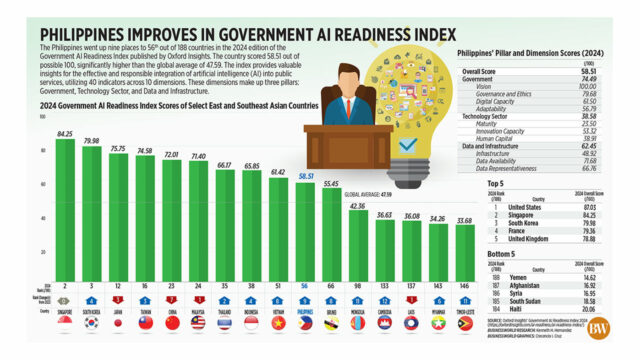
The Philippines went up nine places to 56th out of 188 countries in the 2024 edition of the Government AI Readiness Index published by Oxford Insights. The country scored 58.51 out of possible 100, significantly higher than the global average of 47.59. The index provides valuable insights for the effective and responsible integration of artificial intelligence (AI) into public services, utilizing 40 indicators across 10 dimensions. These dimensions make up three pillars: Government, Technology Sector, and Data and Infrastructure.

Philippines improves in Government AI Readiness Index

PLDT, Smart to launch anti-scam services

STOCK PHOTO | Image by terimakasih0 from Pixabay

PLDT, Inc. and its wireless arm Smart Communications, Inc. will launch three services in 2025 to address scams and improve customer protection.

These include silent authentication, device location validation and improved know-your-customer (KYC) processes, PLDT Enterprise First-Vice President John R. Gonzales said in a statement on Thursday.

Silent authentication will replace traditional one-time password with a more secure method of logging into apps and addresses the rising threat of password interception by malicious actors, he said.

Device location validation allows merchants to verify a user’s device location during a transaction to help detect fraud, while enhanced KYC processes help ensure that transactions are legitimate and secure, he added.

“The Philippines is a mobile-first country,” Mr. Gonzales said. “Today, 64% of transactions here are conducted on mobile devices, and because of the high volume of transactions, the Philippines has become a major target for malicious actors.”

Smart stopped almost two billion malicious text messages from reaching customers in the 10 months to October, while blacklisting almost a million numbers tied to scams.

The PLDT Group said it is also working with government agencies against smishing — a form of phishing attack that targets mobile devices — including the investigation, apprehension, and prosecution of scammers.

Hastings Holdings, Inc., a unit of PLDT Beneficial Trust Fund subsidiary MediaQuest Holdings, Inc., has a majority stake in BusinessWorld through the Philippine Star Group, which it controls. — Revin Mikhael D. Ochave

Metro Manila Film Festival 2024: Tacky revenge thriller

By Brontë H. Lacsamana, Reporter

Movie Review
Uninvited
Directed by Dan Villegas

IT’S interesting to think about why revenge thrillers are so popular. Through them, we get the satisfaction of enacting justice in a way that isn’t possible in the real world. Uninvited does this through the character of a mother whose love knows no bounds and is forced into its deepest, darkest depths after her daughter is cruelly taken from her.

Unfortunately, because it’s a genre we know so well from movies and teleseryes, the main thing that sets apart this tacky revenge thriller from others is its cast. It is ultimately a vessel for stars like Vilma Santos, Aga Muhlach, and Nadine Lustre to showcase their acting chops, all while dressed expensively and cursing like it’s a mafia film.

Uninvited follows Eva Candelaria (played by Vilma Santos), who seeks revenge on billionaire Guilly Vega (Aga Muhlach) for killing her daughter years before. Disguised as a guest, she carries out her plan while attending his lavish birthday party, where she encounters his own daughter, Nicole (Nadine Lustre).

Santos enthralls in this solemn turn as an unlikely mother exacting justice while Lustre is engaging to watch as she toes the line between cynicism and defiance. Muhlach throws the biggest swings here, delivering campy B-movie levels of acting as the film’s one-dimensional villain (sometimes effective, sometimes too much).

While this film might not convince everyone, it definitely convinced the theater I was in. Uninvited is a crowd-pleaser. It has a long, emotionally manipulative build-up and an illogical extended climax designed to elicit cheers from the crowd as the lead character serves vengeance. It relies on drawing out audience sympathy, from its flashbacks all the way to its violent conclusion, which succeeds only if we completely suspend disbelief.

(Spoilers follow.)

An old woman with no family members just teaching herself to fire a gun with precision? Only to get to the party and not actually have a plan (despite the implication that she spent years on one)? A Big Bad that personifies evil and doesn’t even hide it? A party full of important people that somehow have no bodyguards roaming the premises?  The film shapes up to be a collection of cliches that quickly veer into tacky territory.

The film opens with a reminder that Warner Brothers is distributing this, the second Philippine movie after last year’s hit, the messy folklore horror film Mallari, also by Mentorque Productions. While Uninvited is a collaboration with Project 8 Projects, a pattern still emerges that stylish genre films are what Warner Brothers is looking to distribute. Dan Villegas’ direction and Dodo Dayao’s script more than capably supply that here, but a bit more polish would be appreciated.

A clear stand-out is the party sequence, well-put-together for Santos’ Eva to react to, her seemingly polite demeanor in the face of a grossly extravagant show of an evil man’s wealth hiding pent-up rage and grief that boils just beneath the surface. The flashback scenes woven into the narrative are all right, carried by solid actors Gabby Padilla and Elijah Canlas despite their brief roles as victims. The worst and most gruesome of their scenes could’ve been depicted with a little more subtlety, coming off as gratuitous just to serve as fuel for the final act’s fiery revenge.

What’s really unforgivable, though, is how it all came down to predictable tropes and twists, the mediocre execution really showing as Eva’s revenge unravels but just as quickly somehow ends up successful. The kills feel rushed through, except for the final one, and the potential to explore the roots of crime and violence and the hypocrisy of the wealthy lasted only for a few superficial scenes.

An underutilized dynamic was that of Santos and Lustre’s characters, both being women and on seemingly opposite sides at first — a victim’s mother and a perpetrator’s daughter, both imperfect and struggling to make sense of this cruel world. An intriguing chemistry was established only to be rushed through in the span of one or two scenes.

While Uninvited is enjoyable, it could have been a more impressive feat for the revenge thriller genre, which is a tired one at this point. This was a decent attempt, but ultimately still fell short.

MTRCB Rating: R-16

Term deposit facility yields go down after BSP cut

BW FILE PHOTO

YIELDS on the Bangko Sentral ng Pilipinas’ (BSP) term deposits declined on Thursday as the offer went undersubscribed, with the market continuing to price in the central bank’s third straight rate cut.

Demand for the central bank’s term deposit facility (TDF) amounted to P99.156 billion on Thursday, well below the P240-billion offering. This was lower than the P248.991 billion in bids for a P310-billion offer last week.

Broken down, tenders for the seven-day papers reached just P59.27 billion on Thursday, below the P150 billion on the auction block. This was also lower than the P201.815 billion in bids for the P180-billion offering of eight-day term deposits the previous week.

Banks asked for yields ranging from 5.725% to 6.05%, a wider band compared to the 5.95% to 6.0199% seen a week ago. With this, the average rate of the one-week deposits dropped by 12.31 basis points (bps) to 5.8845% from 6.0076% previously.

Meanwhile, the 13-day papers fetched bids amounting to P39.886 billion, lower than the P90-billion offer and the P47.176 billion in tenders for the P130 billion in 15-day deposits auctioned off last week.

Accepted rates for the tenor were from 5.755% to 6.2%, wider than the 5.96% to 6.074% range seen last week. This caused the average rate of the two-week papers to decline by 10.84 bps to 5.9229% from 6.0313% in the prior auction.

The TDF tenors were adjusted in view of the holidays.

The central bank has not auctioned off 28-day term deposits for more than four years to give way to its weekly offerings of securities with the same tenor.

The term deposits and the BSP bills are used by the central bank to mop up excess liquidity in the financial system and to better guide market rates.

“The BSP TDF average auction yields again mostly slightly declined for the 14th straight week after the latest local policy rate cut last Thursday,” Rizal Commercial Banking Corp. Chief Economist Michael L. Ricafort said in a Viber message.

The Monetary Board last week delivered a third straight rate cut at its last review for the year, reducing benchmark borrowing costs by 25 bps to bring its policy rate to 5.75%. The central bank has now slashed rates by a total of 75 bps since it began its easing cycle in August.

Mr. Ricafort also noted the BSP chief’s signals of another rate cut in the Monetary Board’s first rate-setting meeting in 2025.

BSP Governor Eli M. Remolona, Jr. told Bloomberg last week that the central bank is open to delivering another rate cut at their first review next year.

Mr. Remolona said the BSP remains in an easing cycle and is “neither more dovish nor less dovish.”

The BSP chief also said after last week’s policy meeting that delivering 100 bps worth of cuts next year may be “too much.”

The central bank will likely keep reducing rates in “baby steps” as an “insurance against a possible increase in inflation,” Mr. Remolona added. — Luisa Maria Jacinta C. Jocson

New Year employee engagement dialogue

I work as a manager for a medium-sized organization. What are the best ways to start the New Year with our direct reports? – Blue Lagoon.

When I was a young human resource (HR) manager, my typical yearend working days were easy and joyful. Most of the time, I would have exhausted my vacation leave credits for the year except for three days for emergency situations. Christmas break allows me to work without stress as I sought to complete my pending projects to avoid carrying them over into the new year.

I’m quite superstitious. Bringing incomplete tasks into the following year made me distrust the future. It’s better to start fresh and ready to face new challenges than be reactive the whole year solving problems. This was my annual routine while thinking about how to improve or maintain professional relationships with my workers.

My usual questions were: Am I on the same page as my colleagues? Do I know them better than they know themselves? Do they consider me a good boss? If not, why not? What were they thinking behind my back? Do they like me as a person?

We are incurable social animals like our ancestors. Our groups are formed based on certain things in common, like school or regional origin. Even sexual preference plays a key role in determining one’s group.

Framing things that way gives me the right attitude in dealing with the various personalities.

ENGAGEMENT APPROACHES
Since groups are formed on the basis of common values, I tried to understand my former direct reports to avoid organizational blindness. The key is in knowing how to treat workers like family. We can do this with a little bit of exaggeration. How do we go about it?

Depending on your management style, you can always engage the employees with the following basic approaches:

One, start the New Year with a brief morning meeting. Inform everyone several days in advance. All direct reports must attend a department meeting which should not last more than an hour. The shorter, the better. Greet everyone with positivity and enthusiasm by outlining the department’s specific goals for the year.

Such goals must be the result of the organization’s strategic plan made three months earlier with the chief executive officer (CEO) and other department managers. If your company fails to come up with such strategic plan for some reason, you must come out with your own department goals approved by the CEO.

Two, find the time for one-on-one talks. Refocus on their individual interests, challenges, and values. Be guided by the following questions: What is your career goal in this organization? How can I help you achieve your goal? What are the difficulties in your job? How can I help you manage those challenges?

What are the resources that you need? How about other options? If the options are difficult to accomplish within your pay grade, explain clearly the reason for it, but not after making a serious study. Whatever you do, don’t give an instant no as your answer could be misinterpreted.

Three, ask open-ended questions. This is related to number two. By asking open-ended questions, you are allowing the discussion to flourish intellectually. Thank the worker if they accept your idea or proposal. Express how much you value your relationship with them.

To express your sincerity, document the salient points of your agreement, especially if it means a job transfer within the department, assigning additional tasks or special projects that are beyond the workers’ job description.

Four, admit your mistakes. If a worker is brave enough to confront you over your lapses, understand the circumstances without being defensive. Acknowledge the fact that you may have hurt the person. Then work your way through until the grudge goes away. Remind yourself that such engagement dialogue is intended to be kind and courteous.

Even if a worker has occasionally driven you crazy, don’t allow it to destroy the goodwill that you have created at the start of your engagement dialogue. Maintain the positive atmosphere and remain calm.

NO ONE-TIME DEAL
An employee engagement dialogue is not a one-time deal nor a ceremonial New Year activity. It must be done with regularity or as soon as you discover something unusual about a worker or group of workers. Be proactive. Don’t wait for the exit interview before doing anything. As a manager, it’s your job to detect potential issues so you can manage them correctly.

I suggest this rule of thumb: Be several steps ahead of your workers. Anticipate everything. In doing so, you can protect yourself to a certain degree against being manipulated. Remember and understand the letter and spirit of every worker’s argument or complaint.

This entails a lot of work and will slow you down. But it’s worth it. By slowing down, you gain the advantage of refining every issue that comes your way.


Bring Rey Elbo’s leadership program called “Superior Subordinate Supervision” to your organization. Contact him on Facebook, LinkedIn, X or e-mail elbonomics@gmail.com or https://reyelbo.com

Top 10 fiscal economic stories of 2024

I have listed what I consider the major fiscal/economics trends of this year. The first five are global, the next five are local or Philippine issues.

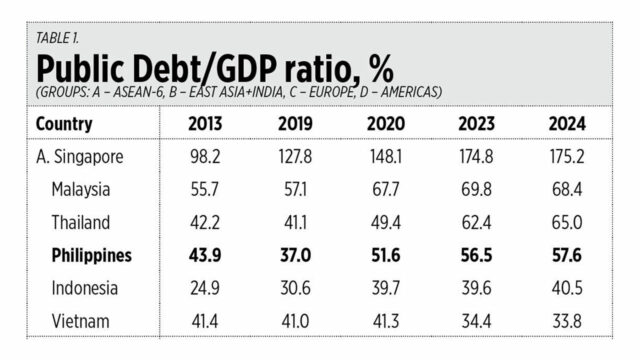
1. The government or public debt to GDP ratio continues to deteriorate in many countries. Among the ASEAN-6, Indonesia, the Philippines, Singapore, and Thailand are projected to have had higher ratios in 2024 than in 2023.

2. Among developed Asian nations, only Singapore and Japan have debt/GDP ratios of above 100%. But these are largely domestic debt or borrowing from their own citizens and companies and, hence, have no or little threat of debt default. Meanwhile, major European and American countries continue to have ratios of above 100% or rising ratios, except for Germany, Russia, and Argentina (see Table 1).

3. Argentina gets a fiscal shock with the abolition of 10 government ministries. Argentina’s free marketer and libertarian president, Javier Milei, took office in December 2023 and made deep cuts in expenditures, produced a fiscal surplus within the first two months, and, in 2024, the country’s first fiscal surplus in 123 years. First, he merged six ministries — Public Works, Housing, Transportation, Energy, Mining, and Telecommunications — into a single Ministry of Infrastructure, abolishing five. Then he abolished five other ministries — Culture, Education, Health, Labor, and Social Development — and instead created the Ministry of Human Capital. Argentina’s Debt/GDP ratio is projected to decline from 155% in 2023 to 92% this year.

4. US outstanding public debt has breached $36 trillion. By the end of 2016, or last year of the Obama administration, US public debt was $19.98 trillion. It rose to $23.2 trillion by the end of 2019 or the third year of Donald Trump’s first presidency. But then the COVID-19 lockdowns happened in 2020 and borrowings expanded, and debt reached $27.75 trillion that year. Under Joe Biden it rose to $29.62 trillion in 2021, $34 trillion in 2023, and $36.19 trillion as of Dec. 23 this year. Or an average increase of $2.11 trillion/year under Biden.

5. All G7 members are in the list of the top 10 debtor countries in the world. Their combined outstanding debt is $61.29 trillion — huge! — and this number does not yet include their guaranteed debt and unfunded liabilities like elaborate pensions. In contrast, the combined outstanding debt of the BRICS nations (Brazil, Russia, China, India, and South Africa with $302 billion) is $22.35 trillion (see Table 2).

6. The Philippine budget deficit went from P1.54 trillion/year from 2020-2023, to around P1.16 trillion in 2024. This from only P660 billion in 2019. The actual deficit from January-October in 2024 was P964 billion. Financing or borrowings increased from P876 in 2019 to P2.2 trillion/year from 2020-2023 and is projected to hit P1.45 trillion in 2024. Interest payments from high levels of public debt increased from P360 billion in 2019 to P503 billion in 2022 and are projected to reach P767 billion in 2024.

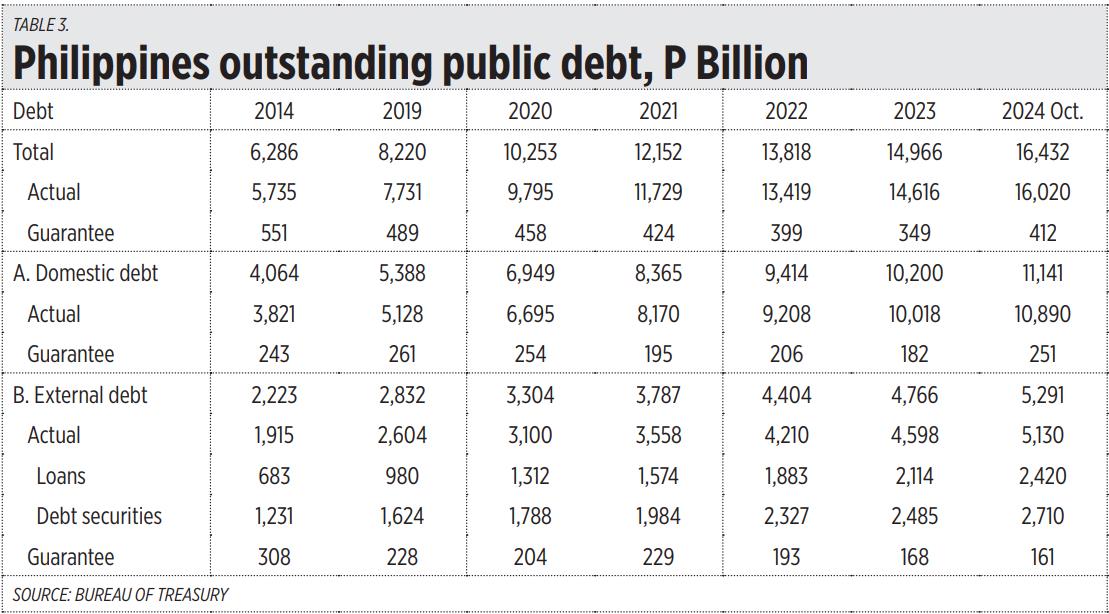
7. The Philippines’ public debt has reached P16 trillion. Outstanding debt as of October was P16.02 trillion actual, plus a debt guarantee of P412 billion, for a total outstanding debt of P16.43 trillion (see Table 3).

8. The idle funds of the Philippine Health Insurance Corp. or PhilHealth were used to finance the government’s unprogrammed appropriations. Finance Secretary Ralph G. Recto was bombarded by criticism by the health activism community this year because the good Secretary wanted to fund many health and infrastructure projects — worth P90 billion— without new borrowings nor seeking new or higher taxes. This money comes not from contributions by PhilHealth members but from drinkers, smokers, vapers, and gamblers via excise taxes on tobacco, vapes, and alcohol, and the remittances from the Philippine Amusement and Gaming Corp., better known as Pagcor, which are directed to PhilHealth. The P90 billion is the accumulated net flow from 2021-2023 of government premium from sin taxes minus benefit claims by non-contributing members. In my opinion, Mr. Recto is correct and the detractors are wrong.

9. The funds of the Department of Health (DoH) and PhilHealth have declined mainly due to a decline in tobacco taxes. The health activist community also attacked the Department of Budget and Management (DBM) for submitting a lower budget for DoH and PhilHealth for 2025. But this group is perfectly aware that 50% of the tobacco-alcohol tax is allotted to DoH-PhilHealth and that the tax has been declining due to rampant smuggling and illicit trade as the tobacco tax rates are rising yearly. Tobacco tax revenue peaked at P176 billion in 2021 when the tax rate was P50/pack. This declined to P160 billion in 2022 at the tax rate increased to P55/pack, then P135 billion in 2023 at P60/pack, and it is projected to be around P120 billion in 2024 at a tax rate of P63/pack. In my view, the DBM is correct and its detractors are wrong.

10. The enactment of the CREATE MORE law and an income tax cut. RA 12066 or the Corporate Recovery and Tax Incentives for Enterprises to Maximize Opportunities for Reinvigorating the Economy law (CREATE MORE) was signed into law on Nov. 11. Among its key provisions is further reduction in the corporate income tax (CIT) rate from 25% to 20% for Registered Business Enterprises (RBEs) under the Enhanced Deductions Regime (EDR) on their taxable income derived from registered projects or activities during the taxable year.


Bienvenido S. Oplas, Jr. is the president of Bienvenido S. Oplas, Jr. Research Consultancy Services, and Minimal Government Thinkers. He is an international fellow of the Tholos Foundation.

minimalgovernment@gmail.com

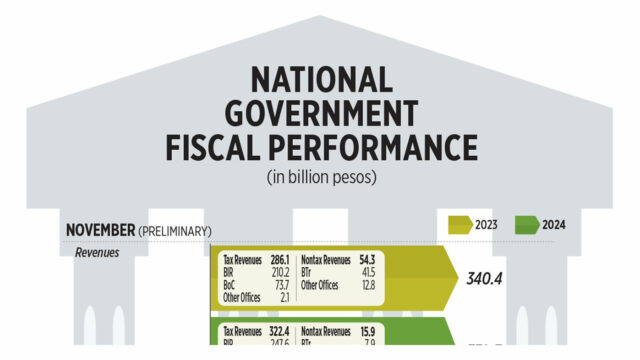
National Government fiscal performance

THE National Government’s (NG) budget deficit widened to P213 billion in November, as revenue collections dipped and spending accelerated, Treasury data showed. Read the full story.

National Government fiscal performance

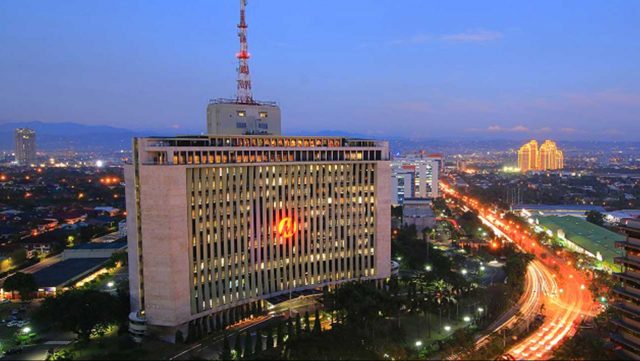
Meralco to top energy sales goal this year

MERALCO.COM.PH

MANILA Electric Co. (Meralco) expects to exceed its sales growth target this year, driven by the residential and commercial segments, according to a high-ranking official.

The company had set a target energy sales volume of 53,473 gigawatt-hours (GWh) this year — 4.8% higher than in 2023 — but it now expects year-end sales at 54,259 GWh or 6.3% growth, Ferdinand O. Geluz, senior vice-president and chief revenue officer at the power distributor, said in a Viber message last week.

“We may surpass our sales volume target for the year by close to 800 GWh,” he said. “Sustained new account energization brought in additional sales, as we surpassed eight million customers in the fourth quarter.”

Energy sales are expected to increase in the commercial sector as retail, real estate, hotels, and leisure businesses continued to expand, he added.

Contributing to the growth in both residential and commercial sectors were the higher per capita consumption due to El Niño.

Meanwhile, industrial sales were flat as the modest increase in semiconductor, food and beverage, and plastic industries were offset by a decline in steel and wheeling from embedded generation.

Meralco’s distribution business accounted for 59% or P20.5 billion of its core net income in the first nine months of 2024, which grew 17% to P35.1 billion.

Meralco expects to surpass its P43-billion profit target for the year on the back of strong performance from its units, Chairman and Chief Executive Officer Manuel V. Pangilinan earlier told a news briefing.

Meralco’s controlling stakeholder, Beacon Electric Asset Holdings, Inc., is partly owned by PLDT, Inc.

Hastings Holdings, Inc., a unit of PLDT Beneficial Trust Fund subsidiary MediaQuest Holdings, Inc., has an interest in BusinessWorld through the Philippine Star Group, which it controls. — S.J. Talavera

Understanding the value of trends

Each year, as December fades into January, the world of business is inundated with articles and reports forecasting the trends that are expected to shape the coming year. From advancements in technology and shifting consumer behavior to evolving workplace dynamics, these insights promise to help leaders anticipate and navigate an ever-changing landscape. But is there real value in immersing oneself in these predictions, or do they merely serve as an annual ritual with limited practical impact?

At its core, the value of reading about upcoming trends lies in fostering preparedness. Businesses do not operate in isolation; they are deeply intertwined with technological, societal, and economic currents. For instance, the rapid adoption of artificial intelligence and automation in recent years has forced companies to rethink not only their operations but also their strategies for talent management and customer engagement. Leaders who fail to recognize or respond to such shifts risk falling behind their more proactive competitors. Trend forecasts, while not infallible, offer a curated glimpse into the potential opportunities and challenges ahead, enabling businesses to position themselves advantageously.

In the realm of strategy, staying informed about trends can serve as a catalyst for innovation. Consider the ongoing emphasis on sustainability and environmental, social, and governance (ESG) initiatives. Ten years ago, such concepts were emerging as niche concerns; today, they are integral to the success of global brands. Companies that paid attention to these nascent trends early — by rethinking supply chains, adopting greener technologies, and embedding ESG principles into their operations — are now reaping the rewards. Reading about potential trends helps managers identify areas where innovation can create competitive differentiation, whether through new products, improved processes, or stronger relationships with stakeholders.

However, not all predictions are created equal. The proliferation of articles and reports about annual trends can sometimes result in an overwhelming and contradictory deluge of information. One publication may emphasize the rise of the metaverse, while another champions the return to human-centric, in-person interactions. Such disparities raise questions about the reliability of these forecasts. In some cases, trends are overhyped or lack the empirical basis needed to justify their prominence. Therefore, the value derived from reading these forecasts depends heavily on the critical thinking skills of the reader. Managers and leaders must assess the credibility of sources, evaluate the alignment of predicted trends with their specific industry, and recognize that not every trend is relevant to their context.

Moreover, it is crucial to acknowledge the inherent uncertainty in predicting the future. Many trends that dominate discussions at the start of the year fail to materialize or unfold in ways that differ significantly from initial expectations. The unpredictability of global events—ranging from economic recessions to geopolitical conflicts—can swiftly render even the most well-informed predictions obsolete. For example, the COVID-19 pandemic disrupted nearly every industry worldwide, challenging previously forecasted trends and accelerating others, such as remote work and digital transformation, far beyond anyone’s expectations. This serves as a reminder that while trend reports are valuable tools, they should not be treated as definitive roadmaps.

Despite these limitations, reading about trends offers an additional benefit: fostering a culture of curiosity and learning within organizations. The act of exploring emerging ideas encourages leaders and teams to think expansively, question established norms, and engage in meaningful discussions about the future. For instance, a company reading about the rise of decentralized finance (DeFi) might not immediately invest in blockchain technologies but could spark internal conversations about how to leverage digital tools for financial operations. Even when a particular trend does not lead to immediate action, the process of engaging with forward-looking ideas can stimulate creativity and long-term strategic thinking.

In the competitive world of business, timing is often a decisive factor in success. Organizations that are quick to identify and act on relevant trends can achieve first-mover advantages, while those that lag may struggle to catch up. Reading about trends at the start of the year provides a temporal edge, enabling businesses to plan ahead, allocate resources effectively, and communicate their vision to stakeholders. For example, a company that anticipated the growing demand for personalized customer experiences in retail might have invested early in data analytics and AI-driven solutions, securing a stronger foothold in an increasingly competitive market.

Nonetheless, it is essential to strike a balance between trend adoption and core business priorities. Overzealous pursuit of every new idea can lead to strategic dilution and resource misallocation. Companies must discern which trends align with their long-term goals, customer needs, and organizational capabilities. This requires a disciplined approach to trend evaluation, combining quantitative analysis with qualitative insights and a firm understanding of the broader industry context.

In the end, there is undeniable value in reading about trends for the coming year, particularly for business and management professionals. These forecasts provide a foundation for preparedness, innovation, and strategic foresight, helping organizations stay relevant in a dynamic world. However, the real utility of such insights depends on how they are interpreted and applied. Businesses must approach trend reports with a critical eye, separating actionable insights from fleeting buzzwords, and remain agile enough to adapt when the unexpected occurs. By doing so, they can harness the power of trends not just as predictions but as tools for thoughtful and effective decision-making.

The views expressed herein are his own and do not necessarily reflect the opinion of his office as well as FINEX.


Reynaldo C. Lugtu, Jr. is the Founder and CEO of Hungry Workhorse, a digital, culture, and customer experience transformation consulting firm. He is a Fellow at the US-based Institute for Digital Transformation. He is the Chair of the Digital Transformation IT Governance Committee of FINEX Academy. He teaches strategic management and digital transformation in the MBA Program of De La Salle University. The author may be emailed at rey.lugtu@hungryworkhorse.com

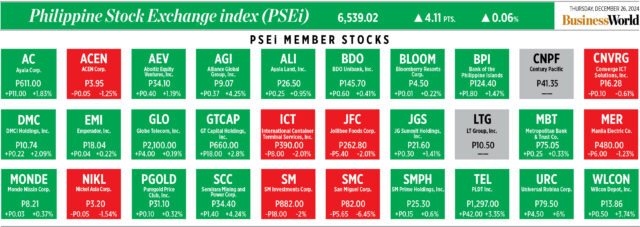
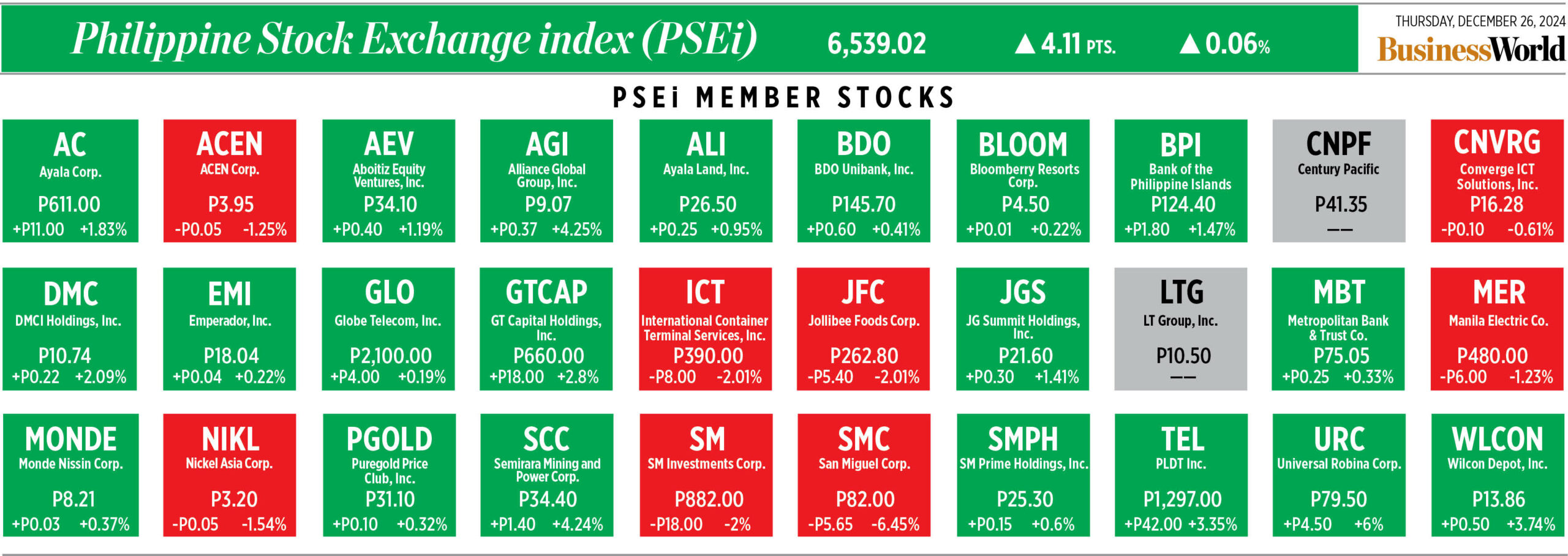
How PSEi member stocks performed — December 26, 2024

Here’s a quick glance at how PSEi stocks fared on Thursday, December 26, 2024.


ADVERTISEMENT
ADVERTISEMENT