Home Blog Page 2129

Yields on term deposits decline as market eyes further BSP cuts

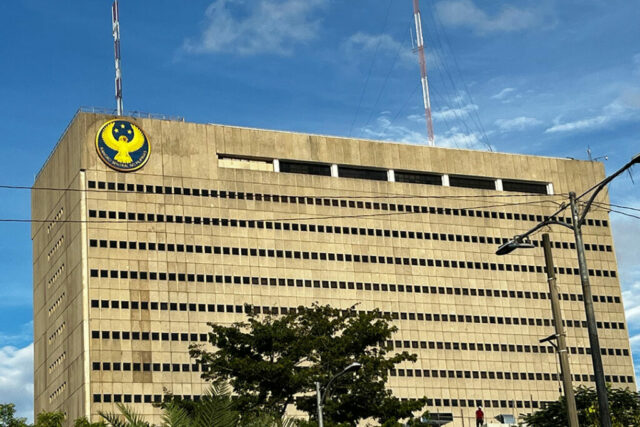
BW FILE PHOTO

YIELDS on the central bank’s term deposits dropped further on Wednesday amid expectations of further rate cuts by the Bangko Sentral ng Pilipinas (BSP).

The BSP’s term deposit facility (TDF) fetched bids amounting to P319.353 billion on Wednesday, above the P240 billion placed on the auction block but slightly lower than the P339.78 billion in bids seen for the P180-billion offer a week ago.

Broken down, tenders for the seven-day papers reached P189.095 billion, higher than the P140 billion auctioned off by the central bank but lower than the P213.661 billion in bids recorded for the P100-billion offer the previous week.

Banks asked for yields ranging from 5.725% to 5.825%, narrower than the 5.715% to 5.8745% band seen a week ago. This caused the average rate of the one-week deposits to decline by 2.1 basis points (bps) to 5.7983% from 5.8193% previously.

Meanwhile, bids for the 15-day term deposits amounted to P130.258 billion, above the P100-billion offering and the P126.119 billion in tenders for the P80 billion in 14-day papers placed on the auction block on Jan. 8.

The two-week tenor offered this week was adjusted from the usual 14-day maturity due to a holiday.

Accepted rates for the tenor were from 5.75% to 5.91%, lower than the 5.84% to 5.97% margin seen a week ago. With this, the average rate for the two-week deposits dropped by 6.44 bps to 5.8675% from 5.9319% recorded in the prior auction.

The BSP has not auctioned 28-day term deposits for more than four years to give way to its weekly offerings of securities with the same tenor.

The term deposits and the BSP bills are used by the central bank to mop up excess liquidity in the financial system and to better guide market rates.

Term deposit yields went down amid expectations of further policy easing by the BSP, Rizal Commercial Banking Corp. Chief Economist Michael L. Ricafort said in a Viber message.

BSP Governor Eli M. Remolona, Jr. last week said the central bank still has room to continue cutting interest rates as inflation remains manageable, adding that current benchmark borrowing costs remain “restrictive.”

Headline inflation picked up to 2.9% in December from 2.5% in November, the government reported last week. Still, this was slower than the 3.9% print in the same month in 2023 and was within the 2.3%-3.1% forecast of the BSP.

The December rate brought the full-year 2024 inflation average to 3.2%, slower than 6% in 2023 and marking the first time since 2021 that the consumer price index settled within the BSP’s 2-4% annual target.

The Monetary Board has slashed benchmark borrowing costs by a total of 75 bps since it began its easing cycle in August, bringing its policy rate to 5.75%.

Mr. Remolona previously said that while the BSP remains in an easing cycle, 100 bps worth of cuts this year may be “too much” amid inflation concerns. He added that they will continue to bring down benchmark interest rates in “baby steps.”

The Monetary Board will hold its first rate-setting meeting for this year on Feb. 20.

“The BSP TDF average auction yields also declined after the initial implementation of the maximum suggested retail price (MSRP) for imported rice (that) could further support benign inflation,” Mr. Ricafort said.

The Agriculture department had set the MSRP at P58 per kilogram for imported rice with broken-grain content of 5%.

A price ceiling has not yet been set for imported 25% broken rice. The price ceiling is expected to take effect on Jan. 20, initially in Metro Manila. — L.M.J.C. Jocson

Sunlight Air expands fleet

SUNLIGHTAIR.PH

SUNLIGHT AIR announced on Wednesday the addition of new aircraft to its fleet.

“As we enter the new year, we find that there are more growth opportunities that come with the continuous increase in passenger demand,” Sunlight Air Chief Executive Officer Ryna C. Brito-Garcia said in a media release on Wednesday.

Sunlight Air, operated by Sunlight Express Airways Corp., said it procured an ATR 72-600, which is described as a modern and fuel-efficient aircraft.

The ATR 72-600 can seat up to 78 passengers and aligns with the boutique airline’s commitment to environmentally friendly operations, Sunlight Air said.

This addition will further boost Sunlight Air’s fleet as it currently operates three ATR 72-500 planes, it said, adding that it is moving closer to its goal of expanding its existing routes in 2025.

“By increasing flight frequencies and exploring new destinations, the airline aims to solidify its reputation as a trusted choice for regional travel,” Ms. Brito-Garcia said.

Sunlight Air said it is constantly looking to boost its flight frequencies to position the company as a market leader in domestic travel.

Currently, Sunlight Air flies from Clark, Cebu, and Manila to Siargao; San Vicente, Coron, and Busuanga in Palawan; and Caticlan, Aklan; Iloilo; and Cagayan de Oro. — Ashley Erika O. Jose

Tiong Bahru Bakery opens in Manila

LOOKING for a really good croissant in Manila used to be a bit of a challenge (you would have to troop to the mall, or order a batch from a baker friend). Things have changed, and a new player has now come all the way from Singapore.

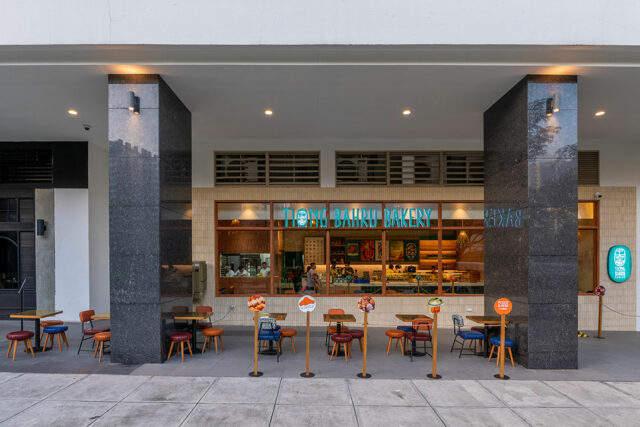
Tiong Bahru Bakery’s roots are in Singapore’s indie district, which it was named after. Offering French Viennoiseries (a French term for the Austrian pastries they’ve perfected), the bakery has been around since 2012. Its location in Bonifacio Global City’s Verve Residences is its first foray out of Singapore, where they have 21 outlets. “Manila, with its vibrant culinary scene, and deep appreciation for food that brings people together felt like a perfect first home for Tiong Bahru Bakery overseas,” said Tiong Bahru Bakery International General Manager, Matt Mclaughlan in a speech during a preview on Jan. 14.

At the heart of its menu is the classic Croissant — golden and flaky on the outside, with rich buttery aroma and mouthfeel (we’d also like to point out its shiny laminated surface, which baker acquaintances say is hard to achieve). A new batch is baked every two hours to ensure freshness.

“Our signature croissant takes three whole days to make: the combination of fermentation… of folding, of prepping, proofing, and baking to get that delicious, buttery, flaky taste,” said Mr. Mclaughlan in his speech.

We had one along with coffee, and it did taste more buttery and was more yielding (that is, softer and easier to break) than other croissants in the city (though the difference may be imperceptible to many). We do note that the coffee and the croissant were served cold, but we’ll clock this up to first-day jitters. We also had a pain au chocolat, just to round things out, and we were satisfied with the chocolate filling and the excellent flaky pastry. “You either love it now, or you will love (it) in a few minutes,” said Mr. Mclaughlan in his speech.

“We pride ourselves in using these time-honored French backing techniques that hone the craft in true artisanal baking. Every croissant, every loaf, every pastry that you see behind me starts with the finest ingredients and is infused with a deep respect for this tradition,” he continued.

“I’d like to extend my heartfelt gratitude to our partners, Jollibee Foods Corp.,” he said, thus adding another feather to the homegrown global brand’s cap. The same group has the franchises for Panda Express, Yoshinoya, and Burger King in the Philippines, not to mention acquiring the Tim Ho Wan and The Coffee Bean & Tea Leaf brands.

Tiong Bhru Bakery is located at Verve Residences in Bonifacio Global City, Taguig. — Joseph L. Garcia

Predictions: Top 6 strategic priorities for Southeast Asian enterprises in 2025

FREEPIK

By Rajesh Ganesan

AMID rapidly changing market conditions, organizations broadened their perspectives, shed age-old practices, and embraced novelties to strengthen their foothold in the market in 2024. With the technological landscape evolving each year, enterprises are compelled to look into various aspects of their businesses and understand how technology is contributing to their overall growth. Businesses that don’t adopt digital technology run the risk of becoming obsolete as these technologies grow more integrated into daily operations.

We have identified six key priorities for 2025 that modern organizations in Southeast Asia should consider while navigating through the challenging digital landscape in order to remain competitive and resilient in a rapidly evolving environment. For Southeast Asia’s digital economy to continue achieving double-digit growth in 2025 across gross merchandise value, organizations need to focus on the following priorities: scaling up artificial intelligence (AI) usage, democratizing cybersecurity, implementing a distributed governance model for compliance, reengineering experiences, embracing sustainability, and focusing on outcome-driven information technology (IT).

1. DEMOCRATIZING CYBERSECURITY

Per PwC, “The number of mega breaches experienced by Asia Pacific organizations in the past three years has risen considerably: in 2023, 35% of organizations say they have experienced data breaches costing anywhere from $1 million to $20 million over the last three years.” This highlights how managing cyber risk at all levels of the workforce — and not restricting it to just the top organizational level — should be a priority for security leaders in 2025.

This involves the democratization of cybersecurity, which essentially makes everyone in an organization responsible for its defense. Organizations stand to benefit from proactive security management, increased cyber resilience, cost savings, increased efficiency, and innovation in security practices.

Organizations should ensure employees undergo dedicated continuous security engagement programs. Since the biggest challenge to democratizing security is poorly equipped employees and ill-defined processes, organizations should also ensure that employees only have limited access to self-service tools and services.

2. DISTRIBUTED GOVERNANCE MODEL FOR COMPLIANCE

Multiple regulations and audits will soon force privacy and compliance leaders to implement a distributed compliance framework to ensure pervasive compliance. The general practice so far has been to entrust compliance to a central team; however, the job is intrinsic to every department within an organization.

The central compliance team is primarily responsible for program management. It should have a pulse of what’s happening in the industry and map the requirements evolving out of relevant regulations and standards. This central compliance team should keep leadership updated about the evolving landscape and macro challenges posed.

On the other hand, the execution of the compliance program should be broad, empowering business functions at all levels. Each team and business function should undergo training to understand risk management and use it consistently to address non-conformities flagged during audits as well as for root cause analysis of incidents.

3. REENGINEERING EXPERIENCES

In any organization, customers and employees are regarded as the most valuable assets. Every single interaction they have, be it with either a human or a machine, is critical in shaping their overall experience. These experiences are crucial in determining the fate of an organization, making them a strategic priority for leadership.

Ease of use, availability, consistency, being proactive with changes, contactless digital experiences, and keeping the feedback loop open are some key user expectations that can’t be ignored. This approach involves reimagining and redesigning an organization’s existing technology architecture, which may have scalability and compatibility issues, to deliver better than before. It also includes leveraging emerging technologies such as AI, generating actionable insights from data analytics platforms, and customizing workflows to enhance employee engagement and customer satisfaction.

A major challenge to reengineering includes context setting — the size of the enterprise and the productivity hit taken during the shift. Another challenge would be ensuring IT security while at the same time ensuring those measures don’t hinder or impact the user experience.

4. OUTCOME-DRIVEN IT

Modern-day enterprises are powered by IT, which now occupies a place at the top of the management table. Any failure that results in services being unavailable or disrupted can result in huge business implications. IT leaders will need to clearly demonstrate the value generated by their IT investments or risk shrinking budgets. That clarity can be gained by aligning IT with not only operational efficiency but also with business velocity and opportunity costs.

In 2025, CIOs need to focus closely on KPIs and metrics that provide a direct link to the business outcomes that depend on them. For instance, in the healthcare industry where there is a constant focus on safeguarding data and compliance management, metrics that track user behavior and anomalies, ensure continuous availability of critical assets, and give visibility into critical and high-risk vulnerabilities and incidents are most vital since they all affect business operations.

5. SCALING UP AI USAGE

The past couple of years were significant for AI as a lot of enterprises ran pilots to harness its capabilities. As we approach 2025, enterprises will view AI integration from the lens of scaling up its usage and generating ROI.

It will also be a big year for AI in cybersecurity. With attacks becoming more sophisticated by leveraging AI, traditional cybersecurity measures may not be enough to defend against them. This is where investing in AI for defense becomes crucial. Investing in augmented AI is also becoming increasingly important as it can significantly enhance employee productivity. Additionally, we can expect to see more LLMs being utilized in the enterprise setting. These LLMs will be equipped with agents that can make real-time API calls and augment their generative capabilities.

To realize all this, it’s crucial for companies to have a solid data strategy in place. This includes streamlining relevant processes and ensuring that they are in sync with that strategy. CIOs must prioritize data sovereignty and data preparation — operating on encrypted data — to guarantee the success of AI implementation.

6. EMBRACING SUSTAINABILITY

Investments in GPUs are skyrocketing as they play a critical role in training deep learning models and supporting faster computing. However, their energy requirements, which are difficult to maintain and constitute massive carbon footprints, call for immediate intervention.

A sustainable outlook reduces the environmental damage inflicted by such advanced technologies, meets the demands of environmentally conscious customers, helps adhere to compliance standards, and improves efficiency, making it a key competitive differentiator and a strategic priority for organizations in 2025.

Organizations should conduct internal environmental audits, raise their investments to explore alternate energy sources, and gain carbon credits. This will empower enterprises to secure their business posture, gain competitive advantage, and enhance their operational efficiency in the ever-changing digital ecosystem.

By embracing and staying ahead of transformative technology changes, Southeast Asia’s enterprises will be able to drive business growth in a sustainable and secure manner in the next year and for years to come.


Rajesh Ganesan is the president of ManageEngine

Revisiting the four-day work week

PHILIPPINE STAR/WALTER BOLLOZOS

In 1926, pioneering automaker Henry Ford demonstrated that shortening the workweek would not result in economic catastrophe. Through research and experimentation, the industrialist recognized the importance of rest and decided to operate his factories for only five days a week, down from six. He also limited workdays to eight hours without reducing employee pay.

As one of the largest manufacturers of his time, Ford’s decision influenced many other companies to adopt the 40-hour workweek format. Before this innovation, workers typically endured 12-hour days, six days a week — totaling over 70 hours. Sundays were reserved for rest and religious obligations. The new approach represented a significant shift in labor practices.

Ford believed that overworking employees caused fatigue and diminished productivity. A shorter workweek, he argued, would allow workers to rest and recover, making them more efficient during their working hours. Additionally, he anticipated that more leisure time would encourage higher consumer spending, including on Ford products. He saw this balance between work and leisure as essential for sustained economic growth.

Ford implemented the five-day workweek unilaterally, without waiting for government mandates or union pressure. Importantly, he maintained wages despite reducing hours. This ensured employees did not suffer financially and, instead, enjoyed an improved quality of life.

The “Ford format” has endured for nearly a century, but as technology transforms the workplace, it may be time to revisit the idea of a shorter workweek. If productivity and efficiency can be maintained, and workers assured of fair pay, a shorter workweek could be a win-win for both employers and employees.

Globally, governments and companies have begun experimenting with flexible work arrangements, including shorter workweeks, particularly in the wake of the COVID-19 pandemic. For instance, the United Arab Emirates (UAE) introduced a 4.5-day workweek in 2022 to improve work-life balance and align with global markets. Fridays were designated as half-days to accommodate cultural practices, while weekends were shifted to Saturday-Sunday.

Similarly, Iceland conducted landmark experiments between 2015 and 2019, testing a four-day workweek for public sector workers. The trials, involving 2,500 participants, demonstrated that shorter workweeks could increase productivity, reduce stress, and maintain or even enhance output. In Japan, the “Work Style Reform Act” encouraged public offices to adopt flexible schedules to reduce overwork and promote better work-life balance.

In the private sector, a 2022 trial in the United Kingdom involving over 60 companies tested the four-day workweek without pay cuts. Results showed sustained or increased revenue, better employee mental health, and lower burnout. In the United States, companies like Twitter and Microsoft adopted remote or hybrid work models. Kickstarter implemented a permanent four-day workweek after successful trials. Similarly, New Zealand’s Perpetual Guardian conducted a four-day workweek experiment in 2018, which resulted in better work-life balance, reduced stress, and sustained productivity.

Iceland’s trials were particularly influential. By 2022, nearly 90% of Iceland’s workforce had access to shorter workweeks. Similarly, in the UK, 91% of firms participating in 2022 trials chose to continue the four-day workweek, citing improved employee retention, reduced absenteeism, and stable or increased revenues.

Elsewhere, European Union pandemic recovery funds incentivized remote work, particularly for small and medium enterprises. Germany and France supported hybrid work arrangements through subsidies, while Singapore introduced the Work-Life Grant, providing financial incentives for businesses implementing flexible work setups. In the Philippines, the 2018 Telecommuting Act created a legal framework for remote work, though adoption remains limited.

However, not all jobs easily adapt to remote work or reduced hours. Manufacturing and healthcare roles, for example, often require on-site presence. While some manufacturers are exploring partial automation to accommodate reduced shifts, human oversight remains essential. In healthcare, telemedicine can address some services remotely, but frontline workers — such as nurses, doctors, and support staff — must remain physically present.

Additionally, in regions with limited digital infrastructure, remote work can exacerbate socioeconomic disparities. Large corporations can afford to provide equipment and connectivity for employees, but small businesses often lack the resources to do so. This creates an uneven playing field, particularly for smaller companies competing in flexible work environments.

In the Philippines, many government offices have already adopted shorter workweeks and other flexible arrangements. However, in the private sector, no-work-no-pay policies present a significant barrier. For a shorter workweek to succeed, compensation must shift from being based solely on hours or days worked to being tied to output, productivity, and efficiency.

To address these challenges, the government along with business must agree on how to clearly define the scope of flexible work arrangements — be they remote, hybrid, or shortened workweeks — and establish guidelines for compensation, overtime, and worker protections. The government can also offer tax incentives or grants to businesses transitioning to these models, particularly small and medium enterprises (SMEs) that need financial support. Encouraging a mix of on-site and remote work where possible would allow businesses to balance operational needs with flexibility goals.

Flexible work arrangements are reshaping the global workforce, offering significant benefits in terms of productivity, morale, and environmental impact. The successes documented in Iceland, the UK, and other pioneering countries demonstrate that traditional assumptions about the 40-hour, five-day workweek are increasingly outdated.

Still, caution is warranted. Implementing shorter workweeks or fully remote setups in sectors like manufacturing and healthcare presents unique logistical and operational hurdles. Each industry must carefully evaluate the pros and cons, and industry leaders must play a key role in guiding this transition.

Governments and businesses can implement sweeping changes, supported by legislation and incentives, or allow market forces to drive flexible work on a case-by-case basis. Regardless of the approach, the conversation surrounding flexible work arrangements will continue to evolve, shaped by technological advancements, cultural shifts, and the growing demand for a more inclusive, resilient workforce.

Policymakers must review real-world examples, including lessons from the COVID-19 pandemic, to design effective and equitable policies. By balancing sector-specific requirements and carefully implementing policy measures, flexible work arrangements can become a sustainable blueprint for the future of work.


Marvin Tort is a former managing editor of BusinessWorld, and a former chairman of the Philippine Press Council

matort@yahoo.com

BPI targets to complete integration of Robinsons Bank branches by this year

BANK of the Philippine Islands (BPI) expects all Robinsons Bank Corp. (RBC) branches to be rebranded by the end of the year following their merger.

“We’ve integrated a couple of branches already. It went really well. So, you’ll see those branches transform into BPI branches, but the rest of the branches, we should target and finish by this year,” BPI Chief Executive Officer Jose Teodoro K. Limcaoco told reporters on the sidelines of a central bank event on Friday.

As of June 2024, BPI had 865 branches while RBC had 157.

The merger between BPI and RBC took effect on Jan. 1, 2024, with BPI as the surviving entity.

Robinsons Bank President and Chief Executive Officer Elfren Antonio S. Sarte earlier said that RBC will be fully integrated into BPI’s systems in 12-18 months.

He added that RBC has started cross-selling its consumer loan products to BPI customers, which is expected to contribute to the latter’s profits.

One of the RBC products now being offered to BPI’s clients is teachers’ loans from Legazpi Savings Bank, a subsidiary of RBC that is now also owned by BPI following the merger.

BPI’s net income grew by 29.4% year on year to P17.4 billion in the third quarter of 2024 on the back of higher revenues.

This brought its nine-month net profit to a record P48 billion, 24.3% higher year on year.

BPI’s shares rose by P1 or 0.85% to end at P119 apiece on Wednesday. — A.M.C. Sy

PHL’s first Open RAN lab seen operational by Q1

USAID Assistant Administrator Michael Schiffer (second from left) and USAID Philippines Acting Mission Director Rebekah Eubanks (left) meet with DICT Assistant Secretary Philip Varilla and UP-EEEI Deputy Director Jaybie de Guzman to strengthen the adoption and deployment of Open RAN, a critical network infrastructure that increases cybersecurity. — PH.USEMBASSY.GOV

THE COUNTRY’S first Open Radio Access Network (RAN) laboratory is set to be operational by the first quarter of this year, the United States Agency for International Development (USAID) said.

“Open RAN is not yet commercially available in the Philippines, but we foresee that it will be available in the next few years. With this laboratory, we are promoting the sharing of active components as well as the liberalization of the industry,” Information and Communications Technology Undersecretary Jeffrey Ian C. Dy told reporters on Wednesday.

The establishment of the Open RAN laboratory is under the United States Agency for International Development’s (USAID) $33.3 million Better Access and Connectivity (BEACON) project, which aims to help boost the country’s economic growth by enhancing connectivity in the Philippines.

Of this, about $8 million is allocated for the Open RAN laboratory project, USAID Mission Director Ryan Washburn said, noting that $4 million is set aside for the establishment of the laboratory itself, while another $4 million is for the academy, which will facilitate the upskilling and training of local engineers in designing, building, and operating these networks.

USAID said the Open RAN laboratory will be operational by the first quarter of this year and will be officially launched in May with government and private sector participation.

Mr. Dy said that the Open RAN laboratory will help advance the fifth-generation (5G) network rollout in the country, while also allowing telecommunications providers to access radio access networks.

“It could be used by any telco. This could lead to lower capital expenditures for telcos and promote a more competitive market,” he said.

Aside from the Open RAN laboratory project, USAID’s BEACON project also includes initiatives that will help accelerate the country’s digital infrastructure, address the digital divide through low-cost broadband, and strengthen cybersecurity. — Ashley Erika O. Jose

Dining In/Out (01/16/25)


McCafé’s P49 Coffee launched

MCDONALD’S Philippines has made its McCafé products even more affordable with the release of its latest “Mah coffee, McCafé” campaign. The stronger and creamier McCafé Iced Coffee Original is now priced at P49. The McCafé Iced Coffee Black and McCafé Premium Roast Coffee are also P49. “We’re empowering the teens to take ownership of their coffee choices and what better way to do this by making available coffee choices that are bold and rich in flavor, yet friendly on their pockets,” Ada Lazaro, Vice-President and Chief Marketing Officer, McDonald’s Philippines, was quoted as saying in a statement. McCafé is available nationwide via dine-in, take-out, drive-through, dessert centers and kiosks, and delivery.


Poolside Filipino Buffet is back at City of Dreams

CITY OF DREAMS Manila’s Wave poolside restaurant brings back its Filipino Barbecue Buffet every Thursday evening from 6 to 9 p.m until March 27. Located next to Nobu Hotel’s infinity lap pool, Wave lays out a spread of Filipino street fare and other Filipino favorites as live music performances by an acoustic duo enhance the al fresco tropical vibe. Highlights of the buffet include a crispy sisig (a sizzling dish of chapped pig face) live station and on the grills, inihaw (barbecue) on sticks, Balut at Penoy (fertilized duck eggs at various stages of maturation), and sweet corn served with cheese and butter. Filipino street fare includes kwek-kwek (batter-fried eggs), fish balls, chicharong bulaklak (deep-fried pork innards), kalamares (fried squid), lumpiang shanghai (fried spring rolls) tokwa (fried tofu), crispy crablets, and dynamite lumpia. Appetizers consist of various kinilaw (like ceviche, but with vinegar instead of citrus). Pares (braised beef) and mami (noodle soup) are among the soups, while pansit batil, a savory noodle dish, is also on the menu. There are also street food desserts and snacks such as halo-halo (a shaved ice dessert), banana cue (sweet, skewered bananas), ginataang bilo-bilo (a coconut cream dessert), and a selection of kakanin (rice cakes) along with seasonal fresh fruits. For P1,999 net per person, the Filipino barbecue buffet comes with unlimited beverages including San Miguel Light and San Miguel Pale draft beers. For inquiries and reservations, call 8800-8080 or e-mail guestservices@cod-manila.com, or visit www.cityofdreamsmanila.com.


Pre-flight meals now available at PAL

PHILIPPINE AIRLINES’ (PAL) newly launched online meal pre-ordering service allows travelers to now pre-order meals via PAL’s website and mobile app before they fly. Travelers on domestic flights can use the online service to purchase dishes created by the airline’s culinary team. Economy Class and Premium Economy passengers on PAL’s international flights can likewise upgrade their inflight meals by pre-ordering online. Using the website or the mobile app, customers can select and purchase their meal from the offerings on myPAL Flavors. The myPAL Flavors menu includes dishes like Corned Beef Hoagie, Beef Sisig Wraps, Salmon Croissant, Shrimp Pita, Tagaytay Wraps, the Bistro Mediterranean Chicken Wrap, and the Bacolod Chicken Barbecue Roll. The new pre-ordering service allows Business Class passengers flying from Manila to the mainland US, Canada, Honolulu, and Australia to select from a specially designed menu, which varies depending on the flight or season. On the menu now are Chicken Adobo Roulade, Ilocano Cauliflower Adobo, Braised Beef Short Ribs, and Pan-Seared Seabass with Mashed Potatoes. PAL offers Filipino breakfast selections for passengers flying from Manila to the mainland US and Canada, with dishes like Classic Beef Tapsilog, Stuffed Bangus with Garlic Fried Rice, and Adlai Champorado. PAL Business Class passengers can select and pre-order meals online as early as 30 days in advance, or up to at least 72 hours before their flights. Passengers with dietary restrictions may request a special diet meal at least 48 hours prior to their international flights. PAL offers a variety of special meals to accommodate all types of dietary needs, including vegan, vegetarian, diabetic, gluten-free, low fat, low sodium, and low cholesterol options. The airline also provides Baby and Child Meals for younger passengers. PAL offers options for various dietary customs, including Hindu, Kosher, and Muslim preferences. The flag carrier serves only halal-certified meals on routes plying the Middle East, Indonesia, and Malaysia. To pre-order a meal, go to www.philippineairlines.com or the PAL mobile app and use the Manage Booking function.

OpenAI rolls out assistant-like feature ‘Tasks’ to take on Alexa, Siri

GENERATIVE artificial intelligence (AI) bellwether OpenAI said on Tuesday that it is introducing a beta feature called Tasks to ChatGPT, signaling the company’s foray into the virtual assistant space, competing with Apple’s Siri and Amazon’s Alexa.

Tasks will enable ChatGPT users to request tasks to be performed at a future time, including one-time reminders such as concert ticket sales or recurring actions like weekly news briefings or daily weather updates.

Based on user chats, ChatGPT may also suggest tasks, although users will have the option to accept or decline them.

The release of ChatGPT in late 2022 sparked a frenzy of investment in AI firms, prompting Amazon to update its decade-old, money-losing Alexa service with GenAI capabilities to remain competitive with GenAI-powered chatbots.

In December last year, Amazon CEO Andy Jassy said that the revamped version of Alexa—which will take actions for users without prompting—is slated to be released in the “coming months”.

Meanwhile, Apple has integrated its “Apple Intelligence” technology into Siri, leveraging ChatGPT’s expertise and seeking permission from users before querying the OpenAI service as part of Apple’s tie-up with the Microsoft-backed startup.

OpenAI said that it will start rolling out the beta to Plus, Team, and Pro users globally over the next few days, beginning with the web platform. — Reuters

Maya Bank records P39-billion deposits, P68-billion loan disbursements in 2024

MAYA BANK disbursed P68 billion in loans and recorded P39 billion in deposits in 2024, it said on Wednesday.

Loan disbursements since 2022 have reached P92 billion at end-2024, the online bank said in a statement, while its total customer base stood at 5.4 million.

Maya Bank disbursed P21.5 billion in loans in 2023, up from P3.14 billion in 2022, its annual report for that year showed. Its deposits totaled P24.81 billion at end-2023 with a depositor base of 2.99 million.

“Banking should be simple and empowering,” Maya Group President and Maya Bank Co-Founder Shailesh Baidwan said. “By merging payments and banking on one delightful digital experience, we’re enabling more Filipinos to save, borrow, and grow their money with ease.”

“Our goal is to create a financial system that works for every Filipino. Whether saving for the future or expanding a business, Maya empowers users to take control of their finances,” Maya Bank President Angelo S. Madrid said.

The online bank attributed its growth to its strategy of “leveraging an extensive payments network, customer-first product design, and advanced technology to deliver financial inclusion at scale — all while improving operational efficiency and profit margins.”

“Maya’s growth comes from seamlessly integrating payments and banking into one ecosystem. The bank uses its payments network to expand its banking services while its banking products boost the growth of its payments business,” it said.

Maya Bank also offers products tailored for its customer base made up primarily of young Filipinos and small business owners, it added, with account opening and loan approvals available via its app.

The digital bank’s investments in technology and innovation have also fueled customer and lending growth, it added.

Maya Bank posted a net loss of P826.83 million in 2023, widening from the P729.77-million loss in 2022, its annual report showed.

Maya Bank is one of the six licensed digital banks in the country. It is owned by Voyager Innovations, Inc., whose main shareholder is PLDT Inc.

Hastings Holdings, Inc., a unit of PLDT Beneficial Trust Fund subsidiary MediaQuest Holdings, Inc., has a majority stake in BusinessWorld through the Philippine Star Group, which it controls. — AMCS

LRTA projects P1.38-B rail revenue for 2025

FACEBOOK/LIGHT RAIL MANILA CORPORATION

THE LIGHT Rail Transit Authority (LRTA), which operates Light Rail Transit Line 2 (LRT-2), is projecting its rail revenues to reach P1.38 billion this year after hitting last year’s target.

For 2025, LRTA expects its total passenger volume to reach 57.15 million, Hernando T. Cabrera, LRTA administrator, told BusinessWorld.

If realized, this will surpass its pre-pandemic passenger count of 56.98 million in 2019.

Data from LRTA showed that for 2025, LRT-2 is projected to see an average daily ridership of 158,321.

Mr. Cabrera said that LRTA is also expecting its non-rail revenue, which is income generated from rentals, leasing, and advertising spaces, to climb by 4.5% to P138.05 million in 2025, from last year’s target of P132.09 million.

Last year, LRTA’s gross revenue from rail operations stood at P1.27 billion, up by 15.5% from P1.10 billion in 2023. This is well within LRTA’s target of P1.2 billion for rail revenues in 2024.

Broken down, LRTA recorded a gross revenue of P339.27 million for the fourth quarter of 2024, higher by 4.03% from P326.12 million in the same period in 2023.

Further, LRTA recorded a total passenger count of 53.3 million in 2024, marking a 7.8% increase from the 49.43 million in 2023, but still lower than the 56.98 million passenger tally in 2019. — Ashley Erika O. Jose

LA’s Getty Center’s art safeguarded as Palisades fire rages

THE GETTY CENTER — GETTY.EDU

LOS ANGELES — The J. Paul Getty Museum’s priceless collection of artwork, which includes paintings by Van Gogh, Rembrandt, Monet, and Degas, once again found itself in the path of destruction as the Palisades fire spread.

As fire officials issued evacuation orders for the Brentwood neighborhood on Friday night, the museum’s collection remained safely inside the Getty Center’s fortress of travertine stone, fire-protected steel, and reinforced concrete.

“It would be extremely foolish to try and remove artwork,” said Katherine E. Fleming, president and chief executive of the J. Paul Getty Trust, noting how quickly fires spread, with little notice.

“It’s complicated enough moving really, really valuable artworks around under the best of circumstances. The last thing we would try to do is move them out en masse, on the eve of an event of this sort.”

The Palisades fire has burned over 23,000 acres (93 square km) from the sea to the mountains, damaged or destroyed some 5,000 structures since it began a week ago and was just 17% contained as of Tuesday morning.

The center, which opened in 1997, was designed to withstand wildfires. Everything from the construction materials to the landscaping was built with fire safety in mind.

It safely withstood one test, in October 2019, when a brush fire started along Interstate 405 near the Getty Center’s access road, and burned 745 acres (three square kilometers), earning the name the Getty Fire.

The 12-building Getty Center complex sits high above the access road, at a safe distance from the Santa Monica Mountains’ flammable chaparral. The art galleries are located about 200 meters away from the arrival plaza, with its expansive barrier of travertine marble imported from Italy.

“This was chosen for the construction of the site, not simply because it’s beautiful and Italian, but also because it is highly fire-resistant as a construction material,” said Ms. Fleming.

As soon as fire officials issue a “red flag” warning, signaling conditions of low humidity and high winds that are ripe for a dangerous conflagration, Ms. Fleming said the Getty Center grounds crew begins irrigating its grounds, so the soil is wet and provides a buffer against a fire.

A million-gallon (3.8-million liter) water storage tank on the site supplies the sprinkler system and provides a resource for emergency fire suppression.

The Getty’s “minimalist” landscape design, with sparse vegetation, reflects concern about wildfires.

“A lot of the plants that we have in immediate proximity to the buildings are either things that will burn out super swiftly,” said Ms. Fleming, “Or are plants that retain a lot of water themselves, like Acacias, which hold water and actually can help you fight the fire if you have them close to your buildings.”

STEEL, STONE, AND TAPE
The walls are built of reinforced concrete or fire-protected steel, and the buildings are designed with automatic fire doors designed to seal off an area and prevent a fire from spreading, according to an article published after the Getty Fire in 2019.

Roofs are covered with stone aggregate, which is fire-resistant.

“We have taken such care to make sure that the galleries themselves are actually pretty much the safest place for a work of art to be in the middle of a fire,” said Ms. Fleming.

The museum’s collection includes more than 400 European paintings produced before 1900, and reflects Getty’s affinity for Italian Renaissance and 17th-century Dutch and Flemish paintings, according to its website.

The collection was expanded, after J. Paul Getty’s death in 1976, to include examples of early Italian and Dutch works, French impressionists, and the examples of the Spanish and German schools. It also has one of the largest photo collections in the world.

Among its best-known works are Vincent van Gogh’s Irises, Rembrandt’s An Old Man in Military Costume, and Claude Monet’s Wheatstacks, Snow Effect, Morning.

On a tour of the Getty Center grounds, Ms. Fleming pointed to the orange tape sealing all of the doors — to prevent even the tiniest ember from entering the museum.

The center’s carbon-filtered air conditioning system is designed to increase pressure inside the building, to keep out smoke and ash. Dampers, or tiny valves on the air conditioning system, are closed to recirculate air and keep out outside particles, Ms. Fleming said.

Fire extinguishers stand ready inside the museum’s entrance hall, to be used to quickly snuff out a fire detected on the grounds.

The Getty is so safety-obsessed, Ms. Fleming said that the staff knew exactly how to respond as the Pacific Palisades fire threatened the Getty Villa, a re-creation of a Roman villa on the Malibu coast. The sister museum was not damaged in the blaze.

“Within fewer than 10 minutes of the fire breaking out, we had changed the air handling system so that no smoke would get into the galleries,” said Ms. Fleming.

“We had shut off the dampers. We started sealing off the galleries over there, and very rapidly determined what the core group of staff was that was going to remain on site overnight.” — Reuters

ADVERTISEMENT
ADVERTISEMENT