Salesforce, a US-based cloud software company, said the Philippines is one of the most strategic markets in Southeast Asia and will continue to pour investments into the country in 2026.
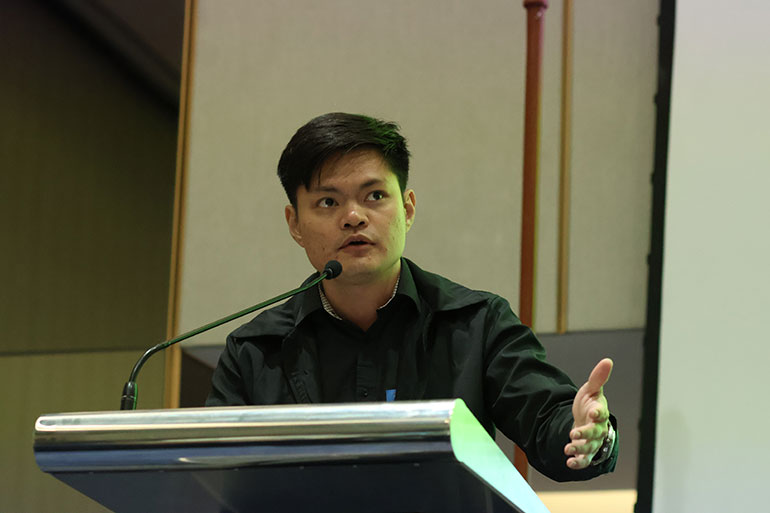
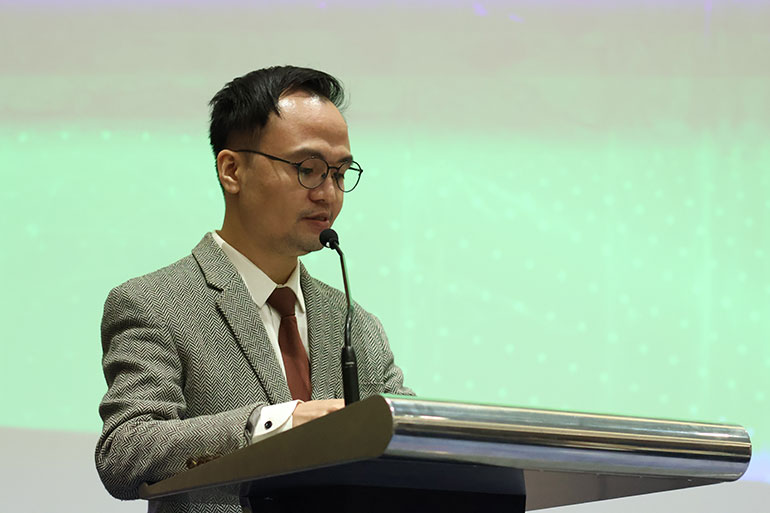
“The Philippines is the fastest-growing Salesforce market in the region. That’s why we’re investing, and we want to continue to invest,” Srini Tallapragada, president and chief engineering and customer success officer at Salesforce, told reporters during a media roundtable on Monday.
Salesforce’s market growth in the country is driven by the Philippines’ strong economy, young tech-savvy population, and the government’s less restrictive approach to AI technology, Mr. Tallapragada said.
Salesforce is one of the global leaders in integrating artificial intelligence (AI) into customer relationship management (CRM) platforms for enterprise applications.
“The government is very supportive. It’s not overly regulative. The government wants to drive it,” he said. “We also have a lot of local businesses that are leading.”
He added that the Philippines has the right market conditions despite being a nascent adopter of AI.
Meanwhile, Abraham Cuevas, regional vice president and country manager for Salesforce Philippines, said the country’s strong adoption of cloud technology has also contributed to the company’s growth.
Salesforce did not cite its market growth in 2025, but its latest earnings showed that in the Asia Pacific region — which covers Southeast Asian markets including the Philippines — it posted about 13% constant‑currency revenue growth in the quarter ended Jan. 31, up from 11% in the prior quarter. The company said this reflects steady demand for its cloud and CRM offerings across the region.
Growth in Asia Pacific outpaces the Americas, which grew 9%, and matches Europe at 13%.
Following the opening of Salesforce’s Philippine office in November, Mr. Tallapragada said the company is looking to expand its team in the country and work with more businesses, from large enterprises to small and medium-sized companies.
Salesforce is also offering companies a model called Agentic Enterprise, designed to help employees work smarter using AI tools and to make customer interactions more effective.
“What AgentForce does is it takes the raw intelligence of the LLMs (large language models) and puts it to work in an enterprise context,” Mr. Tallapragada said.
Agentic Enterprise includes four layers: Data 360 for context and insights, Customer 360 for workflows and business rules, Agentforce for managing AI agents, and an engagement layer to deliver AI-driven experiences across all customer channels.
Salesforce also mentioned that it will continue coordinating with the government and local businesses to upskill Filipinos in CRM and AI skills.
The company said in a statement last year that it commits to training 12,000 local talents over the next five years. — Edg Adrian A. Eva
This year’s BusinessWorld Insights Stock Market Forum was held last Feb. 23 at Lanson Place Mall of Asia. — Photos by Richard James Mendoza, Jayson John Marinas, and Russell Palma
By Bjorn Biel M. Beltan, Special Features and Content Assistant Editor, Mhicole A. MoralandKrystal Anjela H. Gamboa, Special Features and Content Writers
Economists and financial analysts saw a shock early this year when the Philippine Statistics Authority (PSA) reported on that the fourth-quarter gross domestic product (GDP) for 2025 only expanded by 3%, compared to 5.3% in the fourth quarter of 2024, and the revised 3.9% print in the third quarter of 2025. This pulled the overall economic growth for 2025 down to 4.4% from the government’s 5.5%-6.5% target, and much weaker than the 5.7% growth in 2024.
Most reports attribute the slowdown to the massive corruption scandal last year that continued to weigh on government spending, investments and consumer spending.
Amid this backdrop, alongside the historically torpid growth of the Philippine Stock Exchange (PSE), can there be a case for 2026 becoming a bullish year for Philippine equities?
Answering this question is the theme of BusinessWorld Insights Stock Market Outlook 2026: “The Bull Case for 2026: Value, Yield, and the Governance Dividend.”
The PSE index (PSEi) closed the final trading day of last year down 7.29% from end-2024 levels, hovering stubbornly around the 6,000 mark for much of the fourth quarter. While the broader all-shares index showed pockets of resilience, the benchmark’s decline captured what many participants described as a difficult stretch for local equities: economic headwinds, cautious capital flows, and governance concerns that weighed heavily on investor sentiment.
However, economic managers are targeting 5% to 6% growth this year, and early 2026 trading sessions have shown tentative momentum, with the index pushing past its previous low-6,000 resistance.
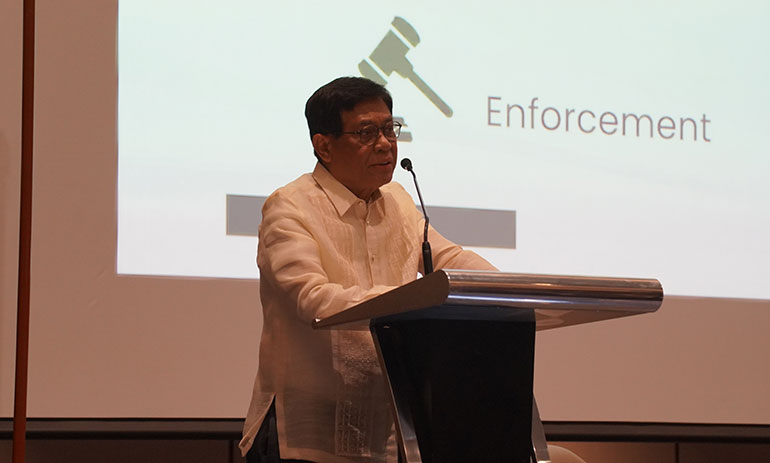
In his keynote address, Philippine Securities and Exchange Commission (SEC)Chairperson Francis Ed. Lim framed the bull case for 2026 as a matter of confidence. While external shocks such as global rate cycles, geopolitical tensions, and commodity volatility remain beyond domestic control, he argued that what regulators can control are the rules that shape investor trust: predictability, transparency, and firm enforcement.
“We cannot control the headlines. What we can control is what capital ultimately prices in: clear rules, predictable timelines, and firm enforcement,” he said.
He outlined reforms at the SEC aimed at making capital markets “easier to access, easier to comply with, and easier to trust.”
These include firm processing timelines for applications, automatic approvals upon lapse of review periods (subject to post-audit), expanded digital incorporation through the OneSEC portal, faster turnaround for public offering registrations, and extended shelf registration validity. Cost reductions were also emphasized, particularly for micro, small, and medium enterprises (MSMEs), through discounted registration and securities filing fees, higher audit thresholds, and simplified compliance requirements.
Philippine Securities and Exchange Commission Chairperson Francis Ed. Lim
Beyond streamlining processes, the SEC has sought to widen capital channels. Mr. Lim highlighted sector-specific capital-raising initiatives (i.e., agriculture, real estate, power, hospitals) and amendments strengthening the real estate investment trust (REIT) framework, including the expansion of eligible infrastructure assets and longer reinvestment periods. Efforts to enhance liquidity, such as improving securities borrowing and lending and expanding repo market participation, were also presented as part of these structural reforms.
All these is to create an accountable, accessible, and robust bedrock in which Philippine companies can build upon with confidence.
“Liquidity, transparency, participation — these are not abstract ideas. They are the engines of sustainable capital formation,” he said.
“The test is not whether markets can rally on good days. The test is whether confidence holds when conditions turn.”
Markets and trust
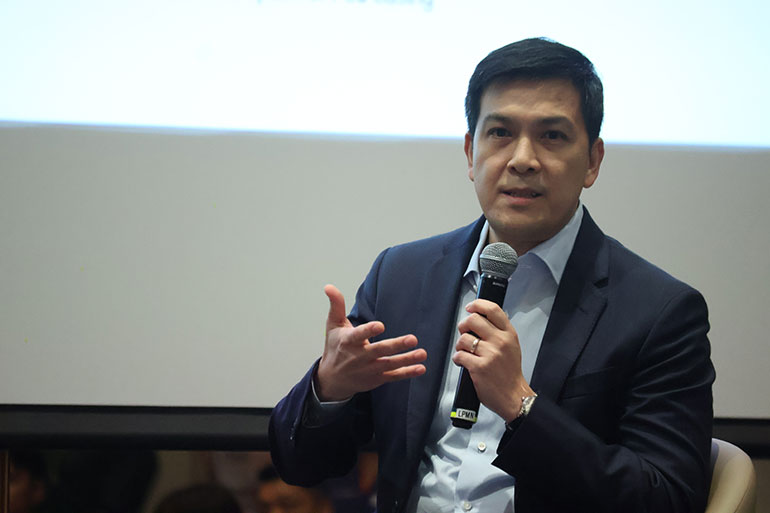
Panel Discussion 1 (from left): Dr. Danie Laurel (host and moderator), Michael Ricafort of Rizal Commercial Banking Corp., April Lynn Lee-Tan of COL Financial Group, and Michael Enriquez of Sun Life Investment Management and Trust Corp.
The first panel moved beyond routine forecasts and into a deeper issue: what ultimately sustains market growth?
Sun Life Investment Management and Trust Corp. President Michael Enriquez pointed to the paradox that has long defined Philippine equities.
“The Philippines has been outperforming the US equity market,” he noted, highlighting recent relative gains. Yet the valuation story remains complicated.
At present, the Philippines trades at a trade discount compared with many global peers. This could appear to be an opportunity. Cheap markets often attract investors seeking undervalued assets.
But discounts are rarely accidental.
“The Philippines is trading at a steep discount and we have recognized that. But it has to be taken relative to earnings potential,” Mr. Enriquez explained.
Even compared with other discounted markets, the Philippines faces stiff competition. As Mr. Enriquez observed, “Like China and Taiwan, they’re also cheap, but their earnings potential is much higher than [the] Philippines. There are other markets competing with [the country], that’s why we need to have a compelling reason to attract investors.”
Investors, whether domestic or foreign, allocate capital based not only on projected returns but also on the reliability of the system in which those returns will be generated. Transparency, regulatory consistency, and institutional accountability are not mere peripheral issues; they are central determinants of whether capital flows in or stays away.
The challenge, then, is more than simple growth. It is conviction.
When bad news signal opportunity
For COL Financial Group’s FVP, Corporate Strategy and Chief Investor Relations Officer April Lynn Lee-Tan, moments of pessimism in the market can paradoxically create opportunities.
“There must be a change in mindset — when everything looks bad, that’s when we should be investing,” she encouraged.
Market cycles often exaggerate sentiment. Fear pushes prices downward, sometimes beyond what fundamentals justify.
In the past, governance reforms were often seen as regulatory obligations. Today, they are increasingly recognized as strategic advantages. Companies that demonstrate transparency and accountability tend to attract more stable investor interest and enjoy stronger reputations in international markets.
Still, Ms. Lee-Tan acknowledged that Philippine equities face a structural problem: growth that is steady but rarely spectacular: “A lot of companies are growing but they’re growing slow. If you look at the index, it hasn’t gone anywhere. But if you look at the constituents, it has gone up a lot.”
Corporate leaders have increasingly adopted global standards in governance, transparency, and sustainability, recognizing that investor expectations have evolved.
In this sense, the private sector is gradually becoming a driver of governance improvements, even when public institutions lag behind.
Corruption as an investment risk
In financial analysis, risk is often quantified in percentages: currency fluctuations, interest-rate movements, or geopolitical shocks. Yet corruption functions as a different kind of risk — less easily measured but equally consequential.
During the forum, the effects of corruption were framed not only as a political concern but also as an economic allocation problem.
When corruption distorts decision-making within institutions, resources are directed toward projects that maximize private gain rather than public value. This misallocation undermines productivity, erodes investor confidence, and ultimately constrains growth.
For investors evaluating emerging markets, governance indicators often weigh as heavily as macroeconomic fundamentals.
As Mr. Enriquez pointed out, “Imagine as a foreign investor looking at the Philippines and [the government] can’t get [their] act with just flood control. Why would I invest in you?” Even strong demographic advantages or natural resources cannot fully compensate for institutional uncertainty.
In global portfolios, the Philippines occupies only a small portion of capital allocation. Investors evaluating emerging markets can choose among dozens of destinations. In such an environment, governance matters.
More importantly, public awareness of governance issues has grown significantly. Conversations about corruption, once confined to political debates, are increasingly taking place within business and financial communities.
Investors, analysts, and corporate leaders now openly acknowledge the importance of institutional integrity in shaping economic outcomes.
The Philippines, like many developing countries, finds itself navigating this tension. In theory, its fundamentals are promising: a young population, expanding digital infrastructure, and integration into regional supply chains. But persistent governance concerns continue to shape how international investors assess the country’s long-term trajectory.
Markets, after all, operate on expectations.
1 of 4
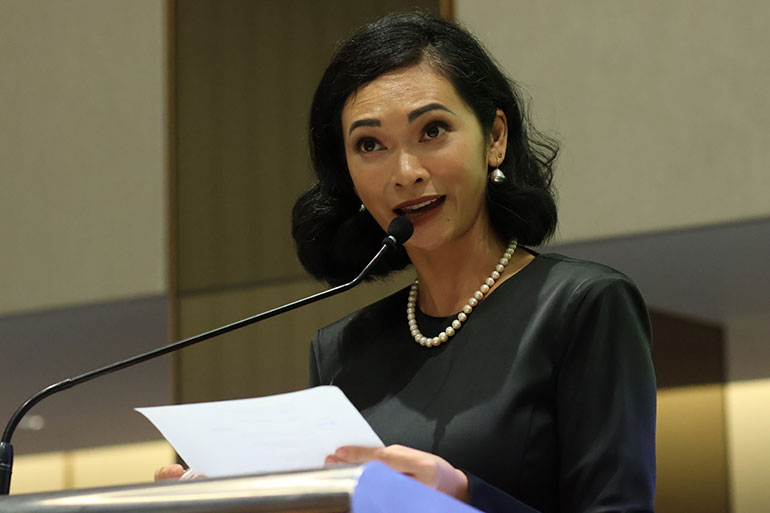
COL Financial Group FVP, Corporate Strategy and Chief Investor Relations Officer April Lynn Lee-Tan
Sun Life Investment Management and Trust Corp. President Michael Enriquez
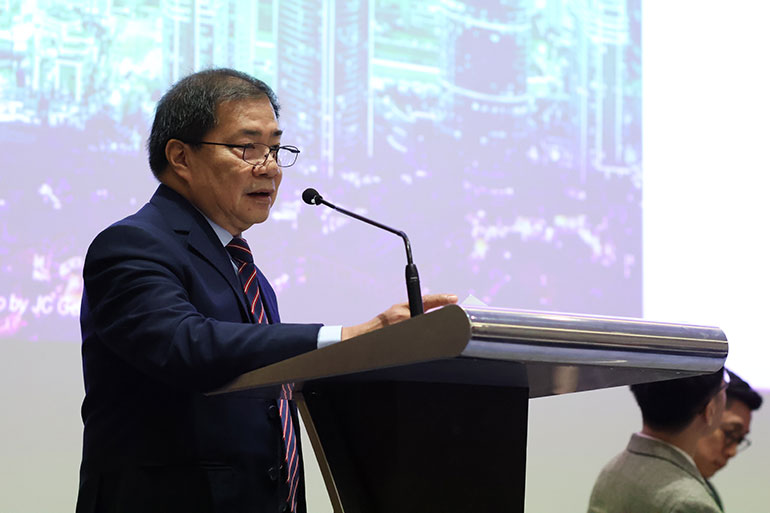
Rizal Commercial Banking Corp. Chief Economist Michael Ricafort
Dr. Danie Laurel hosted the forum and moderated the first panel discussion.
On infrastructure and political resolve
When government spending was discussed, infrastructure was emphasized. Economists have long emphasized infrastructure investment as a key driver of development. Roads, bridges, and transport systems reduce costs and increase productivity.
Yet Rizal Commercial Banking Corp.’s Chief Economist Michael Ricafort offered a much nuanced explanation for recent economic slowdowns.
“What really slowed the economy in the first place is the government underspending on infrastructure because they don’t want to put in effort to prevent corruption from happening,” Mr. Ricafort said.
Large infrastructure programs can stimulate economic activity, but they also carry corruption risks. If oversight mechanisms are weak, funds may be misallocated or delay projects.
With these challenges, governments sometimes choose caution — reducing spending rather than strengthening accountability systems.
Underinvestment in infrastructure can slow economic momentum, particularly in developing economies where connectivity remain significant.
Ultimately, governance reforms depend on political will.
“All reforms related to alleviate corruption [are] anti-corruption measures. It all starts and ends with good governance and timely justice system. Maybe that’s the missing element,” Mr. Ricafort emphasized.
Economic institutions can design frameworks and implement safeguards, but sustained progress requires leadership committed to transparency and accountability. Without that commitment, reforms risk becoming symbolic gestures rather than transformative changes.
Investors understand that the strength of the economy is inseparable from the strength of its institutions. When governance improves, capital flows more freely, innovation accelerates, and growth becomes more inclusive.
Conversely, when corruption persists, even strong economic fundamentals struggle to translate into sustained prosperity.
The future of Philippine markets
The question facing the Philippines today is not whether growth is possible. The country has already demonstrated that it is.
The deeper question is whether growth can be sustained, broadened, and anchored in institutions strong enough to withstand political cycles and economic shocks.
For Philippines, the path forward may require confronting uncomfortable truths about corruption and institutional weaknesses; but it also offers opportunity.
For every reform that strengthens transparency, every policy that improves accountability, and every technological innovation that reduces bureaucratic opacity contributes to a more credible economic system.
And credibility, in the language of markets, is the most valuable asset of all.
If optimism persists among investors, it is not because the challenges are small. It is because the potential remains large; and because the direction of reform, however gradual, still points toward a more accountable and resilient economy.
On REITs as a burgeoning sector
Panel Discussion 2 (from left): BusinessWorld Corporate Editor Arjay L. Balinbin (moderator), John Tristan Guillermo D. Reyes of BDO Securities, Jesus Mariano P. Ocampo of the Investment and Capital Corp. of the Philippines, Japhet O. Tantiangco of Philstocks Financial, and Alessandra Araullo of ATRAM Group
The second panel of the forum examined Philippine REITs within the context of income investing and shifting rate cycles.
Jesus Mariano P. Ocampo, president and chief operating officer of Investment and Capital Corporation of the Philippines, said eight listed REITs have reached a combined market capitalization of more than P430 billion as of mid-February 2026. On a trailing 12-month basis, they posted a weighted average dividend yield of about 6.04%.
The listed trusts cover commercial offices, retail and hospitality properties. Some own the land beneath their assets while others operate under long-term leases. The market also includes energy-focused REITs, one tied to renewable energy and another to traditional energy assets.
Since their initial public offerings (IPOs), several REITs have infused additional properties to raise distributable income and support dividends.
According to Mr. Ocampo, most of the trusts went public when Bangko Sentral ng Pilipinas (BSP) rates were at record lows. When rates rose toward the end of the previous administration and into the current one, REIT prices fell below IPO levels as higher Treasury bill and bond yields drew investors toward safer instruments.
“People will go to the best yield so REITs have to catch up and by that prices have to come down,” he added.
Japhet O. Tantiangco, research manager at Philstocks Financial, presented a study that examined whether interest rates have a statistically significant effect on local REIT prices.
In theory, REIT prices and interest rates move inversely. Higher rates can slow spending, raise capital costs for leveraged trusts and alter investor risk premiums. Those dynamics suggest REIT prices should fall when rates rise.
Mr. Tantiangco’s study used trading data from January 2023 to February 2026, covering 762 observations. The three-month Treasury yield served as a proxy for policy-sensitive rates, and the PSEi represented market confidence.
The findings showed that for most listed REITs, policy-sensitive interest rates did not have a statistically significant effect on price performance in either the short run or the long run. REIT price performance often had an inverse relationship with its own previous-day movement, which Mr. Tantiangco attributed in part to profit taking.
“The general market performance or investor confidence have a statistically significant direct relationship with REIT performance in the short run but not in the long run,” he explained.
Mr. Tantiangco said this suggests other factors, including asset expansion and sector exposure, may carry greater weight.
John Tristan Guillermo D. Reyes, president and director of BDO Securities, pointed to August 2024 as a turning point, when the BSP began cutting policy rates from a peak of 6.5%.
Since then, REITs have outperformed the broader market on a total return basis. Some listed REITs posted double-digit gains, with total returns ranging from the high teens to above 40% for select names.
“Lower discount rates translate to higher valuations and stronger credit conditions, [as it] helps both sponsors and tenants the REIT landscape. The REIT landscape is also evolving after amendments to the REIT law,” he explained.
He added that in an environment of softer growth and subdued inflation, investors tend to favor income visibility and stability.
“In this era of low rates, the opportunity is not just about chasing yield, it’s about identifying which REITs in property segments offer the most durable cash flow, strongest tenant profiles, and best protection against future rate volatility,” said Mr. Reyes.
Alessandra Araullo, chief investment officer of ATRAM Group, said investors must look beyond headline yields.
“Falling rates alone do not automatically make REITs attractive,” Ms. Araullo said.
With the 10-year government bond yielding around 6%, and after a 20% tax translating to roughly 4.8%, she said some REITs offer only a narrow premium after accounting for the 10% tax on dividends.
She added that allocators often look for a spread of about 200 basis points over the 10-year rate before the asset class becomes compelling. A 25-basis-point rate cut alone may cap near-term upside if spreads remain tight.
On the other hand, Ms. Araullo cited uneven property recovery. Prime commercial business district offices and flagship malls show resilience, while offices and some residential segments remain weak.
“At this juncture, it’s really all about selectivity and asset quality, and that’s what’s going to determine an investor’s success in REITs,” she explained.
1 of 5
BDO Securities President and Director John Tristan Guillermo D. Reyes
Investment and Capital Corporation of the Philippines President and Chief Operating Officer Jesus Mariano P. Ocampo
Philstocks Financial Research Manager Japhet O. Tantiangco
ATRAM Group Chief Investment Officer Alessandra Araullo
BusinessWorld Corporate Editor Arjay L. Balinbin
Opening a new chapter in REITs
Recent amendments by the SEC expanded the definition of income-generating real estate assets eligible for REIT inclusion. The revised rules now cover toll roads, data centers, fiber optic networks and ports, including airports and seaports.
Mr. Ocampo said the changes pave the way for infrastructure-themed REITs. Infrastructure assets often have longer concession periods and more predictable revenue streams.
The SEC also extended the period for reinvesting proceeds to two years from one year and allowed greater flexibility in using funds, including debt repayment or acquisition of debt securities tied to real estate or infrastructure projects.
Ms. Araullo said the two-year window gives sponsors more time to deploy capital and may improve the quality of asset infusions.
“Sponsors are not rushed to deploy just for the sake of meeting the deadline. For investors, the combined effect is a larger pipeline of potential REIT assets and better quality injections.”
When asked which property types could see faster adoption, Mr. Tantiangco cited infrastructure linked to telecommunications, noting investor interest in assets connected to artificial intelligence trends.
“Once they are introduced into the market, there could be clamor with respect to the investors, because this is the trend right now. Investors are going to look at where can they can get closest to the global trend,” he explained.
Previously, the sector leaned heavily on commercial and retail property, with limited exposure to other industries. A more diverse lineup, Mr. Tantiangco said, gives investors options aligned with varying risk appetites.
For Mr. Reyes, infrastructure assets with inflation-linked or consumer price index-based tariff adjustments may offer built-in dividend growth.
He also noted that exposure may extend beyond traditional malls and offices to infrastructure and data centers, diversifying revenue streams and supporting dividend growth over the medium to long term.
On whether regulatory changes will immediately drive more listings, Mr. Ocampo said companies may begin preparations this year, but infrastructure assets are expected to face regulatory hurdles.
Mr. Tantiangco said listing decisions also hinge on market confidence and participation. He pointed to fluctuations in total traded value and risk appetite as factors issuers will watch.
“We’ve been seeing a decline in net value turnover in the past days, hoping that we’ll see a reversal. If we really see strong market participation, which signifies that risk appetite is returning in the market, then perhaps we will see more listings with respect to the REITs.”
Meanwhile, Ms. Araullo described the rule changes as structural, adding that the environment for a broader REIT market is taking shape despite short-term sentiment challenges.
“We can expect the fruits of it to show up maybe in the next two to three years,” she said.
Developing a maturing market
Panelists agreed that companies considering conversion or listing must show operational strength. For instance, net operating income should outpace capitalization rate expansion.
According to Mr. Reyes, investors should study the sponsor’s asset pipeline and sector exposure, whether in offices, tourism, energy or infrastructure. The ability to inject quality assets over time supports dividend growth.
Still, Mr. Ocampo warned that asset infusions must be accretive to dividend per share. Dilutive transactions could pressure payouts even if total assets rise.
Macroeconomic conditions, according to Mr. Tantiangco, still influence performance. While his study found no statistically significant link between interest rates and REIT prices in recent periods, fundamentals such as expansion pace and sector resilience play a larger part.
“We still have to look at the general economy. The general economy still has a say on how REITs performed,” he added.
On dividend sustainability, Ms. Araullo listed occupancy trends, rental revisions, payout ratios and debt refinancing risk as key indicators. She also cited same-property net operating income growth and the presence of nonrecurring income that temporarily props up dividends.
“Markets have moved ahead, priced in lower rate environment. I think it’s really the structural changes or the policies to yield better dividends for the asset class,” she explained.
This BusinessWorld Insights forum was presented by BusinessWorld Publishing Corp. and was sponsored by BDO Capital, DigiPlus, SM Investments Corp., and SM Supermalls; with the support of Asian Consulting Group, Asia Society of the Philippines, British Chamber of Commerce of the Philippines, French Chamber of Commerce and Industry Philippines, Management Association of the Philippines, Philippine Chamber of Commerce and Industry, Philippine Franchise Association, Philippine Retailers Association, official venue partner Lanson Place Mall of Asia, Manila, and media partner The Philippine STAR.
Lava flows as seen from the Mayon Volcano observatory in
Ligñon Hill, Legazpi City, Mar. 4, 2026. — DOST-PHIVOLCS FB PAGE
A lava effusion with lava flow and 29 volcanic earthquakes was reported at Mayon Volcano over the past 24 hours, according to the Philippine Institute of Volcanology and Seismology (PHIVOLCS) on Thursday.
Lava effusion with lava flow was reported to have reached up to 3.8 kilometers (km) along the Basud gully and 2.7 km along the Bonga gully, PHIVOLCS, said in its 24-hour monitoring report.
It also reported that lava flow reached 1.3 km along the Mi-isi gully, with minor Strombolian activity, or small lava bursts observed from the crater.
In a separate report, PHIVOLCS said minor Strombolian activity was observed at the volcano at 8:33 pm on Wednesday.
The agency also noted that the volcano’s effusive eruption has continued for the 58th consecutive day, producing glowing lava flows, pyroclastic density currents (PDCs), and rockfalls.
PHIVOLCS reported 246 rockfall events and four PDCs in the past 24 hours.
The volcano also generated 2,458 tons of sulfur dioxide, along with a plume rising 850 meters above the crater, with moderate emissions drifting west-southwest to southwest.
Alert Level 3 remains in effect over the country’s most active volcano.
State volcanologists continue to recommend that the public avoid entering the six-kilometer permanent danger zone due to possible hazards such as rockfalls, lava flows, and PDCs. — Edg Adrian A. Eva
A stall sells assorted varieties of rice inside a market in Quezon City. — PHILIPPINE STAR/MIGUEL DE GUZMAN
Philippine inflation accelerated to a 13-month high in February as prices of rice, fuel and utilities increased, the Philippine Statistics Authority said on Thursday.
The consumer price index rose 2.4% in February from a year earlier, from 2% in January and 2.1% a year ago. It was the quickest since 2.9% in January 2025.
The rate fell within the 2.3%–3.1% forecast of the Bangko Sentral ng Pilipinas and matched the 2.4% median estimate in a BusinessWorld poll of 17 analysts.
Inflation remained within the central bank’s 2%–4% target for a second straight month, bringing the average rate for January and February to 2.2%.
National Statistician Claire Dennis S. Mapa said faster price increases in food and nonalcoholic beverages, housing and utilities and restaurants and accommodation services drove the headline rate higher last month.
Core inflation, which strips out volatile food and fuel prices, edged up to 2.9% in February from 2.8% in January and 2.4% a year earlier. It was the fastest since 3.1% in June 2024.
Inflation for the bottom 30% of income households also accelerated, rising to 2.5% in February from 1.6% in January and 1.5% a year earlier. That marked the quickest pace since November 2024, when it reached 2.9%. — Katherine K. Chan
Smoke rises after reported Iranian missile attacks, following strikes by the United States and Israel against Iran, in Manama, Bahrain, February 28, 2026. — REUTERS/STRINGER TPX IMAGES OF THE DAY
DUBAI/JERUSALEM/ANKARA — The US–Iran war widened sharply on Wednesday after a US submarine sank an Iranian warship off Sri Lanka, killing at least 80 people, and NATO air defenses destroyed an Iranian ballistic missile fired towards Turkey.
The escalation came as the powerful son of Iran’s slain supreme leader emerged as a frontrunner to succeed him, suggesting Tehran was not about to buckle to pressure, five days after the United States and Israel launched a military campaign that has killed hundreds and convulsed global markets.
The missile incident is the first time that Turkey – which borders Iran and has NATO’s second-largest military – has been drawn into the conflict, but US Defense Secretary Pete Hegseth said there was no sense that it would trigger the Atlantic alliance’s collective-defense clause.
In a sign of the conflict’s expanding reach, Mr. Hegseth said the US submarine strike hit an Iranian vessel off Sri Lanka’s southern coast, thousands of kilometers from the Gulf, as fighting paralyzed shipping through the Strait of Hormuz for a fifth day, choking off vital Middle East oil and gas flows.
US President Donald Trump has pledged to provide insurance and naval escorts for ships exporting energy from the region to contain soaring costs, with oil prices still stuck on Wednesday at their highest in more than a year. But at least 200 vessels remain anchored off the coast, according to Reuters estimates.
‘NOT A FAIR FIGHT’
The United States and Israel pressed on with their round-the-clock assaults on Iran, with Mr. Hegseth saying the US was winning the conflict.
“This was never meant to be a fair fight, and it is not a fair fight. We are punching them while they’re down,” Mr. Hegseth, sounding supremely confident, said at a briefing at the Pentagon. “We can sustain this fight easily for as long as we need to.”
By contrast, Iran is firing fewer missiles, signalling its military capabilities are greatly diminished, said Dan Caine, the chairman of the US Joint Chiefs of Staff.
Reflecting that, the Israeli military said it was easing public safety instructions across Israel on Thursday through Saturday, allowing businesses to open as long as they were at a close enough distance to shelters and other protected areas while keeping schools closed.
The Israeli military said its aircraft had struck a compound in eastern Tehran housing all Iran’s security bodies, including the Republican Guard, intelligence, cyber warfare, and internal police in charge of cracking down on protests.
Israel also told residents to leave a swathe of southern Lebanon on Wednesday as it presses its assault on the Iran-backed group Hezbollah, which has again dragged Lebanon into conflict by firing drones and rockets into Israel on Monday.
A fall in global markets turned into a rout in Asia, including a record-breaking crash in Seoul, as some investors were unconvinced by Mr. Trump’s assurances he would quickly reopen the world’s most important shipping corridor.
European markets later stabilized and turned higher after two days of sharp losses, while US stocks closed up on Wednesday, on hopes that the war might end soon. Some traders said the improved sentiment followed a New York Times report that Iranian intelligence had reached out to the CIA early in the war about a path towards ending it.
A source from the Iranian intelligence ministry rejected the article as “absolute lies and psychological warfare in the midst of war”, Iran’s semi-official news agency Tasnim reported.
MOJTABA KHAMENEI NOT IN TEHRAN WHEN FATHER KILLED
As new explosions rang out in Tehran, plans were in doubt for a funeral for the elder Ayatollah Ali Khamenei, 86, killed by Israeli forces on Saturday in the first assassination of a nation’s top ruler by an airstrike.
The body had been expected to lie in state in a vast Tehran mosque from Wednesday evening, but Iran announced that three days of farewell ceremonies had been indefinitely postponed and no funeral date has been announced.
Two Iranian sources, speaking on condition of anonymity, told Reuters that Mojtaba Khamenei, son of Iran’s slain supreme leader, was not in Tehran when his father was killed.
Iran said the Assembly of Experts that will select the new leader would announce its decision soon, only the second time it will have done so since the Islamic Republic’s founding in 1979.
Assembly member Ayatollah Ahmad Khatami told state TV the candidates had already been identified but did not name them.
Israel said it would hunt down whoever was chosen.
Other candidates for supreme leader include Hassan Khomeini, grandson of the Islamic Republic’s founder and a champion of the reformist faction sidelined in recent decades.
The favourite, however, appears to be Mojtaba Khamenei, who has amassed power as a senior figure in the security forces and the vast business empire they control, the Iranian sources said. Choosing him would signal that hardliners remain in charge.
Some Iranians have openly celebrated the death of the supreme leader, whose security forces killed thousands of anti-government demonstrators only weeks ago in the biggest domestic unrest since the era of the revolution.
But Iranians angry with the government said there was unlikely to be much sign of protest while bombs are falling.
“We have nowhere to go to protect ourselves from strikes, how can we protest?” Farah, 45, said by phone from Tehran, adding the security forces “are everywhere. They will kill us. I hate this regime, but first I have to think about the safety of my two children.”
US SUBMARINE SINKS IRANIAN SHIP
US Central Command said in a statement it had “struck or sunk to the bottom of the ocean” more than 20 Iranian ships, including the warship sunk off Sri Lanka in the first such action by a US submarine since World War Two.
A Sri Lankan official identified the boat as the frigate IRIS Dena, saying it had been heading back to Iran from eastern India. Local authorities said 32 people had been rescued while 87 bodies had been recovered. About 60 sailors were unaccounted for from the estimated 180-strong crew.
“An American submarine sunk an Iranian warship that thought it was safe in international waters,” said Mr. Hegseth, the US defense secretary. “Instead, it was sunk by a torpedo. Quiet death.”
Despite voicing misgivings about the war on Iran, some European nations found themselves drawn militarily into the Middle East to safeguard their citizens and strategic interests.
Britain and France said they would use naval and air forces to help defend against Iranian retaliation. Greece has also moved aircraft and warships to nearby Cyprus. — Reuters
Daniel Vorcaro in 2024.—WIKIMEDIA COMMONS/MARCIO GUSTAVO VASCONCELOS
BRASILIA — Brazilian businessman Daniel Vorcaro, the owner of lender Banco Master, was detained on Wednesday in the latest phase of a probe after a judge cited a “strong indication” that Mr. Vorcaro attempted to bribe a former central bank director with gifts in return for preferential treatment.
The police operation dragged the Brazilian monetary authority into the center of a growing multibillion-dollar scandal.
Mr. Vorcaro was first arrested in November as part of a probe into the alleged issuance of fraudulent credit securities by Master, but was later released and ordered to wear an electronic ankle monitor.
The new detention was based on fresh evidence obtained by federal police, according to a Supreme Court ruling on Tuesday, including text messages from Mr. Vorcaro suggesting plans to assault a journalist.
The court also issued arrest warrants for Paulo Sergio Neves de Souza, former central bank supervision director, who was ordered to wear an ankle monitor, and Belline Santana, former head of the banking supervision department. Both Mr. Neves de Souza and Mr. Santana worked at the central bank until stepping down this year during an internal investigation.
On Wednesday, Brazil’s central bank said an internal review of Banco Master’s processes showed evidence that two employees, who it did not name, received improper advantages and were suspended. It added that it reported the suspected criminal activity to federal police.
Mr. Vorcaro’s lawyers said they denied the allegations, and they expected to demonstrate “the regularity of his conduct.”
Reuters could not immediately reach Mr. Neves de Souza, Mr. Santana, or their lawyers.
‘CRIMINAL ORGANIZATION’ Master, which held under 1% of Brazil’s banking assets, was liquidated in November due to what the central bank called a severe liquidity crisis, sharp financial deterioration and serious rule violations.
The liquidation came on the same day police launched the operation that led to Mr. Vorcaro’s initial arrest.
Federal police in a statement on Wednesday said the new set of raids was aimed at investigating threats, corruption, money laundering and the “invasion of computer systems carried out by a criminal organization.”
INFORMAL CENTRAL BANK CONSULTANCY According to the court ruling, Mr. Neves de Souza and Mr. Santana advised Mr. Vorcaro while serving at the central bank, giving him suggestions on how to act in a meeting with the institution’s president and reviewing documents that the lender planned to submit to the central bank.
Judge Andre Mendonca pointed to a “strong indication” that Mr. Vorcaro aimed to unduly influence Mr. Neves de Souza through gifts. He noted the businessman suggested providing travel guides for a trip to Orlando, Florida, including to Disney and Universal theme parks.
As the central bank’s supervision director from 2017 to 2023, Mr. Neves de Souza oversaw the institutions making up the national financial system and monitoring their stability.
‘BREAK ALL HIS TEETH’ The ruling also said Mr. Vorcaro allegedly hired a man, identified as Luiz Phillipi Mourao, to coordinate a group running surveillance, gathering information, and monitoring people whom he saw as adversaries.
Police said Mr. Mourao tried to commit suicide on Wednesday while in custody.
Reuters could not immediately reach a representative for Mr. Mourao.
Some text messages obtained during the probe showed Mr. Vorcaro telling the associate he would like to have a journalist beaten up. “Break all his teeth, in a robbery,” he said.
The court ruling redacted the journalist’s name, but newspaper O Globo reported the messages referred to its prominent columnist Lauro Jardim.
O Globo said it “vehemently repudiates the criminal initiatives planned against Jardim.”
Mr. Vorcaro said through his press office that he never intended to intimidate or threaten journalists, and that the messages were taken out of context. — Reuters
Launch of the 14th Gawad Kaligtasan at Kalusugan (GKK). — ALMIRA S. MARTINEZ
The Occupational Safety and Health Center (OSHC) said on Wednesday that it expects over 100 applications for the workplace safety and health awards, as more companies and agencies value workers’ wellbeing.
“Last time we were almost a hundred in terms of initial application, so I think we would be beating that for the 14th Gawad Kaligtasan at Kalusugan (GKK),” OSHC Executive Director Jose Maria S. Batino told BusinessWorld in an interview.
The GKK is an award by the Department of Labor and Employment (DoLE) to both the public and private sectors that exhibited “outstanding achievements” in terms of the safety and health of workers, workplaces, and their communities.
Government agencies, private establishments, microenterprises, informal sectors, and individuals from different industries can submit their applications to participate in the awards.
“We enjoin all sectors to join, that’s why our award system would be established on a sector-based,” Mr. Batino said, citing mining, services, construction, and manufacturing among the industries with the most applicants.
“There were more than 80 enterprises from the private sector that actually applied to the Gawad Kaligtasan last time and about 20 from the public sector but I’m not sure about the figures,” he added.
Compared to the previous awardings, this year’s GKK also aims to recognize the occupational safety and health (OSH) excellence of different sectors amidst changes in work modalities and digitalization.
“We’ve noticed some companies are applying AI (artificial intelligence), they are applying their systems to ensure that they get to monitor and implement effective safe tenant programs,” Mr. Batino said.
“We’re transitioning with respect to transformative forces like climate change, digitalization, artificial intelligence, and working arrangements,” he added.
Data from the World Economic Forum revealed that 92 million roles or 25% growth in digital jobs are expected by 2030.
As more jobs shift to digital, Mr. Batino said it is timely to recognize the adjustments made to ensure the safety of remote workers and their work setups.
“Many companies have established means of ensuring that even their personnel who are on alternative work arrangements are also given the necessary monitoring and the necessary interventions,” he said.
“The regulations now require that if there are companies and they have people who are on alternative work arrangements, they are required to include as part of their OSH programs that they submit to DoLE the aspect of looking into the safety and health of these subject or concerned employees,” he added.
Regional GKK awarding, scheduled from September to October, grants up to P30,000 to winners. Meanwhile, the national awarding, scheduled in December, grants awardees up to P100,000. — Almira Louise S. Martinez
MANILA — The Philippine government said on Wednesday it had apprehended some of its citizens on suspicion of spying for China in a “serious national security matter” that underscores the need for stricter laws against espionage and foreign interference.
Authorities did not provide details about the case, including how many people had been apprehended or whether charges had been filed.
“The operations of these individuals acting on the behest of Chinese intelligence have been addressed and terminated,” the National Security Council said in a statement.
“Necessary actions have been taken against the individuals concerned, all Filipino nationals, who have all confessed their complicity in espionage activities and are cooperating with authorities,” the statement added.
Relations between the Philippines and China have grown increasingly fraught amid repeated confrontations in the South China Sea, with both sides also engaging in an intensifying war of words that has played out on social media.
PAID FOR INFO ON SOUTH CHINA SEA At least three Filipino nationals were involved, according to two security sources, who declined to be named due to the sensitivity of the matter.
Reuters spoke with the three accused last month under an agreement with security sources on condition that their identities were not revealed.
One of the accused said he was initially approached by a Filipina acquaintance when he was a junior staffer at the Department of National Defense with an offer to write opinion articles in return for pay.
That later expanded to providing information related to the South China Sea and the defense ministry’s bilateral engagement with Philippine allies including the United States, he said.
He did not immediately realize he was working for Chinese interests and only became suspicious later, but it was hard to stop as he needed the money, he said, adding that he did this work between 2023 and 2025.
OVERHAUL OF LAWS SOUGHT Last year, Philippine authorities arrested at least a dozen Chinese nationals on suspicion of espionage, accusing them of illegally obtaining sensitive information on military camps and critical infrastructure that could undermine Manila’s national security and defense.
China also arrested three Filipinos last year, accusing them of spying.
China has dismissed the espionage allegations as fabricated and politically motivated, accusing Manila of “stigmatization”.
Philippine lawmakers from both the ruling party and the opposition are seeking to overhaul decades-old espionage laws that would expand their traditionally wartime focus to cover peacetime and cyber-enabled threats.
That would widen the definition of spying to include data breaches and other tech-driven intrusions. Lawmakers are also pushing for a new foreign interference law to address covert influence by external actors.
“When passed into law, these measures would expand the investigative powers of government, allow the prevention and disruption of hostile networks, and protect our sensitive information and critical infrastructure,” the council said.
“We assure the public that safeguards are in place and working, and our security agencies remain proactive and vigilant, leading to the success of Philippine counter-intelligence operations,” it added.
China has expansive territorial claims in the South China Sea that overlap with the exclusive economic zones of Brunei, Indonesia, Malaysia, the Philippines, and Vietnam. In 2016, an international arbitral tribunal ruled that China’s claims have no basis under international law. Beijing does not recognize that ruling. — Reuters
By Erika Mae P. Sinaking, Reporter and Justine Irish D. Tabile, Senior Reporter
THE GOVERNMENT is preparing measures to protect remittance flows and cushion the domestic impact of escalating tensions between Israel and Iran, the presidential palace said on Wednesday, as President Ferdinand R. Marcos, Jr. ordered agencies to safeguard overseas Filipinos and monitor risks to fuel prices and financial markets.
The President is closely tracking developments in the Middle East, particularly their potential effect on overseas Filipino workers (OFW) and remittances, a critical source of foreign exchange for the Philippines, it added.
“President Marcos wants to ensure that Filipinos, both here and abroad, are protected while we brace for market movements caused by the conflict,” Palace Press Officer Clarissa A. Castro told a news briefing.
The heightened alert follows a series of emergency high-level meetings at the palace, including a special Cabinet session convened to address the geopolitical instability.
Central to the administration’s strategy is mitigating inflationary pressures triggered by volatile global crude prices, which threaten the purchasing power of Filipino families dependent on remittances.
Economic managers are weighing interventions to shield the domestic economy from “energy shocks.” Among the most significant is a proposal for the President to seek emergency powers from Congress to reduce or suspend excise taxes on petroleum products.
“One of the options for President Marcos is to talk to the Senate and House leadership to be granted the power to reduce the excise tax on petroleum products as an emergency measure only,” Ms. Castro said.
Under the proposal, this authority would be temporary and triggered by specific price thresholds. While the Tax Reform for Acceleration and Inclusionlaw includes certain suspension mechanisms, the palace said these are insufficient for the crisis, prompting the need for an urgent measure.
The Department of Budget and Management said there are undisbursed appropriations and contingent funds worth over P15 billion that could be tapped for fuel subsidies.
“Continuing appropriations from 2025 can still be used until the end of 2026,” Budget Undersecretary Goddes Hope O. Libiran told BusinessWorld via Viber.
She said the Department of Transportation has P2.5 billion in unspent funds from last year. The Department of Agriculture – Office of the Secretary has P25 million remaining for farmers, while the Bureau of Fisheries and Aquatic Resources also has P25 million for fisherfolk.
SIXTH-MOST VULNERABLE “If additional support is needed, there’s also the P13-billion contingent fund under the 2026 General Appropriations Act,” she added.
The Philippines ranks as the sixth-most vulnerable country globally to rising oil shocks amid Middle East tensions, according to Fitch Solutions unit BMI.
As a net oil importer with a sizable current account deficit, the country faces heightened economic risks from fluctuating energy prices. Only Egypt, Poland, Turkiye, India and China are more exposed.
Rickinder Chima, BMI director and global economist, noted during a webinar that economies heavily reliant on energy imports like the Philippines could experience domestic energy shortages if the Strait of Hormuz were to be closed.
The findings highlight the urgent need for energy and fiscal measures.
The palace assured the public that the country’s oil supply is sufficient to last 50 to 60 days. Should global crude prices hit $80 per barrel, authorities are prepared to release fuel subsidies specifically targeting transport, agriculture and fisheries.
Beyond fiscal measures, the government is exploring structural changes to the workweek to conserve energy. Proposals include a four-day workweek and expanded work-from-home (WFH) arrangements.
“The President may study that suggestion, especially if the ongoing Israel-Iran issue becomes more severe,” Ms. Castro said.
‘NO WAGE CUTS’ Labor groups expressed conditional support for these plans, emphasizing that any transition must safeguard workers’ rights.
“This must be worker-centered — no wage cuts, no unpaid overtime, no compulsion, with clear occupational safety and health standards, especially for WFH,” Federation of Free Workers (FFW) President Jose Sonny G. Matula told BusinessWorld via Viber.
The FFW is ready to support the government’s energy-conservation push if flexible work arrangements are implemented through dialogue and protect labor standards.
The group called for a tripartite meeting with the government, employers and labor representatives to design safeguards, including wage protection, limits on working hours, voluntary participation, data privacy, occupational safety, the right to disconnect and support for workers unable to work from home.
Analysts said the conflict poses direct risks to the safety and livelihoods of 1 million to 2.5 million OFWs in the Middle East, potentially disrupting workplaces, delaying salaries or prompting repatriation that could dent remittance flows.
“Some OFWs may repatriate voluntarily, and those who remain may face income insecurities,” Benjamin B. Velasco, an assistant professor at the University of the Philippines Diliman School of Labor and Industrial Relations, told BusinessWorld in a Facebook Messenger chat.
“Even if remittances hold, higher global oil prices will reduce the purchasing power of OFW families here,” he added.
Reducing excise taxes could help temper oil prices and curb inflation but may lower government revenues. Mr. Velasco said the government could consider borrowing to fund short-term welfare support for low-income households.
Labor proposals such as a four-day workweek with one work-from-home day are acceptable if they respect worker rights. “These policy proposals are welcome as adaptations to the escalating war,” he said.
Mr. Matula cited the risks from employment disruptions overseas, remittance instability and oil price shocks.
Remittances fund food, transport, tuition, rent and healthcare for millions. If the conflict persists, he said, remittance growth could slow, while higher global oil prices would drive up transport, electricity and food costs.
With 64% of domestic transport reliant on imported fuel, purchasing power would erode further.
Economists said targeted subsidies would be more manageable than universal programs. John Paolo R. Rivera, a senior research fellow at the Philippine Institute for Development Studies, said limited support for transport and agriculture would reduce strain on the budget, unlike broad subsidies that could widen the deficit.
Asian Development Bank economist James P. Villafuerte recommended cash or income support for vulnerable households, saying blanket fuel subsidies often benefit wealthier families and do not encourage energy conservation.
He added that the government could also reprioritize projects, improve budget efficiency or borrow for short-term relief if needed.
Michael L. Ricafort, chief economist at Rizal Commercial Banking Corp., said the government’s emerging response mirrors measures during prior flare-ups, including the June 2025 Iran-Israel retaliatory attacks and the October 2023 Israel-Hamas conflict.
Authorities are expected to roll out subsidies, targeted assistance and legally mandated mechanisms to cushion vulnerable sectors such as transport operators, fisherfolk, farmers and low-income households.
Beyond short-term relief, he stressed conservation and structural reforms. “Conservation measures for oil and energy, alongside a shift to renewable sources — solar, wind, geothermal, hydroelectric — and more electric and hybrid vehicles, will reduce dependence on imported energy,” he said, noting that sustained investment in energy diversification will strengthen resilience against recurring geopolitical shocks. — with Katherine K. Chan
PHILIPPINE economic growth may land at the bottom of the government’s 5% to 6% goal this year as investment slowly recovers from last year’s flood control scandal, UBS Investment Bank Global Research said.
“Growth is near its trough, and we expect quarterly sequential momentum to strengthen to 1.4% over the next two quarters, and GDP (gross domestic product) growth to be 5% in 2026,” it said in a note on Wednesday.
That would top last year’s 4.4% growth, which was weighed down by a corruption scandal that hit investments, household spending and government outlays.
It would also mark a return to the government’s target after three consecutive years of misses. UBS expects public investment to rebound early this year before normalizing toward yearend.
“In our revised forecasts, we assume a gradual and backloaded recovery in public investment, starting with a small uptick in the first quarter of 2026, with spending returning to second-quarter 2025 levels by the fourth quarter of 2026,” it added.
Gross capital formation, the investment component of GDP, fell 2.1% last year after a 10.9% drop in the fourth quarter, the biggest in more than four years.
Economic managers said corruption allegations from last year’s flood mess undermined business and investor confidence.
Across Southeast Asia, UBS expects the six major economies — Indonesia, Malaysia, the Philippines, Singapore, Thailand and Vietnam — to expand by about 4.9% this year.
“The region continues to benefit from deep integration into global manufacturing value chains, supported by a sizable domestic market,” Grace Lim, senior ASEAN (Association of Southeast Asian Nations) and Asia economist at UBS Investment Bank Global Research, said in a statement.
“Conditions for growth remain in place, with household consumption driving momentum in Indonesia, an increase in private investment under way in Thailand and the Philippines, and resilient tech related export strengths in Singapore and Malaysia,” she added.
Remittances, a key source of foreign inflows, could help cushion the economy, but analysts warn that global shocks may pose risks.
The Middle East war is likely to weigh on growth, according to Metropolitan Bank & Trust Co. (Metrobank) Chief Economist Nicholas Antonio T. Mapa.
“For the economy, we’ll likely brace for weaker growth,” he said in a note. “Inflation is expected to breach the target and the central bank’s easing cycle is over.”
The peso-dollar rate is pressured higher as a bloated oil bill means more demand for dollars, he added.
The war could prompt the Bangko Sentral ng Pilipinas to hike rates, ending a nearly two-year easing cycle.
“The war in the Middle East likely means inflation will breach the target, growth will stay at 4% and the next [central bank] move is a hike and not a cut in 2026,” the Metrobank economist separately said in a post on social media platform X.
The Monetary Board last month cut the reverse repurchase rate by 25 basis points (bps) to 4.25%, the lowest since August 2022, trimming key rates by 225 bps since easing began in August 2024.
Singapore-based DBS Bank warned the Philippines might see the highest regional price pressures from oil.
“Amongst the ASEAN-6 countries, the net oil trade balance is most adverse in Thailand, Malaysia and Vietnam (as a percentage of GDP), with the pass-through to price pressures most material in Thailand and the Philippines,” DBS Senior Economist for Eurozone, India and Indonesia Radhika Rao and Senior Economist for ASEAN Chua Han Teng said in a note.
The Department of Energy has warned that oil price increases in the local market would continue as the Middle East war could last weeks.
Since January, pump prices have increased by P6.70 a liter for gasoline, P9.40 for diesel and P7.70 for kerosene.
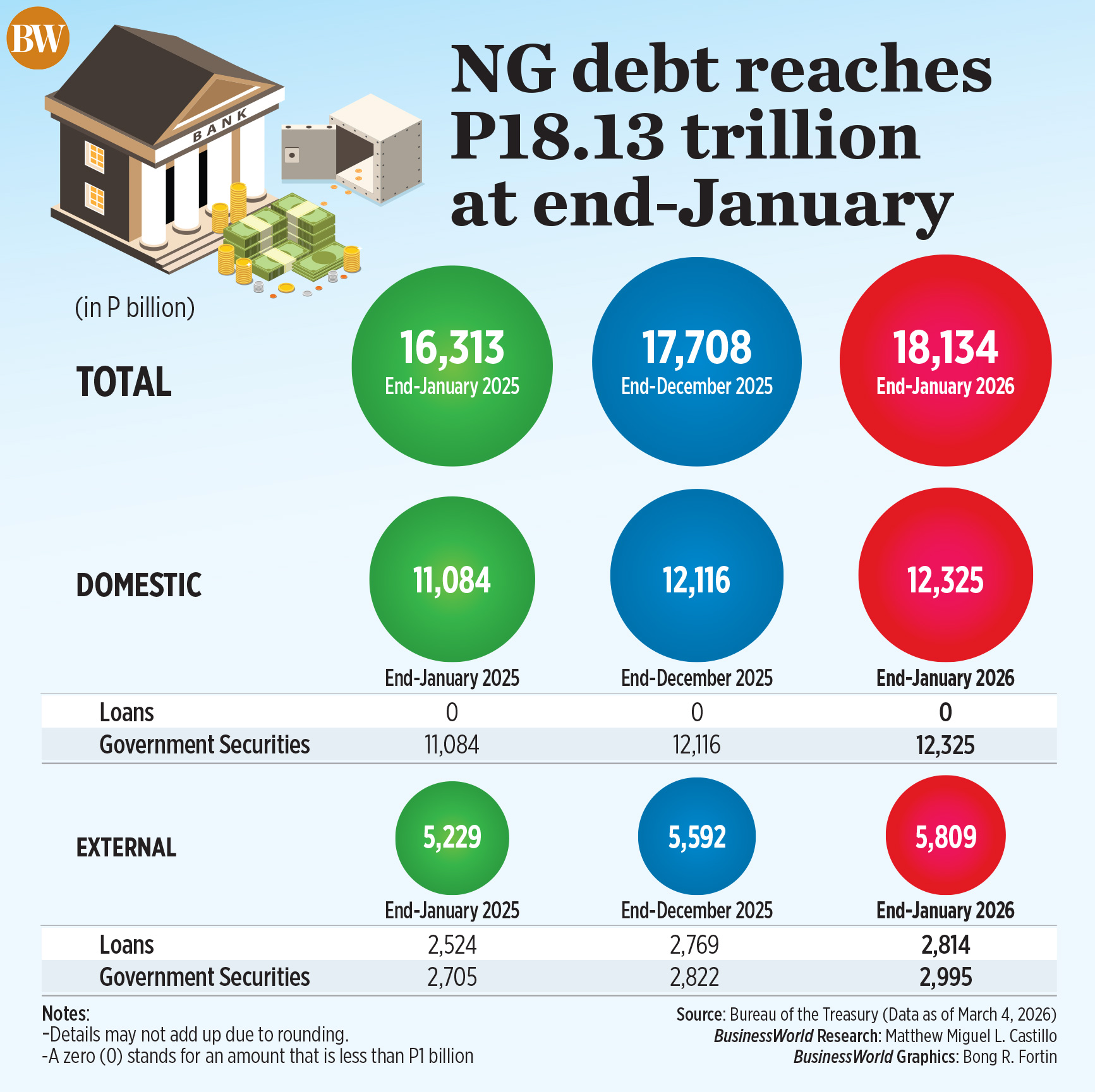
THE PHILIPPINES’ outstanding National Government (NG) debt rose to P18.13 trillion at the end of January, as the state accelerated borrowing at the start of the year to lock in funding ahead of global market volatility.
The debt stock increased by 2.41% or P426.15 billion from P17.71 trillion at end-December, according to data released by the Bureau of the Treasury (BTr) on Wednesday. Year on year, obligations jumped 11.16%.
Despite the surge, the Treasury said the country’s debt portfolio remains stable and within the Marcos administration’s P19.06-trillion projection for the year.
“This level remains sustainable amid pressing challenges in the domestic and global landscape,” the BTr said in a statement.
The month-on-month increase reflected the government’s strategy of frontloading domestic and external debt to secure concessional financing terms before global uncertainties potentially drive up interest costs. The approach gives the government flexibility in managing borrowing requirements for the rest of the year.
National Government debt refers to obligations owed to creditors, including international financial institutions, development partners, banks and global bondholders.
Domestic borrowings continued to account for the bulk of the debt stock. At end-January, 68% of the total outstanding debt was obtained locally, underscoring the government’s preference for peso-denominated funding to limit foreign-exchange risks.
Domestic debt rose 1.72% to P12.32 trillion from a month earlier. Compared with January last year, domestic obligations increased 11.19%. The Treasury attributed the monthly rise to the net issuance of government securities worth P208.05 billion.
“The net incurrence of government securities… reflects the NG’s commitment to prioritize domestic sources of funding,” the BTr said, noting that this strategy provides stable investment instruments for local investors while reducing exposure to exchange rate swings. Domestic debt remains within the P13.28-trillion full-year projection.
External debt climbed 3.89% to P5.81 trillion from December, slightly exceeding the P5.78-trillion program. Year on year, foreign obligations rose 11.1%.
The Treasury said P191.02 billion of the P217.63-billion monthly increase came from the issuance of global bonds and net availments of official development assistance from multilateral and bilateral partners.
The peso’s depreciation against major currencies added P26.61 billion through upward revaluation of foreign currency-denominated debt.
Foreign obligations consist mainly of P3 trillion in global bonds and P2.81 trillion in loans. External debt securities include dollar, euro, Islamic, yen and peso-denominated global bonds.
The Treasury said earlier global bond issuances highlighted sustained investor confidence in the country’s credit standing and long-term growth prospects.
Meanwhile, National Government-guaranteed obligations inched up 0.15% or P510 million to P345.08 billion at end-January, largely due to currency valuation adjustments on foreign currency guarantees. On an annual basis, guaranteed debt declined 0.34%.
Michael L. Ricafort, chief economist at Rizal Commercial Banking Corp., said the debt stock would have been higher if not for slower disbursements, particularly for infrastructure projects since late 2025. He added that lower interest rates could help temper debt service costs, though foreign exchange movements remain a key risk as these can inflate the peso value of external liabilities.
Reyes Tacandong & Co. Senior Adviser Jonathan L. Ravelas said the P18-trillion level might sound alarming, but the more significant risks stem from weaker economic growth or higher borrowing costs.
“For now, Philippine debt remains manageable because growth is holding up and debt servicing is still affordable,” he said in a Viber message.
He added that debt is likely to continue rising in the coming months due to infrastructure spending and refinancing needs, but fiscal discipline would be crucial.
The government should “borrow wisely, spend on growth and strengthen revenues” to keep debt sustainable, Mr. Ravelas said.
THE Bangko Sentral ng Pilipinas (BSP) wants to require banks to enforce server-side biometric authentication to verify users and secure customer-initiated transactions amid rising financial fraud risks.
In a draft circular, the central bank said the system would cover high-risk transactions and major account changes in digital financial applications.
The move aligns with a circular issued last year under the Anti-Financial Account Scamming Act, which requires BSP-supervised institutions to deploy robust fraud management and customer authentication systems.
These measures include automated real-time monitoring, transaction velocity checks, geolocation tracking and blacklist screening to flag disputed, suspicious or fraudulent transactions.
“Server-side biometric authentication is considered a strong and acceptable authentication mechanism for high-risk transactions and critical account changes in electronic financial applications, provided that the risks associated with its implementation are adequately addressed and sound practices or minimum control requirements are adopted,” according to a copy of the draft circular.
The BSP added that adopting biometric authentication would factor into evaluations of whether banks maintain adequate risk management systems and could influence liability under the law.
Once implemented, institutions are expected to phase out interceptable methods like one-time pins (OTP) via text or e-mail, though OTPs may still verify a registered mobile number linked to transactions.
The draft also orders banks to secure all collected, stored and processed data, implement robust authentication controls, and ensure human oversight of flagged cases to strengthen audit and compliance.
The central bank noted that while server-side biometrics enhance verification, they introduce heightened security, operational and privacy risks.
“BSP-supervised financial institutions remain responsible for ensuring that their authentication frameworks are commensurate with their risk profile,” it said.
It added that they could still use stronger or equivalent authentication methods and follow existing security rules to protect customers from scams and digital fraud.
Under previous guidance, lenders were given until June 25 to upgrade fraud management systems and six months to revise risk management frameworks.
The regulation targets banks with complex electronic products handling high transaction volumes, specifically those averaging at least P75 million in monthly online transactions over six months.
Central bank officials confirmed earlier this year that the deadline remains firm despite requests from several banks for extensions. — Katherine K. Chan