Home Blog Page 2106

UAE’s Masdar to invest $15B in RE projects in PHL

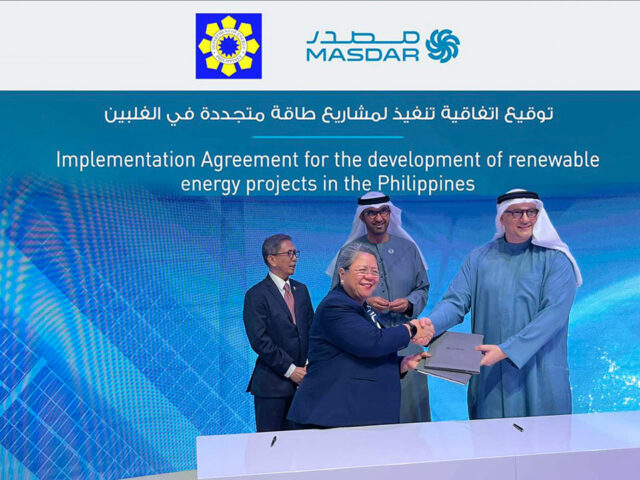
The Department of Energy (DoE) signed an implementation agreement with Masdar during Abu Dhabi Sustainability Week on Jan. 15. In the photo are Energy Undersecretary Rowena Cristina L. Guevara and Masdar Chief Executive Officer (CEO) Mohamed Jameel Al Ramahi. In the background are Energy Secretary Raphael P.M. Lotilla and United Arab Emirates Minister of Industry and Advanced Technology and Chairman of Masdar Sultan Al Jaber.

By Sheldeen Joy Talavera, Reporter

MASDAR, a state-owned renewable energy firm in the United Arab Emirates (UAE), is planning to invest around $15 billion (approximately P878 billion) in renewable energy (RE) projects in the Philippines.

The Department of Energy (DoE) on Wednesday signed an implementation agreement with Masdar to develop up to one gigawatt (GW) of solar, wind, and battery energy storage systems (BESS) in the country by 2030, with the goal of scaling this up to 10 GW within a decade.

The agreement was signed by Energy Undersecretary Rowena Cristina L. Guevara and Masdar Chief Executive Officer Mohamed Jameel Al Ramahi during Abu Dhabi Sustainability Week.

Also present were Energy Secretary Raphael P.M. Lotilla and UAE Minister of Industry and Advanced Technology and Masdar Chairman Sultan Al Jaber.

The deal operationalizes the memorandum of understanding (MoU) on energy transition cooperation signed between the Philippines and the UAE last November.

“Beyond enhancing energy security and reducing reliance on fossil fuels, this collaboration will deliver significant economic benefits to the country, creating opportunities for job generation, drive technology transfer, and empowering the local workforce with advanced skills in clean energy development,” Mr. Lotilla said in a statement on Thursday.

“Together, we are positioning the Philippines as a regional leader in sustainable energy,” he added.

Under the agreement, the DoE said it will assist Masdar in conducting pre-development activities, technical studies, securing the necessary rights, gathering project information, and obtaining all required approvals and permits. The agency will also facilitate Masdar’s applications for investment incentives and tax exemptions.

Masdar, on the other hand, will spearhead project development, overseeing commercial, technical, financial, and environmental workstreams.

“By leveraging UAE’s world-class expertise in renewable energy and the Philippines’ abundant natural resources, this agreement will create jobs, drive low-carbon socioeconomic progress and expand global renewable energy capacity in line with the UAE Consensus,” Mr. Al Jaber said.

UAE, known as a major exporter of oil and gas, plans to generate most of its electricity from renewable energy by 2050, according to the UAE Ministry of Economy.

Meanwhile, Masdar boasts a combined capacity of more than 31.5 GW from developed projects in more than 40 countries, based on its website.

The company has developed Southeast Asia’s largest floating solar facility in Indonesia which has a capacity of 145 megawatts (MW), powering 50,000 homes, the DoE said. It also made an investment in Pertamina Geothermal Energy in February 2023.

Additionally, it inked a landmark agreement with the Malaysian Investment Development Authority in 2023 for the development of 10 GW of clean energy projects across the country.

Mr. Al Ramahi said that the company’s entry in the Philippine renewable energy market marks its significant expansion in Southeast Asia.

“With our proven success in implementing large-scale renewable energy projects in the region and worldwide, we look forward to utilizing our expertise and experience to support the Philippines in meeting its ambitious energy goals,” he said.

The Philippines aims to increase the share of renewable energy in the power generation mix to 35% by 2030 and 50% by 2040.

The DoE is set to hold the third round of green energy auction in February. It is set to offer 300 MW of impounding hydro, 4,250 MW of pumped storage hydro and 100 MW of geothermal energy.

A new round of green energy auctions, which will combine renewable energy technologies with energy storage systems, as well as offshore wind projects, will be launched in the latter part of 2025.

Asked to comment, Juan Paolo E. Colet, managing director at China Bank Capital Corp., said that Masdar’s entry “signals high confidence in our country’s economic prospects and renewable energy future.”

“They are a well-known name in the global renewable energy industry, so having them here boosts the profile of the Philippines as an investment destination. Their aim to scale up to 10 GW will be a massive boost to domestic clean energy supply and has the potential to lower electricity costs,” Mr. Colet said in a Viber message.

Terry L. Ridon, a public investment analyst and convenor of think tank InfraWatch PH, said that the company is expected to follow regulatory processes in the Philippines.

“This is just an MoU at best, and we expect Masdar to deliver on this general commitment by undertaking further regulatory processes, such as joining competitive selection processes with various distribution utilities and electric cooperatives around the country,” he said in a Viber message.

Philippine financial system resources up 8.8% at end-November

REUTERS

By Luisa Maria Jacinta C. Jocson, Reporter

THE TOTAL RESOURCES of the Philippine financial system rose by 8.8% year on year as of end-November, preliminary data from the Bangko Sentral ng Pilipinas (BSP) showed.

BSP data showed the resources of banks and nonbank financial institutions (NBFIs) jumped to P33.08 trillion as of end-November from P30.39 trillion in the same period in 2023.

Month on month, total resources inched up by 0.9% from P32.8 trillion at end-October.

Financial system resources include funds and assets such as deposits, capital, as well as bonds or debt securities.

Data from the BSP showed banks’ resources stood at P27.55 trillion at end-November, higher by 9.6% from P25.15 trillion in the previous year.

Resources of universal and commercial banks increased by 9.4% to P25.79 trillion at end-November from P23.56 trillion in the year prior. Big banks accounted for the bulk or 78% of total resources during the period.

Thrift banks’ resources amounted to P1.15 trillion as of November, up by 7.1% from P1.07 trillion in the previous year.

Total resources held by digital banks stood at P119.5 billion as of end-November, jumping by 40% from P85.4 billion in the previous year. The BSP began consolidating data from digital banks starting March 2023.

Rural and cooperative banks’ resources climbed by 17% to P498.3 billion at end-November from P425.8 billion from the prior year.

Meanwhile, latest data showed that nonbanks’ resources went up by 5.3% to P5.52 trillion as of end-June from P5.25 trillion in the year-ago period. There were no data as of end-November.

Nonbanks include investment houses, finance companies, security dealers, pawnshops and lending companies.

Institutions such as nonstock savings and loan associations, credit card companies, private insurance firms, the Social Security System and the Government Service Insurance System are also considered nonbank financial institutions.

John Paolo R. Rivera, a senior research fellow at the Philippine Institute for Development Studies said the growth in total resources reflects the “overall resilience and expansion of both banks and NBFIs.”

“The robust economic activity across key sectors fueled higher financial transactions and demand for credit,” he said in a Viber message.

“Banks and NBFIs also benefited from increased loan demand, particularly for housing, consumer, and corporate sectors,” he added.

Separate data from the BSP showed outstanding loans of universal and commercial banks rose by 11.1% year on year to P12.68 trillion in November.

This was the fastest loan growth in nearly two years or since the 13.7% logged in December 2022.

Oikonomia Advisory & Research, Inc. economist Reinielle Matt Erece said the rise in total resources was also due to the inflows of short-term foreign investments.

In the January-to-November period, BSP-registered foreign investments yielded a net inflow of $2.59 billion, a turnaround from the $43.66-million net outflow in the same period a year ago.

“Increased business activity supports deposit growth, lending, and investments, which are reflected in the financial system’s resources,” Mr. Rivera said.

The reduction in interest rates also encouraged borrowing and led to an expansion in assets, Mr. Rivera said.

“Further, the improvement of the financial resources is also a realization of the effects of lower key interest rates and expectations of further rate cuts, which also increases the demand for money, prompting banks to raise capital to accommodate this demand,” Mr. Erece added.

The BSP has lowered borrowing costs by a total of 75 basis points (bps) since it began its easing cycle in August, bringing the benchmark rate to 5.75%.

“Elevated liquidity in the financial system, driven by accommodative monetary policy (RRR reductions and rate cuts in 2024), allowed financial institutions to grow their asset base,” Mr. Rivera said.

The BSP slashed big lenders’ reserve requirement ratio (RRR) by 250 bps to 7% from 9.5%, effective in October.

Mr. Rivera said the rise in digital banking services also led to increased resources in the financial system.

“The acceleration of digital banking and financial services expanded access to previously underserved segments, bringing in new depositors and borrowers. This growth likely contributed to the rise in total financial resources.”

The Monetary Board lifted the moratorium on new digital banking licenses starting Jan. 1, 2025.

PHL-EU free trade deal seen to bring economic ties to new level

A European Union flag is seen in Stockholm, Sweden, July 17, 2023. — REUTERS

TRADE AND INVESTMENTS between the Philippines and the European Union (EU) are still lower than the level of mutual ambitions and could be improved through a free trade agreement (FTA), the EU ambassador to the Philippines said.

“Trade and investment figures for the whole of 2024 have not yet been published, but we can already say that our bilateral exchanges are not at the level of our mutual ambitions. They are good, but they are not yet at the right level,” European Union Ambassador to the Philippines Massimo Santoro said at the 9th Joint Economic Briefing on Wednesday.

“While the EU remains, and it is good, the fourth-largest trading partner of the Philippines with a share of 11% of Philippine exports and 6% of imports, the Philippines is only the sixth economic partner of the EU amongst the ASEAN (Association of Southeast Asian Nations) countries,” he added.

Mr. Santoro said there is potential for bilateral trade and investments to grow further and that can be achieved through an FTA, citing that the target is to see a yearly increase.

“We can do more, considering the potential and the size of the Philippine market and the resources of the country. Thus, the objective of our FTA is to bring our bilateral economic ties to a new level,” he said.

“Through the FTA, we aim to facilitate not only merchandise trade but also trade in services and to create more incentives for investment. We believe that an FTA can serve as a catalyst for economic growth, benefiting businesses, workers, and consumers on both sides,” he added.

Last year, the EU and the Philippines formally resumed FTA negotiations seven years after talks were stalled due to the trade bloc’s concern over human rights violations under the previous administration.

The first round of negotiations took place in October in Brussels, Belgium, while the second round will be from Feb. 10 to Feb. 14 in Manila.

“These discussions started with a very positive momentum, and I am confident this very positive momentum will be kept in order for us, for both sides — the EU and the Philippines — to deliver well and deliver fast,” said Mr. Santoro.

He said the FTA is a priority since it will boost trade and economic bilateral ties between the EU and the Philippines.

For the second round of FTA talks, Mr. Santoro said both sides will continue working on the chapter that has been discussed in the previous round, as well as discuss other chapters. He declined to give other details.

“I am completely confident that the second round will be as productive as the first one, which means a lot,” he added.

President Ferdinand R. Marcos, Jr. is aiming to conclude the negotiations for the EU-Philippines FTA by 2027.  Philippine negotiators have set an internal target of concluding the negotiations by 2026.

DTI Undersecretary Allan B. Gepty earlier said that there is a need to conclude the FTA negotiations as early as 2026, as the Philippines is set to lose its preferential market access to the trade bloc once it hits upper middle-income status.

The Philippines participates in the EU’s Generalised Scheme of Preferences Plus (GSP+), a special incentive arrangement for low- and lower-middle-income countries. It grants the country zero duties on 6,274 locally made products.

Meanwhile, the Philippines is aiming to become an upper-middle-income economy this year and a predominantly middle-class society by 2040. — Justine Irish D. Tabile

DoubleDragon eyes P10-B retail bond offering in Q1

BW FILE PHOTO

SIA AND CAKTIONG-LED DoubleDragon Corp. (DD) said it plans to issue up to P10 billion worth of retail bonds in the first quarter to bolster the company’s cash position and balance sheet.

The issuance will comprise a P5-billion base offer and a P5-billion oversubscription option, DoubleDragon said in a regulatory filing on Thursday.

DoubleDragon said the issuance will be the company’s sole peso retail bond offering for the year. It will be priced at 7.77% per annum and will have a seven-year tenor.

The planned P10-billion bond issuance will be the second tranche of DoubleDragon’s P30-billion shelf-registered retail bonds program, with the third and final tranche planned for issuance by next year.

DD said the proposed issuance received the highest PRS Aaa rating with a stable outlook from the Philippine Rating Services Corp.

The PRS Aaa rating is given to issuances with marginal credit risk, while a stable outlook means that the rating is likely to be retained or remain unchanged in the next twelve months.

“The pipeline capital-raising issuances at this stage of DD’s growth are intended to further increase its cash position and further strengthen its balance sheet — all in line with DD’s goal to become a Tier-1 mature company by this year, 2025,” DD said.

“The DD New Year Triple-7 retail bond offering carries the number 7 in triplet, as in 777, which is believed by many to signify the multiplication of good luck,” it added.

In addition to the proposed bond issuance, DoubleDragon said the upcoming Nasdaq listing of its subsidiary Hotel101 Global Pte. Ltd. and the planned industrial real estate investment trust (REIT) public listing of its subsidiary CentralHub are expected to boost the company’s balance sheet.

DD previously said the planned initial public offering of industrial warehouse unit CentralHub could push through by the latter half of 2025 amid easing interest rates.

In November, DD said it ended the offer period for its P10-billion fixed-rate peso retail bond issuance two days earlier than planned due to high investor demand.

It was priced at 8% per annum and was the first tranche of the company’s P30-billion multi-year retail bond issuance.

DD shares rose by 1.21% or 12 centavos to P10 apiece on Thursday. — Revin Mikhael D. Ochave

Alternergy secures P1-B loan for Bataan solar project

ALTERNERGY Holdings Corp., through its unit Solana Solar Alpha, Inc., has secured a P1-billion loan from Rizal Commercial Banking Corp. (RCBC) to fund the construction of its 28-megawatt-peak (MWp) Balsik Solar Power Project in Hermosa, Bataan.

“We have signed the omnibus loan and security agreement for our Balsik Solar Power Project,” Alternergy President Gerry P. Magbanua said in a statement on Thursday.

“The financing from RCBC further advances the ongoing construction of the Balsik Solar Power Project as we aim to complete it by early in the second half of this year,” he added.

The company said that the solar project’s total cost is P1.374 billion.

RCBC Capital Corp. acted as the lead arranger for the transaction. Picazo Buyco Tan Fider and Santos (Picazo Law) were tapped as the lender’s counsel, while Tantoco Villanueva & De Guzman Law Offices (Tavidell) acted as the borrower’s counsel. AFRY Philippines, Inc. served as the lender’s technical advisor, and Marsh Philippines, Inc. served as the lender’s insurance advisor.

Over the past ten years, RCBC has provided a total of P3.65 billion in financing to Alternergy.

Last year, the two companies entered into another financing agreement for P5.33 billion for Alternergy’s 64-MW Alabat Wind Power Project, which is subject to financial close.

RCBC provided project financing to Alternergy’s 54-MW Pililla Wind Power Project in 2014, the 12-MWp Kirahon Solar Power Project in 2015, and its portfolio of commercial rooftop solar projects in 2018.

Alternergy is targeting to develop up to 500 MW of additional wind, solar, and run-of-river hydro projects.

At the local bourse on Thursday, shares in the company climbed by 8.18% to close at P1.19 apiece. — Sheldeen Joy Talavera

DMCI Power says 2024 energy sales volume up 9%

PHILSTAR FILE PHOTO

OFFGRID energy generator DMCI Power Corp. (DPC) reported energy sales of 491.2 gigawatt-hours (GWh) for 2024, a 9% increase from the previous year, driven by higher demand.

The growth was also driven by the full operations of its 15-megawatt (MW) Palawan thermal power plant, which began supplying power to the province in August 2023, the company said in a statement on Thursday.

“2024 was a breakthrough year for DMCI Power as we achieved record-high energy sales and ensured reliable operations across all our plants,” said DPC President Antonino E. Gatdula, Jr.

The company said that it aims to expand its installed capacity by 27% with 43 MW of projects under development. Within this pipeline is the 12 MW Semirara Wind Project, the company’s first renewable energy venture.

Scheduled to start commercial operations in early 2025, the P600-million project is expected to generate 32 million kilowatt-hours per year, according to Christopher Thomas C. Gotianun, chief business development officer of Semirara Mining and Power Corp., a sister company of DPC.

The wind project is intended to provide renewable energy to support mining operations on Semirara Island.

“DMCI Power will be the one owning the asset and supplying power to Semirara,” Mr. Gotianun said. “That should do two things: DMCI Power will get revenue, and Semirara will save on diesel costs.”

Among the company’s additional projects are an 8-MW bunker power plant in Aborlan, Palawan, scheduled for completion in the first quarter of 2025, and another 8-MW bunker power plant in Masbate, set to be operational by the second quarter.

“DMCI Power remains committed to meeting the growing energy needs of off-grid areas. We were recently awarded contracts to supply 2 MW in Antique and an additional 15 MW in Palawan,” Mr. Gatdula said.

“Our ongoing and upcoming projects aim to deliver reliable and efficient energy solutions that support national progress.”

Established in 2006, DMCI Power primarily focuses on providing energy to off-grid small and remote islands.

The company has 159.8 MW of installed capacity and operates thermal, bunker, and diesel power plants in Masbate, Oriental Mindoro, and Palawan. — Sheldeen Joy Talavera

ABS-CBN, Meralco’s MPower renew retail supply deal

PHILIPPINE STAR/ MIGUEL DE GUZMAN

MPOWER, the local retail electricity supplier of Manila Electric Co. (Meralco), has entered into a retail supply agreement with ABS-CBN Corp. to support the power needs of the media company’s operations.

“Our renewed partnership with ABS-CBN reflects our constant dedication to delivering retail excellence and driving growth across diverse business industries,” Redel M. Domingo, Meralco’s first vice-president and MPower’s head, said in a statement on Thursday.

Under the Competitive Retail Electricity Market (CREM), qualified power customers consuming at least 500 kilowatts are allowed to choose their energy supplier based on their specific requirements.

ABS-CBN has been part of MPower’s customer base since the retail electricity supplier started its services in June 2013.

“Working with MPower ensures that ABS-CBN has stable power to support its mission of delivering quality public service and entertainment content across various media platforms in the service of the Filipino,” said Grant Orbeta, head of ABS-CBN’s Real Estate and Development Group.

MPower serves contestable customers, including top corporations within Meralco’s franchise area. The company has more than a 25% share of the CREM within Meralco’s franchise area.

Meralco’s controlling stakeholder, Beacon Electric Asset Holdings, Inc., is partly owned by PLDT Inc.

Hastings Holdings, Inc., a unit of PLDT Beneficial Trust Fund subsidiary MediaQuest Holdings, Inc., has an interest in BusinessWorld through the Philippine Star Group, which it controls. — Sheldeen Joy Talavera

DBP raises P11 billion from dual-tenor bond offer

THE DEVELOPMENT Bank of the Philippines (DBP) has raised P11 billion from its offering of dual-tenor fixed rate notes.

The bank’s offering of fixed rate Series 6A and 6B bonds was oversubscribed by five-and-a-half times compared to the initial P2-billion program, it said in a statement on Thursday.

The Series 6A bonds, which have a tenor of 1.5 years, were priced at 6.0503% per annum, while the Series 6B papers, which mature in three years, carry an annual interest rate of 6.1294%.

This marked the first time that the state-run bank issued dual-tenor bonds, DBP said

The issuance forms part of DBP’s efforts to diversify its funding sources to boost lending, it added.

“This latest bond issuance is a testament to the trust and confidence of the market in DBP as a government financial institution and allows the bank to expand its funding sources even as it ramps up its lending activities in support of the Marcos administration’s economic agenda,” DBP President and Chief Executive Officer Michael O. de Jesus said.

“The bank is committed to offer tailored solutions to meet the diverse needs of its investors while also supporting its critical development goals,”  Mr. De Jesus said.

The bond issuance represents the sixth tranche of DBP’s P150-billion bond program, which is meant to finance loans to clients and support its operating activities.

The papers were enrolled and traded through the Philippine Dealing & Exchange Corp.

DBP’s net income declined by 8.95% year on year to P4.68 billion in the first nine months of 2024 amid lower foreign exchange gains.

The Finance department is pushing for amendments to the charter of DBP to increase its capitalization, allow for its public listing and streamline the bond issuance process.

The Senate bill seeking to amend the DBP’s charter was approved on final reading in September, while the House version is currently up for second reading.

Under the measure, the bank’s authorized capital stock will be raised to P300 billion from P35 billion.

The capital hike will allow DBP to increase its assistance to its priority sectors, including social infrastructure and micro, small, and medium enterprises.

Mr. De Jesus last week said DBP will seek regulatory relief this year as it looks to boost its capital position.

DBP and Land Bank of the Philippines (LANDBANK) earlier asked for regulatory relief from the central bank following their contributions to the Maharlika Investment Corp. (MIC).

DBP and LANDBANK were mandated to contribute P25 billion and P50 billion, respectively, as the initial seed capital for the MIC. The state lenders remitted their contributions in September 2023.

In a recent report, the International Monetary Fund (IMF) called for the restoration of capital for the two state banks after their contributions to the Maharlika fund.

The IMF noted the importance of capital restoration and exiting regulatory relief “as soon as possible.” — A.M.C. Sy

Waterfront Manila set for full reopening by Q1 2027

FACEBOOK.COM/WATERFRONTMANILA

THE WATERFRONT MANILA Hotel & Casino complex in Manila is expected to be fully reopened by the first quarter of 2027 after facing construction delays, its listed operator Acesite (Phils.) Hotel Corp. said.

The property’s reopening will happen in three phases, Acesite said in a regulatory filing on Thursday.

“The final phase, targeted for the first quarter of 2027, will complete the remaining hotel rooms and general amenities, marking the full reopening of the property,” Acesite said.

According to Acesite, the first phase is slated for the first quarter of 2026. This phase consists of the soft opening and completion of the podium, which includes public areas such as the lobby, select food and beverage outlets, and the casino.

The second phase of the opening will occur by the late third quarter of 2026. It comprises the introduction of additional guest amenities and facilities.

In March 2018, a fire occurred at the hotel-casino complex, resulting in five fatalities and injuring 20 others.

Acesite said the hotel reopening faced construction delays due to issues during redevelopment and reconstruction.

“These challenges include technical difficulties, adjustments to the project scope to enhance facilities, and logistical hurdles such as sourcing specialized materials and equipment,” Acesite said.

“Many of these issues surfaced during the construction process due to the decision to retain the original structure and shell of the building, which is over 50 years old, as a cost-saving measure,” it added.

Acesite said it also needed to address structural reinforcements and adapt to the existing foundation’s condition.

“During construction, damaged tendons were discovered, requiring replacement and additional reinforcement. Concerns over slab vibrations also led to the replacement of certain slabs,” Acesite said.

“Controlled demolition was meticulously executed to prevent any impact on adjacent structural elements, highlighting the complexity and precision required for the reconstruction,” it added.

Acesite is engaged in the hotel operations business. In 2004, Waterfront Philippines, Inc. established its ownership and majority control over Acesite.

Waterfront Manila is part of the Waterfront chain of hotel facilities, which has a presence in Cebu City, Mactan Island, and Davao City.

Acesite shares fell by 0.6% or one centavo to P1.65 per share on Thursday. — Revin Mikhael D. Ochave

Toward a sustainable future: Public-private collaboration for a circular economy

REUTERS

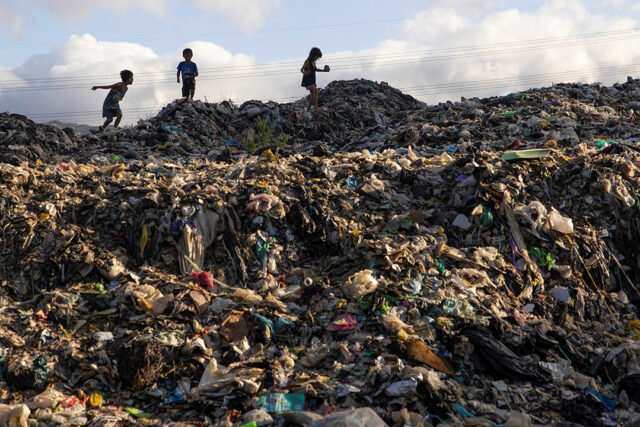
The Philippines faces a growing plastic waste crisis, underscoring the urgent need for massive systemic change. Latest data shows that the country is estimated to produce 60 billion plastic sachets a year, thereby exacerbating environmental degradation and economic losses with reliance on single-use plastics.

However, amidst this bleak scenario and reality, there lies an opportunity worthy of everyone’s support — that of a circular economy where waste is turned into value and different sectors and industries implement collaborative efforts towards charting a more sustainable future — one that helps solve the waste problem in the country. Any initiative to arrest the waste problem involves recognizing that the plastic waste problem is one that cannot be addressed by a single entity alone. There must be an integrated effort among public institutions, private companies, and community stakeholders.

A shining example of a collaborative initiative is what was highlighted during the Philippine National Recycling Conference, co-organized by the Department of Environment and Natural Resources (DENR) and Nestlé Philippines. This landmark event brought to the fore the importance of a robust recycling value chain that manages existing gaps and integrates novel solutions.

THE CASE FOR PPPS
More and more stakeholders are realizing and recognizing that Public-Private Partnerships (PPPs) are not just a convenience, they have become “a must” — in addressing and managing plastic wastes of the country. Kudos to the DENR for pushing for and championing the Extended Producer Responsibility (EPR) Act of 2022, which requires producers to look after their plastic packaging beyond the consumer stage. But the success of this law relies heavily on the private sector, which will have to play more significant and aggressive roles in achieving the gargantuan task of managing the worsening level of garbage in the Philippines.

Commendably, companies such as Nestlé Philippines have started to take the lead by launching recovery and recycling programs and pushing for the EPR law. Their efforts in introducing circular solutions, such as piloting food-grade recycled packaging, show the potential of private enterprise in driving innovation. Nestlé’s initiatives, including multi-sectoral collaborations, highlight how industry leadership can spearhead systemic change.

These contributions, however, should be viewed as a starting point rather than the end. More businesses should join the efforts in helping effect systemic change. We cannot also overemphasize that equally important in solving this problem is the involvement and proactive participation of local government units and civil society. Shared collaboration can cover gaps in terms of implementation of policies, infrastructure, and public information dissemination.

BUILDING A CIRCULAR ECONOMY
Building a circular economy ensures lower waste volumes but some of the major challenges in achieving this include the inadequate recycling infrastructure, limited consumer awareness, and the fragmentation of waste collection systems.

Hence, there is a need for key investments in waste management infrastructure: Material Recovery Facilities (MRFs) and recycling plants must be modernized for flexibility in plastics processing towards the production of food-grade material. Data show that current facilities serve less than 40% of towns, which leave millions of Filipinos without access to effective recycling systems. Experts have argued that the inclusion of waste infrastructure in the government’s flagship projects can help bridge this gap. They said the Philippines can ensure sustained progress in addressing plastic waste by giving priority to circular infrastructure under national economic strategies. This is a challenge for government planners and national budget executives.

EMPOWERING THE INFORMAL SECTOR
A critical component in managing the waste problem in the country is the integration of the so-called informal waste sector into the formal economy. For one, waste pickers, who contribute significantly to recycling rates, often lack stable incomes and protections. When we transition these workers into wage-earning roles, they can enhance their livelihoods while at the same time bolster waste recovery efforts. Crucial in this endeavor are public-private initiatives to ensure fair wages, legal protections, and improved working conditions.

When we institutionalize the role of waste pickers, the Philippines will be able to address two major problems simultaneously: the inefficiency of the current systems of collecting waste and the socio-economic problems of informal workers. Local government units, in collaboration and partnership with private companies and businesses, can create structured waste management programs that encourage flexible packaging recovery. This not only empowers the marginalized but also strengthens the recycling value chain.

POLICY AND INNOVATION AS CATALYSTS
There is also a need for policy interventions that go hand-in-hand with infrastructure development. For example, simplifying bureaucratic processes and providing tax incentives can attract investments in recycling and other waste management technologies. Moreover, encouraging research into sustainable packaging alternatives, such as mono-material or biodegradable options, is becoming more essential in reducing reliance on sachets and other flexible plastics.

Based on provisions of the EPR Act, companies must recover a huge percentage of their plastic footprint. However, due to a lack of awareness and some logistical hurdles, the compliance rate has been quite uneven. To accelerate the move towards a circular future, there is a need to streamline regulatory frameworks, improve data on waste generation, and enforce transparency.

Consequently, any effort to arrest the growing waste problem in the country needs serious consumer engagement. For instance, a public awareness campaign can educate the households, including on segregation and circular economy principles. “No segregation, no collection” community-led actions can be brought about within every household, developing recycling skills at the grassroots level. All these can be complemented and supplement by educational programs at schools aimed at developing environmental responsibility among the young, ensuring that future generation of consumers understand the ill-effects of waste in their daily lives and therefore value the importance of circular economy and sustainability.

INNOVATION AND TECHNOLOGY
Technological innovation is important in attaining circularity. In that respect, investment in chemical recycling facilities can sort the challenge of processing flexible plastics, which are so difficult to recycle currently. These plants will be able to deliver food-grade recycled materials, meaning safety and quality standards will not be compromised.

On the other hand, digital tools can optimize waste collection and processing systems. Some of the technologies include the use of Radio Frequency Identification (RFID) tracking waste flows and AI-powered sorting machines that improve the efficiency of MRFs. The technology will not only increase the ability to operate but also reduce costs in the long term.

SHARED RESPONSIBILITY
All sectors must commit to the journey toward a circular economy. Public institutions must create enabling environments through policy support and funding. The private sector must step up with innovation and investment. Communities must actively participate in recycling and waste management initiatives.

It speaks volumes of the power of private sector leadership that Nestlé Philippines is co-organizing the recycling conference and continuing its efforts on circular solutions. However, this should also be scaled up in terms of industry and regions. This needs to be across all stakeholders: from local governments and NGOs to consumers and multinational corporations.

This shared responsibility extends beyond borders. The Philippines can draw inspiration from global best practices, such as Australia’s initiative to create soft plastic packaging from recycled materials. The country can adapt these models to its local contexts to accelerate the transition to circularity.

THE ROAD AHEAD
Challenges abound, but so do opportunities. Moving towards a circular economy could unlock billions in economic value and significantly reduce the country’s environmental footprint. More importantly, it presents an opportunity to redefine our relationship with resources: sustainability and long-term resilience should be the new norm.

The public-private partnerships will be the bedrock of progress for the country as it begins this process. Trust will be generated, resources shared, and goals harmonized to produce a homogeneous ecosystem that is focused on innovativeness and inclusiveness.

The transformation will not happen overnight, but the foundation is already in place. The Philippine National Recycling Conference has set the stage for meaningful action, providing a roadmap for future initiatives. In moving forward, momentum needs to be maintained with successful programs scaled up and persistent gaps addressed.

This is through the creation of public-private partnerships, infrastructure investment, and community empowerment. Thus, the Philippines can set itself up as a leader in circular solutions. This shared endeavor is not merely for waste management; it is creating a future where economic growth and environmental stewardship walk hand in hand.

A CALL TO ACTION
The time to act is now. As we look forward, let us remember that sustainability is not a solitary effort but a shared responsibility. Together, we can build a waste-free Philippines — one that serves as a beacon of innovation and collaboration for the rest of the world.

Through embracing circular principles and decisive action, the Philippines can turn a crisis over waste management into an opportunity for growth, resilience, and sustainability. The journey ahead will be arduous; yet, with unity and determination, it is worth it.


Dr. Ron F. Jabal, APR, is the CEO of PAGEONE Group (www.pageonegroup.ph) and founder of Advocacy Partners Asia (www.advocacy.ph).

ron.jabal@pageone.ph

rfjabal@gmail.com

US consumer prices post largest gain in 9 months; underlying inflation slows

EDUARDO SOARES-UNSPLASH

WASHINGTON — US consumer prices increased by the most in nine months in December amid higher costs for energy goods, pointing to still-elevated inflation that aligns with the US Federal Reserve’s projections for fewer interest rate cuts this year.

There were, however, some hopeful signs in the fight against inflation, with the report from the Labor department on Wednesday showing a measure of underlying price pressures subsiding after barely budging for four straight months.

That raised prospects of tame monthly readings in the inflation gauges watched by the US central bank for its 2% target, and prompted financial markets to bet on a rate cut in June.

A resilient economy, the threat of broad tariffs on imported goods and mass deportations of undocumented immigrants — actions that are deemed inflationary — have led the Fed to project a shallower rate-cut path this year. President-elect Donald Trump, who will be inaugurated next week, has also pledged tax cuts, which would fuel economic growth.

“There’s still more inflation-fighting work for the Fed to do, which is why it has shifted plans to more slowly reduce the still-restrictive federal funds rate,” said Sal Guatieri, a senior economist at BMO Capital Markets.

“It will stand pat later this month, and may not resume cutting rates until it gets some clarity on the inflation pass-through of the tariffs that could begin rolling out next week.”

The consumer price index (CPI) rose 0.4% last month, the largest gain since March, after climbing 0.3% in November, the Labor department’s Bureau of Labor Statistics said.

A 2.6% jump in the cost of energy products accounted for more than 40% of the increase in the CPI. Energy prices, which had risen 0.2% in November, were boosted by a 4.4% surge in the cost of gasoline.

Consumers also faced higher prices for food, which rose 0.3% after advancing 0.4% in November. Grocery store prices rose 0.3%, driven by increases in the costs of cereals and bakery products, meats, poultry and fish.

Egg prices soared 3.2%, reflecting an avian flu outbreak that has reduced supply. They increased 36.8% year-on-year.

In the 12 months through December, the CPI advanced 2.9%. That was the largest rise since July and followed a 2.7% increase in November. Some of the rise in the annual CPI rate reflected last year’s low readings dropping out of the calculation. Economists polled by Reuters had forecast the CPI gaining 0.3% and rising 2.9% year on year.

Consumer prices increased 2.9% in 2024, slowing from 4.1% in 2023. Progress bringing inflation back to its target recently hit a snag. Consumers’ inflation expectations soared in January, with households concerned that tariffs would raise goods prices.

“Inflation improved meaningfully in 2024, although it did not slow enough to meet the Fed’s target or satisfy consumers weary from the big cumulative price increases of the last few years,” said Bill Adams, chief economist at Comerica Bank.

FED ON HOLD
No rate cut is expected at the Fed’s Jan. 28-29 policy meeting. Financial markets, however, increased bets on a rate reduction in June. The central bank launched its easing cycle in September and has lowered its benchmark overnight interest rate by 100 basis points to the current 4.25%-4.5% range.

The last reduction was in December when policy makers also projected two rate cuts this year instead of the four they had forecast in September. The policy rate was hiked by 5.25 percentage points between March 2022 and July 2023.

Stocks on Wall Street were higher, also cheered by strong bank earnings. The dollar slipped against a basket of currencies. US Treasury yields fell.

Excluding the volatile food and energy components, the CPI increased 0.2% in December. The so-called core CPI had risen 0.3% for four straight months.

Still, some details of the core CPI firmed last month. Owners’ equivalent rent, a measure of the amount homeowners would pay to rent or earn from renting their property, rose 0.3% after advancing 0.2% in November.

Airline fares surged 3.9%. But prices for hotel and motel rooms fell 1.0%. Healthcare costs edged up 0.1% amid marginal rises in the prices for physicians and hospital services.

There were also increases in the costs of motor vehicle insurance, recreation and education. Services prices rose 0.3% for a second consecutive month.

Used cars and trucks’ prices increased 1.2%. Prescription medication prices were unchanged. New motor vehicles cost more as did apparel. Core goods prices edged up 0.1% after climbing 0.3% in November.

In the 12 months through December, the core CPI increased 3.2% after advancing 3.3% in November.

Some of the benign CPI components partially offset firmness in the PPI categories that feed into the core personal consumption expenditures price index, one of the inflation measures monitored by the Fed for monetary policy.

Economists’ estimates for December core inflation ranged from 0.14% to 0.174%. Core inflation edged up 0.1% in November. It was forecast increasing 2.8% year on year for a third straight month in December.

“While we welcomed a modest deceleration in core CPI… the data all points to sticky inflation in both the service sector and in housing,” said Joe Brusuelas, chief economist at RSM. “This is not well aligned with arguments for near-term rate cuts as the aggregate demand driven by consumer spending continues to support economic growth.” — Reuters

Philippines, Finland target labor deal this year

REUTERS

THE Philippines and Finland on Thursday signed a joint declaration of intent to seal a bilateral labor agreement this year.

“Safe, ethical, transparent, and sustainable recruitment will happen and will unfold in the coming weeks and months, so this won’t take long. I’m very optimistic that with our new embassy… there will be deeper ties, and therefore, a bilateral labor agreement will soon follow,” Migrant Workers Secretary Hans Leo J. Cacdac told reporters after the signing ceremony in Mandaluyong City.

In a briefing, he said the partnership aims to strengthen ethical recruitment processes for overseas Filipino workers (OFWs) deploying to Finland.

“This collaboration reflects our collective commitment to advancing the interests of Filipino workers and strengthening our international partnerships,” he added.

The prospective agreement will focus on professionals and skilled workers and the licensing of healthcare professionals to practice in Finland. The two sides also committed to negotiate a  Memorandum of Understanding on the mobility of Filipino specialists and skilled workers.

Finnish Minister of Employment Arto Olavi Satonen, in the same briefing, said Finland is seeking more healthcare professionals as well as services, tourism, agriculture, food and information technology workers.

Finland is also recruiting workers from India, Vietnam, and Brazil.

Mr. Satonen said workers in Finland are earning at least 1,600 euros per month, with the average wage at 3,500 euros.

Finnish Ambassador to the Philippines Saija Nurminen said Finnish employers recognize the need for work-life balance, inclusivity and equal opportunity, making the country an attractive destination for OFWs.

According to the DMW, about 12,770 Filipinos were living and working in Finland in 2023.

The two countries are set to celebrate their 70th year of diplomatic ties this year. — Chloe Mari A. Hufana