Home Blog Page 21

McIlroy brilliance

Rory McIlroy made it look easy. He also made it look hard. And then, just as abruptly, he made it look inevitable once more. For much of the week at the Masters, the narrative seemed preordained. The defending champion opened with rounds of 67 and 65, surging to a six-shot lead, the largest ever at the halfway mark in tournament history. For conventional wisdom, his was a story of control; it was as if the long arc of his career (years of near-misses leading to his eventual breakthrough last year) had finally settled into place.

As McIlroy’s tumultuous love affair with Augusta has shown time and again, however, golf’s premier event has a way of testing conviction. The third round stripped away the illusion of ease. The lead evaporated, swallowed by a 73 and the charge of Cameron Young, who drew level heading into Sunday. And for longtime habitués of the sport, it was a development that had hitherto defined his fraught relationship with the course. By early Sunday, the cracks deepened: a double bogey at the fourth hole, another dropped shot soon after, and suddenly the tournament seemed to tilt away from him.

What followed spoke volumes of McIlroy’s newfound temperament. He steadied himself with calm and precision, piecing together birdies at the seventh and eighth to remain within reach. He then asserted control through Amen Corner, where champions often separate themselves from pretenders. Others faltered in turn. Justin Rose surged, then slipped. Scottie Scheffler mounted a flawless weekend charge, only to come up a stroke short. And by the time he reached the 18th, his task simplified: manage the moment, accept the bogey, and claim the Green Jacket once more.

In doing so, McIlroy joined distinguished company; not since Tiger Woods at the turn of the century had a player won back-to-back titles at Augusta. The victory, his sixth major overall, was as much a coronation as a reaffirmation of a career that has, in recent memory, moved from promise to permanence.

If the Masters revealed anything, to be sure, it is that McIlroy remains decidedly human even at his most complete. “I don’t make it easy,” he conceded, not by way of self-deprecation, but of acknowledgment. The brilliance has always been there; what has evolved is the capacity to endure the times when the light flickers. After all, the Masters does not reward perfection. It demands recovery, insists on recalibration, and, in the end, honors those who persist. Which is to say he did not so much dominate as survive. He got burned and tested, and, in the end, stayed unbroken. Well done.


Anthony L. Cuaycong has been writing Courtside since BusinessWorld introduced a Sports section in 1994. He is a consultant on strategic planning, operations and human resources management, corporate communications, and business development.

China’s export engine stutters as Iran war wipes out AI-driven gains

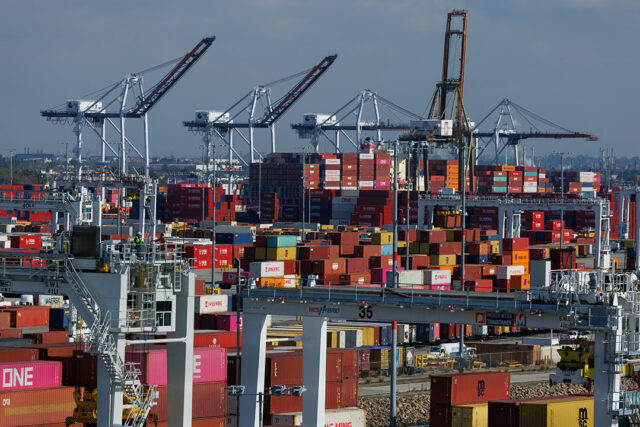
A drone view shows shipping containers from China at the Port of Los Angeles in Wilmington, California, Feb. 4, 2025. — REUTERS

BEIJING — China’s export engine slowed in March as buyers chasing an artificial intelligence (AI)-fueled future ran into the hard reality of war in the Middle East, which has sparked an energy shock and complicated Beijing’s push to keep growth on track.

Outbound shipments from the world’s second-largest economy grew an annual 2.5%, customs data showed on Tuesday, a five-month low, and slowing from a 21.8% gain in the January-February period. They sharply undershot forecasts for 8.3% growth in a Reuters poll.

Imports rose 27.8%, the best performance since November 2021, compared with a 19.8% increase over January and February and forecasts for 11.2% growth.

March marks the first real stress test of whether enthusiasm for artificial intelligence — and the chips and servers it demands — could offset gloom unleashed by the global energy shock after Iran’s closure of the Strait of Hormuz, the strategic waterway for the world’s 20% of oil and gas flows.

Natural gas imports for March dropped an annual 10.7%, the lowest level since October 2022, while crude imports fell 2.8%, with Chinese vessels also getting stuck in the Strait.

China roared into 2026 with outbound shipments far outstripping forecasts, powered by tech exports, raising the prospect it could smash last year’s record $1.2-trillion trade surplus. The Iran war casts doubts about that trajectory.

Even China, long criticized by trading partners for subsidy-backed, cut-price manufacturing, is not insulated from the hit to buyers’ purchasing power as fuel and transport costs rise.

Still, Chinese producers may yet gain ground as buyers seek cheaper options, said Fred Neumann, HSBC’s chief Asia economist. Decades of commodity stockpiling have also helped blunt the impact of raw material shocks on factory gate prices, he said.

China’s exports of refined oil products rose 20.5% month on month, totaling 4.6 million metric tons.

The figures were further muddied by the seasonal effects of a late Lunar New Year national holiday, said Xu Tianchen, senior economist at the Economist Intelligence Unit, during which factories shut as workers down tools to celebrate.

“This explains the decline across the low-value added sectors, textiles, garments, bags, toys, furniture, as they are reliant on migrant workers,” Mr. Xu said.

A high base is also a drag, after Chinese factories rushed shipments a year earlier to beat US President Donald J. Trump’s April 2 “Liberation Day” tariff deadline.

South Korea’s exports to China — a bellwether for Chinese demand — rose 62.4% in March, led by a 151.4% surge in global semiconductor shipments on higher memory prices and robust AI-driven server demand.

March factory activity data out of China showed goods exports continued to support growth, but the war in Iran weighed on sentiment as commodity prices rose sharply, lifting input costs.

China’s trade surplus came in at $51.13 billion in March from $214 billion over January and February.

Mr. Trump is expected to visit China for a meeting with Chinese President Xi Jinping in May, where analysts see scope for deals on farm goods and aircraft parts but little chance of movement on flashpoints like Taiwan. — Reuters

EU agrees on halving of steel imports via doubling of tariffs

REUTERS

BRUSSELS — The European Union (EU) reached a preliminary deal on Monday to nearly halve imports of steel and impose tariffs of 50% on excess shipments to protect the bloc’s steel industry from overproduction elsewhere.

EU steel producers are operating at only 65% capacity due to rising imports and 50% tariffs imposed by US President Donald J. Trump. The new measures are designed to push capacity utilization up to 80%.

Representatives for the European Parliament and the Council, the body representing EU governments, agreed late on Monday to limit tariff-free imports to 18.3 million metric tons per year, a 47% cut compared to 2024, with a doubling of the out-of-quota duties.

Last year, the main sources of steel imports into the EU were Turkey, South Korea, Indonesia, China, India, Ukraine, and Taiwan.

EU steel is currently protected by safeguards, put in place during Mr. Trump’s first term, with import quotas and 25% tariffs above those limits. However, under World Trade Organization rules, they must expire after eight years — on June 30.

The European Commission, which proposed new measures in October, said the EU steel sector has lost some 100,000 jobs since 2008, and output would decline even further without extended restrictions.

The new measures will take more into account where imported steel was originally melted and poured to avoid circumvention and be regularly reviewed to ensure they are effective.

The parties also committed to phaseout imports of steel from Russia swiftly, possibly by September 2028. Some 3.7 million tons of steel slabs came from Russia to the EU last year.

The parliament and council will need to vote on Monday’s agreement for the measures to enter force. — Reuters

US officials underwhelmed by French far-right’s plans for economy

A PROTESTER holds a French national flag as people gather to protest against the French far-right Rassemblement National (National Rally - RN) party, at the Place de la Republique following partial results in the first round of the early 2024 legislative elections, in Paris, France, June 30, 2024. — REUTERS

PARIS — US officials who met leaders of France’s far-right National Rally (RN) were underwhelmed by their economic plans, two diplomatic sources said, in a blow to the party’s efforts to present itself as a credible steward of the euro zone’s No. 2 economy before next year’s election.

The National Rally has become France’s largest parliamentary party — and a potential victor in 2027 — by coupling a hardline stance on immigration with populist pledges to defend jobs and purchasing power. But its longstanding rhetoric around state interventionism and protectionist policies worries French blue-chips and investors.

US Ambassador Charles Kushner and his team have met with most of the likely presidential contenders from across France’s political spectrum, including National Rally party chiefs Marine Le Pen and 30-year-old protege Jordan Bardella.

While they were not particularly swayed by any of the candidates they met, the RN’s views on how to cut a yawning deficit, win US investment and get the economy moving were a concern, the sources said.

Reuters granted the sources anonymity to allow them to speak frankly about private discussions.

Their conclusion echoed concerns among many in France’s business elite about whether the RN has the experience or expertise to steer the highly indebted $3.5-trillion economy back to robust growth and steady the country’s public finances.

The RN did not respond to a request for comment on the US officials’ view. A senior aide to Mr. Bardella said the party was working to develop its economic program, including politically sensitive structural reforms to France’s costly pension system.

A State Department spokesperson declined to comment on “private diplomatic exchanges.”

ELECTION HEADACHE
Doubts over the RN’s economic program may pose an electoral hurdle in France and shape US thinking on whether to vocally support the RN in 2027, when polls suggest it could win.

US President Donald J. Trump’s administration has backed ideological allies in Europe, but with mixed results. A US push to help Hungarian Prime Minister Viktor Orban win re-election backfired when he lost power after 16 years on Sunday.

One of the diplomatic sources said there were no signs RN leaders were seeking US support, and European far-right and populist parties that once cheered Mr. Trump are increasingly wary of being seen as too close.

France’s economy is mired in a morass of feeble growth, high borrowing costs and a debt burden that is one of Europe’s heftiest at 115.6% of gross domestic product.

The RN says its economic priorities include boosting household purchasing power through tax cuts, reducing public spending and France’s EU budget contribution, and restructuring welfare to prioritize French citizens.

But detailed plans have yet to emerge. Critics say the party lacks a coherent economic manifesto.

US officials were concerned by a combination of mixed messaging on the economy, including the RN’s desire for a costly rollback of a 2023 pension reform that raised the retirement age, and unclear plans on how to trim the deficit, the sources said.

They were also irked that the RN voted in favor of a budget amendment doubling to 6% a digital services tax that Washington opposes on the grounds it targets US tech giants, the sources added. The amendment never made it to the final 2026 budget.

RN’S LE PEN MET CEOS
Business leaders earlier this year told Reuters they were confused by the divergent economic currents within the party leadership, with Ms. Le Pen seen as a big-spending populist, and Mr. Bardella seeking to chart a more pro-business path.

That ambiguity initially helped the RN broaden its support but has become a liability as the party seeks to present itself as a credible government-in-waiting, executives say.

Despite making headway with voters, the RN, a party long shunned by France’s political and economic elites, has been struggling to make headway with France Inc.

But in a sign chief executive officers (CEOs) want to understand the party’s economic program as the April 2027 election edges closer, Ms. Le Pen met with the bosses of luxury group LVMH, oil major TotalEnergies, insurer AXA and Renault among others on April 7, two other officials said.

Fund manager François Durvye, whom Mr. Bardella brought on as an economic adviser, helped facilitate the meeting, one official said. The same official summarized the meeting as a heated Q&A session.

The second official, a senior figure in the RN, said the meeting was designed to dispel “the caricatures that are often painted of our program, which is in fact the most pro-growth and pro-business program across the political spectrum.” — Reuters

240 online shops selling fake Super Vulcaseal shut down

Bostik Philippines, the nation’s leading elastomeric sealant manufacturer, has facilitated the closure of at least 240 online stores caught selling counterfeit Super Vulcaseal products.

The crackdown, carried out in coordination with e-commerce platforms, came following reports of unauthorized sellers peddling fake versions of the popular sealant brand.

The operation is part of Bostik’s commitment to consumer safety and brand integrity, ensuring that Filipino DIYers and professionals receive the high-performance quality they have trusted for decades.

“At Bostik Philippines, we take the safety of our consumers seriously just as much as we safeguard our brand. Our goal is to clean up marketplaces, both physical and virtual, of counterfeit products exploiting our brand name,” said Fides Kasman, Director of Market Development at Bostik Philippines.

Counterfeit sealants often fail to meet basic industry standards, leading to chemical instability, poor adhesion, and property damage in the long run.

“In any repair, the quality and authenticity of materials spells the difference between a successful fix and a disastrous do-over,” Kasman said. “Let’s be vigilant against fake sealants using our brand name. Using unverified products not only compromises repairs but can also lead to higher repair costs.”

To make sure they are getting authentic products, Bostik Philippines advised consumers to purchase Super Vulcaseal and other Bostik products only in reputable hardware stores and official flagship stores in e-commerce sites.

Buyers should also note the quality of the product they purchase. Authentic Super Vulcaseal is known for its distinct smell, consistency, and durability. If the product feels unusually runny or fails to set, it may be a fake.

Consumers must also be wary of products that appear cheaper than authentic ones, as counterfeiters often lure buyers with big discounts.

Lastly, they should also check product packaging for red flags, including blurred printing, inconsistent logos, or missing batch numbers and expiration dates.

Bostik proactively monitors online and physical marketplaces to protect its consumers. The company encourages the public to report any suspicious products or listings they encounter.

“This is just one salvo of our ongoing campaign. We are sweeping online platforms to find more sellers listing counterfeit Bostik products. To anyone planning to dupe consumers with fakes, our message is clear: we are hunting you down,” said Kasman.

Information on counterfeit products may be reported via Bostik Philippines’ hotline number (02) 7900-5656 and email address bostiksmartadhesives@bostik.com.


Spotlight is BusinessWorld’s sponsored section that allows advertisers to amplify their brand and connect with BusinessWorld’s audience by publishing their stories on the BusinessWorld Web site. For more information, send an email to online@bworldonline.com.

Join us on Viber at https://bit.ly/3hv6bLA to get more updates and subscribe to BusinessWorld’s titles and get exclusive content through www.bworld-x.com.

Bamboo pellets seen as alternative fuel amid series of price hikes — DOST

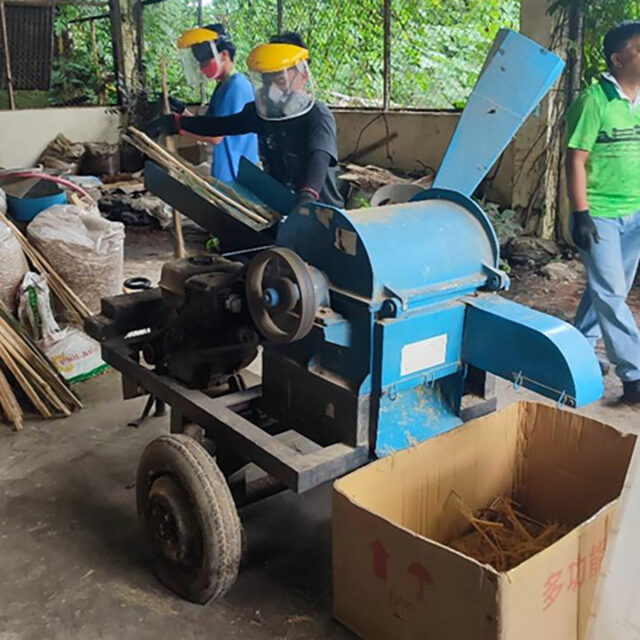
Workers processing bamboo slats to make bamboo pellets. — DOST

Amid volatile gas prices caused by the escalating war in the Middle East, the country can explore an alternative source of combustible fuel made from bamboo to sustainably meet its energy demands, according to the Department of Science and Technology (DOST).

The bamboo pellets, a densified form of bamboo developed by the DOST-Forest Products Research and Development Institute (DOST-FPRDI), are designed for optimum combustion and have various uses.

“In coal-fired power plants, bamboo pellets can be used as a co-firing fuel. For biomass-based industries, they can serve as a supplementary fuel source to conventional materials such as bagasse and rice hull,” Rico J. Cabangon, DOST-FPRDI director, said in a statement.

Bamboo pellets can also be used as an alternative to charcoal for household cooking, which Mr. Cabangon noted is denser and results in a higher heating value compared with conventional charcoal.

By using bamboo, FPRDI said the country is assured of a sustainable and locally sourced fuel supply, as the plant is abundant in the country and fast-growing.

Bamboo pellets are also more energy-efficient than other biomass materials like wood chips. They can generate as much as 12.15 gigajoules or 277 kilowatt-hours for every cubic meter of pellets.

FPRDI also said co-fired bamboo pellets significantly reduced greenhouse gas emissions based on a study, aligning with the country’s climate change mitigation efforts.

They are also lightweight and easy to transport, with a diameter of about 8 to 12 millimeters and a length of 20 to 30 millimeters.

“By turning a fast-growing local resource like bamboo into a fuel alternative, we are helping build a future that is less dependent on finite resources and more grounded in sustainable materials,” Mr. Cabangon said.

Bamboo pellets are made by splitting fresh bamboo into slats and shredding it into chips. It is then sun-dried, ground into fine powder, and compressed into pellets using a pelletizer.

The agency has also developed charcoal briquettes, another alternative combustible fuel, which are made by combining a mix of charcoal fines and binder, then molding them under pressure.

They also burn slowly to provide more intense heat per unit volume while producing no smoke, FPRDI said.

Aside from being a sustainable alternative fuel source, these technologies can be adopted by small businesses and rural communities to engage in biomass fuel production.

“With the right support, communities can establish small-scale pelletizing or briquetting operations to generate income as they participate directly in building a more resilient and localized energy system,” Mr. Cabangon said.

As DOST-FPRDI continues to carry out its mandate, it hopes these technologies can contribute to a more sustainable, affordable, and secure energy future for the country. — Edg Adrian A. Eva

BYD campaign demonstrates electric travel across Philippine archipelago

What makes a nationwide electric road trip possible in the Philippines is not just the vehicle—it’s the system behind it.

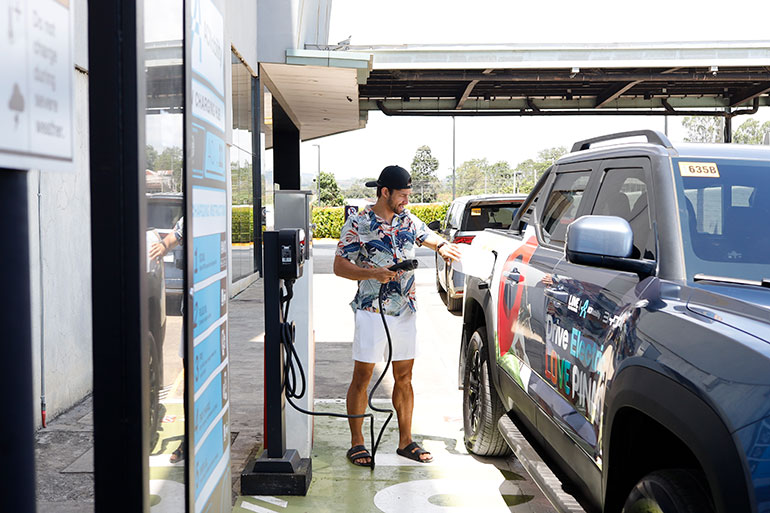
At the center of this shift is the ACMoblity Philippine EV Spine Network, a quietly expanding but critical infrastructure layer that now links key destinations from Luzon to Mindanao. Designed as an end-to-end charging corridor, it reframes what mobility means in an archipelagic country: not limitation, but continuity.

With charging points embedded across strategic stops, including tourist rest areas, the EV Spine effectively dissolves range anxiety and replaces it with a new kind of confidence—one rooted in planning, presence, and possibility.

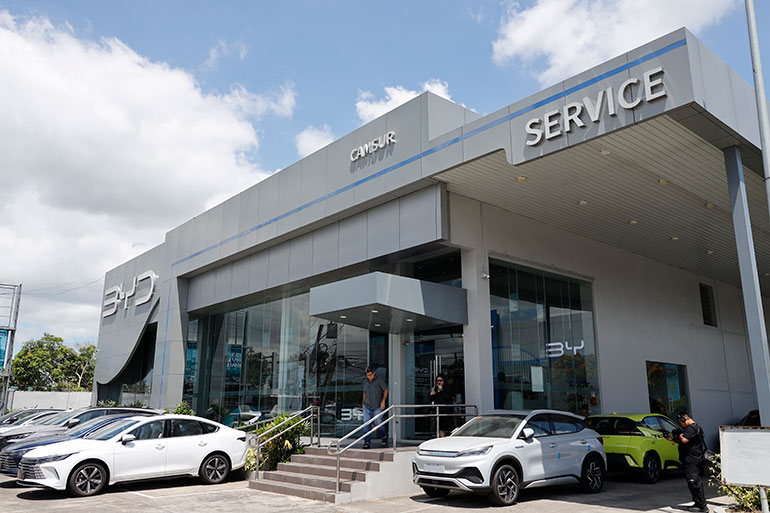
It is within this framework that BYD’s “Drive Electric. Love Pinas.” campaign unfolds, in partnership with ACMobility and the Department of Tourism. More than a road trip spanning over 3,500 kilometers and more than a hundred cities and municipalities, the campaign is a proof-of-concept that sustainable travel in the Philippines is no longer speculative but already operational.

Led by travel creator Wil Dasovich, the journey traced a full north-to-south trajectory that remaps the country’s roads through electric mobility.

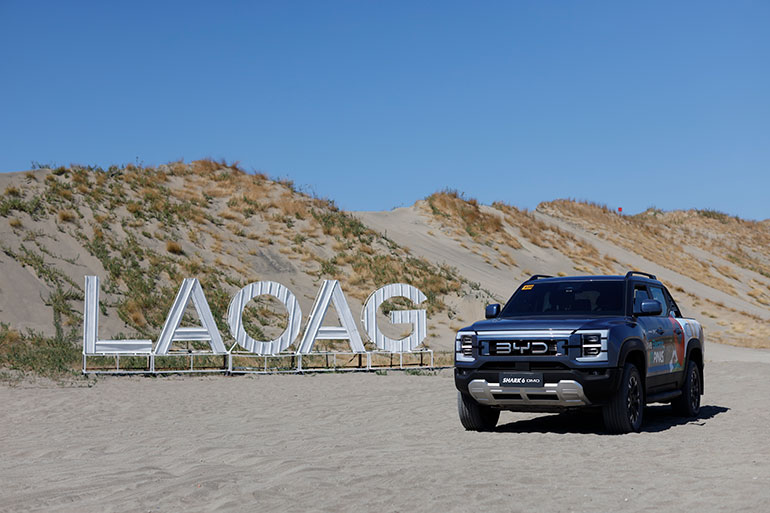
The journey began in Ilocos Norte, where the convoy cut across the La Paz sand dunes. From there, the route pushed through Pagudpud and climbs into Baguio, where steep gradients test both machine and infrastructure. Yet, the point is not endurance alone; it is reliability. The vehicles move not as isolated units, but as nodes within a larger network: charging, recalibrating, continuing.

As the convoy descended into Central Luzon and the metro, the narrative shifted subtly. Stops become more than logistical pauses; they become cultural intersections.

In Pampanga, the team engaged with local culinary spaces; while in Makati, high capacity charging stations (some reaching up to 480 kilowatts) demonstrate how urban centers are evolving alongside the technology.

Crossing into Southern Luzon and Bicol regions, the journey slows into something more deliberate. Destinations like Tiaong’s artisan spaces foreground a different kind of travel, one that is less extractive and more immersive.

The movement is no longer just about reaching the next point, but about inhabiting the spaces in between.

The transition into the Visayas marks a logistical and symbolic threshold. Island-hopping, long considered a constraint for EV adoption, becomes a part of the demonstration.

In Cebu, the campaign blended mobility with culture—local cuisine, heritage sites, even moments of stillness like freediving in Moalboal. Technology receded slightly into the background, allowing experience to take precedence while still quietly enabling it.

By the time the convoy reached Mindanao, it expanded beyond mobility into community. Stops in Cagayan de Oro and Bukidnon introduced elements of adventure; but it is in Davao where the campaign took on a more grounded dimension, engaging with local institutions and cultural spaces. It became less about traversal and more about connection.

All throughout the journey, what remains constant is the infrastructure beneath it all. The EV Spine is not foregrounded in every moment, but it’s always present—ensuring continuity, enabling spontaneity, and ultimately redefining “long-distance” means in the Philippine context.

Travel is no longer tethered to fuel dependency or infrastructural gaps. Instead, it becomes a coordinated system—vehicles, networks, and destinations moving in sync.


Spotlight is BusinessWorld’s sponsored section that allows advertisers to amplify their brand and connect with BusinessWorld’s audience by publishing their stories on the BusinessWorld Web site. For more information, send an email to online@bworldonline.com.

Join us on Viber at https://bit.ly/3hv6bLA to get more updates and subscribe to BusinessWorld’s titles and get exclusive content through www.bworld-x.com.

China’s export engine stutters as Iran war chills global demand

A drone view shows shipping containers from China at the Port of Los Angeles in Wilmington, California, Feb. 4, 2025. — REUTERS

BEIJING — China’s export engine slowed sharply in March as war in the Middle East triggered shocks to energy and transportation costs, hurting global demand and exposing the risks in Beijing’s strategy of leaning on manufacturing to sustain growth.

The world’s second-largest economy surged into 2026 on red-hot AI-fueled electronics demand, raising expectations it could eclipse last year’s $1.2 trillion record trade surplus. But the conflict has disrupted global growth, leaving China especially vulnerable as it has relied on foreign demand to offset a prolonged inability to revive consumption at home.

Outbound shipments grew by just 2.5% in March, customs data showed on Tuesday, a five-month low, and far below the 21.8% surge seen over the January-February period. Economists had forecast growth of 8.3% in a Reuters poll.

“Export growth to major destinations slowed across the board,” said Zhiwei Zhang, chief economist at Pinpoint Asset Management, attributing the drop to global uncertainty over the Iran war.

“I think China’s trade surplus will shrink this year, as China cannot pass through the higher energy prices completely to foreign consumers,” he added.

The signs are already evident: China’s March trade surplus came in at just $51.13 billion, far below expectations of $108 billion.

A sharp 27.8% surge in imports – the strongest since November 2021 – weighed on the balance. That compared with a 19.8% increase in January-February and forecasts for 11.2% growth.

China’s status as the world’s largest manufacturer and energy importer leaves it acutely exposed to a global energy shock. Diversified supplies and large oil reserves offer some protection, but uncertainty over the conflict’s duration risks undermining artificial intelligence-fueled demand for chips and servers, blurring the growth picture.

Even China, long criticized by trading partners for subsidy-backed, cut-price manufacturing, is not insulated from the hit to buyers’ purchasing power as fuel and transport costs rise.

Separate GDP data due on Thursday is expected to show the $19 trillion economy regaining some momentum in the first quarter, but full-year growth is set to slow to 4.6% from last year’s 5.0%, broadly in line with the official target of 4.5%–5.0%.

CHINESE GOODS MORE COMPETITIVE?
Chinese goods will be “even more competitive” as the energy shock “pushes up the price in most of the countries” more than in China, said Chen Bo, senior research fellow at the National University of Singapore’s East Asian Institute.

Chen expects global demand for Chinese-made electric vehicles to increase.

Fred Neumann, HSBC’s chief Asia economist, said China could stand to benefit from taking the decision in the early 2000s to stockpile commodities as it could help blunt the impact of raw-material shocks on factory gate prices.

China’s exports of refined oil products rose 20.5% month-on-month, totaling 4.6 million metric tons.

Disruptions to global energy supply lines will be felt in China, even if it’s not yet showing up in the data.

Natural gas imports for March dropped an annual 10.7%, the lowest level since October 2022, with Chinese ships diverting between eight to 10 cargoes over the course of the month to sell where prices are higher, according to ICIS, Kpler and Vortexa data.

Crude oil imports also fell 2.8% year-on-year, but this was predominantly due to a high base effect with March arrivals having been loaded onto ships before the war began.

The figures were further muddied by the seasonal effects of a late Lunar New Year national holiday, said Xu Tianchen, senior economist at the Economist Intelligence Unit, during which factories shut as workers down tools to celebrate.

“This explains the decline across the low-value-added sectors, textiles, garments, bags, toys, furniture, as they are reliant on migrant workers,”Mr. Xu said.

A high base is also a drag, after Chinese factories rushed shipments a year earlier to beat US President Donald Trump’s April 2 “Liberation Day” tariff deadline.

March factory activity data out of China showed goods exports continued to support growth, but the war in Iran weighed on sentiment as commodity prices rose sharply, lifting input costs.

Some analysts expect sustained tech demand to underpin Chinese exports.

“For Q1 as a whole, export growth rose to its highest level in four years,” said Zichun Huang, China economist at Capital Economics.

“Despite the energy price shock, exports should stay solid in the coming quarters, thanks to strong demand for semiconductors and green technologies.” — Reuters

Roblox rolls out age-based feature, PHL ban remains possible

Roblox now has three types of age-based accounts. — ROBLOX.COM

Roblox Corporation launched a new age-based accounts feature on Tuesday to filter content among young users on Roblox, following safety concerns that prompted calls for a ban in the Philippines.

“With the launch of Roblox Kids and Roblox Select, we are fundamentally shifting how games are discovered on our platform,” Matt Kaufman, chief safety officer at Roblox, said in a news release.

“Safety isn’t a static feature – it’s a journey that evolves as a child grows,” he added.

Roblox Kids for users ages five to eight, and Roblox Select for users ages nine to 15, align content access, communication settings, and parental controls with a user’s age to foster trust and reassurance among parents.

In both modalities, access is limited to a minimal or mild content maturity label to ensure there are no sensitive issues, social hangouts, or free-form drawing games. Distinct background colors are also applied in “kids’ mode” to indicate the account type.

For Roblox Kids, communications are unavailable by default. Meanwhile, Roblox Select remains under “default settings”, restricting conversations to only in-game text chats with other users aged 13 years old and below. The platform monitors all chats to detect child exploitation.

“Roblox is helping set a higher standard for how platforms can better protect younger users while preserving positive online experiences,” ConnectSafely Chief Executive Officer Larry Magid said in the same news release.

The online gaming platform also expanded its parental controls, allowing parents to manage content ratings, communications settings, screen time, and spending limits until the child turns 16.

Other features include parents’ access to which users their child spends the most time with, managing direct chat settings, and blocking and approving specific games not included in a child’s default account type.

“While no system is perfect, these age-adaptive accounts are designed to help remove the guesswork for parents and help align users’ experiences with their age,” Mr. Kaufman said.

The Cybercrime Investigation and Coordinating Council (CICC) said the agency is urging other social media platforms, specifically messaging platforms, to create similar measures to demonstrate their responsibility in protecting Filipino youth.

“That’s what we all want, that platforms like these and especially Roblox will have the primary responsibility to police their platform because after all, it’s the platform that tests the means,” CICC Director Alvin M. Navarro told BusinessWorld in an interview.

“Make some adjustments to the algorithm, institute measures to protect, especially those that are vulnerable,” he added.

CICC Executive Director Renato “Aboy” Paraiso also warned that Roblox could still be banned in the Philippines if it fails to uphold its commitment to safeguard children’s rights and safety.

“Ultimately, the power to limit them or to exclude them from the PH sphere is an option that is available to us,” he told the Senate on Tuesday.

“There can be warnings first, then there could be measurable KPIs (key performance indicators) that they are failing their commitments,” he added.

Roblox previously faced a possible ban in the country after reports involving some minors using the platform to plot acts of violence.

Philippine National Police Anti-Cybercrime Group (PNP-ACG) officials reported in a Senate hearing earlier that seven minors in Laguna and 12 others in Marikina, Las Piñas, and Negros Occidental were allegedly influenced, through the platform, to plan violent acts.

Police Colonel Romeo Desiderio said groomers coerced the victims into harmful activities, including self-harm, extortion, and violent crimes such as murder, kidnapping, and mass violence. — Almira Louise S. Martinez

South Korea’s Lee warns Iran war to keep oil price high, orders quick aid rollout

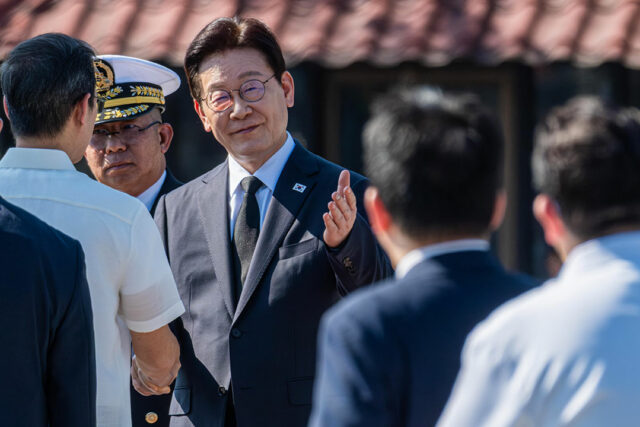
Republic of Korea President Lee Jae Myung at the Rizal Monument during a two-day state visit to the Philippines, Mar. 3, 2026. — PHILIPPINE STAR/RYAN BALDEMOR

SEOUL —  South Korean President Lee Jae Myung said rising tensions around the Strait of Hormuz made it hard to be optimistic about the fallout from the Iran war, warning that high oil prices and supply-chain strains were likely to persist for some time.

Mr. Lee told a cabinet meeting on Tuesday the government should treat prolonged disruption in global energy and raw materials markets as a given and reinforce its emergency response system.

“For the time being, difficulties in global energy and raw materials supply chains and high oil prices will continue,” Mr. Lee said.

“I ask that we pursue the development of alternative supply chains, medium- to long-term industrial restructuring, and the transition to a post-plastic economy as top-priority national strategic projects.”

Mr. Lee also urged ministries to move quickly to deploy a supplementary budget passed in response to the war.

At the meeting, ministers outlined steps to contain the economic shock from the conflict, including support for crude imports, controls against hoarding of petrochemical feedstocks and medical supplies, and expanded financial assistance for affected companies.

SECURING NEW ENERGY SUPPLIES
Industry Minister Kim Jung-kwan said disruptions to shipping through the Strait of Hormuz were still affecting supplies and that even if the passage normalizes, it could take around 20 days for Middle Eastern cargoes to reach South Korea.

The government is prioritizing support for the passage of seven South Korea-bound oil tankers stuck in the Gulf area, a document shown during the cabinet meeting said.

Foreign Minister Cho Hyun told the meeting that the ministry had sent officials to the Congo, Algeria, and Libya in a bid to secure energy supplies, in addition to presidential Chief of Staff Kang Hoon-sik travelling to countries such as Kazakhstan since last week.

“I also urge the parties to this war to take courageous steps toward the peace the world so desperately wants, based on the principles of protecting universal human rights and the lessons of history,” Mr. Lee said.

South Korea’s energy ministry said on Tuesday it would begin rolling out a revised seasonal and time-of-use electricity pricing system to shift power demand away from evening peak hours toward midday, when solar generation is higher. The new rates take effect for large industrial users from April 16 while weekend discounts for electric-vehicle charging will begin on April 18.

Meanwhile, Middle Eastern oil producers are in contact with South Korea about using the country’s petroleum storage facilities as disruptions at the Strait of Hormuz continue, a South Korean industry ministry official said on Tuesday, signaling growing interest in offshore crude storage hubs.

Yang Ki-wook, a senior official at the industry ministry, told a briefing that Middle Eastern countries were showing increased interest in storing oil outside the strait because a prolonged disruption in logistics would hit their economies and pre-positioning crude could reduce export risks.

Mr. Yang said that in addition to Abu Dhabi National Oil Company (ADNOC), which already has a joint stockpiling agreement with South Korea, other Middle Eastern producers were also in contact, though he did not identify them. — Reuters

In India, $1 housekeepers spark a consumer, worker frenzy despite safety risks

OFFICIALGAZETTE.GOV.PH

MUMBAI — At Indian startup Pronto’s training hub, women hone their chopping and mopping skills while learning how to send SOS signals if they feel unsafe inside customers’ homes. They are set to join India’s newest consumer craze: house help for $1 an hour.

Indu Jaiswar, 35, hopes doing household chores in her first job can help fund her son’s dream of becoming a doctor. “This is what we’ve been doing in our own homes for years. Might as well get paid for it,” said the mother of two.

In a country with an entrenched culture of outsourcing household work, Indian startups Pronto and Snabbit and listed rival Urban Company are training thousands of domestic helpers. Urban Company estimates India’s rapidly growing cleaning services market is worth an estimated $9 billion and spread across 53 million households.

Like Uber drivers, the helpers receive bookings on their apps, directing them to apartments in assigned neighborhoods within minutes and press a countdown timer in their apps before starting work. The potential annual earnings from working eight hours a day can be as high as $5,000 – a figure that far surpasses India’s per capita income of around $3,000.

The companies are betting big, burning millions of dollars to lure busy professionals in cities like New Delhi and Mumbai with under 99 rupee ($1) offerings that have no global parallel. Similar services can cost around $30 an hour in the United States, and around $7 in China.

However, the craze among consumers and workers is tempered by concerns about women’s safety in a country with high rates of sexual harassment. Unlike e-commerce couriers who spend just brief moments at doorsteps, housekeepers may spend hours inside private homes, exposing them to greater risks.

Soumya Chauhan, a principal at Dutch e-commerce investor Prosus, which has a stake in Urban Company, said she views worker safety as the fundamental operational challenge to solve.

“The platforms that successfully crack the safety protocols will earn the deepest consumer loyalty and the most sustainable market returns,” she said.

SAFETY RISKS
Cognizant of the challenges for a business that mainly employs women, Snabbit and Pronto said they have an in-app SOS button that alerts area supervisors in case of distress, while Pronto also offers self-defense training.

“In the offline world, the rate of abuse for a lot of these domestic workers is super high,” said Pronto’s 23-year-old CEO Anjali Sardana, adding that her company is trying to comfort its workers by assuring legal and medical support when needed.

Urban Company, which also offers services like plumbing, declined to comment for this story. It has previously said it offers a women-only safety helpline and an SOS app feature.

Shabnam Hashmi, a women’s rights activist, said the companies run extensive background checks on workers before onboarding them but should also check customer credentials. Currently users can simply log in on apps to book home help.

“How is it ever possible for these jobs to be safe for women – even with an SOS button? Unless they carry cameras, which is of course impossible, there is no way to know what happens behind that door,” she said.

Pronto worker Jaiswar has found her own workaround: she always calls a customer before visiting a home and goes “only if there’s a woman present”.

RAPID EXPANSION
The companies meanwhile are getting record orders.

Urban Company recorded its highest daily home services bookings of 50,000 in February. Snabbit’s have grown to 35,000 orders a day.

Bain Capital-backed Pronto logged a record 22,000 daily bookings in March, up from 2,500 daily orders in October, and raised $25 million in new funding.

Pronto CEO Sardana said she started the business last year after spotting an opportunity to serve three sides: strong demand from customers for reliable maids, workers’ need for more stable and safer jobs, and a gap in the market for a scalable service.

“It’s possible to build a win-win-win business,” she told Reuters.

Fuelling the trend is also India’s lack of a do-it-yourself culture, and Indians’ love for getting things done cheap.

In Bengaluru, 30-year-old Dhruv, who uses only a first name, said he spent 100 rupees ($1) per hour for Urban Company’s service to help unpack his utensils and hang curtains after moving house.

That helped him “save quite a bit of time and effort,” but the price does matter: “I wouldn’t pay 400 or 500 rupees for it.”

Snabbit founder Aayush Agarwal said his service was becoming popular among young couples and singles who want to schedule housekeepers and not hire monthly domestic helpers who are infamous for skipping work.

Pronto is offering some visits for 25 rupees in Facebook ads with taglines like “Maid on Leave? Don’t grieve”, while an Urban Company three-visit pack costs 66 rupees an hour.

Snabbit ads said a customer booked a helper “just to peel 20 potatoes”, while another had lined up a worker to “separate LEGO blocks by color.”

THE CASH BURN
Like many startups in their growth phase, the companies are paying their workers out-of-pocket to make the jobs attractive, but also doling out hefty discounts to reel in customers.

In October to December, Urban Company disclosures show it received 1.61 million home-help orders with each incurring a loss of 381 rupees ($4). The company says its “discounts are moderating” but its order values need to almost double to break even.

“Over a period of time, it is safe to say that it will become an earn-as-you-go model,” said Rahul Taneja, partner at Lightspeed, which has backed Snabbit.

At the Pronto center, where workers get a uniform and are trained to wear polished shoes, posters revealed potential payouts: home helpers can earn $1.60 per hour for 12 hours of work daily in a month, 48% more than what a new customer pays.

At more than $500 a month, that’s a big allure for Nisha Chandaliya, 22, who needs to support her ailing mother and has quit a call-center job that stretched long hours and paid only $180 a month.

“It’s exhausting to clean six-seven homes, but I need the stability. I can’t afford to go back,” she said. ($1 = 93.3010 Indian rupees) — Reuters

Philippines, US military drills underscore Washington’s defense commitment, US official says  

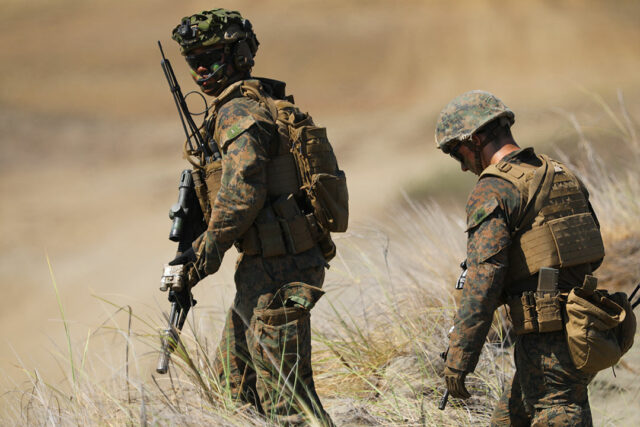
FILIPINO and American soldiers participate in war games at a recent Balikatan (shoulder to shoulder) military exercise. — PHILIPPINE STAR/WALTER BOLLOZOS

MANILA — The latest round of military drills involving the Philippines, the United States and several partner nations will underscore Washington’s “ironclad” commitment to its treaty ally and to the region, even as global attention remains fixed on the Middle East, a US military official said on Tuesday.

Running from April 20 to May 8 across multiple locations in the Philippine archipelago, the annual “Balikatan” or “shoulder-to-shoulder” drills will see more than 17,000 troops participate in one of the largest and most complex training programs yet, expanding beyond bilateral exercises into a broader multinational effort.

“Balikatan represents an opportunity to showcase our ironclad alliance with the Philippines and demonstrate our commitment to a free and open Indo-Pacific,” Colonel Robert Bunn, US spokesperson for the exercises, said at a press conference in Manila.

Japan’s participation in the program is set to expand this year, with members of its Self-Defense Force taking part in live-fire drills for the first time, using its Type 88 surface-to-ship missile to help sink a decommissioned vessel during a maritime strike exercise.

Tokyo has been strengthening its defense engagement with Manila after they signed a reciprocal access agreement in 2024, allowing them to deploy their militaries in each other’s territory.

The exercises are also set to highlight the Philippines’ widening network of security partnerships with Canada, France, New Zealand, and Australia, with the countries contributing naval vessels, aircraft and troops.

Mr. Bunn said the scale and scope of this year’s Balikatan demonstrate the country’s sustained commitment to the Indo-Pacific, despite competing global demands.

Thousands of US personnel are deploying to the Philippines for the drills, reinforcing alliance readiness, regional stability, and the shared goal of maintaining a free and open region, US and Philippine military officials said.

The expanded drills come amid rising tensions between the Philippines and China in the South China Sea, where Manila has accused Beijing of increasingly aggressive actions, an accusation China rejects.

Activities will span air, land, sea, and cyber domains, including maritime operations, integrated air and missile defense, counter-landing live-fire exercises, and humanitarian missions.

Colonel Dennis Hernandez, Philippine spokesperson for the exercises, said the country has the right to bolster its defense capabilities, adding that the drills were not directed at any country. — Reuters