Home Blog Page 2098

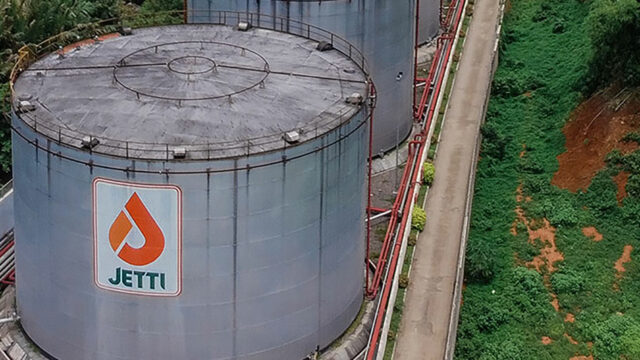
Jetti plans P1.2-B expansion

JETTI.COM.PH

INDEPENDENT OIL company Jetti Petroleum, Inc. expects to spend around P1.2 billion to establish 80 more stations to achieve its target of 300 stations by 2026, its president said.

“We are embarking on completing or having available 300 stations and, initially, we’re targeting by early 2026; but, of course, we based this on our business review,” Jetti President Leo P. Bellas told reporters during the inauguration of the company’s business center on Monday.

The funding will be mostly financed by banks, with a portion from internally generated funds.

For context, building a four-pump, two-island station would require about P15 million, Mr. Bellas said.

“For this year, we are confident that we can complete and operate an additional 40 stations. So that would bring the number to 260 by December 31, 2025,” Mr. Bellas said.

At present, the company has 220 stations spread nationwide, with a concentration in Luzon and Mindanao.

Its portfolio includes the Jetti Macapagal Building, a six-story business center located at the corner of Diosdado Macapagal Boulevard and Coral Way in Pasay City.

The company resumed operations of its flagship retail station in Pasay City in 2023 after temporarily closing it for renovation for almost four years.

“The reason why we also did this inauguration is because finally the whole ground floor is occupied and they’re operating,” Mr. Bellas said.

The Jetti Macapagal Building features retail outlets and premium office spaces for lease.

“The Jetti Macapagal Building stands as a testament to Jetti Petroleum, Inc.’s dedication to progress, community engagement, and service excellence. It reflects the company’s commitment to not only fueling vehicles but also supporting the aspirations of the people and businesses it serves,” the company said.

Jetti started operations of its first retail service station in 1999 and opened the Macapagal flagship station in 2004. The company began the conversion and renovation works of the property to make it a complex with a gas station in 2019. — Sheldeen Joy Talavera

BSP outlines reporting standards for pawnshops

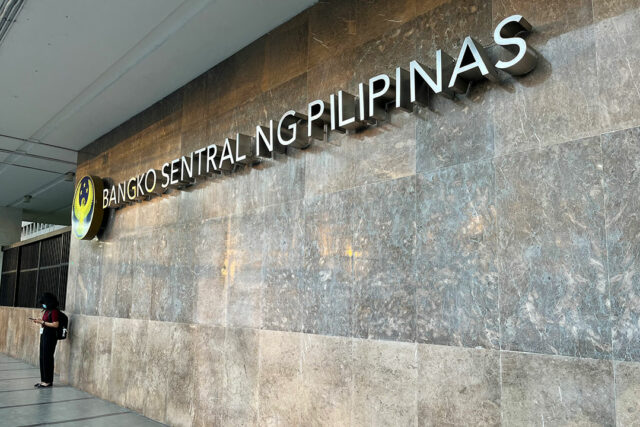
Bangko Sentral ng Pilipinas main office in Manila — BW FILE PHOTO

THE BANGKO SENTRAL ng Pilipinas (BSP) has amended its regulations on pawnshops’ reporting standards to improve its supervision over the sector.

“The amendments set forth the Bangko Sentral’s expectations on pawnshops to establish an effective reporting system with adequate governance process that enables the generation and timely submission of reports in accordance with the Bangko Sentral’s reporting standards,” it said in a circular.

Sections of the Manual of Regulations for Non-Bank Financial Institutions will be revised to reflect these amendments, it added.

The amendments include a revised section on the reporting governance framework for pawnshops.

“It is the thrust of the Bangko Sentral to exercise effective supervision over pawnshops. To facilitate such effective supervision, the Bangko Sentral adopts this reporting governance framework for pawnshops.”

The central bank said pawnshops must ensure complete, accurate, consistent, reliable and timely submissions of required information concerning their operation and management, financial condition and results of operations.

“It is incumbent upon the pawnshop proprietor/partner/board of directors and senior management or officers to implement an effective reporting system,” the BSP said.

“Pawnshops are expected to capitalize on available information technology in establishing an effective reporting system that is appropriate for their size and complexity of operations,” it added. 

The circular details the reporting standards that pawnshops must comply with. For example, the reporting system must compile all material data across various business services, activities and entities relevant to regulatory reporting and produce regular, on-demand and ad hoc reports required by the BSP, among others.

“An effective reporting system shall include a management information system commensurate to the nature and operational complexity of the pawnshop’s business activities,” it said.

“Pawnshops shall have a true and accurate account, record or statement of their daily transactions,” the BSP added.

These records may include audio, photographic, and video evidence of events, acts or transactions of the pawnshop. These should also include records of communication, be it through oral or written means.

“The making of any false entry or the willful omission of entries relevant to a transaction is a ground for the imposition of administrative sanctions,” it added.

The circular also includes rules on the adoption of the manual of accounts prescribed by the BSP for recording daily transactions, including reportorial and publication requirements.

“The accounting records of pawnshops shall consist of records of original entry and books of final entry. The records of original entry shall consist of pawn tickets, official receipts, vouchers and other supporting documents,” it said. “The books of final entry shall consist of the general ledger, subsidiary ledgers and registers of loans extended and loans paid.”

The central bank also outlined rules for pawnshops’ submission of audited financial statements.

“The Bangko Sentral recognizes that external auditors play a vital role in contributing to the conduct of effective supervision and sustaining the confidence of the public in the financial system. In this light, the regulations on financial audit aim to enhance the quality of information channeled to the supervisory process and ultimately promote fairness, transparency and accuracy in financial reporting.”

Pawnshop operators are also required to report on crimes, whether consummated or attempted, as well as incidents involving material loss, destruction or damage to the pawnshop property, among others, according to the circular.

The circular outlined the sanctions for noncompliance with reporting standards, including erroneous, delayed and unsubmitted reports. The revised guidelines prescribe the monetary penalties for violations, ranging from P60 to P500 per day or per occurrence.

The central bank will likewise assess the quality of a pawnshop’s reporting system to determine the integrity of reports being submitted and the root cause of persistent submission problems, it added. — Luisa Maria Jacinta C. Jocson

Missing link

PHILIPPINE STAR/ERNIE PENAREDONDO

Every January many international and local organizations issue their outlooks for the year, including on perceived risks. I personally look out for them, since these reports give a good idea of what issues national and business leaders will be watching out for.

The World Economic Forum, for one, published on Jan. 17 its Global Risks Report 2025 (its 20th such report) and its complementary Executive Opinion Survey (EOS) on national risk perceptions, among other studies, ahead of its Jan. 20-24 annual meeting in Davos, Switzerland. The Global Risks Report enumerated the top 10 “current” global risks as, in descending order: state-based armed conflict, extreme weather events, geoeconomic confrontation, misinformation and disinformation, societal polarization, economic downturn, critical change to Earth systems, lack of economic opportunity or unemployment, erosion of human rights and/or economic freedoms, and inequality.

‘URGENT’ AND ‘ALARMING’
The latest report noted that, among these concerns, environmental risks have transformed “from long-term concern to urgent reality” for many of its respondents, consisting of “over 900 global leaders across academia, business, government, international organizations and civil society.”

“The impacts of environmental risks have worsened in intensity and frequency since the Global Risks Report was launched in 2006,” the report read. “Environmental risks have dramatically increased in ranking over the 10-year time horizon since the introduction of the Global Risks Report in 2006.

“Moreover, the outlook for environmental risks over the next decade is alarming. While all 33 risks in the GRPS (the Global Risks Perception Survey that provides the basis for this report) are expected to worsen in severity from the two-year to the 10-year time horizon, environmental risks present the most significant deterioration,” it added.

“Extreme weather events are anticipated to become even more of a concern than they already are, with this risk being ranked in the 10-year risk list for the second year running,” while “[b]iodiversity loss and ecosystem collapse ranks No. 2 over the 10-year horizon, with a significant deterioration, compared to its two-year ranking.”

This concern accounts for the top three perceived risks in Southeast Asia (critical change to Earth systems, extreme weather events, as well as biodiversity loss and ecosystem collapse) over the next 10 years, followed in the region by “adverse outcomes of AI technologies” and “misinformation and disinformation” on the list of top five risks.

While the EOS, which surveyed over 1,100 business leaders in 121 economies, listed economic downturn, poverty and inequality, inflation, food supply shortage, as well as unemployment or lack of economic opportunity as the top five concerns of Philippine-based businessmen, a separate survey which the Management Association of the Philippines (MAP) conducted among its over a thousand members showed their top concerns for 2025 were, in descending order: corruption, education, economy, ease of doing business, climate change, cybersecurity and dealing with local governments.

TAPPING ORDINARY CITIZENS
Reading all these reports brought me back to a conversation that I had with my kids just last month, as I took the Christmas holidays as an opportunity to engage them in more in-depth chats, including on issues that interest them.

On the issue of the perceived worsening climate, we noted that government responses range from text alerts of the National Disaster Risk Reduction and Management Council (NDRRMC) in the event of floods, quakes, and volcanic activity, to occasional drills and established evacuation routes at the local level (not many though).

But ask any ordinary citizen on the street if he/she knows what to do in case a disaster hits his/her community, chances are that no one will have a ready answer.

So, there lies the gap.

Hardly the state of general preparedness which one would otherwise logically expect in a country that has been deemed as being among the most at risk from climate crises.

I recently watched an Al Jazeera feature on what some Taiwanese youth have been doing on their own in order to prepare for a potential invasion by China — from taking advanced first aid training to basic firearms handling and shooting via airsoft (with police supervision), since Taiwan prohibits civilians from owning guns. That’s for a state (yes, it has all the requisites for an independent state, whatever else Beijing says) that already maintains a one-year military conscription system for men.

We are nowhere near the state of siege that Taiwan or South Korea are in, but we face storms and floods almost like clockwork every year (not to mention volcanic eruptions and earthquakes).

And with the Philippines’ median age at 25.7 years as of last year, it’s clear that any program to “climate-proof” the population needs to focus on the youth.

OVERHAUL NEEDED
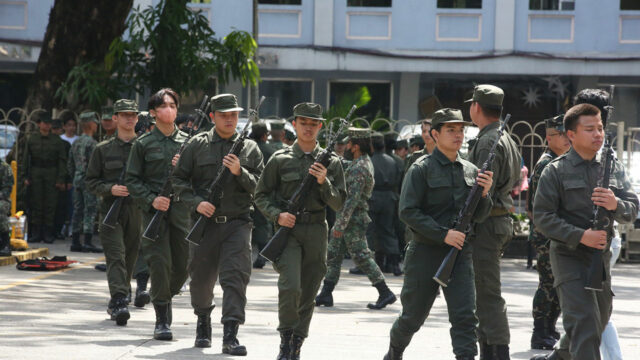
There is an existing mechanism that may be suitable for this purpose, namely: the National Service Training Program (NSTP) established under Republic Act No. 9163. That law requires tertiary-level students to undergo the NSTP, for which they have three options, namely: Civic Welfare Training Service (CWTS), Literacy Training Service (LTS), and the Reserve Officers’ Training Corps (ROTC).

An official primer said that NSTP was established “to promote civic consciousness among the youth and inculcate in them the spirit of nationalism and advance their involvement in public and civic affairs” and “to develop the youth’s physical, moral, spiritual, intellectual, and social well-being and promote defense preparedness and ethics of service while undergoing training in any of its three program components. Its various components are specially designed to enhance the youth’s active contribution to the general welfare.”

What did my kids and their peers do under NSTP’s CWTS component in their universities? One’s class donated an amount to a rural community (well, it was at the height of the pandemic, after all), while another spent three nights with a fishing village.

Did they improve the lot of those target beneficiaries even just a bit? Based on their anecdotes, I doubt it. Did they learn anything? NOTHING.

This reminds me of my basic ROTC days, which consisted of marching plus just a few classes (I cannot remember the topics, so they couldn’t have been useful) for two hours every Saturday for two years.

Did I or any of my peers learn anything (besides how to march in unison with others, that is, without developing teamwork skills)? ZILCH. NADA.

I learned patriotism and civic consciousness (not to mention discipline, leadership skills, and even how to safely handle firearms) elsewhere, and so considered all those hours of marching — under a program that gets an annual budget, mind you — a colossal waste of time (and people’s money) that could have been better spent on productive, impactful pursuits.

PROPOSED IMPROVEMENTS
Now we find out that a bill to revive mandatory ROTC has been included (as a “second priority,” but still) among priority measures listed by the Legislative Executive Development Advisory Council (LEDAC) as of Jan. 16 (for the full list go here: https://ledac.neda.gov.ph/resources-2/19th-congress/).

To its credit, Senate Bill No. 2034 adds to the ROTC curriculum “practical and applicable knowledge and skills that are necessary, essential and ideal for survival, and providing service in times of emergencies and disasters, including disaster response operations, skills for search, rescue and relief operations, and early recovery activities.”

The House of Representatives approved on final reading a related bill in December 2022, although it did not revive mandatory ROTC. House Bill No. 6687 (which is not a LEDAC priority measure and is now dead in the water) seeks to put in place a two-year National Citizens Service Training (NCST) program for youth in undergraduate degree as well as two-year technical vocational programs, which replaces the current, existing NSTP — complete with its CWTS, LTS, and ROTC options — and focuses training on practical skills for emergency and disaster response and, in the case of the ROTC, for officership in the military.

Both bills provide incentives for all those that will undergo training, as well as safeguards against hazing, corruption, and other abuses in the ROTC program.

HB 6687 will also form a civilian National Service Reserve Corps, consisting of all those who have completed the envisioned NCST program, under the control and supervision of the NDRRMC through the Office of Civil Defense (OCD), while ROTC graduates will be under the supervision of the military.

The SB 2034 will group all those that complete the ROTC program in “school-based ready reserve units,” while HB 6687 will organize NCST grads in school-, community-, sector-, and skill-based units for easy mobilization in times of natural or man-made calamities.

HB 6687 also provides that students who have completed the NCST Program will have complied with the mandatory military registration and training under Republic Act No. 7077, or the Citizen Armed Forces of the Philippines Reservist Act.

WHICH FRAMEWORK?
While indicating that one was a corps commander may lend just a bit of pizzazz to a resume right after graduation, I have not met anyone who has said that he learned anything useful under basic ROTC, even as a Pulse Asia survey commissioned by a senator last year reportedly showed that 69% of respondents were in favor of making this program mandatory again.

The main standard role of the military has been to fight armed aggression, so I do not know if putting part of disaster response, i.e. a ready reserve, automatically under the military is appropriate. Personally, I have always found it a bit off — even if necessary, given our circumstances — whenever our government through the decades had to call in army trucks for contingencies like public transport augmentation during nationwide protests (meaning officials could have managed civilian issues better). Gosh, even our firefighters are militarized, with military ranks and authorized to carry guns.

It would be better to be clear on such roles — the way that civilian and military roles are clearly demarcated in more advanced countries. So, if one were to undergo military training, then by all means let it professionally impart appropriate skills like marksmanship. Sure, the conscription programs of South Korea and Taiwan are unpopular, but they are needed in the face of real armed threat.

Our needs are different (yes, even in the face of China’s aggression in the West Philippine Sea and espionage in our territory).

What competencies are needed by a country at the forefront of climate risks? You have a wide variety of survival skills like water purification, putting up makeshift shelters, telling the time without gadgets, orienteering, advanced first aid, self-defense, as well as preparing emergency food and medical stocks that are best entrusted to training under the OCD. Add to that, other skills ranging from mastering basic knots for various purposes, to rappelling, to problem solving, to effective interpersonal communication, to disaster relief supply management, as well as to community organization, coordination, and leadership.

Skills training can also vary according to specific risks of localities, e.g. proximity to an active volcano, a river, the coast, or to the Valley Fault System.

Hence, this effort can tap third parties like the Philippine Red Cross, accredited volunteer firefighters, and the Philippine Eskrima Kali Arnis Federation that offer specialized skill sets. A semester with the Red Cross, volunteer firefighters, or accredited emergency medical assistance teams could provide practical exposure.

Meaning: if we were to spend time, effort, and public funds to train our youth to credibly take on real-life challenges that could be posed by natural and man-made disasters, then we might as well do so competently.


Wilfredo G. Reyes was editor-in-chief of BusinessWorld from 2020 through 2023.

DMCI Mining projects higher ore output in 2025

PHILSTAR FILE PHOTO

DMCI MINING Corp. expects its ore production to reach three million wet metric tons (WMT) this year, driven by the commencement of operations at two new mine sites, the company’s president said.

“We’re targeting a combined annual production capacity of three million WMT from our three mines, including Zambales Diversified Metals Corp. (ZDMC), subject to the approval of necessary permits for Long Point,” DMCI Mining President Tulsi Das C. Reyes said in a statement on Wednesday.

The company operates mines in Palawan and Zambales through its subsidiaries Berong Nickel Corp., Zambales Chromite Mining Company (ZCMC), and ZDMC. It extracts nickel ore, chromite, and iron laterite.

Nickel is among the transition minerals used for the manufacture of electric vehicle batteries and stainless steel.

In a separate interview on Monday, Mr. Reyes said that mine production last year was “low,” as there was only one operational mine shipping out ore.

“We had poor performance last year because Zambales was shipping out the only grade that we had available,” he said.

“We’ve been working on our expansion and so whatever was produced we had to sell, so we couldn’t play with the market. We’re totally inflexible,” he added.

The company has allocated about P400 million to fund additional expansion of its mining operations.

“You don’t need much to start up a nickel mine… A lot of that capex last year was really for Long Point, because it was starting from scratch and then a lot of that for this year will be for drilling,” Mr. Reyes said.

The company had previously earmarked P634 million for capital expenditures last year, which was mainly used for its expansion plans.

Mr. Reyes added that DMCI Mining anticipates better performance than last year amid the operation of its two new mine sites.

“We’re calling this year a bawi (recovery) year. But we should have all the grades available so we can go carbon steel or we go (mixed hydroxide precipitate), and we have the volume so we can be selective to the market,” he added.

The company’s mine in Santa Cruz, Zambales, operated under ZCMC, is expected to begin full operations during the first quarter.

ZCMC operates under an environmental compliance certificate, permitting an annual production limit of 1 million WMT.

Berong Nickel is also expected to restart production at its mine site in Long Point, Palawan. The company said that it is in the final stages of securing its mineral production sharing agreement.

“Our two new mines, ZCMC and BNC’s Long Point, mark a long-anticipated step forward for DMCI Mining. With increased production capacity and the Long Point port nearing completion, we are confident in delivering improved operational and financial performance this year,” Mr. Reyes said.

For the third quarter, DMCI Mining saw a net income of P48 million, a turnaround from its net loss amounting to P154 million a year ago.

Revenues surged to P565 million from P158 million in the same period last year, due to better shipments, higher selling prices, and improved nickel grade sold.

DMCI Mining is a subsidiary of the listed holding firm DMCI Holdings, Inc. — Adrian H. Halili

BCDA taps Philtower MIDC for telco infra development

BASES CONVERSION and Development Authority (BCDA) President and CEO Engr. Joshua M. Bingcang (third from right) led the ceremonial signing of the memorandum of understanding (MoU) with PhilTower MIDC. Also present at the event was PhilTower MIDC President and Chief Executive Officer Devid Gubiani (fourth from right), Chief for External Affairs and Government Relations Kalvin Laurence Antonio B. Parpan (first from left) Chief Financial and Risk Officer Maida B. Bruce (second from left), BCDA Vice-President Business Development Mary Grace C. Perez (second from right), and Vice-President for Investment Promotions and Marketing Department Erwin Kenneth R. Peralta (first from right).

THE Bases Conversion and Development Authority (BCDA) has partnered with PhilTower MIDC to advance digital connectivity across the state-owned corporation’s properties.

In a statement on Wednesday, BCDA said that it signed a memorandum of understanding (MoU) with PhilTower MIDC on Tuesday.

“PhilTower MIDC, with its comprehensive portfolio and deep industry knowledge, is uniquely positioned to support BCDA’s ambition to drive innovation, efficiency, and sustainability within the country’s digital infrastructure,” said BCDA President and Chief Executive Officer Joshua M. Bingcang.

“This collaboration will create impactful solutions that enhance connectivity in high-priority areas, positioning the Philippines at the forefront of the digital revolution in Southeast Asia,” he added.

A joint venture between Miescor Infrastructure Development Corp. and Phil-Tower Consortium, Inc., PhilTower MIDC is a provider of shared telecommunications (telco) infrastructure.

Under the partnership, PhilTower MIDC committed to installing common towers across BCDA sites, including Bonifacio Global City, New Clark City, and Morong Discovery Park.

The MoU enables PhilTower MIDC to conduct pre-investment studies on the project, which are expected to take one year.

According to BCDA, PhilTower already has a presence in New Clark City through its rooftop infrastructure at the Government Building and the National Academy of Sports.

These are utilized by telecommunications providers such as Globe and Smart to enhance their digital capabilities in the area.

“It is a privilege to collaborate with BCDA, an organization that shares our vision of harnessing digital technology as a transformative force,” said PhilTower MIDC President and Chief Executive Officer Devid Gubiani.

“Through this partnership, we aim not only to enhance connectivity but also to drive socio-economic growth in vital hubs such as Bonifacio Global City and New Clark City,” he added. — Justine Irish D. Tabile

Recycling farm waste

FREEPIK

From what I can recall, plastic packaging started becoming widely popular in the Philippines sometime in the 1970s. Before that, cans, bottles, and cartons were the primary materials used for food packaging. Fresh meat and produce were wrapped in paper, while milk and beverages came in glass bottles. Preserved food was sold in tin cans.

That was over 50 years ago. Since then, plastic packaging — especially for food and medicine (which used to come in glass bottles or small cardboard boxes) — has taken over. Even household food storage containers, beverage bottles, and utensils have largely transitioned from metal, glass, and ceramics to plastic.

Plastic is cheap, convenient, durable, lightweight, easy to transport, and disposable. Unfortunately, these same attributes have also turned it into a global pollutant. In recent years, the environmental cost of plastic has become more apparent. Thus, researchers have turned to alternative materials, including the conversion of agro-industrial waste into sustainable, functional packaging.

With the economy growing, the demand for goods — and consequently, for packaging materials — continues to rise. Several policies in the last few years have sought to reduce reliance on plastics, encouraging the development of eco-friendly alternatives. But to make this shift truly successful, government support is essential.

I recently came across a study titled “Renovation of Agro-Waste for Sustainable Food Packaging: A Review,” published in 2023 by researchers from Kasetsart University in Bangkok, Thailand. The researchers were from the university’s Department of Packaging and Materials Technology and its Center for Advanced Studies for Agriculture and Food.

The study highlighted that materials derived from agro-waste — such as cellulose, chitin, lignin, starch, and proteins — could be converted into food packaging. These materials were not only said to be non-toxic and biodegradable, but were also widely available and compatible with other materials.

The study emphasized that crop residues, process waste, and animal by-products could serve as raw materials for packaging. Parts of crops like leaves, stems, seed pods, and straw have high potential for development into eco-friendly packaging. For instance, cereal processing residues, sugarcane by-products, and dairy waste could be repurposed into substrates for biodegradable films and coatings.

In many parts of Asia including the Philippines, the traditional use of banana leaves for serving, eating, and packaging food reflects the cultural, religious, and socioeconomic potential of such natural alternatives to plastic. Bamboo and coconut are likewise widely used as source materials for food containers and servers. Bamboo is also used to make plates, utensils, and chopsticks.

Similarly, agricultural residues from harvest like wheat, rice, and barley stubbles, which are often left in fields or burned (leading to air pollution), could instead be transformed into fibrous biomass for paper and bioplastics. Stubbles left in fields take time to degrade into fertilizer, and in the interim become fodder for field pests.

One innovative approach mentioned in the study involves using fungi, particularly mycelium, which contains chitin, glucan, protein, and lipids. Mycelium can degrade lignocellulose in agricultural waste, making it a valuable component for bioplastic production. This not only addresses waste disposal issues but also reduces dependence on petroleum-based polymers, offering a cost-effective way to produce biodegradable plastics.

Given these possibilities, I firmly support government initiatives to promote research and investment in agro-industrial waste as raw materials for food packaging. This is not to say that plastic should be entirely banned. A complete ban on plastic packaging is impractical, given its current role in food preservation, transportation, and affordability.

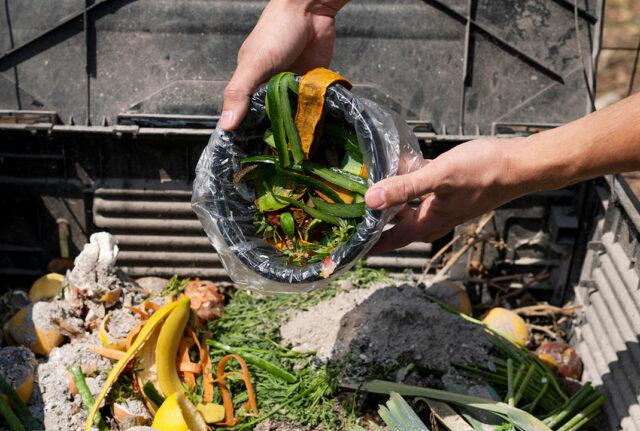
However, recycling farm waste into packaging material could significantly improve solid waste management. Instead of being left to rot, burned, or disposed of in landfills, post-harvest residues could be converted into useful products. In addition, farm waste that could not be recycled could instead be used as fuel in waste-to-energy facilities, creating a circular economy.

Policies and programs to encourage the recycling of farm waste for packaging should also align with broader initiatives that incentivize waste-to-energy projects. This combination allows for scaling up investments, maximizing returns, and addressing multiple environmental concerns simultaneously.

The benefits of recycling agro-waste into packaging go beyond reducing plastic use. It creates opportunities for farmers, scientists, and industries to collaborate. Farmers, for instance, can gain an additional revenue stream by selling agricultural residues that would otherwise go to waste. Researchers can develop more efficient methods for converting agro-waste into packaging materials. Businesses, on the other hand, can invest in green technologies and position themselves as leaders in sustainability.

In the long run, this approach may even help the country achieve its climate goals. Less plastic pollution means cleaner oceans and reduced greenhouse gas emissions. The adoption of biodegradable packaging could also enhance the Philippines’ image in the global market, particularly among eco-conscious consumers.

Of course, there are challenges. The technology for converting agro-waste into packaging materials needs further refinement to make it cost-competitive with plastic. Scaling up production also requires significant investment in infrastructure and training. Additionally, consumer awareness is crucial — without demand for these eco-friendly alternatives, businesses may hesitate to make the switch.

This is where government intervention becomes critical. Tax incentives for companies investing in green technologies, subsidies for research and development, and public education campaigns can all play a role in accelerating the transition. Partnerships between the public and private sectors, as well as collaborations with international organizations, can also provide the necessary resources and expertise.


Marvin Tort is a former managing editor of BusinessWorld, and a former chairman of the Philippine Press Council

matort@yahoo.com

Crypto firm Coinbase exploring PHL expansion

FACEBOOK.COM/DOFPH

CRYPTOCURRENCY EXCHANGE platform Coinbase Global, Inc. is interested in entering the Philippine market, according to the Department of Finance (DoF).

Finance Secretary Ralph G. Recto met with Coinbase Co-Founder and Chief Executive Officer Brian Armstrong on the sidelines of the ongoing World Economic Forum (WEF) in Davos-Klosters, Switzerland “to explore the company’s potential entry into the Philippines,” the DoF said in social media post on Wednesday.

Mr. Recto was named as Special Envoy of President Ferdinand R. Marcos, Jr. and head of the Philippine delegation to WEF.

“Coinbase, one of the leading cryptocurrency companies in the United States, initiated the meeting to convey its strong interest in expanding its footprint to the Philippines. It recognized the country’s growing digital economy and the increasing adoption of blockchain technology,” the Finance department said.

“Secretary Recto welcomed Coinbase’s interest, emphasizing the Philippine government’s commitment to fostering innovation in the financial sector. He expressed the government’s willingness to provide a robust regulatory framework that supports cryptocurrency adoption while safeguarding consumer protection and financial stability,” he added. — Aubrey Rose A. Inosante

Art Fair Philippines at 12: Exploring an urban garden venue

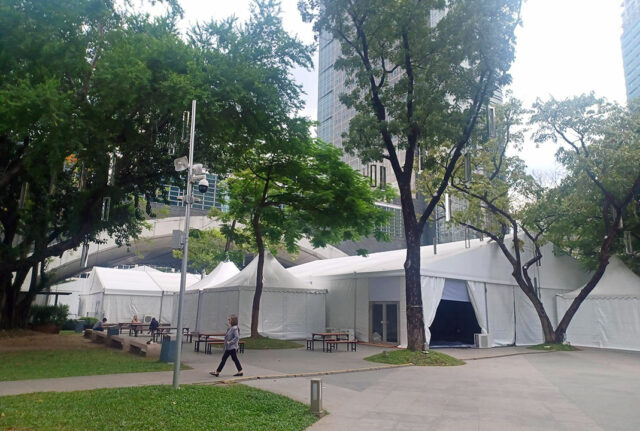
TENTS are already being set up at the Ayala Triangle Garden in preparation for this year’s Art Fair Philippines.

AFTER 12 years at a carpark, Art Fair Philippines is making a change by moving to Makati’s Ayala Triangle Gardens. Its 12th edition will occupy large tents within the two hectares of the park, plus parts of the Amphitheater, Tower One, and Tower Two, from Feb. 21 to 23.

Last year, the fair welcomed 25,000 visitors over its three-day run. Its founders, Trickie Colayco-Lopa, Lisa Ongpin-Periquet, and Geraldine “Dindin” Araneta, hope to replicate that number this year.

Art Fair Philippines started in 2013, with the twin goals of widening the local audience for contemporary art and supporting Filipino artists. At the time, The Link was the “newest carpark in Ayala,” they said.

“It’s gotten a little old, so I guess it was just time for a change, time to embrace something new, and that’s what we always try to do anyway. We always try to conceptualize something new each art fair. So why not go bigger this year and just change the entire venue?” Ms. Lopa told the media at a press conference in Makati City.

Ms. Araneta added that Ayala Triangle Gardens is also a sort of “center of the community,” with many people walking, jogging, and hanging out especially on weekends, which aligns with their aim to make art more accessible.

“We wanted to find a venue that can also transform the experience of being in an art fair, and that was the opportunity that came our way,” she told BusinessWorld. “Different communities have different facilities, so you have to try to work with what’s available.”

This year, they are inviting fairgoers to walk the verdant urban park at the heart of Makati, from one end to the other. There are two entrances: along Ayala Avenue with Tower 1 as the entry point, and another along Makati Avenue which has the newer Tower 2 as the entry point.

“The art fair is mostly contained within a tent, so it won’t be that difficult. We’re trying to work very hard on our signage because, of course, this will be a new space for everyone,” Ms. Periquet said.

The fair’s talks and film screenings will be held on the 6th and 8th floors of Ayala Triangle Gardens Tower 2, respectively.

“The tent, the covered areas, will be a natural way of driving you either from this end to Ayala Avenue or vice versa, so we hope it won’t be too difficult,” Ms. Periquet added. “However, we recognize that the spaces are all very different because some are in this commercial area, and some are in the tent spaces down there. I think it should be exciting.”

As for access to the venue, all seven floors of The Link will be available for parking, along with other parking spaces around the Ayala Center. Seniors and PWDs can easily be dropped off at either entrance, while others can simply walk to the park from their cars or from their commute.

THE EXHIBITORS
This year’s fair will have 48 exhibitors from the Philippines, Austria, Hong Kong, Indonesia, Japan, Malaysia, Singapore, Vietnam, and Spain. They are: Amez Yavuz, Archivo 1984, Art Agenda, Art Cube Gallery, Art for Space, Art Lounge Manila, Art Underground, Art Verité Gallery, Artemis Art, Avellana Art Gallery, Boston Art Gallery, CANVAS, Cartellino, Cayón, Core Contemporary, FINE-ARTS MANILA / Zimmermann-Kratochwill Graz, Austria,

FotoMoto, Gajah Gallery, Galeria Palona, Galerie Stephanie, GALLERY KOGURE, J Studio, Kaida Contemporary, Kobayashi Gallery, León Gallery, Lopez Museum, METRO Gallery, Modeka Art, MONO8, Orange Project, Parallel +, Paseo Art Gallery, Pintô Art Museum and Arboretum, Qube Gallery, Secret Fresh Gallery, SHUKADO+GALLERY SCENA, SILVERLENS, TARZEER PICTURES, The Columns Gallery, TLYR Collective, Tomura Lee, Triangulum, Village Art Gallery, Vin Gallery, White Walls Gallery, YOD Gallery, and YSOBEL Art Gallery.

HIGHLIGHTS
This year’s edition will have specially commissioned works, gallery exhibits, film screenings, and art talks transforming the expansive venue. The concept is for a “dynamic and multi-dimensional platform that showcases the ingenuity and diversity of Philippine art.”

The ArtFairPH/Projects section will showcase a collection of curated exhibits that celebrate artistic excellence and innovation, placed in a space designed by Nazareno/Lichauco and presented by BPI. It will feature works by social realist painter Manny Garibay, mixed-media artist Manuel Ocampo, glass artist Goldie Poblador, stone sculptor Ryan Rubio, ceramic artist Jezzel Wee, and anonymous Spanish collective SpY Studio.

“We have a hand in the creation [of the future of contemporary art], but what this is is a platform or landscape for you to make your own ideas and opinions about where it’s going,” Ms. Araneta said. “The projects this year show things that are new, and artists working with various materials and formats.”

The ArtFairPH/Residencies section this year will focus on curators rather than artists. In a collaboration with the Ateneo Art Gallery, the Curator’s Grant Program, to be held over the span of three weeks, will “introduce selected international curators to the Philippine art scene.”

This year’s ArtFairPH/Talks, handled by the Ateneo Art Gallery and the Museum Foundation of the Philippines, will present discussions that dive into artists’ works and lives, art forms, artistic processes, collectors, and other aspects of today’s complex art world. One highlight is a panel discussion on collection management from a collector’s point of view, in partnership with Larry’s List, the world’s leading art market knowledge company.

Now on its third year, the ArtFairPH/Digital section, presented by Globe, will feature artist and technologist Chia Amisola’s travelling exhibit KAKAKOMPYUTER MO YAN! (That’s what you get for using the computer!). The collaborative exhibition showcases internet art and the 3rd-World online experience.

There will also be a visual storytelling installation by motion graphics artist and engineer Isaiah Cacnio. His work, which often explore the themes of light, movement, and spatial dynamics, will transform ordinary spaces in the park into immersive environments.

Another highlight of the Digital section is a set of screenings at the Amphitheater, where animated and digital work will be set up at the outdoor tiered space adjacent to the lawn of the Ayala Triangle Gardens.

Finally, ArtFairPH/Film will present two film screenings: Kono Basho by Filipino curator-visual artist-filmmaker J. Pacena, and The F.A.T. Boys!! Episode 1: Each One Teach One by American director Drew Milo. The former comes from the Cinemalaya 2024 lineup, with a talk-back scheduled with the film’s cast. The latter was shot during a trip through the Philippines last year.

10 DAYS OF ART
Complementing the fair is the 10 Days of Art initiative, highlighting a series of events around the Makati Central Business District starting on Feb. 14. This is the lead-up to the fair itself.

Some of the public art include outdoor sculptures by Briccio Santos in Legazpi Park, an immersive and experiential installation by Kim Borja in Glorietta, and JEFRË’s Talking Heads at Circuit Makati.

Neal Oshima and Fotomoto will also transform the Legazpi Underpass and Greenbelt 3 Sunken Park into art exhibit venues, while the TLYR Collective will present works at the Paseo Villar Underpass.

A regular day pass to the fair is P750. Tickets for students, senior citizens, and PWDs with valid IDs are P500. Makati students and teachers with valid IDs get a discounted price of P300.

Tickets can be purchased in advance at www.artfairphilippines.com. Tickets will also be available at the reception area for the duration of the event. For more information, visit the Art Fair Philippines website and follow Art Fair Philippines on Instagram (@artfairph) and Facebook (www.facebook.com/artfairph). — Brontë H. Lacsamana

Companies must ensure data security when adopting AI tech

STOCK PHOTO | Image by Gerd Altmann from Pixabay

By Beatriz Marie D. Cruz, Reporter

PHILIPPINE COMPANIES should prioritize data protection as they continue to integrate artificial intelligence (AI) technologies and applications in their operations, technology company Cisco said.

“In the Philippines, like everywhere else, companies are under pressure from their boards to innovate, use AI to help automation, to help operations, to drive productivity, to give better intelligence, and to level up the capabilities that are delivered to their customers,” Dave West, president for the Asia Pacific, Japan, and China (APJC) at Cisco, told BusinessWorld in an online interview.

However, companies lack the necessary guardrails to protect their data while utilizing the productivity benefits of AI, he said.

According to Cisco’s 2024 AI Readiness Index, only 35% of Filipino respondents said they’re fully equipped to detect and prevent unauthorized tampering with AI.

Cisco last week launched AI Defense, a self-optimizing solution featuring safety mechanisms to secure and protect companies’ data as they adopt AI applications. The tool will be available to both new and existing Cisco users in March.

“AI Defense will just help protect that (data) and ensure that those guardrails are enforced,” Mr. West said.

“Companies can be successful in securing their data, their infrastructure, their people, and then making sure that whatever AI models they decide to use are providing the information in the right ways without bias, without toxicity and other things,” he added.

Raymond Janse van Rensburg, vice-president for specialists and solutions engineering for APJC at Cisco, said companies don’t need to sacrifice safety and security when adopting AI.

“So, for the foreseeable future, we’ll be living in a multi-model, multi-cloud world, and here’s the thing about models — by definition, they’re non-deterministic,” he said in a briefing. “You’re not always going to know what the output of a model will be.”

The ever-changing nature of AI models poses increased risks, Mr. Van Rensburg said.

AI Defense provides safeguards against the misuse of AI tools, data leakage, and increasingly sophisticated threats, Cisco said. It can also detect shadow and sanctioned AI applications across public and private clouds and provide model validation and runtime security.

The tool integrates with existing data flows and is built into Cisco’s cross-domain platform, Security Cloud. Splunk customers using AI Defense can receive alerts with additional context from across the entire ecosystem.

“Fused into the fabric of the network, Cisco AI Defense combines the unique ability to detect and protect against threats when developing and accessing AI applications without tradeoffs,” Cisco Executive Vice President and Chief Product Officer Jeetu Patel said.

Mr. West said companies need to invest in upskilling and in digital infrastructure to ensure that they can take advantage of the benefits of AI technologies.

“Digitization, skilling, understanding how to leverage AI, how to interact with different AI models and agents — all of that is going to be absolutely fundamental to the success of businesses and countries.”

Bright Kindle unit finalizing deal to acquire Leyte mining firm

FREEPIK

LISTED Bright Kindle Resources & Investments, Inc. (BKR) said its subsidiary is finalizing the acquisition of a Leyte-based iron ore mining company.

In a disclosure on Wednesday, BKR said that its subsidiary, Brightstar Holdings and Development, Inc. (BHDI), has executed a deed of exchange with Strong Built (Mining) Development Corp. (SBMDC).

BHDI will issue new common shares and assets of up to P5 billion in exchange for 100% of SBMDC’s outstanding shares.

“BHDI will acquire SBMDC for and in consideration of BHDI’s issuance of new common shares and assets of up to P5 billion in exchange for 100% of the outstanding shares of stock of SBMDC at a transaction price of up to P5 billion or P50 for every SBMDC share,” the company said.

According to the Mines and Geosciences Bureau, SBMDC has a 25-year term under its mineral production sharing agreement, with an expiration date set for July 28, 2032.

The mining company extracts iron ore and other associated mineral deposits within its 7,411.56-hectare property.

In a disclosure in May, BKR said that its board of directors had approved the planned acquisition of SBMDC through a share-for-share and property-for-share swap.

The company said that the property-for-share swap includes a condominium unit and four parking slots in exchange for shares in SBMDC.

Bright Kindle had earlier acquired a 19.9% stake in Marcventures Holdings Inc., which is involved in mining, extracting, and smelting mineral ores such as nickel, chromite, copper, gold, and manganese.

On the stock exchange on Wednesday, shares in BKR fell by 13 centavos or 9.35% to P1.26 apiece. — Adrian H. Halili

Trump’s energy and climate policies, opportunities for the Philippines

US President Donald J. Trump issued many executive orders (EO) on the first day of his second term. Below are some of those EOs that are related to energy and climate.

1. Putting America First in International Environmental Agreements. Section 3-a provides that the US “shall immediately submit formal written notification of the United States’ withdrawal from the Paris Agreement under the United Nations Framework Convention on Climate Change… The US International Climate Finance Plan is revoked and rescinded immediately.”

2. Declaring a National Energy Emergency. It provides for emergency approvals of permits, expediting the delivery of energy infrastructure, coordinated infrastructure assistance, and more.

3. Unleashing American Energy. Section 2 provides to “…eliminate the ‘electric vehicle (EV) mandate’ and promote true consumer choice… terminating, where appropriate, state emissions waivers that function to limit sales of gasoline-powered automobiles; and by considering the elimination of unfair subsidies and other ill-conceived government-imposed market distortions…”

Sec. 5 provides for “Unleashing Energy Dominance through Efficient Permitting.” Sec. 7. is “Terminating the Green New Deal” and “All agencies shall immediately pause the disbursement of funds appropriated through the Inflation Reduction Act of 2022 (Public Law 117-169) or the Infrastructure Investment and Jobs Act (Public Law 117-58), including but not limited to funds for electric vehicle charging stations.” And Sec. 9 is “Restoring America’s Mineral Dominance.”

4. Unleashing Alaska’s Extraordinary Resource Potential. Sec. 2 provides to “expedite the permitting and leasing of energy and natural resource projects in Alaska; and prioritize the development of Alaska’s liquefied natural gas (LNG) potential, including the sale and transportation of Alaskan LNG to other regions of the United States and allied nations.” Sec. 3 provides to “rescind the cancellation of any leases within the Arctic National Wildlife Refuge.”

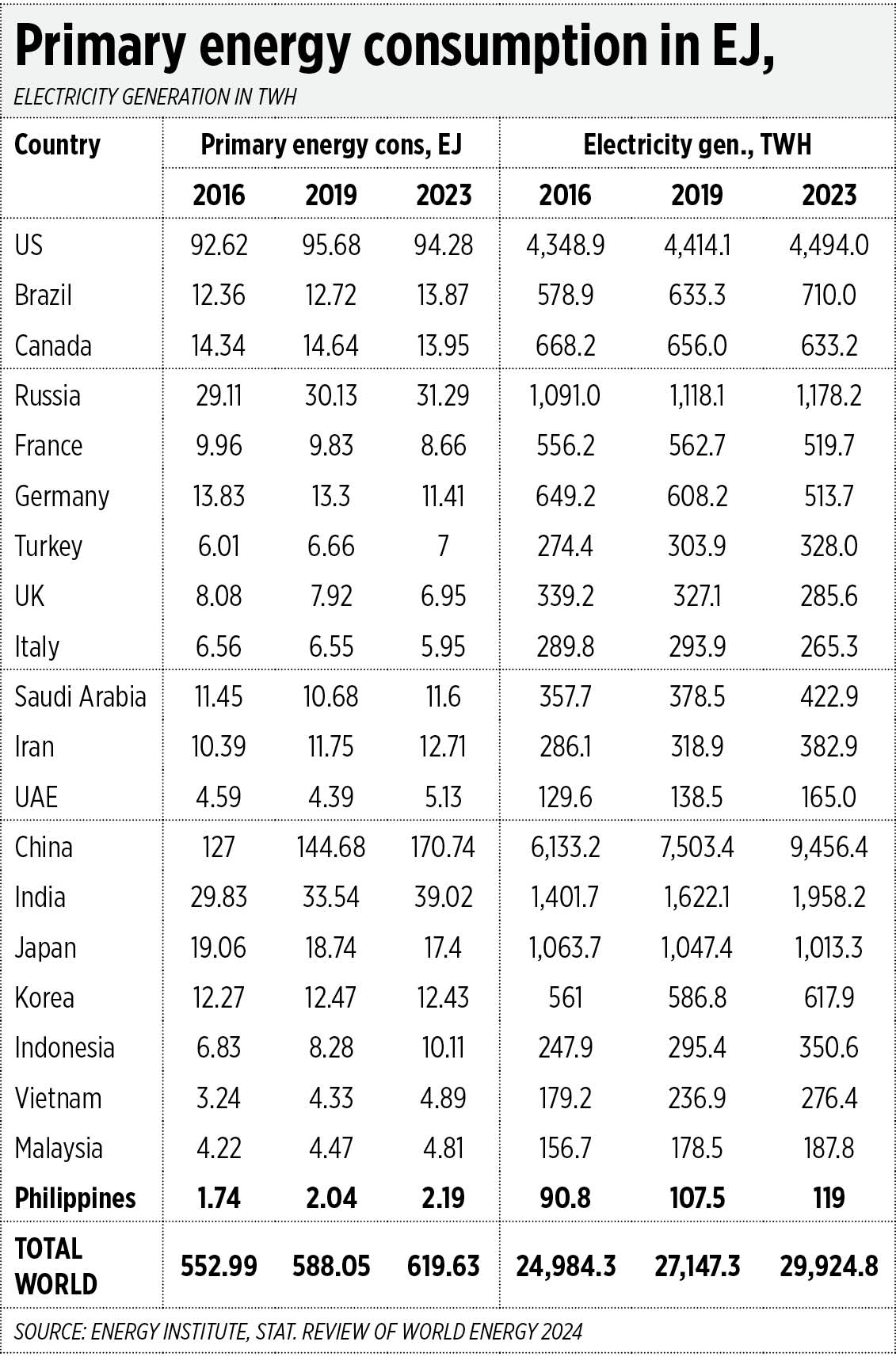
I checked some of the US’ energy numbers and compared them to the G7 nations and the BRICS+ member-countries including Brazil, Russia, India, China, Indonesia, Iran, and the United Arab Emirates (UAE). I chose to compare the years 2016 (the end of the Obama administration), 2019 (before the COVID lockdown under Trump), and 2023 (the latest available data under Biden) for comparison. Two trends or patterns are seen.

1. In primary energy consumption expressed in exajoules (EJ), the US was nearly flat, consuming 92.6 EJ in 2016 then barely rising to 94.3 EJ in 2023. All other members of G7 — Canada, Japan, the UK, France, Germany, and Italy — had declining numbers. In contrast, all the BRICS+ countries had rising numbers.

2. In total electricity generation from different sources, the US again saw very little expansion — nearly flat — and the six other members of G7 had declining numbers. In contrast, BRICS+ countries’ numbers were rising (see the table).

Compared to its ASEAN neighbors, the Philippines’ primary energy consumption and electricity generation were very small, yet we are being bullied by the climate establishment to disallow the building of any new coal plants, which soon might extend to gas plants demonization. We should ignore this unwise lobby. We should focus on building more large conventional thermal power plants to provide us with a bigger supply of electricity at competitive prices.

OPPORTUNITIES FOR PHL
In 2023, natural gas contributed 14% of the total power generation of the country, coal contributed 62%, and the rest came mainly from geothermal and big hydro, while intermittent renewable sources like solar and wind contributed below 6%.

The US is the world’s largest LNG exporter. In 2016 or Obama’s last year, the US exported only four billion cubic meters (bcm) of LNG. By 2017 or Trump’s first year, it jumped to 17 bcm, and increased to 61.3 bcm by 2020. In 2023, the US’ LNG exports reached 114 bcm, largely due to exports to Europe as many countries there were avoiding getting LNG from Russia.

Trump’s “drill-baby-drill” policy, particularly exporting more LNG to its Asian allies and trade partners would mean stable LNG prices at low levels. The Philippines will benefit from this.

Currently there are five existing or under construction LNG power plants in the country, mostly located in Batangas. The biggest operational plant is Ilijan or the South Premier Power Corp. (SPPC), with a dependable capacity of 1,200 MW. Soon to be the biggest power plant in the country is Excellent Energy Resources, Inc. (EERI) with a capacity of 1,760 MW (440 MW for each of its four units).

Both Ilijan and EERI are owned by San Miguel Global Power (SMGP) — but with the approved partnership with Meralco Power Gen Corp. (MGen) and Aboitiz Power Corp. (AP) through Chromite Gas Holdings, Inc. (CGHI), these two LNG plants will soon be owned and operated by three of the largest energy conglomerates in the country.

So, with competition on LNG exports between the US and some Asia-Pacific nations like Australia, Indonesia, and Malaysia, plus having modern and efficient gas plants would mean cheaper power or electricity for the Philippines. This will help bring down overall consumer prices, and lower the inflation rate for 2025 and beyond.

LECTURE AND REUNION
Meanwhile the UP School of Economics Program in Development Economics Alumni Association will hold a homecoming on Feb. 7 at the school. Immediately before the reunion is the Ruperto P. Alonzo (RPA) annual memorial lecture which will be about energy.


Bienvenido S. Oplas, Jr. is the president of Bienvenido S. Oplas, Jr. Research Consultancy Services, and Minimal Government Thinkers. He is an international fellow of the Tholos Foundation.

minimalgovernment@gmail.com

Fintech firm launches blockchain-powered e-wallet DTaka

FINANCIAL TECHNOLOGY (fintech) company D-Wallet Technologies Corp., which operates under the name DTaka, on Wednesday launched a blockchain-supported e-wallet with the same brand, which focuses on overseas Filipino workers (OFWs) and their families.

The DTaka digital wallet is available first on the Huawei AppGallery.

“I think one of the key differentiators is the blockchain-powered technology [supporting] a lot of our tools within the app, so that’s a big plus. To the end customer, it doesn’t really matter what the tech is. They won’t see it, but the benefits are number one, lower fees, two, more safe and secure, and number three is we’ll be able to introduce other blockchain-related micro services,” DTaka Chief Executive Officer Emmanuel R. Samson IV said at the launch on Wednesday.

DTaka Chief Operating Officer Kristoffer Anthony S. Patron said DTaka makes remittances cheaper and faster by using stablecoins.

“The way we do it is we use blockchain so that the actual asset is transferred to stablecoins here in the Philippines and we convert it to peso. But the user won’t have to do the conversion. We automate that whole process,” Mr. Patron said.

“We want to bring remittance fees down to 3%, which is the United Nations target.”

Mr. Samson said the e-wallet will be available on other devices within the next month. They target to have an e-wallet user base of 500,000 within their first 18 months of operations.

“We are hyper-focused on OFWs and their families,” Mr. Patron said.

The company is also planning to introduce products like loans, merchant wallets, and a tokenized reward system for remittances and transactions, he said.

Most of DTaka’s services will use Web3 and blockchain technologies, Mr. Patron added.

“For the rewards, we are making sure that there are no duplicates or there is no double spending happening when you’re using your rewards under the plan. More than that, there are a lot of things that we can still do, like having a universal platform with the rewards that can work with other wallets.”

The company is also looking to partner with banks, remittance centers, convenience stores, and sari-sari stores to bring down transfer fees, expand cash-in and cash-out functions, and make remitting faster and more convenient for OFWs and their dependents.

Mr. Samson added that DTaka is studying a subscription- or fee-based model to bring down transfer costs.

“This is something that we’ve built in when we were designing our monetization plan as well,” he said. “We believe that we need to democratize the fees that users are paying for in transferring money to one another and to other banks.” — Aaron Michael C. Sy

ADVERTISEMENT
ADVERTISEMENT