Home Blog Page 208

Digido Finance files appeal after SEC order

SEC.GOV.PH

DIGIDO FINANCE CORP. said it has fully complied with directives following the Securities and Exchange Commission’s (SEC) May 9, 2025, order, including suspending loan issuance while preserving its right to challenge the decision.

The company said it filed a motion for reconsideration to present its position.

“The company also respectfully takes a different view on the basis of the fine and the cited violations, and has submitted an appeal for further consideration,” the company said in a statement e-mailed to BusinessWorld, referring to the second order dated Feb. 18.

Digido Finance said its relevant operations were suspended while the case is being reviewed.

“The company made sure to comply with all applicable regulations and will remain fully committed to transparency and adherence to all regulatory requirements,” it noted.

In an order dated Feb. 18, the commission directed Digido Finance Corp. to permanently cease all financing operations after finding it liable for continuing business despite the revocation of its corporate registration and secondary license, violating Sections 12(b)(1) and (2), and 14 of the Financing Company Act’s implementing rules and regulations.

It also ordered Digido to pay a P600,000 administrative fine, consisting of P100,000 each against the company and its five officers. 

The SEC’s Financing and Lending Companies Department (FLCD) rejected Digido Finance Corp.’s argument that the order was not yet final or appealable, saying that revocation orders qualify as immediately executory under the 2016 SEC Rules of Procedure.

The FLCD said Digido continued processing and approving loan applications, disbursing funds to borrowers, issuing disclosure statements and promissory notes, and maintaining active loan accounts.

It also said that Digido had been handling loan servicing and collections through Fingertip Finance Corp., a wholly owned subsidiary of Singapore-based Robocash Pte. Ltd. — Alexandria Grace C. Magno

Malayo sa bituka… or so they think

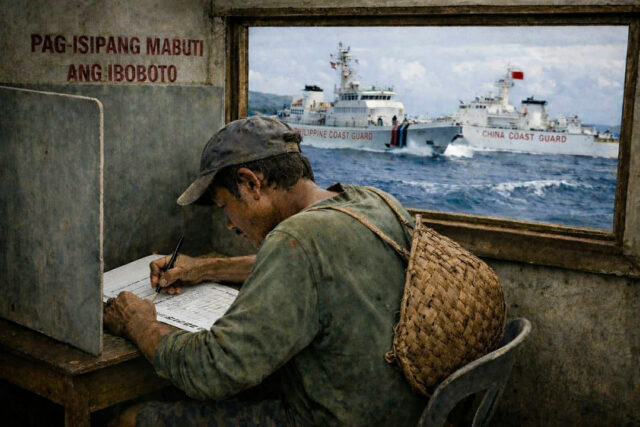
AI GENERATED PHOTO PROVIDED BY THE AUTHOR

I suspect many Filipinos who struggle to make ends meet each day regard China’s coercion in the West Philippine Sea (WPS) this way: it’s hardly a gut issue.

Well, except perhaps for an estimated 300,000 fisherfolk spread across Zambales (including about 1,500 in Masinloc municipality who have completely abandoned Scarborough Shoal, which had otherwise been their traditional fishing ground for decades), Pangasinan, and Palawan who bear the brunt of harassment by China’s coast guard and maritime militia, as well as the onslaught of Chinese commercial fishing boats1.

This fact, plus almost daily accounts on Chinese naval and coast guard harassment of our fisherfolk as well as smaller coast guard and fisheries bureau ships, should have a clear effect on Filipinos’ trust in our huge neighbor. To be sure, a December 2025 survey conducted by OCTA Research showed that the majority of respondents (60%) still distrust China. But this reading was down significantly from 85% reported in July the same year2.

Given such a sharp reduction in distrust of China, as well as the continued popularity of elected officials perceived by some quarters as echoing Beijing’s arguments vs. the Philippines’ stand on the West Philippine Sea (WPS), it remains unclear just how much our tiff with China over the WPS figures in Filipinos’ choice of/support for elective officials.

Hence, anyone who wants this issue to make its mark for the 2028 presidential, legislative, and local elections will have to change current messaging on this matter.

POSTURING
Those who fear that the 2028 national election will lead to a foreign policy shift that will make it easier for China to deny us our rights to resources within our exclusive economic zone (EEZ) would hope that presidential and senatorial hopefuls deemed pro-Beijing will fail in their bids.

China itself has not been idle outside its maritime pressure campaign both at sea and on social media, with a newly seated ambassador (fresh from his four-year stint in Washington, DC) wasting no time in making the rounds of non-defense-related sectors (the latest being at the Social Welfare department to hand over a $1-million grant3) in an all-out charm offensive to win Pinoy hearts and minds.

The choice of this “America hand” at this time makes sense as Chinese President Xi Jinping’s perceived window for retaking Taiwan (by various means) between 2027 (the centenary of the People’s Liberation Army) and 2049 (the 100th year of the People’s Republic of China)4 draws near and political positioning and posturing heats up towards our May 2028 national election. Those polls are a rare opportunity to prod a Philippine foreign policy reset which Beijing cannot ignore.

Those wary of perceived pro-China politicians among us will do well to heed the results of various surveys last year showing that economic issues top Filipinos’ concerns, particularly rising prices of goods and services, cost of living, job creation, better access to education, corruption, etc.5. Anything related to WPS is nowhere on the list.

These findings are consistent with:

• separate results showing that more than half of respondents of a November 2025 Social Weather Stations survey rated themselves poor6, and that more than a fifth said that they went hungry involuntarily “at least once in the past three months”7;

• as well as estimates that socioeconomic classes D and E make up about 78% and 14%, respectively, of the country’s registered voters, while ABC folks (mostly C) share what’s left8.

That’s the public that needs to be convinced that standing up to China in defense of our maritime rights is a gut household issue, if those pushing for continuation of a strong stand for our WPS rights beyond 2028 were to have their way.

RECALIBRATION
How does one do that?

Offhand, making the WPS a household issue can focus on three concerns: affordable, available fish and other seafood for the table; jobs; as well as affordable, sufficient electricity.

• Food. Do you notice how some of us downplay arguments on principle by replying “Hindi naman nakakain ’yan (that cannot be eaten).” Well in this case, I disagree. Fish accounts for over a fifth of protein and some 11.7% of total food intake in a typical Filipino diet9. That’s how crucial fish is to us.

The South China Sea (SCS), of which the West Philippine Sea forms part, accounts for about 22% of the world’s fish species. Its coral reefs support about 3,790 species of fish. It is home to fish and other edible marine species such as anchovies, barracuda, crabs, crayfish, cuttlefish, hairtail, mackerel, pomfret, prawns, sardines, scad, sea bream, shrimp, snapper, squid, tuna, various bivalves, and seaweed10.

The SCS accounts for about a third of the Philippines’ fish production, while the WPS supplies a little bit more than a tenth of Philippine “capture fisheries” (a category covering both municipal — or up to 15 kilometers from the shore — and commercial fishing), according to experts at the December 2025 conference, “Eyes on the Sea: Community-Based Maritime Monitoring and Reporting in the West Philippine Sea,” held at the Manila Polo Club in Makati City. The Bureau of Fisheries and Aquatic Resources’ (BFAR) Philippine Fisheries Profile 2020 showed that municipal capture fisheries accounted for more than a fifth of the country’s fish production, while more than a third came from commercial capture fisheries11.

Jobs. Then you have families affected by China’s attempt to keep us out of our traditional fishing grounds (and to allow us in only after conceding that the area is under its sovereignty).

BFAR’s Philippine Fisheries Profile 2022 showed that there were some 2.3 million individuals involved in various stages of fish production, e.g., capture fishing, aquaculture, fish gleaning, fish vending, fish processing, etc., of which about 1.173 million (50.96%) were engaged in capture fishery and 259,448 (11.27%) were into aquaculture12.

The 300,000 fishers (including Masinloc’s 1,500) affected by China’s coercion in the WPS may be just a tenth of nationwide fisherfolk, but the impact of that segment of this sector widens if one were to include their social networks and the public optics of their plight.

It is distressing to read accounts of how families affected by the dwindling fish catch over the past two decades (due also to encroaching Chinese, Taiwanese, and Vietnamese commercial fishers as well as environment changes, but aggravated by Chinese armed harassment since 2012) have tried to make ends meet despite few alternative options13.

Hence, the government needs to go beyond providing free food and fuel to fishermen sailing into harm’s way by offering alternative livelihood for their families and even scholarships for their deserving kids (e.g., in marine sciences, fisheries, aquaculture, agribusiness, or other relevant courses). It needs to be more proactive and creative here in order to avoid a repeat of those instances wherein it failed to provide well-studied, well-designed, realistic, and sufficient alternatives for those affected, for example, by changes in policy, e.g., the sudden, temporary closure of Boracay to tourism in April 2018, and the modernization program for public utility jeepneys that began in 2017.

Electricity. With the Malampaya natural gas-oil field within our EEZ — which supplies about a fourth of the country’s energy needs — about to run dry in the next two to three years (the much-vaunted new digs there will add just a few years of supply), we face the looming prospect of hours-long power outages reminiscent of the problem that hit us in the 1990s14 as well as much-higher electricity and pump prices due to having to import more fuel in order to bridge the bigger supply-consumption gap.

Hence the urgent need to dig elsewhere.

That leads us to Reed Bank (also called Recto Bank) which we have refrained from exploring due to Beijing’s threat (well, Malaysia went ahead with its own similar plan anyway despite pressure from China15). Early in his term, former president Rodrigo R. Duterte recalled that Chinese President Xi Jinping, when the former voiced the need to explore for new energy sources in the South China Sea, warned him: “We’re friends… but if you force the issue, we’ll go to war16.”

The Reed Bank’s potential natural gas and oil reserves have been estimated at 55.1 trillion cubic feet (TcF) and 5.4 billion barrels, respectively, compared to Malampaya’s 2.7-3.3 TcF and at least 85 million barrels, respectively.17 This means Reed Bank could hold nearly a third of total estimated natural gas and close to half of the oil in the South China Sea, since the US Energy Information Agency has estimated that the SCS holds about 190 TcF of natural gas and 11 billion barrels of oil18.

Hence, the need to find ways to finally proceed with that potential dig, where initial exploration took place in the 1970s and which Forum Energy Ltd. acquired as a concession in 2005. Forum Energy (whose ultimate parent, First Pacific Co. Ltd., is related to BusinessWorld via PLDT Inc.) initiated surveys in 2011 which were disrupted by Chinese ships19.

TARGET AUDIENCE
Finally, there is a need to change the mode of messaging in order to reach a wider public.

China understands this only too well.

Soon after China’s new ambassador took his post in December, the Beijing-based China Radio International (the international radio arm of the China Media Group that is under the Chinese Communist Party’s Publicity Department) pushed its CRI Filipino Service more aggressively to amplify propaganda in Tagalog (and, presumably, later on in other dialects) largely through its Facebook page (https://tinyurl.com/2dt6t2sb).

I would expect that Beijing has already been reaching out to much of the population via other social media platforms, and the only reason that many of us do not see its messages is that we are not covered/included in the algorithm used for this purpose. We are simply not the audience for some of its messages.

Expect such targeting to become sharper with more skillful use of artificial intelligence towards next year.

Those countering Beijing’s WPS propaganda can do no less and need to target and execute messaging better and smarter.

So, by all means: continue and improve our maritime transparency initiative, which has succeeded in drawing support from both neighbors and allies in the West. Beijing has long opposed any move to draw in other interested parties, because it is easier to coopt a smaller party like the Philippines that stands alone.

But the time has come to sharpen the focus on the WPS issues affecting the wider population, and this could be one way to go.

Take it from an ordinary citizen.

Notes:

1 https://tinyurl.com/m2cf256p

https://tinyurl.com/336h8bms

2 https://tinyurl.com/et8trdpm

3  https://tinyurl.com/4shkxn47

4 https://tinyurl.com/5dt2mec4

5 https://tinyurl.com/yhu6j6k2

https://tinyurl.com/39572xjb

https://tinyurl.com/48b99c6y

https://tinyurl.com/bdvptdx9

6 https://tinyurl.com/msupbj64

7 https://tinyurl.com/5k4u5vp9

8 https://tinyurl.com/39n3ydvt

9 https://tinyurl.com/yamptwy3

https://tinyurl.com/2ucjawpx

https://tinyurl.com/2drnxtmt

10 https://tinyurl.com/bk67vy8z

11 https://tinyurl.com/4wtx65ca

12 https://tinyurl.com/24swhmde

13 https://tinyurl.com/5akhwv7x

14 https://tinyurl.com/59kfhye9

15 https://tinyurl.com/59h8m238

16 https://tinyurl.com/ycy73ubd

17 https://tinyurl.com/3fnye5mk

18 https://tinyurl.com/yv59a5dd

https://tinyurl.com/4rf24vye

19 https://tinyurl.com/yc4yd3v9


Wilfredo G. Reyes was editor-in-chief of BusinessWorld from 2020 through 2023.

Metrobank plans sustainability bond offer

METROBANK.COM.PH

METROPOLITAN Bank & Trust Co. (Metrobank) wants to raise at least P5 billion from its first issuance of ASEAN Sustainability fixed-rate notes that would mark its return to the domestic debt market after more than three years.

The bonds will have a tenor of 1.5 years and will be drawn from Metrobank’s P200-billion bond and commercial paper program approved by its board on Dec. 15, 2021, it said in a disclosure to the stock exchange on Wednesday.

“Proceeds will be used to diversify the bank’s funding sources while supporting its lending operations and will be allocated by the bank to finance and/or refinance eligible assets as defined in the bank’s Sustainable Finance Framework,” Metrobank said.

The issuance was approved by Metrobank President Fabian S. Dee on Tuesday (March 3). The date of the offering will be subject to market conditions, the bank added.

It has mandated First Metro Investment Corp., ING Bank N.V. Manila Branch and Standard Chartered Bank as the joint lead managers and joint bookrunners for the transactions.

Metrobank last tapped the domestic bond market in October 2022, raising P23.7 billion via 1.5-year fixed rate notes at a 5% coupon rate.

The final issue size was more than double the initial P10-billion offering amid strong demand that also caused the bank to shorten the offer period.

Proceeds from the issuance were used mainly for the bank’s general capital requirements, including the refinancing of some maturing issuances, it earlier said.

Metrobank booked a record-high net income of P49.7 billion in 2025 amid steady loan growth and strong trading gains.

Its shares closed unchanged at P74.80 each on Wednesday. — Aaron Michael C. Sy

Dining In/Out (03/05/26)


Solaire Resort North champions women at dinner

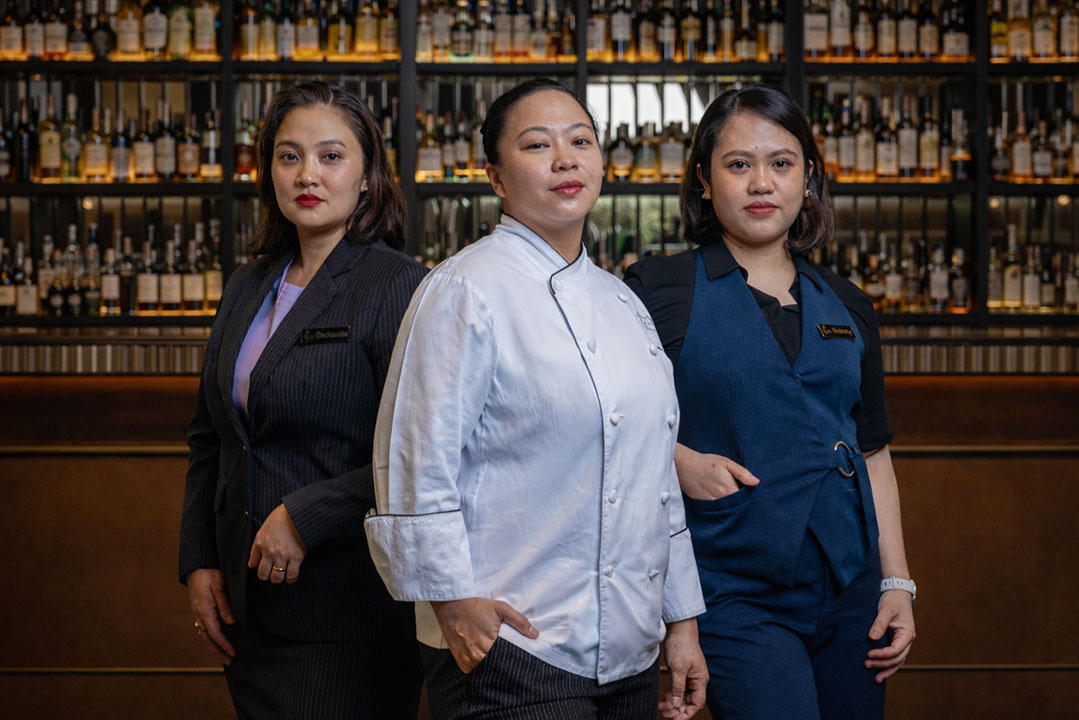
CELEBRATE the strength and elegance of women this International Women’s Month at Solaire Resort North’s Finestra with an evening by women for women. On March 7, 7 p.m., the luxury integrated resort showcases its team of women in an exclusive dinner that commemorates the excellence of womanhood from the finest dishes all the way to service. They are Quezon Club’s chef January “Janu” Belardo, alongside Skybar’s Head Mixologist Melody Protacio, and one of Solaire Resort North’s restaurant managers, Cacharelle “Cali” Serrajotto, together with their respective teams to deliver dinner service for the night. A nine-course set menu shaped by Ms. Belardo’s personal story and her first lessons in the kitchen awaits diners. For P4,500++ per head, dishes such as a calamansi ricotta-infused agnolotti pasta, a shio koji tenderloin with a miso lentil puree, shishito and a caramelized jus, as well as a smoky plate of burnt eggplant with flower croustade will take centerstage among other courses. Each dish is perfected by a beverage pairing for an additional P1,000++ offering a rich blend of cocktails throughout the evening. Mixologist Ms. Protacio and her team prepare each drink with expert care, ranging from aperitifs with a touch of sweetness all the way to full-bodied and smooth cocktails for the complete dinner experience. For more details, reservations, and inquiries, visit the Solaire Resort North website sn.solaireresort.com, or contact them at 8888-8888 or via e-mail at snrestaurantevents@solaireresort.com.


Solaire Entertainment City offers a mega brunch

DINE, brunch, and celebrate your Sunday without limits as Solaire Resort Entertainment City pulls out all the stops for a mega indulgence on March 15, from 11:30 a.m. to 3:30 p.m. The Mega Brunch is Solaire’s largest brunch collaboration, bringing together five signature restaurants in one shared space for a one-day-only, all-inclusive feast. Guests can savor exclusive creations from Finestra, Red Lantern, Oasis, Fresh, and Waterside, each presenting unique dishes. Guests can also meet the chefs behind each restaurant. The brunch experience starts at the Caviar and Oyster Station, then Finestra offers a carving station with dishes like Lasagna Bolognese, Seabass Acqua Pazza, and Ossobuco. A live Carbonara station at the wheel adds a touch of theater, where pasta is tossed before your eyes. There will also be a Pizza Bar. The Western spread at Waterside includes a carving station with Giant Wagyu Smashed Burgers alongside the Two-meter Solaire Hotdog, Slow-Cooked Beef Prime Rib, as well as Boneless Herb-Crusted Lamb Saddle. Red Lantern offers a wide array of Dim Sum favorites plus a live station with Peking Duck Bao. At Fresh, seafood lovers can look forward to a spread of prawns, king crab, Boston lobster, scallops, mussels, clams, curacha, swimmer crab, baby calamari, squid, and octopus. There will also be a Raw Fish Bar live station with freshly prepared sashimi, tartare, ceviche, tiradito, and yuzu kosho specialties. Seafood can be grilled to the diner’s liking at the Grilled Seafood Bar. Oasis will unveil a mega dessert spectacle — a six-foot donut wall. Guests can also build their own bingsu, or indulge in a parade of sweets including rum baba, signature Solaire chocolate cake, both New York and Basque cheesecakes, and honey cake, among many others. Tickets are available at https://premier.ticketworld.com.ph/shows/show.aspx?sh=MEGABRUN26. For more information, visit https://sec.solaireresort.com/mega-brunch.


Krispy Kreme marks 20 years with old favorites

IN CELEBRATION of its 20 sweet years in the Philippines, Krispy Kreme is taking a trip down memory lane with the return of three donuts. Throwback Favorites is a limited-time collection featuring PB & Jelly (peanut butter-flavored shell donut topped with strawberry jam and strawberry bits), New York Cheesecake (filled with New York cheesecake filling, dipped in cream cheese icing, and finished with a graham cracker crunch), and Red Velvet Cheesecake (red velvet cake donut topped with cream cheese frosting and sprinkled with red velvet crumbs). They are available until April 24, starting at P70 per piece, for dine-in, take-out, drive-through, and delivery.


Pancake House’s new coconut coolers

STARTING on March 1, Pancake House is teaming up with Vita Coco to launch its Coco Fruit Coolers. The Coco Fruit Coolers are made with real coconut water and tropical fruit bits. There are three flavors available: Coco Lychee, Coco Mango, and Coco Pineapple (P149 each). Guests may also enjoy Vita Coco 330 ml for P109 if they wish to enjoy the refreshment solo, on the side. For every Vita Coco purchased at Pancake House, P5 will be donated to initiatives supporting Filipino coconut farmers and their families. These initiatives equip local farmers with modern technology, improved agricultural practices, and livelihood programs designed to enhance crop yields and create additional income opportunities. The Coco Fruit Coolers are a limited time treat, available nationwide from March 1 to June 30.


Mercato Centrale searches for food entrepreneurs

FOOD BUSINESS incubator Mercato Centrale Group is officially bringing back The Next Big Food Entrepreneur (NBFE) and has opened applications for aspiring Filipino culinary entrepreneurs to step forward for a chance to transform their concepts into sustainable, market-ready businesses. The journey begins with the “Digital Sift,” a nationwide open call inviting food entrepreneurs to introduce themselves through a 30-40 second video on Facebook, Instagram, or TikTok, sharing their product, inspiration, and the vision behind their brand. To qualify, participants must follow and tag Mercato Centrale’s official social media pages and include the hashtag #NBFE2026Entry. Entries will be accepted until March 17. For aspiring entrepreneurs who may not have the means to produce a video entry, Mercato Centrale is also providing an alternative application pathway through an online submission form, accessible at tinyurl.com/NBFE2026. Selected concepts advance to the “Tasting Table” where 15-20 shortlisted food brands present their creations to invited foodies and opinion leaders. Finalists will move on to the “Test Kitchen,” a bootcamp under Mercato Academy that shifts the focus from flavor to foundation. Participants sharpen their understanding of food costing, branding, operations, and go-to-market strategy, gaining the off-the-plate skills needed to build brands that are not only delicious but also durable. The journey culminates in “The Spread,” a large-scale, multi-sensory finale set for April 18 at Mercato Centrale Bridgetowne in Pasig City. There the finalists will present and sell their concepts directly to the public. One major winner will receive a Food SME Starter Package, which may include up to six months of free rent at a prime Mercato location, along with partner support and industry tools to accelerate their growth. For updates and full program details, follow @mercatocentraleph on Instagram or Mercato Centrale on Facebook.


Mang Inasal Extra Creamy Halo-Halo now creamier

THE NEW and improved Mang Inasal Extra Creamy Halo-Halo hits all Mang Inasal stores in March. The halo-halo now has an all-new milk dusting to extend the creaminess. Meanwhile, the Dessert Museum has announced the extension of the Mang Inasal HALO-HALOverse until the end of May. Visit www.manginasal.ph for the latest news, manginasaldelivery.com.ph for delivery deals, and follow Mang Inasal on social media.

PLDT expands direct-to-device satellite tests to Ilocos Norte

STOCK PHOTO | Image from Freepik

PLDT INC., through its wireless subsidiary Smart Communications, Inc., is expanding its direct-to-device satellite connectivity tests to northern Ilocos Norte.

“The Philippines is an archipelago, and it can be challenging to reach many of our communities, particularly in geographically isolated and disadvantaged areas (GIDAs), with traditional towers,” PLDT Chief Operating Officer and Network Head Menardo G. Jimenez, Jr. said in a media release on Wednesday.

PLDT, through Smart, has partnered with Lynk Global, Inc. to test satellite technology in the country. The company said it has completed another round of field tests for its direct-to-device satellite communication service.

This latest development follows a test in Catanduanes, Smart said, adding that the technology will provide critical connectivity to remote areas.

During the trials, the parties exchanged text messages between smartphones located in Ilocos Norte and Manila. The technology also allowed them to access key public information platforms, signaling that it could be utilized for disaster response and maritime connectivity.

“Direct-to-device satellite technology gives PLDT and Smart a powerful way to overcome the geographic challenges of serving an archipelago,” Mr. Jimenez said.

In January, Smart said it is planning a commercial rollout of the technology next year.

Smart said the partnership will enable mobile communications in areas with no signal by directly connecting ordinary mobile phones to satellites. The company added that it will start by integrating its core systems with Lynk’s satellite-to-mobile network before conducting live field tests using Smart’s existing spectrum.

At the local bourse, PLDT shares fell P41, or 2.99%, to end at P1,329 apiece.

Hastings Holdings, Inc., a unit of the PLDT Beneficial Trust Fund subsidiary MediaQuest Holdings, Inc., holds a majority stake in BusinessWorld through the Philippine Star Group. — Ashley Erika O. Jose

No work permits for foreigners

FREEPIK/MACROVECTOR

In the dictionary of government service, there is perhaps no word more destructive to progress than “indefinitely.” When a system stalls or when a processing unit ceases to function without a clear date of restoration, it is not merely a technical glitch; it is a suspension of service, of responsibility, of accountability to the public. And this is unacceptable.

Take the case of Alien Employment Permit (AEP) applications, which have reached this critical threshold. An advisory issued by the Department of Labor and Employment (DoLE) dated March 3 noted that the upgrading of the Alien Employment Permit Management System (AEPMS) is still “ongoing,” and that its “temporary inoperability” is “extended until further notice.”

The unkindest cut, of course, is this: “At present, there is no definitive timeline as to when the system will fully regain its functionality.” For now, all that DoLE can offer is its sincere apologies for any “inconvenience,” as it “respectfully requests understanding and cooperation” from the public.

No mention of alternatives or options, or any possible temporary workaround for applications already in process or those that are time-bound. I am uncertain as to when the upgrading process started, but in my book, an indefinite suspension of any government process or service is simply unacceptable. At the very least, give the public an idea of when the service will be restored.

By allowing essential public services to halt without a predictable timeline, the government is inadvertently sending a message to the global community: we are not open for business. And obviously, this adversely impacts any effort to attract more foreign investments or to invite foreign experts to work here.

The AEP process has always been long and tedious, and for good reason. The government needs to protect local workers. But this present suspension is catastrophic for some, as the AEP is the foundational requirement for any foreign national seeking to work in the Philippines for more than six months.

In sequence, we start with a Labor Market Test (LMT). The employer must publish the vacancy to ensure no Filipino is willing or able to do the job. Then comes the AEP application, with the foreign national applying through DoLE. Once the AEP is issued, the Bureau of Immigration can process the work visa, known as the 9(g) visa.

So, when the AEP system halts, the entire sequence collapses. Foreign experts cannot secure visas, multinational corporations cannot onboard leadership, and critical projects in specialized sectors, from cloud computing to infrastructure, grind to a stop. This stalled system is not just a delay; it is a total blockade on the entry of foreign expertise.

At the same time, the suspension of processing periods, whether at DoLE or elsewhere, is a direct challenge to Republic Act No. 11032, or the Ease of Doing Business and Efficient Government Service Delivery Act of 2018. This is the expanded Anti-Red Tape Authority (ARTA) law.

ARTA was enacted specifically to end the era of delayed governance. It established the 3-7-20 rule: three days for simple transactions, seven days for complex ones, and 20 working days for highly technical applications. AEP processing, given the economic needs test and document verification involved, likely falls under the highly technical category.

Under ARTA rules, government agencies are mandated to have a Citizen’s Charter that outlines exactly how long a process takes. While system downtime is a reality, when an agency says “no definitive timeline,” as in the case of AEPMS, then I believe DoLE is operating outside the spirit, and potentially the letter, of the law.

The law requires government initiatives to be planned, predictable, and accountable. If a digital system is being upgraded, there must be a defined “Go-Live” date, and the public must be informed. “No definitive timeline” is not only the antithesis of accountability, but it is also the height of irresponsibility.

Data from 2024 highlights the scale of what is at stake. According to the Bureau of Local Employment, the DoLE issued over 60,000 job permits to foreign nationals that year. These are not low-level roles; the majority were for highly technical positions such as cybersecurity analysts, network engineers, and specialized consultants.

If 60,000 workers are the annual baseline, even a one-month stall affects roughly 5,000 high-value professionals. These are individuals whose expertise drives the foreign direct investment the Philippines courts. When a multinational tech giant or a manufacturing conglomerate sees that their CTO or Lead Engineer is stuck in a stalled system with no deadline, they can opt to move their operations to Vietnam, Thailand, or Malaysia.

Any robust system, especially one involving the regulation of labor and commerce, must have contingencies. The move toward digital transformation is commendable, but any e-government initiative should enhance service, not provide an excuse for its absence. If the AEPMS is down, there must be a manual fallback.

Public service is a continuous obligation. The government cannot simply close a necessary regulatory pathway because its software is undergoing maintenance or upgrading. For an applicant, a “system error” message is not an acceptable reason for a company to lose millions in missed milestones or for a family to be left in legal limbo regarding their residency status.

A well-planned government initiative should include predictable deadlines. Maintenance or upgrades must have a start and end date communicated clearly to the public. At the same time, there should be interim alternatives. While the system is being fixed, a manual system must remain open. And the public will require regular updates on the number of backlogged applications and the specific technical hurdles being faced.

There is so much uncertainty now in the global economy. The Philippines is in a fierce competition for capital and global talent. It is imperative that we position the country as efficient, streamlined, and tech-forward. Stalled permits and open-ended delays create a credibility gap.

The public, including foreign investors, value predictability above almost all else. They can handle high taxes or strict regulations if they are consistent. Even corruption can be factored in, as long as it is predictable. What people cannot handle is the unknown. We are essentially telling the world that our bureaucracy is so fragile that a server update can paralyze our labor market.

The Anti-Red Tape Authority must step in to ensure that DoLE and other agencies adhere to the 20-day maximum for technical processing, regardless of digital upgrading or maintenance. Public service is not a favor granted by the state. It is a mandate that cannot be simply suspended indefinitely.


Marvin Tort is a former managing editor of BusinessWorld, and a former chairman of the Philippine Press Council.

matort@yahoo.com

Over 60% of Asia-Pacific enterprises plan to increase sovereign AI spending

Artificial Intelligence words are seen in this illustration taken March 31, 2023. — REUTERS/DADO RUVIC/ILLUSTRATION/FILE PHOTO

MORE THAN 60% of enterprises in Asia-Pacific (APAC) plan to increase their sovereign cloud and artificial intelligence (AI) investments over the next two years as countries in the region advance their digitalization goals, according to Accenture Research.

In Southeast Asia alone, 64% of organizations said they will ramp up their spending on technologies to comply with national security, data protection and their countries’ own digital independence and growth agenda.

“Organizations in Southeast Asia are aligned with APAC’s broader view on sovereign AI, with compliance, data security, and governance as top investment drivers,” said Ambe Tierro, country managing director and technology lead at Accenture in the Philippines.

“With the broader adoption of AI in the Philippines, this outlook towards sovereign AI supports the national AI agenda and can further propel the innovation ecosystem in the country.”

Sovereign AI refers to a country’s ability to develop and deploy AI using its own infrastructure, data, models, and talent, Accenture Research said. This reduces dependency risks and allows both governments and enterprises to protect their critical assets and build AI foundations to enable long-term innovation and competitiveness.

“Enterprise investment in sovereign technologies is driven by the resilience agenda, with an expected focus on protecting and defending data and infrastructure in a rapidly evolving tech and policy landscape. What’s equally important to long-term resilience is an organization’s ability to innovate,” said Ryoji Sekido, CEO of Asia Oceania and APAC for Accenture.

“By creating clarity around where data lives, how systems are protected and how new ideas can scale safely, sovereign AI presents tremendous innovation potential. As businesses recognize this and as other barriers are lowered, investments will undoubtedly accelerate. We see this opening up a unique opportunity for regional players, especially telecom companies and neo-cloud operators.”

Current users of sovereign AI infrastructure in the region are public sector organizations in regulated industries like utilities, insurance, health, and energy or oil and gas.

The study showed that 60% of APAC organizations apply sovereignty to data, but only 25% extend it to AI models, including intelligence models, which results in fragmented AI environments that prioritize control but limit intelligence autonomy and scale.

This shows that sovereign AI is not yet viewed as a source of innovation or competitive differentiation, Accenture Research said.

“While investment momentum is strong, only around one in five APAC organizations associate sovereign AI with innovation-led outcomes, suggesting that many initiatives remain framed around risk mitigation rather than value creation,” it said.

“When sovereignty stops at data or infrastructure, organizations miss the opportunity to embed local context, values, and trust directly into AI decision making. Closing this gap — by extending sovereignty to where intelligence is created — is increasingly critical for building trusted, resilient, and high value AI at scale across the region.”

Most Asia-Pacific organizations prefer a “hybrid sovereignty” model that balances global hyper-scaler capabilities with locally governed infrastructure due to the high cost of sovereign-grade infrastructure and foundation models and the limited availability of local solutions, Accenture Research said.

This flexible approach is key for AI competitiveness in the region, it added.

“Our research indicates only about one-third of workloads must remain sovereign, with localization varying by country and sector. Companies must strategically determine where sovereignty matters, dialing it up or down based on risk and value. By mixing global and local providers, organizations can create flexible, secure, fit-for-purpose AI stacks, blending components to drive innovation and growth while meeting national priorities.”

Over the next two years, 63% of organizations in Asia-Pacific said they are more likely to adopt technologies with sovereign capabilities, with nearly 58% of planning to increase investments in sovereign cloud, Accenture Research said.

“Enterprises recognize that full technological independence is neither practical nor desirable, and where and how infrastructure and workloads are managed and hosted matters more than who does it. Beyond data protection, sovereign AI can drive growth and competitiveness through improved performance of AI loads, greater relevancy for better customer experience, and it can accelerate national industrial AI agendas. Enterprises that recognize this are already creating new sources of value with AI,” Kunal Shah, sovereign AI lead for APAC at Accenture, added. — Bettina V. Roc

Salmon Bank gets P400-M capital boost from parent

SALMON BANK (Rural Bank), Inc. has received P400 million in fresh capital from its parent company Salmon Group Ltd to support its continued asset growth and the rollout of new products.

The capital injection will bring the lender’s total equity to P1.6 billion by the end of March once it is completed from P1.2 billion at end-2025, Salmon Bank said, with the total capital invested by Salmon Group to reach P1.3 billion.

This will also improve its core equity Tier 1 ratio to 23.1% from 16.1% and its total Tier 1 ratio to 29.2% from 22.8%.

It said this will make Salmon Bank one of the best capitalized tech-centric banks in the Philippines. “The investment also reinforces Salmon Bank’s ability to scale responsibly whilst maintaining strong liquidity and capital adequacy, as it expands access to financial services in the Philippines,” it said.

“2025 was a breakout year for Salmon Bank. We scaled well, with strong governance and high capital discipline. This additional funding enables us to continue that momentum in 2026 — as we grow responsibly and deliver game-changing services that elevate the way Filipinos bank,” Salmon Co-founder and Director and Salmon Bank Chairperson Raffy Montemayor said.

He said in October last year that they want to bring the bank’s total capitalization to P2 billion before the end of 2026 as it plans to apply for a thrift banking license.

Salmon Bank more than doubled its client base year on year in 2025, driven by high demand for its deposit products, particularly its 8% time deposit offering.

“This year, the bank continues to see this growing demand as customers look for products that combine strong returns with predictability and security,” Salmon Bank said.

Based on its balance sheet, the bank’s total deposits stood at P2.8 billion at end-2025.

Its net loans were at P2.94 billion, while gross loans were at P3.58 billion. The bank’s gross nonperforming loan ratio stood at 2.1%.

Total assets were at P4.35 billion at end-2025.

Return on equity was at 0.57%, while return on assets stood at 0.2%. It also recorded a net interest margin of 40.12%.

Salmon Co-Founder Pavel Fedorov earlier said he expects the bank to double its key financial metrics every six to nine months. — Aaron Michael C. Sy

Financial firms must strengthen safeguards against scams, fraud

STOCK PHOTO | Image by Rawpixel.Com from Freepik

By Justine Irish D. Tabile, Senior Reporter

PHILIPPINE FINANCIAL institutions must strengthen their safeguards against consumer risks like fraud and cyberattacks as the rapid digitalization of the industry heightens its exposure to threats, FinTech Alliance PH said.

Citing the Organisation for Economic Co-operation and Development (OECD) Finance Risk Monitor 2026, FinTech Alliance PH Chair Angelito “Lito” M. Villanueva said that “as financial services migrate online, fraud and scams scale with equal speed and sophistication.”

“With 85% of 60 countries identifying financial fraud as a predominant consumer risk, the message is clear: digital transformation without digital trust is unsustainable,” he said in a Viber message.

“For the Philippines, the risks are compounded by cyberattacks and persistent financial exclusion,” said Mr. Villanueva. “We are rapidly expanding digital access, but inclusion must be matched with protection, as trust is the foundation of the digital economy.”

The OECD said in the report released this week that financial scams and frauds were the predominant concern across all income levels, with over 50 jurisdictions expecting these to increase over 2026.

However, the other most significant operating-environment risks differ for low- and middle-income and high-income jurisdictions.

In particular, high-income economies expressed concern about financial market volatility, risks associated with new business models, and sociopolitical instability as other key risks faced by financial consumers.

On the other hand, low- and middle-income economies cited inflation and interest rates, cyberattacks, limited financial infrastructure, and natural disasters as other top risks.

The report showed that the Philippines was among the countries that identified cyberattacks and financial exclusion as the most significant risks that financial consumers face.

“As financial services rapidly digitize, consumers face rising exposure to phishing, impersonation schemes, artificial intelligence-enabled deepfakes, and other sophisticated forms of cyber-enabled fraud,” said Ronald B. Gustilo, a national campaigner for the Digital Pinoys organization.

“The Philippines likewise flagged cyberattacks and financial as key risks, reflecting the dual challenge of protecting users while expanding digital access,” he added.

FINANCIAL LITERACY
The OECD report also identified the demand-side risks for consumers in 2025. The majority or 81% of jurisdictions see low levels of financial literacy as the most significant demand-side risk to financial consumers last year, followed by high levels of debt (63%) and low levels of digital capability (44%).

“Many jurisdictions such as the Philippines, Poland, and Romania outlined how low financial literacy directly affects consumers’ abilities to make sound financial decisions,” it said.

“Consumers may struggle to have a clear understanding of the terms, including the risks, of the financial products and services they use,” it added.

The OECD said that the low levels of financial literacy contribute to consumer vulnerability as they may be more misled or exposed to harm.

In the Philippines, many consumers are struggling to interpret financial terms or assess risks, which heightens their exposure to scams, debt traps, and financial decisions, it added.

To address these challenges, FinTech Alliance PH’s Mr. Villanueva said their organization is set to launch the industry-led Fraud Intelligence Data Sharing Network, which is meant to strengthen the enforcement of the Anti-Financial Account Scamming Act.

It is seen to help combat the proliferation of mule accounts and close anti-money laundering vulnerabilities by operationalizing collaboration.

“Fraud must be fought collectively, as it is no longer a single institution issue but an organized, cross-platform threat,” he said.

FinTech Alliance PH is also set to formalize its collaboration with the Cybercrime Investigation and Coordinating Center to deepen public-private coordination in cyberthreat intelligence, investigation support, and rapid response protocols.

“Lastly, we must modernize digital safeguards, from enhanced electronic ‘Know Your Customer’ and digital ID integration to stronger cybersecurity infrastructure, while embedding consumer protection at the core,” he said.

“Financial literacy must now evolve into digital financial resilience. The objective is not to slow innovation but to secure it.”

Digital Pinoys’ Mr. Gustilo said the challenges faced by Filipino finance consumers “require stronger market conduct supervision and faster enforcement against unlicensed and fraudulent operators.”

“At the same time, large-scale digital financial literacy efforts are critical so consumers can identify and avoid scams. Digital transformation must be paired with equally strong consumer protection safeguards to ensure innovation does not come at the expense of public trust.”

Global brands shut Middle East stores as conflict causes chaos

DUBAI MARINA SKYLINE — COMMONS.WIKIMEDIA.ORG

PARIS — In Dubai and other major Middle Eastern shopping hubs, many stores are closed or operating with a skeleton staff as the escalating conflict in the region causes chaos for businesses and travel.

The US-Israeli air war against Iran expanded on Monday with no end in sight, with Tehran firing missiles and drones at Gulf states as it retaliates for a weekend of bombing that killed Iran’s supreme leader and reportedly killed scores of Iranian civilians, including a strike on a girls’ primary school.

Chalhoub Group, which runs 900 stores for brands from Versace and Jimmy Choo to Sephora across the region, said its stores in Bahrain were closed, while other markets, including the United Arab Emirates (UAE), Saudi Arabia, and Jordan remained open though staff attendance was “voluntary.”

“We operate with a lean team formed of members who volunteered and feel comfortable to come to the store,” Chalhoub’s Vice-President of Communications Lynn al Khatib told Reuters, adding that the company’s leadership team personally visited Dubai Mall and Mall of the Emirates on Monday morning to check in with workers.

E-commerce giant Amazon closed its fulfillment center operations in Abu Dhabi, suspended deliveries across the region, and instructed its employees in Saudi Arabia and Jordan to remain indoors, Business Insider reported on Monday, citing an internal memo.

Gucci-owner Kering said its stores were temporarily closed in the UAE, Kuwait, Bahrain, and Qatar and it has suspended travel to the Middle East.

LUXURY GROWTH ENGINE UNDER THREAT
Shares in luxury groups LVMH, Hermès, and Cartier-owner Richemont were down 4% to 5.7% on Monday afternoon as investors digested the knock-on impacts of the conflict.

The Middle East still accounts for a small share of global spending on luxury — between 5% and 10%, according to RBC analyst Piral Dadhania. But the region was “luxury’s brightest performer” last year, according to consultancy Bain, while sales of expensive handbags have stalled in the rest of the world.

Now, shuttered airports have put an abrupt stop to tourism flows into the region and missile strikes — including one that damaged Dubai’s five-star Fairmont Palm hotel — are likely to dissuade travelers, particularly if the conflict drags on.

“If you assume that it’s a $5-6-billion (travel retail) market and let’s say it’s going to be shut down for a month, we are talking about hundreds of millions of dollars that are definitely at risk,” said Victor Dijon, senior partner at consultancy Kearney.

If Middle Eastern shoppers cannot travel to Paris or Milan, that could also hurt luxury sales in Europe, he added.

Luxury brands have been investing in lavish new stores and exclusive events across the region. Cartier unveiled a “high-jewelry” exhibition in Dubai’s Keturah Park just days before the conflict started. Cartier and Richemont did not reply to requests for comment.

Luxury conglomerate LVMH has also bet big on the region. Last month, its flagship brand Louis Vuitton staged an exhibition at the Jumeirah Marsa Al Arab hotel, and beauty retailer Sephora launched its first Saudi beauty brand.

LVMH does not report specific figures for the region, but in January Chief Financial Officer Cecile Cabanis said the Middle East has been “displaying significant growth.” LVMH did not reply to a request for comment on how its business may be impacted by the conflict.

The Middle East has also attracted new investment from mass-market players. Budget fashion retailer Primark said in January that it plans to open three stores in Dubai in March, April, and May, followed by stores in Bahrain and Qatar by the end of the year.

“Primark is set to open its first store in Dubai at the end of March but clearly this is a fast-moving situation which we are monitoring closely,” a spokesperson for Primark-owner Associated British Foods said.

Apple stores in Dubai will remain closed until Thursday morning, the company’s website showed, while Swedish fast-fashion retailer H&M said its stores in Bahrain and Israel are closed. Consumer goods group Reckitt has told all employees in the Middle East to work from home, temporarily closed its Bahrain manufacturing site and suspended all business travel to the region until further notice. — Reuters

Chevron invests P181.6 million to upgrade Lapu-Lapu terminal

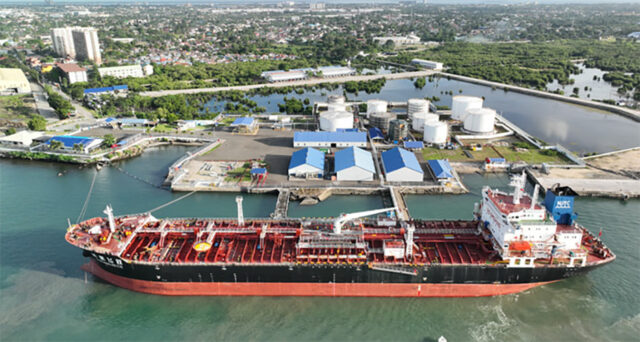
CHEVRON’S LAPU-LAPU TERMINAL IN CEBU — CHEVRON

AMERICAN multinational energy company Chevron said it has invested $3.1 million (P181.6 million) to upgrade its terminal in Lapu-Lapu City, Cebu, boosting its storage capacity to 150,000 barrels.

In a statement on Wednesday, Chevron said the upgrade is estimated to unlock around $1 million in annual value.

“Our investment in the Lapu-Lapu terminal is a sign that Chevron is here to stay and will continue to boost the capacity of our other local terminals,” said Pongtorn “Bon” Tangmanuswong, general manager and country chairman of Chevron Philippines, Inc. (CPI).

He added that the company aims to ensure “that all corners of the Philippines have access to a reliable fuel and energy source.”

The Lapu-Lapu terminal recently received its first import vessel, the MT Chang Hang Fei Yue Voy. No. 2518, loaded with products from South Korea.

The terminal serves as Chevron’s gateway to Central Visayas, supporting fuel supply to nearby cities and municipalities driven by manufacturing, transportation, and tourism growth.

Last year, Chevron Philippines inked mutually beneficial lease agreements with Batangas Land Co., Inc. (BLC) for the lease of its properties in major cities around the Philippines.

Aside from the Lapu-Lapu terminal, CPI renewed its lease in San Pascual, Batangas; San Fernando (Poro), La Union; and Sasa, Davao City.

Chevron, which markets the Caltex brand of fuels and lubricants, also committed funding to these terminals’ energy infrastructure to maintain the safety and effectiveness of their operations.

The company is engaged in the importation of crude oil and natural gas and in the manufacture of transportation fuels, lubricants, petrochemicals, and additives. — Sheldeen Joy Talavera

The ASEAN economic agenda and the Philippines’ fiscal condition

Last week, on Feb. 24, I attended the ASEAN Editors and Economic Opinion Leaders Forum at the Fairmont Hotel in Makati. Organized by the Department of Trade and Industry (DTI), it was a huge forum with a huge audience. I counted five Cabinet Secretaries who spoke there — DTI Secretary Ma. Cristina Roque, Finance Secretary Frederick Go, Education Secretary Sonny Angara, Energy Secretary Sharon Garin, and Information and Communication Technology Secretary Henry Aguda.

Executive Secretary Ralph Recto was supposed to give a keynote speech in the morning and Presidential Communications Office (PCO) Secretary Dave Gomez was supposed to speak in the last panel discussion in the afternoon. Perhaps President Ferdinand Marcos, Jr. asked them to work in their offices instead as he himself faced the audience and foreign officials.

The president spoke in the afternoon, not with a prepared speech but rather in a one-on-one interview with veteran broadcaster Rico Hizon. The President did not even glance at his prepared notes. It was the first time I had seen and heard him speak in a spontaneous set up, and I was pleasantly surprised and impressed — he was very articulate and knowledgeable about many issues and reform items. From the territorial dispute in the South China Sea (he did not use the term “West Philippine Sea”), to incentives to attract more foreign investments, from reducing the burden of bureaucracy for business, to expanding our exports, from potential candidates for President in 2028, to the ASEAN chairmanship, and much more.

Mr. Hizon asked the president who would be his candidate for 2028 elections, in order to ensure the continuity of his economic programs and reforms. Mr. Marcos answered that it should be someone who understands economics, how to control inflation, expand GDP and production, increase investments and job creation, and improve the welfare of the Filipinos. A simple, direct, and honest response by the President — I liked it.

Mr. Hizon also asked the president what his focus would be as Chair of the ASEAN this year. He said that his priority is to make the ASEAN stick to its original purpose, to be an economic bloc unified in pursuing economic prosperity for the members and their people. A beautiful response. I would call it his “ASEAN Economic Agenda of Peace and Prosperity.” Yes, Mr. President, we can never go wrong with such a primordial goal.

One thing I noticed at the ASEAN event was that it was supposedly an editors and economic columnists/writers’ forum but there were very few media people in the room, mostly broadcast people and TV anchors like Rico Hizon, Karen Davila, Regina Hing, and Cathy Yang. And the editor-in-chief of the Straits Times of Singapore. I did not see the editor in chiefs (EICs) of big Philippine newspapers. The bulk of the audience was made up of corporate people plus a few undersecretaries of certain agencies.

Thus, the ASEAN Editors and Economic Opinion Leaders Forum became an ASEAN Business and Economic Leaders Forum. I read a few reports in print media on how the reporters and journalists were excluded from the venue and relegated to a separate room watching on wide screen TV monitors. I think the DTI should have co-organized it with the PCO because the office knows all the major editors and economic columnists and opinion leaders in the country.

CATCHING UP
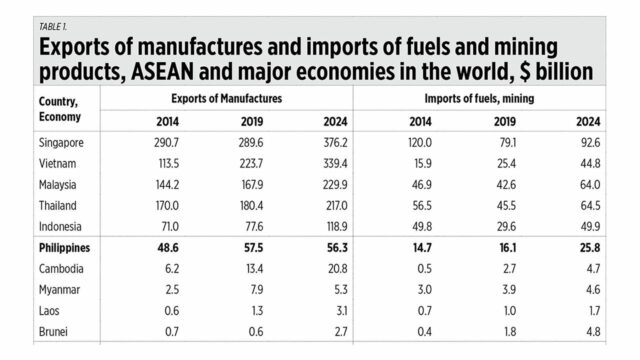
Some ASEAN countries are industrializing very fast. For instance, when looking at the exports of manufactured goods in 2024, Singapore and Vietnam had exported $376 billion and $339 billion worth, more than UK and Canada, while Malaysia was catching up with Canada and may have overtaken it in 2025.

The Philippines still has a long way to go to catch up with the rest of the ASEAN-6 but is still far ahead of the other ASEAN-4.

Considering the risks of higher prices for oil-gas from the Middle East as the US/Israel-Iran war continues, I checked the value of ASEAN countries’ imports of fuels and mining products. Singapore leads in the ASEAN with $93 billion in 2024, followed by Malaysia and Thailand.

China and the US are the large importers of these products, as their exports are powered by fossil fuels and metallic products importation (see Table 1).

CASH
Last Tuesday, the Bureau of the Treasury (BTr) finally released the government’s full year 2025 cash operations report (COR). The fiscal condition remained flattish, the budget deficit was still at around P1.6 trillion a year, financing or net borrowings was still at P1.4 trillion a year. Revenues are rising, but expenditures are rising fast too (see Table 2).

The large-scale privatization of some government assets and corporations should be done to raise more revenues without raising taxes. And there should be spending cuts to control the hemorrhage in public expenditures, like reforming the Military and Uniformed Personnel pension, cutting the budgets of state universities and reallocating the funds to public elementary and secondary education.


Bienvenido S. Oplas, Jr. is the president of Bienvenido S. Oplas, Jr. Research Consultancy Services, and Minimal Government Thinkers. He is an international fellow of the Tholos Foundation.

minimalgovernment@gmail.com

ADVERTISEMENT
ADVERTISEMENT