Home Blog Page 2029

Bicam report on capital markets reform OKd

BW FILE PHOTO

THE SENATE and the House of Representatives on Wednesday ratified the bicameral conference report on a measure that seeks to cut the tax on stock transactions to 0.1% from 0.6%, a move that experts hope will boost the Philippine stock market.

At the same time, Congress also ratified the bicam report on the measure that will raise the capital of the Development Bank of the Philippines (DBP).

“We have come up with a piece of legislation that seeks to promote capital market development, increase capital mobility, and enhance financial inclusion,” Senator Sherwin T. Gatchalian said, referring to the Capital Markets Efficiency Promotions Act.

“A more efficient capital market means more opportunities, greater financial inclusion, and stronger economy that works for all.

Mr. Gatchalian said lawmakers agreed to reduce the documentary stamp tax (DST) on original issue of shares of stock to 0.75% from 1% of the par value of the shares of stock.

It will also exempt DST on the original issuance, redemption or other disposition of shares or units of participation in a unit investment trust fund.

Mr. Gatchalian said the move would ease the financial burden on investors and allow them to maximize their earnings without needless taxes.

He said the bill will also introduce an allowable deduction of 50% of an employer’s contribution to their employees’ personal equity and retirement accounts, which would incentivize businesses to encourage workers to prepare for retirement.

A copy of the bicameral conference committee report of the measure was not immediately available.

Based on a forecast by the Philippine Stock Exchange, the lowering the stock transaction tax to 0.1% would boost stock market’s trading volume to P4.9 trillion by 2029.

Meanwhile, the Senate also ratified bicameral conference committee report of the new DBP charter, which would boost the lender’s authorized capital stock to P300 billion from P35 billion.

The measure mandates that the National Government will own 70% of the DBP’s capital stock at all times, with P32 billion or 10.67% being fully subscribed to and paid for by the state. It will also allow the state-run lender to conduct an initial public offering.

“The increased capitalization could be provided to DBP which would give them heightened ability to issue more loans to fund critical projects for priority sectors such as infrastructure health social services and agriculture,” Senator Mark A. Villar, who sponsored the Senate bill, told the plenary floor.

A copy of the bicameral conference committee report on the DBP charter was not available.

“This proposed measure will enable the DBP to continuously support national development goals, ensuring that the benefits of these projects reach ordinary Filipinos in terms of job opportunities, better services, and improved livelihoods,” Mr. Villar said. — John Victor D. Ordoñez

Pangandaman says gov’t could adjust growth target if necessary

Motorists are seen along United Nations Avenue in Manila. — PHILIPPINE STAR/RYAN BALDEMOR

BUDGET Secretary Amenah F. Pangandaman on Wednesday said the government’s 6-8% gross domestic product (GDP) growth target this year may be adjusted after underwhelming 2024 growth and global uncertainties.

“Let’s wait for it. Maybe, we need to adjust. So, if needed, we’ll do the necessary adjustment,” Ms. Pangandaman, who chairs the Development Budget Coordination Committee (DBCC), told reporters on Wednesday.

The DBCC will conduct its first meeting this year in March.

“All the numbers are already in. We already saw our GDP, inflation, but our employment is still very good. We’ll wait for the others… There’s a policy meeting soon. So, once all the numbers are in, and then we’ll check what’s happening with our peers,” Ms. Pangandaman said.

The Philippine economy grew by a weaker-than-expected 5.6% in 2024, falling short of the government’s revised 6-6.5% target.

Asked if the country could hit 8% growth this year, Finance Secretary Ralph G. Recto earlier told BusinessWorld that “6-6.5% [growth] is doable for 2025.”

Department of Budget and Management (DBM) Principal Economist and Undersecretary Joselito R. Basilio said the DBCC will likely retain the 6% lower band for 2025.

“Most likely retain. The lower part is firmer, meaning it won’t be lowered or raised anymore. Given the reasons for achieving the growth target, such as election spending, and agriculture is okay,” Mr. Basilio told reporters.

Mr. Pangandaman said they will also wait for the Bangko Sentral ng Pilipinas’ (BSP) next policy move.

“The BSP has its own thing. They also crunch their own numbers based on the international outlook… Let’s wait for it. Maybe we need to adjust,” she said.

BSP Governor Eli M. Remolona, Jr. over the weekend said they may cut interest rates by 50 basis points (bps) this year. He said the cuts could be delivered in increments of 25 bps each in the first and second half of the year.

The central bank began its easing cycle in August last year, slashing borrowing costs by a total of 75 bps to 5.75% by end-2024.

Meanwhile, Mr. Basilio said the DBCC could revise the revenue and expenditure program for this year to be “more realistic.”

“Depending on the condition in March. It will be there’s Trump on the outside. Then, our budget is still rolling to 2025. Then, depending on what the finalized revenue measures are,” Mr. Basilio said.

The DBCC expects revenues to hit P4.64 trillion in 2025, while expenditure program was set at P6.182 trillion.

It also kept the deficit ceiling at -5.3% of GDP for 2025.

USAID FREEZE
At the same time, Ms. Pangandaman said she does not see any downside risks yet associated with recent policies announced by US President Donald J. Trump.

“Nothing yet. As of now, it’s just the pronouncements and most of it is just the policy review of the existing orders and previous policy. So, we wait, we wait, we wait until we get their final agenda in this administration,” she said.

The Trump administration on Tuesday announced that it was going to put on leave all directly hired employees of the US Agency for International Development (USAID) globally and recall thousands of personnel working overseas, Reuters reported. (Related story here: “Trump administration puts on leave USAID staff globally in dramatic aid overhaul”).

USAID programs around the world, including the Philippines, were halted after Mr. Trump ordered a freeze on most US foreign aid to ensure this is aligned with his “America First” policy.

“I think, again, what Trump’s administration said is that they will just review, give them a 30-day review of all the aid that they provide to development countries, otherwise. So, ngayon, hintay muna po tayo,” Ms. Pangandaman said in mixed Filipino and English.

Ms. Pangandaman said the government is hopeful that after the review, the US will still provide funding for projects in the Philippines.

Asked if the government can step in and provide the funding instead, she said: “We don’t know yet. The aid that is being given to us by not just the US but also our other development partners is a bit big. So, let’s see if we can.”

National Economic Development Authority Secretary Arsenio M. Balisacan said he sees no significant impact from the suspension of foreign aid. — Aubrey Rose A. Inosante

Gas stations may be required to put up EV charging points this year

Electric vehicle charging stations are seen at a mall in Eastwood City. — PHILIPPINE STAR/WALTER BOLLOZOS

By Sheldeen Joy Talavera, Reporter

THE Department of Energy (DoE) is looking to start requiring gas stations to have electric vehicle (EV) charging points this year, as part of efforts to boost EV adoption in the country. 

Patrick T. Aquino, director at DoE – Energy Utilization Management Bureau, said that the department will release the draft issuance for comments and conduct public consultations within the year.

“The proposal is to require liquid fuel retail outlets (LFRO) to have electric vehicle charging points depending on the ratio of number of dispensing pumps,” Mr. Aquino told BusinessWorld.

“The operator of the LFRO can directly install, operate and maintain the EV charging point or allow a third party to do the same,” he added.

Mr. Aquino said that the DoE will be identifying priority areas for implementation, adding that it will be done in phases.

Asked on when the department targets to implement the policy, he said: “within the year.”

“The DoE is pushing for EV charging infra in LFRO to improve access and availability for EV users,” Mr. Aquino said.

Under the Republic Act No. 11697, otherwise known as the Electric Vehicle Industry Development Act (EVIDA), gasoline stations identified in the Comprehensive Roadmap for the Electric Vehicle Industry (CREVI) are mandated to designate dedicated spaces for the installation of commercial use charging stations for the general public. 

EVIDA aims to promote the development and adoption of EVs in the Philippines by mandating an increase in the share of EVs in corporate and government fleets, which is expected to generate more demand for EVs.

Under CREVI, the business-as-usual scenario target is a 10% EV fleet share by 2040, while it sets a clean energy scenario target of at least 50%.

According to the DoE, there are 104 DoE-accredited EV charging station providers nationwide as of November 2024.

Mr. Aquino said at present, there are EV charging points in some stations of Petron Corp., Unioil Petroleum Philippines, Inc., Seaoil Philippines, Inc., and Shell Pilipinas Corp.

Edmund A. Araga, president of Electric Vehicle Association of the Philippines, said that the policy is “a bold move” showing the government’s commitment to hit the targets under CREVI.

“We are optimistic that number of EVs will continue to increase by at least 20% as more consumers are now considering owning an EV in addressing issue on gas price increase,” Mr. Araga told BusinessWorld via Viber.

Mr. Araga said there are many EV brands in the market, allowing consumers to have a wider array of vehicles to choose from.

“We see continued demand for oil products, despite developments in EV and other renewable energy sources. Especially in the Philippines, to-date, gasoline and diesel is still a strong contender in the transport sector market and no major shift is expected in the near future,” Leo P. Bellas, president of Jetti Petroleum, Inc., said in a Viber message.

Mr. Bellas said that the company has no definite plans yet but “will actively engage should the time comes in support of the initiatives of the DoE.”

For Cebu-based fuel retailer Top Line Business Development Corp., its President and Chief Executive Officer Eugene Erik C. Lim said the company is still finalizing its rollout plan for the EV charging infrastructure for its stations.

Investors on guard as US tariff threats evolve

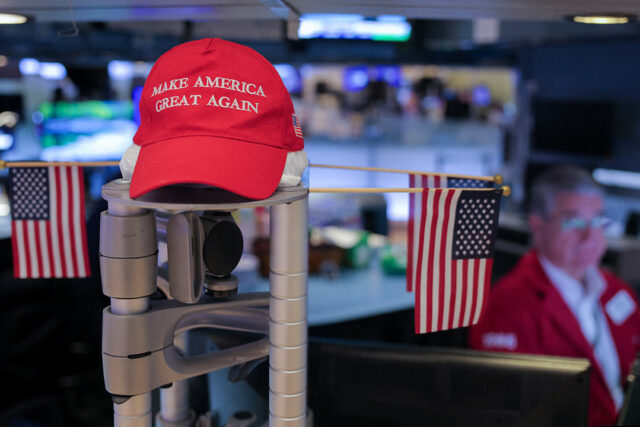
A “Make America Great Again” hat is seen on display on the trading floor at The New York Stock Exchange. — REUTERS

NEW YORK — Investors are seeking to protect portfolios from the potential economic fallout from President Donald J. Trump’s tariff plans even as many on Wall Street doubt the situation will erupt into a sustained trade war that cripples assets.

Announcements on tariffs have whipsawed markets this week as investors try to wrap their heads around the evolving dispute. Sweeping tariffs that Mr. Trump ordered on Saturday on Mexico and Canada were paused a month, while tariffs were being imposed on China, which retaliated with levies of its own.

Some investors have been preparing for the potential for tariffs that Mr. Trump vowed to put in place during his campaign, including moving to assets seen as less vulnerable to a trade dispute or geopolitical uncertainty more broadly.

With stocks trading at lofty price-to-earnings ratios, investors also said the tariff news could warrant more caution for equities and create volatility in the near term.

At Nomura Capital Management, where stretched valuations for equities and other risk assets had already spurred the firm to become more defensive in recent months, the tariffs were further reason to be cautious, said Matt Rowe, head of portfolio management and cross-asset strategies.

With the tariff situation, “it’s really hard to see exactly where it’s going to go, how long it will last,” Mr. Rowe said. “But it’s easy to say that this is not good for growth, it’s not good for consumer spending, and it’s likely to have a negative impact on earnings.”

The tariff developments caused big swings in equities and currencies on Monday, which retraced initial moves after news of the pauses on the Mexico and Canada tariffs.

“The threat of tariffs is live and that’s unlikely to go away,” said Michael Medeiros, macro strategist at Wellington Management, adding that the uncertainty could force the firm to explore more tactical, short-term trades.

PROFIT SQUEEZE
Analysts estimate that tariffs could drive up inflation while weighing on economic growth and corporate profits. Goldman Sachs strategists said Mr. Trump’s tariffs announced on Saturday — 25% on Canada and Mexico and 10% on China — would reduce their S&P 500 earnings forecasts by roughly 2-3%, while strategists at BofA Global Research said the earnings hit could be as much as 8%.

“If company managements decide to absorb the higher input costs, then profit margins would be squeezed,” the Goldman equity strategists said in a note on Sunday. “If companies pass along the higher costs to… end customers, then sales volumes may suffer.”

The onset of tariffs raised the risk of an S&P 500 pullback of at least 5% early in the year, Lori Calvasina, head of US equity strategy at RBC Capital Markets, said in a note on Sunday.

Strategists at UBS Global Wealth Management on Monday maintained their view the S&P 500 would end the year roughly 10% above current levels, but said “tariffs are likely to represent an overhang on markets and contribute to volatility, at least until investors gain greater clarity on the path and destination of US trade policy.”

The UBS strategists recommended gold as “an effective hedge” against geopolitical and inflation risks.

Robeco added to its positions in safe havens gold and US Treasuries late last week because of concerns about market complacency with respect to tariffs, said Colin Graham, the firm’s head of multi-asset strategies.

“We’re in a worse position than we were on Friday,” Mr. Graham said as he watched the initial market reaction unfold on Monday.

FLUID SITUATION
While the tariff threats lent support to some strategists’ current allocations and encouraged others to make changes, many warned against knee-jerk reactions to Mr. Trump’s announcements.

Morgan Stanley equity strategists said the tariffs reinforced their preference for services industries, including financials, software, and media and entertainment, saying in a note on Monday that “we would expect the market to rotate further toward services given recent trade policy implementation.”

Concerns about risks from tariffs and geopolitical uncertainty more broadly have led Manulife Investment Management in recent weeks to move into more defensive equity areas and reduce exposure to riskier high-yield credit, said Nathan Thooft, chief investment officer and senior portfolio manager at Manulife.

“But we’re advocating for people to remain fairly calm,” Mr. Thooft said. “This is still very fluid, and the reality is we don’t know what the policies will be.”

Baker Avenue Wealth Management had been underweight healthcare stocks coming into 2025 but added exposure to the group in recent weeks because it seems to be relatively immune to tariff risk, said King Lip, the firm’s chief strategist. Still, Mr. Lip said he thinks Mr. Trump recognizes the concerns a trade war brings for the economy and markets, so the situation will be “ratcheted down in a reasonable amount of time.”

Indeed, many investors remained doubtful that Mr. Trump would allow the tariff dispute to spiral into a full-blown trade war that severely damages asset prices.

Spencer Hakimian, chief executive officer of Tolou Capital Management, a New York-based macro hedge fund, said he was not making any changes to his investment portfolio based on the tariff announcements.

“Trump is bluffing,” Mr. Hakimian said. “Fade all the noise.” — Reuters

PHL may need 50M sq.m. of industrial space by 2035

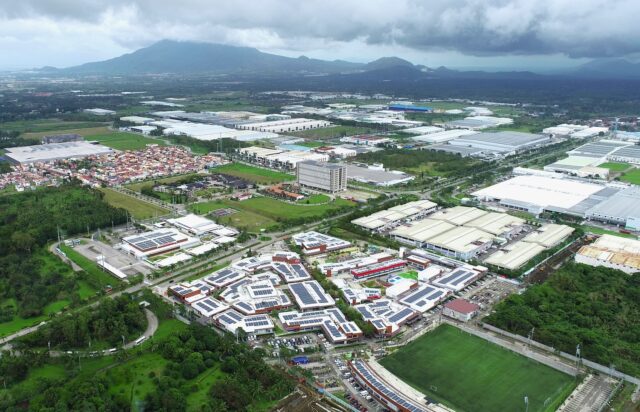
Biz Hub at LIMA Estates

THE PHILIPPINES may need at least 50 million square meters (sq.m.) of industrial space by 2035, with an estimated average price of P30,000 per sq.m., to accommodate surging demand from the manufacturing, logistics, and data center sectors, according to commercial real estate consultancy firm PRIME Philippines.

“By 2035, the major backbone of the Philippine economy will be the industrial sector. Industrial real estate is no longer just an asset — it’s the key to unlocking the Philippines’ economic future. The demand is here; the supply must follow,” PRIME Philippines Founder and Chief Executive Officer Jet Yu said during a briefing on Wednesday.

Warehouse supply grew by 4% to 37.6 million sq.m. in 2024, driven by new developments in Laguna, Batangas, and Cebu.

PRIME Philippines projected that supply would breach 40 million sq.m. this year, with upcoming expansions in Rizal, Cavite, Laguna, Pampanga, Cebu, and Davao.

Mr. Yu noted that about a third of the projected demand will come from the development of data centers, with over 100 data centers expected to go live in the country within the next three years.

“The 50 million sq.m. is a conservative-to-optimistic estimate. In just one or two years, we’re going to see many countries, including the Philippines, localizing and housing their own data domestically,” he said.

Mr. Yu added that the country’s manufacturing and logistics sectors are also expected to fuel industrial space demand.

“There has been a rapid decentralization across the Philippines. Logistics players have strategically positioned themselves over the past three to four years,” he said.

“On manufacturing, when many companies from China sought to diversify their operations to other ASEAN neighbors, we somewhat missed that opportunity. However, over the next ten years, we expect significant demand,” he added.

Meanwhile, Mr. Yu said the country’s manufacturing sector could continue to thrive amid geopolitical tensions.

“As long as we play it strategically and carefully, it’s safe to say that the manufacturing sector will continue to thrive in the Philippines,” he said.

“In 2025 alone, we have already received interest from companies looking to expand their existing manufacturing facilities in the Philippines. These are secondary hubs as a way for manufacturers to diversify and mitigate potential risks,” he added.

The United States paused its planned 25% tariffs on Mexico and China in exchange for concessions on border and crime enforcement.

However, US President Donald J. Trump said he is not rushing efforts to defuse a trade war with China, which was triggered by a 10% tariff on all Chinese imports.

In response, China imposed targeted tariffs on US imports and placed several companies, including Google, on notice for possible sanctions. — Revin Mikhael D. Ochave

How AirAsia Philippines is tackling recovery challenges

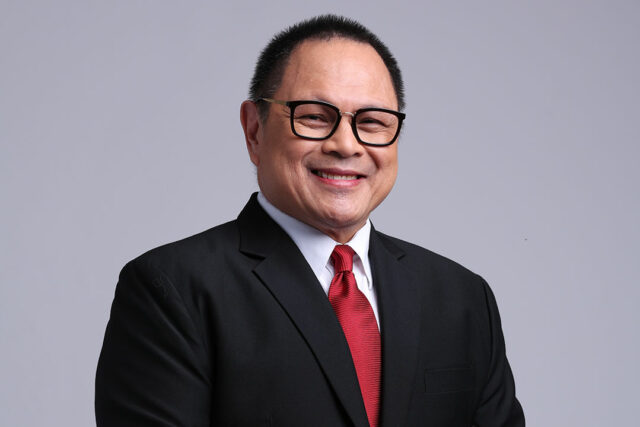
RICARDO P. ISLA

By Ashley Erika O. Jose, Reporter

AIRASIA PHILIPPINES is focusing on expanding domestic routes and tackling key industry challenges as part of its recovery strategy, its chief executive officer (CEO) said.

“Now five years in AirAsia, it has been a very good balance between the challenging pandemic years and the years of recovery,” AirAsia Philippines CEO Ricardo P. Isla said in an interview with BusinessWorld.

Before joining AirAsia Philippines in 2019, Mr. Isla spent nearly 20 years in the telecommunications industry, where he led the international retail sales and distribution for one of the country’s major telecom companies.

PATH TO RECOVERY
“First of all, the pandemic presented a very challenging situation for us. We had to be very resourceful and resilient. Actually, we are still on the path to full recovery,” he said.

Mr. Isla said that AirAsia Philippines’ domestic routes have fully recovered, but its international network will only fully recover by the second half of the year.

“It is because of China. It used to account for 30% of our international capacity. Right now, it is not really delivering, and we just have to catch up,” Mr. Isla said.

As a result, AirAsia Philippines will focus on maximizing its domestic destinations, particularly in areas where the airline has a strong presence.

“For 2025, we are maximizing our domestic [network], especially in leisure destinations. We’ll stay focused and further strengthen our strong territories. We expect to boost our capacity by about 10-15% in these very popular destinations,” he said.

He added that the low-cost carrier plans to concentrate on its strong territories such as Boracay, Kalibo, Palawan, and other leisure destinations.

“However, for international, we would still like to focus on our positioning as a low-cost carrier. We have to go back to basics, meaning rebuild the trust and confidence of our passengers,” he said.

Mr. Isla noted that the airline is banking on its parent company’s plans, as AirAsia Philippines stands to benefit heavily from the consolidation of AirAsia X and AirAsia Aviation Group (AAGL).

Earlier in January, AirAsia X Berhad (AAX) announced a mutual agreement with Capital A Berhad (Capital A) to extend the timeline for the completion of the proposed acquisition of the group’s aviation business.

Last year, Capital A Berhad disclosed that it had entered into a non-binding agreement with its unit, AirAsia X, for the sale of its aviation businesses — AirAsia Berhad and AirAsia Aviation Group Ltd.

“Let us also consider the status of our parent company with regard to the proposed regularization plan,” Mr. Isla said, adding that the transaction is expected to be completed soon.

According to Mr. Isla, this will be followed by its parent company’s order for over 600 more aircraft.

“We havean orderbook of around 647 aircraft, with a good spread of Airbus A320s and mostly Airbus A321NEOs. This will serve all countries, including Philippines AirAsia, Malaysia, Indonesia AirAsia, Thailand AirAsia, and Cambodia AirAsia,” he said.

REVIVAL OF ROUTES
The low-cost carrier is confident about the recovery of air travel, and AirAsia Philippines aims to capture that momentum, Mr. Isla said, adding that the company will assess which of its pandemic-affected routes to revive.

“We must be willing to sail through the uncharted waters of the travel industry. By that, we want to further widen our network. And at the same time, when we widen our network, we want to go back to where we used to fly during the early parts of 2019,” he said.

For AirAsia Philippines, the challenges in the aviation industry remain, Mr. Isla said, identifying these as manpower, supply chain issues, and the need to catch up with infrastructure.

“There are many challenges, but three key elements—people, availability of parts and resources—are particularly pressing, and now we are running out of MROs (maintenance, repair, and overhaul) facilities,” he said.

Many Middle Eastern companies are after Filipino talent, Mr. Isla noted, adding that AirAsia Philippines is further strengthening the perks it offers its employees.

He added that supply chain disruption continues to be a major challenge in the aviation industry.

“We are actively mitigating this. We are an ASEAN company, and all the other airlines within the AirAsia group. So we have the muscle when it comes to procurement of parts,” he said.

Additionally, Mr. Isla said that due to the limitations of MROs, the company has launched Asian Digital Engineering.

“This is our MRO prioritizing the Philippines. So, we’ve addressed that. These are the resources we need to maintain, namely the resources and parts,” he added.

ICTSI expands MICT capacity

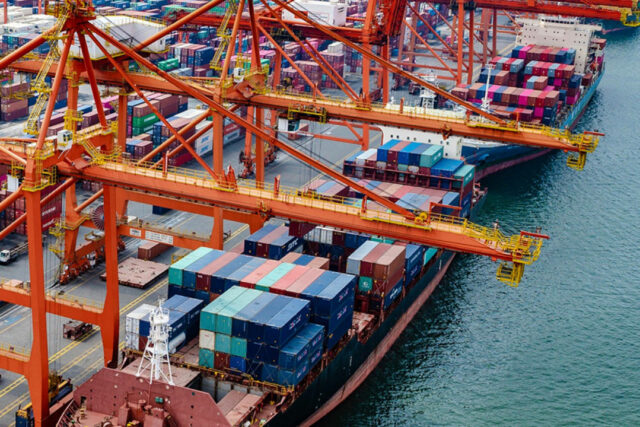
ICTSI.COM

INTERNATIONAL Container Terminal Services, Inc. (ICTSI) said it is enhancing its Manila International Container Terminal (MICT) through capacity expansion and infrastructure upgrades.

In a media release on Wednesday, ICTSI announced that MICT is building Berth 8 to accommodate large container vessels with capacities of up to 18,000 twenty-foot equivalent units (TEUs).

This expansion will add 200,000 TEUs to the capacity, raising the terminal’s total volume handling capability to 3.5 million TEUs annually.

Operated by ICTSI, MICT is one of three terminals in the Port of Manila and has the largest crane fleet to date.

ICTSI said the additional yard space will support the new berth while also mitigating yard utilization for increased maneuverability.

The company is also planning to expand its sustainability efforts by continuing to incorporate hybrid and near-zero-emissions equipment into its operations.

MICT said it recently deployed eight zero-emission rubber-tired gantries (RTGs) to complement its fleet.

ICTSI added that it is also planning to acquire electric trucks and establish electric vehicle charging infrastructure.

“MICT’s expansion and modernization efforts align with the country’s economic needs and goals. These efforts further underline the terminal’s central role in the country’s logistics and supply chain resilience, as well as its prominence as a gateway for global trade,” ICTSI said.

In 2024, ICTSI announced that the Manila terminal will begin the second phase of its Berth 8 expansion, which includes the construction of a 300-meter wharf and a 10-hectare container yard.

Berth 8 will be equipped with three quay cranes for handling large-capacity vessels with a capacity of up to 18,000 TEUs, ICTSI said. The new cranes are expected to arrive in 2027.

In 2023, the company estimated that adding a new berth in Manila would cost P15 billion, enabling it to serve more large foreign vessels.

ICTSI operates 33 terminals in 20 countries across six continents. At the local bourse on Wednesday, shares in the company gained P11, or 3%, to end at P378 apiece. — Ashley Erika O. Jose

Agentic AI to automate processes in IT-BPM sector

DCSTUDIO-FREEPIK

WIDER ADOPTION of agentic artificial intelligence (AI) systems among information technology and business process management (IT-BPM) firms will allow the sector to move away from transactional tasks and create higher-value jobs, an industry group said.

“The widespread adoption of agentic AI will fundamentally reshape workforce dynamics, shifting demand away from repetitive, transactional roles and toward higher-value, AI-enhanced functions,” the IT & Business Process Association of the Philippines (IBPAP) said in a statement.

“While automation will take over routine tasks, new opportunities will emerge in AI governance, human-AI collaboration, data analytics, process engineering, and AI-driven customer experience management,” it added.

Agentic AI are systems that can work autonomously and make decisions based on probability and patterns learned from interactions.

Compared to generative AI, agentic AI technologies specialize in orchestrating processes, optimizing workflows and driving intelligent automation, IBPAP said.

“Today, agentic AI is already transforming critical functions such as fraud detection, supply chain management, predictive analytics, and customer service escalations, enhancing efficiency and accuracy,” it said.

IBPAP said 11% of IT-BPM firms have already fully implemented agentic AI technologies, while 56% are actively integrating it into their operations.

“These figures signal a rapid transformation that demands large-scale workforce upskilling initiatives to ensure the industry remains competitive,” it added.

To address the need for AI-skilled workers, IBPAP said the industry must work to build a robust talent pipeline in collaboration with the Technical Education and Skills Development Authority (TESDA) and academic institutions.

“Key recommendations include AI boot camps and micro-credentialing programs to train employees in AI operations, governance, and ethical AI management,” it said.

“IBPAP encourages cross-skilling programs, enabling workers in traditional roles to transition into AI workflow supervision, automation engineering, and decision-support functions.”

The industry must also expand AI learning pathways, upgrade IT infrastructure and cloud capabilities, establish AI compliance standards and promote fair, responsible, and human-centric AI, it said.

“The Philippine IT-BPM industry’s proactive approach to agentic AI adoption ensures its continued competitiveness in the global market,” IBPAP said.

“The sector is positioning itself at the forefront of AI-powered service delivery by harnessing AI to augment and not replace human capabilities, fostering strategic upskilling initiatives, and driving inclusive innovation.” — Justine Irish D. Tabile

Close, and with a cigar

LA CASA DEL HABANO’S walk-in humidor

WHILE La Casa del Habano may have launched a High Tea and a happy hour promo called “Indulge Twice” on Jan. 22, let’s be honest: the focus on the Ayala Triangle Gardens cigar lounge is the long and fat Cubans (cigars, that is).

Cuban cigars — so scarce and precious that rumor has it  Winston Churchill had them snuck into diplomatic bags so he could enjoy them during World War II — are the trade of La Casa del Habano. One of its partners, Javier Toledo (who is not yet 30 years old) told us that this Makati branch, which opened late in 2023, is one of about 155 branches around the world — not one of them in the United States, because of trade embargoes set against Cuba during the Cold War.

According to him, one of their partners has the sole proprietorship of the distribution of Cuban cigars in Manila, hence, “We are able to provide these cigars at a more affordable price than they normally would if you were to order them abroad,” said Mr. Toledo.

After sitting down to tea and sandwiches — their tea promo is available from 2 to 5 p.m. daily; General Manager Joy Oyson said, “Between two to five in the afternoon, no one smokes,” hence the need for the promo to fill the 200-square-meter space in these hours — Mr. Toledo gave us a short lecture about Cubans.

Are they really better, or are they really just rare? “It’s had a long-standing history for being that mild and very flavorful,” he said. “The taste that you get out of the tobacco in Cuba is mild; quite nutty in its flavor profile.”

“In Cuba, the climate that it has, for some reason… other regions around the world cannot seem to produce the same taste,” he said, citing Nicaragua, the Dominican Republic, and the Philippines’ own tobacco crop. He did say, however, that some tobacco in the Philippines came from Cuban seed.   

There’s a proper way of handling the cigar – and at P1,000 to P50,000 a pop, you better do it right.

“You’d always want to hold it [nearer] the butt [end] of the cigar,” he said. “You might deconstruct the cigar by accident,” he said, if you hold it the wrong way.

He fiddled with a faulty lighter at first, before getting a new one, a more powerful torch. Before this, he was talking about humidity (the ideal is 69% humidity, otherwise, the cigars will be too dry and will crack; or be too wet and you end up with soggy smokes). With a special clipper that leaves a diamond-shaped cut, he clipped the end, then began to light.

“You never want to burn a cigar,” he said, calling the ritual “toasting.” “You want to heat it enough to a point that the end of the cigar is red.”

As most cigar smokers know, one never inhales: “The cigar is like coffee — it’s the taste that you get out of it,” he says.

A highlight of the cigar lounge is the walk-in humidor, where members can store their Cubans (the only cigars allowed inside). This also serves as the (consumable) annual membership fee: P150,000 for the lowest tier, where one shares space with others; P300,000 for the premium tier (solo), and a bigger VIP one at a cool half-million.

“Back when I was 18, I dreamt of owning a lounge like this,” he said (and he got his dream, being a co-owner out of 11). “When I first smelled a Cuban cigar from my dad, I was just so attracted to that smell. It always made me wonder what it was like.” He asked his father when he could smoke one. His father answered, “When you can afford it.”

La Casa Del Habano Manila is located at the Shops at Ayala Triangle Gardens, Makati. High Tea is priced at P3,199 for two persons, and is available from 2 to 5 p.m. — Joseph L. Garcia

Yuka Saso and FNG: A partnership rooted in shared values

Yuka Saso

As a professional athlete competing on the global stage, Filipino-Japanese golfer Yuka Saso leads an extraordinary lifestyle. Being the youngest two-time U.S. Women’s Open champion, Saso values the importance of having a serene and comfortable space to unwind in between her rigorous training and international competitions.

Reflecting on her remarkable 2024 season, in which she secured her second U.S. Women’s Open title, Saso shared, “It was a memorable year, having another championship. Most importantly, I made a lot of memories on the LPGA Tour with my friends as we compete every week. I also visited many places around the world.”

With such a hectic schedule, finding balance is key. “It’s important for me to have a place that feels like home no matter where I am. It helps me recharge and stay focused,” she explained. To maintain both physical and mental well-being, she prioritizes rest and relaxation. “I mainly focus on avoiding injuries, so I train 3-4 times a week and not overworking. I like staying at home. Sleeping and watching shows are how I usually relax.”

This philosophy aligns seamlessly with Federal Land Nomura Real Estate (FNG), a developer that crafts modern and thoughtfully designed spaces. Just as Saso prepares meticulously for every game, showcasing her dedication to perfect her craft through consistent practice, FNG ensures their properties are carefully designed to support residents’ lifestyles.

As partners for two years and counting, Saso and FNG find themselves not only sharing similar values, but cultures as well. FNG is a collaboration between Federal Land and Japan’s Nomura Real Estate, with a vision of bringing Japanese-inspire living in the country, while still catering to the needs of Filipinos.

Another thing they share is the focus on aesthetics and functionality. Designing holistically, FNG looks at integrating open spaces, community hubs, and residential areas in its projects. Saso shared, “I look for enough space to relax and overall color and designs in a home,” Saso shared. She also appreciates the connection between home and nature, remarking, “Golf is deeply connected to nature, and having a home with a nature view and also access to outdoor spaces is something I like.”

Whether she’s competing on the green or enjoying a well-earned rest, Saso’s partnership with FNG reflects their shared belief in achieving greatness through thoughtful preparation, innovation, and the kaizen principle of continuous improvement.

Finding Home: Yuka Saso on Golf, Recovery, and Her Ideal Space

At just 22, Yuka Saso has already etched her name in golf history, securing her second U.S. Women’s Open championship and inspiring a new generation of athletes. But beyond the fairways, Saso is just like anyone else — someone who values comfort, meaningful connections, and a place to call home.

In Dec. 2024, she had a quick but packed trip back to the Philippines, whom she represented before embracing her Japanese citizenship. The Filipino-Japanese athlete, whose partnership with Federal Land and Nomura Real Estate (FNG) was renewed, not only shot a campaign with the developer but also made time for a golf clinic for young golfers when she was in the country.

In this exclusive conversation, she shares her thoughts on balancing a demanding career, the influence of her dual heritage, and what home truly means to her.

You bagged your second U.S. Women’s Open Championship in 2024! How would you sum up the year — both on and off the course?

YS: First of all, thank you for all the support! It was a memorable year, winning another championship. But more than that, I made a lot of great memories on the LPGA Tour with my friends — we compete every week, and I also got to visit so many places around the world.

Yuka, who’s had a busy year, still brought energy to the shoot. Despite her quips that she’s not a celebrity, everyone on the set only had high praises for how easy she was to work with, acing her lines and being open to try various shots.

What do you love most about golf, and how do you stay motivated? 

YS: What I love about golf is the challenge. Every week is different—the weather, the golf course, the environment — it keeps things exciting. I stay inspired by focusing on my goals and chasing my dreams. That’s what keeps me going.

Golf is a sport that’s deeply connected to nature. When it comes to a home, do you prefer one with views or access to outdoor spaces? 

YS: I actually love both! A home with a great nature view is very relaxing, but at the same time, I’d also love to have access to outdoor spaces. Being able to step outside and enjoy fresh air is important to me.

FNG — the joint venture by the Philippines’ Federal Land, Inc., a trusted real estate developer in the country, and Japan’s Nomura Real Estate Development Co. Ltd., with brands across multiple real estate business lines such as retail, residential, and offices — was awarded as Best Breakthrough Developer in the Philippines and Asia in 2024 by PropertyGuru. These are prestigious honors for the developer, which was only founded in 2022.

In 2024, it unveiled multiple projects and partnerships. Breaking ground for its inaugural residential projects, Yume at Riverpark in General Trias, Cavite, and The Observatory in Mandaluyong City, FNG is dedicated to creating Japanese-inspired homes, with dynamic, holistic spaces that support self-sufficient living.

You have many fans in both the Philippines and Japan. What values from these cultures do you carry with you every day?

YS: I’m grateful that both countries continue to support me. Growing up, I was able to experience both cultures and appreciate their differences. With the guidance of my family, I learned to respect and embrace these values.

The Philippines holds a very special place in my heart — it’s where everything started. It’s where I made my first dreams, my first friendships, and learned the importance of respecting family and friends. On the other hand, Japan taught me discipline, responsibility, and a strong work ethic. What I find similar in both cultures are respect — no matter where you are or who you meet. That’s something I carry with me every day.

As an athlete, how do you take care of your overall well-being? 

YS: I focus a lot on avoiding injuries. I train about three to four times a week, but I also make sure not to overwork myself. When I’m home, I like to rest — I sleep, watch shows, and use recovery tools like ice baths to help my body recover.

Saso’s year ahead, similar to her remarkable 2024, is already planned and full.

What qualities do you look for in a home to support that balance?

YS: A home should be a place where I can truly relax. I like having enough space, a good overall design, and I really like nice sofas! A comfortable home helps me recharge, both physically and mentally.

You travel extensively for tournaments. What does “coming home” mean to you?

YS: Coming home means being able to fully be myself and relax. After all the traveling, it’s the place where I can just slow down and feel at ease.

You inspire many young athletes and golfing fans. What’s your advice to those who look up to you?

YS: I’m still young, too, and I also get inspired by others! But one thing I try to never forget is why I started playing golf in the first place — because I love it. At the end of the day, no matter how serious or competitive things get, it’s important to remember how much fun the sport is.

Just as Saso finds balance between training and rest, FNG is committed to crafting homes that foster both energy and tranquility. FNG does this by designing with people’s wants and needs in mind — from curated amenities that enrich productivity, health, and community to open, expansive spaces to relax in.

With a shared appreciation for precision, discipline, and thoughtful design, Saso and FNG continue their partnership — one built on excellence, values, and the pursuit of greatness.


Spotlight is BusinessWorld’s sponsored section that allows advertisers to amplify their brand and connect with BusinessWorld’s audience by publishing their stories on the BusinessWorld Web site. For more information, send an email to online@bworldonline.com.

Join us on Viber at https://bit.ly/3hv6bLA to get more updates and subscribe to BusinessWorld’s titles and get exclusive content through www.bworld-x.com.

PremiumLands to conduct P255.2-M tender offer for Asiabest shares

PREMIUMMEGASTRUCTURES.COM

REAL ESTATE company PremiumLands Corp. (PLC) is preparing a P255.2-million tender offer for Asiabest Group International Inc. shares as part of its planned backdoor listing.

PLC and Industrial Holdings and Development Corp. (IHDC) intend to conduct a tender offer involving up to 100 million Asiabest common shares, representing a 33.33% stake, at P2.552 per share.

The tender offer will run from March 10 to April 7, Asiabest said in a regulatory filing on Wednesday.

Asiabest cited the P510.4-million share purchase agreement between PLC and Okada-Manila operator Tiger Resort Asia Ltd. (TRAL) in December last year. The deal involved 200 million Asiabest shares, representing a 66.67% stake, priced at P2.55 per share.

In January, PLC stated that Asiabest could become an infrastructure group if its planned backdoor listing is completed.

Under the deal, Asiabest will continue to function as a holding company, while PLC aims to inject and merge interests in the infrastructure industry.

The proposed business plan includes Asiabest’s acquisition of PLC unit Kabalayan Housing Corp. and the initial infusion of several land assets across various provinces into Kabalayan for mass housing projects.

The business plan also involves a proposal to consolidate IHDC’s interests in Concrete Stone Corp., Industry Movers Corp., and a minority interest in EEI Corp. with Asiabest.

PLC is part of a consortium that includes IHDC.

Trading of Asiabest shares has been suspended since December 16 after the Philippine Stock Exchange determined that PLC’s move was covered by backdoor listing rules due to the change in control. — Revin Mikhael D. Ochave

Abangan ang susunod na kabanata

ORIGINAL PHOTOS FROM FREEPIK

One of the things I hope to see this year is a clear road map towards 2028 and progress in our approach to and relations with China.

‘Coz, clearly, our bilateral ties cannot remain where they are today. More and more analysts have been flagging the South China Sea as a potential flashpoint, and investors themselves have lately taken notice.

I prefer to see the currently poor state of our relations with China as part of a continuum that, hopefully, is on the cusp of taking the next step.

DRAWING THE RED LINE
To be sure, I am glad that our government has asserted our rights to the West Philippine Sea, as provided by the United Nations Convention on the Law of the Sea.

I had long wondered when we would stand up to the bully up north, even if not exactly as Vietnam and India had done. China, which singled us out to demonstrate its power to others in the region since we have the weakest external defense capability in much of Asia, respects only force. Like any bully, it will not respect anyone who will not defend himself.

We have Beijing to thank for our belatedly realizing that a defenseless state is one that has no clout — I blame past administrations up to 2010 for thinking that we could rely completely on the US for cover against aggressors — and thus for putting us on the road to achieving a minimum credible defense capability.

We do not have the same armed mettle as Vietnam, but what we lacked in arms we kinda made up for legally at The Hague. One fights a bully with whatever one has, and in our case, it is international law.

The question is whether we have been building on that legal victory since then. Even former President Rodrigo Duterte had said in public on more than one occasion that the arbitral ruling was already part of jurisprudence, hence, he did not have to assert it (whether that laid-back stance posed legal risks for us remains to be seen).

I recall that Mr. Duterte, in at least two televised remarks in his last year in office, could barely hide his annoyance with China’s then-unreported bullying of our troops in those waters (that was when I first sensed — well, besides the fact that only a handful of its development funding promises had materialized as his administration drew to a close — that Beijing had not been reciprocating our love language since mid-2016). Our coast guard later on confirmed that incidents with Chinese forces at sea had occurred even under Mr. Duterte, who just didn’t want to ruffle Beijing’s feathers by publicizing them.

As I have said before, I have no illusions about the designs of the other superpower, the United States of America. Remember that, as Reuters had reported, the US undertook an aggressive disinformation drive vs Chinese vaccines at the height of the COVID-19 pandemic right here in our country and Filipinos fell for that spiel hook, line, and sinker. That incident serves as a timely reality check against blindly trusting even our allies.

PUSHED TO THE WALL
But then, it not the US now that is pushing us (particularly, our subsistence fishermen) to the wall in our waters (I am saying it is “ours” liberally, because anything beyond 12 nautical miles from our baselines is not our territory, even as we do have the sole right to explore and extract resources beyond that point to within 200 nautical miles from baselines).

Hence, this issue is an existential one for affected fisherfolk and, if one remembers that the suspected oil and gas deposits under Recto/Reed Bank in the West Philippine Sea are supposed to make up for the fast-dwindling stock at the Malampaya gas field (which is expected to run dry in two years), for our entire economy as well.

China’s actions have forced us back into the US’ arms. Some quarters have scored this move but always fail to suggest a viable alternative course (as if we could defend ourselves on our own right now). Beijing’s spokesmen have long accused the Philippines of falling for Washington’s “Cold War mentality,” but the former has bared exactly that mindset by failing to acknowledge that smaller states like us have our own interests in this issue.

When Beijing speaks of the need for “peace” in the region, it is talking about Pax Sinica — “peace” on its terms which, it is turning out for some of us, would be tantamount to the peace of the grave.

There was a time in the past when I applauded any move towards China in order to balance our almost servile reliance on the United States, thinking that a neighbor would understand our needs better than anyone from across the Pacific.

Personally, I would rather that we were not put in this position — because the US has manipulated/failed/abandoned us in the past whenever doing so served its own designs — but as the adage goes: in politics, there are no permanent friends, only permanent interests.

And while Beijing wields tremendous economic and armed clout, it still has much to learn about statecraft with smaller states it could otherwise woo to its side.

CLOCK TICKING
Broadsheets reported the other week that the current government is now weighing which international panel would be the best venue for our next step after the July 2016 victory at The Hague.

Well, it’s about time.

Officials are now talking about the reportedly massive environmental damage caused by China’s island-building and harvesting of resources like clams within our exclusive economic zone (EEZ). True, Vietnam has occupied the most number of islands in the South China Sea — and presumably damaged the environment — but it does not push us around in our own waters, nor does it bar our fishermen from their traditional grounds. Hence, it is not our primary adversary on this count. In fact, we deal with Hanoi constructively despite our differences.

China may even file its own environmental complaint against us for running two ships aground (of which one remains) on Ayungin Shoal. In an interview last year with the ABS-CBN News Channel, former Associate Justice Francis H. Jardeleza welcomed that prospect, saying that the Philippines would pay much smaller damages should it lose that case anyway, compared with what China stands to be dunned for environmental damage due to its island-building and unrestricted harvesting of marine life within the Philippines’ EEZ. In terms of optics, these cases would serve to further draw international attention to the scale of the impact of China’s aggression.

The problem, Mr. Jardeleza said then, is that the current administration has not filed any such case now that it is halfway into its term. But while the current timetable is increasingly tight, it should be recalled that the administration of the late former president Benigno Simeon C. Aquino III filed its arbitration case at The Hague in January 2013 — also in midterm — and secured its legal victory in July three years later.

So long as Beijing keeps treating us the same way in those waters, this will be a logical next step, as it builds on the 2016 arbitral ruling.

LEARNING
With the return of a Duterte to Malacañang being a real prospect come 2028 for now, there are fears among some quarters of a swing back to an overly pro-Beijing stance (Beijing certainly hopes so, I’m sure, and is actively working for that — gauging from recent reports of active surveillance within our territory).

I prefer to see the changes in our policy towards Beijing and Washington as part of a continuum. From decades of allying with Washington (to the point that a Washington Post reporter told me once that it may do us some good to oppose the United States every now and then in order to gain respect), we really needed to see if hewing closer to China would serve us better. In hindsight, there was little value to that tack, except that it made folks in Washington sit up and take notice (instead of smugly assuming that the Philippines was in its pocket anyway).

Swinging all the way back into Washington’s arms, however, is not advisable either. US President Donald Trump’s move to suspend and review foreign aid is a timely reminder of just how fleeting US support can be, pronouncements of how “ironclad” it is notwithstanding.

SETTING THE STAGE
The current administration has an opportunity to strike a better balance for the rest of its term, or at least to set the stage for that after cementing our fallback to firmer international legal foundations, with alliances that serve to enforce the 2016 arbitral ruling, and stronger external defense capability.

Hopefully, we will soon find better footing (across strategic, economic, political, and other fields) in our relations with China.

We do have a bilateral consultation mechanism focused on the South China Sea which was established in May 2017, as Mr. Duterte agreed to Beijing’s demand that the Philippines limit moves to the bilateral level. Any success there has been slow in coming, with some quarters criticizing our agreement to notify China of our resupply missions as being tantamount to seeking Beijing’s permission.

Perhaps there is a need to elevate our bilateral engagement in other areas, in order to give us a strategic sense of where we can move forward. After all, both Manila and Beijing have said that maritime tensions do not constitute the totality of bilateral ties and, therefore, should not dictate progress in other fields.

Our trade with and tourism numbers from China have fallen, although it is not clear just how much of these declines can be blamed on our maritime row (what with 2024 ending with China consumer and business sentiment at an all-time low).

And so, I’m glad we still mount business missions to China. While we never get the real score on the successes of these missions (the public can be given follow-up information on this), we can push for more. True, current tensions with our northern neighbor has jolted us to the need to diversify trade partners, especially with those with whom we have less bilateral strains. But it goes without saying that we can still maximize trade and other economic relations with China, being the second-biggest economy (that’s not going away, geopolitically).

I have also always marveled at the way Indonesia’s political parties have maintained ties with the Chinese Communist Party (CPP), the formers’ anti-communist sentiments notwithstanding. While that would have been another conduit for bilateral initiatives, the Philippines may end up on the losing end here, since we do not have genuine, stable political parties that can hold their own when dealing with the CPP. We did form in 2020 a China-Philippines Political Parties Belt and Road Consultation Mechanism, but that seemed to have fizzled out with our change of administration. So, scratch that out, although there could still be regular engagement between our legislatures.

As we chart a new course, business has to be consulted more on the next steps. Every chat I have with leaders of business chambers leaves me with the impression that these folks are not consulted enough by those charting the next steps with China. That’s one policy-making blind spot that needs to be plugged. I’m sure those who have been doing business in China can offer valuable, unique insights to policy makers. And it won’t help our economy either if souring strategic relations erode their businesses.

Then we could take advantage of next year’s meetings of the Association of Southeast Asian Nations (ASEAN) which we are scheduled to chair. Initiatives could include teaming up with others with interests in or claims to parts of the South China Sea for a joint statement on this issue that is separate from the Senior Officials’ and Leaders’ statements which cap ASEAN meetings, since this regional organization has proven skittish in coming up with a more substantial common stand on this issue.

Finally, we need more updates on gains in other areas of Philippine-China engagement. The only reason we seem to be bordering lately on Sinophobia is the spate of reports of maritime clashes, Chinese drones and suspected spies that have hogged the headlines. Perhaps those in charge of the other facets of our China ties can pick up the pace here.


Wilfredo G. Reyes was editor-in-chief of BusinessWorld from 2020 through 2023.

ADVERTISEMENT
ADVERTISEMENT