Home Blog Page 2024

Vivant targets 2025 launch for Cebu desalination plant

THE 8.9-KILOMETER Cebu-Cordova Link Expressway — THE FREEMAN

VIVANT WATER, the water infrastructure unit of Cebu-based conglomerate Vivant Corp., is targeting to complete the testing and commissioning of its desalination plant in Cordova, Cebu, between March and April.

“This year, what we’re very excited about is the commissioning of the desalination plant in Cebu. That’s the first utility-scale seawater desalination plant in the country,” Vivant Chief Executive Officer Arlo Angelo G. Sarmiento told reporters last week.

Once completed, the desalination plant is expected to generate up to 20 million liters per day (MLD) of potable water in its first phase, serving the average daily consumption of 20,000 households. A desalination plant works by removing salt and other impurities from seawater to produce freshwater, making it suitable for potable use.

Vivant Water President Jess Anthony Garcia said the project cost to build the facility is close to P2 billion.

“We expect to begin official commercial operations this year,” he said.

Isla Mactan-Cordova Corp., a wholly owned subsidiary of Vivant Hydrocore Holdings, Inc., operating under the brand name Vivant Water, oversees the project. Vivant Hydrocore is a wholly owned subsidiary of Vivant Infracore Holdings, Inc., the holding company for Vivant’s water-related investments.

Mr. Garcia noted that there is still a “large shortage” of potable water in Metro Cebu, with total demand reaching about 500 to 600 million liters per day, while supply ranges from 100 to 250 MLD, dropping below 200 MLD during the dry season. “So there’s really a huge shortage,” he said.

In 2021, Vivant Hydrocore was awarded a 25-year contract by the Metropolitan Cebu Water District (MCWD) to build a utility-scale desalination plant to augment MCWD’s bulk water supply. Development activities for the plant started in 2022.

Regarding expansion plans, Mr. Garcia indicated that the desalination plant’s capacity could potentially expand to up to 50 MLD depending on the area’s needs.

For 2025, the company has earmarked a P4.5-billion budget, focusing primarily on renewable energy projects such as solar and wind power developments. It plans to roll out solar power projects with a total capacity of 115 megawatts (MW) and a 200-MW wind power project in Samar.

Vivant has investments in various companies engaged in electric power generation and distribution, as well as the retail electricity business. The company has also entered the water industry, with a diversified portfolio in bulk water supply, wastewater treatment, and water distribution. — Sheldeen Joy Talavera

Hong Kong celebrates 1.2M Filipino visitors in 2024

CITYSCAPE view of the Victoria Harbour region in Hong Kong. —MANSON YIM-UNSPLASH

There are new attractions, and old ones are being refurbished

THE number of Filipino tourists that visited Hong Kong last year breached the one-million mark and exceeded pre-pandemic levels, according to the Hong Kong Tourism Board (HKTB).

In light of the big increase — 1.2 million visitors from the Philippines in 2024 compared to a previous record of 930,000 in 2018 — the HKTB unveiled its tourism initiatives for this year, with the aim of keeping up momentum.

“We are thrilled to know that Hong Kong, in the last year, was the top travel destination for Filipinos. We are incredibly fortunate and honored to have your love for our city,” Dane Cheng, HKTB’s Executive Director, said at a celebration on Feb. 5.

He mentioned milestone efforts with the Philippines that seek to foster this connection: being the setting of performers KD Estrada and Alexa Ilacad’s music video “Be With U,” and of the feature film Under Parallel Skies starring Filipino actress Janella Salvador and Thai actor Win Metawin; and having Filipino chef Margarita Fores collaborating with Hong Kong chef Vicky Cheng for a four-hands dinner.

Mr. Estrada and Ms. Ilacad graced the event, speaking of their favorite parts of filming their video in the island of Cheung Chau. The former explained that, as a foodie, the giant curry fishballs and sweet mango mochi were great snacks. The latter praised the picturesque waterfront and mosaic walls, which were Instagrammable spots.

Meanwhile, the lucky millionth Filipino visitor to Hong Kong was actually a family, Mr. Cheng said: Miguel and Anna Linao, along with their kids, who visited the former British territory in November.

“I feel like Hong Kong has something for everyone. My wife and I really love the food and the modern vibe, and then for our kids, of course there’s the theme parks,” said Mr. Linao.

“We just walk around the city endlessly, get lost in the city, but then it’s also easy to find your way back,” he said.

NEW ATTRACTIONS, ACTIVITIES
Liew Chian Jia, HKTB’s Regional Director for Southeast Asia, told BusinessWorld that they are “confident that there will be a lot more Filipinos coming to Hong Kong this year” due to the 2025 lineup of tourism programs.

At her full presentation to the media and trade partners, she unveiled a plethora of transformations tourists can look out for. First is the Hong Kong International Airport, which will have a standalone art storage facility designed to serve collectors, galleries, and museums.

“This development will feature a one-stop art hub, featuring art creation, appreciation, and trading in a single space,” Ms. Liew said.

The AsiaWorld-Expo will be getting a facelift in order to reintroduce itself as Hong Kong’s largest indoor performance venue. Similarly, the Symphony of Lights, the iconic light and sound show set against the Hong Kong harbor skyline, is being revamped.

Ngong Ping 360, the cable car experience in Lantau Island, launched something new in December: the immersive Chinese Dynasty Pavilion. As Hong Kong’s first Three Kingdoms-themed museum, it is a mix of culture and history with state-of-the-art technology.

Ocean Park Hong Kong recently received a new pair of pandas, in addition to their original resident couple giving birth to two more. This makes a total of six pandas in residence at the park that tourists can visit.

Finally, Ms. Liew highlighted that Hong Kong Disneyland is celebrating its 20th anniversary this summer. “The year-long celebration will unveil brand new entertainment and exclusive limited offers,” she said.

These include an anniversary-only Castle State Show that brings together Disney characters for a party experience in front of the main castle, and an all-new parade featuring 11 party floats filled with Disney characters. The finale is a special edition of the Momentous light projections and drone choreography set against the castle.

HKTB will also have exclusive deals at their Travel Tour Expo booth this weekend, said Ms. Liew.

“We are working with travel agents onsite to offer buy two, get one free package deals,” she added. “And once you purchase your Hong Kong Dream Getaway, we have exclusive gifts for redemption from attractions like Disneyland and Ocean Park.”

The Travel Tour Expo runs from Feb. 7 to 9 at the SMX Convention Center, Mall of Asia, Pasay City. — Brontë H. Lacsamana

BDO and Japan’s Seven Bank renew remittance partnership

BDO UNIBANK, Inc. recently renewed its remittance partnership with Japan-based Seven Bank, with both lenders looking to expand their alliance, it said on Thursday.

“The strategic alliance of the banking leaders from two of Asia’s robust economies was off to a great start when it was first announced back in 2017. Now seven years later, both institutions recognize the collaboration has brought many benefits to their customers.  BDO and Seven Bank are exploring more opportunities for their partnership to expand across other products and services,” BDO said in a statement.

Under the partnership, overseas Filipino workers (OFWs) in Japan can send money using Seven Bank’s International Money Transfer mobile app.

“We saw that one hurdle for Filipino workers in Japan is visiting banks and remittance centers during daytime because of their work schedule. Our alliance with Seven Bank is a game changer, allowing 24×7 remittance through their mobile app and ATM (automated teller machine) network of 27,000 all over Japan,” BDO Senior Vice- President Remittance Head Genie T. Gloria was quoted as saying.

“BDO is very passionate and aggressive to provide new services to customers, so we want to have a good partnership with BDO to do things together with them,” Seven Bank President and Representative Director Masaaki Matsuhashi said. “For Filipinos living in Japan, everybody knows BDO, and everybody feels secure and safe with the BDO network. Filipinos in Japan also know Seven Bank. They know BDO and Seven Bank as trustworthy and reliable banks.”

Prior to its partnership with Seven Bank, BDO’s remittance network in Japan started with the opening of a BDO Remit office in Shinjuku in 2016. “The alliance with Seven Bank a year later enabled BDO to reach customers beyond the Shinjuku/Tokyo area to various prefectures of Japan,” it said.

“In the remittance business in general, there are some cases wherein the remittance failed to be sent. With BDO, all transactions are successfully sent by the senders and received by the beneficiaries. This is one of the strengths BDO has,” Mr. Matsuhashi added.

BDO has a wide network of remittance partners across Asia-Pacific, Europe, North America, and the Middle East.

It serves OFWs and their families via its physical and digital network and products like BDO Kabayan Savings and Cash Pick-up Anywhere that allow beneficiaries to receive and withdraw money through various locations and channels, including ATMs, BDO and BDO Network Bank, Inc. branches, BDO Remit counters at SM malls, and its Cash Agad partner-agents.

OFWs’ cash remittances coursed through banks grew by 3.3% annually to $2.81 billion in November 2024 from $2.72 billion a year prior, latest Bangko Sentral ng Pilipinas (BSP) data showed. In the January-to-November period, cash remittances climbed by 3% to $31.11 billion from $30.21 billion a year earlier. The central bank expects cash remittances to increase by 3% in 2024 and 2025.

BDO’s net income went up by up by 12.47% year on year to P60.62 billion in the first nine months of 2024.

Its shares dropped by P2.90 or 1.97% to end at P144.10 apiece on Thursday. — A.M.C. Sy

Reviving the Philippine stock market: The OECD Report

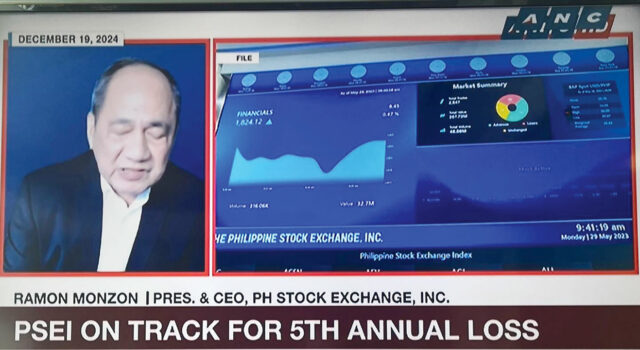
ON DEC. 19, 2024, ANC News announced that “PSEI on track for 5th annual loss.” If so, this means that while the Philippine economy as well as the other ASEAN stock markets have recovered from the COVID-19 pandemic, the Philippine stock market is still bed-ridden. In fact, it first crossed the 6,000 index mark in 2013 and is now back to this level after 12 years of turmoil.

This dire condition of the Philippine stock market was the subject of a report by the Organization for Economic Co-operation and Development (OECD) entitled “OECD Capital Market Review of the Philippines 2024.”

The OECD report stated that:

“At the start of 2024, the PSE [Philippine Stock Exchange] had 269 listed companies on the Main Board and SME Board with a total market capitalization of $234 billion, equivalent to 52% of the country’s GDP (Figure 1.7, Panel A). Compared to peer countries, the Philippines has the lowest number of listed companies and ranks second to last in terms of market capitalization as a share of GDP. Additionally, the amount of capital raised through initial and secondary public offerings remains low compared to regional peers. Since 2000, 95 Philippine companies have collectively raised almost $13 billion through initial public offerings (IPOs) (Figure 1.7, Panel B). This is significantly lower than the least active market among peers, Vietnam, where 584 companies raised $36 billion. Between 2000 and 2023, the capital raised through IPOs in the Philippines represented only 0.2% of GDP, much lower than in all other peer countries except Indonesia.”

To revive the Philippine stock market, which the OECD considers not a problem of stimulating demand for stocks but rather the lack supply of listed companies, it made two major proposals: tap the large number of unlisted large private companies as well as State-Owned Enterprises (SOEs).

According to the OECD Report, there are 411 large unlisted companies (269 are now listed) which are suitable candidates for listing. Not only that, but many large unlisted companies also outperform the currently listed ones both in terms of size and profitability. Their listing will mean more attractive companies for the public to invest in.

One possible incentive for these companies to list is to exempt all listed companies from being audited by the Bureau of Internal Revenue (BIR).

The rationale for auditing the income tax returns of individuals and companies is their incentive to understate their income and so pay lower income taxes. With respect to listed companies, there is the other incentive to report higher income so that the market price of their shares will go higher. The increased value of their shares will more than offset the higher taxes they will pay for not understating their income.

And yet listed companies are regularly assessed billions in tax liabilities by BIR examiners only to prove after long and costly discussions that they are correctly paying their taxes. By exempting them from BIR audits, they could devote more time to improving the profitability of their companies and the BIR examiners could more productively spend their time auditing unlisted companies.

Providing this exemption does not require passing a new law. All that is needed is a Department Order issued by the Secretary of Finance directing the Commissioner of the Bureau of Internal Revenue to delete from its list of companies to be audited the listed companies.

The second source for new listed companies is State-Owned Enterprises (SOEs). The OECD Report notes there are no SOEs listed on the Philippine Stock Exchange, which contrasts with a number of peer countries where SOEs make up a substantial share of market capitalization.

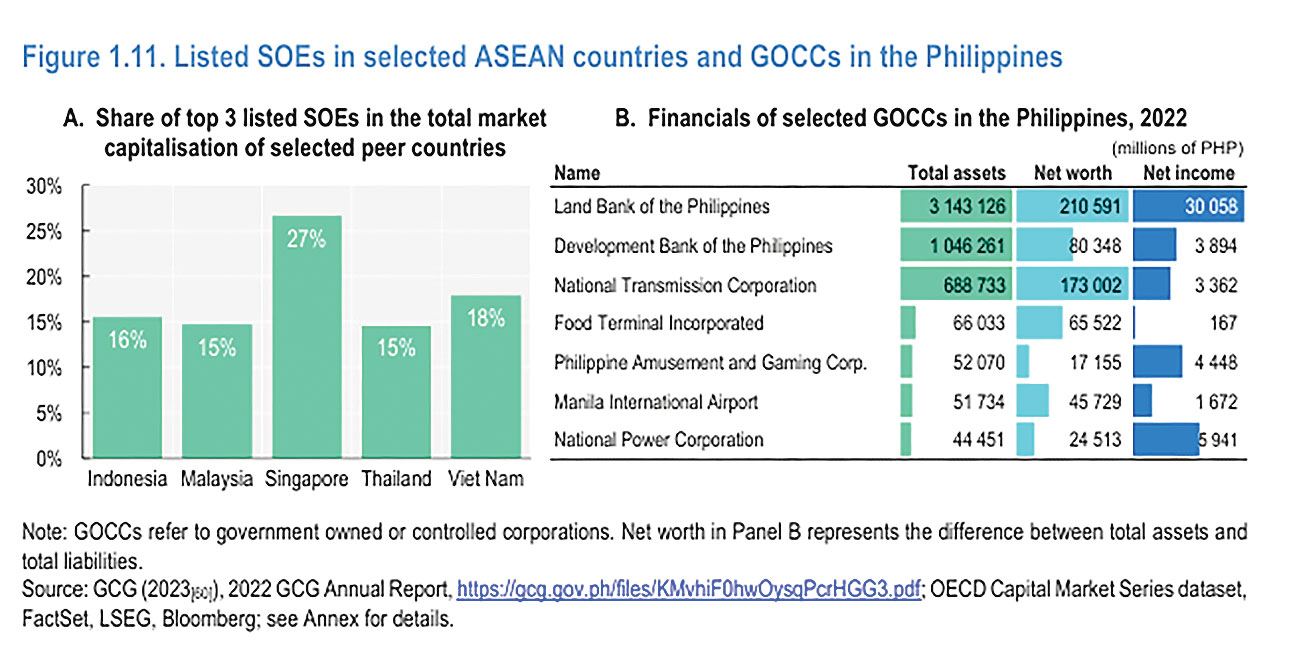
The most notable example is Singapore, where the top three listed SOEs — DBS Group Holding, Singapore Telecommunications, and Singapore Airlines — account for 27% of total market capitalization. Similarly, the top three listed SOEs in Malaysia, Indonesia, Thailand, and Vietnam each represent 15-18% of the domestic stock exchanges’ market capitalization. These listed SOEs include banks, telecommunication companies, airports, and gas and petroleum production companies.

The OECD Report recommends that in the Philippines, public equity markets could be expanded by listing minority stakes of financially significant SOEs. At the start of 2023, there were 118 governments-owned or -controlled corporations (GOCCs) in the Philippines with total assets amounting to P11.6 trillion ($230 billion). Among these companies two banks stand out in terms of total assets, net worth, and income as potential candidates for a stock market listing: the Land Bank of the Philippines with total assets of P3.1 trillion ($61.5 billion) and the Development Bank of the Philippines with total assets of P1 trillion ($20 billion) (see Figure 1.11, Panel B; other potential candidates for a partial listing are shown on Panel B).

With respect to the listing of SOEs in the Philippine Stock Exchange, we would recommend that prior to listing, the shares of the SOEs be transferred from the government (Department of Finance) to the Maharlika Fund. This would immediately provide the Fund with seasoned stocks whose value can immediately be realized.

Listing the Philippine SOEs will be beneficial in so many ways. For one, listing will provide a source of funding other than  that from the government for our SOEs. Accessing non-government funds will force our SOEs to learn how to tap the capital markets not only domestically but also internationally.

It would also allow Filipino investors to share in the earnings of these government-supported enterprises. This alternative will appeal not only to patriotic Filipino who will look upon these SOEs as national champions of the Philippines, but also to investment savvy Filipinos who will be aware that majority government ownership makes their stock more attractive.

Most importantly, SOEs as listed enterprises will be subject to scrutiny by an army of securities analysts. They will closely scrutinize their past performance, present operations, and their future plans. This will greatly assist the government as majority stockholder in assessing the competence and performance of the managers that were appointed to the key positions.

In sum, the OECD has provided the Philippine Stock Exchange with a viable strategy for reviving the Philippine Stock Market. All that is needed is for the President of the Philippine Stock Exchange to implement the plan.

This article is based on the research undertaken by the Research Team of Regina Capital Development Corp., a member of the Philippine Stock Exchange.


Dr. Victor S. Limlingan is a retired professor of AIM and a fellow of the Foundation for Economic Freedom. He is presently chairman of the Cristina Research Foundation, a public policy adviser and of Regina Capital Development Corp.

Kia PHL eyes 12,500 units sold this year

PHOTO FROM KIA PHILIPPINES

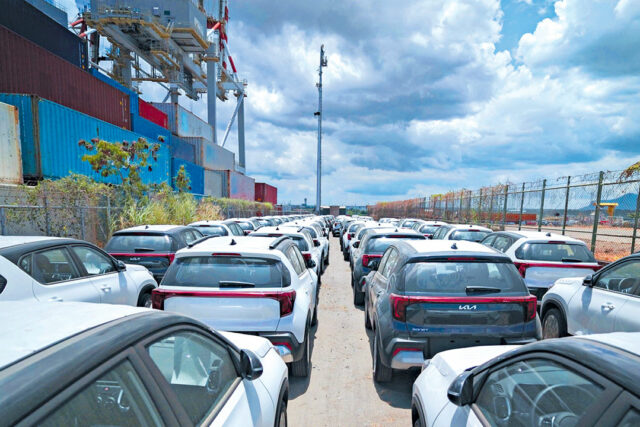
KIA PHILIPPINES (KP Motors Corp.) is targeting 12,500 car sales this year, according to its chief operating officer (COO).

“We are aiming to hit 12,500 cars this year, which represents an 86% growth from the nearly 7,000 units we sold last year,” said Brian James Buendia, COO of Kia Philippines, during the launch of the new Sorento on Thursday.

“It is aspirational, and we already have the formula in place. Last year, we achieved a 33% growth despite facing some supply challenges. Now, as we ramp up our Sonet supply and introduce new models, I believe it is achievable,” he added.

Kia Philippines ranked as the tenth top-selling brand, according to a joint report by the Chamber of Automotive Manufacturers of the Philippines, Inc. (CAMPI) and the Truck Manufacturers Association (TMA).

In 2024, Kia Philippines sold 6,692 units, marking a 33% increase from the 5,033 units sold in 2023, representing a 1.43% market share.

“We finished the year at 1.4%, but in the last six months of 2023, we were already achieving a 1.7% to 1.8% market share. For this year, with a full year of Kia Sonet sales, we expect to increase our market share to at least 2.1% to 2.5%,” Mr. Buendia said.

Mr. Buendia noted that the Kia Sonet and the newly launched Sorento Turbo Hybrid will drive sales growth this year.

On Thursday, Kia Philippines, a subsidiary of Mobility, launched the Sorento Turbo Hybrid, available in three variants: EX Turbo Hybrid FWD, EX+ Turbo Hybrid FWD, and SX Turbo Hybrid AWD, with prices ranging from P2.188 million to P2.888 million.

For 2025, Mr. Buendia said Kia Philippines is aiming to sell 1,500 to 2,000 units of the Sorento Turbo Hybrid.

“The growth this year will be supported by the Sorento, as well as the Sonet. The Sonet will have full-year exposure this year, unlike last year, when we sold nearly 7,000 units but for only half the year. It was our best-seller,” he said.

“We will have the Sonet available for the entire year, which will definitely help drive our numbers, along with the Sorento and our new hybrid lineup for the Carnival,” he added.

In addition to the Sorento launched on Thursday, Mr. Buendia mentioned that Kia is exploring other models tailored to the Philippine market.

“It’s easy to bring cars here, but now we are learning to study the market first before introducing new models. We already have a few models for testing that I cannot yet reveal,” he said.

“If those cars show positive results in our research, we’ll definitely bring them in. We are always open to opportunities and aim to align the entire Kia lineup with the electrification of AC mobility,” he added.

In addition to new models, Mr. Buendia said Kia is focusing on the quality of its 40 dealerships to support sales growth.

“If you visit Kia dealerships now, you’ll see they have adopted the new Kia store image, complete with the new logo. This started in 2022, and we’re now at around 70% of our Kia dealers using the new corporate logo,” he said.

“Along with that, we’re implementing new customer experience training across all dealerships, focusing on end-to-end customer engagement. We believe this will be a significant driver of our growth,” he added.

Kia offers a wide range of vehicles, including internal combustion engine (ICE), hybrid, and fully electric vehicles (EVs). However, Mr. Buendia said that ICE vehicles will remain the main growth driver for 2025.

“For 2025, we expect ICE vehicles to continue leading our growth. Our ICE offerings cater to the lower segment, including subcompact SUVs (sports utility vehicles) like the Kia Sonet,” he said.

“While our electrified models, such as hybrids and EVs, are currently positioned in the premium segment, the ICE models will still dominate sales,” he added.

Specifically, he said ICE models are expected to account for 70-75% of the company’s sales in 2025. — Justine Irish D. Tabile

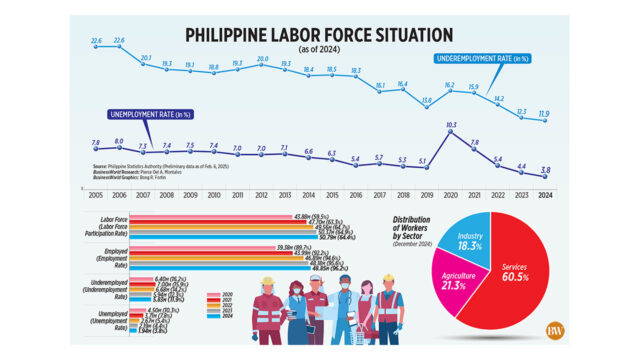
Philippine Labor Force Situation

PHILIPPINE UNEMPLOYMENT eased to 3.1% in December amid a surge in hiring in the transport and storage sector, bringing the full-year average to a record-low of 3.8%, according to the statistics agency. Read the full story.

Philippine Labor Force Situation

Stuff to Do (02/07/25)


Watch a festival of short films

ON Feb. 7 and 8, Purveyr and Kinoise are teaming up to bring acclaimed indie films to Makati. Maria Estela Paiso’s Objects Do Not Randomly Fall from the Sky is the opening short. Glenn Barit’s coming-of-age film Cleaners is the main event, and his follow-up short sequel, Yung Huling Swimming Reunion Before Life Happens, is the closing film. On Feb. 7, the doors open at 6 p.m. with the screening and talkback scheduled for 7 p.m. Tickets are priced at P500, inclusive of a free drink and meal. On Feb. 8, the doors open at 1 p.m. with one screening at 1:30 p.m. and a second at 4:30 p.m. Tickets cost P300, and are inclusive of a free drink and snack. Those who come in their school uniform, in keeping with the Cleaners’ high school setting, get a discount of P100. The event takes place at PURVEYR Play, Unit 215-216, The Atrium of Makati, Makati Ave., Makati


Go to the Cup of Joe official fan meet

FILIPINO band Cup of Joe will have a fanzone from Feb. 8 to 9, 11:30 a.m. to 3 p.m., at the Activity Area of Gateway Mall 1 in Cubao, Quezon City. Titled “Silakjoe,” the fanzone will have a photo booth, a listening party, and performances by Joewahs (the name for the fans of Cup of Joe). It is a celebration of the groups’s fan base, and is open for free to all.


Listen to Paham’s self-titled debut album

THE five-piece “harana pop” outfit Paham has dropped their self-titled debut album via Sony Music Entertainment and Off The Record. The 12-track record invites listeners on a whimsical journey of love, resilience, and hope. It is out now on all digital music streaming platforms.


Attend an outdoors Valentines film screening

THE romance film Isa Pa, With Feelings, directed by Prime Cruz, will be screened at the MiraNila Heritage House, Quezon City as part of the venue’s Valentine’s events. The film follows an aspiring architect who develops a relationship with her deaf neighbor. The screening under the stars will be held on Feb. 12 and will include a lineup of short films: Martika Ramirez Escobar’s Living Things and Carla Pulido Ocampo’s Tokwifi. Tickets, priced at P700 for regular attendees and P560 for students, are good for the outdoor screenings, a heritage house tour, garden mats, and a bag of special popcorn. Reservations can be made here: bit.ly/PelikulasaMiraNila.


Watch Niyebe: Isang Musikal

THE Far Eastern University Theater Guild (FTG) is staging another Gabriel Garcia-Marquez short story as an experimental play for the opening of its 91st season. Niyebe: Isang Musikal features music and musical direction by Vince Lim, assisted by Jesus Singh III, with choreography by Carlon Matobato and adaptation, lyrics, and direction by Dudz Teraña. The production will run from Feb. 12 to March 27. Set against the backdrop of a harsh European winter, the musical tells the tragic story of newlyweds Billy and Nena, whose honeymoon turns into a nightmare when one dies and the other must contend with grief. The cast features RB Pascua and Dave Bambang alternating as Billy, Kesiah Eunice Aritao and Brigitta Claire Marilla alternating as Nena, and Aaron Bayani as the narrator. Niyebe: Isang Musikal will run at the FEU Center for the Arts Studio on Feb. 12-13, 19-22, and 26-28, and on March 1, 5-8, 12-15, 19-22, and 26-27, with tickets priced at P100 for the FEU Community, P300 for student guests, P500 for regulars, and P700 for VIPs. For reservations and inquiries, contact the FTG through their social media pages.


Spend a night with Juris

THE day of hearts will be commemorated at the Diamond Hotel Philippines in Manila with a Pre-Valentine’s event on Feb. 13, A Night with Juris: Pre-Valentine’s Dinner Show. Iconic Filipino singer Juris will lead the sentimental serenade over a romantic five-course dinner. It showcases Juris’ timeless vocals, backed by Piwee Polintan and Froilan Calixto of JEREMIAH. Diamond Hotel is also offering the Serenade & Stay room package, good for Feb. 12-14, which includes tickets for two to the dinner show. The performance will be held at the Diamond Ballroom, with dinner starting at 7 p.m. and the show at 8 p.m. Tickets are priced at P11,880 net for two persons, inclusive of the meal.


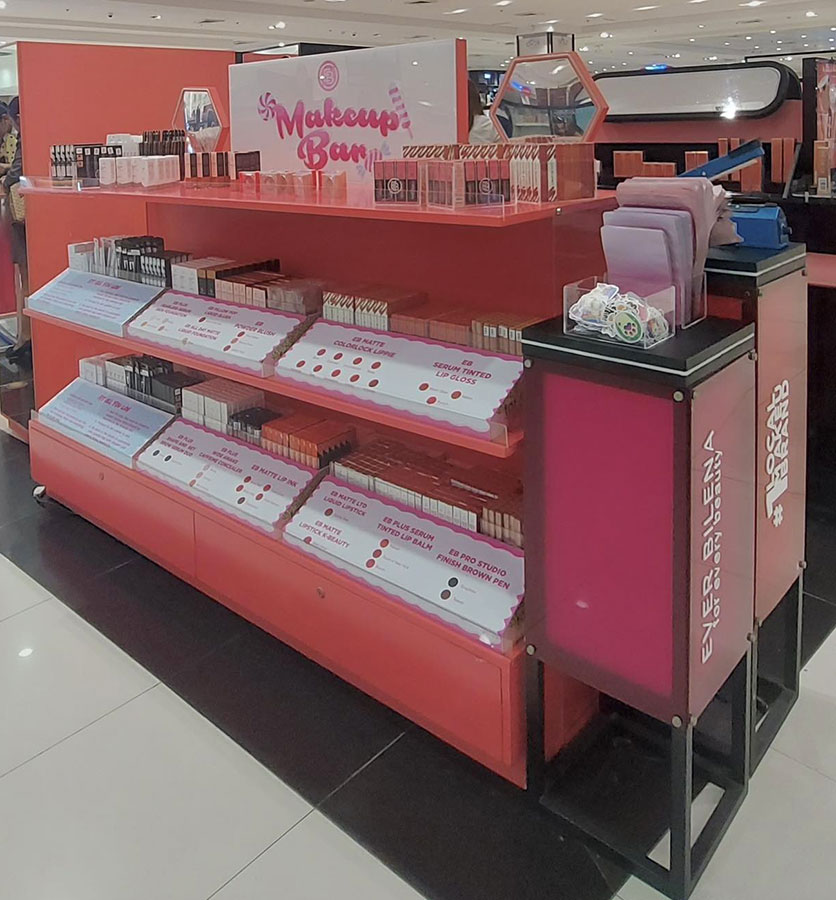
Visit SM Clark’s Ever Bilena Beauty Bar

DUE to overwhelming demand, the Ever Bilena Beauty Bar activation at the SM Clark Department Store has been extended to Feb. 16. It contains the viral “Fit All You Can” activity, where shoppers are free to mix and match their favorite Ever Bilena products and choose from three goodie bag sizes: Medium for P499, Large for P599, and Extra Large for P999. The extended run also introduces more beauty items to the selection, including the EB Serum Tinted Lip Balms, the EB Pro Brow Soap, the EB Studio Finish Stick Foundations, the EB Pro Eye Brow Kit, and EB Water Tints.


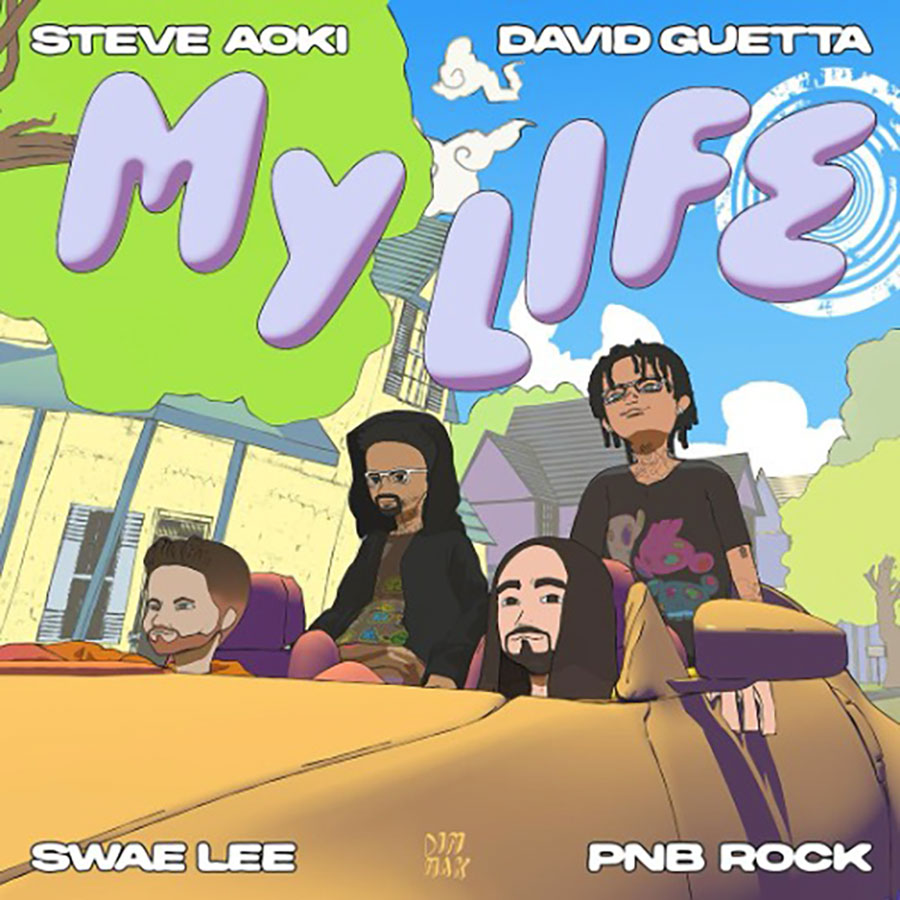
Listen to Steve Aoki, David Guetta’s new single

DANCE music powerhouses Steve Aoki and David Guetta have reunited to for a new song, “My Life,” featuring Swae Lee and the late PnB Rock. This release builds on decades of friendship and collaboration between Mr. Aoki and Mr. Guetta, who have performed onstage together and remixed each other’s tracks throughout their careers. Their last joint effort, the 2018 hit “Motto” (featuring Lil Uzi Vert and G-Eazy), set the stage for this original single. Arriving alongside the song is a music video by OseanWorld, an Atlanta-based artist celebrated for his futuristic visuals and characters.

Magsaysay Shipping bats for more gov’t investment in seafarer training

MSL.COM.PH

By Kenneth Christiane L. Basilio, Reporter

THE government should consider investing more in developing the skills of seafarers through such measures as the acquisition of a training ship for maritime school students, a shipping executive said on Thursday.

Most cadet seafarers find it difficult to get hands-on ship training, according to Jesse H. Maxwell, chief executive officer of Magsaysay Shipping and Logistics group.

“The government can help support them by investing in a ship that can accommodate cadetship training,” he told BusinessWorld.

The Philippines is the top provider of shipboard labor, according to the Maritime Industry Authority.

In 2021, the European Maritime Safety Agency threatened to decertify Filipino seafarers due to weaknesses in their training.

“The recent EU (European Union) warning highlighted perennial problems in the training, and most importantly, education of aspiring Filipino sailors,” a 2024 Maritime Fairtrade report stated.

“A lot of schools don’t provide onboard training, so that’s the limiting factor,” Mr. Maxwell said.

“What happens is you have seafarers who finish the first three years, but can’t get their one year of onboard cadetship training,” he added, noting that some seafaring students switch careers due to the long waiting time for onboard training.

Philippine seafaring schools should also “do whatever they can” to give their students the needed cadetship training, he said.

“Let’s not take in so many students if the cadet jobs aren’t available so there isn’t so much of a mismatch,” said Mr. Maxwell.

In 2023, the Commission on Higher Education  imposed a five-year moratorium on the opening of new maritime school programs as it clamps down on noncompliant seafaring schools.

AUB, PSA sign co-location deal

BW FILE PHOTO

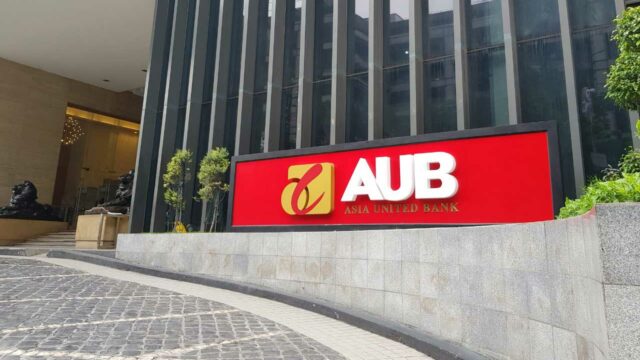
ASIA United Bank Corp. (AUB) has partnered with the Philippine Statistics Authority (PSA) to allow individuals registering for a National ID to open an account on its e-wallet HelloMoney, which it expects to boost its customer base.

“AUB once again is marking another milestone with the PSA — becoming the first privately owned universal bank in the country to be a co-location partner. This collaboration means AUB will join the PSA in its in mobile registration activities, allowing unbanked Filipinos and underserved Filipinos who already registered with the National ID system to open a HelloMoney e-wallet account,” AUB President Manuel A. Gomez said in a speech during the signing of the memorandum of agreement with the PSA on Thursday.

AUB last year partnered with the PSA to become the first bank to integrate the National ID eVerify into its branch banking services. It is now using the eVerify system for its Know Your Customer process.

“Since Sept. 16, 2024 — when AUB pioneered the country’s first fully digital registration through National ID integration and made “your face is your ID” possible — we have already successfully gained around 94,000 new HelloMoney users as of Feb. 3, 2025,” Mr. Gomez said.

“With this, we expect our six million HelloMoney customer accounts to further grow, as we bring the benefits of the National ID closer to more Filipinos through this co-location agreement with the PSA.”

Mr. Gomez earlier said the bank plans to add new features to HelloMoney to boost its e-wallet market share, including offering microinsurance and digital savings.

AUB’s net income jumped by 71.44% to P3.35 billion in the third quarter of 2024 amid higher revenues. This brought its nine-month earnings to P8.78 billion, up by 40.97% year on year.

Its shares rose by P1.30 or 1.75% to end at P75.50 each on Thursday. — A.M.C. Sy

Beyond the basics: Overlooked sustainability issues in Philippine business

ORIGINAL PHOTO BY RICCARDO ANNANDALE-UNSPLASH

“Sustainability” has become a buzzword in corporate circles in the Philippines. It is not unusual to hear or read in the media companies, businesses, and brands trumpeting sustainability initiatives: from reducing plastic use to adopting renewable energy, and planting trees. We even see glossy annual reports from listed companies showcasing various sustainability initiatives — purporting compliance to, and adoption of, ESG principles and UN Sustainable goals.

However, by just looking at these news reports and published corporate materials, we can readily see that in the cacophony of these sustainability listings, there seems to be some deep and systemic issues that are not seriously being taken up — which I think are more serious than the current subjects of drum beatings. Truthfully, there are other seemingly basic sustainability issues that businesses need to focus on that are outside headline-friendly causes.

Businesses need to go beyond mere superficial commitments and pay attention to less discussed but equally critical sustainability issues, to shy away from inauthentic rhetoric and gestures towards more substantial and impactful actions that can also be high-profile and celebrated by businesses and brands.

There are several sustainability issues that are worthy of attention and yet not explored and embraced by many Filipino businesses and brands. Among others, these issues include water resource management, electronic waste disposal, sustainable housing, and preservation of cultural heritage. Clearly, these initiatives can also be considered as essential in managing and protecting the environment as they have the potential to promote long-term business resilience and overall societal good — raison d’etre of any well-meaning corporate sustainability programs.

WATER RESOURCE MANAGEMENT: NEXT CRISIS
One of the major issues that confront the country is water resource management. Clearly, the news headlines do not necessarily foreground this issue, especially during La Niña season, but water scarcity is an existential threat to industries and communities alike. Water may not be an obvious concern given the archipelagic nature of the country, but the Philippines lacks clean and accessible water. Studies show that we are suffering from over-extraction of groundwater and there is pollution of freshwater sources both of which exacerbate the current water resource management crisis. Surely, most of us have experienced water shortages during the dry season, and scientists are predicting that the shortage will get worse in the years ahead.

Evidently, corporations, especially in manufacturing, agriculture, and energy, happen to be the biggest water customers. Unfortunately, very few of these corporations have the proper, and enough, measures related to water conservation. Few of them have systems involving rainwater harvesting, and fewer still have watershed protection programs.

Business enterprises need to take proactive measures in reducing their operational risks, thereby contributing to a water-secure country — which is a highly necessary and yet rarely talked-about sustainability issue and concern. For example, partnering with local governments in rehabilitating a watershed can surely ensure a continuous supply of water and yet we hardly see any such initiatives. It is about time companies and businesses take full cognizance of this sustainability issue before it is too late.

E-WASTE: THE INVISIBLE MOUNTAIN
E-waste, which is largely not included in corporate sustainability programs, has flooded our daily lives since the widespread adoption of technology and the onslaught of the digital revolution. Everyone knows and understands that e-waste contains hazardous materials such as lead and mercury, which can leak into the environment if not disposed of appropriately. And yet there is not enough infrastructure in the Philippines for recycling e-waste, and thus most is dumped in landfills or informal recycling centers, which poses serious health risks to the workers.

This problem calls for aggressive and serious action by tech companies and retailers. For one, implementing aggressive take-back programs for old devices, public education campaigns on e-waste disposal, and investments in proper recycling facilities can really help. I think this is one of the areas where tech brands and other related business enterprises can really show off their leadership in environmental protection and management.

URBAN LIVABILITY AND GREEN SPACES: A FORGOTTEN PRIORITY
You only need to walk or drive around in major cities in the Philippines to witness how rapid urbanization has transformed them into sprawling metropolises, often at the cost of green spaces. More and more people are experiencing that their mental health and physical well-being are deteriorating due to urban heat islands, bad air quality, and the lack of recreational areas. Unfortunately, not all real estate developers and businesses involved in designing cities and communities choose sustainable urban landscapes and designs.

Indeed, we cannot overly emphasize that green buildings, vertical gardens, and public parks should not be treated as after-thought investments. The new norm dictates that mixed-use development that includes green spaces can have the capacity to make the city more habitable and environment friendly. Failure on these fronts promises to condemn cities to eventual uninhabitability — a proposition that ought to concern even the most casual urban investors and common city-dwellers.

MARINE CONSERVATION BEYOND PLASTICS
While corporate campaigns to reduce single-use plastics have gained traction, more comprehensive marine conservation issues remain on the sidelines. Overfishing, coral reef destruction, and mangrove deforestation are critical problems that rarely receive corporate attention.

Marine resource-dependent industries, such as fisheries, tourism, and shipping, are interested in having healthy marine ecosystems. Nevertheless, not many have begun to adopt sustainable practices that might reduce their footprint. For instance, some of the most obvious ways businesses might contribute to the cause involve supporting sustainable fishing, investing in coral reef restoration, and funding projects for mangrove reforestation.

The Philippine economy is basically linked to its seas, and ignoring these broader issues risks environmental degradation and also the collapse of industries depending on marine resources.

SAFE, AFFORDABLE, AND SUSTAINABLE HOUSING FOR EMPLOYEES
Another overlooked sustainability issue is the provision of safe, affordable, and sustainable housing for employees. Most manufacturing and retail workers live in informal settlements that are susceptible to natural disasters and lack basic utilities.

More than a social issue, housing is a sustainability challenge. Poor living conditions lower productivity and harm the well-being of workers, which then drags down business performance. Corporations could collaborate with both government and non-government agencies to develop affordable housing with disaster-resilient designs and sustainable materials. One of the long-term strategies for sustainability could also include financing options or subsidies for employee housing.

CULTURAL PRESERVATION AMID GLOBALIZATION
Quite often, the loss of the cultural heritage of indigenous people is the cost of globalization and modernization. Tourism and industrial ventures disrupt the ways of life of the native people, and corporate sustainability programs rarely address this type of cultural erosion.

However, cultural heritage is something with which businesses can differentiate themselves. Indication of native knowledge through integration in their sustainability practice, promoting local artisans, and the creation of responsible eco-tourism can all serve as a means of adding cultural conservation into the sustainability agenda for the company. Without this, one does not only cause the alienation of the local community but will deny businesses unique and meaningful opportunities for relationship building with their stakeholders.

CLIMATE ADAPTATION FOR VULNERABLE COMMUNITIES
Whereas most companies invest in climate change mitigation such as carbon footprint reduction, there is a gross underinvestment in climate adaptation. Businesses largely ignore vulnerable communities in flood-prone or typhoon-affected zones.

Businesses can be a vital part of building climate resilience. Constructing disaster-resilient infrastructure, financing early warning systems, and supporting community-based renewable energy projects are practical ways to help communities adapt. Such efforts not only protect vulnerable populations but also keep local markets and supply chains running.

THE BUSINESS CASE FOR OVERLOOKED ISSUES
Why do corporations need to push beyond normal efforts toward sustainability? What’s the business case for the adoption of these “alternatives”? Answer: long-term value creation.

1. Risk Mitigation. Non-action in these areas has risks related to business continuity. Businesses that develop proactive action and initiatives with respect to these concerns shield their organizations from potential interruptions.

2. Better Reputation. Studies have shown that consumers and investors increasingly favor businesses that demonstrate genuine and authentic commitments to sustainability. When corporations address and adopt less-publicized issues, they can differentiate their companies from others and assume leadership in corporate responsibility initiatives.

3. Regulatory Compliance and Incentives. It is accepted that governments are beginning to tighten regulations on sustainability. When companies and businesses adopt forward-thinking measures, they may gain a serious competitive edge, potentially through provisions of tax incentives, grants, and/or favorable policies.

4. Strengthened Community Relations. Ultimately, companies will be able to develop better and stronger relationships with their communities when they choose to address housing issues, access to water resources, or preserving cultural elements. Consequently, embracing and pushing forward with these types of initiatives builds stronger ties with stakeholders in the organizations.

OPPORTUNITIES AND CHALLENGES
The solutions above are not without their challenges because many require long-term strategies, large-scale investments, and the participation of various parties. Companies cannot adopt symbolic approaches but need to include those initiatives into core strategies and plans.

The opportunities, however, far outweigh the obstacles. Holistic approaches to sustainability in Philippine businesses future-proof operations, attract talent and investment, and make meaningful contributions to national development.

The Philippines stands at the crossroads. As it confronts environmental and social challenges, large corporations have the resources and reach to drive systemic change. Not only is this approach an ethical imperative regarding critical sustainability issues such as water resources management, e-waste, sustainable housing, and cultural heritage preservation, but it is also the best strategic investment in the future.

For businesses, time is of the essence. Over and above the basics, solving these deeper issues will be the step that not only builds corporate resilience but makes a legacy of meaningful difference. Sustainability is not less bad; it is more good. The Philippine business community should take on this challenge, an agenda as comprehensive as it is transformative.


Dr. Ron F. Jabal, APR, is the CEO of PAGEONE Group (www.pageonegroup.ph) and founder of Advocacy Partners Asia (www.advocacy.ph).

ron.jabal@pageone.ph

rfjabal@gmail.com

Robinsons Retail posts P10.3-B income for 2024

JGSUMMIT.COM.PH

ROBINSONS Retail Holdings, Inc. (RRHI) more than doubled its attributable net income for 2024 to P10.3 billion, from P4.1 billion in 2023, driven by higher sales and a one-time gain from a bank merger.

Full-year 2024 net sales increased by 3.7% to P199.17 billion, up from P192.13 billion the previous year, primarily due to the sustained growth of the food and drugstore businesses, RRHI said in a regulatory filing on Thursday.

Blended same-store sales growth for the period reached 1.5%.

RRHI noted that its full-year attributable net income included a one-time gain from the merger between Robinsons Bank Corp. and Bank of the Philippine Islands (BPI), which took effect on January 1 of last year, with BPI as the surviving entity.

For the fourth quarter, RRHI’s attributable net income grew by 62.4% to P2.46 billion, driven by same-store sales growth and improved cost dynamics. Net sales increased by 5.3% to P56.76 billion.

Same-store sales growth for the quarter reached 3.4%, with the food and department store segments being the main drivers.

“Our company managed to sustain its growth trajectory in 2024 despite challenging market conditions. This achievement is a testament to the resiliency of our core business and our ability to remain agile in response to evolving market dynamics,” said RRHI President and Chief Executive Officer Stanley C. Co.

“Looking ahead to 2025, we remain steadfast in exploring new ways to grow the business while continuing to integrate our sustainability agenda into our value chain,” he added.

As of the end of 2024, RRHI operated 2,453 stores, comprising 761 food stores, 1,133 drugstores, 50 department stores, 227 DIY stores, and 282 specialty stores. Additionally, it had 2,115 franchised stores of The Generics Pharmacy.

RRHI shares rose by 0.87%, or 30 centavos, to P34.60 apiece on Thursday. — Revin Mikhael D. Ochave

Job Gains by Industry (December 2024 vs November 2024)

PHILIPPINE UNEMPLOYMENT eased to 3.1% in December amid a surge in hiring in the transport and storage sector, bringing the full-year average to a record-low of 3.8%, according to the statistics agency. Read the full story.

Job Gains by Industry (December 2024 vs November 2024)

ADVERTISEMENT
ADVERTISEMENT