Home Blog Page 2

Marcos says gov’t coordinating with Czech officials for return of ex-lawmaker Co

SCREENSHOT of former Party-list Rep. Zaldy Co’s statement posted on his facebook account. — FACEBOOK.COM/REPZALDYCO

PRESIDENT Ferdinand R. Marcos Jr. on Friday said that the government is coordinating with Czech officials to enable the immediate return of former lawmaker Elizaldy “Zaldy” S. Co.

Mr. Marcos earlier announced on his social media account on Thursday evening that Mr. Co had been captured and detained in Prague.

“Our coordination with Czech authorities continues,” Mr. Marcos said in a Facebook post on Friday.

The President also said that, based on the latest information, the former Ako Bikol representative was stopped at the German border after attempting to enter from the Czech Republic.

“He was denied entry and returned to Czech authorities, where he remains in custody,” Mr. Marcos said.

As the government is in close coordination with the Czech government, Mr. Marcos said that it is ensuring due process will be observed while arranging for his return to the country as soon as possible.

He also said that the government will keep the public informed of further developments.

The Philippine National Police (PNP) said it is prepared to help facilitate Co’s possible return to the country while properly observing all legal processes.

It also said it is already coordinating with concerned agencies and law enforcement counterparts to verify details about Co’s arrest.

Mr. Co is linked to the flood control controversy after being charged with plunder, graft, and malversation over alleged anomalous flood control projects involving ghost and deficient infrastructure works.

The most prominent case involves a P288-million flood control project in Oriental Mindoro that was earlier filed before the Sandiganbayan. — Edg Adrian A. Eva

Canva AI 2.0 brings agentic, automation features to power end-to-end design process

CANVA

VISUAL COMMUNICATION platform Canva has introduced Canva AI 2.0, a new suite of tools that leverage agentic artificial intelligence to redefine the creative process via conversational design.

Launched at the Canva Create 2026 event in Los Angeles on April 16, Canva AI 2.0 marks its shift from a design platform with AI tools to an AI platform with design tools, Cliff Obrecht, Canva chief operating officer, said in an online briefing last week.

He said Canva AI usage tripled over the last year.

The platform now has over 265 million monthly users and over 31 million paid users, he added. Annualized revenue reached $4 billion, with $500 million coming from its business-to-business segment.

Melanie Perkins, Canva chief executive officer, said in the same briefing that the new suite, which marks its “biggest launch ever,” makes Canva a true creative partner through “AI that creates with you.”

Canva AI 2.0 — which is initially launching as a research preview, with access to expand to more users over the coming weeks — transforms Canva into a conversational, agentic platform that can execute ideas just via prompts.

With its new architecture layer, it features conversational design, allowing users to use text or voice prompts to describe what they want to create.

Meanwhile, with agentic orchestration, creatives can turn one prompt into an entire campaign and even delegate tasks.

“It understands your intent, selects the right tools, and coordinates them to create everything you need, in every format. Ask it to ‘create a multi-channel campaign plan to launch our latest summer products,’ and it will generate everything, ready to refine or publish.”

Object-based intelligence also lets users generate fully layered and editable designs, enabling them to edit individual elements without starting over or changing the rest of the design.

It also has living memory that learns from a user’s or team’s designs to adapt to their style and preferences over time.

“With persistent memory, Canva AI understands how you work, keeping every project on brand, applying your style automatically, and evolving over time. It learns from your work and adapts to you and your team’s preferences and goals, becoming more helpful with every use. Personalize it with your existing designs to generate a custom memory library and an ‘About Me’ profile that continuously tailors your experience.”

WORKFLOWS
Canva AI 2.0 also features new intelligent workflows.

Connectors allow users to connect context from all their other apps and tools into Canva AI.

“Connect tools like Slack, Gmail, Google Drive, and Calendar, and Canva AI can draw on your conversations, content, and schedule to create exactly what you need. Generate meeting summaries from Zoom transcripts, turn customer emails into personalized sales pitches, or create company newsletters based on activity across Slack,” it said.

Initial connectors include Slack, Notion, Zoom, Gmail, Google Drive, and Google Calendar.

Meanwhile, with scheduling, users can set tasks that Canva AI can run automatically in the background, even when offline. These include generating social content or creating daily briefing documents from emails or calendars.

Web research also brings insights, including news and market research, on demand via the platform.

With brand intelligence, Canva AI ensures all designs generated stay on brand.

“Just connect your data or describe what you need, and Canva AI automatically applies your fonts, colors, and style to every design. You can also instantly update existing work by asking Canva AI to apply your latest brand, turning hours of manual updates into a single step done in seconds.”

For its part, the updated Canva Code 2.0 brings HTML importing into the platform.

“From there, everything happens in one place. Add forms that collect responses in Canva Sheets, drop interactive elements into presentations, or publish to your own domain…”

Meanwhile, Canva also announced that it has deepened its collaboration with Anthropic to bring its Design Engine and Visual Suite directly into Claude.

“As AI reshapes how content is created, leading platforms are integrating Canva to help users move from draft generations to fully editable, structured, and scalable work.” — Bettina V. Roc

Philippines, US to build industrial hub to strengthen supply chain security

The Pax Silica Summit is a historic gathering of nations at the forefront of the global AI supply chain. — OFFICE OF THE UNDER SECRETARY FOR ECONOMIC AFFAIRS, US DEPT. OF STATE OFFICIAL LINKEDIN PAGE

MANILA — The United States and the Philippines will build a 4,000-acre (1,620 hectares) industrial hub after Manila joined a Washington-led initiative to secure AI and semiconductor supply chains, the US State Department said in a statement.

The Philippines becomes the 13th country to join Pax Silica, a program seeking to safeguard the full technology supply chain, including critical minerals, advanced manufacturing, computing and data infrastructure.

The intiative is a key pillar of the Trump administration’s economic statecraft strategy aimed at reducing its dependence on rival nations and strengthen cooperation among allied partners. Other signatories include Australia, Finland, India, Qatar, South Korea, and Singapore.

The new industrial hub will be built in the Luzon Economic Corridor, a strategic hub for economic activity that includes the capital Manila and neighboring regions with industrial and manufacturing activities. The Philippines, Japan, and the United States have committed to ramp up infrastructure investments in the corridor under a trilateral framework agreement.

“It is intended to serve as a staging point for a purpose-built platform for allied manufacturing,” the State Department said in a statement.

“The two Allies are committed to strengthening shared supply chains in critical minerals, semiconductors, electronics, and other goods,” it added.

Relations between Manila and Washington have blossomed under Philippine President Ferdinand R. Marcos Jr., who has pivoted closer to the United States. The former US colony is also central to Washington’s efforts to counter China’s assertiveness in the South China Sea. — Reuters

Israel and Lebanon begin ceasefire, Trump says Iran may meet US over weekend

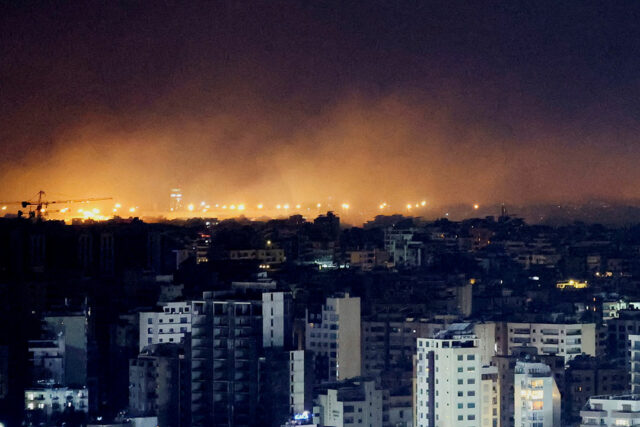
SMOKE rises over Beirut’s southern suburbs after a strike, amid ongoing hostilities between Hezbollah and Israeli forces, as seen from Sin El Fil, Lebanon, Oct. 1, 2024. — REUTERS

WASHINGTON — A 10-day ceasefire between Lebanon and Israel went into effect on Thursday and President Donald Trump said the next meeting between the United States and Iran may take place over the weekend, adding to optimism that the Iran war could be nearing an end.

Mr. Trump said Iran had offered not to possess nuclear weapons for more than 20 years. Tehran’s nuclear ambitions were a sticking point at talks in Islamabad last weekend.

“We’re going to see what happens. But I think we’re very close to making a deal with Iran,” he told reporters outside the White House.

Hours later at an event in Las Vegas, Nevada, Mr. Trump went further, saying the war “should be ending pretty soon.”

The war with Iran, which began on February 28 with a US-Israeli attack, has killed thousands and sent oil prices surging, creating a major political headache for the US president.

If the Lebanon ceasefire clears the way for a broader peace deal with Iran, it would be a significant win for the Trump administration, which has struggled so far to reopen the strategically important Strait of Hormuz and block Iran’s path to a nuclear weapon.

Celebratory gunfire rang out across parts of Beirut as the clock struck midnight on Thursday, the time the ceasefire was set to go into effect. For around half an hour, the sound of explosions from rockets fired in celebration could also be heard, witnesses said.

But the pause in hostilities remained fragile.

The Lebanese Army said early on Friday that Israel committed violations of the ceasefire after it took effect, including the intermittent shelling of several southern Lebanese villages.

There was no immediate comment from the Israeli military, which had said earlier that its forces remained deployed in the area. In a post on X, Arabic-language military spokesperson Avichay Adraee said the deployment was in response to what he described as continued Hezbollah militant activity.

Hezbollah released a lengthy statement detailing what it described as its military operations against Israel throughout Thursday, which showed that its last attack came at 11:50 p.m. local time, 10 minutes before the ceasefire took effect.

Mr. Trump later issued a social media post urging Hezbollah to respect the ceasefire.

“I hope Hezbollah acts nicely and well during this important period of time. It will be an GREAT moment for them if they do. No more killing. Must finally have PEACE!” he said.

FURTHER ISRAEL-LEBANON TALKS PLANNED
Mr. Trump said in his earlier remarks to reporters that he thought the US had a chance of a deal with Iran.

“And if that happens, oil goes way down, prices go way down, inflation goes way down, and … much more importantly than even that, you won’t have a nuclear holocaust,” he said.

The president said he was not sure a two-week ceasefire agreed with Iran last week would need to be extended beyond next week, adding that Tehran wanted to make a deal.

“We have a very good relationship with Iran right now, as hard as it is to believe. And I think it’s a combination of about four weeks of bombing, and a very powerful blockade.”

Conflict between Israel and the Iran-aligned Lebanese group Hezbollah was reignited by the US-Israeli war with Iran. Hezbollah opened fire in support of Tehran on March 2, prompting an Israeli offensive in Lebanon 15 months after their last major conflict.

Mr. Trump said he had held “excellent conversations” with Israeli Prime Minister Benjamin Netanyahu and Lebanese President Joseph Aoun and planned to invite them both to the White House for “meaningful talks”.

He said later that the White House meeting could take place over the next week or two, and that if an Iran deal was reached and signed in Islamabad, he might travel there for the occasion.

Mr. Trump said he had directed US Vice President JD Vance, Secretary of State Marco Rubio and Chairman of the Joint Chiefs of Staff Dan Caine to work with Israel and Lebanon to achieve lasting peace.

Iran welcomed the ceasefire in Lebanon, saying it was part of an understanding reached with the United States and mediated by Pakistan, Iranian media reported, citing a statement by a Foreign Ministry spokesperson.

SIGNS OF POSSIBLE COMPROMISE ON NUCLEAR ISSUES
Closure of the Strait of Hormuz, through which a fifth of the world’s oil and gas supply flows, has caused the worst oil price shock in history and forced the International Monetary Fund to downgrade its outlook for the global economy, warning prolonged conflict could push the world to the brink of recession.

At last weekend’s talks, the US proposed a 20-year suspension of all nuclear activity by Iran – an apparent concession from longstanding demands for a permanent ban. Tehran suggested a halt of three to five years, according to people familiar with the proposals.

Washington has pressed for any highly enriched uranium (HEU) to be removed from Iran. Tehran has demanded that international sanctions against it be lifted.

Two Iranian sources said there were signs of a compromise emerging on the HEU stockpile, with Tehran considering shipping part, but not all, of it out of the country, something it had previously ruled out.

A diplomatic source said the key Pakistani mediator, Army chief Asim Munir, arrived in Tehran on Wednesday and had made a breakthrough on “sticky issues”, although Tehran said the fate of its nuclear program had not been resolved. Mr. Trump has said the accord would open the Strait of Hormuz.

A senior Iranian official told Reuters that Mr. Munir’s trip had led to greater hopes for a second round of talks and an extension of the ceasefire, but said fundamental differences remain over the nuclear program.

US Defense Secretary Pete Hegseth said troops were poised to restart combat operations if a deal was not reached.

A Pakistani security source told Reuters that Washington was offering to lift sanctions and unfreeze billions of dollars’ worth of Iranian assets to secure a deal.

However, the source added that Iran would open the strait only if a permanent ceasefire is reached and there are United Nations guarantees that the US and Israel will not attack again in the future. — Reuters


IMF, World Bank say they are resuming dealings with Venezuela

BW FILE PHOTO/KATHERINE CHAN

WASHINGTON — The International Monetary Fund and the World Bank on Thursday each said they had resumed dealings with Venezuela, which had been paused since 2019 due to government recognition issues.

The move paves the way for a full IMF assessment of Venezuela’s economy for the first time in some 20 years and could eventually unlock billions of dollars in funding via frozen special drawing rights.

IMF Managing Director Kristalina Georgieva said in a statement that the Fund, guided by the views of a majority of its members, was now dealing with Venezuela’s government under the administration of the South American nation’s interim President Delcy Rodríguez.

The World Bank Group also issued a statement announcing it was resuming dealings with Venezuela’s government under Ms. Rodríguez. Its last loan, the statement said, was in 2005.

Neither Venezuela’s information ministry nor its central bank immediately responded to requests for comment.

The resumption of a formal relationship comes after US President Donald Trump’s administration in January ousted President Nicolas Maduro in a raid on Caracas. Since then, Washington has been working with Ms. Rodríguez and is looking to expand the US presence in Venezuela’s oil and mining sectors.

DEBT RESTRUCTURING AND SHORT-TERM FUNDING HOPES
JPMorgan has estimated that Venezuela’s special drawing rights, assets that are available to countries with engagement with the IMF, are worth $5 billion.

Investors have bet big on Venezuela’s bonds in hopes that the change in government can enable a debt restructuring. Analysts estimate that Venezuela has about $60 billion of defaulted bonds outstanding, but total external debt is pegged at roughly $150 billion to $170 billion.

The IMF last month said it was beginning to re-engage with Venezuela, starting by collecting basic data and assessing the economy after years of gaps. But a full sovereign restructuring is typically underpinned by a new IMF lending program – and the data that comes with it regarding what level of debt is sustainable for a country. — Reuters

G7 finance chiefs push for ‘lasting peace’ in Middle East, warn of war’s economic damage

THE LOGO for the G7 is visible at the G7 Foreign Ministers’ Meeting at The Prince Karuizawa hotel in Karuizawa, Japan April 17, 2023. — ANDREW HARNIK/POOL VIA REUTERS

WASHINGTON — Finance chiefs of the Group of Seven nations on Thursday agreed it was urgent to limit the cost to the global economy of the war in the Middle East and “reaffirmed the pressing need to move toward a lasting peace,” according to a statement from France, which holds the G7 presidency this year.

The war was the biggest of three key topics discussed by the finance ministers and central bank governors of the world’s richest democracies on the sidelines of the spring meetings of the International Monetary Fund and World Bank in Washington.

They also discussed continued support for Ukraine and developing alternative supply chains to China for rare earths and critical minerals.

“The conclusion was unanimous: it is urgent to limit the cost to the global economy of an enduring conflict. G7 members reaffirmed the pressing need to move toward a lasting peace,” the statement said.

“More than ever, coordination among G7 members remains key to addressing the economic and energy impacts of the crisis. G7 members are particularly vigilant about the direct and indirect effects on the most vulnerable states.”

French Finance Minister Roland Lescure told reporters earlier on Thursday that G7 countries had to be ready to act to mitigate the economic and inflation risks caused by the war’s energy and supply shocks.

With G7 backing, the International Energy Agency last month released a record amount of oil from strategic reserves to help counter the cut-off in supplies from Gulf countries through the Strait of Hormuz.

“We need to make sure that we understand where the balance of risks is tilting in the next few weeks,” Mr. Lescure said after the meetings of the G7 finance ministers and central bank governors on Wednesday and Thursday.

“We are meeting again in a month’s time in Paris and we want to make sure that we monitor the situation, we evaluate the impact and that if we need to act, as we did with releasing inventories a few weeks back, we will,” Mr. Lescure added.

He also said it was important to ensure free transit for ships through the Strait of Hormuz, adding that G7 ministers agreed that vessels should not have to “pay one dollar” to Iran to pass through the international waterway.

France holds this year’s presidency of the G7, which also includes the US, Canada, Japan, Britain, Germany, and Italy.

Bank of France Governor Francois Villeroy de Galhau added that G7 central banks also pledged to take steps necessary to prevent the Iran war’s energy and commodity shock from becoming embedded into core inflation second- and third-round price impacts.

“We will act, without hesitation, if and when necessary, but we are not in a rush mode. We need to have more data” about the impact of the price shocks.

AID FOR UKRAINE
Mr. Lescure said the G7 finance leaders, meeting for the first time in person this year, also vowed to continue to aid Ukraine, including helping it prepare for next winter after a difficult winter this year with constant Russian attacks on Ukrainian energy infrastructure.

“Ukraine should never be a collateral damage of the current war in Iran,” Mr. Lescure said. “Russia mustn’t be getting benefits from what’s happening in Iran.”

US Treasury Secretary Scott Bessent, who skipped the G7 meeting on critical minerals on Thursday, said on Wednesday that he would not renew a 30-day temporary waiver of sanctions on Russian oil stranded at sea. The waiver, which expired on April 11, was meant to ease price pressures by releasing more oil into global markets.

The French statement said the discussion focused on Ukraine’s economic reforms under its $8 billion IMF program, the need to keep up economic pressure on Russia, meeting Ukraine’s energy needs, and actively contributing to the repair of the Chernobyl nuclear power plant’s confinement arch.

The G7 finance leaders also discussed joint efforts to create alternative supply chains for rare earths and other critical minerals to reduce their countries’ dependency on China, the world’s dominant supplier. Mr. Lescure said the group would keep working on “very concrete steps” that could be presented to a G7 leaders meeting in June in the French Alpine spa town of Evian-les-Bains. — Reuters

IMF says Philippines faces ‘difficult situation’ as Mideast energy shocks weigh on growth

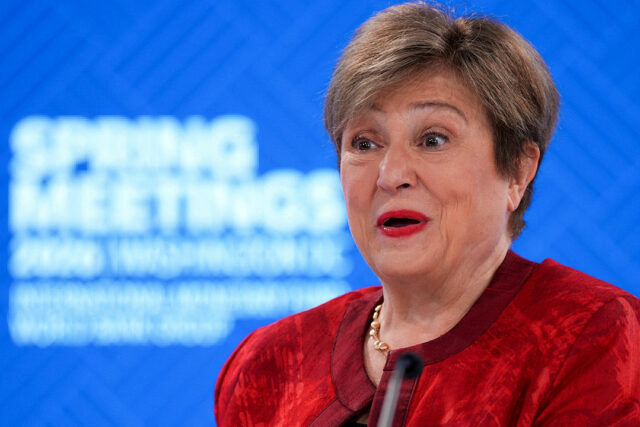
International Monetary Fund (IMF) Managing Director Kristalina Georgieva attends a briefing during IMF/World Bank Spring Meetings in Washington, D.C., April 15, 2026. — REUTERS/KEN CEDENO

By Katherine K. Chan, Reporter

WASHINGTON, D.C. — The Philippines is facing a difficult situation as its heavy reliance on oil imports tests its economic resilience amid the ongoing energy crisis from the Middle East war, the International Monetary Fund (IMF) said.   

At a press briefing during the IMF-World Bank Spring Meetings on Wednesday, IMF Managing Director Kristalina Georgieva said the war’s impact on Association of Southeast Asian Nations (ASEAN) member economies is unequal, with energy importers like the Philippines taking more toll.

“For the energy importers, those that have very little to none energy reserves of oil and gas, the situation is much more difficult,” Ms. Georgieva said. “And I very much sympathize with the people in the Philippines because I know that your country does face that difficulty.”

In its latest World Economic Outlook (WEO), the IMF slashed its 2026 gross domestic product (GDP) growth forecast for the Philippines to 4.1% from 5.6% in January, reflecting weaker-than-expected growth in 2025 and the impact of the war in the Middle East. 

The IMF also expects 4.1% growth for the ASEAN-5 region, which is comprised of Indonesia, Malaysia, the Philippines, Singapore and Thailand, this year. It was marginally slower than its 4.2% estimate in January.

Ms. Georgieva noted that the region is “in a bright spot in terms of growth and economic dynamism” but must still strengthen its regional integration to better weather shocks from the war.

“Actually, ASEAN is a bright spot in terms of growth and in terms of economic dynamism,” she said. “When you look at the impact of this shock, because of this strong buildup over the years, ASEAN is actually weathering the shock as a group of countries relatively well.”

Several ASEAN energy exporters may be better positioned to weather these shocks, in contrast to the heavier impact experienced by energy importers in the region, the IMF chief said.

In the Philippines, oil prices have soared since the United States and Israel’s attacks on Iran on Feb. 28. This week saw the first rollback in pump prices, as global oil prices fell amid the temporary ceasefire in the Middle East.

The Philippines is currently under a national state of energy emergency, which President Ferdinand R. Marcos, Jr. announced last month after noting the threats to the country’s energy supply as the war drags on.

PAUSE
In a separate blog published on Thursday, the IMF said the Philippine central bank can stand pat for now to preserve easing space.

“In economies where inflation remains below target, such as Thailand and the Philippines, further rate cuts can be paused to preserve room for easing later,” IMF Asia and Pacific Department Deputy Division Chief Andrea Pescatori and Director Krishna Srinivasan said.

Philippine inflation accelerated to 4.1% in March, breaking the nearly two-year streak of it settling below the Bangko Sentral ng Pilipinas’ (BSP) 2%-4% target.

Before this, the BSP had held its rates steady in an off-cycle meeting even though it raised its full-year inflation projection to 5.1% from 3.6%, as it noted that immediate tightening risks delaying the economy’s rebound.

This paused the central bank’s easing cycle, which began in August 2024, where it delivered a total of 225 basis points in cuts to bring the policy rate to 4.25%.

BSP Governor Eli M. Remolona, Jr. on Tuesday told BusinessWorld that the expected economic relief from the government’s ongoing fiscal reforms has opened space for monetary policy tightening.

However, he noted that the central bank is still monitoring incoming data, particularly inflation, for clearer guidance for its upcoming policy review on April 23.

REGIONAL SHOCKS
Meanwhile, Asia’s resilience against last year’s US tariff policies and global trade uncertainty will be shaken as the Middle East conflict stokes inflation, weakens external balances and limits policy options, Mr. Pescatori and Mr. Srinivasan said in the IMF blog.

“Asia entered 2026 on a strong footing,” they said. “Despite the region bearing the brunt of US tariffs last April and persistent trade policy uncertainty, growth was resilient in 2025 and trade remained robust.”

“Now, the war in the Middle East and the ensuing energy supply shock are raising inflation, weakening external balances, and narrowing policy options, underscoring the region’s dependence on imported oil and gas,” they added.

The multilateral lender sees Asia expanding slower at 4.4% this year and 4.2% next year from 5% in 2025.

“Should the shock persist or intensify, as in the WEO’s adverse and severe scenarios, growth through 2027 could be reduced cumulatively by 1% to 2%,” Mr. Pescatori and Mr. Srinivasan added.

Inflation in the region is also expected to quicken to 2.6% by yearend, before easing to 2.4% in 2027. Still, this is faster than the 1.4% clip recorded last year.

“The war introduced a new and more immediate headwind clouding the near-term outlook for Asia, where net oil and gas imports equal about 2.5% of economic output,” the blog read.

Amid this, Ms. Georgieva said the crisis calls for a stronger regional integration among ASEAN countries as it faces shared economic woes.

“The Philippines is now leading the ASEAN. I am going to be there when the meeting takes place,” she said. “And I do believe that this is very important for regions that have the potential to trade more within the countries of the region.”

“Build that integration. You will benefit from it in a more shock-prone world,” Ms. Georgieva added.

Marcos allows up to 40% foreign ownership in small retailers

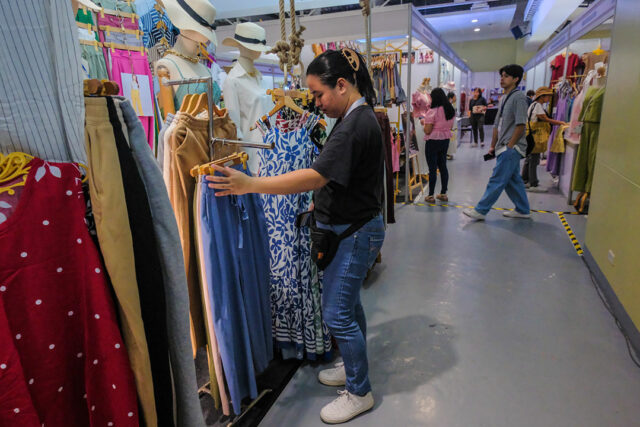
A shop attendant fixes the clothing on display at a mall in Mandaluyong in this file photo. — PHILIPPINE STAR/RYAN BALDEMOR

By Chloe Mari A. Hufana, Reporter

PRESIDENT Ferdinand R. Marcos, Jr. has eased foreign investment rules for retail trade by allowing overseas investors to own as much as 40% of enterprises with paid-up capital of less than P25 million, under the Philippines’ 13th Regular Foreign Investment Negative List (RFINL).

The change, introduced through Executive Order (EO) No. 113, marks a shift from the previous list issued in 2022, which barred foreign equity in small retail trade, and reflects a broader effort to align foreign ownership rules with recent legislative reforms.

Under the updated negative list, retail trade enterprises below the P25-million capital threshold are no longer fully reserved for Filipinos but remain subject to a 40% foreign equity cap.

Control of such firms must still rest with Philippine nationals, in line with the Retail Trade Liberalization Act.

In the April 13 order, Mr. Marcos cited the need to update the foreign investment framework “to reflect changes… consistent with the policy to ease restrictions on foreign participation in certain investment areas or activities,” following recommendations from the Department of Economy, Planning, and Development.

The new order also introduced a higher equity ceiling for infrastructure projects.

Procurement for public works was capped at 40% foreign equity in the 12th RFINL under EO No. 175 signed by former President Rodrigo R. Duterte in 2022.

The 13th RFINL now permits up to 75% foreign ownership in government infrastructure projects but limited only to projects that need special skills or technologies that local companies lack.

The latest RFINL also permits government procurement of goods with up to 40% foreign equity.

Foreign bidders are eligible to participate if allowed under a treaty or international agreement, if their country grants reciprocal rights to Philippine suppliers, if the required goods are not locally available or if their participation is necessary to prevent anti-competitive or trade-restricting conditions.

Government procurement of consulting services can now include up to 40% foreign ownership under the new rules, allowing foreign consultants to be hired when local consultants do not have the needed skills and expertise, as decided by the Head of the Procuring Entity.

The Marcos administration also codified new rules for the defense sector to bolster national security through domestic production as tensions rise in the South China Sea.

The 13th RFINL introduced a category allowing up to 40% foreign equity for the development, production, manufacturing, assembly or operation of materiel (military materials and equipment), by in-country enterprises.

Under Republic Act (RA) No. 12024, or the Self-Reliant Defense Posture Revitalization Act, this provision covers military technology, weapons systems and armor, aiming to foster a local defense industry with limited international partnership.

The new rules also came with wider liberalizations in the telecommunications and renewable energy sectors.

While the 12th RFINL capped radio networks at 40% equity, the 13th RFINL permits 100% foreign ownership in telecommunications management, provided there is reciprocity from the investor’s home country.

The update is in line with RA No. 11659, which allowed up to full foreign ownership in key sectors such as telecommunications, shipping and railways by narrowing the definition of “public utility.”

A Department of Energy’s 2022 circular also allowed full foreign participation in solar, wind, and hydro energy projects.

Rizal Commercial Banking Corp. Chief Economist Michael L. Ricafort said easing rules on retail trade will encourage more foreign investment.

“This development would indeed help provide a more conducive business/economic environment for more foreign investments to come to the local retail trade industry that would give Filipinos more choices/variety, lower prices, and better products/services,” he said via Facebook Messenger.

He also noted that the Philippines’ consumption-driven economy, where household spending accounts for more than 70% of the gross domestic product, combined with a population of over 114 million, makes the retail sector particularly attractive to foreign investors.

The 13th RFINL will take effect 15 days after its publication.

The RFINL is divided into two categories: List A and List B.

List A covers industries where foreign participation is limited by the Constitution and specific national laws. This includes mass media, small-scale mining, and the use of marine resources in archipelagic waters and the country’s exclusive economic zone. Foreign nationals are also barred from owning or managing cockpits, as well as from engaging in the manufacture of nuclear, biological, and chemical weapons.

On the other hand, List B restricts foreign ownership to a maximum of 40% in areas deemed sensitive for reasons of national security, public health, and the protection of small- and medium-sized enterprises. These include the manufacture and distribution of firearms, explosives, and military hardware, as well as the operation of gambling facilities and massage clinics.

Oil crisis to drive more Filipinos into poverty — PIDS

Residents go about their daily lives in Delpan, Tondo, Manila in this file photo. — PHILIPPINE STAR/RYAN BALDEMOR

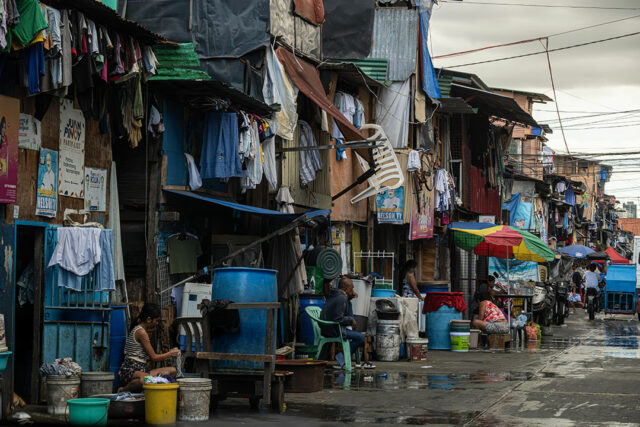
THE PHILIPPINE Institute for Development Studies (PIDS) projects an additional 1.34 million Filipinos will be pushed into poverty this year amid surging oil prices due to the Middle East war.

In a policy note, PIDS Senior Research Fellow Jose Ramon G. Albert said the national poverty rate is projected to go up to 14.4% this year under the current scenario where oil is at around $105 per barrel and a 35% pass-through effect. The poverty rate stood at 13.2% in 2025.

“The poverty impact is substantial and immediate. The current scenario has already pushed an estimated 1.34 million Filipinos into poverty, reversing much of the progress made since 2023. Fuel price stability must be treated as a priority for social protection,” he said.

In a “prolonged crisis” scenario where oil prices hit $125 per barrel, Mr. Albert projects the poverty rate to go up to 15.3% with 2.35 million considered as “newly poor.”

Under a severe disruption where oil goes up to $145 per barrel, the poverty rate could hit 16.3% as an additional 3.5 million Filipinos are pushed into poverty.

All these newly poor individuals come from low-income but not poor households.

The PIDS policy note drew on three fuel price shock scenarios developed by the Asian Development Bank in the context of Middle East conflict risks.

Mr. Albert said rural areas will see a sharper increase in poverty rates — 20% under the current scenario and up to 22.5% in the most severe scenario.

“Under (the current scenario), rural poverty rises by 1.5 percentage points (compared to 0.9 percentage point in urban areas), reflecting a heavier reliance on fuel-intensive agriculture, limited income diversification, and higher food expenditure shares,” he said.

He noted the Bangsamoro Autonomous Region in Muslim Mindanao, other regions in Mindanao (excluding the Davao Region), as well as all regions in the Visayas, Bicol, and Mimaropa will see the biggest incremental increase in poverty from an already high base.

“While all households experience roughly similar price impacts (3.2-3.3%) under current conditions, the welfare consequences are regressive. Because poor households allocate over 57% of their spending on food, and food supply chains are highly energy intensive, the transmission of cost increases through food prices disproportionately affects low-income households,” Mr. Albert said.

The PIDS’ microsimulations on the impact of the oil shocks showed poor households will lose 16.2% of their annual income in real purchasing power, compared with 3.4% for the richest households.

Mr. Albert said universal fuel subsidies, such as the proposed reduction or suspension of excise tax on fuel products, can worsen inequity.

“A fuel excise tax cut that reduces prices uniformly provides roughly four times more in absolute pesos to a rich household than to a poor household,” Mr. Albert said.

Soaring fuel prices and dwindling oil reserves — driven by the Middle East conflict — have already prompted the government to declare a national energy emergency and suspend excise taxes on kerosene and liquefied petroleum gas (LPG).

Instead of fuel subsidies, Mr. Albert said targeted emergency cash transfers “can partially reverse poverty impacts at a manageable cost.”

“A P6,000-per-household tranche (P1,500 per individual) delivered through vertical expansion of existing programs, horizontal extension to waitlists, and emergency transfers to persons with disabilities, minimum-wage workers, and newly identified poor households would reduce poverty from 16.4% to 15.8%, protecting 754,000 persons, at an estimated P64.6 billion after deduplication,” he said.

As part of its coordinated response under the Unified Package for Livelihoods, Industry, Food, and Transport (UPLIFT) framework, the government is considering the rollout of the Suplementaryong Ayuda Para sa Apektadong Tahanan (SAPAT) program.

PIDS estimates SAPAT would cost P32 billion if implemented as a one-time P6,000 transfer to existing program beneficiaries or four million households.

Expanding coverage to recently graduated Pantawid Pamilyang Pilipino Program (4Ps) households would add P11.4 billion, while including persons with disabilities, minimum-wage households, and local government unit-identified poor households would raise the total by P43 billion to P84 billion.

However, Mr. Albert said that if the oil crisis worsens into the severe scenarios, quarterly tranches at higher amounts — P7,500 per household, or more for hard-hit regions — would be warranted.

Earlier, the World Bank said the Philippines’ limited fiscal space leaves little room for a fuel excise pause, which could cost over 0.5% of gross domestic product in foregone revenue if extended through 2026.

The multilateral lender said that the country should go for a targeted response, such as providing an additional P600 per month to 3.9 million 4Ps beneficiaries. — Justine Irish D. Tabile

Energy regulator approves over P4-billion cost recovery for Meralco

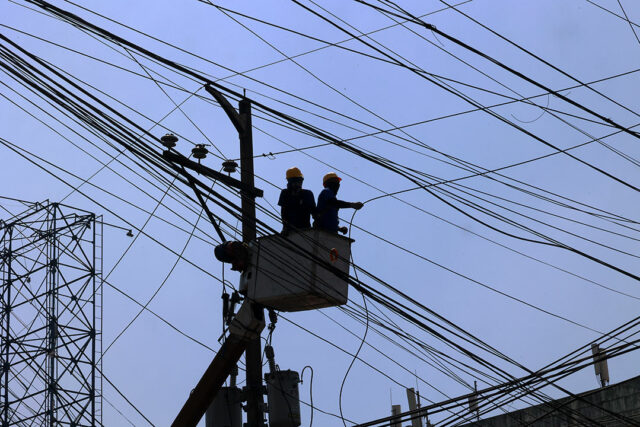
LINEMEN conduct maintenance work on electricity posts along Kamuning Road in Quezon City, March 25, 2026. — PHILIPPINE STAR/MIGUEL DE GUZMAN

CONSUMERS served by Manila Electric Co. (Meralco) will face higher electricity rates starting in September after the Energy Regulatory Commission (ERC) approved the recovery of more than P4 billion in costs tied to a major gas plant owned by its affiliate.

In an order promulgated on April 14, the ERC gave Meralco the go signal to recover from consumers the monthly fixed fees it owed to its unit, Excellent Energy Resources, Inc. (EERI), for the power supply supplied early last year.

The amount to be recovered stood at P3.67 billion and $6.37 million (P381.7 million) for the costs relating to the declaration of commercial operations date of the gas plant’s units.

This is equivalent to an additional charge of P0.1099 per kilowatt-hour (kWh), which the ERC allowed Meralco to collect from its customers over a 12-month period.

“However, considering the current situation of increasing prices of electricity, the Commission finds it prudent to adjust the start of recovery period not earlier than September 2026 billing,” the ERC said in an 18-page order.

The recovery rate to be charged by the power distributor remains subject to the ERC’s earlier advisory, which encourages all distribution utilities experiencing generation cost increases of more than P1 per kWh to stagger the adjustment.

EERI, the operator of the 1,275-megawatt combined cycle power plant in Ilijan, Batangas, is jointly owned by the subsidiaries of Meralco, Aboitiz Power Corp. and San Miguel Global Holdings Corp. (SMGP).

EERI is 67% owned by Chromite Gas Holdings, Inc. — the joint venture between Meralco PowerGen Corp. and Therma NatGas Power, Inc., and 33% by SMGP.

The ERC partially approved the 15-year power supply agreement of Meralco and EERI in late 2024 amid pending acquisition of the gas plant.

The three units of the EERI plant have yet to secure certificate of compliance from the ERC but already obtained the final certificate of approval to connect (FCATC) from the National Grid Corp. of the Philippines (NGCP).

“The Commission recognizes that the (commercial operations date) of EERI is from the date of NGCP’s FCATC for each unit of the EERI plant. Hence… the Commission determines that the reasonable recovery period to be used is 12 months,” the ERC said.

Meralco is the country’s largest private electricity distribution utility, serving more than 8.2 million customers in Metro Manila and nearby provinces including Bulacan, Cavite, Rizal, and parts of Laguna, Batangas, Pampanga, and Quezon.

In April, Meralco raised electricity rates by P0.5335 per kWh month on month to P14.3496 per kWh, driven by higher generation costs linked to the peso’s depreciation.

Meralco’s controlling stakeholder, Beacon Electric Asset Holdings, Inc., is partly owned by PLDT Inc. Hastings Holdings, Inc., a unit of PLDT Beneficial Trust Fund subsidiary MediaQuest Holdings, Inc., has an interest in BusinessWorld through the Philippine Star Group, which it controls. — Sheldeen Joy Talavera

DigiPlus secures South Africa licenses

ORIGINAL BACKGROUND PHOTO FROM UNSPLASH/TIM JOHNSON

DIGIPLUS Interactive Corp. said it received approvals from the Western Cape Gambling and Racing Board (WCGRB), paving the way for its entry into South Africa, its second international market.

“South Africa is set to be DigiPlus’ second international market after the company’s entry into Brazil,” the company said in a statement on Thursday.

The listed digital entertainment provider said it secured three operator licenses from the WCGRB: a national manufacturer license, a bookmaker license, and a bookmaker premises license.

“This paves the way for DigiPlus’ entry into South Africa, the largest online gaming market on the continent, which is estimated to have generated $4.9 billion in gaming revenues in 2025,” it said.

The WCGRB has jurisdiction over Western Cape, which accounted for about 31% of South Africa’s online gaming revenues in 2025. The region is considered a key entry point for international operators due to its regulatory environment and digital infrastructure.

The company targets full commercial operations in Brazil in the first half of 2026.

In November last year, DigiPlus President Tsui Kin Ming said “I would say sometime in early 2027, we will also do a soft launch in South Africa.”

Also last year, DigiPlus paused the soft launch of GamePlus to refine the platform for Brazilian users. The company said the move would allow it to improve product quality and better align with local preferences, with plans to relaunch it in early 2026.

DigiPlus said its net income was steady at P12.6 billion in 2025, while revenue rose 12% to P84.2 billion from P75.2 billion in 2024, as first-half performance offset a slowdown in activity after the third-quarter delinking of electronic wallet in-app access to licensed online gaming platforms.

Earnings before interest, taxes, depreciation, and amortization (EBITDA) increased 2% to P14.2 billion in 2025.

“Despite a challenging and evolving industry landscape, DigiPlus delivered a resilient performance in 2025, reflecting the strength of our platforms, disciplined execution, and the trust of our users. As we look ahead, we remain optimistic about our growth trajectory and are confident in our ability to continue innovating responsibly while creating long-term value,” DigiPlus Chairman Eusebio H. Tanco said.

For the fourth quarter, DigiPlus’ net income fell 36% to P2.5 billion, while revenue declined 27% to P17.3 billion, amid partial regulatory effects. EBITDA rose 52% from P2 billion, supported by improved cost controls and operations.

At the stock exchange on Thursday, shares in the company closed 0.13% lower at P14.98 apiece. Alexandria Grace C. Magno

ICTSI raises tariffs to offset fuel costs amid Middle East war

CDNWEB.ICTSIIRAQ.COM

GLOBAL port operator International Container Terminal Services, Inc. (ICTSI) said it has adjusted tariffs and handling rates across its terminals to offset rising fuel costs linked to the ongoing Middle East conflict.

“We are not sure if this will be the case going forward. But the government has been able to mitigate it… Until the war is over or settled, prices will remain high. This is why we have already implemented adjustments to our tariffs and handling rates to make up for the differential in diesel and fuel prices throughout our terminals in the world,” ICTSI Chairman and President Enrique K. Razon, Jr. said during the company’s annual stockholders’ meeting on Thursday.

The company said the direct operational impact of the conflict is currently concentrated in its Iraq terminal.

“The direct effect to our performance is in our terminal in Iraq. So far, that has been offset by performance by all other terminals globally. But the longer the war takes to be settled, the larger impact to the global economy,” Mr. Razon said.

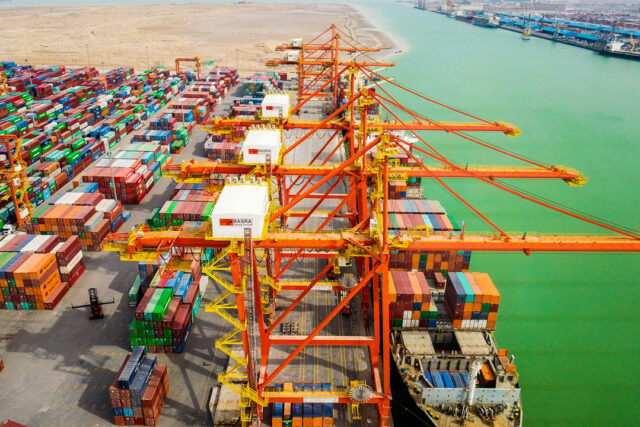
ICTSI operates the Basra Gateway Terminal in Umm Qasr, Iraq, which serves as the country’s largest and primary port gateway.

The terminal supports oil- and gas-producing economies through container and project cargo handling facilities, according to information on its website.

Mr. Razon said fuel supply remains available across ICTSI’s operations, although prices have risen due to the conflict between the United States-Israel and Iran.

“Asia is the most affected by the closure of the Hormuz Strait. But as of today, there is still diesel supply but at a high price. We are constantly working with the government and other agencies throughout the world to make sure that the Philippines has a continuous supply,” he said.

ICTSI said its Asian operations remain a key growth driver. In 2025, the company reported a 23% increase in attributable net income to $1.05 billion, driven by higher cargo volumes across its global port network.

Gross revenues rose 17.88% to $3.23 billion from $2.74 billion in 2024, with Asia accounting for 41% or $1.34 billion of total revenues.

At the local bourse on Thursday, shares in ICTSI fell P20 or 2.72% to close at P715 each. — Ashley Erika O. Jose

ADVERTISEMENT
ADVERTISEMENT