Home Blog Page 1980

Public Wi-Fi program gets P7.5B

FREEPIK

THE SENATE has increased the funding for the government’s free public wireless internet access program next year to P7.5 billion from P2.5 billion with the aim to provide internet connectivity to far-flung areas and to ensure schools can conduct hybrid-learning setups.

“The aim there is to increase the access points and increase the locations to areas where students and also communities don’t have access to the internet,” Senator Sherwin T. Gatchalian, who sponsored the budget of the Department of Information and Communications Technology, told the plenary floor in the early hours of Wednesday.

“It’s very difficult for the education sector to go into online learning or distance learning without access to the internet.”

The funding will bankroll free internet access in public spaces, such as government offices, public schools, state universities, public hospitals and medical facilities, and transport terminals, among others.

A 2022 report by the World Bank showed that only 33% of Philippine households have access to fixed broadband, while 70% of the population have an active mobile broadband subscription.

Broadband internet remains costlier in the Philippines than in neighboring countries, with the annual charge for fixed broadband equivalent to 11% of per capita gross national income. — John Victor D. Ordoñez

Bill vs fake birth certificates filed

PHILSTAR FILE PHOTO

A BILL providing for an administrative process for the cancellation of spurious birth certificates illicitly acquired by foreigners was filed at the House of Representatives on Wednesday, amid a congressional investigation into fraudulently acquired Filipino citizenship linked to illegal drugs and online casinos.

Filed by lawmakers part of the House quad committee, House Bill (HB) No. 11117 seeks to nullify fake Philippine documents by creating a special committee that would oversee investigations on alleged fake Filipinos and declare the cancellation of their birth certificates if found spurious.

Thousands of foreigners have reportedly acquired a Filipino citizenship through fraudulent means, according to the measure’s explanatory note, with more than 1,200 falsified birth certificates being issued by a Davao del Sur local civil registry alone in July.

“It is time to put an end to these unlawful activities,” the bill’s authors, led by Senior Deputy Speaker and Pampanga Rep. Aurelio D. Gonzales, Jr. said in a statement. “Being a Filipino citizen should not be so easily acquired or given away by unscrupulous and selfish individuals who only wish to attain Filipino citizenship to fuel their self-interests.”

The House quad committee in October submitted to the Office of the Solicitor General documents detailing how a Chinese national illegally acquired a Filipino citizenship, with Surigao del Norte Rep. and panel chairman Robert Ace S. Barbers saying during the file turnover that several foreigners bought “thousands of hectares of land” with the help of fake birth certificates.

“There were Chinese citizens that became Filipinos. Because of that, they were able to acquire lands and organize corporations that are 100% under their ownership,” Mr. Barbers told reporters.

The 1987 Constitution bars foreigners from owning land in the country and places a 40% foreign ownership cap on certain Philippine businesses. — Kenneth Christiane L. Basilio

P1.5M worth of drugs seized

PHILSTAR FILE PHOTO

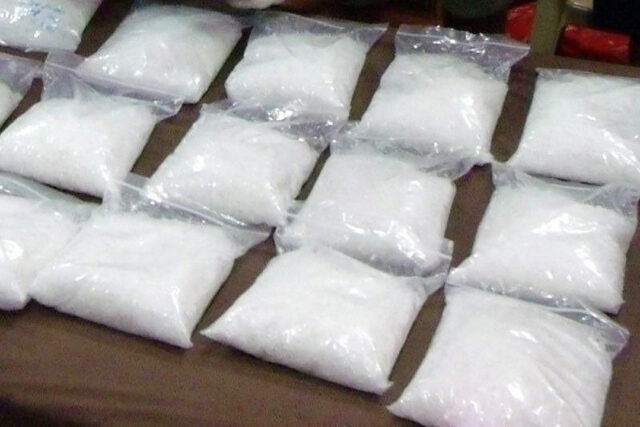
THE Bureau of Customs (BoC) said on Wednesday that it seized P1.564 million worth of crystal meth (shabu) at the Ninoy Aquino International Airport (NAIA).

In a statement, BoC said the parcel, which came from California, was flagged during a routine inspection at the Central Mail Exchange Center in Pasay City.

The package weighed 230 grams.

The drugs were found in a joint operation conducted by the Philippine Drug Enforcement Agency (PDEA) and the NAIA Inter-Agency Drug Interdiction Task Group.

It is now turned over to PDEA and further investigation.

“This interception is a product of the heightened security measures of the Bureau to protect our borders against any attempt to import illegal drugs,” Customs Commissioner Bienvenido Y. Rubio said. — Aubrey Rose A. Inosante

Trade mission held in Ilocos Norte

BAGUIO CITY — The provincial government of Ilocos Norte, through the Ilocos Norte Trade and Investment Promotions Office (INvest), recently launched a business trade mission at the Plaza del Norte Hotel and Convention Center, to strengthen bilateral relations and explore new business opportunities for economic growth.

Dubbed “Ilocos Norte-Hawaii Industry Meet-up,” the event gathered businessmen, entrepreneurs, government officials, and other stakeholders from both the State of Hawaii, United States of America, and Ilocos Norte.

The delegation from Hawaii was led by Mufi Hannemann, former mayor of Honolulu, founder of the Pacific Century Fellows, and chairman of the Hawaiian Lodging Tourism Association, alongside Vanessa Kop, executive vice-president of the North American Indigenous Cultural Business Initiative; Hawaii State Senator Henry C. Aquino; Tyler Dos Santos-Tam, Honolulu City council member; and Mr. Leonard S. Tanaka, general manager of T&T Electric.

The trade mission featured exhibits showcasing diverse range of local products and services crafted by skilled artists and artisans, emphasizing Ilocano creativity and entrepreneurial ingenuity, while incorporating the province’s rich cultural heritage.

The event provided a platform for local businesses to network with the Hawaiian delegates and discuss potential partnerships in sectors such as agriculture, tourism, environment, and renewable energy, among others.

Highlighting the gathering was Mr. Hannemann’s commitment to advocate for the return of direct flights between Hawaii and Laoag City.   

He also said he intends to collaborate with Ilocos Norte in developing sports tourism in the province, as well as conduct trade symposiums where products from the Philippines and Hawaii are sold side-by-side with each other.

The trade mission was the successful outcome of the Tourism, Trade, and Cultural Roadshow of the Provincial Government in Honolulu, Hawaii earlier this year, where officials of the provincial government led by Governor Matthew J. Marcos Manotoc met with representatives from different sectors for potential collaboration. — Artemio A. Dumlao

Pangasinan invests in farming, healthcare

MANIACVECTOR-FREEPIK

BAGUIO CITY — Governor Ramon V. Guico III of Pangasinan vowed they are going to invest more in their agriculture and healthcare programs, maximizing its current revenue capacity reinforced by its P7.1-billion budget for 2025.

Though Mr. Guico said their annual budget is still lesser compared to the actual needs of the Pangasinenses to enjoy further improved services.

Aside from looking for additional resources, it is good to prioritize some aspects that will benefit the 3.1 million people of Pangasinan, he stressed.

Last month, the Sangguniang Panlalawigan of Pangasinan approved the province’s 2025 annual budget at P7.1 billion.  This is historical, Mr. Guico said, where it showed significant increase compared to the P5.72 billion budget for 2024.

He said the budget will be used for the operational expenses of the provincial government including the upgrading of the salaries of its personnel, the programs and other official functions.

“Corporate farming to become more efficient,” the governor said stressing that among the priorities are the agricultural sector and the health of the people of Pangasinan said.

He explained they will have the opportunity to have a systematized plan of planting quality varieties of rice and other crops, using farm inputs in accordance to more scientific approach of managing the soils among other essentials of farming methods.   

Through this, he added, “the farmers can sell their produce at a better price”.

Mr. Guico also stressed the need to have a serious education and information drive among Pangasinenses to know more about their rights to quality health care.   

He said that most of the Pangasinenses are not having their check-ups for many reasons and “this should be addressed as the provincial government dreams of a healthy Pangasinan.”

The governor further said, “the people should know more about the Universal Health Care Program of the government and the benefits that they can get from the PhilHealth system.” — Artemio A. Dumlao

PDEA shuts Lanao del Sur drug den

COTABATO CITY — Anti-narcotics agents clamped down a woman operating a drug den and six others who sold to them P102,000 worth of crystal meth (shabu) in a sting in Barangay Panang in Wao, Lanao del Sur on Monday.

The drug den operator Masigay Tumbaji Daut and her cohorts, Disinon Moda Mabagur, Aliton Tumbaji Daut, Era Daut Orab, Montasir Tumbaji Daut, Maulana Mago Abad and Dioselito Ayson Capucao, are now in the custody of the Philippine Drug Enforcement Agency-Bangsamoro Autonomous Region in Muslim Mindanao (PDEA-BARMM).

Gil Cesario P. Castro, director of PDEA-BARMM, told reporters on Wednesday that Ms. Daut and her companions yielded peacefully when they sensed that they had sold shabu to their agents and personnel.

PDEA-BARMM agents also found in their drug den in Barangay Panang several pots planted with marijuana seedlings.

Three other drug den operators, Saadudin Mitmug Bagul, John Mark Villasista Tolentino and Jayson Belong Valeria, fell in a PDEA-BARMM entrapment operation just last week in Barangay West Wao in the same municipality.

PDEA-BARMM agents and policemen had seized from them P68,000 worth of shabu in the operation that led to their arrest. John Felix M. Unson

PSEi rallies to 6,900 level as BSP hints of rate cuts

BW FILE PHOTO

By Revin Mikhael D. Ochave, Reporter

PHILIPPINE STOCKS closed higher for the fourth straight day on Wednesday, rallying to the 6,900 level on a possible 100 basis-point (bp) rate cut by the Philippine central bank next year.

The benchmark Philippine Stock Exchange index (PSEi) rose 2.53% or 172.44 points to 6,975.63. The broader all-share index also gained 0.92% or 35.23 points to 3,847.41.

“The market was mainly driven by the reassurance from the Bangko Sentral ng Pilipinas (BSP) that the Philippines’ monetary policy is still in its easing phase with a possibility of a 100-bp rate cut in total next year,” Japhet Louis O. Tantiangco, a senior research analyst at Philstocks Financial, Inc., said in a Viber message.

On Tuesday, BSP Governor Eli M. Remolona, Jr. said the Monetary Board would likely deliver rate cuts at the 100-bp range. But he hinted that they could either cut or keep the rates steady at their Dec. 19 meeting.

“Foreign investors also turned buyers on the net, helping the market climb,” Mr. Tantiangco said.

Net foreign buying reached P82.21 million, a turnaround from P1.15 billion worth of net foreign outflows on Tuesday.

“Philippine stocks extended their rally, posting their biggest gain since February of 2023 as the market viewed the recent interaction call between President Ferdinand R. Marcos, Jr. and Donald J. Trump under a positive note,” Luis A. Limlingan, head of sales at Regina Capital Development Corp., said in a Viber message.

Mr. Marcos on Tuesday said he had a “very productive” congratulatory phone call with the US President-elect.

He said the relationship between the US and the Philippines are “as deep as can possibly be because it has been for a very long time,” adding that he plans to meet with his US counterpart soon.

Sectoral indices rose across the board. Holding firms went up 3.25% or 186.84 points to 5,926.71, while financials climbed 2.95% or 66.42 points to 2,315.04.

The property index went up 1.99% or 51.94 points to 2,661.51, while industrials rose 1.61% or 152.68 points to 9,610.8.

Services gained 0.84% or 17.70 points to 2,120.57, while mining and oil added 0.13% or 10.53 points to 7,713.19.

Value turnover dropped to P5.38 billion covering 731.77 million stocks from P5.45 billion covering 783.36 million shares on Tuesday. Losers beat advancers 110 to 88, while 59 stocks were unchanged.

PHL urged to separate powers of airport regulatory, dev’t agencies

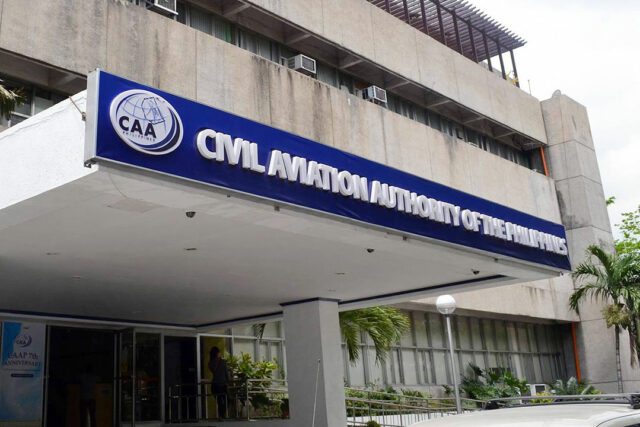
CIVIL AVIATION AUTHORITY OF THE PHILIPPINES

THE regulatory and operations and maintenance functions of air transport authorities need to be separated to ensure the efficiency and competitiveness of air transport, the Joint Foreign Chambers (JFC) of the Philippines said.

In a policy brief issued by the JFC’s advocacy arm, the Arangkada Philippines Project, the JFC cited the need “to provide linkages where there should be convergence and to de-couple where there should be independence” to ensure adequacy of infrastructure and safety.

“More specifically, there is a need to provide greater coherence and convergence among entities undertaking airport development and their implementation and separate regulatory and developmental (i.e., operations and maintenance) functions, which are currently in singular entities,” it added.

It pointed to the need to make the Civil Aviation Authority of the Philippines (CAAP) conform with international protocols, reinstate its fiscal autonomy, and delink its developmental, proprietary, and investigation functions.

“Such division is crucial for streamlining operations, enhancing safety, and ensuring that Philippine airports meet global standards,” it said.

The policy brief recommended the amendment of Republic Act (RA) 9497 to reinstate CAAP’s fiscal autonomy and exempt its personnel from salary standardization requirements.

It said that the agency’s fiscal autonomy was removed by RA 10149, which required CAAP, along with other government-owned and -controlled corporations (GOCCs), to declare and remit dividends to the National Government.

“(RA 10149) also removed the exemption from salary standardization regulations applicable to GOCCs, resulting in standardized, and less competitive, salaries for technical staff. This made it harder to attract and retain skilled aviation workers,” it added.

The policy brief supported the reclassification of highly technical positions into higher salary grades and exempt CAAP from the obligation to remit dividends to the National Government.

“To protect against future implied repeals of RA 9497, the proposed legislation should incorporate a clause requiring that all future repeals or amendments must be explicit, thereby prohibiting implied repeals,” it added.

As of August, a bill seeking to amend RA 9497, — Senate Bill 1003 — remained pending at the Senate.

The brief also recommended the creation of a Philippine Airports Authority to take over airport development, which will allow the CAAP to focus solely on regulatory oversight, thus enhancing safety and efficiency.

“Section 78 of RA 9497 mandates CAAP to be responsible for the planning, development, construction, operations, maintenance, or expansion of airports. As a technical regulator, CAAP also regulates facilities that it develops and operates,” it said.

“This creates inefficiencies and conflicts of interest,” it added.

It said that transferring the developmental functions to a new entity will provide CAAP with greater flexibility to focus on its regulatory function.

Bills on the delinking of CAAP functions, such as House Bill 02234 and Senate Bill 1073, are still pending in Congress.

Meanwhile, the brief also recommended the creation of a Philippine Transportation Safety Board (PTSB), which will conduct objective investigations into aviation incidents to improve accountability and transparency.

“The current approach to transportation and passenger safety and investigation is fragmented and lacks independence. Transport agencies perform multiple and conflicting functions as regulators, operators, and investigators,” it said.

It said that the creation of the PTSB will help improve transportation safety measures and ensure the implementation of transportation safety standards.

“The proposed body shall be a non-regulatory and autonomous agency and shall be the primary agency responsible for the conduct of impartial and forensic evidence-based investigations on the causes of transportation-related accidents and incidents,” it added.

The creation of the PTSB is covered by Senate Bill 1121 and House Bill 01801, which are both pending.

The JFC also sought the modernization of the Civil Aeronautics Act of 1952 to position the Civil Aeronautics Board as an independent economic regulator that will prioritize consumer protection.

“As the ownership of airports changes from public to private hands, economic regulation may become more necessary to ensure airport service pricing promotes the welfare of airport users,” it said.

“The proposal is to integrate airport economic regulatory functions in the CAB mandate,” it added.

Aside from decoupling regulatory and developmental functions, the policy brief also recommended the upgrade of more gateways, prioritization of investments in national aviation safety management systems, and combating illegal charters.

It also sought the ratification of the Cape Town Agreement, the institution of incentives for the aviation industry, and investments in human capital development and sustainability. — Justine Irish D. Tabile


Investments deemed eligible for green-lane treatment hit P4.46T

THE Board of Investments (BoI) has endorsed for green-lane treatment 167 projects worth P4.457 trillion, or $75.87 billion, to the One-Stop Action Center for Strategic Investments as of mid-November.

Renewable energy (RE) projects account for P4.07 trillion of the green-lane certified projects. These investments were proposed for 136 projects.

Investments in RE projects increased after the government allowed full foreign ownership in the industry, which was previously capped at 40%.

Established through Executive Order No. 18 in February 2023, green lanes aim to accelerate and simplify the permit and licensing processes for strategic investments.

Six digital projects worth P346.33 billion were also endorsed for green-lane treatment, while 22 projects related to food security worth P13.95 billion were also endorsed.

Meanwhile, three manufacturing projects worth P29.61 billion were also given green-lane status.

RECENT CERTIFICATIONS
In a separate statement on Wednesday, the BoI said it has given green-lane certification to wind power and breeder farm projects, which have a combined investment of P704 billion.

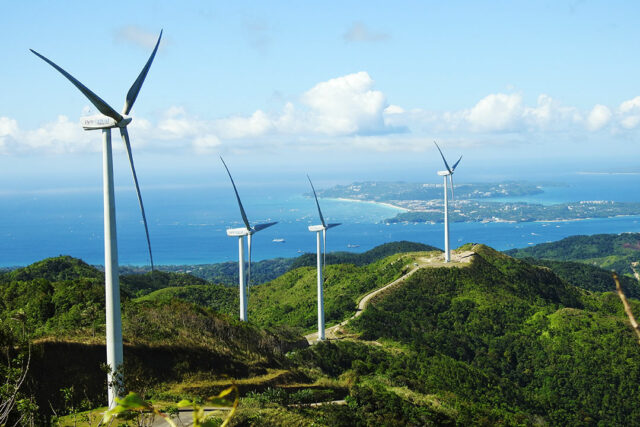
It said that it awarded green-lane status to Buhawind Energy Philippines’ three offshore wind power projects, which will have combined capacity of 4,000 gigawatts (GWs).

Buhawind, a joint venture between PetroGreen Energy Corp. and Denmark’s Copenhagen Energy, is investing P694 billion for wind power projects in Northern Luzon, Northern Mindoro, and Eastern Panay.

“From construction to operation, the three projects are expected to generate over 50,000 jobs.

According to the BoI, the permitting process will be expedited for Buhawind’s 1.98-GW Northen Luzon Offshore Wind Power Project in Ilocos Norte, 990-megawatt (MW) Northern Mindoro Offshore Wind Power Project, and 990-MW East Panay Offshore Wind Power Project.

The projects are expected to begin operations in 2030, 2031, and 2033, respectively.

Meanwhile, the BoI also awarded green-lane certification to Charoen Pokphand Foods Philippines Corp. for its P10.55-billion investment in 20 hog breeder farm projects.

“Charoen is the first company to receive a green-lane certification for agricultural projects since the initiative’s launch in 2023,” the BoI said.

According to the BoI, Charoen plans to build the breeder farms in Nueva Ecija, Isabela, Tarlac, Palawan, Ilocos Norte, Ilocos Sur, South Cotabato, Pangasinan, Southern Leyte, Surigao del Norte, and Negros Occidental.

“These projects are expected to create 1,250 jobs,” the investment promotion agency said.

Charoen, a subsidiary of Thailand’s Charoen Pokphand Foods Public Co. Ltd., will lease the farms to breed parent stock pigs, producing thousands of weaned piglets each year.

“These piglets will then be transferred to wean-finish or grow-out farms in various locations until they reach market weight,” the BoI said.

To ensure environmental sustainability, Charoen will integrate biogas waste treatment systems in each facility.

The company will also invest in climate control systems for hog buildings, silos and automatic feeding systems, central feed silo systems, farrowing pens, gestation pens, as well as diesel and biogas generators, the BoI said. — Justine Irish D. Tabile

World Bank approves $500-M loan for PHL climate-resilient schools

REUTERS

THE World Bank said on Wednesday that it agreed to lend the Philippines $500 million to finance the construction of climate-resilient schools.

According to a loan document uploaded on the World Bank website, the bank approved the terms of the Infrastructure for Safer and Resilient Schools Project on Nov. 18.

The project will address the physical rehabilitation needs and boost the resilience of disaster-affected schools in the Philippines.

It seeks to support a resilient recovery of disaster-affected schools in over 3,000 schools mainly in Caraga, Cordillera Administrative Region, and Regions III, V, VI, VII, VIII, and XI.

This will be implemented by the Department of Education (DepEd) and the Department of Public Works and Highways.

The Philippines remained the most disaster-prone country for a 16th year, according to the World Risk Index. It experiences about 20 tropical cyclones each year.

In Bicol, the DepEd reported that 408 schools were damaged, and 244 classrooms were destroyed by Super Typhoon Pepito (international name: Man-yi).

As per the loan document, the project will include repair, rehabilitation, and pilot reconstruction of selected school facilities, including the upgrade of school infrastructure operation and maintenance manuals and tools and classroom furniture for reconstructed school buildings.

The project includes the preparation of a Contingent Emergency Response Component (CERC) manual.

The CERC manual may be updated from time to time with the agreement of the Bank, and forms an integral part of the Project Operations Manual.

The document outlines the duration of the project financing, which ends in 2029, with the government principal repayments to commence in 2035, ending on 2052.

The loan agreement was signed by Finance Secretary Ralph G. Recto on Nov. 18, while Country Director for the Philippines, Malaysia, and Brunei Zafer Mustafaoğlu signed on behalf of the World Bank the day prior.

The payment dates are March 15 and Sept. 15 each year, it said.

Other climate response-related projects such as the Pagkilos – Locally-Led Climate Action and the Philippines First Energy Transition and Climate Resilience, are set to be approved next year, according to the World Bank’s website. — Aubrey Rose A. Inosante

New Clark City site dev’t starts for PAF housing

THE Bases Conversion and Development Authority (BCDA) said it started developing a 65-hectare in New Clark City that will be the new location of the Philippine Air Force’s (PAF) housing complex.

In a statement on Wednesday, the BCDA said it broke ground on the project, which will be the relocation site for PAF housing, which is currently located in Air Force City at the Clark Freeport Zone in Pampanga.

The transfer had been agreed in a memorandum of agreement (MoA) signed by the Department of National Defense (DND) and BCDA in August 2019.

The MoA covers the transfer of PAF’s billeting facilities to New Clark City. Other operational facilities will transfer to another 147-hectare site within the OMNI Aviation near Clark International Airport.

“While our mandate is to support the AFP, we view this responsibility as a personal commitment,” BCDA Chairman Hilario B. Paredes said.

“It is our pledge to ensure that our soldiers are treated with the respect and dignity they deserve by delivering replication projects that are modern, world-class, and sustainable,” he added.

The site development phase of the PAF relocation project is expected to be completed by September 2025, while the second phase, which covers the construction of housing and community facilities, is targeted for 2026.

As of December 2023, BCDA’s contribution to the Armed Forces of the Philippines (AFP) was P59.71 billion, P48.59 billion of which was earmarked for AFP Modernization, and P11.12 billion for the replication of military facilities in Fort Bonifacio and Villamor Air Base.

“We owe our national security to the military. We assure you that the projects we undertake for the military will be world-class and will serve as a model for military camps,” BCDA President and Chief Executive Officer Joshua M. Bingcang said.

“We don’t want to lose sight of our focus on helping strengthen the Armed Forces. We will continue to share revenue and support the AFP Modernization Program,” he added. — Justine Irish D. Tabile

Lowering rice tariffs called a temporary inflation fix

BW FILE PHOTO

By Adrian H. Halili, Reporter

THE GOVERNMENT needs to improve the rice industry’s productivity to effectively address the issue of volatile rice prices, analysts said, adding that reducing import tariffs is only a temporary solution.

“The longer-term solution would be to strengthen the rice industry to stabilize prices and contribute to food security,” University of Asia and the Pacific (UA&P) Center for Food and Agribusiness Executive Director Marie Annette Galvez-Dacul said via Viber.

Ms. Dacul added that lowering tariffs on imported rice will only drive rice prices down temporarily.

“There is a need to balance supporting consumers with lower prices and protecting farmers,” she said.

As of Nov. 14, Philippine rice imports have amounted to 4.06 million metric tons (MMT), surpassing the 3.61 MMT reported for the full year of 2023, the Bureau of Plant Industry reported.

Rice imports are expected to top out at 4.5 MMT this year due to the lower tariffs, and with domestic production diminished by typhoons, according to the Department of Agriculture (DA).

In plenary debate late Monday, Senator Cynthia A. Villar said that the National Economic and Development Authority is proposing to retain the lowered tariffs on rice imports due to the depreciation of the peso.

In June, the government lowered rice import tariffs through Executive Order (EO) No. 62 to 15% from 35% until 2028, citing the need to tame rice prices. The EO is subject to review every four months.

“Many factors can influence rice prices — weather and climate, domestic rice production, consumer demand, government policies, input costs, global rice market, geopolitical factors and among others,” UA&P’s Ms. Dacul said.

Federation of Free Farmers National Manager Raul Q. Montemayor said via Viber that traders have started buying palay (unmilled rice) from farmers at “relatively low prices” of between P17 to P20 per kilogram for clean and dry grain. The National Food Authority’s buying range is P23-P25, depending on quality and location.

Mr. Montemayor added that the low prices paid by traders is to “hedge against the possibility that importers, traders, or retailers are eventually forced to lower their prices.”

He said that prices for imported rice have declined, noting that average cost of 5% broken variety from Vietnam fell to $529 per MT, compared to $637 per MT in January. Vietnamese rice accounts for about 76% of Philippine rice imports.

“This should be retailed for around P43-45 per kilo. But prices remain relatively high… so a lot will depend on how government controls profiteering,” Mr. Montemayor added.

According to DA price monitors, as of Nov. 19 one kilogram of well-milled rice fetched P42-P53 per kilo in Metro Manila markets, against P33 to P55 per kilo a year earlier.

Regular-milled rice sold for between P40 and P48 per kilo, compared to P33-P53 a year prior.