Home Blog Page 1981

[B-SIDE Podcast] Concerns over the new CREATE MORE act

Follow us on Spotify BusinessWorld B-Side

Philippine President Ferdinand “Bongbong” Marcos Jr. has signed the CREATE MORE Act this November, a law that promises to attract more foreign investments and boost economic growth by reducing the corporate income tax rate from 25% to 20% for registered business enterprises (RBEs).

The CREATE MORE Act also offers a VAT zero-rating on essential services like marketing and human resources, among others, that are “directly attributable” to the registered project or activity of a registered company.

However, some economic experts have expressed concern that the newly signed law could potentially create more problems and undermine the existing CREATE Law, which was signed in March 2021.
To take a closer look at CREATE MORE, I spoke with Pia Rodrigo, a Communications Officer at Action for Economic Reforms.

Interview by Edg Adrian Eva
Editing by Jayson Mariñas

Follow us on Spotify BusinessWorld B-Side

Australian hardware chain Bunnings breached privacy with facial recognition tool, regulator says

STOCK PHOTO | Image by Tumisu from Pixabay

 – Wesfarmers-owned Bunnings, the country’s biggest home improvement chain, breached the privacy of thousands of customers by using facial recognition technology without gaining consent, an Australian watchdog has found.

Bunnings compared the faces of customers against individuals it had stored in a database who had been identified as having a history of past crime or violent behavior, according to the Office of the Australian Information Commissioner (OAIC). The system automatically deleted images if no match was found.

The technology may have been an efficient and cost-effective option for Bunnings to tackle unlawful activities but that does not mean its use can be justified, Privacy Commissioner Carly Kind said in a statement.

Bunnings failed to take reasonable steps to notify individuals that their personal information was being collected and did not include required information in its privacy policy, she added. The company has been ordered to destroy all personal information and stop practices that could impact the privacy of customers.

Bunnings said it was deeply disappointed with the decision and that it would approach the Administrative Review Tribunal to seek a review.

“We believe that customer privacy was not at risk. The electronic data was never used for marketing purposes or to track customer behavior,” Bunnings Managing Director Mike Schneider said in a statement.

The facial recognition system captured details of customers who visited 63 stores in the states of Victoria and New South Wales between November 2018 and November 2021, the watchdog said.

Facial images and other biometric information are considered sensitive under Australia’s privacy law, and the OAIC decision could influence how businesses might deploy facial recognition technology in the future.

In 2022, Consumer group CHOICE complained to the government agency that three retail chains, including Bunnings, were using “unreasonably intrusive” facial recognition technology. – Reuters

Bill to rewrite Indigenous rights brings tens of thousands of protesters to New Zealand’s parliament

STOCK PHOTO | Image by Kerin Gedge from Unsplash

 – Tens of thousands of New Zealanders rallied before parliament on Tuesday in one of the country’s largest ever protests to oppose a bill that opponents say seeks to dilute the rights of Maori and threatens to set race relations back decades.

Massive crowds estimated by police at 35,000 gathered at parliament where the Treaty Principles Bill was introduced earlier this month by legislators who want to reinterpret a 184-year-old treaty signed between the British and Indigenous Maori.

The libertarian ACT New Zealand party, a junior partner in the ruling centre-right coalition government, is seeking to enshrine a narrower interpretation of the Treaty of Waitangi that it says discriminates against non-Indigenous citizens.

While the bill lacks enough support to pass, critics see in it a desire to reverse decades of policies that aimed to empower Maori, who make up around 20% of the 5.3 million population and are over-represented in measures of social disadvantage.

Tens of thousands began chanting “kill the bill” when ACT leader David Seymour stepped out of parliament before the crowd.

“I’m here for my grandchildren, my children and for their children”, said Hoana Hadfield from Wellington, who was marching in a protest for the first time.

“I think it’s important that we keep our kaupapa which is our values as Maori and our culture and its a real big thing for us to have cultural identity.

Some people in the crowd were dressed in traditional attire with feathered headgear and cloaks and carried traditional Maori weapons, while others wore t-shirts emblazoned with Toitu te Tiriti (Honour the Treaty).

The protest was preceded by a nine-day march, or hikoi, that began in the country’s far north, with thousands joining rallies in towns and cities as marchers travelled south on foot and in cars to Wellington.

First signed in 1840 between the British Crown and more than 500 Indigenous Maori chiefs, the Treaty lays down how the two parties agreed to govern.

The interpretation of clauses in the document still guides legislation and policy today, with rulings by the courts and a separate Maori tribunal expanding Maori rights and privileges over the decades.

ACT’s coalition partners, the National Party and New Zealand First, agreed to support the legislation through the first of three readings but both have said they will not support it to become legislation.

A small number of politicians from the governing National Party will be available to meet with hikoi leaders, while Prime Minister Christopher Luxon is still deciding how to engage, a spokesman for the government said.

Abby Collier, 42, had travelled six hours from her home in Tairawhiti to participate in Tuesday’s protest. She said she was supporting the movement because she believed unity was important.

“We are coming from across the country and showing our babies we can have a positive impact through kindness,” Ms. Collier said. – Reuters

Hong Kong jails 45 democracy activists in landmark national security trial

 – Hong Kong’s High Court on Tuesday sentenced 45 pro-democracy activists to jail terms of up to 10 years in a landmark national security trial that has damaged the city’s once feisty democracy movement and drawn international condemnation.

A total of 47 pro-democracy activists were arrested and charged in 2021 with conspiracy to commit subversion under a Beijing-imposed national security law and had faced sentences of up to life in prison.

Benny Tai, a former legal scholar identified as an “organizer” of the activists, was sentenced to 10 years in jail, the longest sentence so far under the 2020 national security law.

Some Western governments have criticized the trial, with the U.S. describing it as “politically motivated” and saying the democrats should be released as they had been “peacefully participating in political activities” that were legal.

The Chinese and Hong Kong governments say the national security laws were necessary to restore order after mass pro-democracy protests in 2019, and the democrats have been treated in accordance with local laws.


CLOSELY WATCHED TRIAL

The charges related to the organizing of an unofficial “primary election” in 2020 to select the best candidates for an upcoming legislative election. The activists were accused by prosecutors of plotting to paralyze the government by engaging in potentially disruptive acts had they been elected.

After a 118 day trial, 14 of the democrats were found guilty in May, including Australian citizen Gordon Ng and activist Owen Chow, while two were acquitted. The other 31 pleaded guilty.

Sentences ranged from just over four years to 10 years.

Prominent Hong Kong activist Joshua Wong was sentenced to four years and eight months in jail, while Chow was sentenced to seven years and nine months; former journalist-turned-activist Gwyneth Ho, was sentenced to seven years.

Elsa Wu, the mother of Hendrick Lui, who was sentenced to more than four years in jail, was taken away in a police van outside the courtroom and shouted: “He’s a good person … he’s not a political prisoner … why does he have to go to jail?”

She screamed before police slammed the van door.

Hundreds of people had queued from the early hours outside the court, many holding umbrellas in light rain as they tried to secure a seat within the main courtroom and several spillover courts.

Authorities deployed a tight police presence outside the West Kowloon Magistrates Court and for several blocks in the vicinity.

“I feel such an injustice needs witnessing,” said one woman who gave her name as Margaret and had been in the queue since Sunday afternoon. “I’ve long followed their case. They (the democrats) need to know they still have public support.”

The ruling, which critics have said tarnishes Hong Kong’s role as a global financial hub, comes as the city is hosting an international financial summit to attract more business.

U.S. President-elect Donald Trump’s nominee as secretary of state, Marco Rubio, has been a staunch critic of the trial and in an earlier open letter criticized the convictions of the 47 democrats as evidence of the national security law’s “comprehensive assault on Hong Kong’s autonomy, rule of law, and fundamental freedoms.”

Britain, which handed Hong Kong back to China in 1997, has said the 2020 security law has been used to curb dissent and freedom. – Reuters

Trump may be planning to attend SpaceX launch in Texas

RAWPIXEL.COM

 – President-elect Donald Trump may be planning to attend a SpaceX rocket launch in person in Texas on Tuesday, another sign of his close ties with the company’s billionaire founder and CEO Elon Musk.

The Federal Aviation Administration on Monday issued “Temporary flight restrictions for VIP Movement” over Brownsville, Texas, in the type of practice that usually precedes a high-profile visit.

Flight restrictions in place over Mr. Trump’s oceanfront property in Palm Beach, Florida, will be lifted temporarily during the same timeframe.

The Trump transition team did not respond to a request for comment about the president-elect’s plans.

A close friendship has developed between Mr. Trump and Mr. Musk, the Tesla CEO and world’s richest man who founded SpaceX in 2002. Mr. Musk frequently advises Mr. Trump, and has stayed a lengthy stretch at his Mar-a-Lago club in Palm Beach.

Mr. Musk was part of the Trump entourage who traveled from Florida to New York on Saturday to an Ultimate Fighting Championship event.

The launch will be SpaceX’s sixth test flight to space for Starship, the company’s next-generation rocket system at the center of Mr. Musk’s goal to send humans and cargo to Mars.

NASA plans to use Starship to land humans on the moon this decade under its Artemis program, an effort that is expected to more heavily involve Mars missions and favor SpaceX and Mr. Musk’s cosmic plans under Mr. Trump.

Using large arms attached to a launch tower, SpaceX will again try to catch Starship’s 233 foot (71 metres)-tall first stage “Super Heavy” booster roughly 10 minutes after it lifts off, a novel reusability technique that intrigued Trump the first time SpaceX tried it in October.

“Did you see the way that sucker landed today?” Mr. Trump said at a rally after the Starship test.

Biden pledges record $4 billion to World Bank fund for poorest countries

US PRESIDENT JOSEPH R. BIDEN — WHITEHOUSE.GOV

 – U.S. President Joe Biden pledged a $4 billion U.S. contribution to the World Bank’s International Development Association fund for the world’s poorest countries, a senior Biden administration official said on Monday.

Mr. Biden announced the three-year U.S. pledge during a closed session of the Group of 20 summit in Rio de Janeiro, the official told reporters, adding that the U.S. Treasury was leading negotiations at the World Bank for the IDA replenishment.

The new U.S. pledge is a record and substantially exceeds the $3.5 billion Washington committed in the previous IDA fund replenishment round in December 2021.

It is unclear if U.S. President-elect Donald Trump, who has proposed cutting foreign aid in the past, will honor Biden’s pledge as he and billionaire Tesla and SpaceX CEO Elon Musk seek to slash U.S. spending through a new government efficiency panel. An appropriation by the U.S. Congress to fund the commitment would not likely take place until after Trump takes office in January.

A spokesperson for Trump’s transition team did not respond to a request for comment on the matter.


‘HISTORIC’ PLEDGE

Earlier in Rio de Janeiro, U.S. deputy national security adviser Jonathan Finer told reporters that Biden would announce a “historic” pledge to the IDA replenishment.

Mr. Finer also told reporters at a briefing on the G20 summit that Biden will launch a bilateral clean energy partnership when he meets Brazilian President Luiz Inacio Lula da Silva on Tuesday.

The World Bank’s IDA fund, which provides mainly grants and very low interest loans to the poorest countries, is replenished every three years, and a pledging conference is scheduled for Dec. 5-6 in Seoul.

World Bank President Ajay Banga is aiming for a record amount exceeding the $93 billion refunding in December 2021, amid rising demands from poor nations in Africa and elsewhere that are struggling with crushing debts, climate disasters, conflict and other pressures.

Mr. Banga told Reuters in October that a $120 billion replenishment is possible, but that goal would require some substantial increases in country commitments.

Mr. Biden’s new U.S. commitment is about 14.3% higher than its 2021 contribution. At the IMF-World Bank annual meetings in October, Spain announced plans to boost its contribution by 37% to 400 million euros ($423 million).

Denmark in September announced a 40% increase in its contribution to about $492 million. – Reuters

Philippine central bank signals more rate cuts ahead

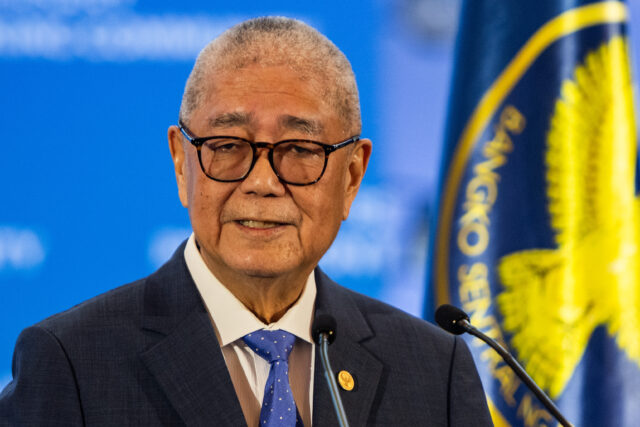
Bangko Sentral ng Pilipinas (BSP) Governor Eli Remolona — BLOOMBERG

CEBU, Philippines – The Philippine central bank is “still in the easing cycle” and so more interest rate cuts can be expected at upcoming meetings and into next year, its governor said on Tuesday.

The Bangko Sentral ng Pilipinas cut interest rates by 25 basis points for a second straight meeting on Oct. 16, bringing its benchmark rate to 6%, the lowest since February 2023. It will meet for the last time this year on Dec. 19.

Governor Eli Remolona told reporters that a third cut was likely either at the central bank’s December meeting or at its first meeting next year, and further rate cuts beyond that could be expected in 2025.

“We’re still in the easing cycle, so either we cut in December or we’ll cut in the next meeting,” Mr. Remolona said, adding further cuts of around 100 basis points in total could be expected.
“It’s not exact, could be bigger or lower. But that’s in the ballpark,” Mr. Remolona said.

Inflation in November will likely be within the central bank’s 2.0%-4.0% target, Mr. Remolona said, after it quickened to 2.3% in Octoberfrom 1.9% the previous month.

Slowing inflation, supported by a drop in the cost of rice, has allowed the central bank to ease monetary policy.

Commenting on the peso to dollar rate, Mr. Remolona said the central bank would only intervene to smooth sharp swings.

“We don’t worry so much about whether the peso depreciates or appreciates. We worry about the pass-through effect (on consumer prices),” he said. — Reuters

Below-target growth likely until 2025

A vendor arranges Christmas lanterns at a stall in Central Market, Manila. The Philippine economy would need to grow by at least 6.5% in the fourth quarter to meet the lower end of the government’s 6-7% full-year target. — PHILIPPINE STAR/ RYAN BALDEMOR

THE Philippines’ gross domestic product (GDP) is likely to expand slower than the government’s target until 2025, Citigroup, Inc. (Citi) said.

Citi cut its GDP growth forecast for the Philippines to 5.8% this year but kept its 6% growth forecast for 2025.

This is below the government’s 6-7% target this year and 6.5-7.5% goal next year.

“We lowered 2024 GDP growth slightly from 6% to 5.8%, mainly due to a weak third-quarter outturn that had been a result of several temporary, weather-related factors,” Citi economist for Thailand and the Philippines Nalin Chutchotitham said in a report.

The Philippine economy slowed to 5.2% in the July-to-September period from 6.4% in the second quarter and 6% a year ago.

This was also the weakest growth since the 4.3% expansion in the second quarter of last year.

“Nonetheless, we think it would be misleading to view the weaker third-quarter expansion as the start of a slowdown as several negative factors in the third quarter are one-off events,” Ms. Chutchotitham said.

She said the weakness in third-quarter economic growth mainly stemmed from the drop in agriculture production, construction activity and net exports.

Despite the weak third quarter, Citi expects growth to accelerate in the fourth quarter as domestic demand is seen to pick up due to easing inflation and lower rates.

“We expect fourth-quarter 2024 GDP growth to accelerate to 6% year on year. Household consumption is expected to continue improving, supported by lower interest rates and improved consumer sentiment as inflation continues to stabilize.”

In the first nine months, GDP grew by 5.8%. The economy would need to grow by at least 6.5% in the fourth quarter to meet the lower end of the government’s 6-7% target.

“With the storm season passing soon, we also expect infrastructure projects’ progress to proceed at a faster clip in the fourth quarter and first quarter of 2025,” Ms. Chutchotitham said.

Domestic demand will also likely be sustained by improving employment conditions, remittance growth and bank lending.

“The RRR (reserve requirement ratio) cut of 250 basis points (bps), effective on Oct. 25, would also release more liquidity into the banking system and likely continue to support strong credit expansion,” Ms. Chutchotitham added.

The central bank last month reduced the RRR for universal and commercial banks and nonbank financial institutions with quasi-banking functions by 250 bps to 7%.

“We also maintain our expectation of 6% growth in 2025 but see some upside risks due to tailwinds from more rate cuts,” Citi said.

The Bangko Sentral ng Pilipinas (BSP) will likely cut by 25 bps in December and by a total of 75 bps next year, according to Citi.

This year so far, the central bank has reduced interest rates by 50 bps since August. The Monetary Board is set to hold its last rate-setting meeting of the year on Dec. 19.

BSP Governor Eli M. Remolona, Jr. has said it is possible to deliver a 25-bp rate cut by then. This could bring the benchmark rate to 5.75% by end-2024.

“Looking ahead, the recent enactment of CREATE MORE (Corporate Recovery and Tax Incentives for Enterprises to Maximize Opportunities for Reinvigorating the Economy) bill should help to lower costs for businesses through lower corporate income tax, larger deductions of electricity expenses, and simpler local tax and VAT regulations,” Ms. Chutchotitham said.

Last week, President Ferdinand R. Marcos, Jr. signed into law the CREATE MORE bill.

The law expands fiscal incentives and lowers corporate income tax on certain foreign enterprises.

“In response to the post-pandemic world, the CREATE MORE law allows firms in special economic zones to implement flexible/hybrid work arrangements while continuing to enjoy their other incentives,” she added. — Luisa Maria Jacinta C. Jocson

Peso may sink to P59 per dollar level anew

BW FILE PHOTO

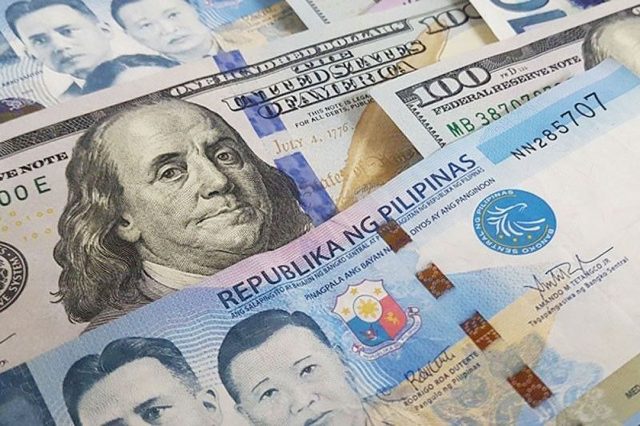
THE PHILIPPINE PESO could return to the P59-per-dollar level this year, as the US dollar continues to strengthen, analysts said.

The local unit closed at P58.68 against the greenback on Monday, strengthening by 5.2 centavos from its P58.732 finish on Friday.

“(The Philippine peso) was one of the worst performers in Asia last month, with rate cut expectations by BSP (Bangko Sentral ng Pilipinas) next month adding fuel to the fire,” ING Bank said in a report.

“A move to 59 looks likely, however, further downside in the near term should be limited,” it added.

In October 2022, the peso hit a record low of P59 against the dollar, which led to inflationary pressures and prompted the central bank to intervene.

The incoming Trump administration’s proposals to hike tariffs and impose stricter immigration policies could pose a risk to the peso, a trader said in a phone call.

“The likelihood that it will reach P59 is (due) to the risk of the US tariffs, because that would boost the dollar,” the trader said.

On the other hand, the surge in remittances this upcoming holiday season would support the local currency, the trader said, which would make it unlikely for the peso to go beyond the P59-per-dollar level.

Markets expect the incoming Trump administration to impose trade tariffs and tighten immigration, as well as deepen the deficit, measures deemed to be inflationary, Reuters reported.

Meanwhile, ING said the “upside beyond P59” could be limited due to several factors, such as latest inflation data.

“(The Philippine peso) has historically been vulnerable to inflation risk. With Brent oil price settling in the mid-70s and rice prices correcting noticeably, the trade deficit is likely to remain contained,” it said.

Headline inflation picked up to 2.3% in October, bringing the 10-month average to 3.3%. This is within the central bank’s 2-4% target.

The Bangko Sentral ng Pilipinas (BSP) expects inflation to settle at 3.1% this year, 3.2% in 2025 and 3.4% in 2026.

ING also noted the Philippine central bank’s “historical preference of defending the P59 level.”

BSP Governor Eli M. Remolona, Jr. earlier said the central bank intervenes in the foreign exchange market when necessary to “smoothen excessive volatility and restore order during periods of stress.”

The BSP had to intervene in “small amounts” when the peso fell to the P58-per-dollar level back in May, its first time hitting the level since 2022.

Meanwhile, the peso is also seen to have “relatively low sensitivity to CNY (Chinese yuan) weakness,” ING said.

“In the aftermath of Trump’s election victory and the National People’s Congress (NPC) meeting, the CNY moved weaker from 7.10 to 7.18. The CNY will likely be dragged along by broader dollar trends but should remain a low volatility currency versus other Asian FX,” it said.

FURTHER WEAKENING
On the other hand, Capital Economics said in a separate report it expects the peso to end the year at the P59-per-dollar level, and further depreciate to P62 in 2025.

It likewise said currencies in Asia in general are at risk due to  Mr. Trump’s proposed policies, which will keep US Treasury yields elevated over the coming year and exert upward pressure on the dollar.

“We think Asian currencies will weaken by 3-10% against the greenback between now and the end of next year, with the biggest falls being in the renminbi (since China faces larger tariffs). The risks are tilted towards these moves being even more pronounced.”

“Weaker currencies can push up the cost of imported goods and add to inflationary pressures. But given the weakness of inflation across the region, this is unlikely to be a major concern to policy makers,” it added.

Capital Economics said most Asian countries may even favor weaker currencies to “offset the impact of higher tariffs.” — Luisa Maria Jacinta C. Jocson

GBonds seen to boost retail investor participation

BW FILE PHOTO

By Aubrey Rose A. Inosante, Reporter

THE TREASURY’S plan to offer government securities on electronic wallet platform GCash could attract more small retail investors, analysts said.

But the platform has to be secure, reliable and cost-efficient, they added.

“Allowing the general public to purchase government securities through the GBonds platform on the GCash app would enable more Filipinos to be able to participate in the financial markets,” Ateneo School of Government Dean Philip Arnold “Randy” P. Tuaño told BusinessWorld in an e-mail.

The Philippine government is set to launch GBonds on the GCash mobile app in December, Finance Secretary Ralph G. Recto said in a speech last week.

Through the app, retail investors can buy and sell government securities using the GBonds feature.

The Bureau of the Treasury is working with the Philippine Digital Asset Exchange, Inc. (PDAX) and GCash to integrate government security investments with e-wallets.

When asked for more information on GBonds, National Treasurer Sharon P. Almanza said on Nov. 16 that the Treasury was “still working on the details.”

“I think that this will only be truly effective if the government sells security with lower denominations, similar to the denominations sold during the retail Treasury bond (RTB) sales,” Mr. Tuaño said.

RTBs are typically sold at a minimum denomination of P5,000. These are available through over-the-counter placements at bank branches and digital channels such as the Bonds.PH app and mobile banking apps of the Overseas Filipino Bank and Land Bank of the Philippines.

Mr. Tuaño said GBonds would be “less effective” if the minimum denomination is P100,000, since it would cater to relatively well-off buyers who already purchase these via banks or commercial houses.

“With more local investors purchasing lower denomination government securities, we can expect greater interest in Treasury bills as an alternative source of investments,” Mr. Tuaño said.

Globalinks Securities and Stocks, Inc. Head of Sales Trading Toby Allan C. Arce said by tapping into the extensive user base of GCash, the government could leverage the domestic retail market to meet its borrowing requirements.

The Treasury earlier said the National Government is looking to borrow P310 billion from the domestic market in the fourth quarter.

Mr. Arce expects borrowing costs to decrease by 10-20 basis points if retail adoption hits a significant scale of 5-10% of GCash’s user base.

GCash has over 94 million registered users.

Retail participation could bring in an additional P20 billion to P30 billion during the first bond issuance cycle in the short term, he added.

COL Financial Group, Inc. Chief Equity Strategist April Lynn C. Lee-Tan said given GCash’s large user base, more small retail investors would get a chance to buy government securities.

With GBonds, Mr. Recto previously said investing in government bonds would no longer be “a luxury but a new normal for Filipinos” and as easy as ordering their favorite food delivery.

“It can help by expanding the government’s source of funding. Government usually relies on large investors [such as] institutions and high-net-worth individuals,” Ms. Tan said.

Ms. Tan said “the caveat though is the size of the retail market for bonds is still unknown and might be small for now.”

China Bank Capital Corp. Managing Director Juan Paolo E. Colet said GBonds would help the government’s fundraising drive as it widens the pool of investors.

“The contribution of GBonds to the government’s fundraising targets is expected to be relatively minimal in the near term since institutional investors account for the bulk of bond investments,” he said.

In addition, Mr. Colet said if investors deem the app to be risky or more costly for their investments, then they might prefer to just transact directly with banks.

However, Mr. Arce said previous issues such as the unauthorized transactions and system reconciliation problems on GCash could create hesitancy among potential retail investors.

But First Grade Finance, Inc. Managing Director Astro C. del Castillo said the recent issue was “a minor hiccup” and happens to all companies.

“GCash has an excellent track record in solving such challenges. However, addressing these security concerns effectively is crucial for restoring user confidence,” he said, adding that it ensures that retail investors feel safe and encouraged to engage in government bond investments through digital platforms.

Last week, GCash explained the issue was due to a “system reconciliation process,” and it has since been resolved by conducting “necessary wallet adjustments” to affected users.


Air passenger volume up 21% in first 9 months — CAB

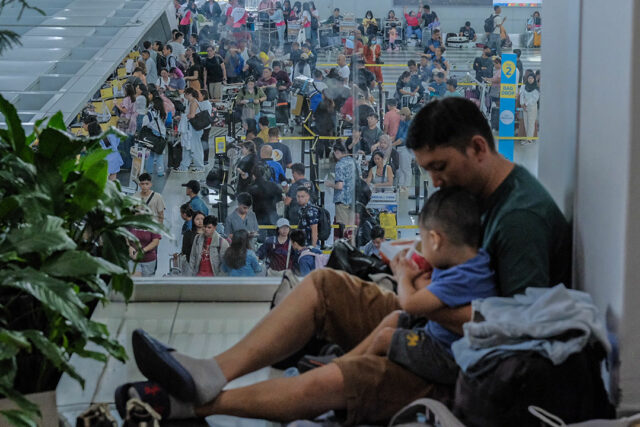
PASSENGERS are seen at the Ninoy Aquino International Airport Terminal 3, July 20, 2024. — PHILIPPINE STAR/ RYAN BALDEMOR

AIR PASSENGER volume jumped by 21% in the first nine months, as international travelers surged by 40%, according to the Civil Aeronautics Board (CAB).

Data from CAB showed that overall passenger volume grew by 21.2% to 44.09 million for the January-to-September period.

The nine-month tally is on track to surpass the air passenger volume of 53.78 million for the full year of 2023.

International passenger traffic surged by 40.5% to 20.41 million in the nine-month period from 14.53 million a year ago.

Foreign carriers accounted for 52.57% of international passenger traffic with 10.73 million as of end-September, while domestic carriers ferried 9.68 million international passengers.

Among local carriers, Philippine Airlines ferried 4.5 million passengers to international destinations, followed by Cebu Pacific with 4.04 million and Philippines AirAsia with 1.05 million passengers.

Meanwhile, domestic passenger volume rose by 8.4% to 23.68 million as of end-September from 21.85 million during the same period.

Data from CAB showed Cebu Pacific flew 10.73 million passengers to domestic destinations, while its regional brand CebGo flew 1.71 million passengers.

Flag carrier Philippine Airlines and its low-cost brand PAL Express accounted for 418,144 and 6.51 million domestic passenger traffic, respectively.

Angelito A. Alvarez, general manager of New NAIA Infra Corp. (NNIC), said they are now preparing for the surge in passengers at the country’s main gateway during the holidays. The company expects around 50 million air passengers to have passed through NAIA by yearend.

San Miguel Corp.-led NNIC is the operator of the NAIA.

SMC Chairman and Chief Executive Officer Ramon S. Ang said passengers can expect at least 50% improvement from last year’s situation at the airport.

More than two months since the private operator took over the operations of NAIA on Sept. 14, NNIC has outlined its plans for the airport such as landside improvements including the expansion of roads and curbside enhancements; terminal upgrades and reassignments.

Cebu Air, Inc., the listed operator of Cebu Pacific, has said previously that it is planning to launch new international and local routes.

Philippine Airlines has said that it is expecting passenger volume to rise by 20% in 2024.

AirAsia Philippines is aiming to reach eight million passengers by the end of the year. — AEOJ

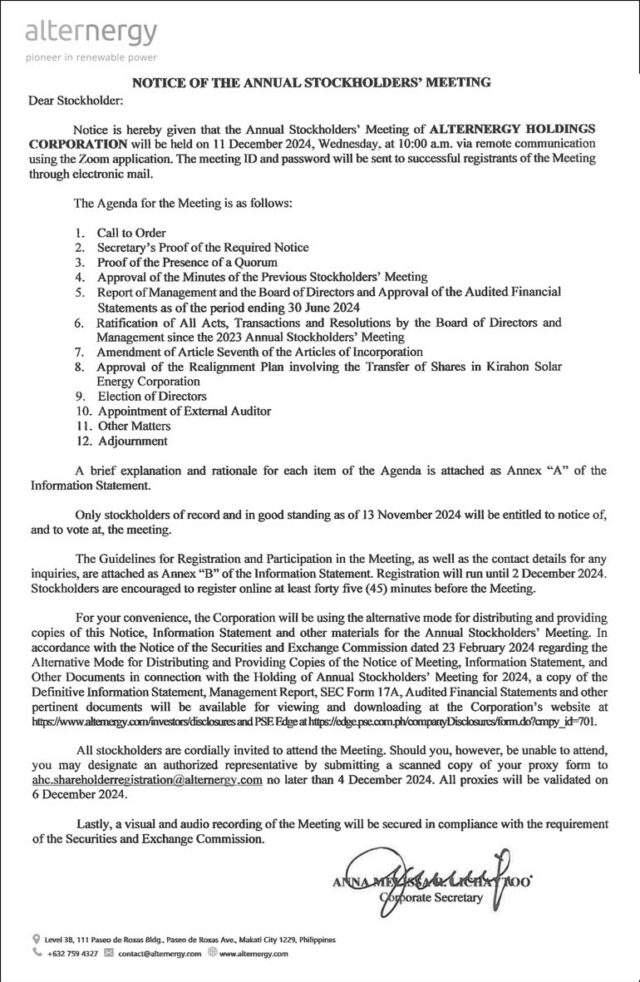
Alternergy Holdings Corp. to hold Annual Stockholders’ Meeting on Dec. 11 via Zoom


Spotlight is BusinessWorld’s sponsored section that allows advertisers to amplify their brand and connect with BusinessWorld’s audience by publishing their stories on the BusinessWorld Web site. For more information, send an email to online@bworldonline.com.

Join us on Viber at https://bit.ly/3hv6bLA to get more updates and subscribe to BusinessWorld’s titles and get exclusive content through www.bworld-x.com.