Home Blog Page 1904

Philippine banks’ exposure to real estate sector rises at end-2024

BANKS’ real estate exposure ratio jumped to 19.75% as of end-December from 19.55% at end-September, central bank data showed.

THE EXPOSURE of Philippine banks and trust entities to the property sector increased at the end of December amid a rise in residential and commercial real estate loans, data from the Bangko Sentral ng Pilipinas (BSP) showed.

Banks’ real estate exposure ratio rose to 19.75% as of end-December from 19.55% at end-September. However, it was lower than 20.17% in the same period in 2023.

The BSP monitors lenders’ exposure to the real estate industry as part of its mandate to maintain financial stability.

Total investments and loans extended by Philippine banks and trust departments to the real estate sector grew by 5% to P3.31 trillion as of end-December from P3.15 trillion in 2023.

Central bank data showed real estate loans rose by 7.9% year on year to P2.95 trillion at end-December from P2.74 trillion a year ago.

Residential real estate loans climbed by an annual 9.6% to P1.1 trillion, while commercial real estate loans went up by 6.9% to P1.85 trillion.

Past due real estate loans amounted to P140.645 billion, higher by 4% from P135.261 billion a year ago.

Broken down, past due residential real estate loans rose by 4.7% to P99.727 billion, while past due commercial real estate loans edged higher by 2.3% to P40.918 billion.

Meanwhile, gross nonperforming real estate loans inched up by 0.4% to P108.807 billion as of the fourth quarter from P108.389 billion a year ago.

This brought the gross nonperforming real estate loan ratio to 3.68% at end-December, lower than 3.96% a year earlier.

On the other hand, real estate investments declined by 13.8% to P353.809 billion as of end-December from P410.653 billion in the same period a year ago.

Of this, debt securities dropped by 10.5% year on year to P236.881 billion, while equity securities fell by 19.8% to P116.928 billion.

Joey Roi H. Bondoc, director and head of research at Colliers Philippines, said the jump in real estate exposure was due to businesses expanding their operations in the latter part of the year.

“For residential, I would attribute that partly to ready-for-occupancy (RFO) units. We have a lot of RFOs now,” he said via phone call.

“Given there is a lot of supply now, a lot of these RFO promos are getting sweeter, that probably contributed to the increase,” he added.

Buying an RFO unit was much more difficult before the pandemic, Mr. Bondoc said, noting that buyers had to pay 5% to 10% of the total contract price before being able to transfer into the unit.

“Now, there are promos if you are an investor and buyer of RFOs, all you have to do is secure bank loans. Have that approved and you can transfer. You don’t have to pay a hefty downpayment,” he added.

Rizal Commercial Banking Corp. Chief Economist Michael L. Ricafort said the rise in real estate loans is also consistent with faster growth in overall loans “making it cheaper to finance new real property developments.”

The latest BSP data showed bank lending jumped by 12.2% year on year to P13.1 trillion in December, its fastest growth in two years.

Mr. Ricafort said this may be offset by the higher vacancy rates amid the ban on Philippine offshore gaming operators (POGOs).

“Some buyers, however, would be opportunistic and snap up bargains amid higher vacancy rates and increased supply after the POGO exit,” he added.

For the coming months, Mr. Bondoc said he expects increased demand for real estate loans, especially for the residential segment as promos for RFOs are becoming more attractive.

‘We’re likely to see greater purchases of these RFOs. Since these require bank loans also, this will likely result in the exposure of real estate to the banking sector, which will bode well for the property sector in general.”

Mr. Ricafort said further policy rate cuts and reserve requirement ratio (RRR) reductions would also bolster bank lending in general.

Despite surprising markets with a policy pause last month, BSP Governor Eli M. Remolona, Jr. has said the central bank is still in easing mode, signaling the possibility of up to 50 basis points (bps) worth of cuts this year.

Last month the BSP also announced it will cut the RRR of universal and commercial banks and nonbank financial institutions with quasi-banking functions by 200 bps to 5% from 7%, effective March 28.

In 2020, the central bank raised the real estate loan limit of banks to 25% of their total loan portfolio from 20% previously to help free up additional liquidity as a relief measure during the coronavirus pandemic. — Luisa Maria Jacinta C. Jocson
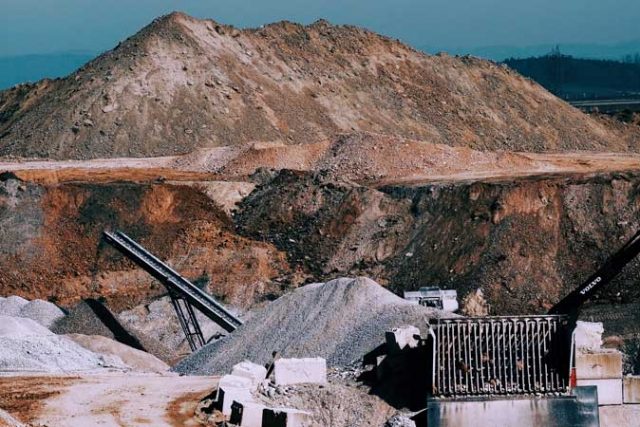
Nickel Asia, DMCI Mining to partner on nickel processing plant in PHL

STOCK PHOTO | Image by David Hellmann from Unsplash

NICKEL ASIA Corp. (NAC) and DMCI Mining Corp. on Wednesday said they are studying the feasibility of developing a nickel processing plant in the country.

This comes as the government is considering a ban on raw nickel ore exports to boost domestic processing.

In a joint statement, NAC and DMCI Mining said they signed a memorandum of understanding (MOU) “to explore the feasibility of developing and operating a nickel processing plant in the Philippines.”

Under the MOU, NAC is expected to provide its expertise in nickel processing technology and exploration, while DMCI Mining will contribute new assets and bring its parent company’s experience in construction and engineering.

In the next two to three years, NAC and DMCI Mining will “evaluate suitable technologies, identify an optimal site, and secure a stable ore supply.” However, this will depend on regulatory approvals.

Both companies also agreed to discuss the equity structure of a possible joint venture for the nickel processing plant’s development and operation.

The planned nickel processing plant would process low-grade nickel ore that is currently not viable for export, “maximizing the country’s mineral resources, generating new opportunities and boosting the local nickel industry,” they said.

Despite the current oversupply of nickel, NAC President and Chief Executive Officer Martin Antonio G. Zamora said the future is “bright” as demand is being driven by the electric vehicle and stainless-steel markets.

“Establishing an economically viable nickel processing plant in the Philippines requires several factors to align, including clear government policy directions and regulations, but proactive preparation is crucial. With the significant nickel resources needed and complex logistical challenges to navigate, early planning is essential for long-term success,” Mr. Zamora said.

Tulsi Das C. Reyes, president of DMCI Mining, said the project is “a step toward creating jobs and ensuring the sustainable use of our mineral resources.”

“By laying the groundwork early, we can help position the Philippines as a key player in the global nickel supply chain,” Mr. Reyes said.

Owned by the family of Manuel B. Zamora, NAC is a listed diversified natural resources development firm. Its mines produce saprolite ore, which is used as feed for ferronickel and nickel pig iron smelters in Japan and China, and limonite ore.

DMCI Mining is a wholly owned subsidiary of the Consunji-led listed company DMCI Holdings, Inc. It has assets in Palawan and Zambales and mainly exports nickel ore to China and other markets.

On Wednesday, shares in NAC inched up 0.85% to close at P2.37 a piece, while shares in DMCI Holdings went up by 0.71% to close at P11.30 each.

“The deal is a good signal on the further integration of mining downstream industries, specifically for mineral processing/smelting/refinery, similar to what Indonesia encourages when the latter bans the export of mineral ores,” said Rizal Commercial Banking Corp. Chief Economist Michael L. Ricafort in a Facebook Messenger chat.

“The preparations are in anticipation of the Senate bill’s passage into law.”

Last month, the Senate approved on third reading a bill that includes a provision banning raw mineral exports after five years, to give time for miners to build processing plants.

Congress is expected to approve the bicameral conference committee report when session resumes in June.

AP Securities, Inc. Research Head Alfred Benjamin R. Garcia said the NAC-DMCI Mining deal was interesting, especially with the proposed ban on the export of raw nickel ore.

“It is a bit of an odd move for Nickel Asia, however, especially since they recently just sold their stake in the Coral Bay nickel processing facility due to the losses being incurred,” Mr. Garcia said in a Viber message.

“It would be interesting to see how the two companies would develop a more cost-efficient facility that can profitably operate even if nickel prices remain low,” he added.

Mr. Ricafort said high electricity costs in the Philippines pose risks to the project.

“Capital-intensive nature of investments would realistically take some time to establish,” he added.

Investment analyst Terry L. Ridon said the proposed facility should process both high- and low-grade nickel “to maximize the value potential of our nickel products.”

“In order for the country to corner a more significant slice of the EV battery supply chain, the main focus of any local nickel processing plant should be the processing of high-grade nickel ore,” he said via Messenger chat. — Kyle Aristophere T. Atienza

SM Prime allots nearly P15B for 5-year hospitality growth

Radisson Blu Hotel in Cebu

SM PRIME Holdings, Inc. said its hotels and convention centers unit is investing nearly P15 billion to support a five-year expansion plan that will broaden its offerings.

SM Prime’s SM Hotels and Convention Corp. (SMHCC) aims to develop eight new hotels and two convention centers across the country within the five-year period.

The expansion will add over 1,500 guestrooms to SMHCC’s portfolio, SM Prime said in a regulatory filing on Wednesday.

Alongside its expansion efforts, SMHCC is building new function rooms, adding food and beverage outlets, and renovating rooms at Taal Vista Hotel, Pico Sands Hotel, and Park Inn by Radisson Davao to enhance its offerings.

For 2024, SM Hotels reported a 67% occupancy rate, up by two percentage points from the previous year, driven by strong demand for travel and meetings, incentives, conferences, and exhibitions (MICE).

Its properties in the National Capital Region averaged a 71% occupancy rate, exceeding the 61% industry average at year-end.

“The rise in hotel stays and event bookings signals a vibrant rebound for the hospitality and MICE sectors,” SMHCC Executive Vice-President Peggy E. Angeles said.

SMX Convention Centers also recorded a 15% increase in hosted events, welcoming 6.3 million visitors in 2024. The company’s halls and function rooms hosted major trade shows, corporate events, and industry exhibi-tions.

“Many of these events have returned to or surpassed pre-pandemic levels, reflecting strong recovery and sustained market interest,” SM Prime said.

SMHCC’s portfolio includes ten hotels, spanning luxury (Conrad and Radisson Blu), leisure (Taal Vista, Pico Sands), and business (Park Inn and Lanson Place) brands, as well as eight convention centers and trade halls under the SMX brand.

For 2024, SM Prime’s consolidated net income rose by 14% to a record-high P45.6 billion, as consolidated revenue grew by 10% to an all-time high of P140.4 billion.

Beyond hotels and convention centers, SM Prime’s portfolio also includes malls, residences, and offices.

SM Prime shares rose by 3.51% or 80 centavos to P23.60 apiece on Wednesday. — Revin Mikhael D. Ochave

ACEN to invest $13M in solar projects in Malaysia

IBV ACEN Renewables Asia is a joint venture between ACEN Renewables International Pte. Ltd., a unit of ACEN, and ib vogt (Singapore) Pte. Ltd. — ACENRENEWABLES.COM

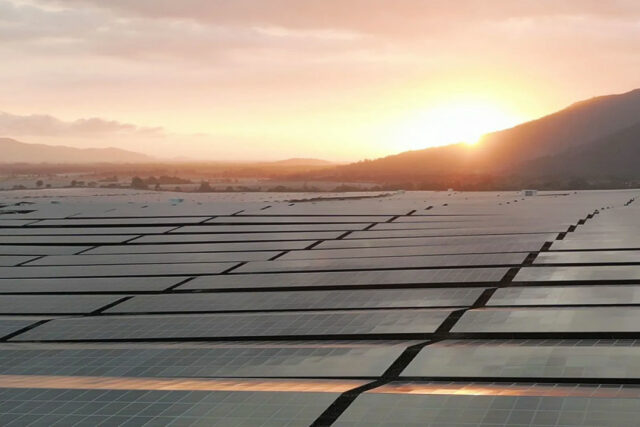
ACEN CORP. is expanding its global presence as its joint venture firm plans to invest $13 million (approximately P748 million) in the development of solar power projects in Malaysia with a total capacity of 80 mega-watts (MW).

IBV ACEN Renewables Asia Pte. Ltd. is in the final stages of assessing and finalizing an investment in various solar photovoltaic project opportunities in Malaysia, ACEN said in a stock exchange disclosure on Wednesday.

The investment is part of ACEN’s planned contribution of up to $200 million in equity to accelerate the deployment of renewable energy in Asia.

IBV ACEN Renewables Asia is a joint venture between ACEN Renewable International Pte. Ltd. (ACRI), a unit of ACEN, and ib vogt Singapore.

Ib vogt Singapore is an affiliate of ib vogt GmbH, a German company specializing in the development and delivery of large-scale turnkey photovoltaic plants.

The joint venture focuses on shovel-ready projects in Bangladesh, Laos, Cambodia, Vietnam, Indonesia, Malaysia, and other countries in the Asia-Pacific region, targeting a minimum operational capacity of 1,000 MW with potential for future expansion.

Last year, the company acquired a 49% stake in a 70-MW solar power project in Bangladesh. ACRI previously announced its plan to invest up to $18 million in the joint venture to facilitate the project’s construction.

The company’s expansion outside the Philippines follows recent developments in Australia through its subsidiary. ACEN Australia is set to develop an 800-MW pumped hydro project and a 400-megawatt-hour battery en-ergy storage system in the country.

ACEN, the listed energy platform of Ayala Corp., holds a portfolio of about 6.8 gigawatts of attributable renewable capacity in operation, under construction, and in committed projects.

The company has a presence in the Philippines, Australia, Vietnam, India, Indonesia, Laos, and the US.

At the local bourse on Wednesday, shares in the company fell 1.27% to close at P3.10 each. — Sheldeen Joy Talavera

Topline in talks with ‘strategic investor’ ahead of P900-M IPO

BW FILE PHOTO

CEBU-BASED fuel retailer Top Line Business Development Corp. (Topline) said it is in talks with a “substantial strategic investor” as it prepares for its P900-million initial public offering (IPO).

“Potentially, we’re looking at a substantial strategic investor coming in. It’s a strategic investor from a logistics standpoint. We’ve already spoken with them. They’ve shown a lot of interest,” Topline Chairman, President, and Chief Ex-ecutive Officer Eugene Erik C. Lim said during a media briefing in Taguig City on Wednesday.

“We’re in advanced talks right now, and we’ll know soon when we do the offer period because we’re doing the book-building process now,” he added.

Mr. Lim said the entry of the strategic investor will coincide with the company’s planned IPO.

“We’re still waiting until the book-building process is finished. But we’re hopeful that they’ll be joining us,” he said.

Topline previously reduced the size of its IPO to P900 million from the initial P3.16 billion after discussions with potential institutional investors.

The IPO now consists of up to 2.15 billion primary common shares with an overallotment option of up to 214.84 million secondary shares, priced at up to 38 centavos per share.

Based on its latest prospectus dated Feb. 25, the book-building period for the IPO began on Feb. 27 and will run until March 14, while the price-setting date is scheduled for March 17.

The offer period for Topline’s IPO will be from March 24 to 31, with a target listing date of April 8.

Mr. Lim said the allocation of the IPO proceeds has been adjusted to align with near-term expansion plans.

The company aims to raise up to P764.2 million in net proceeds, which will be used for its vertical integration strategy to manage its commercial fuel trade and retail market operations.

“Through vertical integration, we are enhancing control over supply chain risks, paving the way for healthier profit margins, improved supply stability, and consistent product quality. The increased operational efficiency will sustain our expansion and growth momentum,” Mr. Lim said.

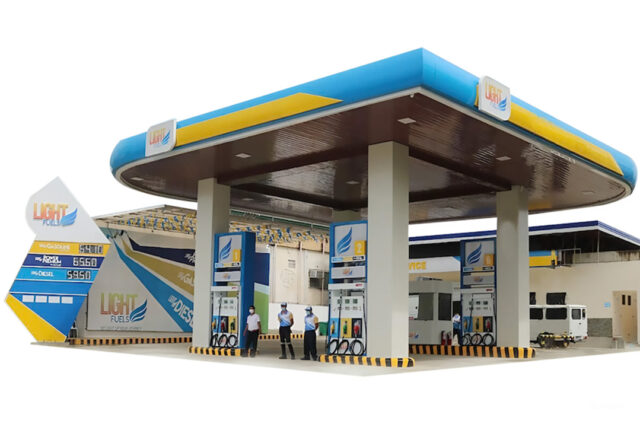
Topline will allocate P300 million of the net proceeds to build 20 additional service stations under the Light Fuels brand, which are set to become operational between 2025 and 2026.

Light Fuels currently has four operational stations, while six fuel stations are in various stages of construction and development. The company aims to have ten operational stations by the first quarter of the year.

By 2026, Topline expects to have 30 operational Light Fuels stations, including the 20 stations to be funded by the IPO proceeds.

The company will also allocate P180 million for the purchase of a fuel tanker with a 5-million-liter capacity to enhance its fuel storage facilities.

Additionally, P270 million will be set aside for working capital requirements, while P14.2 million will be allocated for general corporate purposes.

The construction of additional depot facilities, initially included in the company’s prospectus filed last year, will be funded through other sources outside of the IPO.

“In view of the feedback from potential institutional investors, we have updated our expansion plans and IPO proceeds to focus on growing our current depot space, improving our importation processes, and ex-panding our operations,” Mr. Lim said.

“This approach will help us strengthen our market position to reliably supply fuel in the high-growth Central Visayas region and deliver more value to our shareholders in the long run,” he added. — Revin Mikhael D. Ochave

SMFB income up 7% to P40.9B as sales climb 6%

SANMIGUELFOODS.COM

ANG-LED San Miguel Food and Beverage, Inc. (SMFB) posted a 7% increase in net income for 2024, reaching P40.9 billion from P38.1 billion in 2023, driven by higher volumes and market expansion efforts.

Consolidated sales rose by 6% to P400.9 billion in 2024 from P379.8 billion in 2023, SMFB said in an e-mail statement on Wednesday.

Gross profit grew by 10% to P110.9 billion, while income from operations climbed by 15% to P55.8 billion.

“Our performance in 2024 reflects the strength of our brands, operational excellence, and disciplined execution of our growth strategies,” SMFB Chairman Ramon S. Ang said.

“We continue to invest in innovation, expand our market reach, and optimize efficiencies to drive sustainable, long-term value for all our stakeholders,” he added.

In the food segment, San Miguel Foods recorded a 33% increase in net income to P8.4 billion, while operating income rose by 37% to P13.3 billion.

Sales grew by 3% to P185 billion, driven by a 12% increase in the prepared and packaged food unit, supported by strong demand for Purefoods Tender Juicy Hotdogs, Magnolia dairy products, and San Mig Coffee.

In the beer segment, San Miguel Brewery Inc. reported a 1% increase in net income to P25.6 billion, while operating income grew by 6% to P33.4 billion.

Sales rose by 4% to P153.4 billion, with domestic sales reaching P137.6 billion and international sales amounting to $276.5 million.

Meanwhile, the spirits business, led by Ginebra San Miguel Inc., recorded a 3% increase in net income to P7.3 billion, while operating income rose by 26% to P8.6 billion.

Sales improved by 17% to P62.5 billion, driven by 9% volume growth. The spirits business benefited from strong demand and increasing popularity among a broader range of consumers.

On Wednesday, SMFB shares fell by 3.51% or P1.80 to P49.50 apiece. — Revin Mikhael D. Ochave

Berde, Thai partner to roll out 300-MW projects in Thailand

(L-R) Nakkarin Saingarmsatit, PSS Group general manager; Sam Yamdagni, founder and CEO of PSS Group; Morris Zhou, co-founder of Berde Renewables, Inc.; and Ashish Agarwal, I Squared Capital managing director

RENEWABLE ENERGY company Berde Renewables, Inc. has formed a joint venture with Thailand-based Power Systems and Solutions Co. Ltd. (PSS) to develop 300 megawatts (MW) of renewable energy projects in Thailand over the next three years.

The joint venture aims to develop solar photovoltaic, battery storage, and hybrid energy projects to meet the growing demand for sustainable power in industrial, commercial, and grid-scale applications, Berde Renewables said in a media release on Tuesday.

The companies will begin with operating assets of 18.9 megawatts-peak (MWp), 30 MWp under construction, and 170 MWp in the pipeline.

“This partnership is key to advancing our vision of accelerating the global transition to renewable energy,” said Morris Zhou, co-founder of Berde Renewables.

“By combining our strengths, we aim to deliver innovative, world-class renewable energy solutions and empower organizations and industry leaders to drive decarbonization and sustainability, shaping a greener future.”

Berde Renewables is a portfolio company of I Squared Capital, an independent global infrastructure investment manager. It develops, builds, and operates distributed renewable energy projects for commercial and industrial customers.

Meanwhile, PSS is a Thailand-based renewable energy developer and engineering, procurement, and construction contractor that has delivered over 198 MW of sustainable energy projects across the region.

“This joint venture strengthens Thailand’s renewable energy landscape by combining PSS’s deep market expertise with ISQ/Berde’s global expertise. Together, we are not just deploying megawatts — we are shaping a resilient, scalable, and bankable clean energy future for the region organically and inorganically,” said Sam Yamdagni, founder and chief executive officer of PSS Group.

The joint venture brings together Berde Renewables’ clean energy technologies and PSS Group’s expertise in engineering, oil and gas, power, renewables, and industrial services. — Sheldeen Joy Talavera

Globe’s Darius Delgado joins World Broadband Association board

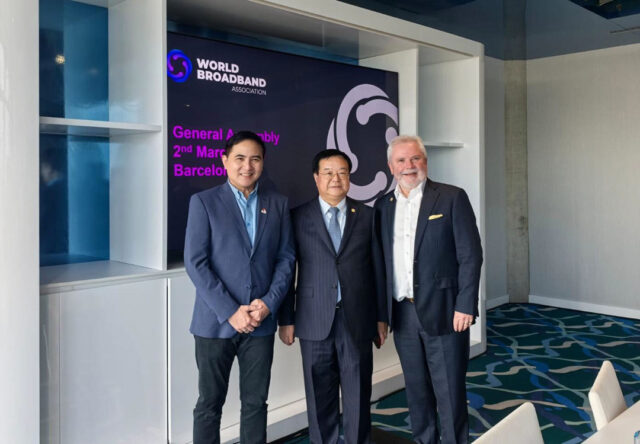
(L-R) Darius Jose R. Delgado, Globe chief commercial officer; Li Zhengmao, WBBA board chairman; and Martin Creaner, WBBA director general

GLOBE TELECOM, Inc. announced on Wednesday the appointment of its chief commercial officer as a board member of the World Broadband Association (WBBA).

In a media release on Wednesday, Globe said Darius Jose R. Delgado, the company’s chief commercial officer, has joined the board of the Geneva-based WBBA.

Established in 2021, WBBA is a multilateral, industry-led association that brings together industry leaders in broadband and cloud technology to help bridge the digital divide while advancing broadband innovation.

“Being part of the WBBA board enables Globe to collaborate with global industry leaders in shaping the future of broadband and promoting digital inclusion. We look forward to contributing insights and innovations that will enhance connectivity and expand access, especially in emerging markets such as the Philippines,” Mr. Delgado said.

Globe officially joined WBBA in 2024, making it the only Philippine telecommunications firm in the association.

Mr. Delgado’s appointment to the board will allow Globe to contribute to global broadband development. He is the first Filipino to earn a seat in WBBA.

“Through its WBBA membership, Globe’s broadband arm engages in analyst-led executive roundtables that tackle major industry challenges and drive sustainable development through member collaboration,” Globe said.

At the stock exchange on Wednesday, shares in the company fell by P26, or 1.14%, to close at P2,248 apiece. — Ashley Erika O. Jose

San Miguel Corp. to hold Special Meeting of Stockholders on March 27 via remote communication

NOTICE OF SPECIAL MEETING OF THE STOCKHOLDERS
March 27, 2025

The Special Meeting of the Stockholders of San Miguel Corporation will be held on Thursday, March 27, 2025 at 2:00 P.M.

The Company will not hold a physical meeting and the meeting will be conducted via remote communication and livestreamed at the Company’s website. Stockholders can attend the meeting by remote communication.

The Agenda of the Meeting is as follows:

  1. Certification of Notice and Quorum
  2. Approval of the Reclassification of 904,752,537 common shares currently held as treasury shares, into Series 2 Preferred Shares held in treasury
  3. Approval of the Amendment to Article VII of the Amended Articles of Incorporation of the Company relating to its capital stock of Php30,000,000,000 at par value of Php5.00 per share or 6,000,000,000 shares –
  • FROM: divided into  3,790,000,000 common shares and 2,210,000,000 preferred shares
  • TO: divided into  2,885,247,463 common shares and 3,114,752,537 preferred shares
  1. Approval of the issuance of common and Series 2 preferred shares of the Company under such terms and conditions determined by the Management
  2. Approval of the delegation to the Board of Directors of the power to amend By Laws of the Corporation
  3. Adjournment

Stockholders who would like to attend the online meeting should access the 2025 SMC SSM Website at https://www.smc2025ssm.sanmiguel.com.ph to obtain the following: (a) ballots and proxies to attend the meeting, and (b) the link to view the livestream of the meeting which will be available on the day of the meeting.

During the meeting, the Company shall entertain questions and comments from the stockholders after the presentation of the Agenda Item Nos. 2, 3, 4 and 5. Questions and comments must be submitted either in advance or during the meeting by email to stockholders@sanmiguel.com.ph. Questions which were not answered during the meeting shall be forwarded to the Office of the Corporate Secretary for the appropriate response.

Ballots and proxies can be submitted via email at stockholders@sanmiguel.com.ph which submission shall be duly acknowledged and validated by the SMC Stock Transfer Service Corporation. For individual stockholders, the submissions must be accompanied by a copy of a government issued ID as proof of identification. For corporations, the submission must be accompanied by a certification from its Corporate Secretary stating the corporate officer’s authority to represent and sign on behalf of the corporation.  Kindly submit to the SMC Stock Transfer Service Corporation the original signed and notarized documents within a reasonable time after the resumption of regular business operations.

The deadline for submission of ballots and proxies is on March 13, 2025.  Validation of ballots and proxies will be on March 20, 2025 at 10:00 a.m. at the SMC Stock Transfer Service Corporation Office, 2nd Floor, SMC Head Office Complex, No. 40 San Miguel Ave., Mandaluyong City, Philippines.


Spotlight is BusinessWorld’s sponsored section that allows advertisers to amplify their brand and connect with BusinessWorld’s audience by publishing their stories on the BusinessWorld Web site. For more information, send an email to online@bworldonline.com.

Join us on Viber at https://bit.ly/3hv6bLA to get more updates and subscribe to BusinessWorld’s titles and get exclusive content through www.bworld-x.com.

Term deposit yields inch down as inflation eases

BW FILE PHOTO

YIELDS on the Bangko Sentral ng Pilipinas’ (BSP) term deposits went down on Wednesday following slower-than-expected inflation in February, which could open the door for further monetary policy easing.

The BSP’s term deposit facility (TDF) attracted bids amounting to P250.471 billion on Wednesday, above the P190 billion on the auction block as well as the P194.816 billion seen a week ago for the same volume offer. The cen-tral bank made a full P190-billion award of the papers.

Broken down, tenders for the seven-day papers reached P115.922 billion, higher than the P100 billion auctioned off by the central bank and the P110.14 billion in bids for the same offer volume seen the previous week. The BSP accepted P100 billion in bids as planned.

Accepted yields ranged from 5.74% to 5.77%, narrower and slightly lower than the 5.5% to 5.775% band seen a week ago. This caused the average rate of the one-week deposits to inch down by 0.14 basis point (bp) to 5.754% from 5.7554% previously.

Meanwhile, bids for the 14-day term deposits amounted to P134.549 billion, above the P90-billion offering and the P84.676 billion in tenders for the same offer a week ago. The central bank made a full P90-billion award of the tenor.

Accepted rates were from 5.76% to 5.79%, narrowing from the 5.7% to 5.815% margin recorded a week ago. With this, the average rate for the two-week deposits inched down by 0.53 bp to 5.7752% from the 5.7805% logged in the prior auction.

The central bank has not auctioned off 28-day term deposits for more than four years to give way to its weekly offerings of securities with the same tenor.

The term deposits and the BSP bills are used by the central bank to mop up excess liquidity in the financial system and to better guide market rates.

TDF yields went down on Wednesday after the release of the latest headline inflation data, which showed that the average rise in prices of consumer goods eased more than expected last month, Rizal Commercial Banking Corp. Chief Economist Michael L. Ricafort said in a Viber message.

“More benign inflation data could support a BSP rate cut as early as the next rate-setting meeting on April 3,” Mr. Ricafort said.

Headline inflation sharply slowed to 2.1% in February from 2.9% in January and 3.4% a year ago, the Philippine Statistics Authority reported on Wednesday.

This was the slowest monthly print in five months or since the 1.9% in September 2024. The February print was also well below the 2.6% median estimate in a BusinessWorld poll of 18 analysts conducted last week.

Despite surprising markets with a policy pause last month, BSP Governor Eli M. Remolona, Jr. has said the central bank is still in easing mode, signaling the possibility of up to 50 bps worth of cuts this year.

Mr. Ricafort added that the peso’s recent strength against the dollar also led to lower TDF yields as this could support further easing in inflation, which would give the central bank more room to cut borrowing costs.

The peso has closed at the P57 level since late February after trading at the P58 range earlier this year as the dollar hit multi-month lows due to concerns over the US economy’s health. — Luisa Maria Jacinta C. Jocson
House panel may OK LANDBANK charter this month

BW FILE PHOTO

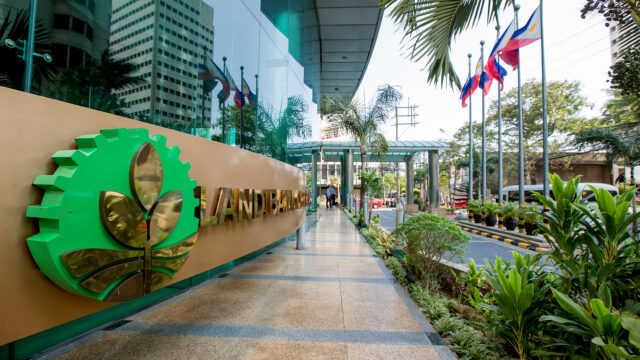
A HOUSE of Representatives committee may approve within this month a measure providing for a new charter for Land Bank of the Philippines (LANDBANK) that will hike its capitalization to P1 trillion.

The House banks committee will likely approve the measure, which aims to boost LANDBANK’s ability to provide increased financial support to the agriculture sector via the capital hike, within the next two weeks, Manila Rep. Irwin C. Tieng, the panel’s chief, said.

“I think we still have another hearing. I don’t think we have enough quorum for a vote [today],” he told BusinessWorld on Wednesday in mixed English and Filipino. “Maybe by next week or the following week, we can have the voting for the charter.”

Several proposals on LANDBANK’s new charter are pending in Congress. The Senate’s version of the state-run lender’s charter is at the plenary level, while counterpart bills at the House remain pending at the committee level for consolidation.

Mr. Tieng said his committee already has drafted a consolidated bill, which is now pending approval by its members. A House official who spoke on the condition of anonymity said the panel wants the substitute bill to be similar to the Senate version to fast-track its approval.

The draft measure raises LANDBANK’s authorized capital stock to P1 trillion from the current P800 billion, with the National Government mandated to own 20% of its shares at all times, with P163 billion of the capital being paid from the state’s coffers, according to a copy of the bill’s fact sheet obtained by BusinessWorld.

The bill also allows the lender to issue common and preferred shares of stocks as approved by the Finance secretary, and secure loans from domestic and foreign sources with presidential approval.

It gives LANDBANK the authority to issue debt instruments up to an aggregate amount not exceeding 10 times its paid-in capital and surplus at any given time. The draft also allows the state-run bank to finance properties con-nected to government projects. — Kenneth Christiane L. Basilio

Wyn Power building 50-MW solar farm in Batangas

ZBYNEK BURIVAL—UNSPLASH

RENEWABLE ENERGY developer Wyn Power Corp. is set to begin construction on its 50-megawatt-peak (MWp) solar power project in Taysan, Batangas, valued at P1.5 billion.

The company officially broke ground on the ground-mounted solar photovoltaic project, which will deliver electricity through Batangas Electric Cooperative II (BATELEC II), it said in a media release on Wednesday.

“This 50-MWp addition to the Luzon grid will significantly benefit industries and consumers served by BATELEC II and nearby electric cooperatives,” said Rodel B. Arada, president and chief executive officer of Wyn Power.

The solar farm will be connected to the Luzon grid via a 2.3-kilometer transmission line to BATELEC II. Upon completion, it is expected to generate up to 74 million kilowatt-hours of clean energy annually.

The project is being developed under the Department of Energy’s second green energy auction in 2023, which secured a green energy tariff of P4.10 per kilowatt-hour.

With permitting complete and financing discussions underway, construction is targeted to begin within the month, according to Armando L. Diaz, Wyn Power’s business development partner.

“We are confident that with the support of the banking community, DoE (Department of Energy), DENR (Department of Environment and Natural Resources), and other stakeholders, Wyn Power, a reputable developer of renewable energy projects, will be able to bring this project to fruition,” Mr. Diaz said.

Aside from utility-scale solar plants, Wyn Power’s portfolio also includes rooftop solar and mini-hydro projects. The company’s client roster includes major players across various industries. — Sheldeen Joy Talavera

ADVERTISEMENT
ADVERTISEMENT