Home Blog Page 181

Arts & Culture (03/11/26)



Rap icon Gloc-9 releases poetry books

AT THE Philippine Book Festival in SM Megamall, Filipino rap icon Gloc-9, going by his real name Aristotle Pollisco, will be launching seven poetry chapbooks under the omnibus title Makata Sa Pinas, a hashtag he has been using over the past decade. While Mr. Pollisco previously released the book of poetry Akin Lang Naman in 2017 with ABS-CBN Publishing, this new project offers a different approach to presenting his work as poetry. This time, Mr. Pollisco envisioned a series of slimmer volumes in collaboration with the small press Everything’s Fine, which reexamines his entire discography by revisiting the recurring themes and subject matter that consistently surface throughout his music. He will be at the Makata Sa Pinas book launch on March 12, from 5 to 7 p.m., at the Philippine Book Festival 2026, Megatrade Hall, 5th Level, SM Megamall. Admission is free.


Francophonie celebration in March

THE Embassies of France and Francophone countries in the Philippines, together with the Alliance Française de Manille (AFM) and Cebu, will be holding a celebration of French culture in the Philippines. The festivities will begin in March and continue until November, under the theme “En route to the 20th Francophonie Summit in Cambodia.” Film screenings, exhibitions, conferences, and workshops will showcase the richness of the French language and the diversity of Francophone cultures. On March 12, the exhibit Woven Traces, presented by AFM and Qube Gallery, will open at the AFM Gallery and run until April 11. On March 13, AFM will host a “Francophone Karaoke Evening” at 6:30 p.m. On March 14, visitors can catch Nandita autour du monde, a theatrical storytelling performance by Marilyn Garcia in French, at 2 p.m. Alliance Française de Manille is at 209 Nicanor Garcia St., Bel-Air II, Makati City.


Ballet Manila, MSO perform Sleeping Beauty

BALLET MANILA’S presentation of Sleeping Beauty, the final offering of the “Princess Trilogy Series,” will be held from March 13 to 15 at the Aliw Theater, CCP Complex, Pasay City. All performances will feature the Manila Symphony Orchestra (MSO), conducted by Alexander Vikulov, bringing the beloved classic to life with a full live orchestral accompaniment.


The Mind Museum holds 14th anniversary promotions

THIS MARCH, as The Mind Museum celebrates its 14th anniversary, it is inviting the public to rediscover the wonder of science through exclusive promotions and a special program. One is the P14 Anniversary Promo, where visitors can enjoy three-hour access to The Mind Museum for only P14. Promo slots are limited per time slot (9 a.m. to noon, noon to 3 p.m., and 3 to 6 p.m.), and a maximum of two tickets only can be purchased per person. The promo is valid for visits on March 14 and 15 only. There is also a free museum pass for 14-year-old guests when accompanied by at least one paying guest. Visitors must present a valid ID or birth certificate showing the birth year 2012, valid for visits on March 14 and 15 only. Finally, the special anniversary program, “It’s About Time We Talk About Time: How Science Sees Time,” will take place on March 14, 2 p.m., at Mind Pod 3, The Mind Museum. Admission is free, but slots are limited, so early registration is encouraged.


Kapitolyo Art Space mounts Women’s Month show

IN CELEBRATION of Women’s Month, Kapitolyo Art Space presents the exhibition titled Lumière, running until March 24. The show brings together women artists whose works illuminate the gallery space through diverse perspectives and practices. Kapitolyo Art Space is found at 23 W Capitol Dr., Pasig City.


Exploding Galaxies launches new imprint, first anthology

THIS MARCH, independent press Exploding Galaxies will be launching a new imprint, e.g., and their first anthology. The anthology will be a collection of works from e.g.’s maiden year, featuring contributions from some of the most talented contemporary Filipino writers and artists. The collection includes the personal writings of the late Vicente L. Rafael, an eminent postcolonial historian whose academic works shaped Philippine and Southeast Asian historiography. The launch will be held in part in his memory, with drinks, small bites, and live readings by writers Alvin Yapan and Christian Jil Benitez. Interested guests can RSVP via tinyurl.com/egAnthology. The event will be held at WHYNoT, 4th Floor Karrivin Studios, Makati on March 20, 6 p.m.


REP opens 89th season with REP Unplugged

DESIGNED to bring the audience closer to the actors, Repertory Philippines’ new innovative series offers reimagined staged readings, stripping away grand sets to focus on the raw power of performance and text. With the theme “By love, transformed,” REP Unplugged presents two sophisticated plays featuring some of local theater’s most notable names: Private Lives on March 21 and 22 starring Missy Maramara and Alfredo Reyes; and Sole Survivor on March 28 and 29, a new play by Patricia Manuel Go with Cara Barredo as the director.


32 Filipino artists honored at Ani ng Dangal

THIRTY-TWO artists were honored with the Harvest of Honor at the recent 18th Ani ng Dangal Awards. The National Commission for Culture and the Arts (NCCA) closed National Arts Month by recognizing individuals and groups who have excelled in their respective artistic fields on the international stage. In the field of Architecture and Allied Arts, they are: GFP Architects, architect Normandy N. Canlas of Normandy Architects, Erven B. Digal of Digal Architect and Builders, SGS Designs Landscape Architecture by Vic Lopez Dul-loog, and ASYA. Artists and groups recognized in music are: Ian Gabriel Corpuz, the University of Santo Tomas Singers led by Fidel Calalang, Jr., the Philippine Meistersingers under Ramon Lijauco, Jr., Sola Gratia Chorale led by Cyril Punay, the Eastern Chamber Singers under Anna Tabita Abeleda-Piquero, the Far Eastern University Chorale led by Roijin Suarez, Fabian Obispo, and Michelle Mariposa. For visual arts, Christopher G. Andres and Gina Custodio Meneses were honored. Five honorees were recognized in literary arts: John Bengan, Roehl Joseph Dazo, Christian Jil R. Benitez, Alvin B. Yapan, and Merlie M. Alunan. In cinema, three were recognized: Judy Ann Santos, Joselito Altarejos, and Laurice Guillen. For dance, the awardees were: Ric Russell Matawa Abao, Axel Rose Canama Paypa, the Cavite Indayog Cultural Dance Troupe, Folks Jumpers, Legit Status, Jeff Keffier C. Evangelio, Choreo ’N Cream, and Makiling Dance of the Philippine High School for the Arts. Finally, two designers were recognized: Chad Gabrielle Tanutan and Ivan Cedric Fabia.

Japan: An indispensable ally for economic security

FREEPIK/JANNOON028

Last year, the Philippine Coast Guard’s West Philippine Sea Transparency Group documented 64 Philippine missions or activities that were subjected to illegal, coercive, aggressive, and deceptive (ICAD) actions.

These encounters damaged vessels and injured Filipino military personnel and fisherfolk. They put Filipino lives at risk and endangered the safety of those who were operating lawfully in Philippine waters.

Such unilateral actions in the WPS by a giant neighbor challenge the stability of the maritime domain in the Indo-Pacific region. They put the rules governing the region to the test.

“Maritime” is the operative word here. It is not just a description of a specific geographic space. It does not merely refer to a place where there is water. The Indo-Pacific region is defined by the seas, which carry the trade that sustains our economies, the energy that powers our industries, and the digital infrastructure that connects our societies. From energy shipments transiting key chokepoints to the undersea cables that transmit the vast majority of global data traffic, the maritime domain forms the backbone of modern economic life. When these arteries function freely and securely, economies grow, trade flourishes, and societies remain connected.

The maritime domain of the Indo-Pacific region, because of the immense opportunities it holds, is one of the foundations of regional stability, economic resilience, and global prosperity.

Thus, when the maritime domain is threatened, it is not merely a defense issue. Maritime security cannot be viewed solely through the lens of defense. The stability of the seas is deeply intertwined with economic security. They affect supply chains, energy flows, digital connectivity, and ultimately the economic well-being of nations across the region.

The Philippine government realizes and recognizes this. The National Security Council has underscored the need to integrate economic resilience into broader regional security efforts. At a recent forum themed “Safeguarding the Maritime Domain for the Free and Open Indo-Pacific” organized by the Stratbase Institute in partnership with the Japan Institute of International Affairs, National Security Adviser Eduardo Año emphasized that strengthening economic cooperation and resilience represents a pragmatic pathway toward a stable Indo-Pacific region.

The situation in the West Philippine Sea highlights the importance of putting international law into practice and beyond rhetorics. Ensuring maritime security is a shared responsibility that no single nation can handle alone. A free and open Indo-Pacific depends on effective governance by law, sustained cooperation, and collective commitment to protecting the maritime domain.

He highlighted how key economic systems are closely tied to the maritime domain. Energy transit routes, semiconductor supply chains, port infrastructure, and undersea cables all form part of a broader maritime ecosystem that underpins global prosperity.

But building economic resilience is an impossible task to achieve alone. Partnership with like-minded countries is essential in strengthening economic security and ensuring that regional supply chains remain stable and diversified.

Japan is one such partner. Japan has long stood out as one of the Philippines’ most reliable and enduring partners. In his keynote address during the same forum, Japanese Ambassador to the Philippines Endo Kazuya emphasized that Japan’s support for the Philippines is guided by the belief that a prosperous and resilient Philippines is vital not only for the region but also for Japan’s own national interests. He also underscored that Japan has been the Philippines’ largest official development assistance partner for decades, and that today roughly 1,600 Japanese companies operate across the country, contributing to investment, employment, and technology transfer.

Mr. Endo also highlighted that Japan and the Philippines are expanding cooperation in strengthening supply chain resilience. Japanese and Philippine companies are working together in key sectors such as mineral production — including nickel — energy infrastructure, and the development of facilities utilizing liquefied natural gas and liquefied petroleum gas. These efforts help diversify supply chains and reduce excessive dependence on any single country, reinforcing economic stability across the region.

Infrastructure connectivity also forms a crucial pillar of this partnership. Mr. Endo announced that Japan and the Philippines are moving forward with the third tranche of the Metro Manila Subway Project and the Central Mindanao High-Standard Highway Construction Project. These major infrastructure initiatives will enhance connectivity, support economic growth, and strengthen the logistics networks that underpin resilient supply chains.

Mr. Endo said these initiatives reflect the growing depth of Japan-Philippines cooperation in strengthening economic resilience and supporting a stable and prosperous Indo-Pacific region.

Strengthening economic security is essential to safeguarding a free and open Indo-Pacific region, where maritime stability underpins global trade, energy flows, and digital connectivity. Deepening economic cooperation with trusted partners like Japan is a strategic necessity. Secure supply chains, resilient infrastructure, and diversified economic partnerships are no longer simply development priorities — they are strategic imperatives.

As the Philippines seeks to defend its maritime domain, and with these threats also undermining the rule of law in the Indo-Pacific region, we should remember that pursuing economic security is not a distinct and separate undertaking. In an era where geopolitical tensions increasingly intersect with economic vulnerabilities, strengthening economic security has become central to preserving peace and stability in the Indo-Pacific.

We are thankful for trusted partners such as Japan. Through a solid relationship founded on good faith and shared goals, the Philippines can help build a more resilient regional order — one in which the seas remain open, trade continues to flow, and the principles of international law endure.


Victor Andres “Dindo” C. Manhit is the president of the Stratbase ADR Institute.

HSBC Philippines sees affluent sector driving growth of its premier segment

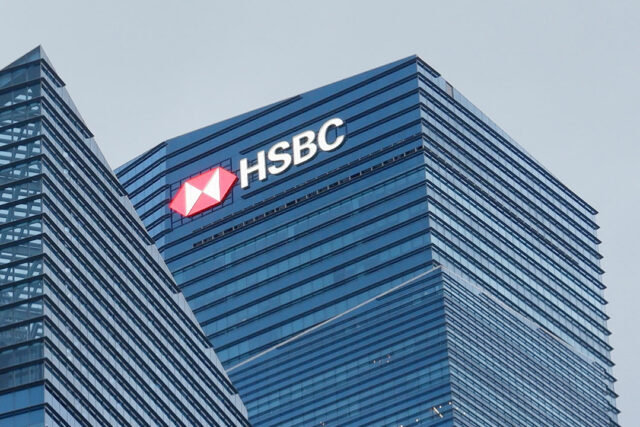
HSBC’s office at the Marina Bay Financial Center in Singapore — BW FILE PHOTO

HSBC PHILIPPINES expects the affluent sector to drive customer growth for its international wealth and premier banking segment over the next three to five years.

HSBC Head of International Wealth and Premier Banking  for the Philippines Pramoth Rajendran said they are optimistic about doubling their client base despite ongoing global uncertainties.

“See, I think we believe for the customers in the Philippines, within our target segments, we’ve got enough room to grow. There is enough potential there,” Mr. Rajendran said at a briefing in Makati City on Tuesday.

He said their growth prospects for their affluent customer base, which currently stands at about a million, “looks intact” over the medium to long term.

HSBC Philippines relaunched its Premier segment last month, offering expanded health and travel services as well as improved cross-border transactions.

“Even before the relaunch, our service levels are one of the best in the market,” Mr. Rajendran said. “And to top it up with the tailwinds we are getting from the Premier relaunch, we are starting to see more and more growth.”

HSBC Premier is open to clients with a gross monthly salary of at least P300,000 and P3 million or more in total relationship balance with HSBC in deposit or investment terms.

DIVERSIFICATION
Mr. Rajendran said their clients have been diversifying their investments both domestically and abroad, with more leaning towards long-term products.

“In terms of specific investment products, what we have seen is more each of the clients is depending on their particular needs in itself,” he said. “But what we can see is the customers are diversifying in terms of different investment products, both onshore and also offshore.”

Under the relaunched HSBC Premier, the bank is providing up to P100 million worth of health insurance coverage in partnership with Allianz Well and travel insurance valued at up to $100,000.

Their Premier travel card has a 0.99% foreign exchange rate for overseas purchases, among the lowest rates in the market, HSCB added.

“Hence, in a world where time is the ultimate luxury, HSBC Premier offers a banking experience designed to feel effortless with global access, personalized expertise, and benefits that add value to everyday life,” the bank said. “It’s built for those who want to manage, grow, and move their wealth with confidence, while enjoying privileges that keep pace with their lifestyle.” — Katherine K. Chan

Alsons sells remaining stake in Seafront

LISTED investment holding firm Alsons Consolidated Resources, Inc. said it has sold its remaining shares in Seafront Resources Corp. as part of efforts to strengthen its liquidity and redeploy capital to other investments.

In a regulatory filing on Tuesday, the company said it participated in the voluntary tender offer conducted by Seafront to acquire up to 34.58 million common shares, equivalent to 21.21% of its issued and outstanding shares.

Alsons, which held 15.54 million shares representing 9.54% of Seafront’s shares, applied to tender all of its shares at P2.70 each.

Valued at P41.97 million, the company said the transaction forms part of its portfolio management strategy, allowing it to convert its investment in Seafront into liquid funds.

“The proceeds from the disposition are expected to strengthen [Alsons’] liquidity position and may be redeployed to support other investments, capital requirements, and strategic initiatives of the company,” it said.

Seafront was originally incorporated as an oil exploration and production company before shifting its business to become a holding company, while retaining oil exploration and production as one of its secondary purposes.

Alsons is the investment holding company of the Alcantara group, with core interests in power generation and land development.

At the local bourse on Tuesday, shares in Alsons Consolidated Resources closed unchanged at P0.75 apiece. — Sheldeen Joy Talavera

Billionaire Joe Lewis scores 3,500% return on ‘Masterpieces’ art

SELF-PORTRAIT by Francis Bacon, 1972 — SOTHEBYS.COM

JOE LEWIS once turbocharged his multi-billion-dollar fortune taking big swings in the currency markets. Now, the British investor and his family are cashing in on lucrative bets made in another sector: art.

The Tavistock Group founder notched gains of more than 3,500% through offloading long-held parts of his art collection from UK painters Lucian Freud, Francis Bacon, and Leon Kossoff at a Sotheby’s auction in London this week, according to data compiled by Bloomberg.

A 1972 self-portrait of Francis Bacon was the most highly priced item on Wednesday evening of the Lewis Collection’s four pieces from the so-called School of London artists. It received a winning bid of £13.5 million ($18 million), beating high sale estimates and dwarfing Mr. Lewis’ £364,500 investment to buy the piece in 1994. The other three works Sotheby’s cited as “Masterpieces” from the Lewis Collection recorded winning bids totaling £16 million, with some also fetching prices above the top estimates.

A spokesperson for the Lewis family said the School of London artists, who rose to prominence after World War II for figurative paintings that rejected abstraction, have been a core focus for the billionaire and his relatives for decades as they sought to champion that period of British art.

Mr. Lewis, 89, and his family oversee a fortune totaling about $8.8 billion, according to the Bloomberg Billionaires Index. About 12.5% of that is tied up in art market investments.

Mr. Lewis “has an outstanding collection,” Sotheby’s Chief Executive Officer Charles F. Stewart said in an interview at Wednesday’s auction, which recorded £131 million in sales from the approximately 50 items on offer, a more than doubling from 12 months earlier. His pieces “were among the very best works on offer.”

The sales show Lewis parting with a group of assets that hark back to the early days of him building one of the world’s biggest fortunes, which now spans real estate, sports and clothing businesses. The auction’s success also shows the art sector offering attractive returns amid wild swings in other markets with geopolitical tension rising.

At around the same time as Freud, Bacon, and Kossoff were becoming influential figures on London’s art scene, Mr. Lewis transformed his family’s catering business into a chain of themed restaurants.

He sold that venture in the late 1970s for about £30 million, an early windfall in his rags-to-riches rise from the English capital’s less privileged East End district.

He became a prolific currency trader after relocating to the Bahamas but boosted his UK investments in the early 2000s with the purchase of a major stake in Tottenham Hotspur Football Club, the Premier League team he’d supported since his childhood. He transferred his majority stake in the team to a discretionary trust in 2022, the year before he became the central figure in a US insider-trading case in which he ultimately pleaded guilty but avoided prison, partly due to his age and health.

US President Donald J. Trump pardoned Mr. Lewis in November to help the British investor receive medical treatment and see family in the nation, capping off one of the most turbulent periods of his career.

The art collection that Mr. Lewis and his 64-year-old daughter Vivienne have accumulated also spans works from other 20th century artistic giants such as Pablo Picasso, Gustav Klimt, and Edgar Degas.

While Bacon’s self-portrait benefited most from prices rising during the time of the Lewis family ownership, the Kossoff piece was the focus of the most of frantic bidding on the evening. Almost a dozen separate parties vied to own the artwork, leading to its final hammer price surging to £4.2 million, more than five times its higher sale estimate from Sotheby’s before the auction.

Mr. Lewis “chose to sell in London at this moment,” Mr. Stewart said. “And was rewarded for it.” — Bloomberg

Matt’s Coffee targets students, professionals with work-friendly space

EDG ADRIAN A. EVA

By Edg Adrian A. Eva, Reporter

A NEWLY opened café in Quezon City is seeking to stand out in the city’s crowded coffee scene by positioning itself as a place where customers can linger and work.

Matt’s Coffee opened on March 7, with co-owner and director Katrina P. Abalayon saying the family-run café was designed to double as a workspace for students and professionals.

Part of the café includes a separate office-style room that can be used as a co-working area, allowing patrons to study or work for longer periods.

“Unlike other coffee shops where you’re always in a rush, people can come here for quiet time — to work or study,” Ms. Abalayon said in an interview during the café’s launch.

The concept grew out of Ms. Abalayon’s own search for comfortable places to spend time while working outside the home. Seeing what she viewed as a gap in the market, she decided to build a café with that purpose in mind.

She initially explored franchising a Filipino coffee brand but later decided to start her own venture to better shape the concept. The café is named after her seven-year-old son, Matthew James.

“For people who want to build a coffee shop, wanting it is not enough,” she said. “You need a deeper purpose to set it up.”

Located along Examiner Street near West Avenue, the café features an industrial-modern interior design with furniture and décor partly sourced from the family’s home to create a more relaxed atmosphere.

Since its soft opening on Feb. 7, the café has offered hot and iced coffee drinks along with pastries. The owners plan to introduce full meals with the opening of a food stall on the café’s upper floor.

Ms. Abalayon said customer reception has been positive during the first month of operations.

Competition in the area is strong, she said, noting that an international coffee chain operates nearby, though the café aims to differentiate itself through its workspace-focused concept and by adjusting its offerings based on customer feedback.

“Competition is always there,” she said. “It shouldn’t stop you from pursuing what you want.”

Demand for coffee in the Philippines continues to grow. Market researcher Data Intelo estimates the Philippine coffee market could become a $134.2-billion industry by 2032, or a yearly growth of 4.6% from $97.5 billion in 2023.

Iran war is giving markets a COVID-like shock

THE SKY is darkened by oil-soot residue from Tehran’s petroleum storage facilities, which are struck during a US-Israeli military campaign in Tehran, Iran on March 9, 2026. — REUTERS/MORTEZA NIKOUBAZL/NURPHOTO

By Shuli Ren

AS THE IRAN WAR drives oil prices towards $120 a barrel, a reckoning is finally coming for a reckless president and equally complacent financial markets.

Last week, reactions were muted, with the S&P 500 Index down only 2%. Even in South Korea, the world’s most frothy bourse, bargain hunters returned on Friday after the Kospi Index’s biggest one-day slump on record.

This nonchalance is normal. Financial markets often react to major events with a delay. When COVID-19 first emerged, traders initially brushed away the prospect of a global pandemic, only to move into full panic mode a few weeks later. In less than a month, the S&P 500 was sold down by as much as one-third.

As the Iranian crisis enters a second week, markets can no longer only price in a short-lived conflict. Tehran has named Mojtaba Khamenei — a son of the country’s slain supreme leader — as his successor, which is the opposite of an offramp for the war. On Monday, the MSCI AC Asia Pacific Index at one point tumbled the most since last April, with Korea and Japan leading the declines. Treasuries sold off as well as traders expect more bad news for the rest of the week.

As such, it’s time to anticipate the arrival of a black swan. Let’s consider what was most trendy before the US and Israel decided to launch a war against Iran on Feb. 28, because these are the corners of the market where the steepest selloffs will likely be seen.

Massive AI-related capital spending was a major theme. Four of the biggest US tech firms alone were forecast to spend $650 billion this year, an 81% jump from 2025, with billions more coming from the likes of Oracle Corp., Tesla, Inc., and large Chinese players.

Until recently, equity investors were talking about a semiconductor supercycle and bond traders were looking at record issuances. Since late last year, Big Tech has tapped into credit markets to fund their AI ambition. Meanwhile, Korea and Taiwan markets, dominated by Samsung Electronics Co., SK Hynix, Inc., and Taiwan Semiconductor Manufacturing Co., became investor darlings. This narrative is now being unwound.

Imagine what might happen if oil stays above $100 for longer: Fearing renewed inflation, global central banks will no longer cut rates — and may even start hiking cycles. Credit spreads could also widen. As it currently stands, investment-grade tech companies’ credit spreads are nowhere near the peak seen in early 2020.

With their borrowing costs soaring, Big Tech might step back, cut capital spending, and pop the AI-fueled equities boom. This is a reasonable conjecture, given that a record number of investors were already telling companies that they were spending too much.

And how about the workings of the financial system, which broke down in March 2020? A 25% jump in crude oil in one day, as well as 10% slumps in crowded trades such as semiconductor stocks, can make nervous investors even more frantic and prompt indiscriminate selling. It’s discomforting to see that gold, a popular debasement trade, has been falling lately, despite its historical role as a safe haven during tumultuous times. Were some sellers desperate to raise cash?

So far, President Donald Trump has brushed away the oil price spike, calling it “a very small price to pay” for destroying Iran’s nuclear threat. But is it possible that he has lost control of this war as he did with the poor pandemic response during his first term? With oil staying solidly above $100, financial markets will pay a hefty price.

BLOOMBERG OPINION

Peso back at P58 level on hopes of de-escalation in Middle East conflict

BW FILE PHOTO

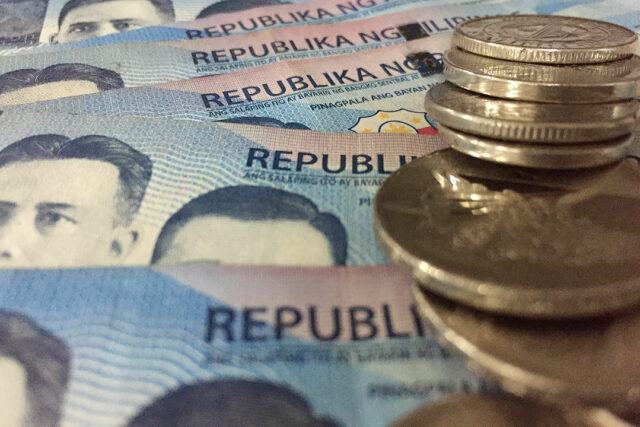
THE PESO surged back to the P58-a-dollar level on Tuesday after US President Donald J. Trump signaled that the Middle East conflict could end soon.

The local unit jumped by 60.4 centavos to close at P58.896 against the greenback from its record-low P59.50 finish on Monday, data from the Bankers Association of the Philippines showed.

The currency opened Tuesday’s trading session stronger at P59.25 per dollar. It traded better than its previous close the entire session as its intraday high was at P58.86, while its worst showing was at just P59.345 versus the greenback.

Dollars traded fell to $2.027 billion from $2.597 billion.

“The peso recovered significantly in line with Asian peers after US President Trump hinted that its offensive on Iran might come to an end “very shortly,” a trader said in an e-mail.

The local unit followed the downward correction in global crude oil prices following Mr. Trump’s signal, Rizal Commercial Banking Corp. Chief Economist Michael L. Ricafort said in a Viber message.

The dollar took a breather on Tuesday as investors swung between hopes for a de-escalation in the US-Israeli war on Iran and concerns that any such optimism could be premature, Reuters reported.

Mr. Trump said the war could end well before the timeline he initially laid out, but threatened to escalate attacks should Tehran block oil shipments from the Strait of Hormuz. In response, Iran’s Revolutionary Guards dismissed Mr. Trump’s remarks as “nonsense” and said the blockade would continue until attacks from the US and Israel end.

The safe-haven dollar weakened 0.1% to $1.1652 against the euro and 0.1% to 157.49 yen. The dollar index, which measures the greenback against a basket of six peers, fell 0.3% to a one-week low of 98.6.

Mr. Ricafort added that the peso rose as Malacañang said that the Bangko Sentral ng Pilipinas (BSP) is ready to intervene in the foreign exchange market after the currency logged a new all-time-low close on Monday amid the Middle East conflict.

BSP Governor Eli M. Remolona, Jr. has said that the central bank keeps a constant presence in the market, but only to help temper sharp currency swings.

The Palace earlier said that President Ferdinand R. Marcos, Jr. prefers to keep the peso-dollar exchange rate below the P60 mark. Malacañang has previously expressed concern that a sharp depreciation could raise the country’s debt service burden and push up import costs, particularly for energy, which would further fuel inflation.

For Wednesday, the trader said the peso could appreciate further ahead of a potentially soft US consumer inflation report for February.

Both the trader and Mr. Ricafort see the peso moving between P58.75 and P59 per dollar on Wednesday. — Aaron Michael C. Sy and Erika Mae P. Sinaking with Reuters

PCC clears A Brown-Alternergy wind project investment

ALTERNERGY HOLDINGS CORP.

A BROWN CO., Inc., through its subsidiary ABC Energy, Inc., has secured approval from the Philippine Competition Commission (PCC) for its P2.4-billion co-investment deal with renewable energy developer Alternergy Holdings Corp.

In a regulatory filing on Tuesday, Alternergy said the PCC cleared the proposed acquisition by ABC Energy of a 40% equity stake in each of two subsidiaries developing wind energy projects with a combined capacity of 192 megawatts (MW).

Alternergy Wind Holdings Corp. will retain a 60% majority stake in both subsidiaries.

“The PCC clearance affirms the partnership between Alternergy and ABC Energy as aboveboard, transparent and free of any unfair market manipulation or practices,” Alternergy President Gerry P. Magbanua said.

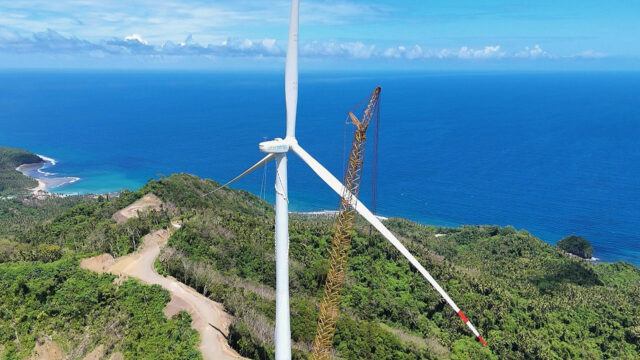
Alternergy Tanay Wind Corp. is developing a 128-MW wind farm in Rizal, while Alabat Wind Power Corp. is building a 64-MW wind farm in Quezon province.

The Alabat wind project has installed its first 8-MW wind turbine generator, which the company said is among the largest installed in the country.

The two wind farms are among four new power projects scheduled for completion this year with a combined capacity of 225 MW. The Balsik Solar Power Plant in Hermosa, Bataan began commercial operations in February.

These projects form part of Alternergy’s target to expand its renewable energy portfolio to 1,000 MW by 2030.

Meanwhile, ABC Energy’s investment marks its expansion into renewable energy following the divestment of its coal power interest in Palm Concepcion Power Corp. in July 2025.

“The approval by PCC seals our partnership with Alternergy. This is our single largest investment to date and we are looking forward to this partnership as we accelerate ABC Group’s own green energy initiatives,” ABC Energy President Paul B. Juat said.

Proceeds from the investment will be allocated to fund Alternergy’s project pipeline in wind, solar, run-of-river, and battery storage. — Sheldeen Joy Talavera

Unmasking the digital culprit: Supreme Court guideposts for social media authorship

FREEPIK/MACROVECTOR

It is settled that in criminal cases, the prosecution must prove not only the elements of the crime charged but also the identity of the perpetrator. Even if the crime is established, conviction cannot follow without proving the culprit’s identity beyond reasonable doubt (People v. Cadenas, G.R. No. 233199, 2018).

Establishing identity, however, is particularly challenging in crimes committed online. Social media platforms are widely used in the Philippines, and accounts can be created with minimal verification. Users may operate under pseudonyms, assume another person’s identity, or maintain dummy accounts. Accounts may also be hacked, shared, or accessed by multiple users, and content may be easily altered or deleted. These factors make it difficult to attribute an online post or message to a specific individual, making authorship and control of accounts a crucial evidentiary issue in cybercrime cases.

Several cases illustrate how courts have addressed this challenge. In Catan v. People (G.R. No. 261156, 2023), the accused used a Facebook account to threaten the victim with posting nude photos unless paid. During an entrapment operation, the accused was caught taking the money, and officers recovered a cellphone containing the photos. The Supreme Court affirmed that the accused controlled the account, relying on the presumption that possession of items used in a wrongful act indicates participation (Rules of Court, Rule 131, Section 3(j)).

Similarly, in People v. Bandojo, Jr. (G.R. No. 234161, 2018), the accused, charged with qualified human trafficking, used a Facebook account to offer sexual services. During an entrapment operation, the accused communicated with law enforcement through the account, arranged to meet in person, and received payment. The Court held that these circumstances established his control over the account and authorship of communications.

The foregoing reveals that although attribution of account ownership and/or control is possible, there is no fixed rule in determining the same.

Acknowledging this, the Supreme Court, in the recently decided case of XXX v. People (G.R. No. 274842, Oct. 22, 2025), took discretionary judicial notice of the widespread use of social media in the Philippines, particularly Facebook. The Court acknowledged that a Facebook account can be easily created by anyone aged 13 or older with an e-mail address or mobile number. This ease of creation has led to the proliferation of fake accounts, which may be used for surveillance, entrapment, spreading disinformation, identity theft, or falsely incriminating individuals to facilitate crimes. Here, the petitioner was charged with posting malicious statements on Facebook about his former partner. He denied authorship, claiming he was at work when the post was made.

In resolving the case, the Supreme Court turned to foreign jurisprudence for guidance. Citing People v. Kent (IL App 2d 140917, 2017), the Supreme Court noted different types of evidence to link an account or post to an alleged author, including: admission of authorship, observation of account use, information known only to the sender, distinctive language or style, digital or technical evidence, consistent conduct with prior posts, and other circumstantial indicators. Notably, in People v. Kent, the Appellate Court of Illinois ruled that the mere fact that a Facebook account bore the accused’s name and photograph was insufficient to establish authorship, as accounts can be easily fabricated.

Building on these principles, the Supreme Court in XXX v. People found it timely to provide guideposts for establishing beyond reasonable doubt the identity of the perpetrator of the crime committed through social media, including:

1. Perpetrator’s admission of ownership or access to the account or authorship of a post or communication;

2. Observation of the perpetrator accessing or using the account, or composing, posting, or sending the post or communication;

3. Post or communication contains information known only to the perpetrator or a limited group of people;

4. Use of the account reflects the perpetrator’s distinctive language, style, or other identifying characteristics;

5. Digital or technical evidence linking the account or post to the perpetrator, such as ISP or social media records, geolocation data, device history, or forensic reports, though not indispensable;

6. Perpetrator’s conduct consistent with prior or contemporaneous posts or communication from the account; and,

7. Other circumstantial evidence indicating the perpetrator’s control of the account or authorship of the post or communication.

Applying the foregoing, the Supreme Court in XXX v. People, ultimately found that petitioner authored the subject Facebook post. The SC observed that (1.) the account bore petitioner’s full name and a photo with his child, and (2.) prior private messages from 2015 show he had long used the account, making it unlikely to be a dummy created solely to implicate him. These messages also reflect actions only the petitioner would logically take, such as requesting permission to visit his child from a third party, consistent with his separation from AAA. Furthermore, (3.) the post referenced being blocked by AAA, a fact corroborated by her testimony, and, (4.) interactions with other users linked to the petitioner suggest genuine engagement. Collectively, these circumstances establish that the Facebook account was indeed controlled by the petitioner, thereby leading to his final conviction.

Ultimately, this ruling is pivotal as it shapes how courts weigh digital evidence. By allowing authorship and identity to be proven through circumstantial indicators, rather than rigid technical proof, it provides a practical framework to pinpoint the true perpetrator in online crimes, ensuring accountability despite the fluid and easily manipulated nature of social media.

The views and opinions expressed in this article are those of the author. This article is for general informational and educational purposes only and not offered as and does not constitute legal advice or legal opinion.


Chrisha Ver R. Romano-Weigel is an associate of the Cebu Branch of Angara Abello Concepcion Regala & Cruz Law Offices (ACCRALAW).

(632) 8830-8000

crromano-weigel@accralaw.com

Trump bought Netflix and Warner Bros. bonds at height of bidding war with Paramount

US PRESIDENT Donald J. Trump outside the White House in Washington, DC, US, Aug. 8, 2025. — REUTERS/JESSICA KOSCIELNIAK

WASHINGTON — President Donald J. Trump bought more than $1.1 million of Netflix bonds over the last three months as the streaming giant unsuccessfully fought Paramount Skydance to buy Warner Bros. Discovery, according to government disclosures.

Mr. Trump bought more than $500,000 of Netflix’s bonds in two transactions on Dec. 12 and 16 and another more than $600,000 across two more trades on Jan. 2 and 20, the disclosures show. The White House disclosed a range, rather than exact amounts, of between just over $1.1 million and $2.25 million.

The purchases came as the Republican president and his regulatory officials talked Netflix down in the press, calling into question whether the deal would withstand antitrust scrutiny and pressuring Netflix to fire board member Susan Rice, a one-time aide to Democratic former President Barack Obama.

It’s unclear whether he made or lost money on Netflix’s bonds, which paid an interest rate of 5.375% and are due in November 2029, since the filing doesn’t disclose if or when he sold the bonds.

Mr. Trump, like other US presidents, is exempt from conflict-of-interest laws that prohibit other executive branch officials from investing in companies with business before the government. He is believed to have bought the bonds through a trust managed by his kids.

“President Trump’s assets are in a trust managed by his children,” said White House spokeswoman Anna Kelly. “There are no conflicts of interest.”

The deal, which would have left the combined company with about $85 billion in debt, immediately put pressure on Netflix’s bonds. They were trading at $1.03 and $1.04 on the dollar when he bought them on Dec. 12 and 16 and at $1.04 and $1.03 on the dollar for his second round of purchases on Jan. 2 and 20, according to data compiled by LSEG.

They were trading at $1.04 on the dollar on Feb. 26, the day before Netflix withdrew its bid for Warner Bros., but have since moved back to $1.03 on the dollar as of Friday.

Mr. Trump also purchased between $500,002 and $1 million in Warner Bros. bonds in two trades on Dec. 12 and Dec. 16 that were trading at 91.75 cents and 92 cents on the dollar when they were purchased and are now worth 95 cents on every dollar. If he held on to those bonds, they would be in the money now.

Mr. Trump started calling into question the viability of the merger with Netflix days after it was announced on Dec. 5, telling reporters the concentration of market power “could be a problem.”

Paramount, which is run by the son of Trump ally and Republican megadonor Larry Ellison, took its hostile takeover public on Dec. 8, kicking off a bidding war between the two companies. Mr. Ellison personally guaranteed more than $40 billion, backed by his shares in Oracle, to help seal the deal.

Netflix bowed out of the bidding after Paramount came in with a winning $110 billion offer about two weeks ago. The Paramount transaction will be backed by $39 billion in new debt provided by Bank of America, Citigroup, and Apollo, according to the companies’ Feb. 27 announcement.

The latest US Office of Government Ethics disclosures, dated Feb. 27, were posted online last week.

Mr. Trump, a real estate investor, has reported more than $1 billion in assets on prior forms. He maintains business interests spanning crypto, golf clubs, and other licensing deals. Mr. Trump’s investments in companies that his administration oversees could raise ethical concerns. — Reuters

Yann LeCun’s AI startup raises $1.03 billion in seed funding

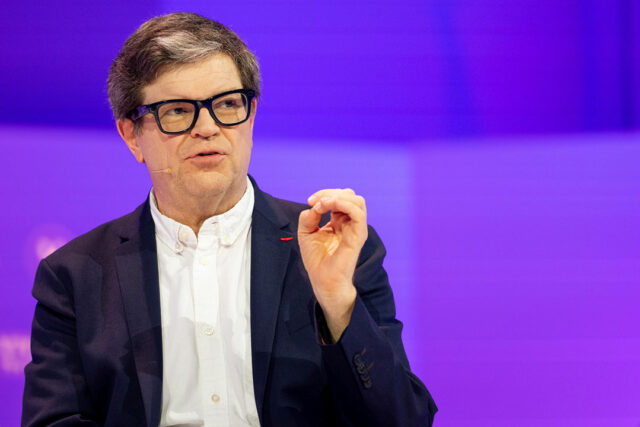
YANN LECUN — BENJAMIN GIRETTE/BLOOMBERG

YANN LECUN, a pioneer in the field of artificial intelligence (AI), has raised $1.03 billion for a nascent startup that promises to invent technology more capable of navigating the real world than existing AI products like ChatGPT.

The startup, which is not yet three months old, is called Advanced Machine Intelligence, or AMI, and reached a valuation of $3.5 billion in the funding round, not including dollars raised.

Based in Paris, the company’s investors include major tech companies like Nvidia Corp. and Samsung Electronics Co. as well as global investors Cathay Innovation, Jeff Bezos’ investment office Bezos Expeditions, Greycroft, Hiro Capital and HV Capital.

The deal is one of the biggest first funding rounds ever in Europe — and the latest example of an AI luminary raising gobs of cash for a nascent research project after leaving a larger company.

Mr. LeCun, who is co-founder and chairman at AMI, is revered as one of the “godfathers” of AI, credited for developing some of the algorithmic techniques that birthed modern chatbots and image-recognition systems.

The French computer scientist ran research for Meta Platforms, Inc. for years as the company’s chief AI scientist.

But since leaving Meta in 2025, Mr. LeCun has become a vocal critic of large language models — the text-based systems behind ChatGPT and Meta’s Llama — as the best method to advance AI.

With AMI, Mr. LeCun said the startup intentionally did not open up an office in Silicon Valley because it’s “where a lot of the people and money are LLM-pilled.” The ultimate goal, Mr. LeCun said in an interview, is to develop a “universal intelligence system” that can power anything from domestic robots to self-driving cars.

AMI is one of several startups building AI models to understand the physical world, beyond written text. For proponents, the method is a key ingredient for making the intelligent, futuristic robots that tech companies have long struggled to crack.

While many of the startups in the sector are still focused on research versus commercialization, they’ve found eager investors willing to bet on the next frontier in the field. Fei-Fei Li, another pioneering AI scientist, recently co-founded a similar company called World Labs that quickly reached a $5-billion valuation.

Alex LeBrun, a former Meta AI researcher and chief executive officer for French health tech startup Nabla Technologies, will serve as AMI’s CEO.

AMI doesn’t plan to launch a consumer product, but instead will spend most of this year in research and development before partnering with large enterprises.

Mr. LeCun said the startup is targeting industries that need to rely on AI models to make hardware and other physical goods, like cars, aerospace and pharmaceuticals. He also said that the company has had discussions with Meta about possible partnerships to use AMI’s technology in its wearable devices.

“There could be some products that get in the hands of consumers fairly early, depending on how the technology progresses,” he said.

While Mr. LeCun says that the defense industry is “not a focus,” one of his investors is a unit of fighter jet manufacturer Dassault Aviation SA.

The use of AI in the military is a hot button topic in Silicon Valley following the standoff between Anthropic and the US Defense Department. On Monday, Anthropic sued the Pentagon after the agency declared that the AI developer was a supply chain risk. 

Mr. LeCun, a frequent critic of Donald Trump, said elected officials should determine how AI systems are used in the military, not researchers or companies making the tech.

“At least, I don’t see myself as having any legitimacy deciding what society should do with the technology that we develop,” he said.

In addition to its Paris headquarters, AMI also has offices in New York, Montreal and Singapore. Mr. LeCun said it has a staff of about 20.

Like other European AI developers, Mr. LeCun said that its global reach would be an advantage. “There is a lot of demand from the industry, from governments around the world, for a credible provider of AI technology that is neither American nor Chinese,” he said.

Mr. LeCun, who is French, helped set up Facebook’s research lab in Paris and has advised several startups in the country, including OpenAI competitor Mistral.

His startup has raised from several investors in the country, including Bpifrance Digital Venture as well as several French tycoons, including telecom billionaire Xavier Niel. French media firm Publicis Groupe also participated in the round.

Bloomberg earlier reported on partnership discussions between Meta and AMI as well as the startup’s plans to raise at a valuation north of $3 billion. — Bloomberg News