Home Blog Page 1782

Inflation likely eased further in March

FUEL PUMPS are seen at a gasoline station in Paco, Manila, Feb. 22, 2025. — PHILIPPINE STAR/NOEL B. PABALATE

By Luisa Maria Jacinta C. Jocson, Reporter

HEADLINE INFLATION likely eased slightly in March as prices of rice and fuel further dropped, analysts said.

A BusinessWorld poll of 18 analysts conducted last week yielded a median estimate of 2% for the March consumer price index (CPI).

If realized, this would be slower than the 2.1% in February and the 3.7% clip in the same month a year ago.

Analysts’ March inflation rate estimates

This would also be the lowest monthly inflation in six months or since the 1.9% print in September.

The Bangko Sentral ng Pilipinas (BSP) has not yet released its month-ahead inflation forecast for March.

The Philippine Statistics Authority (PSA) is set to release March inflation data on Friday, April 4.

“For March, I’m looking at 2% inflation as food prices will likely continue to slow down, driven by good weather and further softening in rice prices,” Sun Life Investment Management and Trust Corp. economist Patrick M. Ella said.

Security Bank Corp. Vice-President and Research Division Head Angelo B. Taningco gave a March inflation forecast of 2%, citing “low food inflation due to declining rice prices amid monthly price upticks in fish, meat, fruits, and vegetables.”

Rice inflation dropped to 4.9% in February from the 2.3% decline in January. This was the lowest rice inflation since the 5.7% contraction in April 2020.

The PSA had previously said rice inflation could remain in the negative for the rest of the year amid continued interventions by the government.

The government has slashed tariffs on rice imports to 15% starting July 2024.

“The reduction in rice tariffs will help bring prices lower than a year earlier,” Moody’s Analytics economist Sarah Tan said.

The Agriculture department in February declared a food security emergency on rice, which authorized the National Food Authority to release buffer stocks at subsidized prices.

In mid-February, the department also lowered the maximum suggested retail price (MSRP) of 5% broken imported rice to P52 per kilo from P55 previously. This was further slashed to P49 per kilo, starting March 1.

Apart from rice, pork prices are also seen to contribute to the lower inflation print.

“The key driver of the deceleration will come from the food category, especially in the prices of pork and rice,” Ms. Tan said.

She cited the Agriculture department’s move to cap the retail price of pork in March to “insulate the domestic market from rising prices due to the African swine fever that has disrupted supply chains.”

On March 10, the MSRP was set at P380 per kilo for liempo (pork belly) and at P350 per kilo for kasim (shoulder) and pigue (rear leg).

LOWER PUMP PRICES
Meanwhile, Nomura Global Markets Research analyst Euben Paracuelles noted the decline in energy prices, as well as stable core inflation in March.

In March, pump price adjustments stood at a net decrease of P1.50 a liter for gasoline, P1.10 a liter for diesel and P2.40 a liter for kerosene.

Aris D. Dacanay, an economist for ASEAN at HSBC Global Research, said retail fuel prices fell in March “on the back of softer global oil prices and a stronger peso.”

“Nonetheless, upward price pressures continue in the less-weighted goods and services. Electricity prices were hiked by more than 2%, while the prices of some food items, such as fish and eggplants, steeply rose,” Mr. Dacanay said.

Chinabank Research also said inflationary pressures “stemmed from higher costs of key food items such as meat, fish, and fruits, along with increases in electricity rates.”

In March, Manila Electric Co. (Meralco) raised the overall rate by P0.2639 per kilowatt-hour (kWh) to P12.2901 per kWh from P12.0262 per kWh in February,

Analysts also noted upward price pressures during the month.

Mr. Dacanay said risks to inflation are still tilted to the downside as rice prices still have room to ease.

“Though not our baseline scenario, it is still possible for inflation to breach the lower end target of the central bank’s 2-4% target band,” he added.

IMMINENT RATE CUT?
Ruben Carlo O. Asuncion, chief economist at Union Bank of the Philippines (UnionBank), said inflation is expected to ease further.

UnionBank’s nowcast models show that monthly inflation is seen settling below 2% until June.

“Without a doubt, the inflation forecasts with the key assumption that these would be close or in line with actual data, support a BSP rate cut of 25 basis points (bps) — 50 bps sooner than later,” Mr. Asuncion said.

“The fear of materially positive real interest rate setting taking root, posing deflationary threats to spending and growth prospects should prompt imminent BSP rate cuts,” he added.

The BSP’s baseline forecasts for inflation are at 3.5% for 2025 to 2026. Accounting for risks, inflation could reach 3.7% in 2026.

“Looking ahead, with inflation running near the lower end of the BSP’s 2-4% target range, we think the central bank could resume its easing cycle at its April 10 meeting,” Chinabank Research said.

“However, it will likely maintain its cautious messaging given persistent inflation risks and increasing global policy uncertainties,” it added.

Ms. Tan said inflation settling around the “low 2%” will support the case for a rate cut in April.

“Another month of subdued inflation gives BSP more than enough reason to finally pull the trigger on a rate cut in April,” Nicholas Antonio T. Mapa, chief economist at Metropolitan Bank & Trust Co., said.

Both Mr. Paracuelles and Mr. Ella also expect the BSP to deliver a 25-bp cut next month.

The Monetary Board had rescheduled its meeting to April 1 0 from April 3 previously.

“I’m sure that the Monetary Board will take this release into account for its next meeting in April and, if we’re right about it staying near the lower bound of the BSP’s target range, then members probably will have the all clear to go for another 25-bp rate cut,” Pantheon Macroeconomics Chief Emerging Asia Economist Miguel Chanco said.

“Of course, events could get in the way, as the planned announcement in Washington of potential worldwide reciprocal tariffs on April 2 could throw more uncertainty into the mix,” he added.

Mr. Taningco said the March CPI will be a crucial data point for the Monetary Board’s decision.

“Other factors to be considered for the upcoming meeting would include global tariffs, international oil prices, and the movement of the US dollar,” he added.

Markets are widely anticipating President Donald J. Trump’s announcement on reciprocal tariffs on April 2.

“The BSP will also have some time to consider the impact of the reciprocal tariffs by the US on the Philippine economy, which is slated to be rolled out from April 2,” Ms. Tan said.

“Further monetary policy easing in the country will help ease the pressure on households’ budgets, which will bring some relief to the domestic economy amid global uncertainties,” she added.

Reinielle Matt M. Erece, economist at Oikonomia Advisory and Research, Inc., also noted that the BSP could cut rates “to avoid faltering consumer demand and to boost economic growth.”

“I expect a 25-bp cut, which is a good compromise to boost market activity and to avoid extreme foreign exchange fluctuations,” he added.

On the other hand, Standard Chartered Bank economist and FX (foreign exchange) analyst Jonathan Koh Tien Wei said the central bank could opt to keep rates steady again amid persisting uncertainties.

“In our view, this uncertainty remains high even as USD-PHP is lower and we are still calling for the BSP to pause in April and only deliver the first rate cut in June,” he said.

“The risk to our view is, however, a 25-bp rate cut in April, given recent comments by BSP Governor [Eli M.] Remolona [Jr]. Key to watch will be USD-PHP movements given concerns over imported inflation and inflation expectations.”

Government debt service bill falls to P107B in Jan.

REUTERS

By Aubrey Rose A. Inosante, Reporter

THE NATIONAL GOVERNMENT’S (NG) debt service bill plunged in January as amortization on domestic debt declined, the Bureau of the Treasury (BTr) said.

Latest data from the BTr showed that the NG’s debt repayments fell by 32.97% to P106.51 billion in January from P158.9 billion in the same month a year ago.

Debt service refers to payments made by the NG on its domestic and foreign debt.

Amortization or payments on the loan principal plunged by 97.55% to P2.08 billion in January from P84.68 billion in the same month in 2024.

This was mainly due to the 97.92% drop in amortization on foreign debt to P1.76 billion in January from P84.54 billion a year earlier. 

Domestic principal payments, on the other hand, more than doubled to P317 million in January from P138 million last year.

“The decrease in the debt service can be attributed to the lower external amortization paid by the government,” Oikonomia Advisory and Research, Inc. economist Reinielle Matt M. Erece said via Viber over the weekend.

Meanwhile, the bulk or 98% of January’s debt servicing went to interest payments.

Interest payments for the month surged by 40.71% to P104.44 billion from P74.22 billion in January 2024.

Broken down, interest paid on local debt went up by 48.06% year on year to P72.29 billion from P48.82 billion.

Domestic interest payments consisted of P63.67 billion in fixed-rate Treasury bonds, P3.58 billion in retail Treasury bonds (T-bonds), and P3.24 billion in Treasury bills (T-bills). Other payments stood at P1.8 billion.

Interest paid on external obligations jumped by 26.58% to P32.15 billion in January from P25.4 billion in the same month last year. 

Rizal Commercial Banking Corp. Chief Economist Michael L. Ricafort attributed the lower debt service bill to seasonal factors.

“The sharp increase in interest payments may have to do with the still relatively higher interest rates since 2022 and the relatively weaker peso exchange rate in January 2025 that increased the peso equivalent of external debt interest payment as well,” Mr. Ricafort said.

The Bangko Sentral ng Pilipinas (BSP) kept the target reverse repurchase rate unchanged at 5.75% in February.

Meanwhile, Mr. Erece expects the debt service to go up in the next few months.

“I expect the debt service to grow in the following months, both as the result of the fiscal consolidation program that aims to lower the country’s outstanding debt, as well as the maturity of previously issued government securities, which are always oversubscribed,” he said.

Mr. Erece said the government is also planning to boost domestic borrowings.

“Moreover, the government plans to borrow more this year from the domestic debt market, i.e. T-bills and T-bonds, which can further increase the debt burden the NG may have to resolve,” he said.

The government is looking to borrow P735 billion from the domestic market in the second quarter, the BTr said on Thursday.

In 2025, the debt service program is set at P2.051 trillion, consisting of P1.203 trillion in principal payments and P848.031 billion in interest payments.

ERC rushes power supply deals for electric co-ops

PHILIPPINE STAR/RYAN BALDEMOR

THE ENERGY Regulatory Commission (ERC) is ramping up the approvals of power supply agreements (PSAs) to minimize electric cooperatives’ (co-ops) exposure to the Wholesale Electricity Spot Market (WESM) as the summer season approaches.

“We are rushing all the approvals for power supply agreements for particularly our electric cooperatives that are exposed to WESM,” ERC Chairperson and Chief Executive Officer Monalisa C. Dimalanta told reporters.

“So that even if we’re entering the summer months… even if the WESM prices spike, their consumers can be insulated from the increase because they are charged under the power supply agreements,” she added.

The majority of the power supply deals lined up are for electric cooperatives in the Visayas, she said.

In June last year, the ERC chief said there were many distribution utilities, primarily electric cooperatives, that were nearly fully exposed to the WESM, pending bilateral contracts where the price is locked in.

WESM is where energy companies can purchase power when their long-term contracted power supply is insufficient for customer needs.

Last month, the Independent Electricity Market Operator of the Philippines (IEMOP), the operator of WESM, said that it is projecting an increase in spot market prices due to anticipated higher demand during the dry season.

Ms. Dimalanta said the Department of Energy (DoE) is coordinating with the power generators on the supply situation as it also approves the outage schedules.

“So, from our end, we coordinate with the DoE. The generators notify us if there is any expected maintenance,” she said.

The DoE recently urged Luzon power consumers to conserve energy as South Premiere Power Corp. (SPPC) and Excellent Energy Resources, Inc. (EERI) are scheduled to implement a scheduled shutdown of their gas-fired power plants from March 29 to 31.

“This temporary shutdown is necessary to facilitate mechanical activities at Linseed Field Corp.’s liquefied natural gas (LNG) terminal, a crucial step towards completing its first onshore LNG storage tank by the end of April this year,” the DoE said in a statement on Friday.

SPPC and EERI are jointly owned by Meralco PowerGen Corp. of Manila Electric Co., Therma NatGas Power, Inc. of Aboitiz Power Corp., and San Miguel Global Power Holdings Corp. of San Miguel Corp. These firms earlier this year sealed a $3.3-billion LNG deal to launch the country’s first LNG facility.

The DoE said the shutdown of the plants was strategically planned in coordination with the National Grid Corp. of the Philippines “to coincide with lower system demand, minimizing potential supply disruptions.”

No yellow or red alerts are expected during the period but a temporary increase in spot market prices could happen, according to the initial assessment of the IEMOP.

GREEN ENERGY AUCTION
Meanwhile, Ms. Dimalanta said that the ERC is drafting the proposed ceiling prices for the upcoming fourth round of green energy auction (GEA-4) this year.

“We are in the process of putting together the GEA-4 rates for public consultation so that we can set the GEAR (green energy auction reserve) price… We’ve had a lot of FGDs (focus group discussions) conducted already with the developers. And I think we are more aligned now in terms of the assumptions and expectations,” she said.

The ERC determines the GEAR prices, or the maximum price in peso per kilowatt-hour that will serve as the ceiling price in the auctions.

Under GEA-4, the DoE is set to auction off a total of 10,478 megawatts (MW) of renewable energy (RE) capacity, which includes some that will be paired with battery energy storage systems.

The government is planning to offer 3,940 MW of ground-mounted solar capacity, 48 MW of roof-mounted solar capacity, 3,000 MW of floating solar capacity, and 2,390 MW of onshore wind capacity.

Under the program’s setup, interested RE producers compete for incentivized fixed power rates by offering their lowest price for a certain capacity set by the ERC. — Sheldeen Joy Talavera

From military bases to economic hubs: A legacy of transformation

CLARK FREEPORT ZONE — BCDA.GOV.PH

It is easy to take for granted how much the country has changed over the last twenty years.

Take Bonifacio Global City (BGC), for instance. What was once the heart of a military complex has become one of the most vibrant and economically significant urban centers in the whole country. BGC, carved out of the former Fort Bonifacio military camp, stands today as proof of that transformation — a symbol of what the Philippines has achieved in a few short decades.

The Bases Conversion and Development Authority (BCDA) has been key to that unbridled success. As a government agency tasked with converting former military bases and properties into areas of urban development, BCDA has been instrumental in getting the country to where it is today.

BCDA is a development corporation vested with corporate powers under Republic Act (RA) 7227 (Bases Conversion and Development Act of 1992), signed into law by former President Corazon C. Aquino on March 13, 1992. The BCDA Charter was amended by RA 7917 in 1995, and further amended by RA 9400 in 2007.

BCDA operates at the intersection of public and private sector collaboration, leveraging public-private partnerships (PPPs) to deliver large-scale infrastructure such as expressways, airports, seaports, and real estate developments. It has been instrumental in the implementation of “Build, Build, Build,” the Philippine government’s flagship infrastructure program aimed at reducing congestion, generating employment, and improving cost efficiencies across the country.

Two of the agency’s most notable successes are the aforementioned BGC and the Newport City from the Villamor Air Base.

Covering 240 hectares in Taguig City, BGC is now a bustling financial and lifestyle district, home to corporate headquarters, embassies, luxury residences, and green public spaces. It serves as the base for some of the country’s largest conglomerates and a magnet for multinational companies, creative firms, and startups.

It also serves as a popular hub for foreign investors looking to do business in the country. US Fortune 500 companies like JP Morgan, Tesla, Wells Fargo, and international giants like Samsung all have established bases in the city. That many office spaces in BGC are also accredited by the Philippine Economic Zone Authority — providing incentives to businesses or investors who lease these spaces in the form of tax holidays, discounts and the like — also helps.

“Bonifacio Global City, more commonly referred to as BGC, is one of the most in demand office locations in Metro Manila. Premium leasable office spaces and commercial spaces in this business district are situated in technology-equipped establishments and workspaces capable of supporting top-grade amenities and office functions,” professional services firm KMC Savills noted on its website.

Bonifacio Global City — www.bcda.gov.ph

Meanwhile, directly across from Terminal 3 of Ninoy Aquino International Airport, Newport City occupies 25 hectares of what was once part of the military-run Villamor Air Base. Today, it thrives as a compact, high-value township.

Developed by Megaworld Corp., Newport City boasts attractions like Newport World Resorts, one of the country’s first integrated resorts, housing a casino, performing arts theater, hotel cluster, and upscale retail. Around this entertainment nucleus are residential towers, office buildings, and institutional facilities, creating a 24/7 environment for both travelers and residents.

The area’s strategic location has made it a natural hub for business process outsourcing (BPO) firms serving international clients as well, with the airport-adjacent lodging, being a convenient address for global hotel brands operating within or around its perimeter.

Notably, Newport City is also an important proponent of the Philippines’ sustainability agenda, with its Goal Zero Waste Management Program which targets a 90% reduction in landfill contributions. The initiative reflects a broader shift toward environmentally-conscious development, aligning with Metro Manila’s evolving urban priorities.

“Aiming for zero waste in Newport City is a very important achievement that we are eyeing to fulfill in the future. We hope that we all continue to strive to help create a healthier and more sustainable future for more Filipinos, something that we at Megaworld eyes to achieve through our MEGreen program,” Don Earl Caagbay, head of estate management group at Megaworld, had said during the initiative’s launch.

A blueprint for the future

Not to rest on the laurels of success, however, BCDA is today leading the charge in positioning the Clark area in Pampanga as a next-generation investment hub through transformative initiatives like New Clark City — a planned smart, green, and resilient metropolis — and the ongoing expansion of Clark International Airport.

Located across Pampanga and Tarlac, the Clark Freeport and Special Economic Zone (CFEZ) is currently positioning itself as a thriving hub for industries ranging from logistics and manufacturing to tourism and technology.

Clark’s transformation began in earnest in 1993, following the withdrawal of US forces and the designation of the area as a Special Economic Zone. Its strategic location, coupled with generous incentives and modern infrastructure such as the Clark International Airport, quickly made it an attractive destination for both local and foreign investors.

Fast-forward to the first half of 2024, Clark is already home to over 1,155 companies, including major US names such as Texas Instruments, FedEx, UPS, Hilton, and Marriott. Investments in the area have totaled up to $5.70 billion within the same period.

The upcoming Clark CBD is poised to be the largest and most modern central business district in the Philippines. Spanning 100 hectares, it will host commercial, financial, and lifestyle hubs designed to foster economic dynamism and promote a high quality of urban life — much like BGC before it.

As part of its broader mission to develop world-class economic zones and livable urban centers, BCDA is spearheading a portfolio of high-impact infrastructure projects within the area as well.

Positioned within the Clark Civil Aviation Complex, the planned 60-hectare Clark National Food Hub is envisioned as a modern, integrated food terminal, designed to strengthen the country’s agricultural exports, and address issues in food security by improving domestic food supply chains.

Then, there is the vision for the Philippines’ first smart, green, inclusive, and disaster-resilient city, New Clark City. It is projected to be home to over a million Filipinos, with about 60% of its land reserved for forests, green spaces, and public areas.

At 9,450 hectares, it aims to provide seamless connectivity via land, air (Clark International Airport), and sea (Subic Port), positioning it as a future-ready urban center. To support its smart city ambitions, BCDA is also developing future-proof digital infrastructure through an Open Access ICT model. This initiative will enable multiple data transmission providers to operate on shared, carrier-grade broadband infrastructure under equal terms, fostering healthy competition and ensuring affordable, high-quality digital connectivity.

Clark’s appeal also extends beyond its borders. The expansion of urban centers like Porac, as well as improved connectivity via ongoing infrastructure such as the NLEX-SLEX Connector Road and North-South Commuter Railway, has made the wider Pampanga region a focal point of Central Luzon’s economic activity. This makes Clark an integral part of the government’s efforts to decentralize economic growth from Metro Manila for a more financially inclusive country.

Taken together, BGC, Newport City, and Clark reflect the quiet but transformative legacy of the BCDA: converting the remnants of the past into the symbols of the future. — Bjorn Biel M. Beltran

Central developments driving the future of cities

NEW CLARK CITY — BCDA.GOV.PH

In the modern day, cities have evolved into economic powerhouses that drive growth and transformation. These cities house numerous businesses, households, and institutions, which — together with well-rounded transit and spaces — are designed to provide individuals with the best of living.

As a builder of great cities, the Bases Conversion and Development Authority (BCDA) has put urban transformation into action as seen in Bonifacio Global City and Newport City in Metro Manila. Nonetheless, such transformation is much more seen in Clark, at the heart of Central Luzon.

Beyond the metro, BCDA has brought urban transformation in what was once Clark Air Base in Pampanga, turning it into a modern metropolis that has been named as one of the world’s “Cities of Legacy.”

While the Clark Freeport Zone is uniquely built as an economic zone, it previously played a significant role in military operations here in the Philippines. Established in 1920, it initially served as an air base for the US military, known as Fort Stotsenburg. Later, it was renamed Clark Field, in honor of Major Harold Clark, then Clark Air Base.

Today, known as the Clark Freeport and Special Economic Zone (CFEZ), it has transformed into a key economic hub, driving growth and development in the country. It hosts a diverse range of industries, including aviation, business, logistics, tourism, and many more. Managed by the Clark Development Corp. (CDC), the CFEZ continues to expand economic opportunities and activities in the region.

CFEZ has recently seen impressive growth. According to BCDA’s 2023 Annual Report, Clark recorded 3 million tourist arrivals, alongside 138,364 employees, 1,187 locators, and 8 completed infrastructure projects, among others.

The zone is also home to locators from various industries. These include batteries manufacturer StB Capital Partners (St Baker), which recently inaugurated the Philippines’ first manufacturing gigafactory for electronic vehicle batteries, StB Gigafactory, within the area; semiconductor assembly and test company SFA Semicon Philippines Corp.; hotel brands Hilton and Marriott; aircraft interiors and components supplier Jamco; boutique airline Sunlight Air; consumer goods company Luenthai; and logistics leaders FedEx and UPS.

The Clark Freeport Zone is currently envisioned to serve as a central hub for business, leisure, tourism, and more importantly, a home for the meetings, incentives, conventions, and exhibits (MICE) market.

Among the projects currently being undertaken towards this vision are the Clark International Airport Complex, Clark National Food Terminal, and the Clark Entertainment and Events Center. In addition, the zone will house an extension of the National Museum of the Philippines (NMP), the NMP Clark Museum, at the former Clark Air Base Hospital. Exhibiting the rich history of Clark, along with the natural and cultural heritage of the region, the museum will also showcase galleries for anthropology, archeology, and natural history.

Clark International Airport

Clark International Airport — www.bcda.gov.ph

Alongside economic zones, Clark is also home to the Clark International Airport (CRK), which aims to position Clark as a premier global aviation capital.

Located at the Clark Aviation Complex, CRK is leading the aviation industry by connecting both local and international arrivals. Currently, it hosts 17 airlines, 12 of which fly to international destinations, while five are flying to domestic locations. In 2024, CRK experienced significant passenger growth, welcoming 2.4 million passengers and 19,22 flights — an increase of 20% and 29%, respectively, compared to 2023.

As an aviation-centric business hub, the airport continues to expand to keep pace with aircraft movement, cater to more logistics operations, and enhance the overall airport operations and functions.

At present, the airport is focusing on the development of taxiways, aprons, landside access roads, and utilities. To further enhance convenience for travelers, CRK Direct Access Link is set to connect two expressways, the Subic-Clark-Tarlac Expressway and the North Luzon Expressway.

New Clark City

Adding to the modernization of Clark is the rise of New Clark City — a 9,450-hectare community in Bamban and Capas in Tarlac that will set the standard for a modern, smart, resilient, and sustainable metropolis.

New Clark City was first conceptualized in 2012, and development for the project began in 2016. Aiming to be “a place where nature, leisure and recreation, business and industry, culture and education converge,” New Clark City seeks to create a modern lifestyle for modern citizens with its world-class infrastructure, smart and green buildings, public transport, walkways, and green spaces.

Among the first notable locators were Filinvest Land Corp., which developed Filinvest New Clark City, and the Hann Development Corp., with Hann Reserve. Hann Reserve is a luxury mountain resort development that houses premier hotel brands and champions leisure, luxury living, and eco-tourism; while Filinvest New Clark is a township that combines nature, technology, and architecture within the city.

Other early key infrastructure developments within the city include the National Government Administrative Center and the New Clark City Athletics Stadium.

New Clark City is also home to many academic institutions, including the National Academy of Sport, the University of the Philippines-New Clark City, and the Virology and Vaccine Institute of the Philippines. The establishment of these institutions demonstrates New Clark’s commitment to academic excellence, which is essential for developing a skilled workforce necessary for economic growth.

New Clark City also boasts residential complexes that bring affordable housing to Filipinos. One notable initiative is the 34-hectare housing project, with key elements, such as parks, commercial developments, and convenient access to transport systems. In line with this vision, BCDA is partnering with a consortium of South Korean and local companies, namely Sta. Clara International Corp. (SCIC), Saekyung Realty Corp., and Korea Overseas Infrastructure and Urban Development Corp. (KIND), to develop a 6-hectare housing complex in New Clark City. The complex will feature 12 residential buildings, along with retail and commercial spaces, sports and leisure facilities, parks and other green spaces, and climate-resilient solutions. — Angela Kiara S. Brillantes

Advancing sustainable, future-ready communities

The affordable housing project in New Clark City aims to provide a stable living environment for employees working in the city. (Artist's perspective) — www.bcda.gov.ph

With nearly 70% of the global population expected to live in cities by 2050, the demand for housing, infrastructure, and public services continues to climb. Despite covering only 3% of the Earth’s land, cities consume up to 80% of the world’s energy and generate 75% of carbon emissions, according to the United Nations (UN).

The Bases Conversion and Development Authority (BCDA) is steering its projects toward sustainability by transforming former military bases into hubs built on sustainable principles.

The agency aims to create communities that balance economic growth with environmental responsibility, collaborating with other government agencies and private sector partners.

The blueprint of New Clark City (NCC) includes smart-city solutions to align with global green building standards. In turn, the developments create a city that can withstand natural disasters while promoting a high quality of life for its residents.

NCC also serves as a backup facility for government operations and a center for business and industry. Current projects are expected to attract more investors and tourists, further boosting economic activity in Central and Northern Luzon.

Building sustainable housing

BCDA is advancing its sustainability initiatives with a major affordable housing project in New Clark City. The development will provide 7,500 mixed-income housing units to provide a stable living environment for employees working in the city.

The project standardizes unit designs across all tenure types to eliminate visible differences between privately owned and subsidized homes. Government employees, private-sector workers, and families from Bamban and Capas, Tarlac, as well as Mabalacat and Angeles City, Pampanga, will have access to the housing community.

BCDA has also integrated sustainable design principles into the development to enhance climate resilience. The housing complex will feature infrastructure designed to withstand extreme weather conditions while maintaining energy efficiency and environmental sustainability.

This initiative is part of the Global Future Cities Programme, a technical assistance project spearheaded by the UK Foreign, Commonwealth, and Development Office. New Clark City has been selected as a pilot location for an urban expansion model that incorporates sustainability while integrating existing communities.

Prioritizing sustainable mobility

In October 2023, BCDA signed a memorandum of agreement with Japan-based Zenmov, Inc. and MC Metro Transport Operation, Inc. to introduce the Primary Rapid Transit (PRT) system. The initiative will serve routes across New Clark City, the Clark Freeport Zone, and the Clark Aviation Complex.

The system uses Zenmov’s Smart Mobility Operation Cloud, a platform that optimizes vehicle deployment based on real-time travel demand. This technology reduces the number of vehicles in operation while maintaining efficiency by tracking ridership patterns.

Zenmov and MC Metro will deploy low-carbon electric vehicles and bikes to cut reliance on fossil fuels. The project also includes smart poles, drones, and other infrastructure to collect and share real-time traffic data.

The initiative is part of the Clark Integrated Transport System, which aims to create a “15-minute city” where residents and workers can access essential services and workplaces within a short distance.

In addition, BCDA is seeking partners to conduct a feasibility study on Clark’s transport network. The study will assess various transportation modes within and beyond the Clark Freeport and Special Economic Zone, considering future travel demand and urban development.

Waste management, sustainable energy initiatives

Efforts to integrate sustainable waste management practices are a priority across BCDA’s developments to reduce waste and promote environmental responsibility.

One key initiative is the Goal Zero Waste Management Program, designed to cut residual waste by 90% annually. The program has been particularly effective in BCDA’s Newport City, a 25-hectare township in Pasay City.

The strategy identifies best practices in waste management, implements uniform standards across its locators, and establishes a monitoring and evaluation framework. Early implementation has already yielded significant results, reducing residual waste by 70% to 80%, primarily through enhanced segregation practices.

BCDA is also advancing plans to build a waste-to-energy facility in the Clark Special Economic Zone. The agency has designated a 40-hectare site for the facility, which will convert municipal and industrial waste into electricity and other by-products. The project is in its early stages, with BCDA seeking partners to conduct a feasibility study before construction begins.

Once operational, the plant is expected to process large amounts of solid waste, reducing landfill dependence and contributing to the region’s power supply. Officials have not disclosed a construction timeline but reaffirmed their commitment to advancing the project with industry partners.

Meanwhile, NCC could soon adopt a more energy-efficient cooling system as BCDA explores district cooling technology. In September 2023, the agency signed a memorandum of understanding with Qatar-based United District Energy International LLC and Japan-based Marubeni Corp. to assess the system’s feasibility.

District cooling uses centralized chillers, thermal energy storage tanks, and advanced control systems to regulate temperatures more efficiently than traditional air-conditioning units. The system can reduce energy consumption by up to 50% and lower greenhouse gas emissions by consolidating cooling production.

The system produces chilled water at a central plant and distributes it through underground pipes to multiple buildings, easing the burden on individual air-conditioning units and minimizing energy waste.

Marubeni Corp., BCDA’s power distribution partner in New Clark City, is expected to provide technical expertise for the study. If results confirm the system’s viability, BCDA may move toward large-scale adoption to promote energy efficiency.

Driving economic growth and development

Through its subsidiaries, BCDA is positioning Clark as a premier destination and a hub for business, tourism, and logistics while integrating sustainability into its major projects.

Clark Development Corp. (CDC) is leading efforts to expand the Clark Freeport Zone, focusing on the meetings, incentives, conventions, and exhibitions (MICE) market.

BCDA also aims to transform Clark International Airport (CRK) into a world-class gateway for logistics and passenger traffic. The first phase of the airport expansion focuses on airside development, including new taxiways, aprons, and landside access roads. These additions will enable CRK to accommodate more aircraft, reduce turnaround times, and improve operational efficiency.

The second phase of the expansion includes a second runway, increasing overall capacity and providing redundancy for flight operations. This upgrade will support business continuity and ensure uninterrupted logistics activities during maintenance or emergencies.

Within the Clark Civil Aviation Complex, a 60-hectare Clark National Food Hub is set to strengthen the country’s position in the global food trade. The facility will feature food storage warehouses, cold storage units, processing centers, and logistics infrastructure. These components will improve food preservation, reduce post-harvest losses, and support the export of Filipino agricultural products. The food hub is expected to stabilize food supply chains and improve market accessibility for local producers.

BCDA is also preparing to launch the Clark Central Business District (CBD), which is expected to become the country’s most modern business district. Spanning 100 hectares, the development will offer commercial spaces designed to accommodate various industries while promoting an active urban lifestyle. This project aims to ease congestion in Metro Manila and create a more balanced economic landscape in the region.

Meanwhile, the New Clark City Industrial Estates, a 9,450-hectare development in Central Luzon, is designed for industries such as pharmaceutical research, semiconductor and electronics manufacturing, and logistics. The industrial districts prioritize sustainability, integrating green infrastructure and disaster-resilient systems to establish a future-ready economic hub.

BCDA is dedicating 6,000 hectares, nearly 60% of the total area, to forests, public spaces, and parks to balance economic growth with environmental preservation. This allocation supports biodiversity, helps manage urban heat, and promotes a healthy living environment for its projected 1.2 million residents and 600,000 workers.

The industrial estates connect seamlessly to the North Luzon and Subic-Clark-Tarlac Expressways, Clark International Airport, and Subic’s deepwater port for efficient transport solutions for businesses setting up operations.

Legislative efforts

In August 2023, the House of Representatives passed an amendment to Republic Act No. 7227, the Bases Conversion and Development Act of 1992. If enacted, the amendment will allow the sale of up to 5% of land in economic zones managed by BCDA for residential use. The measure aims to address the country’s growing housing demand while fostering an inclusive community within Clark.

The proposal also seeks to extend BCDA’s corporate term by 50 years, ensuring continuity for ongoing and future development projects. This extension reinforces Clark’s long-term economic and environmental goals.

Clark’s expansion plans prioritize transit-oriented urban development. High-quality transit systems will improve connectivity and accessibility, supporting sustainable urban growth while reducing congestion and emissions.

In October 2023, Clark was named one of the world’s “Cities of Legacy” at the Asia Pacific Cities Summit and Mayors’ Forum in Brisbane, Australia. — Mhicole A. Moral

MG PHL eyes top-3 sales ranking by end of decade

There are high hopes for the MG G50 Plus people mover. — PHOTO BY KAP MACEDA AGUILA

SAIC Motor PHL to expand offerings with this in mind

SAIC MOTOR PHILIPPINES (SMP), importer and distributor of MG vehicles in the country, isn’t coy at all about its aspirations. SMP President Felix Jiang declared recently that the company intends to crack the top-five sales ranking in three years, and get to third place by the end of the decade.

Historically, MG has cycled through three stewards in the country — Morris Garages Philippines before 2018; The Covenant Car Company, Inc. from 2018 to 2023; and SAIC Motor Philippines (controlled directly by parent company SAIC Motor Corp.) from July 2023 onward. From 65 units in 2018, MG posted healthy sales numbers in succeeding years: 4,745 (2019), 3,518 (2020), 5,209 (2021), 8,768 (2022), 5,679 (2023), and a high of 9,016 last year — with the newest figure enabling it to climb to ninth place on the 2024 Chamber of Automotive Manufacturers of the Philippines, Inc. (CAMPI) and Truck Manufacturers Association (TMA) sales list.

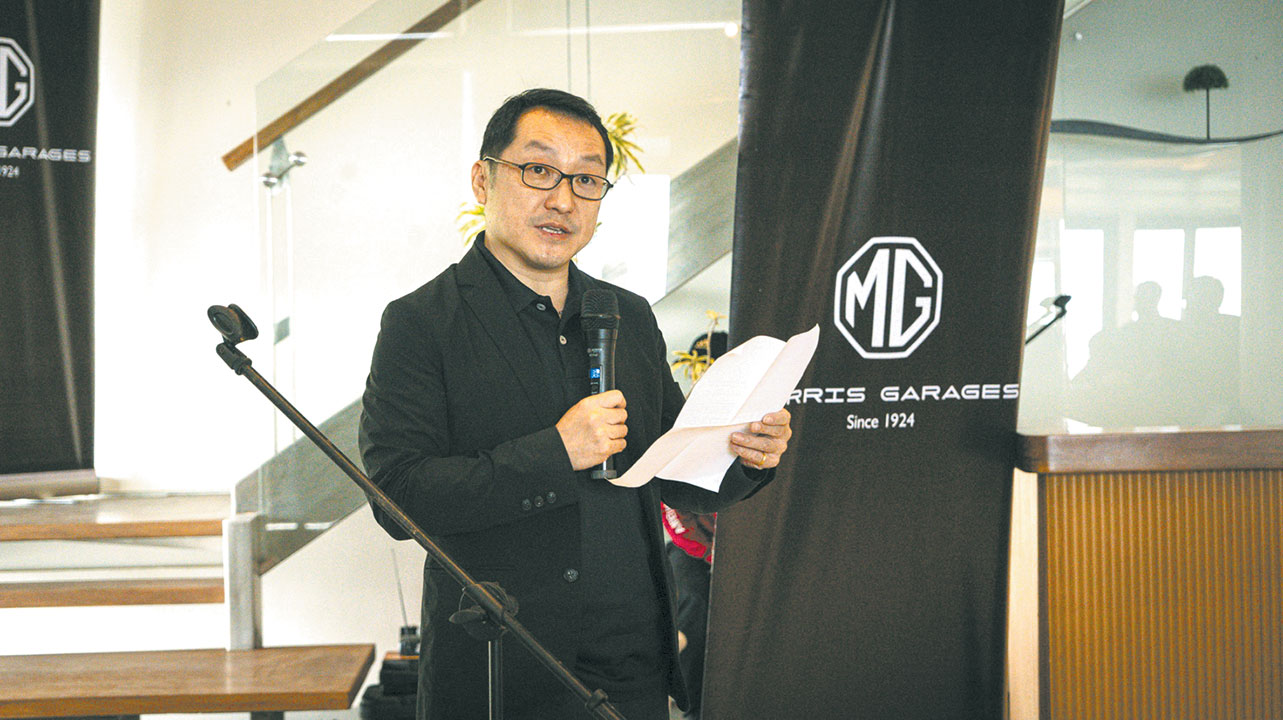
Throughout our conversations over his time here, Mr. Jiang has always been consistent about what he considers the priority of SMP for the MG brand. “In the past several years, especially since SAIC Motor Philippines took over the distribution function, we’ve really focused on customer satisfaction and experience. We strengthened our supply chain in after-sales and also our customer service center, to make sure that every customer is satisfied with our product, with our service, and cost,” he maintained recently during a media drive to Tagaytay onboard MG G50 Plus units.

Launched here in January 2024, the multi-purpose vehicle (MPV) product is actually a rebadged Maxus (also a SAIC Motor-controlled brand). MG Philippines is giving the model the spotlight it deserves because, according to Mr. Jiang, “The MPV segment is really the biggest one in the Philippines, in the automotive industry. So we want to provide the best product in this segment to Filipino customers.”

While acknowledging that the segment is “very crowded already,” the executive is confident about the G50 Plus for its “very specific strengths and advantages,” noting its engine power, cabin space, driving experience, and comfort. “This product definitely can deliver more satisfaction to the customer and also drive more volume for the MG brand,” he stressed.

Replying to a question from “Velocity” on how the company expects to realize its lofty aspirations, Mr. Jiang continued, “The main driver for our success in the next three years, even five years, is really based on the portfolio of products we introduce. Currently, we are only participating in three segments out of the top five. We are only in the B-segment car, SUV, and MPV, and now in the other two segments we will launch new products very soon.”

He added, “This is the first thing we want to help us to improve our sales volume. The second one is making operational (changes) and working on customer satisfaction.” “Velocity” further prodded him on what’s on the horizon for MG in the Philippines — particularly with regard to its powertrain offering mix. “This is very good question,” Mr. Jiang replied. “Actually, for MG globally, we have a lineup of four powertrains. We have the ICE products with very competitive pricing. Also, we are now providing a very strong presence in hybrids. (As for plug-in electric vehicles) we were the first one to introduce the plug-in hybrid in China 12 years ago… And as far as EVs go, they’re already accepted globally for the MG brand. And this year, we will also introduce diesel powertrain (vehicles) in the Philippine market.”

Mr. Jiang said that the “very unique and very complex” local market will be best served by different powertrain solutions, and that MG will release products in two segments where it is still absent: the pickup and D-SUV categories.

Judging by its aggressiveness in filling in its portfolio to appeal to a wider array of buyers, MG Philippines is indeed keeping its eye on the prize. With an ever-growing cast of automotive brands though, the company definitely has its work cut out for it, so SMP will surely bank on the momentum MG has generated thus far.

Monde Nissin allots P7.55-B capex

PHILIPPINE STAR/ MIGUEL DE GUZMAN

LISTED food and beverage producer Monde Nissin Corp. has earmarked P7.55 billion in capital expenditure (capex) for 2025, the bulk of which will be used for a new plant in Northern Luzon.

“We had supply constraints that prevented us from shipping even more,” Monde Nissin Chief Financial Officer Jesse C. Teo told a virtual news briefing last week. “We will try to address this quickly by building a new plant in Northern Luzon for our biscuit business.”

He said P6.6 billion will go to Monde Nissin’s Asia-Pacific business, while P976 million will go to its meat alternative business.

“The bulk of the P6.6 billion that we will be spending for capex in Asia-Pacific will go towards that,” he said, referring to the biscuit plant that he expects would widen their distribution network.

The company’s 2025 capex is 55% higher than a year earlier.

Monde Nissin expects the plant to generate more than P10 billion in sales once fully finished.

“However, we will be phasing it,” Mr. Teo said. “We need both capacity for Graham and SkyFlakes immediately, both for domestic and for international business, so we will prioritize that.”

Mr. Teo said Monde Nissin would also allot capex to cut losses in the company’s meat alternative business.

“We are thinking of infusing cash in order to bring down the borrowing at the meat alternative level to reduce the loss there and to help also the valuation,” he said.

Monde Nissin seeks to hit mid-single digit revenue growth for its Asia-Pacific business, while the profit margin would be “broadly in line” with last year, Monde Nissin Chief Executive Officer Henry Soesanto told the same briefing.

“For our meat alternative, we expect mid-single-digit core earnings before interest, taxes, depreciation and amortization in [million British pounds] for the year,” he added.

Monde Nissin swung to profitability with a P450-million net income last year from a P626.58-million net loss a year earlier as consolidated revenue rose 3.7% to P83.1 billion.

Sales of its Asia-Pacific business increased 5.4% to P69.5 billion, while revenue of its meat alternative segment dropped 4.5% to P13.59 billion.

Monde Nissin shares closed a centavo lower at P7 each on March 28. — Revin Mikhael D. Ochave

Driven to succeed

The Aeolus Mage and Dongfeng Nammi flank a parked small plane. — PHOTO BY DYLAN AFUANG

Dongfeng Motor Philippines reveals its market aspirations

By Dylan Afuang

UNDER THE DISTRIBUTORSHIP of Legado Motors, Inc. (LMI), Dongfeng Motor Philippines revealed its achievements and plans — detailing the rationale behind its “Drive Your Friend” marketing tagline in a recent media drive.

“We are using (Dongfeng’s) global tagline ‘Drive Your Dreams’ and ‘Drive Your Friend,’” LMI Sales Director Leah Avante shared to the media. “But in the Philippines, we (mostly) use ‘Drive Your Friend’ because we know that you use your vehicles (for) whatever trip that may be.”

Indeed, drive the media and content creators covering the automotive industry did, behind the wheel of the China-headquartered company’s offerings — enjoying attractions in Subic Bay, which included a luxury beach and golf club, and an airport. These vehicles are the Aeolus Huge Hybrid and Aeolus Mage Turbo crossovers, the Forthing Friday and Nammi battery electric vehicles, the Forthing U-Tour seven-seater, and Rich 7 pickup truck.

This event came after LMI, which began distributing the brand in late 2023, sold 300 Dongfeng cars in 2024, with the company planning to grow this figure to 2,000 units this year, the sales director said. More Dongfeng dealerships and models are eyed to be opened and launched to achieve that target, other LMI executives confirmed.

A majority of last year’s sales was accounted for by the Nanobox hatchback, Ms. Avante said. Priced at just P888,000, the Nanobox battery electric vehicle (BEV) is designed for urban use with its small size, maneuverability, and zero emissions. Sold alongside the EX-1 Pro (P838,000), these serve as the brand’s entry-level models.

“Aside from the target that was given to us by China (headquarters), we are confident with the product lineup that we have now,” Ms. Avante said. “Our three product lines are BEV and HEV (hybrid electric vehicle), but with our ICE (internal combustion engine) models and adding more dealers, we might push that number.”

The Aeolus Mage and Huge, and Forthing U-Tour are also eyed to boost sales, the executive revealed.

Three more dealerships to complement Dongfeng Motor Philippines’ current network of nine dealerships are planned to be operational within the year, LMI President and CEO Wilbert A. Lim continued. These prospective outlets are set to bolster the brand’s presence outside Metro Manila, he added.

The nine local Dongfeng dealerships are currently located in Alabang, Muntinlupa; Caloocan; Marcos Highway; Marikina City; Pasig City; Bacoor, Cavite; Pampanga; Tarlac; and Davao, a release from LMI said.

After partnering with a community mall chain operator, LMI will also improve its after-sales service by establishing service centers on the mall chain operator’s property, according to LMI VP for Sales and Operations Giovanni Frias. The mall chain would soon have at least five service centers open, he claimed.

Dongfeng Motors Philippines plans to introduce to the market a plug-in hybrid electric vehicle (PHEV) in the third quarter of 2025, the sales VP announced.

Established in 1969 and headquartered in Wuhan, China, Dongfeng Motor Corp. features a product portfolio that encompasses commercial vehicles like trucks and buses, alongside passenger cars including sedans and SUVs. The company features sub-brands under the Aeolus, Forthing, and Voyah marques.

Since its establishment, “Dongfeng has partnered with (foreign car makers) so they can expand their skills in making vehicles,” Mr. Frias boasted. The brand has entered “strategic joint ventures” with Japanese makers Honda, Infiniti, and Nissan, and French marques Citroën, Renault, and Peugeot, an LMI release specified.

“The engineers and designers come from overseas, and we are proud to announce that one of the Dongfeng designers came from Mercedes-Benz,” the LMI VP divulged. “That’s why our (cars’) design and build quality are similar to what you can see from more expensive vehicles,” he concluded.

PLDT shares drop despite good news

STOCK PHOTO | Image by terimakasih0 from Pixabay

PLDT, Inc. shares fell 1.3% week on week to P1,284 each on Friday, as investors priced in expectations about a company plan to boost its customer base by distributing free subscriber identity module (SIM) cards in the countryside.

The stock fall was in line with the Philippine Stock Exchange Index’s (PSEi) 1.3% decline to 6,147.44 points on March 28 from a week earlier. The share has declined 0.8% this year.

The PLDT stock was the 13th most traded share on the stock exchange last week, with value turnover hitting P485.7 million covering 376,450 stocks.

The company last week said it would provide through its mobile arm Smart Communications, Inc. half-a-million free SIM cards to remote areas in the Philippines in support of a government initiative to boost mobile connectivity.

“PLDT’s initiative on SIM cards somehow brought optimism about an increase in its users, which offset the worries regarding industry competition,” Jeconiah S. Nicolas, a research analyst at First Resources Management and Securities, said in a Viber message.

“But the announcement by Converge ICT Solutions, Inc. of their partnership with Elon Musk’s Starlink has raised concerns about tightening competition in the telecommunication industry,” he added.

Converge said it estimates a 5% to 10% increase in enterprise revenue through its collaboration with Elon Musk’s Starlink. On Tuesday, the listed fiber-optic network operator announced its tie-up with Starlink to extend broadband access to remote areas, strengthening enterprise connectivity nationwide.

PLDT’s net income increased 21.4% to P32.3 billion in 2024 from a year earlier, while revenue rose 2.8% to P216.83 billion.

“For the first-quarter revenue, we expect PLDT to post P61.07 billion, and for the whole year, we expect it to record P227.9 billion,” Mr. Nicolas said.

He put the support level for the PLDT stock at P1,255 and resistance at P1,400.

Hastings Holdings, Inc., a unit of PLDT Beneficial Trust Fund subsidiary MediaQuest Holdings, Inc., has a majority stake in BusinessWorld through the Philippine Star Group, which it controls. — LOP

Analysts: US launcher transfer to boost Philippine defense, irk China

US DEFENSE SECRETARY PETE HEGSETH — REUTERS

By Adrian H. Halili, Reporter

THE DEPLOYMENT of the United States’ Navy-Marine Expeditionary Ship Interdiction System (NMESIS) in the Philippines could improve military modernization efforts but may also provoke a military response from China, analysts said at the weekend.

US Defense Secretary Peter Brian Hegseth, who was in Manila last week, said that US armed forces would deploy NMESIS missile systems during the annual Balikatan (shoulder-to-shoulder) joint military exercises in April.

“This is a big leap in the AFP’s (Armed Forces of the Philippines) modernization efforts through military aid with the US,” Chester B. Cabalza, founding president of Manila-based think tank International Development and Security Cooperation, said in a Facebook Messenger chat.

The US will also deploy an anti-ship missile system and highly capable unmanned surface vehicles, which Mr. Hegseth said that the weapon systems will allow US and Philippine forces “to train together using advanced capabilities to defend the Philippines’ sovereignty.”

Mr. Cabalza likewise expects the system to boost the country’s land warfare and naval warfare capabilities.

The US Defense chief visited the Philippines on March 28 and 29, reaffirming the US’ commitment to uphold its defense treaties in a meeting with Philippine President Ferdinand R. Marcos, Jr. and Defense Secretary Gilberto C. Teodoro, Jr.

The meeting also followed the start of the Salaknib joint military exercises that focus on territorial defense and commanding large-scale deployment of forces, which will run from March 24 to April 11.

About 5,000 soldiers from the Philippine Army and US Army Pacific will take part in warfighting and exchange of expertise in the first phase of this year’s Exercise Salaknib. A second phase is scheduled for later this year.

Rommel C. Banlaoi, president of the Philippine Society for International Security Studies, however, said that the deployment of the weapon systems will only deepen Manila’s reliance on the US defense.

“The deployment of NMESIS class missiles and Unmanned Surface Vessels to the Philippines can support US defense operations in Asia with the Philippines, as a military ally, joyriding on American defense. But it does not actually enhance the development of autonomous Philippine defense capabilities as those missiles remain under the control of the US,” Mr. Banloi said in a Viber message. According to Mr. Banlaoi the stationing of the missile system and unmanned naval vessels in the Philippines will only draw the ire of the Chinese government.

“The deployment would not deter but rather provoke China to harden its military activities in the South China Sea,” he added. “China has developed a counter-deterrence capability to deal with US military presence in the Philippines.”

Raphael J. Cortez, who teaches diplomacy at De La Salle-College of St. Benilde said the weapon’s deployment will be a catalyst for China to undertake more aggressive actions.

“With such deployment, we can expect that China’s strategies will be more robust and there’s a possibility that the counterpart of these missiles for them will also be deployed so as to deter both parties from actually utilizing it,” Mr. Cortez said via Facebook chat.

Manila and Beijing have repeatedly clashed in the South China Sea, with both sides accusing each other of raising tensions.

China claims more than 80% of the waterway. This was voided by a United Nations-backed tribunal based in The Hague in 2016 for being illegal.

The South China Sea is a vital waterway that sees more than $3 trillion worth of annual ship-borne commerce. Countries like Brunei, Indonesia, Malaysia and Vietnam also claim parts of the sea.

Amid the increasing tensions with Beijing in the South China Sea, the Philippines has been seeking more foreign defense deals with countries like the US, Australia, Japan, and Canada.

Last year, the US extended $500 million in aid for the modernization of the AFP and Philippine Coast Guard. The US government had also exempted security assistance to the Philippines worth $336 million from its foreign aid freeze.

Agri trading center opens in Rosales, Pangasinan

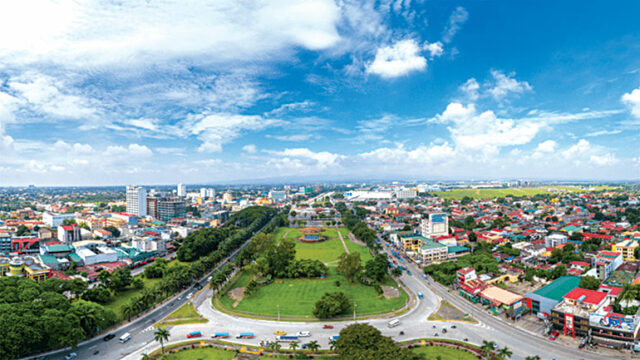
ROSALES TOURISM FACEBOOK PAGE

THE Department of Agriculture (DA) has opened a P60-million agriculture trading center in Rosales, Pangasinan that will further integrate farmers into the supply chain for the government’s network of subsidized stores.

The Rosales Agricultural Trading Center, funded through the Enhanced KADIWA Inclusive Food Supply Chain Program, will also feature a training facility designed to introduce farmers to new technologies and agricultural entrepreneurship.

“This initiative will not only boost farmers’ productivity but also create new income opportunities and foster job creation throughout the supply chain in Rosales and surrounding areas,” Agriculture Secretary Francisco Tiu Laurel, Jr. said in a statement.

The trading center is built on an 8,000-square-meter lot donated by Rep. Robert Raymund Estrella. The project started in November 2023 and was developed in cooperation with the Rosales municipal government.

The trading hub will serve as a pilot for similar facilities that the Department of Agriculture plans to establish in other parts of Pangasinan.

Meanwhile, the DA said it also plans to build a solar-powered cold storage facility next to the Rosales trading hub, with the intent of extending the shelf life of fresh produce, particularly high-value crops.

There are also plans to construct a rice drying facility in Rosales, it added.

The DA said a mobile soil laboratory will be deployed to Pangasinan in July to test soil conditions.

“This initiative aims to determine the best use of the land and identify the necessary inputs to optimize farm yields and boost farmers’ incomes,” it said.

Farmers in the area are reporting challenges like access to credit, cost of farm inputs, and low selling prices, according to the DA.

“In addition, traders exploit the lack of an efficient marketing system, inadequate infrastructure, financial limitations, and inconsistent policies,” it noted.

Pangasinan is among the top 10 in rice production. — Kyle Aristophere T. Atienza

ADVERTISEMENT
ADVERTISEMENT