Home Blog Page 1723

BPI looking to open 70 new ‘phygital’ branches
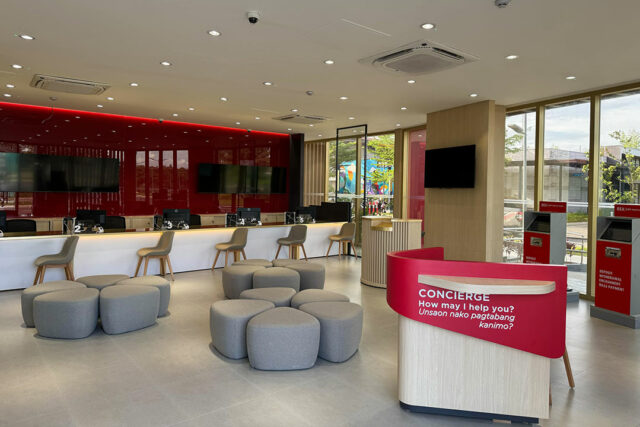
BANK of the Philippine Islands’ prime “phygital” branch in Azuela Cove, Davao City. — BANK OF THE PHILIPPINE ISLANDS

BANK of the Philippine Islands (BPI) is looking to open 70 additional “phygital” or physical-digital branches this year as it continues to modernize its branch network.

This would bring BPI’s total number of phygital branches to 140 by end-2025, the listed bank said in a statement on Monday.

BPI currently has 59 phygital, nine prime phygital, and three flagship branches nationwide.

“We’ve been on this phygital transformation journey for the past three years and our customers have experienced the power of that transformation through enhanced convenience, simplified banking, and differentiated advisory service. BPI’s strategy has truly transformed the way our clients engage with the bank,” BPI Head of Consumer Banking and Executive Vice-President Maria Cristina “Ginbee” L. Go said.

Ms. Go previously said the bank will likely have 780 branches by end-2025.

BPI said the opening of more phygital branches is part of its plan to modernize its entire branch network over the next five years.

“Phygital banks harness the combined strengths of BPI’s physical network and digital capabilities to offer customers convenient, effortless, and seamless banking experiences,” it added.

The bank’s digitally acquired clients, or those who conduct more than 50% of their transactions online, and branch-acquired clients, or those who transact over the counter, have the same level of branch transactions, Ms. Go said.

However, the engagement and frequency of transactions of digital clients are higher than those for traditional clients, she noted.

“This is because digital clients still turn to the branch for expert advice from our branch personnel to learn how they can manage their finances better and how can they achieve their dreams. They value the ability to ask questions, explore options and seek expert opinion. Physical presence also builds trust and long-term relationships,” Ms. Go said.

“Being able to talk to someone and visit a branch is an assurance of the legitimacy and commitment of a bank especially on matters as important as one’s hard-earned money.”

Ms. Go added that they expect more clients to do their servicing transactions digitally as the bank boosts its app’s capabilities to include QR payments and mobile check deposits, among others.

BPI’s attributable net income rose by 20.04% to a record P62.05 billion last year.

Its shares climbed by P1.10 or 0.85% to close at P131.10 each on Monday. — A.M.C. Sy

Naples celebrates 2,500 years with massive Easter egg

FACEBOOK.COM/@ASSESSORATOALTURISMOCOMUNEDINAPOLI

NAPLES, Italy — In a sweet tribute to Naples, the city’s famed Gay-Odin chocolate factory unveiled a giant Easter egg as part of the Napoli Millenaria cultural project marking 2,500 years of the southern Italian city.

The 350-kilogram creation honors the legacy of Isidoro Odin and Onorina Gay, two pioneering chocolatiers from Piedmont in northern Italy who brought their art to Naples in the late 1800s.

On display in a factory in the Chiaia district, where the chocolatiers first set up shop, the egg is a blend of tradition and innovation with the enchanting image of the Parthenope siren, designed by master decorator Fabio Ceraso, at its center.

Its hand-painted chocolate sculpture depicts the mythological siren who, unable to lure Ulysses, met her tragic end at Megaride, where Castel dell’Ovo now stands on the sea front in Naples.

Surrounded by waves and a dramatic sunset, Parthenope celebrates the city’s origins.

The egg will eventually go on sale with a price tag of around 12,000 ($13,035).

“We thought there could be no better theme than the myth of Parthenope,” said Sveva Maglietta, a member of the Gay-Odin board of directors.

“On the other side of the egg, we wanted to represent the city of Naples, but with its symbols, which are, as we know, many.”

The giant egg features portraits of beloved figures from Naples, including actor Totò, musician Pino Daniele, and soccer legend Diego Maradona, alongside iconic symbols such as pizza and Castel dell’Ovo itself.

Emblazoned with the words “2,500 years of legendary history,” it showcases Gay-Odin’s historic blue and gold logos.

Crafted over three weeks, the egg’s creation involved hand-brushing enormous molds, followed by a delicate fusion of chocolate and intricate decorations.

“The shell is the size of a two-and-a-half-meter boat that is filled by hand with dark chocolate,” Maglietta told Reuters. “The color is done with a sugar glaze, the coloring agents are all natural and vegetable-based, and then the decorator creates the shades.”

Any wealthy buyer will at least get an additional treat.

“Even this egg has its surprise that is proportionate to the size of the egg, but we can’t tell you what’s inside,” Maglietta said. — Reuters

Hospitality chains expand sustainability features

TAJARAHOSPITALITY.COM

HOSPITALITY chains are working to enhance sustainability features and workcation offerings to address the increasing demand from foreign tourists, according to industry executives.

Cyndy Tan Jarabata, president and chief executive officer of TAJARA Leisure & Hospitality Group, Inc., cited the growing appeal of sustainability-focused and nature-themed hospitality properties.

“A lot of foreign tourists are slowly coming back, the expats have also returned for work… so we’ve seen growth not just in Metro Manila, but also in island destinations,” she said on the sidelines of an event last month.

Hospitality properties must “create something uniquely different that would address the needs of this new generation of travelers,” Ms. Jarabata said, citing sustainability and back-to-nature designs.

The Philippines welcomed 5.95 million international visitors last year, data from the Department of Tourism showed. South Korea recorded the highest number of visitors at 1.57 million, followed by the United States (1.08 million), Japan (444,528), China (313,856), Australia (299,286), and Canada (269,300).

“We are aggressively tapping into international markets such as Taiwan, Japan, India, and the Middle East, tailoring our offerings to meet cultural preferences and travel needs, thereby attracting a more diverse global audience,” Nonito O. Cuizon, director for marketing at Robinsons Hotels and Resorts (RHR), told BusinessWorld in an e-mail.

RHR’s pipeline includes expansions in key destinations such as Siargao, Bohol, and Pangasinan.

Mr. Cuizon said that Fili Hotel in Cebu and Dusit Thani Mactan Cebu are looking to capture demand for Indian destination weddings.

RHR is also expanding its loyalty program to include special perks, discounts, and exclusive offers. It is improving its direct booking channels and upgrading its facilities.

For its part, property management company Discovery Hospitality Corp. (DHC) said it is refining its product offerings to meet increasing demand for workcations.

“We are improving our products to appeal to those who fly hybrid,” Lynette Ermac, senior vice-president and head of sales and operations at DHC, said in an e-mailed reply to questions.

DHC also seeks to ensure that its properties include areas for remote work and facilities for meetings, incentives, conferences, and exhibitions (MICE) and small-scale social gatherings.

“Inspired by changing generational behavior, more digital interaction, and more environmental conscience, guests now search for more meaningful, customized, and real experiences. Additionally in demand are wellness-oriented stays and sustainable travel,” Ms. Ermac also said.

“From carefully chosen local activities to tech-integrated service touchpoints that prioritize the human element, these trends are shaping the design of our products,” she added.

Hospitality chain The Ascott Limited is leveraging its MICE facilities and cultural immersion activities to capture demand for experiential and work-related travel.

“We embrace the concept of leaving destinations better than before by promoting local experiences, sustainable practices, and unique eco-friendly experiential stays,” Loven C. Ramos, director of brand and marketing, said in an e-mail.

Mr. Ramos said Ascott’s serviced residences, which combine hotel and home-like amenities, are ideal for long-term stays and workcations.

He also noted that properties such as Ascott Bonifacio Global City, Ascott Makati, Citadines Bay City Manila, and Citadines Roces Quezon City offer state-of-the-art meeting rooms, event spaces, and diverse culinary offerings.

“Soon, we will also be unveiling the ballroom and MICE facilities at Citadines Bacolod City, which will be the region’s largest when it opens,” he added. — Beatriz Marie D. Cruz

A Roman governor ordered Jesus’ crucifixion — so why did many Christians blame Jews for centuries?

JESUS BEFORE PILATE, FIRST INTERVIEW, by 19th century painter James Tissot. — GANDVIK/BROOKLYN MUSEUM VIA WIKIMEDIA COMMONS

It’s a straightforward part of the Easter story: The Roman governor Pontius Pilate had Jesus of Nazareth killed by his soldiers. He imposed a sentence that Roman judges often inflicted on social subversives — crucifixion.

The New Testament Gospels say so. The Nicene Creed, one of Christianity’s key statements of faith, says Jesus “was crucified under Pontius Pilate.” The testimony of Paul, the first person whose preaching in the name of Jesus Christ is preserved in the New Testament, refers to the crucifixion.

But over the past 2,000 years, it was common for some Christians to deem Pilate almost blameless for Jesus’ death and treat Jews as responsible — a belief that has shaped the global history of antisemitism.

Throughout medieval times, Easter was often a dangerous time for Jewish communities, whom Christians targeted as “Christ-killers.” This perception was integral to the hate that motivated mass violence in Europe as late at the 19th and 20th centuries, including pogroms in Russia and even Nazi genocide.

Why did Christian teachings practically let Pilate off the hook? Why did many Christians allege Jews were to blame?

THE GOSPELS’ STORY
In the Gospels, the first four books of the New Testament, Pilate believes Jesus innocent of any crime. In some of them, he even proclaims so in public.

But the chief priests of the ancient Jewish temple at Jerusalem see Jesus as a charismatic and popular Jewish preacher who challenges their authority. They have Jesus arrested and tried before Pilate during the week of Passover.

Pilate schemes for Jesus’ release, but a riotous crowd clamors for his death. Pilate caves and decides to crucify Jesus, whom Christians believe rose from the dead three days later.

Any reader of the Gospels knows the sequence, though it varies somewhat in each of them. The earliest Gospels, composed at least a generation after Jesus’ death, blamed the chief priests and attending crowd for persuading Pilate to have Jesus crucified. The Gospel of John, written some decades after the other three, portrayed Jews in general as responsible, and so did much of early Christian literature.

One account, written in the mid-second century or later, and not included in the New Testament, even claimed that Jesus’ crucifixion was not ordered by Pilate. Instead, it blamed Herod Antipas, the Jewish ruler of Galilee — the region where Jesus grew up. Other texts from after the first few centuries A.D. said that Pilate became a Christian.

ROMAN HISTORY
Scholars have long debated the historical facts of Jesus’ trial. In my 2025 book, Killing the Messiah, I do too.

The Gospel testimonies capture the basics of criminal trials before Roman judges, which were held in public. Judges posed questions to prosecutors and defendants, and had ample power to decide whether a person was innocent or guilty and impose a punishment.

Writers who lived in the Roman Empire portrayed judges as capricious, unaccountable or swayed by menacing crowds. The Gospels reflect this attitude by making Pilate appear bullied into condemning an innocent man.

But from a historian’s viewpoint, there is a crucial problem with the Gospels’ description. Roman judges could and sometimes did face removal from office, property confiscation, exile or even death for executing clearly innocent people. In other words, it seems unlikely that Pilate would have proclaimed Jesus guiltless, but then conceded to pressure and condemned him anyway.

Other ancient writers describe Pilate as someone who was not above offending the Jews of Judaea. According to the first-century Jewish philosopher Philo and the historian Josephus, Pilate had his soldiers carry objects that honored Roman emperors into Jerusalem, which Jewish residents saw as sacrilegious. When crowds protested, he sometimes backed down. But his soldiers attacked an agitated crowd that opposed Pilate’s use of Temple money to build an aqueduct. They also massacred an insurrection of Samaritans — people who also claimed descent from Israelites.

Pilate did not cave to hostile crowds indiscriminately, or do whatever the chief priests wanted. Since Roman prefects like him had to coordinate with Jewish priests to govern Jerusalem, he likely viewed people who incited social disturbance against them as subversive. Jesus would have fit in that category, but neither Philo nor Josephus provides examples of Pilate killing people after acquitting them.

GROWING DIVIDE
Why, then, did Pilate have Jesus crucified? As many scholars have argued, the simple answer would be that he believed Jesus committed some sort of sedition — not that the crowd simply pressured Pilate into doing so.

Yet, when the Gospels were composed a generation after the crucifixion, they portrayed Pilate as convinced of Jesus’ innocence. As more time passed, other works of ancient Christian literature shifted accountability from Pilate to Jews.

The experiences of Jesus’ early followers help explain this shift. They, like Jesus himself, were Jewish, and they considered him a heaven-sent Messiah. But over the course of the first and second centuries, they increasingly separated themselves from other Jews, until they began to see themselves as members of a non-Jewish movement: Christianity.

In Roman authorities’ eyes, the Christians were troublesome, and they sometimes faced prosecution and capital punishment. In addition, Rome had inflicted atrocities and punitive measures upon Jews after insurgencies — further motivating Jesus’ followers to distance themselves. Their literature became increasingly hostile toward Jews.

Historians and biblical scholars continue to debate why Pilate condemned Jesus. Was it for suggesting that he was the Messiah, or, in Pilate’s wording, “King of the Jews”? Did Jesus incite a crowd disturbance at the Temple during Passover — or were officials worried he could, even inadvertently? Were Jesus and his followers engaged in armed insurrection?

But regardless of the answer, as I argue in my book, responsibility for the crucifixion lies with Pilate — not the chief priests and the Jewish crowd at Jerusalem.

THE CONVERSATION VIA REUTERS CONNECT


Nathanael Andrade is a professor of History at Binghamton University, State University of New York. He has received fellowship funding from the Andrew Mellon Foundation/the Institute for Advanced Study at Princeton, the Institute for Research in the Humanities at the University of Wisconsin, and the Alexander von Humboldt Foundation.

PSE increases stake in PDS to 83.04% after Citicorp deal

PHILIPPINE STAR/KJ ROSALES

THE PHILIPPINE Stock Exchange, Inc. (PSE) has increased its stake in Philippine Dealing System Holdings Corp. (PDS) to 83.04% after closing a share purchase deal with financial advisory company Citicorp Capital Philippines, Inc.

The PSE purchased 193,999 common shares in PDS held by Citicorp, equivalent to a 3.10% stake, as part of a share purchase agreement signed on April 11, the market operator said in a regulatory filing on Monday.

The closing conditions of the share purchase agreement were also completed on the same date, the PSE said.

Prior to the Citicorp deal, the PSE had closed transactions with Singapore Exchange Ltd., Whistler Technologies Inc., San Miguel Corp., Golden Astra Capital, Inc., the Financial Executives Institute of the Philippines Research and Development Foundation, the Investment House Association of the Philippines, AIA Philippines Life and General Insurance Co. Inc., the Social Security System, and Insular Investment Corp.

The market operator also closed deals with the Bankers Association of the Philippines and some of its member banks.

The PSE is acquiring PDS shares from various shareholders as part of its plan to provide a facility to trade fixed income, equities, and other products in a unified marketplace.

PDS operates the Philippine Dealing and Exchange Corp., the Philippine Depository and Trust Corp., and the Philippine Securities Settlement Corp.

The PSE said in December last year that it is purchasing a 61.92% stake in PDS under a P2.32-billion deal. The market operator is buying 3.87 million PDS shares at P600 apiece.

The market operator held a 20.98% stake in PDS before the announcement of the acquisition.

The PSE posted a 57.5% jump in its net income for 2024 to P1.21 billion from P766.31 million in 2023 after its takeover of PDS.

On Monday, PSE shares rose by 3.35% or P6 to P185 each. — Revin Mikhael D. Ochave

DHI net income down 27%

DOMINION HOLDINGS, Inc. (DHI) saw its net income decline by 27% in 2024 due to lower funds available for investment.

The company booked a net income of P202 million last year, down from P277 million in 2023, DHI said in a statement on Monday.

“The decline in income is primarily due to lower funds available for investment following the declaration of P3.2 billion in cash dividends in May 2024,” DHI said.

This led its total assets and stockholders’ equity to go down to P3.3 billion last year from P6.4 billion in 2023, it added.

Its financial statement was unavailable as of press time.

DHI, formerly BDO Leasing and Finance, Inc., holds or owns real estate properties, securities or shares of stocks, and other assets of companies and engages in investment and business activities involving these assets.

The Securities and Exchange Commission in July 2022 approved DHI’s change of name and the shift in its purposes to that of a holding company from a leasing and financing company.

DHI shares closed at P1.31 apiece on Monday, down by five centavos or 3.68% from the previous finish. — A.M.C. Sy

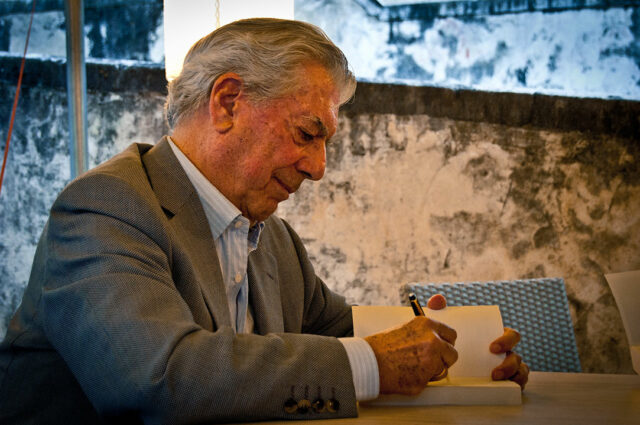
Peru’s Mario Vargas Llosa, Nobel prize-winning novelist, 89

MARIO VARGAS LLOSA — FLICKR/DADEVOTI

LIMA — Peruvian writer Mario Vargas Llosa, who enchanted readers with his intellectual rigor and lyrical prose for five decades and nearly became president of his country, died on Sunday aged 89.

He died in the country’s capital Lima surrounded by his family and “at peace,” his son Alvaro Vargas Llosa, a well-known political commentator, said on X.

A leading light in the 20th-century Latin American literature boom, Mr. Vargas Llosa won the Nobel Prize for literature in 2010 for works like Aunt Julia and the Scriptwriter, Death in the Andes, and The War of the End of the World.

But early on he abandoned the socialist ideas that were embraced by many of his peers, and his dabbling in politics and conservative views annoyed much of Latin America’s leftist intellectual class.

In 1990, he ran for president of Peru, saying he wanted to save his country from economic chaos and a Marxist insurgency.

He lost in the run-off to Alberto Fujimori, a then-unknown agronomist and university professor who defeated the insurgents but was later jailed for human rights crimes and corruption.

Frustrated by his loss, the writer moved to Spain but remained influential in Latin America, harshly criticizing a new wave of strident leftist leaders led by then-Venezuelan President Hugo Chavez.

In his dozens of novels, plays and essays, Mr. Vargas Llosa told stories from various viewpoints and experimented with form — moving back and forth in time and switching narrators.

His work crossed genres and established him as a foundational figure in a generation of writers that led a resurgence in Latin American literature in the 1960s.

His books often examined the unnerving relationships between leaders and their subjects. The Feast of the Goat (2000) details the brutal regime of Dominican Republic dictator Rafael Trujillo, while The War of the End of the World (1981) tells the true story of a fanatical preacher whose flock dies in a deadly war with Brazil’s army in the 1890s.

“His intellectual genius and vast body of work will remain an everlasting legacy for future generations,” Peru’s President Dina Boluarte said in a post in X, calling him the “most illustrious Peruvian of all time.”

NOVELS FED BY EXPERIENCE
Born to middle-class parents in Arequipa, Peru, on March 28, 1936, Mr. Vargas Llosa frequently drew from personal experience and his family, at times inserting characters based on his own life into his tales.

His acclaimed debut novel, The Time of the Hero (1963), was loosely based on his teenage life as a cadet at a military academy in Lima, while his 1993 memoir, A Fish in the Water, focused on his 1990 presidential run.

Other works expressed deep concern for his country. The Storyteller (1987) deals with the clash of Indigenous and European cultures in Peru, while Death in the Andes (1993) recounts the haunting years of the Shining Path guerrilla movement.

“An author’s work is fed by his own experience and, over the years, becomes richer,” Mr. Vargas Llosa told Reuters in an interview in Madrid in 2001.

As his range of experiences grew, Mr. Vargas Llosa continuously experimented. The Bad Girl (2006) was his first try at a love story and was widely praised as one of his best.

DENOUNCED CASTRO, CHAVEZ
In the 1970s, Mr. Vargas Llosa, a one-time supporter of the Cuban revolution, denounced Fidel Castro, maddening many of his leftist literary colleagues like Colombian writer and fellow Nobel laureate Gabriel Garcia Marquez.

In 1976, the two had a famous argument, throwing punches outside a theater in Mexico City. A friend of Garcia Marquez said Mr. Vargas Llosa was upset that the Colombian had consoled his wife during an estrangement, but Mr. Vargas Llosa refused to discuss it.

Mr. Vargas Llosa became a staunch supporter of free markets mixed with libertarian ideals. Despite being outspoken on political issues, Mr. Vargas Llosa said he was a reluctant politician when he ran for president of Peru.

“In reality, I never had a political career,” Mr. Vargas Llosa once said. “I took part in politics under very special circumstances… and I always said that whether I won or lost the elections, I was going back to my literary, intellectual job, not politics.”

His personal life was worthy of a novel itself — and indeed, Aunt Julia and the Scriptwriter (1977) was loosely based on the story of his first marriage at the age of 19 to Julia Urquidi, 10 years his senior and the former wife of his mother’s brother.

His second wife was his first cousin Patricia — but he left her in 2015 after 50 years for the charms of Isabel Preysler, the mother of singer Enrique Iglesias. That relationship ended in 2022. He had three children, including Alvaro, with Patricia. — Reuters

DHC eyes completion of Discovery Coron’s Nature Villas by end-2025

DISCOVERY CORON — DISCOVERYHOTELS-RESORTS.COM

DISCOVERY Hospitality Corp. (DHC), the property management firm of listed hotel and resort developer Discovery World Corp., said it is looking to complete the construction of its 12 Nature Villas at Discovery Coron by the end of 2025.

“Two single-detached villas are already open. The completion of the whole Nature Villas will be at Q4 (fourth quarter) of 2025,” Lynette Ermac, senior vice-president and head of sales and operations at DHC, said in an e-mailed reply to questions.

The Nature Villas, positioned as Discovery Coron’s most premium product, is expected to have an average daily rate of P23,000 and will offer a nature-immersed accommodation experience.

The hospitality firm is also renovating two hotel-room floors at Discovery Suites Manila in Pasig City.

“Discovery Suites is going through a room refresh project that aims to achieve the warm and homey yet modern vibe for an elevated guest experience. Currently, the hotel is working on a per-floor basis with around 15 rooms, and the target of completion is about six months per floor,” the company said.

The room renovations will integrate Filipino-themed and sustainability features to appeal to the new generation of travelers, she added. Once completed, accommodation rates in the new rooms will range from P7,000 to P8,000 per night.

According to Ms. Ermac, demand for Discovery Suites Manila’s newly renovated rooms will be driven by corporate and domestic travelers seeking a convenient stay with homey and personalized service.

DHC also remains bullish about the overall occupancy of its hotels and resorts, Ms. Ermac said, citing the growing demand for more digital interaction, wellness-oriented stays, and sustainable travel.

“Our approach calls for more use of technology to balance operational efficiency with meaningful human connection, targeted campaigns, and greater digital and experiential marketing initiatives.”

Discovery Hospitality manages brands such as Discovery Resorts, Primea, Discovery Suites, Kip&Kin, and Signature Collection.

The company is also expected to open a new Kip&Kin property in Siargao by 2027. — Beatriz Marie D. Cruz

Declining inflation and dealing with trade diversion

FREEPIK

Over the last two weeks, the Philippine Statistics Authority (PSA) released the country’s inflation rate for March 2025 and unemployment rate for February 2025. There is good news in the former, as last month inflation was only 1.8% so the average inflation rate in the first quarter (Q1) 2024 of 3.3% went down to 2.3% in Q1 2025. This is similar to the Q1 2025 results of South Korea, whose inflation rate was 2.1%, Taiwan’s 2.2%, and Germany’s 2.3%; and it was lower than Vietnam’s 3.2% and the US’ 2.7%.

Meanwhile, our January-February 2025 average unemployment rate was 4%, lower than China’s 5.3%, Italy’s 6%, Germany’s 6.2%, and Canada’s 6.6%, but higher than the average unemployment rate of Japan, Taiwan, Malaysia, Korea, and Hong Kong (see the table).

In a Viber message, Budget Secretary Amenah F. Pangandaman expressed optimism that “Government spending has helped stabilize the country’s unemployment rate at 3-4% and inflation rate at 2-3% because important sectors like hard infrastructures are prioritized, these projects further improve our people’s productivity, work efficiency, and overall income.”

REDUCE THE BUDGET DEFICIT, SMUGGLING
We still need to reduce that high annual budget deficit of P1.5 trillion a year. There is a need for further increases in revenues and control in overall spending. Smuggling and illicit trade are among the big holes in revenue generation — they need to be plugged and minimized.

Last week, on April 7, President Ferdinand R. Marcos, Jr. and Department of Finance (DoF) Secretary Ralph G. Recto led the public condemnation of P3.26 billion worth of vape products that had been seized and forfeited by the Bureau of Customs (BoC) and warned the public against smuggling.

In a press statement, Mr. Recto commended the BoC “on its stronger and stricter crackdown on smugglers. Our fight against smuggling goes beyond just border protection. It is a defense of our economic integrity. By shutting down illicit trade, we protect our people’s access to affordable goods and boost our revenue collections that allow the government to provide more public services to Filipinos.”

This was a good move by the BoC and DoF. But I think that aside from the enforcement of existing anti-smuggling laws, there is a need to change existing tax laws that make the prices of legal products near prohibitive and the prices of illegal or smuggled products more attractive. The price differential between legal and illegal products becomes wider each year as the tax rates keep rising.

That is why in Senate and House Committee hearings on illicit trade last January and February (I was invited to the House and Senate Committee hearings and attended three times each), I argued that there is a need to cut the tax rate of tobacco products as a fiscal measure, as a means to raise tobacco tax revenues, and reduce the high incidence of smuggling.

TRADE DIVERSION AND POSSIBILITY OF DUMPING
The longer there is uncertainty over the tariff rates imposed by the US and other major exporting countries, the more trade diversion will happen. By this I mean that as China’s exports to the US slowly decline, more cargo ships filled with Chinese goods will be diverted to other countries, especially in the ASEAN, with the goods offered at discounts.

This week, April 14-18, China’s President Xi Jinping will visit three ASEAN countries — Vietnam, Malaysia, and Cambodia. Expanded trade should be foremost on the agenda.

If China will sell more trucks and buses, tractors and harvesters, computers and gadgets, clothes and construction materials to the ASEAN, including the Philippines, at a discount, consumers here will be happy, and our inflation rate will further stabilize to 1-3%.

But our trade deficit with China will then increase further, from $18.5 billion in 2023 and $23.4 billion in 2024, to possibly $30 billion or higher in 2025. And many domestic manufacturers will complain of “dumping” and will lobby for higher anti-dumping tariff rates for China products.

I believe that we should prioritize consumer choice and freedom and a lower inflation rate. The increase in the merchandise trade deficit can be compensated for by having a non-merchandise trade surplus, like welcoming more Chinese tourists here.


Bienvenido S. Oplas, Jr. is the president of Bienvenido S. Oplas, Jr. Research Consultancy Services, and Minimal Government Thinkers. He is an international fellow of the Tholos Foundation.

minimalgovernment@gmail.com

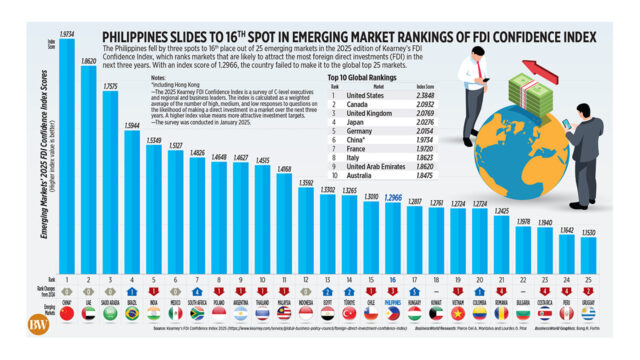
Philippines slides to 16th spot in emerging market rankings of FDI Confidence Index

The Philippines fell by three spots to 16th place out of 25 emerging markets in the 2025 edition of Kearney’s FDI Confidence Index, which ranks markets that are likely to attract the most foreign direct investments (FDI) in the next three years. With an index score of 1.2966, the country failed to make it to the global top 25 markets.

Philippines slides to 16<sup>th</sup> spot in emerging market rankings of FDI Confidence Index

Cosco Capital 2024 income climbs 25% to P15.5B

PUREGOLD

LUCIO L. CO-LED retail holding company Cosco Capital, Inc. posted a 25% increase in consolidated net income for 2024, reaching P15.5 billion from P12.4 billion a year ago, driven by its grocery and liquor businesses.

Consolidated revenue climbed by 10.5% to P237 billion, up from P214.5 billion in 2023, Cosco Capital said in a regulatory filing on Monday.

Grocery retailer Puregold Price Club, Inc. and S&R Membership Shopping Club accounted for 68% of total net income, followed by liquor distribution at 23.5%, commercial real estate at 7%, energy and minerals at 1%, and specialty retail at 0.5%.

“The group continued to benefit from the economic recovery amidst the prevailing macroeconomic challenges through sustained and stronger revenue growth across all its business segments, indicating recovering consumer demand,” Cosco Capital said.

For 2024, the grocery retail group posted a 21.3% increase in consolidated net income to P10.4 billion, with revenue climbing by 10.1% to P219.17 billion.

Puregold stores posted a 4.5% same-store sales growth (SSSG), while S&R Warehouse clubs recorded a 6.4% SSSG on higher traffic and basket size.

The liquor distribution segment, led by The Keepers Holdings, Inc., recorded a 21.3% increase in net income to P3.54 billion. Revenue rose by 13.6% to P18.5 billion, driven by a 14% volume growth in cases sold during the year, led by the Alfonso imported brandy.

The Keepers distributes various liquor brands such as Johnnie Walker, Chivas Regal, Glenfiddich, Suntory, Jinro, Jose Cuervo, Jim Beam, and Penfolds.

The commercial real estate segment saw a 20.6% net profit growth to P1.13 billion. Rental revenue increased by 5.2% to P2.05 billion, driven by improved business operations of its tenants’ portfolio, boosted by increased economic activity and the full resumption of rental rates based on contracts.

The energy and minerals segment generated P177 million in net income and P492 million in revenue for the year.

Meanwhile, the specialty retailing business, led by Office Warehouse, Inc., recorded a 16.8% drop in net income to P65 million, as revenue fell by 3.4% to P2.08 billion.

On Monday, Cosco Capital shares rose by 5.65%, or 30 centavos, to P5.61 each, while The Keepers stocks gained by 2.41%, or six centavos, to P2.55 per share. — Revin Mikhael D. Ochave

BSP launches mobile app featuring real-time data, news

BSP.GOV.PH

THE BANGKO Sentral ng Pilipinas (BSP) on Monday launched a mobile app that will feature real-time financial data and news to improve the public’s access to information and services from the regulator.

“The BSP mobile app was developed with a vision of bringing a seamless and convenient means for our stakeholders to access BSP information and services anytime, anywhere through their mobile phones,” BSP Technology and Digital Innovation Officer Reynaldo Florencio T. Zipagan said in a speech at the launch.

“This new platform aims to enhance your experience and encourage greater interaction with the BSP. Once downloaded, the app can be accessed anytime even offline and offers personalization to match your specific needs and interests. In launching this app, we are also aligning ourselves with global best practices set by leading central banks worldwide, such as the Federal Reserve Bank of New York, the Deutsche Bundesbank, and Bank Negara Malaysia,” BSP Managing Director Charina B. De Vera-Yap said.

Users will be able to access real-time financial data, policy decisions, and economic indicators on the app, the BSP said.

The mobile app will also keep users updated on BSP news, advisories, and announcements, and features the central bank’s chatbot called BSP Online Buddy or BOB. Users can also find information on BSP offices or branches through the app’s service locator.

The app can also be personalized so that users can have quicker access to the information or services they need.

“You can filter the currencies that matter most to you and view their exchange rates at a glance. Be updated with the latest statistical reports anytime, anywhere, through the mobile app,” the BSP said. — Aaron Michael C. Sy