Home Blog Page 162

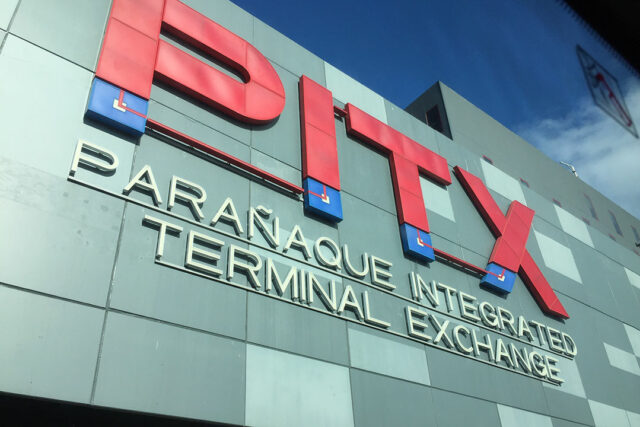
PITX launches P2P to Clark International Airport

BW FILE PHOTO

THE Parañaque Integrated Terminal Exchange (PITX) has added a point-to-point (P2P) bus service to Clark International Airport to enhance connectivity from Metro Manila.

“This is important because it gives a connection to Southern Metro Manila which is a big population. This connection opens that area to try (Clark),” LIPAD Chief Executive Officer Noel F. Manankil told reporters on Monday.

Starting on Tuesday, Genesis Transportation Service, Inc. will operate the new service with its deluxe buses, said Genesis Transport, Inc. President Riza A. Moises, noting that initially it will deploy 10 buses which it plans to increase based on the demand.

“By linking PITX directly to Clark International Airport, we are making it easier for travelers to access one of the country’s major aviation gateways while enjoying the convenience of a reliable point-to-point land transfer,” said MWM Terminals, Inc. Mohit Malhi.

The Clark International Airport-PITX service is being offered at P520 for the JoyBus Executive Coach or the premium transport service of Genesis, while regular deluxe is at P480.

For this year, PITX said it expects to accommodate up to 60 million passengers in 2026 as it manages capacity and sustains traffic across existing routes.

PITX is the country’s first land port and is operated by Megawide’s MWM Terminals, Inc. under a 35-year build-transfer-operate contract. — Ashley Erika O. Jose

SC junks petition vs Manila’s garbage collection fee

BW FILE PHOTO

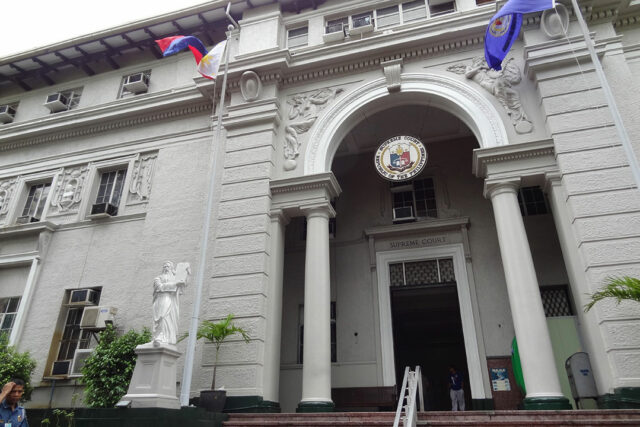
THE Supreme Court (SC) has dismissed a petition challenging the legality of Manila City Ordinance No. 9151, which implements a revised schedule for city-wide garbage collection fees.

The Court ruled that John Barry T. Tayam, a resident of Las Piñas, failed to establish legal standing as he is not among the persons covered by the ordinance who would suffer direct injury.

“Undoubtedly, the Court is not a trier of facts,” the en banc said in its 5-page resolution. “Hence, the Court must dismiss petitions directly filed before it when they involve factual issues that must be resolved first for the case’s proper disposition.”

The tribunal added that the petitioner violated the doctrine of hierarchy of courts by failing to seek relief from the appropriate regional trial court before escalating the matter to the high court.

The dismissal effectively denies the prayer for a temporary restraining order, upholding the city’s right to regulate waste management fees for Manila-based businesses and residential units. — Chloe Mari A. Hufana

Bill liberalizing biofuel imports finds Senate plenary support

REUTERS

THE HEAD of the Senate Committee on Ways and Means declared her support for a bill seeking to liberalize biofuel imports, following a Presidential certification of the measure as urgent.

Speaking to the chamber in plenary session, Sen. Juliana Pilar S. Cayetano called for the approval of Senate Bill No. 1965.

“Circumstances today compel us to revisit how these mandates operate during periods of extraordinary volatility in global fuel markets. While the use of local biofuels provides environmental and agricultural benefits, it is not always the cheaper alternative,” she told the chamber.

She added that the measure does not seek to remove the biofuel blend requirement. “Biofuels must still be blended with conventional fuels as required under the law.”

“What the measure provides is flexibility in the sourcing of these biofuels, allowing supply to be supplemented through imports in extraordinary circumstances

President Ferdinand R. Marcos, Jr. on Monday had certified the bill as urgent on Monday, citing the need to mitigate the impact of surging oil prices after the outbreak of fighting in the Persian Gulf.

In separate letters to Senate President Vicente C. Sotto III and Speaker Faustino G. Dy III, Mr. Marcos certified the “necessity of the immediate enactment” of Senate Bill No. 1965 and House Bill No. 8469, which are proposed amendments to Section 5 of Republic Act No. 9367 or the Biofuels Act of 2006.  

The measure would grant the President authority to allow imports of bioethanol and biodiesel once the price of blended gasoline or diesel is 5% higher than that of the non-blended equivalent, for a period not exceeding one year. 

The President may authorize imports upon the recommendation of the Department of Energy and the National Biofuels Board, regardless of the supply of domestically produced biofuel components.  

The President said that this would “mitigate the impact of rising fuel prices amid escalating geopolitical tensions and volatility in the global market,” following the threatened disruption of petroleum supply from the Persian Gulf.

Mr. Marcos added that this would also strengthen resilience against future disruptions.  

Ms. Cayetano said previously that thechamber is likely to tackle the measure before session adjourns  this week.

“I don’t want to fast track, I want to be sure that there is a thorough discussion. I’m ready to sponsor it. If they have changes, they can just make amendments,” she told reporters earlier in the day before the start of a Senate caucus.  

Ms. Cayetano added that the domestic bioethanol producers may be affected by the liberalization of import rules.

“There are two major industries here, coconut and sugar. And they are affected in different ways because there are two different industries,” she said.

The Senate’s version also states that proceeds from tariff collections from imported biofuel will go towards social amelioration programs for farmers and workers in the biofuels industry.

The program will be overseen by the Department of Social Welfare and Development, in consultation with the Department of Agriculture and other government agencies, according to the bills.

The US and Israel launched coordinated military strikes on Iran starting Feb. 28, targeting Tehran’s military assets and leadership.

Entering its third week, the escalating Iran war has severely disrupted global petroleum flows, as Iran threatened to attack vessels seeking to transit the Strait of Hormuz. — Adrian H. Halili 

Agriculture department evaluating proposal to cap price of imported rice

REUTERS

THE Department of Agriculture (DA) said it is studying a price cap of P50 per kilo on imported rice, possibly by April, to help keep the staple grain affordable for consumers in the face of the oil shock and rising food costs.

“So as not to affect the farmgate price of palay (unmilled rice), P50 per kilo would be an appropriate price cap,” Mr. Laurel told reporters on Monday.

Mr. Laurel said he is consulting the DA’s legal section and other departments regarding the price ceiling, noting that the measure must not result in unintended consequences for farmgate prices earned by domestic farmers.

He said if the price cap passes legal vetting, the DA will recommend the proposal to President Ferdinand R. Marcos, Jr. as part of a package of actions to deal with the impact of the oil price shock.

The DA said the recent increase in rice prices has partly been driven by higher freight costs following the outbreak of fighting in the Middle East.

“Freight costs increased. For instance, freight cost for rice shipments from Vietnam rose to about $40 per metric ton, from $20 per metric ton previously,” Mr. Laurel said.

Despite the increase, the DA expects the ongoing harvest to help stabilize prices in the coming weeks.

“Luckily, peak harvest starts now and lasts until the end of April. We expect a lot of (volume), so that should temper prices and possibly bring them down,” Mr. Laurel said.

The DA added that it has begun selling rice through state-run firms Food Terminal, Inc. (FTI) and Planters Products, Inc. (PPI) in Metro Manila and Cebu, with plans to expand distribution to other cities.

Mr. Laurel earlier told BusinessWorld that the FTI’s recently launched rice brand “Binhi” is being sold in 36 markets across Metro Manila at P48 per kilo.

He added that PPI has also started selling rice at P45 per kilo in Cebu markets, including those in Danao and Mandaue.

Mr. Laurel said the initiative aims to stabilize rice prices by offering competitively priced alternatives.

“We are creating competition so that the price of imported rice becomes more reasonable. This should help consumers,” he said.

However, Mr. Laurel warned that the government may intervene directly if prices remain elevated due to possible profiteering.

He said the DA is monitoring market prices after receiving reports that well-milled rice is being sold at P60 to P65 per kilo, which he said exceeds what the department considers reasonable.

“If importers do not behave and prices remain high, as we observed in Cebu, we can import rice ourselves and sell it,” he said. — Vonn Andrei E. Villamiel

Agriculture investment target set at P1 billion

PHILSTAR FILE PHOTO

THE Department of Agriculture (DA) said it hopes to attract P1 billion worth of investment in agriculture projects from the Hand-in-Hand (HIH) National Investment Forum next month.

“We hope to generate at least a billion pesos in investment,” Agriculture Secretary Francisco P. Tiu Laurel, Jr. told reporters at the forum’s launch  on Monday.

The HIH initiative is a global platform launched by the United Nations Food and Agriculture Organization (FAO) to help governments, particularly in developing countries, partner with the private sector to mobilize financing for agri-food investment projects.

Mr. Laurel said Philippine participation in the FAO global HIH investment forums in 2024 and 2025 showed that Philippine agriculture can attract the attention of global funders.

“The HIH forums we attended in the past two years have opened us up to more than 80 markets that need (Philippine) commodities. We also receive marketing and technical support,” he said.

The DA said bringing the forum to Manila aims to translate international interest into concrete investment and help “bridge the gap between global capital and local stakeholders.”

Mr. Laurel said the DA will pitch investment opportunities in priority commodities like cacao, mango, seaweed, and coffee.

“The focus of this investment forum is actually to showcase these sectors. We wish to help these industries as soon as possible,” Mr. Laurel said.

He added that the government hopes the event can encourage investors to recognize the strong potential of Philippine agricultural products worldwide.

Meanwhile, the Asian Development Bank (ADB) said it is supporting the Philippines’ first HIH investment forum in three priority areas: climate and disaster resilience; agri-food value chains and logistics systems modernization; and nutrition-sensitive and inclusive approaches.

“This partnership marks a milestone in our collective effort to transform the Philippine agri-food system and to accelerate its  transition to a more resilient, competitive, and nutrition-responsive future,” Andrew Jeffries, ADB country director for the Philippines, said. — Vonn Andrei E. Villamiel

NCR tricycle drivers set to receive P5,000 in crisis aid

PHILIPPINE STAR/RYAN BALDEMOR

ABOUT 139,000 tricycle drivers in Metro Manila will receive P5,000 in cash assistance designed to support individuals in crisis, officials said.

The departments of Transportation (DoTr) and Social Welfare and Development said in a joint news conference that the tricycle drivers were among those most directly affected by the surge in fuel prices arising from the outbreak of fighting in the Persian Gulf.

They said the payouts will be distributed with assistance from local government units (LGUs).

Transportation Acting Secretary Giovanni Z. Lopez said the DoTr has a separate subsidy program amounting to P2.5 billion, which will fund contract services to offer commuters free rides, as well as fuel vouchers for the bus, taxi and jeepney industries.

Mr. Lopez said the DoTr and the Land Transportation Franchising and Regulatory Board (LTFRB) are compiling a list of other possible beneficiaries like delivery riders.

“By the fourth week of this month, we are going to start drawing from the fuel subsidy budget,” Mr. Lopez said.

On Sunday, the LTFRB announced the approval of fare adjustments of up to P1 for provincial public utility buses effective March 14.

After the fare adjustments, the provisional increase for provincial air-conditioned, deluxe, and super deluxe buses was set at 35 centavos per kilometer.

For provincial luxury buses, the approved provisional increase is 45 centavos per kilometer.

Ordinary provincial buses were authorized to charge an additional P1 in the base fare and an extra 30 centavos per succeeding kilometer.

Transport groups like Pinagkaisang Samahan ng mga Tsuper at Operators Nationwide and Manibela are seeking P5 and P2 provisional fare increase, respectively.

LTFRB Chairman Vigor D. Mendoza said that the regulator is set to announce the approved provisional fare increase for public utility vehicles on Tuesday.

Mr. Mendoza said that aside from jeepney operators, taxis and transport network vehicle service firms have also sought LTFRB approval to hike flagdown rates.

“We will process their request, but they have requested an increase,” Mr. Mendoza said on the sidelines of the briefing. — Ashley Erika O. Jose

Iran crisis highlights urgency of ASEAN food, energy supply agreements — PCCI

ASEAN.ORG

THE GOVERNMENT must seal food and energy-security agreements with its Association of Southeast Asian Nations (ASEAN) neighbors to mitigate the impact of the Iran crisis, the Philippine Chamber of Commerce and Industry (PCCI) said.

“What is immediate, as we chair the ASEAN, is look at our energy, water, food security now,” PCCI President Ferdinand A. Ferrer said on the Money Talks with Cathy Yang program on One News on Monday.

“Hopefully, there is agreement when it comes to food security and sharing of these resources.”

He said that the Philippines, a net importer of oil, should also explore an energy security agreement with its neighbors.

He noted that large enterprises are studying how long they can withstand surges in the cost of raw materials and logistics.

“Large companies (are) looking at how long can they withstand the upcoming increase in logistics costs… and in raw materials, which will, probably in the next week or week and a half, increase,” Mr. Ferrer said.

The PCCI is also looking to support micro, small and medium enterprises (MSMEs), which are more vulnerable to price shocks.

“Our biggest concern now are the MSMEs which will  immediately bear the brunt. They have limited financial resources. So, we’re coaching and mentoring the MSMEs on how to save,” Mr. Ferrer said.

As an import-dependent country, Filipino consumers will also have to absorb looming price hikes, he said.

“Whether it’s from rice or from other goods that are being shipped to the Philippines, eventually, all these price increases will trickle down to the consumers,” he noted.

The possibility of the peso hitting P60 against the dollar will blunt the impact somewhat on exporters, though logistics costs will inevitably have an impact, Mr. Ferrer said.

The peso weakened by 13.50 centavos to close at P59.87 against the dollar Monday.

To offset high logistics and fuel costs, Mr. Ferrer cited the need to improve trade facilitation.

“When you have trucks lining up because of port congestion or empty containers, it costs these transportation companies waiting in line,” he said.

“An efficient trade facilitation system will help mitigate the cost of fuel and logistics,” he added.

Separately, the Philippine Amalgamated Supermarkets Association (PAGASA) said consumers have not yet resorted to panic-buying.

“I asked members and it seems like nobody went panic buying. It was their usual payday weekend shopping,” PAGASA President Steven Cua said in a separate interview on the same program.

He noted that a major manufacturer had been planning to increase prices even before the war in the Iran started.

“Aside from that, nobody else has mentioned that they were going to increase prices so far,” he said.

Mr. Cua advised consumers not to go overboard with their purchases.

“Our advice is that you just buy — if you want to be safe — 15% maybe on top of what you really need,” he said. — Beatriz Marie D. Cruz

PIDS backs three separate regulatory bodies for water

DEPARTMENT OF AGRICULTURE HANDOUT

THE Philippine Institute for Development Studies (PIDS) said the proposed creation of three separate bodies to regulate water will help address weak enforcement powers and regulatory overlaps.

The government think tank said the bills filed before the Congress should be consolidated into a substitute bill that will recognize three distinct major functions in the institutional arrangements for water.

In particular, it backed the creation of the Department of Water Resources (DWR) for water resource planning and policy, the Water Resources Allocation Office for water rights allocation and adjudication, and the Water Regulatory Commission for economic regulation of water utilities.

“This separation reflects international best practice, where policymaking, resource allocation, and economic regulation are handled by separate institutions,” the PIDS said in a commentary last week.

“It addresses long-standing criticisms on the water sector, where government bodies have limited capacities, fragmented authority, weak enforcement powers, and regulatory overlaps,” it added.

The PIDS also backed socialized credit for local water service providers rather than a water trust fund.

“Setting up of a new trust fund will require the creation of new entities as fund managers and implementors and push untested accountability structures,” it added.

The think tank also flagged the declaration of policy in most bills where water was identified as a “public good.”

“This is incorrect because public good means non-rival and non-excludable. The more correct declaration is water as a common-pool resource, which is non-excludable but rivalrous in consumption,” it said.

“Clarifying this leads to the appreciation of understanding that water resources can face … overexploitation, pollution, and destruction if use is not regulated,” it added.

The think tank also stressed the need to amend the water code, noting that improvements in the enforcement of water rights will be insufficient in solving major problems.

“Most of the (bills) propose institutional mechanisms, such as auditing of the water permits and stricter monitoring, that could make reforms possible and could help in addressing the inadequacies of the Water Code, but the code as a foundation law will still have to be amended later on,” it said.

Further, the PIDS pointed out that the powers that could be vested in the Water Resources Allocation Board will still be limited by the Presidential Decree (PD) No. 1067, or the 1976 Water Code.

“This power has limitations because PD 1067 still governs the legal basis of water permits, and the legal doctrine of long-term appropriation remains,” it said.

“This means that it will be difficult to address overallocations within river basins, impose water caps based on environmental flows, and ensure intergenerational national water security,” it added.

It said global best practice involves the issuance of time-bound water permits in the first instance, whose renewal is subject to rules compliance.

“In essence, the future DWR can be the driver of the needed Water Code amendments as its capacity and expertise are built, and thus, the legislators must anticipate the need for the future amendments as they empower the DWR and draft a substitute bill,” it added. — Justine Irish D. Tabile

P3.6M worth of illegal vape products seized

PHILIPPINE STAR/MIGUEL DE GUZMAN

THE Department of Trade and Industry (DTI) and the Bureau of Internal Revenue (BIR) seized P3.6 million worth of illegal vape products in a joint operation on March 12.

In a social media post on Monday, the DTI said the operation targeted retailers and distribution hubs in Metro Manila and Region IV-A or Calabarzon.

“During the inspections, authorities documented violations, including the absence of mandatory graphic and text health warnings on packaging and the lack of required internal revenue fiscal markings or tax stamps,” the DTI said.

Some products also had flavor descriptions, such as fruit or candy flavors, possibly to target minors.

Several items also failed to comply with Philippine National Standards (PNS) on product safety, quality, and consistency, the DTI said.

Republic Act No. 11900 or the Vaporized Nicotine and Non-Nicotine Products Regulation Act sanctions businesses that do not follow packaging and health warning requirements with fines of up to P2 million as well as imprisonment of up to two years for a first offense; and a fine of P4 million and four years’ imprisonment for a second offense.

A third offense warrants a fine of up to P5 million and six years’ imprisonment, plus the revocation of their license.

Violations involving product communication, online trade, and product standards merit fines of P100,000 for a first offense; P200,000 for a second; and P400,000 or imprisonment of up to three years for a third. — Beatriz Marie D. Cruz

Revisiting VAT on digital services: When digital convenience meets tax complexity

For many taxpayers, the end of the first quarter of 2026 marks the filing of several tax returns, notably the filing of the Value-Added Tax (VAT) on Digital Services (VDS). Starting June 2, 2025, Republic Act (RA) No. 12023 took full effect. The law imposes a 12% VAT on “digital services.” Frankly, this imposition startled, and to some degree, upset business owners and consumers who rely heavily on digital platforms and media.

Early this year, reports emerged that certain members of the House of Representatives initiated House Bill No. 7844, which aims to repeal the VAT on digital services. The House bill explained that the signing of the law  raised the cost of essential services, such as Netflix and Shopee. They also explained that the imposition burdened digital media consumers, which is seen as regressive and burdensome.

In a world where daily life has become increasingly digitized, and in a country continuously being plagued by corruption scandals, the move to abolish an additional tax burden is seen as a light of hope for ordinary citizens.  However, the debate surrounding VAT on digital services warrants close examination, not only of its impact but also of its purpose and implementation.

To properly inform the taxpayers of this imposition, the Bureau of Internal Revenue (BIR) issued implementing rules and regulations to clarify how VAT on digital services would be applied. Yet, RA No. 12023 and its subsequent implementing rules raised additional questions and practical concerns and issues among taxpayers.

RA NO. 12023 AND ITS ORIGINS
RA No. 12023 expanded the Philippine Value-Added Tax system by imposing a 12% VAT on digital services consumed in the Philippines. Significantly, it requires not only resident but also nonresident digital service providers to register, collect, and remit VAT. The law further introduced rules on invoicing, withholding, compliance, and enforcement, effectively placing digital transactions on similar footing with traditional goods and services.

Under the law, “digital service” refers to any service supplied over the internet or other electronic network with the use of information technology and where the supply of the service is “essentially automated.” The law provides examples, such as online marketplaces, cloud platforms, streaming services, and other automated digital tools.

The accelerated growth of digital activity during the COVID-19 pandemic underscored the rationale for the law. With movement restricted, consumers and businesses alike shifted rapidly to digital platforms, embracing video conferencing, online games, streaming platforms, online marketplaces and e-commerce as daily necessities rather than conveniences.

The growth of the so-called “digital economy,” coupled with government need to generate income in a changing environment, pushed several countries to impose taxes on digital services. In Southeast Asia, Singapore, Malaysia, Thailand, Indonesia, and Vietnam have imposed taxes on digital services, with the Philippines following suit.

CHALLENGES IN IMPLEMENTING VAT ON DIGITAL SERVICES
Despite its policy rationale, the implementation of RA 12023 presents notable challenges. One recurring issue is the statutory use of the phrase “essentially automated,” which the law did not clearly define. While Revenue Regulations No. 003-2025 enumerated what constitutes digital services, the same regulation contained the phrase “includes, but are not limited to,” which means that the list of examples is not an exclusive list, leaving room for uncertainty. This lack of precision creates compliance concerns, particularly for digital service providers and consumers.

In a country where there are students who use online platforms for easy access to learning materials to a country where an ordinary citizen finds solace and amusement in consuming television series online, the sudden imposition of an additional tax could be burdensome as prices of certain services have significantly increased. Clearly, this burden is frowned upon by the ordinary consumer.

Thankfully, the BIR issued Revenue Memorandum Circular (RMC) No. 047‑2025, which clarified the registration, filing, and compliance requirements for non-resident digital service providers (NRDSPs), including mandatory registration through the VDS Portal or ORUS, even for purely B2B transactions. The circular also identified specific VAT-exempt transactions, including but not limited to services of educational institutions and IPA-registered enterprises for attributable services.

Overall, the RMC guides both NRDSPs and Philippine consumers on compliance requirements for the VAT on digital services. However, this RMC still leaves out grey areas that need to be addressed by the BIR, or the government in general.

To cite an example, a law student preparing for the bar examinations enrolled in a review center, which conducts most of its lectures online. The review center would then conduct its lecture live via a video conferencing platform. Given that the current laws on VDS do not clearly define what “essentially automated” means, the BIR could impose VAT on videoconferencing, as it could be within the “view” of what is “essentially automated.” This, among others, is an example of how broad the law is and how it imposes an additional burden on ordinary citizens.

Beyond definitional issues, compliance has also proven challenging. The requirement for NRDSPs to register and file returns through the BIR’s VDS portal introduced technical and operational difficulties. Multi-factor authentication, system downtime, and portal congestion have, at times, undermined the convenience expected of a digital system. To cite an example, every login made at the portal requires multi-factor authentication, with a One-Time Pin (OTP) sent via the taxpayer’s e-mail address needing to be entered. Likewise, BIR’s system suffers technical errors every time a number of taxpayers log in simultaneously.

An additional burden for non-resident digital service provider (NRDSP) corporations that have not registered with the BIR involves business-to-business (B2B) transactions. These NRDSPs find themselves suddenly required to register with the BIR to file nil returns. While they generally do not have to pay anything, this sudden move created a surprise obligation.

ANOTHER PERSPECTIVE
VAT on digital services, or taxes in general, are imposed by a government exercising its inherent powers. The government cannot function properly without any income, which is why it imposes taxes on individuals, corporations, and entities to generate income. This is what we call the “lifeblood theory,” where taxes keep a country alive.

While the digital economy is booming, governments see taxes on digital services as another way of generating revenue. In fact, digital services are taxed not only in the Philippines but also in several other countries. As early as 2019, France enacted a digital services tax. After the pandemic, the global population saw a dramatic increase in online use, which gave governments cover to tax digital services. Our Southeast Asian neighbors have followed suit: Singapore included digital services in its goods and services tax; Malaysia imposes a service tax on digital services; Indonesia imposes VAT on digital services; Thailand imposes VAT on foreign digital service providers; and Vietnam imposes VAT on cross-border digital service providers. In sum, a number of countries have imposed taxes on digital services.

Understandably, the Philippine government imposed a 12% VAT on digital services, as other jurisdictions already have. The VAT rate of 12% had been fixed as early as 2006. While there have been calls by private citizens and legislators to decrease the VAT rate, the BIR cannot act unilaterally to lower it, as this power lies with the legislative branch.

FINDING THE BALANCE
As digital services become further embedded in everyday life and while the government must continue generating revenue through taxes to sustain essential services, it must also weigh the burden these measures place on ordinary citizens. Striking a balance between fiscal responsibility and public welfare is crucial. Whether VAT on digital services ultimately promotes shared progress or is perceived merely as an added cost will depend on how thoughtfully the law and regulations are refined and implemented in the years ahead.


Marc Aaron G. Magbuhat is an associate from the Tax Advisory & Compliance Practice Area at P&A Grant Thornton.

pagrantthornton@ph.gt.com

www.grantthornton.com.ph

Philippine stocks slide as peso hits record low

REUTERS

PHILIPPINE SHARES fell for a third straight session on Monday as investors stayed cautious, with the peso sinking to a record low of P59.87 against the dollar amid surging oil prices and the Middle East war.

The Philippine Stock Exchange index (PSEi) dropped 0.86% or 52.39 points to close at 6,006.55, while the broader all-share index fell 1.19% or 40.42 points to 3,341.69.

“The PSEi ended barely above the 6,000 mark, extending last week’s sell-off amid cautious sentiment, driven by elevated oil prices and the ongoing Middle East tensions,” Luis A. Limlingan, head of sales at Regina Capital Development Corp., said via Viber.

“The market remained pessimistic even after the central bank stepped in to support the peso, keeping traders defensive and wary of further downside if key support levels give way in the near term,” he added.

Investors are closely watching local economic implications of the Middle East war, including rising fuel and energy costs and a weaker peso, which could stoke inflation, Japhet Louis O. Tantiangco, research manager at Philstocks Financial, Inc., said in a Viber message.

Bangko Sentral ng Pilipinas (BSP) Governor Eli M. Remolona, Jr. said the central bank intervened in the foreign exchange market to prevent the peso from breaching P60 a dollar.

Most sectoral indexes ended lower. Mining and oil dropped 4.58% to 17,140.16; industrials fell 2.57% to 8,656.64; property declined 1.29% to 1,998.51; holding firms slid 1.02% to 4,629.17; and financials eased 0.64% to 1,922.95. On the other hand, services gained 0.16% to 2,722.37.

Losers beat winners, 153 to 53, with 53 stocks unchanged. International Container Terminal Services, Inc. led gainers with a 1.46% rise, followed by DMCI Holdings, Inc. at 0.41%. DigiPlus Interactive Corp. was the worst performer, plunging 5.66% to P18.

Value turnover fell to P9.53 billion, with 3.29 billion shares traded, down from P13.91 billion and 887.43 million shares last Friday.

Net foreign selling eased to P400.15 million from P3.66 billion in the previous session, suggesting some cautious inflows amid the broader market decline.

The combination of record peso depreciation and higher global energy costs continues to weigh on investor sentiment, leaving market participants defensive and selective in their trades. — Alexandria Grace C. Magno

Alex Eala rises to No. 29, ranking hangs in balance at Miami tourney

ALEX EALA — MIAMIOPEN.COM

ALEXANDRA “ALEX” EALA leapt to a new career-best ranking ahead of her grand return to the Miami Open, where she’s also listed among the Top 32 seeds in the main draw.

From No. 32 last week, the 20-year-old Filipina pride improved three rungs to No. 29 in the Women’s Tennis Association (WTA) rankings following a Last 16 finish in the elite Indian Wells Open in California, considered as the “Fifth Grand Slam.”

Ms. Eala, the crowd darling of world tennis today, gained 120 additional points to jack up her harvest to 1,525 points but her stay inside the Top 30 for the first time ever in her budding career now hangs in the balance in Miami.

A total of 390 points from that collection came from the Miami Open, where she had a magical final four finish from being a wildcard entry in the qualifiers.

But those points will expire when the Miami Open officially rolls off on Wednesday, prompting Ms. Eala to replicate her semifinal campaign or lose said ranking points for a projected drastic drop in the world rankings.

An early exit for Ms. Eala, especially at a time when she’s already lurking outside the Top 20-25, would drag her all the way back to 1135 points or around the Top 50-60 mark, where she started this season.

Ms. Eala, however, is up for the tall order as the No. 32 seed with a first-round bye according to the official draw released by Miami on Monday.

With one round already off her checklist, Ms. Eala will face either No. 53 Laura Siegemund of Germany or No. 76 Petra Marcinko of Croatia in Round 2.

It gets tougher from there as no less than world No. 3 Iga Swiatek of Poland possibly awaits in Round 3. Ms. Swiatek, with a first-round bye as well, will battle either her compatriot Magda Linette (No. 50) or Varvara Gracheva of France (No. 60) in Round 2.

Ms. Swiatek was among the three Top 25 players and former Grand Slam champions slain by Ms. Eala in Miami last year to become the first Filipina WTA semifinalist and Top 100 player before climbing the ranks this season to Top 50, Top 40 and now Top 30.

“Miami last year was a beautiful time for me and it was the start of all of this. Since then, I’ve achieved a lot and I’ve grown a lot as well. I had so many good matches, tough losses and so much experience since then and that has helped me build confidence, self-esteem,” she said after a solid campaign in the BNP Paribas Open, a 1000-level tour like Miami.

“And I know that I belong here.” — John Bryan Ulanday

ADVERTISEMENT
ADVERTISEMENT