



Home Blog Page 1505

Tamaraw untamed

PHOTO FROM TOYOTA MOTOR PHILIPPINES

The iconic workhorse might just get its own race series

IT’S AN EXTREMELY hot day that greets us at the Villar City. The mercury is up, along with the sun, and the occasional gust of wind serves to simultaneously bless and curse us with coolness and clouds of dust. Depending on who you ask, this might be just be perfect setting for a cinematic showdown of the Toyota Gazoo Racing Philippine Cup.

But aside from the actual race, the event is a chance for Toyota Motor Philippines (TMP) to flex its portfolio, affiliated brands, and partners — not to mention offer great acquisition deals to the public — on top of a smorgasbord of entertainment, food, and lifestyle items.

And, as in the last few stagings stretching back to the previous season, TMP makes the next-generation Tamaraw a part of the festivities. It’s no secret, of course, that the come-backing, iconic workhorse figures prominently in Toyota’s business here. Leadership has also consistently made mention of how sales of the Tamaraw will also, ultimately, benefit the local economy, as it is locally assembled at TMP’s Santa Rosa, Laguna facility.

In between races, other Toyota and Lexus vehicles have their turns at the circuit — a 2.4-kilometer-long makeshift with 14 turns — including two hairpins and six chicanes. But there is also a side show that arguably takes the lion’s share of the limelight: A drag race of two flatbed Tamaraws. It is more of a show-off than a showdown, to be honest; a glimpse into what may be.

Based off the Tamaraw Dropside LWB Diesel manual transmission, the so-called Tamaraw Racing Concept is almost indistinguishable from the showroom variety, but its pedestrian looks can be deceiving. The “developmental project” with third-party conversion partner Autoplus Sports Center is aimed at “exploring the motorsports usage of the Tamaraw,” according to Luis Gono of Autoplus. “Of course, it’s known to be an everyday, commercial vehicle to get your stuff from point A to point B. But it also comes with a very powerful 2.4-liter turbodiesel engine. It’s also rear-wheel drive, and this variant is a manual.”

He continues in an interview with “Velocity” on the sidelines of the event, “It’s a very interesting recipe, and for this weekend, we have a very simple setup. We want to do the upgrades slowly.” The Tamaraw Racing Concept, reports Mr. Gono, gets an intake, and intercooler, and HKS exhaust. In addition, vehicle’s ECU has been remapped.

The result is a bump in output: From a stock power of 125whp to 130whp (147hp to 153hp), the Tamaraw Racing Concept now puts out 180whp (211hp). The torque is also significantly raised by “almost double” at 460Nm.

Says Mr. Gono with a smile, “It’s a very fun car to drive, like it’s a totally different experience because you don’t have any weight in the rear. When you drive it on the circuit, it tends to get a little light and loose in the rear. We want to continue developing — adding upgrades to the engine, suspension, maybe to the bodywork so we can have wider tires front and rear, slightly better brakes. Hopefully, we will drop a lot of jaws with what the car can do.”

Joins TMP Assistant Vice-President Andy Ty, “This will be a step-by-step process, but we’re very happy with our collaboration with Autoplus thus far. We will see how we can develop the Tamaraw further and what is its maximum potential and then we will research and adjust from there. Hopefully, for Race Weekend 3, we can show the next steps.”

So, are we going to see the Tamaraw getting its own one-make race? “Potentially,” Mr. Ty enthuses. “That’s what we’re studying. Of course, the Vios has been an integral part of our Vios Cup/TGR Philippine Cup, but we want to see where the Tamaraw can place in terms of this.”

He concludes by saying that if the Tamaraw’s performance can set a standard like the Vios experience, then great. “We want to come close to that as much as we can.”
Meralco to explore partnerships with South Korean power firms

MERALCO.COM.PH

MANILA ELECTRIC CO. (Meralco) will send a delegation to South Korea next month to further explore partnerships in power distribution and generation, a company official said.

“We will talk to the Korean players, not only on the distribution side of the business, but even in generation, including nuclear,” Meralco Executive Vice-President and Chief Operating Officer Ronnie L. Aperocho told reporters last week.

Mr. Aperocho said Meralco will engage in a nuclear study tour and distribution modernization discussions with Korea Electric Power Corp. (KEPCO), South Korea’s largest electric utility company responsible for power generation, transmission, and distribution.

During the visit, the local distributor will also tour energy storage manufacturing facilities.

The visit builds on Meralco’s earlier memorandum of understanding with KEPCO to foster technical cooperation and exchange programs in new energy technologies, including nuclear energy, renewable energy, and smart grids.

However, Emmanuel V. Rubio, president and chief executive officer of Meralco PowerGen Corp., said policies and programs on nuclear energy should be established first to advance their initiatives.

“I really would like the government to first develop policies and programs, because regardless of how much we talk about nuclear, unless the government establishes the framework, the rules, the guidelines, and the timetable, they have to be part of that discussion,” he said.

Under the Philippine nuclear energy roadmap, the government targets 1,200 megawatts (MW) of nuclear capacity by 2032, scaling up to 2,400 MW by 2040 and 4,800 MW by 2050.

The nuclear legal and regulatory framework is expected to be in place by 2025.

Meralco’s controlling stakeholder, Beacon Electric Asset Holdings, Inc., is partly owned by PLDT Inc.

Hastings Holdings, Inc., a unit of PLDT Beneficial Trust Fund subsidiary MediaQuest Holdings, Inc., has an interest in BusinessWorld through the Philippine Star Group, which it controls. — Sheldeen Joy Talavera

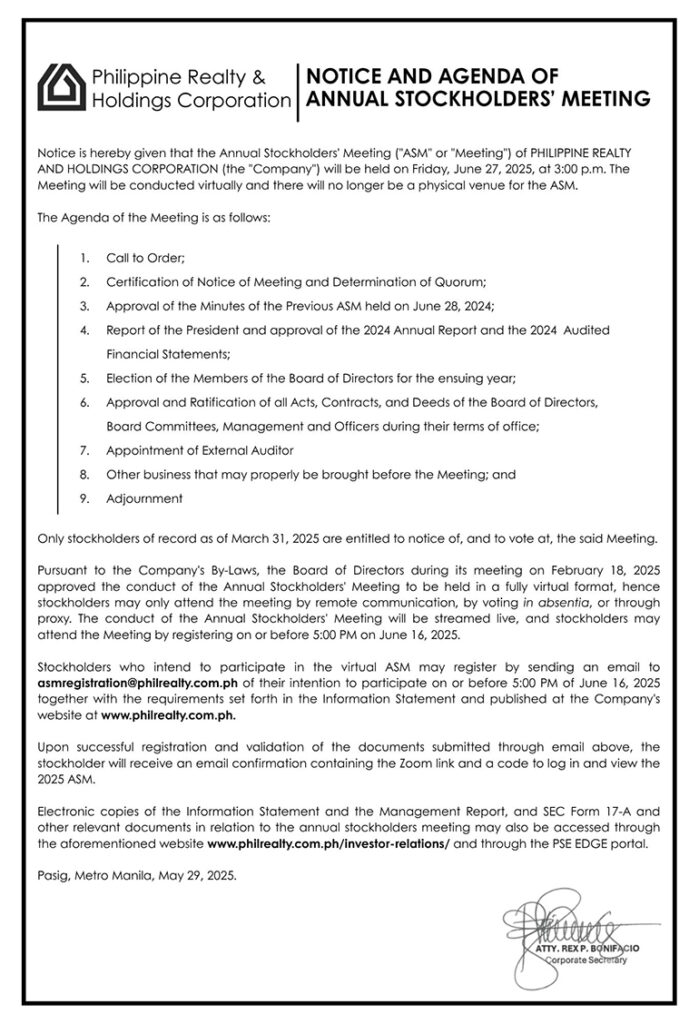
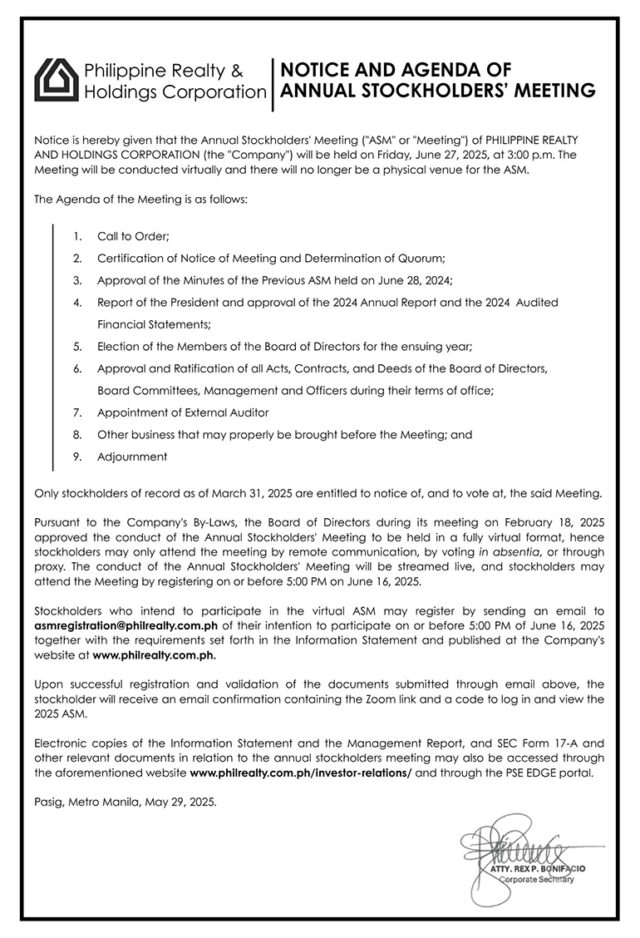
Philippine Realty and Holdings Corp. announces virtual Annual Stockholders’ Meeting on June 27


Spotlight is BusinessWorld’s sponsored section that allows advertisers to amplify their brand and connect with BusinessWorld’s audience by publishing their stories on the BusinessWorld Web site. For more information, send an email to online@bworldonline.com.

Join us on Viber at https://bit.ly/3hv6bLA to get more updates and subscribe to BusinessWorld’s titles and get exclusive content through www.bworld-x.com.

Banks’ profit growth may slow as margins get weighed by rates

REUTERS

By Aaron Michael C. Sy, Reporter

BANKS’ net income growth could slow for the rest of the year as the Philippine central bank’s policy easing cycle put pressure on their margins, according to analysts.

“We should start seeing volume-driven growth this year and we expect earnings to remain strong albeit on a slower growth trajectory as lending rates start to decline,” Alfred Benjamin R. Garcia, research head at AP Securities, Inc., said in a Viber message last week.

In the first quarter, the banking industry’s combined earnings jumped 10.6% year on year to P101.9 billion as interest and noninterest incomes rose, according to data from the Bangko Sentral ng Pilipinas (BSP).

“Bank earnings were largely in line with expectations, with Metropolitan Bank & Trust Co. (Metrobank) and China Banking Corp. slightly exceeding our forecasts,” Mr. Garcia said. “Union Bank of the Philippines, Inc. and Security Bank Corp., on the other hand, missed expectations due to rising costs.”

He said banks’ net interest margins and return on equity (ROE) started narrowing in the first quarter, though bad loans remained stable despite the push to lend more to consumers.

The industry’s bad loan ratio was steady at 3.38% in February from the previous month and lower than 3.44% a year earlier.

“The second quarter may see slower income growth as rate cuts squeeze margins,” Luis A. Limlingan, head of sales at Regina Capital Development Corp., said in a Viber message.

Bangko Sentral ng Pilipinas (BSP) Governor Eli M. Remolona, Jr. has said the Monetary Board could deliver two more 25-bp cuts this year amid easing inflation, with the next potential cut as early as June 19.

After June, the Monetary Board’s remaining meetings are scheduled for August, October and December.

The central bank last month resumed its easing cycle, cutting its policy rate by 25 bps to 5.5% after pausing in February. The BSP has cut borrowing costs by 100 bps since it started its easing cycle in August last year.

Mr. Limlingan said banks’ shift to consumer lending could raise both revenue and credit risk.

“BDO Unibank, Inc., Bank of the Philippine Islands (BPI) and Metrobank led in earnings, while Security Bank and East West Banking Corp. saw the fastest profit growth on margin gains and lower provisions,” he pointed out.

John Paolo R. Rivera, a senior research fellow at the Philippine Institute for Development Studies, said lenders’ operating expenses could also increase for the rest of the year due to continued investments in digital transformation, cybersecurity and compliance.

“While asset quality has improved, banks must remain vigilant against potential upticks in nonperforming loans, especially if economic recovery slows,” he said in a Viber message.

He also said banks’ rising consumer loans have net positive, contributing to higher interest income and reducing reliance on corporate lending.

“However, this expansion also brings challenges, such as heightened competition, the need for robust risk management systems and increased regulatory scrutiny,” he added.

Style (06/02/25)


Rustan’s has end-of-season sale

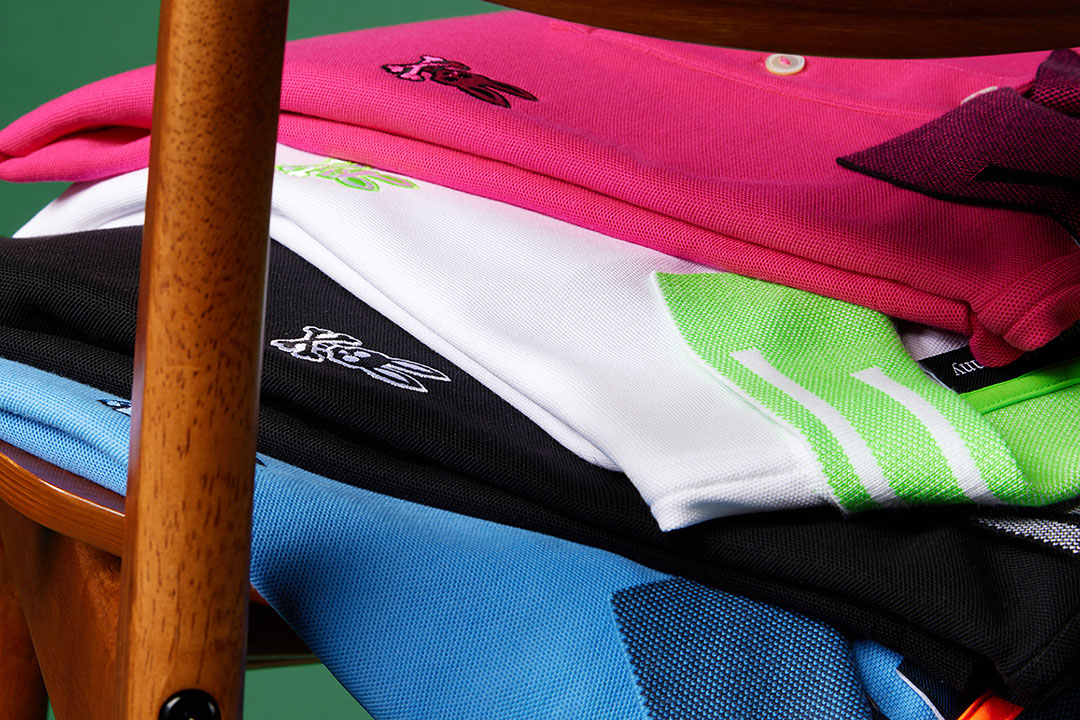
THE Rustan’s End-of-Season Sale makes a stylish return from May 30 until June 15, happening in all stores nationwide and online at www.rustans.com, with up to 50% off on premium brands. Items on sale include selections from Criselda, Naturalizer, Natori, and Swarovski for women’s apparel; and Benjamin Barker, Magnanni, and Psycho Bunny for men. For skincare, check out price reductions from Murad, L’Occitane, Perricone MD, Anastasia Beverly Hills, and Malin+Goetz. Kids can join the fun too with toys from Melissa & Doug and Aguard on sale. For more information, visit @rustansph on Facebook and Instagram or visit https://rustans.com/.


Zaxy’s new collection hits stores

ZAXY unveils a fun and colorful collection of footwear that makes a statement. Leading the lineup is the Zaxy Chain Tam, with a comfortable platform sole and chain detail. Meanwhile, the Zaxy Trend Tam delivers with wide straps, chunky platform sole, and puffer-inspired upper. Check out the Zaxy Bright, a slide with an ergonomic sole, slim interlaced straps, and a subtle gleam. The new collection also introduces new styles for ballerina flats that are crafted with a softer silhouette and delicate embellishments. The Zaxy New Start Rise II and Zaxy Pop Spring Fem feature floral centerpieces with scalloped petals, while the Zaxy Pop Delicate I offers a bow detail. These flats transition from morning errands to office hours and evening meetups. For kids, Zaxy introduces two new additions: Zaxy Joaninha Sand Baby with soft pastel tones and a lightweight, supportive design, and the Zaxy Sweet Baby with a glossy finish. In the Philippines, Zaxy stores are located at Ayala Malls Manila Bay, Ayala Malls TriNoma, SM Dasmariñas, SM Santa Rosa, and Ayala Malls Central Bloc. Zaxy is also available at The Playground Stores in Shangri-La Plaza and Robinsons Magnolia, as well as major SM and Landmark department stores nationwide. Shop online at www.zaxy.ph, or via Lazada, Shopee, Zalora, and TikTok Shop. Follow @zaxyph on Instagram and Facebook for more information and updates.


Pride-themed pimple patches

POSH SKIN CO. joins forces with Filipino non-governmental organization LoveYourself, Inc. for Pride Month. The skincare brand is launching limited-edition, Pride-inspired pimple patch designs. These pimple patches come with a skin treatment that helps get rid of acne — while also showing support for the LGBTQIA+ community. In honor of this partnership, a portion of the proceeds from the pimple patches will go to Safe Spaces PH, LoveYourself, Inc.’s initiative for HIV (human immunodeficiency virus) prevention and care. “Our mission has always been to empower people to feel confident in their own skin, regardless of gender, identity, or background. Working with LoveYourself aligns perfectly with that vision,” said Posh Skin Co. partner Charmaine Palermo in a statement. “We want to create safe spaces where everyone feels seen, supported, and celebrated, and remind everyone that true beauty shines when you embrace your truth and live authentically.” The limited-edition Pride pimple patches will be available until stocks last on Shopee, Lazada, TikTok Shop, the official Posh Skin Co. website, and in select Watsons stores nationwide.

Doctor Who regenerates as Ncuti Gatwa leaves and Billie Piper returns

Ncuti Gatwa has said goodbye to Doctor Who.

MANCHESTER, England — Ncuti Gatwa, the first Black actor to play the lead role in British sci-fi show Doctor Who, departed the series on Saturday in a season finale that saw familiar face Billie Piper reappear in his place.

The Doctor, who travels through time in what appears to be a blue police telephone box, has the ability to regenerate, allowing a number of actors to play the role since the series was first broadcast in 1963.

In a surprise twist, Mr. Gatwa regenerated into the form of Billie Piper — who played one of the Doctor’s companions in 2005 and 2006.

“I’ve loved every minute of it, but now is the time to hand over the keys to that beloved blue box and let someone else take control and enjoy it every bit as much as I have,” said Mr. Gatwa, 32, who was announced as the 14th Doctor three years ago.

Ms. Piper, 42, won plaudits for her portrayal of Rose Tyler, an instrumental character in the show’s successful 2005 revival after a 16-year hiatus.

“To be given the opportunity to step back on that TARDIS one more time was just something I couldn’t refuse,” Ms. Piper said, referring to the Doctor’s police box.

Showrunner Russell T. Davies said the “why and who” behind Ms. Piper’s return to the show had yet to be told.

“After 62 years, the Doctor’s adventures are only just beginning!” Mr. Davies said. — Reuters

Unregistered fertilizer, pesticide valued at P4M seized by FPA

REUTERS

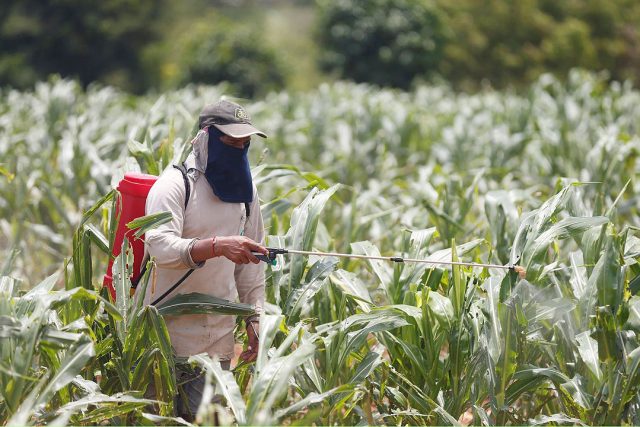
THE Fertilizer and Pesticide Authority (FPA) and the Philippine National Police’s Criminal Investigation and Detection Group have confiscated thousands of unregistered pesticide and fertilizer products valued at P4 million.

“We are serious in our campaign against the proliferation of these adulterated and unregistered products that hurt not only legitimate businesses but also our farmers and overall farm productivity,” FPA Executive Director Glenn DC. Estrada said in a statement over the weekend.

“We will remain vigilant to ensure only legitimate products are sold to our farmers,” he added.

The enforcement operation stemmed from a formal complaint against WLEX Co. for allegedly distributing illegal agricultural inputs.

“The products were recovered from a commercial establishment being used for unauthorized storage and distribution,” the Department of Agriculture (DA) said.

Among the items seized were bottles of Axonic pesticide, Sapphire pesticide, and Chlonil pesticide; sacks of Welzeb; and multiple variants of the biostimulant Nutrinaro SC.

The authorities also confiscated packs of Norinano and containers of unidentified chemical substances.

“The brands Axonic, Sapphire, Chlonil, and Welzeb are not registered with the agency and are considered illegal,” the FPA said.

“WLEX is also not licensed to handle pesticide products. Although the company once held a valid certification as a fertilizer importer and distributor, its license was only effective until Dec.7, 2024,” it added.

According to the FPA, only one product of WLEX remains registered: Norinano Plus Soil Conditioner.

The investigators found that the products “had been repackaged locally and falsely advertised as imported, in an apparent effort to mislead buyers.”

“All confiscated items have been turned over to the DA for safekeeping and legal documentation. Investigations are ongoing, and appropriate charges will be filed under existing laws,” FPA said. — Justine Irish D. Tabile

Secretary Lotilla faces a defining moment on mining policy

FREEPIK

Among the first movements in the ongoing Cabinet revamp is the transfer of Secretary Raphael Lotilla from the Department of Energy (DoE) to the Department of Environment and Natural Resources (DENR). The mining industry was an early well-wisher, with Chamber of Mines of the Philippines chairman Michael Toledo expressing excitement to see under Mr. Lotilla’s leadership “the fruition of President Ferdinand R. Marcos, Jr.’s vision for maximizing the full potential of the Philippine minerals development industry.”

Expressing the mining industry’s preferred policy direction, Mr. Toledo calls for “an enabling environment for mining, including reduction of the mining exploration and permitting process as well as other investment-friendly initiatives.”

When addressing the mining industry’s policy bias, we hope Mr. Lotilla will tread with careful consideration, especially at this juncture of far-reaching global reordering. The world is undergoing a profound shift in economic relations, moving from multilateralism to transactional geopolitics. The trade war initiated by US President Donald Trump has brought to the forefront strategic industrial rivalries and a race to secure and control critical value chains.

The Singapore Prime Minister’s statement to parliament (April 8) in the wake of the US reciprocal tariffs captures the moment: “We have known for some time that the world is in flux. The familiar signposts are fading. But the contours of a new global system have yet to take shape. So we are in a period of transition — uncertain, unsettled, and increasingly unstable. The recent ‘Liberation Day’ tariff announcements by the US confirms this stark reality: the era of rules-based globalization and free trade is over. This marks a profound turning point. We are entering a new phase in global affairs — one that is more arbitrary, protectionist, and dangerous.”

At the center of this shift are two pivotal domains: green energy and Artificial Intelligence (AI). The first is driven by the climate emergency, as countries compete to lead in clean energy technologies. The second is propelled by rapid digital disruption that is transforming production systems, everyday life, and the architecture of national security.

President Trump, speaking to the media on May 25 about the target of his reciprocal tariffs, remarked: “We’re not looking make sneakers and T-shirts. We want to make military equipment. We want to make big things. We want to make, do the AI thing.”

Philippine minerals, particularly copper and nickel, plug directly into both value chains. They are critical inputs to batteries, semiconductors, electric vehicles, power systems, and cooling infrastructure, not to mention numerous allied industries, that overlap the two value chains.

However, the way the Philippine economy is currently structured, we remain mere consumers in these future-defining industries. In this context, minerals may arguably be our only viable point of strategic leverage. In such geo-economic competition where climate goals and technological supremacy intersect with national security, the role of the state must evolve. The neoliberal framework, which cast the state primarily as regulator, provider of public goods, redistributor, and facilitator of “enabling environments” for markets, was premised on the assumption of open global markets and the efficiency of comparative advantage. But today’s world is becoming increasingly fragmented, and the logic of comparative advantage is giving way to strategic competition. Given these developments, the state must act as an active agent in shaping industrial outcomes. They require political-economic planning and decisions that bear directly on our sovereignty, resilience, place in the world, and ultimately, our future.

Unfortunately, our current mining governance practice does not support this kind of strategic ambition. It is mainly designed around revenue collection through excise taxes, royalties, and fees, alongside compliance with environmental protection standards and regulations. This essentially reduces our mineral wealth to a one-time sale, a mere source of fiscal rent rather than a lever for structural transformation.

To overhaul this, we need a national effort to understand and act upon the value chains where our minerals matter. This requires research and analysis into green energy and AI-linked supply chains, identifying the strategic nodes where the Philippines can meaningfully participate not just as a raw minerals supplier, but as a manufacturing and innovation contributor. The Action for Economic Reforms Industrial Policy Team is prepared to contribute to this research and analysis process, and to work with key stakeholders to evolve mutual learning and strategic consensus.

But a critical starting point is a shift in mindset away from the long-dominant market-first planning ideology. Market mechanisms have their role. At the same time, a proactive, developmentalist state is necessary to enable strategic intervention for innovation and geopolitical-economic resilience in high-stakes technology competition. This requires public purpose and political will.

What a shift in mindset will make possible is industrial policy, not in the narrow sense of past interventionism, but in a more contemporary, strategic form. This will include aligning industrial capabilities with national priorities, coordinating infrastructure, finance, education, and trade to support targeted sectors in the green energy and AI domains. It must extend to direct participation in ownership and operations, where justified. Minerals will be regarded not just as export products but as assets to propel transformation. But what we need even goes beyond the traditional industrial policy model. In the current context, it must be green, digital, inclusive, and strategically situated within shifting global realities.

This ideological reorientation is constitutionally supported. Article XII, Section 2 of the 1987 Constitution provides that minerals and other natural resources are owned by the State, and may only be explored, developed, and utilized under its full control and supervision. This is not a passive clause. It compels the State to act not merely as rent collector, but as a strategic actor in directing how mineral wealth serves national development. Sadly, while the existing framework covers exploration and development, it has largely abdicated the function of utilization, handing it over to private commercial interests for export in raw form.

In addition to this mandate of ownership, the Constitution also guarantees the right of the people to a balanced and healthful ecology, and the right of people and their organizations to effective and reasonable participation and adequate consultation in decisions affecting them. These are not procedural niceties but substantive obligations. Together, they form a three-fold combination of the exercise of sovereign ownership, ecological stewardship, and democratic participation in minerals governance.

This brings us to the central responsibility now placed on the shoulders of Mr. Lotilla. As head of the department entrusted with the conservation, management, development, and proper use of the State’s mineral resources, he assumes not just a regulatory mandate but a historic opportunity to chart a new path. This responsibility does not come at an ordinary time. It comes amid the convergence of geopolitical rivalries, climate emergency, technological shifts, and contested value chains. The stakes could not be higher. What the country needs is not just stewardship of permits, but leadership in rethinking its development trajectory.

The State must move beyond its self-conception as a mere market facilitator. We need more than regulatory efficiency. Minerals are not just natural resources; they are a source of strategic leverage in this pivotal moment. We cannot afford to squander them, lest we mine our future away.


Nepomuceno Malaluan is a founding trustee of Action for Economic Reforms and a former DepEd undersecretary.

The magnificent 7

Award-winning models unveiled in ‘World of Supercars’

PGA CARS, the exclusive Philippine partner of Porsche, Audi, Lamborghini, and Bentley, held last weekend at its Bonifacio Global City showroom its “World of Supercars” showcase.

No less than seven award-winning, top-tier models across the distributor’s four brands marked their Philippine debut at the show.

Porsche displayed the new 911 Carrera GTS and 911 Turbo 50 Years. The 911 Carrera GTS — the 2025 World Performance Car of the Year — is equipped with a performance-oriented hybrid power plant consisting of electric motors inside the turbocharger and the PDK transmission, a high-output drive battery, and a new 3.6-liter boxer engine that makes 541hp and 610Nm of torque.

The 911 Turbo 50 Years, meanwhile, celebrates half a century of the iconic 911 Turbo. Limited to 1,974 units — in reference to the year the original 911 Turbo was released — this anniversary model blends historic design cues with modern performance. The car is based on the current-generation 911 Turbo S, also a World Performance Car of the Year winner. It’s powered by a 3.7-liter twin-turbo boxer engine producing 650hp and 800Nm of torque.

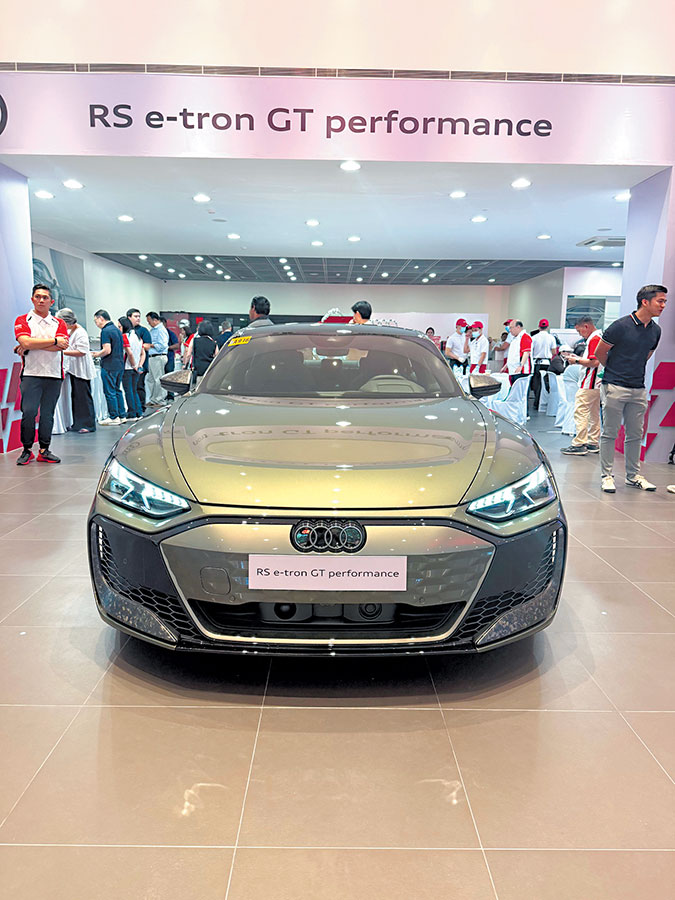
For its part, Audi showcased its latest Audi Sport-developed flagship models — the new RS e-tron GT Performance and RS Q8 Performance. Both models feature substantial upgrades to their power plant, suspension, and exterior elements.

The all-electric RS e-tron GT Performance, as the top-spec version of the e-tron GT that won World Performance Car of the Year, is the most powerful production Audi to date. Its dual electric motors produce 925hp and a staggering 1,027Nm of torque.

Holding the Nürburgring lap record for production SUVs, the RS Q8 Performance comes with a 4.0-liter twin-turbo V8 producing 640hp and 850Nm of torque. It is also fitted with plenty of RS-specific chassis components and cabin features.

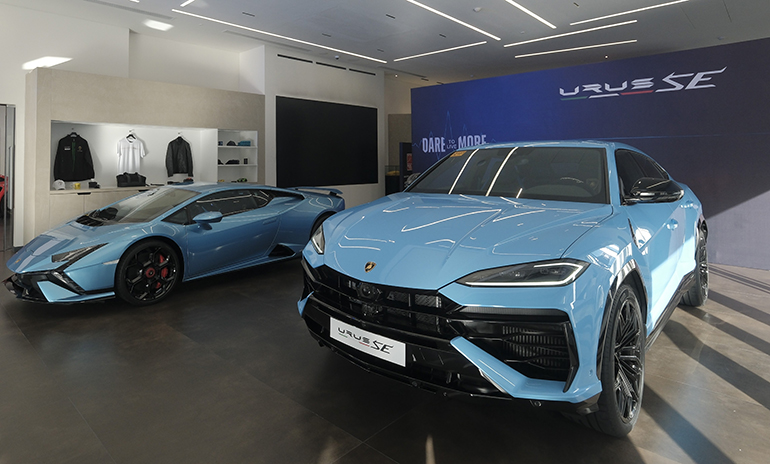
For Lamborghini, serving as its crowd-drawer is the Urus SE. The first plug-in hybrid version of the brand’s super SUV is a “Best Cars” titleholder as recognized by prestigious German publication Auto Motor und Sport. Its 4.0-liter twin-turbo V8 engine that is complemented by an electric motor generates 800hp and 950Nm of torque, making it the most powerful Urus ever.

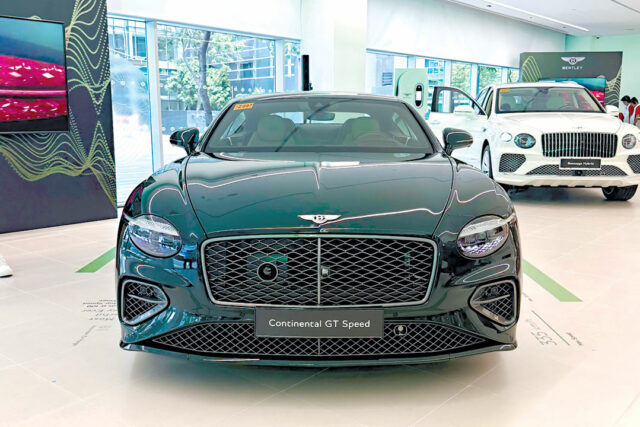
Meanwhile, Bentley completes its plug-in hybrid range in the Philippines with the debut of the fourth-generation Continental GT. It comes equipped with the Ultra Performance Hybrid system that, together with a 4.0-liter twin-turbo V8 engine, offers 782hp and 1,000Nm of torque. The new Continental GT is Auto Motor und Sport’s Best Cars for 2025.

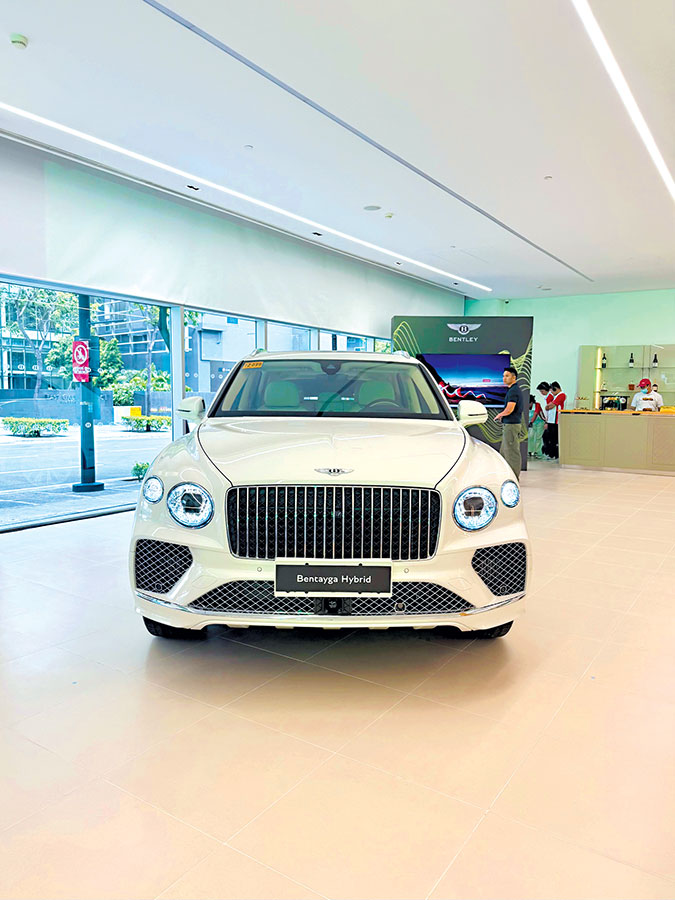
Bentley’s new Bentayga plug-in hybrid joins the new Continental GT at the show. The ultra-luxury SUV is powered by a 3.0-liter turbocharged V6 engine and an electric motor that, combined, create 462hp and 700Nm of torque. The Bentayga was named “Luxury SUV of the Year” by leading UK automotive publication 4×4 Magazine upon its launch.

With the “World of Supercars,” PGA Cars not only reaffirms its leadership in the luxury auto segment, it also curates an experience that reflects the superlative stature of Porsche, Audi, Lamborghini, and Bentley.

Arthaland Corp. to hold 2025 Annual Stockholders’ Meeting on June 27

NOTICE OF ANNUAL STOCKHOLDERS MEETING

NOTICE is hereby given that the 2025 annual stockholders meeting of ARTHALAND CORPORATION will be held on 27 June 2025, Friday, 9:00 A.M. at the Diamond Room, 8/F Arthaland Century Pacific Tower, 5th Avenue corner 30th Street, Bonifacio Global City, Taguig City 1634 and will be convened by the Presiding Officer in said address.

The Agenda for the meeting is as follows:

  1. Call to Order
  2. Secretary’s Proof of Due Notice of the Meeting and
    Determination of Quorum
  3. Approval of Minutes of Annual Stockholders Meeting held on 28 June 2024
  4. Notation of Management Report
  5. Ratification of Acts of the Board of Directors and Management
    During the Previous Year
  6. Approval of Proposed Amendment of Article SEVENTH of Articles of
    Incorporation – Decrease in Authorized Capital Stock by P10.0M
  7. Election of Directors (including Independent Directors)
  8. Appointment of External Auditor for 2025
  9. Other Matters
  10. Adjournment

Only stockholders of record on 04 June 2025 will be entitled to further notice of and to vote at this meeting. Electronic copies of the Information Statement, among other relevant documents, will be made available in www.arthaland.com and the Electronic Disclosure Generation Technology of the Philippine Stock Exchange (PSE EDGE).

WE ARE NOT SOLICITING YOUR PROXY. However, if you cannot personally attend the meeting but would still like to be represented thereat and be considered for quorum purposes, you may inform the Office of the Corporate Secretary at the address indicated below or through investor.relations@arthaland.com not later than 20 June 2025 (Friday).

You will be advised the following business day of any further action on your part, which may include submitting a proxy.

RIVA KHRISTINE V. MAALA (Sgd.)
Corporate Secretary


Spotlight is BusinessWorld’s sponsored section that allows advertisers to amplify their brand and connect with BusinessWorld’s audience by publishing their stories on the BusinessWorld Web site. For more information, send an email to online@bworldonline.com.

Join us on Viber at https://bit.ly/3hv6bLA to get more updates and subscribe to BusinessWorld’s titles and get exclusive content through www.bworld-x.com.

JFC shares fall after divesting stake in C-Joy Poultry Realty, MSCI rebalancing

BW FILE PHOTO

SHARES of Jollibee Foods Corp. (JFC) declined last week following the company’s announcement to sell its stake in the landlord of its poultry processing plant, coupled with the latest MSCI rebalancing.

A total of 6.79 million JFC shares worth P1.57 billion were traded from May 26 to 30, making it the 11th-most actively traded stock last week, according to Philippine Stock Exchange (PSE) data.

JFC shares dropped 8.2% to P223 per share last Friday from the P242.80 close on May 23. This decline outpaced the 0.5% week-on-week fall of the industrial sector and the PSE index’s 1.1% drop.

Year to date, JFC shares have lost 17.1% of their value, underperforming the industrial sector (-4.1%) and the PSE index (-2.9%).

Juan Alfonso G. Teodoro, equity research analyst at Timson Securities, Inc., identified two possible factors behind JFC’s decline.

First is the MSCI Global Small Cap Index rebalancing on May 30, which saw the addition of Aboitiz Equity Ventures and removal of Bloomberry Resorts Corp. and Wilcon Depot, Inc.

Mr. Teodoro said, “Even though [JFC] was actually the top-weighted stock in the MSCI rebalancing, it still ended lower. Normally, being top weighted in MSCI is a good thing since it can lead to buying from funds that track the index. But in this case, it looks like that wasn’t enough to outweigh the concerns.”

Another factor cited was investor sentiment reacting to JFC’s sale of its 30% stake in C-Joy Poultry Realty, Inc.

On May 26, JFC divested its 30% stake in C-Joy Poultry Realty for P33.8 million as part of its shift toward an asset-light business model.

The stake was sold to Agrotex Commodities, Inc. via a share purchase agreement and deed of assignment covering 113,250 shares priced at P299.16 each.

C-Joy Poultry Realty owns the property in Sto. Tomas, Batangas, where the poultry processing plant of C-Joy Poultry Meats Production, Inc. is located.

Mr. Teodoro explained that JFC’s asset-light business model signals a strategy to reduce ownership of physical assets such as buildings and land, focusing more on operations.

“In the short term, it gives them a bit more cash and flexibility, which they can use to invest in other areas, perhaps expand stores or other ventures with faster returns. For the long term, it shows they’re aiming to be leaner and more efficient,” he added.

JFC will retain its 30% stake in C-Joy Poultry Meats, while American food company Cargill, Inc. holds the remaining 70%.

C-Joy Poultry Meats supplies raw and marinated chicken to JFC brands including Jollibee, Chowking, and Mang Inasal.

JFC’s attributable net income for the first quarter fell 8.1% to P2.41 billion from P2.65 billion in the same period in 2024.

Mr. Teodoro forecasted JFC’s second-quarter earnings at P2.2 billion and full-year earnings at P17.8 billion.

For the week, Mr. Teodoro identified JFC’s support levels at P220-P216 and resistance at P240-P245. — J.P.G. Villanueva

Yields on BSP’s short-term debt dip; 28-day bills undersubscribed

BW FILE PHOTO

YIELDS on the Bangko Sentral ng Pilipinas’ (BSP) 28- and 56-day securities fell on Friday, even as the one-month debt was undersubscribed.

Total bids hit P156.054 billion against a P150-billion offer but below the P157.049 billion in tenders for the P110-billion offer a week earlier.

Tenders for the 28-day debt reached P66.877 billion, below the P70 billion placed on the auction block.  The central bank partially awarded P64.877-billion in one-month securities.

Accepted rates ranged from 5.535% to 5.637%, wider than 5.565% to 5.619% a week earlier. This caused the average rate of the one-month securities to drop 2.69 basis points (bps) to 5.5801%.

Meanwhile, bids for the 56-day bills hit P89.177 billion, above the P80-billion offer and P86.057 billion in tenders for the P60-billion offer a week earlier. The BSP fully awarded the two-month debt.

The BSP accepted bids with yields of 5.535% to 5.62%, also wider than 5.55% to 5.613% a week earlier. The average rate of the 56-day securities fell 0.32 bp to 5.5846% from the previous auction.

“The resulting bid-to-cover ratios stood at 0.96 times for the 28-day tenor and 1.11 times for the 56-day tenor,” the central bank said in a statement on Friday.

The BSP uses the short-term debt and its term deposit facility to mop up excess liquidity from the financial system and to better guide market rates.

The BSP securities were calibrated so they don’t overlap with tenors of the Treasury bills and term deposits also being sold weekly.

Data from the central bank showed that about 50% of its market operations are done through short-term bills.

Short-term instruments offer more stability and predictability and are considered high-quality liquid assets, giving banks more flexibility, according to the BSP.

BSP securities can also be traded in the secondary market. — Luisa Maria Jacinta C. Jocson

ADVERTISEMENT
ADVERTISEMENT