Home Blog Page 1497

Engineering brighter futures: SMPC expands local tertiary education on Semirara Island

Students from SMPC’s host communities in Semirara Island, Caluya, Antique can now pursue engineering degrees through DWSSII’s expanded tertiary program, in partnership with Adamson University.

Semirara Island, Antique The Divine Word School of Semirara Island, Inc. (DWSSII), the island’s first locally accessible college-level institution, is expanding its academic offerings with two new engineering programs for the 2025-2026 school year. Through its Tertiary Education Program (TEP), DWSSII will offer Bachelor of Science degrees in Mechanical Engineering and Mining Engineering, in partnership with Adamson University.

Established in 2003 by integrated energy company Semirara Mining and Power Corporation (SMPC), DWSSII began offering college degrees in the 2024-2025 academic year through a strategic collaboration with the Divine Word College of San Jose, welcoming 134 students in its pioneer batch.

Now entering its second year of tertiary education, DWSSII continues to expand its impact by launching programs that align with the island’s growing need for locally trained professionals, particularly in technical and industry-relevant fields.

SMPC President, Chief Operating Officer and Chief Sustainability Officer Maria Cristina C. Gotianun welcomed the development and emphasized the significance of providing better educational opportunities in the island.

“We believe that every student deserves access to quality higher education, regardless of their location or background,” Ms. Gotianun said. “Enhancing our tertiary program is a milestone not just for the island, but for the future of its youth, who now have a better chance at professional and personal advancement without having to leave their community.”

Admissions for the new engineering programs are officially open, with registration for all courses beginning June 24, 2025. Other degree offerings include:

  • BS Accountancy
  • BS Business Administration (major in financial management)
  • BS Hospitality Management
  • BS Information Technology with Multimedia Systems
  • BA Elementary Education
  • BA Secondary Education (major in science)

DWSSII’s TEP also has two alternative learning tracks: “Uniting,” designed for degree holders seeking to qualify as licensed teachers; and “Bridging,” aimed at individuals who did not complete the K-12 curriculum but wish to pursue higher education.

The expansion of DWSSII’s degree offerings underscores SMPC’s commitment to inclusive and sustainable development in its host communities through education.


Spotlight is BusinessWorld’s sponsored section that allows advertisers to amplify their brand and connect with BusinessWorld’s audience by publishing their stories on the BusinessWorld Web site. For more information, send an email to online@bworldonline.com.

Join us on Viber at https://bit.ly/3hv6bLA to get more updates and subscribe to BusinessWorld’s titles and get exclusive content through www.bworld-x.com.

Globe Awarded Most Recommended Telco Brand in PH for 2025

In photo (L–R): Renzo Reyes, of SYNERGY Market Research + Strategic Consultancy; Chief Operations Officer Yoly Crisanto, Globe Chief Sustainability and Corporate Communications Officer; Germaine Reyes, President and CEO of SYNERGY Market Research + Strategic Consultancy; and Chi Wei Teo, General Manager of YouGov Singapore.

Based on study by SYNERGY | YouGov reflecting brand trust and loyalty

Globe was awarded the Most Recommended Telco Brand for 2025 in the Philippines, a recognition grounded on the voice of Filipino consumers.

The award was given at the SYNERGY | YouGov Awards, based on data from YouGov BrandIndex, a daily tracker that measures how people feel about brands. From January to December 2024, Globe consistently earned the highest recommendation scores—showing just how strongly Filipinos believe in and stand by the brand.

Accepting the award on behalf of Globe, Chief Sustainability and Corporate Communications Officer Yoly Crisanto shared a heartfelt message: “We’re really, truly proud to receive this award—and we dedicate it to our customers. We will always and continue to pursue making our customers happy and satisfied. At the end of the day, they are our North Star.”

This recognition is more than just a title—it’s proof that Globe’s efforts to listen, improve, and deliver better service are paying off. Whether it’s helping people stay connected, supporting digital learning, or creating moments of everyday ease, Globe continues to build real relationships with the people it serves.

Globe remains focused on what matters most: earning the trust of customers, and working every day to keep it. From promoting digital inclusion by building stronger digital infrastructure in underserved communities, to simplifying self-service options on the GlobeOne app, to launching rewards and promos that match everyday lifestyles—Globe constantly looks for ways to make things easier, more meaningful, and more relevant for its customers.


Spotlight is BusinessWorld’s sponsored section that allows advertisers to amplify their brand and connect with BusinessWorld’s audience by publishing their stories on the BusinessWorld Web site. For more information, send an email to online@bworldonline.com.

Join us on Viber at https://bit.ly/3hv6bLA to get more updates and subscribe to BusinessWorld’s titles and get exclusive content through www.bworld-x.com.

Philippines eyes India, Thailand rice to cut Vietnam reliance

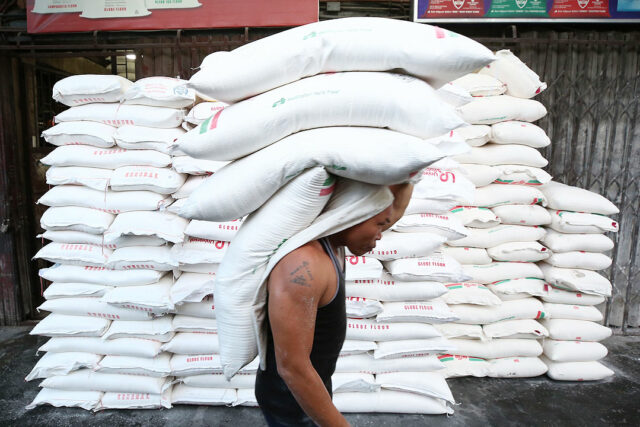
Workers load sacks of flour in a delivery truck in Manila, July 11, 2022. — PHILIPPINE STAR/ MIGUEL DE GUZMAN

THE PHILIPPINES, the world’s top rice importer, plans to look beyond its dominant supplier, Vietnam, to ensure steady supplies and competitive prices at home.

The Agriculture department is in talks with private importers on purchases from producers like India, Pakistan, Cambodia and Myanmar, Agriculture Secretary Francisco Tiu Laurel said in an interview on Friday. There may also be a “deal” with Indonesia and Thailand, he added.

“We are trying to diversify sources to keep a level playing field,” Laurel said. Vietnam is “the most reliable” supplier, but the fact that its shipments account for 90% of the Philippines’ rice imports could be a “problem” in case of supply shocks, he said. 

The price of all rice varieties sold by Vietnam rose to a three-month high in April because of an “uptick in buying interest from domestic and offshore traders,” according to data from the UN Food and Agriculture Organization. 

Affordable prices of the staple grain are central to the agenda of President Ferdinand Marcos, Jr., who also helmed the agriculture department before appointing Laurel in November 2023. His government slashed import tariffs from 35% to 15% last year and declared a food security emergency in February to tame runaway prices. That’s helped slow overall inflation to its lowest level since 2019, giving the central bank room to further cut interest rates.

Laurel expects this year’s rice imports will be lower than in 2024 and won’t exceed 4.5 million tons. His outlook compares with a forecast from the US Department of Agriculture that sees the Southeast Asian nation importing 5.4 million tons in 2025. Domestically, the country is on track to produce a record of 20.46 million tons in rough rice output this year, the secretary said.

Meanwhile, the Philippines is facing a 17% duty on its goods to the US, the lowest rate in Southeast Asia — after Singapore — under President Donald Trump’s sweeping tariff agenda. Laurel said this presents an opportunity as it could make Filipino shipments to the US, particularly seafood products like tilapia and shrimp, more competitive than those of its neighbors.

“If our competitors are slapped with higher tariffs than us, it’s fine,” he said. — Bloomberg

Gaza ministry says Israel kills more than 30 aid seekers, Israel denies

REUTERS FILE PHOTO

 – More than 30 Palestinians were killed and nearly 170 injured on Sunday in south Gaza near a food distribution site, the health ministry said, as witnesses reported Israeli soldiers fired on people trying to collect aid and Israel denied it.

The U.S.-based Gaza Humanitarian Foundation said food was handed out without incident on Sunday at the distribution point in Rafah and there were no deaths or injuries.

GHF released undated video to support its statement that showed dozens of people gathering around piles of boxes. Reuters could not independently verify the video or what took place.

Witnesses said the Israeli military opened fire as thousands of Palestinians gathered to receive food aid. Israel’s military said that an initial inquiry found soldiers had not fired on civilians while they were near or within the distribution site.

The Hamas-controlled Gaza health ministry said 31 people were killed with a single gunshot wound to the head or chest from Israeli fire as they were gathered in the Al-Alam district aid distribution area in Rafah. It said 169 were injured.

In addition to Israeli gunshots, residents and medics said an Israeli tank had opened fire at thousands of people en route to the Rafah site.

The International Committee of the Red Cross said its field hospital in Rafah received 179 casualties, most with gunshot or shrapnel wounds.

“All patients said they had been trying to reach an aid distribution site. This is the highest number of weapon-wounded in a single incident since the establishment of the field hospital over a year ago,” ICRC said.

The United Nations has said most of Gaza’s 2 million population is at risk of famine after an 11-week Israeli blockade on aid entering the strip.

The Gaza Humanitarian Foundation launched its first distribution sites last week and said it would launch more. The Israeli military has said GHF had established four sites so far.

The organization’s aid plan, which bypasses traditional aid groups, has come under fierce criticism from the United Nations and humanitarian organizations which say GHF does not follow humanitarian principles.

There were chaotic scenes as hungry Gazans rushed its sites last last week. Hamas reported deaths and injuries in the tumult, and Israel said its troops fired warning shots.

Because the GHF distribution points are few and all in south Gaza, U.N. officials have said its plans force Palestinians, especially in the north, to relocate and face unsafe conditions.

Philippe Lazzarini, head of the UN’s Palestinian relief agency, condemned Sunday’s deaths and said in a statement on X that “aid distribution has become a death trap”.

The Hamas-run Gaza government media office accused Israel of using aid as a weapon, “employed to exploit starving civilians and forcibly gather them at exposed killing zones, which are managed and monitored by the Israeli military”.

At Nasser Hospital in nearby Khan Younis city where some casualties were brought, Gaza paramedic Abu Tareq said there was “a tragic situation in this place. I advise them that nobody goes to aid delivery points.”

Israel denies that people in Gaza are starving because of its actions, saying it is facilitating aid deliveries and pointing to its endorsement of the new GHF distribution centres and its consent for other aid trucks to enter Gaza.

U.S. President Donald Trump said last month that a lot of people in Gaza were “starving“.

Israel accuses Hamas of stealing supplies intended for civilians and using them to entrench its hold on Gaza. Hamas denies looting supplies and has executed a number of suspected looters.

Reda Abu Jazar said her brother was killed as he waited to collect food near the Rafah aid distribution centre. “Let them stop these massacres, stop this genocide. They are killing us,” she said, as Palestinian men gathered for funeral prayers.

The Red Crescent reported that 14 Palestinians were injured on Sunday near a separate GHF aid site in central Gaza.


CEASEFIRE TALKS FALTER

Israel and Hamas meanwhile traded blame for the faltering of a new Arab and U.S. mediation bid to secure a temporary ceasefire and the release of Israeli hostages held in Gaza by Hamas, in exchange for Palestinians in Israeli jails.

Hamas said on Saturday it was seeking amendments to a U.S.-backed ceasefire proposal, but Trump’s envoy Steve Witkoff rejected the group’s response as “totally unacceptable”.

Egypt and Qatar said in a joint statement that they are continuing efforts to overcome disagreements and reach a ceasefire.

Hamas on Sunday welcomed those efforts and expressed its readiness to start a round of indirect negotiations immediately to reach an agreement, the group said on Sunday in a statement.

Israel began its offensive in Gaza in response to the Hamas-led attack on southern Israel on October 7, 2023, which killed 1,200 people, mostly civilians, according to Israeli tallies, and saw 251 taken as hostages into Gaza.

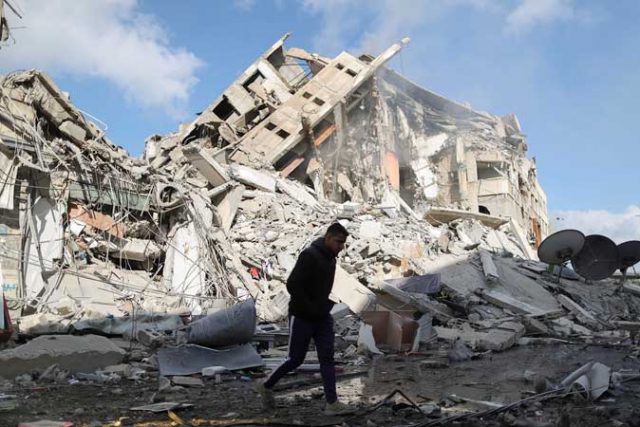
Israel’s campaign has devastated much of Gaza, killing more than 54,000 Palestinians and destroying most buildings. Much of the population now lives in shelters in makeshift camps. – Reuters

UK to expand submarine fleet as defense review calls for ‘warfighting readiness’

STOCK PHOTO | Image by 12019 from Pixabay

 – Britain will increase the size of its nuclear-powered attack submarine fleet, the government has announced ahead of a defense review expected to say the country must invest billions to be ready and equipped to fight a modern war.

Prime Minister Keir Starmer, like other leaders across Europe, is racing to rebuild his country’s defense capabilities after U.S. President Donald Trump told the continent it needed to take more responsibility for its own security.

Monday’s Strategic Defense Review will call for Britain’s armed forces to move to a state of “warfighting readiness”, spelling out changing security threats and which defense technologies are needed to counter them.

“We know that threats are increasing and we must act decisively to face down Russian aggression,” defense minister John Healey said in a statement.

Britain will build up to 12 of its next-generation attack submarines, which are nuclear-powered but carry conventional non-nuclear weapons, to replace the current fleet of seven from the late 2030s, the Ministry of Defense said in a statement.

Britain operates a separate fleet of submarines armed with nuclear weapons. The government for the first time said a pre-existing program to develop a new nuclear warhead to replace the model used by that fleet would cost 15 billion pounds.

“With new state-of-the-art submarines patrolling international waters and our own nuclear warhead program on British shores, we are making Britain secure at home and strong abroad,” Mr. Healey added.

The new submarines will be a model jointly developed by the UK, U.S. and Australia under the security partnership known as AUKUS.


REVERSE DECLINE

In light of Trump’s decision to upend decades of strategic reliance on the U.S. by Europe, Mr. Starmer has already committed to increasing Britain’s defense spending in an attempt to reverse a long-term decline in its military capability.

He has promised to raise defense spending to 2.5% of GDP by 2027 and target a 3% level over the longer term. On Sunday he warned Britain must be ready to fight and win a war against states with advanced military forces.

In the days running up to the Strategic Defencs Review, which Mr. Starmer commissioned shortly after taking office last July, the government has announced plans to spend billions on munitions plants, battlefield technology and military housing.

Juggling severely strained public finances, a slow-growing economy and declining popularity among an increasingly dissatisfied electorate, Mr. Starmer has sought to cast increased spending on defense as a way to create jobs and wealth.

“This plan will ensure Britain is secure at home and strong abroad, while delivering a defense dividend of well-paid jobs up and down the country,” he is expected to say in a speech launching Monday’s review. – Reuters

South Korea to minimize impact of 50% tariff on steel products, ministry says

PIXABAY

 – South Korea’s Industry Ministry said on Monday it will actively respond to the looming 50% U.S. tariff on steel products as part of the country’s ongoing trade discussions with Washington in order to minimize the impact on industry.

The ministry held an emergency meeting with officials from the country’s major steelmakers, including POSCO and Hyundai Steel, it said in a statement.

U.S. President Donald Trump said on Friday he planned to increase tariffs on imported steel and aluminum to 50% from 25%, ratcheting up pressure on global steel producers and deepening his trade war.

Shares of South Korean steelmakers lost ground on Monday, with Hyundai Steel falling 3% and SeAH Steel Corp down 6.3% in morning trade. – Reuters

Thailand’s stalled cash handout scheme sours voters on ruling party

A VIEW of the Victory monument is seen in Bangkok, Thailand, April 29, 2020. — REUTERS

 – Rungthiwa Pimphanit waited months for a long-promised cash handout of 10,000 baht ($307) from Thailand’s ruling party, which she backed in 2023 elections, but now the scheme to stimulate a stalling economy has been put on ice.

“I’m very disappointed and angry,” said the 34-year-old government employee from the northeastern province of Nong Bua Lam Phu, who had counted on the money to pay for her son’s school supplies.

“There’s no way I will vote for them again.”

Ms. Rungthiwa’s hopes withered last month after news that the scheme, a key election plank of the ruling Pheu Thai party, would be delayed, fueling doubt about any recovery in southeast Asia’s second largest economy after years of tepid growth.

Prime Minister Paetongtarn Shinawatra blamed steep tariffs proposed by the United States, but the delay to her government’s flagship program, on which it has already spent 174 billion baht ($5.3 billion), poses a major political risk, say analysts.

“No one will believe anything they say,” said Thanaporn Sriyakul, director of the independent Political and Policy Analysis Institute.

“The government must keep its promises to the people during the campaign. If they can’t do what they said, it’s over.”

The government still has time left in its term, said spokesperson Jirayu Houngsub, reiterating that the scheme had only been postponed. The next polls are two years away.

“By that time, if the economy is good, there may even be something more than this program,” he told Reuters.

The handout scheme is popular across Thailand, with its continuation backed by about 60% of 1,310 respondents in a May survey by the National Institute of Development Administration, while about 46% said they would be angered if it was scrapped.

“I’m upset,” said 52-year-old Sathanee Siriphonchaikul in Bangkok, who had planned to use the funds to buy a washing machine. “I don’t think they’ll do it again. The economy is bad.”

The Pheu Thai party’s failure to fully implement the scheme had damaged its credibility, said political analyst Sukhum Nuansakul.

“The digital wallet project hasn’t worked,” he added. “People hoped they would get it and they waited for it, but didn’t get it.”

The remaining 16 million people registered for handouts should be notified, said Thirachai Phuvanatnaranubala, deputy leader of the opposition Palang Pracharath Party.

“The government should tell the truth to these people that it actually won’t be able to continue the program due to budget and technical problems,” he said in a statement.


GROWTH AND DEBT

Three months after its launch, the stimulus plan had been unable to boost consumption, mainly because the handouts were sometimes used to pay down debt, central bank Governor Sethaput Suthiwartnarueput told Reuters this year.

Thailand’s household debt is among Asia’s highest, at 88.4% of gross domestic product.

On the campaign trail, the party floated the scheme as a multibillion-dollar initiative to kick-start Thailand’s pandemic-hit economy and reach annual growth of about 5%.

Yet, the $550-billion economy expanded by just 2.5% last year, lagging regional peers, and this year looks even worse.

Since launching the scheme last September, after numerous adjustments and delays, the government has distributed just over a third of the earmarked 450 billion baht ($14 billion).

The first tranche of 144.5 billion baht in September went to welfare cardholders and people with disabilities, with a second phase of 29.9 billion baht delivered to senior citizens in late January.

The 157 billion baht meant for the scheme’s next stages will now go to fund projects to help the economy cope with the impact of proposed U.S. tariffs, on advice from the central bank and a state planning agency.

“Both of them asked us to reconsider, to see if this money can be used for something more urgent and necessary than the digital money handout,” Paetongtarn said when announcing the delay.

Thailand faces a U.S. tariff of 36% if it cannot negotiate a reduction before expiry of a July deadline, until which a rate of 10% prevails.

Last month the state planner shaved its economic growth forecast for this year by one percentage point, to a range of 1.3% to 2.3%, warning that the tariff impact would last for two years.

The government’s mismanaged policies are reflected in GDP growth of just 2% in 2023 and 2.5% in 2024, said Prakit Siriwattanaket, managing director of Merchant Partners Asset Management.

“The downside of the digital wallet is that it didn’t stimulate the economy as they thought,” he said. “It’s an extremely wasteful handout.” – Reuters

Russia and Ukraine step up the war on eve of peace talks

Army soldier figurines are displayed in front of the Ukrainian and Russian flag colors background in this illustration taken, Feb. 13, 2022. — REUTERS/DADO RUVIC/ILLUSTRATION

 – On the eve of peace talks, Ukraine and Russia sharply ramped up the war with one of the biggest drone battles of their conflict, a Russian highway bridge blown up over a passenger train and an ambitious attack on nuclear-capable bombers deep in Siberia.

After days of uncertainty over whether Ukraine would even attend, President Volodymyr Zelenskiy said Defense Minister Rustem Umerov would meet Russian officials at the second round of direct peace talks in Istanbul on Monday.

The first round of the talks more than a week ago yielded the biggest prisoner exchange of the war – but no sense of any consensus on how to halt the fighting.

Amid talk of peace, though, there was much war.

At least seven people were killed and 69 injured when a highway bridge in Russia’s Bryansk region, neighboring Ukraine, was blown up over a passenger train heading to Moscow with 388 people on board. No one has claimed responsibility.

Ukraine attacked Russian nuclear-capable long-range bombers at a military base deep in Siberia on Sunday, a Ukrainian intelligence official said, the first such attack so far from the front lines more than 4,300 km (2,670 miles) away.

Ukraine’s domestic intelligence service, the SBU, acknowledged it carried out the attack, codenamed “Operation Spider’s Web,” planned for more than a year and a half.

The intelligence official said the operation involved hiding explosive-laden drones inside the roofs of wooden sheds and loading them onto trucks that were driven to the perimeter of the air bases.

A total of 41 Russian warplanes were hit, the official said. The SBU estimated the damage at $7 billion and said Russia had lost 34% of its strategic cruise missile carriers at its main airfields.

Mr. Zelenskiy expressed delight at the “absolutely brilliant outcome,” and noted 117 drones had been used in the attack.

“And an outcome produced by Ukraine independently,” he wrote. “This is our longest-range operation.”


RUSSIA SAYS AIRCRAFT FIRES PUT OUT

A Ukrainian government official told Reuters that Ukraine did not notify the United States of the attack in advance.

Russia’s Defense Ministry acknowledged on the Telegram messaging app that Ukraine had launched drone strikes against Russian military airfields across five regions on Sunday.

Air attacks were repelled in all but two regions — Murmansk in the far north and Irkutsk in Siberia – where “the launch of FPV drones from an area in close proximity to airfields resulted in several aircraft catching fire.”

The fires were extinguished without casualties. Some individuals involved in the attacks had been detained, the ministry said.

Russia launched 472 drones at Ukraine overnight, Ukraine’s air force said, the highest nightly total of the war. Russia had also launched seven missiles, the air force said.

Russia’s military reported new drone attacks into Sunday evening, listing 53 attacks intercepted in a period of less than two hours, including 34 over the border Kursk region. Debris from destroyed drones triggered residential fires.

Russia said it had advanced deeper into the Sumy region of Ukraine, and open source pro-Ukrainian maps showed Russia took 450 square km of Ukrainian land in May, its fastest monthly advance in at least six months.

U.S. President Donald Trump has demanded Russia and Ukraine make peace and he has threatened to walk away if they do not – potentially pushing responsibility for supporting Ukraine onto the shoulders of European powers – which have far less cash and much smaller stocks of weapons than the United States.

According to Trump envoy Keith Kellogg, the two sides will in Turkey present their respective documents outlining their ideas for peace terms, though it is clear that after three years of intense war, Moscow and Kyiv remain far apart.

Russia’s lead negotiator, presidential adviser Vladimir Medinsky, was quoted by TASS news agency as saying the Russian side had received a memorandum from Ukraine on a settlement.

Mr. Zelenskiy has complained for days that Russia had failed to provide a memorandum with its proposals.

Russian Foreign Minister Sergei Lavrov spoke to U.S. Secretary of State Marco Rubio on prospects for a settlement and the forthcoming talks in Turkey, Lavrov’s ministry said.

Putin ordered tens of thousands of troops to invade Ukraine in February 2022 after eight years of fighting in eastern Ukraine between Russian-backed separatists and Ukrainian troops. The United States says over 1.2 million people have been killed and injured in the war since 2022.

In June last year, Putin set out opening terms for an immediate end to the war: Ukraine must drop its NATO ambitions and withdraw its troops from the territory of four Ukrainian regions claimed and mostly controlled by Russia.

According to a copy of the Ukrainian document seen by Reuters with a proposed roadmap for a lasting peace, there will be no restrictions on Ukraine’s military strength after a deal is struck. Nor will there be international recognition of Russian sovereignty over parts of Ukraine taken by Moscow’s forces, and reparations for Ukraine.

The document also stated that the current front line will be the starting point for negotiations about territory. – Reuters

Inflation likely eased further in May

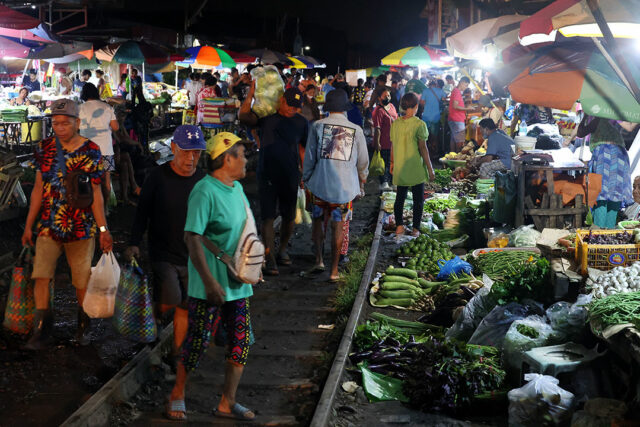
Vendors sell vegetables and other produce at a market along the Philippine National Railways (PNR) tracks in Calamba, Laguna, June 2, 2023. — PHILIPPINE STAR/MIGUEL DE GUZMAN

By Luisa Maria Jacinta C. Jocson, Senior Reporter

HEADLINE INFLATION likely slowed further in May to another over five-year low amid the continued decline in food prices and a stronger peso.

A BusinessWorld poll of 17 analysts conducted last week yielded a median estimate of 1.3% for the May consumer price index (CPI), slower than the 1.4% in April and 3.9% in the same month a year ago. This is within the Bangko Sentral ng Pilipinas’ (BSP) 0.9%-1.7% forecast for the month.   

If realized, this would be the lowest clip in more than five years or since the 1.2% in November 2019.

Analysts’ May inflation rate estimates

The Philippine Statistics Authority is scheduled to release May inflation data on Thursday (June 5).

“We expect May inflation to have eased slightly to 1.3% year on year from 1.4% in April, implying a month-on-month decline of 0.1%,” Bank of the Philippine Islands Lead Economist Emilio S. Neri, Jr. said.

“The sustained drop in rice prices, coupled with lower energy and fuel costs, remained the primary drivers of disinflation,” he said.

Emmanuel J. Lopez, professorial lecturer at the University of Santo Tomas Graduate School, said inflation likely eased to 1.3% “owing to lower prices of food and agricultural products and lower transport costs.”

“This is added to the continued appreciation of the peso against the US dollar resulting in the cheaper price of imported products,” he added.

Sun Life Investment Management and Trust Corp. economist Patrick M. Ella said slower inflation in May is likely due to “favorable food prices decelerating and stable nonfood prices similar to the past two months.”

“The sustained fall in rice prices and decline in cost of oil likely kept inflation below the BSP’s 2-4% target,” Philippine National Bank economist Alvin Joseph A. Arogo added.

In April, rice inflation further contracted to 10.9% from the 7.7% decline in March.

Latest data showed the average price of a kilo of regular milled rice nationwide declined by 13.3% year on year to P44.45 in April, while well-milled rice dropped by 10.4% to P50.54. Special rice went down by 6.2% to P60.69 per kilo.

“Food supply is expected to have improved compared to a year earlier due to better weather conditions, supporting better harvests. This should feed into stable retail price growth,” Moody’s Analytics economist Sarah Tan said.

“As for utilities, power rates were lowered in May, which will provide relief to households and businesses,” Ms. Tan added.

After three months of straight hikes, Manila Electric Co. lowered the overall rate for May by P0.7499 per kilowatt-hour (kWh) to P12.2628 per kWh from P13.0127 per kWh in April.

The strong peso and lower global oil prices have lowered energy costs, said Aris D. Dacanay, economist for ASEAN at HSBC Global Research.

The peso closed at P55.745 per dollar at end-May, strengthening by 9.5 centavos from the P55.84 finish at end-April.

On the other hand, Chinabank Research flagged price pressures from key food items such as meat, vegetables, fruits, and eggs, though said these could have been offset by the monthly decreases in prices of rice, fish, sugar, electricity and liquefied petroleum gas.

Nicholas Antonio T. Mapa, chief economist at Metropolitan Bank & Trust Co., said upward pressure from meat prices and utility costs may have nudged the headline inflation rate higher last month.

“Prices of some livestock and vegetable items increased during the period, but these were offset by low oil prices in the global markets and lower electricity generation prices,” Oikonomia Advisory & Research, Inc. economist Reinielle Matt M. Erece added.

Mr. Neri also noted the “rebound in vegetable and fruit prices amid the ongoing dry season, which significantly reduced agricultural output.”

“Additionally, the lifting of the maximum suggested retail price (MSRP) for pork contributed to an uptick in meat prices during the month,” he added.

Ruben Carlo O. Asuncion, chief economist at Union Bank of the Philippines, Inc., said headline inflation may have bottomed out in May and could pick up to 1.9% in August during the typhoon season and breach 2% for the rest of the year, adding that they expect the CPI to settle at 2.6% by yearend.

The central bank expects inflation to average 2.3% this year and 3.3% in 2026, both well within the 2-4% target range.

“Headline inflation is projected to remain subdued in the coming months, largely supported by sustained softness in key commodity prices and a high base from last year,” Mr. Neri said.

“However, favorable base effects — particularly for rice — are expected to diminish starting in September. This could gradually push the headline print close to, if not at, the 3% level by yearend,” he added.

RATE CUT LIKELY THIS MONTH
The current inflation trajectory shows that another rate cut from the BSP this month “appears increasingly plausible,” Mr. Neri said.

“With inflation running below the lower end of the BSP’s 2-4% target, we think the central bank has room to cut its policy rate at its June meeting,” Chinabank Research said.

“With inflation easing and the peso strengthening, it seems to be an opportune time for the BSP to implement another rate cut,” Ms. Tan added.

The Monetary Board in April reduced the target reverse repurchase (RRP) rate by 25 basis points (bps) to 5.5%, bringing total cuts thus far to 100 bps since it began its easing cycle in August last year.

Its next meeting is scheduled for June 19. BSP Governor Eli M. Remolona, Jr. has said they could deliver two more rate cuts this year, still in “baby steps” or increments of 25 bps.

Security Bank Corp. Vice-President and Research Division Head Angelo B. Taningco also expects a 25-bp rate cut at the Monetary Board’s meeting this month amid the benign inflation environment.

Mr. Arogo said the continued low inflation and modest gross domestic product growth in the first quarter is a “strong justification for the BSP to reduce the RRP rate further by 25 bps on June 19.”

“This move would also offer additional support for the domestic economy, which grew slower than expected in the first quarter and is facing downside risks from global policy uncertainties and higher US tariffs,” Chinabank Research said.

“[We] believe BSP has a copious amount of space to cut rates and support growth momentum during these challenging times. We expect up to three more rate cuts this year,” Mr. Mapa said.

The Philippine economy grew by a weaker-than-expected 5.4% in the first quarter.

Meanwhile, Mr. Neri said the BSP’s recent comments of shifting to a point-targeting regime from the current range also shows “a subtle but meaningful shift from an increasingly dovish tone last month to a more cautious stance.”

“This evolving guidance suggests that while the BSP remains poised to cut rates in the near term, further easing is likely to be more measured and data-dependent, particularly as upside risks to inflation may re-emerge later in the year just as base effects become unfavorable again in 2026.”

Mr. Remolona earlier said they are studying how to shift to a point target for inflation, from the current 2-4% target range. He said they are eyeing for the target to be a bit lower than the 3% midpoint of the current band.

“The central bank’s subsequent moves after a potential June cut are likely to be more measured, as external headwinds linked to uncertain global trade environment cloud the policy landscape,” Mr. Neri added.

Marcos postpones EDSA rehabilitation to find ‘better way’

PHILIPPINE STAR/WALTER BOLLOZOS

By Chloe Mari A. Hufana and Ashley Erika O. Jose, Reporters

PRESIDENT Ferdinand R. Marcos, Jr. on Sunday suspended the planned rehabilitation of Epifanio de los Santos Avenue (EDSA) that was originally set to start next week, citing the need for further studies to find a “better way” and reduce its expected impact on commuters, motorists, and broader economic activity, including potentially shortening the project’s duration.

The start of the P8.7-billion rehabilitation of Metro Manila’s busiest highway, which was set for June 13, has been deferred to July, although Mr. Marcos did not give a specific date.

The President made the announcement during his visit to the Metro Rail Transit Line-3 Kamuning Station in Quezon City, where he addressed sectors’ concerns over the project.

“Many people [complained] about the planned EDSA rehabilitation. A lot of people have come forward, expressing concern, saying things like, ‘What about our jobs?’” Mr. Marcos said in Filipino.

“When we look at the cost-benefit analysis, yes, it would be good if we could fix it, but the sacrifice required — two, three years — would be too much,” he added. “For now, it’s very clear that too many people will be burdened by the EDSA rehabilitation as it currently stands. We will find a better way — one that is not too difficult for our fellow citizens.”

He said the government is aware of the daily struggles of Filipino commuters and workers who rely on EDSA, which is used by around 400,000 vehicles daily and links key commercial and residential hubs across Metro Manila.

Apart from mobility concerns, Mr. Marcos said the government has been made aware of new technologies that were not considered in the initial planning of the EDSA rehabilitation, adding that he has already instructed the secretaries of the Transportation and Public Works and Highways departments to study these.

He also ordered relevant agencies to reassess the rehabilitation strategy and explore methods that could potentially reduce the construction timeline to as short as six months or one year from the original two-year timeline.

The Department of Transportation said in a statement that it is now working with its partner agencies to assess all available options to expedite the rehabilitation of the highway to reduce opportunity costs for motorists and commuters.

The Metropolitan Manila Development Authority said in a separate statement that it will no longer implement the odd-even scheme on EDSA following the rehabilitation project’s suspension. The existing number coding scheme will instead be in effect.

The EDSA rehabilitation forms part of the Marcos administration’s “Build Better More” infrastructure program, a key pillar of its economic strategy aimed at boosting productivity, reducing logistical bottlenecks, and supporting long-term growth.

The delay comes amid broader public apprehension over mounting traffic congestion in Metro Manila and the socioeconomic trade-offs of major infrastructure overhauls.

Rene S. Santiago, former president of the Transportation Science Society of the Philippines, said EDSA’s rehabilitation is “long overdue,” and another pause “merely kicks the can down the road.”

“There is a way to minimize the temporary pains,” he said in a Viber chat. “From available work plans, there is room for improvement, particularly on the Metropolitan Manila Development Authority side as well as the Department of Transportation.”

Meanwhile, Federation of Free Workers President Jose Sonny G. Matula welcomed the postponement of the project, calling it a sign of sensitivity from Mr. Marcos.

“Even if a project is designed by the best minds and aims to produce the best outcomes, it may still be rejected or misunderstood if the people are not consulted and do not feel a sense of ownership,” he said in a Viber chat.

The labor leader called on the government to review the EDSA facelift plan and conduct broad consultations with stakeholders, including labor groups, transport workers, and commuters, to adopt a phased, worker-friendly approach.

“The goal should be to modernize our infrastructure without sacrificing the welfare of the working public,” Mr. Matula added. “Progress should not come at the expense of the people. Let us build better roads but let us also protect the dignity and livelihood of every Filipino worker.”

IMPACT ON COMPANIES
Analysts last week said the EDSA rehabilitation project may have a short-term impact on revenues of conglomerates with businesses reliant on foot traffic like malls and entertainment, but their diversified income streams and large nationwide footprints will help soften the blow.

“Companies like SM Investments Corp. (SMIC) and Robinsons Land Corp. (RLC) which rely on mall visitors for revenue, could face a decline in foot traffic during the construction phase,” Globalinks Securities and Stocks, Inc. Head of Sales Trading Toby Allan C. Arce said in a Viber message. 

The expected traffic congestion and prolonged roadworks might deter consumers from visiting malls, Mr. Arce said, which could lead to reduced retail sales, lower cinema attendance, and a possible decline in food and beverage revenues.

“Mall and entertainment operations may experience a short-term revenue dip as consumers adjust their habits, potentially recovering post-rehabilitation if improved infrastructure leads to greater accessibility and convenience,” Mr. Arce said.

Still, the expected reduction in foot traffic would not have a major impact on mall operators’ revenue streams, according to China Bank Capital Corp. Managing Director Juan Paolo E. Colet. 

“Our preliminary assessment is that the rehabilitation work would not have a material financial impact on major mall operators with diverse and well-situated mall properties,” Mr. Colet said in a Viber message.

“Shoppers are likely to push some spending online or toward neighborhood centers, so the flagship EDSA malls like SM, Robinsons and other malls nearby should see softer weekend crowds. But I guess those malls make up only a slice of each group’s portfolio,” Seedbox Securities, Inc. equity trader Jayniel Carl S. Manuel likewise said in an e-mail.

SMIC, through its unit SM Prime Holdings, Inc. (SMPH), has 88 malls in the Philippines, with 25 located in Metro Manila.

For the first quarter, SMIC reported a 9.07% increase in its attributable net income to P20.05 billion from P18.39 billion last year.

It said that consumption will drive its long-term growth plans, led by its property, banking, and retail sectors.

Meanwhile, RLC has 55 malls nationwide, with only nine of these in Metro Manila.

The company recorded a 4% increase in its first-quarter attributable net income to P3.48 billion, while revenue was maintained at P11.03 billion.

RLC earlier said that it expects earnings to rise by 12% annually to achieve its 2030 target of delivering P25 billion in net income. As part of this goal, the company is looking to expand its investment portfolio, with plans to increase its mall gross leasable area.

The analysts said the expected increase in vehicular traffic could even present growth opportunities for companies as Filipinos adjust their spending and travel routines.

Globalinks Securities’ Mr. Arce said mobility challenges will likely accelerate online shopping, which companies with strong e-commerce platforms could benefit from.

For Seedbox Securities’ Mr. Manuel, traffic congestion could also propel the growth of property firms, which puts companies like SMPH and RLC in the position to capture the expected housing demand.

“The traffic crunch could actually lift earnings. I think many office workers are ready to pay for accommodation near Makati and Bonifacio Global City to dodge long commutes,” he said.

“EDSA-side malls give up a little near-term rent growth, but SMPH and RLC can claw much of it back through stronger residential and co-living revenues, while telcos enjoy a clear volume tailwind. For investors, the construction period looks more like a portfolio reshuffle than a real earnings cliff,” Mr. Manuel added.

Telecommunications and information and communications companies could also see a boost in revenues as mobility restrictions could lead to the return of remote work setups that could result in increased demand for connectivity, Mr. Arce likewise said.

“With consumers expected to spend more time at home and adopt work-from-home setups, there could be an uptick in demand for reliable internet and telecom services. This scenario favors telco companies,” he said.


Lending growth slows to five-month low in April

BW FILE PHOTO

BANK LENDING increased to its slowest pace in five months in April as the growth in loans to key industries eased, preliminary data from the Bangko Sentral ng Pilipinas (BSP) showed.

Outstanding loans of universal and commercial banks grew by 11.12% year on year to P13.25 trillion in April from P11.91 trillion in the same period in 2024.

This was the slowest growth in bank lending in five months or since the 11.1% posted in November 2024.

It also eased from the 11.8% year-on-year increase seen in March.

BSP data showed outstanding loans to residents rose by 11.9% year on year to P12.93 trillion in April, slower than the 12.4% growth posted in the previous month.

Meanwhile, loans to nonresidents declined by 10% year on year to P318.37 billion during the month following the 5.6% drop posted in March.

Outstanding loans to residents for production activities expanded by 10.3% to P11.26 trillion in April, slower than the 10.8% growth a month prior.

The BSP said this was due to the slower expansion in lending to real estate activities (8.9%); wholesale and retail trade, repair of motor vehicles and motorcycles (9.9%); manufacturing (0.6%); financial and insurance activities (7.5%); information and communication (7.7%); and transportation and storage (14.9%)

Meanwhile, consumer loans jumped by 24% to P1.67 trillion in April, a tad faster than the 23.9% increase recorded a month prior.

The BSP said this was driven by an increase in credit card loans, which rose by 29.3% in April, faster than 29% in March.

On the other hand, the growth in motor vehicle loans was steady at 19%, while the year-on-year increase in salary-based general purpose consumption loans eased to 9.3% from 9.9%.

Despite the slower loan growth in April, Rizal Commercial Banking Corp. Chief Economist Michael L. Ricafort said this was still better than the 7.6% average expansion since 2020 or the coronavirus disease 2019 (COVID-19) pandemic.

“Loan growth was also sustained at double-digit growth levels as more businesses recovered further, especially those hit hard by the COVID pandemic, towards or even exceeding pre-pandemic levels,” he added.

Future policy rate cuts will help support lending growth moving forward, Mr. Ricafort said.

“Possible future Federal Reserve and BSP rate cuts would also further reduce borrowing costs, which would help further increase demand for loans that, in turn, would continue to be a bright spot for the economy and would lead to faster overall GDP (gross domestic product) growth,” he added.

BSP Governor Eli M. Remolona, Jr. has signaled the possibility of two more 25-basis-point (bp) rate cuts this year, with the next reduction on the table as early as next month’s meeting on June 19.

The Monetary Board resumed its easing cycle in April, lowering benchmark interest rates by 25 bps to bring the policy rate to 5.5%.

The central bank has now cut borrowing costs by 100 bps since it began its easing cycle in August last year.

MONEY SUPPLY
Meanwhile, domestic liquidity (M3) grew by 5.8% in April, slower than the revised 6.2% in March.

M3 — which is considered the broadest measure of liquidity in an economy — increased to P18.2 trillion as of April from P17.2 trillion a year earlier.

Month on month, M3 inched up by 0.1% on a seasonally adjusted basis.

Central bank data showed that domestic claims rose by 10.9% year on year in April, faster than the revised 10.5% in March.

“Claims on the private sector grew by 11.4% in April from 11.6% (revised) in the previous month with the sustained expansion in bank lending to nonfinancial private corporations and households,” the BSP said.

“Net claims on the central government increased by 9.4% from 8.1% (revised) due to higher borrowings by the National Government,” it added.

Meanwhile, net foreign assets (NFA) in peso terms slipped by 0.2% in April versus the 2.6% expansion in March. “The BSP’s NFA increased by 0.1%. Meanwhile, the NFA of banks declined largely on account of higher foreign currency-denominated bills payable.”

“Looking ahead, the BSP will ensure that domestic liquidity and bank lending conditions remain aligned with its price and financial stability mandates,” the central bank said. — Luisa Maria Jacinta C. Jocson

BoI approves P329.52 billion in investment pledges as of May

A Philippine flag is being hoisted at the Rizal Monument in Manila. — PHILIPPINE STAR/EDD GUMBAN

THE BOARD of Investments (BoI) has approved P329.52 billion in investment pledges in the first five months of 2025 and expects to process at least P1.12 trillion worth of projects in the next two quarters.

The investment promotion agency (IPA) approved four projects from January to May, with P61.52 billion of their total value coming from foreign investors and P268 billion from domestic investors, it said in a statement.

However, the investment pledges approved in the period were 48.53% lower compared to the P640.22 billion worth of projects okayed a year ago.

This brought the BoI’s investment approvals in the last 35 months or since July 2022 to P3.71 trillion.

Despite the year-on-year decline seen in the period, BoI Chairman and Trade Secretary Ma. Cristina A. Roque said the IPA expects a rebound in investment approvals, supported by the soon-to-be-released 2025-2027 Strategic Investment Priority Plan (SIPP) and upcoming roadshows.

“With the SIPP nearing approval and the Corporate Recovery and Tax Incentives for Enterprises to Maximize Opportunities for Reinvigorating the Economy (CREATE MORE) Act campaign in full swing, we expect a rebound in investment approvals over the next quarter,” said Ms. Roque in a statement over the weekend.

“Our focus remains on converting interest into impact — bringing in high-value investments that will deepen our industrial base and future-proof our economy,” she added.

According to the BoI, the SIPP is undergoing final review and is nearing release. It is expected to unlock investment opportunities in digital infrastructure, energy transition, and climate-smart technologies. 

Meanwhile, for the upcoming legs of the CREATE MORE Roadshows, the BoI is targeting Cebu and Davao. They are also planning to attend investment fora in other strategic markets in the coming months.

For 2025, the BoI is targeting to secure P1.75 trillion in investment pledges, an 8% increase from P1.62 trillion last year.

The IPA said it expects to process projects worth at least P1.12 trillion in the second half of the year, with 65 projects worth P290 billion already undergoing checklisting and three projects worth P832 billion securing the necessary documents to qualify for registration.

“Checklisting marks the initial phase of the BoI registration process where project proponents have formally signified their intent to apply and submitted the required documents to support their application,” the agency said.

The applications are now being reviewed by the BoI to assess their eligibility for registration, it said.

“We are now entering a crucial implementation phase where many of our previously approved investments are being realized on the ground,” Ms. Roque said. “At the same time, we are working hard to sustain momentum by pushing a new wave of projects toward registration, ensuring that today’s pipeline becomes tomorrow’s operational infrastructure, jobs, and innovation.”

Of the projects being checklisted, 12 projects worth P116.81 billion are strategic investments approved to receive green lane treatment.

Established through Executive Order No. 18 in February 2023, green lanes were constituted to accelerate and simplify the permit and licensing processes for strategic investments.

As of May 27, the BoI has endorsed 208 projects worth P5.2 trillion in investment value to the One-Stop Action Center for Strategic Investments. The majority or 78% of the projects endorsed for green lane treatment are in renewable energy (RE).

The government has seen an increase in RE investments after it allowed full foreign ownership in the sector.

The BoI said the pipeline of investment pledges covers areas such as RE, information technology and business process management, manufacturing, logistics, food security-related, mass housing, and infrastructure.

“Once approved, these projects are expected to generate approximately 4,278 jobs, reinforcing the government’s commitment to high-quality, inclusive employment for Filipinos,” it said. — Justine Irish D. Tabile

ADVERTISEMENT
ADVERTISEMENT