Home Blog Page 1476

Trump team pivots to no pain, no gain as economic message

PRESIDENT Donald J. Trump during a joint session of Congress in the House Chamber of the US Capitol in Washington, DC on Tuesday. — WIN MCNAMEE/GETTY IMAGES/BLOOMBERG

PRESIDENT Donald J. Trump campaigned on a promise to cure what he said was an ailing US economy. Little more than a month into his second term, he’s starting to hint that the treatment might hurt.

The administration is still lavishing Americans with visions of a golden age to come. Yet in the course of a madcap week — which saw a flurry of tariffs and reversals, sparking a global trade war and a sharp stock-market decline — the tone changed a bit.

“There’ll be a little disturbance, but we’re OK with that,” Mr. Trump told Congress on Tuesday, defending his plans to throw up a protectionist barrier around the US with the biggest tariff increases in almost a century. By Friday, Treasury Secretary Scott Bessent was arguing that the world’s biggest economy needed some “detox” to wean it off dependence on public spending.

As Mr. Trump barrels forward with his agenda, he’s facing some cold realities that didn’t look so troublesome not long ago. Inflation won’t be easy to quell, especially as the president is determined to pile on new tariffs even as he walks back some of the early ones. Consumers and investors are getting anxious, and the economy appears vulnerable to a slowdown.

A president who once measured his performance by the stock market is now brushing aside such worries. Hours before his address to Congress, the S&P 500 index hit a post-election low as Mr. Trump’s threats of trade wars with Canada and Mexico turned into reality. It closed even lower on Friday. Treasury bonds declined on the week too, though a drop in oil prices — holding out hope for cheaper gasoline — was a brighter spot.

Mr. Trump’s message is that any short-term pain will be worth it to bring manufacturing back to the country. “I’m not even looking at the market, because long term, the United States will be very strong with what’s happening here,” he said at the White House on Thursday.

“It’s going to take an adjustment period for folks on Wall Street,” said EJ Antoni, a research fellow at the conservative Heritage Foundation. “The sky is not falling just because we implement tariffs.”

Mr.  Bessent said earlier in the week that the administration’s focus was not on Wall Street, but on main street. There, the big economic data release of the week — Friday’s jobs report — offered a mixed picture. Payrolls increased by 151,000, solid enough, but a little below estimates, while unemployment ticked up to 4.1%.

Mr. Trump, who’s empowered Elon Musk with recommending job cuts in the federal bureaucracy, pointed to higher factory employment in the February report. “The labor market’s going to be fantastic, but it’s going to have high-paying manufacturing jobs, as opposed to government jobs,” the president said.

Kevin Hassett, director of the White House’s National Economic Council, said next steps in the administration’s economic program would push the gains further. “We’ve got to pass the tax cuts and get the deregulation train rolling,” he told Bloomberg Television on Friday. “We’re going to be reducing government employment and reducing government spending, and increasing manufacturing employment.”

Still, there are plenty of signs that American industry — from small firms to giants like Ford Motor Co. — is worried about the trade war. That’s poised to escalate if trade partners retaliate, as they’re threatening to do, with their own duties that will hurt US exporters. The mounting uncertainty may not encourage hiring or investment.

Mr. Trump initially pledged tariffs on Canada, Mexico, and China in February, but then deferred the ones on the US neighbors. This week, he let the deadline pass and imposed 25% duties on Canada and Mexico, before rushing to offer exemptions, first to the auto industry and then to all trade conducted under the USMCA deal he brokered in his first term. Mr. Trump also doubled the China tariff rate to 20%.

Few industries face a bigger shift than autos, and their reprieve came after bosses from the Big Three carmakers appealed to Mr. Trump. But he only gave them a month to rearrange supply chains across North America that have been years in the making. What’s more, Mr. Trump warned further delays were unlikely, even though auto companies are about to get hammered by a wave of other measures, too.

Aides are downplaying hopes. “He really doesn’t like the word exemption,” Mr. Hassett told reporters Friday. “If I walk in and offer an exemption, then I’ll probably get kicked out of the office. We’ll see how it goes.”

Next up for the auto firms and other industries is the 25% charge on steel and aluminum that’s scheduled to begin March 12 and will rattle supply chains once again. April is when the most sweeping measures are supposed to take effect. One set is the so-called “reciprocal tariffs,” which the US will impose on all countries, at a rate deemed equivalent to their own trade barriers. The other will single out specific products, from automobiles and semiconductors to lumber and copper.

‘THE GREAT FLEECING’
Mr. Trump’s frenzied trade campaign may be distracting Americans from other policies in the pipeline that will disproportionately help the wealthy, according to Heather Boushey, who served in the Biden administration on the Council of Economic Advisers. She cited Republican efforts to renew tax cuts and reduce the workforces and spending at government agencies.

“It is pure chaos and I worry every day that the chaos is aimed to distract us from the great fleecing of America,” Ms. Boushey said. “They have a very clear plan that will require cutting support for Medicaid and other really important programs.”

Alongside spending cuts, Mr. Trump is on the hunt for new revenues to offset tax cuts, and tariffs are part of the plan. “The president believes if we can replace income tax revenue with tariff revenue, we can make everybody better off,” Mr. Hassett said.

All this sets the stage for another showdown in a month’s time that will again test appetites – among consumers, businesses and investors — for a more wide-ranging trade war.

A Harris poll taken for Bloomberg News last month found that almost 60% of US adults expect Mr. Trump’s tariffs will lead to higher prices, and that 44% believe the levies are likely to be bad for the US economy. Tariffs also have come up a record 700 times during quarterly earnings calls for S&P 500 companies, according to a Bloomberg analysis of transcripts.

One thing that could dispel some of the mounting economic angst would be lower interest rates, but Federal Reserve officials have indicated they’re not likely to move for some time. They want more confirmation that inflation is on track to come down to their 2% goal — and more time to evaluate how Mr. Trump’s policies will affect the economy.

At a New York event on Friday, Fed Chair Jerome H. Powell — who’s been careful to remain noncommittal on that topic until more hard data comes in — said the economy was basically in good shape, but acknowledged “elevated levels of uncertainty,” especially around trade.

Mr. Powell’s description of what the Fed is doing right now may resonate for many Americans, after a roller coaster week. “As we parse the incoming information,” he said, “we are focused on separating the signal from the noise.” — Bloomberg


Recession risks rising for all three North American economies over US tariff chaos

The flags of Mexico, the United States and Canada fly in Ciudad Juarez, Mexico Feb. 1, 2025. — REUTERS

RISKS to the Mexican, Canadian, and American economies are piling up amid a chaotic implementation of US tariffs that has created deep uncertainties for businesses and decision makers, according to Reuters polls of economists taken this week. 

US inflation risks, which were already rising, have worsened, leaving the Federal Reserve on the sidelines for several months at least, while for Mexico, Canada and the US, recession risks are also mounting, the surveys found.

US President Donald J. Trump’s administration has threatened 25% tariffs on imports of goods from its two neighboring trading partners and on Thursday removed them temporarily for a second time in only about six weeks of government.

This has made it nearly impossible to forecast growth, inflation and interest rates well into the future, economists say, even leaving the immediate Bank of Canada rate decision on March 12 — already likely to be nuanced — too difficult to call for some.

Seesaw tariff announcements have also unnerved Wall Street — the US benchmark S&P 500 index has given up all of its gains since Mr. Trump’s November election.

Economists at top banks and research institutions who are regular participants in Reuters surveys spoke of chaos when reached for forecasts, many expressing exasperation over Mr. Trump’s on-again-off-again approach to trade policy.

“Given this is so uncertain and that there are new announcements every hour or so, it’s kind of unclear what the environment is going to look like. It’s hard to deny the risk of a recession has intensified,” said Jonathan Millar, senior US economist at Barclays in New York. 

“People are pushing off spending and that feeds through to a drag on growth, or perhaps even declines in growth if it’s strong enough. There’s a risk both in terms of higher inflation and downside for activity.”

Until now, economists have been loath to entirely factor into their forecasts the Trump administration’s volte-face on global trade policy, and the added uncertainty over how the change is being implemented is making forecasting even more difficult.

Some are even running dual scenarios, one with tariffs and one without, but without much conviction about which is most likely.

However, nearly every economist — 70 of 74 — polled this week across Canada, the US and Mexico who answered a separate question said the risk of a recession in their respective economy had increased, suggesting the outlook had soured considerably across the continent.

The International Monetary Fund said on Thursday US tariffs, if sustained, would have a significant adverse impact on Mexico and Canada.

“Even if these tariffs are rolled back, there is real tangible impact already… It just doesn’t look like a lot of this volatility will go away anytime soon and this is obviously not healthy for sentiment,” said Claire Fan, senior economist at RBC in Toronto.

For now, economists expect the Bank of Canada to cut its overnight rate by 25 basis points on March 12.

“There are a lot of things that are currently on pause as we all are trying to figure out what’s really going to happen…, which is really why we’re more reluctant to say anything definitive right now,” said Claire Fan, senior economist at RBC in Toronto.

Citing widespread uncertainties, nearly 70% of economists have raised their 2025 inflation outlook for the world’s largest economy in the latest survey from last month.

And nearly 85% of respondents to a separate question, 42 of 50, said the risk to near-term inflation in the US has shifted towards higher prices.

Just over half — 56 of 102 economists — expect the Fed funds rate to stay at 4.25%-4.5% by mid-2025. The rest, 46, expected at least one cut by next quarter, down from more than two-thirds who predicted that in a February survey.

Although poll medians predict the Fed will lower rates twice this year, reaching 3.75%-4% by end-2025, a near-45% minority, 45 of 101, see one reduction or none.

For Mexico, the future looks murky despite the latest tariff reprieve.

“The ongoing economic slowdown, as well as the uncertainty that persists for investors as long as Donald Trump remains in office, will continue to weigh on growth in Mexico,” noted analysts at Invex, an investment firm in Mexico City. 

But there are inflation risks too, which have complicated the picture for Mexico’s central bank, known as Banxico.

“If tariffs are prolonged and inflation picks up, Banxico will be more cautious about cutting its rate. While we expect a 50-bp reduction in March, subsequent cuts would be in doubt,” said Ramon de la Rosa, economics deputy director at Actinver, another local investment firm. — Reuters

Israel, Hamas signal readiness for next ceasefire talks as mediators push for progress

TAYLOR BRANDON-UNSPLASH

CAIRO/JERUSALEM — Israel and Hamas signaled on Saturday they were preparing for the next phase of ceasefire negotiations, as mediators pushed ahead with talks to extend the fragile 42-day truce that began in January.

Hamas said there were “positive indicators” for the start of the ceasefire’s second-phase talks but did not elaborate.

Israel also said it was preparing for talks. “Israel has accepted the invitation of the mediators backed by the US, and will send a delegation to Doha on Monday in an effort to advance the negotiations,” Prime Minister Benjamin Netanyahu’s office said.

A delegation from Hamas is engaging in ceasefire talks in Cairo with Egyptian mediators who have been helping facilitate the talks along with officials from Qatar. They aim to proceed to the next stage of the deal, which could open the way to ending the war.

“We affirm our readiness to engage in the second-phase negotiations in a way that meets the demands of our people, and we call for intensified efforts to aid the Gaza Strip and lift the blockade on our suffering people,” Hamas spokesman Abdel-Latif Al-Qanoua said in a statement.

In a later statement reporting its delegation’s meeting with the head of Egypt’s general intelligence agency, Hassan Mahmoud Rashad, Hamas affirmed the group’s approval of forming a committee of what it described as “national and independent” characters to run Gaza until elections.

Egyptian President Abdel Fattah al-Sisi earlier said Cairo had worked in cooperation with Palestinians on creating an administrative committee of independent, professional Palestinian technocrats entrusted with the governance of Gaza after the end of the Israel-Gaza war.

His remarks came during the Arab summit which adopted Egypt’s alternative reconstruction plan for Gaza, as opposed to US President Donald Trump’s “Middle East Riviera” vision.

Even as diplomacy continued, an Israeli airstrike killed two Palestinians in Rafah in southern Gaza on Saturday, medical sources said.

The Israeli military said its aircraft struck a drone that crossed from Israel into southern Gaza and “several suspects” who tried to collect it in what appeared to be a botched smuggling attempt.

The strike came after an Israeli drone strike killed two people in Gaza on Friday. The Israeli military said it attacked a group of suspected militants operating near its troops in northern Gaza and planting an explosive device in the ground.

The Gaza ceasefire deal that took effect in January calls for the remaining 59 hostages in Hamas captivity to be freed in a second phase, during which final plans would be negotiated for an end to the war.

The first phase of the ceasefire ended last week. Israel has since imposed a total blockade on all goods entering the enclave, demanding that Hamas free the remaining hostages without beginning the negotiations to end the Gaza war.

Fighting has been halted since January 19 and Hamas has released 33 Israeli hostages and five Thais for some 2,000 Palestinian prisoners and detainees. Israeli authorities believe fewer than half of the remaining 59 hostages are still alive.

Israel’s assault on the enclave has killed more than 48,000 Palestinians, according to Gaza health authorities. It has also internally displaced nearly Gaza’s entire population and led to accusations of genocide and war crimes that Israel denies.

The assault began after Hamas-led Islamist fighters raided southern Israel on October 7, 2023, killing around 1,200 people and taking 251 hostages, according to Israeli tallies. — Reuters

Doctors push back as parents embrace Kennedy and vitamin A in Texas measles outbreak

FREEPIK

AS a measles outbreak spreads across West Texas, Dr. Ana Montanez is fighting an uphill battle to convince some parents that vitamin A — touted by vaccine critics as effective against the highly contagious virus — will not protect their children.

The 53-year-old pediatrician in the city of Lubbock is working overtime to contact vaccine-hesitant parents, explaining the grave risks posed by a disease that most American families have never seen in their lifetime — and one that can be prevented through immunization.

Increasingly, however, she also has to counter misleading information. One mother, she said, told her she was giving her two children high doses of vitamin A to ward off measles, based on an article posted by Children’s Health Defense, the anti-vaccine group led by Robert F. Kennedy, Jr. nearly a decade before he became President Donald Trump’s top health official.

“Wait, what are you doing? That was a red flag,” Ms. Montanez said in an interview. “This is a tight community, and I think if one family does one thing, everybody else is going to follow. Even if I can’t persuade you to vaccinate, I can at least educate you on misinformation.”

Mr. Kennedy resigned as chairman of Children’s Health Defense and has said he has no power over the organization, which has sued in state and federal courts to challenge common vaccines including for measles.

The organization did not respond to a request for comment.

As US health and human services secretary, Mr. Kennedy has said vaccination remains a personal choice. He has also overstated the evidence for use of treatments such as vitamin A, according to disease experts.

The supplement does not prevent measles and can be harmful to children in large or prolonged doses, according to the American Academy of Pediatrics. It has been shown to decrease the severity of measles infections in developing countries among patients who are malnourished and vitamin A deficient, a rare occurrence in the United States.

“I’m very concerned about the messaging that’s coming out,” said Dr. Jeffrey Kahn, chief of infectious diseases at Children’s Health in Dallas. “It’s somewhat baffling to me that we’re relitigating the effectiveness of vaccines and alternative therapies. We know how to handle measles. We’ve had six decades of experience.”

Andrew Nixon, a Department of Health and Human Services spokesperson, did not respond to questions about Mr. Kennedy’s handling of the measles outbreak. But commenting on a measles-related death in New Mexico, Mr. Nixon said on Thursday that the US Centers for Disease Control and Prevention “recommends vaccination as the best protection against measles infection.”

Texas officials said on Friday that the state’s measles outbreak had grown to 198 cases, including 23 people who were hospitalized. That includes the death of an unvaccinated school-age child at a Lubbock hospital last month.

New Mexico officials have tallied 30 cases and one death of an unvaccinated adult. Those are the first deaths from measles in the United States since 2015.

‘I’M WILLING TO HOLD OFF’
A 29-year-old nurse who is the mother of three and is a self-described Kennedy fan visited Ms. Montanez’s clinic on Thursday. She asked to be identified as Nicole C. — her middle name and last initial — to protect her family’s privacy.

She said she values the doctor’s advice and appreciated that she never felt judged for not fully vaccinating her school-age daughter and toddler twins — a boy and a girl — with a second dose of the measles, mumps and rubella vaccine.

After the initial shots, she said she grew more concerned about potential side effects from vaccines and embraced more natural supplements.

She said school officials told her that her daughter would have to miss 21 days of class if she remains under-vaccinated and was exposed to measles.

The risk of contact in Lubbock is real. Ms. Montanez called about a dozen families last month because they were exposed to measles in her own waiting room, which she shares with other doctors in the Texas Tech physicians group.

Still, Nicole could not go through with the vaccination during her visit this week. She said her husband and she had prayed about it and believed in their family’s God-given immune systems.

“As a mom, you naturally think, ‘Oh my goodness, I can’t let my daughter miss 21 days of education.’ But who knows what effects the vaccine could cause? That could be a lifetime of issues. I’m willing to hold off on the shot,” she said.

Public health experts have said vaccines for measles and other diseases pose minimal risks of side effects and protect children and adults against diseases that once routinely killed many people.

As flu season worsened this winter, Nicole said she started giving her children a daily dose of strawberry-flavored cod liver oil, which is high in vitamin A, based on information other mothers had shared with her.

Ms. Montanez took her vaccine rejection in stride. The doctor said she has persuaded more than a dozen parents to get their children fully vaccinated in recent weeks.

“I think that leaving her and her family enough space to make their own decisions — and being available for any questions — is really my goal,” Ms. Montanez said. “My hope is that at some point she’s going to call me and say, ‘Can we go and get the vaccine?’” — Reuters

Toyota Motor Philippines extends warranty of new vehicles to up to 5 years

Extended warranty applicable to vehicles sold January 1, 2025 onwards

Leading mobility company Toyota Motor Philippines (TMP) has announced the new Toyota 5-Year Warranty. The extended warranty program is applicable to all Toyota vehicles sold January 1, 2025 onwards.

Previously, Toyota vehicles were covered by a 3-Year or 100,000 KM warranty, whichever comes first. With the new Toyota 5-Year Warranty, customers can get up to two (2) years or 40,000 KM of additional warranty provided that they are able to avail the minimum number of Periodic Maintenance Services (PMS) during the 3-year warranty period, with at least one (1) PMS per year at any Toyota dealer.

All Toyota models released January 1, 2025 onwards and all Toyota vehicles under contract with Kinto One or Kinto One Business starting January 1, 2025 may qualify for the Toyota 5-Year Warranty.

How to qualify for the Toyota 5-Year warranty

Customers who will avail at least six (6) PMS at any Toyota dealer with at least one (1) PMS per year during the 3-Year or 100,000 KM warranty period will qualify for the 4th Year Full Coverage additional warranty, which has the same coverage as the 3-Year or 100,000 KM warranty. However, for customers who will avail less than six (6) PMS, they will qualify for the 4th Year Limited Coverage additional warranty on the condition that they were able to avail 3 to 5 PMS with at least one (1) PMS per year at any Toyota dealer. The Limited Coverage additional warranty does not cover wear and tear parts related to suspension, steering, and brakes system.

Customers who are able to avail the 4th Year Full Coverage additional warranty are eligible for an additional one (1) year or 20,000 KM extension on the 5th Year provided that they were able to avail at least two (2) PMS during the 4th year ownership period. However, vehicles of customers that were only able to avail one (1) PMS during the 4th year ownership period are qualified for the Limited Coverage additional warranty only.

To learn more about the Toyota 5-Year Warranty, contact your nearest Toyota dealership today. You may view the complete list of authorized Toyota dealerships at https://www.toyota.com.ph/dealer.

Stay updated with the latest Toyota products, services, events, and promos, follow Toyota Motor Philippines on Facebook, Instagram, and X, and join the ToyotaPH community on Viber.


Spotlight is BusinessWorld’s sponsored section that allows advertisers to amplify their brand and connect with BusinessWorld’s audience by publishing their stories on the BusinessWorld Web site. For more information, send an email to online@bworldonline.com.

Join us on Viber at https://bit.ly/3hv6bLA to get more updates and subscribe to BusinessWorld’s titles and get exclusive content through www.bworld-x.com.

Bulk price growth inche up in January

PHILIPPINE STAR/ MICHAEL VARCAS

Growth in wholesale prices of general goods rose to its highest in a year in January as elevated prices after the Christmas holidays spilled over that month.

Preliminary data from the Philippine Statistics Authority (PSA) showed the country’s general wholesale price index (GWPI) went up 2.9% year on year in January compared to the 2.7% growth recorded in December 2024.

It was the fastest clip since the 3.5% growth in Janaury last year.

Cristina S. Ulang, head of research at First Metro Investment Corp., in a Viber message said a “January effect” influenced the prices of goods.

“Historically, there is the so-called January effect in which 40% of the time in the last ten years, general prices of goods were higher than the previous month of December which is the holiday season,” Ms. Ulang said.

“That’s the overshoot of the price momentum in the seasonally strong period of consumer expenditure during Christmas,” she added.

The PSA attributed the increase in wholesale price in January to crude materials, inedible except fuels (58.6% from 50.8% in December), chemicals including animal and vegetable oils and fats (9.9% from 8.7%), beverages and tobacco (2.9% from 2.1%), and machinery and transport equipment (1.3% from 1%).

Manufactured goods classified chiefly by materials, meanwhile, remained steady at 1.1%.

Mineral fuels, lubricants and related materials went from a 0.8% slump in December to a 0.8% growth in January.

Food price growth eased to 2.3% in January from 2.7% in December, while miscellaneous manufactured articles declined by 0.1% after posting a 0.1% growth a month prior.

By major island group, GWPI was mixed.

The GWPI of Luzon went faster than the national wholesale price growth rate with a reading of 3.2% in January, against 2.8% in December. This was the fastest since the 3.4% reading a year earlier.

The Visayas GWPI slowed to 1.6% from 1.7% in December 2024, the lowest since 1.4% in November 2021.

Meanwhile, Mindanao GWPI also eased to 0.6% from the 1.1% in December. This marked a 8.5-year low since the 0.4% growth seen in June 2016. — Kenneth H. Hernandez

Through Innovative and Customer-Centric Initiatives: Meralco drives a transformative energy future

PROACTIVE PARTNER IN POWERING PROGRESS. Steadfast in its commitment to meet the increasing demands of customers and support the continued growth of the economy, Meralco intends to be more aggressive deploying modern and innovative solutions to make its distribution network smarter, more robust, and more resilient.

As one of the country’s major energy players, Manuel V. Pangilinan-led Manila Electric Company (Meralco) is on a mission to redefine the power distribution and generation landscape through exceptional growth and unwavering commitment to service excellence, customer-centricity and consumer empowerment anchored on innovation.

Meralco breached the eight-millionth mark last October, ending 2024 with a customer count of 8.043 million. And as it continuously grows its reach and customer base, Meralco has maintained top-notch service performance, underscoring the company’s operational resilience as it adapts to evolving energy demands and consumption patterns.

The average number of power interruptions per customer, measured by the System Average Interruption Frequency Index (SAIFI), has been steadily decreasing, reaching 1.041 times by the end of 2024 — an improvement from 1.194 times in 2023. Likewise, the System Average Interruption Duration Index (SAIDI), which tracks the average outage duration per customer, improved to 108.213 minutes from 123.708 minutes.

To better serve and empower its growing number of customers, Meralco has been proactively implementing initiatives to further enhance its physical and digital touchpoint. In 2024, its digital channels accounted for more than 60% of the total customer transactions.

In support of customer choice programs, Meralco has been strengthening its grid infrastructure and metering capabilities through its Advanced Metering Infrastructure (AMI) strategy that aligns with regulatory requirements and integrates smart metering solutions — allowing the seamless implementation of retail aggregation program (RAP) with the switching of the first retail aggregation customer in February 2025.

Meralco also continuously upgrades its distribution facilities and conducts strategic sourcing activities to ensure delivery of sufficient, reliable, and stable service at the least possible cost to customers. In 2024, the company completed a total of 18 capital expenditure projects, of which four are Gas Insulated Switchgear (GIS) smart substations, which have advanced features to enhance the efficiency, reliability, and resilience of the power distribution network. This includes the Arcovia and Sampaloc GIS substations in the cities of Pasig and Manila, respectively, that were energized in the fourth quarter. Other key projects that were completed during the quarter were the interconnection of the Maragondon solar plant in Cavite; the replacement of switchgears at the New Teresa Substation in Rizal, Urdaneta substation in Makati City, and Novaliches Substation in Quezon City; and replacement of power transformer bank at the Duhat substation in Bulacan.

“We will continue to meet growing electricity needs. With renewed Congressional support, we will invest in projects to enhance our service and ensure a future-ready power distribution system. Our storm-hardening initiatives will strengthen our network and expedite AMI deployment. Additionally, we are preparing to support increased use of distributed energy resources through network automation and advanced technology, while empowering customers with more options and control over their energy use,” Meralco Executive Vice-President and Chief Operating Officer Ronnie L. Aperocho said.

Exceptional year for power generation

Beyond distribution, Meralco’s power generation arm, Meralco PowerGen Corporation (MGEN), has demonstrated strong operational performance and expanded its clean energy portfolio, forging key partnerships and investments that further its leadership in the energy sector.

Under renewable energy unit MGEN Renewable Energy, Inc. (MGreen), Terra Solar Philippines, Inc. (MTerra Solar) hit significant milestones in 2024 headlined by the groundbreaking of the project last November. MTerra Solar awarded engineering, procurement, and construction (EPC) contracts, and achieved substantial progress in land acquisition and securing of tower sites for the transmission line. Overall, total project completion stood at 22% as of end-December.

MGEN has made substantial progress in its venture into the local liquefied natural gas (LNG) industry. Before 2024 ended, the Philippine Competition Commission approved the investment by MGEN and partners in the country’s first and most expansive integrated LNG facility in Batangas under the landmark agreement signed in March 2024. With the closing of the deal, MGEN now owns an attributable 40.2% interest in two gas-fired power plants — the 1,200 MW of South Premiere Power Corporation and 1,275 MW of Excellent Energy Resources, Inc., as well as an LNG import and regasification terminal.

“As we closed another year of significant strategic growth and operational excellence, MGEN remains committed to delivering reliable and sustainable energy solutions. The successful expansion of our conventional and renewable portfolios, alongside major acquisitions and strategic partnerships, strengthens our position as a leader in the power generation industry,” MGEN President and Chief Executive Officer Emmanuel V. Rubio said.

PARTNERING FOR IMPROVED WATER ACCESS. Meralco uplifts communities outside its franchise area through One Meralco Foundation’s electrification programs, such as the Water Access Electrification. One Meralco Foundation President Jeffrey O. Tarayao and Meralco EVP and Chief Operating Officer Ronnie L. Aperocho (third and fourth from left) turned over a water facility powered by solar to an underserved community in South Cotabato that has long faced challenges with access to clean and reliable water.

Beyond growing the business

Through its social development arm One Meralco Foundation (OMF), community development initiatives in 2024 brought significant and positive impact to more than 41,000 families. Staying true to its mission of spreading the light to the farthest areas in the country, OMF energized 3,455 low-income households within the Meralco franchise area under its Household Electrification Program and four off-grid public schools in Camarines Norte, and in Oriental Mindoro and Palawan. The Foundation also brought solar-powered mobile irrigation pumps to two agricultural cooperatives in Lupao and Rizal, Nueva Ecija and installed solar photovoltaic system on a water access facility in Brgy. Guinsang-an, Sto. Niño, South Cotabato, and on two rural health stations in the remote communities of Brgy. Lamfugon, Lake Sebu, South Cotabato and Brgy. Rizal, Polilio Island, Panukulan, Quezon Province.

The Foundation also responded to various community needs in the Meralco franchise area by working with local governments and other nongovernment organizations by implementing more than 200 community relations projects supporting education, health, youth and development. It also responded to the immediate needs of at least 16,000 families affected by disasters like fires, typhoons and floods. It also worked with the Congressional Spouses Foundation, Inc. and other foundations in the MVP Group for the construction of the Bagong Bayaning Mandirigma Casualty Care Center in the AFP Medical Center (V. Luna Hospital) to attend to the needs of Filipino soldiers wounded in action.

Under the flagship One for Trees environmental program, OMF and partners including MGEN, continued reforestation of mountains and wetlands with more than 80,000 additional new trees and mangroves planted by tree farmers in the Sierra Madre in Siniloan, Laguna, and Del Carmen in Siargao Island, Surigao Del Norte, respectively, in 2024. To date, the One for Trees program covers over 2.6 million trees and provides livelihood to over 2,300 tree farmers.

MGEN and its subsidiaries, also continued to contribute to the social development of its host communities through initiatives on healthcare, education, and energy access benefitting over 100,000 individuals, and support for biodiversity, tourism, and sports and recreation programs. Overall, these efforts aimed at fostering sustainable progress and community resilience benefitted Filipino families in different parts of the country last year.

In the year ahead, Meralco views a fruitful year with opportunities not just to grow the business and create long-term value for its shareholders, but also to further the support it gives to communities within and beyond Meralco’s core service area.

“We remain dedicated to our integrated strategy, focusing on a customer-centric distribution utility (DU). Quite apart from the conventional view of profits and positive cash flows, our commitment to reliable service, affordable energy, and customer centricity also drives shareholder value,” Meralco Chairman and Chief Executive Officer Manuel V. Pangilinan said.

“Continuing developments in MGEN’s power generation build-out, and with improved operational efficiency of our operating DU businesses and our non-power subsidiaries, are expected to further solidify the Meralco growth story. Along with these, we will amplify our social development programs to reach the most remote parts of the country and support the industries that these communities rely on for their living. All these reinforce our deep commitment as a dependable nation-building partner of our customers, the communities we serve, and our country,” he concluded.


Spotlight is BusinessWorld’s sponsored section that allows advertisers to amplify their brand and connect with BusinessWorld’s audience by publishing their stories on the BusinessWorld Web site. For more information, send an email to online@bworldonline.com.

Join us on Viber at https://bit.ly/3hv6bLA to get more updates and subscribe to BusinessWorld’s titles and get exclusive content through www.bworld-x.com.

[B-SIDE Podcast] How Filipina founders can get the business funding they need

Follow us on Spotify BusinessWorld B-Side

She Secure is a program which provides funding and financial advisory support to women-owned and women-led enterprises in the Philippines. In this B-Side episode, Abigail de los Santos Tan, co-founder and managing partner of ARC SME Business Development Company, talks about how to program aims to address the funding barriers faced by female entrepreneurs.

Follow us on Spotify BusinessWorld B-Side

Interview by Patricia Mirasol
Audio editing by Jayson Mariñas

Factory output grows in January

THE Philippine Statistics Authority’s Monthly Integrated Survey of Selected Industries showed factory output, as measured by the volume of production index (VoPI), went up by 1.9% annually in January, faster than the revised 1.6% in December. — PHILIPPINE STAR/KJ ROSALES

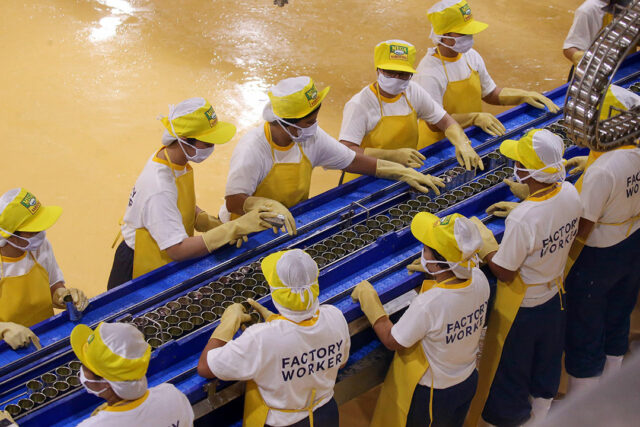
MANUFACTURING OUTPUT climbed to six-month high in January as heavily weighted food products rebounded, the Philippine Statistics Authority (PSA) reported on Friday.

Preliminary data from the PSA showed that industrial production, as measured by the volume of production index (VoPI), rose by 3.2% year on year in January, a turnaround from the 0.3% fall in the same month last year. It also picked up from the 0.4% increase in December.

The January print marked the second straight month of manufacturing expansion. It was the quickest growth in six months or since the 7.4% expansion in July last year.

Month on month, manufacturing’s VoPI grew by 1.8%, a turnaround from the 1.8% drop in December. Stripping out seasonality factors, output slowly eased by 1.5% compared to the 4% growth of the previous month.

In comparison, the Philippines in S&P Global Manufacturing Purchasing Managers’ Index (PMI) dipped to 52.3 in January from 54.3 in December, the weakest since the 51.2 recorded in August 2024.

A PMI reading above 50 shows improvement in operating conditions, while a reading below 50 shows the opposite.

The PSA attributed January’s growth to the performance of food products (9.4% from -0.3% in December), machinery and equipment except electrical (62.1% from 40.9%), and electrical equipment (45.6% from 18.2%).

In a phone interview, Philippine Chamber of Commerce and Industry (PCCI) Honorary Chairman Sergio R. Ortiz-Luis, Jr. attributed that the VoPI decline of items such as computers, electronics and optical products as partly seasonal, what wasn’t seasonal was the negative performance of food products in December.

Food products account for the largest weight in VoPI at 18.7%.

“The VoPI’s robust growth can be attributed to the rate cuts enacted by BSP (Bangko Sentral ng Pilipinas) in the previous year which allowed these manufacturing companies to expand,” Rischelle Alysha T. Legaspi an economist from Oikonomia Advisory & Research, Inc., said in an e-mail response.

The central bank lowered borrowing costs by a total of 75 basis points (bps) last year to 5.75%. The BSP left its policy settings untouched last month and reiterated that it is still in easing mode, signaling a possibility of at least 50-bp cut this year.

“The context of the election year typically indicates high optimism within the manufacturing industry. This could boost not only employment but also production.” Ms. Legaspi said.

The average capacity utilization rate for the manufacturing section in January was reported at 75.9%, slightly higher than 75.6% from the previous month.

Nineteen out of 22 industry divisions posted at least 80% capacity utilization rates. — John Phoebus G. Villanueva

Is the Philippines the new benchmark for rehabilitation medicine?

The Philippine Academy of Rehabilitation Medicine (PARM) commemorated its 50th anniversary during its 35th Annual PARM Convention, held alongside the 9th ASEAN Rehabilitation Medicine Association Conference at The Manila Hotel. The milestone event underscored the Philippines’ role as a hub for world-class rehabilitation medicine and its contributions to the global medical community.

PARM President Dr. Jerico Dela Cruz highlighted the strength of the country’s rehabilitation programs and medical training, emphasizing their global competitiveness. “Filipinos no longer need to seek rehabilitation treatment abroad, as our programs match global standards. Hindi tayo pahuhuli. In fact, Filipino doctors are often preferred for their expertise, compassion, and renowned hospitality,” Dr. Dela Cruz said.

Dr. Teresita Joy Evangelista, Professor at the UP College of Medicine, noted the rapid growth of rehabilitation medicine in the Philippines. “In just three years, the number of specialists has doubled, fueled by the rise of training institutions, growing interest in the field, and more doctors choosing rehabilitation medicine as a specialty,” she said. Dr. Evangelista also emphasized the country’s global competitiveness. “Our practice meets international standards; our members are invited abroad to give lectures; and we maintain strong ties with our global counterparts,” she added.

Looking ahead, Dr. Evangelista expressed excitement about the future of rehabilitation medicine, particularly the growing use of performing and visual arts as therapeutic tools for relaxation and emotional release. She also highlighted key advancements in cognitive therapy and osteoporosis treatment.

Among the key medical advancements discussed at the event was the latest research in osteoporosis treatment. One of the event’s highlights was a presentation by Dr. Bonifacio Rafanan, Jr., past president of PARM;, and Dr. Roberto Mirasol, past president of the Philippine College of Endocrinology, Diabetes, and Metabolism (PCEDM), titled “Build Bone First: Updates in the Management of Post-Fracture Patients with Postmenopausal Osteoporosis.”

Experts predict that osteoporosis will cause three million fractures this year, leading to $25.3 billion in healthcare costs. Meanwhile, the Osteoporosis Society of the Philippines Foundation, Inc. (OSPFI) estimates that by 2050, around 10.2 million Filipinos could be affected by the disease.

Dr. Mirasol discussed various osteoporosis treatments, including romosozumab, teriparatide, denosumab, alendronate, and bisphosphonates. Global trials confirm that the latest treatment introduced in the Philippines effectively stimulates bone formation while reducing bone resorption when administered monthly for a year to be followed by bone anti-resorptives, offering hope to very high-risk patients. “This is a game-changer for osteoporosis because it has shown compelling evidence of its effectiveness in boosting bone density and lowering fracture risk,” he said.

Dr. Rafanan Jr. presented case studies of patients using the new treatment, highlighting its benefits for patients with severe osteoporosis. “It’s crucial to have another tool in our arsenal for managing osteoporosis. We’ve long searched for a medication that both builds bone and prevents resorption. Since its introduction last year, we’re closely monitoring results, and so far, patient feedback has been very encouraging. We’re seeing significant improvements,” he noted.

Dr. Dela Cruz highlighted the significant progress of rehabilitation medicine in the Philippines, emphasizing that it has now become an integral part of Filipinos’ healthcare. He noted that the government has fully recognized its importance, as reflected in recent policy developments.

In January 2025, PhilHealth issued Memorandum Circular 2025-0003, which expands coverage for physical medicine, rehabilitation services, and assistive mobility devices. The circular aims to enhance access to quality rehabilitation care while providing financial risk protection. It applies to all contracted health facilities and other entities involved in implementing the benefits package for rehabilitation services.

While significant progress has been made, Drs. Dela Cruz and Evangelista emphasized the need for more specialists in rehabilitation medicine to ensure equitable access to world-class care across the country. They hope to encourage more individuals to pursue this field, bridging gaps in rehabilitation services nationwide.

Early detection and treatment are key to preventing life-changing fractures and preserving bone health. Experts urge those with low bone density or high fracture risk to consult their doctors about the latest treatments. With timely intervention, patients can significantly reduce their risk of fracture and improve their quality of life.


Spotlight is BusinessWorld’s sponsored section that allows advertisers to amplify their brand and connect with BusinessWorld’s audience by publishing their stories on the BusinessWorld Web site. For more information, send an email to online@bworldonline.com.

Join us on Viber at https://bit.ly/3hv6bLA to get more updates and subscribe to BusinessWorld’s titles and get exclusive content through www.bworld-x.com.

A place for readers and writers

Solidaridad Bookshop was founded by National Artist for Literature F. Sionil Jose in 1965 because he and his wife, Teresa J. Jose, “wanted Filipinos to read.”

Interview by Patricia Mirasol
Video editing by Arjale Queral

How can a brand protect its reputation?

What causes reputational damage? How can one mitigate the effects of it? What are ways companies can protect their reputation?

In this B-Side episode, BusinessWorld talks about these topics with R.G. W. Gabunada, a partner at Louder PH, a full-service agency, and the CMO of Mansmith and Fielders, a training and consultancy company.

Interview by Patricia Mirasol
Audio editing by Jayson Mariñas