Home Blog Page 1471

UK secures action from Amazon to tackle fake reviews

REUTERS

 – Amazon has committed to do more to tackle fake reviews, including sanctioning British businesses that boost their ratings through bogus posts, the country’s competition watchdog said on Friday.

Following a four-year probe, the Competition and Markets Authority (CMA) said Amazon’s undertakings also addressed its concerns about ‘catalogue abuse’ where sellers use the reviews of well-performing unrelated products to boost ratings and mislead customers.

Companies that break the rules could be banned from selling on the e-commerce giant’s platform altogether, while users who post fake reviews could be banned from posting reviews.

Amazon also committed to robust processes to quickly detect and remove fake reviews and catalogue abuse, the CMA said.

The regulator, which estimates that 90% of consumers use online reviews to inform purchases, began investigating Amazon and Google in 2021 over possible breaches of consumer protection law. It secured similar commitments from Google in January.

“These new commitments matter and help set the standard,” CMA boss Sarah Cardell said in a statement.

The watchdog is conducting an initial sweep of review platforms following the release of new reviews guidance in April, seeking to identify platforms that may need to do more to comply with consumer law.

Under its newly-granted powers, the CMA can independently decide whether consumer law has been infringed and take action in case of breaches, including issuing fines and ordering businesses to improve their practices. – Reuters

Puregold receives global recognition at the prestigious Retail Asia Awards 2025

Left to right: Puregold Senior Marketing Manager Ivy Hayagan-Piedad, Sonny Bautista, Lyle Gonzales and Jeng Galang from Republic Creative Creations, Inc., and Siddharth Pathak, Senior Partner & APAC Leader for Consumer and Retail Practice at Kearney at the 2025 Retail Asia Awards

Puregold Price Club, Inc., a longtime industry leader in Philippine retail, ushered in the month of June with two prestigious wins at the recent 2025 Retail Asia Awards: Hypermarket of the Year (Philippines) and Integrated Campaign of the Year (Philippines).

The Retail Asia Awards, which was launched in 2021, is a distinguished annual event that honors outstanding achievements, innovations, and excellence among key players in the region’s retail industry. Representatives of Puregold stood tall as they accepted the awards at last night’s ceremony held at the Marina Bay Sands Expo & Convention Centre in Singapore.

Puregold Senior Marketing Manager Ivy Hayagan-Piedad speaking to the crowd gathered for the 2025 Retail Asia Awards ceremony

The twin recognition marks the culmination of a massive year of growth for Puregold Price Club, Inc., which touted a record-breaking P10 billion plus in profits by 2024’s end. To date, the retail chain has over 700 stores nationwide, including S&R Clubs and quick service restaurants.

Puregold President Vincent Co extends his deep appreciation to the Retail Asia Awards for the esteemed Hypermarket of the Year (Philippines) recognition. “The award is an acknowledgement of the clear-headed vision and drive that brought Puregold to its most successful year in the face of shifting and challenging market conditions,” he affirms.

On the other hand, the Integrated Campaign of the Year award comes off the back of Puregold’s successful “Nasa Atin ang Panalo” campaign. “Nasa Atin ang Panalo” was a concerted effort to appeal to a passionate, younger market by collaborating with major OPM artists including BINI, Flow G, SB19, and SunKissed Lola. The campaign culminated in a sold-out Nasa Atin ang Panalo thanksgiving concert held in Araneta Coliseum.

“These awards from Retail Asia spur us to carry on with the good work we’ve been doing,” Mr. Co says. “We hope to further enrich the shopping experience of our loyal members and customers who share in our triumphs.”

Puregold Price Club Inc. won the Hypermarket of the Year (Philippines) as well as the Integrated Campaign of the Year (Philippines) trophies at the 2025 Retail Asia Awards.

For 2025, Puregold is on track for further expansion. New locations are opening up all over the country, and business is showing robust growth. In the first quarter of the year alone, the company listed a profit of over P2.64 billion, up 6.5% from the previous year. Meanwhile, Puregold’s synergetic ties with local music are going strong, as well. OPM Con 2025, featuring an expanded lineup of talents, is slated at the Philippine Arena on July 5.


Spotlight is BusinessWorld’s sponsored section that allows advertisers to amplify their brand and connect with BusinessWorld’s audience by publishing their stories on the BusinessWorld Web site. For more information, send an email to online@bworldonline.com.

Join us on Viber at https://bit.ly/3hv6bLA to get more updates and subscribe to BusinessWorld’s titles and get exclusive content through www.bworld-x.com.

Inflation eases to over 5-year low

People buy food from a stall in Binondo, Manila. Inflation rose to 1.3% in May, easing from 1.4% in April. -- Photo by Ryan Baldemor, The Philippine Star

By Luisa Maria Jacinta C. Jocson, Senior Reporter

HEADLINE INFLATION eased to an over five-year low in May, as utility costs rose at a slower pace, the Philippine Statistics Authority (PSA) said on Thursday.
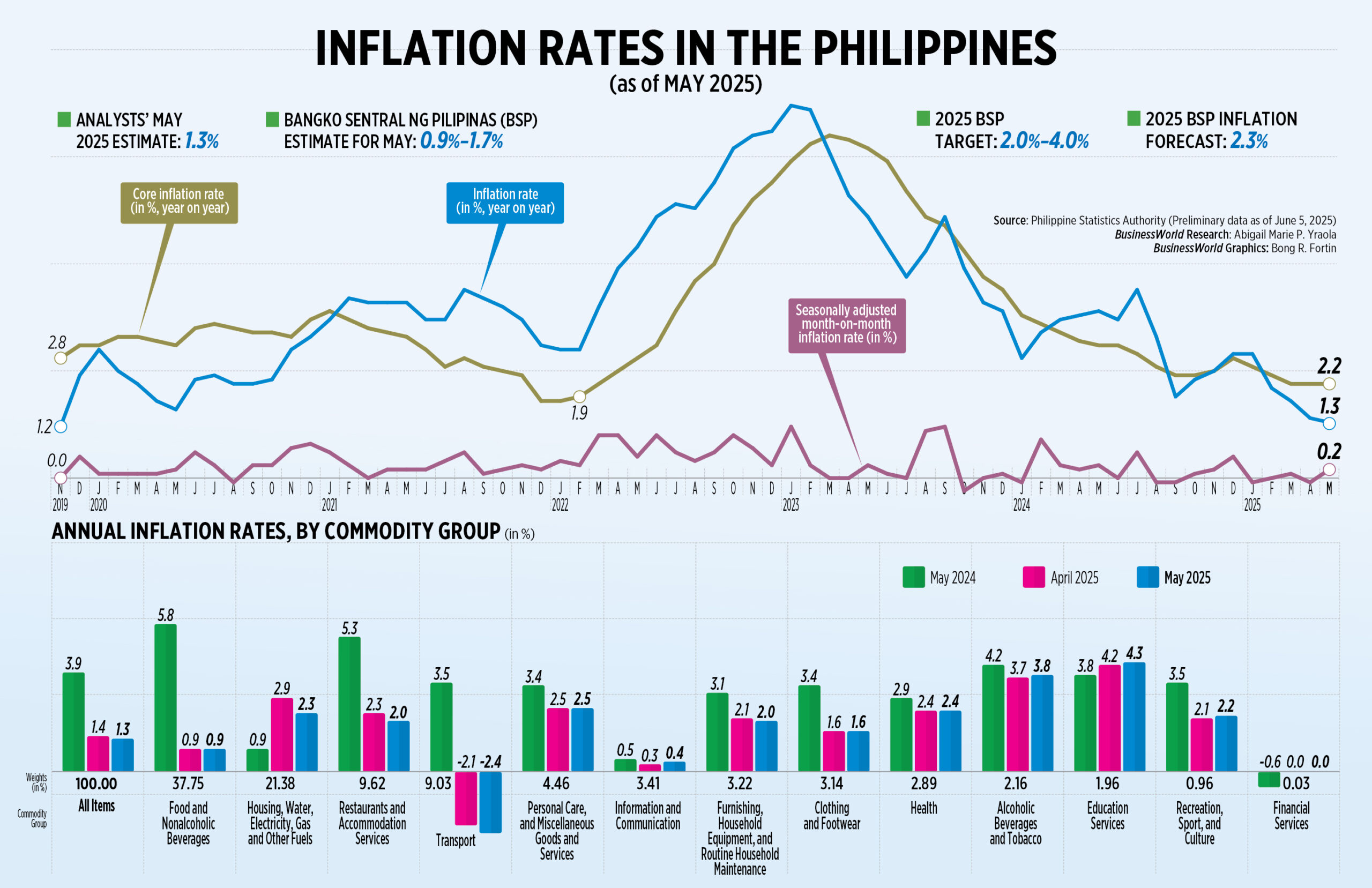
The consumer price index (CPI) rose to 1.3% in May, slowing from 1.4% in April and 3.9% in the same month a year ago, preliminary data from the PSA showed.

This matched the 1.3% median estimate yielded in a BusinessWorld poll of 17 analysts conducted last week and was within the Bangko Sentral ng Pilipinas’ (BSP) 0.9%-1.7% forecast range for the month.

The May print was the lowest inflation rate in five and a half years, or since the 1.2% print posted in November 2019.

May also marked the fourth straight month of deceleration and tenth straight month of inflation settling within the 2-4% target band.

For the first five months, inflation averaged 1.9%. The BSP expects inflation to settle at 2.3% for the full year.

Core inflation, which discounts volatile prices of food and fuel, was steady at 2.2% in May from a month ago. This brought year-to-date core inflation to 2.3%.

“The latest inflation outturn is consistent with the BSP’s assessment of a manageable inflation environment over the policy horizon with a downward revision in baseline inflation forecasts,” the central bank said, noting the continued easing of commodity price pressures.

National Statistician Claire Dennis S. Mapa said the deceleration in the May print was mainly due to the slower annual increment in the index of housing, water, electricity, gas and other fuels.

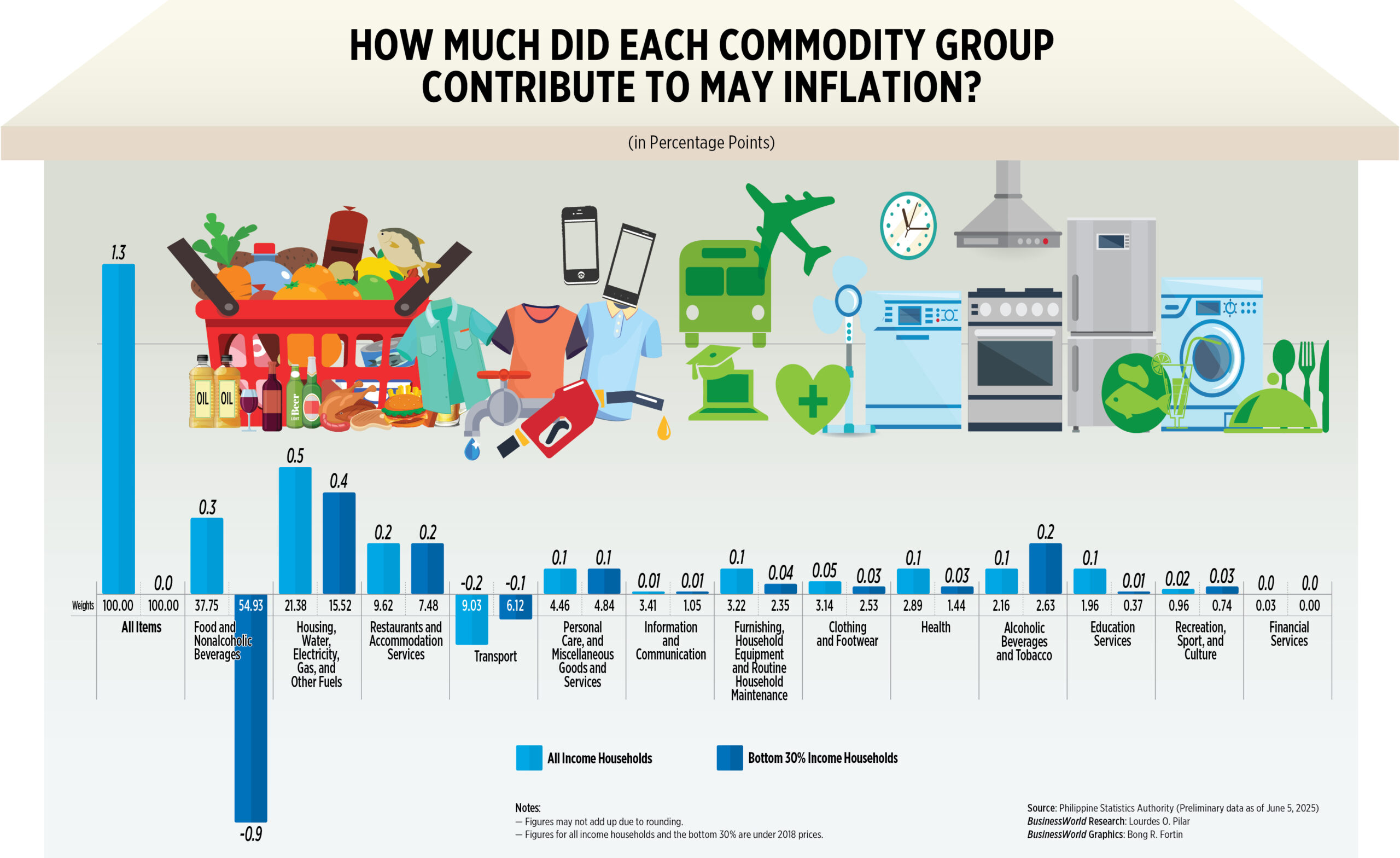
The index, which accounted for a 68.4% share to the downtrend during the month, eased to 2.3% in May from 2.9% in April. It was also the top index contributing to May inflation, accounting for a 37.1% share.

Electricity inflation slowed to 2.8% in May from 5.4% a month ago.

After three months of straight hikes, Manila Electric Co. lowered the overall rate for May by P0.7499 per kilowatt-hour (kWh) to P12.2628 per kWh from P13.0127 per kWh in April.
Water costs also eased to 5.7% in May from 6.3% in the previous month.

The transport index declined at a faster pace to 2.4% in May from the 2.1% drop a month prior. This as the inflation of passenger transport by sea slowed to 42.4% from 68.8%.

Gasoline prices also slid to 13.2% in May from the 12.4% drop in April, while diesel slipped to 9.3% from the 8.3% drop a month ago.

The restaurants and accommodation services index also decelerated to 2% in May from 2.3% in April.

Meanwhile, the heavily weighted food and nonalcoholic beverages index continued to be a major contributor to inflation during the month, with a 25.7% share of the overall print.

The index was steady at 0.9% in May from April, with food inflation also remaining the same at 0.7%.

Prices of pig meat quickened to 11.9% in May from 10.3% in April. This was the top contributor to the May CPI, contributing 25% or 0.3 percentage point.

Rice inflation remained negative, falling to 12.8% in May from the 10.9% decline a month prior.

“The average (rice) inflation from January to May is -7.7%. So, for the first five months of 2025, it has been negative and there are expectations that it will continue to be negative in the coming months because we see the prices of rice are declining per kilo,” Mr. Mapa added.

Meanwhile, inflation in the National Capital Region (NCR) eased to 1.7% in May from 2.4% in April. Outside NCR, inflation remained steady at 1.2% in May.

ZERO INFLATION

Meanwhile, inflation for the bottom 30% of income households posted 0.0% inflation in May from 0.1% in April and 5.3% a year ago.

This brought the year-to-date inflation for the bottom 30% to 1%.

Food and nonalcoholic beverages for the bottom 30% dropped to 1.6%, accounting for an 83.6% share. Transport inflation also registered a decline of 1.9%, with an 11.6% share.

“A major contributor was food items, particularly cereals. Rice for the bottom 30% is at -14.7%. So, it was a significant decline,” Mr. Mapa said.

Rizal Commercial Banking Corp. Chief Economist Michael L. Ricafort noted that rice prices comprise the bulk of the bottom 30%’s CPI.

“Since the poorest Filipinos have a bigger budget allocation for rice and other basic necessities, they are the biggest beneficiaries of lower rice prices that they are eligible to avail,” he said.

INFLATION OUTLOOK

At the same time, the BSP said risks to the inflation outlook continue to remain broadly balanced from this year to 2027.

“Upside pressures come from possible increases in transport charges, meat prices, and utility rates,” it said.

“Meanwhile, downside risks are linked to the continuing effects of lower tariffs on rice imports and the expected impact of weaker global demand.”

Department of Economy, Planning, and Development Undersecretary for Policy and Planning Rosemarie G. Edillon is optimistic that inflation will remain within the 2-4% band for the year.

“We remain committed to executing the necessary measures to keep prices low and stable,” she said in a statement.

The government will implement “targeted policies aimed at mitigating inflationary pressures and safeguarding the purchasing power of Filipino families,” she added.

For his part, Agriculture Secretary Francisco P. Tiu Laurel, Jr. has said they are working to ensure rice prices remain contained.

“We are expanding the reach of the P20 rice program and are studying a reduction in the suggested retail price for imported rice — the national staple that dominates Filipino tables, especially among the poor,” he said in a statement.

Mr. Tiu-Laurel said the President has directed the Agriculture department to implement the subsidized rice initiative through June 2028.

MORE RATE CUTS?

Meanwhile, the BSP said there is still room to continue its easing path despite external headwinds.

The Monetary Board flagged the challenging external environment, which could “dampen global growth prospects, and thereby pose a downside risk to global commodity prices and domestic economic activity.”

“On balance, the more manageable inflation outlook and the downside risks to domestic economic activity allow for a shift toward a more accommodative monetary policy stance,” it added.

The Monetary Board in April cut interest rates by 25 basis points (bps), bringing the benchmark to 5.5%. It has so far slashed borrowing costs by a total of 100 bps since it began its easing cycle in August.

“Slow food and utility inflation coupled with deflation in transport costs nudged the headline lower. Looks like the door remains wide open for the BSP to cut rates in June,” Nicholas Antonio T. Mapa, a senior economist at the Metropolitan Bank & Trust Co., said.

Pantheon Macroeconomics Chief Emerging Asia Economist Miguel Chanco said they expect the central bank to deliver another 25-bp cut later this month.

“We’re sticking to our below-consensus view that the BSP’s benchmark rate will end 2025 at 4.75%, implying three more 25-bp rate cuts, including the next in two weeks’ time.”

BSP Governor Eli M. Remolona, Jr. has said a 25-bp cut remains on the table at the Monetary Board’s June 19 policy review.

On the other hand, HSBC economist for ASEAN Aris D. Dacanay said the central bank could consider holding rates steady.

“Our baseline scenario is for the BSP to pause its easing cycle in June as the central bank waits for more details regarding the US’ proposed tariff measures,” he said.

“The BSP does have the privilege to take a measured approach given how insulated the economy is to any headwind in trade.”

However, the well-below target inflation increased the chances of a June cut, he said, especially with weaker-than-anticipated growth in the fourth quarter.

“The peso’s relative strength may have also given the BSP room to cut policy rates regardless of whether the Fed cuts rates or not. That being said, the June Monetary Board meeting will likely be a tough call.”

He said other risks to inflation that need monitoring include the bill seeking a P200 across-the-board minimum wage hike for workers in the private sector, which was approved by the House of Representatives on third and final reading on Wednesday.

“Furthermore, policymakers are mulling the possibility of raising the tariff rates on rice based on the seasonality of the crop. If this materializes, there might be large implications in the inflation outlook, enough for the BSP to reconsider the pace of its easing cycle,” Mr. Dacanay added.


Japan debt watcher affirms Philippines’ ‘A-’ rating

Workers install a Philippine flag along Quezon Avenue, Quezon City on May 31, ahead of the 127th Philippine Independence on June 12. Photo credit: Noel B. Pabalate, The Philippine Star

THE JAPAN Credit Rating Agency (JCR) has again maintained the Philippines’ “A-” rating with a “stable” outlook, citing the country’s resilient economic growth and continued fiscal consolidation.

In a news release on Thursday, JCR affirmed the country’s foreign currency and local currency long-term issuer rating at “A-” and kept its “stable” outlook.

“The ratings mainly reflect Philippines’ high and sustained economic growth supported by solid domestic demand, low-level external debt and resilience to external shocks supported by accumulated foreign exchange reserves,” it said.

An “A-” rating indicates a high level of certainty to honor financial obligations, while a “stable” outlook means the rating is unlikely to change in the foreseeable future.

“However, reducing income disparity through rural development and infrastructure development remain important tasks to be addressed,” JCR said.

The Japan credit rater noted the country’s “steady progress” on its fiscal consolidation, infrastructure development, and poverty alleviation.

“JCR expects that economic growth and fiscal improvement through the government’s efforts will enhance the country’s creditworthiness.”

“It will continue to monitor developments closely. Based on the above, it has retained the ratings with a stable outlook,” it added.

The agency projects the Philippines’ gross domestic product (GDP) growth to remain in the “upper 5% range.” This will be supported by “robust domestic demand, despite uncertainties in external environ-ment.”

The government is targeting 6-8% GDP growth this year. The Philippine economy grew by 5.4% in the first quarter, driven by faster public spending and private consumption.

Meanwhile, JCR said the country’s fiscal consolidation remains on track.

“The government debt-to-GDP ratio stood at approximately 60% at end-2024, which is one of the lowest among sovereigns rated in A-range by JCR,” it added.

The Marcos administration is looking to cut its debt-to-GDP ratio to below 60% by 2028. In the first quarter, debt as a share of GDP stood at 62%.

The government’s fiscal deficit ceiling is capped at 5.7% of GDP this year. It is targeted to be brought down to 3.7% by 2028.

“Despite increased uncertainty due to changes in US tariff policies, Philippines’ foreign exchange liquidity position remains solid, and JCR expects the economy to retain high resilience to external shocks going forward.”

It noted strong investment inflows, well-contained external debt, and high international reserves.

The Bangko Sentral ng Pilipinas (BSP) welcomed the country’s continued A-rating from JCR.

“JCR’s affirmation will support and strengthen investment from Japan, one of the Philippines’ most important partners,” BSP Governor Eli M. Remolona, Jr. said in a statement.

“The BSP will continue to safeguard price and financial stability to boost the country’s resilience amid global headwinds.”

Finance Secretary Ralph G. Recto said the affirmation “keeps the Philippines well-positioned to maintain high investment-grade ratings from all major global and regional credit agencies.”

He also said the government will continue working on its goal to secure more “A” ratings.

“An ‘A-’ rating is a strong investment-grade score that reflects robust creditworthiness and macroeconomic stability. It signals confidence to investors and creditors, resulting in lower interest rates on borrowings of the National Government and the private sector,” he said.

Apart from JCR, the Philippines also holds an “A-” rating with Japan-based Rating and Investment Information, Inc. However, it has yet to secure an “A” rating from the big three debt watchers. It currently has a “BBB+” rating with S&P Global Ratings, “BBB” with Fitch Ratings, and “Baa2” with Moody’s Ratings. — Luisa Maria Jacinta C. Jocson

PCCI, MBC concerned over legislated wage hike

Workers take a break at a construction site along Commonwealth Avenue in Quezon City, Jan. 30. The House of Representatives approved on third and final reading a bill that would raise daily wages by P200. -- Photo by Noel B. Pabalate, The Philippine Star

THE Philippine Chamber of Commerce and Industry (PCCI) and Makati Business Club (MBC) on Thursday expressed concern over a legislated wage hike, saying this could further stoke inflation, hurt small businesses and reduce the country’s overall competitiveness.

At the same time, President Ferdinand R. Marcos, Jr. is looking into the “economic implications” of a legislated wage hike, the Palace said on Thursday.

“We will look at the economic implications of these and how to resolve these with the opinion of the wage boards since the wage boards are also the creations of the Congress,” Palace Press Officer Clarissa A. Castro told a news briefing on Thursday, quoting Mr. Marcos.

She said the President is considering all aspects and concerns of stakeholders on the legislated wage hike.

“That issue has not yet been finalized in the Senate. As our President said, we will look at any economic implications regarding this, but the President wants to provide what is right and what is better for the Filipino workers,” she added.

Congressmen voted 171-1-0 to approve House Bill No. 11376 which would raise daily minimum wages by P200 for workers in the private sector. This could be the first legislated wage hike since the late 1980s, when a law created regional wage boards to dictate pay rates. The Senate greenlit a counterpart bill seeking a P100 wage increase last year.

However, the House’s approval of the wage hike comes just a few days before Congress adjourns for the final time on June 13.

In a statement, the PCCI said the wage hike will have an impact on the price of goods and services, workers in the informal sector and micro and small enterprises that comprise around 96% of the total number of enterprises in the country.

“The wage hike leads to higher labor costs, consequently resulting in higher costs of goods and services and inflation,” it said.

The PCCI said the legislated wage hike would only benefit workers in the formal sector, but the “inflationary effect will erode purchasing power negating the wage hike’s intended benefit.”

“Increased operational expenses lends the risk of closure of smaller enterprises, reducing further the number of jobs in the formal sector,” it said.

The PCCI said a legislated wage hike undermines the Regional Tripartite Wages and Productivity Board that was created to determine and set region-specific wages that take into account differences in the cost of living.

“Legislating a single wage for all areas can harm businesses in lower-cost regions and removes the flexibility of the regional wage boards to set wages that are aligned with the situation in the local areas,” it said.

“The PCCI hopes that the bicameral conference committee will consider the position of the business sector and adopt a comprehensive approach that balances the needs of workers with the capacity of businesses and ensures that MSMEs (mi-cro, small, and medium enterprises) continue to thrive while still providing fair wages,” it added.

For its part, the MBC said the “steep wage hike may have a tendency to trigger added inflation,” adding the government should focus on bringing prices of basic commodities down.

“If we don’t address the prices of basic goods, there will be continuing pressure to keep increasing wages, which is not only inflationary, but also makes us less competitive and productive versus other ASEAN (Association of Southeast Asian Nations) countries,” it said.

The MBC acknowledged the argument for wage hikes now but said it should be addressed by regional wage boards, not Congress.

Meanwhile, Senator Joseph Victor “JV” G. Ejercito said both chambers of Congress should strike a balance in approving a legislated wage hike.

“We have to make sure also that businesses will be able to survive. It might be too heavy for others, especially small- and medium-scale businesses,” he told a news briefing.

Mr. Ejercito said that he was supportive of a wage increase to provide relief to workers amid the rising prices of goods.

“Whatever we can give to the workers, let’s give it. Especially with the rising prices of commodities,” he said. “P100 can help. Why don’t we give it? If it is P200, then why not?”

According to University of the Philippines Diliman School of Labor and Industrial Relations assistant professor Benjamin B. Velasco, a study he spearheaded found wage increases have no negative effect on employment and inflation.

Asked which is better in dictating wages — regional boards or Congress, he said: “Congress [is better] as the proposed P200 wage hike better responds to wage recovery and workers’ just share in production.”

Leonardo A. Lanzona, Jr., an economics professor at the Ateneo de Manila University, said the wage hike will cause joblessness since “the burden of meeting the workers’ needs is placed on the shoulders of the firms.”

Federation of Free Workers President Jose Sonny G. Matula said Congress has acted on the wage hikes because the wage boards “have failed.”

“Deferring to the regional wage boards is not leadership — it’s abdication… The President should face the human crisis of poverty wages, not hide behind bureaucracy,” he said. — Chloe Mari A. Hufana

Globe provides laptops to Bohol barangays; assists LGU resolve local disputes

In support of digital inclusion and grassroots empowerment, Globe donated ten refurbished laptops to several barangays in Bohol to start off their digitalization journey and adoption of eGovernance.

The laptops will support the work of the Lupon Tagapamayapa, a barangay-based group tasked with helping the community resolve disputes peacefully. By shifting from typewriters to laptops, the Lupon can reduce manual errors, keep digital records rather than hardcopies for convenience, send and receive documents via email, and store important files securely. It’s a small shift that can make day-to-day processes smoother and help barangay officers focus on what matters most.

The turnover was recently held at the Bohol Provincial Capitol in Tagbilaran City, where Board Member Benjie Arcamo—representing Vice Governor Tita Baja—delivered the keynote address. He was joined by 1st District Board Member Aldner Damalerio, Liga ng mga Barangay President Romulo Cepedoza, and Globe Vice President for External Affairs Patrick Gloria.

Both BM Arcamo and Cepedoza expressed appreciation to Globe and BM Damalerio for their steadfast support in advancing ICT development across the province. Barangay Captain Joseph Sagaral of San Isidro, Tagbilaran City, also shared a heartfelt message on behalf of all the beneficiaries.

The recipient barangays are San Isidro in Tagbilaran City; Sto. Rosario in Antequera; Guiwanon in Tubigon; Canapnapan in Corella; Dangay in Albur; Sta. Cruz in Calape; Cogon Norte in Loon; Magsija in Balilihan; Triple Union in Catigbian; and Municipality of Cortes.

“This initiative is part of Globe’s ongoing efforts to create a #GlobeOfGood by enabling communities through technology. We recognize the vital role of the Lupon Tagapamayapa in maintaining peace and order at the grassroots level, and we are proud to support them with tools that improve access, accuracy, and efficiency,” said Patrick Gloria, Vice President for External Affairs of Globe.

Board Member Arcamo welcomed the support, noting, “This contribution from Globe will directly improve how our barangay peace councils carry out their duties. Access to these resources helps formalize their work and enhances the services they provide to the public.”

Sourced through Globe’s sustainability programs—which promote electronic waste reduction by extending the life and value of digital devices—the initiative also supports the province’s Strategic Change Agenda under Governor Aris Aumentado, advancing digital inclusion and community resilience within the Bohol Island UNESCO Global Geopark and Regenerative Island framework.

Globe remains committed to nation-building by expanding access to digital tools, supporting inclusive development, and enabling community resilience through technology-driven solutions.

To learn more about Globe’s sustainability and community programs, visit https://www.globe.com.ph/about-us/sustainability#gref.


Spotlight is BusinessWorld’s sponsored section that allows advertisers to amplify their brand and connect with BusinessWorld’s audience by publishing their stories on the BusinessWorld Web site. For more information, send an email to online@bworldonline.com.

Join us on Viber at https://bit.ly/3hv6bLA to get more updates and subscribe to BusinessWorld’s titles and get exclusive content through www.bworld-x.com.

Philippine peso volumes to gain on economic growth, FX head says

Peso bills are seen in this file photo. -- Photographer: Brent Lewin/Bloomberg

TRADING VOLUMES for the Philippine peso can grow as much as 10% in the coming years, according to the head of the nation’s currency traders’ group.

“The foreign exchange (FX) market will grow steadily,” Dominic Banal, president of ACI Philippines, an association of currency and derivatives traders, said in an interview last week.

The volume in the spot dollar-peso market may increase 5% to 10% as growth in the economy raises demand for foreign exchange, he added.

Average daily turnover in the Philippines’ spot currency market almost doubled to $1.3 billion in 2024 from five years ago. A more liquid market, signaled by the rising volume of transactions, means companies and traders can buy or sell foreign exchange without significantly affecting the price.

The Bangko Sentral ng Pilipinas has implemented measures to mobilize foreign exchange resources for the financing requirements of an expanding economy, among the fastest in the region. The measures included an easing of FX documentation and the expansion of the list of transactions that don’t require prior BSP approval.

“A more liquid market means it’s easier to transact for a significant size” and the prices are generally tighter, Mr. Banal said. “So overall, it’s a more efficient market.”

Volatility in the currency market is expected to ease in the months ahead as the impact of recent overseas and US-driven tariff news subside, the ACI chief also said. — Bloomberg

22 generating firms told to explain below-capacity output

THE ERC DIRECTED the GenCos to submit, within seven days from receipt of the letters, a formal explanation for the “frequent derating of their plants and units, or for persistently operating in a derated state.” -- CREDITS: BRENDAN O’DONNELL-UNSPLASH

THE Energy Regulatory Commission (ERC) has asked 22 generation companies (GenCos) to explain the “continued or frequent derating of their power facilities and units.”

In a statement on Thursday, the ERC said it issued separate notices to explain (NTEs) to the GenCos, requiring them to submit reports detailing the causes of the derating events affecting their generation facilities and units.

Derating refers to power plants generating electricity below their installed capacity.

“The Commission continues with its diligent monitoring of the reliability of our major power sources to ensure sufficiency of supply, which then affects affordability of power rates,” said ERC Chairperson and Chief Executive Of-ficer Monalisa C. Dimalanta.

“The persistent derated state of certain plants is concerning and has prompted the Commission to formally seek an explanation from the GenCos.”

Among the firms issued NTEs were units of San Miguel Global Power Holdings Corp. (SMGP), Manila Electric Co. (Meralco), Aboitiz Power Corp. (AboitizPower), Semirara Mining and Power Corp. (SMPC), and First Gen Corp.

The ERC also issued NTEs to Excellent Energy Resources, Inc. and South Premiere Power Corp., joint ventures among subsidiaries of SMGP, Meralco, and AboitizPower.

Explanations were also sought from SMGP units Masinloc Power Partners Co., Ltd., Mariveles Power Generation Corp., Malita Power Corp., Sual Power, Inc., and Angat Hydropower Corp.

AboitizPower units GNPower Dinginin Ltd. Co., AP Renewables, Inc., and SN Aboitiz Power-Magat, Inc. were also served notices.

Energy Development Corp. and First Gen Hydro Power Corp., subsidiaries of First Gen Corp., were likewise asked to explain.

The ERC directed the GenCos to submit, within seven days from receipt of the letters, a formal explanation for the “frequent derating of their plants and units, or for persistently operating in a derated state.”

The commission also instructed the companies to provide an action plan and timeline for restoring the affected generating facilities to their registered full capacities.

Last month, the ERC issued show-cause orders to 37 GenCos for failing to disclose their fuel costs, which the regulator uses to validate the reasonableness of their generation charges. — Sheldeen Joy Talavera

Unilab, Ateneo lead push for improved LGU health spending

From left to right: Ruben “John” A. Basa, Program Director, Unilab Center for Health Policy; Maria Luz C. Vilches, PhD, Vice-President for Higher Education, Ateneo de Manila University; Atty. Jose Maria A. Ochave, Executive Director, Unilab Foundation; Dr. Maria Eufemia C. Yap, Senior Research Fellow at Ateneo Policy Center; and Philip Arnold P. Tuaño PhD, Dean, Ateneo School of Government

In a bold move to reshape how local governments finance healthcare, Unilab Foundation (ULF) through the Unilab Center for Health Policy (UCHP) and Ateneo de Manila University (ADMU) have joined forces to deliver research-backed solutions to improve the fiscal performance of health budgets at the local level — an often overlooked but critical component in achieving Universal Health Care (UHC).

The partnership brings together Ateneo’s School of Government (ASoG) and UCHP, with technical collaboration with the Department of Budget and Management (DBM).

The study is the first of its kind to focus on optimizing local health spending under the UHC Law across local government units (LGUs).

During the ceremonial signing, Unilab Foundation Executive Director Atty. Jose Maria Ochave cited the broader purpose behind the agreement.

“Today is not just a ceremonial signing but a small step toward transforming local health governance in the country. We are happy and privileged to partner with the Ateneo School of Government and the Ateneo de Manila University,” he said.

The collaboration draws on the strengths of both institutions. UCHP has been working to close gaps in the UHC Law’s implementation, while ASoG trains leaders to tackle real-world problems through policy innovation and public accountability. 

Together, they aim to combine data-driven policy work with ethical and evidence-based governance. But beyond the numbers and systems, both sides hope to spark a deeper shift in mindset — that good health is not just a policy goal, but a shared responsibility.

For Ochave, the mission is clear: this partnership must not only generate knowledge but also empower the institutions that can act on it.

Echoing this vision, Ateneo Vice-President for Higher Education, Dr. Maria Luz C. Vilches, highlighted a critical yet often overlooked issue: the role of budgeting in achieving health outcomes.

Maria Luz C. Vilches, PhD, Vice-President for Higher Education, Ateneo de Manila University

“This is very important as pointed out about the UHC Law; there’s a lot to do,” she said. “Our noble goal is health insurance, well-being — but we have to attend to the mundane things called budget and money.”

Vilches underscored the critical insight often missing in policy discussions: that realizing the promise of universal healthcare requires more than ideals — it demands willingness to deal with budgetary details head-on.

“Sometimes the lever does not move if you don’t touch the aspects of budget and money. I am happy that this project is going to move that lever,” she further explained.

Building on this, UCHP Program Director Ruben “John” Basa pointed to the depth and scope of their current work — and how it connects directly to this initiative.

“When you talk of local government, health financing and Ateneo, this is a small room of big ideas,” he said. “We want to research and demonstrate how the UHC Law can be implemented one LGU at a time.”

UCHP has already laid important groundwork. Last year, it completed four studies — two national and two local — on critical UHC reforms. These included a review of PhilHealth’s shift to a new provider payment mechanism, the rollout of the Konsulta outpatient package, and the development of a service delivery model for geographically isolated and disadvantaged areas (GIDA), which will be pilot-tested in Ormoc City.

Basa also shared findings from UCHP’s landmark 30-year review of national health accounts, a project that revealed stark contrasts in health financing trends.

“In 1992, the out-of-pocket spending of the Philippines was at 47%, Thailand was at 45%,” Basa said. “Fast-forward to 2023, the Philippines’ out-of-pocket spending went down to 45%, Thailand to 9.2%. They must be doing something good over there.”

The same study found that despite increased funding, local government spending on health was “falling to irrelevance.” That troubling trend only underscores the urgent need for reform — precisely what this new initiative seeks to address.

Philip Arnold P. Tuaño PhD, Dean, Ateneo School of Government

Closing the event, Philip Arnold Tuaño, Dean of ASoG, reinforced the critical role of industry leaders in strengthening public healthcare systems. He stressed the need for close monitoring of the fiscal performance of LGUs to ensure that every peso spent leads to tangible improvements in services and infrastructure.

According to Tuaño, the partnership with Unilab Foundation will also generate research and data that can guide both national and local decision-makers.

“Today formalizes a partnership with the common vision of pursuit of equitable, accessible, and effective healthcare for the Philippines,” Tuaño said.


Spotlight is BusinessWorld’s sponsored section that allows advertisers to amplify their brand and connect with BusinessWorld’s audience by publishing their stories on the BusinessWorld Web site. For more information, send an email to online@bworldonline.com.

Join us on Viber at https://bit.ly/3hv6bLA to get more updates and subscribe to BusinessWorld’s titles and get exclusive content through www.bworld-x.com.

AirAsia MOVE says price cap in works to follow CAB guidelines

PHILIPPINES STAR/WALTER BOLLOZOS

AIRASIA MOVE, the online travel agency (OTA) of the AirAsia group, said it is working to implement a price cap on tickets sold on its platform in line with policies and regulations set by the Civil Aeronautics Board (CAB).

“Technology is not very easy. We are first starting immediately with a cut-off point. My team will have to do it in two to three months to develop this technology to make sure that we are able to put limits by route,” AirAsia MOVE Chief Executive Officer Nadia Omer said in a media briefing on Thursday.

The development follows a meeting between AirAsia MOVE and the CAB after the Department of Transportation (DoTr) announced plans to file economic sabotage charges against the OTA for allegedly pricing fares at unreasonably high levels.

AirAsia MOVE is a platform that allows users to book flights, hotels, and other travel-related services.

Republic Act No. 776 authorizes the CAB to regulate air carriers, including the economic aspects of air transportation.

Ms. Omer said OTAs like AirAsia MOVE are not always fully aware of government-imposed fare ceilings, as this information is usually communicated directly to airlines.

“Many of the OTAs don’t know because it is mostly communicated to the airlines and if airlines do not communicate these exact ceilings by routes to their agents, there is no way to know,” Ms. Omer said, adding that fares are set by the airlines, not by OTAs.

She also said that ticket pricing on the AirAsia MOVE platform is automated and not controlled by the company.

“We do not do dynamic pricing because it is based on the demand. The higher the demand for something the higher the price goes, and a lot of the airlines already practice this,” Ms. Omer said.

The issue arose following complaints from Leyte Rep. Richard Frank I. Gomez, who booked one-way Philippine Airlines tickets from Tacloban to Manila via AirAsia MOVE at a cost of around P77,704 for two individuals.

According to data from the Transportation department, the same tickets booked directly through the Philippine Airlines website would have cost approximately P49,507 for two persons.

AirAsia MOVE has assured the government that it will cooperate to resolve the issue.

“We thank the CAB for giving us the opportunity to be heard at a proper venue in the observance of due process. The issue at hand has become a platform to proactively engage and educate stakeholders on how the supply chain works within OTAs,” Ms. Omer said. — Ashley Erika O. Jose

PSE reports 50% surge in stock market accounts in 2024

PHILIPPINE STAR/EDD GUMBAN

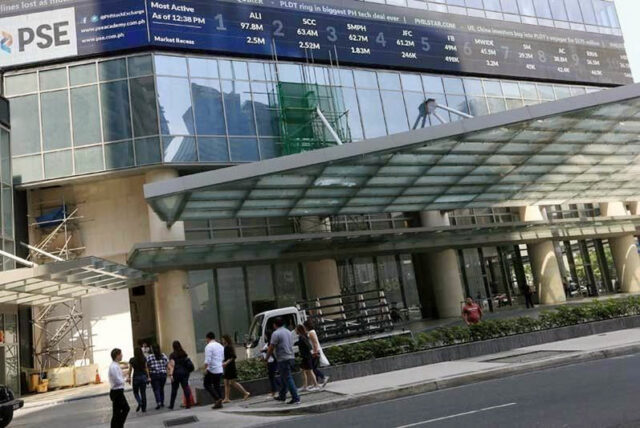
LOCAL stock market accounts rose by 50.1% to 2.86 million in 2024 from 1.91 million in 2023, driven by the growth in retail participation, the Philippine Stock Exchange, Inc. (PSE) said on Thursday.

Data from the Stock Market Investor Profile 2024 showed that retail accounts, which comprised 98.9% of total accounts, increased by 50.7% to 2.83 million from 1.88 million in 2023.

Institutional accounts, which made up 1.1% of total accounts, also rose by 12.1% to 32,284 from 28,806 a year earlier.

Local accounts reached 2.83 million, while foreign accounts totaled 29,876.

The PSE said the data was sourced from 121 active trading participants as of 2024.

Online accounts jumped by 62% to 2.47 million, accounting for 86.4% of total stock market accounts. Retail investors comprised 99.9% of total online accounts, based on data from 39 trading participants.

By gender, female retail investors accounted for 50.7% of the total, slightly higher than male investors at 49.3%.

Retail investors aged 30-44 made up 48.8% of the base, followed by those aged 18-29 at 26.5%, 45-59 at 17.4%, and those over 60 at 7.3%.

In terms of income, 82.4% of retail investors earned less than P500,000 annually, while 6.7% earned between P500,000 and P1 million, and 10.9% earned more than P1 million.

“Most retail investors work under the services sector, followed by industrial/manufacturing and professionals,” the PSE said.

The PSE also said that 84.9% of retail investors are locally employed, while 5% are unemployed, 3.6% are self-employed, 2.5% are overseas Filipino workers, 2.1% are students, and 2% are retirees.

Geographically, 49.3% of retail accounts were based in Metro Manila, 28.4% in the rest of Luzon, 10.9% in Mindanao, 10.8% in the Visayas, and 0.6% overseas.

Meanwhile, the report showed that the top foreign investors in the local bourse were Japanese (29.9%), Chinese (19.8%), and American (13%). — Revin Mikhael D. Ochave

Kiana V releases new R&B anthem

It is the lead single in an upcoming ’90s
rom-com inspired album

FILIPINO singer-songwriter Kiana V has dropped her latest single, “Falling Out,” an emotional R&B track off her upcoming album.

The song is meant to empower women everywhere by plunging into the quiet chaos of toxic love, the kind that “lingers long after it should have ended.” Ms. Valenciano (yes, she is the daughter of “Mr. Pure Energy,” Gary V) was inspired by her own experience with love.

For her, hearing her friends share similar stories about toxic patterns in relationships pushed her to write a song about it.

“A lot of my friends are still single and they’re still dating. There was a point where we were all telling stories, and they were talking about situations of theirs that mirrored something I’ve gone through,” she said at a virtual press conference on June 4.

“I found it interesting that we’re at different phases of our lives, and it’s crazy that we share this story even if it’s with different people. We’re just a group of girls who all went through the same thing,” she explained.

Set against dreamy instrumentation and gliding, sensual production, “Falling Out” draws from the late 1990s, early 2000s R&B style. Ms. Valenciano cited icons like Kyla, Brandy, Christina Aguilera, JoJo, and Aaliyah as her primary influences.

“Every time I’m in the studio, even if the beat is more pop-leaning or acoustic, the way that I write the melodies and the manner in which I sing and project ends up going back to those girls,” she shared.

The soulful new track also reflects how the upcoming album will tackle her fascination with 1990s romcoms that depict women as “hopeless romantics.”

“It makes for good entertainment, but you wouldn’t wish it on anyone!” Ms. Valenciano said. “I’m quite intrigued by how they’re always so consumed by a man. That’s what’s going to connect all the tracks on this album.”

She added that “letting go of a bad cycle” will unite the album’s 10 tracks, a topic that will surely change as she grows as a singer-songwriter. “Now that I’m married, that’ll shift over the next two years. Music is my way of making sense of what I go through in life.” Ms. Valenciano married US-based Lisandro “Sandro” Tolentino in a secret ceremony in 2023, and announced that she was married a year later.

On the support of her father, she expressed sincere gratitude.

“My dad is very much doing his own thing. The only involvement he has is when I’m done with a song, I send it to him,” Ms. Valenciano said. “He’s a cheerleader and I love that.”

“I’ll never forget the first time that I told him I wanted to pursue music. The shock on his face — I wish I had taken a photo of it. Now it’s nice to share it with him.”

“Falling Out” is out now on all digital music streaming platforms. — Brontë H. Lacsamana

ADVERTISEMENT
ADVERTISEMENT