Home Blog Page 1457

Bryce Dallas Howard leads improv comics undercover in film Deep Cover

ORLANDO BLOOM, Bryce Dallas Howard, and Nick Mohammed in Deep Cover (2025)

LONDON — Jurassic World actor Bryce Dallas Howard takes on London’s criminal underworld in action comedy Deep Cover, playing an improv teacher who goes undercover.

The American stars as Kat, who along with her two students Marlon and Hugh, played by Orlando Bloom and Nick Mohammed, respectively, are recruited by a police cop to infiltrate a criminal gang.

Never breaking character and sticking to their “yes and…” improv comedy rule, the trio soon find themselves inside London’s threatening gangland.

“The script was so tight, so fun and of course I related to it, being an actor myself,” Ms. Howard told Reuters at the film’s world premiere at the SXSW London festival on Wednesday.

“There was lots of giggling and lots of laughing,” she added about making the movie.

Released on Prime Video on June 12, Deep Cover sees Mr. Bloom, who shot to fame in The Lord of the Rings movies, play a committed method actor. Ted Lasso actor Mr. Mohammed portrays a lonely worker drawn to Kat’s classes to gain confidence.

“There are quite a lot of scenes… that were just done in one take… because you just need to have all of that energy… pinging around between them (Howard, Bloom) and Mohammed,” director Tom Kingsley said. “And they’re all playing different characters to what you would normally expect.”

Asked if he tried to make Ms. Howard and Mr. Bloom laugh on set given his comedy background, Mr. Mohammed said: “I would play around a little bit… changing some of the lines every so often. But… they were just up for it.”

Apple TV+ has announced a fourth season of Emmy-winning comedy series Ted Lasso, in which Jason Sudeikis played the American coach of upstart British football team AFC Richmond and Mr. Mohammed portrayed kitman-turned-coach Nate Shelley.

Asked what he could say about season four, in which Lasso will coach a women’s football team, Mr. Mohammed said: “I only know what’s in the press at the moment… I can’t wait to see it. Who knows if Nate’s in it… we will see.”

The inaugural SXSW London, the European edition of the annual Austin, Texas, South by Southwest music, technology and film festival, runs June 2-7. — Reuters

Rising with the Machines: Harnessing AI for human development

FREEPIK | Image by Selva Ramachandran and Mohamed Shahudh from FREEPIK

By Selva Ramachandran and Mohamed Shahudh,

They say that the best way to predict the future is to shape it. In the past decade, the innovation that’s been hailed as having the most potential to direct and navigate this future is Artificial Intelligence (AI).

AI is not simply an advanced form of digitalization; it is a general-purpose technology, like electricity, with the potential to transform a wide range of sectors. Its multimodal adaptability allows it to influence education, healthcare, governance, and beyond. But this transformative potential is not inevitable. And as emphasized in the recently launched 2025 Human Development Report (HDR) by the United Nations Development Programme (UNDP), powerful as it may be, the future of AI is not preordained — it is shaped by the choices we make.

AI is progressing at a pace far surpassing earlier innovations such as the internet or personal computers. Between 2022 and 2025, AI-related investment is projected to double to $200 billion, three times the global spending on climate change adaptation. By 2033, the UN estimates that AI could be worth $4.8 trillion, equivalent to Germany’s current GDP.

This growth, however, is unfolding amid a slowdown in global human development and increasing global geopolitical uncertainty. The HDR highlights that current human development gains are among the slowest in decades. Traditional development pathways, such as export-led growth, are narrowing amid rising trade tensions and shrinking external finance.

Within this context, AI could serve either as a catalyst for inclusive development or as a force that deepens inequality. The outcome hinges on how we decide to leverage it.

The global AI ecosystem is currently concentrated and uneven. According to UNCTAD (UN Trade and Development), around 100 firms, mostly in the US and China, account for 40% of global corporate R&D. In these economies, AI investment could reach 2% of GDP. The private sector holds an outsized influence over AI’s evolution. According to the same report, fewer than one-third of developing countries have national AI strategies, with several missing from governance discussions. This growing imbalance makes it urgent to decide how and for whom AI should serve.

The Philippines embodies both the opportunities and risks of the AI era. A recent International Monetary Fund (IMF) report estimates that one-third of Filipino jobs are vulnerable to AI disruption, yet 61% have high potential for AI-driven augmentation. In sectors like education, AI can support teachers by identifying learning gaps and tailoring content. In business process outsourcing, or BPO, services, where 1.7 million jobs contribute 7.4% of GDP, routine tasks are increasingly automatable. However, with the right mix of policies, including skills upgrading and incentives for augmentation, this sector can remain both competitive and inclusive.

The HDR offers a roadmap through three interlinked strategies: investing in capabilities, building a complementarity economy, and driving innovation with intent. For the Philippines, this means not only expanding AI-related human capacities and infrastructure but also ensuring that these efforts are aligned with inclusive development. Scaling social protection systems, supporting workforce transitions, and linking innovation to public goals are essential.

On education, the Philippines allocated 3.62% of GDP to the sector in 2023, above the low- and middle-income countries’ (LMIC) average and close to upper middle-income countries’ (UMIC) average spending. However, the Philippines’ scores in the Program for International Student Assessment or PISA, measuring performance across STEM subjects, lag behind its ASEAN peers. Two key opportunities can help turn spending into results. First, the new Public Financial Management Reform Roadmap (2024–2028) shifts focus from inputs to outcomes, creating space to strengthen education through early childhood and skills-focused reforms. Second, greater fiscal decentralization, as highlighted by the World Bank, could improve the effectiveness of future programs.

Some concerns have been raised about how AI’s energy demand is rising fast. The IMF projects that data center electricity use could triple by 2030, equaling India’s current demand. In the Philippines, only 2.41 gigawatts (GW) of the 29.23 GW installed capacity in 2023 came from wind and solar, despite the vast potential. Unlocking sustainable energy sources could significantly cut electricity costs — the second highest in ASEAN after Singapore. While AI can help optimize grid efficiency, its energy use must not crowd out energy access for underserved communities. With the right approach, AI can turn renewable planning from a challenge into an opportunity.

As the 2025 Human Development Report reminds us, the path AI takes is not written in code — it is written in integrated policy, ethical deployment, and strong investments in human capital and innovation ecosystems. For countries like the Philippines, the moment to shape that path is now. The tools are in hand: a talented workforce, a growing innovation ecosystem, and a public sector willing to engage with transformation.

But to ensure AI becomes a driver of inclusive progress, not a deepener of divides, we must act fast with intention. That means investing in people as much as in technology, aligning innovation with public goals, and ensuring no community is left behind in the digital leap forward.

In the end, the real power of AI lies not in the technology itself, but in how we choose to wield it. If we are bold, deliberate, and inclusive in our approach, we can shape an AI-powered future that serves not just the few but ALL.

Dr. Selva Ramachandran is the UNDP resident representative in the Philippines and Mohamed Shahudh is an economist at UNDP Philippines.

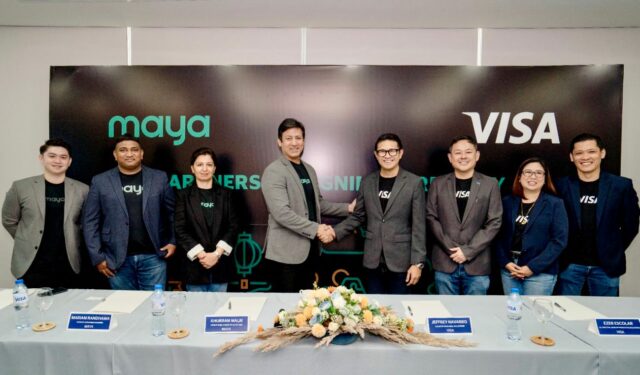
Visa partners with Maya Group to enable account funding with foreign-issued cards

Photo Credit: VISA

VISA has partnered with Maya Group to allow the app’s users to make cash in transactions with its foreign-issued cards.

Under the partnership, Visa will enable cross-border account funding transactions in the Maya app.

“This innovative partnership allows Maya users to seamlessly pull funds from foreign-issued Visa cards and load them directly into their Maya accounts, expanding payments flexibility,” Visa said in a statement. “Upon cashing in from their foreign-issued Visa cards, Maya users can now spend, save, and even invest their money in the Philippines through the Maya app.”

This will help expatriates, overseas Filipino workers (OFWs), tourists, and even freelancers manage their finances easily, it added.

“Our longstanding partnership with Maya continues to grow from strength to strength, and with this latest collaboration, we help make digital payments even more flexible. By enabling funding transactions from foreign-issued Visa cards, we provide Maya users with the power and convenience to manage their finances effortlessly, while ensuring seamless and secure transactions. This connects them to countless possibilities through their Maya accounts,” Visa Country Manager for the Philippines Jeffrey Navarro said.

“With this new feature, we’re making it easier for Filipinos and OFWs to move money from their Visa cards abroad straight into their Maya wallets. Maya has redefined how we spend, save, and invest — and we’re pleased to bring the same ease and flexibility to cross-border payments,” Maya Group Chief Commercial Officer Khurram Malik added.

Maya Innovations Holdings, Pte. Ltd., formerly Voyager Innovations Holdings, Pte. Ltd., is the parent holding company of Maya Philippines, Inc. and Maya Bank, Inc.

Maya Philippines is registered with the Bangko Sentral ng Pilipinas (BSP) as an electronic money issuer, remittance and transfer company, operator of payment system, and virtual asset services provider.

Meanwhile, Maya Bank is one of the six BSP-licensed digital banks in the country.

Maya Group posted a first-quarter net income of P127 million.

PLDT Inc. is Maya Innovations’ main shareholder. Hastings Holdings, Inc., a unit of PLDT Beneficial Trust Fund subsidiary MediaQuest Holdings, Inc., has a majority stake in BusinessWorld through the Philippine Star Group, which it controls.

Panasonic Manufacturing PHL to start Laguna facility construction by October

PANASONIC.COM

LISTED appliance producer and retailer Panasonic Manufacturing Philippines Corp. (PMPC) will start construction of a new factory building in Sta. Rosa, Laguna by October following a fire incident in December 2023 that destroyed its previous facility.

The new building is expected to be completed within two years from the start of construction, PMPC said in a regulatory filing on Thursday.

PMPC signed a building contract with Kujima Philippines Inc. for the project.

“There will be no negative impact of the execution and signing of the building contract by PMPC with Kujima Philippines on the company’s business and operations,” PMPC said.

PMPC’s washing machine and electric fan factory building at Laguna Technopark in Sta. Rosa was gutted by fire in December 2023.

The company said the building was fully demolished after its fire insurance claim was settled.

PMPC manufactures, imports, and distributes various appliances. Its primary products include refrigerators, air conditioners, and washing machines.

The company also offers electric fans, freezers, TV sets, digital audio-visual products, communications equipment, office automation equipment, cooling equipment, and various kitchen and home appliances.

PMPC shares declined by 8.72% or 64 centavos to P6.70 per share on Thursday. — Revin Mikhael D. Ochave

Companies’ role critical in upskilling — DoLE

PHILIPPINE STAR/NOEL B. PABALATE

THE DEPARTMENT of Labor and Employment (DoLE) said on Thursday that it is looking to the private sector to upskill job seekers.

“It’s important that we see the private sector’s role in ensuring that we have interventions for our workforce, especially for upskilling and reskilling initiatives,” Labor Assistant Secretary Patrick P. Patriwirawan, Jr. told reporters on the sidelines of the National Skills Summit 2025.

He added that current job seekers lack the soft skills as well as communication, teamwork, and time management skills needed to effectively navigate the workplace.

Yu Ming Chin, executive director of Viventis Search Asia, said that the private sector must invest in the skills of its hires.

“You work in a company and the company has to manage the training,” he told reporters. “If we become too dependent on the government their abilities could be lacking.”

He cited the need for analytical skills in the workplace, to improve problem-solving capacity.

Mr. Patriwirawan added: “Hard skills are also something that the DoLE is monitoring because (of the demand for) hard to fill technical skills.”

“This is an important aspect of the labor market. If they are not readily available, it is important that we have interventions and skills training ready,” he said.

The government currently conducts skill and development training through the Technical Education and Skills Development Authority.

“We have an ongoing collaboration with DepEd. We have upcoming job fairs with the senior high school (graduates) to ensure that our K-12 graduates are employable,” he added.

The K-12 (Kindergarten to Grade 12) program added two more years to basic education with the intent of making graduates employable and globally competitive.

Education Secretary Juan Edgardo M. Angara said that DepEd (Department of Education) needs to adjust the curriculum of schools to match the needs of employers, especially in Senior High School programs.

“The tendency is the curriculum won’t match or won’t help a students get a job,” Mr. Angara told reporters.

He added that schools must also integrate digital literacy in the newer curricula so graduates are at home with artificial intelligence (AI).

“Digital literacy is a crucial part of the curriculum and digital literacy is not the only skill for AI. It is important that a student not only knows how to read and write. It is important that he understands what he reads and writes,” Mr. Angara said.

The DepEd is set to implement a new K-12 curriculum in the upcoming school year, featuring the reduction of educational tracks for senior high school to two — academic and technical-professional.

It also cut the number of core subjects to five from 15. The five subjects are Effective Communications, Life Skills, General Mathematics, General Science, and the study of Philippine History and Society. — Adrian H. Halili

Sean ‘Diddy’ Combs held Cassie’s friend on balcony ledge, jury hears

Sean “Diddy” Combs on the talk show Late Night with Seth Myers. — IMDB

NEW YORK — Hip-hop mogul Sean “Diddy” Combs held a friend of his former girlfriend Casandra Ventura on the ledge of a balcony of a 17th floor apartment in September 2016, the friend testified on Wednesday at Mr. Combs’ sex trafficking trial.

Bryana Bongolan, Ms. Ventura’s friend, told jurors in Manhattan federal court that Mr. Combs then came up to her from behind on the balcony of Ms. Ventura’s Los Angeles apartment, lifted her up, and placed her on top of the balcony’s rail.

Mr. Combs then told her several times, “You know what the fuck you did,” Ms. Bongolan testified.

“For a split second I was thinking about if I was going to fall, but for the most part he was yelling at me, so I was trying to answer him,” Ms. Bongolan, 33, told the jury.

Ms. Bongolan testified that she told Mr. Combs she did not know what she had done. To this day, she does not know what Mr. Combs believed she did, Ms. Bongolan said.

Mr. Combs, 55, has pleaded not guilty to five counts including racketeering conspiracy and sex trafficking.

Federal prosecutors in Manhattan say Mr. Combs over two decades coerced women, including Ms. Ventura, to take part in drug-fueled sexual performances with male sex workers known as “Freak Offs.”

The trial is in its fourth week.

Ms. Ventura, a rhythm and blues singer known as Cassie, told jurors last month she took part in Mr. Combs’ Freak Offs for about a decade, at first to please him and later because he blackmailed her with videos of the encounters.

She said Mr. Combs frequently beat her.

Prosecutors with the Manhattan US attorney’s office say Mr. Combs and his associates used force and the threat of force to coerce women to take part in the Freak Offs and to make sure witnesses to his abuse remained quiet.

Mr. Combs’ lawyers have acknowledged he was at times abusive in domestic relationships, but argue that women who took part in Freak Offs did so consensually.

Ms. Bongolan said Mr. Combs and Ms. Ventura often had a volatile relationship. Ms. Bongolan said she saw Ms. Ventura with a black eye or bruises on multiple occasions. Once, Ms. Bongolan said she saw Mr. Combs throw a knife in Ms. Ventura’s direction in Ms. Ventura’s apartment.

Another time, on the beach in Malibu, California, Mr. Combs approached Ms. Bongolan and said, “I’m the devil and I could kill you,” Ms. Bongolan testified. She said she did not know why Mr. Combs told her that.

Ms. Bongolan said the 2016 balcony incident took place early one morning after she had spent the night at Ms. Ventura’s apartment. She said she was about 5 feet 1 inch (155 cm) tall and weighed between 100 and 115 pounds (45 to 52 kg) at the time. Mr. Combs, Ms. Bongolan said, was “bigger.”

After holding her on top of the balcony’s rail for between 10 and 15 seconds, Mr. Combs threw her onto the balcony furniture, Ms. Bongolan said. Jurors saw photographs Ms. Bongolan took of bruises she said she suffered as a result of the incident. Ms. Bongolan says she still has night terrors and paranoia.

Mr. Combs could face life in prison if convicted on all counts. Prosecutors have said they may finish presenting their case next week, allowing the defense to put on its case. — Reuters

The state of heritage conservation in the Philippines

The restored BarAsoain Church

For almost a century, the conservation of structures in the Philippines has been a quiet yet steadfast practice. Although only a handful of buildings were formally recognized as heritage during the Spanish and American Colonial Periods, the drive to preserve our architectural legacy — particularly civic and church structures — has been an enduring part of our national identity.

In the aftermath of the 1863 earthquake, the Pasig Church Bell Tower was restored by Felix Roxas, symbolizing an early example of heritage conservation. During the Malolos Convention, Arcadio Arellano meticulously repaired the Barasoain Church. Likewise, Tomas Mapua oversaw the restoration of the Intendencia de Intramuros and the Ayuntamiento de Manila in 1935 in anticipation of the Commonwealth Proclamation. The most ambitious of these early efforts came in the 1980s when the Intramuros Administration (IA) restored the entire walls of Intramuros — an unprecedented feat that remains the largest conservation project in Philippine history.

The dawn of the 21st century saw a renewed and growing awareness of our historical and cultural heritage. This was fueled in part by social media platforms that inspired pride in our past and by the enactment of Republic Act 10066, the National Cultural Heritage Act, which mandated the conservation of our country’s irreplaceable treasures. The recent restoration of the Metropolitan Theater by the National Commission for Culture and the Arts, better known as the NCCA, exemplifies the dedication required for this cause.

Despite the challenges, the project demonstrated that with collective resolve, we can reclaim and breathe new life into our heritage. The adaptive reuse of landmarks like Kalayaan Hall and the Teus and Goldenberg Mansions in the Malacañang Palace Complex, also highlights how these historic structures continue to remain relevant and meaningful in our contemporary context.

Equally fascinating is the modern bayanihan (communal) spirit behind the concept of Transferring Heritage Structure, the Las Casas Filipinas de Acuzar in Bagac, Bataan. It may not be ideal but it has served as a testament to this innovative approach — dismantling and rebuilding heritage buildings piece by piece to create a new setting that honors and celebrates our past.

Today, the most ambitious restoration effort is the Department of Education’s Gabaldon Restoration Project, launched in 2018 under Republic Act 11194. It aims to restore and conserve over 1,000 historic schoolhouses, safeguarding them as centers of learning and culture for generations to come. Simultaneously, the Department of Public Works and Highways initiated the “Big One Preparedness Program” to assess and retrofit old structures in Metro Manila, a necessary measure given the region’s vulnerability to earthquakes.

The conservation movement is now rallying around the effort to restore the 1926 Manila Central Post Office Building, ravaged by fire in 2023, and the Aduana or Intendecia de Manila of 1876. These iconic structures, symbols of our country’s architectural heritage, have inspired a wave of collaboration among cultural agencies and the private sector determined to restore them to their former glory.

Despite these significant milestones, conservation in the Philippines remains fraught with challenges — chronic underfunding, limited government support, the constant threat of natural disasters, and a general lack of public awareness. Moreover, many conservation projects are led by untrained individuals, echoing the same obstacles that have confronted conservationists for over a hundred years.

The delicate balance between preserving our heritage and accommodating modernity is an ever-present struggle. Yet, even as these challenges persist, the story of conservation in the Philippines is one of hope, resilience, and an unwavering commitment to our shared history.

Much has been achieved, but much more lies ahead. As time marches on and new structures join the “old column,” they will need the care of skilled and passionate stewards — architects, students, and history lovers — ready to face the signs of wear, neglect, and deterioration with knowledge and resolve. It is upon us to ensure that we are not only conserving and preserving but also championing the heritage that defines us.

Joel Vivero Rico, FPIA, UAP is an award-winning conservation architect, author, historian, heritage consultant, archaeologist, and history professor at De La Salle-College of Saint Benilde Design and Arts since 2011. He served as national president of the Philippine Institute of Architects, was deputy director of UAP Sentro ng Arkitekturang Filipino, president and CEO of Archaeology + Heritage (A+H), past executive council member of the NCCA Committee on Architecture and Allied Arts, and is currently an NCCA Executive Council Member in the National Committee on Monuments and Sites.

Peso strengthens on soft US data

BW FILE PHOTO

THE PESO strengthened on Thursday as weak US economic data weighed on the dollar.

The local unit closed at P55.62 per dollar, rising by 15.1 centavos from its P55.771 finish on Wednesday, Bankers Association of the Philippines data showed.

The peso opened Thursday’s session stronger at P55.635 against the dollar. It traded better than Wednesday’s close the entire session as its worst showing was at just P55.70, while its intraday best was at P55.56 versus the greenback.

Dollars traded jumped to $1.77 billion on Thursday from $1.36 billion on Wednesday.

“The peso appreciated after the latest ADP private payrolls report came in way weaker than market expectations, raising renewed concerns on the US labor market,” a trader said in an e-mail.

The dollar drifted in muted trading on Thursday after weak US economic data revived fears of slow growth and high inflation, Reuters reported.

The soft data, which showed US services sector contracted for the first time in nearly a year in May and an easing labor market, led to a rally in Treasuries and increased the odds of interest rate cuts from the US Federal Reserve this year.

In Asian hours, currency market moves were tepid as investors were hesitant in making major bets, awaiting developments for fresh cues on the economy, tariffs and trade deals. The dollar index, which measures the US currency against six others, was at 98.87 and has dropped about 9% this year, poised for its weakest yearly performance since 2017.

Investors are now awaiting Friday’s monthly payrolls figures to gauge the state of the labor market after payroll processing firm ADP reported that US private payrolls increased far less than expected in May.

The peso was also supported by benign May inflation data, Rizal Commercial Banking Corp. Chief Economist Michael L. Ricafort said in a Viber message.

Headline inflation slowed to an over five-year low of 1.3% in May from 1.4% in April and 3.9% the same month a year ago, the government reported on Thursday. — Luisa Maria Jacinta C. Jocson with Reuters

This matched the median estimate yielded in a BusinessWorld poll of 17 analysts conducted last week and was within the Bangko Sentral ng Pilipinas’ 0.9%-1.7% forecast for the month.

This also marked the fourth straight month of deceleration and tenth straight month of inflation settling within the 2-4% target band.

For the first five months, inflation averaged 1.9%.

Philippine financial markets are closed on Friday (June 6) due to the Eid’l Adha holiday. — Luisa Maria Jacinta C. Jocson with Reuters

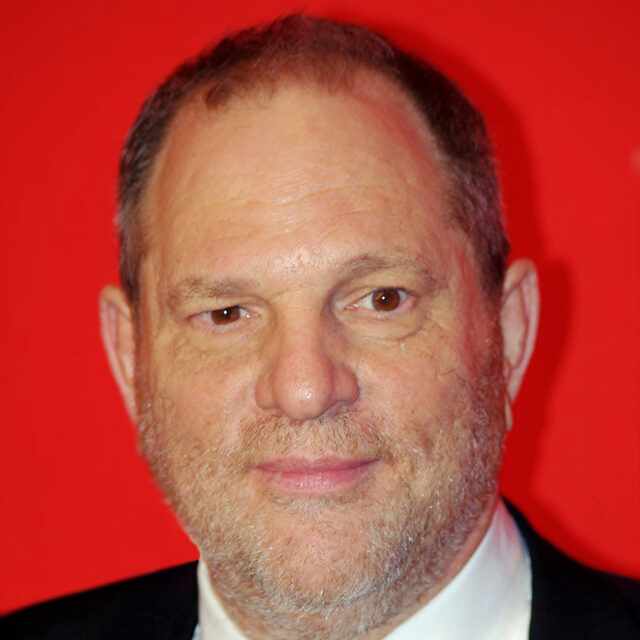
Harvey Weinstein’s accusers ‘all said no,’ prosecutor tells jury as rape retrial ends

COMMONS.WIKIMEDIA.ORG

NEW YORK — A prosecutor on Wednesday told jurors in Harvey Weinstein’s Manhattan retrial that the evidence clearly showed the former movie mogul raped three women, pushing back on a defense lawyer’s efforts to paint the accusers as liars.

Prosecutor Nicole Blumberg picked up where she left off during closing arguments the previous day, seeking to show that Mr. Weinstein forced himself on the women despite their pleading with him to stop.

The Academy Award-winning producer and Miramax studio co-founder is accused of raping aspiring actress Jessica Mann in 2013 and assaulting the two other women in 2006 and 2002. Mr. Weinstein, who has denied ever having non-consensual sex or assaulting anyone, has pleaded not guilty. The trial began in April.

“Members of the jury, he raped three women. They all said, ‘no,’” Ms. Blumberg said.

Mr. Weinstein, 73, is on trial for a second time after a New York state appeals court threw out his conviction in April 2024. Experiencing a litany of health problems, Mr. Weinstein was present in court on Wednesday in a wheelchair, wearing a dark suit and tie.

Before Ms. Blumberg’s pitch to jurors Wednesday, defense lawyer Arthur Aidala twice moved for a mistrial based on the prosecutor’s arguments the previous day, but the motions were swiftly denied by state Supreme Court Justice Curtis Farber.

The 12 jurors are due to begin deliberations after closing arguments are completed, and Mr. Farber instructs them on the law.

Ms. Blumberg on Tuesday called Mr. Weinstein a serial predator who promised career advancement in Hollywood to women, only to then coax them into private settings where he attacked them. She urged jurors Wednesday to disregard the defense’s claim that Mr. Weinstein was on trial because he was famous and that prosecutors were trying to criminalize consensual sex.

“We heard a lot about ‘policing the bedroom’ yesterday,” Ms. Blumberg said, referring to Mr. Aidala’s closing argument on Tuesday. “We don’t want to police bedrooms either — unless you’re forcibly raping someone inside them.”

Mr. Aidala on Tuesday accused the three alleged victims of lying on the witness stand out of spite after consensual sexual encounters with Mr. Weinstein failed to deliver them Hollywood stardom.

“They are lying about what happened. Not about everything, but about a small slice — just enough to turn their regret, their buyers’ remorse, into criminality,” Mr. Aidala said of the accusers.

The lawyer hoisted a dozen poster-sized placards showing e-mails from the accusers where they seek Mr. Weinstein’s company after the alleged attacks, saying they showed the women were lying.

Mr. Weinstein faces a maximum sentence of up to 29 years in prison if convicted on all charges. He already will likely spend the rest of his life in prison due to a 16-year prison sentence given to him after being found guilty in December 2022 of rape in California.

He was convicted of rape by a jury in the previous trial in Manhattan in February 2020, but the New York Court of Appeals threw out the conviction and ordered a new trial, citing errors by the trial judge. Mr. Weinstein had been serving a 23-year sentence in a prison in upstate Rome, New York, when the conviction was overturned.

That conviction was a milestone for the #MeToo movement, which encouraged women to come forward with allegations of sexual misconduct by powerful men. More than 100 women, including famous actresses, have accused Mr. Weinstein of misconduct.

Mr. Weinstein has been held at New York City’s Rikers Island jail since his conviction was overturned. He has experienced several health scares while being held at Rikers, and in September was rushed to a hospital for emergency heart surgery. — Reuters

An unhappy worker’s exit interview

I’m resigning due to my poor work relations with my boss. If the human resource (HR) department conducts the exit interview, how should I manage the difficult questions? Should I choose not to participate? Please advise. — Lonely Heart.

A resigning employee may not have an option, especially when the organization makes the exit interview a condition prior to the release of terminal pay, clearance, quit claim, and employment certificate, among other documents. You need to check management policies on that as different organizations have different approaches.

Indeed, when an employee decides to leave, the exit interview often feels like a test — just another company requirement before handing in the ID, laptop, and other documents. But for a resigning worker who is unhappy with their employer, the exit interview presents both a challenge and an opportunity:

My advice would raise some eyebrows. Don’t attempt to burn the bridge with anyone, with HR or management, including your boss. Handle the exit interview professionally without besmirching the reputation of your boss even if they’re the reason for your departure. This is for your own good.

Badmouthing your boss could cause delay or stop the release of your accrued salary and benefits. Even after your resignation, your boss could attempt to destroy your reputation with prospective employers, assuming that you use the organization as a reference.

Conversely, when handled well, an exit interview can be a platform for meaningful feedback and a dignified conclusion to a difficult chapter. Handled poorly, it can reinforce the very issues that drove your resignation in the first place.

CONSTRUCTIVE MOVES

It’s tempting to let it all out with a vengeance. You’re already leaving, so what’s there to lose? But the goal of an exit interview isn’t to unload frustrations; it’s to provide useful insights professionally. Sharing your experiences can be valuable, but only if done with clarity and composure using the following approach:

One, reframe positively and reasonably. Instead of saying, “My boss was a micromanager” give it a positive twist: “I felt I was over-directed, which limited my ability to take the initiative or solve problems independently.” Hold back; such a statement could boomerang due to your poor performance.

If your silence could be interpreted as a threat, then tell a white lie. Pretend that you’re planning to attend graduate school or attend to an ailing child, spouse, or parent. Of course, your white lie must not contradict the letter and spirit of your resignation letter.

Two, focus on systemic problems. Exit interviews are better appreciated when you help an organization understand its widespread systemic and procedural issues. It’s better than emphasizing the boss’s negative style. It’s better than focusing on isolated incidents like an interpersonal conflict with your boss, which can end up being ignored.

If you want to zero in on the toxic style of your boss, paint a picture that points to a broader trend involving other workers within the same department. Rather than recounting a one-time disagreement, highlight a recurring challenge: “I observed the boss’s indecisive action in many of standard decisions and special projects.”

Three, offer suggestions, not just criticism. It’s easy to point out what’s broken. It’s difficult, but more valuable if you focus on how, it might be fixed. Constructive suggestions demonstrate goodwill and signal that, despite your frustrations, you want to see the organization succeed.

For example: If you’re seeing lack of coordination among departments, suggest weekly, brief, 15-minute departmental standup meetings following an e-mail to all concerned. It could create better alignment. Even if your suggestions aren’t implemented, you will have successfully shown maturity and professionalism.

Four, define the long-term perspectives. Framing your feedback in terms of what could help the organization or your colleagues in the future makes it easier for HR or top management to listen without becoming defensive. Try saying, “Looking ahead, I believe investing in clearer career progression paths could help retain top talent.”

This shift in tone can make a major difference. It moves the conversation from personal dissatisfaction to constructive foresight — something decision-makers tend to respect.

CONTINUE TO HOLD BACK

As I said earlier, there are times when giving feedback may not feel safe, productive, or worth the emotional effort. If your trust in your boss is very low, then don’t expect HR to support your concerns. It’s better to limit what you can share. Even a simple, “I prefer not to go into detail,” can raise eyebrows.

Anyway, you are not obligated to share more than you’re comfortable with. An exit interview is not your final judgment of a work relationship. Your priority is securing an honorable discharge and early release of your terminal pay and important documents.

By being tactful and keeping the conversation forward-looking, you maximize your impact while preserving your professional integrity. That’s the best way to close a chapter — with clarity, not regret.

Share your workplace story with REY ELBO for his insights. E-mail elbonomics@gmail.com or DM him on Facebook, LinkedIn, X, or via https://reyelbo.com. Anonymity is guaranteed.

Whose side is the US on? Doubts strain alliances

USS Mobile (LCS-26), HMAS Warramunga (FFH-152), JS Akebono (DD-108), BRP Gregorio Del Pilar (PS-15), BRP Antonio Luna (FF-151) and BRP Valentin Diaz (PS-177) sail in formation off the coast within the Philippine Exclusive Economic Zone on April 7, 2024.

Winston Churchill told a story of an 1895 encounter, as a young cavalry officer, with the statesman William Harcourt. After some discussion of great issues, Churchill asked eagerly: “What will happen then?” Harcourt replied, with Victorian complacency: “My dear Winston, the experiences of a long life have convinced me that nothing ever happens.”

Few people 130 years later could succumb to any similar delusion in a world that seems to have consigned itself to perpetual turmoil. Most recently, Poland has frightened European capitals by electing a right-wing, anti-European Union president. The British government published a long-awaited strategic defense review, which proposes rearmament to bring about “war-fighting readiness,” according to Prime Minister Keir Starmer, as Ukraine launched stunning drone strikes against five bomber bases deep inside Russia.

There is more. At a conference in Singapore last weekend, France’s president warned of dire consequences for democracies if Russia prevails in Ukraine. US Defense Secretary Pete Hegseth urged Asian nations to stand tall against Chinese aggression as Australia’s defense minister challenged China to justify its huge military and naval buildup. His Philippine counterpart said China has been “absolutely irresponsible and reckless in appropriating most, if not all of the South China Sea, and the world cannot tolerate this.”

These various words were uttered, those events took place, many thousands of miles apart. But the common strand is fear that the threat of major conflict among nations is growing, that the international rules-based order has collapsed.

Let us first review some of the stuff said in Singapore. Washington sought to message Asian nations that it is time to pick a side — to fall in behind the US to confront the rising menace from China not only against Taiwan, but against national sovereignties across the region. Unfortunately, it’s hard for Donald Trump to rally Asian nations to military solidarity, while waging a trade war against most.

“By assailing interdependence,” Joseph Nye and Robert Keohane write in the current issue of Foreign Affairs, “he undercuts the very foundation of American power.” Moreover, there are concerns that Trump might suddenly spring a deal with North Korea’s Kim Jong Un involving a major US withdrawal from South Korea. For the purposes of this essay, it is unimportant whether Washington really is close to offering Kim an olive branch. What matters is that the fear of such a traumatic upheaval exists, in Seoul and elsewhere. There is little incentive to join an Asian-Pacific security pact, as some strategic gurus propose, when the US administration is capable of tearing up any deal a week after signing.

Among the few countries willing to hang in with Trump is Australia. Although outraged by his lunges into tariffs, the Australians remain more clearly aligned than any other country in the region, chiefly because of aggressive Chinese initiatives against themselves. Canberra has invested big political capital in the Aukus pact with Britain and the US. Aukus calls for the three countries to build and deploy a fleet of nuclear submarines Down Under. While it will be years before this comes to reality, the Australians know that, even if they go to sleep for a decade, China will still be there when they wake up.

Meanwhile in Europe the same uncertainties about American intentions loom large. In every capital, the question hangs in the air: will Trump withdraw America from NATO, and US forces from Europe?

Some politicians draw comfort from the fact that, five months into this tumultuous presidency, Trump has given no sign that he intends to pull the plug. But suffusing the British strategic defense review, though nowhere articulated, is the same doubt pervading discussion in Singapore, about whether an American partnership can continue to be relied upon.

The UK’s intended message, supposedly to Moscow but really to Washington, is that the British are stepping up: that we are getting serious about rearmament, as Trump has long demanded. Unfortunately, Starmer has no plans to spend remotely the sort of money necessary to restore credibility to our shrunken armed forces.

A back-of-an-envelope guesstimate — informed by conversations with senior military — suggests that an immediate $30 billion would be needed. Nothing like that amount is on offer from a Treasury under desperate pressure for health and welfare funding. After years of profligacy — and rising interest rates — Britain now spends almost twice as much on debt interest as on defense.

Nonetheless, driven by fears both about what Russia could do next and about what the US may stop doing, Britain is participating in defense conversations with France, Germany, and the Nordic states. These are hampered by the fact that the southern Europeans and Hungary aren’t interested. They refuse to find money for more weapons. The Greeks, for instance, partly inspired by a shared commitment to the Orthodox Church, display notable sympathy for the Russian cause in Ukraine.

Thus there is disunity among NATO members. The Northerners know that, in forging realistic operational plans, they’ll have to go it alone. There can no longer be a solid front, such as existed in the Cold War. They also have a mountain to climb in rationalizing European arms procurement — with 29 different classes of warship, 17 types of tank, 20 different combat aircraft, and 17 artillery systems.

Common ground among all the European governments, however, is that we are living in a new world: The US no longer represents a rock such as anchored the West for so many decades, but more like sand, shifting underfoot.

In their essay, Nye and Keohane deplore the fact that Trump seems to understand only coercion as a tool to bend allies to his will. He ignores persuasion and the huge past importance of common beliefs and purposes — soft power.

In Singapore, the US defense secretary sought to brush aside discussion of tariffs, instead focusing exclusively on the need for increased arms spending. His audience wasn’t having this. The Malaysian prime minister savaged what he called “the onslaught of arbitrary imposition of trade restrictions.” In other words, America cannot credibly be a military friend and a trade enemy.

The equation is different in Europe. So desperate are governments to keep American forces on the continent that they are willing to endure barrages of insults, and indeed of tariffs, without risking an absolute breach with Washington. But it is hard to sustain alliances amid doubts about which side America is on, save its own.

Perhaps the most significant fact about Ukraine’s drone strike on Russian bomber bases is that Kyiv’s claim that it gave Washington no prior warnings seems plausible. The Administration simply couldn’t be relied upon to withhold this vital operational secret from Moscow. Many other nations feel the same way. The Trump administration’s conduct has destroyed trust, the most precious commodity among friends. This won’t readily be restored. — Bloomberg Opinion


America’s doors to global leaders

In an era defined by complex global challenges — climate change, migration, democratic backsliding, and technological upheaval — the world needs visionary leadership more than ever. Yet at the very moment when international cooperation and skilled public leadership are most needed, America is turning its back on one of its greatest soft power assets: higher education. Nowhere is this more evident — or more troubling — than in the Trump-era immigration restrictions targeting international students.

For decades, the United States has cultivated global leadership through elite programs such as the Edward S. Mason Fellowship at Harvard Kennedy School (HKS). Designed for mid-career public servants from the Global South, the Mason Program is a crown jewel in America’s public diplomacy. It has quietly trained presidents, ministers, diplomats, and change-makers from over 130 countries — leaders who return home not only better equipped to serve, but with a deep understanding and appreciation of American values.

As a disclosure, this writer had the privilege of joining this program in the late 1990s and modesty aside, the learnings from the program mattered a lot in my public service career in small business assistance and development banking. I had the opportunity to take courses at both the Harvard Business School and the Massachusetts Institute of Technology. But my case is a minor one compared to other illustrious graduates.

I had as a classmate former Tourism and Interior and Local Government Secretary Rafael Alunan who continues his advocacies beyond government service. Another DILG secretary was former Naga Mayor Jesse Robredo who enriched his approach to governance and was a Ramon Magsaysay Awardee for Government Service. Patricia Sto. Tomas was Secretary of Labor and Civil Service Commission Chair who championed labor rights and strengthening of the bureaucracy. Former DSWD Secretary Corazon Dinky Soliman spearheaded significant programs aimed at poverty reduction and social protection. Comebacking senator Francis Pangilinan is an advocate for food security and education. I can go on about active Filipino HKS Alumni today but space will not be sufficient. Let me add from Asia, Tharman Shanmugaratnam, Singapore’s ninth President and past deputy prime minister and finance minister.

The Mason Fellowship exemplifies the transformative power of international education. Take Ellen Johnson Sirleaf, the first female president of Liberia and a Nobel Peace Prize laureate. A Mason Fellow in the 1970s, she returned to lead her country out of civil war and rebuild democratic institutions. Or Felipe Calderón, who as president of Mexico launched healthcare reforms and championed environmental sustainability. Or Luis Alberto Moreno, who as head of the Inter-American Development Bank helped steer billions in infrastructure investment across Latin America. These are not just alumni — they are living proof of what a year at Harvard, surrounded by peers from every corner of the globe, can unleash.

The genius of the Mason Program lies not just in the curriculum — although that is world-class — but in the connections it fosters. Fellows learn from each other, forge cross-border alliances, and share best practices that often become blueprints for reform back home. In the Philippines, institutional reform and inclusive growth remain perennial challenges for which the Mason Program can provide academic insights and exposure to policy innovation. It’s a win-win proposition: countries benefit from more capable leadership, and the US earns decades of goodwill, influence, and moral leadership.

When the Trump administration threatened to ban international students attending online classes during the COVID-19 pandemic, it sent shockwaves through the global academic community. Although the policy was reversed under pressure, the damage was done. The message was clear: international students, even the best and brightest, were not a priority. This retreat has dangerous implications for both America’s standing in the world and the future of global development.

But what happens when these pathways to better education are blocked and when promising young reformers in the Philippines, Nairobi, Islamabad, or La Paz are denied visas or discouraged from applying in the first place?

We get a world where the US is sidelined in global conversations. America loses its edge in development diplomacy. And worst of all, we leave a vacuum that authoritarian powers are all too eager to fill.

The restrictions of the earlier Trump years revealed just how fragile the bridge between American institutions and global talent can be. Though President Biden’s administration has taken steps to repair the damage, the uncertainty lingers. Enrollment from developing countries has not yet fully recovered, and many students are now looking to countries like Canada, the UK, or Germany — places that actively court global talent with clear, welcoming policies.

The lesson is simple: leadership is not born in isolation. It is cultivated, challenged, and sharpened in diverse, dynamic settings like Harvard Kennedy School. Programs like the Mason Fellowship are not acts of charity — they are investments in a more stable, prosperous, and democratic world.

If the US wants to lead that world, it must start by opening its doors again. As Yurong Jiang, MPA ’25, said in her graduation address, “we are bound by something deeper than belief: our shared humanity.”

The views expressed herein are his own and do not necessarily reflect the opinion of his office as well as FINEX.

Benel Dela Paz Lagua was previously EVP and chief development officer at the Development Bank of the Philippines. He is an active FINEX member and an advocate of risk-based lending for SMEs. Today, he is independent director in progressive banks and in some NGOs.