Home Blog Page 1407

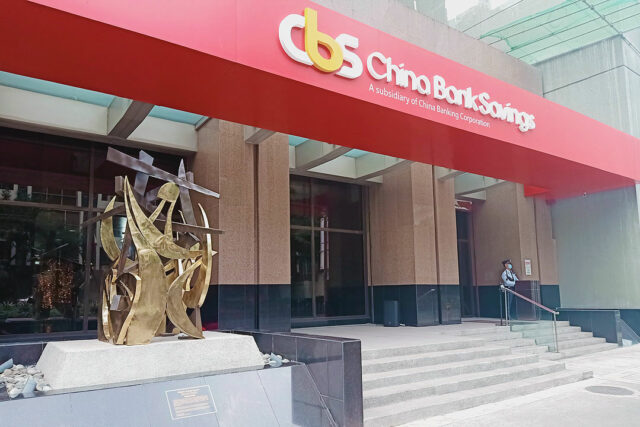
China Bank Savings targets 20% loan growth

BW FILE PHOTO

CHINA BANK Savings, Inc. (CBS), the thrift banking arm of listed China Banking Corp. (Chinabank), is aiming to grow its loan book by 20% this year and double its net income in the next five years, driven by the retail sector and its target to expand its lending to small and medium businesses.

“For this year, we’re aiming to grow our loan portfolio by approximately 20% from our December 2024 numbers. Our drivers are mostly on the retail side… We aim to double our income in five years’ time,” CBS President James Christian T. Dee said at a media briefing  following their annual stockholders’ meeting on Thursday.

CBS’ net income grew by 22.51% year on year to P566 million in the first quarter from P462 million a year prior, based on the quarterly report of its listed parent.

Its balance sheet for the period showed that its gross loan portfolio expanded to P145.93 billion at end-March from P135.51 billion at end-December 2024, while its net loan portfolio rose to P143.61 billion from P133.04 billion.

Meanwhile, deposits grew to P170.73 billion at end-March from P166.79 billion at end-December 2024.

In 2024, the bank booked a net profit of P2.17 billion, rising by 18.75% year on year from P1.83 billion in 2024, its audited financial statement posted on its website showed. This translated to a return on assets of 1.25% and a return on equity of 12.96%.

Mr. Dee said this was the first time that CBS booked a net income above P2 billion. “On top of that, the bank also grew its customer base by 20%, reaching the 1 million customer mark for the first time.”

Earnings growth was mainly driven by higher interest income as the bank’s loans rose by 21.19% year on year to P133.69 billion, driven by home, auto, and payroll loans.

Mr. Dee said CBS wants to expand its small and medium enterprise (SME) loan book this year.

“CBS was the product of a few acquisitions, and we had to clean up a certain part of our loan portfolio from years back. I think it’s about 10 years ago with the acquisition of Plantersbank (Planters Development Bank). So, since then, we’ve cleaned the shop and so far, [our SME portfolio] is nice and shiny and we’re ready to grow it properly going forward,” he said.

CBS’ parent Chinabank took over Plantersbank in 2014. The SME-focused thrift bank was merged with CBS in 2015, with the latter as the surviving entity.

The bank will also launch the CBS Deloitte Environmental and Social Resilience Tool within the year to help both their corporate and SME clients gauge their sustainability risks.

Mr. Dee added that they are “cautiously optimistic” on their outlook for this year amid slowing economic growth and global trade uncertainties.

“We are very confident the BSP (Bangko Sentral ng Pilipinas) will be able to navigate these unfolding circumstances and guide the banking system in promoting economic growth. We do remain concerned on what higher tariffs mean for Philippine manufacturing, but we also remain confident in the Philippine government’s ability to bolster local industries. Overall, we must remain vigilant,” he said.

Meanwhile, CBS Chairman Ricardo R. Chua said the entry of BDO Network Bank, Inc. into the thrift banking space is unlikely to affect their own long-term targets.

BDO Network Bank in May received central bank approval for its conversion into a thrift bank from a rural bank. It had assets worth P124.05 billion at end-2024.

Meanwhile, CBS was the second-largest thrift bank in the country in asset terms in 2024 with P189.78 billion.

Both banks are part of the SM Group.

“The Philippines has been growing because of the consumer market. Consumer spending has been a major driver of the economy. So, we think that the consumer side of the business is going to grow significantly. We have a very young population; everybody wants to work, everybody wants to be productive. So, we thought it’s a growing market. Having BDO is a welcome development, but it will not derail us from whatever plans we have in growing the bank,” Mr. Chua said.

“We are happy to welcome them into the thrift banking space as there is a real need for more players to service the financial needs of the unbanked. Despite all the advances in banking, from policy to technology, we continue to encounter communities that are underserved. Our company vision to become the leading savings bank preferred by the market we serve is rooted in service. But that goal is secondary to fulfilling the mandate given to us by the BSP of providing financial services to all Filipinos. Thus, we view the entry of more reputable and stable banking institutions into the thrift banking space as an opportunity for collaboration between competitors for the benefit of the unbanked and all financial consumers,” Mr. Dee added.

CBS also aims to add five more branches this year from the current 170, mostly in Visayas and Mindanao, he said.

“We noted a huge potential in the southern part of the Philippines… We do want to strengthen our network in the southern part of the Philippines.” — A.M.C. Sy

Learning from history: Five points and a caution

PHILIPPINE STAR/RYAN BALDEMOR

The other day, we were one of the three panelists during the 6th General Membership Meeting of the Financial Executives Institute of the Philippines or Finex. The other two were Finance Assistant Secretary Neil Adrian S. Cabiles and Metrobank Chief Economist Nicholas Mapa, a former colleague at the Bangko Sentral ng Pilipinas’ Department of Economic Research. Their presentations focused on the economic and financial aspects of the theme “Philippine Economic Outlook: Policy Shifts and Market Reactions After the 2025 Elections.”

Mr. Cabiles was more than convincing in saying that the Philippine Government is moving heaven and earth to invite foreign investors to invest in the Philippines, get the infrastructure projects completed as scheduled, and ensure that business processes do not pose any obstacles to doing business in this country. Mr. Mapa sounded his well-crafted five calls in the Philippines, particularly on monetary policy, adaptation to the US tariff policy, and the direction of the Philippine peso — ingenious and to the point.

Let me share my brief presentation with some edits for publication.

My proposition is that the 2025 mid-term elections were not exactly a game-changing political event, whether in terms of policy shift or market reaction. We need to learn from history.

First, notwithstanding what appears to be a mild repudiation of the Marcos administration’s senatorial candidates, with two opposition candidates emerging in the top five, and some unknown but qualified candidates surpassing the votes obtained by some candidates of both the Administration and former President Rodrigo Duterte’s PDP Laban, the change in the Cabinet was far from a revamp. There was no cosmetic surgery done, there was only a slight tweak in the shade of the foundation and a little powdering on the surface. “Not business as usual” might be a misnomer.

Second, based on that, we don’t expect that there will be a critical rethink of economic policy moving forward. Economic management is to continue despite the fact that the Administration candidates suffered something of a rebuke in the polls because of issues on political governance and economic management. We recall that in the recent Pulse Asia survey, respondents rated economic issues like inflation, lack of jobs, poverty, and wages to be the most urgent national issues. One good affirmation of this survey was the result of another survey. The Stratbase-SWS reported in late April, a month before the May 2025 mid-term elections, that over 14 million Filipino families considered themselves poor. This is around 55% of all Filipino families. This is concerning, to say the least. To be sure, there have been improvements in these metrics but their pace is more glacial than urgent.

Third, we differ from the view that the arrest of former President Duterte was an important determinant in the final outcome of the senatorial elections. True, prior to the arrest, more Administration candidates dominated the top 12 slates in polls, but the final outcome showed only a handful of them kept their standing and more Duterte candidates made it to the winning circle. The fact that two opposition candidates finished the race with a very impressive No. 2 and No. 5 in part disproves such a proposition. Such an arrest was correct and in keeping with justice and a repudiation of the culture of impunity in this country. This was also long overdue. What would be earth-shaking would be the provisional release of the former president by reason of his advanced age. That could very well license every senior official of governments around the world to commit crimes against humanity.

Our own take is that troll farms managed to turn it around and shaped it into a rallying cry for justice, claiming the International Criminal Court (ICC) move with the Marcos administration’s cooperation, as being an assault to our independence and sovereignty. Troll farms were unrelenting in proclaiming — and some senators of the Republic chiming in ahead of the impeachment of Vice-President Sara Duterte — that the arrest was wrong. Obviously, some failed to discern between facts and fiction, fake news and real news. Duterte supporters virtually weaponized the ICC case to deflect close scrutiny of his policy on drugs and his administration’s corruption especially during the pandemic. If left unchecked, some social destabilization is bound to ensue, something that discourages, rather than inspires, business confidence.

Fourth, the impeachment of the vice-president could have been an excellent opportunity to demonstrate to the world that there is rule of law in the Philippines and that justice prevails. She has been accused of serious high crimes that justify impeachment. What is sad is that even President Ferdinand Marcos, Jr. seems to be vacillating. The President should remain neutral and allow the wheel of justice to roll, whoever would be on trial. Instead, if the President himself does not believe that Sara should be impeached, then there is a tacit admission that the Articles of Impeachment hold no water. Some people could be manipulated into believing that this could imply that the former President must also be innocent.

As proof, we have seen the proliferation of AI-generated videos shared by no less than a senator of the Republic showing students expressing dissent against the impeachment of Sara Duterte. What is most appalling is that the senator himself was quoted to have agreed with the message of the AI-produced videos. He himself sponsored on the Senate floor that the Articles of Impeachment submitted by the House of Representatives be dismissed. Yes, only in the Philippines can judges lawyer for the accused.

Contrary to what is being peddled that impeachment will not do any good to the people, and that impeachment is not something that the people can eat, justice, the rule of law, and good governance cannot likewise be eaten but they are the fundamental bedrock of our democracy. This is not exactly appealing to investors; what they are seeing is a soft republic driven by some vested interests.

Fifth, the results of the 2025 mid-term elections did not seem to hit the President strongly enough for him to make the necessary pivot to ensure policy review, economic reform, and political stability. Instead of a cabinet revamp, we had a tweak; instead of political decisiveness, we had political indecision.

But recently, the President himself admitted that he has been receiving false accomplishment reports on government projects. “These fools are taking me for a ride. That’s when you realize, these people aren’t reliable, so we need to find someone else,” the President was quoted as saying.

No wonder, the President announced that the entire government is on probation! That should call for an appropriate policy shift that should be announced in the State of the Nation address this July.

The last three years should mark a difference in investor confidence in the medium-term and long-term prospects of the Philippine economy. No more “business as usual.”

What we have today is economic growth that is considered decent enough to be one of the fastest in the world. But actually, given the enormous economic scarring of the pandemic starting in 2020, and the considerable, serious incidence of poverty and income inequality in the Philippines, we should be growing beyond the official target of 6-6.5%. But what is this that we hear, that the Development Budget Coordination Committee is about to review the macroeconomic assumptions of the National Government for a possible downward adjustment in the growth targets?

Thus, investors see a mixed picture.

As the ASEAN Briefing recently emphasized, we may have a fundamentally strong economy, but we are also faced with political headwinds and structural challenges. We need stronger leadership in the economy, one that adheres to the tenets of good governance and eschews corruption such that it pays to do business here. We badly need fiscal consolidation to avoid a large fiscal deficit and overreliance on public debt. Introducing technology-driven innovation in all economic sectors could minimize productivity drag and achieve higher economic efficiency and growth. Such structural transformation could ensure durable, low, and stable inflation while the financial system continues to be supportive of economic growth. If they see that infrastructure is being enhanced for greater connectivity, that public health and education are being upgraded for a highly skilled human capital, and that social services are being expanded, investors can see their profitable future in the Philippines.

Otherwise, if investors fail to see this critical mass of economic changes happening, we will continue to remain just at the threshold of economic progress and prosperity as in the last few decades, our dream of breaking out of the lower middle-income trap would remain in our deep sleep.

Finally, it pays to be reminded of a quote from Otto Von Bismarck who said that: “What we learn from history is that no one learns from history.” This is existential because as George Santayana also warned us, “Those who do not learn from history are doomed to repeat it.”


Diwa C. Guinigundo is the former deputy governor for the Monetary and Economics Sector, the Bangko Sentral ng Pilipinas (BSP). He served the BSP for 41 years. In 2001-2003, he was alternate executive director at the International Monetary Fund in Washington, DC. He is the senior pastor of the Fullness of Christ International Ministries in Mandaluyong.

Arnold Schwarzenegger and Carrie-Anne Moss make magic in Fubar season 2

LOS ANGELES — Austrian and American actor Arnold Schwarzenegger had to admit that it took him a lot of practice to nail the tango scene with Canadian actor Carrie-Anne Moss for season 2 of the Netflix action-comedy series Fubar.

“We practiced. We practiced a lot, and she didn’t need as much practice as I did, but I really practiced,” the former California governor told Reuters.

The Terminator actor recalled doing the first take for the dance scene and impressing everyone with how ready they were.

“They just thought we were rehearsing, but they did not know that we were that prepared for the whole thing,” Mr. Schwarzenegger said with a smile.

Fubar season 2, created by Nick Santora and produced by Skydance Television and Blackjack Films, premiered on Netflix last Thursday.

The story follows Luke Brunner, played by Mr. Schwarzenegger and his daughter Emma, played by Monica Barbaro, who are both Central Intelligence Agency (CIA) operatives.

Their fellow CIA team members include Barry Putt, played by Milan Carter, Boro Polonia, played by Gabriel Luna, Roo Russell, played by Fortune Feimster and Aldon Reese, portrayed by Travis Van Winkle.

In season 2, Brunner is back to working with his CIA team, but things take an unexpected turn when he encounters his ex-lover Greta Nelson, played by Carrie-Anne Moss.

Greta is a former East German spy who ends up going up against Brunner in both the tango and a tussling battle.

“Most of my scenes are with Arnold, so we developed this incredible friendship,” Ms. Moss said.

Mr. Schwarzenegger humorously recalled the Matrix actor bringing what he dubbed as “secret oil” to the set and putting it behind his ears before shooting a scene.

“Peppermint oil. I’m a big peppermint oil or just essential oil person,” Ms. Moss clarified.

“It was like some magic power because as soon as she smeared the stuff behind my ears, I mean it was like ‘pum!’ and we were kind of out of the gate doing our scenes in the most perfect way,” Mr. Schwarzenegger added. — Reuters

Grounding in strategy seen as key to navigating global disruptions

IE BUSINESS SCHOOL Dean Lee Newman at a panel discussion at the South Summit Madrid on June 4. — IE UNIVERSITY

By Beatriz Marie D. Cruz, Reporter

MADRID — Business schools must embrace the concept of “strategic foresight” in their teaching to help future executives navigate constant economic and technological disruption, an academic said.

“We think that being able to navigate, understand, and make decisions in an increasingly complex world is becoming more and more important for business students,” IE Business School Dean Lee Newman told BusinessWorld on the sidelines of the South Summit Madrid earlier this month.

Strategic foresight teaches future leaders the ability to analyze and explore possible futures to help their organizations prepare for change.

“The first step is to identify the forces of disruption that business people should take into account,” he said. “Then you have to give students the tools to analyze these forces of disruption, to understand them, and to make sound decisions.”

“You need to learn things like understanding (the impact of) geopolitics, economic shocks, as well as health, tech, and war on your supply chain,” Mr. Newman said.

About 69% of chief executive officers in the Philippines believe that their businesses will only remain economically viable for as long as 10 years if they continue on their current path, according to the PricewaterhouseCoopers (PwC) 28th Global CEO Survey.

This metric reflected business leaders’ concerns over tech disruption, changing consumer preferences, and heightened competition, it said.

According to Mr. Newman, today’s business school curricula must teach future executives how to manage both humans and tech as artificial intelligence (AI) continues to disrupt work.

“Managers need to know not just how to orchestrate work, but they need to understand technology well enough to know what tech to hire on the team,” he said.

Madrid’s IE University offers a specialized course, “AI for Productivity,” which teaches undergraduate and post-graduate students the proper use of AI for market research, writing, and brainstorming.

“We’re starting to now push and embed different types of AI tools into different parts of our education based on the type of business function that the person is studying in a class or in a program,” Mr. Newman said.

According to the PwC survey, 88% of business leaders expect moderate to large AI integration in their business processes, workflows and technology platforms in the next three years.

However, students have been using AI to cheat on their tests, posing a significant challenge among traditional schools globally, Mr. Newman said.

As such, business schools must revamp how they assess students to focus on project-based learning, he said.

“Students like real projects and they like exposure to the company and the mentors, which helps them get jobs,” Mr. Newman said.

“(For example,) maybe a Philippine company wants to expand to the Singapore market… so the students have to do the project… And if this project team delivers… they get a better grade,” he noted.

Co-organized by IE University, the South Summit Madrid is an annual global conference on innovation and entrepreneurship. Its 14th Edition was held between June 4 and 6 in Madrid.

PHL banks to post double-digit loan growth, JPMorgan says

PHILIPPINE BANKS are expected to post double-digit loan growth this year on the strength of the consumer sector, JPMorgan Chase & Co. said.

The bank said in a market note that they expect Philippine banks’ loans to grow by 10-13% this year.

“Growth drivers have broadened, with consumer (credit cards) and power industry supporting growth, along with real estate. While sector loan growth could decelerate due to economic uncertainty, large banks remain better positioned…, which should allow for market share gains,” it said.

Outstanding loans of universal and commercial banks grew by 11.12% year on year to P13.25 trillion at end-April from P11.91 trillion in the same period in 2024, latest Bangko Sentral ng Pilipinas (BSP) data showed.

Consumer loans jumped by 24% to P1.67 trillion as of April, a tad faster than the 23.9% increase recorded a month prior. The BSP said this was driven by an increase in credit card loans, which rose by 29.3% in April, faster than 29% in March.

“Over the medium term, we see low double-digit growth rates as sustainable, given long-term average loan growth to GDP (gross domestic product) growth multiplier of 1.2x and a still underpenetrated market (54% loan to GDP). Further, liquidity is not a constraint (versus other markets), with LDR (loan-to-deposit ratio) currently at 74% as of April,” JPMorgan said.

The bank added that it does not expect the BSP’s ongoing easing cycle to put material pressure on lenders’ margins.

It sees a net interest margin (NIM) compression of 6 basis points (bps) this year and 9 bps in 2026, noting that while each 25-bp rate cut from the BSP translates to a NIM decline of about 3-4 bps for large banks, this could be offset by the reductions in reserve requirement ratios (RRR).

“Banks that are able to deliver (loan) mix shift could further limit the impact of policy rates,” it added.

On Thursday, the BSP delivered a second straight 25-bp cut, bringing its policy rate to 5.25% amid a benign inflation outlook and slowing economic growth. It has now reduced benchmark borrowing costs by 125 bps since it began its easing cycle in August last year.

BSP Governor Eli M. Remolona, Jr. said they could deliver one more 25-bp cut this year, but noted that they remain watchful of emerging risks, including geopolitical tensions and the global uncertainties brought about by trade policy shifts among the world’s largest economies.

Meanwhile, in March, the RRR of universal and commercial banks and nonbank financial institutions with quasi-banking functions was reduced by 200 bps to 5%.

The ratio for digital banks was also lowered by 150 bps to 2.5%, while that for thrift lenders was cut by 100 bps to 0%, at par with rural and cooperative banks’ RRR, which was brought down to that level in October last year.

Mr. Remolona earlier said that the BSP is unlikely to reduce reserve ratios again this year.

JPMorgan added that even as the central bank continues to cut rates, it expects the country’s three largest private banks — BDO Unibank, Inc., Metropolitan Bank & Trust Co., and Bank of the Philippine Islands — to post double-digit return on equity over the next three years on the back of strong loan growth and benign asset quality.

“At the sector level, asset quality risks could emerge after a period of growth, specifically in higher-risk consumer segments. However, consumer loan penetration remains low, and growth could sustain for a while… Further, select banks have high NPL (nonperforming loan) coverage, providing additional buffers.”

It said it remains “constructive” on Philippine banks as the sector’s stocks have climbed by 7% year to date, outperforming the Philippine Stock Exchange index.

“We expect the outperformance to continue, with stocks poised to set higher highs and higher lows over the next 18 months as book value growth provides a baseline for stock price performance,” it said.

“Top-down risks could be under-appreciated (i.e., geopolitics, oil prices, foreign exchange), and could drive stocks in the very near term.” — BVR

Maynilad says RCA extension clears path for long-term plans

MAYNILAD/BW FILE PHOTO

MAYNILAD Water Services, Inc. said it is ramping up long-term investments in water infrastructure following the 10-year extension of its revised concession agreement (RCA), which aligns the contract period with its legislative franchise ending in 2047.

“The extension enables us to pursue long-term planning and investments needed to continuously improve service delivery to our customers,” Maynilad said in a statement on Thursday.

On Wednesday, the Economy and Development Council, formerly known as the National Economic and Development Authority (NEDA) Board, said it had approved the 10-year extension of the concession agreements for Maynilad and Manila Water Co., Inc.

The council approved the request of the Metropolitan Waterworks and Sewerage System to extend the RCAs of the two water service providers to ensure “sustained access to safe, reliable, and affordable water for Metro Manila and surrounding provinces.”

According to the Department of Economy, Planning, and Development (DEPDev), the extension is projected to generate additional government revenues of P50.3 billion.

“This development affirms the government’s commitment to ensuring affordable, reliable, and sustainable water services,” Maynilad said, adding that the extension promotes the public’s interest in affordable water security.

East zone concessionaire Manila Water said it has yet to receive the formal notice of approval.

“[Manila Water] shall make the appropriate disclosure upon receipt of the formal approval and full execution of the amendment to the RCA extending the concession term,” the company said in a regulatory filing.

Both companies secured the extension of their revised contracts until 2047, aligning with their 25-year legislative franchises.

Maynilad and Manila Water were each granted a 25-year legislative franchise under Republic Act Nos. 11600 and 11601, respectively. Both laws took effect in January 2022.

Manila Water serves the east zone of Metro Manila, covering parts of Marikina, Pasig, Makati, Taguig, Pateros, Mandaluyong, San Juan, portions of Quezon City and Manila, and several towns in Rizal province.

Maynilad serves portions of Manila, Quezon City, and Makati. It also operates in Caloocan, Pasay, Parañaque, Las Piñas, Muntinlupa, Valenzuela, Navotas, and Malabon. In Cavite province, it supplies water to the cities of Cavite, Bacoor, and Imus, and the towns of Kawit, Noveleta, and Rosario.

Metro Pacific Investments Corp., which holds a majority stake in Maynilad, is one of three Philippine units of Hong Kong-based First Pacific Co. Ltd., along with Philex Mining Corp. and PLDT Inc.

Hastings Holdings, Inc., a unit of PLDT Beneficial Trust Fund subsidiary MediaQuest Holdings, Inc., has an interest in BusinessWorld through the Philippine Star Group, which it controls. — Sheldeen Joy Talavera

Stuff to Do (06/20/25)


Watch REP’s comedy ART

REPERTORY Philippines (REP) has raised the curtain on Yasmina Reza’s Olivier and Tony award-winning comedy, ART, with a translation by Christopher Hampton and directed by Victor Lirio. It chronicles how relationships are strained when one of three friends buys a plain white painting for a lot of money. The 88th season’s play is on a limited run until June 29, with performances on Fridays and Saturdays at 8 p.m., and matinee performances on Sundays at 3:30 p.m., at the REP Eastwood Theater, Eastwood City Walk 2, Eastwood Ave., Bagumbayan, in Quezon City. The international cast features London-based Filipino-British actor Martin Sarreal, award-winning Manila-based actor Brian Sy, and British actor Freddy Sawyer.


Go to a Ryan Cayabyab lecture

NATIONAL Artist for Music Ryan Cayabyab will be leading the next iteration of “Pamanang Pilipino,” a lecture series on Filipino cultural heritage rooted in the permanent collections of the Ayala Museum and the Filipinas Heritage Library (FHL). In “Enhancing the Power of Music to Tell Our Story as Filipinos,” a lecture anchored on FHL’s Himig Collection, Mr. Cayabyab will talk about the role of music in conveying stories, strengthening connections, and sparking inspiration. It takes place on June 26, 4 to 6 p.m., at the Ayala Museum, Makati Ave., Makati City. Admission fees are P400 for regular attendees, P200 for seniors and persons with disabilities, and P150 for students and educators.


Talk art with artist Miguel Lorenzo Uy

FILIPINO visual artist Miguel Lorenzo Uy will be detailing the artistic perspective behind his media-based practice at a talk scheduled for June 26 at the De La Salle-College of Saint Benilde (DLS-CSB) in Manila. The event is organized by the Museum of Contemporary Art and Design as part of its public programs for the ongoing exhibition Moments of Delay. It is an exhibit that displays Screen, Mr. Uy’s multi-layered large-scale wall installation that parallels the theories of the beginning of the universe and technological static. The talk is set for 3 p.m. on July 26, at the 12th floor screening room of DLS-CSB, Pablo Ocampo St., Malate, Manila. Register via this link: tinyurl.com/MiguelLorenzoUy.


Watch Spotify’s K-Pop performance video series

SPOTIFY has launched a new series of K-pop performance videos, set to showcase live vocals and choreography by K-pop artists. The first artist to be featured is ENHYPEN, with their smooth choreography for “Loose (Korean Ver.),” a track off their latest mini-album DESIRE: UNLEASH. To watch the performance video, play the track on Spotify and hit the “Switch to video” toggle button while in the Now Playing view.


Get inspired by GMA’s Be-Cool travel series

THE next must-see destinations in Albay can be discovered through GMA Network’s latest two-part series titled Be-Cool The Express Adventure. It stars Sparkle artist and South Korean actor Kim Ji Soo, Sparkle singer Bey Pascua, actor and host Richard Juan, and content creator Sassa Gurl. The four celebrities go on a road trip to explore the sites of Albay. Created for the Tourism Promotions Board, the show’s goal is to showcase Albay’s views, food, and hospitable locals. GMA-7 will air the two episodes on June 21 and 28 at 10:15 a.m.


Listen to singer-songwriter dwta’s new single

THE melancholic folk-pop track “Kung Ikaw Ay Masaya” by Bicol-based Filipino singer-songwriter dwta has been released under Sony Music Entertainment. The song is featured in the official soundtrack for the comedy-drama Flower Girl starring Sue Ramirez, premiering in cinemas this month. Directed by multi-awarded filmmaker and screenwriter Fatrick Tabada, the quirky and deeply introspective film centers around Ena, a young woman in search of her lost “womanhood.” The song reimagines the nursery rhyme of the same name, with dwta turning it into a haunting serenade that conveys the frustration of being at the receiving end of mixed signals and false hopes. It is out now on all digital music streaming platforms.

Why politics falls into the short-termism trap

STOCK PHOTO | Original image from Freepik

By Jam Magdaleno

THE PROPOSED P200 across-the-board wage hike is now effectively dead. The House and Senate failed to reconcile their respective versions before Congress adjourned sine die. As far as legislative prospects go, the bill is unlikely to be revived. But its defeat in Congress belies its political utility. After all, it served its purpose: to reframe the administration’s post-election narrative and offer a short-term populist balm after a punishing electoral result.

The 2025 midterm elections dealt a blow to the administration, with its Alyansa Para sa Bagong Pilipinas slate winning only six of 12 Senate seats, below initial expectations. The “DuterTen” coalition of Vice-President Sara Duterte and former President Rodrigo Duterte secured five seats, led by top vote-getters Bong Go and Bato dela Rosa. Opposition figures also broke through, with Bam Aquino and Kiko Pangilinan placing second and fifth. Key upsets in strategic areas like Makati and Cebu, where independents and opposition-backed candidates triumphed, reflect growing public discontent with the administration.

Still, despite this erosion of popularity, the administration continues to enjoy strong support in the Lower House. It’s not difficult, then, to see why the idea of a wage hike was floated: as a signal of responsiveness to the plight of the working class, a gesture aimed at regaining the sympathies of future voters and perhaps currying favor with left-leaning parties and organizations.

The problem, however, is that the proposal was doomed from the start. A national wage hike fails on two counts: economic feasibility and political viability.

As I previously wrote here, a P200 wage hike would be counterproductive to the progress the Philippines has made in curbing inflation (currently at 1.3%). It would trigger inflationary pressure and severely impact micro, small, and medium enterprises (MSMEs), as well as the informal and semiformal sectors, which comprise the majority of Philippine businesses. The proposal was so widely criticized by economists that the administration’s own economic managers issued a co-signed statement opposing the bill.

This leads to the second point: the proposal is politically infeasible. One only needs to examine the administration’s consistent history of opposing blanket wage hike measures. The timing of the proposal’s release and the political environment in which it passed the House are instructive of its intent. The Senate, for its part, had floated a more modest P100 alternative. Senate President Chiz Escudero criticized both the timing and the substance of the House’s P200 proposal, stressing that the Senate had passed its own version over a year earlier, in February 2024. According to Escudero, the House “sat on” the issue for 16 months and only transmitted its version during the final days of the 19th Congress, leaving no time for bicameral deliberation.

Typically, for a bill of this scale and consequence, multiple LEDAC (Legislative-Executive Development Advisory Council) meetings would be held to ensure proper technical vetting and political support. The lack of such measures reveals that the bill’s objective was to generate political noise and consolidate voter goodwill, and not to enact actual reform.

Is this theatrical display new? Certainly not.

In 2009, amid corruption scandals and plummeting popularity, the Arroyo administration ramped up public spending ahead of the 2010 elections. The World Bank’s Philippines: Public Expenditure Review (2010) flagged a notable rise in off-budget expenditures, including congressional earmarks, that were misaligned with national development priorities.

In 2015, the Aquino government implemented the Salary Standardization Law IV, increasing public sector pay in the run-up to the 2016 elections.

And in 2018, in response to mounting backlash against the TRAIN (Tax Reform for Acceleration and Inclusion) law and a spike in inflation to 6.7%, President Rodrigo Duterte ordered the suspension of further fuel excise tax hikes — a move now widely seen as a concession to public frustration.

In this view, wage policies, like many economic policies in the Philippines, often follow the rhythm of political cycles rather than the guidance of data or long-term institutional planning. National Scientist Raul Fabella has argued that our weak institutions and non-programmatic political parties foster a system where policymaking is fragmented and opportunistic. Legislative behavior, he notes, is shaped less by ideology than by political survival. This phenomenon is best described as electoral clientelism, which persists in developing democracies with weak party systems. A 2019 World Bank study by its Governance and Anti-Corruption Team found that “short-term, distributive politics dominate policy making in the absence of credible political parties and programmatic platforms,” particularly in countries like ours, where institutional continuity is disincentivized by high turnover in leadership.

What this move sacrifices are opportunities for discourse on meaningful reform. On the discussion of wages alone, a 2023 Asian Development Bank study revealed that targeted wage subsidies, enhanced social protection mechanisms, and support for enterprise productivity are far more effective in sustainably raising real incomes. Programs such as the Small Enterprise Technology Upgrading Program (SETUP) or the Department of Trade and Industry’s Shared Service Facilities could be scaled up to improve labor productivity and generate quality employment. Yet these kinds of interventions are complex, technocratic, and yield results on timelines that rarely align with political ones.

On a broader level, the Philippines is at a critical juncture to rethink its economic direction in response to major global changes. US President Donald Trump’s tariff decisions disrupted international trade, labor flows, and supply chains. This evolving global environment, defined by rising protectionism, fragmented trade relationships, and the re-shoring of industries, challenges the version of globalization that we have long depended on. The traditional export-processing and BPO-driven growth models of the Philippines may no longer be sufficient. Instead, the country needs to reassess its position in global value chains and adopt policies that promote comparative advantage, technological adaptation, and domestic productivity.

Imagine if the government’s political capital were funneled into discussing structural reforms that can shape the economy for decades to come. One bold proposal comes from political economist Calixto Chikiamco, who advocates for a strategic depreciation of the peso to promote export-led and agriculture-driven growth. This idea addresses a long-standing imbalance in the Philippine economy: an overvalued peso, often mistaken for economic strength, favors imports and foreign consumption but harms local producers. It makes Philippine exports less competitive abroad and discourages investment in domestic manufacturing and farming.

A weaker, more competitive peso would help reverse this trend by making exports more attractive and imports more expensive, encouraging local production and potentially revitalizing neglected sectors like agriculture and light industry. Mr. Chikiamco also argues that an artificially strong currency has deepened the country’s dependence on OFW remittances and imports, increasing our exposure to external shocks. If managed carefully, with inflation controls and targeted investment, a calibrated depreciation could generate jobs in tradable sectors and build economic resilience.

Another area ripe for reform is the country’s approach to industrial policy. The Philippines has long relied on tax incentives as a primary tool to attract investments, yet numerous studies, including those by the Department of Finance and the Philippine Institute for Development Studies (PIDS), have found that many of these incentives are poorly targeted, redundant, and fail to deliver commensurate economic benefits. While the CREATE Law (the Corporate Recovery and Tax Incentives for Enterprises Act) aimed to introduce performance-based and time-bound incentives, implementation gaps remain.

Instead of leaning heavily on tax perks, the government could shift toward supporting industrial clusters and special economic zones that nurture supply chains in sunrise industries such as electronics, electric vehicle components, and agribusiness — sectors already identified in the Philippine Development Plan (PDP) 2023–2028 and the Board of Investments’ Strategic Investment Priority Plan (SIPP).

Modernizing the country’s outdated port infrastructure and addressing high logistics costs, which are among the highest in ASEAN according to JICA and the World Bank, would significantly improve our trade competitiveness. The Philippines ranked 60th out of 139 countries in the 2023 World Bank Logistics Performance Index, far behind regional peers like Vietnam and Thailand. These reforms are especially urgent in light of emerging global patterns: as multinational firms diversify away from China due to geopolitical tensions and tariff restructuring, countries with agile and responsive domestic systems — such as Vietnam, Malaysia, and Indonesia — have captured a larger share of redirected investments.

The point here is not merely to push for one policy over another. Rather, it is to argue that if the political capital currently used for populist theatrics were instead channeled into serious, evidence-based policymaking, we might finally break from our cycle of reactive and short-term governance. Ideas like currency reform, land market liberalization, and industrial clustering are not populist; they are radical in the best sense of the word: they aim to strike at the root of what has held our economy back for decades.

The broader argument, then, is not about prescribing which reform is objectively best. That question should always be the subject of rigorous analysis, deliberation, and empirical testing. What truly matters is whether our political institutions are built to incubate such ideas, whether complex or risky, and give them the oxygen they need to survive. Because in the absence of that, we are left only with the politics of spectacle and none of the substance that a nation’s long-term prosperity demands.


Jam Magdaleno is a political and economic researcher, writer, and communication strategist. He is the head of Information and Communications of the Foundation for Economic Freedom (FEF), a Philippine-based think tank.


ICE walks back limits on raids targeting farms, restaurants

REUTERS/LUCY NICHOLSON//FILE PHOTO

WASHINGTON — US immigration officials have walked back limits on enforcement targeting farms, restaurants, hotels and food processing plants just days after putting restrictions in place, two former officials familiar with the matter said, an abrupt shift that followed contradictory public statements by President Donald Trump.

US Immigration and Customs Enforcement (ICE) leadership told field office heads during a call on Monday that it would roll back a directive issued last week that largely paused raids on the businesses, the former officials said, requesting anonymity to discuss the new guidance.

ICE officials were told a daily quota to make 3,000 arrests per day — 10 times the average last year during former President Joe Biden’s administration — would remain in effect, the former officials said.

ICE field office heads had raised concerns they could not meet the quota without raids at the businesses that had been exempted, one of the sources said.

It was not clear why last week’s directive was reversed. Some ICE officials left the call confused, and it appeared they would still need to tread carefully with raids on the previously exempted businesses, the former officials said.

US Department of Homeland Security spokesperson Tricia McLaughlin said ICE would continue to make arrests at worksites but did not respond to questions about the new guidance.

“There will be no safe spaces for industries who harbor violent criminals or purposely try to undermine ICE’s efforts,” she said in a statement on Tuesday.

The Washington Post first reported the reversal.

Mr. Trump took office in January aiming to deport record numbers of immigrants in the US illegally. ICE remains far below what would be needed to deport millions of people.

Top White House aide Stephen Miller ordered ICE in late May to dramatically increase arrests to 3,000 per day, leading to intensified raids that prominently targeted some businesses.

Mr. Trump said in a Truth Social post on Thursday that farms and hotel businesses had been suffering from the ramped up enforcement but also said criminals were trying to fill those jobs.

ICE issued guidance that day pausing most immigration enforcement at agricultural, hospitality and food processing businesses. But in another Truth Social post on Sunday, Mr. Trump called on ICE to target the Democratic strongholds of Los Angeles, Chicago and New York and to use the full extent of their authority to increase deportations.

A White House official said Mr. Trump was keeping a promise to deliver the country’s single largest mass deportation program.

“Anyone present in the United States illegally is at risk of deportation,” the White House official said.

Deborah Fleischaker, who held senior roles at both DHS and ICE during Mr. Biden’s presidency, said the shifting ICE guidance reflects broader turmoil at the agency since Mr. Trump took office. The White House has ousted multiple ICE leaders as it pressed for more arrests.

“It has been chaos and confusion since the beginning,” she said.

The intensified ICE enforcement after Mr. Miller’s late May order renewed long-running concerns among farmers about ICE operations targeting their workforce. Nearly half the country’s approximately 2 million farm workers lack legal status, according to the departments of Labor and Agriculture, as do many dairy and meatpacking workers.

Farm industry fears escalated last week when ICE detentions and arrests of workers were reported at California farms, a Nebraska meatpacking plant and a New Mexico dairy.

Livestock and restaurant sector representatives said on a press call organized by the American Business Immigration Coalition on Tuesday that raids make operations more difficult in their heavily immigrant-dependent industries.

“The people pushing for these raids that target farms and feedyards and dairies have no idea how farms operate,” said Matt Teagarden, CEO of the Kansas Livestock Association.

Michael Marsh, CEO of the National Council of Agricultural Employers, said farm groups had not had enough input into the administration’s decision-making so far on immigration enforcement in agriculture.

Mr. Marsh said he had not received responses from Agricultural Secretary Brooke Rollins, Homeland Secretary Kristi Noem and other officials to a letter sent last week requesting a meeting.

“We’ve got a serious issue if we have almost a million of our workers that are going to be subject to deportation,” he said. “Because if that’s the case, and they are picked up and they are gone, we can’t fill those positions.” — Reuters

Peso extends losing streak to hit near three-month low vs dollar

PHILSTAR FILE PHOTO

THE PESO plummeted to a near three-month low on Thursday, returning to the P57 level, after the Bangko Sentral ng Pilipinas (BSP) delivered a second straight interest rate cut.

The local unit closed at P57.45 per dollar, sinking by 47 centavos from its P56.98 finish on Wednesday, Bankers Association of the Philippines data showed, extending its losing streak to an eighth consecutive session.

This was the peso’s worst finish in almost three months or since its P57.69-a-dollar close on March 26.

The peso traded weaker than Wednesday’s close the entire day as it opened Thursday’s session at P57.10 against the dollar, which was already its intraday best. Its worst showing was its closing level of P57.45 versus the greenback.

Dollars exchanged rose to $1.83 billion on Thursday from $1.27 billion on Wednesday.

The peso weakened as the divergence in the policy tones of the BSP and the US Federal Reserve raised concerns over prospects of a narrowing interest rate differential, a trader said in a phone interview.

Rizal Commercial Banking Corp. Chief Economist Michael L. Ricafort said in a Viber message that the BSP’s latest rate cut narrowed its interest rate differential with the US central bank to 75 basis points (bps), “the narrowest ever and seen since the latter part of 2023.”

On Thursday, the BSP’s policy-setting Monetary Board reduced the target reverse repurchase rate by 25 bps to 5.25%, as expected by 15 out of 16 analysts in a BusinessWorld poll last week.

The central bank has now slashed rates by a total of 50 bps this year following a similar cut in April. This brought total reductions since August 2024 to 125 bps.

BSP Governor Eli M. Remolona, Jr. said they could deliver one more 25-bp cut this year, depending on the data.

The central bank chief also said on Thursday that the rate differential is just one of many factors that affects the peso-dollar exchange rate.

“We used to worry about 100 bps between our policy rate and the Fed policy rate. We worry a little bit about that still, but it’s now more about relative [hawkishness and] dovishness,” Mr. Remolona said.

He said the peso’s recent weakness was is mainly a product of global risk aversion due to developments overseas, adding that they “won’t have enough reserves” to heavily intervene in the market just to stem the currency’s fall.

Meanwhile, the Fed on Wednesday kept its benchmark overnight rate steady at the 4.25%-4.5% range, with policymakers signaling two cuts this year. However, Federal Chair Jerome H. Powell cautioned against putting too much weight on that view, and said he expects “meaningful” inflation ahead as consumers pay more for goods due to the Trump administration’s planned import tariffs, Reuters reported.

“No one holds these… rate paths with a great deal of conviction, and everyone would agree that they’re all going to be data-dependent,” Mr. Powell said in a press conference after the end of a two-day US central bank meeting where policymakers slowed their overall outlook for rate cuts in response to a more challenging outlook of weaker economic growth, rising joblessness, and faster price increases.

If not for tariffs, Mr. Powell said, rate cuts might actually be in order, given that recent inflation readings have been favorably low.

But a cost shock is coming, he insisted, with producers, manufacturers and retailers still involved in a complicated struggle over who will pay the levies imposed so far, and President Donald J. Trump still contemplating an aggressive set of import duties that could go into effect early next month.

The trader and Mr. Ricafort added that the dollar’s recent strength and the increase in oil prices due to the ongoing conflict between Israel and Iran also continued to put pressure on the peso.

The dollar firmed on Thursday, buoyed by safe-haven demand due to the looming threat of a broader conflict in the Middle East and possible US involvement, Reuters reported.

After a muted start in Asia hours, the dollar advanced across the board, weighing heavily on risk sensitive currencies after a report said US officials are preparing for the possibility of a strike on Iran in the coming days.

Rapidly rising geopolitical tensions have led to the dollar swiftly reclaiming its safe-haven status, making inroads against the yen, euro and the Swiss franc.

Iran and Israel traded further air attacks on Thursday, with the conflict entering its seventh day. Concerns over potential US involvement have also grown, as Mr. Trump kept the world guessing about whether the United States will join Israel’s bombardment of Iranian nuclear sites.

The conflict has heightened fears of broader regional instability, compounded by the spillover effects of the Gaza war.

Some analysts said investors were looking to cover their short-dollar positions.

The dollar index, which measures the currency against six other units, rose 0.11% to 99 and was set for about a 0.9% gain for the week, its strongest weekly performance since late January.

For Wednesday, the trader expects the peso to move between P57.30 and P57.65 per dollar, while Mr. Ricafort expects it to range from P57.35 to P57.55. — AMCS with Reuters

GT Capital climbs 13 spots in Fortune’s 2025 SE Asia 500 list

GTCAPITAL.COM.PH

TY-LED conglomerate GT Capital Holdings, Inc. secured the seventh spot among Philippine companies included in the 2025 Southeast Asia 500 list by United States-based magazine Fortune, which ranked the region’s largest companies by revenue in 2024.

GT Capital rose by 13 spots to 61st overall, while associate bank Metropolitan Bank & Trust Co. (Metrobank) ranked 96th in the region and 14th in the Philippines, up 12 slots in Southeast Asia and retaining its Philippine rank from the previous year.

Associate Metro Pacific Investments Corp. (MPIC) also ranked 227th in Southeast Asia and 30th in the Philippines.

In 2024, GT Capital’s total revenue increased by 5% to P321.5 billion, driven by record earnings of Metrobank and Toyota Motor Philippines Corp.

“Being ranked among the most esteemed companies in the Southeast Asian region is a true testament to GT Capital’s commitment to excellence and our leadership in the industry,” GT Capital Chief Financial Officer and Treasurer Mr. George S. Uy-Tioco, Jr. said in a statement.

“This reaffirms the group’s strong fundamentals across diversified sectors, reflecting both the hard work and dedication of our people, as well as the positive momentum of the Philippine economy,” he added.

MPIC is one of the three key Philippine units of Hong Kong-based First Pacific Co. Ltd., along with Philex Mining Corp. and PLDT Inc.

Hastings Holdings, Inc., a unit of PLDT Beneficial Trust Fund subsidiary MediaQuest Holdings, Inc., has a majority stake in BusinessWorld through the Philippine Star Group, which it controls.

GT Capital shares rose by 1.77% or P10 to P574 apiece on Thursday. — Revin Mikhael D. Ochave

201 ways to say ‘f**k’: What 1.7 billion words of online text shows about how the world swears

BW FILE PHOTO

Our brains swear for good reasons: to vent, cope, boost our grit, and feel closer to those around us. Swear words can act as social glue and play meaningful roles in how people communicate, connect and express themselves — both in person, and online.

In our new research published in Lingua, we analyzed more than 1.7 billion words of online language across 20 English-speaking regions. We identified 597 different swear word forms — from standard words to creative spellings like “4rseholes,” to acronyms like “wtf.”

The findings challenge a familiar stereotype. Australians — often thought of as prolific swearers — are actually outdone by Americans and Brits, both in how often they swear, and in how many users swear online.

FACTS AND FIGURES
Our study focused on publicly available web data (such as news articles, organizational websites, government or institutional publications, and blogs — but excluding social media and private messaging). We found vulgar words made up 0.036% of all words in the dataset from the United States, followed by 0.025% in the British data, and 0.022% in the Australian data.

Although vulgar language is relatively rare in terms of overall word frequency, it was used by a significant number of individuals.

Between 12% and 13.3% of Americans, around 10% of Brits, and 9.4% of Australians used at least one vulgar word in their data. Overall, the most frequent vulgar word was “f**k” — with all its variants, it amounted to a stunning 201 different forms.

We focused on online language that didn’t include social media, because large-scale comparisons need robust, purpose-built datasets. In our case, we used the Global Web-Based English (GloWbE) corpus, which was specifically designed to compare how English is used across different regions online.

So how much were our findings influenced by the online data we used?

Telling results come from research happening at the same time as ours. One study analyzed the use of “f**k” in social networks on X, examining how network size and strength influence swearing in the UK, US, and Australia.

It used data from 5,660 networks with more than 435,000 users and 7.8 billion words and found what we did. Americans use “f**k” most frequently, while Australians use it the least, but with the most creative spelling variations (some comfort for anyone feeling let down by our online swearing stats).

TEASING APART CULTURAL DIFFERENCES
Americans hold relatively conservative attitudes toward public morality, and their high swearing rates are surprising. The cultural contradiction may reflect the country’s strong individualistic culture. Americans often value personal expression — especially in private or anonymous settings like the internet.

Meanwhile, public displays of swearing are often frowned upon in the US. This is partly due to the lingering influence of religious norms, which frame swearing — particularly religious-based profanity — as a violation of moral decency.

Significantly, the only religious-based swear word in our dataset, “damn,” was used most frequently by Americans.

Research suggests swearing is more acceptable in Australian public discourse. Certainly, Australia’s public airing of swear words often takes visitors by surprise. The long-running road safety slogan “If you drink, then drive, you’re a bloody idiot” is striking — such language is rare in official messaging elsewhere.

Australians may be comfortable swearing in person, but our findings indicate they dial it back online — surprising for a nation so fond of its vernacular.

In terms of preferences for specific forms of vulgarity, Americans showed a strong preference for variations of “a**(hole),” the Irish favored “feck,” the British preferred “c**t,” and Pakistanis leaned toward “b**t(hole).”

The only statistically significant aversion we found was among Americans, who tended to avoid the word “bloody” (folk wisdom claims the word is blasphemous).

BEING FLUENT IN SWEARING
People from countries where English is the dominant language — such as the US, Britain, Australia, Canada, New Zealand, and Ireland — tend to swear more frequently and with more lexical variety than people in regions where English is less dominant like India, Pakistan, Hong Kong, Ghana, or the Philippines. This pattern holds for both frequency and creativity in swearing.

But Singapore ranked fourth in terms of frequency of swearing in our study, just behind Australia and ahead of New Zealand, Ireland, and Canada. English in Singapore is increasingly seen not as a second language, but as a native language, and as a tool for identity, belonging and creativity. Young Singaporeans use social swearing to push back against authority, especially given the government’s strict rules on public language.

One possible reason we saw less swearing among non-native English speakers is that it is rarely taught. Despite its frequency and social utility, swearing — alongside humor and informal speech — is often left out of language education.

CURSING COMES NATURALLY
Cultural, social and technological shifts are reshaping linguistic norms, blurring the already blurry lines between informal and formal, private and public language. Just consider the Aussie contributions to the July Oxford English Dictionary updates: expressions like “to strain the potatoes” (to urinate), “no wuckers” and “no wucking furries” (from “no f**king worries”).

Swearing and vulgarity aren’t just crass or abusive. While they can be used harmfully, research consistently shows they serve important communicative functions — colorful language builds rapport, expresses humor and emotion, signals solidarity, and eases tension.

It’s clear that swearing isn’t just a bad habit that can be easily kicked, like nail-biting or smoking indoors. Besides, history shows that telling people not to swear is one of the best ways to keep swearing alive and well.

THE CONVERSATION VIA REUTERS CONNECT


Martin Schweinberger is a lecturer in Applied Linguistics at The University of Queensland. Mr. Schweinberger has received funding from the Centre for Digital Cultures and Society and the School of Languages and Cultures at the University of Queensland. He is currently funded by the Language Data Commons of Australia, which has received investment from the Australian Research Data Commons, funded by the National Collaborative Research Infrastructure Strategy.

Kate Burridge is a professor of Linguistics at Monash University.

ADVERTISEMENT
ADVERTISEMENT