Home Blog Page 1396

Ex-UnionDigital Bank CEO named DICT chief 

HENRY RHOEL R. AGUDA — FACEBOOK.COM/PCOGOVPH

PHILIPPINE President Ferdinand R. Marcos, Jr. has named former UnionDigital Bank President and Chief Executive Officer Henry Rhoel R. Aguda as secretary of the Department of Information and Communications Technology (DICT), according to the Presidential Communications Office (PCO). 

Mr. Aguda, who served as the digital infrastructure lead at the Private Sector Advisory Council, will replace former DICT chief Ivan John E. Uy, the PCO said in a statement. Mr. Uy did not give a reason for his resignation. 

The new DICT chief was a director of Insular Health Care and chief technology officer at Globe Telecom, Inc., the Government Service Insurance System and Digtel Telecommunications Philippines, Inc. 

He got his juris doctor and mathematics degree from the University of the Philippines and took graduate studies in advanced management at Harvard Business School and a strategic alliance program at Wharton School of the University of Pennsylvania. 

Mr. Aguda also managed the corporate data network of Manila Electric Co. — J.V.D. Ordonez 

Peso strengthens as Fed keeps cautious stance

PHILSTAR FILE PHOTO

THE PESO strengthened against the dollar on Thursday after the US Federal Reserve kept benchmark borrowing costs steady as expected and reiterated that they are in no rush to resume their rate-cut cycle.

The local unit closed at P57.222 per dollar on Thursday, rising by 7.8 centavos from its P57.30 finish on Wednesday, Bankers Association of the Philippines data showed.

The peso opened Thursday’s session stronger at P57.20 against the dollar. It traded higher than Wednesday’s close the entire day, posting an intraday low of just P57.255. while its best showing was at P57.11 versus the greenback.

Dollars exchanged went down to $1.296 billion from $1.72 billion on Wednesday.

“The dollar-peso closed higher after the Fed kept rates unchanged while Chairman Powell signaled a cautious approach amid uncertainties over inflation and the US economy,” a trader said in a phone interview.

The peso was also supported by lower global crude oil prices and US Treasury yields, Rizal Commercial Banking Corp. Chief Economist Michael L. Ricafort said in a Viber message.

For Friday, the trader expects the peso to move between P57 and P57.30 per dollar, while Mr. Ricafort sees it ranging from P57.10 to P57.30.

The Trump administration’s initial policies, including extensive import tariffs, appear to have tilted the US economy toward slower growth and at least temporarily higher inflation, Federal Reserve Chair Jerome H. Powell said on Wednesday, drawing the ire of President Donald J. Trump, Reuters reported.

Mr. Trump posted late on Wednesday on his Truth Social platform: “The Fed would be MUCH better off CUTTING RATES as US Tariffs start to transition (ease!) their way into the economy. Do the right thing.”

Earlier, in explaining why rates were being kept unchanged, Mr. Powell described the uncertainty faced by Fed policy makers as “unusually elevated.”

With overall sentiment sliding due to policy “turmoil,” prices are projected to rise faster than previously expected at least in part, and perhaps largely, because of Mr. Trump’s plans to impose duties on imports from US trading partners, Mr. Powell said after the Fed announced it had held its benchmark overnight rate steady in the 4.25%-4.5% range.

While Fed policy makers still expect the central bank to deliver two quarter-percentage-point rate cuts by the end of this year, matching their projection in December, that is largely due to weakened economic growth offsetting higher inflation, and what Mr. Powell called the “inertia” of not knowing what else to do given the muddled outlook.

There is “just really high uncertainty. What would you write down?” when making projections, Mr. Powell told a press conference after the Fed’s latest two-day policy meeting. “I mean it’s just… really hard to know how this is going to work out.”

“We understand that sentiment is quite negative at this time, and that probably has to do with turmoil at the beginning of an administration that’s making big changes,” Mr. Powell said.

Mr. Powell’s remarks and the Fed’s latest set of policy maker projections was heavily influenced by what has transpired since Mr. Trump took office on Jan. 20 with a vow to impose the import tariffs.

Data released along with the latest policy and economic projections showed Fed officials in near unanimity that the outlook was less certain than usual, and that risks considered balanced as of the Fed’s Jan. 28-29 meeting were now tilted towards slower growth, higher joblessness, and higher inflation.

“We now have inflation coming from an exogenous source,” said Mr. Powell, using a term economists employ to describe an outside shock, in this case tariffs that could, if Mr. Trump follows through with all his plans, lift the average tax rate on imports to levels not seen since the Great Depression.

The Fed cut its benchmark interest rate by a full percentage point last year, but has kept rates on hold this year as it waits for further evidence that inflation will continue to fall, and, more recently, for more clarity about the impact of Mr. Trump’s policies.

“We’re not going to be in any hurry to move,” Mr. Powell said. “Our current policy stance is well-positioned to deal with the risks and uncertainties we face… The right thing to do is to wait here for greater clarity about what the economy is doing.” — A.M.C. Sy with Reuters


PSEi ends higher on Fed, BSP policy easing hopes

BW FILE PHOTO

THE MAIN INDEX rose on Thursday as both the US Federal Reserve and the Bangko Sentral ng Pilipinas (BSP) said they expect to resume their monetary easing cycles this year despite uncertainty stemming from the Trump administration’s trade policies.

The bellwether Philippine Stock Exchange index (PSEi) rose by 0.15% or 10.01 points to close at 6,323.13 on Thursday, while the broader all shares index slipped by 0.10% or 4.03 points to 3,745.32.

“The local market rose further on the back of the positive cues from Wall Street. This came as the Fed maintained its outlook of two policy rate cuts for this year,” Philstocks Financial, Inc. Senior Research Analyst Japhet Louis O. Tantiangco said in a Viber message. “Hopes that the Bangko Sentral ng Pilipinas will cut their policy rates at their April meeting also gave the market a boost.”

“Philippine shares made modest gains ahead of the FTSE rebalancing and after the Fed reaffirmed its outlook for two rate cuts in 2025, keeping rates at 4.25% to 4.5% despite expectations of higher inflation and slower growth. Fed Chair Jerome H. Powell downplayed the inflationary impact of tariffs, calling it transitory,” Regina Capital Development Corp. Head of Sales Luis A. Limlingan said in a Viber message.

Asia shares edged up on Thursday after a Wall Street rally as investor sentiment was lifted by the prospect that the Federal Reserve could still deliver two rate cuts this year, Reuters reported.

The Fed on Wednesday left rates unchanged in a widely expected decision, but maintained its projection for two quarter-percentage-point rate cuts by the year-end.

Meanwhile, BSP Governor Eli M. Remolona, Jr. told Bloomberg News on Wednesday that the Monetary Board could resume its easing cycle at their April 10 meeting following the surprise pause at their February review.

Mr. Remolona added that the BSP could deliver 50 basis points (bps) in cuts this year.

The Philippine central bank has brought down benchmark borrowing costs by a cumulative 75 bps since it began its easing cycle in August last year.

Most sectoral indices closed higher on Thursday. Mining and oil surged by 6.06% or 546.34 points to 9,548.32; property increased by 0.98% or 21.97 points to 2,261.97; industrials went up by 0.49% or 43.59 points to 8,832.88; services rose by 0.17% or 3.58 points to 2,057.36; and holding firms climbed by 0.13% or 7.04 points to 5,228.74.

Meanwhile, financials went down by 0.42% or 10.40 points to 2,440.62.

Value turnover went down to P5.6 billion on Thursday with 1.06 billion shares exchanged from the P7.84 billion with 966.38 million issues traded on Wednesday.

Advancers beat decliners, 103 against 98, while 44 names were unchanged.

Net foreign buying dropped to P166.83 million on Thursday from P392.22 million on Wednesday. — R.M.D. Ochave with Reuters

Recto does not expect budget surplus to last

FINANCE SECRETARY RALPH G. RECTO — PHOTO FROM DEPARTMENT OF FINANCE FACEBOOK PAGE

FINANCE Secretary Ralph G. Recto said the budget surplus recorded in January is unlikely to continue in the following months.

Asked if the surplus will be sustained in the runup to the elections, Mr. Recto told BusinessWorld: “No. Our deficit target this year is 5.3% of the GDP (gross domestic product).”

The government in January posted a P68.4-billion budget surplus, down from the P88-billion surplus a year earlier, the Bureau of the Treasury (BTr) reported on Tuesday.

The target deficit-to-GDP ratio is lower than the 5.7% target last year, and the government aims to further reduce this to 3.7% in 2028.

The midterm elections for national and local positions are scheduled for May 12.

Rizal Commercial Banking Corp. Chief Economist Michael L. Ricafort noted that the January surpluses of recent years typically follow “large deficits” in December.

The surplus will likely revert to a deficit in the following months.

The BTr also reported that revenue collection in January grew 10.75% to P467.1 billion, while government expenditure rose 19.45% to P398.8 billion.

Mr. Recto told reporters on Wednesday that the government is on track with fiscal consolidation efforts.

“We’re on the path. We surpassed our revenue targets. Last year, we had the highest revenue-to-GDP ratio in the last 27 years. That’s very good.”

Mr. Recto added that the Department of Finance will continue with its privatization efforts.

“We will be happy if we hit our target,” Mr. Recto said on Thursday via Viber when asked if the government will meet its P210.8-billion non-tax collection goal for 2025.

Non-tax revenue fell 19.16% to P29.6 billion, while tax collections rose 13.6% to P437.5 billion in January.

Mr. Recto said the proposed Excise Tax on Single-Use Plastics is still a priority.

The plastics tax is one of the priority bills in the Legislative-Executive Development Advisory Council common legislative agenda for the 19th Congress.

Mr. Recto also said higher spending during the elections will help the government meet its growth target of at least 6%.

This is the lower end of the government’s 6-8% target band for 2025, with the deficit projected at P1.534 trillion or 5.3% of GDP. — Aubrey Rose A. Inosante

P7.5-B Acciona solar power plant breaks ground in Cebu a year after contract award

ACCIONA-ENERGIA.COM

THE Board of Investments (BoI) said the green lane-certified P7.5-billion Daanbantayan Solar Power Plant in northern Cebu has commenced with construction.

With its 150-megawatt capacity that is expected to supply electricity to 300,000 people, the project, which is being developed by Spanish infrastructure company Acciona Energia Global, has the potential to significantly reduce electricity costs in Cebu, the investment promotion agency said on Thursday.

“This development is a crucial step towards achieving energy sustainability, particularly in a region that has historically lagged in renewable energy adoption compared to highly urbanized areas like Metro Manila,” BoI said.

BoI Investment Assistant Service and One-Stop Action Center for Strategic Investments Director Ernesto C. Delos Reyes, Jr. said that the expedited processing due to the green lane treatment allowed the company to start project development this year.

“Typically, obtaining permits and clearances for a solar power plant takes nearly three years from the time they receive the service contract,” Mr. Delos Reyes said via Viber.

“They received the service contract on March 15, 2024, and based on the standard timetable, they would start project development three years later. However, the green lane certification issued on Aug. 1, 2024, helped expedite the necessary permits and clearances,” he added.

In February 2023, the government established Executive Order No. 18, the “green lane” system, at all government offices, expediting approvals and permits for strategic investments.

Trade Secretary Ma. Cristina A. Roque said that Acciona’s project reflects the impact of the green lane program and its success in attracting investors.

“It serves as a meaningful milestone, paving the way for more projects that advance our mission to promote green investments and create job opportunities,” Ms. Roque said.

The project will serve as a major link between the eastern and central segments of the Visayas grid.

Commissioning is expected by late 2026 and is projected to save about 259,000 tons of carbon dioxide emissions annually.

“This plant, with a peak capacity of 176 megawatts, 150 base, and a battery storage system, will begin operations in 2026, with expected production that is equivalent to the consumption of more than 300,000 people,” according to José Manuel Entrecanales Domecq, chairman and chief executive officer of Acciona.

“This plant is Acciona Energia’s first plant in the Philippines and the biggest under construction in the Visayas archipelago. This project supports the government’s goal of increasing the share of renewables in the energy mix, ensuring energy security, and promoting sustainable and inclusive economic growth,” he added. — Justine Irish D. Tabile

Cagayan Valley agriculturists develop zero-energy cooler to reduce vegetable waste

DA PHOTO

THE Department of Agriculture (DA) said its Cagayan Valley office has developed a zero-energy cooling chamber designed to extend the shelf life of freshly harvested vegetables like tomatoes and eggplant.

The P45,000 ZEC-C or Zero Energy Cooling Chamber is capable of storing 500 kilos, with larger capacities becoming more cost effective, the DA said in a statement.

“An economic analysis showed a return on investment of at least 71% for tomatoes and 32% for eggplant over a five to 21-day storage cycle,” it said.

ZEC-C, which took two years, was developed by researchers, farmers, cooperatives, and agribusinesses.

Principal technology author Mary Jane Ibarra of the Cagayan Valley Research Center in Ilagan City and her team conducted the trials comparing the performance of suitable materials, including coconut coir, charcoal, and a bricks-and-sand mix.

The trials in Aurora and Roxas, Isabela found that charcoal insulation effectively lowered temperatures by 5-10 degrees Celsius, and maintained humidity levels of 85-90% that are deemed ideal for vegetable storage.

Rose Mary Aquino, regional executive director for the DA’s Regional Field Office II, said ZEC-C preserved tomatoes for up to 21 days and eggplant for up to five days, based on initial freshness, firmness, and color.

The farmgate price of tomatoes in parts of the country in early March fell to as low as P4 per kilo due to excessive supply.

Due to lack of cold storage facilities, farmers in the Philippines either sell their excess at lower prices or dump them.

Ms. Aquino said other vegetables, such as bottle gourd (upo) and sponge gourd (patola) stayed in excellent condition for up to 6 days.

The ZEC-C technology launch and transfer are scheduled for late March at the Nueva Vizcaya Agricultural Trading Center, where two units with one-ton capacities will be awarded.

Additional units with capacities ranging from 200 kilos to one ton will be distributed to other towns in Isabela. — Kyle Aristophere T. Atienza

DoE encourages public to observe Earth Hour 2025

REUTERS

THE Department of Energy (DoE) encouraged the public to participate in the annual observance of Earth Hour and adopt responsible energy and water conservation practices.

In a statement on Thursday, the DoE said this year’s Earth Hour focuses on the “vital connection between energy conservation and water security” in achieving sustainability.

The DoE encouraged the public to adopt practical and effective demand-side management strategies without compromising productivity.

Energy Secretary Raphael P.M. Lotilla cited the interdependence of energy and water, saying that “every kilowatt-hour of electricity consumed requires water — whether for cooling processes in thermal power plants, hydropower systems, or the energy needed to pump, treat, and distribute water.” 

“Using energy judiciously is not just about reducing consumption — it is about preserving life itself. Every watt saved is a drop of water protected, reinforcing the delicate balance of our environment,” he said.

“By embracing energy efficiency and conservation, we do more than cutting emissions, we secure the future of our most vital resources for generations to come,” he added.

Mr. Lotilla urged the public to observe in the Earth Hour on March 22, between 8:30 p.m. and 9:30 p.m., by switching off non-essential lights.

“Through small but consistent actions, individuals, businesses, and communities can make a lasting impact on energy and water conservation, strengthening climate resilience and promoting a more sustainable way of life,” Mr. Lotilla said.

Speaking at Energy Efficiency Day 2025, Alexander D. Ablaza, president of the Philippine Energy Efficiency Alliance, Inc., said that the Philippines should also focus on opportunities to advance energy efficiency beyond the grid.

“While it’s all interesting to talk about energy on the grid, let’s not forget that more than 50% of energy efficiency opportunities lie outside the grid, lie outside the power sector,” he said.

“So let’s also talk about energy efficiency in the maritime industry. Let’s talk about electrification of land transport. Let’s talk about sustainable fuels for aviation. Let’s talk about what we can do to make our cities more walkable and demotorize our economy,” he added. — Sheldeen Joy Talavera

PhilHealth seeks budget hike to support expanded benefits

PHILHEALTH 2017 AR

THE Philippine Health Insurance Corp. (PhilHealth) said it will seek a higher budget allocation next year to help fund a 30% across-the-board increase in benefit packages.

“Yes, I think so,” PhilHealth President and Chief Executive Officer Edwin M. Mercado said when asked if the health insurer will request more government subsidies next year.

“With the impact of the across-the-board 30% increase in benefits and compounded 50%, that’s basically 95% from 2024 levels. So this year the full impact of the 95% will be felt. That’s a significant increase from 2024. Now moving forward to 2025, we’re expecting the same benefit level, but we will be adding more benefit payouts for new programs,” Mr. Mercado told reporters.

PhilHealth received zero subsidies for 2025 after being asked to remit its reserve funds from the previous year to the government, which totaled P89.9 billion.

Mr. Mercado added that the subsidy for premiums for indirect members will be restored.

“I think we’re showing that the absorptive capacity of PhilHealth is improving. So we’re rolling out more benefit packages. We’re showing that our utilization is going up,” he said.

Mr. Mercado said the state health insurer is enhancing its IT programs to address the P10 billion in denied claims last year.

“The most common reason for denied claims is late filing. So we’re looking at that. It’s precisely why we retroactively ruled that we will pay the denied claims. But that’s retroactive. Moving forward… we’re ready to work with different hospitals to train their filing clerks or their billing clerks,” Mr. Mercado said.

However, he noted that PhilHealth’s current surplus is sufficient to cover the denied claims.

Mr. Mercado said PhilHealth’s full digitalization could take two to three years.

PhilHealth is also working with the Philippine Institute for Development Studies (PIDS) on how to expand its coverage by identifying the next set of diseases needing coverage.

“That’s why we’re working with PIDS to identify what are the next set of diseases that we will cover based on different factors like what are the most prevalent, what have the most out-of-pocket expenditure, or what have the most effective treatment technology already available,” he said.

PhilHealth and PIDS are looking to identify the next 10 to 20 most cost-effective health benefit packages.

“We are shifting field health’s direction towards a more value-based approach where we will prioritize high-burden and high-cost diseases,” he said.

PhilHealth also said it has lifted the 45-day benefit limit to accommodate conditions that require longer coverage.

“The 45-day benefit limit is an outdated cost-containment strategy. We understand why this was mandated before, but with our new payment mechanism. We cannot always predict or schedule our medical needs. We also have a lot of services that need more than 45 days of coverage,” PhilHealth Acting President and Chief Executive Officer Edwin M. Mercado said in a statement.

As such, PhilHealth is extending the sessions allowable for hemodialysis packages.

“We wish for Filipinos with critical sicknesses, chronic conditions or those needing long hospitalizations to continue to receive health services without having to worry that they will be buried in debt,” Mr. Mercado said.

PhilHealth’s net profit declined 41.66% to P46.43 billion in the first nine months of 2024. — Aaron Michael C. Sy

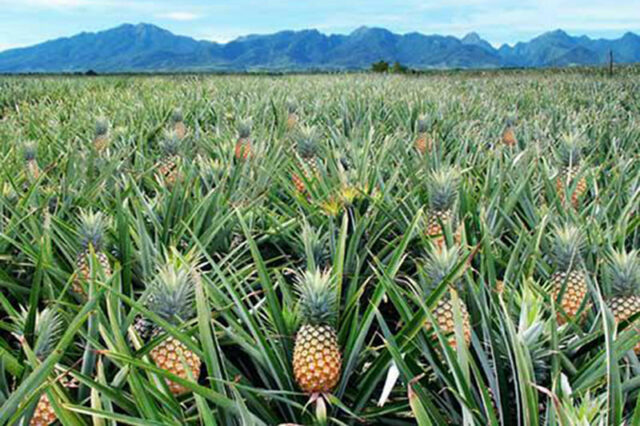
Demand driving pineapple output growth

DEL MONTE PHILIPPINES FACEBOOK PAGE

PINEAPPLE OUTPUT is expected to grow this year, according to the Department of Agriculture (DA), in response to increasing demand from China and Europe.

The Philippines is expected to produce more than 3.12 million metric tons (MMT) of pineapples this year, against 2.9 MMT in 2024, Assistant Secretary Arnel V. de Mesa told reporters.

He said pineapple yields are expected to hit 44 MT per hectare this year.

Exports of pineapple and pineapple products rose 7.5% to $787.12 million in 2024.

Mr. De Mesa noted “growing demand” from China, the top destination of Philippine pineapple exports, as well as Europe.

The United Nations Food and Agriculture Organization reported that demand is increasing for premium pineapples, especially the Philippine MD2 variety, from Chinese consumers.

It said the Philippines has been the second-biggest exporter of pineapples — next to Costa Rica — over the past 15 years.

Mr. De Mesa said the government continues to assist the industry through research and development efforts.

The government is also focusing on the production of organic pineapples, for which there is a “niche market,” he added.

Currently, there are about 24,000 pineapple farmers in the Philippines, many in Mindanao. — Kyle Aristophere T. Atienza

PCC launches courses on competition law

THE Philippine Competition Commission (PCC) said courses and certificate programs on competition law that it is offering to lawyers and other professionals will help them deal with complex competition cases.

In a social media post on Thursday, the PCC said it launched the specialized academic track and post-graduate certificate program in partnership with the Legal Education Board (LEB) and The University of the Philippines Competition Law and Policy Program on March 14.

PCC Commissioner Lolibeth Ramit-Medrano said more practitioners will help promote fair market competition.

“With globalization of trade, investments, and services, competition law is a powerful tool to provide safeguards designed to protect consumer welfare at the same time as fostering a balanced, competitive, and dynamic business environment,” she added.

LEB Chairperson Jason R. Barlis said that the board commits to enhancing legal education by integrating competition law into academic curricula. 

He added that the launch “aligns with LEB’s broader efforts to equip future lawyers with specialized knowledge in emerging legal fields.”

According to the PCC, the two academic programs are aligned with the Philippine Competition Act and international best practices on competition law.

“The specialized academic track under the Juris Doctor program consists of a 12-unit curriculum focused on core competencies in competition law,” the PCC said.

“It covers essential topics such as anti-competitive agreements, abuse of dominance, merger control, and the impact of emerging technologies on competition,” it added.

Meanwhile, it said that the post-graduate certificate program covers a 64-hour intensive course designed for lawyers, economists, policymakers, and other professionals seeking specialized training in competition law.

“It delves into key areas such as anti-competitive practices, market monopolization, mergers and acquisitions, consumer protection, and regulatory enforcement,” PCC said.

“The program also follows a stackable credential system, allowing participants to credit completed courses toward a Master of Laws degree,” it added. — Justine Irish D. Tabile

STEM opportunities for women seen lacking

CHRISTINA WOCINTECHCHAT.COM-UNSPLASH

By Beatriz Marie D. Cruz, Reporter

COMPANIES offering science, technology, engineering, and mathematics (STEM) jobs must provide more opportunities for women to address the gender gap in the field, according to analysts.

“In the Philippines, it’s a combination of less preparation, so I think if we have more internships for women, we can prepare them for the workforce much better; and then also it’s really just the lack of opportunities within technical companies,” Carlota Salamat-Andres, director of engineering at Dutch firm NXP Semiconductors, told BusinessWorld on March 7.

Women make up only 36.3% of the STEM workforce in the Philippines, the biggest gender gap in the Asia-Pacific, according to a 2023 study by LinkedIn.

Ms. Salamat-Andres, a semiconductor and electronics engineer, also noted the decline in women choosing STEM studies in high school and college, flowing on to the limited numbers joining the STEM workforce.

In the Philippines, the average drop-off in female representation between graduation and entering the STEM workforce stood at 14%, LinkedIn reported.

“I think it’s still due to the perception that men are better in terms of technical or even in the sciences, which is of course not true,” Ms. Salamat-Andres said.

“We start in elementary with the same competence in math and sciences, but there’s still the perception of (men) being more hands-on and having a bit more knowledge in technical fields.”

Mid-career, female STEM workers choose to stop working or resort to a “less taxing” job as they are expected to focus on housework, Ms. Salamat-Andres said.

Women’s participation in STEM remains hampered by personal and cultural barriers, as well as systemic and structural issues, the Association of Southeast Asian Nations (ASEAN) said in a policy brief.

Some personal and cultural barriers include gender stereotypes and norms; limited role models; and lack of self-confidence; while structural barriers include the lack of access to technology, education services and facilities; and lack of gender-disaggregated STEM data to inform policies and programs, ASEAN said.

The government must push for gender equality in technical-vocational education and training to increase women’s access to technical fields like STEM, according to Federation of Free Workers President Jose G. Matula.

“This includes ensuring that women have access to scholarships and training programs that help them enter and succeed in underrepresented but high-demand fields such as engineering, construction, ICT (information and communications technology), and other technical careers,” Mr. Matula, a labor lawyer, told BusinessWorld via Viber.

The government must also expand STEM scholarships for women, while universities should actively recruit and mentor female students, he added.

In the workforce, STEM-related companies must ensure equal pay, fair promotions, and safe workplaces for their female workers, Mr. Matula added.

“These are some of the most in-demand yet hard-to-fill jobs due to the lack of skilled workers — a gap that women are more than capable of filling if given the right opportunities.”

DoJ exploring remedies vs Teves

DOJ.GOV.PH

THE Department of Justice (DoJ) vowed to exhaust all legal avenues to ensure that a former lawmaker accused of murder, currently detained in Timor Leste, would be brought back to the Philippines to face his charges, it said on Thursday.

“We will explore and exhaust all legal remedies available to us to ensure that justice is served and that Mr. Arnolfo A. Teves, Jr., is held accountable for the crimes he is accused of,” Spokesman Jose Dominic F. Clavano IV told reporters in a Viber chat.

The DoJ said it was surprised and disappointed over the sudden shift in the court’s decision, which recently favored Mr. Teves.

The Timor-Leste Court of Appeal had twice ruled in favor of extradition — in June and December 2024 — before reversing its stance and rejecting the Philippines’ request.

“This sudden shift raises serious concerns, and we are currently seeking further clarification regarding the basis of this decision,” Mr. Clavano added.

The Philippine government reiterated its strong request for cooperation, emphasizing that Mr. Teves is facing serious charges, including multiple counts of murder.

The DoJ stressed that allowing him to evade justice would be a grave injustice not only to the victims and their families but also to the integrity of the rule of law.

Mr. Teves’ lawyer, Ferdinand S. Topacio, confirmed the Timorese Court of Appeal’s decision to deny the extradition request of the Philippine government, calling it a “triumph of the rule of law.” 

“We are confident that at the proper time after the present kakistocracy has run its course, our client’s innocence shall be shown in an impartial and unbiased atmosphere of justice,” he told reporters in a Viber chat.

According to court documents sent by Mr. Topacio, the Timorese tribunal “unanimously decided to grant the appeal” and “refuse the request for the extradition” of Mr. Teves.

The ruling was dated March 20.

Mr. Teves was implicated in the March 2023 assassination of Negros Oriental Governor Roel R. Degamo.

He was later designated as a terrorist by the Anti-Terrorism Council and expelled from the House of Representatives for disorderly conduct and continued absence. — Chloe Mari A. Hufana