A VIETNAM DONG note is seen in this illustration photo May 31, 2017. — REUTERS
VIETNAM’S Communist Party won nearly 97% of the 500 seats in the National Assembly, according to results released by the parliament on March 22, confirming its overwhelming dominance after a vote in which almost all candidates were fielded by the ruling party.
The party’s 482-seat haul was roughly in line with the number it held in the outgoing parliament.
Turnout at the five‑yearly elections for members of the parliament and for local councils exceeded 99%, authorities have said, in line with past elections.
The unicameral parliament has virtually no power to challenge the party’s key decisions, including personnel, but it has occasionally amended proposed laws.
The National Assembly is scheduled to hold its first weeks-long session from April 6. During that plenary, lawmakers are due to confirm new state leaders to be named by the party, including the prime minister and the president.
To Lam, who was confirmed as general secretary at the party’s January congress, is widely expected to be chosen as president as well.
Mr. Lam’s expected elevation would further align Vietnam’s political structure with that of neighboring China, where Xi Jinping also serves as general secretary of the Chinese Communist Party and president.
Vietnam and China are among a handful of communist-ruled states in the world. Though the two neighbors have a long history of mistrust and territorial disputes, including over islands and waters in the South China Sea, their communist parties remain officially close.
The conclusion of the election comes as Vietnam, like many countries, grapples with the spillover effects of the deepening Middle East crisis on global trade, energy markets and regional stability. — Reuters
A Taiwan flag can be seen on an overpass ahead of National Day celebrations in Taipei, Taiwan, Oct. 8, 2025. — REUTERS/ANN WANG
TAIPEI — Deliveries of delayed F-16V fighter jets for Taiwan will begin this year with production at “full capacity,” the island’s defense ministry said after senior defense officials visited the United States.
Taiwan, which faces a rising military threat from China, has complained of repeated delays to weapons ordered from the US, the most important international backer and arms supplier for the island, which Beijing claims as its territory.
The United States in 2019 approved an $8-billion sale of Lockheed Martin F-16 fighter jets to Taiwan, a deal that would take the island’s F-16 fleet to more than 200 jets, but the project has been hit by issues including software problems.
Deputy Minister Hsu Szu-chien, accompanied by Air Force Deputy Chief of Staff Tien Chung-yi, visited Lockheed Martin’s F-16V assembly line in South Carolina on Monday to view the first aircraft, Taiwan’s defense ministry said in a statement late on Saturday.
Deliveries will begin this year, the ministry said, without elaborating.
Lockheed Martin has assigned several hundred personnel to assemble the remaining aircraft, and “there are no bottlenecks in either parts supply or manpower; production is proceeding at full capacity on a two-shift schedule,” it said.
Lockheed Martin said in a statement that it was committed to “delivering advanced deterrence capabilities to support Taiwan’s security goals.”
“We continue to work closely with the US government to accelerate delivery where possible,” it said.
Because the F-16V is a new model specially designed for Taiwan, continued test flights are still needed to fine-tune its systems, and tests must be carefully carried out, the ministry said.
Taiwan has converted 141 older F-16A/B jets into the F-16V type and has ordered 66 new F-16Vs, which have advanced avionics, weapons and radar systems to better face down the Chinese air force, including its stealthy J-20 fighters. — Reuters
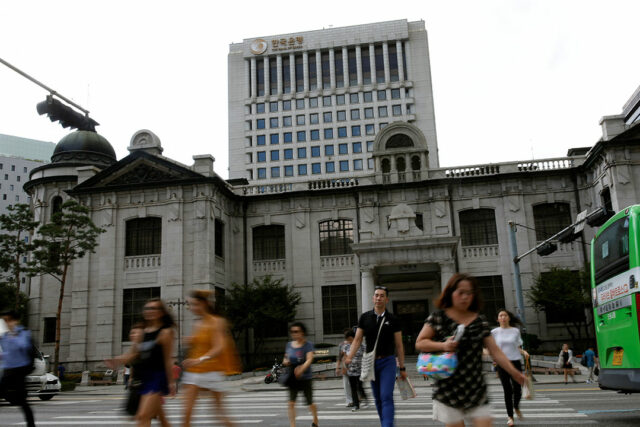
People walk on a zebra crossing in front of the buliding of Bank of Korea in Seoul, South Korea, July 14, 2016. — REUTERS/KIM HONG-JI/FILE PHOTO
SEOUL — South Korean economist Shin Hyun-song, best known for predicting the 2008 Global Financial Crisis, was named on Sunday to head the central bank, signaling a shift toward a distinctly hawkish monetary policy.
President Lee Jae Myung chose Shin, head of the economic department at the Bank for International Settlements (BIS), dubbed the central bank for the world’s central banks, to replace Bank of Korea Governor Rhee Chang-yong when his term ends on April 20.
“As seen in the recent Middle East situation, domestic and global economic conditions are not separate from each other, which will make his expertise stand out even more,” a spokesperson at the presidential Blue House told a briefing on Sunday.
Shin, who is best known for predicting the 2008 Global Financial Crisis and has an academic reputation defined by his consistent alarms against excessive leveraging, faces immediate challenges from Middle East-driven inflation and uneven growth.
Shin would be taking over the top central bank job at a time when policymakers face a delicate balancing act between supporting growth and containing financial stability risks stemming from surging household debt and the Iran war.
Although high-tech sectors including the semiconductor industry are thriving, recovery remains uneven as traditional sectors such as steel and petrochemicals struggle due to weak external demand.
The BOK in February left its benchmark interest rate unchanged at 2.50%, and signalled it is likely to keep rates steady until at least August this year.
Shin and the BIS declined to comment.
Many of his remarks made during interviews were also about the need for major policy efforts to deleverage amid surging household debt, to avoid the kind of financial crisis the country has seen in the past and also to curb red-hot property prices surrounding Seoul.
“He can be seen more as a hawk than a dove, that’s a broad understanding among economists largely because many of his papers have been focusing on the dangers of over-leveraging,” an official who worked with Shin at the BIS said.
One former colleague of Shin described him as “Messi if we are talking about soccer.”
“I don’t think anybody in academia will dispute that he is arguably one of the most accomplished economists from South Korea. Has humble character, my experience when I visited the BIS was all positive as he arranged so many networking events for visiting Korean officials,” said a finance ministry official.
Shin, 66, faces a confirmation hearing in the National Assembly, but lawmakers do not have a veto over the president’s nomination.
“If it’s a supply shock, and certainly if it’s a temporary one, these are the textbook examples where you should look through and not react with monetary policy,” Shin said in a report last week. “It really depends on how long the conflict lasts and how long the rise in the oil price will be sustained.”
Shin and Raghuram Rajan presented warnings at a U.S. Federal Reserve conference in August 2005, drawing a metaphor from the London Millennium Bridge to identify systemic vulnerabilities that would eventually trigger the global financial crisis.
Shin, a former Princeton University professor, is known to have close ties with many BOK officials including Rhee, having been a regular panelist at the bank’s symposiums.
The governor can be reappointed for a four-year term once. — Reuters
Cybergate Victoria 1, the newest premium office tower rising on the historic Victoria Plaza site. This illustration is an artist’s perspective and is subject to change without prior notice.
Following its historic 45th anniversary in 2025, Robinsons Land Corporation is advancing a strong pipeline of projects in 2026 across its shopping malls, offices, hospitality, and logistics arms. RLC’s next wave of developments points to a clear direction as it moves toward its 50th year: growth shaped by relevance, local context, and the needs of communities and businesses in high-potential regional markets.
“We are pursuing growth with intention, focusing on developments that answer real market needs, support communities, and create lasting value across the regions we serve,” said Mybelle V. Aragon-GoBio, president and CEO of Robinsons Land.
This year, Robinsons Land has major projects taking shape in Dumaguete, Bacolod, Davao, Pangasinan, and Calamba. Each location reflects a specific market need and a different stage of growth, yet all are aligned with the same broader ambition: to create places that stay relevant to everyday life while helping advance economic progress across the nation.
ROBINSONS MALLS: STRENGTHENING EVERYDAY RELEVANCE IN REGIONAL CITIES
A first look at the expanded Robinsons Dumaguete, strengthening its place at the heart of a growing, vibrant Dumaguete community. This illustration is an artist’s perspective and is subject to change without prior notice.
Under Robinsons Malls, the company is moving ahead with major developments in key growth cities in the Visayas, reflecting the continuing importance of retail and commercial spaces in regional communities.
In Dumaguete, Robinsons Dumaguete is poised for expansion, adding four floors and over 17,000 square meters of gross leasable area, with a target reopening in Q3 2026. The project reinforces the mall’s role in a city that continues to grow as a center for education, tourism, and commerce in Negros Oriental. The Dumaguete expansion signals Robinsons Land’s confidence in a market where student life, local business opportunities, and regional mobility continue to shape demand for well-located retail destinations. Robinsons Dumaguete is part of a mixed-use property where Cybergate Dumaguete and Go Hotels are also located.
In Negros Occidental, Robinsons Land is undertaking the expansion and redevelopment of Robinsons Bacolod, one of the city’s long-established lifestyle destinations. Opened in 1997 as Bacolod’s first full-service shopping mall, the property has long served residents, students, and visitors. Its redevelopment is intended to carry that legacy forward through a refreshed environment that responds to how people now gather, dine, and spend their leisure time.
The three-floor project spans over 40,000 square meters of gross leasable area. Among the most visible changes will be a revitalized facade that opens the mall more fully to street level and enhances visibility and accessibility along Lacson Street, one of the city’s main commercial arteries. Inside, the mall will introduce Eat Street, a fresh food hall concept envisioned as a lively culinary destination.
The redevelopment will also include two Robinsons Movieworld VIP Cinemas and a chapel, broadening the mall’s role in the city’s social and communal life. Throughout the redevelopment, Robinsons Bacolod remains operational, allowing tenants to continue serving customers and helping sustain economic activity during the transition. Complimenting the commercial vibe of Robinsons Bacolod shopping mall is a Go Hotel and Cybergate Bacolod 2.
Together, the Dumaguete and Bacolod projects show how Robinsons Malls is approaching 2026. One that expands capacity in progressive cities. The other renews a long-established landmark for a new generation. Both reflect a view of retail shaped by local rhythms, local expectations, and the everyday ways Filipinos use shared spaces.
ROBINSONS OFFICES: EXPANDING ACCESS TO QUALITY WORKSPACES
With the recent successful inaugural of Cybergate Iloilo, Robinsons Offices is also set to expand its footprint in key regional markets through projects in Dumaguete and Davao, supporting the company’s confidence in high-growth cities outside Metro Manila. Cybergate Dumaguete will be the premier office address in the city. Located alongside the Robinsons Dumaguete Mall and Go Hotels Dumaguete, the office development will feature a new three-story office above the mall and one ground floor, delivering around 7,200 square meters of office space.
Designed with efficiency, flexibility, and inclusivity in mind, the building will feature dual lobbies, efficient floor plates, large glazed windows, spacious ramps, and roomy elevators. It also addresses the need for reliability and efficiency with backup power, strong telecoms support, modern safety systems, and sustainability features. These include energy-efficient cooling systems, water-saving fixtures, rainwater collection, and planned solar panels on the roof deck.
Strategically marking Robinsons Offices’ first foray in the city, the Dumaguete project aligns with the company’s decentralization push by supporting reverse migration and widening access to better economic opportunities in the provinces. It also positions Dumaguete more strongly as an emerging regional business center where more professionals can build careers closer to home.
In Davao, Cybergate Victoria 1 reflects a different stage of growth. As the third and newest Robinsons Offices development in Davao City, it rises on the historic site of the former Victoria Plaza, once home to Davao’s first shopping mall. The project will feature nine premium office floors supported by retail spaces and recruitment centers, and is designed to serve BPOs, IT-BPM operators, corporate offices, and high-growth enterprises.
Where Dumaguete represents a first foothold for Robinsons Offices, Davao reflects a deeper investment in an already established business hub. Cybergate Victoria 1 is expected to support high-quality job generation in the region, give companies room to expand, and strengthen Davao’s position as a major center for business and employment in Mindanao. It also carries forward the legacy of an iconic site into a new phase of urban and commercial activity.
These office developments show Robinsons Land extending premium, future-ready workspaces into regional cities where enterprise growth and local development increasingly go hand in hand. They also reflect the company’s aspiration of raising Filipino excellence to global heights by helping more professionals and businesses thrive in world-class environments across the country.
ROBINSONS HOTELS AND RESORTS: BROADENING HOSPITALITY IN NORTHERN LUZON
In the realm of hospitality, Robinsons Hotels and Resorts is broadening its reach in Northern Luzon through Grand Summit Pangasinan, the first Grand Summit property in the region. Set within the expanding Robinsons Pangasinan complex in Calasiao, the seven-story upscale hotel is envisioned as a modern landmark along the strategic Dagupan-Urdaneta Road, a gateway that connects business districts, cultural centers, and tourism destinations in the province.
Grand Summit Pangasinan will feature 100 rooms, including deluxe rooms and junior and executive suites ranging from 38 to 116 square meters. The hotel aims to provide a refined yet welcoming stay for both leisure and business travelers, with a layout and program focused on comfort, efficiency, and an elevated guest experience.
This project reflects Robinsons Land’s confidence in regional hospitality and in the rising appeal of destinations beyond the country’s traditional gateways. It also expresses a standard of service closely associated with Filipino hospitality: warm, attentive, and grounded in care.
RLX: SUPPORTING COMMERCE THROUGH LOGISTICS INFRASTRUCTURE
Under its Robinsons Logistix and Industrials (RLX) division, Robinsons Land is further strengthening logistics capacity through RLX Calamba 2C SPX, a Grade-A warehouse developed in partnership with SPX Philippines, Shopee’s logistics arm. This will be the second SPX warehouse within RLX’s Calamba logistics hub and is designed for high-volume e-commerce operations, fast-moving logistics, and sorting. The facility will feature flexible warehouse layouts, modern specifications, and future-ready infrastructure that support nationwide delivery efficiency.
The project also speaks to a larger need in the market: the growing demand for logistics infrastructure that can keep pace with the scale, speed, and global standards of e-commerce. With RLX Calamba 2C SPX, Robinsons Land is reinforcing a key logistics corridor in Luzon and supporting the infrastructure required for commerce at scale. It reflects how the company views industrial real estate as an enabler of business continuity, market reach, and stronger connections between producers, platforms, and consumers.
Known for its Grade A logistics facilities, RLX has ventured into building a new retail format to create organic growth and ecosystem synergy within Robinsons Land. The project strengthens RLX’s role as a builder of scalable, high-impact retail infrastructure while supporting Robinsons Land’s push into new standalone formats that diversify and expand recurring income streams.
The upcoming Shopwise big‑box store at Sierra Valley. This illustration is an artist’s perspective and is subject to change without prior notice.
The Shopwise “big box” will sit on over 7,000 sqm of land with a 5,000 sqm gross leasable area, and is slated for completion in the first half of 2027, with store opening targeted by the third quarter of 2027. This format, larger than standard Philippine supermarkets, draws from global warehouse-style retail models. It is designed for bulk purchasing, high-efficiency operations, and value-forward merchandising, making it especially relevant to growing middle-income households and small business owners.
With Shopwise Sierra Valley, RLX and Robinsons Land reinforce how Filipino-built brands can shape modern retail landscapes, supporting communities, expanding access, and enabling sustainable growth for years to come.
A SHARED DIRECTION ACROSS THE PORTFOLIO
Viewed as a whole, Robinsons Land’s pipeline presents a clear picture of where the company is headed. The various developments reflect long-term thinking anchored in local relevance and carried by confidence in regional as well as national growth.
“Our developments across malls, offices, hospitality, and logistics are guided by a shared purpose,” said Aragon-GoBio. “We are building for Filipinos in ways that strengthen our nation’s cities, expand access to opportunities, and raise the standards of what Philippine real estate can deliver.”
Spotlight is BusinessWorld’s sponsored section that allows advertisers to amplify their brand and connect with BusinessWorld’s audience by publishing their stories on the BusinessWorld Web site. For more information, send an email to online@bworldonline.com.
Join us on Viber at https://bit.ly/3hv6bLA to get more updates and subscribe to BusinessWorld’s titles and get exclusive content through www.bworld-x.com.
The Poco X8 comes in three colors: mint, white, black.—POCO
Global tech brand POCO is ending the first quarter with the release of its new midrange lineup, the POCO X8 Pro Series, which consists of two devices: the POCO X8 Pro Max and the POCO X8 Pro.
The new series is promised to deliver a flagship-level experience at a more accessible price point, continuing the brand’s core proposition since its debut in 2018.
In this review, I spent around a week to delve into the phone’s performance, battery capability, and its camera and screen performance.
For starters, the key specs of the POCO X8 Pro include a MediaTek Dimensity 8500-Ultra processor, paired with a 6,500mAh battery capacity.
It also comes with a 6.59-inch 1.5K AMOLED display, with up to a 120Hz refresh rate, and a 50-megapixel main camera.
The review unit is in black, and comes with 512 gigabytes (GB) of storage capacity and 12GB of random access memory (RAM), extendable up to 12GB via virtual RAM.
In terms of design, the device adopts a minimalist aesthetic, featuring a metal frame and Gorilla Glass 7i front that give it a premium feel.
PERFORMANCE
To test the performance of the POCO X8 Pro, I ran some of the country’s most popular mobile games and multimedia apps.
Throughout the course of the test, the device was set to performance mode, and the 12GB virtual RAM was enabled to maximize its capability.
The POCO X8 Pro scored 1.8 million points on the AnTuTu Benchmark, indicating that it is a high-performing device made possible by its 4-nanometer Dimensity 8500-Ultra chip.
I played Mobile Legends: Bang Bang with the device on maxed-out settings. As expected, since the game is not graphically intensive, the experience was stable throughout, with no noticeable lag or frame drops.
For Genshin Impact, a more demanding title, the phone was capable of running at high settings with generally stable performance. However, occasional frame rate dips were observed during extended gameplay sessions.
App loading and multitasking were smooth, with no noticeable slowdowns.
As for its thermal performance, based on testing, the phone ranges between 37°C to 39°C when browsing or using multimedia apps.
However, during AnTuTu testing and gameplay, it can reach up to 43°C, which may feel warm if used for a longer period. Is it concerning? Not really, as it is still within the moderate range, and the heat may not be as noticeable when using a phone case.
POCO said that the X8 Pro has its 3D dual-layer IceLoop cooling system to dissipate heat, which promises to reduce temperatures by up to 3°C.
CAMERA
The POCO X8 Pro features a triple-camera setup, consisting of a 50MP Sony IMX882 main sensor, an 8MP ultra-wide camera, and a 20MP front camera.
While the device is not positioned as a camera-centric phone, the main camera is capable of capturing decent photos and videos. Images tend to lean toward a cooler white balance, with a good level of detail.
One limitation observed was in close-up shots, where the camera struggled to maintain sharp focus on the subject.
The ultra-wide camera produces images with a similar color profile, though with a noticeable drop in detail.
For selfies, the front camera applies a slight tone-up effect by default, producing images suitable for posting without further editing.
A personal favorite of mine is the main camera’s video performance. It is very stable and can be a good alternative for vlogging, as it is equipped with optical image stabilization. The details are quite decent, although the white balance leans cooler than I prefer.
SCREEN AND BATTERY
A personal favorite feature of the phone is its battery performance.
Its 6,500mAh silicon-carbon battery is more than enough to last for more than a day.
Charging does not take too long, as it is capable of up to 100W charging, which based on experience can fully charge the device from 0% to 100% in about 1 hour and 10 minutes.
It is also capable of 27W reverse charging.
POCO did not disclose if the device has bypass charging.
Meanwhile, the POCO X8 Pro display can reach up to 3,500 nits of brightness due to its 1.5K AMOLED panel.
It is also protected by Corning Gorilla Glass 7i, along with various TÜV Rheinland certifications for eye protection.
Based on experience, the display is crisp and provides great detail, especially when viewing high-resolution videos.
It also has Widevine L1 support, making it capable of playing high-quality video on most streaming platforms.
Other key specs of the POCO X8 Pro include IP68 dust and water resistance rating.
This means it can withstand submersion of up to 1.5 meters for 30 minutes in freshwater. However, it is not recommended to use it in saltwater or pool environments.
VERDICT
As for my final verdict, I am personally surprised by how well-rounded the POCO X8 Pro is. The brand did not hold back on other key features despite having a high-performing chip under the hood.
This is definitely a good catch and a strong value-for-money option, especially if you are able to get it at its introductory price of ₱15,499 for the 8GB + 256GB variant, originally priced at ₱18,999.
The larger variants, 8GB + 512GB and 12GB + 512GB, have launch prices of ₱16,599 and ₱17,499, respectively.
Meanwhile, the Iron Man Edition of the POCO X8 Pro has an introductory price of ₱18,999 for the 12+512GB storage variant, originally priced at ₱22,999.
As a suggestion, the 12GB + 512GB variant is a practical choice, as the storage is doubled by just adding P2000.
The POCO X8 Pro and the POCO X8 Pro Max are already available on Shopee, Lazada, and TikTok Shop.
The early bird sale is expected to last until March 26. — Edg Adrian A. Eva
Teachers’ groups on Friday criticized the preparedness and implementation of the trimester plan for the school year (SY) 2026-2027, following its approval from the Economy and Development (ED) Council.
“It was already mentioned that this needed consultations, but in the end, it was still approved hastily,” Alliance of Concerned Teachers (ACT) Chairperson Ruby Bernardo said in Filipino in a statement on Friday.
“The responsibility of patching together a policy that lacks preparation should not be passed down again to those on the grounds,” she added.
The ED Council, during its 8th meeting chaired by President Ferdinand R. Marcos Jr., has approved the three-term school calendar of the Department of Education (DepEd) on Thursday.
This policy is seen as a “critical step towards improving the country’s education outcomes”, according to the Department of Economy, Planning, and Development (DEPDev).
“Our commitment to developing a globally competitive workforce begins with providing evidence-based solutions to bridge educational gaps in our country,” said DEPDev Secretary and ED Council Vice-Chair Arsenio M. Balisacan in a statement.
“We commend DepEd (Department of Education) for continuously pursuing initiatives that support critical development priorities,” he added.
DEPDev noted that the policy pushes for learning continuity, mitigating class disruptions caused by natural calamities, celebrations, and observances.
Data from the Second Congressional Commission on Education (EDCOM 2) revealed that 53 teaching days were lost in SY 2023-2024 due to calamities, holidays, non-teaching tasks, and activities.
“By shifting from a four-grading-period system to a three-grading-period system, students will benefit from longer, uninterrupted instructional blocks, stabilizing their learning pace and recovery each term,” DEPDev said in a statement.
However, ACT called the decision a “rushed top-down reform”.
The group urged the DepEd to halt its implementation and conduct genuine consultations with teachers’ unions and education stakeholders.
The new policy was also compared to the K to 12, underscoring the lack of preparedness during its implementation.
“It will surely fail, and those of us in the schools will be left to improvise and make up for all the shortcomings,” Ms. Bernardo said. “And when it fails, we will be the ones to be blamed again.”
For its part, the Teachers’ Dignity Coalition (TDC) underscored that pilot testing must be conducted before the nationwide rollout of the new school calendar.
“We are hopeful that there will be deeper and broader discussions with the stakeholders,” TDC National Chairperson Benjo G. Basas said in Filipino in a video statement on Friday.
“We hope that before they implement it, there will be a pilot in one region, as we need to calibrate many aspects, including forms and material,” he added.
Under the proposed trimester system, the school year will be divided into three terms. Each term consists of an opening block, the instructional block, and the enrichment block.
The opening block, or the first week of classes in the first term, will focus on orientation and assessments.
Each term will have an instructional block that lasts 54 to 61 days, followed by a two-week enrichment block for remediation and enrichment, grades computation, checking, and preparation of school forms, and a wellness break.
The first term will run from June to September, the second from September to December, and the third from January to March. — Almira Louise S. Martinez
MYANMAR’s former leader Aung San Suu Kyi — REUTERS
MYANMAR’S parliament will start the process to elect a new president on March 30, officials said on Friday, a vote many analysts expect will be won by the head of the junta that seized power in a coup in 2021.
Following a controversial election that was won by a military-backed party, the military and each of the upper and lower houses of the parliament will nominate a presidential candidate.
After a vetting process, the parliament will elect one of the three as president, officials of the Pyidaungsu Hluttaw said at an event that was broadcast by state media. The other two candidates will serve as vice presidents.
The officials did not say how long the process to vet candidates would take, or when the vote for president would be held.
Junta chief Min Aung Hlaing is widely expected to become the Southeast Asian country’s president.
Independent analyst Htin Kyaw Aye said he expected the general to step down as head of the military before March 30, as the country’s constitution says a civil servant cannot be a presidential candidate.
“Since Min Aung Hlaing aspires to the presidency, he must step down from his current role as Commander-in-Chief to be eligible with 2008 constitution,” the Thailand-based analyst said.
He said the military and the army-backed Union Solidarity and Development Partywould continue to dominate the country’s politics after the phased election held in December and January.
“This is not a transition to democracy, but rather a transformation from a military-clad dictatorship to a civilian-clothed one,” he said.
Myanmar has been in turmoil since early 2021, when the military ousted an elected civilian government led by Nobel Peace Prize laureate Aung San Suu Kyi. The coup triggered a protest movement that morphed into an armed rebellion against the junta across the country. — Reuters
Pioneer Insurance highlights the importance of home protection this Fire Prevention Month with the newly upgraded HomeMaster Plus, a comprehensive property insurance that protects the home, its residents, its contents, and now includes one-time automatic cash assistance for excessive rainfall.
While the nationwide campaign emphasizes fire safety awareness in March, Pioneer underscores that true preparedness also means having financial protection in place when unexpected events occur.
“Fire Prevention Month reminds us that protecting our homes goes beyond installing alarms or checking wiring. It’s also about making sure families can recover financially in times of disasters and calamities,” said Jay Leachon, Pioneer Insurance General Accident — Bundled Products Head.
HomeMaster Plus provides smart home protection for homeowners, condo unit owners, and renters seeking practical and dependable coverage.
Apart from providing coverage for fire, HomeMaster Plus protects the home’s structure, improvements, and contents from a wide range of risks, including earthquake, typhoon, flood, housebreaking, riots, and accidental water leaks. It also offers a 6-month rental allowance while the damage is being repaired.
The benefit also includes personal liability for injuries or property damage caused to others, and 24/7 worldwide cover for family members in case of accidental death, injury, or permanent disability, including a fixed cash benefit per day of hospital confinement. Coverage also extends to household staff.
A key enhancement under the upgraded HomeMaster Plus is the introduction of Excess Rainfall Cash Assistance, an add-on benefit designed to deliver immediate support during severe weather events.
“With Excess Rainfall Cash Assistance, we are responding to real and recurring climate risks while keeping the process simple and accessible for our customers,” Leachon added.
Under this feature, a one-time P2,000 payout is automatically provided once the Philippine Atmospheric, Geophysical and Astronomical Services Administration (PAGASA) declares excess rainfall in the insured property’s location, offering quick financial assistance without complex claims procedures.
Pioneer continues to innovate its products to meet the evolving needs of Filipino households, encouraging them to see home insurance as a practical safeguard for what they have worked hard to build.
Leachon concludes, “Those interested in getting smart home protection can email ferdinand.maniquis@pioneer.com.ph or irajusthine.magno@pioneer.com.ph for a quote.”
Spotlight is BusinessWorld’s sponsored section that allows advertisers to amplify their brand and connect with BusinessWorld’s audience by publishing their stories on the BusinessWorld Web site. For more information, send an email to online@bworldonline.com.
Join us on Viber at https://bit.ly/3hv6bLA to get more updates and subscribe to BusinessWorld’s titles and get exclusive content through www.bworld-x.com.
The Department of Economy, Planning, and Development (DEPDev) said that the Economy and Development (ED) Council has approved the implementation of the three-term school calendar starting school year 2026-2027.
Chaired by President Ferdinand R. Marcos, Jr., the council approved on Thursday the Department of Education’s (DepEd) trimester system proposal, which is eyed to improve the country’s education outcomes.
“The policy, endorsed by the Social Development Committee-Cabinet Level, aims to maximize the length of learning time, often disrupted by bad weather as well as celebrations and observances,” DEPDev said in a statement on Friday.
DEPDev said that the policy follows the recommendation of the Second Congressional Commission on Education to enforce a concrete plan that guarantees adequate learning time despite climate-related disruptions.
“By shifting from a four-grading period system to a three-grading-period system, students will benefit from longer, uninterrupted instructional blocks, stabilizing their learning pace and recovery each term,” it said.
The new calendar is also designed to enable teachers to pursue professional development opportunities and allow dedicated periods for catch-up initiatives.
“Our commitment to developing a globally competitive workforce begins with providing evidence-based solutions to bridge educational gaps in our country,” said DEPDev Secretary and ED Council Vice Chair Arsenio M. Balisacan.
“We commend DepEd for continuously pursuing initiatives that support critical development opportunities,” he added.
Meanwhile, the council also terminated the existing Investment Coordination Committee approval of the Unified Grand Central Station (UGCS) project.
“This action is necessary to formally close the current project approval following the termination of the design-and-build contract and the determination that completion under the same contractual arrangement is no longer feasible,” DEPdev said.
With the termination, the development of the project will now continue through separate implementation arrangements.
The council sees the decision to help facilitate the “orderly contract closeout, address pending obligations, and allow the transition to an alternative delivery approach.”
The UGCS Project will establish a common station that will link the Light Rail Transit (LRT) Line 1, Metro Rail Transit (MRT) Line 3, and MRT Line 7. — Justine Irish D. Tabile
THE NATIONAL Government’s (NG) budget surplus more than doubled in January to P165.4 billion amid a double-digit decline in spending, the Bureau of the Treasury (BTr) said.
In a statement, the Treasury said the NG posted a P165.4-billion budget surplus in January, 141.91% higher than the P68.4-billion surplus a year ago due to “sustained revenue growth.”
Month on month, the budget balance swung to a surplus from the P313.17-billion deficit in December last year.
This was the first budget surplus posted since the P11.15-billion surplus in October 2025.
In January, revenues inched up by 0.36% to P468.9 billion from P467.1 billion in the same month in 2025.
Tax collections, which make up 94.45% of total revenues, rose by 1.21% to P442.8 billion in January from P437.5 billion in January 2025.
The bulk of tax revenues came from the Bureau of Internal Revenue (BIR), whose collections went up by 1% to P358.7 billion in January from P355.1 billion in the same month in 2025.
“The agency’s continued growth was supported by its digitalization initiatives and intensified tax administration efforts,” the Treasury said.
Meanwhile, the Bureau of Customs saw a 2.13% increase in collections to P80.9 billion in January, from P79.3 billion in the same month a year ago.
“The agency’s positive outturn was buoyed by its sustained enforcement operations, including the seizure of smuggled goods, the confiscation of illegally imported vehicles, and strengthened compliance and tax administration measures,” it added.
Collections by other offices were flat at P3.2 billion in January.
On the other hand, nontax revenues plunged by 12.08% to P26 billion, from P29.6 billion in the same month last year due to a “moderation in BTr income and NG share from Malampaya proceeds.”
The BTr saw a 13.17% decline in its revenues to P13.7 billion last year, while collections by other offices also dropped by 10.85% to P12.4 billion.
Meanwhile, state spending dropped by 23.9% to P303.5 billion in January from 398.8 billion in the same month last year.
The BTr attributed the decline to the “rescheduling of the transfers to local government units, as well as the base effect of large capital disbursements in January last year.”
It said that the large disbursements last year were “due to the settlement of accounts payables and frontloading of some expenditure ahead of the election ban.”
Primary spending—which refers to total expenditures minus interest payments—dropped by 40.32% to P175.5 billion in January from P294.4 billion a year ago. It accounted for 57.88% of disbursements during the month.
Meanwhile, interest payments surged by 22.39% to P127.8 billion in January from P104.4 billion last year, due to the “additional debt incurred to finance the previous year’s deficit and changes in coupon payment timing following refinancing.” — Justine Irish D. Tabile
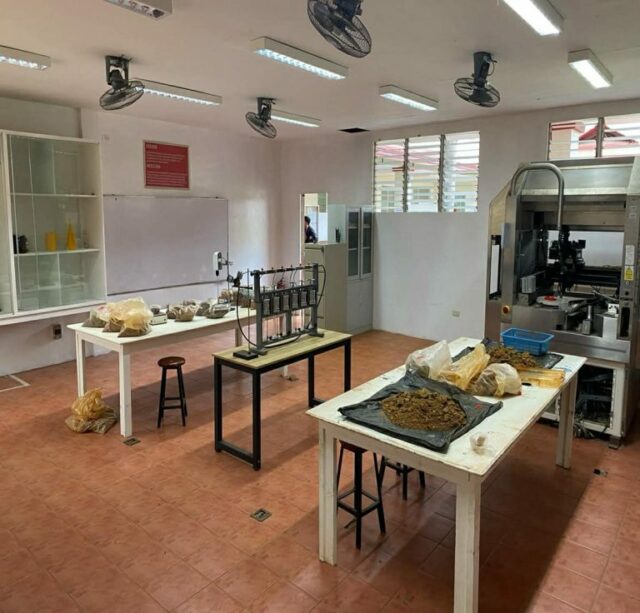
The Drilling Fluids Research and Innovation (DFRI) laboratory is equipped with advanced lab equipment to conduct petroleum-related research and development initiatives.— DOST-PCIEERD
The Department of Science and Technology (DOST) and Palawan State University (PalSU) are set to launch the Philippines’ first petroleum engineering R&D laboratory to support the country’s oil and gas exploration efforts amid the ongoing global oil crisis.
The P4.9-million Drilling Fluids Research and Innovation (DFRI) Laboratory will be launched on March 25 in Puerto Princesa, Palawan, DOST-Philippine Council for Industry, Energy and Emerging Technology Research and Development (DOST-PCIEERD) said in a statement on Thursday.
It is expected to help the country develop its own sustainable drilling fluids, specialized liquids crucial to modern oil and gas exploration and operations.
The facility is funded through the Institution Development Program (IDP) of DOST-PCIEERD and will house highly specialized equipment.
DOST Secretary Renato U. Solidum Jr. said developing drilling materials locally has become strategically important amid volatile fuel prices driven by growing tensions in the Middle East. The region accounts for 98% of the country’s crude oil imports, according to the Department of Energy (DOE).
“Given the ongoing instability in global oil supply chains and persistent fuel price hikes, the ability to develop local substitutes for critical drilling materials becomes strategically important to secure our future in sustaining our own petroleum products like drilling fluids,” Mr. Solidum said in a statement.
Among the developments at the facility are drilling fluids enhanced with nano iron oxide and nanosilica, developed by PalSU researchers led by Morlie L. Talimbay.
DOST-PCIEERD said these developments are part of ongoing research to create local alternative drilling fluids that are lower in cost and more environmentally sustainable than conventional counterparts.
“For now, we are looking at conducting further studies, including field validation, which are needed to assess their cost-effectiveness and overall performance,” Mr. Talimbay said.
He added that the new DFRI Laboratory could contribute to the country’s energy and economic needs.
DOST-PCIEERD said outputs from the facility will be recommended to the DOE as it seeks to increase oil and natural gas exploration yields.
Looking ahead, DOST-PCIEERD aims for the DFRI Laboratory to become a national center for petroleum R&D and related research in the coming years. — Edg Adrian A. Eva
Students attending the Bagong Pilipinas Serbisyo Fair (BPSF).—DEPED
The Department of Education (DepEd) rolled out the Bagong Pilipinas Serbisyo Fair (BPSF) in three public schools in Metro Manila on Thursday, helping students secure pre-employment requirements and jobs amid the “spiraling” effects of the Middle East war.
“We are bringing the government closer to our learners to ensure that their transition from the classroom to the workplace is seamless and cost-free, as envisioned by President Marcos,” Education Secretary Juan Edgardo “Sonny” M. Angara said in a statement.
The BPSF program, in partnership with the Department of Labor and Employment (DOLE), serves as a one-stop shop that offers free pre-employment documents under the First Time Jobseekers Assistance Act.
With the BPSF program, each student can save up to P1000 in clearance fees and transportation costs, according to DepEd.
1,175 students across Tala National High School in Caloocan City, Makati High School in Barangay Poblacion, and Mataas na Paaralang Neptali A. Gonzales in Mandaluyong City will benefit from the program.
“This one-stop shop directly addresses the struggle of SHS Technical-Vocational-Livelihood (TVL) graduates and Alternative Learning System (ALS) learners who often miss job opportunities due to the high cost and complexity of securing pre-employment documents,” the agency said.
The BPSF program also features job matching, career guidance, and job opportunities from private sector employers to help students secure job opportunities after graduation.
“Through these reforms and partnerships, we are transforming our graduates into highly employable assets who are ready to contribute to our nation’s growth,” Mr. Angara said.
About 550,000 SHS-TVL students are expected to graduate for School Year 2025-2026.
As mandated by DepEd, the End-of-School-Year (EOSY) rites are scheduled to commence on March 30 or 31, 2026. All public schools nationwide are directed to conduct simple and free graduation and moving-up ceremonies. — Almira Louise S. Martinez