Home Blog Page 1361

Office vacancies may ease despite supply surge, says Santos Knight Frank
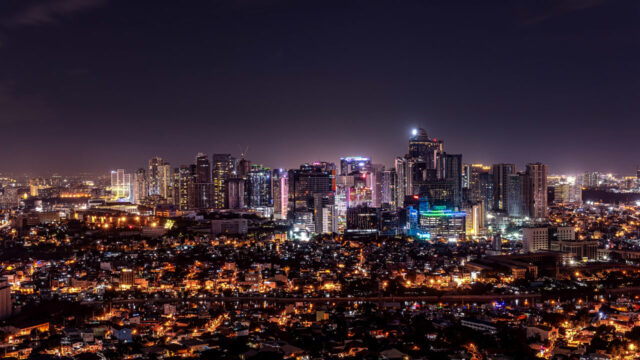
STOCK PHOTO | Image by Sean Yoro from Unsplash

METRO MANILA is expected to see a surge in office supply over the next five years as projects launched during the pandemic are completed, but vacancy rates are projected to decline due to sustained demand from the business process outsourcing (BPO) sector, according to property consultancy firm Santos Knight Frank (SKF).

“Any projects that were thought of, or announced during the pandemic years of 2020 to 2022, will have been completed by the time we hit 2030,” SKF Senior Director Morgan McGilvray said during a briefing on Monday.

New office space in Metro Manila is expected to average 754,598 square meters (sq.m.) through 2030, SKF said.

As of end-June, 158,147 sq.m. of new office supply entered the Metro Manila market, and another 403,770 sq.m. of new office space will be completed in the second half, SKF said. This brings Metro Manila’s total office supply to 8.8 million sq.m.

Metro Manila’s office vacancy rate rose to 22% in the six-month period from 18.9% a year earlier, Mr. McGilvray said.

By submarket, the highest level of available supply was recorded in Taguig at 2.4 million sq.m., followed by Ortigas (1.6 million sq.m.), Makati (1.5 million sq.m.), Quezon City (1.4 million sq.m.), the Bay Area (1.4 million sq.m.), and Alabang (500,000 sq.m.).

“For the office sector, we’re seeing a lot more activity in the first half of 2025 than we did last year,” SKF Chairman and Chief Executive Officer Rick Santos said during the briefing.

“We are still seeing BPO expansion — we are seeing sophisticated voice call centers also still expanding, and that’s in lockstep with what we’re seeing in India as well.”

Net absorption in the first half stood at 192,000 sq.m., higher than the 101,000 sq.m. in the previous quarter, driven by move-ins and expansions in the BPO sector, SKF said.

SKF expects office vacancy to decline through 2030.

“Maybe the first half of 2025 is an exception because we saw the last group of POGOs (Philippine offshore gaming operators) move out,” Mr. McGilvray said. “But if we just look at the numbers for a moment, it looks like we might have 400,000 sq.m. of net absorption this year… if we continue to have that rate, that should balance out pretty well with the supply coming on board.”

“[Vacancy through] 2030 is a long way to predict in advance, but the numbers right now indicate vacancy might continue to actually trickle down over the coming years,” he added.

Looking ahead, the BPO sector — especially healthcare BPOs — is expected to drive demand in the Metro Manila office market, Mr. McGilvray said.

“We do sense that there’s a lot more healthcare BPOs especially that can and will come to the Philippines… because one or two [companies] enter the market, they have a good success story, their competitors notice, and then their competitors also follow them into the market,” he said on the sidelines of the briefing.

“That’s mostly what we’ve been seeing as the best demand driver lately, and we don’t necessarily expect that to slow down anytime soon.”

Companies looking to expand their office space still prioritize accessibility to public transportation, as well as the environmental sustainability and newness of buildings, Mr. McGilvray said.

According to Mr. Santos, today’s global business environment has become “the most volatile we’ve ever seen,” driven by the United States’ shifting tariff policies and ongoing geopolitical tensions in the Middle East and Europe.

“So definitely, we’re seeing a lot of volatility on the geopolitical side. However, we see that as an opportunity for the Philippines, and obviously for the real estate market.”

The Philippines’ much-lower reciprocal tariffs are expected to attract foreign manufacturing firms looking to diversify their operations, Mr. Santos said.

The US in April imposed a 17% tariff on Philippine goods — the second lowest among Association of Southeast Asian Nations countries.

While the reciprocal tariffs have been paused for 90 days until July 9, the baseline 10% tariff remains in place.

“The Philippines is also poised to benefit from the diversification in the manufacturing sector, and a lot of manufacturing companies in ASEAN countries are looking at the Philippines now,” Mr. Santos said. — Beatriz Marie D. Cruz

Understanding the evolving trade dynamics and financial implications

STOCK PHOTO | Image from Freepik

The global trade landscape in 2025 is poised for significant shifts, particularly as protectionist measures, national interests, and multi-lateral alliances converge. Tools, like game theory, offer a robust framework for assessing the strategies at play among nations. This article explores three inter-related aspects: the impending tariff war led by the US, the potential responses from key global players, and the lessons for strengthening institutional frameworks such as the World Trade Organization (WTO), International Monetary Fund (IMF), and other economic bodies, to mitigate disruptions in both real and financial markets.

This article can be the basis of a position paper and action programs for the Management Association of the Philippines’ CEO Academy for continuous learning on Game Theory and the 2025 Tariff War, with actual applications to individual firms or industry groups designing practical steps to avert disastrous consequences of non-collaboration.

THE US’ BLANKET TARIFFS
The US has intensified its stance on trade imbalances, insisting on blanket tariffs against nations with significant trade surpluses. This unilateral approach reflects a zero-sum framework in trade relations, where the US seeks tangible benefits by penalizing surplus-holding economies, such as China, the EU, Japan, and Canada.

However, the dilemma between serving US selfish interests versus its desire to continue as a leader in global economic stability or shared growth, has converted the problem into one of purpose, for looking at the common good. That is what 21st Century leadership should be all about as humanity’s existence is challenged by humanoids, climate change, and networked disinformation.

STRATEGIC ALLIANCES, COUNTERMEASURES
Countries targeted by these tariffs have begun exploring avenues for collective action. Two distinct groups have emerged:

Canada and the EU plus Japan: These nations are reportedly discussing a coordinated sell-off of US Treasuries. Such a move, if executed, could destabilize US financial markets, serving as a counterweight to the economic pressures created by the tariffs. Its implications on the role of the US dollar may trigger responses, such as when Nixon moved the dollar from the gold standard to the more freely convertible currencies of its economic partners.

One reaction of President Donald Trump in mid-April to the decline in returns on both US public and private financial obligations (bonds and shorter-term issues) held by foreigners was a move that could have been expected from game theory: to demand the independent Federal Reserve Board (the US central bank) lower interest rates to counter the trade in goods impact on inflation, as the capital flows of a coordinated sell-off of US Treasuries will have an impact on employment. The combined effect will be stagflation — simultaneous higher costs and more joblessness.

China and BRICS: China, while managing its own trade surplus, is considering aligning with BRICS nations to focus on the broader issue of global trade payments. A key aspect of this strategy is the exploration of an alternative world currency that could reduce reliance on the US dollar as the dominant international trade medium.

In game theory terms, these alliances represent cooperative strategies aimed at maximizing collective benefits while minimizing individual losses. The interplay of these groups, paired with US actions, forms a complex multi-player game that could redefine the global trade order. US global economic leadership may be lost if it insists on acting without regard for its own immediate neighbors (NAFTA has been softened into the US-Mexico-Canada Agreement) or allies in ASEAN (supporting the QUAD initiative critical to world shipping routes across continents).

China’s approach combines short-term tactical measures with long-term structural objectives. While allying with BRICS on collective trade concerns, its focus on developing an alternative world currency underscores its intent to establish a more stable and equitable trade framework. Such a currency could include digital mechanisms leveraging blockchain technology, offering transparency and reduced dependency on dollar-dominated systems.

IMPLICATIONS OF US TREASURY SELL-OFF
A coordinated sell-off of US Treasuries by Canada, the EU, Japan, and potentially other nations could have profound implications for global financial markets. The ripple effects would likely include:

• Increased volatility in bond markets;

• Pressure on US interest rates, potentially affecting domestic economic growth; and,

• A shift in global investment patterns, favoring emerging economies or alternative currency systems.

Such actions highlight the intricate links between trade policies and financial systems, underscoring the need for multi-lateral engagement to prevent systemic disruptions.

LESSONS FOR STRENGTHENING GLOBAL INSTITUTIONS
The WTO remains the cornerstone of global trade governance. However, its effectiveness is increasingly challenged by unilateral actions, regional alliances, and new financial mechanisms. Strengthening the WTO’s capacity to mediate complex disputes is essential for stabilizing markets. Coordination with institutions, such as the IMF and World Bank, could provide a more comprehensive approach to addressing trade and financial imbalances.

Beyond the traditional trade-focused bodies, organizations, such as the International Organization of Securities Commissions (IOSCO) and regional development banks, must play a larger role in analyzing the inter-connectedness of real goods markets and financial systems. Their expertise in securities, investments, and financial regulations can offer insights into mitigating risks arising from shifts in trade policies. Treasury bureaus across all forms of governments can also have information systems alerting key global economic players on impending changes in their programs.

ADOPTING MULTI-DISCIPLINARY APPROACHES
The interplay between real markets (goods and services) and financial systems requires multi-disciplinary analysis. Institutions must invest in studying these interactions to design policies that align trade and financial stability. For instance:

• Mechanisms to ensure liquidity in financial markets during trade disruptions;

• Strategies for diversifying global payment systems to reduce reliance on a single currency; and,

• Tools for predicting and managing the contagion effects of protectionist measures.

CONCLUSION
The emerging dynamics of the 2025 tariff war, coupled with strategic international responses and financial system inter-dependencies, highlight the need for robust institutional coordination. Game theory provides a valuable lens to predict and analyze the outcomes of these complex interactions. Strengthening global institutions, such as the WTO, IMF, and non-tariff players, will be imperative to maintaining order in both trade and financial markets. As nations navigate these challenges, the lessons learned will shape the future of global economic governance and cooperation.

The article reflects the personal opinion of the author and does not reflect the official stand of the Management Association of the Philippines of MAP.


Dr. Federico “Poch” M. Macaranas, Ph.D. is the chair of the Education Committee of the MAP. He is also a board member of the Bayan Innovation Group, Inc. and St. Paul University Philippines.

map@map.org.ph

mmacaranas@gmail.com

Investment, Innovation, and Courage: Driving business action for the SDGs in Asia and the Pacific

STOCK PHOTO | Image by Rawpixel.com from Freepik

By Shinta Widjaja Kamdani

WITH just five years left to achieve the Sustainable Development Goals (SDGs), the urgency for bold and tangible solutions is undeniable. The $1.5 trillion annual investment gap required to achieve the SDGs isn’t just a number, it’s a call to action. Traditional “business-as-usual” approaches are no longer sufficient. What we need is a paradigm shift driven by collaboration, decisive action, and collective leadership from the private sector.

Asia and the Pacific, which contributes over 60% of global GDP, holds both immense potential and deeply entrenched challenges. More than 400 million people still live in poverty. Inequitable resource distribution, limited access to quality education and decent work, and weak social protections continue to hinder inclusive growth. These development gaps, alongside rapid population growth and escalating climate threats, present both risks and opportunities for businesses. One thing is certain — the private sector can no longer afford to be a bystander; it must be a driver of change.

FROM COMMITMENT TO CONCRETE ACTION
In April, business leaders convened at the Asia-Pacific Business Forum organized by the United Nations Economic and Social Commission for Asia and the Pacific (ESCAP). The result was the Kuala Lumpur Business Leaders’ Declaration, a collective vision calling for action.

But vision alone is not enough. The declaration outlines five key pillars that provide a roadmap for structured and measurable implementation:

1. Green Energy Transition. Companies must prioritize shifting consumption patterns, accelerating renewable energy adoption, and investing in energy-efficient technologies.

2. Sustainable Infrastructure. The private sector must lead in building climate-resilient infrastructure through public-private partnerships and ensure business facilities meet green standards.

3. Inclusive Financing. In emerging economies, sustainable finance must reach the informal sector and grassroots levels. Businesses can champion microfinance, social venture capital, and micro-, small-, and medium-enterprises (MSME) support.

4. Digital Innovation. Tech companies should serve as catalysts for social transformation by creating open platforms, expanding digital literacy, and developing inclusive, data-driven solutions.

5. Circular Economy. The linear model is outdated. Businesses must redesign production, consumption, and waste systems to be regenerative and resource efficient.

The case for action is no longer just ethical — it’s economic. Companies integrating SDG principles are demonstrating higher resilience, stronger market positioning, and long-term profitability. Supply chain disruptions, resource volatility, and climate risks increasingly affect margins. In contrast, sustainability-aligned businesses are better able to manage risks, reduce operational costs, attract capital, and retain talent. Regulatory and incentive challenges persist, but the climate crisis and social inequality are time bombs. Action must come before policy. What’s required now is the courage to lead — to take risks, drive collaboration, and turn ambition into tangible impact.

This is not just about corporate responsibility. It is about securing competitive advantage in an economy being redefined by environmental, social, and governance (ESG) criteria. Investors, consumers, and regulators are increasingly rewarding sustainability-forward companies.

Asia and the Pacific has the assets to lead this transformation: capital, talent, and a collaborative business network. But without translating these into impactful investments, scalable projects, and replicable innovations, potential is wasted.

The ESCAP Sustainable Business Network (ESBN) is poised to accelerate this progress. Representing leading businesses from 53 countries, ESBN is focused on three strategic goals:

• Mobilizing private financing for energy transition and emissions reduction;

• Accelerating supply chain decarbonization through accurate emissions tracking and reporting; and,

• Building a circular economy ecosystem to boost resource efficiency and resilience.

To further align business transformation with the SDGs, ESBN has introduced the Green Deal for Business, a strategic framework helping companies integrate SDG principles into their core models. It provides tools for decarbonization, resource efficiency, and socially inclusive innovation, paving the way for a systematic shift where profit and sustainability go hand in hand.

At the Sintesa Group, integrating sustainability into our operations has improved efficiency while unlocking new partnerships and access to green financing. Guided by our vision as a Sustainable Excellence Company, we established the SDG Roadmap: Sintesa for the Earth to align operations and investment decisions with SDG principles — executed through Sintesa Energy, Sintesa Health, and Sintesa Ecotourism. These investments are not cost centers — they are growth engines. This reinforces what we see across ESBN: the SDGs are not just targets, they are blueprints for innovation, resilience, and financial performance.

ESBN doesn’t just facilitate dialogue. It connects sustainability commitments with global investment stakeholders. Deeper collaboration with the UN’s Global Investors for Sustainable Development (GISD) Alliance, where Indonesian businesses are already key members, opens doors to SDG-aligned green financing across the region.

Asia and the Pacific have what it takes to pioneer global transformation. But intention alone won’t suffice. We need investment in innovative solutions, cross-sector collaboration and visionary tangible action.

The upcoming Fourth International Conference on Financing for Development is an opportunity to bring the region’s private sector voice into global SDG financing efforts. It is a moment to show what works and to attract investment to where it matters most.

The Kuala Lumpur Declaration has laid out the roadmap. ESBN provides the platform. It’s our turn to act.

Now is the time to channel investment into high-impact sectors.

Now is the time to evolve innovation beyond technology into collective strategy. Now is the time for courage. Not as a conference slogan, but as a daily business imperative.

Because history doesn’t remember those who waited. It honors those who led — who turned crisis into opportunity and challenge into a launchpad for progress.


Shinta Widjaja Kamdani is the chair of the ESCAP Sustainable Business Network, the CEO of the Sintesa Group, and chair of APINDO.

Why Metro Clark is poised to become C. Luzon’s modern industrial powerhouse

Metro Clark, encompassing strategic parts of Pampanga and Tarlac, has swiftly transformed from a former US air base into one of the Philippines’ most dynamic growth corridors. Geographically positioned at the center of Luzon, Metro Clark provides extensive access to adjacent provinces, particularly toward northern provinces such as Nueva Ecija, La Union, Zambales and Ilocos Norte. Furthermore, Central Luzon, excluding Metro Manila, is the second most populous region in the country, offering a substantial talent pool that fuels its economic growth.

Clark Development Corp. recorded a 22-fold increase in approved investments in 2024 compared to 2023

This momentum is evident in the remarkable investment performance of Clark Development Corporation (CDC). In 2024, CDC recorded investments amounting to P77 billion. An estimated 60% to 70% of these commitments are expected to catalyze significant construction activities, directly benefiting sectors such as renewable energy, semiconductors, electronics, pharmaceuticals, medical devices, green minerals, agriculture, and steel. CDC further secured P35.6 billion in investment pledges in 2024, a 22-fold surge in approvals, reflecting sustained investor confidence in Clark’s economic potential.

The government has facilitated world-class infrastructure and unparalleled connectivity in Metro Clark

Infrastructure has played a foundational role in shaping Metro Clark’s competitive advantage. The government, led by the Bases Conversion and Development Authority (BCDA), has strategically partnered with the private sector to accelerate development. This is exemplified by collaborations with Filinvest, South Korea’s National Agency for Administrative City Construction (NAACC), and Japanese entities including Kansai Electric, Chubu Electric, and Marubeni Corporation — key contributors to New Clark City’s planning and development.

Clark International Airport, managed by the LIPAD consortium (Filinvest Development Corp., JG Summit Holdings, Changi Airports Philippines, and Philippine Airport Ground Support Solutions), further strengthens the region’s world-class infrastructure. Its modern facilities — featuring contactless check-ins, efficient baggage systems, and award-winning design — position Clark as a gateway of choice for international and domestic travelers.

Complementing air access is robust land connectivity. The Subic–Clark–Tarlac Expressway (SCTEX) directly links Clark to the Subic Bay Freeport Zone, forming a vital corridor for manufacturing and logistics activities. Southbound, North Luzon Expressway (NLEX) enables direct expressway access from Metro Clark to Bulacan and Metro Manila. Forthcoming projects like the Subic-Clark Railway and Malolos-Clark Railway are expected to significantly improve freight mobility and open new investment corridors along their routes as well.

Various investment promotion agencies facilitate a business-friendly environment with a heavy arsenal of incentives

This connectivity and infrastructure backbone is matched by a highly competitive business environment. Investors in Metro Clark benefit from minimal bureaucracy, with no local political interference and streamlined administrative procedures. In its economic zones, foreign enterprises are granted 100% leasehold ownership and operational control. Further bolstering its appeal are fiscal incentives from investment promotion agencies such as CDC, Philippine Economic Zone Authority (PEZA), and Board of Investments (BoI), including income tax holidays, duty-free importation, VAT zero-rating, and deductions for labor, training, and R&D.

Pampanga and Tarlac commanded 32% of warehousing requirements in Q1 2025

Supporting this confidence is the area’s notable performance in warehousing demand. Pampanga and Tarlac accounted for 32% of national warehousing requirements in the first quarter of 2025, underscoring the shift toward Central Luzon’s strategic location. Pampanga alone represented nearly 20% of total demand, surpassing even Metro Manila due to multiple large-scale requirements ranging between 25,000 and 77,000 square meters (sq.m.).

Within Metro Clark, northern cities such as Mabalacat and Angeles have emerged as high-priority locations for locators. Strategically situated along NLEX, both cities offer direct connectivity to Metro Manila, Subic Bay, and Northern Luzon.

Expanding pipeline underscores market optimism for Clark’s industrial future

A robust supply pipeline underscores continued market optimism. Notable developments include the 8-hectare Mabalacat Industrial Park and a 10,000-sq.m. warehouse in Bundagul, Mabalacat.

Moreover, specialized industrial estates are expanding Clark’s appeal to heavy manufacturing and logistics operations. The recently opened Filinvest Innovation Park – Phase 1 offers tailored facilities for logistics and export-focused firms. Concurrently, in New Clark City, the BCDA is establishing a 100-hectare sustainable, innovation-driven industrial hub. Additionally, a pharmaceutical manufacturing hub of 15 hectares, developed in partnership with the Department of Trade and Industry (DTI), will cater to both local and international pharmaceutical and medical device companies.

Clark’s industrial surge moves in step with broader urban development

Parallel to industrial expansion, Metro Clark’s residential, retail, and leisure sectors are experiencing significant growth. Upcoming residential projects such as BCDA’s affordable housing in New Clark City and SM’s Now Residences condominium in Angeles highlight increasing livability. Retail developments featuring global brands like Uniqlo and Nike, alongside the anticipated opening of Filinvest Mimosa Mall, enhance the region’s urban sophistication. Additionally, major hospitality investments — including the presence of international-standard hotels such as Marriott, Swissôtel, and Hilton, as well as expansions from Hann Casino Resort, InterContinental Clark at Hann Reserve, Banyan Tree, Wyndham Garden Clark, and Belle Corp. — underline Metro Clark’s growing reputation as a premier destination for business and leisure. These flourishing sectors collectively position Metro Clark as an integrated economic ecosystem poised for sustained, long-term prosperity.


Jet Yu is the founder and chief executive officer of PRIME Philippines, a commercial real estate advisory firm.

Apple’s F1: The Movie roars to top of US, Canada box office; worldwide receipts exceed $88M

Brad Pitt in F1: The Movie (2025) — IMDB

LOS ANGELES — Apple’s high-octane racing film F1: The Movie roared to the top of the US and Canadian box office this weekend, fueled by star-power and a finely tuned marketing campaign, according to Comscore.

The movie, which stars Brad Pitt as a Formula 1 racer who returns to the track after an accident nearly ends his career, brought in $55.6 million in ticket sales in the two countries. That tally edged past the $45 million to $55 million pre-weekend domestic forecast from the Boxoffice Company.

Worldwide receipts topped $88 million, propelled by the sport’s strong fan base in Europe and Latin America.

Racing films typically sputter in theaters, according to Daniel Loria, senior vice-president of the Boxoffice Company, a theatrical ecommerce and data services firm. The most successful of the genre, the widely acclaimed Ford v Ferrari, opened to a modest $31 million in November 2019.

“We haven’t had that many movies about car racing that have broken through,” Mr. Loria said.

One notable outlier is the Fast & Furious action series that expanded beyond its street racing roots to include heists, espionage, and an improbable moon shot.

F1 had several factors weighing in its favor, helping to broaden its appeal beyond racing enthusiasts.

The film’s director, Joseph Kosinski, brought the same high-intensity cinematic treatment of Formula 1 racing that he lent to the fighter jet sequences in his 2022 movie, Top Gun: Maverick. Moviegoers who were polled by CinemaScore gave F1 an A rating, signaling their approval.

Netflix’s Formula 1: Drive to Survive series helped fuel the popularity of Formula 1 racing, particularly in the US.

Apple also put marketing muscle behind its movie, an Apple Original Films production that Variety reported cost in excess of $200 million to make.

The tech giant touted F1 during CEO Tim Cook’s keynote address at this year’s Worldwide Developers Conference, and offered a movie discount to iPhone users. Apple Music also amplified the film’s soundtrack.

Warner Bros., which marketed and distributed the movie, developed a bespoke campaign that emphasized the participation of Formula 1 world champion Lewis Hamilton in Europe and Latin America, while focusing on Mr. Pitt in the US.

“It’s very much like a perfectly coordinated pit crew in a race,” said Paul Dergarabedian, senior media analyst with Comscore, an information and analytics company. “They shot this thing off the starting line with great success.”

F1 represents the biggest opening weekend for Apple, whose previous cinematic efforts, such as director Martin Scorsese’s Killers of the Flower Moon, garnered critical acclaim but achieved modest results at the box office.

“The film’s outstanding debut reflects both the excitement of Formula 1 and the deeply emotional and entertaining story crafted by the entire cast and creative team,” Zack Van Amburg, Apple’s head of worldwide video, said in a statement. — Reuters

Favila joins UnionBank as independent director

PETER B. FAVILA — GTCAPITAL.COM.PH

UNION BANK of the Philippines, Inc. (UnionBank) has appointed former Monetary Board member and Trade Secretary Peter B. Favila as independent director.

Mr. Favila will serve the unexpired term of office of Francisco Ed. Lim starting July 3, UnionBank said in a disclosure to the stock exchange on Monday. His appointment was approved by the bank’s board of directors at a meeting on June 27.

At the same meeting, the bank’s board also okayed Mr. Favila’s appointment to various committees, including as chairman of its corporate governance and related party transaction committees and as member of its non-executive board and its operations risk management, market risk, and audit committees.

“Mr. Favila is a distinguished executive with extensive leadership experience in banking, trade, treasury, and public policy,” UnionBank said. “Mr. Favila presently serves in distinct leadership and advisory capacities within the financial and public sectors.”

He served as Trade secretary from 2005 to 2010 and was a member of the Bangko Sentral ng Pilipinas’ (BSP) policy-setting Monetary Board from 2008 to 2014 and again from 2017 to 2023.

He also held various leadership roles in private companies, including being president and chief executive officer of Philippine National Bank, president of Security Bank Corp., and chairman of the Philippine Stock Exchange, Inc. (PSE).

Mr. Favila is currently an independent director at the PSE, the Securities Clearing Corporation of the Philippines, GT Capital Holdings, Inc., Credit Information Bureau Inc., Sunlife Grepa Financial, Inc., and Malayan Insurance. — A.M.C. Sy

MREIT partners with Common Ground to launch ‘digital park’

COMMONGROUND.WORK

LISTED MREIT, Inc., the real estate investment trust of Megaworld Corp., has partnered with coworking space provider Common Ground to launch a workspace for startups and other tenants within the McKinley Hill estate in Taguig City, as well as in other Megaworld townships.

The workspace, called Common Ground Digital Park McKinley Hill, will offer nearly 2,000 square meters of office space in the Intellectual Property Center building, MREIT said in an e-mail statement on Monday.

The facility will feature event spaces, conferencing facilities, work areas, dedicated function rooms, meeting rooms, and brainstorming zones. It will also offer membership options such as day passes, hot-desking, and dedicated desks.

“This collaboration aims to support the growth of the entire startup ecosystem, while also enabling local startup companies and those based in other parts of the region and the world to establish their presence in the Philippines,” MREIT said.

Startup firms and other current office tenants in McKinley Hill will have access to the Digital Park’s facilities at discounted rates. The park will also host pitch sessions and incubator programs to connect startups with potential partners and investors.

“Aside from providing an important platform to support startup companies, the Digital Park at McKinley Hill will also serve as a common space for people living or working in McKinley Hill who are looking to find the right place to grow their businesses,” MREIT President and Chief Executive Officer Jose Arnulfo C. Batac said.

MREIT said McKinley Hill is the pilot site for the Digital Park, which will also be rolled out in other Megaworld townships, including Eastwood City in Quezon City, Iloilo Business Park in Iloilo City, Southwoods City in Biñan, Laguna, and Capital Town in San Fernando, Pampanga.

“We are incredibly proud to partner with MREIT, Inc. to build beautiful workspaces for the creators of the Philippines to connect, collaborate, and grow their networks and businesses. This is a key growth market for us and we are incredibly excited to leverage our partnership over the next few years to develop flexible workspaces in the Greater Manila Area and across the country,” said Chris Edwards, chief executive officer of The Flexi Group, parent company of Common Ground.

In 2022, Common Ground merged with Hong Kong-based the Hive and Australia’s the Cluster to form The Flexi Group, now one of the largest operators of flexible workspaces in the Asia-Pacific region.

The Flexi Group currently operates more than 45 locations across eight countries, including Singapore, Hong Kong, Malaysia, Thailand, Taiwan, Vietnam, Australia, and the Philippines.

MREIT shares rose by 0.58% or eight centavos to P13.90 apiece on Monday. — Revin Mikhael D. Ochave

Expanding our GDP size and nuclear development

Last week, on June 26, the Energy Institute (UK) released its annual Statistical Review of World Energy (SRWE) 2025. This has been among my favorite databases and sources of Excel files for many years.

So, I start by comparing the power generation of major economies with large gross domestic product (GDP) size at purchasing power parity (PPP) values, which comes from the IMF World Economic Outlook (WEO) 2025 database.

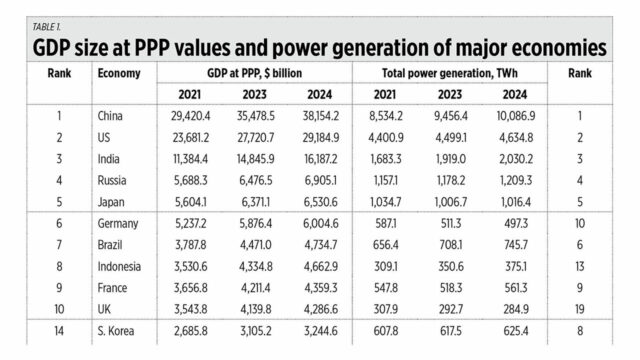
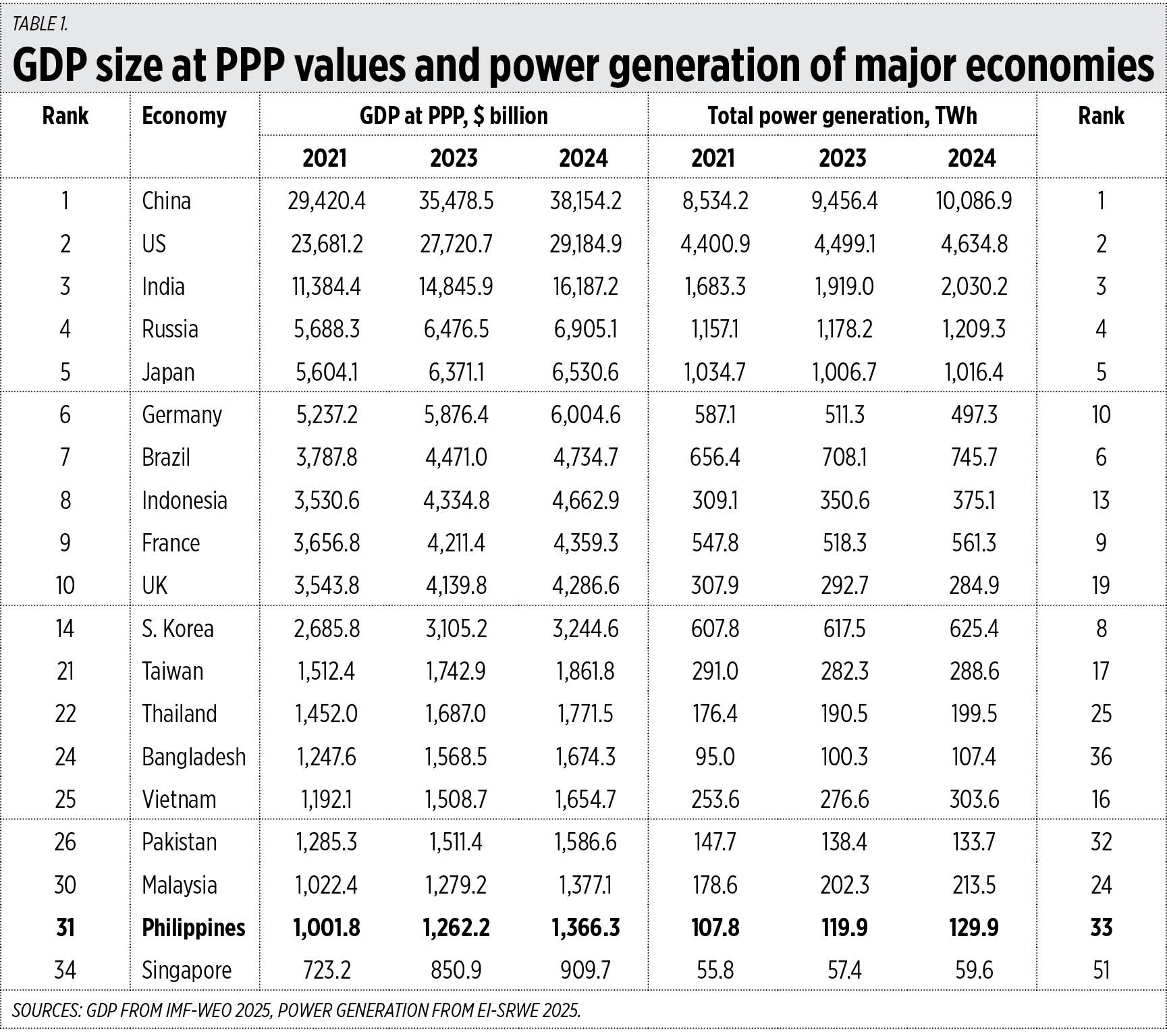
The top five largest economies in the world in GDP size in 2024 were also the top five in power generation. In GDP size, China is 1.3 times larger than the US, 5.8 times larger than Japan, 6.4 times larger than Germany, 8.9 times larger than the UK, and 27.9 larger than the Philippines.

China’s electricity production in 2024 was two times larger than the US, 10 times larger than Japan, 20 times larger than Germany, 35 times larger than the UK, and 78 times larger than the Philippines. One way to look at it is that our total power generation in one year is equivalent to only five days generation in China. Notice also the declining trend in power generation of Japan, Germany, and the UK (see Table 1).

This is clear proof that energy is development. A bigger energy supply sustains more economic activities and business expansion. That is why our main goal in energy policies should be the continued expansion of power generation, regardless of where the power comes from — thermal or renewable, fossil fuels or intermittent sources.

From 2017 to 2023, the average increase in Philippine power generation was 4,200 gigawatt-hours (GWh) a year while Vietnam’s was 13,650 GWh a year. But from 2023 to 2024, the Philippines increased its power generation by 10,000 GWh while Vietnam grew by 27,000 GWh. This is the highest increase in a year that the Philippines has attained, and it largely explains why the Philippines’ GDP size has jumped from an average of $70 billion a year from 2017 to 2023 to $104 billion from 2023 to 2024. We need to keep expanding our power generation plus the necessary modernization in power transmission, distribution, and supply infrastructure.

Along with this policy and the passage of the PhilAtom bill in both Houses of Congress, I saw one good report the other day: “CSP could be waived for first nuclear project” (BusinessWorld, June 29).

There are many countries in the world that continue to use nuclear energy for the production of electricity, along with industrial, agricultural, and healthcare applications. Four of the top 10 nations when it comes to nuclear generation are Asian nations.

While Germany shut down all its nuclear plants in 2024 and Taiwan did the same this year, other countries are ramping up their nuclear generation led by China, South Korea, India, Japan, and the United Arab Emirates (UAE). The latter has had the most surprising expansion of its nuclear power capability, from none at all until 2019 to 40,600 GWh in 2024 (see Table 2).

Countries whose power mix in 2024 included at least 10,000 GWh from nuclear energy were Argentina, Brazil, Mexico, Belarus, Bulgaria, Hungary, Romania, and Slovakia. Other countries whose power mix included less than 8,000 GWh from nuclear generation in 2024 were Iran, the Netherlands, Slovenia, and South Africa.

Denuclearized and decarbonizing Germany has had a GDP performance of between -0.3% and zero over the past eight quarters (Q2 2023 to Q1 2025). Their expensive electricity — relying mainly on intermittent solar-wind plus costly battery — contributed to the trend towards degrowth and deindustrialization.

The Philippines’ shortest route to going nuclear is to refurbish and revive the Bataan Nuclear Power Plant — which can potentially produce 620 megawatts (MW) — and start its operation within four years. Otherwise, build new conventional nuclear plants of 600-1,200 MW. It would be better if both were done.

Meralco is the energy company that is most prepared to go nuclear. They have already sent Filipino scholars to study graduate-level nuclear engineering in at least five countries — the US, China, France, South Korea, and Japan, I think. Aboitiz Power has expressed early interest in going nuclear while San Miguel Global Power and Prime Energy, I think, have their own plans to go nuclear.

This could mean an abundant energy supply, stable and reliable running 24/7 at competitive prices even without taxpayers’ subsidy. We should go for this to help sustain our high GDP growth trajectory.


Bienvenido S. Oplas, Jr. is the president of Bienvenido S. Oplas, Jr. Research Consultancy Services, and Minimal Government Thinkers. He is an international fellow of the Tholos Foundation.

minimalgovernment@gmail.com

Ayala Land eyes to finish 2,600-sq.m. Makati park by 2028

AYALA LAND, INC.

LISTED property developer Ayala Land, Inc. (ALI) said it aims to complete a 2,600-square-meter (sq.m.) park in Makati City by the fourth quarter of 2028.

To be called the Dela Rosa Gardens, the park is intended to improve walkability, connectivity, and community life within the Makati central business district (CBD), ALI said in a statement.

“Set for completion by Q4 2028, the Dela Rosa Gardens is surrounded by cultural, educational, and commercial institutions, making it a natural hub for both everyday routines and weekend escapes,” it said.

ALI said the park reflects its commitment to sustainability.

“From energy-efficient buildings and water conservation systems to waste management and native plant prioritization, Ayala Land integrates eco-conscious practices into every layer of development,” it said.

The park is located near landmarks such as Ayala Triangle Gardens, Legazpi Active Park, and Washington SyCip Park.

Dela Rosa Gardens is situated next to the BPI Civic Plaza and is within walking distance of BPI Tower and other key offices in the CBD.

“It also connects directly to the elevated walkways, making it accessible and seamlessly integrated into Makati’s urban core,” ALI said. “These walkways link straight to the MRT, Greenbelt, and Glorietta malls, adding even more convenience and walkability to the area.”

The park also forms part of the Makati CBD’s Emerald Network, a plan to connect parks and public spaces through pedestrian-friendly pathways and green corridors.

Dela Rosa Gardens is designed to support passive cooling, reduce urban heat, and encourage low-impact mobility through elevated walkways, ALI said.

ALI reported a 10% increase in its first-quarter net income to P6.9 billion, driven by leasing operations and property development revenue.

On Monday, ALI shares rose by 4.65% or P1.20 to close at P27 apiece. — Beatriz Marie D. Cruz

Denis Villeneuve to direct the next James Bond movie

Denis Villeneuve poses on the red carpet during the Oscars arrivals at the 97th Academy Awards in Hollywood, Los Angeles, California, U.S., March 2, 2025. — REUTERS/MARIO ANZUONI/FILE PHOTO

OSCAR-NOMINATED Denis Villeneuve will direct the next James Bond film, Amazon’s MGM Studios said on Wednesday, taking charge of one of Hollywood’s most enigmatic spies and longest-running movie series.

Mr. Villeneuve, the Canadian film director and writer, has earned critical acclaim for films such as Sicario, Dune, Dune: Part Two, Blade Runner 2049, and Arrival.

He was nominated for Best Director at the 2017 Oscars for sci-fi film Arrival, which starred Amy Adams and Jeremy Renner, and for Best Adapted Screenplay for Dune, based on author Frank Herbert’s highly acclaimed 1965 novel of the same name, at the 2022 Oscars.

“I’m a die-hard Bond fan. To me, he’s sacred territory. I intend to honor the tradition and open the path for many new missions to come. This is a massive responsibility,” Mr. Villeneuve said in a statement.

The upcoming Bond movie will be the first under Amazon’s MGM Studios, which took creative control of the film franchise under a new joint venture with longtime rights holders Michael Wilson and Barbara Broccoli earlier this year.

The franchise is yet to name a new lead actor following Daniel Craig’s departure after No Time to Die in 2021, which earned nearly $800 million in global box office collections.

Inspired by Ian Fleming’s novels, the Bond franchise has spanned over 60 years, grossing more than $7 billion at the global box office, making it one of the most successful ever.

Producers Amy Pascal and David Heyman will produce the next Bond movie. — Reuters

Americans cash out on gold bars and coins as Asian investors bulk up

AMERICANS who once snapped up gold bars and coins are offloading the assets while their Asian counterparts show no letup in bullion buying, a sign investors on opposite sides of the world have different outlooks on the global economy.

The divergence suggests US residents who stash bars and coins at home or in safe deposit boxes — akin to stock market day traders — are more at ease about US President Donald J. Trump’s tariffs, rising government debt and geopolitical tensions. And, they’re ready to cash in after the metal’s stunning rally over the past two years.

Known as retail investors, these Americans are bucking broader market trends in which more wealthy investors continue to aggressively buy the haven asset as do sovereign funds and central banks. Meanwhile, Asian gold buyers are eschewing jewelry for bars and coins.

In the US, “A lot of the retail investors tend to be Republican-leaning. And whatever we say about the policy of tariffs, they like the idea of how Trump’s doing,” said Philip Newman, managing director at research consultancy Metals Focus Ltd. “So from their point of view, there’s less reason to buy gold.”

The US market is so awash with bars and coins that some precious metals dealers have slashed their premiums to the lowest in six years to spur sales. And when investors sell, they’re now looking at paying dealers a fee to offload gold.

Bullion dealer Money Metals Exchange LLC currently charges buyers of one-ounce American Eagle gold coins $20 over spot prices, compared with $175 four years ago. And sellers now need to pay about $20 for the online exchange to take the metal, whereas in 2021 they would have received an extra $121 for selling.

The glut has led to a collapse in sales of newly minted bullion products, with the US Mint’s American Eagle gold coins — a proxy for retail demand — tumbling more than 70% in May from the prior year.

The demand for gold bars and coins has been falling for the past three years in North America and Western Europe while rising everywhere else in the world, with last year marking the biggest divergence on record in data going back to 2014, according to Metals Focus. That gap continued into the first quarter of 2025, driven predominately by the sell-off in the US market, according to the consultancy.

Meanwhile, demand for bars and coins rose 3% in the Asia-Pacific region in the first quarter, with the Chinese market registering a 12% year-on-year increase, according to the latest data from the World Gold Council, a trade body representing gold miners. South Korea, Singapore, Malaysia and Indonesia all posted gains of more than 30%.

Initial worries of China and Asia getting hit the hardest by Mr. Trump’s tariffs led to “super strong” demand for gold in the region, said Kenny Hu, a commodity strategist at Citigroup, Inc. Concerns about local currency depreciation also means gold remains the go-to asset for Asian investors who played a key role in the metal’s rally since 2024.

Investors in Southeast Asia lacking other investment options have started recognizing gold as a strategic asset, said Brian Lan, managing director of GoldSilver Central, a Singapore-based precious metals dealer.

“Southeast Asians who have memories of the war understand that gold is a form of insurance during periods of uncertainty,” he said.

In the US, profit taking is part of the equation given gold’s stunning climb — up 59% since the beginning of 2024 to $3,274.33 an ounce Friday. But Wall Street banks are split over whether the rally has ended. Goldman Sachs Group, Inc. reaffirmed a $4,000-an-ounce forecast by next year and Morgan Stanley expects $3,800 by the end of this year, while Citigroup, Inc. sees prices dipping below $3,000 next year.

“When there’s fear, they own more gold and less risk assets,” said Hu of Citigroup. “And now maybe they’re thinking things are actually fine. Tariffs are not that bad. Things will get negotiated out. Geopolitics eventually will de-escalate and US growth may be not that bad. — Bloomberg

RLC to open first Grand Summit Hotel in Luzon by 2027

ROBINSONS LAND CORP.

GOKONGWEI-LED Robinsons Land Corp. (RLC), through its hospitality unit Robinsons Hotels and Resorts (RHR), will open the first hotel under its upscale lifestyle Grand Summit brand in Luzon by 2027.

In a statement on Monday, RLC said the planned Grand Summit Pangasinan — located along the Dagupan-Urdaneta Road in Calasiao — will break ground on July 7. The hotel will cater to both leisure and business travelers.

The seven-story hotel will be integrated into the Robinsons Pangasinan Mall complex. It will feature 100 rooms, including 93 standard rooms, four junior suites, and three executive suites ranging from 38 to 116 square meters in size.

Amenities will include an all-day dining restaurant, lobby lounge, pool bar and outdoor dining area, ballroom, meeting rooms, gym, spa, and outdoor swimming pool.

The upcoming hotel is positioned between Dagupan City, Lingayen, and San Carlos City, offering a central base for exploring Pangasinan and Northern Luzon. It joins the Grand Summit portfolio, which includes the flagship property in General Santos.

Grand Summit is an upscale lifestyle hotel brand designed for local and international travelers seeking comfort, culture, and authentic experiences.

According to RLC, the launch of Grand Summit Pangasinan reinforces its presence in Northern Luzon, where it has investments across multiple sectors.

“Our developments across Northern and Central Luzon reflect RLC’s long-term vision of inclusive growth. By seamlessly integrating our businesses across retail, residential, hospitality, offices, and logistics, we aim to foster thriving communities and contribute to broader national progress,” RLC President and Chief Executive Officer Mybelle V. Aragon-GoBio said.

“The expansion of our Grand Summit brand is a key part of our growing hotel portfolio and further bolsters RLC’s leadership position in the Philippine hospitality sector,” she added.

RLC’s footprint in Northern Luzon includes Robinsons Malls in Pampanga, Tarlac, La Union, and Ilocos Norte; residential communities in Ilocos Norte; and office spaces in Ilocos Norte, Tarlac, and Nueva Ecija.

It is also developing the 216-hectare Montclair Destination Estate in Porac, Pampanga, a mixed-use estate featuring homes, offices, retail hubs, open spaces, hotels, and a logistics and industrial park under Robinsons Logistix and Industrials, Inc.

“Northern Luzon continues to evolve as a dynamic hub for travel and commerce, and Calasiao stands out as a place where local character and regional connectivity come together,” RLC Senior Vice-President Barun Jolly said.

“We purposefully design our hotels to reflect the unique energy of the places they rise in — and in Calasiao, we saw the perfect opportunity to create something that speaks to both leisure and business travelers. We’re proud to bring the Grand Summit experience to Northern Luzon, offering travelers a thoughtfully designed destination that reflects the vitality of the region,” he added.

On Monday, RLC shares declined by 0.58% or eight centavos to close at P13.60 apiece. — Revin Mikhael D. Ochave

ADVERTISEMENT
ADVERTISEMENT