Home Blog Page 1310

‘Green’ jobs touted as employment engines

A wind turbine is seen in this file photo. — REUTERS

By Adrian H. Halili, Reporter

JOBS in environmental preservation and climate resilience hold the potential to bring in more people into the workforce, union officials and analysts said.

“Green jobs will not only contribute to climate resilience but also improve labor participation by creating new, future-ready employment opportunities,” Federation of Free Workers President Jose G. Matula said via Viber.

On Tuesday, the Department of Labor and Employment (DoLE) launched the National Green Jobs Human Resource Development Plan, with the aim of developing a skilled workforce to support the economy’s green transition.

“Green sectors can be made to expand enough to make up for carbon-intensive industries shedding workers,” IBON Foundation Executive Director Jose Enrique A. Africa said via Viber. “This shedding can even be mitigated by active social protection and retraining to ensure a just transition with livelihood security for all.”

The labor force consisted of 52.32 million workers in May, up from 50.74 million in April and 50.97 million a year earlier, the Philippine Statistics Authority  said.

Republic Act No. 10771, or the Philippine Green Jobs Act, incentivizes businesses that use green technology to produce environmental goods and services.

“Green jobs have remained more of a buzzword than a lived reality for most workers. That’s why this plan is urgent,” Mr. Matula said.

He said that the Philippines can compete in the global green economy through better incentives and strong labor-market alignment, and called for the inclusion of trade unions, indigenous peoples, and women.

Mr. Africa said that the Philippines has the potential to be competitive in the global green jobs market through long-term industrialization.

“The country will need more and more energy, and already has strong potential from hydroelectric, geothermal, solar, wind, and biomass sources,” he added.

Mr. Matula urged the government to invest in skills training tied to green jobs demand and ensure that foreign investment includes technology transfer and decent work.

He also called for the protections of workers from the business process outsourcing, manufacturing, and energy during the green transition, and the expansion of social protections to cover potential climate shocks.

Labor Secretary Bienvenido E. Laguesma said the limited number of qualified trainers, the delayed development of standards and systems, limited resources, and weak public awareness is holding back green job certification.

“To address this, DoLE, the Climate Change Commissions, and the International Labour Organization (ILO) have been pilot-testing the Green Jobs Certification System since 2018, while TESDA rolls out green skills training and developed training regulations in key sectors like auto and welding,” he said via Viber.

He added that these initiatives were augmented by efforts to integrate green standards into national labor and development plans, improve communication, and develop an online portal.

“(These are) steps meant to clarify, simplify, and scale green job recognition,” Mr. Laguesma said.

A shift to a more green economy is expected to create about 24 million jobs globally by 2030, the ILO said.

SM Offices targets BPO growth with new Laguna tower

THE CORE TOWERS — SM OFFICES

SM PRIME HOLDINGS, Inc.’s commercial property arm, SM Offices, is expanding its regional footprint with the launch of The Core Tower Three office project in Sta. Rosa, Laguna.

The Core Tower Three is the 15th development by SM Offices outside Metro Manila, the company said in a statement on Thursday.

It forms part of the P1.6-billion, three-tower The Core Towers project located within the SM City Sta. Rosa complex, which offers more than 27,000 square meters of office space to the South Luzon market.

With the launch, SM Offices said its total leasable footprint has grown to over 1 million square meters, with more than a fifth located in key regional growth corridors.

“The Core Towers reflects the growing demand for future-ready office spaces in regional growth centers like Sta. Rosa,” SM Prime Vice-President and SM Offices Head Alexis L. Ortiga said.

“We are seeing sustained interest from companies looking for scalable locations that combine operational efficiency with strong local talent pools,” he added.

Each tower is equipped with 100% backup power, modern building systems, and direct connectivity to the South Luzon Expressway, Cavite-Laguna Expressway, and the Old National Highway.

The development offers flexible fit-out options, 24/7 building management, and high-speed telecom connectivity. Tenants also have access to retail, dining, and public transit options within the mall complex.

SM Offices said the project is designed to serve a growing base of business process outsourcing (BPO), technology, and professional services firms seeking workspaces in Calabarzon.

Leasing activity is ongoing, with several firms already in operation, the company said.

The Core Towers project is expected to generate over 6,000 local jobs through tenant operations and building services.

The project was designed by Architect Albert Yu of ASYA Design Partner, an architectural firm with projects in major Philippine cities and key markets in China, including Shanghai, Chengdu, and Suzhou.

SM Prime earlier said it had allocated P6 billion this year to develop new office towers and workspaces, including the Six E-Com Center in the Mall of Asia Complex.

On Thursday, SM Prime shares rose by 1.83% or 45 centavos to P25.05 apiece. — Revin Mikhael D. Ochave

Fed minutes show little support for July rate cut

REUTERS

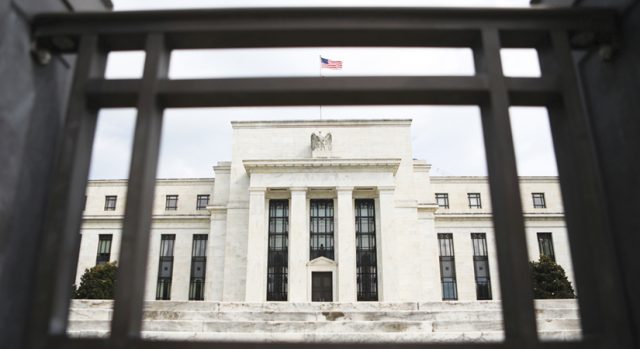
WASHINGTON — Only “a couple” of officials at the US Federal Reserve’s June 17-18 meeting said they felt interest rates could be reduced as soon as this month, with most policymakers remaining worried about the inflationary pressure they expect to come from President Donald J. Trump’s use of tariffs to reshape global trade.

Mr. Trump has demanded immediate, steep cuts, and called for Fed Chair Jerome H. Powell to resign. The minutes released on Wednesday, however, showed only narrow support for a near-term reduction in borrowing costs among the Fed’s 19 policymakers, with “some” of them feeling no rate cut would be needed at all.

“Most participants” at the Fed’s meeting last month anticipated rate cuts would be appropriate later this year, with any price shock from tariffs expected to be “temporary or modest,” the minutes said. There was no indication that any policymaker felt the US central bank’s benchmark overnight rate, currently in the 4.25%-4.5% range, should be cut by several percentage points, as Mr. Trump wants.

“Several” policymakers indeed felt the current policy rate “may not be far above” the neutral level, at which economic activity is neither stimulated nor restricted, and previously published policymaker forecasts show even the most dovish of the 19 US central bankers see less than a percentage point of cuts this year, and no more than another percentage point in 2026.

Despite what it characterized as “considerable uncertainty” over the exact inflationary effects of tariffs, the minutes “underscored the lack of urgency to cut rates anytime soon,” Priscilla Thiagamoorthy, senior economist at BMO Capital Markets, wrote in a note.

The central bank’s policy-setting Federal Open Market Committee last month voted unanimously to leave rates unchanged.

After the minutes of that meeting were published, traders pared their already miniscule bets on a rate cut at the Fed’s July 29-30 gathering, with rate futures continuing to point to 50 basis points of cuts by the end of this year, matching the median forecast from central bank policymakers.

“Participants generally agreed that, with economic growth and the labor market still solid and current monetary policy moderately or modestly restrictive, the Committee was well positioned to wait for more clarity on the outlook for inflation and economic activity,” the minutes said.

While many policymakers agreed rate cuts might be appropriate later this year, there was broad division about the outlook.

“Some participants … saw the risk of elevated inflation as remaining more prominent,” the minutes said. In updated projections issued after the June meeting, seven Fed policymakers anticipated no rate cuts this year.

“A few participants saw risks to the labor market as having become predominant,” the minutes stated.

‘CAREFUL APPROACH’
Fed policymakers also were split on how they see underlying demand, with “several” pointing to solid consumer spending and “several” others pointing to signs of softening. Several policymakers also noted that lower-income households were switching to lower-cost items and could be disproportionately affected by tariff-related price increases.

But officials seemed, in large part, wary of changing monetary policy while so much remained up in the air about the final tariff rates that Mr. Trump intends to impose and how businesses and consumers will respond.

Fed officials “agreed… it remained appropriate to take a careful approach in adjusting monetary policy,” according to the minutes.

The comments in the minutes were reflected in the interest rate projections issued after last month’s meeting, with the median rate outlook pointing to two quarter-percentage-point reductions by the end of 2025. Investors expect an initial cut at the Fed’s meeting in September and a second one in December.

Fed Governor Christopher Waller and Fed Vice Chair for Supervision Michelle Bowman have since said they felt rates could fall as soon as this month’s meeting. — Reuters

The Deep Thinker rising through a shallow Pentagon

ELBRIDGE COLBY, Under Secretary of Defense for Policy — CSIS|CENTER FOR STRATEGIC & INTERNATIONAL STUDIES/FLICKR

By Andreas Kluth

IN NATIONAL SECURITY as in other policy areas, US President Donald Trump has been gutting what he derides as the “deep state,” and turning it into what some scholars now call a “shallow state” — a government in which careers depend less on expertise and more on sycophancy.

But even a government of the shallow, by the shallow, for the shallow needs depth in certain functions. This means that the remaining people in the administration who know their brief, as long as they’re also politically adroit, may play an outsized role in setting strategy.

One such official is Elbridge Colby, the Under Secretary of Defense for Policy. Already influential in Trump’s first term, Colby is now masterminding the next National Defense Strategy, slated to be published in late August.

If Colby has his way, it will say — under the label “America First,” of course — that the United States is overextended and exploited by its friends, and that it must do much less in Europe, the Middle East, and other places in order to concentrate on the one defining contest to come. This is the looming confrontation against China, initially over Taiwan but ultimately over the regional hegemony in Asia which Beijing seeks and Washington must deny.

Guided by that stance, Colby has been putting his signature on all sorts of other policy moves. The other day, the US abruptly paused deliveries to Ukraine of various munitions, from artillery rounds to Patriot batteries, ostensibly because America needed to conserve its own stockpiles. That initiative came from Colby, who views Ukraine as a job for the European allies but a distraction for Washington. The weapons halt blindsided not only Kyiv but also the State Department and Congress, where concerned Republicans and Democrats demanded that Colby explain himself.

Colby was also behind an unexpected “review” of AUKUS, a trilateral quasi-alliance among the US, Britain, and Australia, under which Washington is supposed to give Canberra several top-notch, nuclear-powered attack submarines. An odd target for Colby, perhaps, since AUKUS is meant to contain China, Colby’s bugbear. But he worries that Washington doesn’t have any whizzbang boats to spare. Or he may just be pressing Australia to pick up more of the bill, a tactic that would please Trump. An update on the review is expected this week.

Colby is a curious person to wield so much sway in such an ostentatiously populist and anti-elitist administration, and in a Pentagon run by an underqualified TV personality. In biography and pedigree, he’d be better cast in a deep-state role: He’s a preppy (Groton, Harvard, Yale) with both the name and the mane to show for it, and for good measure also the grandson of a former CIA director. And he has an erudite side, which he displayed when we met before he joined this administration.

Colby — “Bridge,” to his colleagues — considers himself not an isolationist (a label that better fits the MAGA fringes), he told me, but a realist in the tradition dating back to Thucydides. (A think tank he co-founded is named Marathon, after the battle won by the Athenians of Thucydides’ father’s generation.) Having read some of my columns, Colby labeled me a “rationalist.”

But Colby also has — or has learned to present — another side, one that has kept him close to the power circles around Trump but estranged him from many of his colleagues in the establishment. After Trump lost to Joe Biden in 2020, Colby lined up with those who spread the lie that the election was “stolen.” He later gave a slick interview to Tucker Carlson, an influencer who was rabidly pro-Trump. He started tweeting and posting in ways that seemed tailored to the attention spans of MAGAs (especially the top one) rather than wonks. It evidently worked. During Colby’s confirmation hearings, Donald Trump, Jr., the president’s eldest son, tweeted that “any Republican opposing @ElbridgeColby is opposing the Trump agenda.”

None of this would count as criticism in any normal administration, where Colby would be just one among many experts in the Pentagon, National Security Council, State Department, and Intelligence Community, debating the pros and cons of policies, the known unknowns and the unknown unknowns, and the rest of it.

But that intellectual rigor no longer exists. Marco Rubio, who among top officials comes closest in expertise to Colby, is overstretched running both the State Department and the National Security Council, both of which are in turmoil after firings and selective re-hirings. The directors of national intelligence (Tulsi Gabbard) and the CIA (John Ratcliffe) have in effect become flunkies.

Substantive criticism now comes from outside the government, and often from policy veterans. One such is Lisa Curtis at the Center for a New American Security (where Colby also did a stint), who served in the National Security Council of the first Trump administration, and in the CIA and State Department before that.

Colby sees US foreign policy “as a zero-sum game and I just, I don’t see it that way,” Curtis told me. The US is a global power “and we can’t pick and choose our theaters” — ignoring Ukraine and focusing on Taiwan, say. “And by the way, what happens in one theater impacts the other.” Beijing is certainly watching how much resolve Washington brings to resisting the Kremlin. “It doesn’t need to be an either or, and I think that’s the way Bridge Colby sees it.”

These are discussions that should be carried out in the Oval Office and the situation room but no longer are. By all accounts, the people around those tables are too eager to affirm a president who ultimately believes only in his own gut and acts on whim. (Trump now says the US will keep sending weapons to Ukraine after all. And he certainly didn’t listen to Colby when he ordered the bombing of Iran.)

But strategy still matters in the slower-moving realms of government, where ships, nukes, drones, bases, and other things are planned years in advance, delineating the future parameters of American power. And this gives sway to the few people at or near the top who still have a clue, like Colby. If he has his way — irrespective of what Trump does tomorrow or the day after — America will keep weaning itself from Europe and the Middle East, and eventually cease being a global leader to become a North American and Pacific power.

BLOOMBERG OPINION

English version of animated Chinese hit Ne Zha 2 heading to theaters

A still from the film Ne Zha 2. — IMDB

LOS ANGELES — A24 and CMC Pictures are teaming up to bring an English-language version of the globally successful Chinese animated film Ne Zha 2 to theaters in the US, Canada, Australia, and New Zealand on Aug. 22, the companies said on Wednesday.

The animated blockbuster overtook Pixar’s Inside Out 2 in February to become the highest-grossing animated film globally, according to data from ticketing platform Maoyan.

Ne Zha 2 amassed a total box office of 12.3 billion yuan ($1.71 billion) including pre-sales and overseas earnings, making it the eighth highest box office film worldwide.

The English-language cast will include Academy Award winner Michelle Yeoh. No other voice actors have been announced so far.

“I’m honored to be part of Ne Zha 2, a landmark in Chinese animation and a powerful reminder of how universal our stories can be,” the Malaysian actor said in a statement.

The sequel follows the first Ne Zha film from 2019 and is based on Chinese mythology.

The story follows Ne Zha, a rebellious young boy, who is feared by the gods and born to mortal parents with wild, uncontrolled powers.

He’s faced with an ancient force intent on destroying humanity and must grow up to become the hero the world needs.

The film, which will be released in IMAX and 3D, was written and directed by filmmaker Yang Yu, who also developed the first movie.

Over 99% of the mythological movie’s box office income came from mainland China, starkly in contrast to Hollywood films, which typically rely on a more global distribution strategy.

Ne Zha 2 is based on a 16th century Chinese novel The Investiture of the Gods, depicting a hero boy with magic power who tried to defend Chentangguan, a fortress town. — Reuters

Unions: Amazon ‘Prime Day’ puts extra strain on workers

STOCK AI-GENERATED IMAGE | Image by TyliJura from Pixabay

BRUSSELS — Dehumanized and disposable is how Amazon workers in Poland, Germany and France described how they felt working in the online retail giant’s warehouses.

“You are no longer Julie or Ludovic, you are number 412, and you can be replaced by number 313,” El Djoudi Laouedj, an area manager and trade union member at Amazon’s Lauwin-Planque warehouse in France told the Thomson Reuters Foundation.

With Amazon’s global Prime Day deals taking place between July 8-11, there will be even more deliveries to prepare during the longest sale yet, in which the company typically does 1-2% of its annual business.

In interviews, European warehouse workers and union representatives said Prime Day meant extra hours in sometimes sweltering temperatures and a heightened risk of injuries.

A report commissioned by Democratic Senator Bernie Sanders’ office last year found the shopping event was a “major source of injuries” for workers in the US.

The company, the biggest US online retailer, said its goal was to have the “safest workplaces in our industries.” It said it had invested more than $2 billion in safety improvements since 2019, and that injuries requiring more than basic first aid were down 34% in the past five years.

Amazon workers and labor leaders told the Thomson Reuters Foundation they wanted the e-commerce giant to come to the bargaining table and make work more sustainable.

“It’s a company that has created lots of jobs around the world. We don’t want Amazon to close,” said Laouedj. “We want conditions to improve.”

Prime Day has turned July, typically a slow time for retailers, into a season when shoppers look for bargains.

Although not officially requested by management or artificial intelligence tools used by workers, the pressure of extra Prime Day orders is “felt on the floor” of the warehouse, Laouedj said, as trucks need to be filled and orders despatched.

“Thank god we can still go to the toilet, but if we take too long a manager will come to check,” said Habib Latreche, a logistics operator and Yellow Vest union member.

The pressure to work at a dangerous pace, performing repetitive motions, with sometimes broken cooling systems, can lead to injuries, a situation that has worsened in recent years, according to workers.

“It creates a continual stress, we have to work well and we have to be safe, but we have to work fast,” Mr. Latreche said, adding that workers were the ones “paying the price” of ever-faster deliveries.

The pace of work and repetitive movements can result in a musculoskeletal disorder, commonly known as strain and sprains, which make up 57% of all recordable injuries at Amazon globally, according to the company.

To address this, Amazon has invested in safety improvements including adjustable height workstations, and robotic systems that handle repetitive tasks and heavy lifting, as well as measures to prevent heat stress.

Yet some German workers still criticize the high pressure to perform, and constant digital monitoring, leading to high levels of psychological stress, according to Monika Di Silvestre, trade union secretary of UNI Europa affiliate ver.di union in Germany.

Some workers in Polish warehouses said the pressure was relentless. Agata Wypior, leader of Solidarity Amazon Poland, said according to the union’s survey, more than 44% of employees gave up breaks to meet a target.

“Amazon sets targets through artificial intelligence that only a robot, not a human, can meet,” Ms. Wypior said, adding that the pressure was not limited to peak periods. “We have Prime Day every day.”

Asked about the workers’ comments, an Amazon spokesperson said in e-mailed responses: “The safety and wellbeing of our people is our top priority. We assess performance based on safe and achievable expectations and take into account time and tenure, peer performance and adherence to safe work practices.”

The company also says performance is only measured when an employee is at their station and logged in. It also said internal data showed that around 80% of employees in Poland eat at the canteen and the rest bring their own meals.

Adding to the pressure is the fear of being replaced by robots and artificial intelligence. “A human gets sick, pregnant, injured; a robot doesn’t,” Laouedj said. Robotization is a recurrent theme in union discussions across Europe, as the company rolls out more robotics in its depots.

In response to questions over automation, Amazon cited a study commissioned with the Massachusetts Institute of Technology last year that found that 60% of employees across nine countries who work with robotics and AI expect positive impacts on their productivity and safety.

To address workers’ fears, unions are calling for safer workplaces and relief from relentless pressure, a battle that has spread to the political arena.

EU lawmakers have stepped up their scrutiny of working conditions at Amazon. During a parliamentary hearing on June 26, senior company leaders were invited to answer questions on labor practices, but lawmakers and Amazon disagreed over which executives should attend to answer questions.

“We remain open to dialogue about our commitment to being a responsible employer in Europe,” the Amazon spokesperson said in an e-mailed response to questions over whether it would be willing to attend a new hearing in Brussels.

Workers remain hopeful of driving change, and in some cases a return to working conditions that existed when they first started work a decade ago. Some even cite the firm’s ‘Day One’ culture of not getting complacent after achieving success.

“They say it’s always Day One at Amazon. So we can always go back to being amazed. I still hope so,” said Ms. Wypior. — Thomson Reuters Foundation

NexGen seeks foreign partners for project pipeline

STOCK PHOTO | Image by Pixabay from Pexels

NEXGEN ENERGY CORP. is seeking foreign partners to help develop its pipeline of renewable energy projects, its president said.

“NexGen is continually in active discussions with investors from Japan, China, Europe, and the Middle East, who have expressed strong and serious interest in co-developing NexGen’s pipeline project,” NexGen President Eric Y. Roxas said in a statement on Thursday.

“Pursuing and moving our pre-development phases forward, we generate more interest in our projects as well as enhance our shareholder value,” he added.

The company is currently pursuing 14 renewable energy projects — two solar, seven offshore wind, and five onshore wind — all with awarded service contracts, Mr. Roxas said.

Four of these projects are already in advanced stages.

Among the company’s solar initiatives, NexGen is expanding its solar farm in Palauig, Zambales, by developing another solar facility with a capacity of 9.9 megawatts (MW), which is targeted to begin operations by mid-2026.

For its wind projects, NexGen said it has successfully erected a 120-meter meteorological mast — a structure used to confirm wind resource potential — at the sites of its 2,000-MW Real and 300-MW Mauban offshore wind projects.

The company is also preparing to install the met mast for its 200-MW Pandan Onshore Wind Project.

“With these milestones being reached, the company has registered for the government’s Green Energy Auction Program (GEAP) for the Palauig Solar Farm and plans to register for the upcoming GEAP 5 for its offshore wind projects,” the company said.

The government is preparing to launch the fifth green energy auction, which will cater to offshore wind power.

NexGen currently owns and operates three solar farms and has a development pipeline totaling over 1.5 gigawatts of wind and solar projects. — Sheldeen Joy Talavera

The importance of strengthening K-to-12

In Nelson Mandela’s words, “Education is the most powerful weapon which you can use to change the world.” In the Philippine context, giving our youth a solid education empowers them to change their world and that of their families. Education is a basic human right.

For too long, Philippine graduates, especially at the high school level, were considered unprepared for the demands of higher education or immediate employment. The 10-year cycle often left students lacking the depth of knowledge and critical thinking skills needed in an increasingly complex global landscape. Additionally, the 10 years of basic education ranked among the shortest in the world, which made our graduates less competitive on a global scale.

The business sector experienced this gap, facing a persistent “skills mismatch” where industries struggled to find the right talent despite a large pool of job-seeking graduates. K-to-12, with its additional two years of senior high school (SHS), was designed to address this by offering specialized tracks that help students achieve better learning outcomes through the development of job-specific skills or preparation for higher education.

The promise of K-to-12 is a population that is not only larger in number but more importantly, of higher quality. Graduates are expected to be more mature and equipped with 21st century skills, including critical thinking, problem solving, communication, and collaboration. The technical-vocational tracks, in particular, offer great potential for direct employment, creating a pool of skilled workers who can immediately contribute to various industries without needing a college degree.

In response to recent calls to repeal the K-to-12 basic education framework enacted in 2013, FINEX, along with Philippine Business for Education and other representatives from the private sector, the business community, and civil society, signed a statement reaffirming our strong support for K-to-12 and echoing the call of President Ferdinand R. Marcos, Jr. to improve its implementation. We continue to view this as essential for preparing young Filipinos for employment, lifelong learning, and active citizenship; items that are vital for a stronger Philippines.

However, the success of K-to-12 depends on implementation, and this is where the program has encountered significant challenges and criticisms. Simply adding two years of education does not address the problem, and we recognize major obstacles in its rollout. These include ongoing shortages of classrooms, and the curriculum itself has also been criticized for being “congested” and for not always fully aligning with the needs of higher education or specific industries, leading to a continued “skills-job mismatch.”

K-to-12 has also faced criticism for increasing the financial burden on families, especially those from lower-income backgrounds, who now have to cover two more years of schooling expenses. Although the program aims to enhance the immediate employability of SHS graduates, many still struggle to find work. Some critics have even called for ending the program, claiming that the system is “flawed” and has not delivered on its promised benefits.

Despite these challenges, proposals to repeal K-to-12 would be detrimental and our focus should be squarely on strengthening K-to-12’s execution as weak learning outcomes are observed long before SHS. The statement referenced a World Bank study that identified that more than 90% of Philippine students aged 10 years old cannot read a simple sentence.

Education has the power to transform a nation. Take the example of South Korea after the Korean War, when it was one of the poorest countries in the world, and compare it to today, when it is an economic powerhouse and a global leader in various high-tech industries including semiconductors, automobiles, shipbuilding, and consumer electronics. This transformation was achieved through a deliberate and substantial long-term investment in its education system, aimed at developing a highly skilled and educated population. South Korea made public and secondary education compulsory and practically universal. There was a focus on s cience, technology, engineering, and mathematics or STEM and vocational training, aligning these efforts with national development goals.

We all need to commit to making K-to-12 successful so the Philippines can reach our goals and prepare our youth to make a difference in the world. It will require a collective effort to strengthen core skills and align learning outcomes with our nation’s needs.

The views expressed herein are his own and do not necessarily reflect the opinion of his office as well as FINEX.


EJ Qua Hiansen is the chief financial officer of PHINMA Corp. and the president of the Financial Executives Institute of the Philippines.

Net Foreign Direct Investments

FOREIGN DIRECT INVESTMENTS (FDI) in the Philippines rose 7.1% year on year in April, boosted by inflows from Japan and investments in the manufacturing sector, according to the central bank. Read the full story.

Net Foreign Direct Investment

Dreams unravel a mystery

STOCK PHOTO | Image from Freepik

The ultimate dreamer was Spanish surreal artist Salvador Dalí. He created melting clocks, floating objects with crystal decanters and spilled water that flows upwards, phallic symbols in his still life works, paintings with sexual undertones. His jewel-encrusted gold pieces with flawless cabochon rubies were sculptural and stunning. The magnificent emeralds and diamonds his manifestations of dazzling dreams.

The Dalí Museum in Figueres, Catalonia, Spain is the home of a precious abundance of paintings and objets d’art. In the open garden, there is an unusual and cool installation — a working shower inside a 1950s vintage car. It grabs attention. There are painted dinosaur sized eggs displayed atop the rampart walls. His gigantic powerful portrait with piercing eyes and the signature pointed curled moustache would transform itself and move — depending on how and where you looked at it from.

If one were to think of time in linear or chronological terms, it would be difficult to dream forward. But there is a phenomenon of clairvoyance, seeing the future in dreams.

Time is not necessarily a straight line of past, present, and future. It seems to be cyclical.

All of us dream — in vivid color or dramatic black and white. In deep slumber, and when there is Rapid Eye Movement (REM), the mind is free to explore another terrain — the imaginary world and the subconscious. Dreams are the collective memories of the past and, in some cases, the future. During the Alpha state, when one is between slumber and wakefulness, an automatic switch unlocks the brain’s data bank. Long stored images of forgotten events begin to flash onto the mind’s eye. It is like watching a disjointed, flickering old movie.

In the dream state, an individual with extra sensory perception (ESP) can “remember the future.” If it happens, that dream could be considered clairvoyant or prophetic.

A highly intuitive individual could solve complex problems or discover solutions while asleep. The answer comes in different forms — as seeing a situation with a different perspective, or a Eureka “aha!” moment.

We do not always remember our dreams unless we are suddenly awakened while dreaming in the REM phase.

Creative, imaginative individuals often dream in color. Their dreams are so clear they can almost see, smell, taste, hear, and feel everything. The experience seems real.

They have intensely moving dreams that are profoundly sad, frightening, haunting, bewildering, happy, or romantic.

While asleep, they talk, sleepwalk, laugh, cry, punch, wave, and make gestures.

Some people say they never dream. Others say that when they dream, they recall indistinct forms and vague shadows, abstract flashbacks from the film clips.

Psychologists say that keeping a dream journal helps thread the dreams and connect them like chapters of a book, or sequences of a movie. Some dreams are “replays” of recent episodes — with surprise twists. Others are projections of the subconscious and surreal fantasies.

Hidden desires and subconscious longings of the psyche appear in symbolic form. Underlying problems, anxieties and fears, pervasive feelings may appear as recurring, disturbing, distorted nightmares.

When people recall their dreams, they relate common experiences such as flying, falling, running after a speeding train and not being able to catch it, swimming against the current, sinking under the splashing waves.

Dreaming of being naked amidst a crowd could indicate a feeling of inadequacy, vulnerability, or guilt. The individual could be afraid of being exposed and is threatened by the possibility of disclosure.

Confusion is often depicted as being on a Ferris wheel or a spinning carousel. Climbing mountains are performance-anxiety dreams related to ambitious goals.

The phenomenon of déja vu defies logic.

Under hypnosis, some individuals can remember significant or traumatic memories of a previous incarnation. They instantly recognize places or people they have never seen in this lifetime. Sometimes, the process of recognition provokes intense feelings of closeness, attraction, or extreme dislike. It is inexplicable.

The accurate recollections of experiences are dreams. They may be valid or not, but they provide insights into an esoteric dimension.

To the lay person, the symbolism and surrealism of a dream are perplexing. What appears to be is not necessarily so. It is like seeing a mirage or apparition in the desert.

Whenever one has recurring dreams, it means that an important issue or a deep conflict needs resolution. Analyzing the journal would reveal hidden facets.

A career woman often dreamed of her old antique closet filled with lovely white and pastel lace dresses. She longed to try to wear some of the frocks, but she would always wake up. It recurred so she tried to draw some in her mind.

By chance, a dream analyst met her at an art exhibit. They talked about that dream. He explained that those dresses were the roles that she had not yet done. She nodded and forgot the comments.

Time went by.

Thirty years later, she had many interesting dreams but the one about the closet and dresses was not there anymore. In the meantime, she had accomplished several important projects, achieved difficult goals, and surpassed what she had set out to do.

She planted a tree, wrote more than one book, bore a child and climbed a small mountain, went high up on a parasail. She traveled to a few exotic places, and received a measure of recognition for her achievements.

Then one day, as she was meditating and walking by the seashore, she remembered what the analyst had said many years ago.

It finally made sense.

The blue space, the calm ambience opened yet another vista. A spiritual one.

Dreams may unravel a puzzle or solve a mystery.

By looking forward, one may find that flash of insight or inspiration for a scientific formula or practical invention, a sonata or symphony, a mural, a poem, a play.

Who knows what the dreamer can discover beyond the realm of logic?


Maria Victoria Rufino is an artist, writer and businesswoman. She is president and executive producer of Maverick Productions.

mavrufino@gmail.com

China detains female erotica writers in pornography crackdown

BEIJING — Police in China have detained dozens of young women authors in a genre of gay erotica widely known in Asia as “boys’ love” during a nationwide crackdown on online pornography, lawyers and activists familiar with the cases say.

The detentions since March have triggered debate on social media about the limits of free speech and the apparent sexist nature of the crackdown, while stirring sympathy for the authors, many of whom hail from low-income backgrounds.

“I just wanted to earn some money to ease my family’s financial burden,” one author of such works wrote in a May 25 post on microblogging platform Weibo before it was deleted.

“I never imagined that 300,000 clicks and 4,000 yuan in royalties accumulated by those obscure words over time would become criminal evidence,” she added, referring to a sum equivalent to about $560.

Police detained the women in the northwestern city of Lanzhou for violating a 2004 obscenity law that can carry jail terms of more than 10 years or life, though legal scholars want it overhauled to reflect changes in internet usage.

The writers, all aged in their 20s and early 30s, published their work on Haitang Literature City, a niche pay-to-read online platform specializing in the erotic fiction genre, popular with women, that features relationships between men.

The website is censored in China and can only be accessed by using virtual private network (VPN) software.

One author detained in April earned royalties of less than 10,000 yuan ($1,400) that supplemented her income from a series of menial jobs, said her defense lawyer, who sought anonymity for fear of police retaliation.

“In a country that emphasizes socialist morality, people’s concept of sex is influenced by the prevailing culture, so of course it is linked to freedom of speech,” the lawyer said.

“If these things cannot be written now, wasn’t Dream of the Red Chamber also obscene at the time?” they asked, referring to a famous 18th century Chinese novel.

Some authors may face trial as soon as this autumn if prosecutors decide to press charges, the lawyer added.

Lanzhou police did not reply to a request for comment.

In 2021, China’s state media regulator called for the removal of content depicting “abnormal sexual relationships,” a year after the official People’s Daily condemned boys’ love novels as “poison” that could “mislead young people on gender.”

Reuters was unable to confirm the number of women detained, although lawyers say some were later released on bail. None could be reached for interviews and family members declined to speak, citing safety threats.

In recent weeks, several have written social media posts about their experiences, only for these to be deleted later.

One described being detained by police in front of her university classmates. Others said police interrogated them about their sex lives and sexual orientation.

More than a dozen Chinese lawyers have publicly offered pro bono aid to authors and Haitang readers summoned by police.

China cracks down periodically on content it deems “immoral,” ranging from LGBT-themed social media accounts to “vulgar” livestreamers and influencers who “flaunt wealth.”

A crackdown on gay erotica last year saw more than 50 Haitang authors detained or fined by rural police in the eastern province of Anhui, according to lawyers.

One well-known author was jailed in December for 4 1/2 years for earning 1.8 million yuan ($250,000) by publishing “obscene works,” a court judgment posted online by her husband showed. The user did not respond to a request for comment.

But the latest group of detained authors made just a few thousand yuan from their work, said an activist familiar with several cases who declined to be identified for safety reasons.

In informal conversations, the defense lawyer said, Lanzhou court officials have called the stories “disgusting and perverted” for their depiction of LGBT relationships.

“These websites are extremely niche and can only be accessed by insiders, whereas vulgar online content involving gambling, porn, and minors is everywhere on short-video apps and social media,” one user wrote on the RedNote platform.

Its “Haitang” hashtag drew more than 205 million views and 1.8 million posts before it was censored in June.

“Men who write pornographic fiction enter the China Writers’ Association, whereas women who do the same go to jail,” runs a popular RedNote meme.

Many users said some perpetrators of rape, molestation, and domestic violence received lighter sentences than writers of erotica.

“An authoritarian government can only use a one-size-fits-all approach to arrest authors,” feminist activist Li Maizi said of the anti-pornography campaign.

“They should implement a rating system to protect these creators rather than simply erasing them.” — Reuters

Terminating workers with dignity and respect

We are carrying out a corporate-wide retrenchment program. Our human resource (HR) manager assigned all department heads to personally undertake the difficult task of informing the target workers we supervise. However, HR provided us with no clear guidelines on how to do it. Could you advise us on the best approach? — Rising Sun.

No manager looks forward to the day they have to let someone go, and even less so if it involves more than one person. Whether it’s due to downsizing, restructuring, performance-related issues or discipline-related matters, personally delivering a pink slip is one of the most emotionally taxing and high-stakes moments for management.

However, when handled with preparation, empathy, and professionalism, it’s possible to deliver the bad news in a way that protects both the organization’s integrity and the employee’s dignity. Give your HR department the benefit of the doubt. Unlike me, they know the context very well. Now, compare the following with what HR has given you:

One, be prepared. Do your homework. Terminating someone should be guided by legal and ethical parameters. Ensure you understand the situation fully. Have all the necessary documents ready, including the formal termination letter.

You should also have details on the release of terminal pay, pay for unused leave, severance, and the extent of benefits coverage, if any. Understand that a rushed, poorly documented dismissal can cost more than just the morale of other workers.

Two, set a time and place. Bad news needs a humane backdrop. Choose a private, quiet room where the employee can participate in the conversation without feeling humiliated. Never deliver a termination in an open office, hallway, or virtual chat window.

Schedule the meeting late, or two hours before closing time on a weekday. If the worker becomes emotional, you avoid having people hear the ruckus, even if it’s done behind closed doors.

Three, arrange to have a witness from HR. This protects you and the company, but it also ensures there’s another set of ears in case of miscommunication or emotional responses. In addition, you can invite another manager or a neutral third party to give legitimacy and objectivity to the process.

Record the conversation, but ask for the worker’s permission.

Four, go directly to the point. And do it with compassion. Be clear, brief, and kind. Avoid building up suspense or sugarcoating the message. Try something like this: “Thanks for meeting with us today. I have some difficult news. As of (date), your role is being eliminated due to (reason). This decision is final.”

Pause. Give them space to absorb the news. There’s no need to fill the silence. Avoid clichéd empathy like “I know how you feel” or “This hurts me more than it hurts you.” It may come across as insincere, no matter how well-intended.

Five, speak respectfully, but stand your ground. Even if the reason for retrenchment is poor performance, never turn the conversation into a personal critique session. It’s not the time to air management frustrations. Keep the tone professional, and avoid framing the termination as a failure of character.

You can say: “This decision was not made lightly.” But don’t say: “You should’ve seen this coming.” Or, “you’ll probably find something better anyway.”

Six, explain the next steps. Once the decision has been communicated, shift into clarity mode. The employee will likely be in shock, so walk through all logistics slowly and provide everything in writing.

If possible, be ready with the final paycheck details and accrued leave, any severance package or benefits that will extend beyond the termination date, outplacement support or employment references, retrieval of personal belongings, and return of company documents and equipment, and access to e-mail or files.

Seven, close the conversation professionally. Aim to end on a respectful note. Acknowledge the employee’s contributions, express appreciation where appropriate, and offer assistance for their transition — whether that’s a reference letter, job leads, or resume support.

Example: “We’re grateful for your contributions and want to make this transition as smooth as possible.” Be ready when some employees prefer to leave immediately; others may want to say goodbye. Respect their preference.

Eight, communicate internally with the survivors. Be transparent without oversharing. Protect the privacy of the departing employee, but reassure the team that the decision was handled responsibly. Say something like: “As some of you may know, (name) has left the company.

“We thank them for their contributions and wish them well. If you have any questions about how this affects your team, feel free to reach out.” This maintains morale without inviting gossip.

FINAL THOUGHTS
Letting someone go is never easy. And it shouldn’t be. But avoiding it or handling it poorly can be far more damaging. Termination conversations are leadership tests: a chance to show your values in action.

When you approach the process with preparation, compassion, and clarity, you not only protect your organization’s reputation, you uphold your credibility as a leader worth following.


Ask questions and receive Rey Elbo’s insights for free. E-mail elbonomics@gmail.com or DM him on Facebook, LinkedIn, X, or via https://reyelbo.com. Anonymity is guaranteed.

ADVERTISEMENT
ADVERTISEMENT