BEIJING – Alibaba Group announced on Wednesday the launch of Qwen3-Coder, an open-source artificial intelligence model for software development that the Chinese e-commerce giant described as its most advanced coding tool to date.
The launch comes amid intensifying competition among Chinese technology companies in the global AI development race, with firms on both sides of the Pacific releasing increasingly sophisticated models.
Qwen3-Coder is designed for software development tasks such as code generation and managing complex coding workflows, Alibaba said in a statement.
The company positioned the model as particularly strong in “agentic AI coding tasks” – automated processes where AI systems can work independently on programming challenges.
According to performance data released by Alibaba, Qwen3-Coder outperformed domestic competitors, including models from DeepSeek and Moonshot AI’s K2 in key coding capabilities.
The company also claimed its model matched the performance of leading U.S. models, including Anthropic’s Claude and OpenAI’s GPT-4 in certain areas. – Reuters
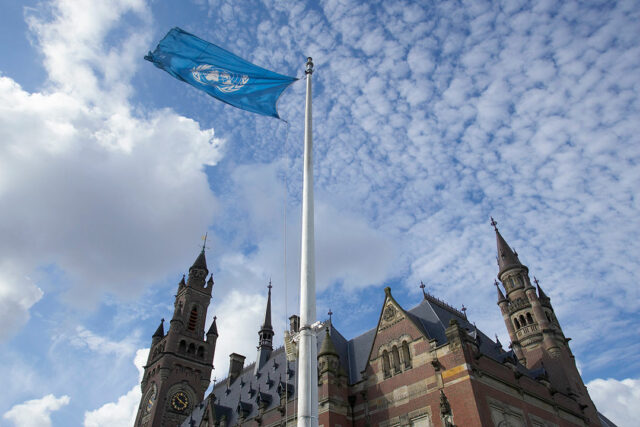
THE PEACE PALACE in The Hague (Netherlands), seat of the International Court of Justice. Photograph: Jeroen Bouman — COURTESY OF THE INTERNATIONAL COURT OF JUSTICE
THE HAGUE – The United Nations’ highest court will deliver an opinion on Wednesday that is likely to determine the course of future climate action across the world.
Known as an advisory opinion, the deliberation of the 15 judges of the International Court of Justice in The Hague is legally non-binding. It nevertheless carries legal and political weight and future climate cases would be unable to ignore it, legal experts say.
“The advisory opinion is probably the most consequential in the history of the court because it clarifies international law obligations to avoid catastrophic harm that would imperil the survival of humankind,” said Payam Akhavan, an international law professor.
In two weeks of hearings last December at the ICJ, also known as the World Court, Mr. Akhavan represented low-lying, small island states that face an existential threat from rising sea levels.
In all, over a hundred states and international organizations gave their views on the two questions the U.N. General Assembly had asked the judges to consider.
They were: what are countries’ obligations under international law to protect the climate from greenhouse gas emissions; and what are the legal consequences for countries that harm the climate system?
Wealthy countries of the Global North told the judges that existing climate treaties, including the 2015 Paris Agreement, which are largely non-binding, should be the basis for deciding their responsibilities.
Developing nations and small island states argued for stronger measures, in some cases legally binding, to curb emissions and for the biggest emitters of climate-warming greenhouse gases to provide financial aid.
PARIS AGREEMENT AND AN UPSURGE IN LITIGATION
In 2015, at the conclusion of U.N. talks in Paris, more than 190 countries committed to pursue efforts to limit global warming to 1.5 degrees Celsius (2.7 degrees Fahrenheit).
The agreement has failed to curb the growth of global greenhouse gas emissions.
Late last year, in the most recent “Emissions Gap Report,” which takes stock of countries’ promises to tackle climate change compared with what is needed, the U.N said that current climate policies will result in global warming of more than 3 C (5.4 F) above pre-industrial levels by 2100.
As campaigners seek to hold companies and governments to account, climate‑related litigation has intensified, with nearly 3,000 cases filed across almost 60 countries, according to June figures from London’s Grantham Research Institute on Climate Change and the Environment.
So far, the results have been mixed.
A German court in May threw out a case between a Peruvian farmer and German energy giant RWE, but his lawyers and environmentalists said the case, which dragged on for a decade, was a still victory for climate cases that could spur similar lawsuits.
Earlier this month, the Inter-American Court of Human Rights, which holds jurisdiction over 20 Latin American and Caribbean countries, said in another advisory opinion its members must cooperate to tackle climate change.
Campaigners say Wednesday’s court opinion should be a turning point and that, even if the ruling itself is advisory, it should provide for the determination that U.N. member states have broken the international law they have signed up to uphold.
“The court can affirm that climate inaction, especially by major emitters, is not merely a policy failure but a breach of international law,” said Fijian Vishal Prasad, one of the law students that lobbied the government of Vanuatu in the South Pacific Ocean to bring the case to the ICJ.
Although it is theoretically possible to ignore an ICJ ruling, lawyers say countries are typically reluctant to do so.
“This opinion is applying binding international law, which countries have already committed to. National and regional courts will be looking to this opinion as a persuasive authority and this will inform judgments with binding consequences under their own legal systems,” Joie Chowdhury, senior attorney at the Center for International Environmental Law, said. – Reuters
In a major effort to intensify the fight against cryptocurrency-related fraud in the country, Scam Watch Pilipinas, the national anti-scam advocacy movement of Truth360, Inc., has partnered with Chainabuse, a global crypto scam reporting platform powered by TRM Labs, a leading global blockchain intelligence firm based in the US.
As part of the partnership, the Chainabuse anti-crypto scam reporting tool will be integrated into the Scam Watch Pilipinas website, enabling Filipinos to easily report suspicious blockchain activities and fraudulent crypto transactions. The integration empowers everyday citizens to contribute to scam prevention efforts through a trusted, community-driven platform backed by global threat intelligence.
Scam Watch Pilipinas and Chainabuse will also roll out a nationwide anti-crypto scam awareness campaign focused on educating Filipinos — particularly OFWs, working professionals, and retirees — on how to spot, report, and avoid common crypto scams. The campaign will include online learning content, webinars, and community outreach initiatives.
“We welcome Chainabuse as a vital ally in our campaign to curb crypto scams in the Philippines,” said Jocel de Guzman, founder and president of Truth360, Inc. and co-founder of Scam Watch Pilipinas. “This partnership expands our advocacy’s reach and impact by equipping our kababayans with global tools and knowledge to fight back against scammers who prey on the hopes of hardworking Filipinos.”
Chainabuse, supported by TRM Labs, provides a centralized platform for individuals and organizations to report illicit activity across major blockchains. TRM Labs works with law enforcement, regulators, and financial institutions globally to track and disrupt crypto-related crime.
“We are excited to collaborate with Scam Watch Pilipinas to bring Chainabuse closer to the Filipino people,” said Isaac Manopla, Blockchain Risk and Intelligence expert at TRM Labs. “Through this partnership, we’re helping build a digital environment where Filipinos can safely engage with blockchain technology while staying alert to potential threats.”
The Chainabuse tool will go live on the Scam Watch Pilipinas website by the end of July 2025. The public awareness campaign will launch shortly thereafter.
This partnership marks a critical step forward in protecting Filipinos from crypto-enabled fraud while strengthening the nation’s digital resilience through citizen-led action and global collaboration.
Spotlight is BusinessWorld’s sponsored section that allows advertisers to amplify their brand and connect with BusinessWorld’s audience by publishing their stories on the BusinessWorld Web site. For more information, send an email to online@bworldonline.com.
Join us on Viber at https://bit.ly/3hv6bLA to get more updates and subscribe to BusinessWorld’s titles and get exclusive content through www.bworld-x.com.
Yume at Riverpark’s Clubhouse, where convergence and calm will happen. (Artist’s perspective)
FNG bridges culture through space and design
The 1951 San Francisco Peace Treaty laid the foundation for a renewed relationship between the Philippines and Japan. The treaty was ratified by the Philippine government on July 16, 1956, and took effect for the country after a week. Today, July 23, is celebrated annually as Philippines-Japan Friendship Day, as mandated by Proclamation No. 854 in 2006.
The partnership, meanwhile, has expanded beyond government initiatives, as Japanese and Filipino companies engage in joint ventures that contribute to the local economy and strengthen cultural ties.
Among them is Federal Land NRE Global, Inc. (FNG).
Since its launch in 2022, FNG, the joint venture between local property firm Federal Land, Inc. and Japan-based Nomura Real Estate Development Co., Ltd. (NRE), has worked on several real estate projects, focusing on residential and mixed-use communities. These developments show how the countries’ strong ties extend beyond trade — it also connects people through spaces.
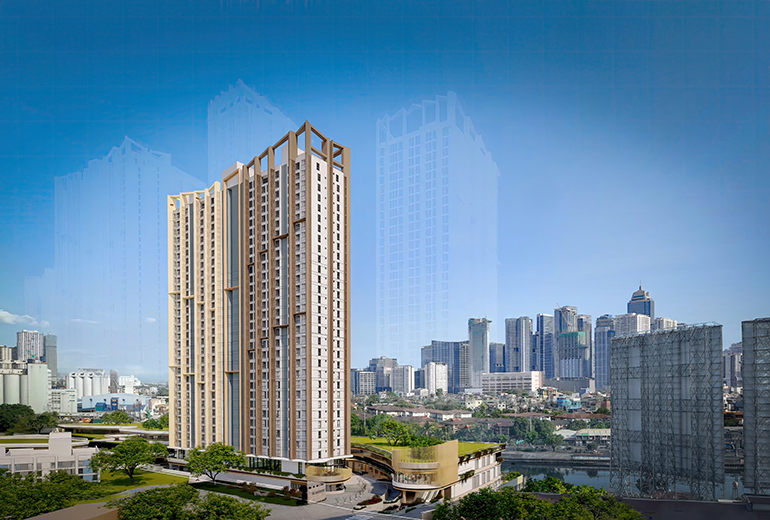
The Observatory’s façade is inspired by the Philippine eagle, refining vertical living in the metro. (Artist’s perspective)
Building spaces, bridging culture
The collaboration between Federal Land and NRE started with the development of The Seasons Residences. Together with Isetan Mitsukoshi Holdings, Ltd., they also brought in the country’s first MITSUKOSHI mall in Bonifacio Global City. What began as a single project has since grown into a wider commitment to urban development.
Today, FNG handles a growing portfolio of mixed-use and residential projects that combine Japanese architectural sensibilities with Filipino lifestyle demands.
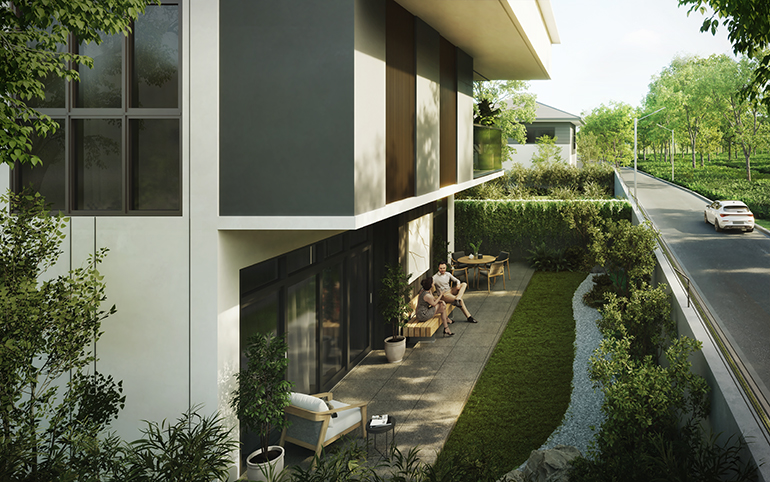
Spacious lots in Yume at Riverpark provide ample room for larger gardens. (Artist’s Perspective)
“The FNG brand is built on the Japanese and Filipino collaboration. Grounded in sustainability and a future-forward mindset, these values shape how we design and deliver each of our developments,” said Yusuke Hirano, vice-chairman of FNG.
In Cavite, FNG launched Yume at Riverpark, the company’s first horizontal development outside Metro Manila. It is set within Riverpark, Federal Land’s township spanning 600 hectares in General Trias, Cavite, creating a bold vision for a future-ready community. Designed around greenways and water corridors, it brings urban convenience into harmony with nature.
Yume at Riverpark is an 18-hectare community that features open spaces, a wellness center, and a clubhouse designed by award-winning architect Ed Calma with Japanese design firm UDS Ltd.
Strategically placed near the Cavite-Laguna Expressway (CALAX), Yume at Riverpark is easily accessible to residents from the southern part of Luzon. Once the infrastructure is completed, direct interchanges at Riverpark North and South will provide seamless access to the community.
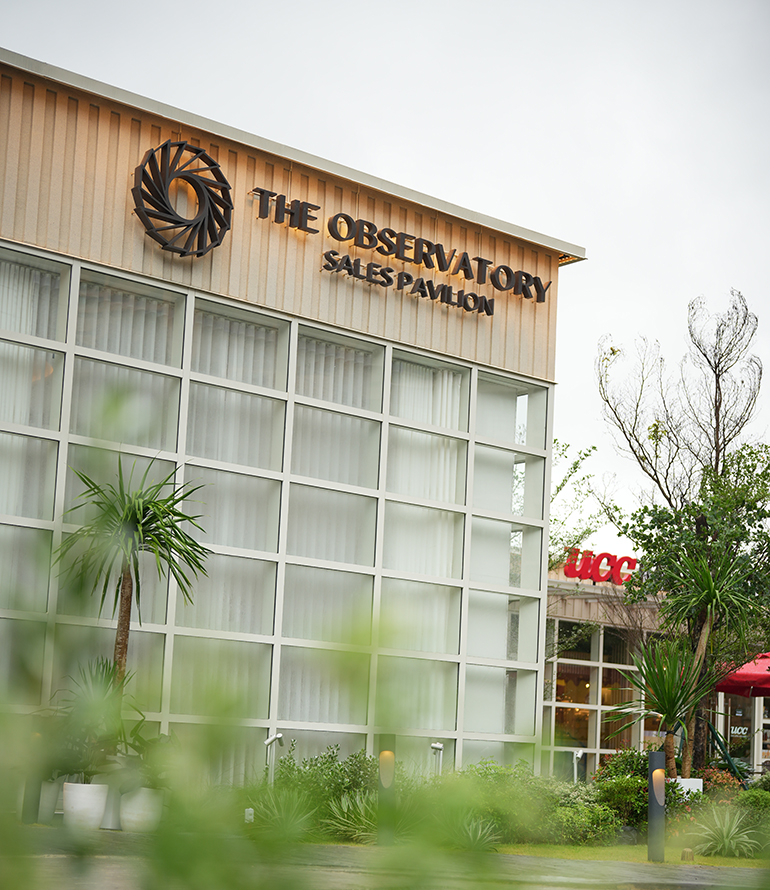
The Observatory Sales Pavilion
In Mandaluyong, FNG is developing The Observatory, its first vertical mixed-use development in Metro Manila. Covering 4.5 hectares, the project includes residential towers, office spaces, and commercial zones, positioned near major business districts including Ortigas, Makati, and Bonifacio Global City.
Sora, the first residential tower in the project, takes inspiration from Tokyo’s Shibuya district. It offers flexible layouts designed to accommodate the needs of young professionals and small families. To help buyers better understand the project, FNG opened The Observatory Sales Pavilion, which includes scaled building models, virtual walkthroughs, and interactive tools.
To further integrate lifestyle and convenience, FNG introduces popular Japanese food brands such as UCC Mentore, MOS Burger, and CoCo Ichibanya into its new showroom. These additions provide a distinct experience for visitors.
1 of 2
The Observatory Sales Pavilion, which is currently on its soft opening, is along Pioneer Street in Mandaluyong City.
The Observatory’s units are designed to be modern spaces, made for urban, modern dwellers. (Artist’s perspective)
Boosting economic development
A surge in business activity is taking shape in Cavite following the complete sellout of Phase 1 of FNG’s Riverpark North Commercial Lots. The development is beginning to attract investors, stimulate job creation, and support the province’s growing logistics and trade sectors.
In 2024, FNG broke ground for the logistics center within the Riverpark North site, in collaboration with Fast Retailing Philippines, the local partner of Japanese clothing brand UNIQLO. The upcoming hub is expected to serve as a warehouse and transport facility, supporting key supply chain operations in the region. In the same year, Federal Land and SM also broke ground for the rising SM City General Trias.
The location of Riverpark North complements infrastructure upgrades currently being carried out across Cavite. These include new roads and transport networks that are helping reduce travel time between Metro Manila and Southern Luzon.
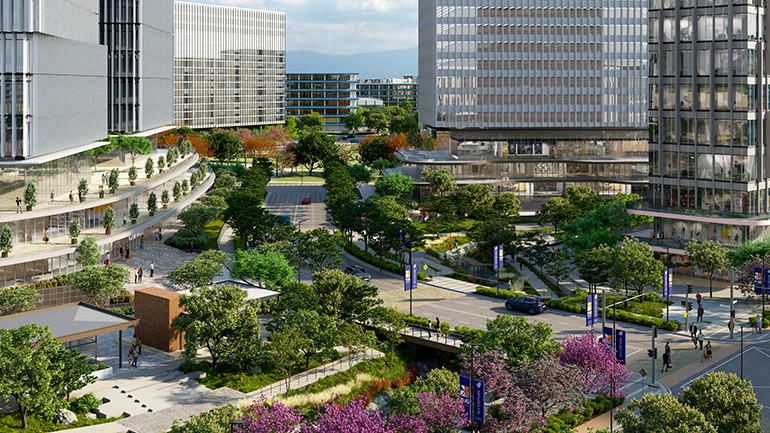
Riverpark North Commercial Lots promotes a collaborative and open environment through thoughtfully integrated open spaces. (Artist’s perspective)
FNG is now moving forward with Phase 2 of the project, and site development has already started.
Filipino-Japanese values as a foundation
In just three years of operations, FNG has made a strong impression in the real estate sector, earning multiple honors for its approach to design and development.
At the 19th PropertyGuru Asia Property Awards, the company was named Best Breakthrough Developer, putting it alongside recognized names in the Asia-Pacific property market.
At the 12th PropertyGuru Philippines Property Awards, Yume at Riverpark won Best Subdivision Development.
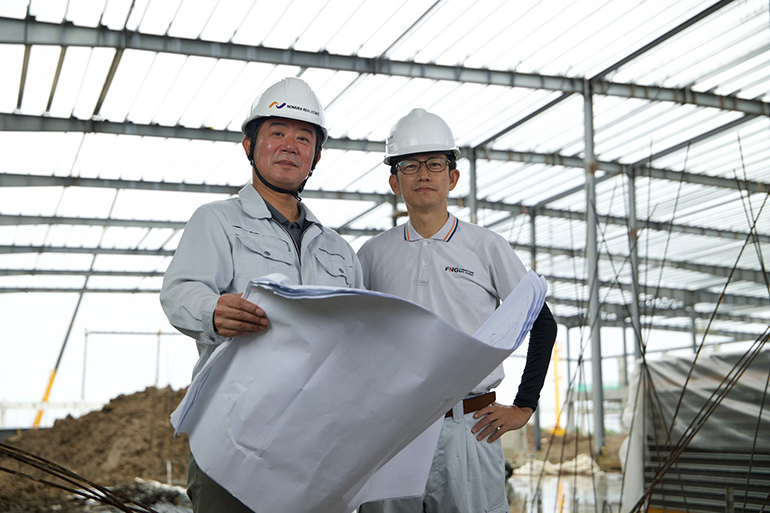
Through Kaizen, FNG aligns innovation with discipline, ensuring better outcomes at every level.
Such recognitions indicate FNG’s commitment to disciplined planning, collaboration, rooted in the Japanese principle of kaizen or continuous improvement. By combining Japanese discipline with Filipino values, FNG creates a culture that strengthens operations and allows it to serve communities effectively without losing sight of quality.
For more information on these thriving developments, visit FNG.ph.
Spotlight is BusinessWorld’s sponsored section that allows advertisers to amplify their brand and connect with BusinessWorld’s audience by publishing their stories on the BusinessWorld Web site. For more information, send an email to online@bworldonline.com.
Join us on Viber at https://bit.ly/3hv6bLA to get more updates and subscribe to BusinessWorld’s titles and get exclusive content through www.bworld-x.com.
US PRESIDENT Donald J. Trump and Philippine President Ferdinand R. Marcos, Jr. met in the Oval Office at the White House in Washington, DC on July 22, 2025 — REUTERS/KENT NISHIMURA
WASHINGTON – US President Donald Trump announced on Tuesday a new 19% tariff rate for goods from the Philippines after what he called a “beautiful visit” by Philippine President Ferdinand Marcos Jr. to the White House, and said US goods would pay zero tariffs.
The new tariff rate is just below the 20% threatened by Trump earlier this month, but still above the 17% rate set in April when Trump announced what he called reciprocal tariff rates for dozens of countries. It matches the 19% rate announced for Indonesia and bests Vietnam’s slightly higher rate of 20%.
Trump posted the news on his Truth Social media platform after meeting with Marcos in the Oval Office, where he had earlier signaled a deal could be reached during the visit.
“It was a beautiful visit, and we concluded our Trade Deal, whereby The Philippines is going OPEN MARKET with the United States, and ZERO Tariffs. The Philippines will pay a 19% Tariff,” Trump said, calling Marcos a “very good and tough negotiator.”
Trump said the two Pacific allies, who will celebrate 80 years of diplomatic relations next year, would also work together militarily but gave no details.
Marcos, the first Southeast Asian leader to meet Trump in his second term, told reporters at the start of the meeting that the United States was his country’s “strongest, closest, most reliable ally.”
He had no comment after Trump’s post on the new tariff rate.
Trump said the “very big numbers” in the trade agreement would only grow larger. The US had a deficit of nearly $5 billion with the Philippines last year on bilateral goods trade of $23.5 billion.
Trump has upended global trade flows with tariffs on nearly every trading partner, with almost all countries facing a 10% tariff that took effect in April and many facing steep additional tariffs from August 1.
Gregory Poling, a Southeast Asia expert at Washington’s Center for Strategic and International Studies, said it was too early to say much about the Philippines trade deal since no details had been released, as was the case with similar pacts with Indonesia and Vietnam.
“At the end of the day, I don’t think the Philippine government is sweating the final number so long as it keeps Philippine-made goods competitive with those of its neighbors, which this does,” Poling said.
The White House announced further details of a framework for a US-Indonesia trade agreementon Tuesday, saying negotiators were due to finalize the terms in coming weeks.
During the Oval Office event, Trump said he may visit China for a landmark trip “in the not-too-distant future” and noted the Philippines had distanced itself from Beijing after his election last November.
“The country was maybe tilting toward China, but we un-tilted it very, very quickly,” Trump said.
Philippine officials had said Marcos planned to stress that Manila must become economically stronger if it is to serve as a truly robust US partner in the Indo-Pacific.
Protesters gathered near the White House as Marcos arrived, demanding the Philippine leader address pleas of Filipino Americans and migrant workers who have made multiple requests for support amid federal immigration raids. — Reuters
THE Securities and Exchange Commission (SEC) is looking at a tiered approach for the minimum public float requirement of companies seeking to list on the stock exchange, its chairperson said.
SEC Chairperson Francisco Ed. Lim said the current 20% minimum public float requirement for companies planning to conduct an initial public offering (IPO) is a “one-size-fits-all” situation that could be addressed by a tiered system depending on the company’s market capitalization.
“A 20% float at IPO, regardless of the size of the issue, was done to improve the liquidity of the market, which is one of the basic problems. But I think the 20% (float) is ‘one size fits all.’ Personally, I don’t think that’s the way,” Mr. Lim said in an interview to be aired on One News’ Thought Leaders with Cathy Yang on July 25.
Mr. Lim said he asked the supervising SEC commissioner to look at tiers that would depend on the company’s market capitalization.
“The higher the market capitalization is, the lower the percentage of free float,” he said.
Mr. Lim said the SEC will internally discuss the proposal but will also get comments from the Philippine Stock Exchange (PSE) and the public.
“I think this has been done by other exchanges. Let’s see what happens,” he said.
Mr. Lim said he is not in favor of providing exemptive relief from the current 20% public float requirement.
“I’m quite allergic to exemptive relief,” he added.
Mr. Lim said the tiered approach makes the rule applicable to all companies, unlike exemptive relief which is granted on a case-to-case basis.
“Just amend the rule to make it applicable to everybody rather than applying to a particular company, because once you do that, then other companies will have their own reasons why you should give exemptive relief,” he said.
In March, the SEC, which was then led by chairperson Emilio B. Aquino, said companies may apply for exemptive relief from the 20% public float rule “provided they bridge any gap from the 20% standard within less than 24 months from the listing date and only as deemed necessary by the commission.”
The SEC initially allowed an initial public float of 15% by way of exemptive relief, but subject to strict criteria.
However, the corporate regulator “remained firm” on the 20% minimum public float requirement for companies eyeing to do an IPO, citing the “value of higher public ownership to market depth and efficiency.”
The SEC’s move came as Globe Telecom, Inc. said the long-awaited IPO of GCash, controlled by Globe Fintech Innovations (Mynt), will depend on regulators lowering the required public float to 10%-15%.
In 2017, the commission increased the minimum public ownership requirement for companies looking to do an IPO to 20% from the previous 10%.
AP Securities, Inc. Research Head Alfred Benjamin R. Garcia said in a Viber message that the tier system would be better for companies seeking to go public.
“That would be a better approach than exemptive relief, since the latter feels too much like favoritism. It also makes better sense as it translates the percentage into peso amount, so the end result is still in keeping with the goal of ensuring liquidity,” he said.
“At least Mr. Lim seems to be more concerned about actual shareholder welfare rather than changing up the rules to accommodate certain companies,” he added.
Unicapital Securities, Inc. Research Head Wendy B. Estacio-Cruz said in a Viber message that the tiered approach offers a “more practical and inclusive way to encourage IPOs.”
“It offers a clearer and more predictable path for companies that may find it challenging to meet the 20% threshold right away. At the same time, it still supports the goal of improving market liquidity without being too rigid,” she said.
“This approach also helps avoid the impression that rules are being bent for certain companies, which can happen when exemptions are granted too often. Overall, it’s a fairer and more transparent way to strike a balance between attracting listings and building a healthy, liquid market,” she added.
The PSE aims to have six IPOs this year. However, only one company has made its stock market debut — Cebu-based fuel retailer and distributor Top Line Business Development Corp. in April.
Aside from GCash, other companies expected to go public include Maynilad Water Services, Inc. and integrated resort operator Hann Holdings, Inc.
On Tuesday, the bellwether PSE index rose by 0.04% or 2.95 points to 6,355.69, while the broader all shares index gained by 0.1% or 3.76 points to 3,757.20.
Mr. Lim’s interview on Thought Leaders with Cathy Yang will be aired at 9:30 p.m. on July 25 on One News Channel.
Peoples walk past automated teller machines in Makati City, June 23, 2016. — REUTERS
By Luisa Maria Jacinta C. Jocson, Senior Reporter
THE Philippine banking system’s total deposits rose by 5.4% year on year to over P20 trillion as of the first quarter, the latest data from the Bangko Sentral ng Pilipinas (BSP) showed, as digital bank deposits surpassed the P100-billion mark for the first time.
BSP data showed the banking industry’s deposits increased to P20.2 trillion as of end March from P19.1 trillion in the same period in 2024.
The number of deposit accounts climbed by 19.1% to 150.8 million from 126.6 million year on year. The number of depositors likewise jumped by 16.7% to 134.5 million from 115.3 million.
Savings deposit accounts reached P8.82 trillion, while regular savings hit P7.47 trillion. Time deposits stood at P5.78 trillion, while demand deposits reached P5.54 trillion.
Broken down, universal and commercial banks held deposits worth P18.86 trillion at end-March, up by 5.1% from P17.95 trillion a year ago.
Big banks had a total of 94.2 million accounts and 86.7 million depositors in the first three months of the year.
Deposits held by thrift banks edged higher by 5% to P839.68 billion in the first three months from P799.34 billion a year ago.
Thrift banks had 7.65 million deposit accounts and 7.49 million depositors.
Rural and cooperative banks’ deposits climbed by 18.7% to P358 billion during the period from P301.72 billion a year ago. These banks had a total of 25.1 million deposit accounts and 24.9 million depositors.
Total deposits of digital banks jumped by 33.3% to P102.3 billion at end-March from P76.8 billion. This was the first time deposits from digital banks breached the P100-billion level.
The number of deposit accounts at digital banks hit 23.85 million with 15.5 million depositors.
“Continued growth in deposits is also a function of continued growth in sales and net income of businesses and also a function of the local employment data, still among the best in about 20 years or since revised records started in 2005,” Rizal Commercial Banking Corp. Chief Economist Michael L. Ricafort said.
There were 52.32 million Filipinos that were part of the labor force in May, the highest recorded number since April 2005.
The country’s unemployment rate went down to 3.9% in May from 4.1% in April. This translated to 2.03 million jobless Filipinos in May from 2.06 million a month prior.
“The growth in deposits may have helped the continued and faster growth in bank loans that grew by more than twice versus deposits, reflecting improved demographics of the country that led to a much faster growth in consumer loans,” Mr. Ricafort said.
Bank lending jumped by 11.3% year on year to P13.37 trillion as of May, the latest data from the BSP showed. Consumer loans to residents grew 23.7% to P1.699 trillion during the month.
“Continued growth in deposits is crucial for banks’ financial intermediation business that supports growth in both loans and investments that add to earnings of banks,” he added.
The latest central bank data showed the share of Filipinos with bank accounts reached 65% of the adult population in 2022.
Tourists enjoy the beach in Puerto Galera in Oriental Mindoro in this file photo. — PHILIPPINE STAR/EDD GUMBAN
By Justine Irish D. Tabile, Reporter
THE TOURISM Infrastructure and Enterprise Zone Authority (TIEZA) said it has secured P192.3 million worth of investments so far this year.
“For 2025, we have secured P192 million. That is January to this date,” TIEZA Chief Operating Officer Mark T. Lapid told BusinessWorld on the sidelines of the agency’s Partners and Stakeholders Appreciation Night on Monday.
Compared to last year, Mr. Lapid said the TIEZA’s aggressive information drive has been key in attracting more investments.
“We have more this year because we are being aggressive on the information drive even with the market sounding and the missions that we do with different local stakeholders in different areas.”
“If you look at it, we are still a new investment promotion agency. That’s why we are very happy that there are more investors applying and trying to get accredited with us,” he added.
Since 2021, TIEZA has secured investment commitments worth P225.7 billion, which are expected to generate 131,805 jobs.
“These figures underscore the growing confidence of investors in the Philippine tourism sector and affirm TIEZA’s continued role as the key investment promotion agency (IPA) in driving high-impact tourism investments nationwide through our expanding portfolio of registered business enterprises (RBEs),” Mr. Lapid said.
On Monday, TIEZA welcomed seven registered business enterprises to its portfolio. These are Bukid Amara Davao, Fairfield by Marriott Cebu Mactan, Anjo World Conference Center, Avignon Clinic, Flow State Bouldering, Belo Medical Group – Greenhills, and Reside Siargao.
These tourism-related ventures span accommodations and meetings, incentive travel, convention and exhibition facilities, health and wellness, farm tourism, sports facilities, and recreational centers.
“Their entry into the TIEZA registry is expected to generate employment and stimulate local economies and attract fresh investments to their respective communities,” TIEZA said.
Aside from the agency’s information drive, Mr. Lapid said the increased investments are also being driven by the enactment of the Corporate Recovery and Tax Incentives for Enterprises to Maximize Opportunities for Reinvigorating the Economy (CREATE MORE) Act.
“With CREATE MORE, the playing field became level among different investment promotion agencies like the Philippine Economic Zone Authority and the Board of Investments,” he said.
“And of course, we have infrastructure support in our mandate that will help our investors, so it is better in encouraging our campaign for investment in tourism,” he added.
Asked about what he wants to hear from President Ferdinand R. Marcos, Jr. in his State of the Nation Address next week, Mr. Lapid said he hoped TIEZA would be recognized for its efforts to digitalize the collection of travel tax.
“On Thursday, we will have a memorandum of agreement signing with the Department of Information and Communications Technology for the integration of travel tax in the eGov app so that the access to travel tax will be faster,” he added.
In 2024, Mr. Lapid said travel tax collections reached P7.8 billion, which is at par with collections in 2019.
“We’re two years early from the projection that was given to us to recover by the United Nations World Tourism Organization,” he said.
“So, our recovery program is quite good, showing a strong recovery and renewed public confidence in travel,” he added.
Half of the travel tax collections goes to TIEZA, while 40% goes to the Commission on Higher Education, and 10% goes to the National Commission for Culture and the Arts.
COELI MANESE’S artworks from The Light That Never Goes Out. — BRONTË H. LACSAMANA
1 of 2
COELI MANESE’S artworks from The Light That Never Goes Out. — BRONTË H. LACSAMANA
COELI MANESE’S artworks from The Light That Never Goes Out. — BRONTË H. LACSAMANA
Coeli Manese paints God in abstraction
THE GOAL of abstract expressionist painter Coeli Manese has always been to make people pause, reflect, and reconnect with their own spirituality.
For Ms. Manese, her artworks represent the eternal guiding light of faith. This is why, at the Conrad Manila hotel, 20 of her works have been put together in an exhibit titled The Light That Never Goes Out for guests to peruse and enjoy.
As part of the hotel gallery’s “Of Art and Wine” series, the collection offers a glimpse into Ms. Manese’s world of vibrant color, texture, and emotion, a result of her own periods of reflection.
“It’s all deeply personal, born from my journey of faith, exploration, and creative expression inspired by biblical teachings,” she said at the exhibit launch on July 15. “I’d gone through sadness and depression before I started painting this collection.”
Ever since “the light came out” after she emerged from that time of darkness, the ideas behind the works for the exhibit also came to light.
“Throughout my journey, the light was there. Sometimes you don’t see it because of distractions and all, so that’s the reason that’s the title,” she added.
Though Ms. Manese started painting as a child, her adult years following a career in hotel sales and marketing saw her explore different artistic outlets — ceramics, pottery, even photography. Realist painting was her last stop, until she discovered abstraction.
She told BusinessWorld that Helen Frankenthaler was her inspiration for abstract painting.
“I tried imitating her works and, from there, I developed my style, which has more vertical and horizontal lines. Abstraction for me, in that first work I did, had a strong connection,” she said.
For Ms. Manese, that moment made her decide that abstract painting was truly for her. “It’s because of the colors. When you paint abstract, the colors just come out. It’s a discovery, and there are changes year after year; the colors evolve.”
Of Art and Wine: The Light That Never Goes Out is on view at Conrad Manila’s Gallery C until Sept. 13. — Brontë H. Lacsamana
S&P GLOBAL RATINGS has affirmed Manila Electric Co.’s (Meralco) credit rating at “BBB” and revised its outlook to “positive,” citing expectations of improved business integration and project execution in power generation.
“The positive outlook reflects our expectation that business integration, scale, and diversity could improve with project execution in power generation, without material delays or cost overruns,” S&P said in an e-mailed report on Tuesday.
S&P revised the credit outlook for Meralco to “positive” from “stable,” indicating that its “BBB” rating could be upgraded.
A “BBB” rating indicates that Meralco has adequate capacity to meet its financial commitments but remains more subject to adverse economic conditions.
S&P said the outlook revision reflects Meralco’s stronger business position, citing “improving scale and profitability in power generation and further diversification as an integrated power utility.”
The development enables the company to continue generating robust operating cash flow from its core distribution business, supported by the recent renewal of its distribution franchise, the agency said.
This is despite increased leverage resulting from significant capital expenditures for a large solar project and recent acquisitions.
“Backed by… exclusive franchise, the company will likely maintain its natural monopoly within its franchise area, including Metropolitan Manila, the Philippines’ national capital and economic center,” S&P noted.
President Ferdinand R. Marcos, Jr. on April 11 signed into law the measure extending Meralco’s franchise by another 25 years, which was supposed to end in 2028.
Meralco serves around eight million customers across 39 cities and 72 municipalities.
Meanwhile, S&P said that the company’s expansion into power generation will strengthen its business diversification as an integrated power utility.
Meralco’s stake in two operational natural gas power plants with a combined capacity of 2.6 gigawatts (GW), as well as the construction of the 3.5-GW MTerra Solar power project, will bring the company’s gross operating generation capacity to 8.8 GW by 2027 from 2.6 GW in 2024.
The credit watcher expects the solar power project and gas power plants to contribute 24% and 7%, respectively, to Meralco’s adjusted earnings before interest, taxes, depreciation, and amortization by 2027.
“We assume predictable cash flow from the projects, given their long-term power supply agreements with favorable tariffs,” S&P said. “These upstream investments will also help Meralco better secure power supply and evolve as an integrated power utility from a stand-alone distribution company.”
Meralco’s controlling stakeholder, Beacon Electric Asset Holdings, Inc., is partly owned by PLDT Inc. Hastings Holdings, Inc., a unit of PLDT Beneficial Trust Fund subsidiary MediaQuest Holdings, Inc., has an interest in BusinessWorld through the Philippine Star Group, which it controls. — Sheldeen Joy Talavera
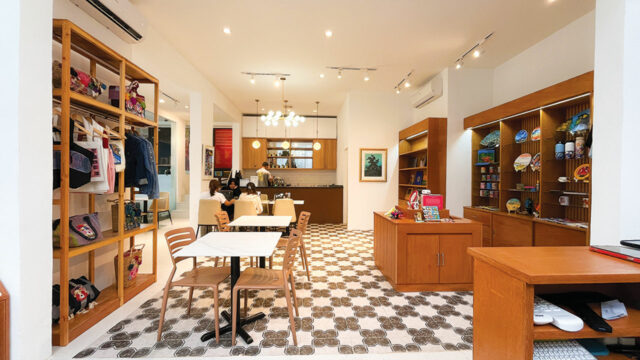
IN the 1940s, Juvenal Sansó was a struggling artist and reliant on a stipend for his art education in Paris. In honor of the renowned artist’s early experience, the private, nonprofit institution Fundacion Sansó will be supporting young artists through delicious pastries, coffee, and tea served in a museum café in San Juan City.
The café, called Scholarsip, opened at the expanded wing of Fundacion Sansó last week. An extension of the museum shop, it will add funds to the foundation’s scholarship and grants program. Through the years, 31 students from Bulacan State University have received scholarships while students from the University of the Philippines Diliman and Far Eastern University have received thesis grants.
The café’s food and beverage partners are Yardstick Coffee for the coffee, Tsaa Laya for the tea, Purple Yam for the pastries, chef Kim Tatel for the savories, and Theo & Philo for the chocolates.
Other new features of the expanded wing are the improved museum shop display of art merchandise, a dedicated gallery for young and emerging artists, and a mini library and reading nook.
“We keep Mr. Sansó’s legacy alive by administering grants to students,” Ricky Francisco, Fundacion Sansó museum director and curator, told BusinessWorld at the July 17 launch.
A major source of their funding over the past 10 years has been the fees charged for authenticating Sansó artworks. “Of course, there’s a finite number of his works to authenticate, so we’ve had to come up with this extension of our museum shop,” Mr. Francisco added.
Tenie Santos, Fundacion Sansó’s assistant director, explained that they have also managed to acquire land in Laguna for a permanent museum, which “took 10 years to save up for.”
“Given the journey it took to get here, it will probably take another 10 years to build the museum,” Ms. Santos said.
For now, the foundation’s focus is on Scholarsip, which aims to “provide a sustainable platform that uplifts local producers, empowers emerging artists, and supports cultural programs that keep Sansó’s spirit alive.”
WHAT TO ORDER For Scholarsip, the museum staff trained in professional coffee preparation and latte art under Yardstick Coffee. Their latte options include Hazelnut, Caramel, White Mocha, and Spanish.
Meanwhile, Tsaa Laya’s artisanal teas, crafted in Calauan, Laguna, offer a dose of calm. The Bughaw tea is made with butterfly pea flower while the Soothing Comfort tea contains lagundi.
Theo & Philo’s premium chocolates, sourced from Davao, add a touch of creamy indulgence. The menu has a nostalgic Chocolate Milk drink made with Theo & Philo chocolate.
Visitors must try the pastries by New York-based Filipino artisanal bakery Purple Yam (which was recognized with the Michelin Bib Gourmand in 2017, 2019, and 2021), including the perfectly balanced Buko Nipa Ube Pie and the nutty Panutsa Cashew Pie.
Mr. Tatel’s savory sourdough and focaccia creations round out the menu with something filling to eat. Favorites include the 3 Cheese and Mushroom Scallops for the sourdough option, and Chicken Mushroom for the focaccia option.
“We’re really driven by advocacy, so the proceeds from Scholarsip will go directly toward Fundacion Sansó’s programs,” said Ms. Santos.
Fundacion Sansó is located at 32 V. Cruz St., Brgy. Sta. Lucia, San Juan. — Brontë H. Lacsamana
THE GOVERNMENT made a full award of the reissued Treasury bonds (T-bonds) it auctioned off on Tuesday at an average rate broadly in line with prevailing secondary market yields as the offer fetched robust demand.
The Bureau of the Treasury (BTr) borrowed P20 billion as planned via the reissued seven-year bonds, with total bids for the tenor reaching P46.752 billion or more than double the amount on offer.
This brought the outstanding volume for the issue to P341.4 billion, the Treasury said in a statement.
It added that it made a full award of the bonds as the offer was oversubscribed and as the average rate fetched for the issue was lower than comparable secondary market levels.
The reissued bonds, which have a remaining life of two years and nine months, were awarded at an average rate of 5.817%. Accepted yields ranged from 5.79% to 5.824%.
The average rate of the reissued papers was up by 5.7 basis points (bps) from the 5.76% fetched for the series’ last award on June 25 and was also 218.2 bps above the 3.635% coupon for the issue.
Meanwhile, this was 0.68 bp below the 5.8102% fetched for the same bond series and 2.39 bps lower than the 5.8408% quoted for the three-year paper — the benchmark tenor closest to the remaining life of the issue — at the secondary market before Tuesday’s auction, based on the PHP Bloomberg Valuation Service (BVAL) Reference Rates data provided by the BTr.
The government fully awarded its T-bond offer as strong demand caused the issue’s average rate to settle near the lower end of the 5.8%-5.875% range expected by the market, a trader said in a text message.
“The auction performed well within market expectations… The bid-to-cover ratio was also high at 2.338 times the awarded volume,” the trader said.
The BTr made a full award as the average rate fetched for the issue was lower than prevailing BVAL yields, Rizal Commercial Banking Corp. Chief Economist Michael L. Ricafort said in a Viber message.
He added that the strong demand seen for the offering was likely partly due to the P516 billion worth of retail Treasury bonds (RTB) set to mature early next month, with players already looking for reinvestment options with higher yields.
Expectations of further monetary easing by both the Bangko Sentral ng Pilipinas (BSP) and the US Federal Reserve also kept the issue’s average rate in line with prevailing market yields, Mr. Ricafort said.
BSP Governor Eli M. Remolona, Jr. has said that they have room for two more rate cuts this year amid benign inflation.
In June, the central bank delivered a second straight cut, reducing benchmark borrowing costs by 25 bps to bring the key rate to 5.25%. The Monetary Board has now lowered interest rates by a total of 125 bps since it began its easing cycle in August last year.
Meanwhile, the US central bank is widely expected to hold rates steady at the 4.25%-4.5% range in its July 29-30 meeting.
Investors will watch a speech by Federal Reserve Chair Jerome H. Powell set later on Tuesday for clues about when the Fed might cut interest rates, especially after mixed inflation signals last week, Reuters reported.
Traders have largely ruled out a July rate cut, and they now see a greater than 50% chance the Fed will cut by its September meeting, according to CME Group’s FedWatch tool.
The BTr wants to raise P250 billion from the domestic market this month, or P125 billion through Treasury bills and P125 billion via T-bonds.
The government borrows from local and foreign sources to help fund its budget deficit, which is capped at P1.56 trillion or 5.5% of gross domestic product this year. — A.M.C. Sy with Reuters