Home Blog Page 1177

Philippines, India hold 1st joint naval drills in contested South China Sea

BW FILE PHOTO

By Kenneth Christiane L. Basilio, Reporter

THE PHILIPPINES and India held their first joint naval exercises in the disputed South China Sea, Philippine military officials said on Monday, just as President Ferdinand R. Marcos, Jr. left for a state visit to New Delhi.

The two-day sea drills began on Sunday and have been “productive so far,” according to Armed Forces of the Philippines (AFP) Chief-of-Staff General Romeo S. Brawner, Jr.

Philippine and Indian forces have met their “objectives for the exercise,” he said in mixed English and Filipino, based on a video shared with reporters.

“We are hoping that these would continue because we still have many exercises and activities with the Indian Armed Forces,” he added.

The naval exercise proceeded without incident, despite the presence of two Chinese warships in the area. “We didn’t experience anything untoward,” Mr. Brawner said. “There was shadowing, but we expected that already.”

Philippine Lieutenant Colonel John Paul C. Salgado said two vessels from the People’s Liberation Army-Navy were monitored near the area but did not interfere.

“The activity proceeded without interference… However, they were continuously monitored and tracked,” he said via Viber message.

The South China Sea remains a key regional flashpoint, with China asserting sweeping claims based on its so-called nine-dash line, overlapping with the exclusive economic zones of countries like the Philippines, Vietnam, and Malaysia.

A 2016 ruling by a United Nations-backed tribunal in The Hague voided Beijing’s claim, but China has rejected the decision and maintains significant naval presence in contested areas, including the Spratly Islands and Scarborough Shoal.

Clashes between Philippine and Chinese vessels have intensified in recent months, as Manila pushes back against what it calls repeated incursions into its waters.

In his pre-departure speech, Mr. Marcos expressed hope for closer ties with India, highlighting shared maritime interests and challenges.

“Our geostrategic position as coastal states that border the busiest international trade routes and critical sea lines of communication in the Indo-Pacific region… and our unwavering commitment to regional peace and cooperation serve as a credible foundation of our active and growing maritime cooperation,” he said, according to a transcript from the Presidential Communications Office.

Like the Philippines, India has been entangled in border disputes with China along the Himalayan region. The two nuclear-armed nations share about 4,000 kilometers of border, much of which is contested.

Manila has been pushing India’s inclusion in the Squad, an informal grouping of the US, Australia, Japan and the Philippines formed in 2024 to bolster regional maritime security and conduct joint patrols in the South China Sea.

The Philippines and the US earlier this month affirmed their commitment to boosting deterrence measures in the South China Sea amid China’s increasing assertiveness in the contested waterway.

Philippine National Security Adviser Eduardo M. Año said he had met with US Secretary of State Marco Antonio Rubio in Washington, DC, where both sides discussed efforts to deepen their alliance and expand cooperation in defense and security.

The meeting came as both countries aim to counter increasingly aggressive Chinese activities in the region, including the deployment of China Coast Guard and maritime militia vessels near Philippine-occupied features.

The 1951 Mutual Defense Treaty obligates both nations to come to each other’s aid in case of an armed attack in the Pacific area, including the South China Sea.

Relations between the two countries have strengthened under Mr. Marcos, who has taken a more assertive stance against Beijing’s maritime claims.

The Marcos administration has expanded joint military exercises with US forces, opened additional sites under their Enhanced Defense Cooperation Agreement (EDCA) and pursued stronger ties with other Indo-Pacific partners.


Congressmen file bill to institutionalize freedom of information in gov’t

PHILIPPINE STAR/MICHAEL VARCAS

PHILIPPINE lawmakers on Monday refiled a Freedom of Information (FOI) bill that would require government agencies to disclose monthly transactions and require top officials to release their annual statements of assets, liabilities and net worth (SALN).

Deputy Minority Leader and Party-list Rep. Leila M. de Lima said the bill offers Congress a chance to act on long-standing demands for transparency, particularly after President Ferdinand R. Marcos, Jr.’s recent remarks condemning corruption in infrastructure spending.

“It’s about time,” she told reporters in mixed English and Filipino. “We have heard from the President during the State of the Nation Address (SONA), and it came from him that he wants to know what happened to infrastructure projects. This is actually an opportunity.”

Although the 1987 Constitution recognizes the people’s right to access public information, an enabling law is needed for full implementation.

Multiple FOI proposals have been filed since 1992 but failed to pass, primarily due to a lack of legislative urgency. A 2016 executive order by former President Rodrigo R. Duterte established FOI mechanisms for the Executive branch, but not for Congress or the Judiciary.

“Current inconsistencies and lack of mandatory disclosure highlight the need for a legislated FOI policy,” Ms. De Lima, a former senator, said in a statement. “This proposed measure is a powerful weapon against corruption, disinformation and the absence of integrity and accountability in government.”

House Bill No. 2897, authored by Representatives Edgar R. Erice (Caloocan), Adrian Michael A. Amatong (Zamboanga del Norte), Arlene J. Bag-ao (Dinagat Islands), Jaime R. Fresnedi (Muntinlupa), Cielo B. Lagman (Albay), Alfonso V. Umali (Oriental Mindoro) and Ms. De Lima, seeks to “adequately address the vulnerabilities and problems that arise from the lack of transparency and access to information,” according to its explanatory note.

The measure requires all government agencies to make public “all information on official acts, transactions, decisions, as well as government research data used as a basis for policy development.”

Agencies must also publish monthly records on budgets, collections, expenditures, procurement plans, contracts, bidding documents and trade or investment agreements.

Exemptions include documents deemed sensitive to national security or foreign relations, as well as privileged court communications and records from congressional executive sessions.

“The exceptions cannot be invoked to cover up legitimate investigations being conducted by law enforcement agencies or the Legislature involving the commission of a crime, wrongdoing, graft, corruption, or any unlawful activity,” according to the bill.

The proposed law also requires the President, Vice-President, Cabinet members, lawmakers, Supreme Court justices, top military officials and heads of constitutional commissions to submit and publicly disclose their SALNs each year.

Noncompliance may result in administrative sanctions, while officials who intentionally conceal or destroy requested public information could face imprisonment of up to six years and a fine of as much as P1 million.

‘CLAMOR FOR TRANSPARENCY’
Meanwhile, the Senate will prioritize a more transparent and accessible budget process amid mounting public calls for accountability, said Senator Sherwin T. Gatchalian, who heads the finance committee.

“There is a big clamor for transparency,” he told reporters at a news briefing. “The direction we are going is that we will undergo a golden age of transparency and accountability.”

Last year’s budget deliberations drew criticism after the bicameral conference committee reportedly increased unprogrammed funds to more than P500 billion and included so-called “blank line-items” — prompting concerns that changes were made after Congress ratified the budget.

President Ferdinand R. Marcos, Jr., in his SONA last week warned Congress that he would reject any budget proposal that does not align with his administration’s priorities, even if it results in a reenacted budget.

To improve transparency, Mr. Gatchalian said he is pushing the publication of more budget documents in online formats to allow the public to track each stage of the budget process.

He said these would include the full proposed budget approved by the House of Representatives, funding requests submitted by agencies, the Senate committee report and third reading version, and the reconciled version produced by the bicameral conference committee.

“So this is what I call the golden age of transparency because the people can now follow the budget process step by step,” he said. “From the NEP [National Expenditure Program] to the General Appropriations bill, to the Senate third reading version, to the bicameral conference, until it is signed by the President.”

Only the spending plan and final General Appropriations Act are published online. Mr. Gatchalian said he also intends to introduce a feedback mechanism to allow public scrutiny throughout the process.

To institutionalize the proposed transparency measures, the senator said he would file a concurrent resolution that would require the cooperation of the House of Representatives.

Mr. Gatchalian said the Senate would push to increase education spending in the 2026 national budget.

“We will prioritize education in the 2026 budget; this will be an education budget. We will push education to exceed 4% of our GDP (gross domestic product),” he added.

The 2025 General Appropriations Act earmarked P1.055 trillion for the education sector, but critics argued it fell short of giving education the highest priority, as mandated by the Constitution.

The Development Budget Coordination Committee has proposed a P6.793-trillion budget, 7.4% higher than this year’s allocation and equivalent to 22% of GDP. The House of Representatives is expected to start the budget process this month, once the Executive branch submits its proposed national spending plan. — Kenneth Christiane L. Basilio and Adrian H. Halili

Marcos heads to India to boost trade, investment and economic diversification

PRESIDENT Ferdinand R. Marcos, Jr., accompanied by First Lady Liza Araneta-Marcos, left from Villamor Air Base in Pasay City on Aug. 4, 2025 for a state visit to India. — PHILIPPINE STAR/ RYAN BALDEMOR

By Chloe Mari A. Hufana, Reporter

PRESIDENT Ferdinand R. Marcos, Jr. Left for India on Monday for a state visit aimed at strengthening economic ties with the world’s fourth-largest economy, as the Philippines looks to deepen partnerships beyond its traditional allies.

Speaking at Villamor Air Base in Pasay City before his departure, he underscored the growing opportunities for cooperation with India, particularly in areas such as information technology, pharmaceuticals, agriculture and infrastructure.

“There is much potential for cooperation with India that will mutually benefit our peoples,” he said, according to a transcript from the Presidential Communications Office. “We intend to explore these by charting a plan of cooperation across a broad spectrum of shared interests: from defense to trade, investment, health, pharmaceuticals, connectivity, agriculture, tourism, and many other areas.”

India remains one of the Philippines’ most significant trading partners, with bilateral trade reaching $3.53 billion in fiscal year 2023–2024, up from $3.05 billion the year before, based on data from the Indian Embassy in Manila.

India exports engineering goods, auto parts, electronics, petroleum, steel, medicines, chemicals, rice, and meat to the Philippines. In turn, the Philippines exports electrical machinery, semiconductors, copper, lead, plastics, precious stones and animal feed.

The Philippines also imports about 20% of India’s pharmaceutical exports to Southeast Asia, making it a key partner in the region’s healthcare supply chain.

Mr. Marcos is accompanied by top Cabinet officials and a business delegation, who are set to hold meetings in New Delhi and Bangalore, India’s technology hub. The visit seeks to attract Indian investments, especially in the information technology and business process management and healthcare sectors.

He said the trip is part of the country’s broader effort to position itself as a regional hub for digital services and advanced manufacturing. “I want this visit to bring concrete benefits to the people, such as more affordable medicine and greater connectivity and food security,” Mr. Marcos said.

The state visit comes amid the 75th anniversary of diplomatic relations between the Philippines and India. In June, the Philippines started granting visa-free entry to Indian nationals, which is expected to boost tourism and business travel and further strengthen bilateral ties.

Mr. Marcos cited the importance of expanding cooperation with India, citing its growing role in global supply chains and its strategic significance in the Indo-Pacific region. “It is incumbent upon us, now more than ever, to maximize the opportunities in trade and investment with the world’s fourth-largest economy,” he added.

Foreign policy experts say the President’s visit reflects a broader shift in the Philippines’ external relations strategy.

Josue Raphael J. Cortez, a diplomacy lecturer at De La Salle-College of St. Benilde, said the trip “reflects a more dynamic and adaptive Philippine foreign policy” as Manila seeks to engage with countries outside its traditional alliances.

This approach aligns with the Association of Southeast Asian Nations’ (ASEAN) broader strategy of navigating global uncertainties by maximizing opportunities within the Global South,” he said in a message via Facebook Messenger.

He added that shared concerns over maritime tensions and economic challenges are driving closer ties between the Philippines and India.

“With a looming economic tension that can debilitate our respective economies, it is no surprise that the Philippines is becoming keener to working and expanding its ties with countries that share the same sentiments,” he said.

He also cited India’s potential as a growing source of tourism to the Philippines, saying this could play a crucial role in boosting the Philippine economy.

Measures driving investments urged as CPBRD estimates 5.5-5.7% GDP growth

PHILIPPINE STAR/MIGUEL DE GUZMAN

By Kenneth Christiane L. Basilio, Reporter

PHILIPPINE lawmakers should craft policies that will stimulate private sector activity and bolster economic growth, a congressional think-tank said as it estimated full-year expansion to range between 5.52% and 5.74%.

Policymakers must improve the regulatory environment and foster a more competitive market to strengthen investor confidence and support economic activity, the Congressional Policy and Budget Research Department (CPBRD) said in a July paper. It did not give specific legislative recommendations.

“If the private sector is supported through measures that guarantee the stability of the economy, reduce the costs of doing business and allow firms to keep and reinvest more of their earnings, then there would be more actual productivity and more economic growth,” it said in the 32-page report, authored by David Joseph Emmanuel Barua Yap, Jr., Rutcher M. Lacaza and Edrei Y. Udaundo.

“It is incumbent for policymakers to recognize that it is the private sector that ultimately drives growth,” it added.

The Philippine economy grew by 5.4% in the first quarter, slowing from 5.9% a year ago, and performing below expectations due to sluggish private sector activity and persistent structural challenges, like weak productivity, weighed on growth, according to the CPBRD.

“While recent economic performance has remained positive, growth has consistently fallen short of government targets, reflecting both structural limitations and cyclical headwinds,” it said.

“Despite this, the Philippines retains meaningful growth potential, particularly if fundamentals are strengthened and key vulnerabilities are addressed,” it added.

In a low-growth trajectory, the think-tank projects gross domestic product (GDP) to expand by 5.69% in the second quarter, 6.22% in the third quarter and 4.75% in the fourth quarter, bringing full-year growth to 5.52%.

“This reflects a scenario where inflation remains sticky and monetary easing is delayed,” the CPBRD said. “This dampens consumption and investment, leading to more uneven growth that is increasingly sensitive to both global and domestic cost pressures.”

On the other hand, the CPBRD’s high-growth scenario sees GDP expanding by 5.76% in the second quarter, 6.64% in the third quarter and 5.16% in the fourth quarter, resulting in a 5.74% growth for the year.

“The high-growth trajectory presents a more optimistic path, supported by easing inflation, improved fiscal execution, and a gradual return of investor confidence,” the think-tank said.

Both the growth estimate trajectories fall within, albeit at the lower end of the government’s revised target of 5.5-6.5% for 2025, which the Development Budget Coordination Council adjusted in June to reflect heightened global uncertainties. It also narrowed the GDP growth target range to 6-7% for 2026 to 2028, from 6-8% previously.

The think-tank anticipates an economic slowdown in the latter part of the year, as persistent inflation, tight fiscal space, and mounting trade disruptions from US trade policies are expected to weigh more heavily on economic activity.

US President Donald J. Trump last month said that Washington had reached an agreement with the Philippines to impose a 19% tariff on the country’s exports, a percentage point lower than the 20% that he dangled ahead of the Aug. 1 deadline. The Philippines was initially levied a 17% rate in April.

“The reinstatement of these tariffs could disrupt global supply chains, dampen international trade and potentially trigger retaliatory measures,” the CPBRD said. “This could also make the country’s exports more expensive and less competitive, reducing external demand and leading to a decline in production.”

Most Philippine exports are intermediate goods, making it more vulnerable to realignments in global and regional value chains, the think-tank said. Electronics led the country’s exported products in June, totaling $3.89 billion and making up 55.4% of the country’s overall export value, based on government data.

The think-tank also warned that inflation remains a “central concern” to economic growth, even as recent data pointed to a moderation in consumer prices.

Inflation rose to 1.4% in June, inching up from 1.3% in May, but slower than 3.7% in the same month a year ago, preliminary government data showed.

“The crux of the matter is that prices remain elevated,” the CPBRD said. “The rate at which prices increase may have slowed but the accumulated inflationary pressures remain a significant challenge for consumers.” Household consumption drives the Philippine economy, making up 70% of GDP, according to the think-tank.

INFLATION ESTIMATES
In a separate 28-page report, the CPBRD projected inflation to stay within a “relatively low range” for the rest of 2025, with an average estimate between 1.88% and 2.17%. The consumer price index (CPI) averaged 1.75% in the first quarter, the think-tank said.

Its low-end estimate projects inflation to average 2.11% in the second quarter, 1.83% in the third quarter and 1.84% in the fourth quarter.

For its high-band estimate, the think-tank said inflation could average 2.32% in the second quarter, 2.42% in the third quarter and 2.16% in the fourth quarter.

“The estimates can be defined as cautiously optimistic,” the CPBRD said in the report by Mr. Yap, Jhoanne E. Santos and Jubels C. Aquino.

Inflation in the first six months of the year remained within the Philippine central bank’s 2-4% target band.

But the think-tank warned that current low inflation levels are largely propped up by government subsidies rather than by supply meeting demand, raising concerns about future price surges.

“The observed slowdown in the inflation rate is attributable, in no small part, to the publicly funded reductions in rice prices,” the CPBRD said. “Prices, therefore, can be argued to be artificially suppressed to some extent.”

“Instead of lower prices because of actual expansions in the supply of goods, prices are lowered because of taxpayer-funded subsidies,” it added.

The CPBRD said the allocation of public funds toward subsidizing rice raises concerns on the fiscal sustainability of the program.

“A strong argument can… be made that taxpayers are paying more — through direct and indirect taxes — or will eventually pay more — through debt payments in the future — for lower prices today,” it said.

Meanwhile, the think-tank said domestic inflationary pressures that pose the greatest risk to stoking inflation include hikes in electricity prices, transportation fares, and food prices.

“Elevated electricity rates may contribute to inflationary pressure as they increase the cost of production and distribution across sectors, thereby affecting consumer prices for goods and services,” it said.

Transport fare hikes could also “significantly affect the cost of living of lower-income households,” it added, noting that transport and utility costs comprise a large share of their monthly expenses.

“Combined with external challenges including peso depreciation, global oil price volatility and geopolitical tensions, [these] continue to pose significant upside risks to inflation,” the CPBRD said.

Marcos open to reenacted budget

PRESIDENT FERDINAND “BONGBONG” R. MARCOS, JR. — PRESIDENTIAL COMMUNICATIONS OFFICE

AS CONGRESS opens deliberations on the proposed 2026 national budget, President Ferdinand R. Marcos, Jr. said he is ready to veto any spending bill misaligned with the administration’s priorities as he described deep cuts to foreign-assisted projects as the “biggest problem” in last year’s spending plan.

“The biggest problem was the foreign-assisted projects — almost all of the funding was removed,” Mr. Marcos said in a video blog in Filipino posted on his social media accounts, referring to the 2025 national budget.

He emphasized the importance of restoring those allocations, citing their role in national development and the Philippines’ credibility with international partners.

“We need to bring that back. These projects are critical, and cutting them damages our international reputation,” he added.

While acknowledging that lawmakers have the constitutional authority to scrutinize and amend the National Expenditure Program (NEP), Mr. Marcos reiterated that the final budget must reflect the government’s objectives.

Senate President Francis Joseph G. Escudero earlier pushed back against suggestions that Congress should leave the NEP untouched, asserting lawmakers’ “power of the purse.” Mr. Marcos agreed in principle but maintained that changes must remain consistent with the executive’s roadmap.

Pressed on whether he would allow a reenacted budget should Congress submit a version unacceptable to him, Mr. Marcos said he is willing to reenact the budget, adding that Jan. 1, 2026, remains the deadline for passing a spending law. — Chloe Mari A. Hufana

Budget bill expected next week

PHILIPPINE STAR /KJ ROSALES

THE House of Representatives is expecting to receive the proposed P6.793-trillion national budget for 2026 by next week, a congressman said on Monday, with discussions kicking off in September.

The House appropriations committee plans to hold hearings with civil society groups on the proposed national budget, taking advantage of a lull in the budget schedule ahead of formal panel deliberations, said Nueva Ecija Rep. Mikaela Angela B. Suansing, who leads the chamber’s budget committee.

“We are still finalizing it,” she said in a media briefing in mixed English and Filipino. “But the estimate is the second week of August, around the week of Aug. 13.”

The Development Budget Coordination Committee has proposed a P6.793-trillion spending plan for 2026, 7.4% higher than this year’s allocation and equivalent to 22% of the country’s gross domestic product (GDP).

Despite deliberations on the proposed budget starting in September, Ms. Suansing said the House remains on track to submit the spending plan on schedule.

“We assure you that even though formal discussions will start on Sept. 1, we are already conducting preliminary activities beforehand,” she said. “We will get the budget passed on time.”

She said that the House plans on approving the budget bill on second reading by October, before Congress takes a month-long break. “Ideally, the third reading approval will be when we resume session by November.”

Also on Monday, Ms. Suansing said she plans to introduce sweeping reforms to the budget process, aimed at making the discussions more transparent.

This comes after the 2025 budget process drew criticism when the bicameral committee raised unprogrammed funds to more than P500 billion and inserted allegedly blank line items, prompting concerns that changes were made after Congress ratified the bill.

“We want to unveil the shroud surrounding budget discussions,” she said. “We will prove to the public that Congress is not hiding anything when it comes to the budget.”

She said she plans to abolish the House’s “small committee” tasked with consolidating individual changes to the national budget bill, replacing it with a subcommittee on budget amendments review.

“This body will facilitate and deliberate on the amendments submitted by agencies and our colleagues in the House,” she said, noting that the subcommittee will review proposed tweaks to the spending plan while the budget process is ongoing from August to October.

“This means that our fellow citizens can see the proposed amendments, how they are being deliberated, and most importantly, which ones are approved and included in the proposed national budget,” she added.

Ms. Suansing also plans for the House appropriations panel to host a “People’s Budget Review” ahead or alongside formal discussions.

“During the People’s Budget Review, people’s organizations can ask questions about the National Expenditure Program (NEP), and not just ask questions, but actually suggest and tell us what their thoughts are,” she said.

The House budget panel chief also wants to open the budget’s bicameral conference committee discussions open to the public.

“Through opening the bicameral panel, the public will see how the final budget figures are decided on,” said Ms. Suansing. — Kenneth Christiane L. Basilio

MR filed vs SC’s impeachment ruling

Vice President Sara Duterte arrives at the Department of Justice, May 9, 2025. — PHILIPPINE STAR/RYAN BALDEMOR

THE House of Representatives, through the Office of the Solicitor General, filed on Monday a motion asking the Supreme Court (SC) to reconsider its ruling on the impeachment case of Vice-President Sara Duterte-Carpio.

“The House is not asking of this Honorable Court to favor any one political result. Indeed, there are no convictions or acquittals at play yet, as the Senate has not even begun to conduct the trial proper,” the 70-page petition signed by Solicitor General Darlene Marie B. Berberabe read.

“It only asks that this Honorable Court allow Congress to perform the duties the Constitution asks of both its chambers — to initiate an impeachment proceeding for the House, and to try the same, for the Senate,” it added.

The pleading urged the high court not to stand with a political faction but to uphold the Constitution and the Filipinos.

Ruth B. Castelo, Ms. Duterte’s spokesperson, did not immediately respond to a Viber chat seeking comment.

SC Spokesperson Camille Sue Mae L. Ting confirmed the lower chamber filed the motion on Monday.

“We confirm that the House of Representatives submitted a Motion for Reconsideration (MR) via eCourt PH in G.R. No. 278353 (Duterte v. HOR),” she told reporters in a Viber chat group.

“We are still waiting for the hard copy of the [motion], in accordance with the Guidelines on the Transition to Electronic Filing in the Supreme Court,” she added.

The top court on July 25 ruled that the articles of impeachment transmitted by the House to the Senate were declared unconstitutional for violating the 1987 Constitution’s one-year prohibition on initiating multiple impeachment proceedings against the same official.

It said the House can refile another impeachment complaint in February 2026.

Ms. Duterte was impeached on Feb. 5 after 215 members of the House signed a fourth complaint, citing alleged misuse of confidential funds, threats against officials, and possible constitutional violations.

The articles of impeachment were transmitted to the Senate the same day, as required by the 1987 Constitution. — Chloe Mari A. Hufana

Metro Manila has no drainage master plan, Sec. Bonoan says

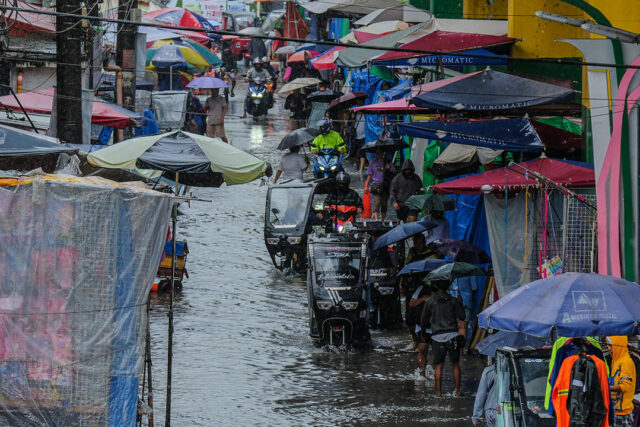
Vendors at the Baclaran Market in Parañaque City experienced flooding on July 22 following overnight heavy rains. — PHILIPPINE STAR/RYAN BALDEMOR

METRO MANILA does not have a drainage master plan, Public Works Secretary Manuel M. Bonoan said on Monday.

Flooding in the Philippine capital worsened in recent weeks as typhoons and southwest monsoon rains overwhelmed its aging drainage system, adding to the challenges faced by authorities in seeking long-term solutions to the country’s flood woes, he said.

“The main problem in Metro Manila…  is actually that the drainage system is very much old,” he told lawmakers during a House of Representatives hearing. “Despite the fact that it’s already antiquated, the existing drainage system is 70% silted… it only has a carrying capacity of 30%.”

“The issue is we need actually to have a master plan for the drainage system for Metro Manila,” he added.

The Philippines in July faced widespread flooding triggered by rains brought by Severe Tropical Storm Wipha (Crising), Tropical Storms Francisco (Dante) and Co-may (Emong), and the southwest monsoon. — Kenneth Christiane L. Basilio

Senate names Banks, S&T panel heads

BW FILE PHOTO

SENATORS on Monday had appointed a new batch of Senate committee chairmen for the 20th Congress.

During a Senate plenary session, Senator Alan Peter S. Cayetano was voted as the committee chair for Banks, Financial Institutions, and Currencies.

In a statement, Mr. Cayetano said that he will “steer discussions on reforms involving the country’s financial system and the regulatory landscape surrounding digital banking, investment schemes, and consumer protection.”

Senator Paolo Benigno “Bam” Aquino IV was appointed to head the Committee on Science and Technology, which he chaired in the 17th Congress.

Separately, Mr. Aquino said that as committee chair, he vows to connect every Filipino with fast, reliable, and accessible internet for all.

“That also includes supporting world-class Filipino talent from (Science, Technology, Engineering, and Mathematics) scholars to startup founders,” Mr. Aquino said in a Facebook post.

The Senate Committee on Urban Planning, Housing and Resettlement will be headed by Senator Manuel “Lito” M. Lapid. — Adrian H. Halili

Bill tightens rules on gov’t projects

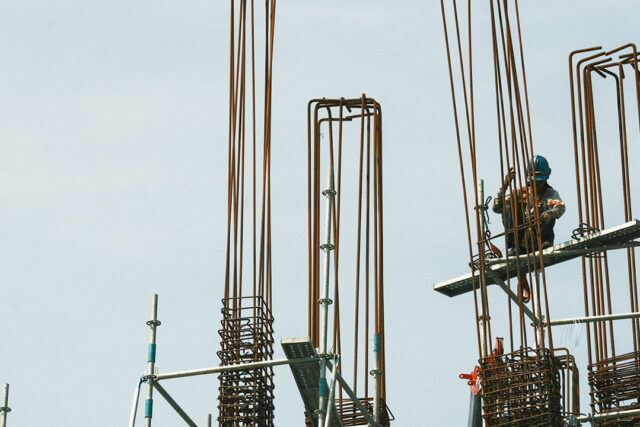
A MAN WORKS at a construction site in Navotas City. — PHILIPPINE STAR/RYAN BALDEMOR

A SENATOR on Monday filed a bill disqualifying public officials and their relatives from entering into government contracts, amid the President’s call to eliminate corruption and conflict of interest in public works projects.

“This bill is a response to persistent irregularities and corruption in government contracts. Despite existing safeguards, undue influence continues to undermine fairness and impartiality,” Senate President Francis “Chiz” G. Escudero said in the explanatory note of Senate Bill no. 783.

The proposed measure seeks to disqualify all relatives of public officials within the fourth degree of consanguinity and affinity from bidding on government projects.

The bill defines officials as those in policy-determining, supervisory, or managerial roles — whether in career or non-career service — and includes military and uniformed personnel.

The ban includes all projects by government owned or controlled corporations and local government units.

“By improving such safeguard, the bill seeks to eliminate potential avenues for corruption, and uphold fairness, transparency, impartiality, and accountability in the procurement process and the utilization of public funds,” Mr. Escudero added.

The bill also mandates the Government Procurement Policy Board, Department of the Interior and Local Government, Public-Private Partnership Center, and Governance Commission for GOCCS to craft the implementing rules and regulations.

In his fourth address to Congress, President Ferdinand R. Marcos, Jr. vowed to file charges against those found to be liable in pocketing government funds.

Mr. Marcos also accused government officials and contractors of pocketing public funds intended for public works, especially flood mitigation projects. — Adrian H. Halili

Voter registration in 36 malls begins

Aspiring voters for the Barangay and Sangguniang Kabataan Elections can register at any of the 36 participating Robinsons Malls from Aug. 1-10.

THE Commission on Elections (Comelec), in partnership with the Robinsons Land Corporation (RLC), opened voter registration sites for the upcoming Barangay and Sangguniang Kabataan Elections in 36 Robinsons Malls nationwide.

Aspiring voters and registered ones can visit participating Robinsons malls to register, transfer their registration, update their data, or reactivate their voter records until Aug. 10. Comelec aims to increase the number of new voter registrants to 1 million for the December polls.

The initiative is part of Robinsons’ Lingkod Pinoy Center, which brings together essential government services.

“We are honored to be continuing our long-standing partnership with Comelec, which began in 2014 when Robinsons Malls first hosted the offsite voter registration and biometrics in key areas of the country,” said Joel S. Lumanlan, Vice-President for Operations and Marketing at Robinsons Malls.

“With these satellite registration centers in our malls, we hope to encourage broader voter participation, particularly among first-time and young registrants.”

A list of participating malls and registration requirements among other details are available on the Robinsons Malls website and official social media accounts. — CAT

21 tagged in soldier’s death due to ‘reception rite’

COTABATO CITY — The 6th Infantry Division (ID) had placed under restrictive custody 21 soldiers blamed for the death of an incoming private reportedly subjected to a strenuous reception rite over the weekend.

Officials of the Army’s 6th ID in Camp Siongco in Datu Odin Sinsuat, Maguindanao del Norte said on Monday that Major Gen. Donald M. Gumiran had ordered an inquiry on the incident that went viral on Facebook.

The 21 personnel of the 6th Infantry Battalion (IB), a unit of the 601st Infantry Brigade under 6th ID, were tagged as responsible for the demise of Pvt. Charlie G. Patigayon for subjecting him and several others to a physically taxing traditional military reception procedure at their headquarters in Datu Piang town in Maguindanao del Sur in the Bangsamoro region.

Mr. Patigayon and other privates, virtual newcomers to the 6th IB, submitted themselves for the initiation procedure without hesitation, according to officials of 6th IB.

Lt. Col. Roden R. Orbon, 6th ID’s spokesperson, said they are asking for just a little time to wind up the division’s investigation on the issue.

“We are still initiating an extensive probe into the incident. The division does not tolerate practices that can endanger the lives of its troops. A proper investigation must be done to determine the culpability of those accused of having caused the death of this soldier,” Mr. Orbon said.

Mr. Patigayon passed away in a non-military hospital in Cotabato City, where he was rushed by 6th IB personnel after he complained of breathing difficulty and fainted.

Superiors of Mr. Orbon in the 6th ID, among them Col. Rey C. Rico, the division’s civil-military relations officer, said the 21 soldiers will be subjected to “due process” and shall be penalized appropriately if proven to have misbehaved.

“We just have to do it the proper way, under the so-called due process principle,” Mr. Rico said.

Mr. Patigayon, born and raised in Kulambogan in Lanao del Norte, has just finished an Army candidate soldiers’ training course at Camp O’Donelle in Capas, Tarlac and reported for duty, along with several others, at the 6th IB’s headquarters in Datu Piang just last week.

His remains are now at 6th ID’s chapel in Camp Siongco, not too distant from Cotabato City. — John Felix M. Unson