Home Blog Page 1163

India’s ethanol drive imperils its push for edible oil self-sufficiency

SHRESHTH GUPTA-UNSPLASH

 – India’s drive to produce more ethanol is leading its farmers to switch away from growing oilseeds, undermining government efforts in the world’s largest buyer of cooking oils to reduce costly imports.

Helped by record corn and rice harvests, New Delhi is using more of the grains to make ethanol and meet its target of blending 20% of the biofuel additive with gasoline. The process, however, produces Distillers Dried Grains with Solubles (DDGS), a protein-rich byproduct that is flooding the animal feed market.

The DDGS glut is weakening demand for oilmeals, depressing oilseed prices and prompting farmers in the South Asian nation to plant more corn and rice in place of soybeans and groundnuts – despite New Delhi’s push to grow more of the oilseeds to ease imports.

DDGS production in India has soared some 13-fold over the past two years to an estimated 5.5 million tons by 2025, according to industry officials.

“DDGS is a pain in the neck,” said Aashish Acharya, vice president at Patanjali Foods Ltd, a leading soybean processor. “Feed makers are substituting oilmeals with DDGS since it is cheaper.”

The shift is visible in government sowing data. As of August 8, oilseed acreage – including soybean and groundnut – was down 4% from last year, while corn area jumped 10.5% to a record high.

Madhukar Londhe, a farmer in Nashik in the western state of Maharashtra, said he had cut his soybean area to one acre from six, planting the rest with corn – which has the added benefit of providing fodder from its stalks for his five milking cows.

Nearly two dozen farmers in the area that Reuters spoke to said they had made a similar switch.

“Soybean prices were too low, so I couldn’t even cover my costs in the past two years. Corn did better for me last year, so I’ve decided to grow more of it,” Mr. Londhe said.


RISING IMPORTS

The reduction in oilseed planting is a concern for a country that spent more than $17 billion on edible oil imports last year and is making concerted efforts to reduce that dependence.

Rising demand for fried foods and sweets by a growing and increasingly prosperous population has driven consistent growth in edible oil consumption at 3%-4% annually, said B.V. Mehta, executive director of the Solvent Extractors’ Association of India.

Edible oil imports have climbed to 16 million tons in 2023-24 from 4.4 million tons two decades ago, making India the world’s largest buyer of vegetable oils such as palm oil from Indonesia and Malaysia and soyoil and sunflower oil from Argentina, Brazil, Russia, and Ukraine.

New Delhi aims to boost domestic edible oil production to 25.45 million tons by 2030–31 from 12.7 million tons now, enough to meet 72% of projected demand, an effort that Mehta said is being hindered by the surge in DDGS supply.

A New Delhi-based senior dealer with a global trading house who declined to be named as he is not authorized to speak with media said he expects imports to rise above 20 million tons in six or seven years, due in part to the DDGS disruption.

Given the tightening global supplies of edible oils, India’s additional imports will drive prices even higher, said a Kuala Lumpur-based official with a leading palm oil-producing company.


MEAL GLUT, OIL DEFICIENCY

India, the No. 3 importer and consumer of crude, recently hit its goal of lifting ethanol blending in gasoline to 20%. Two years ago, before India began using corn and rice on a large scale due to short supply of its main ethanol feedstock sugarcane, its blending rate was just 12%.

Even before rising ethanol production began to create excess DDGS, India struggled with surplus oilmeals. Per capita demand for animal feed is much lower than the global average as a significant portion of its 1.4 billion population is vegetarian for religious and cultural reasons and most meat-eaters do so only occasionally.

That led India to export surplus oilmeals to countries such as South Korea, Vietnam, Thailand, and Bangladesh.

However, oilmeal exports got tougher every year as prices rose in order to support oilseed farmers. This year, some countries that import Indian meal have committed to buying more from the U.S., meaning they will buy less from India, said a Mumbai-based dealer with a global trading house.

Ajay Jhunjhunwala, an oil miller in Lucknow in northern India, estimates that of this year’s DDGS output, only around half will be consumed domestically.

Exports are growing but are still relatively small. India’s DDGS exports surged to 354,110 tons last year from just 16,556 tons in 2022. Distilleries are trying to export the surplus to markets including Bangladesh and Vietnam – longtime U.S. DDGS customers.

Millers and distillers are pushing for incentives to facilitate exports of both oilmeals and DDGS.

India’s Agriculture Minister Shivraj Singh Chouhan said in July the government would support oilseed farmers by procuring their harvest at a state-fixed price. The Indian government did not respond to a request for comment on rising supplies of DDGS.

“DDGS has exaggerated the problem of surplus meal,” oil miller Jhunjhunwala said. “Unless that problem is fixed, increasing domestic oilseed production and edible oil supplies is difficult,” he said. – Reuters


Trump holds high-stakes meeting with Intel CEO after calling for his resignation

US President Donald Trump — REUTERS

U.S. President Donald Trump said he met with Intel CEO Lip-Bu Tan on Monday, days after seeking his resignation, praising Tan and calling the meeting “a very interesting one.”

Shares of the chipmaker rose 3% in extended trading.

Last week, Mr. Trump had demanded the immediate resignation of Mr. Tan, calling him “highly conflicted” over his ties to Chinese firms, injecting uncertainty into the chipmaker’s years-long turnaround effort.

Mr. Trump said he met with Mr. Tan, along with Commerce Secretary Howard Lutnick and Treasury Secretary Scott Bessent. His cabinet members and Tan were going to bring suggestions to him next week, Trump said in a post on Truth Social.

“His success and rise is an amazing story,” Mr. Trump said about Mr. Tan.

Mr. Tan had invested in hundreds of Chinese firms, some of which were linked to the Chinese military, Reuters reported exclusively in April. It is not illegal for U.S. citizens to hold stakes in Chinese companies unless they have been added to the U.S. Treasury’s Chinese Military-Industrial Complex Companies List, which explicitly bans such investments.

Mr. Tan has been tasked to undo years of missteps that left Intel struggling to make inroads in the booming AI chip industry dominated by Nvidia, while investment-heavy contract manufacturing ambitions led to hefty losses.

In the roughly six months as Intel CEO, Tan made major strategic shifts that included divesting assets, laying off employees and redirecting resources.

But the demand for Mr. Tan’s resignation will only distract him from that task, investors and a former senior employee have told Reuters.

Mr. Tan is now making an effort to reassure Mr. Trump that he remains the right person to revive the storied American chipmaker.

Mr. Tan met with Mr. Trump for a candid and constructive discussion on the company’s commitment to strengthening U.S. technology and manufacturing leadership, Intel said in a statement. The company said it would work closely with the administration to “restore this great American company.”

Mr. Trump’s intervention marked a rare instance of a U.S. president publicly calling for a CEO’s ouster and raised questions about his control over corporate affairs.

This was also evident in an agreement calling for Nvidia and AMD to give the U.S. government 15% of revenue from China sales. – Reuters

Paramount wins exclusive US rights for UFC in $7.7 billion deal

STOCK PHOTO | By Kevlar - Own work, Public Domain, https://commons.wikimedia.org/w/index.php?curid=27188458

Paramount, days after finalizing its merger with production studio Skydance, said Monday it will pay $7.7 billion for exclusive U.S. broadcast rights to the Ultimate Fighting Championship for seven years — the first major strategic move by the combined company.

“The addition of UFC’s year-round must-watch events to our platforms is a major win,” said Paramount CEO David Ellison, former CEO of Skydance, calling the mixed martial arts franchise a “global sports powerhouse”.

Under the agreement with UFC owner TKO Group Holdings, streaming service Paramount+ will from next year carry the complete U.S. slate of 13 numbered UFC events and 30 “Fight Nights.”

Paramount+ and Paramount’s CBS broadcast network will also simulcast select numbered cards, the companies said. Numbered cards have historically been pay-per-view events featuring top-ranked fighters and championship bouts but now will come at no extra cost to viewers.

Mr. Ellison, who oversaw Skydance’s run of Hollywood action blockbusters and TV series, committed to increasing Paramount’s investment in high-quality exclusive content, which he has called the “single biggest driver of subscriber growth“.

As cord-cutting accelerates, live sports have emerged as one of the few formats still drawing mass audiences in real time. Rivals Netflix and Disney preceded Paramount in locking down major sports deals.

Netflix secured a $5 billion, 10-year global deal for WWE Raw wrestling and added two Christmas Day NFL football games. Disney’s ESPN extended rights with U.S. professional football, hockey and baseball leagues and the College Football Playoff invitational tournament.

TKO Chief Financial Officer Andrew Schleimer said conversations had been taking place with Paramount since June, though the process dramatically accelerated last week after Paramount completed its drawn-out $8.4 billion merger with Skydance.

“Once the merger closed, we were off to the races,” said Mr. Schleimer.

Paramount will pay an average of $1.1 billion a year to TKO Group and shift away from UFC’s traditional pay-per-view model. It may seek UFC rights in other markets as they come up for bidding.

“They are not playing for near-term earnings outperformance, they are trying to create a long-term imprint on the future of the media industry to ‘win,'” LightShed Partners analysts said.

UFC stages about 43 live events a year, reaching roughly 100 million U.S. fans and nearly 950 million households globally. The appealing demographics of UFC’s audience, which is diverse but skews toward young men, made bidding competitive, said UFC Chief Operating Officer Lawrence Epstein.

Epstein said UFC chose Paramount for its financial strength, CBS’ broad television reach and Ellison’s focus on technology and long time horizon. – Reuters

Gorio intensifies into typhoon; no wind signals raised yet

Source: PAGASA

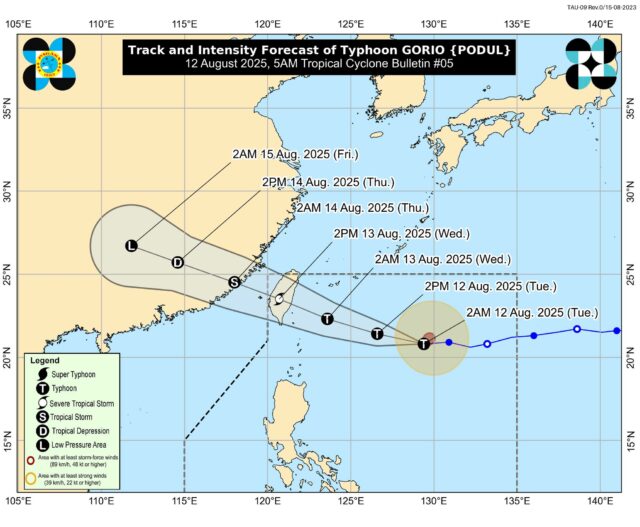
Gorio (international name: Podul) has intensified from a severe tropical storm into a typhoon, but no tropical cyclone wind signals have been raised in the country yet, according to the Philippine Atmospheric, Geophysical and Astronomical Services Administration (PAGASA) on Tuesday. 

In PAGASA’s latest press briefing released at 5:00 am, Gorio has strengthened into a typhoon with maximum sustained winds of 120 km/h and gustiness reaching 150 km/h.  

Typhoon Gorio was spotted at 745 km East of Itbayat, Batanes, moving westward at 25km/h, and is likely to head for Taiwan.  

PAGASA’s weather specialist Obet Badrina said that despite Gorio having intensified into a typhoon, its effects are not yet directly felt in the country, and it has not yet affected the existing southwest monsoon during the forecast period. 

“At present, there are no tropical cyclone wind signals raised in our country, and you can see that Typhoon Gorio still has no direct impact on any part of the islands,” Mr. Badrina said in both mixed English and Filipino during the press briefing.  

Typhoon Gorio is forecast to make landfall in Taiwan on Wednesday afternoon, eventually exiting the Philippine Area of Responsibility (PAR) on that evening.  

However, if the typhoon further intensifies and its movement goes slightly downward, a tropical cyclone wind signal may be raised in extreme northern Luzon, likely Batanes, Mr. Badrina said.  

Rain showers may still occur in most parts of the country, especially in the Western portion, due to the southwest monsoon and localized thunderstorms. Edg Adrian A. Eva

SM Group hosts its biggest Job Fair of the Year at SM City Fairview

At the SM Job Fair, you don’t just apply — you get interviews, career guidance, and access to partner agencies all in one go. See you at the next one!

Thousands of job seekers take a step closer to employment

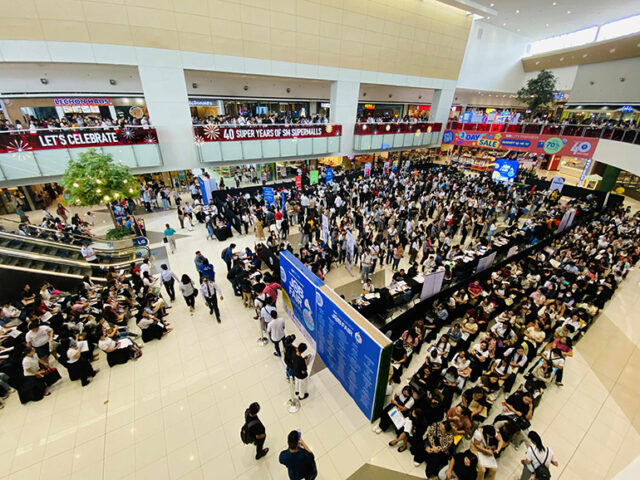
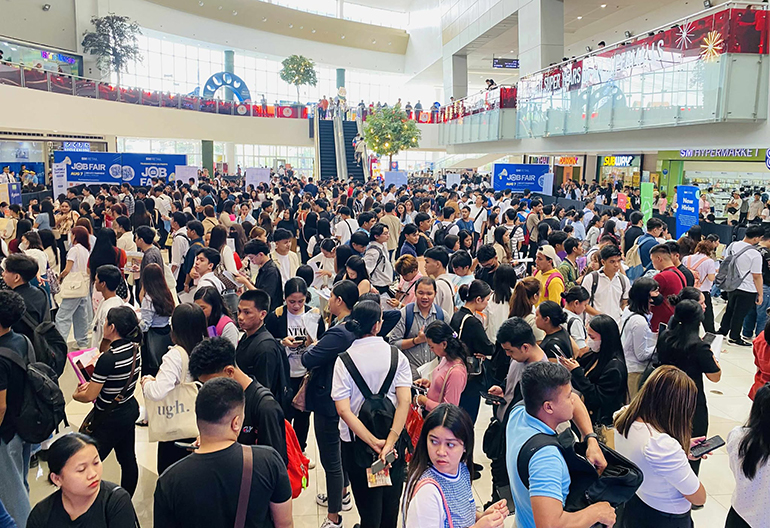
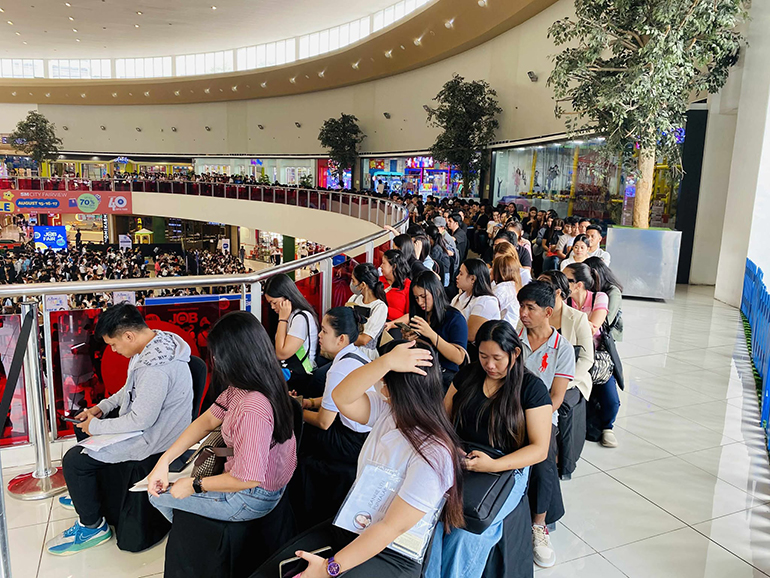
On Aug. 7, the SM Group of Companies, led by SM Retail, brought together job hopefuls and career makers under one roof at SM City Fairview, staging the largest SM Group-exclusive job fair of 2025 to date. The event gathered top companies from within the SM ecosystem — including retail, logistics, and banking — and offered a diverse range of opportunities for both entry-level applicants and seasoned professionals. Open positions included Accounting Assistants, Cashiers, Merchandising Managers, Pharmacy Assistants, Sales Associates, Customer Relations Representatives, and Company Nurses.

On-the-Spot Interviews — Applicants take part in initial interviews during the SM Group’s Biggest Job Fair of the Year, making the job search faster and more accessible.

Renowned for its accessibility and all-in-one convenience, the SM Job Fair is more than just a hiring event — it’s a career destination. By bringing a curated lineup of trusted employers to one venue, SM removes the common barriers to job hunting. Here, applicants can explore multiple options, submit applications, undergo interviews, and even receive job offers on the spot — without ever leaving the mall. For many, it’s career-building made convenient and approachable, whether they are coming from school, home, or a current workplace.

With a strong commitment to empowering the Filipino workforce, the event welcomed over 2,000 job seekers and proudly reported 240 hired on the spot — a 12% HOTS rate. Those not immediately matched are still being considered, as HR teams from participating companies continue to conduct virtual interviews with qualified applicants after the event.

The Aug.t 7 SM Group Job Fair also marked the start of a month-long series of job fairs in SM Supermalls nationwide, reinforcing SM’s role as a bridge between employers and future changemakers.

August Job Fair Schedule:

  • Aug. 14 — SM City Caloocan, SM City Tuguegarao, SM Center San Pedro
  • Aug. 20 — SM City Cabanatuan
  • Aug. 21 — SM City North EDSA at Skydome
  • Aug. 22 — SM City Trece Martires
  • Aug. 27-28 — Union Christian College Gymnasium (Opening of SM City La Union)
  • Aug. 29 — SM City Legazpi

At the SM Job Fair, you don’t just apply — you get interviews, career guidance, and access to partner agencies all in one go. See you at the next one!

More Job Fairs Coming Your Way This August!

Aug. 14 — SM City Caloocan, SM City Tuguegarao, SM Center San Pedro

SM City Caloocan will host another SM Job Fair in partnership with Caloocan PESO and TESDA, bringing job openings from leading brands in retail, logistics, and finance to the northern metro. In Tuguegarao, the fair will be held in collaboration with the local government and PESO as part of the Pavvurulun Afi Festival, adding employment opportunities to the celebration of the city’s cultural heritage. Meanwhile, SM Center San Pedro will also conduct a job fair with PESO and the local government to serve job seekers in the south.

Aug. 21  HIMAP Career Summit at SM City North EDSA — Skydome

Targeting digital and tech-driven career paths, this summit will feature top employers from the IT-BPM Healthcare Information Management industry. It is the go-to event for professionals looking to enter or advance within the fast-growing HIM sector.

Aug. 27-28 Union Christian College Gymnasium, La Union

In preparation for the grand opening of SM City La Union, a two-day job fair will connect locals to employment opportunities — particularly within the SM Group — right in their home province.

At the heart of every SM Job Fair is the goal to make employment accessible and aspirational. By hosting these events in malls — central, familiar, and easy to reach — SM Supermalls ensures that job seekers can participate in meaningful opportunities without the burden of costly transportation, agency fees, or complicated application processes. It’s all about bringing jobs closer to the people — literally and figuratively.

Whether you’re looking to level up your career, shift industries, or take your first step into the workforce, SM Job Fairs are designed to meet you where you are — conveniently, inclusively, and with real opportunities that matter.

About SM Supermalls Job Fairs

Celebrating 40 Super Years of Evolving With Every You, SM Supermalls — one of Southeast Asia’s largest mall developers — remains a steadfast partner in nation-building by growing its most valuable resource: its people. Through job fairs hosted in its 88 malls nationwide, SM builds social capital by bridging job seekers and employers, opening doors to livelihood, and empowering Filipinos through inclusive partnerships that foster workforce development and long-term economic growth.


Spotlight is BusinessWorld’s sponsored section that allows advertisers to amplify their brand and connect with BusinessWorld’s audience by publishing their stories on the BusinessWorld Web site. For more information, send an email to online@bworldonline.com.

Join us on Viber at https://bit.ly/3hv6bLA to get more updates and subscribe to BusinessWorld’s titles and get exclusive content through www.bworld-x.com.

SM companies among Top 5 in ASEAN good governance

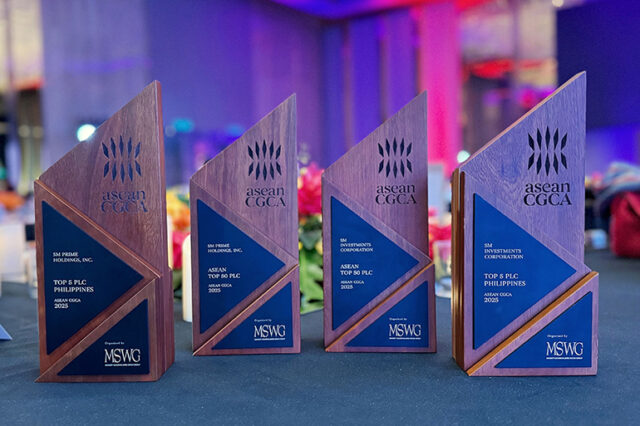
Held at the Four Seasons Hotel Kuala Lumpur on July 24, the biennial awards highlighted the top publicly listed companies assessed under the 2024 ASEAN Corporate Governance Scorecard (ACGS). Recently cited were SM Investments Corp., SM Prime Holdings, Inc., BDO Unibank, Inc. and China Banking Corp.

The Association of Southeast Asian Nations (ASEAN) Capital Market Forum (ACMF) recognized SM Investments Corp., the parent firm of the SM group, and its property arm, SM Prime Holdings, Inc., among the Top 5 Philippine publicly listed companies (PLCs) and Top 50 ASEAN PLCs.

SM’s banking arm, BDO Unibank, Inc. ranked among the Top 50 ASEAN PLCs. Among the six Philippine PLCs awarded, three were from the SM group. BDO was the only Philippine bank to earn a spot on the Top 50 list.

In addition, China Banking Corp. (Chinabank), another financial institution under the SM group, was also named to the ASEAN Asset Class of publicly listed companies, an honor given to firms that have achieved consistently high scores under the ASEAN Corporate Governance Scorecard (ACGS).

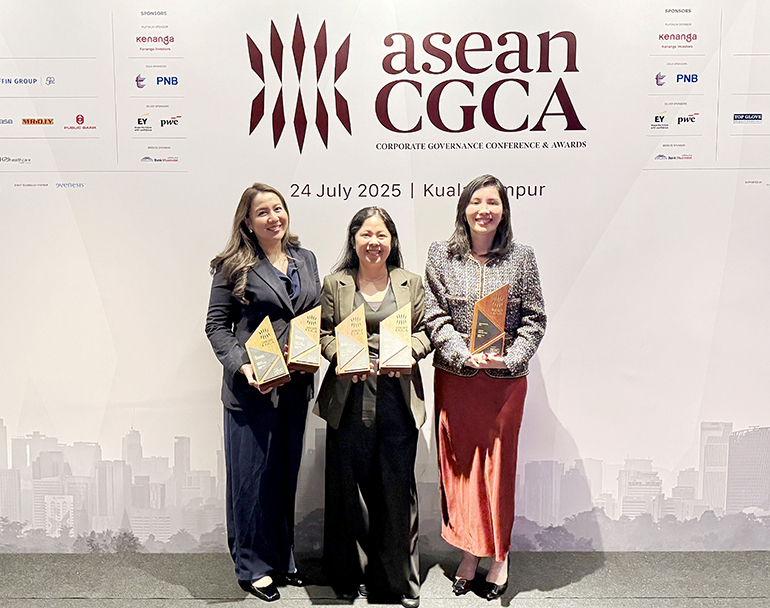
Receiving the awards on behalf of the SM group were (from left) Maria Virginia A. Tolentino-Uy, Senior Assistant Vice-President — Governance, Risk and Compliance at SM Investments Corp.; Joana B. Tiangco, AVP — Enterprise Risk Management and Governance at SM Prime Holdings, Inc.; and Lorelei Lorraine L. Sy, Senior Vice-President and Head, BDO Singapore Branch.

Anchored on the 2024 ACGS Regional Assessment, this is the second time the organization affirmed SM’s corporate governance standards at par with internationally-accepted best practices after both SM Investments and SM Prime secured the top 5 spots in the Philippine Asset class and top 20 ASEAN Publicly Listed Companies in the 2022 awarding ceremony.

“Good governance is essential to long-term value creation. We continue to align our governance practices with global standards to help build trust and deliver sustainable outcomes for our stakeholders and the communities we serve,” said Frederic C. DyBuncio, president and chief executive officer of SM Investments Corp.

“Our recognition at this year’s ACGS Awards validates our commitment to building sustainable and resilient communities,” said Jeffrey C. Lim, president of SM Prime Holdings. “It affirms our belief that good governance goes hand in hand with long-term value creation for shareholders and stakeholders alike.”

“BDO’s corporate governance principles are about effective oversight, strict compliance with regulations, and sustainable value creation to promote the best interest of its various stakeholders. We value this recognition which affirms our deepest commitment to the highest standards of corporate governance practices,” Nestor V. Tan, BDO Unibank, Inc. president, said.

“This recognition reaffirms Chinabank’s steadfast commitment to responsible corporate governance that goes beyond compliance while embedding ethical stewardship into our culture,” said Chinabank President and CEO Romeo D. Uyan, Jr. “We are driven by our goal to always create long-term value for our stakeholders.”

Receiving the awards on behalf of the SM group were Maria Virginia A. Tolentino-Uy, Senior Assistant Vice-President — Governance, Risk and Compliance at SM Investments Corp. (leftmost); and Joana B. Tiangco, AVP — Enterprise Risk Management and Governance at SM Prime Holdings, Inc. (second from right). Joining them were Securities and Exchange Commission Chairman Francis Ed. Lim (second from left) and SEC Commissioner Mcjill Bryant T. Fernandez (rightmost).

The ACGS evaluated 569 large-market-cap PLCs across the region, recognizing companies that uphold the highest standards of corporate governance aligned with international best practices. These are conducted by domestic ranking bodies per ACGS-member country followed by peer evaluation at the regional level. The assessments are based on publicly available and accessible information such as annual reports, corporate websites, corporate governance policies, and sustainability reports, among others.

The ASEAN Corporate Governance Initiative, comprising the ACGS and the assessment of PLCs, is a flagship effort under the ACMF, which has been collaborating with the Asian Development Bank since 2011. Over the years, the ACGS has been instrumental in fostering a strong corporate governance culture in ASEAN, encouraging PLCs to adopt internationally recognized corporate governance principles, driving improvements in transparency, board accountability, shareholder rights and sustainability practices. The scorecard has also contributed to innovative business models prioritizing ethical leadership and long-term value creation.


Spotlight is BusinessWorld’s sponsored section that allows advertisers to amplify their brand and connect with BusinessWorld’s audience by publishing their stories on the BusinessWorld Web site. For more information, send an email to online@bworldonline.com.

Join us on Viber at https://bit.ly/3hv6bLA to get more updates and subscribe to BusinessWorld’s titles and get exclusive content through www.bworld-x.com.

BSP: August rate cut ‘quite likely’

BW FILE PHOTO

By Luisa Maria Jacinta C. Jocson, Senior Reporter

THE Bangko Sentral ng Pilipinas (BSP) could possibly deliver another rate cut later this month, its top official said on Monday.

BSP Governor Eli M. Remolona, Jr. said a rate cut is “quite likely” at the Monetary Board’s next meeting on Aug. 28.

The central bank has so far lowered borrowing costs by a total of 125 basis points (bps) since it began its easing cycle in August last year. 

If the BSP lowers policy rates this month, this would mark its third straight rate cut. In June, the Monetary Board cut by 25 bps to bring the benchmark rate to 5.25%.

Mr. Remolona said they are expecting to deliver two more rate cuts this year.

“I think two is more likely than one. Two is still more likely,” he told reporters on the sidelines of the Economic Journalists Association of the Philippines Economic Forum.

However, he noted that the possibility of three rate cuts is “unlikely.”

“That would overshoot what we look at as the ‘Goldilocks’ rate, output gap. Our output gap is already small,” he said in mixed English and Filipino.

Mr. Remolona had earlier said that it would take “something very unusual” to warrant a third rate cut this year, such as a drastic slowdown in growth, which was also unlikely.

The economy grew by an annual 5.5% in the second quarter, supported by a rebound in agriculture production and faster household consumption.

For the first half, gross domestic product (GDP) growth averaged 5.4%, slower than the 6.2% a year ago. The government is targeting 5.5-6.5% GDP growth this year.

After the Aug. 28 meeting, the BSP will have two more policy meetings before the end of 2025.

Meanwhile, Mr. Remolona said inflation is still seen settling well within target this year.

“In terms of inflation, we think we’ll hit 2% in 2025,” he said.

“That’s much better than other emerging markets, they would hit 3.1%, and other advanced economies, we think will hit 3.3%. So, (the Philippines will have) lower inflation than advanced economies and emerging markets.”

Headline inflation sharply eased to a near six-year low of 0.9% in July, marking the fifth straight month that inflation settled below the central bank’s 2-4% target range.    

For the first seven months of the year, inflation averaged 1.7%.

“If you look at our forecasts, we see our inflation target remaining within reach. I think we still have work to do,” Mr. Remolona said.

The BSP expects headline inflation to average 3.3% and core inflation at 3.1% in 2027.

“Both are within our target. We’re hoping we can achieve that. I think that would help stabilize the economy, support investment, support lending by our banks,” he added.

PESO PERFORMANCE
Meanwhile, the BSP chief said they are not too worried about the peso’s recent performance.

“It’s not the number itself (we worry about), it’s the way the peso depreciates. If the depreciation is sharp enough over, say, two weeks, one month, that leads to inflation.”

The peso closed at P57.04 against the greenback on Monday, strengthening by seven centavos from its P57.11 finish on Friday. The peso fell to the P58-per-dollar level earlier this month amid hawkish comments from the US Federal Reserve.

“If there are swings like that, we want to dampen that, but we don’t want to remove the swing itself. We want to keep the peso at a certain level. We want to prevent it from weakening too much over a short period of time.”

Mr. Remolona said the central bank has been intervening in “small amounts.”

“We have a little bit of day-to-day intervention just to limit the volatility. We don’t want too much volatility. Volatility is bad for both imports and exports,” he said.

“Most of the time, it’s a strong dollar story rather than peso. But there are some episodes that are not like that. In the June episode, the peso depreciated but the dollar didn’t quite strengthen.”

Gov’t to ask US to exempt PHL chip exports from tariffs

Semiconductor chips are seen on a circuit board of a computer in this illustration picture taken on Feb. 25, 2022. — REUTERS/FLORENCE LO/ILLUSTRATION/FILE PHOTO

THE PHILIPPINE GOVERNMENT is seeking an exemption from US tariffs on select exports, particularly semiconductors, a move aimed at safeguarding one of the country’s most important industries.

“We are working on getting several of our exports exempted,” Special Assistant to the President for Investment and Economic Affairs  Frederick D. Go told reporters on the sidelines of the Economic Journalists Association of the Philippines Economic Forum on Monday.

He said an exemption can be sought for products that an exporting country produces in abundance and cannot be produced in the US.

In particular, he said that the government hopes that the US will exempt Philippine-made semiconductor chips from steep tariffs.

“We are hoping that they view the work we do here in the Philippines, which is ATP (assembly, testing, and packaging), to be part of the process that the US may not really want to do. So, we are hoping… and we have expressed this, that ATP is a process that the semiconductor companies would probably want to outsource,” he said.

The Philippines is a key player in the ATP segment of semiconductor production. Electronics and semiconductors are the country’s single largest export category.

Last week, US President Donald J. Trump announced a 100% tariff on imports of semiconductors in a bid to bring back manufacturing to the country. However, he offered exemptions to companies currently manufacturing in the US and planning to do so.

Mr. Go said Mr. Trump’s proposed tariff on semiconductors remains uncertain, but some countries are already claiming exemptions for their semiconductor exports.

“So, we are still seeking clarification from the US Trade Representative side, and of course we are lobbying that our semiconductor exports likewise be exempted if there is such,” he said.

The US had paused tariffs on imports of semiconductors and semiconductor manufacturing equipment, which have been the subject of a US national security investigation. The results are expected to be out within the month.

Semiconductor and Electronics Industries in the Philippines, Inc. (SEIPI) President Danilo C. Lachica welcomed the government’s move to seek an exemption for Philippine-made chips.

“We appreciate the government’s effort to secure an exemption for our semiconductor exports,” said Mr. Lachica in a Viber message.

Mr. Lachica warned last week of the devastating effect of the proposed 100% tariff on semiconductors entering the US market on Philippine exporters.

In a separate message, Mr. Lachica said the Philippines’ semiconductor and electronics industries should expand to other markets.

“The impact really would be very complex, and it affects the whole supply chain,” he said, noting it can also drive up logistics costs for semiconductor firms.

He also said the industries should work to move up the value chain into research and development and integrated circuit design and other high-value activities.

Associate Professor of the University of Asia and the Pacific George N. Manzano said some US-owned semiconductor firms may move back to the US if Mr. Trump pushes through with his threatened semiconductor tariff.

“The danger to the Philippines is that 100% tariffs on semiconductors by the Trump administration, might motivate some of these US-owned semiconductor companies to move back operations to the US. I hope it does not lead to that,” Mr. Manzano said.

Diwa C. Guinigundo, country analyst at GlobalSource Partners and a former central bank governor, said a 100% US tariff on semiconductors could hurt the Philippine exporters.

“We are now hit by double whammy: higher reciprocal tariff of 19% and then this 100% on specific product as semiconductors and electronics,” Mr. Guinigundo said in a Viber message.

The US began imposing higher tariffs on most of its trading partners starting Aug. 7. A 19% tariff was slapped on goods from the Philippines, Indonesia, Cambodia, Malaysia and Thailand.

“US imports from the Philippines will be more expensive and domestic demand could possibly decline. We don’t exactly have the lowest cost of doing business to make us more competitive than the rest.”

TRANSSHIPMENT
Meanwhile, Mr. Go said that the Philippines’ deal with the US does not include tariffs on transshipment of goods from third countries.

“The transshipment category applies to countries that the US believes engage in transshipments from a third country… We do not have that clause because we do not, and we are not identified as one of those who engage in transshipments,” he added.

The US imposed a 20% tariff on goods from Vietnam, while transshipments from third countries through Vietnam will face a 40% levy. — Justine Irish D. Tabile and Aubrey Rose A. Inosante

FDI jumps 21% in May, down in first 5 months

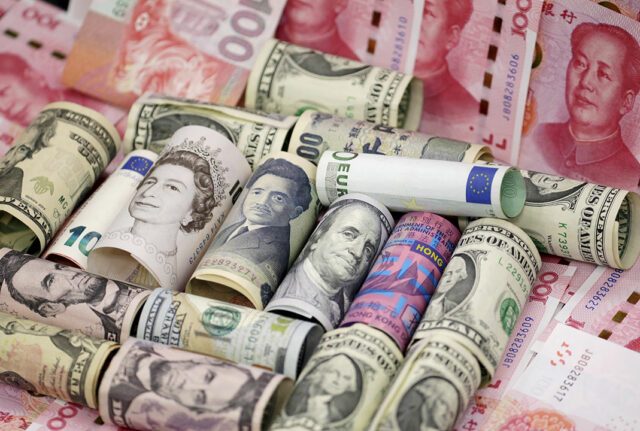
Euro, Hong Kong dollar, US dollar, Japanese yen, pound and Chinese yuan banknotes are seen in this picture illustration in Beijing, China. — REUTERS

NET INFLOWS of foreign direct investments (FDI) into the Philippines rose by 21.3% year on year in May but declined by 26.9% in the first five months of the year, preliminary data from the central bank showed.

The Bangko Sentral ng Pilipinas (BSP) said the net inflows of FDI jumped by 21.3% to $586 million in May from $483 million in the same month in 2024, with “inflows from the United States and into manufacturing taking the lead.”

Month on month, net inflows of FDIs slipped by 3.9% from $610 million in April.

Net Foreign Direct Investments (May 2025)“The (year-on-year) increase resulted from the significant expansion in nonresidents’ net investments in debt instruments, which rose by 88.3% year-on-year, from $227 million to $427 million,” the BSP said.

Investments in equity and investment fund shares dropped by 38% to $159 million in May from $256 million in the same month in 2024.

This was due to the 61.4% decline in nonresidents’ net investments in equity capital (excluding reinvestment of earnings) to $62 million in May from $161 million a year ago.

Reinvestment of earnings also inched up by 1.4% year on year to $97 million in May.

Nearly half (49%) of gross placements of equity capital went into manufacturing, followed by real estate activities (14%); and electricity, gas, steam and air-conditioning supply (13%).

In May, the bulk of FDI inflows came from the US (36%) and Japan (33%), followed by Singapore (12%) and South Korea (12%).

“The uptick in May’s FDI reflects improved investor sentiment due to the country’s solid macroeconomic fundamentals, relatively stable (decelerating) inflation, and infrastructure momentum,” John Paolo R. Rivera, a senior research fellow at the Philippine Institute for Development Studies, said in a Viber message. “Externally, moderating global interest rates and a recovery in regional trade also helped.”

Rizal Commercial Banking Corp. Chief Economist Michael L. Ricafort said the year-on-year improvement in May FDI inflow can be partly attributed to the release of the rules for the Corporate Recovery and Tax Incentives for Enterprises to Maximize Opportunities for Reinvigorating the Economy (CREATE MORE) Act.

However, this was “counteracted” by the uncertainty over the US tariffs and other protectionist policies, as well as China-Philippines tensions, Mr. Ricafort said.

For the first five months of the year, net inflows of FDI declined by 26.9% to $2.96 billion, from the $4.04 billion recorded in the same period a year ago.

Net investment in debt instruments plunged by 14.1% in the January-May period to $2.149 billion from $2.501 billion in the same period in 2024.

Reinvestment of earnings rose by 6% to $445 million in the January-to-May period, from $420 million a year ago.

Investments in equity capital other than the reinvestment of earnings also went down by 67.6% to $364 million in the five-month period from $1.123 billion a year ago.

Equity placements plunged by 55% year on year to $616 million while withdrawals rose by 1.8% to $253 million.

Equity investments during the period were mainly from Japan (39%), the US (21%), Singapore (14%), and South Korea (8%).

At least 48% of equity placements flowed to manufacturing, while 20% went to real estate activities and 12% to the electricity, gas, steam, and air-conditioning supply industries.

Mr. Ricafort said FDI inflows in recent months may have been affected by proposed legislated wage increases that threaten to increase labor costs in the country.

“Local political noises since the latter part of 2024 (Dutertes vs. the Marcoses) could have also partly weighed on the FDI data in recent months,” he said.

Foreign investors could have also been waiting for further rate cuts by the US and Philippine central banks before making investment decisions, he said.

“For the coming months, the release of the CREATE MORE IRR (implementing rules and regulations) could make some foreign investors/FDIs to become more decisive in locating in the country amid enhanced incentives for foreign investors,” Mr. Ricafort said.

Meanwhile, Mr. Rivera noted that the year-to-date decline shows that FDI inflows are still sensitive to policy clarity, geopolitical risks, and tariff developments.

“If growth holds near the 5.4% average in the first half, we can sustain modest FDI recovery in the latter part of the year. To gain stronger traction, the Philippines needs to accelerate reforms in EODB (ease of doing business), investment facilitation, and trade diversification to counter headwinds from global uncertainty,” Mr. Rivera said.

The BSP expects FDI to end the year at a net inflow of $7.5 billion. — Katherine K.Chan

Recto says extending rice import suspension beyond October unlikely

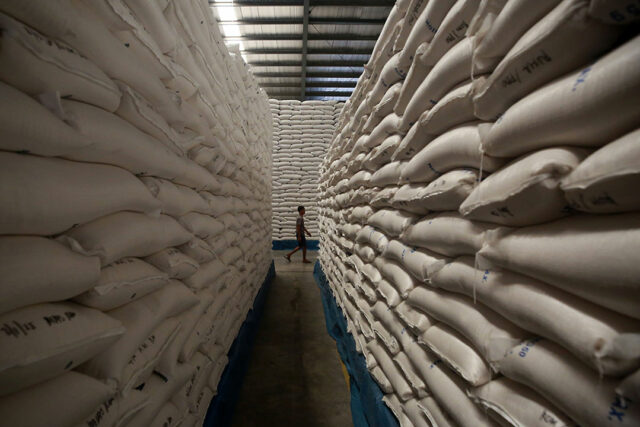
Sacks of rice are seen at the National Food Authority (NFA) warehouse in Valenzuela City, Feb. 5, 2025. — PHILIPPINE STAR/MIGUEL DE GUZMAN

By Aubrey Rose A. Inosante, Reporter

THE PHILIPPINE government is unlikely to extend the 60-day suspension of rice imports after end of October, and has no plans to raise tariffs on rice, Finance Secretary Ralph G. Recto said on Monday.

“The only reason for the suspension essentially is because it’s harvest season,” he said on the sidelines of the Economic Journalists Association of the Philippines Economic Forum on Monday.

Last week, President Ferdinand R. Marcos, Jr. ordered a halt on rice imports for 60 days starting Sept. 1 to provide relief for farmers, upon the recommendation of the Department of Agriculture (DA).

Asked if the government would extend the suspension beyond October, Mr. Recto replied: “unlikely.”

The DA also recommended gradually raising the rice import tariff to its original 35% rate from the current 15%.

Asked if there are plans to hike tariffs, Mr. Recto said: “Wala pa. There are no plans.”

Executive Order (EO) No. 62, which took effect in July 2024, lowered import tariffs on rice to 15% until 2028 to tame inflation. The order is valid until 2028 and is subject to review every four months.

Department of Economy, Planning, and Development Secretary Arsenio M. Balisacan said the government is still studying the impact of a hike in rice tariffs.

“We’ll be meeting our technical group in consultation. We’re preparing the study and then we’ll set an informed basis for the decision or our recommendation,” he told reporters.

Mr. Balisacan said there is a need to balance the interests of farmers, consumers, and the broader economy as it will affect inflation and wages.

“We have to use additional tools to address the concerns of various parties,” he said. “It has to be a win-win for all.”

Mr. Balisacan earlier said there are no inflation risks from the pause on rice imports, citing ample supply.

He cited estimates that supply will remain sufficient even if the government pauses imports for more than 40 days.

“The 60-day rice import pause was a quick fix to protect farmers during harvest — but it’s not a long-term solution. Instead of suspension, we need smart safeguards: fair tariffs, better buffer stocking, and stronger support for local production,” Jonathan L. Ravelas, a senior adviser at Reyes Tacandong & Co., said in a Viber message.

However, farmer groups said the 60-day suspension is not sufficient to allow farmers to recover their losses and are calling for the tariff rate to revert to the original 35%.

“The 60-day suspension of rice importation is not truly sufficient for farmers to recover from years of losses caused by the consistently low farmgate prices of palay — a concrete consequence of the Rice Liberalization Law,” Amihan National Federation of Peasant Women and Bantay Bigas spokesperson Cathy L. Estavillo said via a Viber message.

The Rice Tariffication Law or Republic Act (RA) No. 11203, liberalized rice imports by replacing quota restrictions with tariffs, which the government then used to fund rice industry modernization.

“The suspension of importation is proof that RA 11203, despite amending the Rice Competitiveness Enhancement Fund, remains a hindrance to making rice affordable in markets and achieving rice self-sufficiency in the country,” she said.

Ms. Estavillo urged for the immediate review of the 35% tariff and the repeal of Rice Tariffication Law.

Samahang Industriya ng Agrikultura  spokesman Jay Cainglet said that while they welcome the import ban, their “primary and urgent appeal” is for the reversion of the rice import tariff to 35%.

In particular, they are calling for a 35% tariff rate for imports from the Association of Southeast Asian Nations (ASEAN) and 50% for non-ASEAN imports.

“Despite the temporary halt, palay prices are expected to remain depressed, and farmers will continue to incur losses,” he said.

Mr. Cainglet also claimed that the economic team “continues to feed the President false narratives” about the benefits of EO 62.

“In reality, the measure does little to protect local producers or stabilize the rice market. Importers can simply advance or delay their shipments to work around the suspension, especially since the tariff rate remains at a low 15%,” he said.

FOREGONE REVENUES
Meanwhile, Mr. Recto said the Bureau of Customs (BoC) is expected to see minimal foregone revenues from the two-month halt of rice imports.

“It will slightly drop, but we expect to hit the revenue targets this year,” he said.

In June, Customs collections rose by 6.4% year on year to P85.46 billion, bringing the seven-month total to P544.23 billion.

This year, the BoC is targeting to collect P958.7 billion.

The Philippines is the world’s biggest rice importer, having brought in 2.44 million metric tons at the end of July, according to the Bureau of Plant Industry.

“Maybe at the end of the year after the harvest season, you probably will import the balance,” Mr. Recto said.

JG Summit income surges to P10.7B on core business gains

JG SUMMIT President and Chief Executive Officer Lance Y. Gokongwei — JGSUMMIT.COM.PH

JG SUMMIT Holdings, Inc. posted a 175% jump in second-quarter (Q2) net income to P10.7 billion, driven by strong performances in its airline, real estate, and food and beverage businesses, reduced losses in its petrochemical segment, and gains from compensation related to aircraft engine issues.

Consolidated revenue grew by 5% to P95.9 billion, while core profit surged by 87% to P10.4 billion, driven by the expanding operations of its air transport, property, and food and beverage businesses, as well as a gain recognized from engines provided by Pratt & Whitney as compensation for ongoing aircraft-on-ground issues, the conglomerate said in a regulatory filing on Monday.

“This was supported by robust leisure demand benefiting its airline and property businesses, alongside the sustained domestic consumption seen by its food & beverage arm. These more than made up for the expected decline in petrochemical sales given the plant shutdown which began early this year,” JG Summit said.

“Overall, we are optimistic about the future prospects of the business and will continue to look for opportunities to scale up into adjacencies in airport infrastructure, supply chain/logistics, and digital finance,” JG Summit President and Chief Executive Officer Lance Y. Gokongwei said.

“We continue to see sustained topline performance from our core business units as we benefit from improving consumer sentiment driven by easing inflation. This growth has trickled down to improving core earnings, further helped by the lower losses from the shutdown of our petrochemicals facility. We also expect higher dividends this year coming from our core units and investments,” he added.

FIRST-HALF EARNINGS STEADY
First-half net income was steady at P15 billion, while consolidated revenue increased by 3% to P194 billion.

Core profit dropped by 19% to P14.8 billion amid the absence of the P7.9 billion gain from the merger between the Bank of the Philippine Islands (BPI) and Robinsons Bank Corp. that was booked in the first quarter last year.

The food and beverage business led by Universal Robina Corp. saw a 5% drop in first-half net income to P6.3 billion due to a one-time impairment loss following the cessation of operations of the packaging division.

Revenue rose by 6% to P85.9 billion on higher volume in most of its branded consumer foods Philippines categories, its Malaysia and Indonesia markets, and its sugar division.

The real estate and hotels businesses led by Robinsons Land Corp. saw a 5% increase in first-half net profit to P6.9 billion amid lower interest rates, which outweighed the additional depreciation recorded from newly opened properties.

Revenue went up by 11% to P22.2 billion on higher realized revenues from high-value residential projects and strong ready-for-occupancy unit sales.

The air transportation segment through Cebu Air, Inc. saw a 153% growth in first-half net income to P9 billion, boosted by gains from engines received as compensation from Pratt & Whitney.

Revenue rose by 23% to P63.3 billion on the back of a 21% increase in passenger volumes, higher passenger yields, and 43% more cargo kilograms carried year on year.

The debt of the petrochemical business led by JG Summit Olefins Corp. (JGSOC) has been transferred to JG Summit, and cash burn has also been significantly reduced, while its liquefied petroleum gas trading arm continues to operate.

“From the time the prolonged shutdown of JGSOC’s petrochemical plant was approved by the board in May, the first phase of initiatives focusing on asset preservation, organizational rationalization, and balance sheet management has been completed,” JG Summit said.

“Management has also been actively engaging with various parties as it explores strategic possibilities, further deepens its understanding of market dynamics, and identifies the most viable path that will maximize value for the company,” it added.

JG Summit said its share in the net income of Manila Electric Co. grew by 5% to P6.1 billion in the first half on the back of higher sales volumes in its distribution business and improved contributions from its power generation segment.

Equity income from Singapore Land Group Ltd. grew by 9% to P1.5 billion due to higher contributions from property investments as well as better occupancy and rental rates from commercial properties.

PLDT Inc. paid dividends of P47 per share, translating to a 2% increase in dividend receipts to P1.1 billion for JG Summit. BPI also declared higher dividends, contributing to a 5% increase in income from the conglomerate’s investment.

JG Summit shares rose by 1.96%, or 45 centavos, to P23.45 per share on Monday. — Revin Mikhael D. Ochave

AC Health eyes wider reach with Temasek-backed ABC Impact capital

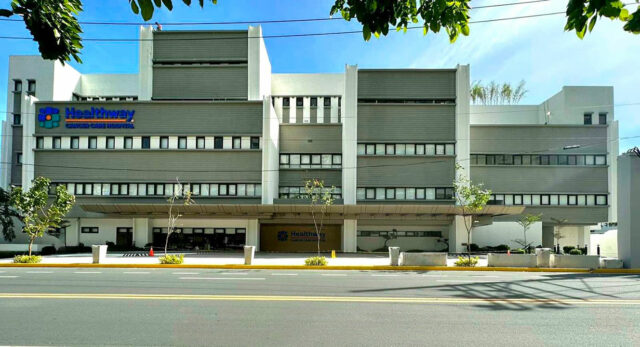
ACHEALTH.COM.PH

INVESTMENT FIRM ABC Impact is acquiring around 16% of the Ayala group’s healthcare arm Ayala Healthcare Holdings, Inc. (AC Health) to support the latter’s expansion.

ABC Impact, backed by Temasek Trust and investment company Temasek, both headquartered in Singapore, will infuse capital in exchange for a minority stake in AC Health, supporting the healthcare company’s goal of having at least 10 hospitals, 300 clinics, and 1,150 pharmacies across its network by 2027.

The investment marks ABC Impact’s first direct entry into the Philippine healthcare sector.

“This partnership marks a significant milestone in AC Health’s journey. ABC Impact’s investment reinforces the strength of our integrated model and our commitment to making healthcare more inclusive,” AC Health President and Chief Executive Officer (CEO) Paolo Maximo F. Borromeo said in a statement on Monday.

“This partnership creates valuable opportunities for knowledge exchange, technology transfer, and the adoption of global best practices, further enabling AC Health to raise the bar in care quality, patient safety, and operational efficiency as it moves toward world-class standards,” he added.

The investment combines AC Health’s integrated delivery network and ABC Impact’s thematic investing experience in inclusive healthcare solutions.

Some of ABC Impact’s regional investments include Vietnam’s largest private dental care network Kim Dental, India-based dialysis provider DCDC Kidney Care, and clinical research organization HiRo.

“We believe AC Health is well positioned to deliver meaningful social outcomes alongside sustainable growth. Through our regional healthcare experience and impact lens, we aim to support AC Health’s efforts to strengthen systems and serve more communities across the Philippines,” ABC Impact CEO David Heng said.

“We are honored to expand our relationship with Temasek and Temasek Trust, and welcome ABC Impact as a partner in our healthcare journey. Together, we look forward to building a more resilient and inclusive health ecosystem for Filipinos,” AC Health Chairman Fernando Zobel de Ayala said.

BofA Securities served as the exclusive financial advisor to AC Health in connection with the transaction. Completion of ABC Impact’s investment is still subject to closing conditions.

AC Health’s portfolio consists of Healthway Medical Network, a network of multi-specialty clinics, ambulatory centers, and full-service hospitals; Generika Drugstore, a generic retail pharmacy chain; IE Medica and MedEthix, a major pharmaceutical importer and distributor; and St. Joseph Drug, a retail pharmacy chain in North and Central Luzon.

ABC Impact has over $900 million in assets under management. Its portfolio spans climate and water solutions, sustainable food and agriculture, healthcare and education, and financial and digital inclusion. — Revin Mikhael D. Ochave

ADVERTISEMENT
ADVERTISEMENT