Home Blog Page 1103

Russia and Ukraine stage new prisoner exchange after UAE mediation

Army soldier figurines are displayed in front of the Ukrainian and Russian flag colors background in this illustration taken, Feb. 13, 2022. — REUTERS/DADO RUVIC/ILLUSTRATION

MOSCOW — Russia and Ukraine exchanged 146 prisoners of war from each side on Sunday after mediation by the United Arab Emirates, the Russian defense ministry and the Ukrainian president said.

The Russian ministry said all of the freed Russians were in Belarus receiving psychological and medical assistance.

Ukraine also returned to Moscow eight Russian citizens, residents of the Kursk region, the ministry said.

Ukrainian President Volodymyr Zelenskiy, writing on the Telegram messaging app, announced that the exchange had taken place, but gave no figures.

The president posted pictures of smiling returnees, saying most of them had been in captivity since 2022, when Russia invaded its smaller neighbor. He said a journalist taken prisoner a month after the invasion was among them.

Mr. Zelenskiy thanked the United Arab Emirates for its role in overseeing the swap.

“The exchanges are continuing. Perhaps that is possible because of our soldiers, who are increasing the exchange fund for Ukraine,” the president wrote, referring to the capture of Russian servicemen.

The Ukrainian military issued a statement confirming that a total of 146 prisoners from each side had been swapped.

Vladimir Medinsky, who has led the Russian side in three rounds of talks on a settlement in Turkey since May, said Ukraine was being slow in returning civilians to Kursk, a Russian region where Kyiv’s forces staged a mass incursion a year ago.

He said more than 20 residents were waiting to go home.

“Three months have passed and residents of Kursk region are not being returned, but are being exchanged in small groups for some people needed by Ukraine,” he wrote on Telegram. “Russia is engaged in painful bargaining to get civilians returned.” — Reuters

Germany should look for new trade partners, Chancellor Merz says

Christian Democratic Union (CDU) party leader Friedrich Merz speaks at the party headquarters, after the exit poll results are announced for the 2025 general election, in Berlin, Germany, Feb. 23, 2025. — REUTERS

BERLIN – Germany should look beyond a trade deal between the United States and the European Union that slaps 15% tariffs on EU goods by finding new trade partners in coming years, Chancellor Friedrich Merz said on Sunday.

“How do we handle world trade if for example the Americans are no longer prepared to play by the rules of the World Trade Organization? “ Merz said at a government Open Day, an event where people can visit Berlin institutions and participate in discussions.

“We should search for partners in the world that share our thinking,” added Mr. Merz , leader of the conservative CDU party whose approval rating stands at 25% – level with Alternative fur Deutschland (AfD) – according to an INSA poll published by newspaper Bild this weekend.

The July 28 framework trade deal was brokered between U.S. President Donald Trump and EU Commission President Ursula von der Leyen.

“We need good economic relations with the U.S., and we may have got off lightly,” said Mr. Merz, noting that trade possibilities might open up in South America, Asia and Africa, and should be of mutual benefit.

“We must consistently go down that road,” he said.

Mr. Merz also said basic questions regarding social security systems needed to be addressed by the end of the year, arguing that the government must rein in welfare spending on employment, pension and health benefits.

“We have to make our social security systems fit for the future,” he said. — Reuters

Trump’s redistricting push could bring decades of Republican rule to the US House

A US flag is draped at Union Station with the US Capitol dome in the background on Capitol Hill in Washington, DC, June 28, 2025. — REUTERS/KEN CEDENO

WASHINGTON — President Donald Trump’s push for Republican-led states to redraw their U.S. House of Representatives districts to protect their majority in next year’s midterm elections could set the stage for Republicans to dominate the chamber in decades to come, political analysts and experts said.

Republicans hold a 219-212 House majority and Mr. Trump is looking to break the streak of midterm House losses for the sitting president’s party — as happened to him in 2018 and to Democratic President Joe Biden in 2022 — by pushing states starting with Texas to aggressively redistrict.

Democratic states, led by California, have threatened to retaliate by redrawing their own districts for partisan gain, a longstanding feature of U.S. politics known as gerrymandering that has grown far more potent thanks to modern data analysis tools.

But Republicans hold the advantage, with control of the state legislatures and governorships of 23 states, compared with 15 for Democrats. Further, independent analysts say, population shifts could create as many as 11 new congressional seats in Republican Southern and Western states after the 2030 U.S. Census.

Democrats enjoyed 40 years of unbroken House control beginning in 1955 and ending in 1995 as conservative Southern Democrats defected to the Republican Party in earnest.

The current redistricting battle has raised concerns about a new era of gerrymandering, with Republicans and Democrats jockeying for advantage and further dividing an already polarized nation.

“I feel like it’s cheating,” said Adam Kinzinger, a Trump critic and former Republican congressman who lost his Illinois seat to redistricting after the 2020 census. “Every time we break a norm in politics now, that norm never comes back. It’ll be an avalanche of constant redistricting. I worry about that.”

The Republican-controlled Texas state legislature last week passed a new map meant to provide five more Republican seats. The Democratic-led California legislature responded by proposing a map that would give Democrats five more seats, though the state’s voters will have to approve that move in a November special election.

Reuters/Ipsos poll this month found that most Americans oppose partisan gerrymandering, to the degree that many worry about American democracy itself being in jeopardy.

FEW COMPETITIVE SEATS
Nonpartisan election analysts currently rate just three dozen of the nation’s 435 House districts as competitive in the 2026 midterm elections, pushing the real contests to party primaries that select more partisan lawmakers less interested in compromise.

“That would be another way of saying that the will of the voters is not being reflected in the outcome of the election,” said Thomas Kahn, acting director of the Center for Congressional and Presidential Studies at American University.

“If Republicans build institutional advantages, whether through fundraising … or through gerrymandering, then essentially they will be creating a lock on the House. And I don’t think that’s good for democracy,” he added.

Democratic strongholds including New York and California are already losing population to Florida, Texas, Idaho and other Republican-led states, a trend that many Republicans view as an endorsement of their party’s policies.

“A lot of the voters who are moving from California – the Bay Area – to Austin or Dallas or Boise, Idaho, are the more conservative-leaning folks who want to live in a red state for a variety of reasons: cost of living, laws and regulations, how the state’s run, business environment, stuff like that,” said Will Kiley, spokesman for the National Republican Congressional Committee, the campaign arm of the House Republicans.

The Reuters/Ipsos poll found that 21% of Republicans and 14% of Democrats have considered moving to a different state where taxes are lower.

The U.S. Census data that underlies redistricting expectations shows that nearly all of the population growth in states such as Texas and Florida since 2020 has occurred in minority communities.

In Texas, which is expected to pick up three to four House seats after 2030 according to party redistricting committees, nearly 97% of newcomers are Hispanic, Black or Asian. In Florida, which could add two to four seats, the same groups account for more than three-quarters of the growth, U.S. Census data shows.

“What we know to be true is that growth is almost completely within communities of color. And those are the very communities that these changes are attempting to curtail,” said Kareem Crayton, vice president at New York University’s nonpartisan Brennan Center for Justice.

Minority voters have shifted toward Republicans in recent elections. Trump won the national Hispanic vote 51%-46% last November, a 14 percentage-point improvement from his 2020 performance.

The new congressional map unveiled by Texas Republicans at Trump’s behest appears to cater to Hispanic voters. But Democrats say Republicans have eroded the group’s electoral power in some Hispanic-majority districts by minimizing the number of voting-age Latinos and adding high-turnout white conservative communities.

On Sunday, Democratic House of Representatives Minority leader Hakeem Jeffries said the move in Texas was a bid to “rig the midterm elections.”

“In Texas, this is a racial, partisan gerrymander ordered by Donald Trump… and we’re not going to let it happen,” Jeffries said on CNN’s “State of the Union.”

Partisan rancor in Congress has intensified since Trump began his second term in January, driving out moderate Republicans including Representative Don Bacon, who drew Trump’s ire after disagreeing with the administration over proposed funding cuts and security gaps at the Pentagon. Wisconsin Republican Mike Gallagher, once seen as a rising Republican star, left office in early 2024 after a firestorm of criticism for opposing the impeachment of former Homeland Security Secretary Alejandro Mayorkas.

“We have major issues to solve. We’re not solving them,” said former Representative John Duarte, who was rated the least conservative House Republican by Heritage Action for America before losing his California seat to Democrat Adam Gray last year. “We can do a lot. But right now, everyone’s running away from the ball.” — Reuters


Konektadong Pinoy bill lapses into law

The Konektadong Pinoy bill lapsed into law on Aug. 24, according to Malacañang. — COURTESY OF PRESIDENTIAL COMMUNICATIONS OFFICE

By Ashley Erika O. Jose, Reporter

THE KONEKTADONG PINOY bill, which aims to increase internet access by relaxing regulations and allowing more entrants into the data transmission industry, has lapsed into law on Sunday.

“It has lapsed into a law,” Department of Information and Communications Technology (DICT) Secretary Henry Rhoel R. Aguda told BusinessWorld on Sunday.

This was also confirmed by Presidential Communications Undersecretary Claire A. Castro in a Viber message, without giving details.

Mr. Aguda said the DICT is now working on the implementing rules and regulations (IRR) of the Konektadong Pinoy Act, also known as the Open Access in Data Transmission Act.

He said the DICT has invited the country’s major telecommunication companies for their inputs.

“We are finalizing the draft IRR. It will be finalized until the public consultation. I have extended personal invitations to PLDT, Globe, Converge, and DITO that they are welcome to participate in the IRR,” Mr. Aguda said.

He said the final IRR is expected to be released within 60 days.

The Konektadong Pinoy Act adopts an open-access policy to create a more accessible and competitive environment for all qualified participants across the entire data transmission network, while also encouraging investments in digital infrastructure to support reliable and affordable data services.

“We welcome the passage of the Konektadong Pinoy. We hope this measure paves the way for more efficient, stable, and affordable internet service across the Philippines,” Ronald B. Gustilo, a national campaigner for Digital Pinoys group, said in a Viber message.

The law is expected to entice more players to enter the industry, Mr. Gustilo said, adding that this should encourage fairer competition and should improve customer experience.

“We also urge the drafters of the implementing rules and regulations to introduce clear safeguards that will protect consumers and ensure these are effectively mapped out,” Mr. Gustilo said.

Telecommunications companies through the Philippine Chamber of Telecommunications Operators (PCTO) have previously asked President Ferdinand R. Marcos, Jr. to veto the measure and have it returned to the Congress.

PCTO has said that provisions of the Konektadong Pinoy Act could undermine regulatory oversight and pose risks to national security and threaten fair competition.

“There may be cyberthreats that will arise from this new telco order, but these can be mitigated by a proactive IRR, crafted by various sectors, and constant monitoring by the regulators of this critical information infrastructure ecosystem,” Samuel V. Jacoba,  founding president of the National Association of Data Protection Officers, said via Viber.

Under the law, new data transmission entrants are no longer required to secure a legislative franchise or a certificate of public convenience and necessity, which the PCTO described as the key filter historically used to assess legal, financial, technical, and cybersecurity readiness.

In particular, the PCTO is objecting to the measure as it only mandates entrants to secure cybersecurity certification after two years of operations.

PLDT Inc. Chief Legal Counsel Joan de Venecia-Fabul said that the company is exploring all options to ensure that there is a level playing field for current players once Konektadong Pinoy is enforced.

She said that while the IRR will not resolve issues raised by PLDT, the company is still willing to participate in the crafting of the Konektadong Pinoy’s IRR.

“An IRR cannot go against the law. It can expound the law, it can clarify the law. It can give contours and boundaries to the law, but it cannot go against it,” Ms. De Venecia-Fabul told reporters last week.

PLDT Senior Legal Advisor to the Chairman  Marilyn A. Victorio-Aquino has said previously that the company will mount a court challenge if the Konektadong Pinoy bill becomes a law.

Aside from PLDT, fiber internet provider Converge ICT Solutions, Inc. also said that it is willing to provide its inputs in the crafting of the IRR.

US Cloud and mobile technology company CloudMosa said that the whole telecommunications industry is set to benefit from the Konektadong Pinoy Act as the law presents opportunities for companies to address users who missed the migration to fourth-generation (4G) technology.

It said that it will help fast-track the phaseout of 2G and 3G, thereby providing a boost to affordable connectivity.

Konektadong Pinoy Act also raises the prospect of more optimal use of the radio frequency spectrum and the reallocation of underutilized and unutilized spectrum.

Hastings Holdings, Inc., a unit of the PLDT Beneficial Trust Fund subsidiary MediaQuest Holdings, Inc., holds a majority stake in BusinessWorld through the Philippine Star Group, which it controls.

Philippine economy seen to grow 5.8% in Q3 despite higher US tariffs

Several parents along with their children shop early for school uniforms in Quiapo Market in Manila. — PHILIPPINE STAR/JOHN RYAN BALDEMOR

PHILIPPINE economic growth may pick up in the third quarter despite higher US tariffs and “milder” typhoons, the University of Asia and the Pacific (UA&P) said.

“Despite the Trump tariffs, milder typhoon season will help accelerate GDP expansion in Q3 to 5.8%, given a low base in 2024,” it said in its latest The Market Call released on Friday.

If realized, this would be faster than 5.2% in the third quarter of 2024 and 5.5% print in the second quarter. This forecast is also within the government’s revised 5.5% to 6.5% target this year.

“Consumer spending remains strong, aided by low inflation but limited by new US taxes on OFW (overseas Filipino Worker) remittances,” UA&P said.

Inflation cooled to a near six-year low of 0.9% in July as utilities and food costs continued to ease. This brought the seven-month average to 1.7%, slightly below the Bangko Sentral ng Pilipinas’ (BSP) 2-4% target band.

UA&P said government infrastructure spending may also regain momentum in the third quarter. This was after state spending slumped due to the 45-day election ban on public works spending from March 28 to May 12.

UA&P said residential construction will remain subdued due to elevated policy and interest rates.

The Bangko Sentral ng Pilipinas (BSP) has so far lowered borrowing costs by a total of 125 basis points (bps) since it began its easing cycle in August last year.  The policy rate now stands at 5.25%.

UA&P said the US dollar rate will “move either way” depending on rate cuts by the BSP and the US Federal Reserve.

“The peso-dollar rate has a fundamental depreciation bias although it will depend much on extent and timing of policy rate cuts by BSP and the Fed,” it said.

Meanwhile, UA&P said the outlook for the local bond market is better in the second semester.

“The local bond market heads towards a brighter second half with the deceleration of inflation, the National Government having raised all but less than 6% of its planned borrowing needs for 2025 and BSP planning 50 bps rate cuts between now and end-2025,” it said.

TARIFF-INDUCED SLOWDOWN
Meanwhile, ANZ Research said the Philippines may face more external pressures in the coming months, arising from US tariffs and a slowdown in the global economy.

In a report, ANZ said the Philippines’ services surplus has been moderating in recent quarters, as business process outsourcing and information technology exports remain resilient.

The services surplus narrowed to $3.3 billion in the first quarter from $4.2 billion in the fourth quarter.

“However, the IT-BPO (information technology-business process outsourcing) sector faces several risks in the near term. A tariff-induced slowdown in the global economy could dampen demand for outsourced services, particularly from the US, which is the largest consumer of Philippine IT-BPO exports,” ANZ said.

“If demand from US slows down, it could materially affect the Philippines’ services revenue.”

The IT-BPO sector is also dealing with the increasing adoption of artificial intelligence, as low-skilled workers are seen to be most vulnerable to displacement.

ANZ said the Philippines’ external accounts will face more challenges as goods exports demand is expected to weaken over the next few months.

“Though the Philippines’ exposure to US demand is relatively low, the wider impact of US tariffs on the global economy will affect its exports,” it said.

The US began imposing a 19% tariff on many goods from the Philippines on Aug. 7.

“Import demand stemming from private consumption is expected to remain subdued due to low wage growth, which is limiting purchasing power,” ANZ said.

ANZ said capital expenditure is likely to accelerate in the second half.

“Higher infrastructure spending typically translates to higher demand for capital imports for the Philippines, which will potentially further widen the trade deficit,” it said.

At the same time, ANZ said the 1% excise tax on remittances from the US is expected to have a “modest effect” on the country’s external accounts.

“This development is particularly relevant for the Philippines, given its heavy reliance on inward remittances from the US (about 40% of total remittances). It is also an important source of household income, consumption, and external account support. Remittances are a key component of the current account, helping offset the country’s persistent trade deficit,” it said.

The US will impose a 1% excise tax on cash-based remittances from the US to recipients abroad starting on Jan. 1, 2026. However, ANZ noted that since the new tax will be applied on cash-based remittances, its scope will be relatively limited.

“The Philippine Department of Finance estimates the total impact of the tax to be around $1.9 billion, which represents a small share of total remittances. As a result, while the effect on the Philippines’ external accounts is expected to be limited in 2026,” it said.

ANZ said a further slowdown in the US labor market will also affect the amount of remittances sent to the Philippines.

Money sent home by OFWs rose by 3.1% to $16.75 billion in the first six months of the year, with land-based workers contributing the bulk of the increase. — ARAI

Some PHL companies lack right foundation for AI adoption

Companies should ensure they have the proper foundation before investing in artificial intelligence (AI), an expert said. — REUTERS/DADO RUVIC/ILLUSTRATION

By Beatriz Marie D. Cruz, Reporter

SOME Philippine companies are not ready to adopt artificial intelligence (AI) due to insufficient data and infrastructure needed to unlock the value of their investments, according to global consulting company Kearney.

“The one thing that I have noticed, and it’s true for companies here in the Philippines and also around the region, is that many companies are not quite ready to adopt and to monetize AI,” Marco de la Rosa, senior partner and Philippines country head at Kearney, told BusinessWorld in a recent interview.

“The challenge that we often find in these types of technology is that everybody wants it, but not many are able to get the value out of it,” he said.

When investing in AI, companies must have the proper foundations to ensure that they are able to generate value, Mr. De la Rosa said, citing the need to identify use cases. 

“I’m not saying it’s impossible, what I’m saying is that it will require very significant and focused investment. I would even suggest to maybe not think about AI investments as industry wide. But within AI, are there specific use cases or capabilities that we want to focus on?” Mr. De la Rosa said.   

“Because when you’re playing from behind, we cannot spread our investments across a very wide base and hope to catch up,” he added.

Having good data is one of the key foundations in AI adoption, he noted.

“AI only survives with good data, and the challenge that we see companies over and over again struggle with is they’re either not collecting all the right data, or they have too many different sources of data, or that the data isn’t very clean.”

Companies must also invest in sufficient infrastructure and training to better harness their data into AI.

“Very often people will build massive stacks of capability and technology, but then their people aren’t enabled to use that data and know how to create the value out of that data,” Mr. De la Rosa added.

The Philippines dropped three spots to 12th out of 78 countries in Kearney’s 2023 Global Services Location Index, which measures a country’s attractiveness as an offshore location for business services.

Mr. De la Rosa noted that the Philippines was in the top 10 previously but was edged out by Mexico in 2023 when the index began measuring countries’ digital capabilities.

“When you start looking at IT (information technology), AI, and all of those types of capabilities, the Philippines’ competitiveness drops,” he said. “Obviously, we’re still strong in traditional areas like voice, but in areas like IT and others, we lag.” 

The Kearney executive also cited the need for Philippine investments focused on boosting the quality and volume of Science, Technology, Engineering and Mathematics graduates.

The Philippine government must also strengthen collaborations with AI experts to adopt strategies on harnessing AI effectively, said Shigeru Sekinada, Kearney senior partner and region chair, Asia-Pacific and managing director, Japan.

As an example, Mr. Sekinada noted that the Japanese government appointed Yutaka Matsuo, a professor at the University of Tokyo School of Engineering, to head Japan’s AI Strategy Council.

Mr. Matsuo’s expertise has helped in crafting the Japanese government’s AI policies and strategies, he noted.

“Maybe a similar action is necessary for the other countries including the Philippines,” Mr. Sekinada told BusinessWorld, adding the government needs to provide guidelines for AI development.

While AI technology can be a double-edged sword, it can be beneficial if companies put in the right investments.

“The fact is that we can’t stand still. We can’t just turn a blind eye and say ‘AI won’t impact us.’ I think it’s about how you harness it for good and allow the industry to remain competitive,” Mr. De la Rosa also said.

“In the past, ‘digital native’ was the keyword. But now, the ‘AI native’ will be the new keyword,” Mr. Sekinada said.

AI technologies can potentially boost the Philippine economy by P1.8 trillion, resulting in a gross value-added increase of 7%, according to a report by Google and consulting firm Public First.

ACTAI Summit spotlights artificial intelligence, technology and innovation in Palawan

The ACTAI Asia Pacific Summit recently concluded at Pangulasian Island in El Nido, Palawan, bringing together venture capitalists, tech entrepreneurs, and conservationists to discuss purpose-driven innovation and environmental sustainability.

Directed by Maria Serafica, a Filipino member of the ACTAI Global community, this was the second time the international group has staged its summit in the Philippines.

One of the highlights was an artificial intelligence startup competition co-organized with Ayala Land, which aimed to identify and support ventures using technology to address challenges in sustainability, healthcare, and education.

The standout winner of the AI competition was Perle AI (formerly Kiva AI), a leader in delivering innovative AI-driven solutions that optimize operations, enhance decision-making, and accelerate business growth. By harnessing cutting-edge technologies, Perle AI helps organizations across industries unlock the full potential of their data, streamline workflows, and tackle complex challenges. During the competition, Perle AI distinguished itself by showcasing its ability to tailor solutions that deliver scalable, efficient, and impactful results that empower businesses to stay ahead in today’s fast-paced, data-driven world.

“We are incredibly honored to be recognized by ACTAI Global,” said Ahmed Rashad, founder and CEO of Perle AI. “This event is more than just a competition; it’s a convergence of brilliant minds coming together to create meaningful change. Being part of this network is a game-changer for us, and we’re eager to leverage AI to drive real-world impact on sustainability and economic growth.”

The AI competition provided a platform for entrepreneurs to showcase their groundbreaking ideas, offering them resources, mentorship, and opportunities to scale their innovations. Judges of the competition included Lars Rasmussen, inventor of Google Maps; Bill Tai, co-founder of ACTAI Global; Patrick Chang of Dispersion Capital; and members of the Ayala family, Jaime Alfonso Zobel de Ayala and Mariana Zobel de Ayala.

By bringing together promising startups with industry leaders and venture capitalists, ACTAI Global seeks to accelerate the development of transformative technologies and empower the next generation of tech innovators.

Bill Tai underscored the importance of leveraging technology to tackle global issues. “The future of innovation is not just about creating new technologies — it’s about using those technologies to make a positive difference,” Mr. Tai stated.

“Innovation is at its best when it serves a purpose beyond business success. At ACTAI, we’re not just fostering tech entrepreneurship; we’re championing visionaries who are committed to solving humanity’s biggest challenges.”

He continued, “Perle AI exemplifies the kind of companies we are excited to support — innovators who are using AI not only to drive business growth but to solve some of the world’s most urgent problems. I am thrilled to see how Perle AI and other participants in the competition will continue to push the boundaries of what’s possible.”

ACTAI Global believes in the transformative potential of innovation to create social, environmental, and economic change. By uniting experts across industries, ACTAI fosters collaboration to address global challenges. Its mission is to support entrepreneurs who leverage cutting-edge technologies, including AI, to help provide scalable solutions that improve lives, protect the planet, and build a more sustainable, equitable future.

Another mission of ACTAI Global is ocean conservation, and the gathering included a distinguished panel to discuss ways to help with coral restoration in El Nido and to establish marine protected areas surrounding the Philippines.

The gathering drew participants from more than a dozen countries, including investors, innovators, and advocates. Sponsors included Bank of the Philippine Islands and GCash.


SparkUp is BusinessWorld’s multimedia brand created to inform, inspire, and empower the Philippine startups; micro, small and medium enterprises (MSMEs); and future business leaders. This section will be published every other Monday. For pitches and releases about startups, e-mail to bmbeltran@bworldonline.com (cc: abconoza@bworldonline.com). Materials sent become BW property.

Global Youth Summit 2025 empowers next-generation leaders

Youth from across the country come together at the Global Youth Summit 2025 in MOA Arena, united in their mission to build stronger communities and shape a more inclusive, sustainable future for the next generation.

The Global Youth Summit (GYS) 2025 brought together more than 33,600 youth changemakers from schools, organizations, and communities nationwide — both on-ground and online — at the SM Mall of Asia Arena on Aug. 3.

The event, organized by Global Peace Foundation (GPF) Philippines and SM Cares, the corporate social responsibility arm of SM Supermalls, served as a dynamic platform for young student leaders, innovators, and advocates to collaborate, share ideas, and take action toward advancing the United Nations Sustainable Development Goals (UN SDGs).

The Manila summit featured inspiring keynote speeches and empowering sessions focused on youth empowerment, sustainability, innovation, and leadership. Among the distinguished speakers were Jessica Sy, Winwyn Marquez, Teacher Georcelle, Edward Barber, and Jessica Soho, who shared their insights and experiences on leadership, creativity, and social impact.

The program also highlighted outstanding performances from Matthew Ifield, NU Dance Company, Over October, and Hori7on, energizing the crowd and celebrating the passion and talent of Filipino youth.

“The youth are not just the leaders of tomorrow — they are the force for change today. Through the Global Youth Summit, we aim to give them the tools, inspiration, and community to turn their vision into reality,” said Royston Cabunag, SM Supermalls’ assistant vice-president and SM Cares program director for Children and Youth.

Leonard Faustino, GPF Philippines executive director, added, “Collaboration across sectors is key to unlocking the potential of the next generation. The Global Youth Summit is proof of what can happen when we come together for a shared purpose.”

The Global Youth Summit at MOA Arena serves as the launchpad for 16 provincial legs across the country. Together with the main event in Manila, these 17 mall locations collectively represent the 17 UN SDGs.

The rollout continued on Aug. 8, with regional events held at SM Seaside City Cebu, SM City Iloilo, SM City Bacolod, and SM City Puerto Princesa. On Aug. 22, the initiative unfolded at SM City Bataan, SM Center Pulilan, SM Center Dagupan, and SM City San Lazaro. The third wave will follow on Aug. 29, with activities at SM CDO Downtown, SM City Butuan, SM Lanang, and SM City General Santos. Finally, the series concludes on Sept. 5, with events at SM City Bacoor, SM City San Pablo, SM City Sto. Tomas, and SM Southmall.

Each leg will feature youth-led solution pitches and partner activations designed to seed community projects aligned with priority SDGs. These provincial events will continue the momentum, empowering more young Filipinos in their own communities to take action on local and global challenges.


SparkUp is BusinessWorld’s multimedia brand created to inform, inspire, and empower the Philippine startups; micro, small and medium enterprises (MSMEs); and future business leaders. This section will be published every other Monday. For pitches and releases about startups, e-mail to bmbeltran@bworldonline.com (cc: abconoza@bworldonline.com). Materials sent become BW property.

Utah Valley University seals educational alliance with Benilde

Aimed at promoting educational development and cultural exchange, Utah Valley University (UVU) established a strategic partnership with the De La Salle-College of Saint Benilde (DLS-CSB), which was recently forged by the signing of a Memorandum of Understanding (MoU) between the two schools at Vatel Restaurant Manila.

UVU, the largest public university in the American state of Utah, is known for its dual-mission model. This merges the rigorous academic programs of a top-grade university with the vocational training opportunities of a community college.

The university has been designated as a United Nations Educational, Scientific and Cultural Organization (UNESCO) Chair on Artificial Intelligence (AI) and Environmental Stewardship for Sustainable Futures.

The US-based institution was represented by Dr. Carl Canlas, an assistant professor of Information Systems and an advocate of ethical AI.

“We all want what’s best for our students. We want them to have meaningful careers and at the same time be at the top of the industry,” Mr. Canlas noted. “Right now, the buzzword is artificial intelligence and hopefully, we can provide the resources that can make our students successful.”

UVU Chief International Officer Dr. Baldomero Lago, who attended the event online, suggested ideas for the initiative involving the learners, faculty members, and experts in the field.

“We could consider some research collaborations,” Dr. Lago shared. “It could be a virtual exchange — synchronous or asynchronous, based on time — where the faculty could present. We could even have round-table discussions.”

On the other hand, De La Salle-College of Saint Benilde Chancellor Benhur Ong, Vice-Chancellor for Academics Angelo Marco Lacson, and School of Management and Information Technology (SMIT) Dean Joana Diñoso represented the local counterpart.

“This agreement stands as a testament to our mutual commitment to foster international understanding, enrich the educational environment of our institutions, and expand individual learning opportunities through meaningful academic and cultural exchange,” Mr. Ong stated. “This partnership aligns deeply with Benilde’s vision of future-proof and socially responsible education.”


SparkUp is BusinessWorld’s multimedia brand created to inform, inspire, and empower the Philippine startups; micro, small and medium enterprises (MSMEs); and future business leaders. This section will be published every other Monday. For pitches and releases about startups, e-mail to bmbeltran@bworldonline.com (cc: abconoza@bworldonline.com). Materials sent become BW property.

Meralco gets ERC go-ahead for 15-year coal supply contract

PHILIPPINE STAR/ MICHAEL VARCAS

THE Energy Regulatory Commission (ERC) has allowed Manila Electric Co. (Meralco) to procure 100 megawatts (MW) of baseload power supply from the coal-fired power plant of a unit of Aboitiz Power Corp.

In a decision promulgated on Aug. 22, the ERC granted interim relief to Meralco and GNPower Dinginin Ltd. Co. (GNPD) for the implementation of their power supply agreement (PSA) at an annual capacity rate of P17,228.88. This translates to P1.9668 per kilowatt-hour, excluding other charges such as fuel costs.

The ERC said the proposed rates are lower than the previously approved PSA rates for the same power plant.

“The Commission also finds that the proposed rate in the subject PSA is lowered compared to the rates of other Meralco suppliers utilizing coal and natural gas as fuel,” the regulator said.

GNPD owns and operates a 1,336-MW coal-fired power plant in Mariveles, Bataan.

The power supplier emerged as one of the winning bidders in the competitive selection process (CSP) conducted by Meralco in August last year, offering 100 MW out of the required contract capacity of 600 MW.

The PSA will cover Meralco’s future baseload requirements over a 15-year period starting Aug. 26.

The ERC directed GNPD to provide replacement power “at all times, even during the planned or forced outage of the plant.”

The companies must file a motion with the ERC and specify the grounds for termination, in accordance with the PSA and CSP Guidelines, if they wish to end the deal.

“Any increase in the contracted capacity under the applicants’ PSA shall require prior approval from the Commission. This is to ensure that Meralco supplies its electricity in the least-cost manner to its captive market,” the ERC said.

Meralco’s controlling stakeholder, Beacon Electric Asset Holdings, Inc., is partly owned by PLDT Inc.

Hastings Holdings, Inc., a unit of PLDT Beneficial Trust Fund subsidiary MediaQuest Holdings, Inc., has an interest in BusinessWorld through the Philippine Star Group, which it controls. — Sheldeen Joy Talavera

This or that?

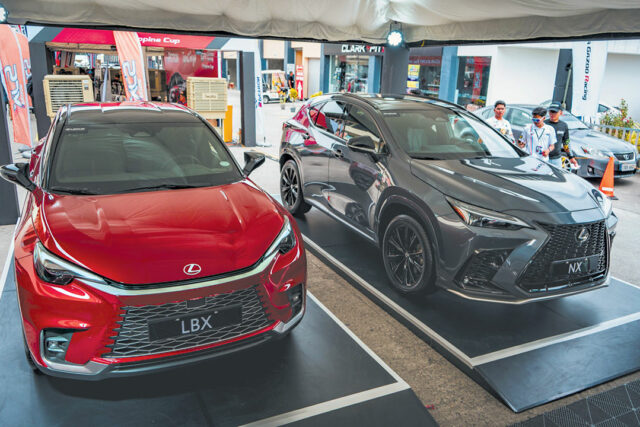
Electrified now. Lexus is known for its hybrid electric vehicles (HEVs), even as it already proffers a full-electric option, the RZ. — PHOTO BY KAP MACEDA AGUILA

Choosing a car is no longer as straightforward as it used to be

I GET THIS question a lot from people intending to buy a car: Which is better, this model or that? Recently, the questions have focused whether a car browser is best served by an internal combustion engine (ICE) vehicle or an electrified vehicle (xEV). Sometimes it gets drilled down even more. Is a hybrid electric vehicle (HEV) better than a plug-in hybrid electric vehicle (PHEV) or a battery electric vehicle (BEV)?

Choosing a car is no longer as straightforward as it used to be. The adage of “all else being equal” no longer applies due to the proliferation of new drivetrains. Before, the default was ICE (fed by gas or diesel) and we chose from all-wheel drive, four-wheel drive or front-wheel drive.

I was taught that answering a question with another question is not polite. In this case, though, it cannot be helped. I tend to reply to the above questions thus: Is it going to be your daily drive? What is your daily drive like?

It is hard to give a non-contextualized answer, really, at the risk of sounding presumptuous, arrogant, or even ignorant. People buy a car that fits their needs. That is a universal truth, at least as far as primary cars are concerned. Additional cars can enjoy the liberty of being chosen as a trophy car, a dream car, a hobby car or some more emotionally motivated purchase other than for sheer reason or purpose. And while external factors — environmental considerations, mainly — have supposedly sounded the death knell on ICE and fossil fuels, these have resulted to the advent of alternative energy mobility. And by the way, I think news of the demise of the ICE is greatly exaggerated.

ELECTRIFICATION FOR THE ENVIRONMENT
These days, mobility solutions are diversifying to align with rising environmental demands. Prior to the introduction of new energy technologies, the auto industry’s response to calls for more environmentally friendly motoring was to improve the fuel efficiency and tailpipe emissions of ICE vehicles. Due to numerous and stricter government policies, automakers were forced to explore other ways to meet tightening regulations. Enter the electrified vehicle.

Toyota chose very early on to actively heed the dangers of rising greenhouse gas emissions. In the early nineties, it launched a program called “G21” that focused on building a car for the 21st century that would achieve twice the fuel efficiency of conventional cars at the time. The Prius HEV was the first outcome of their efforts.

But even then, as Toyota was devoting significant resources to the development of HEV technology, the brand’s leadership already recognized that the road toward environmentally friendly motoring was not to be found in a single solution. A multi-path road map that included more fuel-efficient ICE models, PHEV, BEV, and fuel-cell vehicles (FCV) was already laid out. In fact, I recall that Toyota made several of its HEV patents available for use by other car makers to encourage scale. Toyota had also initially ventured into the development and manufacturing of EVs together with Tesla during its nascent years — via the RAV4 EV. In the end, this didn’t work out. Toyota even joined efforts to develop a hydrogen society with the end-goal of using water to fuel cars.

As a result of its jump-start in the ’90s, Toyota has since sold over 20 million electrified vehicles, mainly its HEV models. Though not the most recent number, Toyota Motor Philippines (TMP) reports in its website that in over two decades since the launch of the Prius, Toyota has reduced CO2 emissions by 160 million tons globally. It also reports that, over the same period, it has saved 65 million kiloliters of gasoline — enough to power 10 million homes in one year or nearly two million trips to the moon and back.

This is even as other car makers are only just starting in their own paths to carbon neutrality. It is really encouraging to hear other auto manufacturers embrace the multi-pathway approach to future mobility because, in the end, the introduction of xEVs is not really the goal. The ultimate objective is to help win the battle for carbon neutrality through any technology possible.

I seem to have digressed, though. So, which is better?

I cannot provide a wholly scientific and data-driven answer, but I am guided by current realities on Philippine roads and my practical experience as a car owner. When auto firms introduce a vehicle, they are obliged to provide potential buyers not only with the latest technology models and ensure that these models are convenient to operate, easy to maintain, and are fully supported in case of repair. So it is not enough that we choose cars based on design, brand value, aggressive discounts or the bells and whistles that come with it — most especially if these are our daily (and only) drivers.

WHEN TO CHOOSE ELECTRIC
If you drive fixed routes based on relatively set schedules, on known terrain and under predictable driving conditions, you are likely a candidate for xEVs. The choice of HEV, PHEV or BEV depends on your charging circumstances. Do you have your own garage where you can use a home charger? Alternatively, do you live near a commercial charging station, or can you charge while you are at the office? If your answer is yes to any of the three options, then you can consider a PHEV or BEV. It helps you contribute to the achievement of carbon neutrality (arguably), reduce operating costs, and minimize maintenance expenses (also arguably). Having strong after-sales support is essential to maximize the use of your car and assure a better resale value.

HEVs are a highly effective choice for those who cannot be assured of easy-charging solutions. An HEV features self-charging technology, so you are not shackled to charging stations and you are not stressed about range. This is true, too, if your routes are more varied, if your mobility needs require more flexibility, if your driving conditions and terrain are less predictable, or if you travel relatively long distances of say 80 kilometers to 100 kilometers a day, the usual range for PHEVs with a fully charged battery.

BEVs usually claim mileage of 400 kilometers to 600 kilometers on a full charge. Yes, that brings a degree of confidence that you can get to your destinations even if you missed being able to recharge your vehicle to full. But just like mobile phones, we rest easier if we carry a full charge — even if we know that a full charge is more than enough to carry us through our normal day. In fact, we always carry our charger — or a power bank — so we are ever ready to juice up, if at all. We never know if or when we might get one phone call too many or watch one video too many, causing our battery to drain faster than usual. Similarly, if charging stations are not yet as readily available, we will fret if we get caught in heavy rain or if traffic grinds to a standstill. Surely our “what-if” scenarios might be getting ahead of us, but this is human nature. I imagine we can manage our range anxieties better as we get more used to using BEVs.

Also, cars are supposed to be available to use on-demand, as and when and where needed. In case of emergencies — a sudden need to head out on a date, an impulsive out-of-town trip with the kids or some such unplanned travel — it would be the worst thing that your car is still charging or needs charging. If you have more than one car, this should not be a problem. Otherwise, it could be a very real consideration.

So, one model or technology is not really better or worse. It either meets your mobility circumstances or not; is relevant to your lifestyle or not. We are and always will be the product of the choices we make, so we must choose wisely.

International fashion brand Pomelo. opens 1st store in the PHL

BRONTË H. LACSAMANA

POPULAR fashion brand Pomelo. has brought its stylish pieces for women to Manila, opening its first physical store in the Philippines at Glorietta, Makati, last Wednesday.

“We started selling online in the Philippines maybe seven years ago. We were blown away by how popular the brand was. Honestly, we didn’t know that much about the customer,” said David Jou, chief executive officer and co-founder of Pomelo., at the store’s launch.

“This time, we worked with our partners SSI, who researched the market and what the fashion customer wants. We found a perfect fit with what the ‘Filipino Pomelo. Girl’ is looking for,” he added.

Known for weekend fits, corporate attire, and even beach and gym clothing, Pomelo. focuses on women’s fashion for every occasion. It was founded in 2013 in Bangkok, Thailand.

The name, which is indeed a reference to the fruit, reflects the brand’s identity. “Basically, we wanted to bring something fresh, something new, something that represents the region. We thought, Pomelo. is a perfect name,” said Mr. Jou.

He explained that feedback sessions with the online Pomelo. shopping community was what motivated them to transform from an online omnichannel fashion platform to spread physical stores across Southeast Asia.

“One question was, what’s one thing you want for Pomelo.? Every single one said, ‘please open up a physical retail store!’” he said. “That was back in 2018. We now have stores in Thailand, Singapore, Malaysia, Indonesia, and now, the Philippines.”

Two main collections can be found at Pomelo.: Sophisticated Urban, for “chic, city-ready modern women,” and Velvet Horizon, offering “feminine rustic charm with floral prints and soft color palettes.”

There’s also a wide array of collections for other occasions, from resorts wear to sportswear. One corner of the store is dedicated to an exclusive Pomelo. x Hello Kitty collaboration.

Finally, the store houses VERSE, an independent brand with office-ready pieces that prioritize elegance.

The space spans 270 square meters and is located on the ground floor of Glorietta 1.

“It’s a really nice mall because it’s in the middle of Makati, the business district, and it’s also a transit hub,” Mr. Jou told BusinessWorld. “We felt like we really had to be in the center of the city, so we selected this place.”

He added that the next branch will be in another central location: Robinsons Place Manila in Malate, Manila.

As for what more to expect from these physical spaces, Mr. Jou teased that the “Come Try Buy” experience will be launched in the Philippines soon. It allows Pomelo. app users to select what they want to try in the store ahead of time.

“You can build outfits and create looks online, then everything you want to try on will be waiting for you in the fitting room,” he explained. “That’s coming soon. It will be one of the key experiences.”

Pomelo. is available on Zalora and soon on Shopee. They are also available through their app and website. — Brontë H. Lacsamana